Vice President Mike Pence Addresses Disruption and Transformation in the Americas

On May 7, U.S. Department of State co-hosted the 49th Annual Washington Conference on the Americas, which is designed to provide an  opportunity to hear from the most senior-level officials and engage with over 250 business and policy leaders, members of the diplomatic community, and media representatives from throughout the hemisphere. The theme of this year’s Conference was “disruption and transformation in the Americas.”

Vice President Pence’s Speech

At this Conference U.S. Vice President Mike Pence presented the Trump Administration position on these issues.[1] His focus was Venezuela,which he said was “the single greatest source of disruption.”  After reviewing that country’s significant events of the last year, Mr. Pence outlined the following new U.S. actions regarding Venezuela:

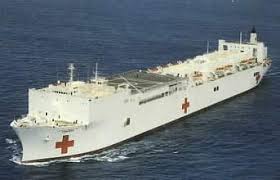
  • [At] “the President’s direction, the United States Navy will deploy the USNS Comfort to the Caribbean, Central America, and South America this June. The Comfort will embark on a 5-month humanitarian mission to address the Venezuelan crisis.  The United States military and medical personnel, working alongside their counterparts across the region, will be there to provide medical assistance to communities in need and help relieve countries overwhelmed by the influx of the suffering people of Venezuela.” (However, before it can be deployed from its homeport of Norfolk, Virginia, a staff of doctors, nurses and other medical staff has to be assembled.)
  • The U.S. has “ positioned more than 500 metric tons of food and humanitarian supplies on the Venezuelan border, ready for immediate distribution.  The American people have provided nearly $260 million in aid to support displaced Venezuelans and the host nations that support them so generously.”
  • “If the Supreme Court of Venezuela does not return to its constitutional mandate to uphold the rule of law, the [U.S.] will hold all 25 of its magistrates accountable for their actions.”
  • The U.S. “has sanctioned more than 150 government officials and state-owned businesses loyal to the dictator.”
  • But “these sanctions need not be permanent.” The U.S. “will consider sanctions relief for all those who step forward, stand up for the constitution, and support the rule of law — like General Manuel Cristopher Figuera, the former chief of the Venezuelan intelligence service, who just last week broke ranks with the Maduro regime and rallied to the support of the Venezuelan constitution and the National Assembly.  In recognition of his recent actions in support of democracy and the rule of law, . . .[the U.S.] is removing all sanctions on General Manuel Cristopher Figuera effective immediately.”
  • The U.S. “will help the fledgling Venezuelan democracy regain its footing.  We’ll build a brighter future after Maduro is gone — creating jobs, fighting poverty, and expanding opportunity.”
  • The U.S. “will continue to exert all diplomatic and economic pressure to bring about a peaceful transition of democracy in Venezuela.  But to those who continue to oppress the good people of Venezuela, know this: All options are on the table.

Conclusion

There are at least two items of good news in Vice President Pence’s remarks. First, he did not say anything about any current U.S. plan to use any military force with respect to Venezuela. Second, the hospital ship to be deployed should be helpful to ordinary Venezuelans who have been deprived of adequate medical care.

The USNS Comfort (in the above photograph) is a non-commissioned hospital ship owned by the U.S. Navy and operationally crewed by civilians from the Military Sealift Command, consisting primarily of naval officers from the Navy’s Medical Corps, Dental Corps, Medical Service Corps, Nurse Corps and Chaplain Corps, and naval enlisted personnel from the Hospital Corpsman rating and various administrative and technical support ratings When fully staffed it can provide the following services: general surgery, ophthalmologic surgery, dermatology, medical evaluation and treatment, preventive medicine, dental screenings and treatment, optometry screenings, eyewear distribution and public health. In accordance with the Geneva conventions it and its crew do not carry any offensive weapons.[2]

Without referencing Pence’s speech, Spain’s acting foreign minister, Josep Borrell, on May 8 said that Venezuela needs “a peaceful, negotiated and democratic solution” to its problems and that Spain and other European countries “will continue to reject any pressure that borders on military intervention” in Venezuela.”  The U.S. repeated assertion that “all options are on the table” is like “a western cowboy” who is threatening to draw his gun.[3]

Again without specifically discussing the Pence speech, U.S. commentators offer another perspective. They say that Trump “has yet to articulate a coherent theory for when the United States should push for such change and when it should avoid it.” Instead, they say, “Trump’s approach to foreign intervention is largely ad hoc and idiosyncratic — driven less by ideology than by his hunger for foreign policy victories and confidence in his own deal-making skills.”[4]

This “lack of ideological coherence has played to the advantage of Secretary Pompeo and the national security adviser, John R. Bolton, two hawkish officials with strong interventionist tendencies,” who have used hawkish rhetoric regarding Venezuela, Cuba and Iran, for example. “Critics say the disconnect between Mr. Trump and his advisers is confusing the nation’s allies and heightening the risk of a military conflict.” [5]

=============================

[1] White House, Remarks by Vice President Pence at the Washington Conference on the Americas (May 7, 2019); Reuters, U.S. Lifts Sanctions on Venezuelan General Who Broke With Maduro, N.Y. Times (May 7, 2019); Assoc. Press, US to Send Hospital Ship to Help With Venezuelan Refugees, N.Y. Times (May 7, 2019).

[2] Southcom, Hospital Ship USNS Comfort in Latin America; Enduring Promise Medical Assistance MissionUSNS Comfort (T-AH-20), Wikipedia.

[3] Assoc. Press, The Latest: Spain Official: US Like a ‘Cowboy’ on Venezuela, N.Y. Times (May 8, 2019).

[4] Landler, With Mix of threats and Blandishments, Trump Bandies Policy of Regime Change, N.Y. Times (May 8, 2019).

[5] See n. 4 supra. See also U.S. Reactions to Failure of Juan Guiadó’s Attempt To Takeover Venezuelan Government, dwkcommentaries.com (May 6, 2019).


U.S. Reactions to Failure of Juan Guaidò’s Attempt To Take Over Control of Venezuela

Last week saw the failure of an attempt to take over the Venezuelan government by the country’s opposition leader and president of the National Assembly, Juan Guaidó, and U.S. reactions to this development.

Failed Take Over[1]

On Tuesday morning (April 30),  Guaidó, with the support of his mentor (Leopoldo López), the director of the regime’s intelligence agency (Manuel Ricardo Cristopher Figuera Manuel) and some low-ranking soldiers called for other officials and soldiers to join them in attempting to remove President Nicolás Maduro from power. Trump Administration officials—Trump himself plus Vice President Pence, Secretary of State Pompeo and National Security Advisor John Bolton—publicly announced support for what they called “Operaciōn Libertad.”

By sunset that same day, however, it was clear that Mr. Guaidó had failed to persuade the military to rise up against Mr. Maduro. As a result, Leopoldo Lopez and family sought and obtained refuge in the Spanish Embassy while Figuera had fled the country.  The attempted takeover had failed.

Nevertheless, the following Saturday (May 3), Guaidó tried again to enlist Government officials and soldiers to join his movement. Again it failed.

In addition, by the end of the week, Venezuela’s Attorney General publicly announced that  everyone linked to the recent attempted coup had turned themselves into traitors to be prosecuted in accordance with the country’s constitution and laws. Already 18 arrest warrants have been issued, including one for Leopoldo Lopez in the Spanish Embassy.

Trump Administration’s Public Reactions[2]

Before the attempted takeover Secretary of State Mike Pompeo had focused on Russia’s alleged influence over Maduro and repeated that all options, including U.S. military intervention, were still on the table, while President Trump had issued a tweet attacking Cuba for supporting Maduro and promising new economic sanctions on the island.

Immediately after the events of April 30, U.S. National Security Advisor John Bolton and U.S. Special Envoy for Venezuela, Elliott Abrams, publicly accused the Venezuelans minister of defense, Vladimir Padrino López, and two other regime leaders of backing out after having promised to remove Mr. Maduro and support Mr. Guaidó.

On Friday, May 3, President Trump added to this U.S. discombobulation with  a long telephone conversation with Russia’s Vladimir Putin on several topics. Afterwards Trump apparently accepted Putin’s assurances that Russia “is not looking at all to get involved [in Venezuela], other than he’d like to see something positive happen.” Trump added, “”And I feel the same way. We want to get some humanitarian aid. Right now people are starving.” (This statement was obviously contradicted by what Secretary Pompeo and Bolton had been saying and by the Kremlin’s subsequent statement that Putin in his telephone conversation had condemned “outside interference in . . . [Venezuela’s] internal affairs” and added that “attempts to change the government in Caracas by force undermine prospects for a political settlement of the crisis.”)

Nevertheless, on Sunday, May 5, Secretary Pompeo appeared on several national television programs to reiterate the old and now discredited Administration talking points about Venezuela, which he reprised with journalists on his flight later on Sunday to Finland for the Arctic Council Ministerial.

On  ABC’s “This Week”, for example, Pompeo rejected the notion that there had been faulty U.S. intelligence over the apparent failure of Juan Guiadó’s call for a removal of Maduro. The Secretary said, Oh, no, not at all. This is the Venezuelan people attempting to re-establish their democracy. The United States has joined with them. We have supported the National Assembly’s choice. Juan Guaido is the interim president of the country. . . . [These] things sometimes have bumpy roads, to be sure, but Maduro can’t feel good. He’s ruling for the moment, but he can’t govern. There is enormous poverty, enormous starvation, sick children that can’t get medicine. . . . This is not someone who can be part of Venezuela’s future, and whether that change takes place today or tomorrow or a week from now, one can’t predict.”

Pompeo continued on ABC, “Our mission is to work with a large coalition, now 50 countries-plus, who are determined to restore democracy and then ultimately a productive economy to Venezuela. What we can do is provide support, get support from the Organization of American States, the Lima Group, the entire region, that understands that restoring democracy for the Venezuelan people is an imperative, and get them all to work together so that we get the outcome we’re looking for.”

In response to the ABC journalist’s direct question of whether “a U.S. military invasion of Venezuela  [was] really an option?’” Pompeo said, “Oh, make no mistake, we have a full range of options that we’re preparing for. That’s part of what we were doing on Friday [May 3] was making sure that when this progresses and a different situation arises that the President has a full-scale set of options: diplomatic options, political options, options with our allies, and then ultimately a set of options that would involve use of U.S. military. We’re preparing those for him so that when the situation arises, we’re not flat-footed.”

Another direct question on the ABC program was posed as to whether the President believes that he can intervene militarily without getting congressional authorization Pompeo responded, “I don’t want to speak to that. The president has his full range of Article 2 authorities, and I’m very confident that any action we took in Venezuela would be lawful.”General Joseph Dunford

Trump Administration’s Internal Reactions[3]

On May 1 the White House held an emergency session of senior national security advisors for discussion about Venezuela. Their discussions apparently included an “intense debate . . . over whether the U.S. military should be used to raise pressure on Maduro, with senior Pentagon officials warning an armed intervention would be counterproductive.” This meeting included Admiral Craig Faller, Commander of the Southern Command, Acting Defense Secretary Patrick Shanahan and other senior officials, including Marine General Joseph Dunford, Chairman of the Joint Chiefs of Staff; Secretary of State Mike Pompeo; Director of National Intelligence Dan Coats;  National Security Advisor John Bolton and Acting White House Chief of Staff Mick Mulvaney.

Another meeting occurred on Friday, May 3 with the same people.

The Southern Command reportedly has “given the White House an array of options for potential military action. . . . [including] U.S. naval exercises or deployments of warships outside Venezuelan waters, delivery of humanitarian aid into the country, and more military contacts with neighboring countries to try to enlist their support for joint action.” Admiral Craig Faller, the current head of Southern Command, said the Pentagon was also “carefully looking at plans” to expand an embargo on Cuba, as Trump suggested in a tweet this week, to erode Havana’s support for Maduro’s government.”

Evaluation of U.S. Policies Regarding Venezuela[4]

A former senior administration official with deep knowledge of the region described the failed coup as “ the Bay of Pigs II” — a reference to the failed U.S.-backed attempt to invade Cuba and overthrow Fidel Castro in 1961.

Several analysts have said that “the Trump administration has misread the dynamics of the Venezuela crisis. They said the White House underestimated Maduro’s resilience and fostered unrealistic expectations about the ease of regime change, partly by trusting apparently duplicitous Venezuelan military officials.” One of them, Michael Shifter, president of the nonpartisan Inter-American Dialogue, a Washington think tank that specializes in Latin America, said, “They have made a series of terrible miscalculations,”

Shifter added,“The Trump administration’s repeated ultimatums, hints of military intervention and threats to blockade Cuba, all of which could backfire by eroding broad international diplomatic support for the anti-Maduro forces, and by goading the Venezuelan armed forces to rally around [Maduro].”

Another expert on Venezuela in the Washington Office on Latin Ameera, a nonprofit nongovernmental organization, David Smilde, said, “This is characteristic of the neoconservatives who are running foreign policy now. They think they can huff and puff and put forth strong rhetoric … and the foe will back down. But time and again, that doesn’t happen. The sociology of authoritarian governments is far more complex.”

A New York Times editorial correctly summed up the current status. U.S. military intervention, “repeatedly cited as a possibility by Mr. Trump and Mr. Pompeo, remains a terrible idea. However invested the Trump administration is in the ouster of Mr. Maduro, a direct intervention would find little support across a region with bad memories of American meddling, and would brand Mr. Guaidó as an American lackey.”

A different conclusion was reached by a Washington Post editorial. After reciting some of the Maduro regime’s horrible policies and actions, the editorial said, “Therefore, whatever its ultimate outcome or, indeed, its strategic wisdom, Tuesday’s uprising is not a ‘coup attempt,’ as the Maduro regime, echoed by too many people abroad, calls it. Rather, it is the latest in a series of legitimate and, for the most part, nonviolent efforts by Venezuelans, both civilian and military, to throw off an oppressive, toxic regime so that they can freely elect a legitimate government. Supporters of freedom and democracy should stand in solidarity with Mr. Guaidó and the many thousands of Venezuelans now bravely asserting their rights.” However, the editorial concluded, “By working closely with these [six South American nations that are backing Guaidó. . .  , and not by intervening militarily, the Trump administration may increase the chances that Mr. López’s declaration Tuesday — “It’s time to conquer freedom” — proves out.”

Conclusion

These recent events should put the kibosh on the  Southern Command’s “plan” of February 2018 for military invasion of Venezuela, as discussed in a prior post. One can only hope that another result could be the diminution of the influence  or actual ouster, of John Bolton as National Security Advisor.

============================================

[1] Venezuela Crisis: Guaidó Calls for Uprising as Clashes Erupt, N.Y. Times (April 30, 2019); Zuñiga, Faiola & McCoy, Venezuela’s Maduro denies Pompeo’s claim that he sought to escape to Cuba after day of clashes left 1 dead, dozens hurt, Wash. Post (April 30, 2019); Reuters, Trump Threatens ‘Full’ Embargo on Cuba Over Venezuela Security Support, N.Y. Times (April 30, 2019); Rogers, Trump, Seeking to Put Pressure on Maduro, Threatens Full Embargo of Cuba, N.Y. Times (April 30, 2019); Gearon & DeYoung, Trump threatens ‘complete embargo’ and ‘highest-level sanctions’ against Cuba over Venezuela, Wash. Post (April 30, 2019); Shifter & Binetti, Juan Guaidó’s Uprising Failed. What’s Next for Venezuela?, N.Y. Times (May 3, 2019); Fayola, How a plot filled with intrigue and betrayal failed to oust Venezuela’s president, Wash. Post (May 3, 2019); Venezuelan justice will act with weight against coup, says prosecutor, CubaDebate (May 4, 2019).

[2] Landler, Trump Says He Discussed the “Russian Hoax” in a Phone Call with Putin, N.Y. Times (May  3, 2019); Ballhaus & Salama, Trump & Putin Discuss Venezuela, North Korea, Mueller Report, W.S.J. (May 3, 2019); State Dep’t, [Secretary Pompeo] Interview With Jonathan Karl of ABC’s This Week (May 5, 2019); Demirjian & Sonne, Pompeo won’t promise to consult Congress about potential military intervention in Venezuela, Wash. Post (May 5, 2019); State Dep’t, [Secretary Pompeo’s] Interview With Chris Wallace of Fox News Sunday (May 5, 2019); State Dep’t, [Secretary Pompeo’s] Interview With Margaret Brennan of CBS Face the Nation (May 5, 2019); State Dep’t, [Secretary Pompeo’s] Remarks to Traveling Press on Plane (May 6, 2019).

[3] Wilkinson & Cloud, White House scrambles on Venezuela after major setback, Los Angeles Times (May 2, 2019); Assoc. Press, Shanahan, Pompeo and Bolton Meet on Venezuela, N.Y. Times (May 3,2019); Specia, Five Things You Need to Know to Understand Venezuela’s Crisis, N.Y. Times (May 3, 2019).

[4] See n. 3 supra; Editorial, A Treacherous Stalemate in Venezuela, N.Y. Times (May 2, 2019); Editorial, Don’t call it a coup. Venezuelans have a right to replace an oppressive, toxic regime, Wash. Post (April 30, 2019).

U.S. Needs To Cooperate with U.N. Human Rights Experts

The U.N. Human Rights Council, based in Geneva, Switzerland, has what it calls Special Procedures, which are “”independent human rights experts with mandates to report and advise on human rights from a thematic or country-specific perspective. The system of Special Procedures is a central element of the United Nations human rights machinery and covers all human rights: civil, cultural, economic, political, and social. As of 1 August 2017, there are 44 thematic and 12 country mandates.”[1]

Recent U.S. Non-Cooperation with U.N. Human Rights Council

On January 4, 2019, the London-based Guardian newspaper published an article asserting that the Trump Administration “has stopped cooperating with UN investigators over potential human rights violations occurring inside America, in a move that delivers a major blow to vulnerable US communities and sends a dangerous signal to authoritarian regimes around the world.”[2]

More specifically, the Guardian said the U.S. State Department “has ceased to respond to official complaints from UN special rapporteurs, the network of independent experts who act as global watchdogs on fundamental issues such as poverty, migration, freedom of expression and justice. There has been no response to any such formal query since 7 May 2018, with at least 13 requests going unanswered..

In addition, the Trump Administration has not “extended any invitation to a UN monitor to visit the US to investigate human rights inside the country since the start of Donald Trump’s term two years ago in January 2017. (Two UN experts have made official fact-finding visits . . .[since then] – but both had been invited by President Obama].”[3]

The U.S. thereby has now joined the ranks of countries like North Korea, Iran and Eritrea that simply ignore the requests of UN human rights monitors.

 U.S. Senator Menendez Asks for State Department Explanation

Therefore, on April 25, U.S. Senator Robert Menendez (Dem., NJ), the Ranking Member on the U.S. Senate Foreign Relations Committee, sent a letter to Secretary of State Mike Pompeo on this situation. The Senator started his letter by stating, “the work Special Rapporteurs conduct remains one of the international community’s most important tools for promoting and protecting human rights.”[4]

The letter continued,“Under previous Democratic and Republican administrations the United States welcomed visits by UN Special Rapporteurs and regularly responded to official queries, regardless of U.S. participation in the Human Rights Council at the time. Engaging with UN Special Rapporteurs is an essential part of U.S. global leadership and demonstrates our commitment to addressing complex human rights issues and the rule of law both at home and around the globe. The credibility of the work of UN Special Rapporteurs depends heavily on their ability to apply the same international standards to all countries, including democracies.”

“By shutting out UN Special Rapporteurs, the United States risks undermining a foundational value of the United Nations as well as human rights progress globally and will be seen as empowering repressive regimes, like China and Russia, who seek to delegitimize internationally accepted human rights norms. Though the United Nations is an imperfect body, UN Special Rapporteurs play an important role in advancing the fundamental human values traditionally championed by every previous U.S. Administration.”

Therefore, the Senator asked the Secretary to respond to the following questions by May 30, 2019:

1)     “Is there a policy, either formal or informal, in place with regards to responding to queries and visit requests from UN Special Rapporteurs? What is that policy?”

2)     “Since May 7, 2018, has the State Department responded either formally or informally to any queries or visit request from UN Special Rapporteurs? If yes, please provide detailed information, including: which UN Special Rapporteur the Department responded to, the date of last correspondence or engagement, the type of engagement (formal vs. informal) and copies of any formal responses.”

Conclusion

U.S. advocates for human rights here and around the world need to thank Senator Menendez for this request and urge Secretary Pompeo to stop this apparent practice or policy of non-cooperation with these human rights monitors.

=======================================

[1] U.N. Office of the High Commissioner for Human Rights, Special Procedures of the Human Rights Council.

[2] Pilkington, US halts cooperation with UN on potential human rights violations, Guardian (Jan. 4, 2019); Goldberg, US ceases cooperation with UN Human Rights Special Rapporteurs, U.N. Hum. Rts. Council (Jan. 8, 2019).

[3] Apparently after President Trump became President, Philip Alston, the U.N. Special Rapporteur on Extreme Poverty and Human Rights, visited the U.S. by President Obama’s invitation, and Alston’s final report in June 2018 was harshly criticized by U.S. Ambassador to the U.N. Nikki Haley. (See U.N. Official’s Report About U.S. Poverty Is Criticized by U.S., dwkcommentaries.com (June 28, 2018).)

[4] Press Release, Menendez Questions Sec. Pompeo about State Department’s Apparent Decision to Cut Contact with UN Human Rights Experts (April 25, 2019).

U.S. Reactions to New U.S. Anti-Cuba Policies 

U.S. objections to the new U.S. policies regarding Cuba (and Venezuela and Nicaragua) have been registered by a Bloomberg News editorial; by the U.S. Chamber of Commerce; by Representative Eliot Engel, the Chair of the House Committee on Foreign Affairs and other representatives and by groups and individuals outside the government. They will be discussed first.[1]

Then we will look at support for the policies from three Cuban-American legislators (Sen. Marco Rubio (Rep., FL), Sen. Robert Menendez (Dem., NJ) and Rep.Mario Diaz-Balart (Rep., FL); from Sen. Rick Scott (Rep., FL); and from Walter Russell Mead of the Wall Street Journal.

Given the legitimate current U.S.  preoccupation with the Mueller Report and its implications, there have been no editorials (to date) on these Cuba policy changes in other leading newspapers (New York Times, Washington Post and Wall Street Journal) or by the sponsors of the pending Senate bill to end the U.S. embargo of Cuba (Senators Amy Klobuchar (Dem., MN), Patrick Leahy (Dem., VT) and Mike Enzi (Rep., WY)) or by the Chair of the House ‘s Cuba Working Group Steering Committee (Tom Emmer (Rep., MN).

Critics of the New Policies[2]

  1. The Bloomberg Editorial.

Although it was worthy for the U.S. to seek to persuade Cuba to stop helping Venezuela’s Maduro, Bloomberg says the new policies are “the wrong way to get results.”

In fact, says Bloomberg, the new U.S. policies and actions will “inflict real damage on Cuba,” and  “that’s unlikely to make the country’s rulers budge. Instead, opening the [U.S.] floodgates for litigation against Canadian and European companies doing business in Cuba will fracture the international front against Maduro — not to mention swamping U.S. courts with troublesome lawsuits.” In fact, such litigation is “more an attack on America’s friends than on Cuba or Venezuela.”

Moreover, according to Bloomberg, “Aside from dividing what could have been a U.S.-led coalition [against Venezuela’s Maduro], the new escalation will play into the hands of aging hardliners, encouraging Cuba to seek help from Russia and China, and weaken potent internal forces for change.”

  1. Engage Cuba

Engage Cuba, the leading bipartisan coalition of businesses and others who support U.S.-Cuba normalization, issued the following critical comments:

(Statement by James Williams, President of Engage Cuba)

  • “President Trump is doing this for one reason, and one reason only: to appease fringe hardliners in South Florida ahead of the 2020 election. The only way to get property claimants what they deserve is through diplomatic negotiations, which President Trump just threw off the table. . . This lets the Cuban government off the hook and shifts the burden to American, European and Canadian companies. American companies and our closest allies will now be paying instead of the Cuban government.”
  • “The hypocrisy of the Trump administration cozying up to the most brutal dictatorships in the world in Saudi Arabia, Russia and North Korea, but claiming to care about democracy and human rights in Cuba, is like living in a parallel universe. President Trump himself tried for years to open up a Trump Hotel and golf resort in Cuba.”
  • “U.S. travel and remittances are the lifeblood of the private sector entrepreneurs in Cuba. These restrictions are a cruel betrayal and a knife in the back of Cuban civil society and the prospects for a growing independent private sector in Cuba. The Cuban people are already struggling under tremendous difficulties, and these actions only make it worse. We need a policy that focuses on empowering the Cuban people and advancing American interests, not continuing a 60-year failed policy that only serves fringe domestic politics in South Florida.”

(Property Claim Lawsuits)

  • “The Trump administration has chosen to break precedent with every administration since President Clinton by failing to waive Titles III and IV of the the LIBERTAD Act, commonly referred to as the Helms-Burton Act after its sponsors. When Title III takes effect on May 2, American companies and foreign firms will be subject to lawsuits in U.S. courts over the use of properties that were nationalized by the Cuban government following the 1959 revolution. Title IV will also take effect, requiring the denial of U.S. visas for anyone “trafficking” in confiscated Cuban properties, as well as their relatives.”
  • “In opposition to international law, Title III affords claimant rights to Cuban Americans who were Cuban citizens at the time their property was confiscated. Currently, there are 5,913 certified claims of seized American property in Cuba, but the State Department has estimated there could be a flood of up to 200,000 claims with the full activation of Title III.”
  • “Due to Title III’s potential to jeopardize U.S. trade interests, every U.S. administration since the law’s enactment in 1996 has suspended its implementation, typically for a period of six months. Today’s announcement marks the first time Title III has been fully activated and U.S. firms will be subject to lawsuits.”
  • “Companies from the biggest U.S. trade partners, including the European Union, Canada, and Mexico, will also be subject to property claim lawsuits under Title III, though most countries will protect their companies from having to pay damages to U.S. property claimants. The EU and Canada have threatened retaliation in the World Trade Organization.”
  • “Meanwhile, U.S. adversaries like Russia and China are unlikely to comply with Title III lawsuits and will instead align themselves with Cuba against this extraterritorial U.S. policy. By maintaining a trade embargo, the U.S. has already left a vacuum in Cuba for adversarial influence. As Cuba continues to be isolated by the Trump administration, it will increasingly turn to Russia and China, who offer them favorable credit terms and invest in high-profile projects.”

(New Restrictions on Remittances,Travel, and Financial Transactions)

  • “Bolton also announced there will be new limits on non-family travel to Cuba and U.S. remittances to the island, a heavy blow to Cuba’s nascent private sector (roughly one-third of the workforce) which greatly depends on remittances and U.S. travelers to keep their small businesses alive. Remittances will now be capped at $1,000 per quarter, a dramatic departure from the $4 billion that flowed to the Cuban people after the Obama administration lifted all limits on remittances in 2015.”
  • “Five Cuban government-run businesses will be added to the list of entities with which direct financial transactions are barred. New Department of Treasury regulations will prohibit U.S. banks from processing “U-Turn transactions,” Cuba-related funds transfers from a bank outside the U.S. that pass through U.S. financial institutions before being transferred to banks abroad where neither the originator nor the beneficiary is a U.S. national.”
  1. U.S. Chamber of Commerce

“Six decades of trying to isolate Cuba has failed to bring change to the island, and today’s move only doubles down on this strategy. The U.S. Chamber’s support for a new approach to Cuba is founded in our profound conviction that more engagement with the Cuban people — on the basis of free enterprise and free markets — is essential to democratic change and improvements in the Cuban people’s lives.”

“We strongly support U.S. government efforts to protect the property rights of U.S. citizens abroad, but full implementation of Title III is unlikely to achieve those aims and is instead more likely to result in a protracted legal and diplomatic morass that ensnares U.S. courts, companies and partners. . . . Furthermore, it is difficult to see how this action squares with the administration’s earlier commitment to hold harmless U.S. companies legally authorized and previously encouraged to do business in Cuba.”

“Many American companies will now be subjected to countersuits in Europe, Canada, Latin America, and elsewhere. Today’s announcement threatens to disrupt our trade ties to these countries, which are among our closest allies and best customers. Instead, we should be working with them to make the case for democratic change in Cuba.”

  1. Center for Democracy in the Americas

Another U.S. group that supports U.S.-Cuba normalization, the Center for Democracy in the Americas, said through its executive director (and former Obama National Security Advisor) Emily Mendrala, “Capping remittances is mean-spirited, and can only be understood as the U.S. government’s attempt to create economic hardship among the Cuban people. Ambassador Bolton’s speech conflated Cuba with Venezuela, and he announced a policy approach that does the same. The two countries are different, living through very different moments, and to exploit events in Venezuela to settle Cold War scores with Cuba is a distraction from real needs in Venezuela.”

  1. Cuba Educational Travel

Collin Laverty, president of Cuba Educational Travel, added other critical comments. First, “the measures on remittances and travel threaten the economic survival of Cuban families and the viability of thousands of independent small businesses allowed to operate since 2010 under reforms implemented by former President Raúl Castro.” Second, “The only winners here are a handful of members of Congress and those stuck in the past that support them. The losers are millions of Cubans on and off the island and the overwhelming majority of Americans that support engagement with Cuba.”

  1. Current and Former Federal Government Officials

Representative Eliot Engel (Dem., NY), the Chair of the House Committee on Foreign Affairs, stated, ““President Trump’s rejection of over two decades of bipartisan consensus on a key piece of U.S. policy toward Cuba will further isolate the United States from our Latin American and European allies and diminish our ability to promote democracy in Cuba and Venezuela. Sadly, this decision will do nothing to resolve U.S. property claims in Cuba—an important goal toward which we must continue to strive.”

Similar statements were issued by Representatives Kathy Castor (Dem., FL), James McGovern (Dem., MA), Barbara Lee (Dem., CA) and Donna Shalala (Dem., FL).

Benjamin Rhodes, a former Obama adviser who helped negotiate the December 2014 U.S.-Cuba normalization agreement, said, “Restricting remittances that can be sent to Cubans will directly hurt the Cuban people. This is a shameful and mean-spirited policy.”

Mark Feierstein, a former National Security Council’s Director for the Western Hemisphere, tweeted: “As Bolton delivers speech in Miami today on Cuba, it’s useful to keep in mind that according to public opinion polls, most Cuban-Americans approve the measures taken by the Obama Administration to support the Cuban people. The [National Security Council]. . . is out of step with majority opinion in Miami.” In another tweet  he stated, “What we’re leading the Cuban people toward is a darker day, where there will be less economic opportunity.”

  1. Other Americans

Tim Fernholz, who covers space, the economy and geopolitics for Quartz, has addressed the new policies’ adverse effects on the emrging Cuban private sector. He says, “The Trump administration is setting out to crush free markets in Cuba.” These policies “will damage Cuba’s nascent private sector far more than a ruling regime that has out-lasted six decades of US embargo. Trump is pulling the rug out from Cuba’s cuentrapropistas—literally, self-employed—eliminating their sources of capital and revenue and reducing their influence during the all-important transition to a post-Castro Cuban government. . . . US policy toward Cuba, meanwhile, is defined by a near-theological belief that isolating the Cuban people will lead them to abandon national self-determination.”

Supporters of the New Policies[3]

The two Cuban-American Senators and one of the Cuban-American U.S. Representatives, as expected, endorsed at least some of the new U.S. policies. So did Senator Rick Scott. So did Walter Russell Mead, who is the James Clarke Chace Professor of Foreign Affairs and the Humanities at Bard College, a Distinguished Fellow in American Strategy and Statesmanship at the Hudson Institute, and The Wall Street Journal’s Global View columnist.

Senator Marco Rubio (Rep., FL) said, “”By no longer suspending Title III of the Freedom Act, the Trump administration is the sixth of impunity by the Castro regime. The United States is opening the door to justice and enabling victims of the Cuban dictatorship to rightfully sue their perpetrators. Today, as we commemorate the value of the fallen heroes in the Bay of Pigs invasion, history is once again being written. ”

Senator Robert Menendez (Dem., NJ) offered a similar statement: “By fully implementing Title III of the LIBERTAD Act, the United States is rightly providing U.S. citizens with the means to hold the Cuban regime accountable through the U.S. justice system.”

Representative Mario Diaz-Balart (Rep., FL) issued a lengthier statement, which is extracted below:

  • “At long last, victims of confiscated properties will finally have the chance to pursue claims to recoup losses suffered at the hands of the Castro regime.”
  • “President Trump and his administration have demonstrated remarkable solidarity with the Cuban people and the regime’s other victims in tightening sanctions by prohibiting financial transactions with the Cuban military.
  • “Cutting off resources and investment to the regime in Cuba will benefit both U.S. national security interests and regional security interests for neighbors in our hemisphere.”

Senator Scott stated, “Americans can finally sue for property stolen by the Cuban regime. We must continue to do everything we can to cut off the money supply to the Castro Regime, which continues to prop up dangerous dictators like Nicolas Maduro in Venezuela and Daniel Ortega in Nicaragua.”

Walter Russell Mead. He starts with the proposition that Venezuela presents the key challenge of Latin America. “Left to accelerate, the breakdown of governance and civilized life in Venezuela can only create more refugees, enrich arms smugglers and drug cartels, allow forces like Hezbollah to insinuate themselves more deeply in the region. On the other hand, a return to some kind of stability under a pro-business government would initiate an economic recovery that would help the people of Venezuela and their neighbors alike, and deprive the terror cartels of much of their arms and funding. Crucially, if Venezuelan oil production recovers, it would help stabilize world energy markets and significantly increase American leverage with both Russia and Iran.”

“The continued collapse of Venezuela’s economy means the Cuban regime is also facing disaster. From the Trump administration’s point of view, this is a historic opportunity. If Cuba . . . abandons socialism on Mr. Trump’s watch, the president’s prestige at home and abroad would soar.”

Therefore, says Mead, the Trump Administration hopes for “historic victories in Cuba and Venezuela.” That plus  “the fear of a costly defeat have combined to persuade the Trump administration to adopt some of the most far-reaching economic sanctions ever imposed.” In short, no previous U.S. president “has been willing to impose sanctions that alienate powerful allies to this degree over Caribbean policy. That Washington is pressing ahead suggests how high a priority Venezuela has become for the administration.”

Conclusion

There are so many reasons to oppose the new U.S. policies towards Cuba, as this blogger does. Just refer to the above section regarding such opposition and to the similar discussion in the previous posts cited in footnote 1.

As always, this blog invites reasoned comments, pro or con, or corrections from all readers of this post.

===================================

[1] Prior posts have discussed (a) the April 17 announcement of the U.S. allowance of litigation over alleged trafficking in American-owned Cuba property that was expropriated by the Cuban government, circa 1959-60; (b) National Security Advisor John Bolton’s April 17 announcement of additional Cuba sanctions; (c) Cuban reactions to these changes; and (d) European and other countries’ reactions to these changes. These changes take effect in the midst of Cuba’s current dire economic situation, which was the subject of another post.

[2] Editorial, Cuba Is a Problem That Trump Is Making Worse, Bloomberg (April 22, 2019); Press Release, Engage Cuba Statement on New Cuba Sanctions (April 17, 2019); Engage Cuba, Memorandum: New Sanctions on Cuba Announced April 17, 2019 (April 2019); U.S. Chamber of Commerce, Statement on Cuba and Title III of the LIBERTAD Act (April 17, 2019); Center for Democracy in the Americas, CDA STATEMENT:Cuba Sanctions announcement (April 17, 2019); Cuba Educational Travel, CET Statement on President Trump’s Cuba Policy Changes (April 17, 2019); Engel on Implementation of Article III of the Helms-Burton Act (April  17, 2019); U.S. Rep. Castor: The Trump Administration’s Announcement of New, Hardline Restrictions on Cuba Brings Pain to Families, Hurts Growing Cuban Private Sector (April 17, 2019); McGovern Statement on Trump Administration;’s Reckless Policy Change Toward Cuba (April 17, 2019); Congresswoman Barbara Lee Slams President Trump’s Backwards Policy Towards Cuba (April 17, 2019); Caputo, Trump crackdown on “3 stooges of socialism’ has 2020 thrust, Politico (April 17, 2019) (Rep. Shalala quotation); Reuters, Trump’s Cuba Hawks Try to Squeeze Havana Over Venezuela Role, N.Y Times  (April 18, 2019) (Rhodes quotation); Feierstein Twitter Account; Fernholz, Cuba’s entrepreneurs are under attack by Donald Trump, Quartz  (April 22, 2019).

[3] Press Release, Rubio Commends Trump Administration’s Move to Hold Cuba Accountable (April 17, 2019); Press Release, Rubio Highlights Importance of Trump Administration’s Commitment to Democracy in Latin America (April 17, 2019); Press Release, Menendez Statement on Announcement to Let Cuban Americans File Suit over Property Confiscated by Cuban Regime (April 17, 2019); Diaz-Balart: Trump Administration’s Full Implementation of Title III Is a Monumental Decision   (April 17, 2019); Press Release, Sen. Rick Scott Applauds President Trump For Fully Implementing Title III of the Libertad Act (April 17, 2019); Mead, Trump Takes Aim at Caracas and Havana, W.S.J. (April 22, 2019).


Cuban Reactions to New U.S. Anti-Cuba Measures

Naturally the Cuban government and its officials condemned the new U.S. measures. Other Cubans voiced various opinions on this subject.

Cuban Government[1]

“Today, the 17th of April, we celebrate another anniversary of the start of the military aggression at the Bay of Pigs (Playa Girón) in 1961. The decisive response of the Cuban people in defense of the Revolution and socialism resulted in the first military defeat of imperialism in the Americas, in just 72 hours. Oddly enough, it is the date chosen by the current government of the United States to announce the adoption of new aggressive measures against Cuba and to reinforce the application of the Monroe Doctrine.”

“The Revolutionary Government rejects in the most energetic of terms the decision to permit hereinafter that action is taken in US courts against Cuban and foreign entities outside the jurisdiction of the United States, and that of intensifying the impediments for entry into the United States of the executives of companies that legally invest in Cuba and their relatives in properties that were nationalized.  These are actions envisaged in the Helms-Burton Act that were rejected a long time ago by the international community, that the Cuban nation has repudiated from the time when they were enacted and applied in 1996, and whose fundamental aim is to impose colonial protection over our country. Cuba also repudiates the decision to return to limiting the remittances which Cuban residents in the US send to their families and next of kin, to restrict even further travel by American citizens to Cuba and to apply additional financial penalties.”

“It energetically rejects the references that in Cuba attacks have been produced against American diplomats. They would like to justify their actions, as usual, using lies and blackmail. On last 10 April, General of the Army Raúl Castro declared: ‘Cuba is blamed for all evils, using lies in the worst style of Hitlerian propaganda.’To cover up and justify the evident failure of the sinister coup d’ét maneuver of designating, from Washington, a usurper “president” for Venezuela, the government of the United States resorts to slander.”

“It accuses Cuba of being responsible for the soundness and steadfastness shown by the Bolivarian and Chavista government, the people of that country and the civilian-military union which defends the sovereignty of their nation. It brazenly lies when it declares that Cuba keeps thousands of troops and security forces in Venezuela, influencing and determining what is happening in that sister country.”

“It has the cynicism of blaming Cuba for the economic and social situation besetting Venezuela after years of brutal economic penalties, conceived and applied by the United States and a number of allies, precisely to economically suffocate the population and to cause its suffering. Washington has gone to the extremes of pressuring the governments of third countries to attempt to persuade Cuba to withdraw this presumed and unlikely military and security support and even for it to stop providing backing and solidarity to Venezuela. The current US government is known, in its own country and internationally, for its unscrupulous tendency of using lies as a resort in domestic and foreign policy matters.   This is a habit coinciding with the old practices of imperialism.”

“Still fresh in our minds are the images of President George W. Bush, with the support of the current National Security Advisor John Bolton, lying shamelessly about the supposed weapons of mass destruction in Iraq, a fallacious argument that served as an excuse to invade that country in the Middle East.”

“History also records the blowing up of the battleship “Maine” in Havana and the self-provoked incident in the Gulf of Tonkin, episodes that served as excuses to unleash wars of pillage in Cuba and Vietnam. We should not forget that the United States used fake Cuban insignia painted on the planes that carried out the bombing runs as a prelude to the aggression at the Bay of Pigs, in order to cover up the fact that they were really American planes”

“It must remain clear that US slander rests upon complete and deliberate lies. Its intelligence services possess more than enough proof, surely more than any other State, to know that Cuba has no troops nor does it participate in any operations of a military or security nature in Venezuela, even though it is a sovereign right of two independent countries to decide how they shall cooperate in the sector of defense, something that does not correspond to the United States to question. That accuser keeps over 250,000 soldiers on 800 military bases abroad, some of these in the American hemisphere.”

“Their government also knows that, as Cuba has publicly and repeatedly declared, the nearly 20,000 Cuban collaborators, over 60 % of them women, are in that Latin American nation to fulfill the same tasks that approximately another 11,000 Cuban professionals are fulfilling in 83 nations:   contributing to provide basic social services, fundamentally in the area of health, a fact that is acknowledged by the international community. It must remain absolutely clear that steadfast solidarity with the sister Bolivarian Republic of Venezuela is Cuba’s right as a sovereign State and it is also a right that forms part of the tradition and essential principles of the foreign policy of the Cuban Revolution.”

“No threats of reprisals against Cuba, no ultimatum or blackmail by the current US government is going to divert the internationalist conduct of the Cuban nation, despite the devastating human and economic damages caused our people by the genocidal blockade.”

“It behooves us to remember that Mafioso threats and ultimatums were already being used in the past when Cuba’s internationalist efforts were supporting the liberation movements in Africa while the US was backing the scurrilous regime of apartheid. They would have liked Cuba to renounce its commitments of solidarity with the peoples of Africa in exchange for promises of pardon, as if the Revolution had anything whatsoever that needed to be pardoned by imperialism.”

“At that time, Cuba rejected blackmail, as it rejects it today, with utmost disdain.”

“Last April 10th, General of the Army Raúl Castro recalled: ‘In 60 years of facing aggression and threats, we Cubans have demonstrated the iron-clad will to resist and overcome the most difficult of circumstances. Despite its immense power, imperialism does not have the capacity to crush the dignity of a united people, who are proud of their history, and of the freedom they have attained by the strength of so much sacrifice.’”

“The Government of Cuba calls on all members of the international community and on the citizens of the United States to stop the irrational escalation and the policy of hostility and aggression of the government of Donald Trump. With complete justification, year after year the Member States of the United Nations have called practically unanimously for the end to this economic war.  The peoples and governments of our region must see to it that, for the benefit of all, the principles of the Proclamation of Latin America and the Caribbean as a Zone of Peace prevail.”

“Last April 13th, the President of the Councils of State and Ministers Miguel Díaz-Canel Bermúdez declared: ‘Cuba continues to trust in its strength, its dignity and also in the strength and dignity of other independent and sovereign nations.  But it also continues to believe in the American people, in the Land of Lincoln, that they should be ashamed of those who act on the fringes of universal law on behalf of the entire American nation.’ Once again, Cuba repudiates the lies and threats, and reiterates that its sovereignty, independence and commitment to the cause of the peoples of Latin America and the Caribbean are not negotiable.”

“Two days away from commemorating the 58th anniversary of the Playa Girón Victory, a historical point in national geography where the mercenary forces sent by imperialism tasted the dust of defeat, the Cuban Revolution reiterates its firm determination to face up to and prevail over the escalated aggression of the United States.”

Cuban Government Officials[2]

Cuban President Miguel Diaz-Canel responded defiantly with these tweets: ‘Cubans do not surrender, nor do we accept laws about our destinies that are outside the Constitution. In Cuba we Cubans will not change the attitude towards those who hold the sword against us.’ He added,  ‘No one will rip the (Fatherland) away from us, neither by seduction nor by force, We Cubans do not surrender.’’”

In another tweet, Diaz-Canel said,  ‘Title III is not worse than the I and II, which are in the portfolio of actions against all the people of Cuba, Cubans do not give up.”

Also initially responding with tweets was Cuba Foreign Minister Bruno Rodriguez. He “called it an attack on international law, Cuban sovereignty and countries that would do business with the island: Aggressive escalation by US against Cuba will fail. Like at Giron, we will be victorious.’”

On state television, Rodriguez said, ‘”We will always be willing to have a dialogue based on absolute respect, but if the U.S. government has chosen a confrontational path we will not hesitate to defend the gains of the revolution at any cost.’” According to Rodríguez, ‘These decisions of Washington are an aggressive escalation of the US against Cuba that ‘will fail.’”

In another tweet, he also repudiated the ‘aggressive discourse, calumnies and measures to intensify the blockade announced by the US National Security Adviser [Bolton that] constitute a new aggression against the people of Cuba, the American people, Cuban emigration and sovereign states.’”

.”’But now there are nefarious interests in the government of that country, an increasingly monopoly, more McCarthyist policy against Our America and against our people, based on true slander.’”

“’We, of course, will not give up one bit of our principles. We will continue our solidarity support to the sister Bolivarian Republic of Venezuela and we will follow the course that our people, now in a free and universal referendum, has confirmed towards an increasingly just, advanced, increasingly inclusive Cuban socialism and the foreign policy of the Revolution Cubans will continue to be the same, as the Constitution confirms. Our principles are unchangeable and invariable.’”

  Other Cubans[3]

The most cogent opinion on these issues was provided by Rafael Rojas, who is one of Cuba’s most distinguished historians with many publications and the holder of university positions around the world. He wrote the following 10 objections to what he calls “the Bolton Doctrine” in Madrid’s El Pais.

  • “1. In the conflict between the United States, Cuba, Nicaragua and Venezuela, the symbolic dimension weighs heavily. From Washington, Havana, Caracas, Managua and, of course, Miami, these differences are assumed as inertias or continuations of the Cold War. But in most of the world this is not the case: the conflict between communism and anti-communism is marginal on the planetary level. To have announced the new policy in Miami, on the anniversary of the failed Bay of Pigs invasion of 1961, is to persist in that local, archaic entanglement that favors Manichaeism and the binary visions of contemporary politics.”
  • “ The announcement of the new measures from Miami, by Bolton, reinforces a double and harmful subordination: that of the policy towards Venezuela, Nicaragua and Cuba to the sphere of the “national security” of the United States and that of the Washington agenda for those countries to the electoral cycles in the state of Florida.”
  • “ The sanctions against the three regimes adopt a totally unilateral sense at a time when various global institutions and diplomatic initiatives (OAS, UN, Lima Group, International Contact Group of the European Union, Prosur, Uruguayan and Mexican chanceries) try to arrange multilateral actions to face the Venezuelan and Nicaraguan crisis.”
  • “ During the last two decades, the US Department of State has maintained a differentiated policy for Venezuela, Cuba and Nicaragua. It is evident that these regimes act coordinated in a permanent strategy of promoting authoritarian alternatives to democracy in the hemisphere, but, at the same time, the differences between the three political systems, the peculiarities of their respective relations with civil society and society are indisputable [as are] the opposition and nuances of its international commitments and Government priorities.”
  • “The definition of these regimes as “troika of tyrannies” is not only a theoretical simplification, that almost the whole of Latin America and the European Union, plus the UN, China and India, Africa and the Middle East do not share, but an incentive to the deployment of a greater diplomatic and military collaboration of those governments among themselves and with their allies in the world, especially Russia and Iran.”
  • “The application of Titles III and IV of the Helms-Burton Act, passed in 1996, had been postponed by all the governments of the United States until now: the second by Bill Clinton, the two by George W. Bush and the two of Barack Obama [and the two??? by Trump]. The reason was always a mixture of recognition of the global unpopularity of the embargo against Cuba and the complications that could arise in relations with Europe, Canada, Latin America and Asia, in case of demands to companies from those regions that operated in Cuba with confiscated properties. The thousands of cases of Cuban-American citizens that will be presented before the US justice system, in addition to being complicated and burdensome, will generate costs at the international level, as already observed with the European Union’s appeal to the World Trade Organization (WTO).”
  • “Restrictions on American tourist trips and remittances from Cuban-Americans from the United States will not only affect the income of Miguel Diaz Canel’s government: they will also damage the small market sphere that attempts to articulate within the island. The new policy towards Cuba returns to the old paradox of the republican right to promote capitalism, closing the external ways by which capitalism can reproduce itself.”
  • “The sanctions against the Central Bank of Venezuela continue the punitive strategy undertaken so far by the Trump administration against the financial networks of the Government of Nicolás Maduro. Who announces that measure in Miami is the same one that recently proposed the sending of 5,000 soldiers to the border between Colombia and Venezuela and the same government that already openly complains about the inability of its ally, President Ivan Duque [Colombia’s current president], to reduce drug trafficking.”
  • “ The measures against the Government of Daniel Ortega also try to affect the sources of income of the Sandinista State, through the freezing of funds from the Corporate Bank of Nicaragua and the official investment and export agency, ProNicaragua, headed by the son of the presidential couple, Laureano Ortega Murillo. So far, this type of personalized sanctions has not yielded results in Cuba or Venezuela, in terms of promoting greater economic and political openness. Daniel Ortega, a leader so discredited by the Latin American left, gains prestige with the Bolton doctrine.”
  • “ The purpose of the unilateral US offensive against Venezuela, Cuba and Nicaragua is not, apparently, a flexibilization but a breakdown of those regimes. But for that to happen, unlikely scenarios would have to occur: a military uprising in Venezuela, a coup in Nicaragua or a popular uprising in Cuba. In a possible conjuncture of simultaneous economic asphyxia in the three countries should not rule out a greater cohesion against the external enemy, despite the greater or lesser wear and tear of their respective leaders. Not even the collapse of one of those regimes would necessarily mean the collapse of the other two.”

Another article critical of the new U.S. measures in tones similar to those  expressed by the Cuban government and its officials appears in Granma, the official newspaper of the Communist Party of Cuba.

On the other hand, some Cubans disagreed with the Cuban government’s lengthy and vitriolic attacks on the new U.S. measures. These articles were an editorial in Diario de Cuba and one of its articles by Elias Amor; this Internet periodical is published in Madrid, Spain and says that “the  views expressed are not those of any government, nor of any corporate entity other than K&M Productions, LLC, of Boston, Massachusetts.”

A surprising opinion on the new U.S. policies was voiced by Antonio Rodiles, a member of the Cuban opposition, when saying he supported the new U.S. restrictions. “”Pressure is needed. In what other way will it be possible to stop a regime like this? I do not see another Possibility.”

Conclusion[4]

 The lengthy declaration by the Cuban Government was to be expected. Criticism of the official position of the Cuban Government on these issues from  Dario de Cuba was also to be expected as it always publishing such pieces and makes one wonder whether it secretly is funded by the U.S. government.

Most persuasive are the 10 reasons advanced by respected historian Rafael Rojas. I agree that the speech by John Bolton seems erroneously anchored in the views of the Cold War, which has been over for some time; that the new measures seem derived from U.S. political concerns about the state of Florida in national politics; that the new measures totally ignore multilateral efforts to solve the many issues in Cuba, Venezuela and Nicaragua; that the new U.S. measures encourage these three countries to seek help from Russia and Iran; that the previous U.S. waiver of enforcement of provisions of the Hale-Burton Act were based on realistic assessments that the related U.S. embargo of Cuba was rejected by virtually every country in the world whereas enforcement of those provisions of the Act would generate costs at the international level, including tension with U.S. allies; that the restriction of U.S. remittances and travel to Cuba will harm emerging Cuban free enterprise; and that the true purpose of these new U.S. measures does not appear to encourage actions consistent with U.S. interests, but instead to cause a breakdown of their regimes.

========================================

[1] Cuba Foreign Ministry, Declaration of the Revolutionary Government of Cuba: The Cuban revolution reiterates its firm determination to face the escalation in aggression by the United States (April 18, 2019).

[2] Solomon, Reichmann & Lee (AP), Trump Cracks Down on Cuba, Nicaragua and Venezuela, Wash. Post (April 17, 2019); DeYoung, Trump administration announces new measures against Cuba, Wash. Post (April 17, 2019); Reuters, Trump’s Cuba Hawks Try to Squeeze Havana Over Venezuela Role, N.Y. Times ( April 17, 2019).

[3] Rojas, Ten Objections to the Bolton doctrine, El Pais (April 18, 2019); Capote, Let’s talk Cuban about the Helms-Burton, Granma (April 17, 2019); Editorial, The Helms-Burton Act and the responsibility of the Cuban regime, Diario de Cuba (April 18, 2019); Amor, Will the Cubans be impoverished by the Helms-Burton Law?, Diario de Cuba (April 20, 2019).

[4] As always corrections and opinions about this post are welcome. Are there any other significant Cuban statements on these new U.S. measures? If so, add them in comments to this post.
National Security Advisor Bolton Discusses New U.S. Sanctions Against Cuba

On April 17, as discussed in a prior post, the U.S. State Department announced new sanctions against Cuba. The major change was eliminating the waiver of Title III of the Helms-Burton (LIBERTAD) Act allowing U.S. litigation by U.S. owners of Cuban property that was expropriated by the Cuban government in the early years of the Cuban Revolution. This Act also allows the U.S. to deny or revoke U.S. visas to any person or corporate officer “involved in the confiscation of property or trafficking in confiscated property,” as well as their family members.

Later that same day in a Miami speech National Security Advisor John Bolton  proudly announced that “President Trump decided to END the Helms-Burton Title III Waivers, once and for all and that under Title IV of Helms-Burton no U.S. visas would be issued to “anyone who traffics in property stolen from Americans.” In addition, Bolton announced additional anti-Cuba measures.[1] As noted in a prior post, Bolton’s hostility towards Cuba is not new.

The Additional New Sanctions

The additional new sanctions announced by Bolton are the following:

  • Remittances from Cubans in the U.S. to family members on the island will be reduced by the U.S. Treasury Department to $1,000 per person [payor or payee?] per quarter. According to Bolton, the unlimited remittances permitted by the Obama Administration had allowed the Cuban government to evade U.S. sanctions and obtain access to hard currencies.
  • “Non-family travel” or “veiled tourism” to Cuba will be subject to new (and unspecified) restrictions in order to “steer American dollars away from the Cuban regime, or its military and security services, who control the tourism industry in Cuba.” (However, there still are 12 categories of permissible U.S. nationals travel to Cuba under Treasury Department regulations.)
  • The State Department will add five companies to its Cuba Restricted List, including Aerogaviota, an airline controlled by Gaviota, a group of tourism-relative companies controlled by the Cuban Armed Forces.[2]
  • The U.S. Treasury Department will adopt new regulations to “end the use of “U-turn transactions,” which allow the regime to circumvent sanctions and obtain access to hard currency and the U.S. banking system.”

Bolton’s Remarks

Bolton, once again, referred to Cuba, Venezuela and Nicaragua as the “troika of tyranny” and their leaders as “the three stooges of socialism.” They all now are “beginning to crumble” and the U.S. “looks forward to watching each corner of this sordid triangle of terror fail.”

While accusing Cuba of propping up Venezuela’s Maduro with thousands of security force members in the country, Bolton also warned “all external actors, including Russia, against deploying military assets to Venezuela to prop up the Maduro regime.”. The United States will consider “such provocative actions a threat to international peace and security in the region.” Bolton noted  that Moscow recently sent in military flights carrying 35 tons of cargo and a hundred personnel.

In short, from Bolton’s perspective, “the destinies of our nations will not be dictated by foreign powers; they will be shaped by the people who call this Hemisphere hme. Today, we proudly proclaim for all to hear: the Monroe Doctrine is alive and well.” (Emphasis added.)

In addition, Bolton had harsh words for President Obama’s efforts to normalize relations with Cuba. The National Security Advisor said, “Tragically, the Obama administration’s misguided Cuba policy provided the Cuban regime with the necessary political cover to expand its malign influence and ideological imperialism across the region.” He added, “In no uncertain terms, the Obama administration’s policies toward Cuba have enabled the Cuban colonization of Venezuela today.” The Trump Administration’s changes were designed to reverse “the disastrous Obama-era policies, and finally end the glamorization of socialism and communism.”

“To justify its policy of normalizing relations with Cuba, President Obama said Cuba (quote) ‘poses no genuine threat.’ Tell that to the American diplomats who were attacked in Havana. Tell that to the terrorized people of Venezuela. The reality is that the Obama government sought to normalize relations with a tyrannical dictatorship.”  In contrast, Bolton reminded his audience that Trump met with Cuban opposition activists like the Ladies in White and called the late Fidel Castro “a brutal dictator.”

Bolton also implicitly criticized Obama by saying “Naïve beliefs have now given way to clear-eyed common sense. We are no longer surrendering American liberty in the name of global governance. We are no longer selling out our friends to appease our adversaries. [We] are no longer sacrificing the interests of the American people to pursue idealistic fantasies—in Havana, Tehran, or anywhere else.”

After reciting the U.S. and allies’ efforts regarding Venezuela, Bolton said when Maduro falls, “we know that Cuba will be next.”

“Let me be clear: The Trump administration will NEVER, EVER abandon you,” Bolton said. “We will need your help in the days ahead. We must all reject the forces of communism and socialism in this hemisphere — and in this country.”

The Ignominious Timing and Location of the Announcement

Bolton intentionally and ignominiously chose the date and location for this announcement. Last week Bolton tweeted, “[I am] Pleased to announce that I will be joining the Bay of Pigs Veterans Association on April 17 in Miami to deliver remarks on the important steps being taken by the Administration to confront security threats related to Cuba, Venezuela, and the democratic crisis in Nicaragua.”

The date, April 17, was the 58th anniversary of the U.S. disastrous invasion of Cuba’s Bay of Pigs (Playa Girón). Recall that this failed military invasion of Cuba was undertaken by the Central Intelligence Agency (CIA)-sponsored paramilitary group Brigade 2506.  The U.S. gravely underestimated the force-power in Cuba and consequently led their troops to their own destruction. The U.S.-sponsored combatants were members of a counter-revolutionary military group (made up of mostly Cuban exiles who had traveled to the U.S. after Castro’s takeover plus some U.S. military personnel).This invading force was defeated within three days by the Cuba Revolutionary Armed Forces under the direct command of Fidel Castro.[3]

The location of Bolton’s remarks was  the Miami gathering of the Bay of Pigs Veterans Association. In his remarks Bolton paid them homage. He compared the aging Cuban Americans to “the brave men of Bunker Hill, Belleau Wood and Normandy,” and said the new measures were being undertaken to “honor your courage . . . by boldly confronting the evils of socialism and communism in the hemisphere.”

In his remarks, Bolton said, “This is just the beginning. As long as the people of Cuba, Venezuela and Nicaragua stand for freedom, the United States will stand with them. The remarkable story of Brigade 2506 helped inspire President Trump’s hard-hitting Cuba policy. During the 2016 campaign, he visited you here in Miami, he heard your heroic accounts, he saw your stirring pictures and today he is proud to stand by your side.”

“Together, we can finish what began on those beaches, on those famous days in April, 58 years ago today,” Bolton said to rousing applause from the aging brigade members who backed Trump in 2016 when he narrowly won the state.

Conclusion

Bolton’s vigorous embrace of the Monroe Doctrine is outrageous. That Doctrine is a self-proclaimed right to intervene militarily and otherwise in any other country in the Western Hemisphere when a U.S. president deems it appropriate.  From a Latin America perspective it was often seen as a U.S. license to intervene at will in other countries’ internal affairs and is contrary to international law. It, therefore, was entirely appropriate for then Secretary of State John Kerry in 2013 to state that “ the Monroe Doctrine is dead once and for all.”[4]

Also inappropriate was Bolton’s criticism of President Obama’s adoption of policies to normalize U.S.-Cuba relations. I thought and still think that was one of his administration’s greatest accomplishments.[5]

Another objection needs to be registered to Bolton’s comments about the Bay of Pigs. The U.S. financed, organized and ineptly assisted the Bay of Pigs invasion, I always have regarded it as horrible stain on U.S. relations with Cuba that repeatedly needs to be denounced.

Future posts will look at reactions to these U.S. policies from Cuba, the U.S. and other countries.

==============================

[1] This post was updated after discovering on April 20 the text of Bolton’s speech on the website of the U.S. Embassy in Cuba.  See U.S. Embassy in Cuba, Ambassador Bolton Bay of Pigs Veterans Asociation-Brigade 2506 (April 17, 2019); Gámez Torres, Bolton coming to Miami to discuss U.S. action on Miami to discuss action on Cuba, Venezuela and Nicaragua, Miami Herald (April 12, 2019); Solomon, Reichmann & Lee (AP), Trump Cracks Down on Cuba, Nicaragua and Venezuela, Wash. Post (April 17, 2019); DeYoung, Trump administration announces new measures against Cuba, Wash. Post (April 17, 2019); Bolton announces new sanctions against Cuba, Venezuela and Nicaragua, Wash. Post  (Jan. 17. 2019 (partial video of Bolton’s remarks); Gámez Torres, U.S. restricts travel, remittances to Cuba as part of a new policy under Trump, Miami Herald (April 17, 2019).

[2] These five entities were added to the Cuba Restricted List on April 24, 2019: State Dep’t, Department of State Updates the Cuba Restricted List (April 24, 2019); State Dep’t, List of Restricted Entities and Subentities Associated with Cuba as of April 24, 2019 (April 24, 2019). See also these posts to dwkcommentarie.com: New Restrictions on U.S. Travel to Cuba and Transactions with Certain Cuban Entities (Nov. 8, 2017); More Cuban Businesses Forbidden to U.S. Visitors (Nov. 16, 2018); U.S. Authorizes U.S. Litigation Against Entities on Cuba Restricted List (Mar. 5, 2019); Cuba Modifies Its Cuba Restricted List (Mar. 13, 2019).

[3] Bay of Pigs Invasion, Wikipedia; Brigade 2506: Official Site of the Bay of Pigs Veterans Association.

[4] Johnson, Kerry Makes It Official: ‘Era of Monroe Doctrine Is Over,’ W.S.J. (Nov. 18, 2013).

[5] See posts listed in the “U.S. (Obama) & Cuba (Normalization), 2014,” “U.S. (Obama) & Cuba (Normalization), 2015,” “U.S. (Obama) & Cuba (Normalization), 2016,” and “U.S. (Obama) & Cuba (Normalization), 2017” sections of List of Posts to dwkcommentaries—Topical: Cuba.


State Department’s Announcement of New Sanctions Against Cuba

On April 17, the U.S. announced new sanctions against Cuba. The major change was eliminating the waiver of Title III of the Helms-Burton (LIBERTAD) Act allowing U.S. litigation by U.S. owners of Cuban property that was expropriated by the Cuban government in the early years of the Cuban Revolution. This Act also allows the U.S. to deny or revoke U.S. visas to any person or corporate officer “involved in the confiscation of property or trafficking in confiscated property,” as well as their family members.[1]

State Department’s Announcement of Sanctions[2]

The State Department made the official announcement of this change in remarks to the Press by Secretary of State Mike Pompeo, who said the following:

  • “In 1996, Congress passed the Cuban Liberty and Democratic Solidarity Act, also known as Libertad. Until Title III of that act, United States citizens who had their property confiscated by the Castro regime were given the right to file suit against those who traffic in such properties.”
  • “But those citizens’ opportunities for justice have been put out of reach for more than two decades. For now more than 22 years, every president, every secretary of state has suspended Title III in the hope that doing so would put more pressure on the Cuban regime to transition to democracy.”
  • The “Trump administration recognizes reality. We see clearly that the regime’s repression of its own people and its unrepentant exportation of tyranny in the region has only gotten worse because dictators perceive appeasement as weakness, not strength.”
  • “President Obama’s administration’s game of footsy with the Castros’ junta did not deter the regime from continuing to harass and oppress the heroic Ladies in White, a group of women dedicated to peacefully protesting the regime’s human rights abuses.”
  • “More broadly, the regime continues to deprive its own people of the fundamental freedoms of speech, press, assembly, and association. Indeed, according to NGO reports, Cuban thugs made more than 2,800 arbitrary arrests in 2018 alone. In the run-up to the country’s recent sham constitutional referendum, one that enshrined the Communist Party as the only legal political party in Cuba, the regime harassed, beat, and detained leaders and – opposition leaders and activists. Three hundred and ten people were arbitrarily detained according to the Cuban Commission on Human Rights and National Reconciliation.”
  • “Cuba’s behavior in the Western Hemisphere undermines the security and stability of countries throughout the region, which directly threatens United States national security interests. The Cuban regime has for years exported its tactics of intimidation, repression, and violence. They’ve exported this to Venezuela in direct support of the former Maduro regime. Cuban military intelligence and state security services today keep Maduro in power.”
  • “Sadly, Cuba’s most prominent export these days is not cigars or rum; it’s oppression. Detente with the regime has failed. Cozying up to Cuban dictators will always be a black mark on this great nation’s long record of defending human rights.”
  • “For these reasons, I’m announcing that the Trump administration will no longer suspend Title III. Effective May 2nd, . . . the right to bring an action under Title III of the Libertad Act will be implemented in full. I have already informed Congress of my decision.”
  • “Implementing Title III in full means a chance at justice for Cuban Americans who have long sought relief for Fidel Castro and his lackeys seizing property without compensation. For the first time, claimants will be able to bring lawsuits against persons trafficking in property that was confiscated by the Cuban regime. Any person or company doing business in Cuba should heed this announcement.”
  • “In addition to being newly vulnerable to lawsuits, they could be abetting the Cuban regime’s abuses of its own people. Those doing business in Cuba should fully investigate whether they are connected to property stolen in service of a failed communist experiment. I encourage our friends and allies alike to likewise follow our lead and stand with the Cuban people.”
  • “As I said throughout my trip to South America this last week, the Trump administration is committed to helping grow the wave of democracy, good governments, and openness, which is steadily building throughout the entire Western Hemisphere. On my trip last week, I saw these positive changes firsthand, and told our friends and allies that we’re with them. We’re on the side of what’s right and what is just.”
  • “Today we are holding the Cuban Government accountable for seizing American assets. We are helping those whom the regime has robbed get compensation for their rightful property. And we’re advancing human rights and democracy on behalf of the Cuban people.”

Immediately after the Secretary’s remarks, Kimberly  Breier, Assistant Secretary of State for Western Hemisphere Affairs, responded to journalists’ questions. Here are her significant responses:

  • “[O]bviously we’ve been in very deep and close contact with our allies in Europe and Canada and around the world as we consulted on this decision over the past several months as the Secretary had been shortening the period of suspension with his previous decisions. I think it’s clear if you look in the macro sense we have broad agreement with our allies in Europe and Canada and around the world on the policy objective, which is to promote democracy in Cuba and to free the Cuban people from the tyranny that they live under.”
  • “We are in broad agreement on this. Where we sometimes disagree is on the best way to achieve that. And I think at the end of the day, you’ll need to speak to the European Union and to our allies as to what response they will have, but I would like to emphasize that European companies that are operating in Cuba will have nothing to worry about if they are not operating on property that was stolen from Americans post-revolution. So I think the vast number of European companies will not have any concerns operating in Cuba.”
  • We “took a decision today based on our laws and our sovereign concerns for the property of American citizens and Europeans will respond as they see fit, and we will continue to work closely with them on this policy and on the policy in Venezuela.”
  • The “decision today is part of the trajectory that started with the Trump Administration’s NSPM-5, which was announced in June of 2017.[3]The objective of that was . . . to support the Cuban people and to deny resources to the regime, and in particular to the security services in Cuba. So this is part of a trajectory. We have since published a Cuba restricted list. We have since amended the restricted list several times, and this is part of the trajectory of the administration trying to ensure that we support the people of Cuba and not the regime of Cuba.”
  • The “Secretary’s decision was about the actions of the Cuban regime; certainly, the actions of the Cuban regime in Venezuela are part of the context of the moment in which we are living. And we are very clear, and . . . the Lima Group, which is a group of 12 countries in the Western Hemisphere, for the very first time this week announced its concern over Cuba’s role in Caracas and made public its concern, and called on the Cuban regime to support the transition in Caracas. So I think it’s a very important moment in our relations in the hemisphere as well.”
  • Over “the past two years building off of NSPM-5 and looking at the various tools that we have to implement the President’s vision for how we would conduct this policy. I think you’re going to be seeing quite a bit more from us, and that this is the beginning of a new process on this that recognizes the reality on the ground in Cuba, which is in the past 20-plus years the underlying reality in Cuba has not changed for the average Cuban..[There was no direct response to the question about whether the U.S. was considering t returning Cuba to the State Sponsors of Terrorism list.[4]]
  • “There will not be any exemptions [from this new sanction for any U.S. company doing business in Cuba].” (Emphasis added.)
  • The “Foreign Claims Settlement Commission . . . has certified nearly 6,000 claims for property confiscated in Cuba with a total value of approximately 2 billion. With interest, we believe that value is somewhere in the $8 billion range. The most recent estimate we have from 1996, at the time that the law was enacted, that there could be up to 200,000 uncertified claims that were not certified by the Foreign Claims Settlement Commission, and that value could very easily be in the tens of billions of dollars. But it will depend on, of course, whether claimants decide to pursue legal cases or not.”[5]

The day before the official announcement in an embargoed briefing for journalists, an unidentified senior State Department official said that foreigners who have been trafficking in such properties  have “had over 20 years of profiting from property stolen from American citizens.”

Hints of This and Other Anti-Cuba Measures[6]

For the last several weeks the Administration has been hinting that more anti-Cuba measures were coming.

One such  hint came from Vice President Mike Pence at a U.N. Security council meeting on April 10, when he said, “For decades, Cuba has tried to create client states across our region.  While normal countries export goods, Cuba exports tyranny and strong-arm tactics.  Even now, Cuban military and intelligence services train and support and equip Venezuela’s secret police as they silence opponents, jail and torture members of the opposition.” Pence added, “Last week, the United States took action to sanction ships transporting Venezuelan oil to Cuba.  And soon, at President Trump’s direction, the United States will announce additional action to hold Cuba accountable for its malign influence in Venezuela.” (Emphasis added.)

 Two days later, President Trump issued his Proclamation on Pan American Day and Pan American Week, which said, in part, “Sadly, the people of Cuba, Venezuela, and Nicaragua continue to live under tyranny and authoritarianism.  The brutality and corruption of the illegitimate former regime in Venezuela has crippled the country and brought it to ruin.  We must not forget that the struggle is one between dictatorship and democracy, between oppression and freedom, and between continued suffering for millions of Venezuelans and an opportunity for a renewed future of freedom and prosperity.  The community of democracies in our Western Hemisphere must continue to support the people of Venezuela, Cuba, and Nicaragua as they fight for the restoration of democracy and liberty. (Emphases added.)

Another tip came from the State Department when it announced that  that the U.S. was adding four companies and nine vessels  to the list of Venezuelan companies  that were sanctioned for transporting oil to Cuba.[7] The Department also said the U.S.“will continue to do all we can to stand up against Cuba’s support for the former Maduro regime and its hostility to the Venezuelan people’s aspiration to a peaceful, prosperous, democratic future. Cuba’s intervention only seeks to delay the inevitable—the peaceful transition back to freedom and democracy that is underway in Venezuela, led by the Venezuelan people, Interim President Juan Guaido, and the National Assembly.”  (Emphasis added.)

Another hint came directly from Secretary Pompeo on April 14 in a speech in Cucata, Colombia, when he said, “ “Cubans must understand too that there will be cost associated with continued support of Nicolas Maduro.”  (Emphasis added.)

Conclusion

Later the same day (April 17), U.S. National Security Advisor John Bolton in a speech in Miami addressed these new sanctions and other santi-Cuba measures that will be discussed in a subsequent post. Another post will review the responses to these new measures from the U.S., Cuba, Europe and Canada.

=================================

[1]  Baker, Trump to Increase Pressure on Cuba by Lifting Lawsuit Limits, N.Y. Times (April 16, 2019); Reuters, In Major Shift, Trump to Allow Lawsuits Against Foreign Firms, N.Y. Times (April 16, 2019); Assoc. Press, Trump to Allow Lawsuits Over US Properties Seized in Cuba, N.Y. Times (April 16, 2019); DeYoung, Trump administration will allow U.S. citizens to sue over property seized after 1959,  Wash. Post (April 16, 2019).

[2] State Dep’t, [Secretary Pompeo’s] Remarks to the Press (April 17, 2019); State Dep’t, Briefing With Assistant Secretary for Western Hemisphere Affairs, Kimberly Breier (April 17, 2019).

[3] NSPM refers to National Security Presidential Memorandum on Strengthening the Policy of the United States Toward Cuba (June 16, 2017). See President Trump Announces Reversal of Some Cuba Normalization Policies, dwkcommentaries.com (June 19, 2017).

[4] See posts listed in the “Cuba: State Sponsor of Terrorism?” section of List of Posts to dwkcommentaries—Topical: CUBA.

[5]  See Resolution of U.S. and Cuba Damage Claims, dwkcommentaries.com (April 6, 2015).

[6] White House, Remarks by Vice President Pence at a Special Session of the United Nations Security Council  on the Crisis in Venezuela/New York, NY (April 10, 2019); White House,  Proclamation on Pan American Day and Pan American Week (April 15, 2019); State Dep’t, The United States Takes Action To End Cuba’s Malign Influence on Venezuela (April 12, 2019).


Cuba Abandons Rhetorical Restraint in Comments About U.S.

Reuters has concluded that Cuba “has jettisoned rhetorical restraint” in commenting on U.S. policies and threats. [1]

The latest example of this new Cuba approach is its government broadcasting footage of military defense exercises showing “Soviet-era tanks rolling out from mountain caves, soldiers manning anti-aircraft missile batteries, spandex-clad women shooting rifles and factory workers taking up [military defense] positions around their plants.” This is described as training for “The War of the Whole People.”

This Cuban reaction, although lamentable, is understandable ever since the obvious increasing influence of National Security Advisor John Bolton, long known for hostile opinions about Cuba, as evidenced by his speech last November in which he called Cuba, Venezuela and Nicaragua as the “Troika of Tyranny.” More recently the U.S. has been hinting at U.S. military intervention in Venezuela with a possible spill-over against Cuba.

Another sign of Cuba’s “new” approach came last month in a speech by President Diaz-Canel denouncing a Trump speech as “high-handed, cynical, immoral, threatening, offensive, interfering, hypocritical, warlike and dirty.”

The long-simmering dispute between the U.S. and Cuba over the medical problems of some U.S. diplomats, while stationed in Cuba, saw more aggressive Cuban rhetoric on March 14 when Cuba denounced the U.S. continuing to call them “attacks” without any evidence and as part of a broader campaign to damage bilateral relations. Cuba’s director of U.S. affairs at its Foreign Ministry said, “The topic has been highly manipulated politically by the U.S. government, with unfounded accusations, that have been a pretext to take measures against bilateral relations. . . . This manipulation is also serving those who want to reinforce the idea Cuba is a threat and those who opportunistically look to catalog Cuba as a country that sponsors terrorism. It’s a scandal that the State Department is still using the term ‘attacks’ in its statements to the press, with total irresponsibility, This is a national security issue for Cuba, especially when you know the political intentions declared by some [U.S.] individuals, to conduct our relations by a pattern of confrontation.” [2]

==========================

[1] Reuters, In Cuba, Obama’s Detente Becomes History as Trump Threatens, N.Y. Times (Mar. 14, 2019). See also the posts listed in the “U.S. (Trump) and Cuba, 2016-17” and “U.S. (Trump) and Cuba, 2018” sections of List of Posts to dwkcommentaries—Topical: CUBA

[2] Reuters, Cuba Says USA, Not Canada, Manipulating Diplomat Health Incidents, N.Y. Times (Mar. 14, 2019); Assoc. Press, Cubans Again Dispute Claim Attacks Made Diplomats Ill, N.Y. Times (Mar. 14, 2019); Cuba reaffirms that there is no evidence of any sonic attack, Granma (Mar. 14, 2019). See also posts listed in the “U.S. Diplomats’ Medical Problems in Cuba, 2016—??” section of List of Posts to dwkcommentaries.com—Topical: CUBA

President Trump Considering Another Hostile Action Against Cuba 

On January 16, U.S. Secretary of State Mike Pompeo extended for 45 days the right to bring certain lawsuits in U.S. federal courts  by Americans who owned property in Cuba that was confiscated by its government. [1]

The Announcement

The State Department stated that this 45-day extension, instead of the usual six-month extension, “will permit us to conduct a careful review of the right to bring action under Title III [of the Helms-Burton or LIBERTAD Act] in light of the national interests of the United States and efforts to expedite a transition to democracy in Cuba and include factors such as the Cuban regime’s brutal oppression of human rights and fundamental freedoms and its indefensible support for increasingly authoritarian and corrupt regimes in Venezuela and Nicaragua.”

This announcement added, “We call upon the international community to strengthen efforts to hold the Cuban government accountable for 60 years of repression of its people. We encourage any person doing business in Cuba to reconsider whether they are trafficking in confiscated property and abetting this dictatorship.”

This right to sue was created by Title III of the Helms-Burton Act of 1996. It would permit lawsuits against persons who profit from property in Cuba that was expropriated from Americans. For example, there could be hundreds of lawsuits against corporations around the world, such as  Spanish companies that run Cuban hotels as well as Chinese and Turkish firms renovating Cuban ports. Exempt from this provision of  the Act  are U.S. companies involved in U.S. legal travel to Cuba such as AirBnB, airlines and cruise companies. But the exact meaning of this exemption could be tested in litigation, for example, over U.S. and foreign airlines landing at Havana’s Jose Marti Airport, which is built on land expropriated from a family now living in Miami.

Every  U.S. president since the enactment of the Helms-Burton Act, starting with Bill Clinton and including Trump in 2017 and 2018, has suspended Title III, for six months each time, because of its potential to alienate U.S. allies and complicate any future American detente with Cuba. Moreover, not suspending title III would create a huge obstacle to new foreign investment in Cuba.[2]

The most recent extension of only 45 days and the stated reason for this extension raise the real possibility that the Trump Administration will grant no additional suspensions or waivers of Title III and thereby permit such lawsuits.

Reactions to This Announcement[3]

This announcement predictably was applauded by Senator Marco Rubio (Rep., FL). He said in a tweet that it “is a strong indication of what comes next. If you are trafficking in stolen property in #Cuba, now would be a good time to get out.” A similar opinion was expressed by Representative Mario Diaz-Balart (Rep., FL).

Three U.S. experts on Cuba, however, criticized this possible change. Professor William LeoGrande of American University said, “It would cause an enormous legal mess, anger U.S. allies in Europe and Latin America, and probably result in a World Trade Organization case against the U.S.” He added that the State Department previously had estimated that allowing Title III to go into effect could result in 200,000 or more lawsuits being filed. Another expert, Phil Peters, said, “If they take this decision they will be moving from a policy of limiting U.S. engagement with Cuba to a policy of very actively trying to disrupt the Cuban economy.” The third, Michael Bustamante, assistant professor of history at Florida International University, stated, “Legitimate property claims need to be resolved, but in the context of a bilateral negotiation. Those backing the enforcement of Title III seem most intent on sowing havoc rather than achieving a positive good.”

Cuban authorities naturally had negative reactions to this proposed change. President Miguel Diaz-Canel said on Twitter that “we vigorously reject this new provocation, meddling, threatening and bullying, in violation of international law.”

Cuban Foreign Minister Bruno Rodriguez described the announcement as “political blackmail and irresponsible hostility aimed at hardening the blockade on Cuba. The government of President Donald Trump threatens to take a new step that would reinforce, in a dangerous way, the blockade against Cuba, would flagrantly violate International Law and directly attack the sovereignty and interests of third countries. It . . . [is] a hostile act of extreme arrogance and irresponsibility [issued in] the disrespectful and slanderous language of the State Department’s public message.”

Conclusion

This U.S. announcement follows shortly after U.S. Senators Robert Menendez and Rubio called for another hostile U.S. action against Cuba—the re-establishment of the U.S. parole policy for Cuban medical professionals, which was criticized in a recent post.[4]

Both of these proposed U.S. actions may well have been promoted or provoked by National Security Advisor John Bolton, who has long-held hostile opinions about Cuba and more recently has called Cuba, Venezuela and Nicaragua “the Troika of Tyranny.” Moreover, on November 1 in Miami, Bolton said the Administration was “seriously” considering new measures against the Cuban government, including allowing Cuban exiles whose properties were confiscated by the Castro government to file lawsuits in U.S. courts against foreign companies currently using those properties.[5]

Both of these proposed hostile actions by the U.S., in this blogger’s opinion, are ill-advised as unnecessarily creating additional conflicts with a close neighbor, with whom the U.S. should be fostering better relations as was done by President Obama after December 17, 2014.

===========================================


[1] U.S. State Dep’t, Secretary’s Determination of 45-Day Suspension Under Title III of LIBERTAD Act (Jan. 16, 2019); Reuters, U.S. Considering  Allowing Lawsuits Over Cuba-Confiscated Properties, N.Y. Times (Jan. 16, 2019); Assoc. Press, Trump Weighs Dramatic Tightening of US Embargo on Cuba, N.Y. Times (Jan. 17, 2019).

[2] U.S..State Dep’t, United States Determination of Six Months Suspension under Title III of LIBERTAD Act (July 14, 2017); Lederman, Trump administration again suspends a part of Cuba embargo, Fox News (July 14, 2017); Whitefield, Trump to suspend lawsuit provision of Helms-Burton Act in August, Miami Herald (July 17, 2017); U.S. Continues To Suspend Part of Its Embargo of Cuba, dwkcommentaries.com (July 20, 2017); U.S. State Dep’t, United States Determination of Six Months Suspension under Title III of LIBERTAD Act (Jan. 24, 2018); State Department Creates Cuba Internet Task Force and Suspends Enforcement of Statutory Liability for Trafficking in Certain Cuban Expropriated Property, dwkcommentaries.com (Jan. 25, 2018); U.S. State Dep’t, Secretary’s Determination of Six Months Suspension under Title III of LIBERTAD Act (June 28, 2018); Whitefield, Trump administration extends ban on lawsuits over confiscated property in Cuba, Miami Herald (June 28, 2018).

[3] Fn. 1; Guzzo, U.S. might allow lawsuits over U.S. properties nationalized in Cuba, Tampa Bay Times (Jan. 17, 2019); Cuba Foreign Minister Rodriguez, Cuba strongly rejects the threat of activation of Article III of the Helms Burton Act, Granma (Jan. 17, 2019).

[4] Senators Menendez and Rubio Call for Restoring U.S. Parole Program for Cuban Doctors, dwkcommentaries.com (Jan. 11, 2019).

[5] U.S. National Security Advisor Announces New U.S. Hostility Towards Cuba, dwkcommentaries.com (Nov. 3, 2018).

Recent Violence in Cameroon Calls for International Action

The  west-central African country of Cameroon has been experiencing increasing violence. The underlying conflicts giving rise to this violence are protests by the minority Cameroonians whose primary European language is English (the Anglophones) against discrimination and persecution of various forms and violence carried out by the national government that is controlled by the majority Cameroonians whose primary European language is French (the Francophones). [1]

The time has long come for people around the world to demand that the Cameroonian government, with the assistance of other countries and international agencies, address the legitimate grievances of the Anglophones and with the cooperation of certain Anglophone separatists bring this discrimination, persecution and violence to an end.

Recent Events[2]

There have been at least three recent events that demand that the U.N., the U.S. and others expand their roles in Cameroon to end the discrimination against the country’s Anglophones and the resulting violence..

The first happened on October 30. As discussed in a prior post, on that date, a U.S. citizen was killed by gunfire in one of the English-speaking regions.

Second, on October 31, the separatists kidnapped 11 male students children from a Presbyterian secondary  school in the English-speaking North West Region of the country, but were released after the school had paid a ransom of the equivalent of $4,400.

Third, on  November 4, the separatists kidnapped 78 students and three staff members from that same Presbyterian school.  On November 7, however, the separatists released all of the children after warning them not to go back to school; the principal and one teacher were retained. A school official said no ransom had been paid, but the church was forced to close the school and send 700 students home because the state cannot assure their security

Reactions to These Recent Events[3]

On November 5, the national leader of the Presbyterian Church in Cameroon (the Moderator), Rev. Fonki Samuel Forba, issued a statement on the recent events at one of its schools.

  1. It called on “whosoever has committed this grave act of inhumanity on these innocent children and the staff members of this institution to immediately and unconditionally release them.” [This] is an open serious crime against humanity that no one in his/her right senses, no government and organization would hesitate to vehemently condemn. We roundly and strongly condemn that intention, planning and execution of this act of kidnap with every iota of our energy!”
  2. “We call on both the Cameroon military and the Ambazonia militia to respect the right of children to education. This is a universal right that all governments and anti-government forces everywhere on earth respect and protect.”
  3. “We call on the government of the Republic of Cameroon to take very urgent measures to resolve the Anglophone crisis that has led to the killing of thousands of innocent children of God, be they military or civilians, and the destruction of overwhelming private and public property, homes of people and entire villages.”
  4. “ We call on both the Cameroon government and the Amazonia fighters to agree on providing maximum security for the innocent young Cameroonians to exercise their right to study. And that these innocent children and their teachers should not be used as baits and sacrificial lambs.”
  5. “We call on the international community to take note of these grievous cycle of acts of inhumanity that have become a daily occurrence in Anglophone Cameroon that puts the lives of over seven million people in harm’s way. We also call on the international community not to be aloof, but look for ways to urgently assist in ending this crisis.”
  6. “That we will suspend the education of young Cameroonians provided by the Presbyterian Education Authority . . . wherever there are security challenges.”

The Moderator’s statement concluded with “a call on all God-fearing Cameroonians and beyond to continue to pray fervently that God should take away this dark cloud of evil and wickedness that has descended on Cameroon, particularly the Anglophone community.”

On November 8, the Presbyterian Church (U.S.A.) issued a statement that called for various actions by U.S. Presbyterians, including  contacting “Secretary of State Mike Pompeo to thank him for the State Department’s call for peaceful dialogue and unhindered access to humanitarian aid workers.”  In addition, ask “him to continue to monitor the situation and support a peaceful resolution to the conflict.”

On November 6, the  U.N. Secretary-General Antonio Guterres condemned the kidnapping of the children and school staff members. He called for “their immediate release and return. . . .  There can be no justification for these crimes against civilians, particularly minors.” He added that the U.N. “stands ready to assist” in the peaceful resolution of the conflict in Cameroon.

On November 6, the U.S. State Department Spokesperson, Heather Nauert, issued a statement condemning “in the strongest possible terms, the November 5 kidnapping of [these]  students and staff and calling for their “immediate and safe return.” She also “expresses grave concern over the burgeoning Anglophone Crisis in Cameroon’s Northwest and Southwest regions. We urge an immediate halt to the indiscriminate targeting of civilians and burning of houses by Cameroonian government forces and to attacks perpetrated by both Anglophone separatists against security forces and civilians. The systematic intimidation based on ethnic and religious affiliation, including in Yaoundé and Douala, must stop.” Finally she urged “all sides to end the violence and enter into broad-based reconciliatory dialogue without preconditions.”

This U.S. Citizen’s Response

As a U.S. citizen of  European-American heritage, I have been blessed to have many Cameroonian-American friends through our mutual membership at Minneapolis’ Westminster Presbyterian Church as well as many Cameroonian friends through our church’s partnerships with a Presbyterian Church in Kumba Town in the Southwest (Anglophone) Region of Cameroon and with an HIV-AIDS non-profit organization in Douala, the financial center of the country in its Francophone area. These connections have led to my participation in a Westminster mission trip to that country and to fellowship this past May with a Cameroonian delegation to our Minneapolis church.

I, therefore, appreciate the preceding comments by leaders of the Presbyterian Church in Cameroon and the U.S and by officials of the U.N. and the U.S.

But their words are not enough. There needs to be action with at least the threat of the use of military force by the U.N., the African Union and/or the U.S. to broker an enforceable agreement to stop the Cameroonian government discrimination, persecution and violence against their own citizens whose primary European language is English and to stop the violence perpetrated by those Anglophones whose patience has been exhausted.

A copy of this blog post will be sent to Cameroon President Paul Biya; U.S. President Donald Trump; U.S. Secretary of State Mike Pompeo; U.S. Ambassador to  Cameroon Peter Henry Barium; U.S. Senators Amy Klobuchar and Tina Smith; U.S. Representative Keith Ellison; U.S. Represntative-Elect Ilhan Omar; Rev. Denise Anderson and Rev. Jan Edmiston, Co- Moderators of the Presbyterian Church (U.S.A.); Rev. Fonki Samuel Forba, Moderator of the Presbyterian Church in Cameroon; the U.N. Secretary-General Antonio Guterres; the U.N. High Commissioner for Human Rights Michelle Bachelet Jeria; Paul Kagame, Chairperson of the African Union; and Emmanuel Macron, President of France.

==================================

[1] Previous posts about Cameroon are listed in List of Posts to dwkcommentaries.com–Topical: CAMEROON.

[2] Assoc. Press, Separatists Kidnap 79 Pupils in Cameroon’s Restive Northwest, N.Y. Times (Nov. 5, 2018); Searcey, Cameroon Students Have Been Released, Officials Say, N.Y. Times (Nov. 7, 2018); Assoc. Press, 79 Kidnapped Cameroon Students Freed, Says Church Official, N.Y. Times (Nov.7, 2018); Reuters, Cameroon Child Kidnappers Warned Victims Not to Go To School, N.Y. Times (Nov. 8, 2018).

[3] Assoc. Press, UN Chief Urges Speedy Release of Kidnapped Cameroon Pupils, N.Y. Times (Nov. 6, 2018); U.S. State Dept, U.S. Concerned Over Violence Uptick in Cameroon (Nov. 6, 2018); Moderator, Rev. Fonki Samuel Forba, Presbyterian Church in Cameroon, Communique on Successive Abductions at Presbyterian Secondary School (PSS), Nkwen, Bamenda (Nov. 5, 2018); U.N., Secretary-General Condemns Kidnapping of Students, School Staff in Cameroon (Nov.6, 2018).