Inspiration of a Christian Lawyer by the Martyred Jesuit Priests of El Salvador

In my first visit to El Salvador in April 1989 I did not know anything about the University of Central America (Universidad de Centro America or UCA) or about its Jesuit professors.

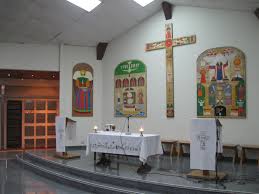
UCA's Romero Chapel
UCA’s Romero Chapel
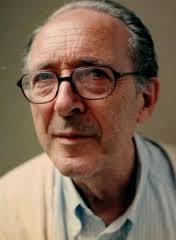
Fr.  Jon Sobrino
Fr. Jon Sobrino


That started to change when the other members of my delegation and I visited UCA’s beautiful, peaceful campus, in contrast to the noisy bustle of the rest of San Salvador, and when we had an hour’s calm, reasoned conversation with one of its professors, Fr. Jon Sobrino, S.J., a noted liberation theologian. I came away impressed with UCA and with Sobrino.

I, therefore, was shocked six months later to hear the news of the November 16, 1989, murder of six of UCA’s Jesuit professors and their housekeeper and daughter. How could such a horrible crime happen to such intelligent, peaceful human beings in that tranquil, academic setting?

Martyred Jesuits, Housekeeper & Daughter

I was even more appalled when I learned about the selfless, courageous lives of the murdered Jesuits who used their minds, education and spirits to help the poor people of that country and to work for bringing about a negotiated end to its horrible civil war.

Their deaths were repetitions of the horrible assassination of Archbishop Oscar Romero on March 24, 1980, who like the Jesuits had used his mind, education and spirit to help the poor people of his country and to condemn violent violations of human rights. The same was true of another Salvadoran Roman Catholic priest, Rutilio Grande, who was murdered in 1977 because of his protests against the regime’s persecution of the poor people, and of the 1980 murders of the four American churchwomen, who worked with the poor in that country.

Thus, Romero, Grande, the four American churchwomen and the murdered Jesuits are forever linked in my mind as profound Christian witnesses and martyrs. Their examples have strengthened my Christian faith to love God with all your heart, mind and soul and your neighbor as yourself.

UCA's Romero Chapel
UCA’s Romero Chapel
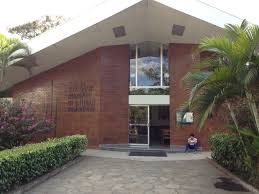
Capilla de Hospital de la Divina Providencia


All of these experiences have inspired me to learn more about El Salvador, Romero, Grande, the churchwomen and the Jesuits’ Christian witness in the midst of violence and threats to their own lives. On my subsequent five trips to that country, I always visit UCA for prayer in the Romero Chapel where the Jesuits’ bodies are buried and in the beautiful chapel of a cancer hospital where Romero was assassinated.

On my 2000 visit to El Salvador for the 20th anniversary of Oscar Romero’s assassination, my group visited UCA to spend time with its then Rector, Dean Brackley, a Jesuit priest from the U.S. who went to El Salvador to help UCA after the murders of his brother priests. He impressed me as a calm voice of reason and passion in UCA’s ministry of helping the poor and the country.

In 2010 I returned to El Salvador for the 30th anniversary of Romero’s assassination. On my delegation’s visit to UCA, we spent time with its then Rector, José Maria Tojeira, S.J.. He was an amazingly serene and soft-spoken man. He told us he was a new “church bureaucrat” (the Jesuit Provincial for Central America) at UCA in November 1989 and lived nearby, but not on the campus. During the night of November 15th-16th he heard gunfire and thought there must have been a skirmish between the Salvadoran security forces and the guerrillas. The next morning he went to the campus and was one of the first people to see the dead bodies of his six fellow Jesuits and their cook and her daughter. He nonchalantly said to our group, “That morning I thought I was the next one to be killed.” Later that day he went to his office and found faxed messages of support and solidarity from people all over the world. Then in the same casual manner, he said he thought, “Well, maybe I am not the next to be killed.”

As a result, my cloud of Salvadoran witnesses includes Oscar Romero; Rutilio Grande; the American churchwomen; the Jesuit priests; Fr. Brackley; Fr. Tojeira; Bishop Menardo Gomez of the Salvadoran Lutheran Church, who escaped a death squad on the night the Jesuits were murdered; Salvador Ibarra, who in 1989 was a lawyer for the Salvadoran Lutheran human rights office; and my Salvadoran asylum clients. Outside of El Salvador, of course, I am impressed by another Jesuit, Pope Francis.

I have been humbled to learn about the incredible courage and minds of the Jesuits, not just at UCA, but at other Jesuit universities that are generally regarded as the best of Roman Catholic institutions of higher learning. Simultaneously I am puzzled how such a marvelous group of religious men could have emerged from the Jesuits who were the shock-troops of the Counter-Reformation and did so many horrible things during the Spanish Inquisition.

All of this also inspired me to become a pro bono lawyer for Salvadorans and later others (an Afghani, a Burmese man, two Somali men and two Colombian families) who were seeking asylum or other legal status that would enable them to remain in the U.S. and escape persecution in their own countries. I always have regarded this as the most important and spiritually rewarding thing I have ever done. As I did so, I often reflected that I was able to do this in the secure and comfortable legal office of a large Minneapolis law firm. I did not have to risk my life to help others as did my Salvadoran saints.

After I had retired from practicing law in 2001, the Jesuits along with Archbishop Oscar Romero continued to inspire me to learn more about international human rights law as I co-taught a course in that subject at the University of Minnesota Law School from 2002 through 2010. In the process, I was amazed to discover the array of inter-related ways the international community had created to seek to enforce international human rights norms in a world still based essentially on the sovereignty of nation states.

I then was inspired to use my legal research and writing skills to investigate how these various ways had been used to attempt to bring to justice the perpetrators of the assassination of Archbishop Romero, the rapes and murders of the American churchwomen and the murderers of the Jesuit priests and then to share the results of that research with others on this blog. Many posts have been written about Romero, including the various unsuccessful legal proceedings to identify and punish those responsible for that crime. Other posts have discussed the criminal case still pending in Spain over the murders of the Jesuits and their housekeeper and daughter while another post summarized other legal proceedings that unsuccessfully sought to assign criminal responsibility for the murders of the Jesuit priests other than the brief imprisonment in El Salvador of two military officers.

I also have written the following other posts prompted by the 25th anniversary celebration of the lives of the priests and commemoration of their murders:

I give thanks to God for leading me in this path of discovery and inspiration.


My Vocations

The words and music about vocation at the January 26th and February 9th worship services at Minneapolis’ Westminster Presbyterian Church have inspired my general thoughts about vocation set forth in a prior post. Now I reflect on my own vocations.

Until I was in my early 40’s, I had no religious beliefs after high school and no sense of vocation.

That started to change in 1981 when I joined Westminster and embraced what I now see as my first vocation: serving the church as a ruling elder (1985-1991) and over time as an active member of several of its committees (Spiritual Growth, Communications and Global Partnerships). More recently I joined its Global Choir. After all, a new member covenants to find “a definite place of usefulness” in the church.

For 10 years (2003-2013) I served as chair of Global Partnerships, which supervises the church’s partnerships with churches and other organizations in Cuba, Cameroon, Palestine and for a time in Brazil. This lead to my going on three mission trips to Cuba, one to Cameroon and another to Brazil. As a result, I established personal friendships with people in those countries as part of our collective, and my personal, vocation of being present with our brothers and sisters in other parts of the world and standing in solidarity with them. I also learned about the history, culture and current issues of those countries. This in turn lead to a strong interest in promoting reconciliation between the U.S. and Cuba and Cuban religious freedom, and as a U.S. citizen I have endeavored to do just that.

This sense of religious institutional vocation also encompassed my serving on the Board of Trustees of United Theological Seminary of the Twin Cities for another 10-year period (1988-1998). In my small way, I helped nurture future ministers of the church. In the process I got to know interesting members of the faculty, administration and board and about the life of U.S. seminaries.

I, however, initially struggled with how to integrate my newly reclaimed religious beliefs and my life as a practicing lawyer, and over the years found ways to share this struggle with others, especially with my fellow lawyers.

One way I discovered a vocation in the practice of law resulted from experiencing the bitterness and lack of reconciliation between opposing parties in litigation and, too often, as well between their lawyers, including myself. This experience lead in the late 1980’s through the 1990’s to a personal interest in, and writing and speaking about, alternative dispute resolution (ADR), one of whose objectives is resolution of such disputes more amicably, and to my active participation in the ADR Section of the Minnesota State Bar Association.

Another and more powerful vocation involving my professional life emerged when a senior partner of my law firm in the mid-1980’s asked me to provide legal counsel to the firm’s client, the American Lutheran Church (“ALC” and now the Evangelical Lutheran Church in America). The problem: how should the ALC respond to information that the U.S. immigration agency (INS) had sent undercover agents into worship services and Bible-study meetings at ALC and Presbyterian churches in Arizona that provided sanctuary or safe places to Salvadorans and Guatemalans fleeing their civil wars.

The conclusion of this engagement was the ALC and the Presbyterian Church (USA)—my own denomination—jointly suing the U.S. government to challenge the constitutionality of such spying. Eventually the U.S. district court in Arizona held that the U.S. Constitution’s First Amendment “free exercise” of religion clause protected churches from unreasonable government investigations.

U.S. immigration law was in the background of this case, but I did not know anything about that law. I, therefore, sought to remedy that deficiency by taking a training course in asylum law from the Minnesota-based Advocates for Human Rights.

I then volunteered to be a pro bono lawyer for a Salvadoran seeking asylum in the U.S. because of his claim to a well-founded fear of persecution in his home country because of his political opinions and actions opposing its government. Again, my initial motivation for this action was to be a better lawyer for the ALC.

I discovered, however, that being a pro bono asylum lawyer was my passionate vocation while I was still practicing law and continued doing so until I retired from the practice in the summer of 2001. In addition to El Salvador, my other clients came from Somalia, Afghanistan, Burma and Colombia. I was able to assist them in obtaining asylum and thereby escape persecution. In the process, I learned more about asylum law and other aspects of immigration law as well as the horrible things that were happening in many parts of the world. I was able to use my experience and gifts in investigating and presenting facts and legal arguments to courts and officials and came to see this as one of the most important and rewarding vocations I have ever had.

In the process of this asylum work, I also learned for the first time about the humbling and courageous ministry and vocation of Salvadoran Archbishop Oscar Romero, who was assassinated in March 1980 because he repeatedly spoke out against human rights violations in his country. He now is my personal saint. I also learned about the important and courageous work in that country by the Jesuit priests and professors at the University of Central America, six of whom were murdered in November 1989 for the same reason, and they too have become heroes for me.

Another Salvadoran I met on my first trip to that country enriched my sense of the potential for vocation in practicing law. He was Salvador Ibarra, a lawyer for the Lutheran Church’s human rights office, who spoke about the joy he experienced in his work.

After retiring from the full-time practice of law in 2001, I served as an Adjunct Professor at the University of Minnesota Law School (2002 through 2010) to co-teach international human rights law. I thereby hoped to encourage law students to become interested in the field and to include such work in their future professional lives. Thus, this became another vocation with the side benefit of enabling me to learn more about the broader field of international human rights.

I chose another retirement in 2011, this time from part-time teaching, in order to start this blog about law, politics, history and religion. I came to see it as yet another vocation. I think it important to share my religious experiences and beliefs in the midst of active consideration of legal and political issues and demonstrate that it is possible for an educated, intelligent individual to have such beliefs.

In 2011 as a member of the planning committee for my Grinnell College class’ 50th reunion. I thought we should do more to remember our deceased classmates than merely list their names in our reunion booklet. I, therefore, suggested that if each committee member wrote five or six obituaries, we would have written memorials for all of our departed classmates. However, no one else volunteered to participate in this project so I did it all myself except for a few written by spouses. After the reunion, I continued to do this when the need arises.

Although this project required a lot of work, I came to see it as pastoral work and rewarding as I learned about the lives of people, many of whom I had not really known when we were together as students. I drew special satisfaction when I learned that a classmate who had died in his 30’s had two sons who had never seen the College annuals that had a lot of photographs of their father as a physics student and co-captain of the football team, and I managed to find a set of those annuals which were sent to the sons. I thus came to see this as a vocation.

Many of these vocations resulted from invitations from others to do something, which I accepted. Initially the invitations did not seem to be calls for a vocation, and it was only after doing these things and reflecting upon them that I saw them as such.

The concept of vocation often seems like doing something for others without any personal rewards other than feeling good about helping others. I, therefore, am amazed by the many ways I have been enriched by these endeavors. I have learned about different areas of the law, different countries and the lives of interesting people, living and dead.

I feel blessed that I have discovered at least some of the work that God has called me to do, in Frederick Buechner’s words, “the work that I need most to do and that the world most needs to have done.”

Or as Rev. Hart-Andersen said on February 9th, “When Jesus calls we get up and go, stepping forward in the direction of the one calling us. Being a follower of Jesus is not a destination . . . . Being called to follow Jesus is a way of life, a pilgrimage on which we embark together.”

What’s next?


Ecuador’s Dispute with the United Kingdom and Sweden Over Julian Assange: Granting Asylum to Assange

On August 16, 2012, the Government of Ecuador made its decision to grant the petition for diplomatic asylum submitted by Julian Assange, an Australian national temporarily residing at the Ecuadorian Embassy in London, United Kingdom (“the Decision”).[1] The U.K. and Sweden challenge the legitimacy of this action, and this post will explore the issues relating to this dispute.[2]

The Decision sets forth a list of what it describes as 12 “fundamental principles of general international law” regarding asylum that purportedly support its grant of asylum. These principles are said to be derived from, and supported by, Ecuador’s own laws regarding asylum and 16 international treaties and declarations.

The Decision also states what it deems to be the relevant facts for the application along with a summary of Ecuador’s efforts to cooperate with the governments of the U.K., Sweden and the U.S. and the measures Ecuador will seek from the U.K. regarding Assange.

Let us examine these legal and factual assertions.

The Relevant Law

In its extensive legal discussion, the Decision fails even to mention what, in my opinion, is the essential first step in any such analysis: the International Court of Justice’s  judgment in 1950 that diplomatic asylum was not part of general international law.

In Colombian-Peruvian Asylum Case, I.C.J. Rep. 1950, p. 266 (Nov. 20, 1950), the court concluded, “A decision to grant diplomatic asylum involves a derogation [or departure] from the sovereignty of [the territorial] . . .  State [where the diplomatic premises are located]. It withdraws the offender from the jurisdiction of the territorial State and constitutes an intervention in matters which are exclusively within the competence of that State. Such a derogation from territorial sovereignty cannot be recognized [as a matter of general international law] unless its legal basis is established in each particular case.” Moreover, if the State granting diplomatic asylum had the “unilateral and definitive” authority to determine whether the offense of the asylum-seeker was a political or common crime, it would “aggravate . . . the derogation” and is “not inherent in the institution of diplomatic asylum.” (In addition, Judge Alvarez from Chile, dissenting in this case, said there also was no customary American international law of diplomatic asylum.)

Seven months later in the same case the ICJ rendered another judgment that stated, “The safety that arises out of [diplomatic] asylum cannot be construed as a protection against the laws and against the jurisdiction of legally constituted tribunals [of the host state].” (Haya de La Torre Case, I.C.J. Rep. 1951, p. 71 (June 13, 1951).)

Nor did Ecuador’s Decision refer in any way to the unsuccessful effort by Latin American countries to overrule the I.C.J. judgments by having diplomatic asylum recognized in the 1961 Vienna Convention on Diplomatic Relations or the unsuccessful U.N. effort to prepare and adopt an international, multilateral treaty on the subject of diplomatic asylum. In 1977 the U.N.’s International Law Commission concluded that there was not sufficient interest to justify any further work on the subject.

Another response to these ICJ rulings was an Inter-American Conference in Caracas, Venezuela on March 28, 1954, that adopted the text of the Inter-American Convention on Diplomatic Asylum. Today it is the only such treaty in the world, and Ecuador is one of the only 14 of the 35 states of the Organization of American States that have ratified that treaty.[3] In other words, 179 of the 193 U.N. member states have not adopted this or any similar treaty. The U.K. and Sweden, which are not in the Inter-American system, obviously are not parties to this treaty; nor is the U.S., which was eligible to sign and ratify. As a result, this treaty cannot and does not impose any legal obligations on the U.K., Sweden or the U.S.

It, therefore, is not too surprising that Ecuador’s Decision does not analyze the terms of this treaty for the current dispute although it is on the list of 16 international treaties and declarations that purportedly support the Decision.

Even more damning, the Decision does not address the clear problem facing all instances of diplomatic asylum, as pointed out in the ICJ judgment. A decision like Ecuador’s to grant asylum to someone in one of its embassies in a foreign country is at least a potential infringement upon the competence of that foreign country. Such an infringement or derogation cannot be ignored. Indeed, as discussed in a prior post, Article 41(1) of the Vienna Convention on Diplomatic Relations states that “it is the duty of all persons enjoying such [diplomatic] privileges and immunities to respect the laws and regulations of the receiving State. They also have a duty not to interfere in the internal affairs of that State. . . .” In addition, Article 41(3) of that Convention provides that the “premises of the mission must not be used in any manner incompatible with the functions of the mission as laid down in the present Convention or by other rules of general international law or by any special agreements in force between the sending and the receiving State.”

Instead of focusing on these clearly relevant legal issues, Ecuador’s Decision merely lists 15 other treaties and declarations that mention asylum while not offering direct legal support for the Decision. They are the following:

  • All four of the countries involved in the current dispute are parties to the Convention Relating to the Status of Refugees, which is the major general treaty on refugees and asylum and which was discussed in a prior post. But it does not apply for various reasons. Assange cannot claim he has a “well-founded fear of persecution” on certain grounds in his home country of Australia, and the treaty excludes “any person with respect to whom there are serious reasons for considering that . . . [he] has committed a serious non-political crime [here, in Sweden]  outside the country of refuge prior to his admission to that country as a refugee . . . .”
  • Ecuador was a state party to five of the other cited treaties that mentioned asylum, but they are not relevant to the current application or grant of asylum.[4]
  • Another four treaties mention asylum, but they are from other regions of the world, and Ecuador is not, and could not be, a state party to them.[5]
  • One treaty does not mention asylum at all. Instead it is a treaty on the interpretation of treaties.[6]
  • The last four of the 16 cited sources are declarations, not treaties, and thus are not sources of binding international legal obligations on any state.[7]

Nor is the possibility of the U.S.’ seeking or imposing the death penalty on Assange for the crime of making public secret U.S. documents “persecution” under international law. Under Article 6 (2) of the International Covenant on Civil and Political Rights, “In countries which have not abolished the death penalty, sentence of death may be imposed only for the most serious crimes in accordance with the law in force at the time of the commission of the crime and not contrary to the provisions of the present Covenant . . . .  This penalty can only be carried out pursuant to a final judgment rendered by a competent court.” [8]

The U.K. and Sweden as well as other countries in Europe, however, have a different opinion regarding the propriety of the death penalty after initially permitting such in Article 2(1) of the European Convention for the Protection of Human Rights and Fundamental Freedoms of 1953. This changed in 1985, when Protocol No. 6 to this treaty went into force and provided in Article 1, “The death penalty shall be abolished. No one shall be condemned to such penalty or execution.” [9]

As a result, those 46 European states that have ratified Protocol No.6, including the U.K. and Sweden, routinely deny requests to extradite suspects to the U.S. when there are true risks of the imposition of the death penalty.

Indeed, the U.S.’ extradition treaty with the European Union, to which both the U.K. and Sweden belong, expressly provides that when an offense for which extradition is sought is punishable by death under the law of the requesting state [here theoretically, the U.S.] but not under the law in the requested state [here theoretically, the U.K. or Sweden], the requested state may grant the extradition on condition that the death penalty shall not be imposed or if imposed shall not be carried out. A similar provision is included in the recent extradition treaty between the U.S. and the U.K.

Assange, therefore, cannot have a “well-founded fear” of imposition of the death penalty even if it were regarded as “persecution,” which it is not.

Perhaps Ecuador was implicitly suggesting that the 11 of the 16 listed instruments that occurred after the previously mentioned ICJ decision of 1950 changed the general international law regarding diplomatic asylum. The Decision hints at this when it said, “The lack of international convention or internal legislation of the States cannot be legitimately claimed to limit, impinge or deny the right to asylum.” But a recent  treatise on public international law asserts that this type of asylum is not part of general international law as does a recent thesis at the University of Leiden,  a contemporary expert and London’s Economist.  Ecuador’s veiled contrary suggestion, I submit, is patently ridiculous.

The U.K. certainly disagrees with Ecuador’s legal argument.

On August 17th (the day after the grant of asylum), the U.K.’s Foreign Secretary William Hague stated that the U.K. “was disappointed” in this decision and would not allow Assange safe passage out of the country. “The UK does not accept the principle of diplomatic asylum. It is far from a universally accepted concept: the [U.K.] is not a party to any legal instruments which require us to recognize the grant of diplomatic asylum by a foreign embassy in this country. Moreover, it is well established, even for those countries which do recognize diplomatic asylum, it should not be used for the purposes of escaping the regular processes of the courts.” In addition, the U.K. has “painstakingly explained the extensive human rights safeguards built into our law.”

These points were reiterated at the August 24th OAS meeting by the UK’s Permanent Observer, Philip Barton. He said the U.K. was not party to the Inter-American Convention on Diplomatic Asylum, and “there is no legal basis for the [U.K.] to meet the request of . . . Ecuador to grant safe passage for Mr. Assange out of the [U.K.].” He also said the U.K. has advised Ecuador about “the safeguards in place under the European Convention on Human Rights, international law, European Union law and [U.K.] law [that] fully address the concerns raised by Mr. Assange and by . . . Ecuador.”

Observer Barton further told the OAS meeting representatives that the purported concern about Assange’s human rights upon extradition to Sweden was “completely unfounded,” and an “argument to this effect was comprehensively rejected by the courts in the UK.” The U.K. and Swedish courts “robustly implement and adhere to the highest standards of human rights protection.”

In any event, the Decision’s legal argument, in my opinion, is not persuasive.

The Relevant Facts

The Decision starts its statement of the relevant facts with the noncontroversial: Assange is a communication professional with international awards for his struggle for freedom of expression, freedom of press and human rights, and through WikLeaks he has publicized documents from different sources. The Decision then provides more contentious, and I think unfounded, assertions.

According to Ecuador’s Decision, the U.S. and other countries that produced these documents have threatened retaliation risking Assange’s safety, integrity and even his life and have refused to provide guarantees to protect his life and safety. Extradition of Assange to a third country outside the European Union [the U.S.] is feasible without the proper guarantees for his safety and personal integrity. If extradited to the U.S., Assange would not have a fair trial; he could be judged by a special or military court; and he probably would receive cruel and demeaning treatment and be condemned to a life sentence or the death penalty.

Other than stating the U.S. is not a party to the Inter-American Convention on Diplomatic Asylum and does not recognize the concept of diplomatic asylum, the U.S. has declined to comment on the merits of the dispute and has urged trilateral negotiations by the parties to resolve the dispute. There, however, is no credible evidence for Assange and Ecuador’s impugning the independence of fairness of the U.S. federal judicial system, and any risk of capital punishment in the U.S. would be eliminated by the European practice and law forbidding extradition to other countries where there is a risk of such punishment.

Any accusation against the independence and honesty of the U.K. courts is absurd. Indeed, Assange in 2011-2012 challenged his extradition to Sweden on the merits in the U.K. courts (magistrate’s court, High Court and Supreme Court) without any objection to the procedural rights he was accorded.

Ecuador’s Decision also has harsh allegations against the Swedish prosecutor’s office with respect to its ongoing investigation of Assange on criminal sexual charges. That office allegedly has prevented Assange from the total exercise of his legitimate right to defense to criminal charges. His procedural rights allegedly have been infringed during that investigation. Pretrial detention of Assange in Sweden would facilitate his extradition to a third country, i.e., the U.S.

Sweden has strongly rejected these charges. It did so at meetings with Ecuador’s Ambassador in Stockholm shortly after June 19th (when Assange arrived at the Ecuadorian Embassy in London) and on August 16th. This rebuttal, in part, emphasized that in the last months of 2010 Assange challenged the European Arrest Warrant on the merits in Swedish courts (district court, court of appeal and Supreme Court) without any objection to the procedural protections of Swedish law.

In addition, after Assange was in temporary “residence” at the Ecuadorian Embassy, Sweden rejected his offer to be interrogated at that Embassy with respect to the Swedish investigation. Sweden did so because it wanted to confront Assange in Sweden with the existing evidence and conduct supplementary interviews of others depending upon what Assange had to say. The Swedish prosecutors also wanted him in their country to assure his presence at any criminal trial that might result from the investigation, as required by their law.

At the OAS meeting on August 24th, a Swedish diplomat stressed that Sweden had an independent judiciary that needed to proceed with investigation of Assange’s alleged sexual offenses. There had been no request to Sweden for extradition to a third country, she added, but European and Swedish law prohibits extradition when there is a risk of capital punishment.

The Decision also says the governments of the U.K., Sweden and the U.S. will “not respect the international conventions and treaties and would give priority to internal laws of secondary hierarchy, contravening explicit norms of universal application.” It is difficult to understand exactly what Ecuador means by this allegation. If it means that the U.K., Sweden and the U.S. do not agree with Ecuador’s legal argument, then that is certainly correct.

In summary, there is no credible evidence to support the extreme accusations against the judicial systems of the U.K., Sweden and the U.S.

Conclusion

Ecuador’s granting of asylum to Assange, in my opinion, is wrong on the law and wrong on the facts. Indeed, there is speculation in the press that the real reason for President Correa’s deciding to grant “asylum” in this case was to enhance his own political standing in his own country for next year’s presidential election.

Other than litigating these issues before the International Court of Justice or arbitrating or mediating them before a neutral third party, the only other peaceful way to resolve this dispute is for the parties to do so through diplomatic negotiations, as recommended by the OAS on August 24th.

——————————————————-

[1] According to the Decision, Assange’s written asylum application was submitted on June 19th with a June 25th written supplement, but neither of these documents is publicly available. This secrecy seems more than ironic for the self-proclaimed advocate for public transparency and disclosure. It also is ironic for Ecuadorian President Correa, who is known for his hostility to the press, to be the defender and protector of Assange.

[2] A prior post set forth the background for this dispute, and another post discussed the issue of the inviolability of the Ecuadorian Embassy in London.

[3]  The other 13 parties to the Inter-American Convention on Diplomatic Asylum are Argentina, Brazil, Costa Rica, Dominican Republic, El Salvador, Guatemala, Haiti, Mexico, Panama, Paraguay, Peru, Uruguay and Venezuela.

[4] U.N. Charter, Art. 1(3) (one of U.N. purposes is achieving “universal cooperation in . . . promoting and encouraging respect for human rights”); American Convention on Human Rights, Art. 22.7 (“Every person has the right to seek and be granted asylum in a foreign territory, in accordance with the legislation of the state and international conventions, in the event he is being pursued for political offenses or related common crimes”); Inter-American Convention for Extradition (no extradition when “the person sought has been tried or sentenced or is to be tried before an extraordinary or ad hoc tribunal of the requesting State” (Art. 4.3) or when “the offense for which the person is sought is a political offense, an offense related thereto, or an ordinary criminal offense prosecuted for political reasons” (Art. 4.4) or when “persecution for reasons of race, religion or nationality is involved, or that the position of the person sought may be prejudiced for any of these reasons” (Art. 4.5): and Convention may not “be interpreted as a limitation on the right of asylum when its exercise is appropriate” (Art. 6)); Inter-American Convention on Territorial Asylum, (“Every State has the right, in the exercise of its sovereignty, to admit into its territory such persons as it deems advisable” (Art. I); this includes persons who “are persecuted for their beliefs, opinions, or political affiliations, or for acts which may be considered as political offenses” (Art. II); no “obligation to surrender to another State, or to expel from its own territory, persons persecuted for political reasons or offenses” (Art. III); no extradition of persons “sought for political offenses, or for common offenses committed for political ends, or when extradition is solicited for predominantly political motives” (Art. IV)); Geneva Convention [IV] Relative to Protection of Civilian Persons in Time of War, Art. 45 (“In no circumstances shall a protected person be transferred to a country where he or she may have reason to fear persecution for his or her political opinions or religious beliefs”).

[5] African Charter on Human and Peoples’ Rights, Art. 12.3 (“Every individual shall have the right, when persecuted, to seek and obtain asylum in other countries in accordance with laws of those countries and international conventions”); European Union Charter of Fundamental Rights, Art. 46 (“Every citizen of the [European] Union shall, in the territory of a third country in which the Member State of which he or she is a national is not represented, be entitled to protection by the diplomatic or consular authorities of any Member State, on the same conditions as t he nationals of that Member State”); European Convention on the Suppression of Terrorism, Art. 5 (“no obligation to extradite if the requested State has substantial grounds for believing that the request for extradition . . . has been made for the purpose of prosecuting or punishing a person on account of his race, religion, nationality or political opinion, or that that person’s position may be prejudiced for any of these reasons”); European Extradition Treaty, Art. 3.1 (“Extradition shall not be granted if the offence in respect of which it is requested is regarded by the requested Party as a political offence or as an offence connected with a political offence”).

[6] Vienna Convention on the Law of Treaties, Art. 53 (“treaty is void if . . . it conflicts with a peremptory norm of general international law . . . . [i.e.,] a norm accepted and recognized by the international community of States as a whole as a norm from which no derogation is permitted and which can be modified only by a subsequent norm of general international law having the same character”), Art. 64 (“If a new peremptory norm of general international law emerges, any existing treaty which is in conflict with that norm becomes void and terminates”), Art. 66(b) (A party to a “dispute concerning the application or the interpretation of article 53 or 64 may . . .submit it to the International Court of Justice for a decision”).

[7]  Universal Declaration of Human Rights, Art. 14 (“Everyone has the right to seek and to enjoy in other countries asylum from persecution. This right may not be invoked in the case of prosecutions genuinely arising from non-political crimes or from acts contrary to the purposes and principles of the [U.N.]”);U.N. Declaration on Territorial Asylum (recommends territorial asylum practices include asylum for “persons struggling against colonialism” (Art. 1.1) , non-rejection of persons at the frontier and non-explusion to state where person may be subjected to persecution (Art. 3.1)); American Declaration of the Rights and Duties of Man, Art. 27 (“Every person has the right, in case of pursuit not resulting from ordinary crimes, to seek and receive asylum in foreign territory, in accordance with the laws of each country and with international agreements”); Cartegena Declaration (at 1984 meeting to discuss protection of refugees in Central America, Mexico & Panama, reiteration of “importance of non-refoulement (including the prohibition of rejection at the frontier)”).

[8]  In addition, Article 1 (1) of the Convention Against Torture and Other Cruel, Inhuman or Degrading Treatment or Punishment states that “torture” “does not include pain or suffering arising from, inherent in or incidental to lawful sanctions.”

[9]  It should be noted that Protocol No. 6 had an exception that allowed the death penalty in times of war, but in 1988, Protocol No. 13 to the European Human Rights Convention eliminated this exception. Both the U.K. and Sweden have ratified Protocol No. 13.
Ecuador’s Dispute with the United Kingdom and Sweden over Julian Assange: Background

Assange @                      Ecuadorian Embassy
Ecuadorian Embassy, London

On August 16, 2012, the Government of Ecuador granted the petition for asylum submitted by Julian Assange, an Australian national temporarily residing at the Ecuadorian Embassy in London, United Kingdom.[1]

Assange, of course, is the individual behind WikiLeaks, the international, online, self-described not-for-profit organization publishing submissions of private, secret, and classified media from anonymous news sources, news leaks and whistleblowers. In 2010 it obtained many secret U.S. documents and released them to the world through various media outlets.[2]  No U.S. criminal charges have been publicly filed against Assange with respect to the releases of these U.S. government documents, but he fears that such charges secretly have been filed or will be filed and that such charges may seek life imprisonment or the death penalty.[3]

In August 2010 Assange was visiting Sweden, where he allegedly had certain sexual encounters with two Swedish women, who subsequently filed some kind of complaint about these encounters with Swedish authorities. As a result, these authorities have been investigating whether Assange committed rape or some other kind of sexual assault on these women. To pursue that investigation the authorities obtained an European Arrest Warrant to extradite Assange to Sweden for questioning.

In December 2010 Assange, then in Britain, learned about the European Arrest Warrant and voluntarily went to a British police station to advise them of his whereabouts. He immediately was arrested and taken into custody. After a short stay in prison, Assange was freed on bail of  £340,000 (nearly $540,000), of which £ 200,000 was deposited with the court, plus his being confined to  a specific site in Norfolk, England, fitted with an electronic tag and ordered to report to police daily.

Assange then went to the U.K. courts to challenge his extradition to Sweden.  In February 2011, however, a U.K. court upheld the Swedish request, which was affirmed nine months later (November) by the U.K.’s High Court and in May 2012 by the U.K.’s Supreme Court (5 to 2). In addition, that Supreme Court on June 14th denied Assange’s request for a rehearing and ordered that he be extradited to Sweden by July 7th.

Thereafter (on June 19th) Assange somehow violated the terms of his bail and managed secretly to enter the Ecuadorian Embassy in London, where he filed his claim for asylum.

In the roughly two months between June 19th and Ecuador’s August 16th’s granting of asylum, the governments of Ecuador and the U.K. apparently had private diplomatic exchanges and public sparring over this situation. Especially significant in light of later developments were the following incidents:

  • On August 15th, the U.K. Embassy in Quito apparently delivered a letter to Ecuador’s Ministry of Foreign Affairs that said: “You need to be aware that there is a legal base in the UK, the Diplomatic and Consular Premises Act 1987, that would allow us to take actions in order to arrest Mr Assange in the current premises of the Embassy.” The letter purportedly also stated, “We need to reiterate that we consider the continued use of the diplomatic premises in this way incompatible with the Vienna Convention [on Diplomatic Relations] and unsustainable and we have made clear the serious implications that this has for our diplomatic relations.”  The latter added, “”We sincerely hope that we do not reach that point, but if you are not capable of resolving this matter of Mr. Assange’s presence in your premises, this is an open option for us.”
  • The Ecuadorian government immediately and publicly disclosed some of the contents of the August 15th letter and characterized the statements just quoted as “threats against the sovereignty of the Ecuadorean embassy” and as “a clear breach of international law and the protocols set out in the Vienna Convention [on Diplomatic Relations].”
  • In response, the U.K. Foreign Office stated, “The UK has a legal obligation to extradite Mr. Assange to Sweden to face questioning over allegations of sexual offences and we remain determined to fulfill this obligation.” Therefore, “it is only right that we give Ecuador the full picture. Throughout this process we have drawn the Ecuadorians’ attention to relevant provisions of our law, whether, for example, the extensive human rights safeguards in our extradition procedures, or the legal status of diplomatic premises in the UK.” Moreover, the U.K. stated its continued commitment “to reaching a mutually acceptable solution.”
OAS Building, Washington, D.C.

On August 24th, at Ecuador’s request, the Organization of American States (OAS) held an extraordinary Meeting of Consultation of Ministers of Foreign Affairs, to discuss the dispute. This meeting concluded with a unanimous resolution focused on the inviolability of diplomatic missions under international law. A subsequent post will review this OAS meeting and the legal issue of the status of diplomatic missions in host countries.

Another subsequent post will examine the merits of the Assange asylum claim.

In the meantime, Assange continues to be a full-time “guest” at the Ecuadorian Embassy in London.


[1] This post is drawn from caches of articles about all of these events in the New York Times and the Guardian.

[2] By happenstance, as reported in a prior post, some of the U.S. government documents released by WikiLeaks were cables from the then U.S. Ambassador to Ecuador, Heather Hodges, to the U.S. State Department in Washington, D.C. asserting that there were multiple reports of illegal activities by Ecuador’s national police chief and that Ecuador’s President Correa might use these activities to manipulate the police chief. After these cables became public, President Correa called these statements “unacceptable, malicious and imprudent” and expelled Hodges. In retaliation, the U.S. expelled the Ecuadorian Ambassador to the U.S., Luis Gallagos. Both Hodges and Gallagos, in my opinion, are honorable professional diplomats, and neither one did anything wrong.

[3] A U.S. national and member of the U.S. Armed Forces, Bradley Manning, allegedly participated in obtaining these documents for WikiLeaks, and he currently is in U.S. custody facing criminal charges for that alleged conduct. Discussion of the many issues relating to his case is beyond the scope of this post.

Somali Immigrant Meets Star of “M*A*S*H” TV Show

Tonight, June 21st, a Somali immigrant, Ifrah Jimale, met Mike Farrell, the actor who played Captain B.J. Hunnicutt on the long-running, popular U.S. TV series “M*A*S*H.”  The occasion was the annual fund-raising dinner and celebration for the Minneapolis-based Advocates for Human Rights.

Ifrah Jimale

Ms. Jimale told her amazing and moving personal story to the audience of 1,000 people.

In the Somali nomadic tradition, she was sent by her family to the U.S. to see if it was a place where the family could live in peace and security.

Her initial impressions of the U.S. were not positive. At the Cincinnati airport, when she told a U.S. immigration agent that she was a “refugee,” Ifrah was immediately detained and jailed and forced to wear a red jump suit. After a considerable period in a Cincinnati jail, she was told that she was being transferred to another immigration detention facility in Atlanta. She had no idea where that was; she thought it might be in Mexico. In Atlanta she was kept in that detention facility for another period of time. Finally she was released into the care of a relative.

She then came to Minnesota, where she was put in touch with Advocates. The organization provided her a pro bono (no fee) attorney, who helped her obtain asylum in the U.S.

Ifrah was illiterate when she came to the U.S., but she found a Minnesota teacher who taught her how to read and write. Eventually Ifrah obtained a college degree at the University of St. Thomas in St. Paul, Minnesota. She now is a journalist with a blog for the Twin Cities Daily Planet called “Ask a Somali.” Earlier this month the Minnesota Society of Professional Journalists awarded her blog second place in the independent news blog category.

Her June 12th blog posting is a good example of her writing. The question was, “I keep seeing Somali women with cellphones tucked into their headscarves. Is this a common thing?” She answered that it is now common in the Twin Cities, but she advised her Somali sisters to take a lesson in looking ridiculous from Somali men, and walk around with a bluetooth headset everywhere you go.” In an aside that was educational for we non-Somalis, Ifrah said, “If you don’t think that women wearing hijabs care about fashion, take another look at all of the beautiful colors and ways of wearing them.”

Ifrah with a big smile thanked Advocates for helping her to find her life in the U.S.

Mike Farrell

Mike Farrell, a native of St. Paul, Minnesota, was this year’s recipient of the Don and Arvonne Fraser Human Rights Award. I discovered that he is a long-time activist for human rights and social justice, especially against the death penalty.  He is the President of Death Penalty Focus. It “is one of the largest nonprofit advocacy organizations in the nation dedicated to the abolition of capital punishment through public education; grassroots and political organizing; original research; media outreach; local, state and nationwide coalition building; and the education of religious, legislative and civic leaders about the death penalty and its alternatives.”

Farrell concluded the program with an eloquent, passionate call for everyone to stand up and take action to protect human rights. (I hope that the speech will be published and that I can add it in a Comment to this post.)

My May 20, 2011, post, “Two Women “Shakers” Rock Minneapolis Dinner,” reported on last year’s annual dinner for Advocates for Human Rights.

Aung San Suu Kyi’s Nobel Peace Prize

Myanmar (Burma)
Aung San      Suu Kyi

On June 16, 2012, Aung San Suu Kyi gave her lecture in Oslo, Norway accepting the Nobel Peace Prize awarded her 21 years ago. She was unable to be present on that prior occasion because she was under house arrest in her native Myanmar (Burma) for protesting the abuses of its military regime.

The 1991 Peace Prize Presentation

Nobel Prize Medal

When the Prize was presented in absentia in 1991 for her non-violent struggle for democracy and human rights in Burma, the Chairman of the Norwegian Nobel Committee said, “In the good fight for peace and reconciliation, we are dependent on persons who set examples, persons who can symbolise [sic]what we are seeking and mobilise [sic] the best in us. Aung San Suu Kyi is just such a person. She unites deep commitment and tenacity with a vision in which the end and the means form a single unit. Its most important elements are: democracy, respect for human rights, reconciliation between groups, non-violence, and personal and collective discipline.”

The presentation continued, “The central position given to human rights in her thinking appears to reflect a real sense of the need to protect human dignity. Man is not only entitled to live in a free society; he also has a right to respect. On this platform, she has built a policy marked by an extraordinary combination of sober realism and visionary idealism. And in her case this is more than just a theory: she has gone a long way towards showing how such a doctrine can be translated into practical politics.”

An “absolute condition [for such a translation] is fearlessness,” the Nobel Chairman stated. He added that Aung San Suu Kyi had said “it is not power that corrupts, but fear. The comment was aimed at the totalitarian regime in her own country. They have allowed themselves to be corrupted because they fear the people they are supposed to lead. This has led them into a vicious circle. In her thinking, however, the demand for fearlessness is first and foremost a general demand, a demand on all of us. She has herself shown fearlessness in practice.”

The Nobel Committee concluded its 1991 statement  with the words: “In awarding the Nobel Peace Prize … to Aung San Suu Kyi, the Norwegian Nobel Committee wishes to honour [sic] this woman for her unflagging efforts and to show its support for the many people throughout the world who are striving to attain democracy, human rights and ethnic conciliation by peaceful means.”

Recognizing her inability to be present for the award in 1991, the Nobel Committee Chairman said, “The great work we are acknowledging has yet to be concluded. She is still fighting the good fight. Her courage and commitment find her a prisoner of conscience in her own country, Burma. Her absence fills us with fear and anxiety . . . .”

Aung San Suu Kyi’s Acceptance Speech

Aung San Suu Kyi @          Oslo City Hall
Aung San Suu Kyi (Photo: Daniel S. Lauten/AFP/            Getty Images

Twenty-one years later, Aung San Suu Kyi formally accepted the 1991 Peace Prize in the City Hall of Oslo, Norway. The text and video of the speech are available online.

She talked about the impact in 1991 of learning of the award while she was under house arrest. “Often   . . .  it felt as though I were no longer a part of the real world. There was the house which was my world, there was the world of others who also were not free but who were together in prison as a community, and there was the world of the free; each was a different planet pursuing its own separate course in an in different universe. What the Nobel Peace Prize did [in 1991] was to draw me once again into the world of other human beings outside the isolated area in which I lived, to restore a sense of reality to me. . . . And what was more important, the Nobel Prize had drawn the attention of the world to the struggle for democracy and human rights in Burma. We were not going to be forgotten.”

She continued, “To be forgotten . . .  is to die a little. It is to lose some of the links that anchor us to the rest of humanity. . . . When the Nobel Committee awarded the Peace Prize to me they were recognizing that the oppressed and the isolated in Burma were also a part of the world, they were recognizing the oneness of humanity. So for me receiving the Nobel Peace Prize means personally extending my concerns for democracy and human rights beyond national borders. The Nobel Peace Prize opened up a door in my heart.”

“The Burmese concept of peace,” she explained, is “the happiness arising from the cessation of factors that militate against the harmonious and the wholesome. . . . Everywhere there are negative forces eating away at the foundations of peace. Everywhere can be found thoughtless dissipation of material and human resources that are necessary for the conservation of harmony and happiness in our world.”

“Are we not still guilty, if to a less violent degree, of recklessness, of improvidence with regard to our future and our humanity? War is not the only arena where peace is done to death. Wherever suffering is ignored, there will be the seeds of conflict, for suffering degrades and embitters and enrages.”

While living in isolation she said she ruminated over the meaning of the Buddhist concept of the six great “dukha” or suffering: “to be conceived, to age, to sicken, to die, to be parted from those one loves, to be forced to live in propinquity with those one does not love. . . . I thought of prisoners and refugees, of migrant workers and victims of human trafficking, of that great mass of the uprooted of the earth who have been torn away from their homes, parted from families and friends, forced to live out their lives among strangers who are not always welcoming.”

“How often during my years under house arrest have I drawn strength from my favourite [sic] passages in the preamble to the Universal Declaration of Human Rights:

  • ……. disregard and contempt for human rights have resulted in barbarous acts which have outraged the conscience of mankind, and the advent of a world in which human beings shall enjoy freedom of speech and belief and freedom from fear and want has been proclaimed as the highest aspirations of the common people,
  • …… it is essential, if man is not to be compelled to have recourse, as a last resort, to rebellion against tyranny and oppression, that human rights should be protected by the rule of law . . .”

“The peace of our world is indivisible,” Aung San Suu Kyi continued.” As long as negative forces are getting the better of positive forces anywhere, we are all at risk. It may be questioned whether all negative forces could ever be removed. The simple answer is: ‘No!’ It is in human nature to contain both the positive and the negative. However, it is also within human capability to work to reinforce the positive and to minimize or neutralize the negative. Absolute peace in our world is an unattainable goal. But it is one towards which we must continue to journey, our eyes fixed on it as a traveller in a desert fixes his eyes on the one guiding star that will lead him to salvation. Even if we do not achieve perfect peace on earth, because perfect peace is not of this earth, common endeavours [sic] to gain peace will unite individuals and nations in trust and friendship and help to make our human community safer and kinder.”

She then emphasized kindness. [The] most precious . . . [lesson from her isolation] I learnt . . . [was] the value of kindness. Every kindness I received, small or big, convinced me that there could never be enough of it in our world. To be kind is to respond with sensitivity and human warmth to the hopes and needs of others. Even the briefest touch of kindness can lighten a heavy heart. Kindness can change the lives of people. ”

Aung san Suu Kyi concluded with these words. “Ultimately our aim should be to create a world free from the displaced, the homeless and the hopeless, a world of which each and every corner is a true sanctuary where the inhabitants will have the freedom and the capacity to live in peace. Every thought, every word, and every action that adds to the positive and the wholesome is a contribution to peace. Each and every one of us is capable of making such a contribution. Let us join hands to try to create a peaceful world where we can sleep in security and wake in happiness.”

Conclusion

I have never been to Myanmar (Burma), and I do not know the history of that country in any great detail. But in 2001 as a pro bono attorney I helped a Burmese man obtain asylum in the U.S. because of his well-founded fear of persecution if he returned to his homeland due to his political opposition to its military regime. He had been arrested in his home country for distributing video tapes of the movie “Beyond Rangoon [now Yangon],” which was critical of the military regime.

Aung San Suu Kyi also suffered persecution because of her political opinions and thereby demonstrated the importance of human rights for her and for all of us. I share this belief in human rights although I never have had to pay the personal cost she did. I also share with her the experience of having “read” Philosophy, Politics and Economics at the University of Oxford.

Aung San Suu Kyi’s life and her acceptance speech are especially moving for me.

U.S. Releases Annual Report on Human Rights in the World

On May 24, 2012, the U.S. Department of State released its annual report on human rights conditions in every other country in the world. Secretary of State Clinton said that the reports “make clear to governments around the world: We are watching and we are holding you accountable. And they make clear to citizens and activists everywhere: You are not alone. We are standing with you.” Assistant Secretary of State Michael Posner added, “In too many countries, egregious human rights violations continue, including torture, arbitrary detention, denial of due process of law, disappearance, and extrajudicial killings.”

The annual U.S. reports cover internationally recognized individual, civil, political, and worker rights, as set forth in the Universal Declaration of Human Rights and various international treaties. The U.S. Department of State submits reports on all countries receiving assistance and all United Nations member states to the U.S. Congress in accordance with the Foreign Assistance Act of 1961 and the Trade Act of 1974.

The Department of State prepares these reports using information from U.S. embassies and consulates abroad, foreign government officials, nongovernmental and international organizations and published reports. U.S. diplomatic missions abroad prepared the initial drafts of the individual country reports, using information they gathered throughout the year from a variety of sources, including government officials, jurists, the armed forces, journalists, human rights monitors, academics, and labor activists.

Once the initial drafts of the individual country reports are completed, the Department’s Bureau of Democracy, Human Rights and Labor, in cooperation with other Department offices, work to corroborate, analyze, and edit the reports, drawing on their own sources of information. These sources included reports provided by U.S. and other human rights groups, foreign government officials, representatives from the U.N. and other international and regional organizations and institutions, experts from academia and the media. Bureau officers also consult experts on worker rights, refugee issues, military and police topics, women’s issues, and legal matters, among many others. The guiding principle was to ensure that all information was reported objectively, thoroughly, and fairly.

As Secretary of State Clinton stated on the release of the latest report, “Congress mandated these country reports more than three decades ago to help guide lawmakers’ decisions on foreign military and economic aid, but they have evolved into something more. Today, governments, intergovernmental organizations, scholars, journalists, activists, and others around the world rely on these reports as an essential update on human rights conditions around the world – where we have seen progress, where progress has come too slowly or at great cost, and all too often, where it has been rolled back.”

In my work as a pro bono lawyer for asylum seekers in the U.S., for example, these reports were important corroborative evidence to support the claim of someone who alleges that he or she has a well founded fear of persecution on account of race, religion, ethnic group, political opinion or membership in a particular social group if returned to his or her home country. In addition, my experience with some of the country reports, especially El Salvador, has shown that over time they have become increasingly more objective.

With respect to China, the new report said that human rights had deteriorated. It cites “repression and coercion” of rights advocates, tight restrictions on political dissidents, curbs on journalists and on Internet access, and “severe cultural and religious repression” of ethnic Uighurs and Tibetans.

The next day (May 25th) China said that the U.S. report was inaccurate and irresponsible. As the Foreign Ministry spokesperson said, the report was “baseless, biased and completely wrong.” In fact, the spokesman said China has made world-recognized gains in improving human rights since broad social and economic reforms were launched 30 years ago. China’s economy has grown rapidly over the last three decades, and the government marks poverty reduction as one of its greatest human rights achievements. Moreover, the person said, “The Chinese people themselves are the most qualified to judge China’s human rights condition . . . . Countries can hold talks about human rights on equal footing to increase mutual understanding and help each other improve, but should never use the relevant issue as a tool for interfering in the internal affairs of other countries.”

China simultaneously retaliated with its report on human rights in the U.S. It criticized the arrest of Occupy Wall Street protesters and other alleged U.S. violations of civil and political rights.

The Chinese report on human rights in the U.S. reflects other countries’ frequent criticism of the U.S.’ annual reports for failure to evaluate and criticize the U.S. itself. But the U.S.’ recent submission of its own human rights record to Universal Periodic Review by the U.N. Human Rights Council, as discussed in a prior post, is another means for the U.S. to do just that with on-the-record comments and criticism by other governments.


A World of Refugees

As discussed in a prior post, a “refugee” under international law is “any person who owing to well- founded fear of being persecuted for reasons of race, religion, nationality, membership of a particular social group or political opinion, is outside the country of his nationality and is unable or, owing to such fear, is unwilling to avail himself of the protection of that country; or who, not having a nationality and being outside the country of his former habitual residence as a result of such events, is unable or, owing to such fear, is unwilling to return to it.”

The principal U.N. agency concerned with such refugees is the Office of the United Nations High Commissioner for Refugees (UNHCR), which was established by a December 1950 resolution of the U.N. General Assembly. Its purpose is to safeguard and protect the rights and well-being of refugees and the right to seek asylum. Over time its mandate has broadened to include internally displaced people (IDP) and stateless people. Every year it publishes detailed statistics on all of these people of concern to UNHCR.

For 2010 there were 33,924,000 people of concern to UNHCR in the following categories:

Category Number
Refugees 10,550,000
Asylum-seekers       837,000
IDP’s 17,621,000
Other   4,916,000
TOTAL 33,924,000

Nearly 80 % of these people were hosted in developing countries, including some of the poorest countries in the world while the U.S. had 271,000. The major sources of these people in 2010 were the following countries:

Country Number
Afghanistan   4,404,000
Colombia   4,128,000
Iraq   3,387,000
Democratic Repub. Congo   2,719,000
Somalia   2,257,000
Pakistan   2,199,000
Sudan   2,185,000
Other 12,645,000
TOTAL 33,924,000

The overall statistics for 2011 should be published by UNHCR in June 2012. Just recently it published its report on one part of this new set of statistics–asylum applications in 2011 in 44 industrialized countries, including the U.S. The total of new applications was 441,300, which was 20 % more than in 2010 (368,000). The 2011 level is the highest since 2003 when 505,000 asylum applications were lodged in the industrialized countries.  With an estimated 74,000 asylum applications, the U.S. was the largest single recipient of new asylum claims among the 44 industrialized countries. France was second with 51,900, followed by Germany (45,700), Italy (34,100), and Sweden (29,600).

There are many ways one may make U.S.-tax deductible financial contributions to organizations that help these people. These organizations include the following:

  • USA for UNHCR, which supports UNHCR’s humanitarian work to assist refugees around the world;
  • U.S. Committee for Refugees and Immigrants, which seeks to protect the rights and address the needs of persons in forced or voluntary migration worldwide by advancing fair and humane public policy, facilitating and providing direct professional services, and promoting the full participation of migrants in community life;
  • International Rescue Committee, which was founded at the request of Albert Einstein to offer care and assistance to refugees forced to flee from war or disaster;
  • American Refugee Committee (Minneapolis, Minnesota), which works to provide opportunities and expertise to refugees, displaced people and host communities around the world;
  • Center for Victims of Torture (Minneapolis, Minnesota), which helps torture-survivors from around the world heal and rebuild their lives;
  • Advocates for Human Rights (Minneapolis, Minnesota), which, among other things, provides pro bono attorneys for asylum-seekers;
  • Immigrant Law Center of [St. Paul] Minnesota, which provides quality immigration legal services, law-related education, and advocacy to meet the steadily increasing needs of Minnesota’s immigrant and refugee communities;

The Persistence of the Inquisition

The Inquisition was a phenomenon limited to fifteenth and sixteenth century Spain. Correct? Not so says Cullen Murphy in his new book, God’s Jury: The Inquisition and the Making of the Modern World and in the Atlantic Magazine’s excerpt of the book, Torturer’s Apprentice. So too does Adam Gopnik in a recent New Yorker essay about this and related books, Inquiring Minds: The Spanish Inquisition revisited.

As Gopnik puts it,  the Inquisition is “an institution as deeply rooted in modernity as the scientific tradition that it opposed. Its fanaticism, its implicit totalitarianism . . ., its sheer bureaucratic brutality  . . . make it central to who we are and what we do. Its thumbprint is everywhere. . . .” What happens at the U.S. base in Guantanamo Bay, Cuba is only one of the recent examples. Another example is the close parallels of the Spanish Inquisition’s interrogation manuals and the current U.S. manuals about “enhanced interrogation.”

Gopnik also criticizes scholars who allegedly delve into the minutia of the Spanish Inquisition and in the process lose the forest for the trees: Benzion Netanyahu (the father of the Israeli Prime Minister), Henry Kamen and Eamon Duffy.

According to Gopnik, history needs to be done with “historical imagination,” which is the “ability to see small and think big.” Without such imagination, the historian “risks a failure of basic human empathy.”  For studying and writing about the Spanish Inquisition, this means, he says, that the historian must imagine “the horror of being burned alive.”

The persistence of the practices of the Inquisition unfortunately continues to be demonstrated by the news of the day. Minneapolis’ Center for Victims of Torture has treated over 23,000 victims over the last 24 years. A similar program at New York City’s Bellevue/N.Y.U. Program for Survivors of Torture recently reported that in its “20 years of examining torture victims, we have seen few as traumatized as the several Abu Ghraib, Guantanamo and black site (secret prison) detainees whom we evaluated.” And the European Court of Human Rights recently decided that under the European Convention for the Protection of Human Rights and Fundamental Freedoms, the U.K. could not deport a radical Muslim cleric to Jordan because there was a “real risk that evidence obtained by torture will be used against him.”

We also have seen in the following prior posts the persistence of torture and the efforts to stop such conduct:

  • the negotiation and adoption of a multilateral treaty against torture (the International Convention Against Torture and Other Cruel, Inhuman or Degrading Treatment or Punishment);
  • the U.S. first and second reports to the Committee Against Torture;
  • the U.S. adoption of the Torture Victims Protection Act (TVPA);
  • the U.S. federal court lawsuit under the TVPA over the torture, rape and murders of the four American churchwomen in El Salvador;
  • the criminal cases in Spain under the principle of universal jurisdiction against U.S. officials for alleged torture of detainees in Guantanamo Bay, Cuba and for  authoring legal memoranda allegedly justifying torture;
  • the granting of asylum to a Salvadoran for having been tortured in his home country and who came to Minnesota to be treated at the Center for Treatment of Victims of Torture; and
  • the jurisdiction over torture as part of crimes against humanity (Art. 7(1)(f)) and war crimes (Art. 8(2)(a)(ii), 8(2)(c)(i)) for the International Criminal Court and other international criminal tribunals.

As a result, eternal vigilance against torture is necessary. In the U.S., for example, various religious groups have banded together in a National Religious Campaign Against Torture. Its statement of conscience says, “Torture violates the basic dignity of the human person that all religions, in their highest ideals, hold dear. It degrades everyone involved — policy-makers, perpetrators and victims. It contradicts our nation’s most cherished ideals. Any policies that permit torture and inhumane treatment are shocking and morally intolerable.”

—————————–

International Criminal Court: Protection of Witnesses

The International Criminal Court’s Trial Chamber recently confronted two interesting issues regarding protection of witnesses in its proceedings:

What should the Court do with a witness’ request not to be returned to his home country because of alleged fear of persecution due to his testimony?

What should the Court do with that witness’ claim for asylum due to an alleged well founded fear of persecution in his home country due to his                                                          political opinions as expressed in his testimony?[1]

Thomas Lubanga Dyilo

These issues arose in the ICC prosecution of Thomas Lubanga Dyilo of the Democratic Republic of the Congo (DRC), who is charged with two war crimes. One is his allegedly enlisting and conscripting of children under the age of 15 years into a Congolese rebel group (Union des Patriotes Congolais (UPC)) and using them to participate actively in hostilities in the context of an international armed conflict. The other is doing the same thing in the context of an armed conflict not of an international character.[2]

The unnamed witness (Defense Witness 19) had been in detention in the DRC pending determination of criminal charges against him. Upon the application of defense counsel, the Court requested the DRC to transfer him to the Court to testify voluntarily at the trial. The DRC agreed to this request, pursuant to Article 93(7) of the Rome Statute that requires the individual to be returned to [the DRC] after testifying.

The witness was called to testify by defense counsel, who said the witness wished to testify in public without protective measures. At the start of his testimony, however, the witness expressed concerns about his safety and that of his family in the DRC, but he did not formally request protection from the Court at that time or during the course of his testimony.

The witness testified on a broad range of subjects, including his role in the rebel group, Lubanga’s position in the group, and the group’s conduct during the conflicts. The witness seriously challenged three named individuals in the DRC government.

After his testimony was finished and after the Court’s Registry had advised the Trial Chamber that the witness needed to be returned to the DRC as soon as possible, the witness filed a formal request for protection, i.e., a stay, and eventual cancellation, of his removal to the DRC and facilitation of his asylum application to the Kingdom of the Netherlands. The Trial Chamber ordered the stay of his removal while his application for protection was considered.

Witness’ Request for Cancellation of Removal to DRC

Under Article 68(1) of the Rome Statute, the “Court shall take appropriate measures to protect the safety, physical and psychological well-being, dignity and privacy of victims and witnesses.” To assist the Court in ruling on an application for such measures, it may request its Victims and Witness Unit (VWU), pursuant to Article 68(4), to provide advice.

That was done, and the VWU told the Trial Chamber that if returned to the DRC the witness “would not be exposed to any additional risk to his security or psychological or physical well-being as a result of his testimony;” that his testimony did not provide any new information to the DRC; that the DRC had provided assurances that the witness would receive adequate protection upon return; and the VWU would monitor his treatment after return.

The Chamber concluded that the VWU was the body within the ICC with the necessary qualified staff and expertise to evaluate the risks posed to a witness, that the Court had complied with its obligations under Article 68 of the Statute to consider the application for protection, that the request for cancellation of his removal to the DRC should be denied and that the witness should be returned to the DRC. However, the Court’s Registry was instructed to contact the DRC authorities to determine what, if any, additional security measures should be implemented upon return, and the VWU was instructed to monitor the witness’ well-being.

Witness’ Application for Asylum

The ICC is not a state and is not a party to the Convention Relating to the Status of Refugees and the Protocol Relating to the Status of Refugees.[3] Therefore, the Trial Chamber concluded it had no jurisdiction to address the merits of the witness’ asylum application.

Instead, it was exclusively for the Kingdom of the Netherlands to consider and make a determination on that application. However, the Trial Chamber instructed the ICC’s Registry to afford the witness reasonable access to his lawyers on the asylum application and to work out procedures for the witness’ asylum application to be determined by the Netherlands before his return to the DRC.


[1] Redacted Decision on the request of [Defense Witness 19] for special protective measurs relating to his asylum application, Prosecutor v. Lubanga Dyilo(ICC Trial Chamber Aug. 5, 2011), http://www2.icc-cpi.int/iccdocs/doc/doc1189724.pdf; Ramji-Nogales, International criminal law meets non-refoulement (July 8, 2011), http://intlawgrrls.blogspot.com/2011/07/international-criminal-law-meets-non.html.

[2]  ICC, Prosecutor v. Thomas Lubanga Dyilo, http://www2.icc-cpi.int/Menus/ICC/Situations+and+Cases/Situations.

[3] See Post: Refugee and Asylum Law: Modern Era (July 9, 2011).