On November 1, President Trump set 18,000 as the quota for refugee admissions into the U.S. for Fiscal 2020 (October 1, 2019—September 30, 2020).[1] These admissions shall be allocated among refugees of special humanitarian concern to the United States in accordance with the following allocations:
Number
Category
5,000
Refugees who:have been persecuted or have a well-founded fear of persecution on account of religion
4,000
Iraqi refugees
1,500
Refugees who are nationals or habitual residents of El Salvador, Guatemala, or Honduras:
7,500
Other refugees
18,000
TOTAL
The President also specified that for Fiscal Year 2020, the following persons may, if otherwise qualified, be considered refugees for the purpose of admission to the United States within their countries of nationality or habitual residence: (a.) persons in Cuba; (b.) persons in Eurasia and the Baltics; (c ) persons in Iraq; (d) persons in Honduras, Guatemala, and El Salvador; and (e) in exceptional circumstances, persons identified by a United States Embassy in any location.
Moreover, President Trump added another potential barrier to refugee entrants with an executive order requiring state and local governments to provide written consent to refugee resettlements.
This quota is the lowest since the introduction of the U.S. refugee program in 1980. In Fiscal 2017, the last full year of the Obama Administration, the quota was 85,000 while the Trump Administration’s first two years (Fiscal 2018 and 2019) set the quotas at 53,000 and 30,000.
The U.N. High Commissioner for Refugees said, “At a time of record forced displacement in the world, lower admissions constrain UNHCR’s ability to deliver on its refugee protection mandate and diminish our humanitarian negotiating power at the global level. As the agency mandated by the UN General Assembly to lead and coordinate the international response to refugees, UNHCR is naturally troubled by this trend in the United States and elsewhere.”
Similar negative reactions came from international non-governmental organizations concerned with refugees.
The International Rescue Committee said the U.S. decision broke with 40 years or precedent. “This measure completely ignores the welcome that communities have provided to refugees, as well as the important contributions resettled refugees have made to these communities all across the country,” Jennifer Sime, its senior vice president, said.
Church World Service, a resettlement agency, said through Its president, Rev. John L. Mccullough, “With one final blow, the Trump administration has snuffed out Lady Liberty’s torch and ended our nation’s legacy of compassion and welcome.”
Betsy Fisher, the director of strategy for the International Refugee Assistance Project, said,“The shockingly low refugee admissions goal and the executive order will all but ensure that people in need of safety will be left in dangerous conditions and separated from their families. These policies will prevent refugees from being resettled, even though communities across the nation stand ready to welcome them.”
Austan Goolsbee, a professor of economics at the University of Chicago’s Booth School of Business and a former adviser to President Barack Obama, asserts, “The long-run health of the United States economy is in serious danger from a self-inflicted wound: the Trump administration’s big cuts in immigration.” [1]
First, he cites last year’s 70 percent decline in immigration to only 200,000 people, a principal cause of which was the Trump Administration’s “restrictions as well as the unwelcoming tone set by the president himself,” which will be exacerbated by its reduction of this year’s refugee quota to 30,000.
Second, Goolsbee says, “The impact of low immigration on the American economy will be profoundly negative, both now and in the future.”
He explains that the “growth rate of the economy comes from two parts: income growth per capita and population growth.” (Emphasis added.) However, the U.S. and other advanced economies are experiencing declining birthrates and aging populations. “The only way the United States [so far] has avoided the demographic pressure facing other rich countries is through immigration.”
“Without sustained immigration, [U.S.] economic growth will be notably slower.” Moreover, “lower immigration portends big problems because the basic American retirement system — Social Security and Medicare — relies on workers to pay for retirees, and the entire expansion of the work force over the next 15 years will come from immigration. Lower immigration rates will mean seriousfunding shortfalls for older Americans.”
Moreover, “evidence increasingly says having immigrants here makes workers born in the United States more successful.” These “immigrants start companies at twice the rate of native Americans.” There also is evidence that immigrants help foster innovation. “The essence of knowledge work is building on others’ ideas, and having fewer creative people from different backgrounds in the United States undermined the entire enterprise” under U.S. immigration laws of the 1920s that “were designed to block the entry of immigrants from Southern and Eastern Europe and from Asia in order to preserve the ethnic ‘character’ of the United States.”
In short: “Making outsiders feel unwelcome, blocking asylum seekers or putting their children in cages may succeed in reducing the flow of immigration to the United States. But the American economy will suffer.”
Conclusion
This article provides additional evidence for this blog’s consistent argument about the U.S. need for more immigrants. [2]
This blog consistently has advocated the need for more immigrants in the U.S., especially in those states, mainly rural, with declining and aging populations.[1] Several recent articles have emphasized difficulties in pursuing such a goal.
Northern New England has an aging, declining and overwhelmingly white population in a “huge collection of very, very small towns.” These states—New Hampshire, Vermont and Maine—therefore, need new residents, including immigrants.
A major obstacle to attracting new residents is the presence of the huge presence of whites. The reasons for this white population “stem from a variety of factors, including a lack of big urban areas, where jobs are more plentiful, [where] a wider range of housing is available and [where] cultural differences are a little more accepted than in smaller places.”
According to Peter Francese, a demographic analyst based in Exeter, N.H., “’Housing is at the core of why there aren’t more immigrants — there’s no place for them. An ethnic person who wants to come in with a family of four or five people is not going to find a home they can afford, and there’s almost no rental housing whatsoever.’ In addition, Northern New England has the nation’s highest concentration of second homes, making the housing market especially tight.”
In addition, he said, “much of any newer housing is only for people 55 or older. If developers built housing for younger people, they would likely have children, which means a need for schools, which means higher property taxes — anathema in a place like New Hampshire, which has no income tax.”
Some New Hampshire residents came up with the following ways the state could enhance its ability to draw people of different backgrounds: “a better understanding of licensing and skills that refugees bring with them so they could more easily work here; a system of rewarding businesses that hire a more diverse array of workers; a central location with a database, speakers’ bureau and training opportunities that could help companies understand what ‘diversity and inclusion’ means and how it could benefit them; and a focus on keeping workers as much as hiring them in the first place, since many leave after finding the state inhospitable.”
A possible solution to the woes of Northern New England is a new program, Welcome Home, which is sponsored by the International Rescue Committee, a nongovernmental organization that globally provides services to displaced people, and TripAdvisor and which has started in New York City and Northern California. This program seeks to provide refugees “an understanding of where they now live and help them integrate into their new communities.[3]
Some Whites’ Difficulties in Adjusting to Minority Status
There is a need for everyone to have understanding and empathy for some white persons who are thrust into a situation in the U.S. where they are now in the minority.
This was the theme of a sensitive article about Heaven Engle, a 20-year old white woman who does not know the Spanish language while working in a rural chicken plant where virtually all of the other workers are Latina or Latino who do not speak English. During the work-day she often feels lonely, alienated and frustrated. She also feels threatened. This takes place in Fredericksburg, Pennsylvania, with a mainly white and conservative population of 1,500, isolated in Lebanon County, population 140,000, which is becoming more Hispanic.[4]
This young white woman’s perspective ties in with a column about U.S. “racialized” politics by David Leonhardt, a former Washington bureau chief for the New York Times. He asserts, “American politics have become more racialized over the last decade. Over the long term, that trend will probably help the Democrats — the party of the country’s growing demographic groups. In the short term, though, it presents some real risks.” (Emphasis added.)
“Many white Americans,” he continues, “felt threatened by both . . .[Obama’s] election and the country’s increasing diversity.” Then “Trump ran the most race-obsessed campaign in decades . . . . [and] won the White House, thanks largely to a surge in white support across the upper Midwest, the Florida panhandle and elsewhere.”
Now “Trump and other top Republicans have made clear that they plan to continue their racialized strategy. They evidently think it’s their best chance to win elections. Cynical as their approach is, they may be right.” Why? “About 68 percent of the voting-age citizen population is white non-Hispanic. . . . and “these whites vote more often than nonwhites.” Moreover, “when white people are frequently reminded of their racial identity, they tend to become more politically conservative.”
We all know full too well about President Trump’s repeated assertions of fear of refugees killing and harming Americans as purported justifications for his proposed restrictions on admission of refugees into the U.S.
There are so many reasons to reject and oppose these assertions and restrictions. Here are just two.
First, as Nicolas Kristof, New York Times columnist, points out, the facts do not support the claimed fear. In the last 40 years, “terrorists born in the seven nations in Trump’s travel ban killed zero people in America” while Americans with guns killed 1.34 million. This includes 230,123 murders by Americans who were Muslims. The latter set of murders is exceeded by murders with guns by American husbands. (Kristof, Husbands Are Deadlier Than Terrorists, N.Y. Times (Feb. 12, 2017).)
Second, all of the scare tactics of Trump and his allies fail to mention that refugees are those individuals who have proved, under international and U.S. law, that they have a “well-founded fear of persecution on account of race, religion, nationality, political opinion or membership in a particular social group.” Assembling the evidence and legal arguments for a claim to ‘refugee’ status is not easy by itself, and such a claim is subject to cross examination and vetting by representative of the United Nations High Commissioner for Refugees or the U.S. government.
It is not easy to persuade these officials as I can attest as a pro bono attorney for aliens who have sought asylum in the U.S. by proving that they were “refugees” under the previously mentioned laws. (Refugee and Asylum Law: Modern Era, dwkcommentaries.com (July 9, 2011); Multilateral Treaties Ratified by the U.S., dwkcommentaries.com (Feb. 9, 2013); Becoming a Pro Bono Asylum Lawyer, dwkcommentaries.com (May 24, 2011).)
Indeed, a detailed review of the current, more elaborate, multi-year oUNHCR and U.S. procedures for reviewing and vetting applications for “refugee” status, especially from Syria and Iraq, has been provided by a former U.S. immigration officer. (Hall, Refugees are already vigorously vetted. I know because I vetted them, Wash. Post (Feb. 1, 2017).)
Given these legal requirements and the extensive vetting of claims for refugee status that exists today, it certainly always would be legitimate to consider in a calm and rational manner whether improvements could be made to U.S. procedures for evaluating such claims. But to scream or tweet an unspecified need for “extreme vetting” is hysterical poppycock.
On January 12, the U.S. announced that it is ending, effectively immediately, the “dry foot” immigration policy for Cubans and the Cuban Medical Professional Parole Policy. Below we will examine these cancelled policies, the U.S. announcement of the policy changes, Cuba’s announcement of the U.S. policy changes and reactions to the changes.
The “dry feet” policy has allowed any Cuban who arrived on land (with “dry feet”) at a U.S. point of entry to come into the U.S. and, absent negative factors, qualify for U.S. permanent residency status after one year. This policy originated soon after the early years of the Cuban Revolution before the U.S. in 1967 had ratified the international treaty on refugees and before it had adopted in 1980 a statute implementing that treaty (the Refugee Act of 1980) and when the U.S. assumed that all Cubans arriving in the U.S. were fleeing persecution.
This policy originally included Cubans who were intercepted on the water by the U.S. Coast Guard. However, in response to the Cuban Government’s legitimate concerns about the personal safety of Cubans attempting to reach the U.S. on unsafe boats, the U.S. (Bill Clinton Administration) and Cuba on September 9, 1994, reached an agreement whereby the U.S. would return to Cuba its nationals who were intercepted at sea, i.e., who had “wet feet.”
The U.S. Cuban Medical Professional Parole Policy, which was adopted on August 11, 2006, allowed “Cuban medical personnel conscripted to study or work in a third country under the direction of the Cuban government to enter the U.S.” It was available to “health-care providers who are sent by the [Cuban government] to work or study in third countries and who . . . are often denied exit permission by the Cuban Government to come to the [U.S.] when they qualify under other established legal channels to migrate from Cuba. Doctors, nurses, paramedics, physical therapists, lab technicians and sports trainers are examples of groups that may qualify for the . . . program.”
On January 12 President Obama announced that the U.S. “is ending the so-called “wet-foot/dry foot” policy, which was put in place more than twenty years ago and was designed for a different era. Effective immediately, Cuban nationals who attempt to enter the [U.S.] illegally and do not qualify for humanitarian relief will be subject to removal, consistent with U.S. law and enforcement priorities. By taking this step, we are treating Cuban migrants the same way we treat migrants from other countries. The Cuban government has agreed to accept the return of Cuban nationals who have been ordered removed, just as it has been accepting the return of migrants interdicted at sea.”
The President also said the U.S. is “ending the Cuban Medical Professional Parole Program. The [U.S.] and Cuba are working together to combat diseases that endanger the health and lives of our people. By providing preferential treatment to Cuban medical personnel, the medical parole program contradicts those efforts, and risks harming the Cuban people. Cuban medical personnel will now be eligible to apply for asylum at U.S. embassies and consulates around the world, consistent with the procedures for all foreign nationals.”[3]
This termination follows months of negotiations with the Cuban government over the latter’s agreeing to accept returning Cubans.
Nearly simultaneously with the President, Jeh Johnson, the Secretary of the U.S. Department of Homeland Security (DHS), which includes the U.S. Immigration and Customs Enforcement (ICE), issued a statement: “To the extent permitted by the current laws of our two countries, the [U.S.] will now treat Cuban migrants in a manner consistent with how it treats others; unauthorized migrants can expect to be removed unless they qualify for humanitarian relief under our laws.” The Department also released a Fact Sheet and the Joint Statement of the two governments about the change. Johnson pointed out that Cuba will take back citizens as long as less than four years have passed between the time the migrant left Cuba and the start of the U.S. deportation proceedings.
These changes do not affect U.S. law regarding “refugees” fleeing persecution in their home countries. Thus, if a Cuban fears “persecution” upon returning to the island, then the individual may apply for asylum in the U.S. as a “refugee” under international and U.S. law if the individual can establish that he or she has a “well-founded fear” of “persecution” in Cuba “due to” his or her “political opinion, race, religion, nationality or membership in a particular social group.” (Statutory words are in quotes.) They may do so in the U.S. or at an U.S. embassy or consulate in another country.[4]
Welcoming this change, the Cuban Government stated, “After nearly a year of negotiation and encouraged by the restoration of diplomatic relations on July 20, 2015, based on mutual respect and political will to strengthen these links and establish new understandings on various issues of common interest, [the two] governments were able to concretize this commitment that should contribute to the normalization of migration relations. . . .”
The U.S. “wet foot-dry foot” policy gave Cubans “preferential and unique treatment not received by citizens of other countries, so it was also an incitement to illegal departures. Its implementation and that of other policies led to migratory crises, kidnapping of ships and aircraft and the commission of crimes, such as trafficking in migrants, trafficking in persons, immigration fraud and the use of violence with a destabilizing extraterritorial impact on other countries of the region [that were] used [for] transit to arrive at American territory.”
This change will meant that the U.S., “consistent with its laws and international norms, shall return to the Republic of Cuba, and the Republic of Cuba, consistent with its Laws and international norms, will receive all Cuban citizens, who . . . are detected by the competent authorities of the [U.S.] when they tried to enter or stay irregularly in that country, violating its laws.”
The U.S. “Parole Program for Cuban Medical Professionals, which was part of the arsenal to deprive the country of doctors, nurses and other professionals of the sector, . . . and an attack against Cuba’s humanitarian and solidarity medical missions in Third World countries that need it so much. This policy prompted Cuban health personnel working in third countries to abandon their missions and emigrate to the [U.S.], becoming a reprehensible practice that damaged Cuba’s international medical cooperation programs.”
It “will also be necessary for the U.S. Congress to repeal the Cuban Adjustment Act of 1966.”
Unaffected are prior agreements “to prevent illegal departures by sea and to return to Cuba all persons who are intercepted in those acts or who enter the Guantánamo Naval Base. The Government of the United States will continue to guarantee regular migration from Cuba with a minimum of 20,000 people per year.”
“Both governments agreed to apply their migration laws in a non-selective manner and in accordance with their international obligations. They also undertook to prevent risky exits that endanger human life, to prevent irregular migration and to combat violence associated with such manifestations, such as trafficking and trafficking in persons.” In addition, “the parties will promote effective bilateral cooperation to prevent and prosecute those involved in trafficking in persons, as well as crimes associated with migratory movements, which endanger their national security, including the hijacking of aircraft and vessels.”
“In keeping with its international obligations and its legislation, the Government of the Republic of Cuba ratifies its commitment to guarantee regular, safe and orderly migration, as well as to fully comply with this new agreement for which the corresponding measures have been taken internally. It will continue to guarantee the right to travel and emigrate to Cuban citizens and to return to the country, in accordance with the requirements of immigration law.”
The Cuban Government also published the Joint Statement of the two governments as had DHS in the U.S.
At a press conference on January 12 Josefina Vidal, the Cuban Foreign Ministry official responsible for relations with the U.S., said that the joint “agreement recognizes the need to facilitate regular migration for the benefit of both countries, to prevent irregular migration and to prevent risky exits that endanger human life and to combat violence associated with this phenomenon and related offenses, such as trafficking in persons and trafficking in persons.”
Vidal was joined by Gustavo Machin, the Deputy Director of the United States Department of the Cuban Foreign Ministry, who summarized the joint agreement. He added that “Cuba will accept that persons who were included in the list of 2,746 Cuban citizens who migrated by the port of Mariel in 1980 [“the Mariel boat lift”] and were considered ineligible to remain in the [U.S.], . . and [those] who cannot now be returned will be replaced by other persons and returned to Cuba. Cuba will also consider receiving other Cuban citizens who are currently in the [U.S.], who violated [U.S.] laws and whom U.S. authorities have determined cannot remain in its territory.”
As to be expected, U.S. congressional response was mixed.
Senator Patrick Leahy (Dem, VT) said, “This is a welcome step in reforming an illogical and discriminatory policy that contrasted starkly with the treatment of deserving refugees from other countries.” Senator Jeff Flake (Rep., AZ) stated that eliminating the policy “is in our national interest. It is a win for taxpayers, border security, and our allies in the Western Hemisphere. It’s a move that brings our Cuba policy into the modern era while allowing the United States to continue its generous approach to those individuals and refugees with a legitimate claim for asylum.”
Representative Kathy Castor (Dem., FL) and co-author of a bill to end the embargo (H.R.-442), https://dwkcommentaries.com/2017/01/12/representatives-emmer-and-castor-introduce-bill-to-end-embargo-of-cuba/ said, ““The end of the “wet foot/dry foot” policy should be followed by congressional action to lift the outdated economic embargo and improve economic conditions for everyday Cubans. . . . I have witnessed how the ‘wet foot, dry foot’ policy created an uneven playing field for immigrants from other Caribbean nations who are also seeking the opportunity to pursue the American dream. I have also seen Cubans who try to come here for short term visits to see family members negatively affected by ‘wet foot/dry foot.’ The change in policy today will help ensure that we can have safer and more orderly migration with all of our Caribbean neighbors.”
Senator Marco Rubio (Rep., FL) said that the incoming Trump administration should reverse the part of the executive order ending the medical parole system and that there should be assurances that Cubans “who arrive here to escape political persecution are not summarily returned to the regime [but] . . . are given a fair opportunity to apply for and receive political asylum.”
Representative Illeana Ros-Lehtinen, a Florida Republican who emigrated from Cuba as a child, decried the elimination of the medical parole programs, calling it a “foolhardy concession to a regime that sends its doctors to foreign nations in a modern-day indentured servitude.”
According the Senator Robert Menendez (Dem., NJ), “Today’s announcement will only serve to tighten the noose the Castro regime continues to have around the neck of its own people.” He added, “The Obama administration seeks to pursue engagement with the Castro regime at the cost of ignoring the present state of torture and oppression, and its systematic curtailment of freedom.”
A positive view of the change was taken by Peter Kornbluh, a co-author of “Back Channel to Cuba,” which recounts the secret negotiations between the United States and Cuban governments that forged the policy of engagement. He said, “The exceptionalism of the ‘wet foot, dry foot’ policy toward Cuba is a relic of the Cold War, and this decision by the administration is really its final effort to normalize an area of interaction between Cuba and the United States, migration, that is clearly in need of normalization.”
James Williams, the President of Engage Cuba, the leading coalition of private companies and organizations working to end the travel and trade embargo on Cuba, said these changes are “a logical, responsible, and important step towards further normalizing relations with Cuba. The ‘wet foot, dry foot’ policy has been an enduring problem that decades of hostility and isolation failed to solve. This change, which has long had strong bipartisan support, would not have been possible without the re-establishment of diplomatic relations with Cuba.”
Phil Peters, president of the Cuba Research Center, said that the number of Cubans entering the United States is actually much higher because tens of thousands more overstay their visitor visas and still others migrate legally. “This is a favor to Trump because it’s a tough measure to take, but it’s the right measure to take,” Mr. Peters said. “These are economic migrants coming here that, unlike any other nationality, get a big package of government benefits without any justification.”
Kevin Appleby of the Center for Migration Studies of New York praised the specific change, while questioning the broader rules covering asylum. “The good news is that it ensures equal treatment between Cubans and asylum-seekers from other nations,” he said. “The bad news is that our asylum system is broken and does not afford adequate due process and protection to those who need it.”
Support for this change of policy also was voiced by Pedro Freyre, the chair of the international practice group of the Washington, D.C. office of law firm Akerman LLP. He observed, “This partially closes Cuba’s escape valve and will put pressure on Cubans to move forward more rapidly with reforms.” For years, he said, the last resort for Cubans frustrated with the lack of opportunity on the island has been to hire a “lanchero,” or people smuggler and attempt to reach the U.S. “Now they will have to look inward to see what they can do to fix Cuba.” The same opinion was offered by Jorge Mas, president of the Cuban American National Foundation, who welcomed the change and said it would pressure the Cuban government to improve conditions on the island.
Average Cubans and opponents of the island’s communist leaders said they expected pressure for reform to increase with the elimination of a mechanism that siphoned off the island’s most dissatisfied citizens and turned them into sources of remittances supporting relatives who remained on the island. This point was emphasized by Benjamin Rhodes, White House Deputy National Security Advisor and a principal negotiator of the rapprochement, saying, “It’s important that Cuba continue to have a young, dynamic population that are clearly serving as agents of change.”
Last year thousands of Cubans who were seeking to reach the U.S. border with Mexico and to come into the U.S. with “dry feet” created major logistical and financial problems for Mexico, Guatemala, Honduras, El Salvador, Nicaragua, Costa Rica and Panama and to a lesser extent Colombia and Ecuador. This naturally upset the governments of those countries, especially when their citizens were not eligible for these U.S. immigration policies.
Therefore, these governments welcome the U.S. terminating the policies. El Salvador’s foreign ministry said, “There cannot be migrants of different categories.” Honduras said it would wait to see if the flow of Cubans actually declined.
Cubans who had left their homeland and were now trying to reach U.S. soil when the decision was announced lamented the policy change. “It has fallen on us like a bucket of water because were never thought that at this point and with so little time before Obama leaves office that his government would make this horrible decision,” said Eugenia Diaz Hernandez, a 55-year-old Cuban in Panama whose voyage with her daughter and granddaughter had taken her through Guyana, Brazil, Peru, Ecuador and Colombia. “We are adrift.” Another Cuban, Jose Enrique Manreza, who ran a soda warehouse in Havana, is now stranded in Mexico, after selling his house and belongings in Cuba to raise $10,000 for his journey to reach the U.S. “Imagine how I feel, after I spent six days and six nights running through rivers and jungles in the humidity.”
Conclusion
This policy change, in my opinion, was long overdue. I pray and hope that the incoming Trump Administration will not reverse this change.
On September 22, Cuba’s Foreign Minister, Bruno Rodriguez Parilla, addressed the annual meeting of the United Nations General Assembly.[1] The next day he repeated some of the themes of this speech while talking at a meeting at the U.N. of the G77 + China, the intergovernmental organization of 134 U.N.-member developing countries that promotes their collective economic interests, their joint negotiating capacity on such issues and South-South cooperation for development.[2]
Foreign Minister’s Speech to the U.N. General Assembly
“The statistics could not be more eloquent. 80% of the world population owns only 6% of the wealth, while the richest 1%, enjoys half the heritage of the planet. No less than 795 million people suffer from chronic hunger. 18,000 children die daily because of poverty. More than 660 million use non-potable water and 780 million adults and 103 million young people are illiterate.”
“The huge nuclear and conventional arsenals and annual military spending of 1.7 billion million dollars, belie those who claim that there are no resources to eliminate poverty and underdevelopment.”
“The waves of refugees into Europe, caused by underdevelopment and NATO interventions, show the cruelty, the oppressive nature, inefficiency and unsustainability of the current international order . . . .”
“2015 was also the worst in terms of climate change, with increasing global temperatures, melting of polar ice, the ocean levels and volume growth emission of greenhouse gases. . . . While it is expected that the industrialized countries will make progress in fulfilling the obligations assumed with the ambiguous Paris Agreement, only tangible data on financing and technology transfer to developing countries may justify hopes of survival of the human species.”
“Peace and development are the raison d’être of the [U.N.] For the human species, it is imperative and urgent . . . to create a culture of peace and justice as the basis of a new international order. . . . For peaceful coexistence among States, it is essential to respect the [U.N.] Charter and international law.”
“The UN must [combat] unilateralism and . . . be thoroughly reformed in order to democratize it and bring it closer to the problems, needs and aspirations of peoples in order to make it capable of [moving] the international system towards peace, sustainable development and respect for all human rights for all. The reform of the Security Council, both in its composition and its working methods, is a task that can no longer be postponed. Strengthening the General Assembly and rescuing [its] functions that have been usurped by the Security Council should guide the search for a more democratic and efficient organization.”
Rodrigues also supported the rights of the people of Palestine, the Sahara, the Syrian Arab Republic, Russia (and against NATO), Venezuela, Colombia (and their agreement to end the conflict with the FARQ), Brazil (and against “the parliamentary coup d’eta against President Rousseff”) and Puerto Rico.
He praised Cuban medical personnel who are “working in [61 countries in] all continents . . . for the life and health of humans” and criticized the U.S. Parole Program for Cuban Medical Personnel that seeks to interfere with such beneficial medical programs.
On the other hand, he recognized that “just over a year has passed since the restoration of diplomatic relations between Cuba and the United States and the reopening of embassies.” Since then “there has been some progress in our bilateral ties, especially in diplomatic affairs, dialogue and cooperation on issues of common interest, as reflected in the high-level visits, including the visit of President Barack Obama, and the dozen agreements signed on issues that can bring benefits to both countries and throughout the hemisphere.
However, “the reality is that the [U.S. embargo] blockade remains in force, continues to cause serious damage and hardship to the Cuban people and continues to hamper the functioning of the economy and its relations with other countries. Executive measures adopted by the [U.S.}, although positive, are insufficient.” Therefore, the Cuban government “will present [this October] to the Assembly the draft resolution entitled ‘Necessity of Ending the Economic, Commercial and Financial Tax by the United States of America against Cuba.’”
In the meantime, “the Cuban government [will continue to develop] a respectful dialogue with the [U.S.] Government, knowing that remains a long way to go to move towards normalization, which means building an entirely new bilateral relations [model].” For this to be possible some day, it will be imperative that the blockade [be] . . . lifted” and that the territory [allegedly] illegally occupied by the Naval Base of the United States in Guantanamo” be returned to Cuba.
“The Cuban people continues [to be engaged in updating [its] economic and social model . . . in order to build an independent, sovereign, socialist, prosperous and sustainable nation.”
Foreign Minister’s Speech at Meeting of G-77+ China
Rodriguez emphasized what he called “the historical debt owed to the nations of the South by the industrialized countries that built their wealth from centuries of colonialism, slavery and plundering of natural resources. This debt needs to be settled by [the industrialized countries] paying [the nations of the South] with financial flows and technology transfers.”
“The external [financial] debt [of the South] must be abolished because it already has been paid many times.”
The Cuban Foreign Minister of Cuba also advocated a direct and active participation of the South in global decisions.
He reiterated Cuba’s allegations against the U.S. economic, commercial and financial embargo (blockade) despite the recent rapprochement between the two governments. More will be heard on this subject when Cuba this October presents its annual resolution against the embargo to the General Assembly
Conclusion
There really was nothing new in these remarks, but it is heartening to hear again that Cuba continues to pursue normalization with the U.S. and to updating its economic and social model in order to build a more prosperous society.
On January 3, 2016, a group of musicians from the Minnesota Orchestra played a beautiful and successful concert to benefit Syrians displaced in their own country.[1] Here is a poster for the concert with photographs of (a) Erin Keefe, the Orchestra’s Concertmaster, with Osmo Vänskä, the Orchestra’s Music Director; and (b) Beth Rapier and Tony Ross, Cellists with the Orchestra and the originators of the idea for the concert.
The concert raised over $75,000 for the Minneapolis-headquartered American Refugee Committee (ARC) to support its efforts to help the 7.6 million Syrians who have been forced to relocate within their own country because of the war.[2] There ARC with the aid of heroic Syrians works to:
help improve the physical conditions of make-shift shelters where people have fled;
build and repair water and sanitation infrastructure, helping to prevent disease;
provide youth mentoring and support services;
reconnect orphaned children with family members;
counsel victims of abuse and trauma; and
provide children the opportunity to play and have fun.
Other contributions for this cause would be appreciated; just go to ARC’s website [http://www.arcrelief.org/site/PageServer] and do so.
The concert was opened by the Minnesota Orchestra Brass Quintet. They played several numbers, including Leonard Bernstein’s “Maria” and “Tonight” from “West Side Story,” the Broadway musical. The Quintet members were Douglas Wright, trombone; Robert Doerr and Charles Lazarus, trumpet; Steven Campbell, tuba; and Michael Gast, horn.
Then Osmo Vänskä, an accomplished clarinetist in addition to being a great conductor, played the clarinet in Wolfgang Amadeus Mozart‘s beautiful Clarinet Concerto in A Major (K 622), which was composed shortly before Mozart’s death in 1791. Vänskä was backed by 18 members of the Orchestra.[3]
Above are photographs of Vänskä playing the concerto and of the audience of over 900 in the beautiful and modern sanctuary of Our Lady of Grace Catholic Church in Edina, Minnesota.
The program ended with Peter Illyich Tchaikovsky’s difficult String Sextet in D minor (Op.70). It was titled “Souvenir de Florence” because the composer sketched one of the work’s principal themes while visiting Florence, Italy in 1890. The violinists were Erin Keefe and Cecilia Belcher; violaists, Tom Turner and Sabrina Thatcher; and cellists, Ross and Rapier. Ross thought the piece might be Tchaikovsky’s greatest.
The concert had principal support from St. John’s Episcopal Church of Minneapolis and Our Lady of Grace along with 24 other Christian, Jewish and Islamic congregations from the Twin Cities.
[2] ARC, Syria Relief. As explained in a prior post, one of the international legal requirements for refugee status is an individual’s being outside his or her home country. Therefore, the beneficiaries of this concert, Syrians who have not left their own country, are technically not “refugees,” but rather “internally displaced people” or “IDP’s” in international relief jargon. But they are just as deserving of our compassion as those Syrians who have fled their country, perhaps more so because those who stay are trying to live in the midst of the war.
This December a group of 17 Minneapolis senior clergy published a half-page advertisement entitled “A Call for Compassion” in the city’s leading newspaper, The StarTribune. These Christian, Unitarian, Universalist, Jewish and Muslim clergy asserted the following propositions (with explanations):
We “abhor and condemn violence perpetrated in the name of religion. No faith tradition, including Islam, condones hatred and injury toward others, except as distorted by extremists.”
“We are compelled to stand up and speak out.”
“Interfaith dialogue is the antidote to religious violence.”
An image of the complete advertisement is available online; it includes a photograph of some of the clergy at this Thanksgiving Day’s Interfaith Worship Service at Westminster Presbyterian Church, which was the subject of a prior post. I urge all to read this important proclamation.
This Call for Compassion is addressed to all people of good will, and as a Christian and member of Westminster, I urge others and myself to do at least the following:
Never utter comments of hate or derision at another person or his or her religious faith..
If someone else makes such utterances, say: “Your comment is hurtful and objectionable. You should immediately apologize and never say such things again to anyone.”
Greet strangers with a smile and a “Hello” or “ Good morning.”
During Ramadan, when you see someone in what appears to be Muslim attire, say, “Hello, have a meaningful Ramadan.”
Learn more about religious faiths.
Learn more about the history and law regarding refugees.[1]
Learn more about the current plight in 123 countries of 32.2 million refugees and other persons of interest to the U.N. High Commissioner for Refugees.[2]
Get to know the refugees and Muslims in our midst and their concerns.[3]
Object to proposals to restrict U.S. receptivity to refugees.
Let your elected officials know your thoughts on these issues.
The U.S. process for screening refugees only commences after representatives of the United Nations High Commissioner for Refugees screens and determines that an individual meets the international standard for refugees: an individual who has a “well-founded fear of being persecuted for reasons of race, religion, nationality, membership of a particular social group or political opinion, is outside the country of his nationality and is unable, or owing to such fear, is unwilling to avail himself of the protection of that country.” [1]
Once an individual is determined to be a “refugee” by that U.N. agency and is designated for resettlement in the U.S., the U.S. commences its process for screening such an individual before he or she is permitted to come to the U.S. On November 19, 2015, Mr. Simon Henshaw, the U.S. Principal Deputy Assistant Secretary of State for Population, Refugees, and Migration, gave a special briefing on that U.S. process. [2] Here is what he had to say.
The U.S. “remains deeply committed to safeguarding the American people from terrorists, just as we are committed to providing refuge to the world’s most vulnerable people. We do not believe these goals are mutually exclusive or that either has to be pursued at the expense of the other.”
“All refugees go through the most intensive security screening of any travelers to the [U.S.]. It includes multiple federal intelligence, security, and law enforcement agencies, including the National Counterterrorism Center, the FBI Terrorist Screening Center, and the Departments of Homeland Security, State, and Defense. A refugee applicant cannot be approved for travel until all required security checks have been completed and cleared.”
“Syrian refugees go through yet additional forms of security screening. . . . We prioritize admitting the most vulnerable Syrians, including female-headed households, children, survivors of torture, and individuals with severe medical conditions. We have, for years, safely admitted refugees from all over the world, including Syrian refugees, and we have a great deal of experience screening and admitting large numbers of refugees from chaotic environments, including where intelligence holdings are limited.” In addition, the Government continues “to examine options for further enhancements for screening Syrian refugees, the details of which are classified.”
The “Department of Homeland Security has full discretion to deny admission before a refugee comes to the U.S. When in doubt, DHS denies applications on national security grounds and the individual never travels to the [U.S.]. Their decisions are guided by the key principle directed by the President and affirmed throughout the U.S. Government that the safety and security of the American people must come first. The U.S. Government has the sole authority to screen and decide which refugees are admitted to the [U.S.]. Security checks are a shared responsibility between the State Department and DHS.”
“All available biographical and biometric information is vetted against a broad array of law enforcement, intelligence community, and other relevant databases to help confirm a refugee’s identity, check for any criminal or other derogatory information, and identify information that could inform lines of questioning during the interview. DHS conducts extensive in-person interviews of all refugee applicants. Biographic checks against the State Department’s Consular Lookout and Support System, known as CLASS, which includes watch list information, are initiated at the time of a prescreening carried out by State Department contractors.”
“In addition, the State Department requests security advisory opinions from the law enforcement and intelligence communities for those cases meeting certain criteria. Biometric checks are coordinated by USCIS [U.S. Customs and Immigration Service] using mobile fingerprint equipment and photographs at the time of the interview.[3] These fingerprints are screened against the vast biometric holdings of the FBI, the integrated automated fingerprint identification system, and screened and enrolled in DHS’s Automated Biometric Identification System, which is known as IDENT.”
“Through IDENT, applicant fingerprints are screened not only against watch list information, but also for previous immigration encounters in the [U.S.] and overseas, including cases in which the applicant previously applied for a visa at a U.S. embassy. The classified details of the refugee . . . security screen process are regularly shared with relevant congressional committees.”
“The U.S. welcomed 1,682 vulnerable Syrian refugees in Fiscal Year 2015, and the President has directed his team to make preparations to admit at least 10,000 Syrian refugees in Fiscal Year 2016. Measured against more than four million Syrian refugees currently hosted in the Middle East, this is a modest but an important contribution to the global effort to address the Syrian refugee crisis.”
In addition, it has been widely reported that the U.S. screening of an individual Syrian refugee typically takes at least two years.
Conclusion
This account of the screening process should provide assurances to the American public that no additional procedures are necessary and that the recent bill to do that as passed by the House of Representatives is unnecessary.
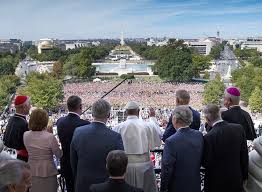
September 24 marked the third day of Pope Francis’ mission to the American people. The highlight was his morning appearance before the U.S. Congress, which was much anticipated by all members of Congress, 31% of whom are Roman Catholic along with Vice President Joseph R. Biden Jr., who serves as president of the Senate. Immediately afterwards the Pope greeted the American people from the west front of the U.S. Capitol followed by a visit to St. Patrick’s Catholic Church in D.C. and Catholic Charities of the Archdiocese of Washington before his flight to New York City. There he participated in an evening prayer service at St. Patrick’s Cathedral.
With the Chamber of the U.S. House of Representatives packed with Senators and Representatives and with invited guests in its Gallery, Pope Francis made the following lengthy remarks.
“I am most grateful for your invitation to address this Joint Session of Congress in ‘the land of the free and the home of the brave.’ I would like to think that the reason for this is that I too am a son of this great continent, from which we have all received so much and toward which we share a common responsibility.
“Each son or daughter of a given country has a mission, a personal and social responsibility. Your own responsibility as members of Congress is to enable this country, by your legislative activity, to grow as a nation. You are the face of its people, their representatives. You are called to defend and preserve the dignity of your fellow citizens in the tireless and demanding pursuit of the common good, for this is the chief aim of all politics. A political society endures when it seeks, as a vocation, to satisfy common needs by stimulating the growth of all its members, especially those in situations of greater vulnerability or risk. Legislative activity is always based on care for the people. To this you have been invited, called and convened by those who elected you.”
“Yours is a work which makes me reflect in two ways on the figure of Moses. On the one hand, as the patriarch and lawgiver of the people of Israel he symbolizes the need of peoples to keep alive their sense of unity by means of just legislation. On the other, the figure of Moses leads us directly to God and thus to the transcendent dignity of the human being. Moses provides us with a good synthesis of your work: you are asked to protect, by means of the law, the image and likeness fashioned by God on every human face.”
“Today I would like not only to address you, but through you the entire people of the United States. Here, together with their representatives, I would like to take this opportunity to dialogue with the many thousands of men and women who strive each day to do an honest day’s work, to bring home their daily bread, to save money and – one step at a time – to build a better life for their families. These are men and women who are not concerned simply with paying their taxes, but in their own quiet way sustain the life of society. They generate solidarity by their actions, and they create organizations that offer a helping hand to those most in need.”
“I would also like to enter into dialogue with the many elderly persons who are a storehouse of wisdom forged by experience and who seek in many ways, especially through volunteer work, to share their stories and their insights. I know that many of them are retired, but still active; they keep working to build up this land. I also want to dialogue with all those young people who are working to realize their great and noble aspirations, who are not led astray by facile proposals and who face difficult situations, often as a result of immaturity on the part of many adults. I wish to dialogue with all of you, and I would like to do so through the historical memory of your people.”
“My visit takes place at a time when men and women of good will are marking the anniversaries of several great Americans. The complexities of history and the reality of human weakness notwithstanding, these men and women, for all their many differences and limitations, were able by hard work and self- sacrifice – some at the cost of their lives – to build a better future. They shaped fundamental values which will endure forever in the spirit of the American people. A people with this spirit can live through many crises, tensions and conflicts, while always finding the resources to move forward, and to do so with dignity. These men and women offer us a way of seeing and interpreting reality. In honoring their memory, we are inspired, even amid conflicts, and in the here and now of each day, to draw upon our deepest cultural reserves.”
I would like to mention four of these Americans: Abraham Lincoln, Martin Luther King, Dorothy Day and Thomas Merton.
“This year marks the one hundred and fiftieth anniversary of the assassination of President Abraham Lincoln, the guardian of liberty, who labored tirelessly that ‘this nation, under God, [might] have a new birth of freedom.’ Building a future of freedom requires love of the common good and cooperation in a spirit of subsidiarity and solidarity.”
“All of us are quite aware of, and deeply worried by, the disturbing social and political situation of the world today. Our world is increasingly a place of violent conflict, hatred and brutal atrocities, committed even in the name of God and of religion. We know that no religion is immune from forms of individual delusion or ideological extremism. This means that we must be especially attentive to every type of fundamentalism, whether religious or of any other kind. A delicate balance is required to combat violence perpetrated in the name of a religion, an ideology or an economic system, while also safeguarding religious freedom, intellectual freedom and individual freedoms. But there is another temptation which we must especially guard against: the simplistic reductionism which sees only good or evil; or, if you will, the righteous and sinners. The contemporary world, with its open wounds which affect so many of our brothers and sisters, demands that we confront every form of polarization which would divide it into these two camps. We know that in the attempt to be freed of the enemy without, we can be tempted to feed the enemy within. To imitate the hatred and violence of tyrants and murderers is the best way to take their place. That is something which you, as a people, reject.”
“Our response must instead be one of hope and healing, of peace and justice. We are asked to summon the courage and the intelligence to resolve today’s many geopolitical and economic crises. Even in the developed world, the effects of unjust structures and actions are all too apparent. Our efforts must aim at restoring hope, righting wrongs, maintaining commitments, and thus promoting the well-being of individuals and of peoples. We must move forward together, as one, in a renewed spirit of fraternity and solidarity, cooperating generously for the common good.”
“The challenges facing us today call for a renewal of that spirit of cooperation, which has accomplished so much good throughout the history of the United States. The complexity, the gravity and the urgency of these challenges demand that we pool our resources and talents, and resolve to support one another, with respect for our differences and our convictions of conscience.”
“In this land, the various religious denominations have greatly contributed to building and strengthening society. It is important that today, as in the past, the voice of faith continue to be heard, for it is a voice of fraternity and love, which tries to bring out the best in each person and in each society. Such cooperation is a powerful resource in the battle to eliminate new global forms of slavery, born of grave injustices which can be overcome only through new policies and new forms of social consensus.
[Editor’s Note: The following section, which was in the prepared remarks, was not included in the speech.] [“Politics is, instead, an expression of our compelling need to live as one, in order to build as one the greatest common good: that of a community which sacrifices particular interests in order to share, in justice and peace, its goods, its interests, its social life. I do not underestimate the difficulty that this involves, but I encourage you in this effort.]
“Here too I think of the march which Martin Luther King led from Selma to Montgomery fifty years ago as part of the campaign to fulfill his ‘dream’ of full civil and political rights for African Americans. That dream continues to inspire us all. I am happy that America continues to be, for many, a land of ‘dreams.’ Dreams which lead to action, to participation, to commitment. Dreams which awaken what is deepest and truest in the life of a people.”
“In recent centuries, millions of people came to this land to pursue their dream of building a future in freedom. We, the people of this continent, are not fearful of foreigners, because most of us were once foreigners. I say this to you as the son of immigrants, knowing that so many of you are also descended from immigrants. Tragically, the rights of those who were here long before us were not always respected. For those peoples and their nations, from the heart of American democracy, I wish to reaffirm my highest esteem and appreciation. Those first contacts were often turbulent and violent, but it is difficult to judge the past by the criteria of the present.”
“Nonetheless, when the stranger in our midst appeals to us, we must not repeat the sins and the errors of the past. We must resolve now to live as nobly and as justly as possible, as we educate new generations not to turn their back on our ‘neighbors’ and everything around us. Building a nation calls us to recognize that we must constantly relate to others, rejecting a mindset of hostility in order to adopt one of reciprocal subsidiarity, in a constant effort to do our best. I am confident that we can do this.”
“Our world is facing a refugee crisis of a magnitude not seen since the Second World War. This presents us with great challenges and many hard decisions. On this continent, too, thousands of persons are led to travel north in search of a better life for themselves and for their loved ones, in search of greater opportunities. Is this not what we want for our own children? We must not be taken aback by their numbers, but rather view them as persons, seeing their faces and listening to their stories, trying to respond as best we can to their situation. To respond in a way which is always humane, just and fraternal. We need to avoid a common temptation nowadays: to discard whatever proves troublesome. Let us remember the Golden Rule: ‘Do unto others as you would have them do unto you’ (Mt 7:12).”
“This Rule points us in a clear direction. Let us treat others with the same passion and compassion with which we want to be treated. Let us seek for others the same possibilities which we seek for ourselves. Let us help others to grow, as we would like to be helped ourselves. In a word, if we want security, let us give security; if we want life, let us give life; if we want opportunities, let us provide opportunities. The yardstick we use for others will be the yardstick which time will use for us. The Golden Rule also reminds us of our responsibility to protect and defend human life at every stage of its development.”
“This conviction has led me, from the beginning of my ministry, to advocate at different levels for the global abolition of the death penalty. I am convinced that this way is the best, since every life is sacred, every human person is endowed with an inalienable dignity, and society can only benefit from the rehabilitation of those convicted of crimes. Recently my brother bishops here in the United States renewed their call for the abolition of the death penalty. Not only do I support them, but I also offer encouragement to all those who are convinced that a just and necessary punishment must never exclude the dimension of hope and the goal of rehabilitation.”
“In these times when social concerns are so important, I cannot fail to mention the Servant of God Dorothy Day, who founded the Catholic Worker Movement. Her social activism, her passion for justice and for the cause of the oppressed were inspired by the Gospel, her faith, and the example of the saints.”
“How much progress has been made in this area in so many parts of the world! How much has been done in these first years of the third millennium to raise people out of extreme poverty! I know that you share my conviction that much more still needs to be done, and that in times of crisis and economic hardship a spirit of global solidarity must not be lost. At the same time I would encourage you to keep in mind all those people around us who are trapped in a cycle of poverty. They too need to be given hope. The fight against poverty and hunger must be fought constantly and on many fronts, especially in its causes. I know that many Americans today, as in the past, are working to deal with this problem.”
“It goes without saying that part of this great effort is the creation and distribution of wealth. The right use of natural resources, the proper application of technology and the harnessing of the spirit of enterprise are essential elements of an economy which seeks to be modern, inclusive and sustainable. ‘Business is a noble vocation, directed to producing wealth and improving the world. It can be a fruitful source of prosperity for the area in which it operates, especially if it sees the creation of jobs as an essential part of its service to the common good’ (Laudato Si’, 129). This common good also includes the earth, a central theme of the encyclical which I recently wrote in order to ‘enter into dialogue with all people about our common home’ (ibid., 3). ‘We need a conversation which includes everyone, since the environmental challenge we are undergoing, and its human roots, concern and affect us all’ (ibid., 14).”
“In Laudato Si’, I call for a courageous and responsible effort to ‘redirect our steps’ (ibid., 61), and to avert the most serious effects of the environmental deterioration caused by human activity. I am convinced that we can make a difference and I have no doubt that the United States – and this Congress – have an important role to play. Now is the time for courageous actions and strategies, aimed at implementing a ‘culture of care’ (ibid., 231) and ‘an integrated approach to combating poverty, restoring dignity to the excluded, and at the same time protecting nature’ (ibid., 139). ‘We have the freedom needed to limit and direct technology’ (ibid., 112); ‘to devise intelligent ways of… developing and limiting our power’ (ibid., 78); and to put technology ‘at the service of another type of progress, one which is healthier, more human, more social, more integral’ (ibid., 112). In this regard, I am confident that America’s outstanding academic and research institutions can make a vital contribution in the years ahead.”
“A century ago, at the beginning of the Great War, which Pope Benedict XV termed a ‘pointless slaughter,’ another notable American was born: the Cistercian monk Thomas Merton. He remains a source of spiritual inspiration and a guide for many people. In his autobiography he wrote: ‘I came into the world. Free by nature, in the image of God, I was nevertheless the prisoner of my own violence and my own selfishness, in the image of the world into which I was born. That world was the picture of Hell, full of men like myself, loving God, and yet hating him; born to love him, living instead in fear of hopeless self-contradictory hungers.’ Merton was above all a man of prayer, a thinker who challenged the certitudes of his time and opened new horizons for souls and for the Church. He was also a man of dialogue, a promoter of peace between peoples and religions.”
“From this perspective of dialogue, I would like to recognize the efforts made in recent months to help overcome historic differences linked to painful episodes of the past. It is my duty to build bridges and to help all men and women, in any way possible, to do the same. When countries that have been at odds resume the path of dialogue – a dialogue which may have been interrupted for the most legitimate of reasons – new opportunities open up for all. This has required, and requires, courage and daring, which is not the same as irresponsibility. A good political leader is one who, with the interests of all in mind, seizes the moment in a spirit of openness and pragmatism. A good political leader always opts to initiate processes rather than possessing spaces (cf. Evangelii Gaudium, 222-223).”
“Being at the service of dialogue and peace also means being truly determined to minimize and, in the long term, to end the many armed conflicts throughout our world. Here we have to ask ourselves: Why are deadly weapons being sold to those who plan to inflict untold suffering on individuals and society? Sadly, the answer, as we all know, is simply for money: money that is drenched in blood, often innocent blood. In the face of this shameful and culpable silence, it is our duty to confront the problem and to stop the arms trade.”
“Three sons and a daughter of this land, four individuals and four dreams: Lincoln, liberty; Martin Luther King, liberty in plurality and non-exclusion; Dorothy Day, social justice and the rights of persons; and Thomas Merton, the capacity for dialogue and openness to God.
“I will end my visit to your country in Philadelphia, where I will take part in the World Meeting of Families. It is my wish that throughout my visit the family should be a recurrent theme. How essential the family has been to the building of this country! And how worthy it remains of our support and encouragement! Yet I cannot hide my concern for the family, which is threatened, perhaps as never before, from within and without. Fundamental relationships are being called into question, as is the very basis of marriage and the family. I can only reiterate the importance and, above all, the richness and the beauty of family life.”
“In particular, I would like to call attention to those family members who are the most vulnerable, the young. For many of them, a future filled with countless possibilities beckons, yet so many others seem disoriented and aimless, trapped in a hopeless maze of violence, abuse and despair. Their problems are our problems. We cannot avoid them. We need to face them together, to talk about them and to seek effective solutions rather than getting bogged down in discussions. At the risk of oversimplifying, we might say that we live in a culture which pressures young people not to start a family, because they lack possibilities for the future. Yet this same culture presents others with so many options that they too are dissuaded from starting a family.”
“A nation can be considered great when it defends liberty as Lincoln did, when it fosters a culture which enables people to ‘dream’ of full rights for all their brothers and sisters, as Martin Luther King sought to do; when it strives for justice and the cause of the oppressed, as Dorothy Day did by her tireless work, the fruit of a faith which becomes dialogue and sows peace in the contemplative style of Thomas Merton.”
“In these remarks I have sought to present some of the richness of your cultural heritage, of the spirit of the American people. It is my desire that this spirit continue to develop and grow, so that as many young people as possible can inherit and dwell in a land which has inspired so many people to dream.”
Immediately after the speech to the Congress, Pope Francis was escorted to the West Front of the Capitol, where he could see the thousands of people who wanted at least a glimpse of the Pope. “Buenos días,” he said. “I am so grateful for your presence here, most importantly the children. I have asked God to bless them. Father of all, bless each of them, bless the families. I ask you all, please, to pray for me. And if there are any who do not believe or who cannot pray, I ask you to send good wishes my way.”
At the church, the Pope first sent greetings to his Muslim brothers and sisters as they celebrate the feast of sacrifice and a prayer of closeness as they faced the tragedy of suffering at Mecca. He then delivered the following homily.
“Here I think of a person whom I love, someone who is, and has been, very important throughout my life. He has been a support and an inspiration. He is the one I go to whenever I am ‘in a fix.’ You make me think of Saint Joseph. Your faces remind me of his.”
“Joseph had to face some difficult situations in his life. One of them was the time when Mary was about to give birth, to have Jesus. The Bible tells us that, ‘while they were [in Bethlehem], the time came for her to deliver her child. And she gave birth to her firstborn son and wrapped him in bands of cloth, and laid him in a manger, because there was no place for them in the inn’ (Lk 2:6-7).”
“The Bible is very clear about this: there was no room for them. I can imagine Joseph, with his wife about to have a child, with no shelter, no home, no place to stay. The Son of God came into this world as a homeless person. The Son of God knew what it was to start life without a roof over his head. We can imagine what Joseph must have been thinking. How is it that the Son of God has no home? Why are we homeless, why don’t we have housing? These are questions which many of you may ask daily. Like Saint Joseph, you may ask: Why are we homeless, without a place to live? These are questions which all of us might well ask. Why do these, our brothers and sisters, have no place to live? Why are these brothers and sisters of ours homeless?”
“Joseph’s questions are timely even today; they accompany all those who throughout history have been, and are, homeless.”
“Joseph was someone who asked questions. But first and foremost, he was a man of faith. Faith gave Joseph the power to find light just at the moment when everything seemed dark. Faith sustained him amid the troubles of life. Thanks to faith, Joseph was able to press forward when everything seemed to be holding him back.”
“In the face of unjust and painful situations, faith brings us the light which scatters the darkness. As it did for Joseph, faith makes us open to the quiet presence of God at every moment of our lives, in every person and in every situation. God is present in every one of you, in each one of us.”
“We can find no social or moral justification, no justification whatsoever, for lack of housing. There are many unjust situations, but we know that God is suffering with us, experiencing them at our side. He does not abandon us.”
“We know that Jesus wanted to show solidarity with every person. He wanted everyone to experience his companionship, his help, his love. He identified with all those who suffer, who weep, who suffer any kind of injustice. He tells us this clearly: ‘I was hungry and you gave me food, I was thirsty and you gave me something to drink; I was a stranger and you welcomed me’ (Mt 25:35).”
“Faith makes us know that God is at our side, that God is in our midst and his presence spurs us to charity. Charity is born of the call of a God who continues to knock on our door, the door of all people, to invite us to love, to compassion, to service of one another.”
“Jesus keeps knocking on our doors, the doors of our lives. He doesn’t do this by magic, with special effects, with flashing lights and fireworks. Jesus keeps knocking on our door in the faces of our brothers and sisters, in the faces of our neighbors, in the faces of those at our side.”
“Dear friends, one of the most effective ways we have to help is that of prayer. Prayer unites us; it makes us brothers and sisters. It opens our hearts and reminds us of a beautiful truth which we sometimes forget. In prayer, we all learn to say ‘Father.’ ‘Dad.’ We learn to see one another as brothers and sisters. In prayer, there are no rich and poor people, there are sons and daughters, sisters and brothers. In prayer, there is no first or second class, there is brotherhood.”
“It is in prayer that our hearts find the strength not to be cold and insensitive in the face of injustice. In prayer, God keeps calling us, opening our hearts to charity.”
“How good it is for us to pray together. How good it is to encounter one another in this place where we see one another as brothers and sisters, where we realize that we need one another. Today I want to be one with you. I need your support, your closeness. I would like to invite you to pray together, for one another, with one another. That way we can keep helping one another to experience the joy of knowing that Jesus is in our midst. Are you ready?”
“’Our Father in heaven, hallowed be your name. Your kingdom come. Your will be done, on earth as it is in heaven. Give us this day and our daily bread. And forgive us our debts, as we also have forgiven our debtors. An do not bring us to the time of trial, but rescue us from the evil one. Amen.’” (NRSV)
“Before leaving you, I would like to give you God’s blessing: ‘The Lord bless you and keep you; the Lord make his face to shine upon you and be gracious to you; the Lord lift up his countenance upon you, and give you peace’ (Num 6:24-26). And, please, don’t forget to pray for me.”
Immediately afterwards the Pope went to a luncheon for the homeless outside the church, blessed the meal and greeted the people, as shown in photograph to the right.. This luncheon was sponsored by Catholic Charities of the Archdiocese of Washington.
The Pope arrived around 5:00 p.m. (EST) at New York City’s John F. Kennedy International Airport and then traveled by helicopter to lower Manhattan. The popemobile then took him by waving crowds on Fifth Avenue to 50th and 51st Street’s St. Patrick’s Cathedral. There he was greeted by New York Governor Andrew M. Cuomo, New York City Mayor Bill de Blasio and New York’s U.S. Senator Chuck Schumer.
Pope @ St. Patrick’s Cathedral
At the Cathedral the Pope participated in a vespers prayer service for nearly 2,500 worshipers, including clergy members, brothers and nuns, and delivered the following homily.
“’There is a cause for rejoicing here”, although ‘you may for a time have to suffer the distress of many trials’ (1 Pet 1:6). These words of the Apostle remind us of something essential. Our vocation is to be lived in joy.”
“This beautiful Cathedral of Saint Patrick, built up over many years through the sacrifices of many men and women, can serve as a symbol of the work of generations of American priests and religious, and lay faithful who helped build up the Church in the United States. In the field of education alone, how many priests and religious in this country played a central role, assisting parents in handing on to their children the food that nourishes them for life! Many did so at the cost of extraordinary sacrifice and with heroic charity. I think for example of Saint Elizabeth Ann Seton, who founded the first free Catholic school for girls in America, or Saint John Neumann, the founder of the first system of Catholic education in the United States.”
“This evening, my brothers and sisters, I have come to join you in prayer that our vocations will continue to build up the great edifice of God’s Kingdom in this country. I know that, as a presbyterate in the midst of God’s people, you suffered greatly in the not distant past by having to bear the shame of some of your brothers who harmed and scandalized the Church in the most vulnerable of her members… In the words of the Book of Revelation, I know well that you ‘have come forth from the great tribulation’ (Rev 7:14). I accompany you at this time of pain and difficulty, and I thank God for your faithful service to his people. In the hope of helping you to persevere on the path of fidelity to Jesus Christ, I would like to offer two brief reflections.”
“The first concerns the spirit of gratitude. The joy of men and women who love God attracts others to them; priests and religious are called to find and radiate lasting satisfaction in their vocation. Joy springs from a grateful heart. Truly, we have received much, so many graces, so many blessings, and we rejoice in this. It will do us good to think back on our lives with the grace of remembrance. Remembrance of when we were first called, remembrance of the road travelled, remembrance of graces received… and, above all, remembrance of our encounter with Jesus Christ so often along the way. Remembrance of the amazement which our encounter with Jesus Christ awakens in our hearts. To seek the grace of remembrance so as to grow in the spirit of gratitude. Perhaps we need to ask ourselves: are we good at counting our blessings?”
“A second area is the spirit of hard work. A grateful heart is spontaneously impelled to serve the Lord and to find expression in a life of commitment to our work. Once we come to realize how much God has given us, a life of self-sacrifice, of working for him and for others, becomes a privileged way of responding to his great love.”
“Yet, if we are honest, we know how easily this spirit of generous self-sacrifice can be dampened. There are a couple of ways that this can happen; both are examples of that ‘spiritual worldliness’ which weakens our commitment to serve and diminishes the wonder of our first encounter with Christ.”
“We can get caught up measuring the value of our apostolic works by the standards of efficiency, good management and outward success which govern the business world. Not that these things are unimportant! We have been entrusted with a great responsibility, and God’s people rightly expect accountability from us. But the true worth of our apostolate is measured by the value it has in God’s eyes. To see and evaluate things from God’s perspective calls for constant conversion in the first days and years of our vocation and, need I say, great humility. The cross shows us a different way of measuring success. Ours is to plant the seeds: God sees to the fruits of our labors. And if at times our efforts and works seem to fail and produce no fruit, we need to remember that we are followers of Jesus… and his life, humanly speaking, ended in failure, the failure of the cross.”
“Another danger comes when we become jealous of our free time, when we think that surrounding ourselves with worldly comforts will help us serve better. The problem with this reasoning is that it can blunt the power of God’s daily call to conversion, to encounter with him. Slowly but surely, it diminishes our spirit of sacrifice, renunciation and hard work. It also alienates people who suffer material poverty and are forced to make greater sacrifices than ourselves. Rest is needed, as are moments of leisure and self-enrichment, but we need to learn how to rest in a way that deepens our desire to serve with generosity. Closeness to the poor, the refugee, the immigrant, the sick, the exploited, the elderly living alone, prisoners and all God’s other poor, will teach us a different way of resting, one which is more Christian and generous.”
“Gratitude and hard work: these are two pillars of the spiritual life which I have wanted to share with you this evening. I thank you for prayers and work, and the daily sacrifices you make in the various areas of your apostolate. Many of these are known only to God, but they bear rich fruit for the life of the Church. In a special way I would like to express my esteem and gratitude to the religious women of the United States. What would the Church be without you? Women of strength, fighters, with that spirit of courage which puts you in the front lines in the proclamation of the Gospel. To you, religious women, sisters and mothers of this people, I wish to say “thank you”, a big thank you… and to tell you that I love you very much.” (Emphasis added to these words that drew applause from the people in the pews.)
“I know that many of you are in the front lines in meeting the challenges of adapting to an evolving pastoral landscape. Whatever difficulties and trials you face, I ask you, like Saint Peter, to be at peace and to respond to them as Christ did: he thanked the Father, took up his cross and looked forward!”
“Dear brothers and sisters, in a few moments we will sing the Magnificat. Let us commend to Our Lady the work we have been entrusted to do; let us join her in thanking God for the great things he has done, and for the great things he will continue to do in us and in those whom we have the privilege to serve.”