Inspiration of a Christian Lawyer by the Martyred Jesuit Priests of El Salvador

In my first visit to El Salvador in April 1989 I did not know anything about the University of Central America (Universidad de Centro America or UCA) or about its Jesuit professors.
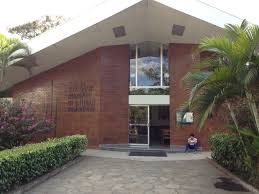
UCA's Romero Chapel
UCA’s Romero Chapel
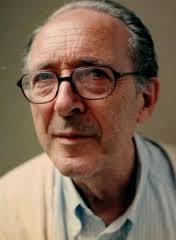
Fr.  Jon Sobrino
Fr. Jon Sobrino


That started to change when the other members of my delegation and I visited UCA’s beautiful, peaceful campus, in contrast to the noisy bustle of the rest of San Salvador, and when we had an hour’s calm, reasoned conversation with one of its professors, Fr. Jon Sobrino, S.J., a noted liberation theologian. I came away impressed with UCA and with Sobrino.

I, therefore, was shocked six months later to hear the news of the November 16, 1989, murder of six of UCA’s Jesuit professors and their housekeeper and daughter. How could such a horrible crime happen to such intelligent, peaceful human beings in that tranquil, academic setting?

Martyred Jesuits, Housekeeper & Daughter

I was even more appalled when I learned about the selfless, courageous lives of the murdered Jesuits who used their minds, education and spirits to help the poor people of that country and to work for bringing about a negotiated end to its horrible civil war.

Their deaths were repetitions of the horrible assassination of Archbishop Oscar Romero on March 24, 1980, who like the Jesuits had used his mind, education and spirit to help the poor people of his country and to condemn violent violations of human rights. The same was true of another Salvadoran Roman Catholic priest, Rutilio Grande, who was murdered in 1977 because of his protests against the regime’s persecution of the poor people, and of the 1980 murders of the four American churchwomen, who worked with the poor in that country.

Thus, Romero, Grande, the four American churchwomen and the murdered Jesuits are forever linked in my mind as profound Christian witnesses and martyrs. Their examples have strengthened my Christian faith to love God with all your heart, mind and soul and your neighbor as yourself.
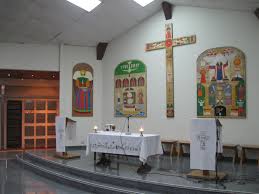
UCA's Romero Chapel
UCA’s Romero Chapel
Capilla de Hospital de la Divina Providencia


All of these experiences have inspired me to learn more about El Salvador, Romero, Grande, the churchwomen and the Jesuits’ Christian witness in the midst of violence and threats to their own lives. On my subsequent five trips to that country, I always visit UCA for prayer in the Romero Chapel where the Jesuits’ bodies are buried and in the beautiful chapel of a cancer hospital where Romero was assassinated.

On my 2000 visit to El Salvador for the 20th anniversary of Oscar Romero’s assassination, my group visited UCA to spend time with its then Rector, Dean Brackley, a Jesuit priest from the U.S. who went to El Salvador to help UCA after the murders of his brother priests. He impressed me as a calm voice of reason and passion in UCA’s ministry of helping the poor and the country.

In 2010 I returned to El Salvador for the 30th anniversary of Romero’s assassination. On my delegation’s visit to UCA, we spent time with its then Rector, José Maria Tojeira, S.J.. He was an amazingly serene and soft-spoken man. He told us he was a new “church bureaucrat” (the Jesuit Provincial for Central America) at UCA in November 1989 and lived nearby, but not on the campus. During the night of November 15th-16th he heard gunfire and thought there must have been a skirmish between the Salvadoran security forces and the guerrillas. The next morning he went to the campus and was one of the first people to see the dead bodies of his six fellow Jesuits and their cook and her daughter. He nonchalantly said to our group, “That morning I thought I was the next one to be killed.” Later that day he went to his office and found faxed messages of support and solidarity from people all over the world. Then in the same casual manner, he said he thought, “Well, maybe I am not the next to be killed.”

As a result, my cloud of Salvadoran witnesses includes Oscar Romero; Rutilio Grande; the American churchwomen; the Jesuit priests; Fr. Brackley; Fr. Tojeira; Bishop Menardo Gomez of the Salvadoran Lutheran Church, who escaped a death squad on the night the Jesuits were murdered; Salvador Ibarra, who in 1989 was a lawyer for the Salvadoran Lutheran human rights office; and my Salvadoran asylum clients. Outside of El Salvador, of course, I am impressed by another Jesuit, Pope Francis.

I have been humbled to learn about the incredible courage and minds of the Jesuits, not just at UCA, but at other Jesuit universities that are generally regarded as the best of Roman Catholic institutions of higher learning. Simultaneously I am puzzled how such a marvelous group of religious men could have emerged from the Jesuits who were the shock-troops of the Counter-Reformation and did so many horrible things during the Spanish Inquisition.

All of this also inspired me to become a pro bono lawyer for Salvadorans and later others (an Afghani, a Burmese man, two Somali men and two Colombian families) who were seeking asylum or other legal status that would enable them to remain in the U.S. and escape persecution in their own countries. I always have regarded this as the most important and spiritually rewarding thing I have ever done. As I did so, I often reflected that I was able to do this in the secure and comfortable legal office of a large Minneapolis law firm. I did not have to risk my life to help others as did my Salvadoran saints.

After I had retired from practicing law in 2001, the Jesuits along with Archbishop Oscar Romero continued to inspire me to learn more about international human rights law as I co-taught a course in that subject at the University of Minnesota Law School from 2002 through 2010. In the process, I was amazed to discover the array of inter-related ways the international community had created to seek to enforce international human rights norms in a world still based essentially on the sovereignty of nation states.

I then was inspired to use my legal research and writing skills to investigate how these various ways had been used to attempt to bring to justice the perpetrators of the assassination of Archbishop Romero, the rapes and murders of the American churchwomen and the murderers of the Jesuit priests and then to share the results of that research with others on this blog. Many posts have been written about Romero, including the various unsuccessful legal proceedings to identify and punish those responsible for that crime. Other posts have discussed the criminal case still pending in Spain over the murders of the Jesuits and their housekeeper and daughter while another post summarized other legal proceedings that unsuccessfully sought to assign criminal responsibility for the murders of the Jesuit priests other than the brief imprisonment in El Salvador of two military officers.

I also have written the following other posts prompted by the 25th anniversary celebration of the lives of the priests and commemoration of their murders:

I give thanks to God for leading me in this path of discovery and inspiration.


Fr. Dean Brackley, S.J., Another Brave Jesuit Priest

Fr. Dean Brackley, S.J.

On my 2010 trip to El Salvador, I had the honor and privilege to be a member of a group of Americans who spent some time with our fellow American, Fr. Dean Brackley, S.J., then the Rector of the University of Central America (Universidad de Centro America or UCA). I recall being impressed by his warm and engaging manner as he shared his experiences in that country and urged us to tell our friends in the U.S. about our experiences.[1]

He came to UCA in 1990 soon after the murders of his Jesuit brothers in November 1989. Brackley had seen a notice that UCA was looking for replacements for the slain priests. Although he admitted to being scared, the job description seemed to have his name on it. He told a friend,  “They wanted a Jesuit. They wanted someone who had a Ph.D. in theology. They wanted someone who spoke Spanish. I started looking around and realized there weren’t that many of us.”

Brackley, therefore, volunteered to leave his teaching at Fordham University in New York City and to go to UCA to help it surmount its many challenges in the aftermath of that brutal crime.

He taught and served on UCA’s staff. He also became pastor to two municipalities and started the Scholarship Program of the Martyrs of the UCA to support poor students at the university. In his 2010 book, Spirituality for solidarity: Ignatian new perspectives, he said, “”The world will change only if human beings are changed, if people are free to love, to resist the lure of wealth and to be in solidarity with the poorest of their brothers and sisters.”

Brackley is remembered especially “for his tireless efforts to build awareness and solidarity between churches and universities in the United States and the poor in Central America. He wrote and lectured extensively on the need for higher education to connect scholarship to service and resources to the social reality of the poor.” Brackley laid out the radical challenge that education and privilege place upon the shoulders of those with resources, often describing what contact with the poor does to us: ‘First, it breaks your heart, then you fall in love, then you’re ruined for life.’”

In the summer of 2011, after he was diagnosed with pancreatic cancer, he wrote to friends, “”The faith factor is decisive, as you know. When I ask you and Monseñor Romero to pray, I mean: Let us pool our faith. Mine is weak enough, but with all of us, that is another matter. God wants to give life more than we want life. St. Ignatius wrote to Francisco Borja: ‘I consider myself wholly an obstacle to God’s work in me. In other words, the exercise of faith, our fundamental human challenge, gets us out of the way of God’s work. So, let us pray.’”

After his death of the disease at UCA on October 16, 2011, Congressman James P. McGovern of Massachusetts said that Brackley “was a bridge between two worlds:” the U.S. and El Salvador. He offered “his talents, his passion and his life to . . . [UCA] and to the Salvadoran people. He was our anchor and our conscience, not just for the faith community, but for all of us in American who share his love for the Salvadoran people and who remain engaged in their hopes and struggles. [He] . . . became our bridge of solidarity, our commitment to justice, faith and love. . . . On my many trips to El Salvador, his enthusiasm, humor and passion kept my spirits lifted, my mind focused, and my heart engaged.”

McGovern added that Brackley “joins Monseńor Oscar Romero, my friends the martyred Jesuits, the four American churchwomen, and so many Salvadorans as a beacon of integrity and hope. He will always be ‘presente’ in our lives and work.”

On the third anniversary of Brackley’s death this October, a memorial mass was held for him at UCA. Rocio Fuentes remembered that in the last six months of his life, he was “full of joy and gratitude . . . [for] his family supporting his vocation; [for] the Society of Jesus for their support in the pursuit of justice; [for] Salvadorans, because through them he learned to know the true meaning of solidarity; and for God’s presence.”

=================================================

[1] This post is based upon personal recollection, my blog post, Annual Commemorations of Oscar Romero’s Life (Oct. 20, 2011); Marrin, Jesuit who replaced slain Jesuit priests dies, Nat’l Cath. Reporter (Oct. 17, 2011); Vitello, Rev. Dean Brackley, 65, Dies; Served in El Salvador, N. Y. Times (Oct. 29, 2011); Letter, Congressman James P. McGovern to Fr. Jośe Maria Tojeira (Oct. 18, 2011); Rocio Fuentes, Dean, exemplary Christian (Oct. 26, 2014).

University of Central America Endorses the Beatification and Canonization of Salvadoran Archbishop Oscar Romero

Archbishop Oscar Romero


In the midst of its commemoration of the 25th anniversary of the murders of its martyred Jesuit priests and professors, El Salvador’s University of Central America (Universidad de Centro America), also made news regarding the beatification and canonization of Salvadoran Archbishop Oscar Romero.


In early November UCA’s website had an article by Jon Sobrino, S.J., the Director of its Archbishop Romero Center, entitled, “Beatification of Bishop.” He reported that Salvadoran Archbishop Jose Luis Escobar recently had said that Pope Francis had told him that Romero would be beatified next year (2015).

Subsequently Sobrino corrected this to say that he had not attended the meeting of the clergy where Archbishop Escobar made the announcement, but instead Sobrino had received the information second-hand from someone who had conveyed erroneous information.  In particular, Sobrino clarified that Archbishop Escobar had not spoken to Pope Francis, but instead to Archbishop Vincenzo Paglia, the postulator (advocate) of Romero’s cause for beatification and canonization, who had said beatification would “possibly” be in 2015.[1]

After the publication of the initial Sobrino article, Archbishop Escobar said that he hoped beatification of Romero would occur in 2015, which will be the 35th anniversary of his assassination and part of the Triennial, 2014-2017, ending in 2017, the year marking the centennial of his birth. But although beatification “was in its final stages, no date has been set,” said the Archbishop.[2]

On November 14th UCA published on its website an editorial, “Holy to the World,” endorsing the beatification and canonization of Romero. It started, “The news [by UCA] of the possible beatification of Archbishop Romero [in 2015]spread like wildfire, both inside and outside the country. The UCA has received many reactions from many countries of the continent. The vast majority of these reactions expressed joy and hope for good news. Only a very small group of people was opposed.”

The editorial continued “Eventual beatification and subsequent canonization of Romero will be an act of justice to his career, qualities and generous dedication to the Salvadoran people. Definitely, Monsignor Romero was and still is . . . good news for the poor. To recognize this is to recognize the causes he defended, by which he lived and why he was murdered. Beatification and canonization [will recognize his] complaint against structural injustice and his fight for justice for the victims of senseless violence and an exclusionary and undemocratic system that concentrates wealth in a few hands.”

“Doing justice to Archbishop Romero is also doing justice [for those] he championed:  the work of [Fr.] Rutilio Grande, the suffering of many victims of state violence who found comfort, encouragement and hope in Romero and the Archbishop’s legal aid office. Doing justice to Archbishop Romero also is doing justice to the victims of the violence he denounced, victims before and after their death, and the poor.”

Beatification and canonization also “implies a moral condemnation of his opponents, who reviled him, persecuted others and rejoiced with his murder.” This anticipated recognition of Romero leaves “in the pit of shame and disrepute the mainstream media, which systematically slandered him, branded him a communist agitator and even suggested the way to silence him.” It also will “bare the guilt of those who constantly threatened him, the masterminds who forged his death.”

“In short, to do justice to Archbishop Romero is to accept that he was right, that he was telling the truth, and makes these points clear to those who until now have remained rooted in lies and injustice.”

Beatification and canonization “will only be a formal recognition of what most people have in their hearts and cries. Romero said that if he were killed, he would be resurrected in the Salvadoran people. But his life and resurrection have transcended borders, religions and ideologies. Archbishop Oscar Romero is holy not only for El Salvador, but for the whole world.”

============================================

[1] A Salvadoran newspaper (Diario CoLatino) had an article about the Archbishop’s correction of the story. A fascinating, detailed examination of Sobrino’s error is provided in an article on the “SuperMartyrio” website that is dedicated to advocating Romero’s beatification and canonization:

[2] Earlier posts have discussed the Roman Catholic Church’s processes for beatification and canonization of Romero: Beatification of Salvadoran Archbishop Oscar Romero? (May 23, 2013); Progress on Vatican’s Canonization of Archbishop Oscar Romero (May 20, 2014); Pope Francis Urges Swift Beatification of Salvadoran Archbishop Oscar Romero (Aug. 22, 2014). My attention to this issue prompted the writing of another post, A Presbyterian’s Musings About Saints (Sept. 19, 2014).

Other Details About Commemoration of the Twenty-Fifth Anniversary of the Murders of the Jesuits of El Salvador

A prior post reviewed some of the ways in which El Universidad de Centro America (the University of Central America or UCA) is commemorating the twenty-fifth anniversary of the brutal murders of six of their Jesuit brothers and professors on November 16, 1989. Here are some of the other ways.

Memorial Mass

Memorial Mass, November 16, 2014

On November 16th a memorial Mass was celebrated for the martyrs at the tomb of Archbishop Oscar Romero in the Crypt of the Metropolitan Cathedral of San Salvador.

Monsignor José Gregorio Rosa Chávez, the Auxiliary Archbishop of San Salvador, delivered the homily. He quoted the words of one of the martyrs, Ignacio Ellacuría: “With Archbishop Romero, God passed by El Salvador.” Chavez then said that God also passed through the country with the martyrs. They along with Archbishop Romero and Fr. Rutilio Grande “devoted their lives for the defense of the poor and the needy during a brutal armed conflict.”

All of the current Jesuits of El Salvador and others in attendance joined in songs and prayers to celebrate the work of the martyrs and to condemn the injustice of the perpetrators of this horrible crime not having been tried and convicted.

Comments by Fr. Jon Sobrino, S.J.

Separately Fr. Jon Sobrino, S.J., who escaped murder 25 years ago because he was in Asia giving lectures, remembered these words of Ellacuría: “It’s up to the university awakening more and more hope.” In other words, said Sobrino, “Hope is not optimism and, therefore, the crucial question is how hope is generated. Not every university exists in a time for hope, but it does so exist when, humbly and honestly, it works for the poor of this world, learns from them and is willing to give everything it has for them.”

“That’s exactly what our martyrs did at UCA,” continued Sobrino. “And they still generate hope. As Ellacuría wrote, ‘Let new men and women always continue to announce firmly a greater future, because El Salvador envisions God, the God of liberation.’”

Comments by Fr. Rodolfo Cardenal, S.J.

Rodolfo Cardenal, UCA’s Vice Rector for Academics and Social Projection, also separately recalled the university’s six years of “institutional depression” after the murders of the Jesuits. “This was overcome thanks to the work of the surviving Jesuits and others who came from abroad, and the active collaboration of a group of lay people who were very capable and committed to UCA’s vocation. In the end, they overcame the depression with the obstinacy of reason, truth and justice.”

In this effort they were aided by the martyrs who “were present with great clarity” in “the communion of saints. Their presence encouraged us to follow, despite uncertainty and fear during the remainder of the civil war and with the postwar academic, organizational and administrative challenges that seemed insurmountable. Among those challenges were dignifying the victims of state terrorism, demanding justice for the perpetrators of human rights, containing social violence and combating new forms of poverty and exclusion.”

 UCA’s Website

 The UCA website contains statements by today’s students on why we should remember the martyrs and the following words describing the legacy of the martyrs, each of which is linked to a statement about the word’s importance:


A Presbyterian’s Musings about Saints

My recent investigation and writing of a post about the Roman Catholic Church’s process for the beatification and canonization of Salvadoran Archbishop Oscar Romero prompt these musings about blesseds and saints in that church and their absence in my own church, Minneapolis’ Westminster Presbyterian Church, and its denomination, The Presbyterian Church (U.S.A.).

The Roman Catholic Church[1]

According to a Catholic secondary source (“Fundamentals of Catholic Dogma”), a saint is “…a member of the Church [who] has been assumed into eternal bliss and may be the object of general veneration. A saint is also a person of remarkable holiness who lived a life of heroic virtue, assisted by the Church, during their pilgrimage on earth. They are as varied and exceptional as only God could create them, and each has his own distinct story.”

The veneration of saints (in Latin, cultus, or the “cult of the saints”) describes a particular popular devotion or abandonment to a particular saint or saints. Although the term “worship” of the saints is sometimes used, it is intended to mean honor or give respect. According to the Catholic Church, Divine Worship is properly reserved only for God and never to the saints.  They can be asked to intercede or pray for those still on earth, just as one can ask someone on earth to pray for them.

A saint may be designated as a patron saint of a particular cause or profession, or invoked against specific illnesses or disasters, sometimes by popular custom and sometimes by official statements. Saints are not thought to have power of their own, but only that granted by God.

Apparently under canon law, before beatification, the body of the candidate must be exhumed and authenticated and relics taken for veneration. This has produced disputes, some of which have been resolved by dividing the body. For example, St. Catherine of Sienna is entombed in Rome, but her head is revered in a Sienna basilica. Now the beatification and canonization of Bishop Fulton J. Sheen is being delayed because of a dispute whether his corpse should remain in a crypt in St. Patrick’s Cathedral in New York City or be moved to St. Mary’s Cathedral in Peoria, Illinois, where he was ordained.[2]

Relics of saints are respected in a similar manner to holy images and icons. The practice of past centuries in venerating relics of saints for healing is taken from the early Church. Once a person has been declared a saint, the body of the saint is considered holy. The remains of saints are called holy relics and are usually used in churches. Saints’ personal belongings may also be used as relics. Some of the saints have a symbol that represents their life.

In 993, Pope John XV was the first pope to proclaim a saint, but it was not until the papacy of Pope Innocent III (1198-1216) that the Pope claimed an exclusive monopoly on the canonization of saints. In 1983, Pope John Paul II made sweeping changes in the canonization procedure for Catholics whom are generally regarded as holy with the local bishop first investigating a deceased candidate’s life and writings for heroic virtue (or martyrdom) and orthodoxy of doctrine. Then a panel of theologians at the Vatican evaluates the candidate. After approval by the panel and cardinals of the Congregation for the Causes of Saints, the pope proclaims the candidate “venerable.”

Beatification

The next step, beatification, requires evidence of one miracle (except in the case of martyrs). Since miracles are considered proof that the person is in heaven and can intercede for us, the miracle must take place after the candidate’s death and as a result of a specific petition to the candidate. When the pope proclaims the candidate beatified or “blessed,” the person can be venerated by a particular region or group of people with whom the person holds special importance.

Although I do not know the total number of “blessed” in the Roman Catholic Church, the last three Popes have beatified 2,860 (Pope John Paul II, 1,342; Pope Benedict XVI, 843; and Pope Francis, 675 (including 124 Korean Martyrs on his recent trip to South Korea).)

Canonization

The Roman Catholic Church has over 10,000 named saints (or over 27 for every day of a normal year).

Only after one more miracle will the pope canonize the saint (this includes martyrs as well). The title of saint tells us that the person lived a holy life, is in heaven, and is to be honored by the universal Church. Canonization does not “make” a person a saint; it recognizes what God has already done.

The last three Popes have canonized 1,355 saints: Pope John Paul II, 482; Pope Benedict XVI, 45; and Pope Francis, 828. A source says that Pope Francis’ 828 in the first 18 months of his papacy is more than all the Popes of the last three centuries.

Westminster and the PCUSA

sermon

The PCUSA and Westminster do not have a roster of designated blesseds and saints. As a result, Westminster does not have statues or paintings of such individuals in our Sanctuary.Instead, most of Westminster’s Sanctuary’s beautiful stained-glass windows from the 1950s and 60s, made by Willet Studios, primarily depict images of the life of Jesus like the one to the right for His Sermon on the Mount that is on the north side of the main floor of the Sanctuary. Earlier windows feature Victorian and early 20th century stylized organic and geometric designs. Here below, for example, is a photograph of the large Rose Window that was installed at the back of the balcony in 1897 with the construction of our Sanctuary.

RoseWindow

Westminster, however, at the back of the Sanctuary’s main floor does have four Gospel Windows (images of Saints Matthew, Mark, Luke and John, the authors of the New Testament’s Gospels). Below is a photograph of these windows.

Saints Matthew & Mark
Saints Luke & John
Saints Luke & John


In addition, there are two stained glass windows at the back of the Sanctuary’s balcony with images of prominent Protestants. One is called the “Reformation Window” with images of Protestant reformers Huldrych Zwingli, Martin Luther, John Calvin and John Knox. The other is called the “Missionary Window” with images of four Protestant missionaries: William Carey (India), David Livingstone (Africa), Sheldon Jackson (Alaska) and Marcus Whitman (Northwest U.S.). Photographs of these windows are below. Finally, also in the balcony we have a window for unnamed Martyrs and another window for Jesus’ Disciples and Apostles (without names). (Thanks for the photographs to Dr. Rodney Allen Schwartz, Director of Westminster’s Gallery and Archives.)

Westminster's "Reformers' Window"
Westminster’s                            “Reformation Window”
Westminster's "Missionaries Window"
Westminster’s                         “Missionary Window”


According to a comment on the PCUSA website, “In the Presbyterian/Reformed tradition, we have and always will acknowledge and honor saints. Our designation as saints comes from our rich inheritance of Christ’s righteousness.” This commentator then adds the following:

  • “In St. Paul’s understanding, the title ‘saint’ belongs to all those who have been united with Christ, those who have a share in the rich inheritance as Children of God (baptism). St. Paul routinely calls the members of his churches ‘saints’ because of who they are in Christ and not because of what they have accomplished.”
  • “Furthermore, based on the teachings of the Second Helvetic Confession, and the early church fathers, Presbyterians do not pray for the mediation of the saints. We pray to God through Christ alone, and only look to the saints, ordinary people who had extra-ordinary faith, as examples and role models.”
  • “Also, as John Calvin and the early church fathers taught in regard to the mystery of Holy Communion, we believe that when we gather at the Lord’s Table and partake of the sacrament in faith, by the work of the Holy Spirit we become united in Christ and in prayer with those gathered around the eternal throne of God (which the Lord’s Table also represents) in accordance to the vision of St. John in the Book of Revelation.”

The PCUSA website introduces the subject of All Saints Day by saying, “In early Christian tradition, saints’ days began as a way to mark the anniversary of a martyr’s death — his or her “birthday” as a saint. By the middle of the church’s first millennium, there were so many martyrs . . . that it was hard to give them all their due. All Saints’ Day was established as an opportunity to honor all the saints, known and unknown.”

The PCUSA website goes on to say, “All Saints’ Day has a rather different focus in the Reformed tradition. While we may give thanks for the lives of particular luminaries of ages past, the emphasis is on the ongoing sanctification of the whole people of God. Rather than putting saints on pedestals as holy people set apart in glory, we give glory to God for the ordinary, holy lives of the believers in this and every age. [All Saints Day for Presbyterians] . . . is an appropriate time to give thanks to members of the community of faith who have died in the past year. We also pray that we may be counted among the company of the faithful in God’s eternal realm.”

Bishop William Walsham How
Ralph Vaughan Williams

At Westminster, All Saints Day is observed by reciting the names of our most recent saints, those church members who died during the prior year, and by singing the famous hymn “For All the Saints” with words by William Walsham How (1823-1897)[3] and beautiful music by Ralph Vaughan Williams (1872-1958).[4] The words of this hymn in Glory to God: The Presbyterian Hymnal go like this:

  1. “For all the saints, who from their labors rest, who thee by faith before the world confessed, thy name, O Jesus, be forever blessed. Alleluia, Alleluia!”
  1. “Thou wast their rock, their fortress and their might; thou, Lord, their captain in the well-fought fight; thou, in the darkness drear, their one true light. Alleluia, Alleluia!”
  1. “O blest communion, fellowship divine! We feebly struggle, they in glory shine; yet all are one in thee, for all are thine. Alleluia, Alleluia!”
  1. “And when the strife is fierce, the warfare long, steals on the ear the distant triumph song, and hearts are brave, again, and arms are strong. Alleluia, Alleluia!”
  1. “From earth’s wide bounds, from ocean’s farthest coast, through gates of pearl streams in the countless host, singing to Father, Son and Holy Ghost, Alleluia, Alleluia!”

Interestingly this hymn originally had six other verses that probably were eliminated in our Hymnal to keep the hymn of reasonable length by contemporary standards. But three of those deleted verses specifically recognize the Apostles, the Evangelists and the Martyrs as saints and thereby may suggest that only they are saints.

We also must acknowledge that the names of some Presbyterian churches include the names of saints: the Apostles of Jesus (Peter (or Simon), Andrew, James, John, Philip, Thomas and Matthew), the authors of the synoptic Gospels (Mathew, Mark, Luke and John), the first evangelist (Paul) and other Roman Catholic saints (Elmo (or Erasmus)), Stephen, Barnabus, Giles and Patrick).

 Observations

I recognize that all of us as sinners need all the help we can get in striving to live holy lives and that blesseds and saints undoubtedly provide such assistance to many people. Moreover, I believe it must be useful for many people to have blesseds and saints from their own country or ethnic group or era to connect with Jesus, who lived and died 2,000 years ago.

A church’s having blesseds and saints can also be seen as a way for the church to evangelize, i.e., to spread the Good News of the Bible. In secular terms, it is a way to market the faith. Pope Francis’ recent beatification of 124 Korean martyrs can be seen in this light.

Once a church decides that it will have blesseds and saints, it obviously needs a well-established set of rules and procedures for making such important decisions, and Pope John Paul II’s previously mentioned changes in that regard I see as a rational management response.

However, I do not understand why the beatification and canonization of Salvadoran Archbishop Oscar Romero can be seen as controversial or difficult when he had the courage to act, despite repeated death threats, as Jesus taught all of us to act (Love your neighbor as yourself).

As an outsider to the Catholic faith, I see the proliferation of blesseds and saints as perhaps interfering with Christianity’s focus on Jesus Christ and God. I also find it difficult to accept the miracles that are requirements for beatification (except for martyrs) and for canonization. According to the Catholic Church, to be deemed a miracle, it happens after the death of the candidate for beatification or canonization, and “a medical recovery must be instantaneous, not attributable to treatment, [and the medical problem] disappear for good.”

In the Presbyterian version of Christian faith as I have experienced at Minneapolis’ Westminster, on the other hand, we avoid having our focus on Jesus interrupted by statues and references to the blesseds and the saints. Moreover, our sermons frequently use the faith and actions of contemporary people to illustrate important points of Scripture. In this way we help to see how Jesus’ teachings can be important in our lives today.

=====================================================

[1] This account of the history and practices of the Roman Catholic Church’s blessed and saints is based upon the following secondary sources in addition to those that are hyperlinked above: http://catholicism.about.com/od/holydaysandholidays/p/All_Saints_Day.htm; http://www.catholic.org/saints/faq.php; http://en.wikipedia.org/wiki/List_of_saints; http://www.uscatholic.org/articles/201310/how-many-saints-are-there-28027. I welcome amplification and corrections by those with more knowledge of the Catholic history and practice of beatification and canonization.

[2] Otterman, Tug of War Between Dioceses Halts a Bishop’s Beatification, N.Y. Times (Sept. 14, 2014.)

[3] How was an Anglican priest who served as Bishop of Wakefield in northern England and as Bishop of Bedford in the East End of London. He also was a poet and author of the lyrics for other hymns.

[4] Williams, who was Welsh-English, was a composer of symphonies, operas, chamber and choral music and film scores.

Pope Francis Urges Swift Beatification of Salvadoran Archbishop Óscar Romero

Archbishop Oscar Romero
Archbishop        Oscar Romero

On March 24, 1980, Oscar Romero, the Archbishop of San Salvador, was assassinated while saying mass at a chapel in that city because of his preaching the Gospel and denouncing the Salvadoran regime’s violations of the human rights of his people.

I have been hoping that the Roman Catholic Church officially would recognize him as a saint, something many people in El Salvador and around the world, including this Protestant Christian, already have done unofficially. [1]


Now over 34 years later, on August 18, 2014, Pope Francis said that Romero’s beatification (one of the Church’s preconditions for sainthood) [2] should happen swiftly. That was the conclusion drawn by many from the Pope’s answer to a journalist’s question at an informal press conference on the papal plane’s return flight to Rome after the papal visit to South Korea.[3] Here is that answer in the Vatican’s official English translation:

Pope Francis & Journalists, August 18, 2014 (Photo--Daniel Dal Zennaro/European Pressphoto Agency)
Pope Francis & Journalists, August 18, 2014 (Photo–Daniel Dal Zennaro/European Pressphoto Agency)
  • “The process [for the beatification of Romero] was at the Congregation for the Doctrine of the Faith, blocked “for prudential reasons”, so they said.  Now it is unblocked.  It has been passed to the Congregation for Saints.  And it is following the usual procedure for such processes.  It depends on how the postulators move it forward.   This is very important, to do it quickly.”
  • “What I would like is a clarification about martyrdom in odium fidei, whether it can occur either for having confessed the Creed or for having done the works which Jesus commands with regard to one’s neighbour.  And this is a task for the theologians.  They are studying it.  Because after him [Romero] there is Rutilio Grande [[4]] and there are others too; there are others who were killed, but none as prominent as Romero.  You have to make this distinction theologically.”
  • “For me Romero is a man of God, but the process has to be followed, and the Lord too has to give His sign…  If He wants to do it, He will do it.  But right now the postulators have to move forward because there are no obstacles.”

Analyzing this statement first requires an examination of the Roman Catholic Church’s structure and procedures regarding beatification and of the history of the “cause” for such status for Romero.

First, Pope Francis’s recent statement implicitly says that he does not have the authority to make the beatification decision himself. Instead, under the Church’s Apostolic Constitution (Pastor Bonus or Good Pastor) two parts of the Roman Curia (the Congregation for the Cause of Saints (CCS) and the Congregation for the Doctrine of the Faith (CDF)) have to make certain decisions before a recommendation for beatification comes to the Pope for approval or disapproval. [5]

Before the CCS enters the picture, however, a candidate for beatification must be recommended for that honor by the bishop of the diocese where the individual died after a thorough investigation (initiated only after at least five years after the individual’s death) establishing his or her theological virtues (faith, hope and charity) and cardinal virtues (prudence, justice, temperance and fortitude) and the performance of a “miracle” (an event that can be witnessed by the senses but is in apparent contradiction to the laws of nature). If the candidate is a martyr, however, a miracle is not required for beatification, but is for sainthood. (Emphasis added.)

The bishop’s conclusion and documentation then is submitted to the CCS, which has 34 members (cardinals, archbishops and bishops), one promotor of the faith (prelate theologian), five relators, 83 consultants and a staff of 23; it is headed by Prefect Cardinal Angelo Amato. The CCS is charged with conducting a rigorous examination into the life and writings of an individual to determine if he or she demonstrates a heroic level of virtue or suffered martyrdom. A CCS member is appointed Postulator by the CCS to oversee all aspects of the cause at the congregational level. With the assistance of a member of the congregational staff (a Relator), the Postulator prepares the “Positio” or summary of the documentation relating to the merits of the individual’s cause. The “Positio” is then subjected to an examination by nine theologians, and if a majority of them view the “Positio” positively, it then goes to examination by cardinals and bishops who are members of the CCS. If the latter group is favorable to the cause, the head or “Prefect” of the CCS presents the entire cause to the Pope. If the Pope then approves the cause, he authorizes the CCS to draft an appropriate decree, which eventually is read and promulgated.

Apparently during this process the CCS may submit certain issues to the CDF, which has 23 members (cardinals, archbishops and bishops), 28 consultants and a staff of 47; the CDF is headed by Prefect Cardinal Gerhard Ludwig Müller. Under the previously mentioned Apostolic Constitution the CDF  is charged “to protect and safeguard the doctrine on faith and morals . . . in things that touch this matter in any way” (Art. 48) and to help “the bishops, individually or in groups, in carrying out their office as authentic teachers and doctors of the faith, [including] the duty of promoting and guarding the integrity of that faith” (Art. 50). I assume this must have happened because the Pope stated that the CDF had blocked the beatification process for lack of proof of Romero’s ‘”prudence,” one of the required cardinal virtues for such status.

Second, the history of the process for Romero’s beatification[6] sheds light on Pope Francis’ recent remarks:

  • The process was started in 1993 with the Archbishop of San Salvador’s announcement of his intent to proceed and with the CCS’ permission to proceed. By November 1996 the archdiocesan investigation of the cause was complete when the Archbishop approved the investigation’s findings and sent documentation to the CCS, and by 1998 all the necessary records had been submitted to the Congregation.
  • In 2000, pursuant to an objection by Colombian Cardinal Alfonso Lopez Trujillo, who expressed concerns about Romero’s association with Liberation Theology, Romero’s cause was investigated by the . . . CDF,” then headed by Cardinal Joseph Ratzinger, who later was elected Pope Benedict XVI. Between 2000 and 2005, the CDF studied the writings, sermons, and speeches of Archbishop Romero to ensure that they were free from doctrinal error. In 2001, Bishop Vincenzio Paglia, the initial Postulator of Romero’s cause, held a special congress in Italy, bringing together experts and theologians to try to determine if Archbishop Romero’s actions and written and spoken words were within the authorized teaching of the Church. Eventually the CDF concluded that “Romero was not a revolutionary bishop, but a man of the Church, the Gospel and the poor.”
  • Subsequently the cause was again referred to the CDF apparently on complaint by certain Latin American cardinals who demanded a study of Romero’s concrete pastoral actions. Thereafter the cause apparently was neglected and stalled.
  • Shortly after the inauguration of Pope Francis in March 2013,  Postulator Paglia publicly reported that the Pope in a private audience on April 20, 2013, told him that the Pope was authorizing the beatification process to proceed. Paglia said that the process had been “unblocked.”

The Pope’s recent comment that at some point the CDF had concluded that Romero lacked “prudence” has been interpreted as concern that Romero had Marxist ideas. Another commentator stated, the CDF “had questioned whether the Salvadoran prelate qualified as a martyr, since his assassins clearly had political motives. Was the archbishop killed because of his faith, or because of his political involvements? And were his political activities entirely inspired by his faith? Those were the questions that complicated the cause.”

Third, the Pope said the blocking of the process by the CDF had been removed and there were now no doctrinal problems, but it is not totally clear when, why and how that happened. Apparently, as just stated, it was a decision by Pope Francis himself in April 2013, but details are lacking.

Fourth, the Pope said that he wanted clarification on whether martyrdom in ‘odium fidei’ (out of hate for the faith) is for confessing the [Roman Catholic] credo or for performing the works that Jesus commands us to do for our neighbors and that theologians were now studying this issue. It, however, was unclear as to whether this was being done by the CDF or the CCS. In either event, another commentator said that official martyrdom traditionally has been limited to those who were killed as persecution for their Catholicism. Indeed, this is the traditional test known as ‘odium fidei’ (out of hate for the Catholic faith) while death for the cause of Christian justice—sometimes called “odium iustitiae”— is currently a subsidiary test and potentially could be established as an alternative formula to prove martyrdom.

Fifth, the Pope’s recent comments made it very apparent that he supported Romero’s beatification. He called Romero “a man of God” and said that it was “very important, [for the postulators] to do it [their work] quickly.” I also thought the Pope impliedly endorsed the idea that martyrdom includes performing “the works which Jesus commands with regard to one’s neighbour“ (“odium iustitiae”), which is exactly what Romero was doing and why he was assassinated.

For example, Julian Filochowski, chairman of the Archbishop Romero Trust, said the Pope’s recent comment was “reaffirming in public what he’s said in private: that he hopes this process for the beatification of Romero will be dealt with and come to a speedy conclusion.” Filochowski also said, “Archbishop Romero was never the leftist some supposed him to be. His theology was essentially the theology of the Beatitudes [the teachings that begin with ‘blessed are the poor in spirit.’]”

Indeed, during his brief time as Pope, Francis has repeatedly discussed Romero and his beatification with visitors. Just after his inauguration, he “received several guests who took up Romero with the new pope, including the Anglican archbishop of York, who handed Pope Francis a “Romero Cross.”  Francis met twice with the Argentine Nobel Peace laureate Adolfo Pérez Esquivel, and they discussed Romero and the desirability of a positive result in his canonization process.  “[That] same topic . . . took center stage in . . . meetings with then Salvadoran president Mauricio Funes, with his successor Salvador Sánchez Cerén, . . . with the President of the Central American Parliament, who Francis assured that the canonization is ‘on the right path’” and when this May the Pope met with a delegation of Salvadoran bishops. Moreover, Romero’s message seems to fit the themes of Francis’ papacy, especially the emphasis on the poor from a son of the Latin American church.[7]

Sixth, Francis’ comment that “Romero is a man of God” should be particularly well-received in San Salvador, where the Church has just launched a “Romero Triennium”—a three year program of commemorations leading to the 100th anniversary of Romero’s birth in 2017.  The theme for the first year is “Romero, Man of God.” Some suggest that the year 2017 would be a very opportune time for Pope Francis to go to El Salvador and proclaim Romero as “Santo Romero.”

Indeed, many in El Salvador were jubilant over the Pope’s statement. Said President Salvador Sanchez Ceren,”We are confident that in this land where Monsignor Romero lived, a determination of his martyrdom will receive his blessings.” The Minister of Foreign Affairs of El Salvador, Hugo Martínez, added, “We are delighted by the interest and determination of His Holiness, Pope Francisco, to advance the process of beatification of Archbishop Romero our spiritual leader.”[8]

======================================================

[1] I have written many posts about Romero, some of which have concerned the beatification process.

[2] Beatification is part of the Roman Catholic Church’s process towards sainthood. It recognizes the person as someone who has lived a faithful or holy life. After beatification they are known as ‘blessed’ and can be venerated by Catholics but, unlike canonization, it is not required. Upon a grant of beatification status, a separate process for canonization commences.

[3] This discussion of the Pope’s recent comments is based upon the following: Francis: “Romero is a man of God,” Super Martyrio (Aug. 18, 2014); Pope Francis’ Flights Yield Candid Conversations, N. Y. Times (Aug. 20, 2014); Palumbo & Cave, An Obstacle to Honoring an Archbishop Is Removed (N.Y. Times (Aug. 20, 2014); Borkett-Jones, Should Romero Be Canonized? Pope Francis Seems To Think so . . . ., Christianity Today (Aug. 19, 2014); Pope lifts beatification ban on Salvadoran Oscar Romero, BBC (Aug. 19, 2014); Lawler, The cause for beatification of Archbishop Romero: BBC botched the story, Catholic Culture (Aug. 19, 2014).

[4] Rutilio Grande was a Salvadoran priest and a friend of Romero who was murdered in 1978 for his vocal advocacy and actions to support the interests of the poor people of his country. In May 2013 Pope Francis reportedly told Salvadoran President Funes that Grande also should be beatified.

[5] This account of the two congregations is based upon the English language summary by the U.S. Conference of Catholic Bishops. Amplification and correction, especially on this account, from others more knowledgeable on this subject would be greatly appreciated.

[6] This summary of the history is based upon Pope Greenlights Romero Beatification, Super Martyrio (April 21, 2013); Who “Blocked” Romero’s Cause, Super Martyrio (April 29, 2013); Clear path for Romero at CCS, Super Martyrio (Nov. 22, 2013); New push for Archbishop Romero, Super Martyrio (April 25, 2014); Saint Romero in two strokes, Super Martyrio (May 5, 2014); Front row with Francis, Super Martyrio (May 30, 2014); Romero in the age of Francis, Super Martyrio (June 29, 2014); Francis: “Romero is a man of God, Super Martyrio (Aug. 18, 2014). Super Martyrio is a blog created and maintained by a Salvadoran-American lawyer in California to follow news about Romero in support of the cause for Romero’s beatification and canonization. Muchas gracias!

[7] Before becoming Pope, Sr. Jorge Mario Bergoglio as Archbishop of Buenos Aires and as Cardinal made statements and attended events honoring Romero. In addition, Francis’ two papal predecessors have made similar comments. Saint John Paul II discussed Archbishop Romero in seven different public speeches/audiences.  The most famous of these was a 1983 mass in San Salvador where he called Romero a “zealous pastor, whom love of God and service of brethren drove to surrender his life in a violent manner.”  Saint Benedict XVI spoke about Romero during three different public events, including an in-flight press conference after a 2007 trip to Brazil, during which he said,  That Romero as a person merits beatification, I have no doubt … Archbishop Romero was certainly an important witness of the faith, a man of great Christian virtue who worked for peace and against the dictatorship, and was assassinated while celebrating Mass. Consequently, his death was truly ‘credible’, a witness of faith.” 

[8] Jubilation in El Salvador by Pope announcement on beatification of Archbishop Romero, La Pagina (Aug. 19, 2014).


Progress on the Vatican’s Canonization of Archbishop Oscar Romero

Archbishop Oscar Romero

This blog has made many posts about martyred Salvadoran Archbishop Oscar Romero. Therefore, this blogger is pleased with the news of progress on Romero’s canonization from Super Martyrio Blog that is devoted to obtaining that canonization. The following is a re-posting of the May 20, 2014, post by the Super Martyrio Blog.  Thank you, Super Martyrio for this good news. 

=====================================================

The current Archbishop of San Salvador, Msg. José Luis Escobar Alas, confirmed this Sunday that in his May 9 audience with Pope Francis, he and three Salvadoran Bishops accompanying him discussed the canonization process of Archbishop Oscar A. Romero with the Pontiff.  Archbishop Alas described Pope Francis as happy and enthusiastic about the cause and he confirmed the fact, first reported by Super Martyrio, that the Salvadorans are inviting the Holy Father to El Salvador for the canonization. “What we are thinking, what we are asking the Lord,” Msgr. Alas said, “is the prompt canonization of Monseñor Romero, and that Pope Francis come and that it will be here” [in El Salvador].
The Archbishop reported that, based on the Pope’s reaction, “I would say that he accepted with pleasure, but we did not talk about timing, because the cause is still in course.
However, the statement fell short of the huge expectations created when Auxiliary Bishop Gregorio Rosa Chávez intimated last Sunday that there would be a big announcement, bearing exciting news from Alas, leading many to infer that the church was about to announce Romero’s imminent beatification.  The latest excitement would not constitute the first false report about an impending beatification from those close to the process.  In September 2005, the postulator of the cause, Msgr. Vincenzo Paglia suggested to Vatican reporter John Allen that he was “within a month” of securing Romero’s beatification.  Paglia has remained comparatively more tight-lipped this time, not making any statements since reporting last year that Pope Francis had released a hold over the process.
Alas reported that the Pope “demonstrated his happiness, his approval,” of Romero’s beatification, “but he did not provide a date, we understand, out of respect for the very process,” Alas said.Additional details about the Salvadoran delegation’s activities in Rome were revealed last week in the Salvadoran Church’s weekly newspaper, Orientación.  In a letter to the editor from Alas in Rome, the newspaper revealed that the four Salvadoran bishops who traveled to Italy for the recent canonizations of Popes John XXIII and John Paul II had met with Paglia ahead of meeting with Pope Francis.  “The whole meeting was on the issue of the beatification of Archbishop Romero,” Alas said in his letter.  “Archbishop Paglia spoke to us about his knowledge about Archbishop Romero, about the process, and about his activities as postulator.  He was very happy with us.”The ecclesial weekly also disclosed the novelty of the Salvadoran bishops’ letter expressing unanimous support for Romero’s beatification.  Super Martyrio had previously reported that such a letter had already been sent to the Vatican.  However, the previous letter was sent to the Congregation for the Causes of Saints and, the diocesan newspaper reported, the bishops conference had recently concluded that the previous step had been legally insufficient as a matter of canon law, and that it was necessary to direct a letter to the Pope himself.  To further bolster the gesture, the bishops decided to deliver it in person.

During his Sunday press conference on May 18, Archbishop Alas also disclosed that the Pope had told the Salvadoran bishops during their meeting that he had been similarly invited to visit El Salvador by President-Elect Salvador Sánchez Cerén when the two met in April,  also regarding Archbishop Romero’s canonization cause.


U.S. Orders Deportation of Former Salvadoran General


General Jose Guillermo Garcia


As mentioned in a prior post, in October 2009, the Department of Homeland Security charged that General Jose Guillermo Garcia, who had been residing in the U.S. since his retirement from the Salvadoran military, was removable (or deportable) from the U.S. under the Immigration and Nationality Act on the grounds that he had committed, ordered, incited, or otherwise participated in torture and extrajudicial killings in El Salvador.


According to that post, on February 27, 2013, an immigration judge in Miami, Florida concluded a seven-day trial or hearing on these charges.

On February 26, 2014, the judge issued his 66-page decision in the case.[1] The judge found that:

  • “As head of the armed forces and the most powerful person in El Salvador, [García] fostered, and allowed to thrive, an institutional atmosphere in which the Salvadoran Armed Forces preyed upon defenseless civilians under the guise of fighting a war against communist subversives. Instead of institutional changes that would decrease the incidents of killings and torture by the military, [García] failed to stamp out death squads within the security forces.  Likewise, despite contemporaneous evidence that members of the military had been involved in the [1980] assassination of Archbishop Oscar Romero,[[2]] a man who could have been an ally in bringing about change and peace in El Salvador, [García] failed to adequately investigate.”

The judge also found that General García helped conceal the involvement of soldiers who killed four American churchwomen in 1980.[3] In addition, he “knew or should have known” that army troops had slaughtered the villagers, including women and children, in the hamlet of El Mozote in 1981.[4]

As a result, the judge ordered that Garcia should be removed (or deported) from the U.S. The lawyer for Mr. Garcia said there will be an appeal.

——————————————————————–

[1] This summary of the decision is based upon a New York Times article and a more extensive analysis by the Center for Justice and Accountability. The actual decision is also available on the web.

[2] This blog has many posts about Archbishop Romero.

[3] This blog also has posts about the ministries and murders of the American churchwomen.

[4] The El Mozote massacre also has been a subject in this blog.

My Vocations

The words and music about vocation at the January 26th and February 9th worship services at Minneapolis’ Westminster Presbyterian Church have inspired my general thoughts about vocation set forth in a prior post. Now I reflect on my own vocations.

Until I was in my early 40’s, I had no religious beliefs after high school and no sense of vocation.

That started to change in 1981 when I joined Westminster and embraced what I now see as my first vocation: serving the church as a ruling elder (1985-1991) and over time as an active member of several of its committees (Spiritual Growth, Communications and Global Partnerships). More recently I joined its Global Choir. After all, a new member covenants to find “a definite place of usefulness” in the church.

For 10 years (2003-2013) I served as chair of Global Partnerships, which supervises the church’s partnerships with churches and other organizations in Cuba, Cameroon, Palestine and for a time in Brazil. This lead to my going on three mission trips to Cuba, one to Cameroon and another to Brazil. As a result, I established personal friendships with people in those countries as part of our collective, and my personal, vocation of being present with our brothers and sisters in other parts of the world and standing in solidarity with them. I also learned about the history, culture and current issues of those countries. This in turn lead to a strong interest in promoting reconciliation between the U.S. and Cuba and Cuban religious freedom, and as a U.S. citizen I have endeavored to do just that.

This sense of religious institutional vocation also encompassed my serving on the Board of Trustees of United Theological Seminary of the Twin Cities for another 10-year period (1988-1998). In my small way, I helped nurture future ministers of the church. In the process I got to know interesting members of the faculty, administration and board and about the life of U.S. seminaries.

I, however, initially struggled with how to integrate my newly reclaimed religious beliefs and my life as a practicing lawyer, and over the years found ways to share this struggle with others, especially with my fellow lawyers.

One way I discovered a vocation in the practice of law resulted from experiencing the bitterness and lack of reconciliation between opposing parties in litigation and, too often, as well between their lawyers, including myself. This experience lead in the late 1980’s through the 1990’s to a personal interest in, and writing and speaking about, alternative dispute resolution (ADR), one of whose objectives is resolution of such disputes more amicably, and to my active participation in the ADR Section of the Minnesota State Bar Association.

Another and more powerful vocation involving my professional life emerged when a senior partner of my law firm in the mid-1980’s asked me to provide legal counsel to the firm’s client, the American Lutheran Church (“ALC” and now the Evangelical Lutheran Church in America). The problem: how should the ALC respond to information that the U.S. immigration agency (INS) had sent undercover agents into worship services and Bible-study meetings at ALC and Presbyterian churches in Arizona that provided sanctuary or safe places to Salvadorans and Guatemalans fleeing their civil wars.

The conclusion of this engagement was the ALC and the Presbyterian Church (USA)—my own denomination—jointly suing the U.S. government to challenge the constitutionality of such spying. Eventually the U.S. district court in Arizona held that the U.S. Constitution’s First Amendment “free exercise” of religion clause protected churches from unreasonable government investigations.

U.S. immigration law was in the background of this case, but I did not know anything about that law. I, therefore, sought to remedy that deficiency by taking a training course in asylum law from the Minnesota-based Advocates for Human Rights.

I then volunteered to be a pro bono lawyer for a Salvadoran seeking asylum in the U.S. because of his claim to a well-founded fear of persecution in his home country because of his political opinions and actions opposing its government. Again, my initial motivation for this action was to be a better lawyer for the ALC.

I discovered, however, that being a pro bono asylum lawyer was my passionate vocation while I was still practicing law and continued doing so until I retired from the practice in the summer of 2001. In addition to El Salvador, my other clients came from Somalia, Afghanistan, Burma and Colombia. I was able to assist them in obtaining asylum and thereby escape persecution. In the process, I learned more about asylum law and other aspects of immigration law as well as the horrible things that were happening in many parts of the world. I was able to use my experience and gifts in investigating and presenting facts and legal arguments to courts and officials and came to see this as one of the most important and rewarding vocations I have ever had.

In the process of this asylum work, I also learned for the first time about the humbling and courageous ministry and vocation of Salvadoran Archbishop Oscar Romero, who was assassinated in March 1980 because he repeatedly spoke out against human rights violations in his country. He now is my personal saint. I also learned about the important and courageous work in that country by the Jesuit priests and professors at the University of Central America, six of whom were murdered in November 1989 for the same reason, and they too have become heroes for me.

Another Salvadoran I met on my first trip to that country enriched my sense of the potential for vocation in practicing law. He was Salvador Ibarra, a lawyer for the Lutheran Church’s human rights office, who spoke about the joy he experienced in his work.

After retiring from the full-time practice of law in 2001, I served as an Adjunct Professor at the University of Minnesota Law School (2002 through 2010) to co-teach international human rights law. I thereby hoped to encourage law students to become interested in the field and to include such work in their future professional lives. Thus, this became another vocation with the side benefit of enabling me to learn more about the broader field of international human rights.

I chose another retirement in 2011, this time from part-time teaching, in order to start this blog about law, politics, history and religion. I came to see it as yet another vocation. I think it important to share my religious experiences and beliefs in the midst of active consideration of legal and political issues and demonstrate that it is possible for an educated, intelligent individual to have such beliefs.

In 2011 as a member of the planning committee for my Grinnell College class’ 50th reunion. I thought we should do more to remember our deceased classmates than merely list their names in our reunion booklet. I, therefore, suggested that if each committee member wrote five or six obituaries, we would have written memorials for all of our departed classmates. However, no one else volunteered to participate in this project so I did it all myself except for a few written by spouses. After the reunion, I continued to do this when the need arises.

Although this project required a lot of work, I came to see it as pastoral work and rewarding as I learned about the lives of people, many of whom I had not really known when we were together as students. I drew special satisfaction when I learned that a classmate who had died in his 30’s had two sons who had never seen the College annuals that had a lot of photographs of their father as a physics student and co-captain of the football team, and I managed to find a set of those annuals which were sent to the sons. I thus came to see this as a vocation.

Many of these vocations resulted from invitations from others to do something, which I accepted. Initially the invitations did not seem to be calls for a vocation, and it was only after doing these things and reflecting upon them that I saw them as such.

The concept of vocation often seems like doing something for others without any personal rewards other than feeling good about helping others. I, therefore, am amazed by the many ways I have been enriched by these endeavors. I have learned about different areas of the law, different countries and the lives of interesting people, living and dead.

I feel blessed that I have discovered at least some of the work that God has called me to do, in Frederick Buechner’s words, “the work that I need most to do and that the world most needs to have done.”

Or as Rev. Hart-Andersen said on February 9th, “When Jesus calls we get up and go, stepping forward in the direction of the one calling us. Being a follower of Jesus is not a destination . . . . Being called to follow Jesus is a way of life, a pilgrimage on which we embark together.”

What’s next?


Beatification of Salvadoran Archbishop Oscar Romero?

Oscar Romero
Oscar Romero


Today at a private audience in the Vatican Pope Francis heard a plea for the Roman Catholic Church’s beatification[1] of Salvadoran Archbishop Oscar Romero. The petitioner was Mauricio Funes, the President of El Salvador.[2]

President Funes & Pope Francis
President Funes &            Pope Francis 


Funes  gave the Pope a reliquary containing a piece of the bloodstained garment Msgr. Romero was wearing when he was assassinated on March 24, 1980. Created by the Sisters of the Hospital of Devine Providence, whose adjacent chapel was the site of the assassination, the reliquary monstrance (vessel for display of a relic) is in the shape of a cross with the arms depicting stylized human figures representing the participation of the people of God in the death of the Archbishop. (It is shown in the above photo.)

President Funes also told the Pope that Funes had been a pupil of Father RutilioGrande, whose assassination in 1977 had inspired Romero. The Pope apparently responded that Grande should also be beatified because of his love for the poor and for his persecution.

Afterwards President Funes met with the Holy See’s Secretary of State, Cardinal Tarcisio Bertone, S.D.B., accompanied by Archbishop Dominique Mamberti, secretary for Relations with States.

The Vatican’s subsequent press release said that the Pope had expressed “satisfaction . . .  for the good relations between the Holy See and the nation of El Salvador. In particular, Servant of God Archbishop Oscar Amulfo Romero y Galdamez of San Salvador was spoken of and the importance of his witness for the entire nation.”

As a Christian of the Protestant and Presbyterian persuasion, my church does not have official saints. However, I regard Romero as my saint as he already is the saint of the Salvadoran people. My many posts about Romero discuss my belated discovery of him on my first trip to El Salvador in 1989, his powerful, courageous resistance to the many human rights abuses of the Salvadoran government and military, his assassination and funeral, the cases about his assassination in the Inter-American Commission on Human Rights and U.S. federal court and remembering him in music, film, art and books and at Westminster Abbey in London.

I also have developed a great respect for Father Rutilio Grande. I attended his memorial mass in 2003 not far from where he was assassinated on a country road and reviewed that memorable occasion in a post.


[1]  As I understand, beatification is a recognition accorded by the Roman Catholic Church of a dead person’s entrance into Heaven and capacity to intercede on behalf of individuals who pray in his or her name. Beatification is the third of the four steps in the canonization process of becoming a saint. A person who is beatifiedis given the title “Blessed” in English.

[2] This post is based upon articles in the Washington Post, Diario Latino, LaPagina and SuperMartyrio, the last of which is a blog devoted to following the process of Romero’s becoming a saint in the Roman Catholic Church.