New U.S. Ambassador to the U.N., Nikki Haley, May Present a Challenge for Supporters of U.S.-Cuba Normalization

Nikki Haley, now the U.S. Ambassador to the U.N., has dropped hints that she may present a challenge to supporters of U.S.-Cuba normalization. The first was in her testimony regarding Cuba before the Senate Foreign Relations Committee.[1] The second was in her initial appearance at the U.N. on January 27.

Appearance Before Senate Foreign Relations Committee

On January 18, 2017, the Senate Foreign Relations Committee held Nikki Haley’s confirmation hearing, and at the hearing or thereafter in writing she provided the following testimony regarding Cuba.

  1. Question: “Do you agree that the U.S. should help support private entrepreneurs in Cuba with training or other assistance, so they can build businesses, market their products and services, and compete with state-owned enterprises?”

Answer: “Unfortunately, Cuba does not have private entrepreneurs and working independently is not a right but a privilege granted only to supporters of the regime.”

Analysis: “That’s just wrong, as the BBC and a million other reputable sources confirm.”

  1. Question: “Do you agree that after more than half a century the U.S. embargo against Cuba has failed to achieve any of its principal objectives?”

Answer: “We should be clear about a few things. The goal of the embargo was never to cause regime change, but rather to raise the costs of the Cuban government’s bad behavior.”

Analysis: “That was a whopper, as this Voice of America op-ed, and a vast historical record shows.”

  1. Question: “Will you continue the recent practice of abstaining to the UN General Resolution pertaining to the statutory U.S. embargo on Cuba?”

Answer: “No.”

Analysis: “Too bad. Ambassador Samantha Power’s speech when the U.S. abstained on the embargo resolution last year was a truly great moment.”

  1. Question: “Do you support continued diplomatic relations with Cuba?

Answer: She submitted an 85-word response that according to the CDA, didn’t directly answer the question.

On January 24, the Committee approved her nomination, 11-2 (with negative votes from Democratic Senators Coons (DE) and Udall (NM)).

Action by the Senate

The full Senate followed suit the same day, 96-4 (with negative votes from Coons and Udall plus Democrat Senator Heinrich (NM) and Independent Senator Sanders (VT)) .[2]

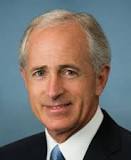
The Committee Chair, Senator Bob Corker (Rep., TN) supported the nomination with this statement: “Governor Haley is a fierce advocate for American interests. As South Carolina’s Governor, Nikki Haley is a proven leader. I believe she has the instincts that will help her achieve reform. Having run a state government, she has dealt with tough management and budgetary issues. I believe that experience will serve her well, and I strongly support her nomination.” He added, “I believe she knows the United Nations needs reform and change. We have a right to demand value for our money. I think our nominee has said she will demand that. . . . Experience shows that when we have strong U.S. leadership at the U.N. we can get results. As South Carolina’s Governor, Nikki Haley is a proven leader. . . . I believe she has the instincts that will help her achieve reform. Having run a state government, she has dealt with tough management and budgetary issues.”

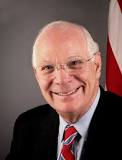
The nomination also was supported by Senator Benjamin Cardin (Dem., MD), the Committee’s Ranking Member, who said, ““What Governor Haley lacks in foreign policy and international affairs experience, she makes up for in capability, intelligence, and a track record of building coalitions in South Carolina. Her nomination was surprising to many of my colleagues on both sides of the aisle, but I have been impressed by her forthrightness on core American values, her willingness to admit what she does not know, and her commitment to seeking the facts and speaking truth to power, whether within the Trump Administration or with an intransigent Russia and China in the Security Council.”

Ambassador Haley’s Initial Appearance at the U.N.

Ambassador Haley @ U.N.

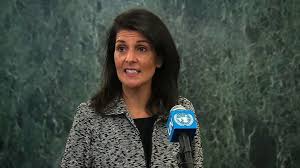
On January 27, only three days after her confirmation, she made her very first appearance at the U.N. General Assembly and delivered a blunt warning to every nation in the world. She said, “You’re going to see a change in the way we do business. Our goal with the administration is to show value at the U.N., and the way we’ll show value is to show our strength, show our voice, have the backs of our allies and make sure our allies have our back as well. For those who don’t have our back, we’re taking names; we will make points to respond to that accordingly.”[3]

Conclusion

First, her lack of knowledge regarding Cuba may not be surprising since her prior experience has been in state government, but it is a troubling sign that she may not be committed to normalization.

Second, her statement that she would not abstain on the forthcoming U.N. General Assembly resolution against the U.S. embargo (blockade) of Cuba is also troubling by itself. It is even more troubling when coupled with her recent statement at the U.N. that the U.S. would be taking the names of those countries that do not have the U.S.’ back and responding accordingly. That suggests that the U.S. may seek to take some kind of action against virtually every country in the world that supports that resolution.

==========================

[1] Ctr. Democracy in Americas, Cuba News Blast (Jan. 27, 2017).

[2] Press Release, Senate Foreign Relations Committee Approved Nomination of Nikki Haley to be U.S. Ambassador to the United Nations (Jan. 24, 2017); Press Release, Corker Votes to Confirm Nikki Haley as U.S. Ambassador to the United Nations (Jan. 24, 2017); Press Release, Corker Statement on Haley Vote (Jan. 24, 2017); Press Release, Cardin Statement on Haley Vote (Jan. 24, 2017); Assoc. Press, Senate Confirms Trump’s Nominee for US Ambassador to UN, N.Y. Times (Jan. 24, 2017); Carney, Senate confirms Trump’s UN ambassador, The Hill (Jan. 24, 2017).

[3] Sengupta, Nikki Haley Puts U.N. on Notice: U.S. Is ‘Taking Names,’ N.Y. Times (Jan. 27, 2017).

The Non-Aligned Movement Holds Summit in Venezuela

On September 17 in Venezuela Raúl Castro addressed the Summit of the Non-Aligned Movement (NAM), an organization of 120 states that advocates for solutions to global economic and other problems.[1] We will review that speech and the Summit’s concluding Declaration before making observations about this event.

Castro’s Speech

For Cuba, he said, “non – alignment means the struggle to radically change the international economic order imposed by the great powers, which has led to 360 people possessing a higher income than 45% of the world population annual wealth. The gap between rich and poor countries is growing. Technology transfer from North to South is an elusive aspiration.”

“Globalization mainly favors a select group of industrialized countries. The debt of southern countries multiplies. . . . [Mamy] people are pushed into unemployment and extreme poverty; millions [of] children die each year from hunger and preventable diseases; almost 800 million people cannot read or write, while more than 1.7 [billion] dollars are devoted to military spending.”

Castro reported that it has been “21 months since we announced simultaneously with President Barack Obama, the decision to restore diplomatic relations between Cuba and the United States.”

“There has been some progress, especially in the diplomatic arena and cooperation on issues of mutual interest, but has not been the same in the economic and commercial sphere, due to the limited scope, while positive, of the measures taken so far by the American government.”

“Cuba will continue to demand the lifting of the economic, commercial and financial blockade that [had caused] much damage and deprivation to Cuba and that also affects many countries for its extraterritorial scope.” Cuba also “will continue to demand that our sovereignty is returned to the territory illegally occupied by the US Naval Base in Guantanamo. Without [these and other changes by the U.S.] there can be no normal relations [between the two countries].”

Nevertheless, “we reaffirm the will to sustain civilized coexistence relations with the United States, but Cuba will not give up one of its principles, or . . . make concessions inherent in its sovereignty and independence. It will not relent in defending their revolutionary and anti-imperialist ideals, [or] in supporting self-determination of peoples.”

Castro also rejected any attempts to “regime change” and reaffirmed rejection of any country’s “resorting to aggression and use of force,” and “commitment to the principles of the United Nations Charter and International law; [to peaceful resolution of disputes] and full respect for the inalienable right of every state to choose its political, economic, social and cultural system as an essential condition to ensure coexistence among nations.”

More specifically Castro reaffirmed (a) Cuba’s “unconditional support for the government and Venezuelan people, the civil-military union and the constitutional President Nicolas Maduro Moros;” (b) Cuba’s rejection of the parliamentary “coup” in Brazil against President Dilma Rousseff; (c) Cuba’s support of Colombia’s “implementing the Agreement” with the FARQ; (d) Cuba’s support of “the people of the Syrian Arab Republic resolving their “without external interference aimed at promoting regime change, . . . “the creation of an independent Palestinian state with East Jerusalem as its capital, . . . the self-determination of the Saharawi people, . . . the historical demand of the Puerto Rican people towards self-determination and independence, . . . [and] the claim of Argentina over the Falkland Islands, South Sandwich and South Georgia;” and (e) Cuba’s congratulations to “the Islamic Republic of Iran for his work in the recently concluded mandate.”

Castro’s concluded with this assertion: “The only alternative to the enormous dangers and challenges ahead is unity and solidarity in defense of our common goals and interests.”

Summit’s Declaration[2]

The Summit’s Declaration concluded with a 21-point statement of NAM objectives: (1) consolidate and revitalize NAM; (2) consolidation of the international order; (3) the right to self-determination; (4) disarmament and international security; (5) human rights; (6) condemnation of unilateral sanctions; (7) condemnation of terrorism; (8) dialogue among civilizations; (9) support for Palestine; (10) reform of the U.N. Security Council and General assembly; (11) selection and appointment of new U.N. Secretary-General; (12) U.N. peace-keeping operations; (13) sustainable development goals; (14) promotion of education, science and technology for development; (15) climate change; (16) reforming the international economic governance; (17) South-South cooperation (18) international solidarity in combatting pandemics; (19) support for refugees and migrants; (20) young women, peace and security; and (21) new world order of information and communication.

Conclusion

These words of Raúl Castro were nothing new.

The real news from the NAM Summit was the low turn-out. Of the 120 NAM members only 13 attended, including the leaders of Cuba, Iran, Palestine, Ecuador, Bolivia and Zimbabwe and the Venezuelan host.

Venezuela’s President Nicolas Maduro called the meeting as an opportunity to increase international solidarity for his socialist government as the oil-dependent economy reels from widespread food shortages and triple digit inflation. However, according to observers, the low attendance indicates that almost all of the NAM members were not interested in engaging in such solidarity with this country under these circumstances.[3]

Nevertheless, Maduro spoke defiantly at the Summit about Venezuela’s problems, blaming them on the country’s foreign enemies. “Venezuela is facing a global attack, which is against all of Latin America and Caribbean. An attack that aims to impose a political, economic and cultural reorganization of our countries with the old oligarchy.”

As repeatedly stated, this blog concurs that the U.S. should end its embargo (blockade) of Cuba and that the peace agreement between the government of Colombia and the FARQ is to be applauded and hopefully will be approved in the October 2 referendum in that country. I also agree that Cuba and the other NAM members have the right to organize and advocate their many other positions.This blog, however, disagrees with Cuba’s allegation that the U.S. is illegally occupying Guantanamo Bay.

Finally soon after the NAM Summit,  President Maduro met with U.S. Secretary of State John Kerry when both were in Cartagena Colombia for the signing of the Colombia-FARQ peace agreement. The next day on his regular television show in his country, Maduro, mentioning his 40-minute meeting with Kerry, said, “I ask that God bless the results of the meeting [with Kerry] and that Venezuela opens a new era of relations with the United States.” He also said that veteran U.S. diplomat Tom Shannon, who has been the U.S. point man for the troubled relationship, will visit Caracas again soon and that an invitation was open to Kerry.[4]

The U.S. State Department, acknowledging the meeting, said, “The Secretary expressed our commitment to the well-being of the Venezuelan people, and our willingness to work with all sectors of Venezuelan society to enhance our relationship. He also spoke of our concern about the economic and political challenges that have affected millions of Venezuelans, and he urged President Maduro to work constructively with opposition leaders to address these challenges.” In addition, the Department said that “Kerry stressed our support for democratic solutions reached through dialogue and compromise” and that the two men “agreed to continue the bilateral discussions begun in recent months.”[5]

==============================================

[1] Castro, The only alternatives to the enormous dangers and challenges is unity and solidarity, Granma (Sept. 17, 2016).

[2] Declaration of the XVII Summit of Heads of State and Government of the Non-Aligned Movement (NAM), Granma (Sept. 18, 2016).

[3] Assoc. Press, Venezuela’s Crisis Keeps Non-Aligned Summit Turnout Low, N.Y. Times (Sept. 17, 2016); Reuters, Venezuela Summit Draws Few Leaders in Blow to Maduro, N.Y. Times (Sept. 17, 2016); Reuters, Maduro Revels in Support From Zimbabwe, Iran as Critics Decry Failed Summit, N.Y. Times (Sept. 19, 2016);  Castro, Venezuela closes the summit of non-aligned countries amid criticism, El Pais (Sept. 18, 2016).

[4] Reuters, Venezuela’s Maduro Calls for New Era of Relations With U.S., N.Y.Times (Sept. 27, 2016).

[5] U.S. State Dep’t, Secretary Kerry’s Meeting with Venezuelan President Maduro (Sept. 26, 2016).


El Salvador’s Supreme Court Invalidates Salvadoran Amnesty Law

On July 13, the Constitutional Chamber of the Supreme Court of El Salvador decided, 4 to 1, that the country’s amnesty law of 1993 was unconstitutional. This post will examine that decision and a subsequent post will discuss the impact of that decision on the pending criminal case in Spain regarding the 1989 murders of the Jesuit priests in El Salvador.

 The Court’s Decision.[1]

The Chamber held that the country’s amnesty law of 1993 was unconstitutional because it was “contrary to the access to justice” and the “protection of fundamental rights” as impeding the state from fulfilling its obligation to investigate, try and punish grave violations of those rights. Indeed, the court said the government has an obligation to “investigate, identify and sanction the material and intellectual authors of human rights crimes and grave war crimes” in its civil war and to provide reparations to victims.[2] The court also suggested that prosecutors begin with about 30 cases highlighted by a U.N. Truth Commission in March 1993.[3] The cases include massacres, assassinations and kidnappings by combatants from both the armed forces and the guerrilla army called the Farabundo Martí National Liberation Front (FMLN). One of the most prominent was the 1989 murders of the Jesuit priests and their housekeeper and her daughter.

The court’s announcement of its decision stated that the 1992 Peace Accords ending the civil war had contained no provision for an amnesty; that the country’s National Assembly had no power to grant an amnesty to persons who had committed crimes against humanity or war crimes constituting grave violations of human rights and that its constitution and international law of human rights required the conclusion of invalidity.

The court also stated that the crimes against humanity during the civil war were not individual and isolated acts, but the result of guidelines and orders issued by organized apparatuses of power with hierarchies of command.  This implies criminal responsibility of the direct actors, those who gave the orders for the crimes and those commanders who failed to countermand the orders and thereby failed to exercise control over the hierarchies.

Much to the surprise of this blogger as a retired U.S. attorney, one of the Chamber’s four judges in this very case, Florentine Menendez, made a public statement about the decision. He said, “We’re not raising hatred or reopening wounds,” but rather emphasizing “the strength of the constitution and the right to life and justice” for the victims. The decision rescues “the jurisprudence of the Inter-American system of human rights protection to heal the wounds of the past and finally close the page and get a national reconciliation.”

Positive Reactions to the Decision.[4]

The next day the decision was celebrated at a ceremony in San Salvador’s Cuscatlan Park, the site of a 275-foot granite wall etched with the names of 30,000 civilians killed in the country’s civil war and the locations of nearly 200 massacres committed between 1970 and 1991. Below are photographs of David Morales,El Salvador’s human rights ombudsman, who made remarks that day, and of part of the granite wall.

David Morales
David Morales
Cucatlan Park
Cucatlan Park


At this celebration, David Morales said, “If prosecutors and judges are willing to comply with the ruling, it will generate for the first time in El Salvador the first glimmers of reconciliation.” He added that many Latin American countries have already abolished their amnesty laws and begun to prosecute crimes dating to the civil wars and military dictatorships of the late 20th century.

Benjamin Cuellar, former director of the human rights institute at the University of Central America (UCA) and one of the petitioners in the lawsuit, said, “This is the first step that will take El Salvador to true reconciliation; so that the institutions work and bring to justice those who commit crimes, regardless of who they are.”

UCA, the home of the murdered Jesuit priests, stated, “The majority of the victims are more noble than the victimizers.   They do not want vengeance, they want the injustice to be recognized.   And the State is obliged to honor them.  It is time to put the victims in the center.   The new phase that is opened for the country is positive, it means an advance for democracy and justice, and constitutes a late but just recognition for those who had been disrespected in their memory and in their pain.”

The Center for Justice and Accountability, which has been involved in various Salvadoran human rights cases, including the Spanish case regarding the murder of the Jesuit priests, said, “Today’s decision marks a moment many of us have hoped for, for a long time, as we struggled by the victims’ side. The victims have been demanding justice since the peace was signed and the brave truth commission report was published. The amnesty law passed only seven days after was a betrayal to the victims’ hopes and the whole peace process. With it, justice was excluded forever. Today’s decision brings back hope for investigation and prosecution both inside and outside the country.”

A group of independent United Nations human rights experts declared: “This historic decision for the country brings hope to victims and confidence in the legal system…. More than twenty years after the end of the conflict, this decision will restore the fundamental rights of victims to justice and full reparations.”

Amnesty International praised the decision: “Today is an historic day for human rights in El Salvador. By turning its back on a law that has done nothing but let criminals get away with serious human rights violations for decades, the country is finally dealing with its tragic past.”

Another voice of support for the decision came in a New York Times editorial calling it “ a remarkable ruling that opens the door for relatives of victims of war crimes to hold torturers and killers accountable.” “However,” the editorial continued, “there appears to be little political will in El Salvador to revisit a painful chapter of its history in courtrooms. Politicians across the political spectrum have questioned the viability of war crimes tribunals at a time when the country’s judicial institutions are overwhelmed by endemic gang violence.”  Nevertheless, the Times suggested that El Salvador should create “a prosecution unit and gives it the tools and independence to pursue the most emblematic cases of the conflict” like the El Mozote Massacre,” which has been discussed in prior posts.

Negative Reactions to the Decision.

The lack of political will referenced in the Times editorial can be seen in the country’s President, Salvador Sánchez Cerén, a member of the FLMN, asserted that his government had always been committed to the restoration of the victims of the war and to building a culture committed to human rights.   However, he said the court’s decision did not meet “the real problems of the country and far from solving the daily problems of Salvadorans, worsens them.  Judgments of the Constitutional Chamber ignore or fail to measure the effects on our living together in society, and do not contribute to strengthening institutionality.”

Another FLMN leader had a similar reaction. The former president of the National Assembly, Siegfried Reyes, said the decision was “surprising and seeks to weaken and hit the governance and hit the security plans that the government is implementing effectively.”

The country’s Minister of Defense, David Munguia Payés, asserted that the decision was a “political error” and would be a setback to the process of pacification which had occurred since the end of the civil war.”  He openly worried that the ruling would turn into a “witch hunt.”

Mauricio Ernesto Vargas, a retired general who represented the armed forces in the peace negotiations, said the court’s ruling could intensify political polarization in a country with no shortage of problems: a gang-violence epidemic, a migration crisis, crop failures and economic stagnation.

 The country’s Attorney General, Douglas Melendez, had a more nuanced view. He said, “We respect from the institutional point of view this ruling. We will do what we have to do, we will fulfill our constitutional responsibilities.”

The conservative political party ARENA (founded by a leader of the death squads in the 1970s and 1980s, and in control of the government when atrocities like the massacre of the Jesuits occurred and the authors of the amnesty law) published an official statement urging respect for the court’s decisions, but also noting that the decisions would present challenges for the process of reconciliation and the strengthening of democracy and institutions.

Now we will have to see whether this decision leads to any Salvadoran investigations and prosecutions for the serious human rights crimes of its civil war and to a resumption of Spain’s criminal case regarding the 1989 murders of the Jesuit priests. (The latter subject will be covered in a subsequent post.)

========================================================

[1] El Salvador Supreme Court (Constitutional Chamber), Press Release (July 13, 2016), http://static.ow.ly/docs/20.%20Comunicado%2013-VII-2016%20Ley%20de%20amnist%C3%ADa_50Yr.pdf; Post war 1993 amnesty law declared unconstitutional, Tim’s El Salvador Blog (July 13, 2016), http://luterano.blogspot.com/2016/07/post-war-1993-amnesty-law-declared.html; Malkin & Palumbo, Salvadoran Court Overturns Wartime Amnesty, Paving Way for Prosecutions, N.Y. Times (July 14, 2016); Maslin, El Salvador strikes down amnesty for crimes during its civil war, Wash. Post (July 14, 2016), https://www.washingtonpost.com/world/the_americas/el-salvador-strikes-down-amnesty-for-crimes-during-its-civil-war/2016/07/14/5eeef2ec-49bf-11e6-8dac-0c6e4accc5b1_story.html.

[2] Prior posts have discussed the Amnesty Law: International Criminal Justice: El Salvador’s General Amnesty Law and Its Impact on the Jesuits Case, dwkcommentaries.com (June 11, 2011),  https://dwkcommentaries.com/2011/06/11/international-criminal-justice-el-salvadors-general-amnesty-law-and-its-impact-on-the-jesuits-caseEl Salvador’s Current Controversy Over Its General Amnesty Law and Supreme Court, dwkcommentaries.com (June 16, 2011), https://dwkcommentaries.com/2011/06/16/el-salvadors-current-controversy-over-its-general-amnesty-law-and-supreme-court; The El Mozote Massacre: The Truth Commission for El Salvador and the Subsequent General Amnesty Law and Dismissal of the Criminal Case, dwkcommentaries.com (Dec. 13, 2012), https://dwkcommentaries.com/2012/12/13/the-el-mozote-massacre-the-truth-commission-for-el-salvador-and-the-subsequent-salvadoran-general-amnesty-law-and-dismissal-of-criminal-case. It should be noted, however, that U.S. federal courts have held that the General Amnesty Law is limited to Salvadoran judicial proceedings and thus does not bar U.S. civil lawsuits for money damages against Salvadoran defendants. (El Salvador’s General Amnesty Law in U.S. Federal Courts, dwkcommentaries.com (June 14, 2011), https://dwkcommentaries.com/2011/06/14/el-salvadors-general-amnesty-law-in-u-s-federal-court-cases.

[3] Prior posts have discussed the Truth Commission: International Criminal Justice: The Jesuits Case in the Truth Commission for El Salvador, dwkcommentaries.com (June 9, 2011), https://dwkcommentaries.com/2011/06/09/international-criminal-justice-the-jesuits-case-in-the-truth-commission-for-el-salvador; The Salvadoran Truth Commission’s Investigation of the 1980 Murders of the Four Churchwomen, dwkcommentaries (Dec. 19, 2011), https://dwkcommentaries.com/2011/12/19/the-salvadoran-truth-commissions-investigation-of-the-murders-of-the-four-american-churchwomen; The El Mozote Massacre: The Truth Commission for El Salvador and the Subsequent General Amnesty Law and Dismissal of the Criminal Case, dwkcommentaries.com (Dec. 13, 2012), https://dwkcommentaries.com/2012/12/13/the-el-mozote-massacre-the-truth-commission-for-el-salvador-and-the-subsequent-salvadoran-general-amnesty-law-and-dismissal-of-criminal-case.

[4] Thanks for Tim’s El Salvador Blog (http://luterano.blog spot.com) for much of the information on the reactions to the Chamber’s decision.  David Morales: The sentence “is a tool of greater scope to demand justice, DiarioCoLatino (July 14, 2016) http://www.diariocolatino.com/david-morales-la-sentencia-es-una-herramienta-de-mayores-alcances-para-exigir-justicia; Dalton, Declared unconstitutional the amnesty in El Salvador, El Pais (July 14, 2016) http://internacional.elpais.com/internacional/2016/07/15/america/1468541983_506876.html.


The Confession of Belhar Is Adopted by the Presbyterian Church (U.S.A.)

PCUSA

On June 23, 2016, the General Assembly of the Presbyterian Church (U.S.A.) overwhelmingly voted (540 to 33) to include in its Book of Confessions the 1986 Confession of Belhar from South Africa.

Let us examine that Confession, its adoption by the PC(USA)’s General Assembly, the PC(USA)’s Book of Confessions and the recent use of the Belhar Confession at Minneapolis’ Westminster Presbyterian Church, a member of the PC(USA).

 The Confession of Belhar[1]

The Belhar Confession emerged from the era of apartheid in South Africa, 1948-1994. That doctrine and practice of racial segregation was embraced by the Dutch Reformed Church in South Africa (DRC) for whites and imposed upon its racially segregated offshoots: the Dutch Reformed Mission Church (DRMC) for colored or mixed-race people, the Dutch Reformed Church in Africa for blacks and the Reformed Church in Africa for people of Indian descent.

After the 1960 Sharpeville Massacre, the 1964 convictions and imprisonments of anti-apartheid activists Nelson Mandela and Walter Sisulu, the 1976 Soweto Uprising and the 1976 condemnation of South Africa and apartheid by the United Nations, the Synod of the DRMC in 1978 concluded that apartheid was anti-evangelical and a structural and institutional sin.

Eight years later, in 1986, another Synod of the DRMC met in Belhar, a colored suburb of Capetown, South Africa, and adopted the Confession of Belhar. It has the following primary confessional statements:

  1. “We believe in the triune God, Father, Son and Holy Spirit, who gathers, protects and cares for the church through Word and Spirit. This, God has done since the beginning of the world and will do to the end.”
  2. “We believe in one holy, universal Christian church, the communion of saints called from the entire human family.”
  3. “We believe that God has entrusted the church with the message of reconciliation in and through Jesus Christ; that the church is called to be the salt of the earth and the light of the world, that the church is called blessed because it is a peacemaker, that the church is witness both by word and by deed to the new heaven and the new earth in which righteousness dwells.”
  4. “We believe that God has revealed himself as the one who wishes to bring about justice and true peace among people.”
  5. “We believe that, in obedience to Jesus Christ, its only head, the church is called to confess and to do all these things, even though the authorities and human laws might forbid them and punishment and suffering be the consequence.”

Three of these statements also set forth additional detailed belief statements and rejections of any doctrine and ideology which:

  • “absolutizes  natural diversity or the sinful separation of people;”
  • “explicitly or implicitly maintains that descent or any other human or social factor should be a consideration in determining membership of the church;”
  • “sanctions in the name of the gospel or of the will of God the forced separation of people on the grounds of race or color;”
  • “would legitimate forms of injustice and any doctrine which is unwilling to resist such an ideology in the name of the gospel.”

The PC(USA)’s Adoption of the Belhar Confession [2]

As previously noted, on June 23, 2016 (30 years after the DRMC adoption of the Confession of Belhar), the General Assembly of the PC(USA) voted to add that Confession to the U.S. church’s Book of Confessions.

Rev. Godfrey Betha
Rev. Godfrey Betha

Immediately after the vote, the General Assembly was addressed by Rev. Godfrey Betha, the Vice Moderator of the Uniting Reformed Church in Southern Africa, which was formed by the DRMC and the Dutch Reformed Church in Africa for blacks. Betha told the General Assembly, “It is important to seek solidarity with South Africa. We’ve come a long way with the PC(USA). We are grateful to have you as partners in service to the Lord. Today we offer gratitude, we salute you as the PC(USA) for your historic decision to adopt the Belhar Confession as a standard of faith for your church. I bow in humility to God and thankfulness to you … I’ll never forget this date.”

Betha added: “Your decision affirms that, like those other historic standards of faith, the Belhar Confession transcends its historic circumstances as a standard for faith in all places and times. Your decision affirms that Belhar does speak against ideological and theological attempts to justify specific historical forms of injustice. Your decision affirms to your church, [and] to all, when you come looking for the demon of racism, don’t come to us.”

Rev. Allan Boesak
Rev. Allan Boesak

Also present at the General Assembly was Rev. Allan Boesak, a co-author of the Confession of Belhar and the moderator of the DRMC when it was adopted in 1986. He said, “I thank God for what happened here tonight. I thank God for your faithfulness. I thank God for your acknowledgement of our common humanity in doing this … I thank God, and I thank you, and because of Jesus and because of God’s faithfulness, we shall overcome.”

Rev. Denise Anderson
Rev. T. Denise Anderson

At that point the commissioners linked hands throughout the plenary hall and spontaneously broke into “We Shall Overcome,” the famous song of the U.S. African-American civil rights movement, led by the General Assembly’s Co- Moderator, Rev. T. Denise Anderson, Pastor, Unity Presbyterian Church, Temple Hills, MD.

Earlier that same day, and before the General Assembly action, Boesak had addressed a breakfast meeting at the General Assembly. He said the Belhar Confession “stirs us, humbles us, and inspires us … It’s a unifying document. We cannot yet foresee the consequences of the Confession. No other Confession has been so clear in its intentions: not only unity, but its foundationality; not just reconciliation, but its inescapability; not only justice, but its indivisibility.”

“Today is a defining moment for the PC(USA), as it was for the Dutch Reformed Mission Church 30 years ago as we finally adopted the Belhar Confession,” Boesak continued. “But the defining moment  was  not  just  the  adoption  of  the confession, as stunning as it was. In the years between 1982 and 1986, my friend and colleague and co-author Jaap Durand offered crucial prophetic insights that inspired and haunted the church in ways we couldn’t imagine in 1982, saying, ‘A  confession does not and cannot engage in mere trivialities. It can only be an extension of the ancient confession that Christ is Lord… I’m convinced that the Confession of Belhar will outlive apartheid and the heresy that formed it.’”

Recalling the struggles of black South Africans to remain faithful and pursue unity in light of terrible oppression, mass detention and cruel policies, Bosack said: “The church became directly involved in the efforts of freedom and justice in South Africa. The Jesus we worship and confess as Lord in the sanctuary is the Jesus we take into the street. Our people were slaughtered. Everyone was touched in one way or another.”

“By 1986 we saw no sense in, and had no desire for, unity with the white church, or with white people in general,” he said of the general despair that afflicted the DRMC. “But we had Belhar, [which] . . . understood [John] Calvin as he spoke of Holy Communion. ‘Christ has only one body of which he makes us all partakers.’”

Calling the unity of the church both a gift and command, Boesak said it was difficult in those years to find points of unity or reconciliation with those who were actively opposing the rights of black South Africans. The Belhar Confession, however, understood from Isaiah that God is not only a God of justice, but that God is a God of indivisible justice,” he said. “So against our self-absorbed instinct for self-absorbed victimhood, the black church confessed God as a God who wants to bring forth peace and justice in the world, and that God calls the church to follow in this, that the church must stand next to people in any form of need or injustice.”

This teaching of Belfar also challenged the DRMC when it faced the issue of the rights of LGBTQI and eventually affirmed those rights. Boesak said his denomination had “to face the consequences, not only with the white Dutch Reformed Church, but within itself.”

“In following Christ, the church must fight against those who use their privilege to oppress and put down any people,” he said. In asking the PC(USA) to “witness against any form of injustice,” Boesak turned his attention to Palestine, asking the denomination to support the boycott, divestment and sanctions movement – similar to those used to end apartheid – to place economic pressure on Israel to end the occupation and expansion of territories. “Kairos Palestine is a cry from the heart of suffering,” he said. “Unless it rolls down for Palestinians, it will not roll down for others. Indivisible. Do justice, love mercy and walk humbly with our God.”

In conclusion, Boesak said of Belhar and its broader implications: “It is a confession that stirs us, humbles us, and inspires us … It’s a unifying document.”

The PC(USA)’s Book of Confessions

The Book of Confessions is a collection of confessions and creeds that declare to the church’s “members and to the world who and what [the church] is, what it believes and what it resolves to do.” Prior to the addition of the Belhar Confession, the Book contained 11 confessions and creeds starting with the Nicene Creed of 325 and ending with A Brief Statement of Faith– Presbyterian Church (U.S.A.) of 1983.[3]

According to the church’s Book of Order, These creeds and confessions are “subordinate standards . . . subject to the authority of Jesus Christ, the Word of God, as the Scriptures bear witness to him” that “identify the church as a community of people known by its convictions as well as by its actions,” that “guide the church in its study and interpretation of the Scriptures,” that “summarize the essence of Christian tradition,” that “direct the church in maintaining sound doctrines” and that “equip the church for its work of proclamation.” They also give “witness to the faith of the church catholic” while identifying “with the affirmations of the Protestant Reformation:” “grace alone, faith alone, Scripture alone.”[4]

Westminster’s Recent Use of the Belhar Confession

One of Belhar Confession’s central themes was adapted for use by Minneapolis’ Westminster Presbyterian Church as its July 17, 2016, Call to Worship (in call and response mode):[5]

  • One: This we believe.
  • All: God longs to bring justice and peace among all people.
  • One: This we believe.
  • All: God teaches the church to do what is good and to seek the right.
  • One: This we believe.
  • All: God sees a day when all people – black, white, red, yellow, and brown – will live together in harmony.
  • One: This we believe.
  • All: God calls the church to follow Jesus, to lift up the poor, to heal those who hurt, to feed those who hunger, and to comfort those who grieve.”

==============================================================

[1] PCUSA, Confession of Belhar (English translation); PCUSA, The Belhar Confession (paper about the history of the Confession); PCUSA, 30 Days with the Belhar Confession: Reflections on Unity, Reconciliation and Justice (this book weaves together Scripture passages and the Confession’s timely themes of unity, reconciliation and justice; it is written by a diverse collection of scholars, theologians and church leaders and is a great resource for individuals, study groups or entire congregations wanting to familiarize themselves with the Confession through prayer and reflection; the Confession itself is included).

[2] PCUSA, Allan Boesak commends Belhar Confession (June 23, 2016); PCUSA, Belhar added to PC(USA)’s Book of Confessions (June 23, 2016); Duffield, Adopting Belhar, the 222nd General Assembly Makes History, Presbyterian Outlook (June 23, 2016). The Confession previously had been adopted by Namibia’s Evangelical Reformed Church in Africa, Belgium’s United Protestant Church, the Reformed Church in America and the Christian Reformed Church of North America. The Dutch Reformed Church in South Africa, however, has not adopted the Confession in a manner acceptable to the Uniting Reformed Church in Southern Africa and, therefore, has not merged into the latter.

[3] PCUSA, Book of Confessions.

[4] PCUSA, Book of Order, Ch. II (1983-85 edition).

[5] Westminster, Worship Bulletin (July 17, 2016).


Cuba and Nine Other Countries Reject Accreditation of Free Press Group To Participate in U.N. Meetings 

On May 26, a United Nations committee rejected, 10 to 6, an application for accreditation to attend U.N. meetings from the Committee to Protect Journalists (CPJ), an international, independent group that monitors attacks on journalists around the world and campaigns for the release of those who are jailed.[1]

The 10 negative votes came from Cuba along with Azerbaijan, Burundi, China, Nicaragua, Pakistan, Russia, South Africa, Sudan and Venezuela. The yes votes came from Greece, Guinea, Israel, Mauritania, the United States and Uruguay. The abstentions were by India, Iran and Turkey, the latter two having reputations for persecuting journalists.

At the committee meeting U.S. Ambassador Sarah Mendelson made a lengthy statement advocating accreditation for CPJ, which, she said, is “a reputable non-governmental organization that promotes press freedom worldwide and defends the right of journalists to report the news without fear of reprisal.” Such a group has shown that “a free press remains a critical foundation for prosperous, open, and secure societies, allowing citizens to access information and hold their governments accountable. Indeed, the Universal Declaration of Human Rights reiterates the fundamental principle that every person has the right ‘to seek, receive, and impart information and ideas through any media and regardless of frontiers.’”[2]

Afterwards the U.S. Ambassador to the U.N., Samantha Power, said, “It is increasingly clear that the NGO committee acts more and more like an anti-NGO committee.” She also said that the U.S. would appeal the committee’s decision to the full 54-member U.N. Economic and Social Council.

CPJ stated, “It is sad that the U.N., which has taken up the issue of press freedom through Security Council and General Assembly resolutions and through the adoption of the U.N. Action Plan, has denied accreditation to CPJ, which has deep and useful knowledge that could inform decision making. A small group of countries with poor press freedom records are using bureaucratic delaying tactics to sabotage and undermine any efforts that call their own abusive policies into high relief.”[3]

This April CPJ’s annual report ranked Cuba 10th on its list of the 10 Most Censored Countries. Key for this ranking was Cuba’s having “the most restricted climate for press freedom in the Americas. The print and broadcast media are wholly controlled by the one-party Communist state, which has been in power for more than half a century and, by law, must be ‘in accordance with the goals of the socialist society.'” In addition, CPJ stated, “The government continues to target critical journalists through harassment, surveillance, and short-term detentions.”[4]

============================================

[1] Sengupta, Press Freedom Group’s Application for U.N. Accreditation is Rejected, N.Y. Times (May 26, 2016); Assoc. Press, UN Committee Denies Credentials to Press Freedom Group, N.Y. Times (May 26, 2016); Reuters, U.N. Panel Rejects Press Freedom Watchdog Accreditation Request, N.Y. Times (May 26, 2016).

[2] Mendelson, Remarks at the UN Committee on Non-Governmental Organizations Regarding the Accreditation of the Committee to Protect Journalists, U.S. Mission to the U.N. (May 26, 2016).

[3] CPJ, CPJ denied ECOSOC consultative status after vote in UN NGO Committee (May 26, 2016).

[4] Cuba Gets Low Marks on Press Freedom from Committee to Protect Journalists, dwkcommentaries.com (April 18, 2016).

Presidents Obama and Castro Speak and Meet at United Nations

Over the last week Cuban President Raúl Castro has made two speeches at the United Nations in New York City as has U.S. President Barack Obama. Afterwards the two of them with advisors held a private meeting at the U.N. with subsequent comments by their spokesmen. Here is a chronological account of these events.

President Castro’s September 26th Speech[1]


On September 26, President Raúl Castro 11131154waddressed the U.N. Summit on Sustainable Development, as shown in the photograph to the right. In his remarks he said, ”The reestablishment of diplomatic relations Between Cuba and the United States of America, the opening of embassies and the policy changes announced by President Barack Obama . . . constitute a major progress, which has elicited the broadest support of the international community.”

However, he added, “the economic, commercial and financial blockade [by the U.S.] against Cuba persists bringing damages and hardships on the Cuban people, and standing as the main obstacle to our country’s economic development, while affecting other nations due to its extraterritorial scope and hurting the interests of American citizens and companies. Such policy is rejected by 188 United Nations member states that demand its removal.”

More generally Castro condemned “the pervasive underdevelopment afflicting two-thirds of the world population” and the widening “gap between the North and the South” and “wealth polarization.”

Thus, he argued, “If we wish to make this a habitable world with peace and harmony among nations, with democracy and social justice, dignity and respect for the human rights of every person, we should adopt as soon as possible concrete commitments in terms of development assistance, and resolve the debt issue.” Such a commitment, he said, would require “a new international financial architecture, removal of the monopoly on technology and knowledge and changing the present international economic order.”

Nevertheless, according to President Castro, Cuba will continue to help other developing nations despite its limited capabilities and “shall never renounce its honor, human solidarity and social justice” that “are deeply rooted in our socialist society.”

President Obama’s September 27th Speech[2]

635789669053394239-AFP-544774880

On September 27, President Obama addressed the same U.N. Summit on Sustainable Development without touching on U.S.-Cuba relations. Instead he concentrated on the purpose of the Summit– sustainable development. (His photograph is to the left.)

He started by rejecting the notion that “our efforts to combat poverty and disease do not and cannot work, that there are some places beyond hope, that certain people and regions are condemned to an endless cycle of suffering.” Instead, he asserted, “the global hunger rate has already been slashed.  Tens of millions of more boys and girls are today in school.  Prevention and treatment of measles and malaria and tuberculosis have saved nearly 60 million lives.  HIV/AIDS infections and deaths have plummeted.  And more than one billion people have lifted themselves up from extreme poverty — one billion.”

Nevertheless, much remains to be done, according to Obama, and the nations at this Summit “commit ourselves to new Sustainable Development Goals, including our goal of ending extreme poverty in our world.  We do so understanding how difficult the task may be.  We suffer no illusions of the challenges ahead.  But we understand this is something that we must commit ourselves to.  Because in doing so, we recognize that our most basic bond — our common humanity — compels us to act.”

In this work, President Obama stated, the U.S. “will continue to be your partner.  Five years ago, I pledged here that America would remain the global leader in development, and the United States government, in fact, remains the single largest donor of development assistance, including in global health.  In times of crisis — from Ebola to Syria — we are the largest provider of humanitarian aid.  In times of disaster and crisis, the world can count on the friendship and generosity of the American people.”

Therefore, Obama said, he was “committing the United States to achieving the Sustainable Development Goals” and to “keep fighting for the education and housing and health care and jobs that reduce inequality and create opportunity here in the United States and around the world.” This effort will include other “governments, more institutions, more businesses, more philanthropies, more NGOs, more faith communities, more citizens.” Moreover, the “next chapter of development must also unleash economic growth — not just for a few at the top, but inclusive, sustainable growth that lifts up the fortunes of the many.”

President Obama concluded by noting these obstacles to achieving these goals: bad governance; corruption; inequality; “old attitudes, especially those that deny rights and opportunity to women;” failure to “recognize the incredible dynamism and opportunity of today’s Africa;” war; and climate change

President Obama’s September 28th Speech[3]

 In a wide-ranging speech on international affairs, President Obama commented on U.S. relations with Cuba. He said, “I also believe that to move forward in this new era, we have to be strong enough to acknowledge when what you’re doing is not working. For 50 years, the United States pursued a Cuba policy that failed to improve the lives of the Cuban people. We changed that. We continue to have differences with the Cuban government. We will continue to stand up for human rights. But we address these issues through diplomatic relations, and increased commerce, and people-to-people ties. As these contacts yield progress, I’m confident that our Congress will inevitably lift an embargo that should not be in place anymore. Change won’t come overnight to Cuba, but I’m confident that openness, not coercion, will support the reforms and better the life the Cuban people deserve, just as I believe that Cuba will find its success if it pursues cooperation with other nations.”

Later in the speech, Obama added these words: “Think of the Americans who lowered the flag over our embassy in Havana in 1961 — the year I was born — and returned this summer to raise that flag back up. (Applause.) One of these men said of the Cuban people, “We could do things for them, and they could do things for us. We loved them.” For 50 years, we ignored that fact.

These comments were in the context of the following more general discussion of international affairs by President Obama: “We, the nations of the world, cannot return to the old ways of conflict and coercion. We cannot look backwards. We live in an integrated world — one in which we all have a stake in each other’s success. We cannot turn those forces of integration. No nation in this Assembly can insulate itself from the threat of terrorism, or the risk of financial contagion; the flow of migrants, or the danger of a warming planet. The disorder we see is not driven solely by competition between nations or any single ideology. And if we cannot work together more effectively, we will all suffer the consequences.”

“No matter how powerful our military, how strong our economy, we understand the United States cannot solve the world’s problems alone.” So too, in words that could be aimed at Cuba and others, “repression cannot forge the social cohesion for nations to succeed. The history of the last two decades proves that in today’s world, dictatorships are unstable. The strongmen of today become the spark of revolution tomorrow. You can jail your opponents, but you can’t imprison ideas. You can try to control access to information, but you cannot turn a lie into truth. It is not a conspiracy of U.S.-backed NGOs that expose corruption and raise the expectations of people around the globe; it’s technology, social media, and the irreducible desire of people everywhere to make their own choices about how they are governed.”

In a similar vein, Obama said, “The strength of nations depends on the success of their people — their knowledge, their innovation, their imagination, their creativity, their drive, their opportunity — and that, in turn, depends upon individual rights and good governance and personal security.”

Finally, according to Obama, we must “defend the democratic principles that allow societies to succeed” with a recognition that “democracy is going to take different forms in different parts of the world. The very idea of a people governing themselves depends upon government giving expression to their unique culture, their unique history, their unique experiences. But some universal truths are self-evident. No person wants to be imprisoned for peaceful worship. No woman should ever be abused with impunity, or a girl barred from going to school. The freedom to peacefully petition those in power without fear of arbitrary laws — these are not ideas of one country or one culture. They are fundamental to human progress.”

“A government that suppresses peaceful dissent is not showing strength; it is showing weakness and it is showing fear. History shows that regimes who fear their own people will eventually crumble, but strong institutions built on the consent of the governed endure long after any one individual is gone.”

“That’s why our strongest leaders — from George Washington to Nelson Mandela — have elevated the importance of building strong, democratic institutions over a thirst for perpetual power. Leaders who amend constitutions to stay in office only acknowledge that they failed to build a successful country for their people — because none of us last forever. It tells us that power is something they cling to for its own sake, rather than for the betterment of those they purport to serve.”

“Democracy — inclusive democracy — makes countries stronger. When opposition parties can seek power peacefully through the ballot, a country draws upon new ideas. When a free media can inform the public, corruption and abuse are exposed and can be rooted out. When civil society thrives, communities can solve problems that governments cannot necessarily solve alone. When immigrants are welcomed, countries are more productive and more vibrant. When girls can go to school, and get a job, and pursue unlimited opportunity, that’s when a country realizes its full potential.”

President Castro’s September 28th Speech[4]

On September 28, Cuban President Raúl Castro in his address to the U.N. General Assembly essentially reiterated his comments of two days earlier about U.S.-Cuba relations with these words: ‘After 56 years, during which the Cuban people put up a heroic and selfless resistance, diplomatic relations have been reestablished between Cuba and the United States of America.”

“Now, a long and complex process begins toward normalization that will only be achieved with the end of the economic, commercial and financial blockade; the return to our country of the territory illegally occupied by the Guantanamo Naval Base; the suspension of radio and TV broadcasts, and subversion and destabilization attempts against the Island; and, when our people are compensated for the human and economic damages they continue to endure.”

“As long as the blockade remains in force, we will continue to introduce the Draft Resolution entitled ‘Necessity of Ending the Economic, Commercial and Financial Embargo imposed by the United States of America on Cuba.’ To the 188 governments and peoples who have backed our just demand, here, and in other international and regional forums, I reaffirm the eternal gratitude of the Cuban people and government for your continued support.” [5]

The rest of this Castro speech argued that the U.N. has failed in its 70 years of existence to fulfill the lofty purposes of its Charter. The speech also noted Cuba’s solidarity with its Caribbean brothers, African countries, the Bolivarian Republic of Venezuela, the Republic of Ecuador, the people of Puerto Rico, the Republic of Argentina, the Brazilian people and President Dilma Rouseff, the Syrian people and the Palestinian people. Castro also supported the nuclear agreement with the Islamic Republic of Iran.

On the other hand, Castro reaffirmed Cuba’s “rejection of the intention to expand the presence of NATO up to the Russian borders, as well as of the unilateral and unfair sanctions imposed on that nation” and Cuba’s condemnation of NATO and European countries’ efforts to destabilize countries of the Middle East and Africa that have led to the recent migrant crisis in Europe.

In conclusion, Castro said, “the international community can always count on Cuba to lift its sincere voice against injustice, inequality, underdevelopment, discrimination and manipulation; and for the establishment of a more equitable and fair international order, truly focused on human beings, their dignity and well-being.”

The Presidents’ Meeting[6]

Obama &Castro

The two presidents with their advisors held a 30-minute private meeting at the U.N. on Tuesday, September 29. The photograph at the left shows them shaking hands.

The U.S. delegation consisted of Secretary of State, John Kerry; National Security Adviser, Susan Rice; National Security Council Senior Director for Western Hemisphere Affairs, Mark Feierstein; and the U.S. Permanent Representative to the U.N., Samantha Power.

Cuba’s delegation was composed of the Foreign Minister, Bruno Rodriguez; Consultant, Alejandro Castro Espin (the son of President Raúl Castro); Vice President of Cuba’s Defense and Security Committee, Juan Francisco Arias Fernández; Cuba’s Director General of U.S. Affairs, Ministry of Foreign Affairs, Josefina Vidal; and Cuba’s Ambassador to the U.S., José Ramón Cabañas.

White House’s Comments on the Meeting[7]

On a September 29 flight from New York City to Washington, D.C., White House Press Secretary Josh Earnest, in response to a journalist’s question, said, “I know that the two leaders had an opportunity to discuss some of the regulatory changes that have been announced in the last couple of weeks on the part of the [U.S.]. The State Department is leading civil aviation coordination talks in Cuba right now.  And these are all additional steps that are moving toward more normal relations between our two countries.”

“The President, as he always does, . . . reaffirmed our commitment to seeing the Cuban government do a better job of not just respecting, but actually proactively protecting, the basic human rights of the Cuban people.”

We “continue to believe that deeper engagement and deeper people-to-people ties, deeper economic engagement between the [U.S.] and Cuba will have the effect of moving the government and the nation in a positive direction.”

Thereafter the White House released the following written statement about the meeting: “President Obama met today with President Raul Castro of Cuba to discuss recent advances in relations between the United States and Cuba, as well as additional steps each government can take to deepen bilateral cooperation. The two Presidents discussed the recent successful visit of Pope Francis to both countries.  President Obama highlighted U.S. regulatory changes that will allow more Americans to travel to and do business with Cuba, while helping to improve the lives of the Cuban people.  The President welcomed the progress made in establishing diplomatic relations, and underscored that continued reforms in Cuba would increase the impact of U.S. regulatory changes.  The President also highlighted steps the United States intends to take to improve ties between the American and Cuban peoples, and reiterated our support for human rights in Cuba.”

Cuban Foreign Minister’s Press Conference[8]

Soon after the presidential meeting, Cuban Foreign Minister Bruno Rodriguez held a press conference at the U.N. In his opening statement, he said that in a “respectful and constructive” atmosphere, the two presidents exchanged their views on the recent visit of Pope Francisco to Cuba and the United States, as well as issues on the bilateral agenda established between the two countries.

“The presidents agreed on the need to continue working on the set bilateral agenda, which includes areas of mutually beneficial bilateral cooperation and in third countries such as Haiti, the development of dialogue on issues of bilateral and multilateral interest and resolving outstanding issues between two states.”

President Castro affirmed Cuba’s desire to build a new relationship with the U.S. based on respect and sovereign equality, but reiterated that to have normal relations the U.S. had to lift the blockade, which is causing damage and hardship to the Cuban people and affects the interests of American citizens.

Castro also confirmed that Cuba on October 27 would introduce in the General Assembly a resolution condemning the embargo (blockade). Said the foreign Minister, the blockade is “a massive, flagrant and systematic violation of human rights of all Cubans and harms all Cuban families, even Cubans living outside Cuba.” Cuba fully expects this year’s resolution to once again have overwhelming support.

The Foreign Minister said the return of the territory illegally occupied by the Guantanamo Naval Base in Cuba is a high priority element in the process of normalization of relations between the U.S. and Cuba, as a vindication of Cuban people.

At another point he added that “we are very proud of the accomplishments of Cuba on human rights and that human rights are universal, not subject to political selectivity or manipulation of any kind. ” Cuba guarantees the full exercise of political rights and civil liberties, and economic, social and cultural rights. We have many concerns with the situation on human rights in the world, particularly in the U.S. and Western Europe, as illustrated by the current immigration refugee crisis. The pattern of racial discrimination and police brutality against African Americans in the [U.S.] is really serious.

Conclusion

Cuba reiterated its insistence on ending the U.S. embargo as an essential condition for normalization of relations, an objective shared by President Obama and this blog. [9] We now await the U.N. General Assembly’s debate and anticipated approval on October 27 of another resolution condemning the embargo and whether the U.S. will, for the first time, abstain on the vote.

Cuba continues to assert that the U.S. lease of Guantanamo Bay is illegal, but its saying so does not make it so. Previous blog posts have discussed this contention and do not find it persuasive and, therefore, suggested the two countries submit the dispute for resolution to the Permanent Court of Arbitration at The Hague in the Netherlands.[10]

The same means has been suggested in this blog for resolving the disputes about whether or not Cuba has been damaged by the embargo (blockade) and the amount of such alleged damages as well as the amount of damages to U.S. interests by Cuba’s expropriation of property in the early years of the Cuban Revolution.

==============================================

[1] Cuba Ministry Foreign Affairs, Raul Castro: Unacceptable levels of poverty and social inequality persist and even aggravate across the world (Sept. 26, 2015); Reuters, Cuba’s Castro Slams U.S. Trade Embargo at United Nations, N.Y. Times (Sept. 26, 2015); Reuters, U.S. Embargo ‘Main Obstacle’ to Cuba’s Development: Castro, N.Y. Times (Sept. 26, 2015) (video)

[2] White House, Remarks by President on Sustainable Development Goals (Sept. 27, 2015).

[3] Reuters, Quotes from President Obama’s U.N. Speech, N.Y. Times (Sept. 28, 2015); President Obama’s Speech to the United Nations General Assembly 2015, N.Y. Times (Sept. 28, 2015); White House, Remarks by President Obama to the United Nations General Assembly (Sept. 28, 2015).

[4] Raúl at the United Nations: The International community can always count on Cuba’s voice in the face of injustice, Granma (Sept. 28, 2015); Full text [of Castro’s speech], Granma (Sept. 28, 2015); Reuters, At U.N., Castro Says U.S. Must End Embargo to Have Normal Cuba Ties, N.Y. Times (Sept. 28, 2015); Assoc. Press, Raúl Castro Addresses General Assembly, N.Y. Times (Sept. 28, 2015) (video); Goldman, At the U.N., Raúl Castro of Cuba Calls for End to U.S. Embargo, N.Y. Times (Sept. 28, 2015).

[5] A prior post reviewed last year’s General Assembly’s condemnation of the embargo.

[6] Assoc. Press, U.S., Cuba Leaders Meet for 2nd Time in This Year, N.Y. Times (Sept. 29, 2015); Reuters, Obama, Castro Meet as They Work on Thawing U.S.-Cuba Ties, N.Y. Times (Sept. 29, 2015); Cuba and U.S. Presidents meet, Granma (Sept. 30, 2015)

[7] White House, Press Gaggle by Press Secretary Josh Earnest en route Washington, D.C., 9/29/15; White House, Readout of the President’s Meeting with Cuban President Raul Castro (Sept. 29, 2015).

[8] Reuters, Cuban Minister on Obama-Castro Meeting, N.Y. Times (Sept. 29, 2015) (video); Bruno Rodriguez: The blockade is a massive, flagrant and systematic violation of human rights, Granma (Sept. 30, 2015).

[9] This blog has discussed the initial bills to end the embargo in the House and Senate as well as later bills to do the same in the Senate and House.

[10] Resolution of U.S. and Cuba’s Damage Claims (April 4, 2015); Resolution of Issues Regarding U.S.-Lease of Guantanamo Bay (April 6, 2015); Does Cuba Have a Right to Terminate the U.S. Lease of Guantanamo Bay? (April 26, 2015).
The First Day of Pope Francis’ Mission to Cuba

On Saturday, September 19, at 15:52 (Cuban time; EST) Pope Francis’ airplane from Rome arrived at Havana’s airport. This post will cover the Pope’s flight to Cuba, the final hours of Cuba’s preparation and anticipation of his arrival; and his arrival.[1] Subsequent posts will cover each of the Pope’s other three days in Cuba and then each of his six days in the United States of America.

The Pope’s Flight to Cuba

At 04:15 (EST) the Pope’s plane left Rome with an entourage that included Cardinal Secretary of State Pietro Parolin and Vatican “Foreign Minister” Monsignor John Gallagher. From the plane the Pope issued many tweets. One of them said: “I ask you to join me in praying for my trip to Cuba and the United States.”

On the plane the Pope told journalists, “I love the Cuban people a great deal.” He also noted the need to extend a hand and open parish doors to immigrants.

Preparations in Havana

That morning U.N. Secretary General Ban Ki-moon issued a statement acknowledging, “The visit [next week] of His Holiness Pope Francis to the United Nations comes at a moment of challenge and hope. As the world struggles to cope with conflict, poverty and climate change, Pope Francis has been a leading voice for urgent action to protect people and our planet.” The Secretary General’s message also included the following words:

  • “I am deeply privileged to have had the opportunity to meet several times with His Holiness, who impressed me as a man of great humility and humanity. When we met last year at the Vatican in May, the Pope urged senior United Nations officials to ‘work together in promoting a true, worldwide ethical mobilization which, beyond all differences of religious or political convictions, will spread and put into practice a shared ideal of fraternity and solidarity, especially with regard to the poorest and those most excluded.’”
  • “Pope Francis has called on people everywhere to work towards realizing the new sustainable development goals ‘with generosity and courage.’ As I discussed with the Pope, this will require challenging all forms of injustice.”
  • “I fully concur with Pope Francis in his recent encyclical that climate change is a moral issue, in addition to its other dimensions, and one of the principal challenges facing humanity. His Holiness rightly cited the solid scientific consensus showing significant warming of the climate system, with most global warming in recent decades mainly a result of human activity.”
  • “Pope Francis and I wholeheartedly agree on the urgency for action, and the critical need to support the poorest and most vulnerable members of our human family from a crisis they did least to cause, but suffer from the most. Other faith groups have echoed this view, including most recently a gathering of eminent Islamic scholars and religious leaders.”
  • “Pope Francis’ message extends far beyond the world’s 1.2 billion Roman Catholics. On the first page of his recent encyclical, the Pope states that ‘faced as we are with global environmental deterioration, I wish to address every person living on this planet.’”
  • “Pope Francis has demonstrated the value of religious leaders engaging on these pressing global issues. I count on him and other faith leaders to counteract the prevailing forces of division and hate with dialogue and understanding. Together, we can realize our vision of a peaceful world where all people live in safety and dignity.”
Frei Betto
Frei Betto

Later that morning Frei Betto–a Brazilian Roman Catholic priest and the author of “Fidel and Religion: Castro Talks on Revolution and Religion with Frei Betto” (1988)–held a press conference at Havana’s Hotel Nacional. He noted that “only two Latin American countries have had the privilege of receiving, in a relatively short period of time (17 years), the visit of the last three Popes: Brazil and Cuba.” While 70% of Brazilians are Roman Catholic, Cuba has religious syncretism. With the reestablishment of diplomatic relations between the U.S. and Cuba, Frei said, the challenges point toward the need to change attitudes within the U.S. government. Francis is undertaking a revolution within the Catholic Church itself, which is why some see him as the leading statesman of our time and as a strong candidate for the Nobel Peace Prize. Indeed, added Frei, Francis preaches in favor of peaceful coexistence in the world, reaching out to the poor and boosting high-impact programs to eradicate hunger, poverty and environmental degradation. The Cuban Revolution has taught evangelical values, which are the same as human moral values and are not “additional” for revolutionaries or for the religious.

Welcoming Francis at Havana’s Airport

Pope Francis & President Castro

The Pope was met at the airplane by Cuban President Raul Castro accompanied by the Cuban Foreign Minister Bruno Rodriguez and Cuban Archbishop Jamie Lucas Cardinal Ortega. In a lengthy speech that recited many of the accomplishments of the Cuban Revolution and Cuba’s claims against the U.S., President Castro said his meeting with the Pope at the Vatican gave them the opportunity to exchange ideas about important world issues. We have followed your statements about these issues with much interest. We want future generations to inherit human dignity from us. The weight of the crisis falls on the third world and minorities do not escape from it. Your Holiness, we have thanked you for your support during the talks between the United States and Cuba. Now the Pope’s meetings with the Cuban people will be very important.

Francis responded by thanking the Cuban people for their welcome and expressing his fraternal greetings to Comandante en Jefe Fidel Castro. The Pope recalled that the 80th anniversary of Cuba and the Holy See’s uninterrupted relationship is being celebrated; that Popes John Paul II and Benedicto XVI had visited Cuba; and that this trip coincides with the centenary of the declaration of Cobre’s Our Lady of Charity as Cuba’s patron saint. Francis said that Cuba plays an extraordinary role in the meeting of the North and South, East and West. Its natural vocation is as a point of encounter. The process underway toward the reestablishment of relations between Cuba and the U.S. is an example of the effectiveness of a culture of exchange and dialogue.

The Pope then left for the Apostolic Nunciature in Havana where he stayed the night. On the journey there an estimated 100,000 Cubans were on the streets to welcome him, as shown in the photographs below.

Motorcase

f0008839

Vatican Spokesman’s Press Conference

Federico Lombardi
Federico Lombardi

The Vatican spokesman, Monsignor Federico Lombardi, then held a press conference at Hotel Nacional. He said that peace was the key word for this visit, that the Pope was greatly moved by the Cuban people’s warm welcome and enthusiasm; that the Pope had highlighted the importance of 80 years of uninterrupted ties between Cuba and the Vatican; and that the Pope will visit the Shrine of Our Lady of Charity of El Cobre as a son and pilgrim.

Lombardi also emphasized that the Catholic Church and the current and previous Popes are opposed to the U.S. blockade. The process of the reestablishment of diplomatic relations between Washington and Havana constituted a sign of hope to change the history of relations between the two countries. Peace, reconciliation and the building of bridges: clear messages from Pope Francis regarding the significance of his current apostolic visit to Cuba and the United States.

According to Lombardi, the Pope’s speech at the airport and his subsequent speeches are directed toward Cuban men and women, including Cubans throughout the world no matter where they reside. Many of them remember the historic words of the first Pope to visit Cuba, now a Saint, (John Paul II): “May Cuba with all its glorious possibilities open up to the world, and may the world open up to Cuba.”

Conclusion

The incredible major sources for this and subsequent posts about the Cuban mission are Granma, the official newspaper of the Communist Party of Cuba, and the Vatican.

The online edition of Granma at 06:03 a.m. (Cuban time) commenced a minute-by-minute reporting (with photographs) of the Pope’s plane’s earlier departure from Rome and of the preparations in Cuba. It also mentioned the Cuban government’s establishment of a Twitter account: #ElPapaEnCuba. Another article in Granma focused on the actual airport arrival.

While the coverage of the Pope’s first day in Cuba by the Cuban media was focused on the details of what actually happened, the New York Times’ lead article chose to concentrate on what it saw as the Pope’s “new challenge” of trying to “open up Cuba to the Roman Catholic Church.” Its first quotation was from the Rev. Jorge Cela, who oversaw the Jesuit religious order in Cuba from 2010 to 2012, who said, “It is an occasion to ask for more openness. The relationship is not easy.” Its second identified source was Rev. José Conrado, a Cuban priest in the central city of Trinidad, who said, “We could do more. The church should not back off, even if doing so is difficult and problematic for the church itself.” The balance of the Times’ article talked about criticism of Cuban Archbishop Ortega and the need to find his successor when he retires.

The Washington Post’s lead article at least covered the welcoming speeches at the Havana airport in addition to discussing issues about the Roman Catholic’s role in Cuba and whether they would be the subjects of the Pope’s public comments or private discussions with President Castro.


U.S. Senate Foreign Relations Committee Holds Hearing About Cuba

On May 20th the U.S. Senate Foreign Relations Committee held a hearing, “U.S.-Cuban Relations—The Way Forward.”[1]

 Chairman Corker’s Opening Statement

Senator Bob Corker
Senator Bob Corker

The Committee Chair, Bob Corker (Rep., TN) opened by stating that the hearing would focus “on the strategy behind the President’s significant shift in U.S. policy towards Cuba.” Even though this shift “has been welcomed in Latin America and the Caribbean . . . significant differences of opinion exist in the [U.S.] over the extent to which this change in policy will advance U.S. interests and improve circumstances for the Cuban people.”

Therefore, according to Corker, the strategic issue was “how our nation can best engage strategically with the region and beyond to help Cuba rejoin the mainstream of the Americas and offer its citizens the same rights and freedoms enjoyed by citizens of other countries in the region.”

Ranking Member Cardin’s Opening Statement

Senator Ben Cardin
Senator Ben Cardin

The Ranking Member of the Committee, Senator Ben Cardin (Dem., MD), stated, “The President’s action [on December 17th] brought with it a new opportunity to forge a bilateral relationship that will strengthen our efforts to advance and defend U.S. national interests, and will allow our government and our citizens to expand support for the Cuban people. Today’s hearing provides an important opportunity to review the advances achieved under the Administration’s new Cuba policy and to understand the strategy for moving forward.  Without a doubt, this is a complicated process and it will take time to achieve the progress we want to see.”

“[W]e all stand together in our aspirations to see the Cuban people have the opportunity to build a society where human rights and fundamental freedoms are respected, where democratic values and political pluralism are tolerated, and where individuals can work unobstructed to improve their living conditions. We also share concerns about critical issues, such as the Cuban government’s ongoing abuse of human rights and the presence of American fugitives in Cuba, especially those wanted for the murder of U.S. law enforcement officers.”

“But, the central question is: how can we best advance these aspirations while also addressing these concerns? It goes without saying that our previous policy did not achieve the progress that we wanted to see, and so a new approach is needed.”

“President Obama has laid out a new path based on the belief that principled engagement will bring more results. I think that this is the right path for the following reasons:

“First, for far too long, the Cuban government has used U.S. policy as an excuse to justify its shortcomings and the hardships the Cuban people face.  The Cuban government also has exploited U.S. policy for diplomatic gains, focusing international debate about what the U.S. should do, rather than about what Cuba needs to do to better provide for its citizens.”

“Second, despite differences we may have with a government, our foreign policy should always endeavor to support that country’s people to the greatest degree possible.  Our disagreements with the Cuban government are well known and many.  But, over time, we have allowed those disagreements to get in the way of developing a strategy that utilizes all of our resources to empower the people of Cuba.”

“I have no doubt that the dynamism of American society will make a positive contribution to empowering the Cuban people and provide them with the information they need to build the future of their country.”

“Third, the Administration’s new Cuba policy will provide the U.S., and especially our diplomats, with new tools to engage directly with the Cuban government to have principled and frank discussions about the issues we disagree about and how we might work together better on issues of common interest.”

Testimony of Assistant Secretary of State Jacobson

Assistant Secretary Roberta Jacobson

Roberta Jacobson, Assistant Secretary of State for Western Hemisphere Affairs, testified, “[W]e have begun to see the Administration’s new approach to Cuba providing space for other nations in the hemisphere and around the world to focus on promoting respect for human rights and fundamental freedoms in Cuba and elsewhere in the region. This was illustrated at the Summit of the Americas in Panama last April. Engagement by the President and the Secretary at the Summit re-invigorated our momentum on a variety of issues.”

“Our new approach has drawn greater attention to the potential for greater political and economic freedom for the Cuban people and the gap between Cuba and other countries in the Hemisphere. More Americans are travelling to Cuba, getting past the rhetoric, meeting Cubans, and building shared understanding between our people. We have seen practical cooperation in our official dialogues with Cuba on issues in our national interest like maritime and aviation safety, telecommunications, and environmental cooperation.

“Our future discussions on law enforcement cooperation, coupled with the ongoing migration talks, will expand the avenues available to seek the return of American fugitives from justice as well as the return of Cubans residing illegally in the United States. The same is true for future talks on human rights and settling American claims for expropriated properties. Most importantly, the President’s new approach makes clear that the United States can no longer be blamed as an obstacle to progress on things like access to information and connecting Cubans to the world.”

Nevertheless, “significant differences remain between our two governments. We continue to raise our concerns regarding democracy, human rights, and freedom of expression. And we will seek to engage with all Cubans to gain their perspectives on the best way forward for the country.”

“Our policy towards Cuba is based on a clear-eyed strategy that empowers the Cuban people to determine their own future by creating new economic opportunities and increasing their contact with the outside world. That is why we made it easier for Cuban-Americans to travel and send remittances to their families in Cuba, and opened new pathways for academic, religious, and people-to-people exchanges. These changes create powerful new connections between our two countries and help the nascent private sector in Cuba, which is already an agent of positive change on the island. The steps we have implemented build on this foundation by increasing authorized travel, authorized commerce, and the flow of information to, from, and within Cuba.”

“Our new approach emphasizes targeted forms of commerce that offer economic opportunity to independent Cuban entrepreneurs or, like expanded communications, benefit all Cubans. Comprehensive changes in our economic relationship will require Congressional action to lift the embargo. The President has urged Congress to begin that effort. In the meantime, we are using available policy tools to promote a prosperous, democratic, and stable Cuba.”

“In a short period of time, we have already started to see U.S. enterprises seizing the new opportunities. The regulatory changes we announced are intended to increase the financial and material resources available to the Cuban people and the emerging Cuban private sector. They also enable U.S. companies to offer expanded telecommunications and internet services in ways that could help Cuban civil society members advance their aspirations and collectively become more prosperous.”

“Regarding the Administration’s decision to rescind Cuba’s designation as a state sponsor of terrorism, as President Obama said, ‘throughout this process, our emphasis has been on the facts.’ . . . We will continue to have differences with the Cuban government, but our concerns over a wide range of Cuba’s policies and actions do not relate to any of the criteria relevant to that designation.”

“While progress has been made in our efforts to reestablish diplomatic relations, there is more to do to ensure a future U.S. Embassy will be able to function more like other diplomatic missions elsewhere in the world and foreign diplomatic missions in Cuba. Even today, under challenging circumstances, our diplomats do their very best to represent the interests and values of the United States, just as we do in hundreds of places around the world. Our engagement with the broadest range of Cubans will expand once we establish diplomatic relations with Cuba.”

Testimony of State Department Counselor Shannon

Counselor Thomas A. Shannon, Jr.

State Department Counselor Thomas A. Shannon, Jr. testified, “My purpose today is to address the regional context in which . . . [the U.S. Cuba] policy is unfolding, and to lay out some of the strategic dimensions of our diplomacy.”

“The decision to engage with Cuba and seek normalization of our bilateral relationship attempts to create a new terrain on which to pursue a future that meets our interests and corresponds to our values. Our commitment to democracy and human rights, and our desire and hope that the Cuban people will know the benefits of liberty and become the sovereigns of their own destiny, is no less for our action.”

“The President has been clear about the commitment in our Cuba policy to our enduring and fundamental principles of self-government and individual liberty. However, he has also been clear about our inability to effect significant change in Cuba acting alone across so many decades. Instead, he determined that our efforts would be more effective if we could position Cuba squarely within an inter-American system that recognizes democracy as a right that belongs to all the peoples of our Hemisphere, believes that democracy is essential to the political, economic, and social development of our peoples, and has the juridical instruments, treaties, and agreements to give shape, form, and weight to these commitments. It was our determination that this kind of environment would be the most propitious to support the only legitimate agent of peaceful and enduring political change in Cuba: the Cuban people.”

“The Americas, and specifically Latin America, has anticipated many of the events that are shaping our world. It is a region that has moved largely from authoritarian to democratic government, from closed to open economies, from exclusive to inclusive societies, from autarkical development to regional integration, and from isolation to globalization.”

“Latin America is the first developing region of the world to commit itself explicitly to democratic governance through the Inter-American Democratic Charter, the first to build a democratic model of development, and the first to establish regional structures to promote and protect human rights.”

“While creating a broad base of shared political values, Latin America has also constructed shared economic understandings and a commitment by many of the most successful countries in the Hemisphere to market economies and free trade. In the process, it has built sub-regional integration and political dialogue through organizations like the Common Market of the South, the Andean Community, the Union of South American Nations, and the Central American Integration System, all the while preserving larger hemispheric institutions, such as the Organization of American States and the Summit of the Americas process, that connect Latin America to the Caribbean and North America.”

“As Latin America advances into the 21st century, it is undergoing a second generation of change. Politically, it has consolidated democratic government and is strengthening democratic states and societies. This has opened up political institutions to new voices and actors, deepening the representativeness of many Latin American governments and challenging traditional elites and interests. In some countries, weak democratic institutions have not been able to contain the social energy unlocked by democratization, leading to populism and political polarization as groups struggle for control of the state. As troubling as this phenomenon can be, it does not define the democratization of the region but instead presents a challenge for the region to show how it can address such incidents through the organizations and institutional mechanisms it has created.”

“Economically, Latin America is building innovative integration mechanisms such as the Pacific Alliance, and reaching into Asia and North America to find new and important economic partners. We have FTAs with 12 countries in the Hemisphere, and the continued globalization of Latin America is driven not only by the regions abundant commodities, especially food and energy, but also by growing middle classes that have created attractive markets for manufactured goods and services.”

“The profound changes unleashed in Latin America show clearly that democracy and markets can deliver economic development and address longstanding social inequities such as poverty, inequality, and social exclusion. In effect, Latin America has used democracy and markets to launch peaceful social revolutions that are transforming many countries in important and long-lasting ways. Our ability to promote profound and dramatic change in Latin America is an example of what the United States can accomplish through diplomacy and engagement.”

“If we accomplished such a profound transformation in our Hemisphere through engagement, why not try the same approach with Cuba? And better yet, why not try it in partnership with countries and institutions that are now prepared to work with us because of the President’s new policy?”

“Cuba today finds itself part of a dynamic, vibrant region where transformative change has been the watchword for several decades. And it finds itself in a region where the momentum of that change will continue to reshape political, economic, and social landscapes. In such an environment, the Cuban people will find many models and partners from which to learn and choose. We should be one of those models and partners.”

Questioning Assistant Secretary Jacobson and Counselor Shannon

Of the 11 Committee members in attendance, six made comments and asked questions supportive of U.S.-Cuba reconciliation: Ben Cardin (Dem., MD), Barbara Boxer (Dem., CA), Tom Udall (Dem., NM), Tim Kaine (Dem., VA), Edward Markey (Dem., MA) and Jeff Flake (Rep., AZ).

With Chairman Corker being judiciously noncommittal in his comments, the other four in attendance were hostile to the reconciliation: Bob Menendez (Dem., NJ), Marco Rubio (Rep., FL), Ron Johnson (Rep., WI) and David Perdue (Rep., GA).

In response to Senator Corker’s opening question about whether to date the U.S. had obtained any changes in Cuba policies, Jacobson implicitly said none by emphasizing that the U.S. actions to increase the ability of U.S. nationals to travel to Cuba and to send remittances to Cubans were assisting the latters’ ability to form businesses and over time to be agents for change. The same was true, she said, of new U.S. policies to encourage U.S. businesses to export telecommunications equipment to the island. Shannon added that the new U.S. policies helped the U.S. with other countries in Latin America, especially within the Organization of the American States (OAS) and the Summit of the Americas.

Jacobson also mentioned the OAS and the United Nations as well as continued U.S. annual reports about human rights as means the U.S. would use to assess whether Cuba makes improvements in human rights. She also reiterated her point about U.S. travel and investment in Cuba as instruments for aiding such improvements, all in response to a question from Senator Rubio.

Rubio also pressed Jacobson to concede that the U.S. and Cuba had different notions of human rights. She did so with respect to free speech, peaceful assembly and elections, but she did not point out the U.S.-Cuba agreement on many theoretical issues of human rights as discussed in a prior post.

Another major Rubio argument was increased American travel to Cuba merely benefited the Cuban government and military, which owned, in whole or in part, hotels and car rental companies. The amount of such travel to Cuban bed and breakfasts in private homes was insignificant and, in any event, such private establishments had to pay big fees to the government for such businesses. Moreover, Rubio continued, many of these hotels and other properties had been owned by Americans and others and stolen by the Cuban government. Therefore, Rubio said, the U.S. should not be promoting such increased travel.

Senator Boxer responded to this argument by pointing out that the U.S. permits travel to Viet Nam, China and Russia where hotels and other businesses are owned by the state. She also pointed out that direct interactions between U.S. and Cuban citizens should encourage the latter to want more rights. In addition, Boxer said, the rapprochement was improving cooperation regarding Cuba for the U.S. from Europe and others in this Hemisphere. An example was Panama’s reaction to Cuban efforts to suppress free speech at the recent Summit of the Americas in that country.

However, I was surprised that no one responded to Rubio’s argument about hotels that had been stolen by the Cuban government. Indeed, there are substantial damage claims against the Cuban government for its uncompensated expropriation of property, and this is one of the claims the U.S. now is asserting against Cuba, and a prior post argued for submitting these and other damage claims by both countries to an international arbitration.

Senator Johnson focused on provisions of the Libertad Act (a/k/a the Helms-Burton Act) imposing preconditions on U.S. relaxing sanctions against Cuba, presumably as a predicate for an argument that President Obama’s easing of certain sanctions was unauthorized and, therefore, illegal. Jacobson pointed out, however, that other laws had exceptions to sanctions and provided authority to the President to do what he has done. Moreover, she said, the Administration had asked Congress to enact legislation repealing the U.S. embargo of the island, including the Libertad Act.

Senator Menendez, a Cuban-American and a vigorous opponent of the reconciliation, barely concealed his anger over the change in U.S. policies. Since December 17th, he argued, there has been no improvement in Cuban human rights, and in fact there has been a deterioration on this subject.

Senator Perdue reiterated Menendez’ argument about human rights and asserted that Cuba was still a state supporter of terrorism. It allegedly was helping Islamist terrorists, had shipped arms to North Korea that were intercepted in Panama and had another ship with explosives that on February 28, 2015, was intercepted by Colombia. Counselor Shannon pointed out that this Colombian government action was an example of the increased cooperation the U.S. now is obtaining from others in Latin America as a result of the new U.S. policies about Cuba.

Senator Kaine stated that there are roughly 600 bilateral relations in the Western Hemisphere and that the only one without normal diplomatic relations is U.S.-Cuba. In addition, there are no inter-state wars in the Hemisphere and the only civil war is in Colombia, which is the subject of peace negotiations now being held in, and aided by, Cuba. Counselor Shannon concurred, saying this was a remarkable achievement for the Hemisphere going along with its economic and democratic improvements.

 Conclusion

This hearing, in my opinion, did not really provide any new information about the issues or the positions of the participants, which probably why it was not covered in U.S. news media.[2]

The hearing and the lack of news coverage underscored the importance of U.S. citizens who support the reconciliation efforts to convey their opinions to their Senators and Representatives and of the formation and actions of groups like the U.S. Agricultural Coalition for Cuba and Engage Cuba Coalition.

====================================================

[1] This post is based upon a video of the hearing and on the embedded citations to the opening statements of Senators Corker and Cardin, the testimony of Assistant Secretary Jacobson and Counselor Shannon and to some of the comments by Senators Rubio, Menendez and Perdue.

[2] This brief article is the only one found in a Google search: Gomez, Senators question wisdom of Obama’s Cuba policy, USA Today (May 20, 2015),

New York Times Recommends U.S.-Cuba Prisoner Exchange

U.S. citizen Alan Gross is being held in a Cuban prison after having been tried and convicted by a Cuban court for violating Cuban law while three Cuban citizens are being held in U.S. federal prisons after having been tried and convicted by U.S. federal courts for violating U.S. law. There has been much public and governmental desire in both countries to have their respective citizens released from prisons and returned to their home countries.[1]

On November 3, 2014, a New York Times editorial recommended that the two countries negotiate a prisoner exchange. The editorial first set forth the following lengthy summary of the two sets of prisoners:

  • “Under the direction of Development Alternatives Inc.,which had a contract with the United States Agency for International Development, Mr. Gross traveled to Havana five times in 2009, posing as a tourist, to smuggle communications equipment as part of an effort to provide more Cubans with Internet access. The Cuban government, which has long protested Washington’s covert pro-democracy initiatives on the island, tried and convicted Mr. Gross in 2011, sentencing him to 15 years in prison for acts against the integrity of the state.”
  • “While in prison, Gross has lost more than 100 pounds. He is losing vision in his right eye. His hips are failing. This June, Mr. Gross’s elderly mother died. After he turned 65 in May, Mr. Gross told his loved ones that this year would be his last in captivity, warning that he intends to kill himself if he is not released soon. His relatives and supporters regard that as a serious threat from a desperate, broken man.”
  • Five Cuban men (the so-called “Cuban five”) had “infiltrated Cuban exile groups in Florida” that had “dropped leaflets over the island urging Cubans to rise up against their government.” Four of them “were convicted of non-violent crimes,” and two of these four “have been released and returned home” while the other two of these four who “remain imprisoned are due for release relatively soon.”
  • The remaining U.S. prisoner and the one “who matters the most to the Cuban government, Gerardo Hernández, is serving two life sentences.” He was the leader of the Five and “was convicted of conspiracy to commit murder” in connection with the Cuban military’s shooting down of a civilian plane operated by one of the Cuban exile groups over the unmarked border between Cuban and international waters.
  • “A three-judge panel on the United States Court of Appeals for the 11th Circuit overturned the convictions [of all five Cubans] in August 2005, ruling that a ‘perfect storm’ of factors deprived the five defendants of a fair trial. The judges found that widespread hostility toward the Cuban government in Miami and pretrial publicity that vilified the [Cuban]spies made it impossible to impanel an impartial jury.”
  • “The full [11th Circuit] court later reversed the panel’s finding, reinstating the verdict. But the judges raised other concerns about the case that led to a reduction of three of the sentences.” One of the Circuit’s judges, “Phyllis Kravitch, wrote a dissenting opinion arguing that Mr. Hernández’s murder-conspiracy conviction was unfounded. Prosecutors, she argued, failed to establish that Mr. Hernández, who provided Havana with information about the flights, had entered into an agreement to shoot down the planes in international, as opposed to Cuban, airspace. Downing the planes over Cuban airspace, which the exiles had penetrated before, would not constitute murder under American law.”

The editorial then noted that early “in Mr. Gross’s detention, Cuban officials suggested they might be willing to free him if Washington put an end to initiatives designed to overthrow the Cuban government. After those talks sputtered, the Cuban position hardened and it has become clear to American officials that the only realistic deal to get Mr. Gross back would involve releasing [the remaining] three Cuban spies convicted of federal crimes in Miami in 2001.”

Thus, according to the editorial, the key issue now is whether the U.S. Government will agree to such a prisoner exchange, and the editorial argues that the U.S. should do so for the following reasons:

  1. Gross’ “arrest was the result of a reckless strategy in which U.S.A.I.D. has deployed private contractors to perform stealthy missions in a police state vehemently opposed to Washington’s pro-democracy crusade.”
  2. “If Alan Gross died in Cuban custody, the prospect of establishing a healthier relationship with Cuba would be set back for years.
  3. A “prisoner exchange could pave the way toward re-establishing formal diplomatic ties, positioning the United States to encourage positive change in Cuba through expanded trade, travel opportunities and greater contact between Americans and Cubans. Failing to act would maintain a 50-year cycle of mistrust and acts of sabotage by both sides.
  4. “In order to swap prisoners, President Obama would need to commute the [three Cuban] men’s sentences. Doing so would be justified considering the lengthy time they have served, the troubling questions about the fairness of their trial, and the potential diplomatic payoff in clearing the way toward a new bilateral relationship.”

“Officials at the White House are understandably anxious about the political fallout of a deal with Havana, given the criticism they faced in May [of 2014] after five Taliban prisoners were exchanged for [one] American soldier kidnapped in Afghanistan. The American government, sensibly, is averse to negotiating with terrorists or governments that hold United States citizens for ransom or political leverage. But in exceptional circumstances, it makes sense to do so. The Alan Gross case meets that [criterion].”

This editorial is the latest in what the Times itself states is an editorial series on “Cuba: A New Start.” The first editorial was titled “Obama Should End the Embargo on Cuba.” The next in the series actually was “Editorial Observer: Still Pondering U.S.-Cuba Relations, Fidel Castro Responds,” by Ernesto Londoño of the newspaper’s Editorial Board; it noted Fidel Castro’s favorable reaction to the first Times editorial. The second editorial, “Cuba’s Impressive Role on Ebola” (Oct. 19, 2014). The third editorial, “The Shifting Politics of Cuba Policy.” The fourth, also published on November 3rd with Ernesto Londoño’s byline, “Editorial, Alan Gross and the Cuban Five: A Timeline.[2]

===========================================================

[1] This blog previously has discussed the Alan Gross case and the Cuban Five case and urged a prisoner exchange: The U.S. Should Pursue Reconciliation with Cuba (May 21, 2011); Commutation and Release of Convicted Spies (Sept. 24, 2011); Roots of Hope for U.S.-Cuba Relations (Sept. 27, 2011); U.S. and Cuba Discuss Exchange of Prisoners (Oct. 14, 2011); Letter to President Obama Regarding Cuba (Aug. 17, 2012).

[2] This blog previously has commented on three of these editorials: New York Times Urges Normalization of U.S.-Cuba Relations (Oct. 13, 2014); New York Times Commends Cuba for Fighting Ebola in West Africa and Again Urges U.S.-Cuba Normalization (Oct. 19, 2014); New York Times Again Urges Normalization of U.S.-Cuba Relations (Oct. 26, 2014). Another post cited Londoño’s article about the U. N. General Assembly ‘s recent vote on the U.S. embargo: U.N. General Assembly Again Condemns U.S. Embargo of Cuba (Oct. 30, 2014). Londoño joined the Times’ Editorial Board in September 2014 after a distinguished career at the Washington Post and the Dallas Morning News. Mr. Londoño , who was born and raised in Bogotá, Colombia, moved to the U.S. in 1999 to study journalism and Latin American studies at the University of Miami.