Spain’s Criminal Investigation of 1989 Murders of Jesuits in El Salvador Is Approved by Spain’s Supreme Court

On May 6th Spain’s Supreme Court affirmed its High Court’s criminal investigation and prosecution of former Salvadoran military officials for the 1989 murders of six Jesuit priests and their housekeeper and her daughter at the University of Central America in San Salvador.[1]

The legal issue for the Supreme Court was whether a 2014 amendment to Spain’s statute regarding universal jurisdiction barred further proceedings in the case. Important for the Supreme Court’s conclusion that it did not were (a) the fact that five of the murdered priests were Spanish citizens and (b) “serious and reasonable” indications that El Salvador’s 1991 criminal trial in this case was not held to find those responsible for the murder but instead to obstruct justice, “all of it accompanied by the absence of the necessary guarantees of independence and impartiality.” One of the grounds for the latter reason was the resignation of the Salvadoran prosecutors after the country’s attorney general refused to allow them to call important military officials to testify at the trial.

In previous developments in this case, Spain had issued arrest warrants for former Salvadoran military officials and requested their extradition to Spain, but El Salvador denied the request for most of these men. One of them (former Colonel Inocente Orlando Montano), however, had been living in the U.S., where he was prosecuted, convicted and imprisoned for lying to U.S. immigration about his military record in El Salvador, and on April 8, 2015, the U.S. government filed a request in a U.S. district court in Massachusetts seeking the extradition to Spain of Col. Montano for his alleged role in the 1989 Jesuit massacre.  Montano will now face an extradition hearing before a U.S. magistrate judge and, if ruled extraditable, will be transferred to Spain to stand trial.[2]

Last month Spain’s Supreme Court upheld the dismissals of two High Court investigations of alleged human rights violations by Chinese officials in Tibet under Spain’s universal jurisdiction statute. Still awaiting decision by the Supreme Court are whether the amended universal jurisdiction statute permits investigations of the 1976 murder of Spanish diplomat Carmelo Soria during the Pinochet dictatorship in Chile and the 2010 Israeli attack on volunteers in the Freedom Flotilla, who were bringing aid to Gaza.

============================================

[1] This post is based upon the following: Spain’s Supreme Court, Press Release: The Supreme Court agreed that the High Court continue to investigate the death of five Spanish priests in El Salvador in 1989 (May 6, 2015); Rincoń, Supreme Court approves inquiry into 1989 Jesuit massacre in El Salvador, El Pais (May 7, 2015); Spanish Justice decides to investigate deaths of Jesuits in El Salvador, DiarioCoLatino (May 6, 2015). Previous posts examined the general international law principle of universal jurisdiction; Spain’s universal jurisdiction statute and its 2014 amendment.

[2] Other posts discussed El Salvador’s criminal prosecution regarding the Jesuits’ murders; the early history of Spain’s Jesuits case; Spain’s issuance of criminal arrest warrants in Jesuits case; other developments in Spain’s Jesuits case; Spain’s request for extradition in Jesuits case and El Salvador’s denial of extradition; and update on Spain’s Jesuits case.


Essay About Archbishop Oscar Romero in Cuban Newspaper

On March 23, 2015, the day before the 35th anniversary of the assassination of Salvadoran Archbishop Oscar Romero, CubaDebate published an essay about Romero. The author is Adolfo Pérez Esquivel of Argentina, who started out as a painter, sculptor and architect and later became a prominent human rights advocate. In 1980 he received the Nobel Peace Prize for his work for human rights and peace. Below are extensive excerpts from that essay. [1]

“Martyrs are sowing seeds of life expectancy and strengthen the ways of faith. They have enriched the continent of Fertile Earth . . . by force of the prophetic word and the testimony of the lives of those who had the courage and faith to walk beside the Village Church of God. Their voices were raised across the continent and the world. So it was in the neighboring country of El Salvador, subjected to violence with more than 70,000 dead, exiled and persecuted. That pain was a voice of guidance, and hope emerged, denouncing violence and calling for respect for life and dignity of people under the civil war and military dictatorship.”

“It was the voice of Monsignor Oscar Arnulfo Romero, who experiences the conversion of his heart and embraces the way of the Cross. As St. Paul says: “It is madness for some; for others it is life and redemption.” (Emphasis in original.)

“Romero endured many misunderstandings in the same church; his voice, his claims and complaints would not be heard in the Vatican; there were ideological currents and misinformation about what happened in El Salvador. The conceptual and political simplification reduced everything to the East-West polarization between capitalism and communism, based on the Doctrine of the ruling National Security. They forgot the thousands of brothers and sisters who were victims of violence. Romero tried to get the Vatican to listen and help, but left distraught and returned home with pain in the soul.”

“Some peasants who knew him remember following the homilies of Monsignor Romero, with no need to hear his word directly and instead hearing them on the radios of all their neighbors who had them turned on.”

“The Archbishop knew of the [death] threats he was receiving, but the power of the Gospel and its commitment to the people were part of his own life. He sought God in prayer and silence listening to the silence of God, who taught his heart, his mind and spirit.”

“Journalists in March 1980 said that the Archbishop was on the line, targeted by the military. Romero replied, ‘Yes, I have frequently been threatened with death, but I must say that as a Christian I do not think in death without resurrection. If they kill me, I will rise again in the Salvadoran people. I say it without boasting, with the greatest humility. A bishop will die, but the church of God, which is the people, shall not perish.’” That March 23 at the Cathedral, Monsignor Romero in his homily said:

  • ‘I would like to make an appeal in a special way to the men of the army, and in particular to the ranks of the Guardia Nacional, of the police, to those in the barracks. Brothers, you are part of our own people. You kill your own campesino brothers and sisters. And before an order to kill that a man may give, the law of God must prevail that says: Thou shalt not kill! No solider is obliged to obey an order against the law of God. No one has to fulfill an immoral law. It is time to recover your consciences and to obey your consciences rather than the orders of sin. The church, defender of the rights of God, the law of God, of human dignity, the dignity of the person, cannot remain silent before such an abomination. We want the government to take seriously that reforms are worth nothing when they come about stained with so much blood. In the name of God, and in the name of this suffering people, whose laments rise to heaven each day more tumultuous, I beg you, I ask you, I order you in the name of God: Stop the repression!’”

“Monsignor Romero’s voice was heard clearly despite all odds and radio interference and equipment: “The church preaches liberation” … “The cathedral burst into applause, excited people felt the cry of their hearts.”

============================================

[1] Esquivel, San Romero of America walks alongside the peoples of our continent, CubaDebate (Mar. 23, 2015)(English translation by Google Translate). Another Cuban newspaper, Granma, published a shorter article about Romero: Oscar Arnulfo Romero, a saint of the poor of America, Granma (Mar. 23, 2015). Oscar Romero is the personal saint of this blogger, who has written many posts about Romero and who points our that Tim’s El Salvador Blog has published great early photographs of Oscar Romero from the Salvadoran Museo de la Palabra y Imagen (Museum of Word and Image) plus other photographs of images of Romero in today’s El Salvador. (35th anniversary of Romero’s assignation (Mar. 24, 2015).


Salvadoran Archbishop Oscar Romero To Be Beatified on May 23, 2015

This Wednesday (March 11th) the Roman Catholic Church announced that the beatification of Salvadoran Archbishop Oscar Romero will take place this May 23rd. The ceremony will be in Plaza Divino Salvador del Mundo, in the country’s capitol of San Salvador. Cardinal Angelo Amato, prefect of the Church’s Congregation for Saints’ Causes, will celebrate the Mass. [1]

Archbishop Oscar Romero
Archbishop                        Oscar Romero
Plaza El Salvador del Mundo (with Romero statue)
Plaza Divino Salvador del Mundo (with Romero statue)

The announcement was made by Italian Bishop Vincenzo Paglia, the Roman Catholic Church’s chief promoter of the Archbishop’s sainthood cause, at a news conference Wednesday (March 11) in the Hall of Honor of El Salvador’s Presidential Palace. Present were the country’s President, Salvador Sanchez Ceren; Chancellor Hugo Martinez; the Archbishop of the City of San Salvador, Monsignor José Luis Escobar Alas; and Apostolic Nuncio, Leon Kalenga.

AnnBeatification

After looking at a portrait of Romero in the Hall of Honor, Monsignor Paglia said that this beatification is an extraordinary gift for the whole church in the world and especially for all El Salvador, because “Romero from heaven has become a good shepherd and today “Blessed.” This is a “time of joy and celebration. How not to recognize that the martyrdom of Archbishop Romero has given strength to many Salvadoran families who lost relatives and friends during the war.” Paglia stressed that the symbolism of the death of Monsignor Romero “has made him an eloquent witness of love for the poor that knows no limits. I think we have a protector in heaven, a protector for everyone, but especially the poor and humble in this country that has given the world and the Church a big child in love as Archbishop Oscar Arnulfo Romero.” (Photo has President Ceren (2d from left) and Bishop Paglia (2d from right).)

In response Present Ceren said, “Through his faith and work for the neediest people, Romero can inspire a new world of hope and optimism. This beatification also becomes a miracle to El Salvador, because it allows us, from his thoughts, to unite the country and face the new challenges we have. No doubt if Monsignor were still alive, he would help us join hands to bring peace to our family.” The President also said the country is committed to further developing and disseminating the thought of the Salvadoran martyr. “Monsignor Romero is a child who exalts this country. His work and doctrine has reached far corners of the world and has turned his life into a hope for humanity.”

The next day, Archbishop Paglia celebrated a mass of thanksgiving at Romero’s tomb in the Crypt of the Metropolitan Cathedral. In his homily Paglia urged everyone to continue Romero’s example of seeking justice. “Monsignor Romero continues preaching to us, he tells us that we need to hear the word of God, which means: love without limits. Romero is a beautiful stone that is built in heaven, which is why from now on we must speak with Romero, as a father and pastor,”

“Today Romero speaks louder than before. Romero does not need to be beatified, but the world needs to see witnesses like Monsignor Romero, because it is his example that we must imitate.This is the deeper significance of the beatification.”

Paglia also said Father Rutilio Grande was another character the world needs, because he was also on the side of the poor and denounced the injustices social that once were in the country. [2]

Many believe the March 11th date of the announcement is significant as Grande was murdered on March 12, 1977, and as Paglia in February announced that the Vatican also had opened a sainthood process for Grande. “It is impossible to know Romero without knowing Rutilio Grande,” Paglia said then.

Carlos X, the author of the SuperMartyrio blog devoted to the canonization of Romero, opined that the date of May 23 (Pentecost Eve), is significant “as a reflection on Romero’s death, as a retrospective on his ministry as a bishop, and as a meditation on the great charge that Romero sought to fulfill” for the following reasons:

  • “First, Romero died during Lent and was buried on Palm Sunday.  It seems sadly and sweetly fitting that he should return after Easter, resurrected not only in his people but in his Church, in which he will be raised to the honor of its altars.”
  • “Second, this Pentecost will be the 40th anniversary of Romero’s first pastoral letter, “The Holy Spirit in the Church,” issued in May 1975 while he was Bishop of Santiago de Maria.  Many will want to read that pastoral letter; they will find that it serves as an apt road map for the bishop that was Oscar Romero, and that he was faithful to its most fervent objectives.”
  • “Finally, Pentecost is the inspiration for the Second Vatican Council, and the Latin American bishops’ synods at Medellín (1968) and Puebla (1979), which guided Romero’s ministry.  It is impossible to read Romero’s episcopate but through the prism of these modern ‘Cenacles.’”

As a Protestant Christian of Presbyterian persuasion, I was baffled by the Roman Catholic Church’s concept of beatification. Research disclosed that beatification is a necessary condition for someone subsequently to be recognized as a saint, “a member of the Church [who] has been assumed into eternal bliss and may be the object of general veneration. A saint is also a person of remarkable holiness who lived a life of heroic virtue, assisted by the Church, during their pilgrimage on earth.”

Upon beatification, an individual can be called “blessed” and venerated by a particular region or group of people with whom the person holds special importance. Beatification usually requires evidence of one miracle (except in the case of martyrs). Since miracles are considered proof that the person is in heaven and can intercede for us, the miracle must take place after the candidate’s death and as a result of a specific petition to the candidate. Because Pope Francis confirmed the Church’s finding that Romero was a martyr, there was no need for proof of a miracle for his beatification, but evidence of a miracle will be necessary for the Church to canonize Romero as a saint.

======================================================

[1] Falasca, Oscar Romero will be blessed May 23, Avvenire.it (Mar. 11, 2015); Romero will be beatified in May, SuperMartyrio (Mar. 11, 2015); McElwee, Slain Salvadoran Archbishop Oscar Romero to be beatified May 23, Nat’l Catholic Reporter (Mar. 11, 2015); “The son of a small country in Central America is now placed among the blessed:” Vincenzo Paglia, DiarioCoLatino (Mar. 12, 2015); Vincenzo Paglia: Pope Francis calls us to imitate Romero, DiarioCoLatino (Mar. 12, 2015). There are many posts to this blog about Romero, including Pope Francis’ urging a quick beatification for Romero, Francis’ confirming martyrdom for Romero and additional details about that confirmation.

[2] In 2000 I attended a memorial mass in El Salvador for Rutilio Grande, as reported in a prior post.


U.S. Board of Immigration Appeals Decides Former Salvadoran General Should Be Deported

Vides Casanova
Vides Casanova

On March 10, 2015, the U.S. Board of Immigration Appeals (BIA) decided that former Salvadoran General Vides Casanova should be deported from the U.S. [1]

This was the conclusion of the BIA in dismissing Casanova’s appeal from an immigration judge, after trial, deciding that he had had a direct role in the abuse and killings of civilians because of his “command responsibility” as the top military officer of that country. “This is not a case in which isolated or random human rights abuses took place at the hands of rogue subordinates,” the BIA said. General Vides “affirmatively and knowingly shielded subordinates from the consequences of their acts and promoted a culture of tolerance for human rights abuses.”

Specifically in the case of the December 1980 rapes and murders of the four American churchwomen, the Board found that General Vides “knew that National Guardsmen confessed to involvement in the murders, failed to competently investigate the Guardsmen under his command, obstructed the United States’ efforts to investigate, and delayed bringing the perpetrators to justice.” [2]

The BIA decision also reviewed the torture of two Salvadorans, Juan Romagoza Arce and Daniel Alvarado:

  • During 22 days in 1980, Mr. Romagoza was “beaten, shocked with electrical probes all over his body, sexually assaulted with a stick, and hung from the ceiling for several days” and also shot in the arm, his wounds left to fill with worms. Mr. Romagoza reported that General Vides saw him twice during his captivity.
  • Alvarado was tortured for seven days until he falsely confessed to killing a U.S. military adviser, but after an F.B.I. investigation, U.S. officials repeatedly advised General Vides, according to the Board’s decision, that his forces were holding and torturing the wrong man. [3]

As the BIA said, “Congress clearly intended that commanders should be held accountable if their subordinates commit torture and extrajudicial killings.”

General Vides has a right to appeal the BIA’s decision to a U.S. court of appeals so we wait to see if that will happen and the results of any such appeal.

=================================================

[1] Matter of Carlos Eugenio Vides Casanova, 26 I&N Dec. 494 (BIA 2015); Preston, General in El Salvador Torture and Killings Can Be Deported, Immigration Court Rules, N.Y. Times (Mar. 11, 2015). Prior posts reviewed the American churchwomen’s work in El Salvador; their 1980 murders; my pilgrimage to the sites of their work and murders; the Salvadoran non-judicial investigations of the crime; the Salvadoran judicial investigation and prosecution of this crime; the Salvadoran Truth Commission’s investigation of the crime; the unsuccessful U.S. civil lawsuit against the generals over the crime under the Torture Victims Protection Act; a 2014 New York Times retro-report of the crime; and the Immigration Judge’s finding, after trial, that Vides should be deported.

[3] A previous post discussed the civil liability of Salvadoran Generals Vides and Garcia for torture of these individuals under the U.S. Torture Victims Protection Act.

Additional Details About Future Beautification of Archbishop Romero

On the morning of February 3, 2015, the Roman Catholic Church’s commission of cardinals unanimously confirmed the martyrdom of Archbishop Romero and that same afternoon Pope Francis did the same. February 3 is also the day that Romero was named Archbishop of San Salvador in 1977. [1]

The date of the beatification is being determined by the Vatican, but the place will be the Salvador del Mundo (Savior of the World) monument and plaza in San Salvador, the capital of El Salvador.

Super Martyrio, a layman’s blog devoted to the beatification and canonization of Romero, asserts that the determination of Romero’s martyrdom is significant for the following reasons:

  1. Archbishop Romero represents total fidelity to the Gospel and to the Church.
  2. Archbishop Romero is emblematic of the “New Martyrs”.
  3. Archbishop Romero is a model of holiness.
  4. Archbishop Romero is a peacemaker.
  5. Archbishop Romero embodies a coherent Christianity
  6. Archbishop Romero challenges us to be a Church that goes forth into the world.
  7. Archbishop Romero is a guide for the “preferential option for the poor”.
  8. Archbishop Romero challenged all parties to work together for the common good.
  9. Archbishop Romero is a great preacher.
  10. Archbishop Romero is recognized beyond the Church.

Great News! Muchas gracias, Super Martyrio, for your constant and excellent work on this most important cause!

================================================

[1] This post is based upon Tim’s El Salvador Blog, St. Romero of the Americas (Feb. 3, 2015)(this blog post also has links to sources about Romero); Super Martyrio, At last, a speedy approval for Romero (Feb. 3, 2015)(extensive discussion of the reasons for the long delay in determining martyrdom); Super Martyrio, Ten reasons Romero matters (Feb. 3, 2015). 

Pope Francis Confirms Martyrdom of Salvadoran Archbishop Oscar Romero

On February 3rd Pope Francis confirmed the martyrdom of Salvadoran Archbishop Oscar Romero, when he was assassinated while saying mass on March 24, 1980, as an “act of hatred” for his Roman Catholic faith. This follows the finding of martyrdom by the nine-member Commission of theologians of the Church’s Congregation for the Causes of Saints and by a commission of cardinals and bishops. [1]

Archbishop Vincenzo Paglia, president of the Pontifical Council for the Family and the chief advocate for Archbishop Romero’s cause for beatification and sainthood, acknowledged that Archbishop Romero had been viewed by many over the years as a “bishop of the revolutionary left, of the Marxist culture.”

However, Archbishop Paglia added, “meticulous research erased all doubts and prejudices that many had within the church and in El Salvador.” As a result, “it was clear to us that killing a priest on the altar is a message for the whole church, a political message against a religious man.” Indeed, Archbishop Romero’s message stemmed directly from the Bible, and “today Romero is an enormous help to Francis’s vision of the church — their voices sound like one, a poor church for the poor.”

Last month Pope Francis quoted Romero: “Giving life doesn’t only mean to be killed. Giving life, having the martyr’s spirit, means giving while doing our duty, in silence, in prayer, while we honestly fulfill our duty.”

===================================================

[1] Pianigani, Pope Francis Honors Óscar Romero, Salvadoran Archbishop, as Martyr, N.Y. Times (Feb. 3, 2015),  This blog contains many posts about the life and death of Archbishop Romero.

Salvadoran Archbishop Oscar Romero Closer to Beatification

Oscar Romero
Oscar Romero

The nine-member Roman Catholic Commission of theologians at the Congregation for the Causes of Saints have given their unanimously positive vote to finding that Archbishop Oscar Romero was murdered “in hatred of the faith,” i.e., he was a martyr.[1]

Now a commission of church cardinals and bishops must approve this finding before it goes to Pope Francis for final approval

If this finding obtains those additional approvals, Romero can be beatified without a finding that a miracle happened through his posthumous intervention. After beatification, Romero will be a candidate for sainthood, for which a finding of a miracle is necessary.

As a Protestant Christian for whom Romero already is a saint, I am pleased with this development.[2]

=============================================

[1] This post is based upon Vatican theologians recognize Romero as a martyr, Super Martyrio (Jan. 8, 2015); Winfield, Slain Salvadoran archbishop closer to beatification, Portland Press-Herald (Jan. 10, 2015).

[2] This blog has a number of posts about Oscar Romero and his possible beatification.

New York Times Reiterates Call for Ending U.S. Designation of Cuba as a “State Sponsor of Terrorism”

On December 15th a New York Times editorial, “Cuba’s Economy at a Crossroads,” called for the U.S. to end its designation of Cuba as a “State Sponsor of Terrorism.” This recommendation first was made on October 11th in the Times’ initial editorial in its series “Cuba: A New Start.”

Summary of the Editorial

Now, however, ending the designation is seen as a way the U.S. could assist a struggling Cuban economy. Surprisingly this editorial does not mention ending the U.S. embargo of the island as another, and more important, way the Cuban economy could be aided by the U.S. Instead the Times makes a vague suggestion of the U.S.’ “relaxing sanctions through executive authority and working with the growing number of lawmakers who want to expand business with Cuba.”

Most of the editorial is devoted to discussing the many problems of the Cuban economy.

The 1959 Cuban Revolution’s “[c]ommunism brought an ever more anemic and backward economy, one propped up largely by Moscow. But after the Soviet Union collapsed in 1991, so did Cuba’s economy.” After that collapse, Cuba found Venezuela as a “new benefactor” that provided “heavily subsidized oil” to the island, but now that country’s “worsening economic and political crisis” threatens that subsidy.

Low wages and poor prospects have forced many Cubans to leave the island “in recent years in search of a better life.” This could be accelerated by the elimination of the country’s two-currency system, which the government plans to do.

“The country’s birthrate is declining, while its elderly are living longer.” Couple these facts with the exodus of working-age citizens presents Cuba with an enormous demographic challenge.

“The agricultural sector remains stymied by outdated technology and byzantine policies. A foreign investment law Cuba’s National Assembly approved in March has yet to deliver a single deal.”

Cuba’s leaders have adopted various measures to reform the economy, but the “pace [of economic reform] has been halting, with plenty of backtracking from the government’s old guard.”

Yet these reforms have created a “small but growing entrepreneurial class.” All of them “struggle with the [Cuban] bureaucracy, since they are unable to import legally items as basic as mattresses and pillows. Bringing items from the United States is onerous and complicated by American sanctions.” Changes in U.S. policies could make “it easier for Americans to provide start up-capital for independent small businesses. Doing that would empower Cuban-Americans to play a more robust role in the island’s economic transformation. More significantly, it would gradually erode the Cuban government’s ability to blame Washington for the shortcomings of an economy that is failing its citizens largely as a result of its own policies.”

Continuing U.S. antagonism, on the other hand, “is only helping the old guard.”

Reactions

I concur in the Times’ call for ending the U.S. designation of Cuba as a “State Sponsor of Terrorism.” It is an unfounded, stupid, absurd action that is only counter-productive as has been argued in posts in 2010, 2011, 2012 (with supplement), 2013 and 2014.

But I do not see ending this policy as the linchpin for the U.S.’ helping the Cuban economy. Instead it is ending the embargo, which the Times on October 11th recommended, but which is not mentioned in the latest editorial.

Moreover, I think the latest editorial understates the troubled state of the Cuban economy even though a prior post expressed optimism about Cuba’s attracting $8.0 billion of foreign investment for the Mariel port’s industrial park now under construction. Further reflection raises the following points that question that optimism:

  • First, the Cuban economy by itself is obviously unable to afford to purchase the many commodities that presumably will be unloaded from the new super-container ships that will be able to cross the expanded Panama Canal.
  • Second, for the commodities to go elsewhere will require the unloading of the super-container ships at Mariel and then reloading those commodities in smaller container vessels to go to the major countries on the northern and eastern sides of the South American continent: Venezuela, Brazil, Argentina, Uruguay and Paraguay. How big are those markets?
  • Third, presumably the major Latin American countries with coasts on the Pacific Ocean like Mexico, El Salvador, Costa Rica, Colombia, Ecuador, Peru and Chile will not be markets for commodities transshipped from Mariel.
  • Fourth, unless there is U.S.-Cuba reconciliation, the largest potential market for such transshipment, the U.S., presumably would not be importing commodities from the Mariel port.

Similar skepticism about Cuba’s ability to attract foreign investment for other reasons have been voiced by foreign investment experts. The Inter-American Dialogue, which is the leading U.S. center for policy analysis, exchange, and communication on Western Hemisphere affairs, has provided the following four such skeptics.

Matthew Aho, consultant in the corporate practice group of Akerman Senterfitt in New York, said, “While the [Cuban] rhetorical message was positive: ‘Cuba is open for business,’ little has changed to improve Cuba’s general investment climate, and foreign companies there report few changes to their dealings with Cuban counterparts. In fact, many businesses say the same bottlenecks, delays and idiosyncrasies that have long frustrated investors have been exacerbated recently by growing wariness among major banks to handle legitimate Cuba-related transactions.” He added, “While Cuba clearly has potential, most mainstream investors will steer clear until the Cubans define clearer rules of the road and improve their track record with new and existing partners.”

According to José R. Cárdenas, director of Visión Américas in Washington, “Eight billion dollars is a wildly exaggerated figure that Cuba has no chance of ever realizing. [Foreign investors] demand such things as transparency, legal guarantees and predictability, which the Cuban government is incapable of providing. Witness the widely publicized ordeals of Canadian businessman Cy Tokmakjian and Englishman Stephen Purvis, among others, who wound up in incarcerated in Cuba’s Kafkaesque legal system for unclear reasons. There may as well be a ring of flashing red lights surrounding the island warning foreign investors of the exorbitant risks to doing business in Cuba. . . . Any progressing economy needs the freedom to innovate, take risks and guarantee that one will reap the benefits of their efforts. Cuba, like China, cannot ultimately offer such conditions. As long as the primacy of the Communist Party remains the Cuban lodestar, the country will continue to head into an uncertain future.”

Scott J. Morgenstern, associate professor and director of the Center for Latin American Studies at the University of Pittsburgh also was skeptical. He said, “Cuba must create new opportunities for private employment. Thus, while the reforms are making some investment possible, investors will not find wide-open markets and streamlined bureaucratic procedures. In many areas, there are severe limits concerning where people can invest and the types of businesses they can open. Currency convertibility will also be a critical issue for any business; currently there are two currencies, only one of which is convertible. Foreigners, formally, are only allowed to use the convertible currency, and the official exchange rates distort the currency values. Reforms are promised, but the uncertainty will likely discourage some investors. One other important concern for investors is the size of the Cuban domestic market. The country is attracting several million tourists per year, and many Cubans do receive financial support from abroad, but purchasing power is still limited.”

Carlos A. Saladrigas, chairman of the Cuba Study Group and Regis HR Group offered these comments. “Cuba’s economic reforms so far have been too little, too late and too timid to result in significant economic performance . . . . [Cuba’s] continuing economic mismanagement, the numerous distortions in Cuba’s economic and political systems, a stubborn ideology, an obtuse and weighty bureaucracy and the fears of change harbored by Cuba’s leaders all play even more heavily in keeping Cuba’s economy from reaching its full potential. Cuban leaders continue to expect ‘silver bullet solutions’ to their economic woes. The port of Mariel is a perfect example. Pinning hopes of an economic recovery on mega-projects or a few foreign investments take attention away from the core distortions and inefficiencies plaguing the entire domestic economy. Fear of change and ideological rigidity can be clearly seen in Cuba’s eight-month-old foreign investment law. Since the law was passed, Cuban authorities still don’t have any significant major investment projects to report. The foreign investment law was a great missed opportunity to really send a message to the world, and specifically to the United States, that Cuba is ready for business. Such a message would have added great momentum to the anti-embargo movement, which is building momentum in the United States and in Miami. Yet, they chose more of the same, leaving arbitrariness, lack of clarity and burdensome regulations.”

Similar skeptical opinions about the Cuban efforts to develop the Mariel port were expressed by Richard Feinberg, the Brookings Institution’s Nonresident Senior Fellow, Foreign Policy, Latin American Initiative. He said, “the industrial sites are not yet fully leveled nor are they hooked up to basic infrastructure! But the problems run much deeper: previous Cuban efforts to launch free trade zones floundered on the requirement of hiring expensive labor through government employment agencies, and the continuing closure of the most logical export market, the nearby [U.S.]. Cuba’s newly revised foreign investment laws appear to allow investors greater flexibility in setting wage scales, but this potentially promising reform, and its impact on labor costs, remains to be fully tested in practice.”

Finally, Miguel Coyula, a retired Cuban government official on a trip to Washington before returning home to the island, stated ““Mariel is the most promoted place in Cuba, with special development zones for investors. But soon it’ll be a year after the opening of Mariel, and there is absolutely nothing. Even the container terminal in Havana was moved to Mariel to give it a sense of activity, but no one will invest there. For one thing, potential foreign investors in Mariel don’t like the fact that they can’t hire employees on their own, but instead must pay a government employment agency in dollars for that labor. The agency, in turn, pays workers in Cuban pesos. That’s because the Castro government wants to avoid creating a class of highly paid Cubans who work for foreign companies, ‘but inequalities are there whether you like it or not.’”


Inspiration of a Christian Lawyer by the Martyred Jesuit Priests of El Salvador

In my first visit to El Salvador in April 1989 I did not know anything about the University of Central America (Universidad de Centro America or UCA) or about its Jesuit professors.

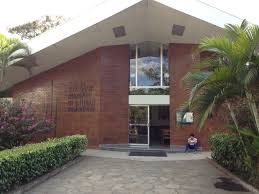
UCA's Romero Chapel
UCA’s Romero Chapel
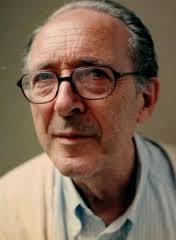
Fr.  Jon Sobrino
Fr. Jon Sobrino


That started to change when the other members of my delegation and I visited UCA’s beautiful, peaceful campus, in contrast to the noisy bustle of the rest of San Salvador, and when we had an hour’s calm, reasoned conversation with one of its professors, Fr. Jon Sobrino, S.J., a noted liberation theologian. I came away impressed with UCA and with Sobrino.

I, therefore, was shocked six months later to hear the news of the November 16, 1989, murder of six of UCA’s Jesuit professors and their housekeeper and daughter. How could such a horrible crime happen to such intelligent, peaceful human beings in that tranquil, academic setting?

Martyred Jesuits, Housekeeper & Daughter

I was even more appalled when I learned about the selfless, courageous lives of the murdered Jesuits who used their minds, education and spirits to help the poor people of that country and to work for bringing about a negotiated end to its horrible civil war.

Their deaths were repetitions of the horrible assassination of Archbishop Oscar Romero on March 24, 1980, who like the Jesuits had used his mind, education and spirit to help the poor people of his country and to condemn violent violations of human rights. The same was true of another Salvadoran Roman Catholic priest, Rutilio Grande, who was murdered in 1977 because of his protests against the regime’s persecution of the poor people, and of the 1980 murders of the four American churchwomen, who worked with the poor in that country.

Thus, Romero, Grande, the four American churchwomen and the murdered Jesuits are forever linked in my mind as profound Christian witnesses and martyrs. Their examples have strengthened my Christian faith to love God with all your heart, mind and soul and your neighbor as yourself.

UCA's Romero Chapel
UCA’s Romero Chapel
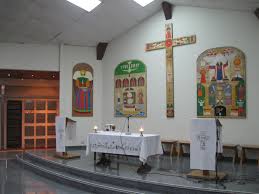
Capilla de Hospital de la Divina Providencia


All of these experiences have inspired me to learn more about El Salvador, Romero, Grande, the churchwomen and the Jesuits’ Christian witness in the midst of violence and threats to their own lives. On my subsequent five trips to that country, I always visit UCA for prayer in the Romero Chapel where the Jesuits’ bodies are buried and in the beautiful chapel of a cancer hospital where Romero was assassinated.

On my 2000 visit to El Salvador for the 20th anniversary of Oscar Romero’s assassination, my group visited UCA to spend time with its then Rector, Dean Brackley, a Jesuit priest from the U.S. who went to El Salvador to help UCA after the murders of his brother priests. He impressed me as a calm voice of reason and passion in UCA’s ministry of helping the poor and the country.

In 2010 I returned to El Salvador for the 30th anniversary of Romero’s assassination. On my delegation’s visit to UCA, we spent time with its then Rector, José Maria Tojeira, S.J.. He was an amazingly serene and soft-spoken man. He told us he was a new “church bureaucrat” (the Jesuit Provincial for Central America) at UCA in November 1989 and lived nearby, but not on the campus. During the night of November 15th-16th he heard gunfire and thought there must have been a skirmish between the Salvadoran security forces and the guerrillas. The next morning he went to the campus and was one of the first people to see the dead bodies of his six fellow Jesuits and their cook and her daughter. He nonchalantly said to our group, “That morning I thought I was the next one to be killed.” Later that day he went to his office and found faxed messages of support and solidarity from people all over the world. Then in the same casual manner, he said he thought, “Well, maybe I am not the next to be killed.”

As a result, my cloud of Salvadoran witnesses includes Oscar Romero; Rutilio Grande; the American churchwomen; the Jesuit priests; Fr. Brackley; Fr. Tojeira; Bishop Menardo Gomez of the Salvadoran Lutheran Church, who escaped a death squad on the night the Jesuits were murdered; Salvador Ibarra, who in 1989 was a lawyer for the Salvadoran Lutheran human rights office; and my Salvadoran asylum clients. Outside of El Salvador, of course, I am impressed by another Jesuit, Pope Francis.

I have been humbled to learn about the incredible courage and minds of the Jesuits, not just at UCA, but at other Jesuit universities that are generally regarded as the best of Roman Catholic institutions of higher learning. Simultaneously I am puzzled how such a marvelous group of religious men could have emerged from the Jesuits who were the shock-troops of the Counter-Reformation and did so many horrible things during the Spanish Inquisition.

All of this also inspired me to become a pro bono lawyer for Salvadorans and later others (an Afghani, a Burmese man, two Somali men and two Colombian families) who were seeking asylum or other legal status that would enable them to remain in the U.S. and escape persecution in their own countries. I always have regarded this as the most important and spiritually rewarding thing I have ever done. As I did so, I often reflected that I was able to do this in the secure and comfortable legal office of a large Minneapolis law firm. I did not have to risk my life to help others as did my Salvadoran saints.

After I had retired from practicing law in 2001, the Jesuits along with Archbishop Oscar Romero continued to inspire me to learn more about international human rights law as I co-taught a course in that subject at the University of Minnesota Law School from 2002 through 2010. In the process, I was amazed to discover the array of inter-related ways the international community had created to seek to enforce international human rights norms in a world still based essentially on the sovereignty of nation states.

I then was inspired to use my legal research and writing skills to investigate how these various ways had been used to attempt to bring to justice the perpetrators of the assassination of Archbishop Romero, the rapes and murders of the American churchwomen and the murderers of the Jesuit priests and then to share the results of that research with others on this blog. Many posts have been written about Romero, including the various unsuccessful legal proceedings to identify and punish those responsible for that crime. Other posts have discussed the criminal case still pending in Spain over the murders of the Jesuits and their housekeeper and daughter while another post summarized other legal proceedings that unsuccessfully sought to assign criminal responsibility for the murders of the Jesuit priests other than the brief imprisonment in El Salvador of two military officers.

I also have written the following other posts prompted by the 25th anniversary celebration of the lives of the priests and commemoration of their murders:

I give thanks to God for leading me in this path of discovery and inspiration.


Fr. Dean Brackley, S.J., Another Brave Jesuit Priest

Fr. Dean Brackley, S.J.

On my 2010 trip to El Salvador, I had the honor and privilege to be a member of a group of Americans who spent some time with our fellow American, Fr. Dean Brackley, S.J., then the Rector of the University of Central America (Universidad de Centro America or UCA). I recall being impressed by his warm and engaging manner as he shared his experiences in that country and urged us to tell our friends in the U.S. about our experiences.[1]

He came to UCA in 1990 soon after the murders of his Jesuit brothers in November 1989. Brackley had seen a notice that UCA was looking for replacements for the slain priests. Although he admitted to being scared, the job description seemed to have his name on it. He told a friend,  “They wanted a Jesuit. They wanted someone who had a Ph.D. in theology. They wanted someone who spoke Spanish. I started looking around and realized there weren’t that many of us.”

Brackley, therefore, volunteered to leave his teaching at Fordham University in New York City and to go to UCA to help it surmount its many challenges in the aftermath of that brutal crime.

He taught and served on UCA’s staff. He also became pastor to two municipalities and started the Scholarship Program of the Martyrs of the UCA to support poor students at the university. In his 2010 book, Spirituality for solidarity: Ignatian new perspectives, he said, “”The world will change only if human beings are changed, if people are free to love, to resist the lure of wealth and to be in solidarity with the poorest of their brothers and sisters.”

Brackley is remembered especially “for his tireless efforts to build awareness and solidarity between churches and universities in the United States and the poor in Central America. He wrote and lectured extensively on the need for higher education to connect scholarship to service and resources to the social reality of the poor.” Brackley laid out the radical challenge that education and privilege place upon the shoulders of those with resources, often describing what contact with the poor does to us: ‘First, it breaks your heart, then you fall in love, then you’re ruined for life.’”

In the summer of 2011, after he was diagnosed with pancreatic cancer, he wrote to friends, “”The faith factor is decisive, as you know. When I ask you and Monseñor Romero to pray, I mean: Let us pool our faith. Mine is weak enough, but with all of us, that is another matter. God wants to give life more than we want life. St. Ignatius wrote to Francisco Borja: ‘I consider myself wholly an obstacle to God’s work in me. In other words, the exercise of faith, our fundamental human challenge, gets us out of the way of God’s work. So, let us pray.’”

After his death of the disease at UCA on October 16, 2011, Congressman James P. McGovern of Massachusetts said that Brackley “was a bridge between two worlds:” the U.S. and El Salvador. He offered “his talents, his passion and his life to . . . [UCA] and to the Salvadoran people. He was our anchor and our conscience, not just for the faith community, but for all of us in American who share his love for the Salvadoran people and who remain engaged in their hopes and struggles. [He] . . . became our bridge of solidarity, our commitment to justice, faith and love. . . . On my many trips to El Salvador, his enthusiasm, humor and passion kept my spirits lifted, my mind focused, and my heart engaged.”

McGovern added that Brackley “joins Monseńor Oscar Romero, my friends the martyred Jesuits, the four American churchwomen, and so many Salvadorans as a beacon of integrity and hope. He will always be ‘presente’ in our lives and work.”

On the third anniversary of Brackley’s death this October, a memorial mass was held for him at UCA. Rocio Fuentes remembered that in the last six months of his life, he was “full of joy and gratitude . . . [for] his family supporting his vocation; [for] the Society of Jesus for their support in the pursuit of justice; [for] Salvadorans, because through them he learned to know the true meaning of solidarity; and for God’s presence.”

=================================================

[1] This post is based upon personal recollection, my blog post, Annual Commemorations of Oscar Romero’s Life (Oct. 20, 2011); Marrin, Jesuit who replaced slain Jesuit priests dies, Nat’l Cath. Reporter (Oct. 17, 2011); Vitello, Rev. Dean Brackley, 65, Dies; Served in El Salvador, N. Y. Times (Oct. 29, 2011); Letter, Congressman James P. McGovern to Fr. Jośe Maria Tojeira (Oct. 18, 2011); Rocio Fuentes, Dean, exemplary Christian (Oct. 26, 2014).