Wall Street Law Firm Increases Attorneys’ Compensation

On June 6, the law firm of Cravath, Swaine & Moore, the crème de la crème of Wall Street law firms, announced that it was increasing the salary for new attorneys just out of law school to $180,000 and for eighth-year associate attorneys to $315,000. (At the end of the eighth year an associate attorney is either chosen to be a partner or asked to leave the firm.) Such employees also may obtain annual bonuses. The average compensation for the firm’s partners, on the other hand, was $3.56 million.[1]

Cravath, according to a profile from Chambers & Partners, has offices in New York City and London with a total of 90 partners and 426 associate attorneys. The firm’s website says it hires “only the top students from the nation’s finest law schools, we train our associates through a rigorous rotation of practices, we elevate partners exclusively from within and we compensate partners in a lockstep system throughout their careers.”

I react to this news from at least three perspectives.

First, as I explained in an earlier post, immediately after law school graduation in 1966 I joined Cravath as an associate attorney with an annual salary of $9,000 ($66,941 in 2016 Dollars). In 1968 the firm jumped the starting salary to $15,000 ($104,657 in 2016 Dollars) with similar boosts to the salaries of more senior associates. I left Cravath and New York City in 1970 even though being a Wall Street lawyer was challenging and exciting as was living in the city with a wife and two young sons. I value those years, but did not want to remain another four years to compete for a chance to become a Cravath partner with all the sacrifices of time, energy and stress that would require and with all the income and prestige that it would entail. Instead I chose to move to Minneapolis to practice law with Faegre & Benson (n/k/a Faegre Baker Daniels), about which I also have written.

Second, the Cravath move to a starting salary of $180,000 is clearly an outlier in the overall U.S. legal job market. While observers speculate that other prominent Wall Street law firms probably will match this increase, law firms in other U.S. cities and business corporations, in my opinion, will not do so, and clearly governments and nonprofit organizations with lawyers will not be able to do so.

Third, this increase in compensation comes after widespread weaknesses in the demand for lawyers in the U.S. Indeed, in recent years the openings for new attorneys have shriveled. Many recent law school graduates, often with large student-debt loads, have been unable to find law-related jobs. Some recent law graduates have sued their law schools with claims they had been scammed. Law school enrollments have been declining. I hope the Cravath increase is a sign that there may be increasing opportunities for new lawyers, but I am not holding my breath.

============================================

[1] Olson, Law Firm Salaries Jump for the First Time in Nearly a Decade, N.Y. Times (June 6, 2016); Randazzo, Law Firm Cravath Raising Starting Salaries to $180,000, W.S.J. (June 6, 2016); Lat, Breaking: NY To $180K!!! Cravath Raises Associate Base Salaries!!!, Above the Law (June 6, 2016).

Another Perspective on Gratitude

In previous posts, I have tried to express my gratitude for many people and experiences in my life.[1]

Arthur C. Brooks
Arthur C. Brooks

Now Arthur C. Brooks [2] has offered another useful perspective on this important virtue in his essay, Choose to Be Grateful. It Will Make You Happier, N.Y. Times (Nov. 22, 2015).

He has concluded, “Building the best life does not require fealty to feelings in the name of authenticity, but rather rebelling against negative impulses and acting right even when we don’t feel like it. In a nutshell, acting grateful can actually make you grateful.” In short, “we can actively choose to practice gratitude — and that doing so raises our happiness.”

To that end, Brooks offers these “concrete strategies:”

  • “First, start with ‘interior gratitude,’ the practice of giving thanks privately.”
  • Second “move to ‘exterior gratitude,’ which focuses on public expression. The psychologist Martin Seligman, . . . recommends that . . . [we should] systematically express gratitude in letters to loved ones and colleagues. A disciplined way to put this into practice is to make it as routine as morning coffee. Write two short emails each morning to friends, family or colleagues, thanking them for what they do.”
  • Third, “be grateful for useless things. . . . the little, insignificant trifles. . . . the small, useless things you experience — the smell of fall in the air, the fragment of a song that reminds you of when you were a kid. Give thanks.”

Brooks concludes by saying that he is “taking my own advice and updating my gratitude list. It includes my family, faith, friends and work. But also the dappled complexion of my bread-packed bird. And it includes you, for reading this column.”

Thank you, Arthur Brooks, for offering your perspective on gratitude.

====================================================

[1] Gratitude I (March 15, 2012); Gratitude II (April 11, 2012); Gratitude III (April 13, 2012); Gratitude Revisited (June 13, 2015).

[2] Brooks is the President and the Beth and Ravenel Curry Scholar in Free Enterprise at the American Enterprise Institute. Previously he was the Louis A. Bantle Professor of Business and Government at Syracuse University, where he taught economics and social entrepreneurship. He is the author of 11 books and hundreds of articles on topics including the role of government, fairness, economic opportunity, happiness, and the morality of free enterprise. He holds degrees from Thomas Edison State College, B.A. (Economics); Florida Atlantic University, M.A.; and Frederick S. Pardee RAND Graduate School, Ph. D. (policy analysis).

.

http://www.aei.org/scholar/arthur-c-brooks/


Reflections on Learning and Teaching

As a student of history, economics, political science, law and other humanities courses at six colleges and universities[1] and as an instructor at three such institutions,[2] I have participated in different ways of instructing and learning such bodies of knowledge and skills: college and university lectures, other lectures; seminars, research and writing; tutorials; the Socratic method; and role-playing. Similar methods were used in my practice as a litigating attorney and now as a blogger and ordinary citizen. Underlying all of them, of course, are reading and studying. Here are a septuagenarian’s lessons in life-long learning.

My thinking about this subject and writing this blog post were prompted by a recent article about the lecture as a mode of instructing and learning. That article by Molly Worthen, an Assistant Professor of History at the University of North Carolina, Chapel Hill, was put into a broader context by her quoting John Henry Newman’s “The Idea of a University,” where he said the humanities taught a student “to disentangle a skein of thought, to detect what is sophistical, and to discard what is irrelevant.” Such a student learns “when to speak and when to be silent. He is able to converse, he is able to listen.”[3]

College and University Lectures

“A good lecture class,” Worthen says, teaches “comprehension and reasoning” by keeping “students’ minds in energetic and simultaneous action.” It does so by emphasizing “the art of attention, the crucial first step in … ‘critical thinking.’” She quotes Monessa Cummins, the Chair of the Classics Department at Grinnell College, my alma mater, as saying the lecture places “a premium on the connections between individual facts . . . [and] the building of an argument.”

This is “hard work” for the students, Worthen adds, requiring them “to synthesize, organize and react as they listen.” Indeed, students need to be taught how to listen, and lecture courses are exercises in “mindfulness and attention building.” This skill cannot be assumed, but must be taught. One way of doing so, in Professor Cummins’ classes, is to assign one student in each session to present a critique of her argument at the subsequent small discussion section.

Such a lecture course teaches that “listening is not the same thing as thinking about what you plan to say next–and that critical thinking depends on mastery of facts, not knee-jerk opinions.“

This is enhanced, Worthen argues, by requiring the students to take notes by hand, not by typing them into a computer. The former makes it impossible for them to make verbatim transcripts of the lecture, but instead to synthesize as they listen. That may be true, in my opinion, when the lecturer does not provide the students or audience with an outline of the lecture.

Lecturing, on the other hand, with a PowerPoint outline and providing the students or audience members with the Notes Page version of the outline enables the student to glance at the entire presentation in advance and see how the individual points fit into the entire lecture or presentation and then add his or her notes to individual pages as the lecture proceeds. PowerPoint also facilitates the use of graphs, maps and photographs in the lecture. [4]

Worthen also recognizes the utility of combining a large lecture session with small discussions sections and thereby obtain the reactions and comments of the students.

My memories of my first exposure as a student to lecturing 58 years ago as a freshman at Grinnell College are fuzzy at best, but I do not recall being provided with tips on how to take full advantage of this form of instruction. I now wish I had been told how to listen, to be mindful and to synthesize as I listened. I wish I had had a professor assign one student in each session to present a critique of the lecture’s argument at the next class session. Of course, then all notes of a lecture were handwritten.

As a student of Philosophy, Politics and Economics (PPE) at the University of Oxford, 1961-1963, attendance at university lectures on these subjects, often by world-famous scholars, was optional. I attended some primarily to see and hear such people as philosophers A. J. Ayer and Gilbert Ryle, economist J. R. Hicks and legal philosopher H. L. A. Hart, but regrettably I did not regularly do so. (Instead my attention was focused on tutorials as discussed below.)

As a law student at the University of Chicago, 1963-1966, the Socratic method was the dominant form of instruction, not lectures. The latter instead were formal occasions for all the students and faculty, usually provided by visiting scholars and judges. (The Socratic method also will be discussed below.)

In addition, I was a lecturer when I taught a course on the American Civil Law System at Grinnell while on sabbatical leave from my law firm, when I was a Practitioner in Residence at the University of Iowa College of Law, when I was an Adjunct Professor at the University of Minnesota Law School and when I was on the faculty of various continuing legal education courses while I was a practicing lawyer. That experience required me to review the material to be covered, to conduct any additional research I deemed necessary, to determine the main points to emphasize, to construct an outline for what I wanted to cover in the lecture and, in some cases, to prepare a PowerPoint presentation for use at the lecture.

Other Lectures

All of us obtain information and are educated, or not, in other oral presentations throughout our lives. I think of major political speeches like the State of the Union and Inaugural Addresses; other speeches at public events; and sermons at churches.

When, for example, I listen to speeches or presentations at the Westminster Town Hall Forum, I sometimes take handwritten notes and submit proposed questions for the moderator to ask the speaker. Later I also can go to the Forum’s website to re-listen to the speech. I also have written blog posts about some of these presentations. Another recent source of lectures for me is those offered by the Osher Lifelong Learning Institute (OLLI) of the University of Minnesota.

For sermons at Westminster Presbyterian Church, I sometimes make handwritten notes of some of the points on the church bulletin in my hands while the morning prayer, hymns and choral anthems usually emphasize some of the sermon’s main points. I also have found that I learn more about the sermon’s lesson by reading its text when it is subsequently posted on the church’s website and by reading and reflecting on the Scripture passages for the sermon; additional insight is often providing by writing a blog post about a sermon.

Seminars

My best educational experience at Grinnell College was taking the Political Economy Seminar my senior year with nine other students and with faculty from the economics, history and political science departments. We read important books in the field, not textbooks, and wrote and presented our papers on the former for discussion by all.

The Washington Semester at American University in the Fall of 1959 provided another type of seminar experience as a group of students from all over the U.S. met with politicians, government officials and others to learn about the operations of the U.S. government and political process.

I also organized and led a liberal arts seminar for lawyers at Grinnell in 1984. After reading various materials, we gathered at the College to discuss American legal history, alternative dispute resolution (ADR), jurisprudence and the lives and challenges of being humane judges and lawyers. Our leaders were a federal appellate judge, a national ADR scholar, an American history professor, a jurisprudence professor and a practicing lawyer.

Being in a book group, for me at Westminster Presbyterian Church, is another seminar experience for groups of 12 or smaller. Reading an assigned book and then gathering for a discussion of the book led by one of the group usually leads to a greater understanding of the book and its issues. For example, I recently led my group in discussing David Brooks’ “The Road to Character” after I had written about the book in this blog.[5]

Research and Writing

During my student years I conducted factual and other research about various subjects and in the process learned a lot about those subjects as well as research skills. The task of then reducing that research into a paper on the subject provided more learning about the subject plus the process of writing such papers. Later as a practicing lawyer these skills were further developed with the aid of the legal process for obtaining evidence in lawsuits, including the examination of witnesses, and the writing of briefs and other legal papers under rules for their contents and length.

The student research paper I best recall was at American University. The topic was how political interest groups participate in important cases in the U.S. Supreme Court and more specifically in contempt-of-congress cases in that court. I identified such cases, read the Court’s opinions in the cases, interviewed staffers at the relevant congressional committees (especially the House Un-American Activities Committee) and at the relevant political interest groups (especially the American Civil Liberties Union and the American Association of University Professors) and then spent a lot of time at the Supreme Court’s Library reading the briefs in the case, including those from the ACLU and the AAUP as amici curiae (friends of the court). The paper summarized this research and conclusions.

My enjoyment of research and writing continued as a practicing lawyer, both in my work as a lawyer and as a putative scholar. For example while at Harvard Law School for a short summer course, I spent time in its library doing research about Joseph Welch and Edward Burling, both prominent attorneys who were graduates of that Law School and of Grinnell College, and interviewing attorneys at Welch’s Boston law firm, about his representation of the U.S. Army in the McCarthy hearings of 1954. Later I wrote articles about both of them for the Grinnell Magazine [6] and even later with excerpts from the Welch article in this blog.[7]

A similar process was involved as a law student in researching and writing comments for the law review and as a lawyer in writing briefs.

Grinnell College recently has enhanced its use of research and writing as an educational method by adding a public website, The Grinnell Post, that hosts student essays about current events, public debates, and issues of interest to the Grinnell community. Its mission is to allow students to share their work in a public forum and foster conversations with a diverse readership and solicit their comments and criticism.

Another Grinnell effort to incorporate digital technology in the liberal arts is a website, Ashplan, initially devoted to James Joyce’s Ulysses. It seeks to foster the inheritance of classroom culture; that is, it forges connections among students studying the same material at different times, allowing new students to benefit from, remix, and add to the work of their predecessors.

Tutorials

As discussed in a prior post, the tutorial was the primary mode of undergraduate education at Oxford. During each week of the three terms of the academic year, I would have two tutorials, usually with only one other student and the tutor and sometimes only by myself with the tutor. The assignment was always in the form of a question with the tutor’s suggestions of books and articles one should read.

As a result, most of my time each week at Oxford was spent in the university libraries reading those sources and other relevant materials, figuring out how I would answer the assigned question and writing an essay setting forth that answer and analysis. Then I would see the tutor again and read my essay for critiquing and discussion.

I loved the independence of this system and being “forced” to come to a conclusion on an issue and to construct my own analysis and documentation for my conclusion. This was exactly the skill that was tested in Oxford’s university-wide examinations at the conclusion of my student-years, as also discussed in a prior post.

Grinnell College now has a First-Year Tutorial for all freshmen in groups of about 12 students that are led by “faculty members . . . from all academic departments . . . in more than 35 topics.” For the Fall of 2015 these include “Crisis, Liberation, Justice, and Leadership;“ “Racism: Color, Culture, Class; “ and “The Origins of Capitalism.” Every tutorial emphasizes writing, critical thinking and analysis, and oral presentation and discussion skills. The tutorial professors also serve as the advisers to their tutorial students until they declare a major field of study.

Socratic Method

After the treasured independence of the Oxford undergraduate experience, I initially was shocked in my first weeks in the Fall of 1963 as a student at the University of Chicago Law School. Now I was in large classes with daily assignments of certain pages in our large casebooks. The professors did not lecture. Instead they cross-examined individual students, one-by-one, about what the holding of a particular case was and what the result should be in a hypothetical case. We were being taught, we were told, how to think like a lawyer.

This method clearly taught you how to read a judicial opinion very carefully (and very painfully and slowly during that first semester of law school), to analyze that opinion to determine what its holding was and to think about the arguments that could be raised in similar, but different, hypothetical cases. Then in class you had to learn how to think on your feet and respond to questions from the professor as you would later do as a lawyer when questioned by a judge.

Reading and analyzing constitutions, statutes and regulations are also important for a lawyer, but I do not have clear memories of how that was done in my law student years. Of course, many judicial opinions concern judicial interpretations of such materials, and the overall law-school emphasis on reading and analyzing judicial opinions covered that methodology.

Learning how to do legal research and write legal briefs is another important part of law school. In addition, being a member of a law review staff and editorial board gives experience in writing and editing articles about legal topics.

Role-Playing

Participating in moot courts and playing the role of a lawyer making an argument to a court is another prominent method of legal education. I did not take advantage of this opportunity in law school as I was busy working on the law review doing legal research and writing and editing articles for the journal.

I, however, employed this method when I taught for one semester at Grinnell while on sabbatical leave from my law firm. I acted as a trial court judge hearing arguments by students as lawyers on a motion to compel production of a college tenure committee records in a hypothetical lawsuit brought by a professor against a college for denial of tenure. A different kind of role playing in that course was having the students, in lieu of a final examination, play the role of a justice of the Iowa Supreme Court and write an opinion deciding a case after reading the briefs in the case along with my memoranda summarizing some of the legal issues and after hearing the case argued before the actual Court.

I also used the moot-court method when I was an adjunct professor at the University of Minnesota Law School; I acted as a federal district court judge hearing arguments on a motion to dismiss a complaint under U.S. federal statutes (the Alien Tort Statute and the Torture Victims Protection Act) alleging a corporate defendant’s violations of human rights in other countries. I also acted as a judge of an immigration court to hear arguments on whether the court should grant an application for asylum by someone who allegedly had a well-founded fear of persecution in his or her home country due to political opinion or other protected ground.

I used a different kind of role-playing when I was a Practitioner in Residence at the University of Iowa College of Law. In a first-year civil procedure class, I played the role of a law firm partner while the students played the roles of associate attorneys working for me as we collectively identified issues, potential arguments and additional legal research needed for preparing a civil complaint under the strictures of Rule 11’s requiring such a pleading to be warranted by existing law or a non-frivolous argument for changing the law and by evidentiary support.

In such role-playing exercises, the student learns about procedural and substantive law, identification of legal and evidentiary issues and how to write and analyze briefs and make oral arguments.

In my experience, this is an effective way of learning several areas of law plus the skills of advocacy, and most students appreciate these opportunities to have a taste of what it is like to be a lawyer.

Conclusion

I am fortunate to have experienced different methods of teaching and learning from able practitioners of the different methods. I have learned in each of these settings and cannot say one is better than another. A lot depends on the size of the audience and the stage of your educational career. Seminars and tutorials require a small number of students while lectures are more appropriate, if not required, for a large number of students. I hope that I have been able to convey the same excitement of learning when I have been the instructor.

==============================================

[1] Grinnell College, 1957-1961; American University (Washington Semester), 1959; University of Oxford, 1961-1963; University of Chicago Law School, 1963-1966; Harvard Law School (Summer Program), 1986; and University of Minnesota Law School, 2001.

[2] Grinnell College, 1982, 1984; University of Iowa College of Law, 1986; and University of Minnesota Law School, 2002-2010.

[3] Worthen, Lecture Me. Really, N.Y. Times Sunday Review (Oct. 18, 2015).

[4] Aaron Fichtelberg, an associate professor of criminal justice at the University of Delaware, strongly disagrees on the value of PowerPoint. Indeed, he argues that it “turns good teachers into mediocre ones and mediocre lectures into a sludge of unengaging facts.” According to him, it “forces rigidity on the content of the course and passivity onto the students.” I agree that sometimes such use is boring. But as with all of these modes of teaching, there are the good and the bad. Other opinions?

[5] The Important Moral Virtues in David Brooks’ “The Road to Character” (May 1, 2015); David Brooks’ Moral Exemplar (May 2, 2015); David Brooks Speaks on the Role of Character in Creating an Excellent Life (May 16, 2015).

[6] Good Night, and Good Luck: The Movie’s Offstage Hero, Joseph Welch, Grinnell Magazine, Summer 2006, at 12; Edward Burnham Burling, Grinnell’s Quiet Benefactor, Grinnell Magazine, Summer 2009, at 21.

[7] Joseph Welch Before the Army-McCarthy Hearings (June 14, 2012); The U.S. Army’s Hiring of Attorney Joseph Welch for the Army-McCarthy Hearings (June 8, 2012); Attorney Joseph Welch’s Performance at the Army-McCarthy Hearings (June 6, 2012); U.S. Senator Joseph McCarthy’s Nemesis: Attorney Joseph Welch (June 4, 2012); President Dwight D. Eisenhower’s Involvement in the Army-McCarthy Hearings (June 10, 2012); Joseph Welch After the Army-McCarthy Hearings (June 12, 2012); Legal Ethics Issues in the “Anatomy of a Murder” Movie (June 12, 2012).


Does the Church Control Salvation?

Westminster Presbyterian Church
Westminster               Presbyterian Church

This was the title of the November 23rd sermon at Minneapolis’ Westminster Presbyterian Church by our Senior Pastor, Rev. Dr. Timothy Hart-Andersen.[1]

The Scripture passages for the day were Ephesians 1:15-23; Matthew 25:31-46.

The Sermon

“The newest members of our Congregation [who were welcomed that day] . . [are] a slice of 21st century American religious reality. Gay, straight, married, single, partnered, and divorced. People at the top of their profession and others who have been homeless or are without work. Former Catholics, Lutherans, Baptists, Presbyterians from other congregations, immigrants and long-time Minnesotans. People who come with questions and doubts, others very much at home in Christian tradition. One has practiced Buddhism. Several were raised in non-Christian households. Two are becoming Christians today and will be baptized.”

“They’re here because their journey in faith brought them. For some the work of this church in the city drew them in, for others the desire to belong to a community, for others the education offered. For all of them worshipping God in this setting and with this people has given them a new spiritual home. This is the church in our time. Our journey now joins with theirs.”

“If the question is, ‘Does the Church control salvation?’ the answer needs to be offered carefully. We don’t want to try to deny other religious traditions their meaning, but at the same time we don’t want to water down our own convictions, especially on this final Sunday before Advent, when we celebrate Christ the King, the one who, in the words of Ephesians, is ‘above all rule and authority and power and dominion, and above every name that is named, not only in this age but also in the age to come.’ (Ephesians 1:21)”

“Long ago it was a basic article of faith that the Church did, in fact, control salvation. It was common knowledge that to gain God’s favor one had to be on good terms with the Church, because the saving work of Jesus Christ came through the Church. This gave the Church a lot of power over the spiritual lives of people. As in any situation with an imbalance of power, the temptation for abuse always hovered nearby.”

“The 16th century Protestant Reformation, we like to say, developed as an uprising against the abuse of power of the Roman clergy. They controlled access to God so tightly believers felt trapped on this side of heaven until they met the demands of the church. Extra ecclesiam nulla salus: no salvation outside the Church. The priest in every parish was a spiritual power-broker.”

“Lest we be too quick to speak ill of our Roman Catholic siblings, we should note that Protestant history is salted with similar declarations about who controls the gates of heaven. While Catholics placed that control in the hands of Rome and its priests, the Reformers used theological conformity as a way to maintain control over things divine. One passed heavenly muster only if one’s statement of faith met certain theological standards. It was a litmus test and we can still see it in use today in some churches.”

“That’s a Protestant version of no salvation outside the church. The continuing existence of so many Protestant denominations today is an ecclesiastical hangover from over indulgence in theological conformity among those convinced they have a lock on the truth.”

“Christians have always wanted to say who’s ‘in’ and who’s not, who’s ‘been saved’ and who has not. We would like the Church to be able to control salvation.”

“Then along comes the Final Judgment scene at the end of Matthew’s gospel, and things take on a different hue. Jesus says,‘Then the king will say to those at his right hand, ‘Come, you that are blessed by my Father, inherit the kingdom prepared for you from the foundation of the world; for I was hungry and you gave me food, I was thirsty and you gave me something to drink, I was a stranger and you welcomed me, I was naked and you gave me clothing, I was sick and you took care of me, I was in prison and you visited me.’” (Matthew 25:34-36)

“There’s nothing in there about following a particular theological roadmap; nothing in the text about staying in the church’s good graces in order to curry favor with the Almighty. In fact, neither church nor theology is mentioned.”

“It turns out salvation belongs to God alone and has nothing to do with the exercise of ecclesiastical authority or with meeting a theological litmus test, and everything to do with how we treat the poor and those deemed unworthy by the world.”

“Jesus had said that love of God and love of neighbor are the greatest commandments, when asked what we must do to inherit eternal life. Now we see what that looks like on Judgment Day: ‘Then the righteous will answer him, ‘Lord, when was it that we saw you hungry and gave you food, or thirsty and gave you something to drink? And when was it that we saw you a stranger and welcomed you, or naked and gave you clothing? And when was it that we saw you sick or in prison and visited you?’ And the king will answer them, ‘Truly I tell you, just as you did it to one of the least of these who are members of my family, you did it to me.’” (Matthew 25:37-40)

“All the theological grandstanding and all the church authority we can summon will not stand up to the clarity and power and simplicity of those words: as you did it to one of the least of these, you did it to me. It’s not what the Church thought long ago, not what it thought in the Reformation, and not what a lot of us in the Church think today, but this is what the reign of God looks like: loving others.”

“The Church does not control salvation; God does, which is a good thing, because the Almighty surely has a broader vision than any of us.”

“You and I will need to find ways to hold fast to Jesus Christ even as we respect the traditions of our neighbors, including those who have no faith at all.”

“And as far as the business of salvation, we can leave that to God.”

Conclusion

As I said in an earlier post, the first foundation of my Christian faith is Jesus’ encounter with a clever lawyer, who asked Jesus a trick question as to what the lawyer had to do to inherit eternal life. The lawyer did not really want to know the answer; instead, the lawyer wanted Jesus to give an answer that could be twisted to incriminate him. Jesus ducked the question and instead responded with another question: “What is written in the law? How do you read it?” The lawyer replied, “Love God with all your heart, soul, strength and mind and your neighbor as yourself.” Jesus then said the lawyer had answered correctly and that he would live if he did exactly that. (Luke 10:25-37)

The passage from Matthew that was one of the texts for this sermon makes the same point.

I agree that this is the greatest commandment. It clearly is difficult, if not impossible, to follow this commandment all the time. But Jesus tells us in the “Parable of the Prodigal Son” (Luke 15: 11-31) that God forgives us, time and time again, for our failure to do what we should do and doing what we should not.

===========================================================

[1] Westminster’s website has links for an audio recording of the sermon and the church bulletin for the day.

Salvadoran Archbishop Oscar Romero Closer to Beatification

Oscar Romero
Oscar Romero

The nine-member Roman Catholic Commission of theologians at the Congregation for the Causes of Saints have given their unanimously positive vote to finding that Archbishop Oscar Romero was murdered “in hatred of the faith,” i.e., he was a martyr.[1]

Now a commission of church cardinals and bishops must approve this finding before it goes to Pope Francis for final approval

If this finding obtains those additional approvals, Romero can be beatified without a finding that a miracle happened through his posthumous intervention. After beatification, Romero will be a candidate for sainthood, for which a finding of a miracle is necessary.

As a Protestant Christian for whom Romero already is a saint, I am pleased with this development.[2]

=============================================

[1] This post is based upon Vatican theologians recognize Romero as a martyr, Super Martyrio (Jan. 8, 2015); Winfield, Slain Salvadoran archbishop closer to beatification, Portland Press-Herald (Jan. 10, 2015).

[2] This blog has a number of posts about Oscar Romero and his possible beatification.

Report for dwkcommentaries–-2014

This blog, which started on April 4, 2011, reports the following activity through December 31, 2014:

YEAR POSTS COMMENTS

(by dwkcommentaries)

VIEWS
2011 190   26  9,189
2012 179 170 51,164
2013   86 708 49,082
2014 138   47 58,602
TOTAL 593 951 168,037

The busiest day for 2014 was December 11 with 321 views; for all time, 361 on December 13, 2012. For 2014 as a whole the viewers came from 183 countries with most from the U.S.A. followed by the Canada and the United Kingdom. This blog has 516 followers (Facebook, 324; direct, 154; Tumblr, 14; and commentators, 24).

The following were the most popular posts in 2014:

As indicated in detail in the Pages section on the right side of the home page, the posts and comments for 2011-2014 fall into the categories as stated in the following alphabetical Lists of Posts to dwkcommentaries-Topical:

  • Cuba [history and politics]
  • Education [my post-secondary education]
  • El Salvador [history and politics]
  • Law (Criminal Justice)
  • Law (International Criminal Court)
  • Law (Refugee & Asylum)
  • Law (Treaties)
  • Law (U.S. Alien Tort Statute)
  • Law (U.S. Torture Victims Protection Act)
  • Lawyering [my practice of law]
  • Miscellaneous
  • Personal [my personal background]
  • Religion [predominantly Christianity]
  • United States (History)
  • United States (Politics)

The blogger would appreciate receiving substantive comments on his posts, including corrections and disagreements.

Inspiration of a Christian Lawyer by the Martyred Jesuit Priests of El Salvador

In my first visit to El Salvador in April 1989 I did not know anything about the University of Central America (Universidad de Centro America or UCA) or about its Jesuit professors.

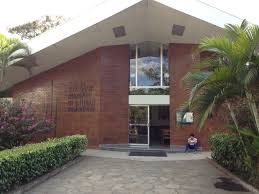
UCA's Romero Chapel
UCA’s Romero Chapel
Fr.  Jon Sobrino
Fr. Jon Sobrino


That started to change when the other members of my delegation and I visited UCA’s beautiful, peaceful campus, in contrast to the noisy bustle of the rest of San Salvador, and when we had an hour’s calm, reasoned conversation with one of its professors, Fr. Jon Sobrino, S.J., a noted liberation theologian. I came away impressed with UCA and with Sobrino.

I, therefore, was shocked six months later to hear the news of the November 16, 1989, murder of six of UCA’s Jesuit professors and their housekeeper and daughter. How could such a horrible crime happen to such intelligent, peaceful human beings in that tranquil, academic setting?

Martyred Jesuits, Housekeeper & Daughter

I was even more appalled when I learned about the selfless, courageous lives of the murdered Jesuits who used their minds, education and spirits to help the poor people of that country and to work for bringing about a negotiated end to its horrible civil war.

Their deaths were repetitions of the horrible assassination of Archbishop Oscar Romero on March 24, 1980, who like the Jesuits had used his mind, education and spirit to help the poor people of his country and to condemn violent violations of human rights. The same was true of another Salvadoran Roman Catholic priest, Rutilio Grande, who was murdered in 1977 because of his protests against the regime’s persecution of the poor people, and of the 1980 murders of the four American churchwomen, who worked with the poor in that country.

Thus, Romero, Grande, the four American churchwomen and the murdered Jesuits are forever linked in my mind as profound Christian witnesses and martyrs. Their examples have strengthened my Christian faith to love God with all your heart, mind and soul and your neighbor as yourself.

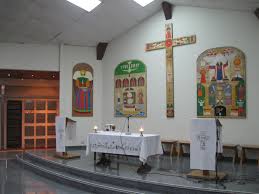
UCA's Romero Chapel
UCA’s Romero Chapel
Capilla de Hospital de la Divina Providencia


All of these experiences have inspired me to learn more about El Salvador, Romero, Grande, the churchwomen and the Jesuits’ Christian witness in the midst of violence and threats to their own lives. On my subsequent five trips to that country, I always visit UCA for prayer in the Romero Chapel where the Jesuits’ bodies are buried and in the beautiful chapel of a cancer hospital where Romero was assassinated.

On my 2000 visit to El Salvador for the 20th anniversary of Oscar Romero’s assassination, my group visited UCA to spend time with its then Rector, Dean Brackley, a Jesuit priest from the U.S. who went to El Salvador to help UCA after the murders of his brother priests. He impressed me as a calm voice of reason and passion in UCA’s ministry of helping the poor and the country.

In 2010 I returned to El Salvador for the 30th anniversary of Romero’s assassination. On my delegation’s visit to UCA, we spent time with its then Rector, José Maria Tojeira, S.J.. He was an amazingly serene and soft-spoken man. He told us he was a new “church bureaucrat” (the Jesuit Provincial for Central America) at UCA in November 1989 and lived nearby, but not on the campus. During the night of November 15th-16th he heard gunfire and thought there must have been a skirmish between the Salvadoran security forces and the guerrillas. The next morning he went to the campus and was one of the first people to see the dead bodies of his six fellow Jesuits and their cook and her daughter. He nonchalantly said to our group, “That morning I thought I was the next one to be killed.” Later that day he went to his office and found faxed messages of support and solidarity from people all over the world. Then in the same casual manner, he said he thought, “Well, maybe I am not the next to be killed.”

As a result, my cloud of Salvadoran witnesses includes Oscar Romero; Rutilio Grande; the American churchwomen; the Jesuit priests; Fr. Brackley; Fr. Tojeira; Bishop Menardo Gomez of the Salvadoran Lutheran Church, who escaped a death squad on the night the Jesuits were murdered; Salvador Ibarra, who in 1989 was a lawyer for the Salvadoran Lutheran human rights office; and my Salvadoran asylum clients. Outside of El Salvador, of course, I am impressed by another Jesuit, Pope Francis.

I have been humbled to learn about the incredible courage and minds of the Jesuits, not just at UCA, but at other Jesuit universities that are generally regarded as the best of Roman Catholic institutions of higher learning. Simultaneously I am puzzled how such a marvelous group of religious men could have emerged from the Jesuits who were the shock-troops of the Counter-Reformation and did so many horrible things during the Spanish Inquisition.

All of this also inspired me to become a pro bono lawyer for Salvadorans and later others (an Afghani, a Burmese man, two Somali men and two Colombian families) who were seeking asylum or other legal status that would enable them to remain in the U.S. and escape persecution in their own countries. I always have regarded this as the most important and spiritually rewarding thing I have ever done. As I did so, I often reflected that I was able to do this in the secure and comfortable legal office of a large Minneapolis law firm. I did not have to risk my life to help others as did my Salvadoran saints.

After I had retired from practicing law in 2001, the Jesuits along with Archbishop Oscar Romero continued to inspire me to learn more about international human rights law as I co-taught a course in that subject at the University of Minnesota Law School from 2002 through 2010. In the process, I was amazed to discover the array of inter-related ways the international community had created to seek to enforce international human rights norms in a world still based essentially on the sovereignty of nation states.

I then was inspired to use my legal research and writing skills to investigate how these various ways had been used to attempt to bring to justice the perpetrators of the assassination of Archbishop Romero, the rapes and murders of the American churchwomen and the murderers of the Jesuit priests and then to share the results of that research with others on this blog. Many posts have been written about Romero, including the various unsuccessful legal proceedings to identify and punish those responsible for that crime. Other posts have discussed the criminal case still pending in Spain over the murders of the Jesuits and their housekeeper and daughter while another post summarized other legal proceedings that unsuccessfully sought to assign criminal responsibility for the murders of the Jesuit priests other than the brief imprisonment in El Salvador of two military officers.

I also have written the following other posts prompted by the 25th anniversary celebration of the lives of the priests and commemoration of their murders:

I give thanks to God for leading me in this path of discovery and inspiration.


An Enjoyable Thanksgiving Day In Nebraska City, Nebraska

On a beautiful, sunny, crisp Thanksgiving Day this year my wife, two of her sisters and I were in Nebraska City, 40 miles south of Omaha on the western bank of the Missouri River near the southeastern corner of the State of Nebraska.[1]

Lied Lodge & Conference Center
Lied Lodge &  Center
Lied Lodge
Lied Lodge
Lied Lodge
Lied Lodge


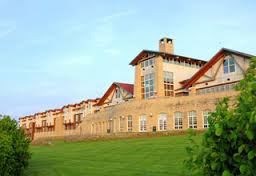
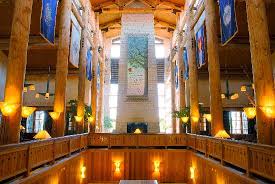
The main reason for going there was to have a delicious and enjoyable holiday meal at the handsome Lied Lodge & Conference Center as shown in the above photographs courtesy of the Arbor Day Foundation; the center photo shows at the end of the central atrium the tapestry that says “Plant trees!” in many different languages. Here are the details of the Thanksgiving Day buffet menu:

  • Appetizers: shrimp, crab claws, oysters, mussels, fruits, cheeses and various salads.
  • Entries: slow-roasted turkey, prime rib, glazed butternut squash, apple sage stuffing, whipped potatoes, baked yams, vegetable medley, baby carrots and rolls.
  • Desserts: pumpkin, pecan and fruit pies; cupcakes; and other classic items.

The Lodge & Center is owned and operated by the Arbor Day Foundation, which seeks to “inspire people to plant, nurture and celebrate trees.” In so doing, the Foundation celebrates the life and vision of one of the town’s most famous citizens, J. Sterling Morton.

The day in Nebraska City also unexpectedly became a fascinating lesson in late 19th and early 20th century U.S. history.

Julius Sterling Morton[2]

Sterling & Caroline Morton,ca. 1854
Sterling & Caroline Morton,  ca. 1854

In 1854, the Kansas-Nebraska Act of that year created the two territories with those names and opened them for settlement.[3] Enticed by the prospect of owning land in this new Territory, Morton at age 22 came to Nebraska City, really a village of less than 2,000 and the Territory’s first city, with his wife, Caroline (“Carrie”) Ann Joy French Morton, an accomplished artist, musician and gardener.[4] Mr. Morton, who was a graduate of Union College, started the Territory’s first newspaper, the Nebraska City News, and served as its Editor.

He also immediately bought land in the town, presumably under the Preemption Act of 1841 permitting “squatters” who were living on federal government-owned land to purchase up to 160 acres at a very low price (not less than $1.25 per acre), before the land was to be offered for sale to the general public.

As a nature lover with a passion for horticulture, Morton was appalled by the lack of trees in Nebraska, but soon planted various kinds of trees on his own property. In order to attract people to the Territory (and then State in 1867), Mr. Morton endeavored to encourage others in the area to plant trees. He did that first as Editor of the local newspaper and then as President of the Territory’s Agricultural Board. In 1872, he proposed that the state declare April 10 as Arbor Day, and his proposal was accepted. On that day in 1872, it is said that Nebraskans planted one million trees. In 1885, Nebraska declared his birthday, April 22, as Arbor Day and made it a legal holiday.

He voiced his love of trees when he said, “There is no aristocracy in trees. They are not haughty. They will thrive near the humblest cabin on our fertile prairies, just as well and become just as refreshing to the eye and as fruitful as they will in the shadow of a king’s palace.”

Morton also was engaged in public service as a member of the Nebraska Territorial House of Representatives (1855-1858); Acting Governor of the Territory (1858-1859); and Secretary of the Nebraska Territory (1858-1861). In 1860 Morton won an election to Congress, but lost a challenge to his election in the Republican-controlled House. He also ran four unsuccessful campaigns for governor after Nebraska became a state in 1867.

J. Sterling Morton
J. Sterling Morton

In 1893 President Grover Cleveland, with widespread acclaim, appointed Morton as U.S. Secretary of Agriculture. In his four years in that position he expanded and improved the Department’s programs while turning back to the Treasury over 20% of its appropriated funds.[5]

ArborLodgedistance

ArborLodgedistance2

ArborLodgeDK2


Before our Thanksgiving dinner at the Lodge, my wife and I went out on its north-facing balcony to see the beautiful valley full of trees and a test plot of hybrid hazelnut bushes. We were surprised to see on the opposite hill a strikingly handsome pillared white house peaking out through the trees as shown in the top photographs (the middle one is courtesy of the Arbor Day Foundation.) We then discovered that this was the 52-room mansion of Mr. Morton that is a reasonable facsimile of the White House in Washington, D.C. as shown in the third photograph.

The mansion is now called the Arbor Lodge in the Arbor Lodge State Historical Park and Arboretum, which we drove by after dinner. Unfortunately the Lodge was not open for visitors that day to see its Victorian and Edwardian furnishings, Tiffany skylight and collection of artifacts of early Nebraska history.

Sterling and Joy Morton had four sons: Joy (1855-1934), Paul (1857-1911), Mark (1858-1951), who was involved in various family businesses, including the Morton Salt company; and Carl (1865-1901), who was a businessman with another family business, the Argo Starch Co., and with the Glucose Sugar Co. Mrs. Morton died in 1881; J. Sterling Morton, in 1902.

Joy Morton[6]

Joy Morton
Joy Morton

Sterling and Joy Morton’s first son, Joy Morton, was born in Nebraska City in 1855. At age 15 he began to manage the family farm and estate and to work in a local bank. Later he worked for railroads in Nebraska and Illinois before joining a Chicago salt distribution company in 1880. By 1899 he had acquired majority control of the firm and renamed it “Joy Morton & Company,” and in 1910 he incorporated it as the subsequently famous Morton Salt Company. He was its president until 1930 when he became its chairman of the board, a position he held until his death in 1934. His brother Mark also was involved in the salt company.

MortonSalt

While driving around the town of Nebraska City this Thanksgiving Day I was amused to see these large signs for Morton-family businesses brightly painted on the brick wall of a downtown building: “Morton Salt” and “Morton–Gregson Co.“ The latter was a hog packing plant that was organized in 1901 and after financial problems was sold in 1917 to Wilson & Company.

Carrying on his parents’ interest in trees and gardening, Joy Morton in 1922 established The Morton Arboretum on 178 acres of land adjacent to his estate in Lisle, Illinois, roughly 26 miles west of Chicago, to display woody plants that grow in temperate zones around the world, to educate the public about them and to conduct research on their management and preservation.[7]

After his father’s death in 1902, Joy Morton redesigned and enlarged the family mansion in Nebraska City into its current size and used it as his family’s summer home until after 1922 when he donated the mansion (now the Arbor Lodge) and surrounding property to the State of Nebraska to be its first state park.

Paul Morton[8]

Paul Morton
Paul Morton

Paul Morton was born in Detroit, Michigan in 1857 and grew up in Nebraska City.

After turning 18, he moved to Chicago, where he worked for the Chicago, Burlington and Quincy Railroad, attaining the position of General Freight Agent. He then was an officer and director of Colorado Fuel and Iron Company before he joined the Atchison, Topeka, and Santa Fe Railway, where he became a Vice President.

Paul, like his father, was a Bourbon (and then a Gold) Democrat, but that Party’s nomination of Bryan in 1896, he said later, “left him out.” As a result he voted for McKinley that year and in 1900 worked openly for the election of McKinley and Theodore Roosevelt. Indeed, Morton said he “had always been a staunch supporter of Roosevelt.”

The close connection between Paul Morton and Roosevelt is shown after the Republican convention had nominated Roosevelt as its vice presidential candidate in June 1900. Roosevelt visited Chicago as a guest of Morton in order for both of them to board the latter’s private Santa Fe railroad car to go to Oklahoma with two Republican National Committeemen and three fellow Rough Riders for a reunion of the Rough Riders Regiment as Morton and Roosevelt had done the prior year for another such reunion in Las Vegas. When and how the two of them first became acquainted are intriguing questions I was unable to answer.

In September 1900, as discussed in a prior post, he and two other railroad executives accompanied candidate Roosevelt on his campaign train from Quincy, Illinois to Chicago. The other railroad executives on the train were my maternal great-great-uncle, William Carlos Brown, then General Manager of the Chicago Burlington & Quincy Railroad; and Theodore P. Shonts, then the President of the Illinois & Iowa Railroad.

I have not been able to discover the substance of the conversations the four of them had on the train, but perhaps they discussed the issue of federal regulation of business, especially railroads. The three railroaders presumably were present at the end of the train ride in Chicago on Labor Day to hear candidate Roosevelt’s “The Labor Question” speech, in which he said he had been “thrown into intimate contact with railroad men [and] . . . gradually came to the conclusion that [they] . . . were about the finest citizens there were anywhere around.” Teddy must have included these three railroad executives in that illustrious group.

Four years later, Roosevelt, now the President after the 1901 assassination of McKinley, appointed Paul Morton to be Secretary of the Navy. An article about the appointment said that the President and Morton had a “strong friendship,” that Morton and his father had voted for McKinley and Roosevelt in 1900 and that Paul “some weeks ago decided to accept the Republican faith.”

Though he knew next to nothing about naval affairs, the Senate confirmed Morton’s nomination in December 1904.

A problem for Morton emerged early the next year when the Interstate Commerce Commission asked the Justice Department to investigate charges that Morton had acted illegally as an officer of the Atchison, Topeka & Santa Fe when it paid rebates to the Colorado Fuel and Iron Company, Morton’s prior employer, from 1902 though 1904. Morton subsequently admitted the rebates had been paid even though he had no knowledge of them at the time and even though he had instructed subordinates to not pay any rebates. These charges never resulted in his prosecution, but they did force Morton to resign quietly on June 30, 1905.

In all of this, President Roosevelt supported Morton and had Morton with him on a private railroad car trip early the next month and later that month had Morton for a private over-night visit at Roosevelt’s Sagamore Hill home at Oyster Bay, New York.

Indeed, Roosevelt in his 1913 Autobiography refers to this period when he said that with the help of “a first-class railway man, Paul Morton …. I was able to stop the practice of [railroad rebates]. Mr. Morton volunteered to aid the Government in abolishing rebates” by testifying before the ICC that the Santa Fe had granted rebates because all railroads did so. In so doing, he had “shown courage and sense of obligation to the public . . . in order that we might successfully put an end to the practice . . . because of the courage and patriotism he had shown. . . . [Some people] “wished me to prosecute him, although such prosecution would have been a piece of unpardonable ingratitude and treachery on the part of the public toward him. . . . I stood by him; and later he served me as Secretary of the Navy, and a capital Secretary he made too.”

In any event, Morton immediately after leaving the Navy became the President of the Equitable Life Assurance Society in New York City, and in 1909, he was appointed as the vice chairman of a commission to reorganize the Navy. Paul Morton died in 1911.

Conclusion

After leaving Nebraska City and doing research for this post, I discovered that this town, current population of nearly 7,300, also is home to the Mayhew Cabin, the only site in the state of the Underground Railroad in the 19th century, and the Missouri River Lewis and Clark Center, which focuses on the natural history achievements of that 1804-1806 expedition. The town sounds worth another visit to see these sights as well as the interior of the Arbor Lodge.

-===============================================================

[1] As a non-Nebraskan, I earnestly solicit comments and corrections. I also give thanks to Amy Stouffer, Marketing Director of the Arbor Day Foundation, for her assistance.

[2] This section is based upon Anderson, Julius Sterling Morton, Forest History Today at 31 (Fall 2000); Wikipedia, Julius Sterling Morton; Will Be in the Cabinet: J. Sterling Morton for Secretary of Agriculture, N. Y. Times (Feb. 18, 1893); Morton A Man of Strength, N. Y. Times (Feb. 19, 1893); John R. Thomas and Congressman Harter Praise Mr. Morton, N.Y. Times (Feb. 19, 1893); The Cabinet Selections, N.Y. Times (Feb. 20, 1893); Editorial, Julius Sterling Morton, N.Y. Times (Feb. 20, 1893); Praise for the New Cabinet, N.Y. Times (Feb. 23, 1893); Editorial, Mr. Cleveland’s Cabinet, N.Y. Times (Feb. 23, 1893); Mr. Cleveland’s Cabinet, N.Y. Times (Feb. 26, 1893); Julius Sterling Morton of Nebraska, N.Y. Times (Mar. 5, 1893); Gold Democrats Banquet, N.Y. Times (Jan. 9, 1897); Elections in Other States, N.Y. Times (Oct. 31, 1897); Palmer Democrats Speak, N.Y. Times (May 13, 1900); Abram S. Hewitt on Bryan, N.Y. Times (July 1, 1900); Bryan’s Impeded Veracity, N.Y. Times (Oct. 8, 1900); Anti-Imperialists’ July 4 Manifesto, N.Y. Times (July 4, 1901); J. Sterling Morton Dead, N.Y. Times (April 28, 1902). I have not yet read James C. Olson, J. Sterling Morton—Pioneer Statesman and Founder of Arbor Day (1942).

[3] The Kansas-Nebraska Act of 1854 allowed the future white male settlers of the territories determine through popular sovereignty whether each would allow slavery within its borders. The principal supporter of the Act was Democratic Senator Stephen A. Douglas of Illinois who saw the Act as a compromise to gain Southern support in order to promote the eventual construction of a transcontinental railroad from Chicago The opponents of the Act saw it as a betrayal of the Missouri Compromise of 1820, which had banned slavery in Kansas. In opposition to the Act, the Republican Party was created to stop the expansion of slavery. In the famous 1858 debates between Senator Douglas and Abraham Lincoln, the latter argued that Douglas was part of a conspiracy to nationalize slavery and that the Kansas-Nebraska Act was the first step in that direction. OI course, two years later (1860), Lincoln was the Republicans’ successful presidential candidate. In the meantime, after passage of the Act, pro- and anti-slavery adherents flooded into Kansas to vote slavery up or down, leading to a low-intensity civil war that became known as “Bleeding Kansas.” In 1860 the Kansas territorial legislature passed, over a governor’s veto, a bill banning slavery and in 1861 Kansas entered the Union as a State. In Nebraska the territorial legislature in 1861 passed, over a governor’s veto, a similar bill prohibiting slavery although Nebraska limited the vote to “free white males,” a provision that delayed Nebraska’s becoming a state until 1867 after the elimination of this provision.

[4] I have not read In Memory of Caroline Joy French Morton, Wife of J. Sterling Morton (1882); Margaret V. Ott’s biography of Mrs. Morton: Sterling’s Carrie: Caroline Ann Joy French, Mrs. J. Sterling Morton, 1833-1881 (1992).

[5] Grover Cleveland and Morton were prominent conservative or Bourbon Democrats, opposing imperialism and U.S. overseas expansion and supporting the gold standard for U.S. currency. Public support for this philosophy was damaged by the Panic of 1893 when Cleveland refused to expand the money supply with silver. This lead to the Party’s granting its 1896 presidential nomination to Nebraskan William Jennings Bryan after his “Cross of Gold” speech urging silver as an additional backing for the currency. In response, some of the Bourbon Democrats formed their own unsuccessful political party (National Democratic Party) to advance their policies; but their presidential and vice presidential candidates were badly defeated in the 1896 election. These conservative Democrats often were referred to as the “Gold Democrats” for their support of the gold standard. In 1900 Democrat Morton endorsed Republican William McKinley because Morton detested Bryan’s bimetallism and admired Teddy Roosevelt, the Republican vice presidential candidate; Morton deemed these reasons more important than his strong disagreement with McKinley’s trade protectionism.

[6] This section is based upon Wikipedia, Joy Morton and Wepman, Joy Morton, American National Biography Online. I have not yet read Ballowe, A Man of Salt and Trees: The Life of Joy Morton (2009).

[7] Now 1,700 acres, the Arboretum’s current mission “is to collect and study trees, shrubs, and other plants from around the world, to maintain living collections on display across naturally beautiful landscapes for people to study, enjoy and learn how to grow them in ways that enhance the environment.” The town of Lisle, by the way, now calls itself “The Arboretum Village.”

[8] This section is based upon Wikipedia, Paul Morton; University of Virginia Miller Center, Paul Morton (1904-1905) Secretary of the Navy; The Governor’s [Roosevelt’s] Western Trip, N. Y. Times (June 26, 1900); Governor [Roosevelt] Goes West, N. Y. Times (June 30, 1900); Roosevelt in Chicago, N. Y. Times (July 1, 1900); Roosevelt Going West, N. Y. Times (July 2, 1900); Roosevelt Leaves Chicago, N. Y. Times (Sept. 2, 1901); Changes in Cabinet Officially Announced, N. Y. Times (June 25, 1904); Morton Enlisted in Navy, N.Y. Times (June 26, 1904); Mr. Morton’s Case, N. Y. Times (June 23, 1905); Morton’s Rebate Testimony, N. Y. Times (June 23, 1905); Bryan on Roosevelt, N. Y. Times (June 25, 1905) ; President at Home Again, N. Y. Times (July 7, 1905); Knapp Praises Morton, N.Y. Times (July 9, 1905); Taft To Run the Canal, N.Y. Times (July 23, 1905); Theodore Roosevelt, Autobiography (1913).

Further Reflections on Ezekiel Emmanuel’s Desire To Die at 75

A prior post set forth this blogger’s negative reactions to Dr. Ezekiel Emmanuel’s essay “Why I Want to Die at 75” in the October 2014 issue of The Atlantic Magazine. Another post referenced others’ reactions.

Now the December issue of that magazine contains extensive readers’ reactions. Here are some of those comments, all to my surprise by women, along with Dr. Emmanuel’s response.

 Readers Responses

Arlene Pollack of Yarmouth Port, Mass. Said, “We octogenarians . . . have grown more understanding of our fellow elderly, more grateful for the love and companionship of our mates, more intent on remaining deeply involved in the lives of each and every family member, and more determined to set an example for our children and grandchildren of how to age in such a way that we don’t leave our loved ones with a dread of incapacity, a horror of diminished vitality. I understand that we cannot anticipate what will befall us, that we may not be able to fulfill this goal, but having this positive philosophy brings a certain peace of mind.”

Felicia Nimue Ackerman, Professor of Philosophy, Brown University, Providence, RI, who thought Dr. Emmanuel’s reasons for his desire to die were elitist, stated, “If Dr. Emanuel hopes to die at 75 because he thinks this would benefit his children, that is his prerogative, although other people might doubt that children selfish enough to welcome this parental sacrifice deserve it. Moreover, Dr. Emanuel’s suggestion that it would be good for ‘each of us to ask whether our consumption is worth our contribution’ will hardly attract those who think that even the unproductive have an unalienable right to life, liberty, and the pursuit of happiness.”

Caroline M. Simon of Louobressac, France offered these comments: “If . . . Dr. Emanuel is saying that there is no sense in leading a life in which one is not able to climb Mount Kilimanjaro, gain great applause at professional meetings, direct the behavior of one’s family members and friends, and implant memories in loved ones of an energetic, risk-taking guy so that children and grandchildren, students and friends can hope to emulate one’s nonempathetic ways, then I couldn’t disagree more. . . . Who is to define what is a life worth living? Certainly not the middle-aged Dr. Emanuel. He can see little pleasure in helping future generations mature, in continuous learning, in days spent enjoying the company of others when we are not at the head of the table. He ignores the blessings of performing everyday tasks and attending routine events and basking in the joy of memories. He gives little value to happiness gained from kindness, generosity, shared wisdom, unselfish love, a walk with a cane in a beautiful garden, and a lifelong search to discover who we are and what our role is in the continuum of life in our community and on Earth.”

Ruth Marcus, a Washington Post columnist, said “there is no sin in slowing down. There is satisfaction in completing the crossword. You don’t always have to bike past the roses on your way up the mountain. In high gear.”

Margaret Connolly of Niles, Illinois said, “It seems sadly obvious that Dr. Emanuel’s desire to leave his children and grandchildren with memories of his vitality is the genuine dream of the American immortal. To actually believe that one can shape the memories of our progeny with a possibly truncated life is sheer hubris. It’s an unattainable aspiration.”

 Dr. Emmanuel’s Reply

Dr. Emmanuel’s characterized this group of comments as “the troubled” and said they “tend to describe his article as ‘thought-provoking.’ They are challenged by it. They object to my view of a meaningful life. As Caroline M. Simon says, ‘Who is to define what is a life worth living?’”

This was his reply to this group, “Who else but each of us individually for ourselves? My goal was to challenge these people to not live the habitual life, to not avoid the ‘big questions’ about the ultimate worth of our lives. We carefully construct our lives, filling them to overwhelming with activities in order to assiduously avoid such spiritual and existential questions, I think at our peril.”

Conclusion

 I do not see how Dr. Emmanuel legitimately can call this group “troubled” or as calling his article “thought-provoking.” Instead, they object to his view of a meaningful life as I did in my posts.

I also believe his response to this group is totally inadequate. He apparently does not acknowledge the criticism that his view of a meaningful life is twisted and needs to be re-evaluated.


Federal Regulation of Railroads During U.S. President Theodore Roosevelt’s First Term (1901-1905): Introduction

As previously noted, Theodore Roosevelt and William Carlos Brown (my maternal great-great-uncle) were together on one of Roosevelt’s campaign journeys in the election of 1900. Thereafter during Roosevelt’s first (09/14/1901—03/04/1905) and second (03/04/1905—03/04/1909) presidential terms, these two men also had periodic contacts on railroad issues while Brown was Vice President and Senior Vice President of the New York Central Railroad, one of the most important railroads in the country (02/01/1902 —01/31/1909).

During those eight years, railroads were the first major U.S. industry and made possible the growth of other major industries, including coal, steel, flour milling and commercial farming. They also established major cities like Chicago and with telegraphy transformed communications. (Albro Martin, Railroads Triumphant:The Growth, Rejection and Rebirth of a Vital American Force (1992).)

The importance of the railroads to the U.S. economy affected everyone and prompted much popular dissatisfaction with perceived abuses by the railroads. Roosevelt entered this social and political milieu with a belief that the government should use its resources to help achieve economic and social justice.

He acted on this belief in the fall of 1902 when a miners’ strike threatened a coal shortage in the upcoming winter. Roosevelt called both the mine owners and the labor representatives together at the White House. When management refused to negotiate, Roosevelt told them if the two sides did not talk, he would use troops to seize the mines and run them as a federal operation. Faced with this threat, the owners and labor unions agreed to submit their dispute to a commission and abide by its recommendations. The resulting settlement, Roosevelt said, was a “square deal” or one fair to both sides, and this label soon became synonymous with Roosevelt’s overall domestic program.

As part of this “Square Deal” program or approach Roosevelt advocated increased federal government regulation of corporations acting in interstate commerce, especially the railroads, in both of his presidential terms.

There were two principal developments on this issue in Roosevelt’s first term. The first was his Administration’s commencement in 1902 of an antitrust lawsuit against the Northern Securities Company, which combined the stocks of two competing railroads from the Great Lakes and the Mississippi River to Puget Sound on the Pacific Coast. The second was the Administration’s pressing the Congress in 1903 to enact the Elkins Act to enhance the powers of the Interstate Commerce Commission over railroad freight rates.

These developments will be discussed in subsequent posts while others will investigate this subject during Roosevelt’s second term as President.