On January 26, the U.S. Departments of the Treasury and Commerce released additional amendments to regulations regarding export payment and financing and airline travel with Cuba that will be effective on January 27.[1]
The changes will authorize financial transactions regarding professional meetings, disaster preparedness, information and informational materials and professional media or artistic productions in Cuba.
Other changes will allow U.S. airlines to have blocked space, code-sharing and leasing arrangements with Cuban airlines.
Treasury Secretary Jacob J. Lew said, “Today’s amendments to the Cuban Assets Control Regulations build on successive actions over the last year and send a clear message to the world: the United States is committed to empowering and enabling economic advancements for the Cuban people. We have been working to enable the free flow of information between Cubans and Americans and will continue to take the steps necessary to help the Cuban people achieve the political and economic freedom that they deserve.”
Commerce Secretary Penny Pritzker said, “Following the first ever U.S.-Cuba Regulatory Dialogue and my fact-finding trip to Cuba in October, we have been working tirelessly to maximize the beneficial impact of U.S. regulatory changes on the Cuban people. Today’s Commerce rule builds on previous changes by authorizing additional exports including for such purposes as disaster preparedness; education; agricultural production; artistic endeavors; food processing; and public transportation. These regulatory changes will also facilitate exports that will help strengthen civil society in Cuba and enhance communications to, from and among the Cuban people. Looking ahead, we will continue to support greater economic independence and increased prosperity for the Cuban people, as we take another step toward building a more open and mutually beneficial relationship between our two nations.”
Students at Atlanta’s Emory University are investigating Jim Crow-era murders of blacks in Georgia. They then publish their results online. This is the focus of Emory’s “The Georgia Civil Rights Cold Cases Project.” Similar projects exist at least three other universities. Important federal legislation and actions by the U.S. Department of Justice provide important background for such efforts. These subjects will be explored in this post.
The Project was started in 2011 as an interdisciplinary Civil Rights Cold Cases class examining incidents that occurred in Georgia. In January 2015, it launched a website, coldcases.emory.edu, that is the joint product of more than fifty students’ work during seven semesters of the course.
The Emory class is taught by Hank Klibanoff, the James M. Cox Jr. Professor of Journalism and the Pulitzer Prize–winning author of The Race Beat: The Press, the Civil Rights Struggle, and the Awakening of a Nation, and by Brett Gadsden, Associate Professor of African American Studies.
Professor Gadsden said the class is run like “a research seminar, with intense focus on individuals’ lives and attention to the historical context in which these folks lived. These stories come alive for students. They aren’t just presenting cases or telling the stories of lowly black victims. They are really trying to understand what happened, what the circumstances were, what happened to the people, how they lived, how they died, who killed them, and why, but understanding these victims’ deaths as a part of the historical record.”
The students prepare both a ten-page academic paper on their topic of choice and a condensed article for publication on the website. Gadsden emphasizes that the students are “writing for the professors, for each other, and also for a public of both academics and non-academics. They are accountable to the descendants of the lost, and that comes with a special responsibility—one that the students embrace.”
The recent Wall Street Journal article about Emory’s project tells the moving story of the students’ investigation of the September 8, 1948, killing by two white men of Isaiah Nixon, a black man who had voted that same day in Georgia’s gubernatorial primary election. One of the white men was charged with murder, but was acquitted in a one-day trial by an all-white jury. Afterwards the accessory-to-murder charge against the other white man was dropped. The Emory students’ investigation led them to conclude that Nixon had been murdered because he had voted in that primary election.
The students also discovered Nixon’s grave in a Georgia cemetery and invited his daughter, Dorothy Nixon Williams, who at age 6 had witnessed the murder of her father, to visit the grave last week with them and her son. Now 73 years old, Dorothy said when seeing the grave, “Lord have mercy,” sobbing into her son’s shoulder. Professor Klibanoff commented, “Isaiah Nixon matters; his life matters and his death and disappearance from history matter. What matters more is his reappearance now and I think that is miraculous.” At the conclusion of the visit, Dorothy said her anger over her father’s murder “now is completely released.”
Other Similar Projects
Similar projects are being conducted by Northeastern University School of Law, Syracuse University College of Law and Louisiana State University.
Northeastern’s Civil Rights and Restorative Justice Project investigates “the role of state, local and federal law enforcement agencies and courts in protecting activists and their work. [The Project] examines the geo-politics that led to the large-scale breakdown of law enforcement, the wide-spread repression against the movement’s participants, and the reforms that have been initiated to rectify these abuses. The project engages teachers and students across the university and is directed by faculty from the School of Law and the College of Criminal Justice.” [2]
Syracuse’s Cold Case Justice Initiative was established in 2007 by Syracuse law professors Paula Johnson and Janis McDonald to investigate “racially motivated murders that occurred during the Civil Rights era and [to advocate] on behalf of the victims and their families to get justice for the crimes. The program works with law students to conduct research, identify victims and find new information that could assist law enforcement in resolving cases. The Initiative as of has identified [nearly 200] cases from the civil rights era they believe warranted further investigation by federal authorities.”[3]
Louisiana State University’s Manship School of Mass Communication started its Cold Case Project in 2010 to investigate Civil Rights-era hate murders in Louisiana and southern Mississippi. Since then nearly three-dozen students, comprised mainly of seniors and graduate students, have worked on such cases. Their “primary focus is to bring closure to African-American communities which have lingered decades without fully knowing what federal agents learned about the deaths of family members and friends.” Jay Shelledy, who is in charge of the Project, said FBI agents at the time did their best to solve these vicious killings, but were thwarted by intimidated witnesses, Klan-sympathizing local lawmen and white juries which refused to convict whites of murdering blacks.[4]
In February 2015 the LSU Project launched a searchable website detailing heretofore sealed FBI investigative findings in a dozen such murders. It contains more than 150,000 pages of FBI findings, resulting stories, photographs and letters from the U.S. Department of Justice to the victims’ next of kin. Many thousands of additional pages of FBI case files are pending release under FOIA requests; when released, they will be added to the digital database.
Background for These Projects
These projects have been stimulated and assisted by the U.S. Department of Justice and the Federal Bureau of Investigation (FBI). In 2006, the Department began its Cold Case Initiative—a comprehensive program to identify and investigate racially motivated murders committed decades ago. The effort was reinforced in 2008 with the passage of the Emmett Till Unsolved Civil Rights Crime Act that authorized the Department to investigate unsolved civil rights murders before 1970. This statute had been introduced in 2007 by Congressman John Lewis of Georgia and unanimously passed by both houses of Congress in 2008 and signed into law by President George W. Bush.[5]
As of May 2015, the Department reported to Congress that it had concluded 105 of 113 relevant cold cases involving 126 victims, but that “very few prosecutions have resulted from these exhaustive efforts.” (The single case that went to court involved Jimmie Lee Jackson, who was shot by Alabama State Trooper James Fowler after a civil rights protest in 1965. In 2010, at age 77, Fowler pleaded guilty to manslaughter and was sentenced to six months in prison.)[6]
This was due, said the report, for many reasons. Federal statutory law limits the Department’s ability to prosecute civil-rights era cases at the federal level. There is a five-year statute of limitations on federal criminal civil-rights charges that existed prior to 1994. The Fifth Amendment protects against double jeopardy, which prevents the re-trial of someone for an offense for which he or she was previously found not guilty. In addition, cold cases can be difficult to prosecute because “subjects die, witnesses die or can no longer be located, memories become clouded, evidence is destroyed or cannot be located.”
This statute is due to expire in 2017, and efforts are being made to lobby for its extension.
Conclusion
These projects are significant and inspiring. First, they complement and should be coordinated with the amazing justice advocacy of Bryan Stevenson at the Equal Justice Initiative that was discussed in a prior post. Second, these projects are excellent examples of a mode of teaching an important subject that should be included in this blogger’s reflections on modes of teaching and learning as set forth in another earlier post.
We all should give thanks to Emory, Northeastern, Syracuse and Louisiana State University for their leadership in this important work.
[2] Northeastern Univ. School of Law, Civil Rights and Restorative Justice Project. An earlier version of this post erroneously included Northwestern University College of Law’s important Wrongful Conviction Center, and I thank Professor Hank Klibanoff for pointing out this error.
On January 25, 2016, the U.S. Supreme Court decided, 6-3, that its 2012 decision in Miller v. Alabama banning life-without-parole sentences for juvenile killers must be applied retroactively.[1]
Important for the Court was its conclusion that the earlier decision had been grounded on the diminished culpability of all juvenile offenders, who are, the Court said, immature, susceptible to peer pressure and capable of change. Very few, the opinion said, are incorrigible. But as a general matter the punishment was out of bounds. As a result, a court, upon petition by such a prisoner, must hold a re-sentencing hearing in order to give the petitioner “the opportunity to show their crime did not reflect irreparable corruption; and, if it did not, their hope for some years of life outside prison walls must be restored.” Alternatively the state could make them eligible for parole without a hearing
Henry Montgomery, the petitioner in the instant case, was 17 when he committed the murder and now is 69 in a Louisiana prison. The Court’s opinion said there was evidence that he deserved to be released, describing “his evolution from a troubled, misguided youth to a model member of the prison community” and noting that he was a coach on the prison boxing team, had worked in the prison’s silk-screen program and had offered advice to younger inmates.
The opinion for the Court was written by Mr. Justice Anthony Kennedy and was joined by Chief Justice Roberts and Justices Ginsburg, Breyer, Sotomayor and Kagan. Dissenting were Justices Scalia, Thomas and Alito.
Bryan Stevenson was the successful attorney for the petitioner in the 2012 case, Miller v. Alabama, which is discussed in Chapter Fourteen of his book, Just Mercy.[2] Although he was not the attorney for the petitioner, Montgomery, in the case decided today, Stevenson did submit an amicus curiae brief supporting Montgomery on behalf of the Equal Justice Initiative on Behalf of Dozens Sentenced to Die in Prison When They Were Children.
A New York Timeseditorial applauded the latest decision with these words: “The Supreme Court has ruled repeatedly over the last decade that it is morally and constitutionally wrong to equate offenses committed by emotionally undeveloped adolescents with crimes carried out by adults. It made this point again [in the Montgomery case]when it ruled that people who were sentenced to mandatory life in prison without the possibility of parole as juveniles have the right to seek parole.” The Times concluded by recommending that the Court “should take the final step. That means outlawing life sentences without parole for children altogether, whether mandatory or not.”
[2]Docket, Miller v. Alabama, No. 10-9646 (U.S. Sup. Ct.); Opinions, Miller v. Alabama, No. 10-9646 (June 25, 2012), A prior post reviewed the amazing advocacy for justice by Bryan Stevenson and his organization, the Equal Justice Initiative.
In recent weeks there have been significant developments regarding Cubans leaving, and returning to, the island and possible changes to U.S. laws regarding Cubans coming to the U.S.
Cuban Migrants in Central America
“Test Plan” for Transit of Cuban Migrants to U.S.
As reported in prior posts, about 8,000 Cuban migrants have been stranded in Costa Rica on their journeys to the U.S., but last December Mexico and certain Central American governments agreed on a “test plan” to transport the migrants via air and bus from Costa Rica through El Salvador, Guatemala, Honduras and Mexico to the U.S. border.[1]
On January 12 the initial group of 180 of these migrants started this journey, and on the next morning they had arrived in Ciudad Hidalgo on the Honduras-Mexico border, where they were granted 20-day transit visas. They were then put on their own to get to the Mexico-U.S. border. The first of them reached the Mexico-U.S. border at Laredo, Texas on the evening of January 14. And on January 18 a group of 30 arrived in Florida (Tampa, Sarasota, Fort Myers and Miami).[2]
In anticipation of the arrival of many of these Cubans in the Miami, Florida area, the mayors of Miami-Dade County in Florida have asked the federal government for funds to assist in welcoming many of those Cubans who are expected to come to their county.[3]
On January 20 Guatemala hosted a meeting with representatives of Costa Rica, El Salvador, Honduras, Mexico, Panama, Belize and members of the International Organization for Migration to review the operation of the “test plan.” During the meeting an analysis of the operation was performed and each country presented their experience in the management of migration and visa issues as well as logistics and security. They concluded that the process was successful and that the passage of the Cuban migrants was made in a legal, orderly, safe and transparent manner. They also agreed to collaborate better and improve coordination needed for future transfers and to meet again on February 15 to review further progress.
Future Transit of Cuban Migrants to the U.S.
The representatives at the January 20 meeting also concluded to resume the transit of Cubans in Costa Rica on February 4 with two weekly flights (February 9, 11, 16, 18, 23 and 25) from Costa Rica to El Salvador followed by their busing to the Honduras-Mexico border and thence on their own to the Mexico-U.S. border. Priority will be given to households with pregnant women or children, with earlier dates of entry into Costa Rica, the numbers on their Costa Rica visas and the financial resources to pay for the transit. In addition, Costa Rican officials will visit Cubans remaining in shelters to renew their visas.
Each Cuban will pay $555 for the charter flight, the bus and food arranged by a travel agency. Once in Mexico, the Cubans will receive a 20-day transit visa to make it on their own to the U.S. border. U.S. and Mexican officials hope is to hatch a similar plan for the 3,000 Cubans stranded in Panama.
Cuban Migrants By Sea
On May 2, 1995, in response to a large increase in Cubans who were attempting to make the dangerous crossing of the Caribbean Sea to get to Florida, the U.S. and Cuba entered into an agreement whereby the two countries “reaffirm their common interest in preventing unsafe departures from Cuba. Effective immediately, Cuban migrants intercepted at sea by the [U.S.] and attempting to enter the [U.S.] will be taken to Cuba.”[5]
Since then, the U.S. has done just that. Such an agreement and practice, it was believed, would discourage other Cubans from attempting such dangerous journeys. This then became known as the “wet feet” part of the U.S. disjunctive dry feet/wet feet policy. Here are the statistics on such interdictions:[6]
Fiscal Year
(Oct.1-Sept. 30)
Number of
Interdictions
1995
525
1996
411
1997
421
1998
903
1999
1,619
2000
1,000
2001
777
2002
666
2003
1,555
2004
1,225
2005
2,712
2006
2,810
2007
2,868
2008
2,216
2009
799
2010
422
2011
985
2012
1,275
2013
1,357
2014
2,111
2015
2,924
So far in Fiscal 2016 (10/01/15-01/14/16), the U.S. Coast Guard estimates that 1,942 Cubans have been interdicted at sea or have attempted to land in the U.S. or have actually landed by sea. For the first half of January 2016 alone, a total of 396 Cuban migrants have been picked up in the waters between Florida and Cuba and returned to Cuba. The increases in Fiscal 2015 and so far in Fiscal 2016 are believed to have been caused by the December 2014 announcement of normalization between the two countries and Cubans’ concern that the U.S. might end its special immigration benefits for Cubans.[7]
In addition, the U.S. Coast Guard reports that more of the Cubans who have been interdicted and put on Coast Guard vessels are jumping overboard, trying to poison themselves or making self-inflicted wounds in attempts to be taken to U.S. shore. As a result the Guard has added security personnel on the vessels.
A Guard official recently said, “Immigration policies have not changed, and we urge people not to take to the ocean in unseaworthy vessels. It is illegal and extremely dangerous.”
Nick Miroff of the Washington Post reports there is a “growing number of Cubans who have opted to move back to the island in recent years as the Castro government eases its rigid immigration rules. The returnees are a smaller, quieter counter-current to the surge of Cubans leaving, and their arrival suggests a more dynamic future when their compatriots may come and go with greater ease, helping to rebuild Cuba with earnings from abroad.”
Indeed, Miroff says, these returnees or “repatriates are not coming back for socialism. They are coming back as capitalists. . . . [or as] trailblazing entrepreneurs. Prompted by President Raúl Castro’s limited opening to small business and his 2011 move allowing Cubans to buy and sell real estate, the repatriates are using money saved abroad to acquire property and open private restaurants, guesthouses, spas and retail shops.”
In 2012, Cuban immigration officials said they were processing about 1,000 repatriation applications each year. “The numbers appear to have increased since then, at least judging from anecdotal evidence and the proliferation of new small businesses in Havana run by returnees.”
“Many of the repatriates . . . are returning from Europe and Latin America. Cubans in the [U.S.] may be more reluctant to return to the island because of their relatively high incomes . . . [in the U.S. and because U.S.] economic sanctions also make it essentially illegal for any U.S. resident to go to Cuba and run a business. And the ability to buy property remains mostly restricted to Cubans who live on the island.”
Possible Changes in U.S. Immigration Laws Regarding Cubans
As noted in previous posts, Cuba and now Central American countries have been vigorous opponents of the U.S. policy of allowing Cubans who arrive on land to come into the U.S. without visas, and the U.S. Administration repeatedly has said it has no intentions of changing that policy.
In the meantime, the only congressional bill to end the special treatment for Cubans arriving by land at the U.S. border that was offered by Representative Paul Gosar (Rep., AZ)—Ending Special National Origin-Based Immigration Programs for Cubans Act of 2015 (H.R.3818)– has gained little support beyond its nine cosponsors.[9]
Under another law, Cubans who have arrived in the U.S. by land are automatically eligible for federal public assistance under the Refugee Resettlement Program. On January 12, 2016, Senator Marco Rubio (Rep., FL), a candidate for the Republican presidential nomination, introduced a bill to end these automatic federal benefits.[10]
The bill, The Cuban Immigrant Work Opportunity Act of 2016 (S.2441), which has no cosponsors and which was referred to the Senate Finance Committee, would terminate the automatic eligibility for federal public assistance for Cuban nationals under the Refugee Resettlement Program, while maintaining it for those that have been persecuted that are in need of resettlement assistance.
Rubio said, ““It is outrageous whenever the American people’s generosity is exploited. It is particularly outrageous when individuals who claim to be fleeing repression in Cuba are welcomed and allowed to collect federal assistance based on their plight, only to return often to the very place they claimed to be fleeing. The weaknesses in our current law not only allow the flow of American tax dollars into the Castro regime’s coffers, it also undermines the legitimate cause of those Cubans who are truly fleeing repression and political persecution.”
Rubio’s rationale for this bill would also justify the U.S.’ ending its previously mentioned “dry feet” immigration policy.
Yet another special U.S. immigration program for Cubans—the Cuban Medical Professional Parole Program—is under consideration for cancellation by the Obama Administration.[11]
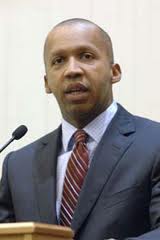
Now based in Montgomery, Alabama, Bryan Stevenson is conducting amazing advocacy for racial justice in many different ways: as an attorney for individuals who have been victimized by the U.S. criminal justice system; as the founder of a non-profit human rights organization (the Equal Justice Initiative (EJI)) devoted to those causes; as an author and speaker; and as the creator of various ways to honor his predecessors who strove for justice and the victims of injustice. Let us review these ways in which Stevenson demonstrates his advocacy after looking at his biography.
Stevenson’s Biography
He was born in 1959 in Milton, Delaware and grew up in a poor rural community. Attending a “colored school” for his early years, he graduated from a racially integrated public high school and then Eastern College (now Eastern University), a Philadelphia “Christian university dedicated to the preparation of . . . students for thoughtful and productive lives of Christian faith, leadership and service.” He then attended and obtained a J.D. degree from the Harvard Law School; and a Masters in Public Policy degree from Harvard’s John F. Kennedy School of Government.
Stevenson is an attorney and the Founder and Executive Director of EJI, which specializes in advocacy for children in adult prisons, death-row inmates, prison and sentencing reform and combating race and poverty (. He also is a Professor of Clinical Law at NYU School of Law.
In 1995 he received a “genius” grant from the MacArthur Foundation, which said that in his “drive to expose biases under which capital punishment is imposed, Stevenson has articulated how its use is linked to race and class discrimination and to systemic defects in criminal procedures.”
In 2000 Stevenson was awarded Sweden’s Olof Palme Prize. The award stated he is “a courageous representative of all the individuals, women and men from the entire world, who have maintained tirelessly that the right to life cannot be controverted, that the death penalty is an ultimate form of torture, and that the state does not have the right to kill its citizens.”
Stevenson, the Attorney
In 2015 EJI attorneys won the release of innocent people on death row or in prison for life. They also were successful in obtaining new trials for people illegally convicted and relief for those unfairly sentenced. They have documented and challenged abusive conditions of confinement in state jails and prisons. They have continued to fight against prosecution of children in adult courts and to obtain new sentences for individuals who have been sentenced to life in prison for crimes committed when they were children.
EJI’s work does not end when a client is released from prison. It provides them with re-entry assistance, including housing, employment, training and support. Its Post-Release Education and Preparation Program has been recognized as a model for such programs by various state officials.
Stevenson The Author
Stevenson’s 2014 best-selling book, “Just Mercy: A Story of Justice and Redemption,” provides interesting accounts of some of the significant cases in which he and EJI have been involved to provide context for a general discussion of particular problems in the American criminal justice system.
For example, Chapter Sixteen, “The Stonecatchers’ Song of Sorrow,” opens with brief discussions of Stevenson’s 2010 victory in the U.S. Supreme Court, when it decided that it was unconstitutional to impose life sentences without parole on children convicted of non-homicide crimes, and in 2012 when the Court held the same was the case when the crime was homicide. The chapter’s footnotes provide citations to these Supreme Court decisions and other mentioned cases.
Chapter Twelve, “Mother, Mother,” is another example. It recounts the trial and unjust conviction of a mother for murdering her stillborn child and sentenced to life without parole. Stevenson and EJI then entered her case and eventually obtained her release from prison. This case is then used as a platform to discuss the many problems created by incarcerating women with more details in footnotes.
The book also tells of instances in which Stevenson is touched, emotionally and spiritually, by clients who are in prison.
In the Introduction, for instance, Stevenson as a 23-year old law student was panicked and nervous when he visited a Georgia death-row inmate, who was immediately happy to learn that he would not have an execution date the next year and then gently led Stevenson into a three-hour general conversation. When the inmate was being returned to his cell, he started singing a black spiritual hymn: “I’m pressing on, the upward way. New heights I’m gaining, every day. Still praying as, I’m upward bound. Lord, plant my feet on higher ground.” Stevenson confesses that this hymn was “a precious gift” and that the prisoner gave him “an astonishing measure of his humanity” and an altered “understanding of human potential, redemption, and hopefulness.”
This and other experiences with death-row prisoners that summer constituted “proximity to the condemned and incarcerated [that] made the question of each person’s humanity more urgent and meaningful” and led to Stevenson’s being “committed to helping the death row prisoners.”
In addition, the book concludes with the “Author’s Note,” in which Stevenson seeks to recruit others to the cause of racial justice, He says, “there are endless opportunities for you to do something about criminal justice policy or help the incarcerated or formerly incarcerated.” An invitation then is extended for the reader to contact EJI for more information.
A prior post mentioned Stevenson’s then forthcoming presentation at Minneapolis’ Westminster Town Hall Forum. I attended this event even though I had never heard of him and thought his presentation would be a legal analysis of the changes needed in the American criminal justice system. Instead it was an emotional, passionate call for such reform and more of a sermon than a legal discussion. At the halfway point, the moderator, Rev. Timothy Hart-Andersen, said that in his many years as the moderator of the Forum he had never heard such a moving presentation.
Nine months later I watched his televised conversation with Charlie Rose. “An Hour with Bryan Stevenson,” Charlie Rose Show (Aug. 19, 2015), when he was just as impressive. Here are some of his pithy, insightful comments:
“Everyone is more than the worst thing he or she has ever done.”
“No matter what you’ve done, your life matters or has value.”
Over the last four years EJI has published major reports about the domestic slave trade, Slavery in America; and racial lynchings, Lynching in America; its third report was released in late 2015:The Anti-Civil Rights Movement. Excerpts from all of these reports are provided in EJI’s educational 2016 Calendar. For example, the month of October focuses on “Racial Terror Lynchings” with a large photograph of a crowd watching an 1893 Texas lynching and with this comment on October 5th: “1920: A mob lynches four black men in Macclenny, Florida, seizing three from the county jail and shooting the fourth dead in the woods.” EJI also has produced a film, From Slavery to Mass Incarceration.[1]
In addition, EJI has erected historic markers about the domestic slave trade in its home base in Montgomery, Alabama and is working on a national memorial in the city about American racial inequality and lynchings. Its first historical marker about Lynching in America recently was erected in Brighton, Alabama pursuant to a plan to place such markers at every lynching site in the country.
EJI’s office building in Montgomery is the site of a former slave prison and close to the city’s slave market. In late 2016 it plans to convert part of its building to a museum about the history of racial inequality in America and the connections between slavery and mass incarceration. EJI also uses its building to host programs and presentations about its work and the need for reforming the criminal justice system while similar presentations are made by its staff at colleges, universities, churches, community groups, high schools and conferences.
An insight to such programs has been provided by Jim Wallis, the leader of Sojourners, a Christian social justice organization, who along with 50 other faith leaders attended a two-day program at EJI in December 2015. Stevenson emphasized to this group these preconditions for reforming the American criminal justice system: (1) proximity to those most impacted by the system; (2) changing the narrative; (3) replacing hopelessness with hope; and (4) committing ourselves to uncomfortable things.[2]
These messages were made flesh by the Wallis group’s making pilgrimages to two sites where black men had been lynched, digging up dirt from those sites and placing the dirt in glass jars marked with the individuals’ names, birth and death years and the names of the lynching sites (part of EJI’s Soil Collection Project) and then holding prayer services in memory of the individuals. Another moving experience for the Sojourners group was spending time with Mr. Anthony Ray Hinton, who had spent 30 years in solitary confinement on death row in Alabama for a crime he did not commit. Stevenson’s concluding message for the group: “I have always had to believe in things I haven’t seen.”
Conclusion
What an amazing human being! What amazing efforts for social justice! I give thanks to God for this amazing servant!
=============================================
[1] EJI, Annual Report 2015.
[2] Wallis, It’s Never Too Late to Do Justice, Sojourners (Dec. 17, 2015) EGI, EGI Hosts Sojourners Faith Table Retreat (Dec. 16, 2015). Willis was a speaker at the Westminster Town Hall Forum in 2010 and will be returning on February 4, 2016 to discuss “America’s Original Sin: Racism and White Privilege,” the title of his book being published today. In a Foreward to the book, Stevenson says , “the mainstream church has been largely silent or worse“ to “our nation’s historical failure to address the legacy of racial inequality, the presumption of guilt and the racial narrative that created it.” Moreover, the church has been complicit in the refusal “to commit ourselves to a process of truth and reconciliation” and the emergence of “new forms of racial subordination.” Indeed, according to Stevenson, “Christianity is directly implicated when we Christians fail to speak more honestly about the legacy of racial inequality.”
Granma, the official newspaper of the Communist Party of Cuba, reviews the measures already adopted by the Obama Administration to reduce the scope of the U.S. embargo of Cuba. The newspaper then asserts that the Administration has existing legal authority to adopt additional limitations of the embargo and isolates what only Congress can do to eliminate the embargo.[1]
Administration’s Limitations of the Embargo (to Date)
According to Granma, the following are “some” of the measures already adopted by the Administration:
The 12 categories of U.S. citizens permitted to travel to Cuba can do so now under a general license. Travelers are no longer subject to spending limits on the island and can use their credit and debit cards. Approved travelers may be accompanied by their families.
In the area of telecommunications, exports of goods and services to Cuba are authorized. The main limitation is the requirement to pay cash in advance.
The list of U.S. products that can be exported to Cuba without having to request authorization from the U.S. Department of Commerce is reduced to telecommunications products and services, construction materials and equipment and tools for the use of the non-state sector, including agriculture.
The authorization to import Cuban goods and services produced by the non-state sector – which excludes key items for the Cuban economy such as tobacco.
The modifications to the regulations on maritime transport, which allow for cargo ships carrying humanitarian goods to Cuba to enter U.S. ports before the 180 day limit applied to others – irrelevant since in practice the majority are not limited to transporting food, medicines, medical equipment or other authorized exports.
Changes in the financial sphere merely facilitate processing of authorized transactions relating to travel, exports and remittances.
The sale to Cuba of products by other countries containing up to 25% U.S. made components is permitted – the previous limit was 10%.
The establishment of offices in Cuba by companies approved to have relations with the island was authorized.
Other Legally Permissible Administrative Limitations of the Embargo
In addition, Granma contends that the Obama Administration has the legal authority, without any action by the U.S. Congress, to adopt the following additional measures to further reduce the impact of the embargo:
Authorize the use of the U.S. dollar in Cuba’s international transactions.
Permit Cuban entities (banks, companies, etc.) to open corresponding accounts with U.S. banks.
End the policy of financial persecution against Cuba, which has included the imposition of fines and sanctions.
Allow the granting of credits, loans and finance to Cuba, in order to purchase products from the U.S. market (excluding agricultural products, prohibited by law).
Authorize U.S. products to be directly exported to Cuba.
Allow Cuba to import products from third countries which contain over 25% U.S. made components.
Allow the U.S. to import Cuban products and services which constitute exportable goods key to the Cuban economy, such as tobacco, rum and biotechnology products, including products manufactured in third countries which contain Cuban raw materials such as nickel or sugar.
Allow U.S. companies to invest in Cuba.
Eliminate the value limit on Cuban goods that U.S. travelers can import from Cuba, for personal use or as gifts.
Allow U.S. citizens to receive medical treatment in Cuba.
Instruct U.S. representatives in international financial institutions not to impede the granting of credits or other financial services to Cuba.
Other Limitations of the Embargo Requiring Congressional Action
According to Granma, only the following five limitations of the embargo require congressional action:
Permitting travel for the purposes of tourism (Trade Sanctions Reform and Export Enhancement Act of 2000);
Repealing the ban on U.S. subsidiaries in other countries trading with Cuba (Torricelli Act);
Repealing the prohibition on doing business with formerly U.S.-owned companies in Cuba that were nationalized (Helms-Burton Act);
Repealing the obligation to pay cash in advance for purchases of agricultural products from the U.S. (Trade Sanctions Reform and Export Enhancement Act of 2000); and
Eliminating the blockade (Helms-Burton Act) in its entirety.
Conclusion
Cuba, of course, is urging the Obama Administration to adopt the 11 previously mentioned measures that Cuba asserts are legally permissible under U.S. law and the Congress to adopt the above five measures.
Although I am a retired lawyer, I have not attempted to determine whether Cuba is correct in its contention that the Administration has the legal authority to adopt the above 11 limitations. I invite an attorney knowledgeable about such matters to share an analysis of these issues. If there is such legal authority, I would join in a request that these measures be adopted as this blog consistently has called for ending the embargo.
On January 7, 2016, it became publicly known through a Wall Street Journal article that since sometime in 2014 Cuba has had possession of an inert U.S. missile that was erroneously shipped to Cuba from Europe.[1] This post will discuss what is now known about this missile in Cuba and the reactions to this news.
Diversion of U.S. Missile to Cuba
Hellfire missile
The object is a dummy U.S. Hellfire missile without any explosives that is a laser-guided, air-to-surface weapon that weighs about 100 pounds and that can be deployed from an attack helicopter or an unmanned drone.
Its manufacturer, Lockheed Martin, in early 2014, with U.S. State Department authorization, shipped the missile from Orlando, Florida to Spain for a NATO training exercise for later return to the U.S. After the completion of the training exercise, it was packaged in Rota, Spain and sent on another freight-forwarder’s truck to Madrid, where it was sent by plane to Frankfurt, Germany. There it was supposed to have been shipped to Lockheed in Florida. Instead for unknown reasons it was shipped from Frankfurt to Paris on an Air France flight, and from Paris to Havana on another Air France flight. Upon its arrival in Cuba, a Cuban official noticed the labeling on the crate and seized it.
Around June 2014 Lockheed, after realizing the missile was missing and likely was in Cuba, notified the U.S. State Department. Thereafter the U.S. has been pressing the Cuban government for information about the missile and for Cuba to return it to the U.S., but Cuba has not responded.
During the summer of 2014, of course, the U.S. and Cuba were engaged in the final steps leading up to the December 17, 2014, announcement that the two countries were embarked upon normalization of relations. Since then, they have been taking various steps toward normalization.
The reason for the shipment to Cuba is unknown. Was it a stupid mistake by a freight forwarder or several of such companies? That I find difficult to believe. That seems to leave it being an intentional criminal or espionage act.
The U.S. is concerned that Cuba has or could give access to the missile to learn about its technology to Russia, China or North Korea. But an article by someone who apparently is technically sophisticated in such matters discounts such dire consequences because “there’s good reason to suspect that China and other large cyber powers might already have blueprints and more, thanks to the still-vague scope of several highly successful military cyber attacks;” because “the US sells thousands upon thousands of working Hellfires to ‘close military ‘allies’ like Iraq, Saudi Arabia, and Turkey;” and because “the fall of Iraq’s Mosul to forces from ISIS . . . led to about $700 million worth of working Hellfire missiles falling into the hands of terrorists.”[2]
Unsurprisingly this news has prompted severe criticism of the Administration.
U.S. Senator Marco Rubio (Rep., FL), a Republican presidential candidate, voiced his criticism in a letter to Assistant Secretary of State for Western Hemisphere Affairs, Roberta Jacobson. Rubio opened with the seemingly incontrovertible statement, “Preventing the proliferation of sensitive U.S. technology is one of the most important duties carried out by the State Department.” Because Jacobson has been so deeply involved with normalization negotiations with Cuba, she was asked these questions:
“When was the State Department informed that a U.S. Hellfire missile had been sent to Cuba?
When were you personally first informed of this matter and by whom?
What has been done to obtain the missile’s return by the Cuban government?
What specific entity of the Cuban government is currently in possession of the missile?
Please provide a list of the specific occasions on which you or other U.S. Government officials have raised this issue with the Castro regime.
Why was the return of the missile not obtained as a result of the negotiations that led to President Obama’s December 17, 2014 announced change in U.S. policy toward Cuba?
Why was the return of the missile not a condition of removal of Cuba from the State Sponsors of Terrorism list?
Why was the return of the missile not a condition of establishment of embassies in Havana and Washington?
What members of Congress did you inform of this issue during your briefings and testimony regarding U.S. policy toward Cuba over the last 18 months?
Does the State Department know if the Cuban government shared the missile or its design with any foreign governments?”
The Rubio letter concluded, “Sensitive U.S. technology falling into the hands of such a regime [as Cuba’s] has significant implications for U.S. national security. The fact that the administration, including you, have apparently tried to withhold this information from the congressional debate and public discussion over U.S.-Cuba policy is disgraceful.”
Also on Friday, Republican presidential candidate Jeb Bush tweeted: “Whether it’s Iran holding U.S. citizens hostage or Cuba holding a U.S. missile hostage, Obama always caves. I won’t.’’
Four other lawmakers critical of the Obama position toward Cuba also criticized the handling of the missile case. In a joint statement, Reps. Ileana Ros-Lehtinen (R., Fla.), Mario Diaz Balart (R., Fla.), Carlos Curbelo (R., Fla.) and Albio Sires (D., N.J.) said:
“Regardless of how Cuba came into possession of a U.S. Hellfire missile – which must be investigated – it is unconscionable that the Obama administration knew the Castros were in possession of this sensitive U.S. military technology since June 2014 and still moved forward with its policy to open up travel, trade, investment and diplomatic relations with the regime.”
“The fact that the Castro regime was able to acquire a U.S. Hellfire missile could be indicative of the lengths it is willing to go to undermine our national security and harm our interests. Congress must provide oversight to determine how the U.S. export control system failed to prevent this gross violation from occurring, and if Cuba’s espionage apparatus played a role in this Hellfire acquisition.”
“The Cuban regime rebuffed the President’s efforts to secure the return of the Hellfire missile even as the negotiations were ongoing, and yet the regime still got everything it could have wanted. It is no wonder that the Castro brothers feel ever more emboldened to continue on with the repression of the Cuban people, with intimidation and unlawful arrests at an alarmingly high rate.”
“This is a very serious breach and we are deeply concerned that the Castros have already shared the sensitive technology with the likes of Russia, North Korea or China. . . . We urge the Administration to start holding the Cuban regime accountable for its continued transgressions not only against its own people, but its continued disregard for international norms.”
Senator Ron Johnson (Rep., WI), the Chair of the Committee on Homeland Security and Government Affairs, sent a letter to the heads of the Pentagon and the State Department, asking for an explanation “why the U.S. military would forgo complete control, care, and custody of such cargo when transporting it abroad.’’ Mr. Johnson also asked the administration for details of any other lost shipments of sensitive technology over the past five years.
White House spokesman Josh Earnest said on January 8 that the administration takes the issue very seriously. “The Department of Defense and the State Department are, again, I think for obvious reasons, quite interested in getting to the bottom of exactly what happened.’’
The same day the U.S. State Department spokesman, John Kirby, said, “I am restricted under federal law and regulations from commenting on specific defense trade licensing cases and compliance matters. What I can say is that under the Arms Export Control Act the State Department licenses both permanent and temporary exports by U.S. companies of regulated defense articles. U.S. companies are responsible for documenting their proposed shipping logistics in the application of their export license as well as reporting any shipping deviations to the department as appropriate.”
Conclusion
Although I have been, and still am, a strong advocate for U.S.-Cuba reconciliation, I am very troubled by the news of this missile ending up in Cuban hands and of its diversion in mid-2014 apparently not affecting U.S. negotiation of normalization. Final assessment has to await Assistant Secretary Jacobson’s responses to Senator Rubio’s questions and other news about this situation. I pray that it does not disrupt or sabotage further progress towards normalization.
Previous posts have discussed the U.S. Cuban Medical Professional Parole Program, whereby such professionals easily may obtain “parole” into the U.S. and thereafter acquire legal status to remain here, and why the U.S. should end it.[1]
On January 8, word came that the U.S. was considering doing just that. The source was Ben Rhodes, a deputy national security advisor to President Obama who was part of the negotiating team that reached detente with Cuba a year ago after 18 months of secret talks. He told Reuters, “It’s an unusual policy, and I think as we look at the whole totality of the relationship, this is something that we felt was worth being in the list of things that we consider.” Another senior administration official said such a decision was due early this year.[2]
Good news! Tell the Administration and your representatives in Congress that you support such a move!
On January 3, 2016, a group of musicians from the Minnesota Orchestra played a beautiful and successful concert to benefit Syrians displaced in their own country.[1] Here is a poster for the concert with photographs of (a) Erin Keefe, the Orchestra’s Concertmaster, with Osmo Vänskä, the Orchestra’s Music Director; and (b) Beth Rapier and Tony Ross, Cellists with the Orchestra and the originators of the idea for the concert.
The concert raised over $75,000 for the Minneapolis-headquartered American Refugee Committee (ARC) to support its efforts to help the 7.6 million Syrians who have been forced to relocate within their own country because of the war.[2] There ARC with the aid of heroic Syrians works to:
help improve the physical conditions of make-shift shelters where people have fled;
build and repair water and sanitation infrastructure, helping to prevent disease;
provide youth mentoring and support services;
reconnect orphaned children with family members;
counsel victims of abuse and trauma; and
provide children the opportunity to play and have fun.
Other contributions for this cause would be appreciated; just go to ARC’s website [http://www.arcrelief.org/site/PageServer] and do so.
The concert was opened by the Minnesota Orchestra Brass Quintet. They played several numbers, including Leonard Bernstein’s “Maria” and “Tonight” from “West Side Story,” the Broadway musical. The Quintet members were Douglas Wright, trombone; Robert Doerr and Charles Lazarus, trumpet; Steven Campbell, tuba; and Michael Gast, horn.
Then Osmo Vänskä, an accomplished clarinetist in addition to being a great conductor, played the clarinet in Wolfgang Amadeus Mozart‘s beautiful Clarinet Concerto in A Major (K 622), which was composed shortly before Mozart’s death in 1791. Vänskä was backed by 18 members of the Orchestra.[3]
Above are photographs of Vänskä playing the concerto and of the audience of over 900 in the beautiful and modern sanctuary of Our Lady of Grace Catholic Church in Edina, Minnesota.
The program ended with Peter Illyich Tchaikovsky’s difficult String Sextet in D minor (Op.70). It was titled “Souvenir de Florence” because the composer sketched one of the work’s principal themes while visiting Florence, Italy in 1890. The violinists were Erin Keefe and Cecilia Belcher; violaists, Tom Turner and Sabrina Thatcher; and cellists, Ross and Rapier. Ross thought the piece might be Tchaikovsky’s greatest.
The concert had principal support from St. John’s Episcopal Church of Minneapolis and Our Lady of Grace along with 24 other Christian, Jewish and Islamic congregations from the Twin Cities.
[2] ARC, Syria Relief. As explained in a prior post, one of the international legal requirements for refugee status is an individual’s being outside his or her home country. Therefore, the beneficiaries of this concert, Syrians who have not left their own country, are technically not “refugees,” but rather “internally displaced people” or “IDP’s” in international relief jargon. But they are just as deserving of our compassion as those Syrians who have fled their country, perhaps more so because those who stay are trying to live in the midst of the war.
When I first tried to read this novel several years ago and again this last Fall, I was put off by the novel’s first line’s equating religion (Christianity) and fly fishing. In my boyhood and for the last nearly 35 years, I have been seeking to be a Christian, but I am not now, and never have been, a fisherman of any sort, much less a fly fisherman. To equate the two seemed absurd.
Moreover, I was baffled Bill’s reference to fly fishermen’s being the “penultimate” or next-to-last species of anglers. Who was the first or “ultimate” species of anglers, I wondered. Bill told me what should have been obvious to this Presbyterian Christian: the ultimate angler is God through Jesus. After all, in the New Testament, Jesus recruits two fishermen, Simon and Andrew, to be “fishers of men.” (Matthew 4: 18-20; Mark 1:16-18) I also relooked at the first paragraph of the novel, which says that the two brothers’ father, the Scottish Presbyterian minister (John Norman Maclean), reminded them that “Christ’s disciples [were] fishermen” and that the two brothers were left to assume “that all first-class fishermen on the Sea of Galilee were fly fishermen and that John, the favorite [disciple of Jesus], was a dry-fly fisherman.”
Bill’s allusion to the ultimate angler suggests another interpretation of the novel’s extensive (too extensive?) discussion of Paul and Norman’s careful selection of different lures to catch different kinds of fish in different kinds of waters. In short, the lure that works for one kind of fish does not work for another kind. Accordingly, Jesus’ disciples, including us, need to develop different ways of explaining our faith or evangelizing to different kinds of people in different circumstances. “One size does not fit all.”
I also was surprised by the novel’s second paragraph’s telling us that the Scottish minister-father repeatedly stressed to his two sons the importance of the first question of The Westminster Shorter Catechism: “What is the chief end of man?” and its answer “Man’s chief end is to glorify God, and to enjoy him forever.”
Although that document is one of 11 confessions and creeds contained in The Book of Confessions of The Presbyterian Church (U.S.A.), I do not recall any sermon or other discussion of that document in my years of being a Presbyterian. Perhaps its importance to the novel’s Scottish father-minister is due to the fact that it was written in 1646 and 1647 by the Westminster Assembly, a synod of English and Scottish theologians intended to bring the Church of England into greater conformity with the Church of Scotland to produce a means of educating children and those of “weaker capacity” about the Reformed Christian faith.
This emphasis on the answer to the first question of the Shorter Catechism also seems to oversimplify what Jesus endorsed as the greatest commandment: “Love God with all your heart, soul, strength and mind and your neighbor as yourself.” (Luke 10:25-37)
According to the older brother’s narration, his father held what I see as a very un-Presbyterian and un-Reform notion of God’s grace. For the father, the narrator says, “all good things—trout as well as eternal salvation—come by grace and grace comes by art and art does not come easy.” This statement suggests that grace is earned by an individual’s good works, which is the very antithesis of the Protestant Reformation. Instead, God provides many gifts by grace to many people; the gifts are not earned by the individual’s efforts. The individual, on the other hand, must first accept the gift and then develop and improve the gift by dedication and diligence so that it becomes an art. In the novel we see this in Paul’s skill and art of fly-fishing. Another example would be an individual who has a God-given musical gift of playing the violin. He or she could ignore or reject that gift and not do anything with it. If, on the other hand, he or she accepts that gift and hones it through many hours of study and practice, then he or she develops the art of playing skillfully and beautifully. In so doing, the individual glorifies God, in the parlance of the Shorter Catechism and of the novel’s father.
Finally the novel’s theme of the relationships between the two brothers and with their parents is analogous in some ways to those relationships in the Parable of the Prodigal Son (Luke 15: 11-32), an important Biblical passage for me as discussed in a prior post. In the novel and Parable, the younger brother is wayward while the older one is dutiful. Yet the fathers (and the mother in the novel) lavish love and attention on the younger brothers while ignoring the older brothers. In the Parable, the older one shows understandable signs of resentment of this treatment, but in the novel the older brother, who is the narrator, sounds like an objective bystander without any such resentment or jealousy. I find it difficult to accept the novel’s older brother’s lack of any emotion about this difference.
Perhaps Norman’s feelings on this issue leak out in his comments about the family’s Last Supper when their mother “was especially nice to me, since she hadn’t paid much attention to me so far, but soon she was back with fresh rolls, and she buttered Paul’s [but not mine]. ‘Here is your favorite chokecherry jelly,’ she said passing it to him [not me]. . . . Somewhere along the line she had forgotten that it was I who liked chokecherry jelly, a gentle confusion that none of her men minded.”
Thanks, Bill, for sharing your analysis of the novel.