New U.S. Ambassador to the U.N., Nikki Haley, May Present a Challenge for Supporters of U.S.-Cuba Normalization

Nikki Haley, now the U.S. Ambassador to the U.N., has dropped hints that she may present a challenge to supporters of U.S.-Cuba normalization. The first was in her testimony regarding Cuba before the Senate Foreign Relations Committee.[1] The second was in her initial appearance at the U.N. on January 27.

Appearance Before Senate Foreign Relations Committee

On January 18, 2017, the Senate Foreign Relations Committee held Nikki Haley’s confirmation hearing, and at the hearing or thereafter in writing she provided the following testimony regarding Cuba.

  1. Question: “Do you agree that the U.S. should help support private entrepreneurs in Cuba with training or other assistance, so they can build businesses, market their products and services, and compete with state-owned enterprises?”

Answer: “Unfortunately, Cuba does not have private entrepreneurs and working independently is not a right but a privilege granted only to supporters of the regime.”

Analysis: “That’s just wrong, as the BBC and a million other reputable sources confirm.”

  1. Question: “Do you agree that after more than half a century the U.S. embargo against Cuba has failed to achieve any of its principal objectives?”

Answer: “We should be clear about a few things. The goal of the embargo was never to cause regime change, but rather to raise the costs of the Cuban government’s bad behavior.”

Analysis: “That was a whopper, as this Voice of America op-ed, and a vast historical record shows.”

  1. Question: “Will you continue the recent practice of abstaining to the UN General Resolution pertaining to the statutory U.S. embargo on Cuba?”

Answer: “No.”

Analysis: “Too bad. Ambassador Samantha Power’s speech when the U.S. abstained on the embargo resolution last year was a truly great moment.”

  1. Question: “Do you support continued diplomatic relations with Cuba?

Answer: She submitted an 85-word response that according to the CDA, didn’t directly answer the question.

On January 24, the Committee approved her nomination, 11-2 (with negative votes from Democratic Senators Coons (DE) and Udall (NM)).

Action by the Senate

The full Senate followed suit the same day, 96-4 (with negative votes from Coons and Udall plus Democrat Senator Heinrich (NM) and Independent Senator Sanders (VT)) .[2]

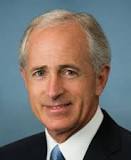
The Committee Chair, Senator Bob Corker (Rep., TN) supported the nomination with this statement: “Governor Haley is a fierce advocate for American interests. As South Carolina’s Governor, Nikki Haley is a proven leader. I believe she has the instincts that will help her achieve reform. Having run a state government, she has dealt with tough management and budgetary issues. I believe that experience will serve her well, and I strongly support her nomination.” He added, “I believe she knows the United Nations needs reform and change. We have a right to demand value for our money. I think our nominee has said she will demand that. . . . Experience shows that when we have strong U.S. leadership at the U.N. we can get results. As South Carolina’s Governor, Nikki Haley is a proven leader. . . . I believe she has the instincts that will help her achieve reform. Having run a state government, she has dealt with tough management and budgetary issues.”

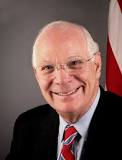
The nomination also was supported by Senator Benjamin Cardin (Dem., MD), the Committee’s Ranking Member, who said, ““What Governor Haley lacks in foreign policy and international affairs experience, she makes up for in capability, intelligence, and a track record of building coalitions in South Carolina. Her nomination was surprising to many of my colleagues on both sides of the aisle, but I have been impressed by her forthrightness on core American values, her willingness to admit what she does not know, and her commitment to seeking the facts and speaking truth to power, whether within the Trump Administration or with an intransigent Russia and China in the Security Council.”

Ambassador Haley’s Initial Appearance at the U.N.

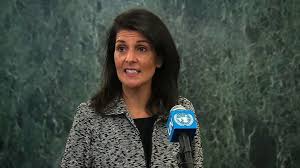
Ambassador Haley @ U.N.

On January 27, only three days after her confirmation, she made her very first appearance at the U.N. General Assembly and delivered a blunt warning to every nation in the world. She said, “You’re going to see a change in the way we do business. Our goal with the administration is to show value at the U.N., and the way we’ll show value is to show our strength, show our voice, have the backs of our allies and make sure our allies have our back as well. For those who don’t have our back, we’re taking names; we will make points to respond to that accordingly.”[3]

Conclusion

First, her lack of knowledge regarding Cuba may not be surprising since her prior experience has been in state government, but it is a troubling sign that she may not be committed to normalization.

Second, her statement that she would not abstain on the forthcoming U.N. General Assembly resolution against the U.S. embargo (blockade) of Cuba is also troubling by itself. It is even more troubling when coupled with her recent statement at the U.N. that the U.S. would be taking the names of those countries that do not have the U.S.’ back and responding accordingly. That suggests that the U.S. may seek to take some kind of action against virtually every country in the world that supports that resolution.

==========================

[1] Ctr. Democracy in Americas, Cuba News Blast (Jan. 27, 2017).

[2] Press Release, Senate Foreign Relations Committee Approved Nomination of Nikki Haley to be U.S. Ambassador to the United Nations (Jan. 24, 2017); Press Release, Corker Votes to Confirm Nikki Haley as U.S. Ambassador to the United Nations (Jan. 24, 2017); Press Release, Corker Statement on Haley Vote (Jan. 24, 2017); Press Release, Cardin Statement on Haley Vote (Jan. 24, 2017); Assoc. Press, Senate Confirms Trump’s Nominee for US Ambassador to UN, N.Y. Times (Jan. 24, 2017); Carney, Senate confirms Trump’s UN ambassador, The Hill (Jan. 24, 2017).

[3] Sengupta, Nikki Haley Puts U.N. on Notice: U.S. Is ‘Taking Names,’ N.Y. Times (Jan. 27, 2017).

Secretary of State-Nominee Rex Tillerson Addresses U.S. Policies Regarding Cuba     

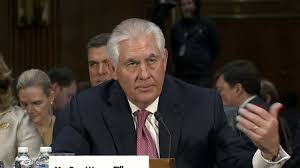
Rex Tillerson
Rex Tillerson

In his opening statement at the January 11 Senate Foreign Relations Committee hearing on his nomination, Secretary of State Nominee Rex Tillerson made the following comments about U.S. policies regarding Cuba:[1]

  • “And we must adhere to standards of accountability. Our recent engagement with the government of Cuba was not accompanied by any significant concessions on human rights. We have not held them accountable for their conduct. Their leaders received much, while their people received little. That serves neither the interest of Cubans or Americans.”

Later in response to questions by Senator Marco Rubio (Rep., FL), a Cuban-American and a noted opponent of normalization, Tillerson said he would advise the president to veto any legislation codifying President Obama’s thaw with Cuba, at least until the Trump administration can conduct its own review of that policy. In addition, Tillerson said the current U.S. normalization policy has not benefited most Cubans.

Tillerson specifically added that he would also advise Trump to veto any measures to lift the Cuban embargo, and “examine carefully the criteria” under which Cuba was taken off the list of state sponsors of terrorism, to determine “whether or not that de-listing was appropriate.”

Tillerson did not commit to indefinitely maintaining the above positions, instead deferring to the results of the new administration’s forthcoming review to determine its long-term Cuba policy.

Tillerson underscored that the United States “cannot ignore the law” and must comply with measures such as the Helms-Burton Act, which codified the embargo in 1996, and stated that economic restrictions must remain in force until the Cuban government complies with certain conditions, among them that the Castro family leaves power. Any modification of that legal basis on the policy toward Cuba “should be done by Congress,” according to Tillerson, who committed to strictly enforcing the law.[2]

The obvious follow-up question that I believe was not asked is whether one of the objectives of the promised review of U.S. policies regarding the island will be recommending changes to relevant statutes.

Responding to a question by Senator Robert Menendez (Dem., NJ), a Cuban-American opposed to normalization, Tillerson said that advancing human rights and democracy in Cuba and returning to justice U.S. fugitives like Joanne Chesimard, convicted of aiding and abetting the murder of a New Jersey State Trooper, would be a condition of any further engagement with Cuba.

Conclusion

This hearing was bad news and good news for advocates of normalization like this blogger.

The good news is Tillerson’s prediction that the new administration will conduct a review of existing U.S. policies regarding Cuba before making any changes in them.As previoulsy stated, this review should include recommendations to Congress for changes in existing statutes on the subject.

The bad news is the series of suggestions that many of the normalization policies will be cancelled.

Although I agree that so far Cuba has not made significant concessions on human rights, I disagree with the implicit conclusion from this statement: the U.S. needs to demand Cuban concessions on human rights as a condition for the U.S. making any further economic “concessions” to the island. This is the policy that was followed for over 50 years before December 17, 2014, without the desired result.

I also disagree with his prospective recommendation of a veto of any legislation ending the U.S. embargo of Cuba. In addition, I reject his implication that the U.S. May 2015 rescission of its designation of Cuba as a “state sponsor of terrorism” was not justified. As explained in earlier posts, the embargo is unjustified and counterproductive for the U.S. while  previous “terrorism” designations were ridiculous and unjustified and the rescission was fully consistent with the law and the facts and was implicitly endorsed by Congress’ failure to approve a joint resolution countermanding the rescission. [3]

Finally I disagree with Tillerson’s testimony that the Cuban “people have received little” from U.S.-Cuba engagement or normalization. As previously stated in various posts, the increased remittances from families and friends in the U.S. to others in Cuba, all made possible by the Obama Administration’s loosening of U.S. restrictions, have been a major source of funding for the expansion of family-owned businesses on the island. That expansion has helped to reduce the portion of the Cuban economy controlled by state-owned enterprises and has increased the income and well being of Cuban entrepreneurs and their employees, who are and will be a significant force for further modification of the Cuban economic and political system.[4]

==============================================

[1] Secretary of State Designate Rex Tillerson: Senate Confirmation Hearing Opening Statement (Jan. 11, 2017); Rex Tillerson Confirmation Hearing: Live Coverage, W.S.J. (Jan. 11, 2017); U.S. Senate For. Rel. Comm., Nomination Hearing for Secretary of State Nominee Rex Tillerson (Jan. 11, 2017) (video); Demirjian, Tillerson says Trump is prepping to review Obama’s Cuba policy, Wash, Post (Jan. 11, 2017); Menendez, Secretary of State Nom Rex Tillerson gives commitment to justice during Senate confirmation hearing (Jan. 11, 2017); Kasperowicz, Tillerson would recommend veto of bill ending Cuba embargo, Wash. Examiner (Jan. 11, 2017).

[2] Of greater interest to most of the media about this hearing was Rubio’s challenging questions to Tillerson about whether he favored sanctions against Russia and whether he thought Putin was a war criminal. (E.g., Sanger & Flegenheimer, In Rocky Hearing, Rex Tillerson Tries to Separate From Trump, N.Y. Times (Jan, 11, 2017).)  Were such questions about Russia merely a Rubio ploy to solidify Tillerson’s opposition to Cuba normalization?

[3] See posts listed in the “U.S. Embargo of Cuba” and “Cuba State Sponsor of Terrorism?” sections of List of posts to dwkcommentaries–Topical: CUBA.

[4] See posts listed in the “Cuban Economy” section of List of posts to dwkcommentaries–Topical: CUBA.

Enactment of the Justice Against Sponsors of Terrorism Act (JASTA) Over the Presidential Veto

As a previous post reported, from September 16, 2015, through September 9, 2016, the current Session of Congress considered and overwhelmingly adopted the Justice Against Terrorism Act (JASTA). Although neither chamber of Congress held hearings on JASTA this Session and voiced little opposition to the bill, objections to the bill were raised outside Congress, and on September 23, 2016, President Obama vetoed the bill, as was mentioned in a prior post. Thereafter Congress overrode the veto and JASTA became law, whose details were discussed in another previous post.

Now we will retreat in time and examine the president’s veto message and the congressional overriding of the veto. Another post will look at subsequent efforts to amend JASTA.

President Obama’s Veto Message

 On September 23, President Obama vetoed JASTA and returned the bill to Congress with a message stating the following reasons for the veto:[1]

  • “Enacting JASTA into law . . . would neither protect Americans from terrorist attacks nor improve the effectiveness of our response to such attacks. As drafted, JASTA would allow private litigation against foreign governments in U.S. courts based on allegations that such foreign governments’ actions abroad made them responsible for terrorism-related injuries on U.S. soil. This legislation would permit litigation against countries that have neither been designated by the executive branch as state sponsors of terrorism nor taken direct actions in the United States to carry out an attack here. The JASTA would be detrimental to U.S. national interests more broadly, which is why I am returning it without my approval.”
  • “First, JASTA threatens to reduce the effectiveness of our response to indications that a foreign government has taken steps outside our borders to provide support for terrorism, by taking such matters out of the hands of national security and foreign policy professionals and placing them in the hands of private litigants and courts.”
  • “Any indication that a foreign government played a role in a terrorist attack on U.S. soil is a matter of deep concern and merits a forceful, unified Federal Government response that considers the wide range of important and effective tools available. One of these tools is designating the foreign government in question as a state sponsor of terrorism, which carries with it a litany of repercussions, including the foreign government being stripped of its sovereign immunity before U.S. courts in certain terrorism-related cases and subjected to a range of sanctions. Given these serious consequences, state sponsor of terrorism designations are made only after national security, foreign policy, and intelligence professionals carefully review all available information to determine whether a country meets the criteria that the Congress established.”
  • “In contrast, JASTA departs from longstanding standards and practice under our Foreign Sovereign Immunities Act and threatens to strip all foreign governments of immunity from judicial process in the United States based solely upon allegations by private litigants that a foreign government’s overseas conduct had some role or connection to a group or person that carried out a terrorist attack inside the United States. This would invite consequential decisions to be made based upon incomplete information and risk having different courts reaching different conclusions about the culpability of individual foreign governments and their role in terrorist activities directed against the United States — which is neither an effective nor a coordinated way for us to respond to indications that a foreign government might have been behind a terrorist attack.”
  • “Second, JASTA would upset longstanding international principles regarding sovereign immunity, putting in place rules that, if applied globally, could have serious implications for U.S. national interests. The United States has a larger international presence, by far, than any other country, and sovereign immunity principles protect our Nation and its Armed Forces, officials, and assistance professionals, from foreign court proceedings. These principles also protect U.S. Government assets from attempted seizure by private litigants abroad. Removing sovereign immunity in U.S. courts from foreign governments that are not designated as state sponsors of terrorism, based solely on allegations that such foreign governments’ actions abroad had a connection to terrorism-related injuries on U.S. soil, threatens to undermine these longstanding principles that protect the United States, our forces, and our personnel.”
  • “Indeed, reciprocity plays a substantial role in foreign relations, and numerous other countries already have laws that allow for the adjustment of a foreign state’s immunities based on the treatment their governments receive in the courts of the other state. Enactment of JASTA could encourage foreign governments to act reciprocally and allow their domestic courts to exercise jurisdiction over the United States or U.S. officials — including our men and women in uniform — for allegedly causing injuries overseas via U.S. support to third parties. This could lead to suits against the United States or U.S. officials for actions taken by members of an armed group that received U.S. assistance, misuse of U.S. military equipment by foreign forces, or abuses committed by police units that received U.S. training, even if the allegations at issue ultimately would be without merit. And if any of these litigants were to win judgments — based on foreign domestic laws as applied by foreign courts — they would begin to look to the assets of the U.S. Government held abroad to satisfy those judgments, with potentially serious financial consequences for the United States.”
  • “Third, JASTA threatens to create complications in our relationships with even our closest partners. If JASTA were enacted, courts could potentially consider even minimal allegations accusing U.S. allies or partners of complicity in a particular terrorist attack in the United States to be sufficient to open the door to litigation and wide-ranging discovery against a foreign country — for example, the country where an individual who later committed a terrorist act traveled from or became radicalized. A number of our allies and partners have already contacted us with serious concerns about the bill. By exposing these allies and partners to this sort of litigation in U.S. courts, JASTA threatens to limit their cooperation on key national security issues, including counterterrorism initiatives, at a crucial time when we are trying to build coalitions, not create divisions.”
  • “The 9/11 attacks were the worst act of terrorism on U.S. soil, and they were met with an unprecedented U.S. Government response. The United States has taken robust and wide-ranging actions to provide justice for the victims of the 9/11 attacks and keep Americans safe, from providing financial compensation for victims and their families to conducting worldwide counterterrorism programs to bringing criminal charges against culpable individuals. I have continued and expanded upon these efforts, both to help victims of terrorism gain justice for the loss and suffering of their loved ones and to protect the United States from future attacks. The JASTA, however, does not contribute to these goals, does not enhance the safety of Americans from terrorist attacks, and undermines core U.S. interests.”

Reactions to the Veto

Immediately after President Obama’s veto of JASTA, both Republicans and Democrats in Congress vowed to override the veto under Article I, Section 7 of the U.S. Constitution requiring a vote of at least two-thirds of each chamber of the Congress to do so. On the sidelines both major presidential candidates (Donald Trump and Hillary Clinton) said that they would have signed the bill if they were president.

These vows were made despite the prior day’s testimony before a Senate committee by Secretary of Defense Ash Carter opposing the bill on the ground that it could be a problem for the U.S. if another country was “to behave reciprocally towards the U.S.” And the Republican Chair of the House Armed Services Committee, Representative Mac Thornberry of Texas, amplified the military’s concerns and urged Republicans to study the bill’s consequences while announcing his intent to opposes the override.[2]

Not surprisingly immediately after this veto, Senator John Cornyn stated, “It’s disappointing the President chose to veto legislation unanimously passed by Congress and overwhelmingly supported by the American people. Even more disappointing is the President’s refusal to listen to the families of the victims taken from us on September 11th, who should have the chance to hold those behind the deadliest terrorist attack in American history accountable. I look forward to the opportunity for Congress to override the President’s veto, provide these families with the chance to seek the justice they deserve, and send a clear message that we will not tolerate those who finance terrorism in the United States.”[3]

On September 27 President Obama sent a letter to Senators Mitch McConnell (Rep., TN), the Majority Leader, and Harry Reid (Dem. NV), Minority Leader. The President said he was “fully committed to assisting the families of the victims of terrorist attacks of Sept. 11,″ but that the consequences of an override could be “devastating” by putting military and other U.S. officials overseas at risk. The bill’s enactment, he warned, “would neither protect Americans from terrorist attacks nor improve the effectiveness of our response to such attacks.[4]

On September 28 Senators Cornyn and Shumer jointly wrote an op-ed article in USA Today urging Congress to override the veto because JASTA “would provide a legal avenue for the families of the victims of the 9/11 attacks to seek justice in a court of law for the terrorist attacks that took the lives of their loved ones. And it would deter foreign entities from sponsoring terrorism in the future.” The article also rejected as untrue the argument by JASTA’s opponents “that the bill will subject U.S. diplomats and other government officials to a raft of potential lawsuits in foreign courts.”[5]

On the morning of September 28, the New York Times published an editorial opposing the threatened congressional override of the veto because “the bill complicates the United States’ relationship with Saudi Arabia and could expose the American government, citizens and corporations to lawsuits abroad. Moreover, legal experts like Stephen Vladeck of the University of Texas School of Law and Jack Goldsmith of Harvard Law School doubt that the legislation would actually achieve its goal.”[6]

Moreover, the Times editorial asserted that the “European Union has warned that if the bill becomes law, other countries could adopt similar legislation defining their own exemptions to sovereign immunity. Because no country is more engaged in the world than the United States — with military bases, drone operations, intelligence missions and training programs — the Obama administration fears that Americans could be subject to legal actions abroad.”

Nevertheless, later that same day (September 28) Congress overwhelmingly voted to override the presidential veto. The only vote against the override in the Senate was by the Senate Minority Leader, Senator Harry Reid (Dem., NV). The vote in the House was 348 to override with only 59 opposed.[7] We will now look at the debate in both chambers.

U.S. Senate’s Overriding the Veto

In the Senate debate, Senators Richard Blumenthal (Dem., CT), John Cornyn (Rep., TX), Chuck Grassley (Rep., IA) and Chuck Schumer (Dem. NY) spoke in favor of overriding the veto and passing JASTA while Senators Bob Corker (Rep., TN), the Chair of the Senate Foreign Relations Committee, Benjamin Cardin (Dem., DE), the Committee’s Ranking Member, and Diane Feinstein (Dem., CA) offered qualified endorsements of an override. [8]

Generally these Senators argued that U.S. victims of state-sponsored acts of terrorism needed the opportunity to assert their damage claims in U.S. courts against such sponsors and that JASTA would deter such sponsored terrorism. Senator Cornyn added that this “legislation has been pending since 2009, and we have worked through a number of Members’ concerns . . . in order to modify the legislation and build the consensus we now have achieved. . . . That means [JASTA] has been negotiated and hammered out over a long period of time.”[9]

Cornyn then offered this argument for rejection of the presidential veto message:

  • JASTA would not “create complications” with some of our close partners. It “only targets foreign governments that sponsor terrorist attacks on American soil. . . . The financing of terrorism in the [U.S.] is not behavior we should tolerate from any nation, allies included.”
  • Possible foreign laws like JASTA “applied reciprocally will open no . . . floodgates” of lawsuits against the U.S. or military members by foreign governments in foreign courts.
  • “JASTA is not a sweeping legislative overhaul that dramatically alters international law. It is an extension of law that has been on the [U.S.] books since 1976. . . . [For] 40 years our law has been replete with immunity exceptions that apply to conduct committed abroad. This bill just adds another exception.”

Senator Grassley, the Chair of the Senate Judiciary Committee, noted that this Committee unanimously supported overriding the veto of JASTA. He also said it was “highly unlikely” that passage of the bill would result in “the Saudis . . .pulling their money out of U.S. securities. . . . But even if they did, there would be plenty of buyers for those securities. But more importantly, . . . [such an argument would send the message;] if you want to influence U.S. legislation, make sure to buy up U.S. debt, and then threaten to sell that debt any time the U.S. Congress does something you don’t like. We absolutely cannot be intimidated or bend to that type of threat.”

Senator Corker commented that he had “tremendous concerns about the sovereign immunity procedures that could be set in place by other countries as a result of this vote” and that it could have adverse consequences for the U.S. “standing in the world.” He was troubled by “the concerns [of] . . . the head of our Joint Chiefs” and of the President. He also thought it would be better “to establish some type of tribunal, where experts could come in and really identify what actually happened on discretionary decisions that took place within the country of Saudi Arabia” with respect to the pending 9/11 claims.

As a result, Senator Corker prepared a bipartisan letter to the Senate sponsors of JASTA (Senators Cornyn and Schumer).[10] It expressed concern about “potential unintended consequences that may result from . . . [JASTA] for the national security and foreign policy of the United States. If other nations respond to this bill by weakening U.S. sovereign immunity protections, then the [U.S.] could face private lawsuits in foreign courts as a result of important military or intelligence activities. We would hope to work with you in a constructive manner to appropriately mitigate those unintended consequences.”

One of the signers of this letter and the Ranking Member of the Senate Foreign Relations Committee, Senator Benjamin Cardin (Dem., DE), recognized “that there are risk factors in terms of how other countries may respond to the enactment of JASTA. [11] As a nation with hundreds of thousands of troops that serve abroad, not to mention multiple foreign bases and facilities, the United States of America is a country that benefits from sovereign immunity principles that protect our country and our country’s interests, its Armed Forces, government officials, and litigation in foreign courts. Therefore, there is a concern of unintended consequences, including irresponsible applications to U.S. international activities by other countries. While I have faith and confidence in the American legal system, the same faith does not necessarily extend to the fairness of legal systems of other countries that may claim they are taking similar actions against America when they are not. So [as the Ranking Member of the Foreign Relations Committee, I will] follow closely how other countries respond and try to mitigate the risks of the [U.S.] abroad” and will “explore with my colleagues the possibility of whether we need or will need additional legislative action.”

Another signer of the letter, Senator Feinstein, expressed her “key concern relates to the exception to the immunity of foreign governments.”[12] “Proponents of this bill argue that the exception is narrow, that it applies only if a foreign nation, with ill intent, takes unlawful actions that cause an act of terrorism on our soil. But other nations that are strongly opposed to American actions abroad could respond by using the bill as an excuse to adopt laws that target our own government’s actions. A September 15 Washington Post editorial said it well: ‘It is not a far-fetched concern, given this country’s global use of intelligence agents, Special Operations forces and drones, all of which could be construed as state-sponsored `terrorism’ when convenient.’ Those of us on the Senate Intelligence Committee know that, if other countries respond to JASTA in this manner, it could jeopardize our government’s actions abroad. If that happens, it is likely that our government would be forced to defend against private lawsuits, which could pose a threat to our national security.” Therefore, she was interested in limiting JASTA to “the September 11 attacks” and to “those directly impacted by an attack–including individuals, their estates and property damage, rather than companies with only tangential connections.”

U.S. House of Representatives’ Overriding the Veto 

On the afternoon of September 28 the House voted to override the veto of JASTA by a vote of 348 (225 Republicans and 123 Democrats) to 77 (18 Republicans and 59 Democrats).[13]

The supporters of override were led by Representative Robert Goodlatte (Rep., VA), the Chair of the House Judiciary Committee, who asserted, “The changes JASTA makes to existing law are not dramatic, nor are they sweeping.. . .The President’s objections . . . have no basis under U.S. or international law.. . . Consistent with customary international law, JASTA, for terrorism cases, removes the current requirement that the entire tort occur within the United States and replaces it with a rule that only the physical injury or death must occur on U.S. soil.” Later in the debate he claimed (erroneously as explained in n.14) that his argument was supported by “Article 12 of the United Nations Convention on Jurisdictional Immunities of States and Their Properties [which] would apply the territorial tort exception if the act or omission occurred in whole or in part in the territory of the state exercising jurisdiction.”[14]

Others who supported the override and who spoke during the debate were Representatives Peter King (Rep., NY), Sheila Jackson Lee (Dem., TX), Leonard Lance (Rep., NJ), David Donovan (Rep., NY), Carolyn Maloney (Dem., NY) and Jerrold Nadler (Dem. FL).

Leading the opposition to the override were Representative M. “Mac” Thornberry (Rep., TX), the Chair of the House Armed Services Committee, and Representative John Conyers (Dem., MI). Other opponents of override who spoke during the debate were Representatives Eddie Bernice Johnson (Dem., TX), David Jolly (Rep., FL), Betty McCollum (Dem., MN), Robert Scott (Dem., VA) and Earl Blumenauer (Dem., NY).

Thornberry expressed concern for the possible erosion of sovereign immunity, which is “one of the key protections that the military, diplomats, and intelligence community of the [U.S.] has around the world. Once that doctrine gets eroded, then there is less protection, and . . . the [U.S.], has more at stake in having our people protected than any other country because we have more people around the world than anyone else.” Thornberry also quoted from a letter to him from Joseph F. Dunford, Jr., General, U.S. Marine Corps. and Chairman of the Joint Chiefs of Staff: `Any legislation that risks reciprocal treatment by foreign governments would increase the vulnerability of U.S. Service members to foreign legal action while acting in an official capacity.” This letter and a letter urging defeat of the override from Secretary of Defense Ash Carter were inserted into the House record.

Conyers supported the President’s reasons for his veto. “First, the President stated that [the bill] could undermine the effectiveness of our Nation’s national security and counterterrorism efforts. For instance, other nations may become more reluctant to share sensitive intelligence in light of the greater risk that such information may be revealed in litigation.   Moreover, the President raised the concern that this legislation would effectively allow non-expert private litigants and courts, rather than national security and foreign policy experts, to determine key foreign and national security policy questions like which states are sponsors of terrorism.   Second, the President’s assertion that enactment of[the bill]may lead to retaliation by other countries against the [U.S.] given the breadth of our interests and the expansive reach of our global activities.   So while it seems likely at this juncture that [the bill] will be enacted over the President’s veto, I remain hopeful that we can continue to work toward the enactment of subsequent legislation to address the President’s concerns.”

Conyers also cited others who called for sustaining the President’s veto: Michael Mukasey, the former Attorney General under George W. Bush; Stephen Hadley, the former National Security Adviser for that President; Richard Clarke, the former White House counterterrorism adviser for Presidents Bill Clinton and George W. Bush; and Thomas Pickering, the former [U.S.] Ambassador to the United Nations.

Representative Scott said, “JASTA abrogates a core principle in international law–foreign sovereign immunity. There are already several exceptions to this immunity recognized by our Nation and others, but JASTA goes much further than any present exception or recognized practice of any national law…. One fundamental indication of fairness of legislation is not how it would work to our benefit, but what we would think if it were used against us. If the [U.S.] decides to allow our citizens to haul foreign nations into American courts, what would we think of other nations enacting legislation allowing their citizens to do the same thing to us? Obviously, we would not want to put our diplomats, military, and private companies at that risk.”

Scott also pointed out that “JASTA does not make clear how the evidence would be gathered to help build a credible case against a foreign nation. Would the plaintiffs be able to subpoena foreign officials? Or would the U.S. Department of State officials have to testify? Would . . . [the U.S.] be required to expose sensitive materials in order to help American citizens prove their case? Again, how would we feel about foreign judges and juries deciding whether or not the [U.S.] sponsored terrorism? There are also questions about how the judgment under JASTA would be enforced. The legislation does not address how a court would enforce the judgment. Could foreign assets be attached? How would this process work if other countries enacted similar legislation? Would U.S. assets all over the world be subject to attachment to satisfy the foreign jury verdicts?”

Jolly emphasized that “the President, the Secretary of Defense, the Chairman of the Joint Chiefs of Staff, the CIA Director, and the Chairman of the House Armed Services Committee [Representative Thornberry] have all issued statements against this legislation.”

White House Reaction to the Overriding of the Veto

On the same day as this Senate vote and before the House voted on the same bill later that day, White House Press Secretary, Josh Earnest, said, “I would venture to say that this is the single-most embarrassing thing that the United States Senate has done possibly since 1983. You had at least one prominent Republican senator quoted today saying that . . . the members of the Senate Judiciary Committee were not quite sure what the bill actually did.  And to have members of the United States Senate only recently informed of the negative impact of this bill on our service members and our diplomats is, in itself, embarrassing.  For those senators then to move forward in overriding the President’s veto that would prevent those negative consequences is an abdication of their basic responsibilities as elected representatives of the American people.”[15]

Furthermore, said the Press Secretary, “these senators are going to have to answer their own conscience and their constituents as they account for their actions today.  You’ve got to give some credit to Harry Reid.  He showed some courage.  The same can’t be said for the other 96 members of the Senate who voted today.”

The same day President Obama on CNN said that a few lawmakers who backed the bill weren’t aware of its potential impact and that he wished Congress “had done what’s hard.” CIA Director John Brennan said he was concerned about how Saudi Arabia, a key U.S. ally in the Middle East, would interpret the bill. He said the Saudis provide significant amounts of information to the U.S. to help foil extremist plots. “It would be an absolute shame if this legislation, in any way, influenced the Saudi willingness to continue to be among our best counterterrorism partners,” Brennan said.[16]

On September 29, after the House had voted and JASTA became law, Press Secretary Earnest added, “I think what we’ve seen in the United States Congress is a pretty classic case of rapid-onset buyer’s remorse.  Within minutes of casting their vote to put that bill into law, you had members of the United States Senate — some 28 of them — write a letter expressing deep concern about the potential impact of the bill they just passed.  The suggestion on the part of some members of the Senate was that they didn’t know what they were voting for, that they didn’t understand the negative consequences of the bill. That’s a hard suggestion to take seriously when you had letters from President Bush’s attorney general and national security advisor warning about the consequences of the bill.  You had attorneys from our closest allies in Europe expressing their concerns about the impact of the bill.  You had a letter from some of America’s business leaders, including Chief Executive of GE, Jeffrey Immelt, warning about the potential economic consequences of the bill.  You had letters from the Director of the CIA, the Chairman of the Joint Chiefs of Staff, the Secretary of Defense and the Commander-in-Chief all warning about the potential impact of the bill.”[17]

Conclusion

As indicated above, certain Senators indicated their intent to pursue amendments to JASTA to remedy what they see as problems with the statute. This will be the subject of future posts.

============================================

[1] White House, Veto Message from the President—S.2040 (Sept. 23, 2016) Afterwards Josh Earnest, the White House Press Secretary, discussed whether there was congressional opposition to overriding the veto and criticism of the bill from Saudi Arabia and “a lot of other countries, including the European Union. White House, Press Briefing by Press Secretary Josh Earnest, 9/26/16; White House, Press Briefing by Press Secretary Josh Earnest, 9/27/16.

[2] Assoc. Press, Lawmakers Vow to Override Obama’s Veto of Sept. 11 bill, N.Y. Times (Sept. 24, 2016).

[3] Cornyn, Cornyn Statement on President’s Veto of JASTA (Sept. 23, 2016).

[4] Demirjian & Ellperin, Congress overrides Obama’s veto of 9/11 bill, Wash, Post (Sept, 28, 2016).

[5] Cornyn, Cornyn Op-Ed: give 9/11 Families a Legal Avenue (Sept. 28, 2016).

[6] Editorial, The Risks of Sueing the Saudis for 9/11, N.Y. Times (Sept. 28, 2016)

[7] Steinhauer, Mazzetti & Davis, Congress Votes to Override Obama Veto on 9/11 Victims Bill, N.Y. Times (Sept. 28, 2016); Eilpirin & Demirjian, Congress thwarts Obama on bill allowing 9/11 lawsuits against Saudi Arabia, Wash. Post (Sept. 28, 2016).

[8] Cong. Rec. S6166-73 (Sept. 28, 2016).

[9] The prior post about the initial passage of JASTA started with the 2015 introduction of the bill and did not attempt to cover earlier versions of the bill or the process referenced by Senator Cornyn. Comments about this earlier process would be much appreciated.

[10] This bipartisan letter was signed by 15 Democrat Senators (Bennet, Cardin, Carper, Coons, Feinstein, Heitkamp, Hirono, McCaskill, Merkley, Nelson, Reed, Schatz, Shaheen, Udall and Warner), 12 Republican Senators (Alexander, Coats, Corker, Cotton, Flake, Graham, McCain, Risch, Roberts, Rounds, Sullivan and Thune) and Independent Senator King.

[11] Cardin, Cardin Statement on JASTA Veto Vote (Sept. 28, 2016).

[12] Feinstein, Feinstein Statement on Justice Against Sponsors of Terrorism Act (Sept. 28, 2016).

[13] Cong. Record H6023-32 (Sept. 28, 2016).

[14] The United Nations Convention on Jurisdictional Immunities of States and Property is certainly relevant to the issue of international law on the subject. Representative Thornberry, however, failed to quote the entirety of Article 12 of this treaty and thereby reached an erroneous conclusion that it supports JASTA. That Article states, “Unless otherwise agreed between the States concerned, a State cannot invoke immunity from jurisdiction before a court of another State which is otherwise competent in a proceeding which relates to pecuniary compensation for death or injury to the person, or damage to or loss of tangible property, caused by an act or omission which is alleged to be attributable to the State, if the act or omission occurred in whole or in part in the territory of that other State and if the author of the act or omission was present in that territory at the time of the act or omission.” The portion in bold was not quoted by Thornberry.  Moreover, this treaty is not yet in force because its Article 30 requires 30 states to become parties thereto, and to date only 21 states have done so, and the U.S. has neither signed nor ratified this treaty.

[15] White House, Press Gaggle by Press Secretary Josh Earnest en route Fort Lee, Virginia 9/28/16.

[16] Assoc. Press, Congress Rebukes Obama, Overrides Veto of 9/11 Legislation, N.Y. Times (Sept. 28, 2016); Reuters, Congress Rejects Obama Veto, Saudi Sept. 11 Bill Becomes Law, N.Y. Times (Sept, 28, 2016).

[17] White House, Press Briefing by Press Secretary Josh Earnest and Secretary of Education King (Sept. 29, 2016).
 

U.S. Reasserts Upgrade of Cuba in Annual Report on Human Trafficking  

On June 30, 2016, the U.S. Department of State released its 2016 Trafficking in Persons Report, which is “the U.S. Government’s principal diplomatic tool to engage foreign governments on human trafficking” and “ the world’s most comprehensive resource of governmental anti-human trafficking efforts.”[1]

For this Report, “severe forms of trafficking in persons” is defined in the U.S. Trafficking in Persons Victims Act (TVPA) as:

  • “sex trafficking in which a commercial sex act is induced by force, fraud, or coercion, or in which the person induced to perform such an act has not attained 18 years of age; or
  • “the recruitment, harboring, transportation, provision, or obtaining of a person for labor or services, through the use of force, fraud, or coercion for the purpose of subjection to involuntary servitude, peonage, debt bondage, or slavery.”

In this Report, the Department placed 188 countries (including the United States) into the following four tiers plus “Special Cases” (Libya, Somalia and Yemen) based on the extent of their governments’ efforts to comply with the “minimum standards for the elimination of trafficking” found in Section 108 of the TVPA:

  • TIER 1 [36] “countries whose governments fully meet the . . . [TVPA’s] minimum standards.”
  • TIER 2 [78] “countries whose governments do not fully meet the TVPA’s minimum standards, but are making significant efforts to meet those standards.”
  • TIER 2 WATCH LIST [44] “countries whose governments do not fully meet the TVPA’s minimum standards, but are making significant efforts to meet those standards AND: a) The absolute number of victims of severe forms of trafficking is very significant or is significantly increasing; b) There is a failure to provide evidence of increasing efforts to combat severe forms of trafficking in persons from the previous year, including increased investigations, prosecution, and convictions of trafficking crimes; increased assistance to victims; and decreasing evidence of complicity in severe forms of trafficking by government and convictions of trafficking crimes; or c) The determination that a country is making significant efforts to meet the minimum standards was based on commitments by the country to take additional future steps over the next year.”
  • TIER 3 [27] “countries whose governments do not fully meet the minimum standards and are not making significant efforts to do so.”

Susan Coppedge, the U.S. Ambassador-at-Large to Monitor and Combat Trafficking in Persons, made remarks at the ceremony.[2] She said the Report was the U.S.’ “principal diagnostic tool to assess government efforts across what we call the three Ps: prosecution, protection and empowerment of victims, and preventing future trafficking crimes.” She also said there had been 27 downgrades in this Report compared with the prior report and 20 upgrades. In addition, she responded to journalists’ questions, but none was asked about Cuba.

The Report’s Assessment of Cuba’s Record on Human Trafficking [3]

In the 2016 Report Cuba was again placed in the Tier 2 Watch List with the following explanation.

“Cuba is a source and destination country for adults and children subjected to sex trafficking and forced labor. Child sex trafficking and child sex tourism occur within Cuba. Cuban authorities report people from ages 13 to 20 are most vulnerable to human trafficking in the country. Traffickers also subject Cuban citizens to sex trafficking and forced labor in South America and the Caribbean. The government indirectly acknowledged the presence of foreign national trafficking victims in Cuba. The government is the primary employer in the Cuban economy, including in foreign medical missions that employ more than 84,000 workers and constitute a significant source of Cuban government revenue. Some participants in foreign medical missions and other sources allege Cuban officials force or coerce participation in the program; however, the Cuban government and some participants say the program is voluntary and well paid compared to jobs within Cuba. The government uses some high school students in rural areas to harvest crops and does not pay them for their work but claims this work is not coerced.”

“The Government of Cuba does not fully meet the minimum standards for the elimination of trafficking; however, it is making significant efforts to do so. Despite these measures, the government did not demonstrate overall increasing antitrafficking efforts compared to the previous reporting period; therefore Cuba is placed on Tier 2 Watch List for the second consecutive year. The government reported continued efforts to address sex trafficking, including the prosecution and conviction of 18 sex traffickers in 2014 (the most recent available data) and the provision of services to 13 victims in those cases. The government publicly released a written report on its anti-trafficking efforts in October 2015. Multiple ministries engaged in anti-trafficking efforts, including the Ministries of Justice, Information Science and Communication, Interior, Foreign Affairs, Education, Tourism, Labor and Social Security, Culture and Health, and the attorney general’s office. The penal code does not criminalize all forms of human trafficking, although the government reported its submission of some trafficking-related penal code amendments to the National Assembly for review during the reporting period. The Cuban government was more transparent in providing details of anti trafficking efforts and the government’s overseas medical missions program. However, the government did not prohibit forced labor, report efforts to prevent forced labor, or recognize forced labor as a possible issue affecting its nationals in medical missions abroad. The government provided funding for child protection centers and guidance centers for women and families, which serve all crime victims, including trafficking victims. These centers had the ability to screen cases, make referrals to law enforcement, assist with arranging cooperation with law enforcement up to prosecution, and provide victim services.”

RECOMMENDATIONS FOR CUBA

“Draft and enact a comprehensive anti-trafficking law that prohibits and sufficiently punishes all forms of human trafficking, including forced labor, sex trafficking of children ages 16 and 17, and the full range of trafficking “acts” (recruiting, transporting, transferring, harboring, or receiving persons); vigorously investigate and prosecute both sex trafficking and forced labor offenses; provide specialized training for managers in state-owned or controlled enterprises in identifying and protecting victims of forced labor; implement policies to prohibit force, fraud, or coercion in recruiting and retaining employees in such enterprises; train those responsible for enforcing the labor code to screen for trafficking indicators and educate workers about trafficking indicators and where to report trafficking-related violations; draft and adopt a comprehensive written national anti-trafficking action plan and dedicate resources to implement it in partnership with international organizations; provide specialized victim identification and referral training for first responders; establish formal policies and procedures to guide officials in the identification of all trafficking victims and their referral to appropriate services; adopt policies that provide trafficking-specific, specialized assistance for male and female trafficking victims, including measures to ensure identified sex and labor trafficking victims are not punished for unlawful acts committed as a direct result of being subjected to sex trafficking or forced labor; and schedule a visit and cooperate with the UN special rapporteur on trafficking in persons.”

PROSECUTION: The government sustained law enforcement efforts by prosecuting and convicting sex traffickers, but took no action to address forced labor. The penal code does not criminalize all forms of trafficking, in particular forced labor and sex trafficking of children ages 16 and 17. The government did not report any labor trafficking investigations, prosecutions, or convictions. In January 2016, the government reported it was in the process of amending the code, including submitting amendments to the National Assembly to raise the age of consent; it is unclear whether the government will make additional amendments to improve the legal framework to address trafficking. Cuba prohibits some forms of trafficking through several penal code provisions, including: article 302 (procuring and trafficking in persons); article 310.1 (corruption of minors younger than 16 for sexual purposes); article 312.1 (corruption of minors younger than 16 for begging); and article 316.1 (sale and trafficking of a child younger than 16). The penal code’s definition of sex trafficking conflates sex trafficking with prostitution and pimping. The law criminalizes inducement to or benefiting from prostitution, but treats force, coercion, and abuse of power or vulnerability as aggravating factors rather than an integral part of the crime. Legal provisions addressing “corruption of minors” criminalize many forms of child sex trafficking but define a child as an individual younger than 16 years of age; below the age set in international trafficking law, which is 18 years of age. Forced prostitution is illegal irrespective of the victim’s age, and the government has reportedly prosecuted individuals benefiting from child sex trafficking. Provisions for adult and child sex trafficking do not explicitly criminalize the acts of recruitment, transport, and receipt of persons for these purposes. In December 2013, the government amended article 346.1 of the criminal code to mandate sentences of five to 12 years’ imprisonment for various crimes, including for laundering funds obtained from trafficking in persons. Labor code article 116 prohibits entities from directly establishing labor relations with adolescents younger than age 17, even if adolescents may be authorized to join the work force.”

“In 2015, the government publicly presented official data on 147 prosecutions and convictions of sex traffickers during calendar year 2014, the most recent data available. Authorities reported 13 prosecutions and 18 convictions of sex traffickers, compared with 13 prosecutions and convictions in 2013. At least nine convictions in 2014 involved suspects accused of subjecting children to trafficking within Cuba, including the facilitation of child sex tourism in Cuba. The average sentence was seven years’ imprisonment. The government also identified a group of Cubans abroad recruiting and transporting women with false promises of employment and fraudulent work contracts in order to subject the victims to debt bondage and forced prostitution. The government has not sought extradition in this case, and therefore no prosecutions or convictions of suspected traffickers in Cuba have resulted. Students at the Ministry of Interior Academy and police assigned to tourist centers reportedly received specific anti-trafficking training and victim assistance. The government demonstrated its willingness to cooperate with other governments on investigations of possible traffickers. The government arranges for high school students in rural areas to harvest crops and allegedly forces or coerces participation in medical missions, but it denies such claims. The government did not report any investigations, prosecutions, or convictions of government officials complicit in human trafficking in 2014.”

PROTECTION: The government sustained efforts to protect sex trafficking victims, but did not make efforts to identify or protect victims of forced labor. Authorities identified 11 child sex trafficking victims and four adult sex trafficking victims in 2014; it did not identify any labor trafficking victims or male sex trafficking victims. Identified sex trafficking victims received government assistance; detailed information on assistance provided to the 15 identified victims was unavailable. Other government-organized NGOs, like the Federation of Cuban Women (FMC), the Prevention and Social Assistance Commission, and the Committees for the Defense of the Revolution contributed by identifying victims of trafficking to state authorities and providing victim services. Independent members of civil society expressed concern about the government’s anti-trafficking efforts and  limited information on the scope of sex trafficking and forced labor in Cuba given sparse independent monitoring by NGOs and international organizations. The government reportedly developed procedures to proactively identify sex trafficking victims, whereby first responders work with social workers to identify potential cases and refer them to law enforcement.”

“The government did not report having procedures to proactively identify victims of forced labor. Some participants in foreign medical missions and other sources allege Cuban officials force or coerce participation in the program; however, the government and other participants have stated the postings are voluntary. In support of their applications to receive immigration benefits from the United States, some Cubans working in missions abroad have stated Cuban authorities withheld their passports and restricted their movements. At the same time, some participants who left medical missions abroad have been able to obtain new passports from their embassies in neighboring countries. There have also been reports that Cuban authorities coerced participants to remain in the program by allegedly threatening to revoke their medical licenses or retaliate against their family members if participants leave the program. Reports of substandard working and living conditions and the presence of “minders” to monitor medical professionals outside of work also continued. Last year, Cuba reinstituted restrictions on travel for specialized doctors and some medical personnel, requiring them to obtain an exit permit from their superiors before leaving the island. On September 9, 2015, the government agreed to reinstitute medical personnel that left their positions while abroad. As of April 1, 2016, the Cuban authorities claimed that 274 medical professionals returned to Cuba and were rehired at the same salary and level of responsibility.”

“The FMC received funding from international organizations and operated centers for women and families nationwide to assist individuals harmed by violence, including victims of sex trafficking. These centers provided services such as psychological treatment, health care, skills training, and assistance in finding employment. The government reportedly developed a referral process to transfer trafficking victims to law enforcement custody, secure evidence for prosecutions, and provide victim services and follow-on care. Neither the government nor the government-organized NGOs operated shelters or provided services specifically for male trafficking victims. Police encouraged child sex trafficking victims younger than age 16 to assist in prosecutions of traffickers by gathering children’s testimony through psychologist-led videotaped interviewing, usually removing the need for children to appear in court. There were no reports of the government punishing sex trafficking victims for unlawful acts committed as a direct result of being subjected to human trafficking. The government indirectly acknowledged the existence of some foreign trafficking victims in Cuba.”

PREVENTION: The government sustained prevention efforts to combat sex trafficking; however, authorities did not make efforts to prevent or address the demand for forced labor. The attorney general’s office continued to operate a 24-hour telephone line for individuals needing legal assistance, including sex trafficking victims, and received calls related to potential trafficking cases in 2015 that led to investigations. State media continued to produce newspaper articles and television and radio programs to raise public awareness about sex trafficking. Authorities maintained an office within the Ministry of Tourism charged with monitoring Cuba’s image as a tourism destination, combating sex tourism, and addressing the demand for commercial sex acts. The Cuban government cooperated with foreign law enforcement in investigating foreign citizens suspected of sexual crimes against children, including child sex trafficking. Under Cuban law, authorities may deny entry to suspected sex tourists and expel known sex offenders, but reported no related convictions in 2014. The government did not report whether it provided anti-trafficking training for its diplomatic personnel. The government publicly released a written report on its anti-trafficking efforts in October 2015. In March 2015, authorities invited the UN special rapporteur on trafficking in persons to visit, but the visit had not been scheduled by the end of the reporting period. The government did not report specialized training for labor inspectors to screen for indicators of potential forced labor.”

Reactions to the Report

Senator Bob Corker (Rep., TN), the Chairman of the Senate Foreign Relations Committee, attended the State Department’s ceremony for launching the Report and afterwards stated, “ the committee will closely study the report to determine the integrity of the findings. . . . In order for the TIP report to be an effective tool for holding governments accountable, all judgments must be based on measurable progress on anti-trafficking efforts. Following what were clear flaws in last year’s TIP process, the committee will carefully examine the 2016 report and conduct public hearings [this July] to determine the integrity of the findings. Senator Ben Cardin, (Dem., MD), the committee’s Ranking Member, also issued a statement approving of the Report’s upgrading Thailand from Tier 3 to Tier 2 Watch List and the downgrading of Uzbekistan from Tier 2 Watch List to Tier 3. He also expressed continuing concern about Malaysia. Neither of them said anything about Cuba.”[4]

Two other members of the Senate Foreign Relations Committee, Senators Robert Menendez (Dem., NJ), and Marco Rubio (Rep., FL), also issued statements. Menendez criticized the rankings for Malaysia, Cuba and unnamed other countries that “do not match the facts on the ground” and stated his expectation that “Congress . . . [will] be aggressive in its oversight and thoroughly investigate the methodology used to justify this year’s rankings.  Further, I am convinced that new legislation to reform the ranking process is the only way to restore credibility to this broken system and I plan on introducing a bill to do just that.” Rubio asserted that last year’s upgrade of Cuba to Tier 2 Watch List, and by implication its maintenance of that position in this Report, “was not justified by the facts on the ground.” He also criticized China’s maintenance on the Tier 2 Watch List and Thailand’s upgrading to that List.[5]

Conclusion

 The comments of Senators Corker, Menendez and Rubio allude to the Senate committee’s criticism of the prior report’s upgrading of Cuba and Malaysia from Tier 3 to Tier 2 Watch List and to the Administration’s alleged political reasons for doing so, all of which was discussed in a prior post.

At the State Department’s recent ceremony to announce the release of the 2016 Report U.S. Secretary of State John Kerry anticipatorily tried to rebut similar criticisms against this Report. He said, “The tier rankings . . . reflect our department’s best assessment of a government’s efforts to eliminate human trafficking. They don’t take into account political and other factors. As I say, they’re based on . . . [established] criteria. And in addition to the rankings, the report outlines our specific concerns as well as the ways we can improve our efforts. This is not meant to be a dunning report; it is meant to be a demarcation, an encouragement process, a process of evaluation and work towards changing rankings.”[6]

We all will have to see what happens at the forthcoming February hearing to assess these criticisms.

In the meantime, we can, in my opinion, effectively rebut this Report’s half-hearted contention that Cuban medical professionals are engaged in forced labor when they work on the government’s foreign medical missions. Here are the bases for that conclusion:

  • First, the Report admits that there is conflicting information and allegations on the foreign medical mission work. Coercion is alleged by “some participants” and unnamed “other sources.” On the other hand, the Report admits, the Cuban government denies these allegations, and instead the Government and “some participants” assert the postings are “voluntary and well paid compared to jobs within Cuba.” The Report also concedes there is conflicting information on whether other means, including withholding Cuban passports, are used to coerce or force participants to remain in the program.
  • Second, there apparently has not been any fair adjudicative process to determine which of these conflicting sets of information is valid.
  • Third, the accusation of forced labor for such participants has been rejected in a study by Indiana State University’s Emeritus Professor of International Politics and Latin America, Dr. H. Michael Erisman. He says, although there may be “some cases where . . . [Cuban medical professionals] are pressured into accepting overseas assignments, . . . most evidence indicates that the overwhelming majority are motivated by philosophical and/or pragmatic considerations. In the first instance, one needs to understand that the Cuban medical profession . . . is permeated by norms which stress self-sacrifice and service to the community, both at home and abroad. At the core of this ethos is the principle, which is firmly entrenched in the curriculum of the island’s medical schools and reinforced throughout one’s career, that health care should not be seen as a business driven by a profit motive, but rather as a human right that medical personnel have an unconditional duty to protect. Such convictions often underlie participation in the medical aid brigades. There are, however, also some pragmatic factors that can come into play. Overseas service could . . . help to further one’s professional aspirations and for some assignments the total remuneration involved is more generous than what is available back in Cuba. . . . [T]hese are the considerations which apply to the vast majority of people” in such programs, not involuntary servitude.[7]
  • Fourth, According to Granma, Cuba’s Communist Party’s newspaper, “Internationalist medical aid has been a longstanding part of the Cuban people’s tradition of solidarity, since the beginning of the Revolution. As early as 1960 a brigade was sent to Chile following an earthquake there, and to Algeria in 1963, to support the new country recently liberated from colonialism.” The Granma article included the reflection of four Cuban doctors who have participated in such missions and who treasure the positive impact of those experiences on their professional and personal lives.[8]
  • Fifth, this Report does not cite to the relevant legal definition of “forced labor” to assess this claim. Most pertinent is Article 2(2) of the Forced Labour Convention, 1930, which states, in part, ”the term forced or compulsory labour shall not include . . .  any work or service which forms part of the normal civic obligations of the citizens of a fully self-governing country.” (Emphasis added.)[9]

Moreover, as a previous post noted, a respected international journalist, Alma Guillermoprieto, recently reported that Cuban medical doctors serving on the island now earn $67 per month, but $500 per month when serving on a foreign medical mission.

The $67 monthly salary for Cuban physicians in Cuba compared with the $24 or $27 monthly income of other Cubans is a result of Cuba’s adoption of a “pyramid” compensation system whereby highly trained workers like physicians earn more than lower-skilled workers like busboys. This system, however, is being undermined by lower-skilled workers like gas-station attendants and waiters earning additional income from stealing and illegally selling gasoline and from earning tips in hard currency at restaurants and hotels serving foreign tourists. Indeed, Raúl Castro in his speech at the April 2016 Congress of the Communist Party of Cuba called this the “inverted pyramid” problem that had to be solved.

Finally all of this discussion about Cuba’s foreign medical mission program is precipitated by the U.S. Cuban Medical Personnel Parole Program that allows such personnel to apply for parole into the U.S. For reasons previously provided, this program is unjustified and should be ended as soon as possible.[10]

============================================================

[1] U.S. State Dep’t, Trafficking in Persons Report 2016 (June 30, 2016).

[2] U. S. State Dep’t, Ambassador-at-Large to Monitor and Combat Trafficking in Persons Susan Coppedge on the 2016 Trafficking in Persons Report (June 30, 2016).

[3] U.S. State Dep’t, Trafficking in Persons Report 2016 : Country Narratives–Cuba, at 146-47 (June 30, 2016).

[4] Senator Corker, Corker: U.S. Must Lead Global Effort to End Human Trafficking and Modern Slavery (June 30, 2016). Senator Cardin, Cardin Statement on State Dept. Trafficking in Persons Report (June 30, 2016).

[5] Senator Menendez, Menendez Reacts to State Department 2016 Trafficking in Persons Report (June 30, 2016); Senator Rubio, Rubio Comments On State Department’s 2016 Trafficking in Persons Report (June 30, 2016).

[6] U.S. State Dep’t, [Secretary Kerry’s] Remarks at the 2016 Trafficking in Persons Report Ceremony (June 30, 2016).

[7] Erisman, Brain Drain Politics: the Cuban Medical Professional Parole Programme, Int’l J. Cuban Studies 269, 286-87 (2012).

[8] Ledn, Cuban doctors share their experiences in internationalist missions, Granma (Nov. 26, 2015).

[9] This and other parts of the definition of “forced or compulsory labour” were reaffirmed in Article 1(3) of the Protocol of 2014 to the Forced Labour Convention, 1930.

[10] New York Times Calls for End of U.S. Program for Special Immigration Relief for Cuban Medical Personnel, dwkcommentaries.com (Nov. 23, 2014); New York Times Calls for End to Special U.S. Immigration Programs for Cubans, dwkcommentaries.com (Dec. 21, 2015).


U.S. State Department’s 2015 Human Trafficking Report’s Objectivity About Cuba Is Still Unresolved

On July 27 the U.S. Department of State released its 2015 Trafficking in Persons Report, which upgraded Cuba from Tier 3 (a country that did “not fully comply with the [Trafficking in Persons Protection Act] minimum standards and [was] not making significant efforts to do so”) to Tier 2.Watch List (a country that did not fully comply with [that statute’s] minimum standards, but [was] making significant efforts to bring [itself] into compliance with those standards).[1] A prior post reviewed that report’s discussion of Cuba and expressed disagreement with its assertion that Cuban medical personnel’s participation in foreign medical missions was illegal forced labor.

Since then there has been congressional criticism and concern about that report’s upgrading of several countries, including Cuba, as seen in recent congressional hearings.

The most recent hearing was on November 4, before a House of Representatives subcommittee. Most of the hearing was devoted to the report’s upgrading of Malaysia, Uzbekistan and China.[2]

Alex Lee
Alex Lee

Cuba’s upgrade was the focus of the testimony at this hearing by Alex Lee, Deputy Assistant Secretary of State in the Bureau of Western Hemisphere Affairs. He testified that the shift in U.S.-Cuban relations did not influence the decision on Cuba. “It was completely separate,” he told the subcommittee.

Mark Lagon
Mark Lagon

This assessment of Cuba was challenged by the testimony at this hearing of Mark Lagon, the President of Freedom House. He stated that “Freedom House ranks Cuba as ‘Not Free’” and that the Department’s “grounds for an upgrade are deeply questionable.” Indeed, Lagon said, the Department’s report itself undercuts any rationale for an upgrade when it states: (a) “The penal code does not criminalize all forms of human trafficking on paper, not to speak of enforcement.” (b) “The Cuba regime did not even dissemble and claim any ‘efforts to prevent forced labor’ nor ‘any trafficking-specific shelters.” Moreover, according to Lagon, “It is far-fetched to suppose that there is no forced labor in state enterprises or for political prisoners in one of the world’s few remaining Marxist-Leninist states. Also, a burgeoning sex industry – welcoming sex tourism – fuels exploitation, despite steps the Report notes taken by Cuba to address sex trafficking.”

Rep. Chris Smith
Rep. Chris Smith

The attitude towards Cuba of this subcommittee’s chair, Christopher Smith (Rep., NJ), was revealed in his press release on July 27 (the date of the release of the 2015 TIP report), when he said, “For political reasons alone, President Obama has done a grave disservice to victims of human trafficking in Cuba . . . by upgrading the human trafficking tier rankings in those countries in the annual Trafficking in Persons report.” He added,  “It seems quite clear that . . . Cuba’s unchecked march to normalized relations have captured the Obama Administration’s ability to properly access the worst of the worst when it comes to fighting to protect trafficking victims and punish the thugs who mastermind this modern day slavery.  It is no coincidence that earlier this year the Obama Administration also removed Cuba from the national list of state sponsors of terrorism. One-by-one this Administration is overriding human rights and national security policies for another agenda.”

The same issue of the objectivity of the TIP Report was considered on September 17 by the U.S. Senate Committee on Foreign Relations at a closed briefing by Anthony Blinken, Deputy Secretary of State, entitled “State Department Processes in Establishing Tier Rankings for the 2015 Trafficking in Persons Report.”   As the briefing was closed, we do not know what happened although at another hearing on September 22 Chairman Bob Corker (Rep., TN) mentioned that after this briefing he had made a request to the State Department for three unspecified items of information about the 2015 report.

Susan Coppedge
Susan Coppedge

Related to the issue of the objectivity of the 2015 TIP Report was the September 22 hearing by the Senate Committee on Foreign Relations on the nomination of Susan Coppedge to be the Ambassador-at-Large and Director of the State Department’s Office to Monitor and Combat Trafficking in Persons.

Although her written and oral testimony did not touch on Cuba, she made certain commitments if she were confirmed by the Senate, that bear on the overall issue of the objectivity of such future reports. Those commitments included the following: (a) “to use this position passionately to advocate for the rights of individuals to be free from forced labor or sex trafficking, for victims of human trafficking to have access to comprehensive services, for survivors to be empowered to have a voice in policy, and for an end to the trafficking of human beings;” (b) “to uphold the integrity of the annual Trafficking in Persons (TIP) Report and its tier rankings, including by ensuring the facts from the field are accurately presented in the report;” and (c) “to maintain a close working relationship with Congress and with those federal agencies engaged in the fight against human trafficking.”

Senator Bob Corker
Senator Bob Corker

At the hearing all the members in attendance expressed support for the nomination, and afterwards Chairman Corker released a statement reiterating his strong support.[3]

Conclusion

The issue of the objectivity of the 2015 TIP Report regarding Cuba and certain other countries still has not been resolved, and I am confident that we will hear more about this issue from Congress.

================================================

[1] The Tier 2 Watch List also requires that “a) The absolute number of victims of severe forms of trafficking is very significant or is significantly increasing; b) There is a failure to provide evidence of increasing efforts to combat severe forms of trafficking in persons from the previous year; or c) The determination that a country is making significant efforts to bring itself into compliance with minimum standards was based on commitments by the country to take additional future steps over the next year.”

[2] U.S. House Committee on Foreign Affairs, Subcommittee Hearing: Demanding Accountability: Evaluating the 2015 “Trafficking in Persons Report” (Nov. 4, 2015); Lagon, Statement for Subcommittee Hearing (Nov. 4, 2015); Sagnip,, Author of U.S. Human Trafficking Laws Demands End to Politicized Tier Rankings in Trafficking Report (Nov. 4, 2015); Reuters, U.S. Says Human Trafficking Report Not Softened for Political Reasons, N.Y. Times (Nov. 4, 2015); Sagnip. Cuba and Malaysia Taken Off ‘Bad Actors’ Trafficking List for Political Reasons (July 27, 2015).

[3] Senate Comm. on Foreign Relations, Hearing on Nominations [Susan Coppedge] (Sept. 22, 2105); Senate Comm. Foreign Relations, Coppedge: Testimony (Sept. 22, 2015) Senate Comm. Foreign Relations, Corker Seeks TIP Report Integrity from Nominee to Combat Human Trafficking (Sept. 22, 2015).


U.S. Upgrades Cuba in State Department’s Annual Report on Human Trafficking

2015_TIP_REPORT_Cover_200_1On July 27 the U.S. Department of State released its 2015 Trafficking in Persons Report, which is “the U.S. Government’s principal diplomatic tool to engage foreign governments on human trafficking” and “ the world’s most comprehensive resource of governmental anti-human trafficking efforts.”

In this Report, the Department placed 187 countries into one of the following four tiers based on the extent of their governments’ efforts to comply with the “minimum standards for the elimination of trafficking” found in Section 108 of the Trafficking Victims Protection Act:

  • TIER 1 [Thirty-one] countries whose governments fully comply with the Trafficking Victims Protection Act’s (TVPA) minimum standards.
  • TIER 2 [Eighty-nine] countries whose governments do not fully comply with the TVPA’s minimum standards, but are making significant efforts to bring themselves into compliance with those standards.
  • TIER 2 WATCH LIST [Forty-four] countries whose governments do not fully comply with the TVPA’s minimum standards, but are making significant efforts to bring themselves into compliance with those standards AND: a) The absolute number of victims of severe forms of trafficking is very significant or is significantly increasing; b) There is a failure to provide evidence of increasing efforts to combat severe forms of trafficking in persons from the previous year; or c) The determination that a country is making significant efforts to bring itself into compliance with minimum standards was based on commitments by the country to take additional future steps over the next year.
  • TIER 3 [Twenty-three] countries whose governments do not fully comply with the minimum standards and are not making significant efforts to do so.”

At the Department’s release of this Report, Secretary of State John Kerry made comments. In part, he said, “the purpose of this document is not to scold and it’s not to name and shame. It is to enlighten and to energize, and most importantly, to empower people. . . . [We] want to bring to the public’s attention the full nature and scope of a $150 billion illicit trafficking industry. . . . We want to provide evidence and facts that will help people who are already striving to achieve reforms to alleviate suffering and to hold people accountable. We want to provide a strong incentive for governments at every level to do all that they can to prosecute trafficking and to shield at-risk populations.”

Additional comments and responses to journalists’ questions were provided at the launch of this Report by Sarah Sewell, Under Secretary of State for Civilian Security, Democracy and Human Rights. She pointed out that “in this year’s report, some 18 countries moved up in the tier rankings, some 18 countries moved down in the tier rankings” and quoted the above statutory definitions of the different rankings.

The Report’s Assessment of Cuba’s Record on Human Trafficking

In the 2015 Report Cuba was placed in the Tier 2 Watch List, which was an upgrade from the prior year’s report that had Cuba in Tier 3.[1] The new Report states that although “information on the scope of sex trafficking and forced labor in Cuba is limited, [c]hild sex trafficking and child sex tourism occur within Cuba. Cuban authorities report people from ages 13 to 20 are most vulnerable to human trafficking in Cuba. Traffickers also subject Cuban citizens to forced prostitution in South America and the Caribbean. . . . “

As a result, the Report concludes, “The Government of Cuba does not fully comply with the minimum standards for the elimination of trafficking; however, it is making significant efforts to do so. For the second consecutive year, the government reported efforts to address sex trafficking, including the prosecution and conviction of 13 sex traffickers in 2013 and the provision of services to victims in those cases. The Cuban government reported at the beginning of 2015 that the Ministry of Labor and Social Security assumed the lead role in a committee responsible for combating gender and sexual violence, including sex trafficking. The penal code does not criminalize all forms of human trafficking, though the government reported continuing efforts to amend its criminal code, including bringing it into conformity with the requirements of the 2000 UN TIP Protocol, to which it acceded in July 2013. . . .”

In addition, the Report states the Cuban “government did not report any trafficking-specific shelters, but offered services to trafficking victims through centers for women and families harmed by violence. The Federation of Cuban Women, a government affiliated non-governmental organization, provided some outreach and education about human trafficking within the context of violence against women, but did not specifically address it as a crime involving sex trafficking and forced labor or affecting men and boys.”

The Report’s forced labor allegation is focused on Cuba’s “foreign medical missions, which employ more than 51,000 workers in over 67 countries and constitute a significant source of Cuban government income. Some participants in foreign medical missions as well as other sources allege that Cuban officials force or coerce participation in the program; [but] the Cuban government denies these allegations. Some Cubans participating in these work missions have stated the postings are voluntary and well paid compared to jobs within Cuba. There have also been claims that Cuban authorities coerced participants to remain in the program, including by allegedly withholding their passports, restricting their movement, or threatening to revoke their medical licenses or retaliate against their family members in Cuba if participants leave the program. There are also claims about substandard working and living conditions and the existence of ‘minders’ to monitor victims outside of work. Some medical professionals participating in the missions are in possession of their passports when they apply for and obtain special United States visa and immigration benefits, indicating passport retention is not a consistent practice across all work missions.”

Consistent with its denial that its foreign medical missions involve forced labor, the Cuban government “did not recognize forced labor as a problem within Cuba and did not report efforts to prevent forced labor.”

The Report goes on to make the following recommendations for Cuba:  (1) “draft and pass a comprehensive anti-trafficking law that prohibits all forms of human trafficking, including an offense of forced labor;” (2) “vigorously investigate and prosecute sex trafficking and forced labor offenses;” (3) “schedule a visit and engage in robust discussions with the UN special rapporteur on trafficking in persons on all forms of human trafficking;” (4) “provide specialized training for managers in state owned or controlled enterprises in identifying and protecting victims of forced labor and implement policies to verify the absence of coercion in such enterprises;” (5) “train those responsible for enforcing the labor code to screen for trafficking indicators and educate workers about trafficking indicators and where to report trafficking-related violations;” (6) “strengthen efforts, in partnership with international organizations, to provide specialized victim identification and referral training for first responders; (7) establish formal policies and procedures to guide officials in the identification of all trafficking victims and their referral to appropriate services;” (8) “expand upon the Ministry of Labor and Social Security’s anti-trafficking responsibilities to include all forms of trafficking and male as well as female victims, and develop an action plan to address sex trafficking and forced labor for males and females;” and (9) “adopt policies that provide trafficking-specific, specialized assistance for male and female trafficking victims, including measures to ensure identified sex and labor trafficking victims are not punished for unlawful acts committed as a direct result of being subjected to sex trafficking or forced labor.”

Under Secretary Sewell, elaborating on this assessment of Cuba in response to a journalist’s question, said, “Cuba was upgraded to the Tier 2 Watch List because of the progress that the government’s made in addressing and prosecuting sex trafficking, as well as the commitments that the Cuban Government has made to become compliant with the minimum standards. As noted in other cases, a Tier 2 Watch List ranking does not mean that a country is free from problems or free from human trafficking.”

According to Sewell, the Cuban “government reported significant efforts to address sex trafficking, including the conviction of sex traffickers, the provision of services to sex trafficking victims, and continued efforts of the ministry of tourism to address sex tourism and the demand for commercial sex. We also recognize the commitments the government has made to reform its laws to become compliant with the UN Palermo Protocol, which is a significant step, as well as the Cuban Government’s willingness to welcome the UN special rapporteur to the island.”

Nevertheless, Sewell continued, the U.S. has “a number of concerns such as the failure to recognize forced labor as a problem or to act to combat it. And so this will be very much a topic in our dialogue with Cuban officials as we work over the next year to try to help Cuba make more concrete progress in the realm of human trafficking.”

Reactions to the Report’s Assessment of Cuba

News media immediately highlighted the Report’s upgrades of Malaysia and Cuba, and a New York Times editorial was most critical of the assessment of Malaysia. Some U.S. Senators and Representatives launched criticism of those assessments in particular. Prominent with respect to Cuba, as expected, was Senator Robert Menendez (Dem., NJ), who said that by upgrading Malaysia and Cuba the administration had “elevated politics over the most basic principles of human rights” and vowed to do all he could “from hearings to legislation to investigations” to challenge the moves.” Representative Chris Smith (Rep., NJ) was upset by the same upgrades as well as relatively lenient ratings for Vietnam and China and stated the report had “careened off into a new direction where the facts regarding each government’s actions in the fight against human trafficking are given almost no weight when put up against the president’s political agenda.” Similar criticism came from Senator Marco Rubio (Rep., FL). [2]

A Reuters investigation concluded that the State Department’s office responsible for the TIP reports was overruled by senior Department officials on 14 of the 18 upgrades, including Malaysia, Cuba, China, India, Uzbekistan and Mexico. The final decision on disputed rankings this year, said Reuters, was made in meetings attended by some of the State Department’s most senior diplomats, including Deputy Secretary of State Tony Blinken, Under Secretary of State for Political Affairs Wendy Sherman and Kerry’s Chief of Staff, Jonathan Finer.[3]

On July 29 the Chairman (Bob Corker (Rep., TN)) and the Ranking Member (Ben Cardin (Dem., MD)) of the Senate Foreign Relations Committee in a joint letter asked Secretary of State John Kerry for a briefing on the Report in order “to better understand” the basis for its upgrade of several countries, including Malaysia and Cuba. They added, “We recognize that U.S. policy and engagement on trafficking does not exist in a vacuum, and we appreciate the many varied and nuanced trade-offs that are necessary between competing policy issues. We also believe that it is critical that the impartial reliability of the TIP Report be safeguarded and maintained if it is to have utility on this critical issue in the future.” [4]

Senate Foreign Relations Committee Hearing

Under Secretary Sarah Sewell
Under Secretary           Sarah Sewell

On August 6 that Committee held a hearing on this subject with Under Secretary Sewell as its sole witness.[5]

She testified that in “most cases, this assessment process [of different countries’ record on human trafficking] clearly places governments into one of the tiers; in other cases, further discussion among senior Department officials is required to clarify information and assess the totality of government efforts. This ultimately leads to the Secretary of State’s designation of Tier rankings for each country and approval of the TIP Report. Tier rankings do not assess the severity of human trafficking in a given country, but rather that government’s efforts in addressing human trafficking problems over the current reporting period compared to its own efforts in the prior year. Determinations about the direction and quality of that progress in a given country are guided by complex criteria outlined in the TVPA and described on pages 45 through 50 of the TIP Report.”[6]

More specifically for the six countries, including Cuba, that moved up to Tier 2 Watch List this year, Sewell testified, “the Department closely evaluated the efforts those governments had made during the reporting period as well as the commitments they made for next year. Our posts are working with host governments to encourage them to implement the recommendations outlined in this year’s Report, and the TIP Office is finalizing assistance programming strategy to help make those recommendations a reality. I am receiving reports from the field on the frank and focused dialogues Embassy personnel are having with host government officials on how to overcome the challenges they face to better combat this crime and protect their citizens.”

With only Chairman Corker, Ranking Member Cardin and Senator Menendez in attendance, most of the questions focused on the upgrade of Malaysia. Corker, for example, said, “The administration’s policies toward those countries trumped any real regard for humans being trafficked.” The Department, he continued, “threw the trafficking phase under the bus to ensure that . . . [the Administration was] successful with [the Trans-Pacific Partnership (TPP) that included Malaysia].” [7] Menendez added a few comments and questions about the Cuba upgrade.

Sewell declined to answer questions about internal Department discussions about these upgrades and instead repeatedly emphasized that the statutory framework for tier rankings created a complex set of factors to be analyzed and that a Tier 2 Watch List ranking did not indicate a country had a great record on trafficking.[8]

At the conclusion of the hearing, Chair Corker said it had been the “most heartless, lacking of substance” presentation and that he and the two other Senators in attendance had the strong impression that inappropriate political considerations had influenced some or all of the tier upgrades. As a result, the Committee would be asking for the Department to produce records about its internal consideration of the tier rankings. Senator Cardin also said he was interested in exploring whether Congress should amend the relevant statutes in light of what a further hearing might disclose.

After the hearing, a State Department spokesman said that the Department was waiting for the committee to submit a formal request, “but speaking generally, of course we try to be responsive to Congress.”

Conclusion

I agree that the annual T.I.P. reports are important tools in combatting trafficking in persons and that these reports should be free of political influence. On the other hand, I believe that the relevant statutes appropriately create a complex set of factors that require analysis in reaching conclusions about placing countries in the different tiers and that it is appropriate for senior Department officials to be involved in that process.

With respect to Cuba, for at least the following reasons I disagree with the Report’s assertion that Cuban medical personnel’s participation in foreign medical missions is illegal forced labor:

  • First, the Report admits that “information on the scope of . . . forced labor in Cuba is limited.”
  • Second, the Report admits that there is conflicting information and allegations on the foreign medical mission work. Coercion is alleged by “some participants” and “other sources.” On the other hand, the Cuban government denies these allegations, and other participants “have stated the postings are voluntary and well paid compared to jobs within Cuba.” The Report also concedes there is conflicting information on whether other means, including withholding Cuban passports, are used to coerce or force participants to remain in the program.
  • Third, there apparently has not been any fair adjudicative process to determine which of these conflicting sets of information is valid.
  • Fourth, the accusation of forced labor for such participants has been rejected in a study by Indiana State University’s Emeritus Professor of International Politics and Latin America, Dr. H. Michael Erisman. He says, although there may be “some cases where . . . [Cuban medical professionals] are pressured into accepting overseas assignments, . . . most evidence indicates that the overwhelming majority are motivated by philosophical and/or pragmatic considerations. In the first instance, one needs to understand that the Cuban medical profession . . . is permeated by norms which stress self-sacrifice and service to the community, both at home and abroad. At the core of this ethos is the principle, which is firmly entrenched in the curriculum of the island’s medical schools and reinforced throughout one’s career, that health care should not be seen as a business driven by a profit motive, but rather as a human right that medical personnel have an unconditional duty to protect. Such convictions often underlie participation in the medical aid brigades. There are, however, also some pragmatic factors that can come into play. Overseas service could . . . help to further one’s professional aspirations and for some assignments the total remuneration involved is more generous than what is available back in Cuba. . . . [T]hese are the considerations which apply to the vast majority of people” in such programs, not involuntary servitude.[9]
  • Fifth, the Report does not cite to the relevant legal definition of “forced labor” to assess this claim. Most pertinent is Article 2(2) of the Forced Labour Convention, 1930, which states, in part, ”the term forced or compulsory labour shall not include . . .  any work or service which forms part of the normal civic obligations of the citizens of a fully self-governing country.” (Emphasis added.) [10] Cuba is a “fully self-governing country” and the participants in the foreign medical missions are Cuban “citizens,” and as Professor Erisman states, such participation is regarded as “part of the normal civic obligations” of such citizens with the appropriate medical qualifications.
  • Sixth, relevant to this issue, but not mentioned in the Report, is the fact that medical education in Cuba (at the Latin American School of Medicine) is free. As a result requiring medical graduates to pay the country back by such participation seems entirely appropriate and may indeed be a contractual or quasi-contractual obligation. Indeed, as Professor Erisman reports, Cuban medical professionals, especially doctors, may apply to leave Cuba after they have obtained their free medical education and thereafter provided three to five years of service in the country.

We now await the Committee’s formal request for Department documents, the production of such documents and additional hearings on the subject. In the meantime, as always, I welcome comments of correction or amplification.

==========================================================

[1] A prior post examined in detail the prior human trafficking report about Cuba.

[2] Reuters, U.S. Softens View of Malaysia, Cuba in Human Trafficking Report, N.Y. Times (July 27, 2015); Reuters, Obama Administration Faces Criticism Over Human Trafficking Report, N.Y. Times (Aug. 3, 2015); Editorial: Obama Administration Ignores Malaysia’s Trafficking Record, N. Y. Times (July 31, 2015); Menendez, Press Release: Sen. Menendez on Human Trafficking Report Politicization (July 27, 2015); Rubio, Press Release: Rubio: State Department’s Human Trafficking Report Should Be Based on Reality Not Politics (July 27, 2015).

[3] Reuters, Special Report-U.S. State Department Watered Down Human Trafficking Report, N.Y. Times (Aug. 3, 2015).

[4] Reuters, Lawmakers Want State Briefing on Trafficking Report, N.Y. Times (July 29, 2015); U.S. Sen. Foreign Relations Comm., Press Release: Senators Cardin and Corker Request Briefing on State Department’s Trafficking in Person Report in Letter to Secretary Kerry (July 29, 2015); Reuters, Lawmakers to Demand Full Accounting on Human Trafficking Report, N.Y. Times (Aug. 4, 2015).

[5] Senate Foreign Relations Comm., Review of the 2015 Trafficking in Persons Report (Aug. 6, 2015); Hattem, Senators accuse State Dept. of picking politics over human trafficking, The Hill (Aug. 6, 2015); Reuters, Top Senator Demands State Department Documents on Human Trafficking Report, N.Y. Times (Aug. 6, 2015); Assoc. Press, Senators Demand Documents Over Malaysia Trafficking Upgrade, N.Y. Times (Aug. 6, 2015); Corker, Corker Fears Politicization of State Department’s 2015 Human Trafficking Report Over Questionable Upgrades (Aug. 2015); Cardin, Senator Cardin Statement Regarding 2015 Human Trafficking Report (Aug. 6, 2015).

[6] Sarah Sewell, Testimony to Senate Foreign Relations Committee (Aug. 6, 2015).

[7] Secretary of State Kerry, who was in Malaysia on the day of the hearing, categorically denied that politics had played any role in the ranking of Malaysia. “I personally signed off on it. And I had zero conversation with anybody in the administration about the Trans-Pacific Partnership relative to this decision — zero. The reason I made this decision was based on the recommendation of my team, because Malaysia has passed additional legislation in 2014, they’ve consulted with civil society, they drafted amendments to Malaysia’s anti-trafficking law in order to allow the country’s flawed victim protection regime to change.” (Assoc. Press, Kerry: Malaysia Trafficking Upgrade Not Due to Trade Talks, N.Y. Times (Aug. 6, 2015); Reuters, Kerry Says ‘Zero Communication’ on Trade Pact and Malaysian Trafficking Record,  N.Y. Times (Aug. 6, 2015).

[8] The text of the U.S. statutes regarding trafficking in persons is set forth on a State Department web page and the Report contains a summary of “forced labor” without any mention of the exceptions to the definition discussed below.

[9] Erisman, Brain Drain Politics: the Cuban Medical Professional Parole Programme, Int’l J. Cuban Studies 269, 286-87 (2012).

[10] This and other parts of the definition of “forced or compulsory labour” were reaffirmed in Article 1(3) of the Protocol of 2014 to the Forced Labour Convention, 1930.


President Barack Obama’s First-Term Record Regarding Cuba, 2009-2013    

In light of President Barack Obama’s historic December 17, 2014, announcement of rapprochement with Cuba, it is interesting to examine Obama’s earlier statements about Cuba. Prior posts examined his campaign for the Democratic presidential nomination in 2007-2008 and his campaign for the presidency as the Democratic Party’s nominee in 2008. Now we discuss his first presidential term, 2009-2013.[1] Subsequent posts will look at his reelection campaign in 2012 and his second presidential term (up to the December 17, 2014, announcement), 2013-2014.

As we saw in a prior post, Barack Obama and Joe Biden won the November 4, 2008 election with 69.5 million votes (52.9% of the total) to John McCain and Sarah Palin’s 59.9 million votes (45.7%). In the key state of Florida, Obama-Biden had 51.0% of the popular vote against McCain-Palin’s 48.4%. The electoral votes were Obama and Biden, 365; McCain and Palin, 173. Soon thereafter several head of states congratulated Obama while also calling for the U.S. to end its sanctions against Cubs.

Obama’s First Term, 2009

President Obama's Oath of Office with Michelle Obama
President Obama’s Oath of Office with Michelle Obama
Crowd @ Obama Inaugural 2009


Obama was inaugurated as President on January 20, 2009. His Inaugural Address first mentioned that “we are in the midst of crisis. . . . Our nation is at war against a far-reaching network of violence and hatred. Our economy is badly weakened. . . . [T]he challenges we face are real, they are serious and they are many. They will not be met easily or in a short span of time. But know this America: They will be met.” There was no mention of Latin America or Cuba.[2]

On February 25, 2009, the Department of State released its 2008 Country Reports on Human Rights Practices; the chapter on Cuba described it as a “totalitarian state” that “continued to deny its citizens their basic human rights and committed numerous, serious abuses.”

In April 2009 Obama fulfilled the pledge he made in his acceptance of the Democratic Party’s presidential nomination by lifting travel and remittance restrictions for Cuban-Americans while also authorizing U.S. telecommunications companies to contract with Cuba for improved television, radio and telephone service and Internet access.

That same month (April 2009) Obama told a journalist, “Cuba has to take some steps, send some signals that when it comes to human rights, when it comes to political rights, when it comes to the ability of Cubans to travel.” In Obama’s opinion, the previously mentioned U.S. changes called for Cuba to “send signals that they’re interested in liberalizing.”

This U.S. desire or demand for Cuban reciprocity was not well received in Havana. Cuba’s President Raúl Castro declared, “The blockade [embargo] remains intact. . . . Cuba has not imposed any sanction on the [U.S.] or its citizens. Therefore, it is not Cuba that should make gestures.” Nevertheless, “We are willing to discuss everything with the [U.S.] government, on equal footing; but we are not willing to negotiate our sovereignty or our political and social system, our right to self-determination or our domestic affairs.”[3]

Later that same month (April 2009), Obama attended the Fifth Summit of the Americas. Latin American presidents applauded the previously mentioned U.S. changes while simultaneously pressing Obama on the need to reintegrate Cuba into the inter-American community. Obama responded by reiterating his commitment to engagement, “The [U.S.] seeks a new beginning with Cuba.”

Also in April 2009, the U.S. Department of State issued its Country Reports on Terrorism 2008. Again Cuba was listed as a state sponsor of terrorism.

The next month, May 2009, the U.S. proposed to Cuba that they resume bilateral consultations on migration. Cuba agreed, and the talks took place that July. Cuba presented a draft accord to curb people smuggling and indicated an interest in also discussing cooperation on counterterrorism, counter-narcotics operations and hurricane preparation. Although no such formal agreement was reached, both sides agreed it was a productive consultation.

In June 2009 at the General Assembly of the Organization of American States (OAS), Latin American members moved to repeal the 1962 resolution suspending Cuba’s OAS membership. Facing defeat on this proposal, the U.S. negotiated a compromise: repeal the suspension if Cuba accepts “the practice, purposes, and principles of the OAS,” impliedly including the commitment to democracy in the Santiago Declaration of 1991.

In August 2009 Bill Richardson, then the Governor of New Mexico, was in Cuba on a trade mission, and at a meeting with Cuban officials was led to believe that Cuba wanted to move forward with the U.S. although Richardson said Cuba needed to reciprocate with some gestures. Cuba’s Foreign Minister Rodriguez made it clear that Cuba would not make any concessions to win better relations with the U.S. and that the U.S. blockade (embargo) was unilateral and should be lifted unilaterally.

In September 2009 an U.S. Assistant Secretary of State was in Cuba for discussions about restoring direct mail service. Over five days, she met with Cuban officials in the Justice, Agriculture, Health and Interior ministries and academics at the University of Havana as well as bloggers and dissidents. Much to the consternation of Cuban authorities, one of the bloggers was Yoani Sánchez, now an international celebrity. Nevertheless, Cuba’s Assistant Foreign Minister (Bruno Rodriguez Parrilla, now the Minister of that agency) told the U.S. official that Cuba wanted to show her their desire “to move forward in our relationship,” requiring “confidence building” as a “way forward.”

By the Fall of 2009 the White House was frustrated by Cuba’s failure to respond to the U.S. relaxing of travel and remittance restrictions for Cuban-Americans. As a result, Obama asked Spain’s Prime Minister, José Luis Rodriguez Zapatero, to have Spain’s Foreign Minister carry a back-channel message to President Rául Castro that if Cuba did not take steps of liberalization, neither could Obama and that the U.S. understands things cannot change overnight, but in the future it will be clear that this was the moment when changes began.

Castro responded with a proposal for a secret channel of communication between the two countries to discuss Cuban steps that might address the U.S. concerns. The U.S., however, at this time rejected the idea for a secret channel. (As we will see below, in December 2012, such a secret channel was opened.)

On December 3, 2009, the process of normalization was thrown off track by Cuba’s arrest of U.S. citizen, Alan Gross, who was bringing communications and computer equipment to Cuba’s Jewish community as an employee of a contractor for the U.S. Agency for International Development (USAID). Two weeks later President Castro told Cuba’s National Assembly that the U.S. alleged desire for a new relationship was “a huge propaganda campaign staged to confuse the world. The Truth is that the instruments for the policy of aggression to Cuba remain intact and that the U.S. government does not renounce its efforts to destroy the Revolution.”

By the end of 2009, therefore, things looked bleak for further normalization. Moreover, the press of many other foreign policy challenges for the U.S. pushed Cuba far down the list of priorities for the Obama Administration.

Obama’s First Term, 2010.

The arrest and jailing of Alan Gross continued to disrupt the relations of the two countries in 2010. The U.S. denied that Gross had done anything wrong and that his release from a Cuban jail was necessary for any improvement in the relationship.

The Gross arrest, however, prompted the U.S. Senate Foreign Relations Committee to investigate USAID’s Cuba democracy programs in 2010 and to develop a plan to reorient the Cuba program toward supporting genuine links between the two countries. These changes in the program were briefed for Cuban diplomats, who said it would smooth the way for the release of Gross.

On March 11, 2010, the Department of State released its 2009 Country Reports on Human Rights Practices; the chapter on Cuba described it as a “totalitarian state” that continued to deny its citizens their basic human rights, including the right to change their government, and committed numerous and serious abuses.”

In the meantime, Spain on its own initiative in May 2010 encouraged Rául Castro and Cardinal Jaime Ortega to discuss Cuba’s lifting the ban on public demonstrations by the Ladies in White, the female relatives of political prisoners, and to the release of political prisoners. In July 2010 this resulted in the government’s agreement to release 52 such prisoners, including everyone who had been arrested in 2003, and those who wished to go into exile would be welcomed by Spain. Eventually the government released 127 such prisoners.

In June 2010 Cardinal Ortega, with the consent of the Cuban government, went to Washington, D.C. to inform them of the then planned prisoner release. The Cuban government believed this prisoner release was a major concession and should “pressure U.S. political leaders to respond with other gestures of good will toward Cuba.” Ortega also told U.S. officials that Castro was ready to talk with the U.S. directly about every issue and that it would be a mistake for the U.S.to maintain the status quo until Cuba became a democracy. ”Everything should be step by step,” the Cardinal said. “It’s not realistic to begin at the end. This is a process. The most important thing is to take steps in the process.”

Obama, however, insisted that first Cuba had to release Alan Gross from prison before the U.S. could do more. Secretary of State Hilary Clinton called the Cuban prisoner release a “positive sign,” but Obama said nothing.

In August 2010 Bill Richardson returned to Cuba on another trade mission and met with officials to try to obtain Gross’ release from prison. Richardson felt encouraged, but did not obtain the release.

Also in August 2010 the Department of State issued its Country Reports on Terrorism 2009, which again listed Cuba as a “state sponsor of terrorism.”

To try to rescue the stalled discussions, an Assistant Secretary of State met with Cuba’s Foreign Minister at the U.N. in October 2010. Rodriguez opened the meeting with a lengthy recitation of Cuba’s historical grievances against the U.S. and refused to engage in discussions about the future. “It was a terrible meeting,” said the U.S. official.

Soon after this terrible meeting, Rodriguez met again with Bill Richardson at the U.N. The Foreign Minister wanted the U.S. to know that Gross was merely a symptom of the troubled relationship, not its heart. Rodriguez also wanted the U.S. to know that Cuba had asked its supporters to tone down their criticism of Obama during the debate on the resolution to condemn the U.S. blockade (embargo) and that Castro had decided to improve ties with the U.S., but that the U.S. had not reciprocated. In addition, Rodriguez stressed the need for the U.S. to make progress on the case of the Cuban Five in U.S. prison.

Also in October 2010, John Kerry, then Senator and the Chair of the Senate Foreign Relations Committee, met Rodriguez, Cuba’s Foreign Minister, to discuss the U.S. democracy programs and Alan Gross, and an informal deal for his release seemed to be on track. However, the Administration abandoned the proposed changes in the Cuba democracy programs after objections from New Jersey Senator Robert Menendez. The Obama Administration was unwilling to wage a political fight with Menendez. This resulted in the Cuban government concluding that the Administration could not be trusted.

Earlier in 2010 advocates for lifting U.S. restrictions on travel to Cuba launched a major campaign over opposition from Senator Menendez and others. During his June trip to Washington Cuba’s Cardinal Ortega urged members of Congress to allow freer travel in light of Pope John Paul II’s injunction that Cuba “open itself to the world and . . . the world open itself to Cuba.” The resistance from Menendez and Miami Congresswoman Debbie Wasserman Schultz, however, prevented any congressional action to eliminate or reduce restrictions on U.S. citizens traveling to Cuba. Apparent indifference from President Obama also contributed to nothing happening in Congress on this issue.

Instead, at Obama’s direction, the Administration worked on a more limited expansion of travel through new regulations on “people-to-people” educational travel, but in August-September 2010 opposition by Menendez and Wasserman Schultz forced the Administration to shelf the new regulations.

Obama’s First Term, 2011

In mid-January 2011, on a late Friday before a holiday weekend, the Administration finally released the new regulations on expanded “people-to-people” educational travel. Cuba’s Foreign Minister said these regulations were “positive,” but they had “a very limited scope and do not change the policy against Cuba.”

In March 2011 Jimmy Carter, former U.S. President, went to Cuba at the invitation of Rául Castro. Before Carter left, Cuban officials made it clear that Gross would not be granted freedom. Carter met with Cardinal Ortega to discuss the Roman Catholic Church’s dialogue with the government, with blogger Yoanni Sánchez, dissidents, former prisoners, relatives of the Cuban Five in U.S. prison and with Alan Gross. Foreign Minister Rodriguez stressed the importance of the Cuban Five case for Cuba. Over dinner with Rául Castro, Carter emphasized that Gross’ imprisonment was a serious obstacle to improving relations and urged his release on humanitarian grounds. Castro said there was no consensus in the Cuban government on the Gross case, but reiterated Cuba’s willingness to engage in wide-ranging talks with the U.S., “without preconditions,” and “on equal terms with full respect for our independence and sovereignty.” Any topic could be discussed. “We are ready.”

Before his departure, Carter said the U.S. should fully normalize relations with Cuba immediately; Cuba should allow full freedom of speech, assembly, travel; the U.S. embargo should be ended; Cuba should be removed from the terrorism list; the Cuban Five should be released from U.S. prison; and Alan Gross should be released from Cuban jail. Rául Castro, standing nearby, quipped, “I agree with everything President Carter said.”

Upon Carter’s return to the U.S., he had a cool meeting with Secretary of State Clinton, and the next day the Administration advised Congress it was requesting $20 million of funding for the democracy promotion programs in Cuba.

On April 8, 2011, the Department of State released its 2010 Country Reports on Human Rights Practices; the chapter on Cuba described it as a “totalitarian state” that “denied citizens the right to change their government. In addition, the following human rights abuses were reported: harassment, beatings, and threats against political opponents by government-organized mobs and state security officials acting with impunity; harsh and life-threatening prison conditions, including selective denial of medical care; arbitrary detention of human rights advocates and members of independent organizations; and selective prosecution and denial of fair trial.”

In August 2011 the Department of State released its Country Reports on Terrorism 2010, which again listed Cuba as a “state sponsor of terrorism.”

 Obama’s First Term, 2012

On May 24, 2012, the Department of State released its 2011 Country Reports on Human Rights Practices; the 27-page chapter on Cuba described it as a “totalitarian state” whose “principal human rights abuses were: abridgement of the right of citizens to change their government; government threats, intimidation, mobs, harassment, and detentions to prevent citizens from assembling peacefully; and a significant increase in the number of short-term detentions, which in December rose to the highest monthly number in 30 years.”

In July 2012 the Department of State released its Country Reports on Terrorism 2011, which again listed Cuba as a “state sponsor of terrorism.”

During the latter part of 2012 Obama and Biden were engaged in their campaign for re-election against Republican nominees Mitt Romney and Paul Ryan, which will be covered in a subsequent post.

In the meantime, in September 2012 Bill Richardson made another trip to Cuba after Cuba’s Supreme Court had affirmed Alan Gross’ conviction. The State Department gave him a list of things the U.S. was prepared to do if Gross were pardoned and released from prison. Most were possibilities, rather than commitments. The others were commitments, but already had been announced by the U.S.

The Richardson trip got off to a bad start when he leaked word of it to CNN’s Wolf Blitzer, who reported that the Governor had been invited by the Cuban government to negotiate the release of Gross. To the Cubans, this looked like an attempt to force their hand. Later the Cuban Foreign Minister told Richardson “One, you won’t get Gross; two, you won’t see Rául; and three, you won’t even see Gross.” An angry Richardson held a press conference to announce that he would not leave Cuba until he saw Gross, who was a “hostage” held by the Cubans. An angry Cuban government responded that Gross’ release was never on the table, that Richardson was aware of that position, that his request to see Gross was impossible after Richardson’s slanderous statements and that Cuba was a sovereign country that did no accept blackmail, pressure or posturing.

At the time nothing of consequence regarding Cuba is believed to have happened during the two months after the November 2012 election, in which Obama and Biden won re-election.

Ben Rhodes
Ben Rhodes

However, over the last seven months, we have learned that in December 2012 after his re-election President Obama held a long meeting with aides in the White House situation room to establish priorities for the second term. According to Ben Rhodes, the Deputy National Security Advisor who played a central role in shaping Cuba policy and who participated in that meeting, the aides all knew that Obama always had thought that the decades-long U.S. policy of trying to isolate Cuba through the embargo and other measures made no sense, and at the end of the discussion, Obama instructed aides to make Cuba a priority and “see how far we could push the envelope.”[4]

Moreover, at this December 2012 meeting the President also concluded that “it would be a good fit to have someone who was known to be very close to the President [involved in such an effort on Cuba] because the Cubans are very wary of engagement and they want to know that the engagement is reaching the top. They felt like there [had] been several other efforts of engagement where it turned out to be kind of “Lucy with the football,” where they had conversations with the Americans, [but after] they reached a certain point . . . there was never follow through [by the U.S.]. We can debate whether it was the Cubans’ fault or not, but that was their perception. So . . . [the Cubans] wanted someone . . . [involved for the U.S.] who were very close to the President and . . . they wanted it to be discreet.” Hence, the President designated Mr. Rhodes to be in charge of this new effort to engage Cuba.

Thereafter, Mr. Rhodes sent a secret message to the Cuban government that the U.S. wanted “to initiate a dialogue about prisoners and other issues.”

Obama’s First Term, January 2013

Nothing of consequence regarding Cuba was believed to have happened during the rest of President Obama’s first term, which ended on January 20, 2013, although the exact dates of the secret discussions with Cuba in 2013 are not yet known.

Conclusion

After fulfilling a campaign pledge In April 2009 to lift travel and remittance restrictions for Cuban-Americans while also authorizing U.S. telecommunications companies to contract with Cuba for improved television, radio and telephone service and Internet access, President Obama’s desire to seek normalization with Cuba was thwarted by Cuba’s December 2009 arrest and subsequent conviction and imprisonment of Alan Gross. The rest of Obama’s first term regarding Cuba seemed, at the time, concentrated on unsuccessful efforts to obtain Gross’ release. Now, however, we know that at the end of the first term a new and secret effort to engage with Cuba was launched.

=========================================================

[1] This post and the subsequent posts about Obama’s prior statements about Cuba are not based upon comprehensive research. The primary research tool was online searching of the New York Times for articles mentioning “Obama and Cuba” for the relevant time period although the details have been lost in the process of editing this post. Therefore, this blogger especially welcomes comments with corrections and additions. Ultimately after public release of many Obama Administration documents after the completion of his presidency, scholars will undertake a detailed examination of those documents and provide their assessments of his record regarding Cuba.

[2] Transcript: Barack Obama’s Inaugural Address (Jan. 20, 2009).

[3] At about the same time (April 2009), the U.S. Interests Section in Havana turned off its external streaming electronic news billboard, and Cuba replaced the black flags on poles outside the Section with Cuban flags.

[4] Reuters, How Obama Outmaneuvered Hardliners and Cut a Cuba Deal, N.Y. Times (Mar. 23, 2015); Rhodes, The Obama Doctrine: America’s Role in a Complicated World, Aspen Ideas Festival (June 29, 2015).

Two Major U.S. Groups Urge Congress To Promote U.S. Trade and Travel with Cuba

This month two major U.S. groups have reiterated pleas to Congress to promote U.S. trade and travel with Cuba. They are the United States Agricultural Coalition for Cuba and Engage Cuba. Here is a report on those efforts.

U.S. Agricultural Coalition for Cuba

On June 8, 2015, the Agricultural Coalition, an association of more than 90 U.S. agricultural companies and state and national organizations committed to normalizing exports of food and agricultural products to Cuba, sent a letter to the U.S. Senate Foreign Relations.[1]

The letter reiterated the Coalition’s opposition “to any effort to restrict trade and travel with the nation of Cuba—including possible amendments to appropriations bills or the State Department reauthorization bill.” Any such restriction “would be detrimental to the U.S. agricultural industry and the future of U.S.-Cuba relations.”[2]

Indeed, the letter continued, Coalition members “share a commitment to liberalizing trade between the United States and Cuba.  We support Congressional action to expand opportunities for U.S. agriculture by normalizing commercial relations with Cuba and, ultimately, ending the Cuban embargo.”

Because of existing restrictions in U.S. law about trade with Cuba, the letter further stated, the U.S. agriculture “industry is losing out on valuable opportunities to market U.S. food and agriculture products in Cuba. U.S. farmers, ranchers, and food businesses should not be losing out to other countries like Brazil, Canada, Argentina, Vietnam, and countries in the European Union.  Cuba is a logical export market for the U.S. industry.”

Engage Cuba

On June 16, 2105, Engage Cuba formally commenced its operations in Washington, D.C. as a coalition of major corporations, business associations and non-profit groups. Its members include the National Foreign Trade Council, the National Association of Manufacturers, the Consumer Electronics Association, the Council of the Americas, the American Society of Travel Agents, Third Way, #CubaNow, the Cuba Study Group and the Center for Democracy in the Americas. It also works directly with many leading businesses, including Procter & Gamble, Cargill, Caterpillar, Choice Hotels and The Havana Group,[3]

This coalition on June 16 started an ad campaign called “Guess What?” that is being broadcast on Fox News, MSNBC and CNBC. It calls for ending travel and trade bans on Cuba.[4]

The Engage Cuba press releases stated the various provisions that seek to halt reconciliation with Cuba that House Republicans had inserted into pending appropriations bills. He said they were “like the last gasps of a defeated army that’s in retreat. They are just trying to delay the inevitable. The Senate will not support those versions of the bill[s] and the White House already has said they would [veto them]. So they [have a] zero chance of becoming law.”

This theme about pending legislation was expanded in a June 16 article by Williams and two other Engage Cuba leaders (Steven Law and Luke Albee).[5] They said, “While there are plenty of big fights still to be had, bipartisan progress is clearly emerging on an unlikely issue: Cuba policy.” As “examples of seeking compromise and working across party lines,” they cited the bill to end the ban on U.S. travel (S.299) offered by Republican Senator Jeff Flake (AZ) and Democratic Senator Patrick Leahy (VT) and the recent bill to end the embargo (S.1543) offered by Republican Senator Jerry Moran (KS) and Independent Senator Angus King (ME).

Engage Cuba, they said, “reflects that same bipartisan spirit. The founder of the group (James Williams) is a public policy adviser to philanthropists with strong ties to the Obama Administration. Its top two advisers come from opposite sides of the political barricades: Steven Law runs American Crossroads and Luke Albee is a well-known Democrat who served more than two decades in Congress as Chief of Staff to Sens. Leahy and Warner (Dem.,VA).”

This article concluded with an urgent call for that bipartisan spirit and effort to combat “provisions . . . [to House of Representatives’] funding bills to try to roll Cuba policy back to a Cold War posture, even as embassies are in the process of being announced. The bills immediately drew veto threats, and it’s clear they have little chance of getting through the Senate with those measures. However, progress isn’t going to be made by fighting rear-guard actions; we need to move our policy toward Cuba in a new, positive direction.”

On January 15, Senator Jeff Flake (Rep., AZ) hosted a party at a Washington, D.C. bar to celebrate the launching of Engage Cuba. People from that coalition were joined by other senators; Roberta S. Jacobson, the Assistant Secretary of State for Western Hemisphere Affairs and the U.S.’ chief negotiator in the Cuba talks; and José Ramón Cabañas Rodriguez, Cuba’s ambassador-in-waiting as chief of mission at the Cuban Interests Section in Washington.

Flake,  Rodriguez, collin and Roberts
Rodriguez, Flake, Collins and Roberts

Senator Flake had just returned from another trip to Cuba, this time with Senators Susan Collins (Rep., ME) and Pat Roberts (Rep., KS). Here is a photo ot the three of them with Cuba’s Foreign Minister, Bruno Rodriguez Parrilla. Afterwards, on June 15 Flake said, “To see where we are today is really heartening. The feeling I had the last couple of visits to Cuba is that the reforms . . . that have been made are irreversible. It’s full steam ahead.”[6]

Conclusion

All supporters of U.S.-Cuba reconciliation should thank both of these organizations for their efforts to do the same while also urging their Senators and Representatives to oppose the House Republican rear-guard efforts.

===================================================

[1] This Agricultural Coalition letter was the subject of an article in Cuba’s state-owned newspaper, Granma: U.S. agricultural coalition opposes trade and travel restrictions against Cuba. Granma (June 15, 2015) Prior posts discussed the Coalition’s January 2015 launching and its March 2015 trip to Cuba.

[2]  Pending policy bills against reconciliation and the anti-reconciliation inserts in appropriations bills have been discussed in posts on May 26 and 28 and June 2, 10, 12 and 16.

[3] Torres, Major U.S. companies support new group that will lobby to lift sanctions against Cuba, Miami Herald (June 16, 2015). A prior post discussed the organization of Engage Cuba. Engage Cuba already helped helping negotiate an agreement between the Florida-based Stonegate Bank and the Cuban Interests Section in Washington to resume bank transactions for the Cuban diplomatic mission, an essential requirement for the reestablishment of diplomatic relations and the conversion of the Section to the Cuban Embassy. The group’s website has a useful page of Facts about public opinion on reconciliation in the U.S. and in Cuba, the potential Cuban market for U.S. products and services, statements of prominent individuals supporting reconciliation and lists of reconciliation-supportive businesses, agricultural organizations, faith-based and religious organizations, human rights, development and policy organizations, and labor, environmental and travel organizations. Another useful feature of the website is a form for individuals to send an email to their members of Congress.

[4] The TV ad itself is available online, and the ad is a subject of a press release from the group.

[5] Williams, Law & Albee, On Cuba, a bipartisan path emerges, The Hill (June 16, 2015).

[6] Calmes, New Group Enjoys Thaw in U.S.-Cuba Relations with a Party, N.Y. Times (June 17, 2015)

U.S. Senate Foreign Relations Committee Holds Hearing About Cuba

On May 20th the U.S. Senate Foreign Relations Committee held a hearing, “U.S.-Cuban Relations—The Way Forward.”[1]

 Chairman Corker’s Opening Statement

Senator Bob Corker
Senator Bob Corker

The Committee Chair, Bob Corker (Rep., TN) opened by stating that the hearing would focus “on the strategy behind the President’s significant shift in U.S. policy towards Cuba.” Even though this shift “has been welcomed in Latin America and the Caribbean . . . significant differences of opinion exist in the [U.S.] over the extent to which this change in policy will advance U.S. interests and improve circumstances for the Cuban people.”

Therefore, according to Corker, the strategic issue was “how our nation can best engage strategically with the region and beyond to help Cuba rejoin the mainstream of the Americas and offer its citizens the same rights and freedoms enjoyed by citizens of other countries in the region.”

Ranking Member Cardin’s Opening Statement

Senator Ben Cardin
Senator Ben Cardin

The Ranking Member of the Committee, Senator Ben Cardin (Dem., MD), stated, “The President’s action [on December 17th] brought with it a new opportunity to forge a bilateral relationship that will strengthen our efforts to advance and defend U.S. national interests, and will allow our government and our citizens to expand support for the Cuban people. Today’s hearing provides an important opportunity to review the advances achieved under the Administration’s new Cuba policy and to understand the strategy for moving forward.  Without a doubt, this is a complicated process and it will take time to achieve the progress we want to see.”

“[W]e all stand together in our aspirations to see the Cuban people have the opportunity to build a society where human rights and fundamental freedoms are respected, where democratic values and political pluralism are tolerated, and where individuals can work unobstructed to improve their living conditions. We also share concerns about critical issues, such as the Cuban government’s ongoing abuse of human rights and the presence of American fugitives in Cuba, especially those wanted for the murder of U.S. law enforcement officers.”

“But, the central question is: how can we best advance these aspirations while also addressing these concerns? It goes without saying that our previous policy did not achieve the progress that we wanted to see, and so a new approach is needed.”

“President Obama has laid out a new path based on the belief that principled engagement will bring more results. I think that this is the right path for the following reasons:

“First, for far too long, the Cuban government has used U.S. policy as an excuse to justify its shortcomings and the hardships the Cuban people face.  The Cuban government also has exploited U.S. policy for diplomatic gains, focusing international debate about what the U.S. should do, rather than about what Cuba needs to do to better provide for its citizens.”

“Second, despite differences we may have with a government, our foreign policy should always endeavor to support that country’s people to the greatest degree possible.  Our disagreements with the Cuban government are well known and many.  But, over time, we have allowed those disagreements to get in the way of developing a strategy that utilizes all of our resources to empower the people of Cuba.”

“I have no doubt that the dynamism of American society will make a positive contribution to empowering the Cuban people and provide them with the information they need to build the future of their country.”

“Third, the Administration’s new Cuba policy will provide the U.S., and especially our diplomats, with new tools to engage directly with the Cuban government to have principled and frank discussions about the issues we disagree about and how we might work together better on issues of common interest.”

Testimony of Assistant Secretary of State Jacobson

Assistant Secretary Roberta Jacobson

Roberta Jacobson, Assistant Secretary of State for Western Hemisphere Affairs, testified, “[W]e have begun to see the Administration’s new approach to Cuba providing space for other nations in the hemisphere and around the world to focus on promoting respect for human rights and fundamental freedoms in Cuba and elsewhere in the region. This was illustrated at the Summit of the Americas in Panama last April. Engagement by the President and the Secretary at the Summit re-invigorated our momentum on a variety of issues.”

“Our new approach has drawn greater attention to the potential for greater political and economic freedom for the Cuban people and the gap between Cuba and other countries in the Hemisphere. More Americans are travelling to Cuba, getting past the rhetoric, meeting Cubans, and building shared understanding between our people. We have seen practical cooperation in our official dialogues with Cuba on issues in our national interest like maritime and aviation safety, telecommunications, and environmental cooperation.

“Our future discussions on law enforcement cooperation, coupled with the ongoing migration talks, will expand the avenues available to seek the return of American fugitives from justice as well as the return of Cubans residing illegally in the United States. The same is true for future talks on human rights and settling American claims for expropriated properties. Most importantly, the President’s new approach makes clear that the United States can no longer be blamed as an obstacle to progress on things like access to information and connecting Cubans to the world.”

Nevertheless, “significant differences remain between our two governments. We continue to raise our concerns regarding democracy, human rights, and freedom of expression. And we will seek to engage with all Cubans to gain their perspectives on the best way forward for the country.”

“Our policy towards Cuba is based on a clear-eyed strategy that empowers the Cuban people to determine their own future by creating new economic opportunities and increasing their contact with the outside world. That is why we made it easier for Cuban-Americans to travel and send remittances to their families in Cuba, and opened new pathways for academic, religious, and people-to-people exchanges. These changes create powerful new connections between our two countries and help the nascent private sector in Cuba, which is already an agent of positive change on the island. The steps we have implemented build on this foundation by increasing authorized travel, authorized commerce, and the flow of information to, from, and within Cuba.”

“Our new approach emphasizes targeted forms of commerce that offer economic opportunity to independent Cuban entrepreneurs or, like expanded communications, benefit all Cubans. Comprehensive changes in our economic relationship will require Congressional action to lift the embargo. The President has urged Congress to begin that effort. In the meantime, we are using available policy tools to promote a prosperous, democratic, and stable Cuba.”

“In a short period of time, we have already started to see U.S. enterprises seizing the new opportunities. The regulatory changes we announced are intended to increase the financial and material resources available to the Cuban people and the emerging Cuban private sector. They also enable U.S. companies to offer expanded telecommunications and internet services in ways that could help Cuban civil society members advance their aspirations and collectively become more prosperous.”

“Regarding the Administration’s decision to rescind Cuba’s designation as a state sponsor of terrorism, as President Obama said, ‘throughout this process, our emphasis has been on the facts.’ . . . We will continue to have differences with the Cuban government, but our concerns over a wide range of Cuba’s policies and actions do not relate to any of the criteria relevant to that designation.”

“While progress has been made in our efforts to reestablish diplomatic relations, there is more to do to ensure a future U.S. Embassy will be able to function more like other diplomatic missions elsewhere in the world and foreign diplomatic missions in Cuba. Even today, under challenging circumstances, our diplomats do their very best to represent the interests and values of the United States, just as we do in hundreds of places around the world. Our engagement with the broadest range of Cubans will expand once we establish diplomatic relations with Cuba.”

Testimony of State Department Counselor Shannon

Counselor Thomas A. Shannon, Jr.

State Department Counselor Thomas A. Shannon, Jr. testified, “My purpose today is to address the regional context in which . . . [the U.S. Cuba] policy is unfolding, and to lay out some of the strategic dimensions of our diplomacy.”

“The decision to engage with Cuba and seek normalization of our bilateral relationship attempts to create a new terrain on which to pursue a future that meets our interests and corresponds to our values. Our commitment to democracy and human rights, and our desire and hope that the Cuban people will know the benefits of liberty and become the sovereigns of their own destiny, is no less for our action.”

“The President has been clear about the commitment in our Cuba policy to our enduring and fundamental principles of self-government and individual liberty. However, he has also been clear about our inability to effect significant change in Cuba acting alone across so many decades. Instead, he determined that our efforts would be more effective if we could position Cuba squarely within an inter-American system that recognizes democracy as a right that belongs to all the peoples of our Hemisphere, believes that democracy is essential to the political, economic, and social development of our peoples, and has the juridical instruments, treaties, and agreements to give shape, form, and weight to these commitments. It was our determination that this kind of environment would be the most propitious to support the only legitimate agent of peaceful and enduring political change in Cuba: the Cuban people.”

“The Americas, and specifically Latin America, has anticipated many of the events that are shaping our world. It is a region that has moved largely from authoritarian to democratic government, from closed to open economies, from exclusive to inclusive societies, from autarkical development to regional integration, and from isolation to globalization.”

“Latin America is the first developing region of the world to commit itself explicitly to democratic governance through the Inter-American Democratic Charter, the first to build a democratic model of development, and the first to establish regional structures to promote and protect human rights.”

“While creating a broad base of shared political values, Latin America has also constructed shared economic understandings and a commitment by many of the most successful countries in the Hemisphere to market economies and free trade. In the process, it has built sub-regional integration and political dialogue through organizations like the Common Market of the South, the Andean Community, the Union of South American Nations, and the Central American Integration System, all the while preserving larger hemispheric institutions, such as the Organization of American States and the Summit of the Americas process, that connect Latin America to the Caribbean and North America.”

“As Latin America advances into the 21st century, it is undergoing a second generation of change. Politically, it has consolidated democratic government and is strengthening democratic states and societies. This has opened up political institutions to new voices and actors, deepening the representativeness of many Latin American governments and challenging traditional elites and interests. In some countries, weak democratic institutions have not been able to contain the social energy unlocked by democratization, leading to populism and political polarization as groups struggle for control of the state. As troubling as this phenomenon can be, it does not define the democratization of the region but instead presents a challenge for the region to show how it can address such incidents through the organizations and institutional mechanisms it has created.”

“Economically, Latin America is building innovative integration mechanisms such as the Pacific Alliance, and reaching into Asia and North America to find new and important economic partners. We have FTAs with 12 countries in the Hemisphere, and the continued globalization of Latin America is driven not only by the regions abundant commodities, especially food and energy, but also by growing middle classes that have created attractive markets for manufactured goods and services.”

“The profound changes unleashed in Latin America show clearly that democracy and markets can deliver economic development and address longstanding social inequities such as poverty, inequality, and social exclusion. In effect, Latin America has used democracy and markets to launch peaceful social revolutions that are transforming many countries in important and long-lasting ways. Our ability to promote profound and dramatic change in Latin America is an example of what the United States can accomplish through diplomacy and engagement.”

“If we accomplished such a profound transformation in our Hemisphere through engagement, why not try the same approach with Cuba? And better yet, why not try it in partnership with countries and institutions that are now prepared to work with us because of the President’s new policy?”

“Cuba today finds itself part of a dynamic, vibrant region where transformative change has been the watchword for several decades. And it finds itself in a region where the momentum of that change will continue to reshape political, economic, and social landscapes. In such an environment, the Cuban people will find many models and partners from which to learn and choose. We should be one of those models and partners.”

Questioning Assistant Secretary Jacobson and Counselor Shannon

Of the 11 Committee members in attendance, six made comments and asked questions supportive of U.S.-Cuba reconciliation: Ben Cardin (Dem., MD), Barbara Boxer (Dem., CA), Tom Udall (Dem., NM), Tim Kaine (Dem., VA), Edward Markey (Dem., MA) and Jeff Flake (Rep., AZ).

With Chairman Corker being judiciously noncommittal in his comments, the other four in attendance were hostile to the reconciliation: Bob Menendez (Dem., NJ), Marco Rubio (Rep., FL), Ron Johnson (Rep., WI) and David Perdue (Rep., GA).

In response to Senator Corker’s opening question about whether to date the U.S. had obtained any changes in Cuba policies, Jacobson implicitly said none by emphasizing that the U.S. actions to increase the ability of U.S. nationals to travel to Cuba and to send remittances to Cubans were assisting the latters’ ability to form businesses and over time to be agents for change. The same was true, she said, of new U.S. policies to encourage U.S. businesses to export telecommunications equipment to the island. Shannon added that the new U.S. policies helped the U.S. with other countries in Latin America, especially within the Organization of the American States (OAS) and the Summit of the Americas.

Jacobson also mentioned the OAS and the United Nations as well as continued U.S. annual reports about human rights as means the U.S. would use to assess whether Cuba makes improvements in human rights. She also reiterated her point about U.S. travel and investment in Cuba as instruments for aiding such improvements, all in response to a question from Senator Rubio.

Rubio also pressed Jacobson to concede that the U.S. and Cuba had different notions of human rights. She did so with respect to free speech, peaceful assembly and elections, but she did not point out the U.S.-Cuba agreement on many theoretical issues of human rights as discussed in a prior post.

Another major Rubio argument was increased American travel to Cuba merely benefited the Cuban government and military, which owned, in whole or in part, hotels and car rental companies. The amount of such travel to Cuban bed and breakfasts in private homes was insignificant and, in any event, such private establishments had to pay big fees to the government for such businesses. Moreover, Rubio continued, many of these hotels and other properties had been owned by Americans and others and stolen by the Cuban government. Therefore, Rubio said, the U.S. should not be promoting such increased travel.

Senator Boxer responded to this argument by pointing out that the U.S. permits travel to Viet Nam, China and Russia where hotels and other businesses are owned by the state. She also pointed out that direct interactions between U.S. and Cuban citizens should encourage the latter to want more rights. In addition, Boxer said, the rapprochement was improving cooperation regarding Cuba for the U.S. from Europe and others in this Hemisphere. An example was Panama’s reaction to Cuban efforts to suppress free speech at the recent Summit of the Americas in that country.

However, I was surprised that no one responded to Rubio’s argument about hotels that had been stolen by the Cuban government. Indeed, there are substantial damage claims against the Cuban government for its uncompensated expropriation of property, and this is one of the claims the U.S. now is asserting against Cuba, and a prior post argued for submitting these and other damage claims by both countries to an international arbitration.

Senator Johnson focused on provisions of the Libertad Act (a/k/a the Helms-Burton Act) imposing preconditions on U.S. relaxing sanctions against Cuba, presumably as a predicate for an argument that President Obama’s easing of certain sanctions was unauthorized and, therefore, illegal. Jacobson pointed out, however, that other laws had exceptions to sanctions and provided authority to the President to do what he has done. Moreover, she said, the Administration had asked Congress to enact legislation repealing the U.S. embargo of the island, including the Libertad Act.

Senator Menendez, a Cuban-American and a vigorous opponent of the reconciliation, barely concealed his anger over the change in U.S. policies. Since December 17th, he argued, there has been no improvement in Cuban human rights, and in fact there has been a deterioration on this subject.

Senator Perdue reiterated Menendez’ argument about human rights and asserted that Cuba was still a state supporter of terrorism. It allegedly was helping Islamist terrorists, had shipped arms to North Korea that were intercepted in Panama and had another ship with explosives that on February 28, 2015, was intercepted by Colombia. Counselor Shannon pointed out that this Colombian government action was an example of the increased cooperation the U.S. now is obtaining from others in Latin America as a result of the new U.S. policies about Cuba.

Senator Kaine stated that there are roughly 600 bilateral relations in the Western Hemisphere and that the only one without normal diplomatic relations is U.S.-Cuba. In addition, there are no inter-state wars in the Hemisphere and the only civil war is in Colombia, which is the subject of peace negotiations now being held in, and aided by, Cuba. Counselor Shannon concurred, saying this was a remarkable achievement for the Hemisphere going along with its economic and democratic improvements.

 Conclusion

This hearing, in my opinion, did not really provide any new information about the issues or the positions of the participants, which probably why it was not covered in U.S. news media.[2]

The hearing and the lack of news coverage underscored the importance of U.S. citizens who support the reconciliation efforts to convey their opinions to their Senators and Representatives and of the formation and actions of groups like the U.S. Agricultural Coalition for Cuba and Engage Cuba Coalition.

====================================================

[1] This post is based upon a video of the hearing and on the embedded citations to the opening statements of Senators Corker and Cardin, the testimony of Assistant Secretary Jacobson and Counselor Shannon and to some of the comments by Senators Rubio, Menendez and Perdue.

[2] This brief article is the only one found in a Google search: Gomez, Senators question wisdom of Obama’s Cuba policy, USA Today (May 20, 2015),

Senator Klobuchar Introduces Bill To End Embargo of Cuba

Senator Amy Klobuchar

On February 12, 2015, Minnesota’s U.S. Senator Amy Klobuchar introduced S.491: Freedom to Export to Cuba Act. Its five cosponsors are Senators Richard Durbin (Dem., IL). Mike Enzi (Rep., WY),  Jeff Flake (Rep., AZ), Patrick Leahy (Dem., VT) and Debbie Stabenow (Dem, MI). The bill was referred to the Senate’s   (a) Banking, Housing and Urban Affairs and (b) Foreign Relations Committees.

                        Comments on S.491

Senator Klobuchar’s press release said the bill would eliminate the legal barriers to Americans doing business in Cuba and thereby pave the way for new economic opportunities for American businesses and farmers by boosting U.S. exports and allowing Cubans greater access to American goods. The legislation repeals key provisions of previous laws that block Americans from doing business in Cuba, but does not repeal portions of law that address human rights or property claims against the Cuban government. [1]

This press release also stated, “It’s time to the turn the page on our Cuba policy. Fifty years of the embargo have not secured our interests in Cuba and have disadvantaged American businesses by restricting commerce with a market of 11 million people just 90 miles from our shores. There are many issues in our relationship with Cuba that must be addressed, but this legislation to lift the embargo will begin to open up new opportunities for American companies, boost job creation and exports, and help improve the quality of life for the Cuban people.” [2]

She subsequently told a Minnesota newspaper, “There’s been a sea change in terms of how people are thinking about Cuba. I think it’s really important to get people from the Midwest involved. Our interests are different than some of the other people traditionally involved in this issue. … We come at it from a production perspective, from the perspective of wanting to sell things there.” [3]

Klobuchar’s bill was endorsed by the United States Agricultural Coalition for Cuba. Its Chair, Devry Boughner Vorwerk of Cargill Incorporated, said, “We appreciate Sen. Klobuchar’s leadership to advance this bipartisan bill, modernize U.S. policy toward Cuba and boost opportunities for American agriculture. Ending the embargo will enable our agriculture sector to work in partnership with Cuba and the Cuban people, develop a meaningful trading relationship and create jobs across many sectors of our own economy.”

Internal Senate Political Concerns

As previously mentioned S.491 was referred to two committees: the Senate Banking, Housing and Urban Affairs Committee and the Foreign Relations Committee, each of which presents problems for successful passage of the bill. [4]

The Banking Committee has 12 Republican and 10 Democratic members. Its Chair is Richard Shelby (Rep., AL) while its Ranking Member is Sherrod Brown (Dem., OH). With two and maybe three exceptions, my initial impression is that the Republican majority will be opposed to the bill while the Democrats will support the bill. The two exceptions are Republican Jerry Moran (KS), who supports ending the embargo, and Democrat Robert Menendez (NJ), who opposes such action. The other possible exception is Republican Bob Corker (TN), who chairs the Senate Foreign Relations Committee and who issued a noncommittal statement about the December 17th rapprochement.[5]

The Foreign Relations Committee has 10 Republican and nine Democratic members. Its Chair is the previously mentioned Bob Corker (Rep., TN) and its Ranking Member is Robert Menendez (Dem., NJ). With three and maybe four exceptions, my initial impression is that the Republican majority, including Marco Rubio (FL), a Cuban-American who strongly and repeatedly opposes reconciliation, will oppose the bill while the Democratic minority will support the measure. The exceptions are Republicans Jeff Flake (AZ) and Rand Paul (KY), who have supported ending the embargo, and Democrat Menendez, a Cuban-American who vehemently opposes reconciliation with Cuba, including ending the embargo. The possible exception is Chair Corker, who has issued a noncommittal statement on the rapprochement. Thus, it is conceivable that there could be a 10-9  (or even a 11-8) vote approving the bill in committee. But if it does not also get out of the Banking Committee, that probably means very little.

These internal Senate political considerations prompted Klobuchar to acknowledge to the Minnesota newspaper that the Foreign Relations Committee’s obstacles for the bill “are clearly something to be reckoned with … but it doesn’t mean that two people [Senators Rubio and Menendez] can stop the whole thing.” She added that the legislation could come up through the Banking. Housing and Urban Affairs Committee or be passed in piecemeal fashion through other bills.

Minnesota Representative Collin Peterson, who is a cosponsor of a companion bill (H.R.403) in the House of Representatives, also talked to the Minnesota newspaper about the political difficulties of passing such measures. Indeed, he called the odds of lifting the embargo this year as “thin” due to the political sway of the older generation of Cuban-Americans in certain congressional districts.

Peterson thought the elimination of the embargo will “help [Minnesota farmers] a little bit” by increasing demand and, therefore, farm prices, “but it’s marginal in the whole scheme of things.”

Conclusion

I thank and congratulate Senator Klobuchar for introducing this important bill and the six other senators for cosponsoring the bill. 

I conclude by adding the following three reasons for ending the embargo that I have not seen elsewhere:

1. Without the embargo, the U.S. would not face the annual fall nearly unanimous condemnation of the embargo by the U.N. General Assembly.

2. The elimination of the embargo might assist the U.S. in combatting the increasing Chinese and Russian influence in Latin America.

3. Cuba repeatedly has claimed that the embargo has caused damage to its economy, and at last Fall’s U.N. General Assembly meeting Cuba asserted the total damages were $1.1 trillion. That obviously is a very large amount of money. I am confident that in any litigation or arbitration over such a claim the U.S. would mount a thorough critique and arguments to rebut the claim, including evidence and argument that any alleged damages were caused by Cuban ineptitude and that the major premise of the argument (the illegality of the embargo under international law) was unfounded. Nevertheless, as is true in any disputed claim like this, there can be no 100% guarantee that the claim will be rejected in its entirety. Thus, this damage claim must be recognized as a contingent liability of the U.S., and ending the embargo will minimize the amount of that liability.

=====================

[1] On January 15th the Congressional Research Service issued CRS Report 4388: “Cuba Sanctions: Legislative Restrictions Limiting the Normalization of Relations” In a 15-page table it “lists the various provisions of laws comprising economic sanctions on Cuba, including key laws that are the statutory basis of the embargo, and provides —on the authority to lift or waive these restrictions.”

[2] Similar press releases were issued by Senators Durbin and Leahy.

[3]  Sherry, Sen. Klobuchar leads effort in U.S. Senate to life Cuba trade embargo, StarTribune (Feb. 13, 2015).

[4] The THOMAS legislative service of the Library of Congress late on February 12th said the bill was referred to both of these committees, but on February 13th it said it was only referred to the Banking Committee. Since the embargo clearly relates to foreign relations, I assume the latter THOMAS version is incorrect.

[5] Research-backed comments and corrections on the positions regarding Cuba by the members of these committees are solicited and welcome.