On June 19, 2015, the U.S. Department of State released its “Country Reports on Terrorism 2014.” Such annual reports are required by federal statute to cover the prior calendar year.[1]
Tina S. Kaidanow, U.S.Ambassador-at-Large and Coordinator for Counterterrorism, gave a special briefing on this report. She pointed out that “the number of terrorist attacks [worldwide] in 2014 increased 35 percent, and total fatalities increased 81 percent compared to 2013, largely due to activity in Iraq, Afghanistan and Nigeria. More than 60 percent of all attacks took place in five countries: Iraq, Pakistan, Afghanistan, India, and Nigeria. And 78 percent of all fatalities due to terrorist attacks also took place in five countries: Iraq, Nigeria, Afghanistan, Pakistan, and Syria. The increase in total fatalities was in part a result of certain attacks that were exceptionally lethal.”
The Ambassador then provided broader context by discussing the terrorism committed in 2014 by al-Qaida, ISIL, Boko Haram and the civil war in Syria and of the need for the U.S. to have partners “to disrupt terrorist plots and degrade terrorist capabilities . . . [and to] help counter the spread of violent extremist recruitment and address the conditions that make communities susceptible to violent extremism. We must do more to address the cycle of violent extremism and transform the very environment from which these terrorist movements emerge.”
The U.S. last year, the Ambassador emphasized, provided “ counterterrorism assistance . . . in the fields of rule of law and countering recruitment, . . . a wide array of expertise and programmatic support for our partners to help them identify and disrupt the financing of terrorism, strengthen aviation and border security, and sharpen their law enforcement and crisis response tools to respond to the terrorist threat.” In addition, the U.S. engaged “in robust diplomacy, expanding our partnerships, building bilateral and regional capabilities, and promoting holistic and rule-of-law based approaches to counter terrorism and violent extremism.”
The report’s chapter on “State Sponsors of Terrorism” noted that such a state has been determined by the Secretary of State “to have . . . [a] government [that] has repeatedly provided support for acts of international terrorism. Once a country is designated, it remains a State Sponsor of Terrorism until the designation is rescinded in accordance with statutory criteria.” For 2014 there were four such states: Cuba, Iran, Sudan and Syria. Here is what was said about Cuba for 2014:
“Cuba was designated as a State Sponsor of Terrorism in 1982. Though not within the timeframe covered by this report, on April 14, 2015, President Obama submitted to Congress the statutorily required report and certifications indicating the Administration’s intent to rescind Cuba’s State Sponsor of Terrorism designation, including the certification that Cuba has not provided any support for international terrorism during the previous six-months; and that Cuba has provided assurances that it will not support acts of international terrorism in the future. The required 45-day Congressional pre-notification period expired, and the Secretary of State made the final decision to rescind Cuba’s designation as a State Sponsor of Terrorism, effective on May 29, 2015.” [2]
“In recent years, Cuba has taken a number of steps to fully distance itself from international terrorism and has taken steps to strengthen its counterterrorism laws. In 2013, Cuba made a commitment to work with the Financial Action Task Force to address its anti-money laundering/counterterrorism finance (AML/CFT) deficiencies. Since that time, Cuba has made significant progress in establishing the framework necessary to meet international AML/CFT standards by, for example, adequately criminalizing money laundering and terrorist finance and establishing procedures to identify and freeze terrorist assets, among other legal and regulatory actions.”
“Throughout 2014, Cuba supported and hosted internationally recognized negotiations between the Revolutionary Armed Forces of Colombia (FARC) and Government of Colombia aimed at garnering a peace agreement. Safe passage of FARC members provided in the context of these talks has been coordinated with representative of the governments of Colombia, Venezuela, Chile, and Norway, as well as the International Committee of the Red Cross. There is no credible evidence that the Government of Cuba has provided specific material support, services, or resources, to members of the FARC, or the National Liberation Army (ELN), outside of facilitating the internationally recognized peace process between those organizations and the Government of Colombia.”
“The Government of Cuba does continue to allow approximately two dozen members of the Basque Fatherland and Liberty Organization (ETA) to remain in the country. The Cuban government provided assurances that it would never permit the ETA members living in Cuba to use Cuban territory for that organization’s activities against Spain or any other country. There is no available information that the Government of Cuba allowed any of these ETA members to plan, finance, lead, or commit acts of international terrorism while residing in Cuba.”
“The Government of Cuba does continue to harbor fugitives wanted to stand trial or to serve sentences in the [U.S.] for committing serious violations of U.S. criminal laws, and provides some of these individuals limited support such as housing, food ration books, and medical care. Although Cuba continues to refuse to return certain individuals that fled to Cuba in the past, it has been more cooperative with the [U.S.] in recent years. In 2014, the Government of Cuba engaged in talks with U.S. officials in reference to some of these fugitives still residing in Cuba.”
Conclusion
There is nothing surprising in the Report’s discussion of Cuba. The report is statutorily required to cover the prior calendar year, and Cuba’s designation of state sponsorship was not rescinded until May 29, 2015. Therefore, it had to be included in this report as such a sponsor, and the discussion is fully consistent with that subsequent rescission.
[2] A prior post discussed the April 14, 2015, presidential notification of such rescission to the Congress and another post, the May 29, 2015, official rescission of Cuba as such a sponsor. Earlier posts covered the legal and political issues regarding such rescission and the U.S. already having conceded many reasons why Cuba had provided assurances that it will not support future acts of international terrorism.
Three recent articles in Cuba’s state-controlled media offer the Cuban government’s assessment of the current status of U.S. reconciliation. The lead article was Cuban journalists’ interview of Josefina Vidal, Cuba’s lead diplomat for the negotiations with the U.S. This post will summarize these three articles [1] and then offer an evaluation of Cuba’s assessment.
Current Status of Negotiations
Several days after the failure of the countries to reach an agreement about re-establishing diplomatic relations, Vidal remained optimistic. In the five months since the December 17th announcement of rapprochement and the mutual release of certain prisoners, she thought there had been progress in the process of normalization of relations. The removal of Cuba from the U.S. list of state sponsors of terrorism was to happen by the end of May, as it in fact did on May 29th, and Cuba’s Interests Section in Washington, D.C. has obtained a U.S. banking relation that was necessary for the effective operation of the Section and of a future Cuban embassy. [2]
In addition, for about the last two years, she added, the countries have been discussing and progressing on “technical” matters, including collaboration on infectious diseases, narcotics trafficking, immigration (including the U.S. “wet foot/dry foot” policy under its Cuban Adjustment Act) and their respective enforcement of their own domestic laws with visitors from the other country.
Moreover, said Vidal, the Cuba-U.S. interactions “are respectful, they are professional. We are treating each other as equals, on a foundation of respect and total reciprocity.”
Also supportive of reconciliation of the two countries have been visits to Cuba by U.S. federal and state government officials and U.S. business groups. [3]
Re-establishment of Diplomatic Relations
Although the parties had not reached agreement on the details of re-establishing diplomatic relations at their negotiations in Washington, D.C. on May 21-22, Vidal suggested that progress had been made on these details, which conceivably could be resolved through direct communications without another negotiating session.
The remaining issues, she said, focused on the future “conduct of diplomats” and “the functioning of a diplomatic mission,” all under the U.N. Charter and the Vienna Convention on Diplomatic Relations, which both parties recognize as establishing or confirming the international law on the subjects. More specifically, Vidal said, “We must talk about the number of people, what kind of staff” the embassies will have or “what type of rank these officials [are] going to have” and “what privileges and immunities.” [4]
These comments by Vidal (and by Jacobson in the footnote) suggest that the provisions of the Vienna Convention provide flexibility and thus room for negotiation on the details of the functioning of the two countries’ embassies and diplomats. Indeed, that assumption is confirmed by the following relevant provisions of the Convention:
Under Article 7, “the sending State may freely appoint the members of the staff of the mission. In the case of military, naval or air attachés, the receiving State may require their names to be submitted beforehand, for its approval.” However, Article 11 provides “the receiving State may require that the size of a mission be kept within limits considered by it to be reasonable and normal, having regard to circumstances and conditions in the receiving State and to the needs of the particular mission” and also “may equally, within similar bounds and on a non-discriminatory basis, refuse to accept officials of a particular category.”
With respect to diplomatic personnel’s travel and conduct, Article 26 states, “Subject to its laws and regulations concerning zones entry into which is prohibited or regulated for reasons of national security, the receiving State shall ensure to all members of the mission freedom of movement and travel in its territory.” However, Article 41 provides, “Without prejudice to their privileges and immunities, it is the duty of all persons enjoying such privileges and immunities to respect the laws and regulations of the receiving State. They also have a duty not to interfere in the internal affairs of that State.” In addition, Article 41 states, “The premises of the mission must not be used in any manner incompatible with the functions of the mission as laid down in the present Convention or by other rules of general international law or by any special agreements in force between the sending and the receiving State.”
Vidal’s concern about the “conduct of diplomats” and “the functioning of a diplomatic mission” was an allusion to Cuba’s objection to certain recent covert or secret or “discreet” programs by the U.S. Agency for International Development (USAID) allegedly to promote democracy and human rights in Cuba and to public seminars for Cuban journalists at the U.S. Interests Section in Havana that will be discussed below.
Future Issues for Discussion and Resolution
According to the Vidal interview, Cuba has presented to the U.S. the following “preliminary list” of other issues that need to be discussed and resolved for full normalization of relations: (a) the U.S. “lifting of the blockade [embargo];” (b) “the return of the territory illegally occupied by the Guantanamo Naval Base;” (c) “an end to illegal broadcasts by Radio and Televisión Marti;” (d) an “end to [U.S.] programs which were originally conceived to promote regime change” in Cuba and which for fiscal year 2016 have requests for funding of $20 million, especially in light of President Obama’s statement at the recent Summit of the Americas that the purpose of U.S. policy regarding Cuba was not regime change; [5] (e) “compensation for our country and our people for the damages caused by U.S. policy [primarily the embargo or blockade] over 50 years; ” and (f) restitution of Cuba’s frozen funds in the U.S.
The U.S., on the other hand, say the Cubans, has identified at least one issue for discussion in the second phase of negotiations: “compensation for the properties [of U.S. nationals] which were nationalized in Cuba at the beginning of the Revolution.” [6]
Moreover, Vidal said, the parties have not yet discussed how these issues would be discussed or resolved: “if a mechanism [such as commissions or groups] will be created;” or whether the issues would be discussed as a whole or separately.
According to the Gomez article in Granma, “the greatest challenge facing Cuba and the United States is establishing a relationship of civilized co-existence based on respect for their profound differences.”
Conclusion
The Obama Administration and this blogger concur in the need for the U.S. to end the embargo (or “blockade” in Cuba’s view), which requires action by the U.S. Congress. Prior posts have discussed pending bills in the Senate and House of Representatives to do just that and urged U.S. citizens to press both chambers to pass such bills. Another post recommended submitting Cuba’s claim for money damages ($1.2 trillion as of last October) from the embargo/blockade to the Permanent Court of Arbitration where the U.S. can mount counter-evidence and arguments.
With respect to Guantanamo Bay, as discussed in a prior post, Cuba’s continually saying that the U.S. is “illegally” occupying the territory does not make it so and I do not think the U.S. would ever agree to such a legal conclusion. If Cuba continues to assert that contention, as I expect that it will, then the parties should submit the dispute for resolution by the Permanent Court of Arbitration.
The New York Timeseditorial board and this blogger agree with Cuba’s contention that the U.S. improperly has mounted covert, secret or “discreet” and ill conceived USAID programs to promote regime change in Cuba and that the U.S. should cease any and all such programs. Instead, it should propose joint-programs to the Cuban government for enhancement of Cuban human rights and democracy, and if and only if the Cubans agree, then the programs could proceed. (These issues were discussed in posts of 4/4/14, 4/9, 4/9, 8/12, 8/13 and 8/14).
The U.S. claims for money damages for compensation for Cuba’s expropriation of property owned by U.S. nationals and interests will obviously be discussed, as stated above, and in the likely event that the parties will not agree to the amount of such compensation, that too should be submitted to the Permanent Court of Arbitration.
In this process of working on the many issues that have accumulated over the last 50-plus years, both sides must recognize, as I think they do, the need to build mutual trust during the initial stages of diplomatic relations and, if all goes well, to the possible future relaxation of any restrictions. It does not help the process for bystanders, like Senators Marco Rubio and Bob Menendez, to loft scathing and premature criticisms of the process and to attempt to create new legislative roadblocks and impediments to that process.
[2] Immediately after the May 21-22 negotiations in Washington, D.C., Assistant Secretary of State Roberta S. Jacobson, the U.S.’ lead diplomat, shared Vidal’s optimism. Jacobson said, “This round of talks was highly productive. . . . We have made significant progress in the last five months and are much closer to reestablishing relations and reopening embassies. . . . [W]e have gotten much closer than we were each time we talk. . . . I remain optimistic that we will conclude, but we still have a few things that need to be ironed out and we’re going to do that as quickly as possible.” On the other hand, according to Jacobson, “I’m also a realist about 54 years that we have to overcome.”
[3] These visits have included congressional trips in January, February (Senate and House), and May, and a visit by a major business delegation in March.
[4] Assistant Secretary Jacobson in her comments after the latest round of negotiations concurred that the Vienna Convention established the parameters for the functioning of the countries’ embassies and conceded that “there [is] a range of ways in which our embassies operate around the world in different countries. We expect that in Cuba, our embassy will operate within that range and so it won’t be unique. It won’t be anything that doesn’t exist elsewhere in the world. There are various circumstances in which embassies operate in somewhat restrictive environments. . . .[W]e have confidence that . . . our embassy will be able to function so that our officers can do their jobs as we expect them to do worldwide, but in highly varying locations around the world. So I have every expectation that it will fall within the range of other places where we operate.”
[5] Cuba correctly points out that USAID, on the one hand, proclaims on its public website that its Cuba programs “Provide humanitarian assistance (basic foodstuff, vitamins and personal hygiene supplies) to political prisoners and their families; Promote human rights and fundamental freedoms, as well as support for independent civil society by strengthening leadership skills and providing opportunities for community organizing; and Facilitate information flow to, from and within the island” and that through four named private “partners” it has spent and will spend a total of $14.2 million for these programs for the three fiscal years ending 9/30/15 and an additional $20 million in Fiscal Year 2016. USAID, on the other hand, has carried out these programs unilaterally, without the prior knowledge or consent, of the Cuban government. In addition, the U.S. Department of State at its Interests Section in Havana has hosted seminars for journalists and a Public Information Center with a lending library and Internet-enabled computers available to Cubans and others. Assistant Secretary Jacobson said at the May 22nd press conference, “[W]e have continued to request funds from Congress for various activities in support of the Cuban people [and] that those programs have changed over time since they began in 1996” and they might be changed in the future.
[6] A prior post discussed the issue of Cuba’s compensating U.S. owners of property expropriated in the Cuban Revolution. Moreover, the U.S. already has identified at least the following additional issues for further discussion and negotiation: extradition of persons for crimes in their home country (2/24/15 post) and Cuban human rights and democracy (posts of 3/27, 3/28, 3/29, 3/30 and 4/1), and such discussions already have been commenced.
As anticipated, today, May 29, the U.S. officially rescinded its designation of Cuba as a “State Sponsor of Terrorism.”[1]
The official Department of State announcement noted that “on April 8, 2015, the Secretary of State completed the review of [that designation] and recommended [rescission] to the President” and that “on April 14, the President submitted to Congress the statutorily required report indicating the Administration’s intent to rescind . . . [the designation], including the certification that Cuba has not provided any support for international terrorism during the previous six-months; and that Cuba has provided assurances that it will not support acts of international terrorism in the future.”
The announcement further stated that the “45-day Congressional pre-notification period has expired [today, May 29], and the Secretary of State has made the final decision to rescind Cuba’s designation as a State Sponsor of Terrorism, effective today, May 29, 2015.”
In conclusion, the announcement said, “The rescission . . . reflects our assessment that Cuba meets the statutory criteria for rescission. While the United States has significant concerns and disagreements with a wide range of Cuba’s policies and actions, these fall outside the criteria relevant to the rescission.”
This decision is an important step in President Obama’s effort to normalize relations between the two countries.
Two more congressional delegations visited Cuba this week.[1]
Senator Tom Udall’s Delegation
Senator Mark Udall
On May 25th U.S. Senator Tom Udall (Dem., NM), the author of a bill to expand U.S. telecommunications trade with Cuba (S.1389),[2] led a delegation of fellow Democrats on a visit to Cuba: Senator Al Franken (MN)[3] and Congressmen Raul Grijalva (AZ)[4] and John Larson (CT),[5] all of whom support ending the U.S. embargo of Cuba. Their visit included a meeting with Cuba’s Foreign Minister, Bruno Rodriguez Parrilla, as well as meetings with Cuba’s Ministries of Foreign Trade and Foreign Investment and Agriculture as well as self-employed members of small cooperatives and investors from foreign countries.
At a May 27th press conference in Havana at the end of their trip, Senator Udall noted that the U.S. designation of Cuba as a “state sponsor of terrorism” would end in two days (May 29th) and asserted his belief that “it will be a matter of weeks when we have restored diplomatic relations.”
Senator Udall said that there is growing bipartisan support for separate pieces of legislation that would permanently end a ban on travel, allow trade in agricultural goods and enable U.S. telecommunications and Internet companies to provide services and devices in Cuba.”Today in the Foreign Relations Committee of the Senate, the majority of both Democrats and Republicans are in favor of the travel ban being lifted.” Although he was optimistic about bills eliminating the U.S. embargo/blockade, he added, “I do not think “it will happen tomorrow.”
In response to a question, Udall defended most of U.S. initiatives to “spread democracy,” but criticized such projects when they seek to “undermine governments.”
Senator Franken observed that the majority of the American people support eliminating the embargo, as shown in recent surveys. Even in Florida, most of the public agrees with a change in this policy towards Cuba. Yet a “very small minority” in Congress still backs continuing the embargo, said Franken, and “there is work to be done” to overcome their objections.
Franken also stressed the need to obtain compensation for Cuba’s expropriation of property owned by U.S. interests at the beginning of the Revolution. In response to a question about the issue of returning Guantanamo to Cuba, he said it was not “a salient issue at this time” and that he did not have a “strong opinion” on the naval base, though he supports closing its detention center for terrorism suspects.
Congressman Grijalva said the cultural, artistic and scientific exchanges are vital for normalization, but those that tend towards subversion must be analyzed and set aside. He stressed the statement of President Barack Obama that the U.S. was “not in the business of regime change” in Cuba.
Representative Mark Sanford’s Delegation
Rep. Mark Sanford
Three days later, May 28, the Foreign Minister met with another delegation led by Representative Mark Sanford (Rep., SC), the author of a bill to expand U.S. travel to Cuba (H.R.664), with Bradley Byrne (Rep., AL), Tom Emmer (Rep., MN), Earl Carter (Rep., GA) and Don Beyer (Dem., VA).
[2] A prior post about pending bills supporting U.S.-Cuba reconciliation identified Senator Jeff Flake as the author of the bill. Now the THOMAS website identifies Flake as a cosponsor and Senator Udall as the author, and the latter issued a press release to that effect, calling the bill The Cuba Digital and Telecommunications Advancement Act — or Cuba DATA Act.
[3] Franken’s press release before the trip stressed the trip was “to explore ways the U.S. and Cuba can expand trade opportunities . . .[and] ways the [U.S.] can further open relations with Cuba through trade and tourism.” Franken said, “Expanding trade opportunities with Cuba could be of enormous benefit to many Minnesota industries, including our medical technology industry, agricultural producers and our energy sector.”
[4] Grijalva’s press release before the trip emphasized that it would focus on “ways the [U.S.] can further open relations with Cuba through trade and tourism and by expanding opportunities for cultural exchange.” Another purpose was exploring “opportunities for U.S. companies to participate in the expansion of telecommunications infrastructure; expanding ecotourism; and marine conservation efforts.”
[5] Larson’s pre-trip press release was virtually the same as Grijalva’s.
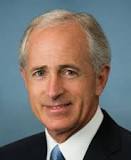
The Committee Chair, Bob Corker (Rep., TN) opened by stating that the hearing would focus “on the strategy behind the President’s significant shift in U.S. policy towards Cuba.” Even though this shift “has been welcomed in Latin America and the Caribbean . . . significant differences of opinion exist in the [U.S.] over the extent to which this change in policy will advance U.S. interests and improve circumstances for the Cuban people.”
Therefore, according to Corker, the strategic issue was “how our nation can best engage strategically with the region and beyond to help Cuba rejoin the mainstream of the Americas and offer its citizens the same rights and freedoms enjoyed by citizens of other countries in the region.”
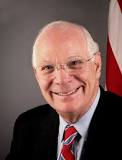
The Ranking Member of the Committee, Senator Ben Cardin (Dem., MD), stated, “The President’s action [on December 17th] brought with it a new opportunity to forge a bilateral relationship that will strengthen our efforts to advance and defend U.S. national interests, and will allow our government and our citizens to expand support for the Cuban people. Today’s hearing provides an important opportunity to review the advances achieved under the Administration’s new Cuba policy and to understand the strategy for moving forward. Without a doubt, this is a complicated process and it will take time to achieve the progress we want to see.”
“[W]e all stand together in our aspirations to see the Cuban people have the opportunity to build a society where human rights and fundamental freedoms are respected, where democratic values and political pluralism are tolerated, and where individuals can work unobstructed to improve their living conditions. We also share concerns about critical issues, such as the Cuban government’s ongoing abuse of human rights and the presence of American fugitives in Cuba, especially those wanted for the murder of U.S. law enforcement officers.”
“But, the central question is: how can we best advance these aspirations while also addressing these concerns? It goes without saying that our previous policy did not achieve the progress that we wanted to see, and so a new approach is needed.”
“President Obama has laid out a new path based on the belief that principled engagement will bring more results. I think that this is the right path for the following reasons:
“First, for far too long, the Cuban government has used U.S. policy as an excuse to justify its shortcomings and the hardships the Cuban people face. The Cuban government also has exploited U.S. policy for diplomatic gains, focusing international debate about what the U.S. should do, rather than about what Cuba needs to do to better provide for its citizens.”
“Second, despite differences we may have with a government, our foreign policy should always endeavor to support that country’s people to the greatest degree possible. Our disagreements with the Cuban government are well known and many. But, over time, we have allowed those disagreements to get in the way of developing a strategy that utilizes all of our resources to empower the people of Cuba.”
“I have no doubt that the dynamism of American society will make a positive contribution to empowering the Cuban people and provide them with the information they need to build the future of their country.”
“Third, the Administration’s new Cuba policy will provide the U.S., and especially our diplomats, with new tools to engage directly with the Cuban government to have principled and frank discussions about the issues we disagree about and how we might work together better on issues of common interest.”
Roberta Jacobson, Assistant Secretary of State for Western Hemisphere Affairs, testified, “[W]e have begun to see the Administration’s new approach to Cuba providing space for other nations in the hemisphere and around the world to focus on promoting respect for human rights and fundamental freedoms in Cuba and elsewhere in the region. This was illustrated at the Summit of the Americas in Panama last April. Engagement by the President and the Secretary at the Summit re-invigorated our momentum on a variety of issues.”
“Our new approach has drawn greater attention to the potential for greater political and economic freedom for the Cuban people and the gap between Cuba and other countries in the Hemisphere. More Americans are travelling to Cuba, getting past the rhetoric, meeting Cubans, and building shared understanding between our people. We have seen practical cooperation in our official dialogues with Cuba on issues in our national interest like maritime and aviation safety, telecommunications, and environmental cooperation.
“Our future discussions on law enforcement cooperation, coupled with the ongoing migration talks, will expand the avenues available to seek the return of American fugitives from justice as well as the return of Cubans residing illegally in the United States. The same is true for future talks on human rights and settling American claims for expropriated properties. Most importantly, the President’s new approach makes clear that the United States can no longer be blamed as an obstacle to progress on things like access to information and connecting Cubans to the world.”
Nevertheless, “significant differences remain between our two governments. We continue to raise our concerns regarding democracy, human rights, and freedom of expression. And we will seek to engage with all Cubans to gain their perspectives on the best way forward for the country.”
“Our policy towards Cuba is based on a clear-eyed strategy that empowers the Cuban people to determine their own future by creating new economic opportunities and increasing their contact with the outside world. That is why we made it easier for Cuban-Americans to travel and send remittances to their families in Cuba, and opened new pathways for academic, religious, and people-to-people exchanges. These changes create powerful new connections between our two countries and help the nascent private sector in Cuba, which is already an agent of positive change on the island. The steps we have implemented build on this foundation by increasing authorized travel, authorized commerce, and the flow of information to, from, and within Cuba.”
“Our new approach emphasizes targeted forms of commerce that offer economic opportunity to independent Cuban entrepreneurs or, like expanded communications, benefit all Cubans. Comprehensive changes in our economic relationship will require Congressional action to lift the embargo. The President has urged Congress to begin that effort. In the meantime, we are using available policy tools to promote a prosperous, democratic, and stable Cuba.”
“In a short period of time, we have already started to see U.S. enterprises seizing the new opportunities. The regulatory changes we announced are intended to increase the financial and material resources available to the Cuban people and the emerging Cuban private sector. They also enable U.S. companies to offer expanded telecommunications and internet services in ways that could help Cuban civil society members advance their aspirations and collectively become more prosperous.”
“Regarding the Administration’s decision to rescind Cuba’s designation as a state sponsor of terrorism, as President Obama said, ‘throughout this process, our emphasis has been on the facts.’ . . . We will continue to have differences with the Cuban government, but our concerns over a wide range of Cuba’s policies and actions do not relate to any of the criteria relevant to that designation.”
“While progress has been made in our efforts to reestablish diplomatic relations, there is more to do to ensure a future U.S. Embassy will be able to function more like other diplomatic missions elsewhere in the world and foreign diplomatic missions in Cuba. Even today, under challenging circumstances, our diplomats do their very best to represent the interests and values of the United States, just as we do in hundreds of places around the world. Our engagement with the broadest range of Cubans will expand once we establish diplomatic relations with Cuba.”
State Department Counselor Thomas A. Shannon, Jr. testified, “My purpose today is to address the regional context in which . . . [the U.S. Cuba] policy is unfolding, and to lay out some of the strategic dimensions of our diplomacy.”
“The decision to engage with Cuba and seek normalization of our bilateral relationship attempts to create a new terrain on which to pursue a future that meets our interests and corresponds to our values. Our commitment to democracy and human rights, and our desire and hope that the Cuban people will know the benefits of liberty and become the sovereigns of their own destiny, is no less for our action.”
“The President has been clear about the commitment in our Cuba policy to our enduring and fundamental principles of self-government and individual liberty. However, he has also been clear about our inability to effect significant change in Cuba acting alone across so many decades. Instead, he determined that our efforts would be more effective if we could position Cuba squarely within an inter-American system that recognizes democracy as a right that belongs to all the peoples of our Hemisphere, believes that democracy is essential to the political, economic, and social development of our peoples, and has the juridical instruments, treaties, and agreements to give shape, form, and weight to these commitments. It was our determination that this kind of environment would be the most propitious to support the only legitimate agent of peaceful and enduring political change in Cuba: the Cuban people.”
“The Americas, and specifically Latin America, has anticipated many of the events that are shaping our world. It is a region that has moved largely from authoritarian to democratic government, from closed to open economies, from exclusive to inclusive societies, from autarkical development to regional integration, and from isolation to globalization.”
“Latin America is the first developing region of the world to commit itself explicitly to democratic governance through the Inter-American Democratic Charter, the first to build a democratic model of development, and the first to establish regional structures to promote and protect human rights.”
“While creating a broad base of shared political values, Latin America has also constructed shared economic understandings and a commitment by many of the most successful countries in the Hemisphere to market economies and free trade. In the process, it has built sub-regional integration and political dialogue through organizations like the Common Market of the South, the Andean Community, the Union of South American Nations, and the Central American Integration System, all the while preserving larger hemispheric institutions, such as the Organization of American States and the Summit of the Americas process, that connect Latin America to the Caribbean and North America.”
“As Latin America advances into the 21st century, it is undergoing a second generation of change. Politically, it has consolidated democratic government and is strengthening democratic states and societies. This has opened up political institutions to new voices and actors, deepening the representativeness of many Latin American governments and challenging traditional elites and interests. In some countries, weak democratic institutions have not been able to contain the social energy unlocked by democratization, leading to populism and political polarization as groups struggle for control of the state. As troubling as this phenomenon can be, it does not define the democratization of the region but instead presents a challenge for the region to show how it can address such incidents through the organizations and institutional mechanisms it has created.”
“Economically, Latin America is building innovative integration mechanisms such as the Pacific Alliance, and reaching into Asia and North America to find new and important economic partners. We have FTAs with 12 countries in the Hemisphere, and the continued globalization of Latin America is driven not only by the regions abundant commodities, especially food and energy, but also by growing middle classes that have created attractive markets for manufactured goods and services.”
“The profound changes unleashed in Latin America show clearly that democracy and markets can deliver economic development and address longstanding social inequities such as poverty, inequality, and social exclusion. In effect, Latin America has used democracy and markets to launch peaceful social revolutions that are transforming many countries in important and long-lasting ways. Our ability to promote profound and dramatic change in Latin America is an example of what the United States can accomplish through diplomacy and engagement.”
“If we accomplished such a profound transformation in our Hemisphere through engagement, why not try the same approach with Cuba? And better yet, why not try it in partnership with countries and institutions that are now prepared to work with us because of the President’s new policy?”
“Cuba today finds itself part of a dynamic, vibrant region where transformative change has been the watchword for several decades. And it finds itself in a region where the momentum of that change will continue to reshape political, economic, and social landscapes. In such an environment, the Cuban people will find many models and partners from which to learn and choose. We should be one of those models and partners.”
Questioning Assistant Secretary Jacobson and Counselor Shannon
Of the 11 Committee members in attendance, six made comments and asked questions supportive of U.S.-Cuba reconciliation: Ben Cardin (Dem., MD), Barbara Boxer (Dem., CA), Tom Udall (Dem., NM), Tim Kaine (Dem., VA), Edward Markey (Dem., MA) and Jeff Flake (Rep., AZ).
With Chairman Corker being judiciously noncommittal in his comments, the other four in attendance were hostile to the reconciliation: Bob Menendez (Dem., NJ), Marco Rubio (Rep., FL), Ron Johnson (Rep., WI) and David Perdue (Rep., GA).
In response to Senator Corker’s opening question about whether to date the U.S. had obtained any changes in Cuba policies, Jacobson implicitly said none by emphasizing that the U.S. actions to increase the ability of U.S. nationals to travel to Cuba and to send remittances to Cubans were assisting the latters’ ability to form businesses and over time to be agents for change. The same was true, she said, of new U.S. policies to encourage U.S. businesses to export telecommunications equipment to the island. Shannon added that the new U.S. policies helped the U.S. with other countries in Latin America, especially within the Organization of the American States (OAS) and the Summit of the Americas.
Jacobson also mentioned the OAS and the United Nations as well as continued U.S. annual reports about human rights as means the U.S. would use to assess whether Cuba makes improvements in human rights. She also reiterated her point about U.S. travel and investment in Cuba as instruments for aiding such improvements, all in response to a question from Senator Rubio.
Rubio also pressed Jacobson to concede that the U.S. and Cuba had different notions of human rights. She did so with respect to free speech, peaceful assembly and elections, but she did not point out the U.S.-Cuba agreement on many theoretical issues of human rights as discussed in a prior post.
Another major Rubio argument was increased American travel to Cuba merely benefited the Cuban government and military, which owned, in whole or in part, hotels and car rental companies. The amount of such travel to Cuban bed and breakfasts in private homes was insignificant and, in any event, such private establishments had to pay big fees to the government for such businesses. Moreover, Rubio continued, many of these hotels and other properties had been owned by Americans and others and stolen by the Cuban government. Therefore, Rubio said, the U.S. should not be promoting such increased travel.
Senator Boxer responded to this argument by pointing out that the U.S. permits travel to Viet Nam, China and Russia where hotels and other businesses are owned by the state. She also pointed out that direct interactions between U.S. and Cuban citizens should encourage the latter to want more rights. In addition, Boxer said, the rapprochement was improving cooperation regarding Cuba for the U.S. from Europe and others in this Hemisphere. An example was Panama’s reaction to Cuban efforts to suppress free speech at the recent Summit of the Americas in that country.
However, I was surprised that no one responded to Rubio’s argument about hotels that had been stolen by the Cuban government. Indeed, there are substantial damage claims against the Cuban government for its uncompensated expropriation of property, and this is one of the claims the U.S. now is asserting against Cuba, and a prior post argued for submitting these and other damage claims by both countries to an international arbitration.
Senator Johnson focused on provisions of the Libertad Act (a/k/a the Helms-Burton Act) imposing preconditions on U.S. relaxing sanctions against Cuba, presumably as a predicate for an argument that President Obama’s easing of certain sanctions was unauthorized and, therefore, illegal. Jacobson pointed out, however, that other laws had exceptions to sanctions and provided authority to the President to do what he has done. Moreover, she said, the Administration had asked Congress to enact legislation repealing the U.S. embargo of the island, including the Libertad Act.
Senator Menendez, a Cuban-American and a vigorous opponent of the reconciliation, barely concealed his anger over the change in U.S. policies. Since December 17th, he argued, there has been no improvement in Cuban human rights, and in fact there has been a deterioration on this subject.
Senator Perdue reiterated Menendez’ argument about human rights and asserted that Cuba was still a state supporter of terrorism. It allegedly was helping Islamist terrorists, had shipped arms to North Korea that were intercepted in Panama and had another ship with explosives that on February 28, 2015, was intercepted by Colombia. Counselor Shannon pointed out that this Colombian government action was an example of the increased cooperation the U.S. now is obtaining from others in Latin America as a result of the new U.S. policies about Cuba.
Senator Kaine stated that there are roughly 600 bilateral relations in the Western Hemisphere and that the only one without normal diplomatic relations is U.S.-Cuba. In addition, there are no inter-state wars in the Hemisphere and the only civil war is in Colombia, which is the subject of peace negotiations now being held in, and aided by, Cuba. Counselor Shannon concurred, saying this was a remarkable achievement for the Hemisphere going along with its economic and democratic improvements.
Conclusion
This hearing, in my opinion, did not really provide any new information about the issues or the positions of the participants, which probably why it was not covered in U.S. news media.[2]
The hearing and the lack of news coverage underscored the importance of U.S. citizens who support the reconciliation efforts to convey their opinions to their Senators and Representatives and of the formation and actions of groups like the U.S. Agricultural Coalition for Cuba and Engage Cuba Coalition.
[1] This post is based upon a video of the hearing and on the embedded citations to the opening statements of Senators Corker and Cardin, the testimony of Assistant Secretary Jacobson and Counselor Shannon and to some of the comments by Senators Rubio, Menendez and Perdue.
May 29th is the date for the official U.S. rescission of its designation of Cuba as a “State Sponsor of Terrorism.” This was covered in a prior post.
In anticipation of that rescission, Cuba’s President, Raúl Castro on May 12th said to journalists, “This sort of unjust accusation [sponsor of terrorism] is about to be lifted, and we’ll be able to name ambassadors.” [1]
Later that same day the U.S. State Department said, “an exchange of ambassadors would be a logical step . . . only once we re-establish diplomatic relations. We do not have a fixed time for that. We are still in negotiations . . . with Cuban authorities about re-establishing diplomatic relations.”
The latter statement confirms there are still unresolved issues for such normalization.
The main one appears to be whether or not U.S. diplomats in Cuba would be free to travel wherever and whenever they wanted and Cuba’s complaints that U.S. diplomats having meetings with Cuban dissidents amounted to meddling in Cuba’s internal affairs in violation of international treaties on diplomatic relations.
Indeed, yesterday President Castro stated he had told President Obama that such diplomatic encounters remained Cuba’s chief concern about establishing normal relations, particularly programs at the American Interests Section in Havana to assist independent journalists. In Castro’s own words (English translation), “I told . . . President Obama . . . that . . . I was most worried about . . . they continue to do illegal things. For example, graduating independent journalists. [The U.S. gives Cuban journalists] . . . I don’t know how many classes, on screen, in teleconferences from the United States. I don’t know if they give them a diploma and of course they give them their corresponding monthly payment.”
The U.S. Interests Section does offer free classes in journalism, English and information technology, but students are not paid by the U.S.
Another unresolved issue for establishment of normal diplomatic relations is the U.S. insistence that it must be allowed to bring secure shipping containers into the country, in accordance with global diplomatic protocols.
Castro in his remarks to journalists yesterday also mentioned that the U.S. embargo or blockade “must be removed” [2] and the Guantanamo Naval Base, which was leased after the U.S. had taken over Cuba in the early 20th century, “should be returned to Cuba.” [3] Neither of these will happen immediately, and the latter may never happen.
Cuban negotiators are due to arrive in Washington as soon as this week for a fourth round of talks. Presumably at least some of these issues will be at the top of the agenda.
Conclusion
Jeffrey DeLaurentis
Once the U.S. and Cuba resolve these issues, each country first would change the names on their respective buildings from “interests section” to “embassy.” And the U.S. presumably would change the title of Jeffrey DeLaurentis, the current “Head of Mission” of the U.S. Interests Section in Havana to “Charge d’Affaires” or “Acting Ambassador.” (He already has the title of “Ambassador” from the previous Senate confirmation of his appointment as Alternate Representative for Special Political Affairs at the U.S. Mission to the United Nations.)
President Obama at some point would appoint someone to be the U.S. Ambassador to Cuba, but under Article II, Section 2(2) of the U.S. Constitution, the U.S. Senate, by a simple majority vote, has to give its “advice and consent” to such an appointment. Such a vote would be taken after hearings and consideration of the appointment by the U.S. Senate Foreign Relations Committee, currently chaired by Senator Bob Corker (Rep., TN). Two members of the Committee, both Cuban-Americans, Marco Rubio (Rep., FL) and Bob Menendez (Dem., NJ), are ardent foes of U.S.-Cuba reconciliation and are potential problems for such confirmation. And Rubio is the Chair of the Subcommittee on Western Hemisphere, Transnational Crime, Civilian Security, Democracy, Human Rights, and Global Women’s Issues, which might consider the nomination before the full Committee does so.
[2] Prior posts discussed bills to end the embargo in the U.S. House of Representatives and the U.S. Senate that were introduced in this Session of Congress. According to the Library of Congress, as of May 12th there had been no committee action on any of these bills.
[3] An earlier post reviewed issues relating to Guantanamo Bay while another post looked at whether Cuba had a legal right to terminate its lease of the Guantanamo territory..
Last month two groups of religious leaders and Pope Francis demonstrated their commitment to U.S.-Cuba reconciliation.
World Council of Churches Group
On April 10th the World Council of Churches, the Cuban Council of Churches, the Latin American Council of Churches and the National Council of Churches USA issued a statement that began with this Biblical quotation: “God shall judge between many peoples, and shall arbitrate between strong nations far away; they shall beat their swords into plowshares, and their spears into pruning hooks; nation shall not lift up sword against nation, neither shall they learn war any more.” (Micah 4:3).
This statement then expressed “thanks, appreciation, and encouragement for the ongoing negotiations of the governments of Cuba and the United States of America to normalize relations.” The statement also urged the countries “to have conversations in a spirit of mutual respect and equality that will accelerate the process of normalization” and for the U.S. “to remove Cuba from the list of nations sponsoring terrorism, and to terminate the embargo that has created so much suffering in Cuba.”
National Council of Churches USA Group
On April 27th 30 U.S. religious leaders released a public letter to Members of Congress voicing their support for ending the U.S. embargo and all remaining restrictions on U.S. travel to the island and for restoration of “full diplomatic relations, greater opportunities for religious and cultural travel, loosened restrictions on remittances and commodities, Cuba’s removal from the list of state sponsors of terrorism, more trade and new opportunities to support Cuba’s private sector.”This letter was informed by “many decades” of U.S. and Cuban churches having “worked with one another toward common goals” and by strengthening their “relationships . . . as religious freedom in Cuba has improved and church membership has grown.”
The Christian churches and groups on the letter besides the National Council of Churches USA included the American Baptist Church; American Friends Service Committee; Christian Church (Disciples of Christ); Church of the Brethren; Church World Service; Episcopal Church; Evangelical Lutheran Church in America; Jesuit Conference of Canada and U.S.; Maryknoll Fathers, Brothers, Sisters and Missioners; NETWORK (National Catholic Social Justice Lobby); Presbyterian Church (USA); Unitarian Universalists Association; United Church of Christ; and United Methodist Church.
The letter also was signed by the Cuba America Jewish Mission and by the Islamic Society of North America.
Pope Francis previously had planned a trip to the U.S. this September, and on April 22nd, the Vatican announced the Pope also will visit Cuba just before going to the U.S.. Given the Pope’s significant involvement in helping the two countries to embark on the path of reconciliation last December 17th, he is expected to reiterate his Holiness’ prayers for U.S.-Cuba peace and reconciliation.
Orlando Márquez, a spokesman for the Havana Archdiocese of the Roman Catholic Church, celebrated the announcement as “great news. It has been a special time in our country since the presidents of Cuba and the United States announced the process of re-establishing relations, and both of them thanked Pope Francis for his efforts to move the process forward. That is well known in Cuba, and the Cuban people are grateful.”
On April 27, Cuba’s President Raúl Castro had a “cordial” meeting in Havana with Cardinal Beniamino Stella, the Prefect of the Congregation for the Clergy of the Roman Catholic Church. They discussed the upcoming visit by the Pope, and the Cardinal said he was “confident” the papal visit will help improve the relationship between Cuba and the U.S.
During the Pope’s visit to the U.S. he is expected to meet with President Obama and to address a joint session of the U.S. Congress.
Conclusion
Praise God for these religious leaders demonstration of support for this historic reconciliation!
The Committee Chair, U.S. Senator Pat Roberts (Rep., KS), opened the hearing by stating, “At the beginning of this Congress, I was hopeful that trade would be one area where we could work across the aisle to find agreement. I am still hopeful that is the case. . . . International trade of American agriculture products is critical…critical to the nation’s economy and critical to our Kansas farmers and ranchers. I have long fought to eliminate barriers to trade, and I believe that we should continue to work towards new market access opportunities for our agriculture products.”
“The United States and Cuba have a long history full of contention and instability. There is no shortage of opinion from members of Congress about the relationship between our two countries, both present and future. Some are concerned about human rights, others about socioeconomic ideology. But those concerns are not what this committee will focus on this morning. Today we are here to discuss the role of agriculture – opportunities and challenges – in Cuba.”
“This is not an issue that we are going to be able to fix overnight. It will take efforts in addition to bills in Congress to truly normalize trade with Cuba. The decisions that are made regarding increased trade with Cuba must be made carefully.”
“Four months ago the President announced a major shift in U.S. policy towards Cuba. It is my hope that in the future, the President will work with Congress to determine the best path forward. Foreign policy does not happen in a vacuum. We have to take a realistic approach and work out a step-by-step plan towards lifting the embargo. This is a goal that should include Congress.”
“Today we will hear from an impressive panel of experts, from the regulators responsible for writing our policies toward Cuba, to the producers who seek to grow the market for their products. I understand that, like myself, many of our witnesses here have traveled to Cuba to see first-hand what challenges and opportunities exist.”
“Agriculture has long been used as a tool – not a weapon – for peace and stability. It is my hope that Cuba will embrace the practices of free trade, enterprise and commerce, so that both countries will gain from increased relations.”
“Earlier this year, the U.S. Agriculture Coalition for Cuba was launched. They have shared a statement and additional information in support of our work today, [which was] entered into the record.”
Senator Debbie Stabenow (Dem., MI), the Ranking Committee Member, said, “Improving trade with Cuba represents not only a great opportunity for America’s farmers, ranchers, and manufacturers, but a meaningful way to help rebuild trust between our nations. After more than 50 years of stalemate, it’s time for a new policy on Cuba.”
“When I visited Cuba earlier this year – just days after President eased some trade restrictions – I saw firsthand the eagerness of Cubans who want to develop a more effective relationship with the [U.S.] But we can only get there if we begin to take meaningful steps to soften many of the barriers that exist between us.”
“And America’s farmers and ranchers are uniquely positioned to lead the way. Consider this – in 2014, the U.S. exported just over $290 million in agricultural goods to Cuba. That’s a good start, but for a country only 90 miles off our coast, we can do much more. Cuba’s own import agency estimates that it will receive approximately $2.2 billion (in U.S. dollars) worth of food and agricultural products this year alone.”
“That type of economic potential deserves a chance to succeed – and is one reason why many of the largest producer groups, trade associations, and companies from within agriculture have come together to push for increased engagement.”
“Many on this Committee have pushed for increased engagement and have taken the opportunity to visit Cuba in recent months. I’d like to recognize Senators Leahy and Klobuchar, as well as Senator Boozman and Heitkamp, for their bipartisan leadership on this issue.”
“The commitment to democratic ideas and human rights we share as Americans are best realized through engagement. Our bedrock principles accompany every product farmers and ranchers send to Cuba.”
“Last week’s action by the President [in rescinding the designation of Cuba as a “state sponsor of terrorism”] is a step forward toward in normalizing our relationship and will test the commitment of the Cuban government to this process.”
“But even while we are making significant progress in rebuilding our relationship with Cuba – the policies governing trade between our countries are not yet designed to allow a steady flow of goods and services. We must find a path forward that allows U.S. financial institutions to safely and securely work with Cuban purchasers, including the extension of lines of credit. And we should work to authorize a greater range of goods, services, and supplies for export to Cuba. These measures not only make good business sense – they also will help build Cuba’s agricultural capacity and make the island a better trading partner in the long run.”
The witnesses at the hearing were the following: (1) The Honorable Michael T. Scuse, Under Secretary, Farm and Foreign Agriculture Services, U.S. Department of Agriculture; (2) Mr. Matthew Borman, Deputy Assistant Secretary, Bureau of Industry and Security, U.S. Department of Commerce; (3) Mr. John Smith, Acting Director, Office of Foreign Assets Control, U.S. Department of the Treasury; (4) Mr. Michael V. Beall, President & CEO, National Cooperative Business Association; (5) Mr. Terry Harris, Senior Vice President, Marketing and Risk Management, Riceland Foods; (6) Mr. Ralph Kaehler, Farmer and Owner, K-LER Cattle Company, St. Charles , MN; (7) Mr. Doug Keesling, Fifth Generation Owner, Keesling Farms, Kansas Wheat, Chase , KS; and (8) Dr. C. Parr Rosson III, Professor & Department Head, Department of Agriculture Economics, Texas A&M University.
Witness Ralph Kaehler
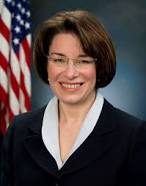
Senator Amy Klobuchar
Minnesota’s Senator Amy Klobuchar, who is a member of the Committee and the author of the Freedom to Export to Cuba Act (S.491) ending the U.S. embargo of Cuba, introduced Ralph Kaehler, whose family has been operating a livestock, row crop, and canning vegetable farm in Minnesota for nearly 130 years.
The Senator prefaced her introduction with this statement: “For too long, export and travel restrictions have prevented American farmers and ranchers from seeking opportunities in Cuba. That is why I have introduced bipartisan legislation to lift the trade embargo on Cuba, and this hearing allowed us to focus on how we can ensure that our farmers and ranchers benefit from normalized relations between our two countries.”
Mr. Kaehler testified that his farm was “an exhibitor in the First U.S./Cuba Food and Agriculture Exposition [in Havana] in 2002.” It “was the only one with live animals— affectionately known as the ‘Cuban Ark’ . . . to exhibit the diversity of U.S. livestock producers, and to introduce Cuba to the typical USA farm family.”
“Since then, the Kaehler Family has led over 10 trade delegations to Cuba. These missions have included producers from seven different states and a bipartisan mix of state lawmakers and officials. To date, some of the most successful exports to Cuba we have facilitated include shipments of livestock, dried distillers grains, powdered milk, animal milk replacer, and texturized calf feed.”
“Given the opportunity, U.S. farmers do well in Cuba. We have a significant advantage of shorter shipping over Europe, South America, Asia, and other major exporters. In addition, Cuba can take advantage of U.S. rail container service and sizing options, which also brings significant benefits to smaller privately owned businesses like ours. On top of all this, the U.S. produces a wide variety of affordable and safe food products that Cubans want to eat.”
“Unfortunately, some of the policies currently in place diminish the natural advantages American agriculture enjoys over its competitors. For instance, requirements for using third country banks for financing adds a lot of paperwork, time, and personalities to every transaction. Coupled with a restrictive cash‐in advance shipping policy . . . there is a very small margin for error before a shipper faces demurrage fees. As a family operation trying to build our business through exports, this self‐inflicted inefficiency can be tough to manage.”
Mr. Kaehler then made three specific recommendations to Congress. “First, . . . improve the trade financing rules for Cuba. . . . Second, . . . small firms like ours . . . need marketing support and assistance [from USDA] to help support our companies and figure out exactly what’s going on in markets abroad. . . . [Third,] I hope that Congress will expand the universe of people involved in U.S.‐Cuba trade by allowing a greater variety of goods and services to be traded.”
[1] A quick examination of the official websites of the Committee’s 20 members reveals that seven have made statements favoring at least some aspects of U.S.-Cuba reconciliation (Boozman (Rep., AK), Brown (Dem., OH), Heitkamp (Dem., ND), Hoeven (Rep., ND), Klobuchar (Dem., MN), Leahy (Dem., VT) and Stabenow (Dem., MI)). Only two have negative statements about that reconciliation (Grassley (Rep., IA) and Perdue (Rep., GA)). The other eleven members‘ websites do not reveal any position on Cuba (Bennet (Dem., CO), Casey (Dem., PA), Cochran (Rep., MS), Donnelly (Dem., IN), Ernst (Rep., IA), Gillibrand (Dem., NY), McConnell (Rep., KY), Roberts (Rep., KS), Sasse (Rep., NE), Thune (Rep., SD) and Tillis (Rep., NC)). A more thorough examination of the records of the last 11 would probably uncover other indications of their positions on reconciliation with Cuba.
The Council of the Americas (COA) [1] and the Americas Society (AS) [2] previously announced their support of the December 17th announcement of the U.S.-Cuba rapprochement and of the more recent presidential rescission of the U.S. designation of Cuba as a “State Sponsor of Terrorism.”
On April 21st COA and AS held their 45th annual Washington Conference at the U.S. Department of State. The theme this year was “Integration & Innovation: The Americas Agenda.” One of its speakers was U.S. Secretary of State John Kerry.
Secretary Kerry quoted President Obama’s speech at the recent Summit of the Americas: the U.S. is engaged in “a new chapter of engagement in this region. I believed that our nations had to break free from the old arguments, the old grievances that had too often trapped us in the past, that we had a shared responsibility to look to the future and to think and act in fresh ways. [There is] . . . a new era of cooperation between our countries, as equal partners, based on mutual interest and mutual respect.” This commitment was being met, Kerry said, –“and not solely because of our new policy towards Cuba.”
Therefore, stated Kerry, “what we need is . . . a common agenda for the shared progress, a blueprint for the next steps that will help to ensure the democratic and economic promise in the region is actually fulfilled. That is why the [U.S.] is engaged throughout the Americas on priorities that our partner governments and its citizens themselves have identified as important. These priorities fall into three broad categories. They include the building blocks of shared prosperity – education, innovation, trade, investment. They include energy and environmental security. And they include reconciliation and strengthening democratic and inter-American institutions across the board.”
Kerry specifically addressed Cuba. He said, “In December, President Obama made the courageous decision to update our Cuba policy, which was doing far more to isolate [U.S.] from our friends in the hemisphere than it was to isolate Havana. In Panama, the President and I met for hours with our Cuban counterparts, the first such formal meetings since the 1950s. And we’re committed to moving forward on the path to normalized relations. This new course is based not on a leap of faith, but on a conviction that the best way to promote U.S. interests and values while also helping to bring greater freedom and opportunity to the Cuban people is exactly what we are doing.”
Kerry also said the “same principle applies to Venezuela. In Panama, President Obama spoke briefly with President Maduro, and a week earlier, State Department Counselor Tom Shannon was in Caracas at the invitation of the government. It is no secret that relations between our two countries have been severely strained in recent years. But I began my tenure as Secretary with a long conversation with the then-foreign minister of Venezuela in an effort to promote a more productive relationship, and the [U.S.] remains open to further addressing our differences and attempting to find areas of common ground.”
Another speaker at the Conference was New Jersey Governor Chris Christie, who said he is opposed to the new U.S. rapprochement with Cuba, describing the Castro government as a ”dictatorial family regime that denies freedoms to their people and is a sponsor of terrorism.” He spoke of the Cuban government’s asylum of Assata Shakur, who was convicted of murdering a New Jersey state trooper in 1973. Stating that he is not opposed on principle to welcoming Cuba back into the “family of civilized nations, there is still a ways to go for that to happen.”
[1] The COA says it is, “the premier international business organization whose members share a common commitment to economic and social development, open markets, the rule of law, and democracy throughout the Western Hemisphere. The Council’s membership consists of leading international companies representing a broad spectrum of sectors, including banking and finance, consulting services, consumer products, energy and mining, manufacturing, media, technology, and transportation.”
[2] The COA is affiliated with the AS, which describes itself as “the premier forum dedicated to education, debate, and dialogue in the Americas. Its mission is to foster an understanding of the contemporary political, social, and economic issues confronting Latin America, the Caribbean, and Canada, and to increase public awareness and appreciation of the diverse cultural heritage of the Americas and the importance of the inter-American relationship.” The COA and AS have a Cuba Working Group, which includes “corporate leaders from the worlds of banking, financial services, energy, telecommunications, hospitality, pharmaceuticals, and law. Working group meetings look at the steps companies can take under current U.S. restrictions to pre-position themselves for future investment. This effort has produced a series of papers on regulations and laws affecting U.S. business activity under the U.S. embargo and in Cuba.”
On April 23 U.S. Representative Ileana Ros-Lehtinen (Rep., FL), a Cuban-American, announced that congressional opponents of U.S.-Cuba reconciliation reluctantly had accepted President Obama’s decision to rescind the U.S. designation of Cuba as a “State Sponsor of Terrorism” that was the subject of a prior post. [1]
She said that she and 35 other representatives had been preparing to draft a resolution opposing the rescission before a joint decision was made not to go forward. The reason was their conclusion that a “joint resolution to repeal President Obama’s de-listing of Cuba from the state sponsor of terrorism list would not have the far-ranging implications that many had assumed it would.” Legally, Ros-Lehtinen said, Congress cannot prevent the White House from taking Cuba off the list because not all the statutes that govern designation of a country as a state sponsor of terrorism provide a way for Congress to block a de-listing.
The Congressional Research Service and the State Department, on the other hand, earlier had said a joint resolution by both houses could block the rescission, provided the resolution withstood a veto by Mr. Obama.
Several analysts had cast doubt on whether there was enough support in Congress to try to block Mr. Obama’s decision. Indeed, Christopher Sabatini, a scholar of U.S.-Cuba relations at Columbia University, suggested that the Republicans’ legal review provided cover for the possibility that the votes to oppose rescission were not there.
“This was the hard-liners’ white flag,” Mr. Sabatini said. “They had been planning to present a piece of legislation in the allotted 45 days to overturn the removal of Cuba from the list, but couldn’t get a majority. Rather than risk looking even more isolated, they abandoned it.”
Nevertheless, according to Ros-Lehtinen, she and the other 35 representatives “are concentrating our efforts on promoting legislation that will hold the Castro regime accountable for its nefarious activities. We plan to file broader legislation regarding Cuba that will help ensure that U.S. national security is protected and that our country continues to advocate for human rights on the island. Removing Cuba from the State Sponsor of Terrorism list does not truly lift significant sanctions as many sanctions remain codified in law.”
A week earlier just such a bill, the Cuban Human Rights Act of 2015 (H.R.1782) was introduced in the House by Rep. Chris Smith (Rep., NJ), the chair of the House global human rights subcommittee; the cosponsors (as of April 23) are Ileana Ros-Lehtinen (Rep.,FL), Mario Diaz-Balart (Rep., FL), Albio Sires (Dem.,NJ), Carlos Curbelo (Rep., FL), Leonard Lance (Rep., NJ),Tom MacArthur (Rep., NJ), Mark Meadows (Rep., NC), Rodney Frelinghuysen (Rep., NJ), Frank LoBiondo (Rep., NJ), Peter King (Rep., NY) and Dana Rohrsbacher (Rep., CA).
According to the official summary, H.R.1782 expresses the sense of Congress that the U.S.-Cuba relationship should not be changed, nor should any federal law or regulation be amended, until the government of Cuba ceases violating the human rights of the people of Cuba; the U.S. should overcome the jamming of radio and television signals of the Radio y Television Marti by the government of Cuba, and the Broadcasting Board of Governors should not cut staffing, funding, or broadcast hours for Radio y Television Marti; if certain human rights conditions are not met the U.S. Permanent Representative to the U.N. should oppose and encourage other U.N. members to oppose Cuba’s continued membership on the U.N. Human Rights Council; and the annual Stae Department trafficking-victims report to Congress should include an in-depth analysis of the facilitation of or involvement in severe forms of human trafficking by any official of the government of Cuba or of companies wholly or partially owned by the government of Cuba.
On the other hand, the summary says the bill may not be construed as: prohibiting the donation of food to nongovernmental organizations or individuals in Cuba; restricting the export of medicine or medical supplies to Cuba, or abrogating any requirement that such exports be verified in conformity with the Cuban Democracy Act of 1992 or any other applicable federal law; or prohibiting or restricting any other form of assistance specified in the Cuban Democracy Act of 1992, including telecommunications, mail, and support for democracy.
 On June 19, 2015, the U.S. Department of State released its “Country Reports on Terrorism 2014.” Such annual reports are required by federal statute to cover the prior calendar year.[1]