A prior post referred to the secret U.S.-Cuba negotiations that resulted in the December 17, 2014, announcements by presidents Obama and Castro that the two countries were embarking on a process of re-establishing diplomatic relations and resolving many issues that have accumulated over the last 50 years. Another post described the involvement of Pope Francis in these negotiations.
Now Reuters reports the following new details about these subjects.
Originally the breakthrough was thought to be the result of such secret negotiations over the prior 18 months (or since June 2013). Now, says Reuters, the process really began in December 2012 when President Obama after reelection with 48% of the Cuban-American vote instructed aides to make Cuba a priority and “see how far we could push the envelope,” according to Ben Rhodes, a Deputy National Security Advisor who played a central role in shaping Cuba policy.
The next month, January 2013, Ricardo Zuniga, Obama’s top Latin American adviser, went to Miami and met with a representative of the anti-Castro Cuban American National Foundation and with young Cuban-Americans, the latter of whom helped confirm the waning influence of older Cuban exiles who have traditionally supported the half-century-old embargo.
By April 2013, the White House was ready to proceed with the Cubans by quietly proposing back-channel talks after getting notice that Havana would be receptive. Obama initially froze out the State Department on these developments in part due to concern that its “vested interests” would still be bent on perpetuating a confrontational approach. Even Secretary of State John Kerry was informed of the talks only after it appeared they might be fruitful.
In any event, the secret negotiations started in June 2013 in Ottawa, Canada. The Cubans opened with harangues about the embargo and other perceived wrongs. Rhodes, age 37, responded, “Look I wasn’t even born when this policy was put in place … We want to hear and talk about the future.”
The Cubans in these initial sessions also insisted on an exchange of the remaining three of “The Cuban Five” in U.S. prison for U.S. citizen, Alan Gross, in Cuban prison. Obama refused such a deal because Washington denied Gross was a spy and because Obama did not want a three-for-one trade. As a result by the end of 2013, the negotiations had stalled.
At a January 2014 negotiating session in Toronto, however, the U.S. proposed – to the Cubans’ surprise – Cuba’s releasing Rolando Sarraff, a spy for the U.S. who had been imprisoned in Cuba since 1995, and thereby enabling the U.S. to claim it was a true “spy swap” and giving it political cover. But the Cubans dis not immediately agree to release Sarraff, a cryptographer who Washington says helped it disrupt Cuban spy rings in the U.S.
While the Sarraff proposal was still on the table, but not yet accepted by Cuba, President Obama held a White House meeting in February 2014 with certain lawmakers, including Democratic Senators Patrick Leahy and Dick Durbin. Obama stressed his opposition to a straight Gross-Cuban Three trade, and Durbin “raised the possibility of using the Vatican and the Pope as intermediaries.”
Thereafter Senator Leahy persuaded two unnamed Roman Catholic cardinals to ask Pope Francis to raise Cuba and the prisoners when he was scheduled to hold a private audience with Obama in March.
At that private audience, as reported in a prior post, Francis and Obama did discuss the U.S.-Cuba situation, and the Pope in June sent letters to Obama and Castro urging reconciliation and the prisoner exchange. Francis’ involvement also provided Obama with political coverage against future criticism by Cuban-American Senators Robert Menendez (Dem., NJ) and Marco Rubio (Rep., FL) and others.
In October 2014 (before the U.S. mid-term elections) the deal was finalized in Rome, where the U.S. and Cuban teams met separately with Vatican officials, then all three teams together.
In early December Rhodes and Zuniga met the Cubans again to nail down logistics for the December 17 announcements of prisoner releases, easing of U.S. sanctions, normalization of U.S.-Cuba relations and Cuba’s freeing of 53 political prisoners.
Strobel, Spetalnick & Adams, How Obama Outmaneuvered Hardliners and cut a Cuba Deal, Reuters (Mar. 23, 2015),
Reuters, , N.Y. Times (Mar. 23, 2015), How Obama Outmaneuvered Hardliners and Cut a Cuba Deal
The overwhelming international response to the December 17th announcement of U.S.-Cuba reconciliation has been very positive, especially in Latin America. Future posts will examine the responses in Cuba and the U.S.
Latin American Reactions [1]
Virtually all Latin American countries had been increasingly frustrated with the 50 years of estrangement and hostility between the U.S. and Cuba. According to a historian of the region, Enrique Krauze, “Cuba has been the epicenter of anti-Americanism in modern Latin America” and the Cuban Revolution of 1959 “opened a new cycle of anti-Americanism.”
Now, Krauze continues, the U.S. has renounced its “imperial destiny and recovers much of the moral legitimacy needed to uphold the democratic ideals that led to its foundation (and also of the countries of Latin America).”
The President of Brazil congratulated Raul Castro, Obama and Pope Francis. Similar comments were made by the leaders of Mexico, Peru, Colombia and Nicaragua.
Jose Miguel Insulza, Secretary General of the Organization of American States, the regional forum where Cuba’s seat has been empty since 1962, said Obama’s decision removed a major irritant in Washington’s relations with Latin America. “This ends the attempt to isolate Cuba for so long. Cuba is undertaking a process of economic reforms that will, I hope, lead to political reforms.”.
These reactions were emphasized by U.S. Assistant Secretary of State, Roberta Jacobson, who said, ““Our previous Cuba policy was clearly an irritant and a drag on our policy in the region,”adding that it had caused friction even with countries friendly to Washington. She said that countries “with whom we have significant differences are going to be, let’s say, thrown off their stride by a move like this.”“It removes an excuse for blaming the United States for things,” she added.
The Wall Street Journal reported the day after the announcement of the detente that government officials, diplomats and scholars believe this change has “the potential to redraw political and economic alliances across the hemisphere,” especially with countries like Argentina, Ecuador and others. It will be most difficult for Venezuela, which has held “a long-held animosity toward El Imperio–the empire.”
But the President of Venezuela immediately called the detente a “victory for Fidel and the Cuban people” while also acknowledging President Obama’s “courage” in “perhaps the most important step of his presidency.”
On January 26th the United Nations Economic Commission for Latin America and the Caribbean (ECLAC) [2] applauded the agreement’s making possible Cuba’s attending the Summit of the Americas in Panama this coming April.
European Reactions [3]
On the day after the historic announcement, the European Union released a statement hailing it as a “historic turning point.” It continued, “Today another Wall has started to fall. These moves represent a victory of dialogue over confrontation.”
The leading newspaper of Spain, El Pais, editorialized, “Today, when freedom seems to be calling for an end to the doors of Cuba, Spain must accompany Cubans in their new journey: supporting their political, economic and social modernization, with clarity, consistency and realism; aware of the limits of his diplomatic skills-but place value on the european-dimension and also aware that resetting relations with Cuba, the United States restored its relations with Latin America.”
Positive comments of the change came from leaders of Germany, Italy, France and Spain.
Other International Reactions [4]
Canada, we recall, hosted some of the secret U.S.-Cuba negotiations that resulted in the December 17th announcement of the start of the process of their reconciliation. Afterwards Canada’s Foreign Minister, John Baird, said, “”I agree with this policy. I don’t think previous U.S. policy has been effective. If you flood Cuba with American values, American people, and American investment, it will help transform the country.”
U.N. Secretary General, Ban Ki-moon, said at a press conference on December 17th, “I have been informed in advance by the US Government. This news is very positive. I’d like to thank President Barack Obama of the United States and President Raul Castro for taking this very important step towards normalizing relations. As much of the membership of the United Nations has repeatedly emphasized through General Assembly resolutions during the last many, many years, it is time that Cuba and the United States normalize their bilateral relations. In that regard, I heartily welcome today’s development. I sincerely hope these measures, this announcement will help to expand further the exchanges between the two peoples who have been separated quite a long time. The United Nations stands ready to help both countries to cultivate their good neighbourly relations.”
Conclusion
I would appreciate comments identifying other international reactions.
As was anticipated in the December 17th announcements by presidents Obama and Castro and as we already have seen, the path to lasting reconciliation is not easy for either country. There are many unresolved issues for the two countries over the last 50-plus years.
These words of congratulations from around the world will have to justified by the further negotiations of the two countries. If they fail to resolve these issues, the international reaction will be severe, and if other countries and international organizations believe the U.S. was primarily responsible for such failure, then there could be even worse anti-Americanism unleashed.
[1] Rebussio, Maduro: It is a victory for Fidel and the Cuban people, El Pais (Dec. 17, 2014); Mezzi, Venezuela is left alone, El Pais (Dec. 17, 2014); Anderson, Mynaya & Vyas, Detente Scrambles Political Calculus in Latin America, W.S.J. (Dec. 18, 2014); Assoc. Press, AP Analysis: U.S. Was at Odds With World Over Cuba Policy, N.Y. Times (Dec. 18,2014); Romero & Neuman, Cuba Thaw Lets Rest of Latin America Warm to Washington, N.Y. Times (Dec. 18, 2014); Assoc. Press, Latin America Cheers U.S.-Cuba Rapprochement, N.Y. Times (Dec. 18,2014);Krauze, End of Anti-Americanism?, N.Y. Times (Jan. 7, 2015); ECLAC applauds presence of Cuba in Summit of the Americas, Granma (Jan. 26, 2015)
[2] ECLAC was established by the U.N. in 1948 to contribute to the economic development of the region and to promote its social development. Its 44 members include 11 from Asia (Japan and Republic of Korea), Europe (France, Germany, Italy, Netherlands, Portugal, Spain and United Kingdom) and North America (Canada and U.S.) with historical, economic and cultural ties to the region. In addition, 13 non-independent Caribbean territories are associate members.
[3] Rebussio, Maduro: It is a victory for Fidel and the Cuban people, El Pais (Dec. 17, 2014); Reuters, “Another Wall Falls:’ Europe Hails U.S.-Cuba Breakthrough, N.Y. Times (Dec. 18, 2014); Editorial, With Cuba, El Pais (Dec. 21, 2014).
On the morning of February 3, 2015, the Roman Catholic Church’s commission of cardinals unanimously confirmed the martyrdom of Archbishop Romero and that same afternoon Pope Francis did the same. February 3 is also the day that Romero was named Archbishop of San Salvador in 1977. [1]
The date of the beatification is being determined by the Vatican, but the place will be the Salvador del Mundo (Savior of the World) monument and plaza in San Salvador, the capital of El Salvador.
Super Martyrio, a layman’s blog devoted to the beatification and canonization of Romero, asserts that the determination of Romero’s martyrdom is significant for the following reasons:
Archbishop Romero represents total fidelity to the Gospel and to the Church.
Archbishop Romero is emblematic of the “New Martyrs”.
Archbishop Romero is a model of holiness.
Archbishop Romero is a peacemaker.
Archbishop Romero embodies a coherent Christianity
Archbishop Romero challenges us to be a Church that goes forth into the world.
Archbishop Romero is a guide for the “preferential option for the poor”.
Archbishop Romero challenged all parties to work together for the common good.
Archbishop Romero is a great preacher.
Archbishop Romero is recognized beyond the Church.
Great News! Muchas gracias, Super Martyrio, for your constant and excellent work on this most important cause!
The nine-member Roman Catholic Commission of theologians at the Congregation for the Causes of Saints have given their unanimously positive vote to finding that Archbishop Oscar Romero was murdered “in hatred of the faith,” i.e., he was a martyr.[1]
Now a commission of church cardinals and bishops must approve this finding before it goes to Pope Francis for final approval
If this finding obtains those additional approvals, Romero can be beatified without a finding that a miracle happened through his posthumous intervention. After beatification, Romero will be a candidate for sainthood, for which a finding of a miracle is necessary.
As a Protestant Christian for whom Romero already is a saint, I am pleased with this development.[2]
The U.S. and Cuba are holding two sets of meetings in Havana this week. One involves U.S. Senators and Representatives. The other is a conference of diplomats of the two counties.
This trip is designed to seek clarity from Cubans on what they envision normalization to look like, to develop a sense of what Cuba and the U.S. are prepared to do to make a constructive relationship possible, to impress upon Cuban leaders the importance of concrete results and positive momentum and to convey a sense of Americans’ expectations and congressional perceptions.
They intend to meet with Cuban government officials, Roman Catholic Cardinal Jaime Ortega Alamino, representatives of Cuba’s civil society, personnel at the U.S. Interests Section and ambassadors to Cuba from Mexico, Spain, Norway and Colombia.
Diplomatic Meeting
Diplomats of the two countries will hold talks in Havana’s Convention Palace on January 21 and 22, 2015.
Migration Issues
Under the countries’ Migration Accords of 1995, they have migration talks every six months, and this will be the focus of the first day’s session. They will assess progress under this Accord and other agreements and actions taken by both parties to tackle illegal migration and trafficking in migrants. The head of the U.S. delegation will be Alex Lee, Deputy Assistant Secretary of State for South America and Cuba. The Cuban delegation will be led by the Director General of the North American Division of Cuba’s Foreign Ministry, Josefina Vidal Ferreiro.
Alex SmithJosefina VidalRoberta Jacobson
Restoration of Diplomatic Relations
The January 22 session will be devoted to the process of restoration of diplomatic relations between the two countries, including opening of embassies. The head of the U.S. delegation will be Roberta Jacobson, the Assistant Secretary of State for Western Hemisphere Affairs, while Josefina Vidal Ferreiro again will be in charge of the Cuban delegation.
Jacobson has said that this “process of restoring diplomatic relations is relatively straightforward from a legal perspective, but the parties have to agree on the process for such restoration. This can be done via an exchange of letters or of notes; it does not require a formal treaty or agreement. The U.S. also will need to terminate its 53-year agreement with the Swiss Government as our protecting power [in Cuba], and the same for the Cubans [in the U.S.]; that will be done as soon as possible, whereupon the U.S. would post a new sign “Embassy of the United States of America” on the building currently housing its mission.[7] A list of all of the U.S. diplomatic officers would be declared directly to the Cuban Government.
U.S. Interests Section
What the current U.S. Interests Section does, and what the Embassy will do, Jacobson said, “is critically important for Americans and Cubans alike. It includes providing uncensored internet access for many people who visit those internet terminals and processing requests for visas for thousands of Cubans every year (nonimmigrant visas for many thousands and immigrant visas for 20,000 Cubans a year). U.S. diplomats also check on whether people who are returned to Cuba under our migration accords are harassed by the Cuban government.
Having led the migration talks in 2011, when Jacobson was the principal deputy assistant secretary, she said human rights are always part of the migration-talks agenda and will be again. One issue is whether Cuba is harassing people who apply for refugee status at our Interests Section. Another issue is how people are treated when they return to Cuba after they’ve attempted to leave. We often will talk about freedom to leave Cuba; that is different since Cuba now permits most of its citizens to leave without exit visas.
Conclusion
I expect and pray that these meetings will advance the further reconciliation of the two countries. We await the reported results of the meetings.
[1] On December 17, 2014 Senator Leahy was on the U.S. plane that went to Cuba to bring Alan Gross home. Afterwards, the Senator said, “By taking further steps to change a policy that is a relic of the Cold War, that has achieved none of its goals, and that has isolated the United States, President [Obama] has wisely charted a new course that serves our national interests in this hemisphere and the world. Our policies, frozen in time, have disserved the nation and have failed utterly and abysmally in achieving their original goals.” On January 8, 2015, Senator Leahy and seven other senators offered a Senate resolution commending Pope Francis for his leadership in helping to secure the release of Alan Gross and for working with the governments of the [U.S.] and Cuba to achieve a more positive relationship.
[2] On December 17, 2014, Senator Durbin also was on the U.S. plant that went to Cuba to bring Alan Gross home. His subsequent statement expressed support for President Obama’s moves towards reconciliation with Cuba. Senator Durbin was a co-sponsor of the previously mentioned Senate resolution commending Pope Francis.
[3] On December 17th Senator Stabenow announced her support of President Obama’s changes of policies regarding Cuba.
[4] On December 17th Senator Whitehouse issued a statement applauding the changes in U.S. policies regarding Cuba.
[5] On December 17th Congressman Van Hollen also was on the U.S. plane bringing Alan Gross home and gave thanks for his release and for the “vision of a new day in the relationship between the [U.S.] and Cuba.”
[6] Representative Welch on December 17thapplauded President Obama’s “bold leadership” and the “new era of openness and cooperation” with Cuba.
[7] The U.S. building, which was completed in 1953, was designed in the Modernist-Brutalist style by the architectural firm of Harrison & Abramovitz, which also designed the United Nations headquarters building in New York City. The former is a long, six-story concrete and glass building located directly on the Malecon overlooking the Bay of Havana. The building was not used by U.S. personnel between 1961 and 1977. U.S. diplomats returned to Havana in 1977, and the building was transformed into the United States Interests Section in Havana. Renovations were subsequently completed on the complex in 1997.
God acting through people of Christian faith has been leading the U.S. and Cuba to reconciliation and promises to be with the people of both countries as they confront the many issues and challenges in achieving full reconciliation.
Roman Catholic Church
Principal agents for God have been and are the Roman Catholic Church and Pope Francis.The Vatican’s role predated Pope Francis. Two of his predecessors, Pope John Paul II and Pope Benedict XVI, visited Cuba in 1998 and 2012 respectively, and the church remains hugely influential among Cubans. The Obama administration first sought to enlist the Vatican’s support when Pope Benedict XVI was in office. It worked even more actively with the Vatican after Pope Francis came to the Vatican in 2013. The pope’s new secretary of state, Cardinal Pietro Parolin, an Italian, had served as papal nuncio in Venezuela and was well versed in Latin America politics. Mr. Kerry was also in contact with the Cardinal, meeting him at the Vatican in June of this year and again a week ago.
Most significantly, as has been widely reported, Pope Francis of the Roman Catholic Church acted as a mediator to help the parties.[1]
This was verified in the Vatican’s Secretary of State’s December 17thstatement, in which the Pope “wishes to express his warm congratulations for the historic decision taken by the Governments of the United States of America and Cuba to establish diplomatic relations, with the aim of overcoming, in the interest of the citizens of both countries, the difficulties which have marked their recent history.” The statement also provided the following details:
“In recent months, Pope Francis wrote letters to the President of the Republic of Cuba, His Excellency Mr Raúl Castro, and the President of the United States, The Honorable Barack H. Obama, and invited them to resolve humanitarian questions of common interest, including the situation of certain prisoners, in order to initiate a new phase in relations between the two Parties.”
“The Holy See received Delegations of the two countries in the Vatican last October and provided its good offices to facilitate a constructive dialogue on delicate matters, resulting in solutions acceptable to both Parties.”
“The Holy See will continue to assure its support for initiatives which both nations will undertake to strengthen their bilateral relations and promote the wellbeing of their respective citizens.”
President Obama in his December 17th televised speech announcing this important initiative acknowledged that “His Holiness Pope Francis” had supported these measures and thanked the Pope, “whose moral example shows us the importance of pursuing the world as it should be, rather than simply settling for the world as it is.” In particular, the President said, “His Holiness Pope Francis issued a personal appeal to me and to Cuban President Raul Castro urging us to resolve Alan [Gross]’s case and to address Cuba’s interest in the release of three Cuban agents who have been jailed in the United States for over 15 years.”
Similarly Cuban President Raúl Castro in his televised remarks to the Cuban people said, “I wish to thank and acknowledge the support of the Vatican, most particularly the support of Pope Francisco, in the efforts for improving relations between Cuba and the United States.”
Subsequent reports and research reveals some of the details of the Pope Francis’ involvement.[2]
Obama & Pope
On March 27, 2014, the Vatican reported that President Obama “was received in audience by His Holiness Pope Francis, after which Obama met with His Eminence Cardinal Pietro Parolin, Secretary of State, and Archbishop Dominique Mamberti, Secretary for Relations with States. During the cordial meetings, views were exchanged on some current international themes and it was hoped that, in areas of conflict, there would be respect for humanitarian and international law and a negotiated solution between the parties involved.” Presumably this was U.S.-Cuba relations.
Immediately after the Audience, at a joint news conference with Matteo Renzi, the prime minister of Italy, President Obama made comments that in retrospect might have alluded to conversations about Cuba. The President said the Pope and he “had a wide-ranging discussion.“[W]e spent a lot of time talking about the challenges of conflict and how elusive peace is around the world. . . . [W]e also touched on regions like Latin America, where there’s been tremendous progress in many countries, but there’s been less progress in others. . . . [T]he theme that stitched our conversation together was a belief that in politics and in life the quality of empathy, the ability to stand in somebody else’s shoes and to care for someone even if they don’t look like you or talk like you or share your philosophy — that that’s critical. It’s the lack of empathy that makes it very easy for us to plunge into wars. It’s the lack of empathy that allows us to ignore the homeless on the streets. And obviously central to my Christian faith is a belief in treating others as I’d have them treat me. And . . . [what has] created so much love and excitement for His Holiness has been that he seems to live this, and shows that joy continuously.” The President added, “ I was extremely moved by his insights about the importance of us all having a moral perspective on world problems and not simply thinking in terms of our own narrow self-interests.”
More recently a U.S. administration official said that at the Audience, President Obama spoke about Cuba with Pope Francis, who was “aware” that Obama was considering a change in the policy against Cuba and reached out to the President. Indeed, according to this official, Cuba was the at the center of the discussion.
Soon after the March Audience, Pope Francis sent the two presidents letters, appealing to both to keep pushing for an agreement. In June the Pope sent another letter to the two men calling on them to resolve the case of Alan Gross and the cases of the three Cubans who have been imprisoned here in the United States and also encouraging the United States and Cuba to pursue a closer relationship. . . . The letter from Pope Francis “gave us greater impetus and momentum for us to move forward. ” This appeal from the Pope was ‘very rare’ and unprecedented.
The Vatican then hosted the US and Cuban delegations in October when the parties were able to review the commitments that they to make on December 17th.” The Pope, U.S. officials said, acted as a “guarantor” that both sides would live up to the terms of a deal reached in secret.
According to a New York Timesarticle, Cardinal Jaime Ortega, the archbishop of Havana, also happened to be in Rome on October 3 and met with Francis, according to Vatican records, raising the possibility that he, too, attended the secret October meeting that is credited with sealing the diplomatic deal.’Ortega has always pushed for a gradual reform of the regime, for opening up, but at the same time he has been a trustworthy partner for the government — and with the full support of John Paul II, Benedict and Francis,’ said Marco Politi, an author and veteran Vatican analyst.”
An article by Juan Arias in El Pais, Spain’s leading newspaper, said Pope Francis “is only and always in favor of dialogue and peace, promote respect for all. Rescue the true dignity of the human being who is the subject of respect, travel partner, defender of life, rather than exploited, a commodity at the mercy of all who pay for it. In the world, managing the common good and the fight against injustice will inevitably present policy questions.” .
In the same vein, a Vatican spokesman said, in a December 18th interview with a Fox News interview, the Vatican has a culture of encounter the says it is better to be talking, rather than not talking, with another individual or country in the Vatican tradition of confidential diplomacy. Such a practice does not solve everything, but it opens up relations.
Another overall evaluation of Pope Francis’s diplomacy from the New York Times starts with hiscomments on December 18th to a new corps of diplomats to the Vatican, ” The work of an ambassador lies in small steps, small things, but they always end up making peace, bringing closer the hearts of people, sowing brotherhood among people. This is your job, but with little things, tiny things.” On the other hand, Francis has a “vision of diplomatic boldness, a willingness to take risks and insert the Vatican into diplomatic disputes, especially where it can act as an independent broker.”
Francis Campbell, a former British ambassador to the Holy See, adds that Francis had embraced the bully pulpit provided by the papacy. “The papacy is one of the world’s great opinion formers. Whether people agree with it or disagree with it, it has a huge voice.”
Another change under Francis is “appointing diplomats to key posts elsewhere, most notably his second-in-command, Secretary of State Pietro Parolin, an Italian cardinal who has led delicate Vatican negotiations with Vietnam and served as apostolic nuncio, or ambassador, in Venezuela.” Moreover, Francis and Cardinal Parolin are seen as working in tandem — the charismatic pope and the methodical diplomat. . . . Paolo Rodari, a Vatican expert at La Repubblica, an Italian newspaper, added that Francis had quickly built a rapport with world leaders. ‘He establishes relationships very easily.”
Additional insight into Pope Francis’ mediation of this situation is prompted by the Associated Press’ rediscovery of his 1998 booklet, “Dialogues between John Paul II and Fidel Castro,” written while the Pope was still Jorge Mario Bergoglio. Soon to be named archbishop of Buenos Aires, he attended Pope John Paul II’s visit to Cuba.“In the booklet, Bergoglio harshly criticized socialism — and by extension Castro’s atheist revolution — for denying individuals their ‘transcendent dignity’ and putting them solely at the service of the state. At the same time, he denounced the U.S. embargo and economic isolation of Cuba that impoverished the island. ‘The Cuban people must overcome this isolation’. . . . [T]he first chapter titled ‘The value of dialogue’ . . . [says] that dialogue was the only way to end Cuba’s isolation and its hostility to the Catholic Church while promoting democracy.
This booklet was referenced by Austen Ivereigh in his new biography of Francis “The Great Reformer.” Ivereigh said Bergoglio “demonstrated an ‘incredibly evenhanded’ approach to the Cuban problem while outlining a future for the island that may well be more realistic now that the thaw has begun.” Pope Francis “sees Cuba’s future as being a democratic government rooted in the Christian, humanist values of the Cuban pueblo. It’s a kind of nationalist Catholic understanding of politics, neither left nor right, neither communism nor unadulterated market capitalism.”
Everyone in the world should be grateful that we have Pope Francis as a servant of God.
Presbyterian Church
As a member of Minneapolis’ Westminster Presbyterian Church, which has had a partnership with a sister church in Cuba, I join in the declaration by my brothers and sisters of LA IGLESIA PRESBITERIANA-REFORMADA EN CUBA (the Presbyterian-Reformed Church of Cuba) regarding the historic launching of this path of reconciliation that was signed by Dr. Reinerio Arce Valentin, the Moderator and my personal friend; Rev. Daniel Izquierdo Hernández, Secretary-General; Rev. Francisco Marrero Gutiérrez, Council President; and Rev. Antonio (Tony) Aja, D. Min. They said:
“Today we witnessed the televised speeches by the Presidents of Cuba and the United States in which both rulers recognized the need to put an end to the hostility of more than half a century and to re-establish Diplomatic relations between our two countries, which hopefully will lead to the normalization of relations. It was also gratifying to hear the news of the release of Mr. Alan Gross and others imprisoned in Cuba, as well as the release of the three Cuban prisoners in the U.S. American, which allows family reunification.”
Our church “gives thanks to God and celebrates with joy these agreements. For decades we have been encouraged with the exchange of visits between Cuban and American churches. We are in deep gratitude to the evangelical ideal to seek peace and justice, and we raised Our Voice against the severe measures, both economic and commercial, that have been imposed by American policy on our peoples.“
“In the same way we have received such support from our sister church, Presbyterian Church (U.S.A.), and from resolutions and talks official with leaders of the U.S. Congress and representatives of the U.S. government.”
“We acknowledge the efforts of the Vatican, in the person of Pope Francis, as well as the government of Canada in the achievement of these agreements. We hope that we are closer to an era of peace between our nations, it is precisely on the eve of the celebration of the Christmas which reminds us of the divine purpose of peace and Goodwill in our land.
“Glory to God in the highest heaven, and on earth peace among those whom he favors.” (Luke 2:14. NRSV).
The Stated Clerk of the Presbyterian Church (U.S.A.) [PCUSA], Gradye Parsons, made a similar statement. He said, “we welcome the historic steps taken by President Obama on normalizing diplomatic relations with Cuba.” The PCUSA ‘has been working for more than 30 years to help ease the hardships caused by the United States’ economic embargo on Cuba and to end the embargo itself.” We also have “emphasized [with the U.S. government] the humanitarian reasons for the release of Alan Gross and the three Cuban prisoners.” This set of decisions “also takes us closer to a day when our two peoples will have no impediments to full and flourishing relations. We rejoice along with the Cuban Council of Churches and the Presbyterian Church of Cuba for the good news that will further the cause of peace and human rights around the world.”
Another statement was issued by Rev. Dr. J. Herbert Nelson, Director of PCUSA’s Office of Public Witness. He said, “The release of Alan Gross and the three Cuban prisoners is an example of how nations can find common ground. When there is a will to live as true neighbors as Jesus Christ has taught us, we find a way towards justice and reconciliation.” The statement also noted that this Office “has organized religious delegations from Cuba, led a coalition of denominations and faith-based organizations calling for a change in policy towards Cuba, and organized meetings with members of congress and the administration urging an opening of relations between the two countries.”
I also believe that Minneapolis’ Westminster Presbyterian Church has played a small role in these historic decisions. Our connections with Cuba, our members’ visits to the island, our Cuban brothers and sisters visiting us, our prayer partnerships with members of the Matanzas church, our installing four potable water systems in Cuban churches and our learning more about Cuba and its relations with our country have inspired many of us to urge our Government to change its policies toward the island.
Our potable water projects are part of the “Living Waters for the World” ministry of the PCUSA’s Synod of Living Waters for the States of Kentucky, Tennessee, Mississippi and Alabama. To date they have trained people from churches, primarily Presbyterian, all over the U.S. who have installed over 660 such systems in 25 other countries. Cuba has received 21 of the systems, four by my church.
The importance of such systems for the Cuban people and churches was noticed by a New York Times reporter on a visit to the 137,000-population city of Cardenas on the north coast of the island about 90 miles east of Havana. He says, “Many of the churches in Cardenas have become a moral and economic counterweight [to communism] . . . to help people survive, with food, water, and exercise classes, and by guiding their souls away from a focus on material things.” (Cave, Crucible of Cuban Zeal Redefines Revolutionary, N.Y. Times (Dec. 20, 2014).)
As an example, he cites El Fuerte Presbyterian Church which occupies a “religious campus” that used to house Escuela La Progressiva, a famous pre-revolutionary school. This church has become a “hub of activity for the community largely because of a sophisticated water filtration system carried into Cuba and installed in 2012 by members of St. Charles Avenue Presbyterian Church in New Orleans.”
Other Religious Organizations
I know that other churches and synagogues in Minnesota and all around the U.S. have connections with Cuba and am confident that they too have had similar transformative experiences with our Cuban brothers and sisters. Others without overt religious motivation also have been God’s agents for these changes; here I think specifically of the support groups for the Cuban Five and for ending the U.S. embargo.
As the Bible says, “Now there are varieties of gifts, but the same Spirit; and there are varieties of services, but the same Lord; and there are varieties of activities, but it is the same God who activates all of them in everyone. To each is given the manifestation of the Spirit for the common good.” (1 Corinth. 12:4-7)(NRSV)
We lift all of them up in our prayers of gratitude.
=============================================
[1] An August 2012 post included my public letter to President Obama suggesting, among other things,“Perhaps such negotiations would be assisted by having the two countries agree to the appointment of a respected international mediator/conciliator to supervise the negotiations.”
[2] The President’s Audience and press conference about this and other topics were discussed in a prior post.
December 17, 2014, was a historic day in the relations between the United States of America and Cuba. The day started with Cuba’s release of Alan Gross, a U.S. citizen, from a Cuban prison and his return to his home in the U.S. and of the similar release and return to the U.S. of an unnamed U.S. spy . Nearly simultaneously the U.S. released three Cuban spies from its prison..
President Obama’s Speech
President Barack Obama
At noon (EST) President Obama delivered a televised speech to the nation and the world about the U.S, and Cuba embarking on a new path of reconciliation. He opened with the bold proclamation,”Today the United States of America is changing its relationship with the people of Cuba. After noting the prisoner exchanges, he said:
First. he had instructed Secretary of State John Kerry “to immediately begin discussions with Cuba to reestablish diplomatic relations” with an embassy in Havana. “Where we can advance shared interests, we will. . . . Where we disagree, we will raise those differences openly–as we will continue to do on issues related to democracy and human rights in Cuba.”
Second, the President had “instructed Secretary Kerry to review Cuba’s designation as a State Sponsor of Terrorism . . . to be guided by the facts and the law.”
Third, we are taking steps to increase travel, commerce, and the flow of information to and from Cuba.”
Fourth, the U.S. is “significantly increasing the amount of money that can be sent to Cuba, and removing limits on remittances that support humanitarian projects, the Cuban people, and the emerging Cuban private sector.” The U.S. is also facilitating “authorized transactions [with Cuba], . . including U.S. financial institutions opening accounts with their Cuban counterparts and increased U.S. exports as well as “increased telecommunications connections” with Cuba.
Fifth, the U.S. embargo against Cuba requires congressional action, and the President looks forward to “engaging Congress in an honest and serious debate about lifting the embargo.”
Sixth, the President also acknowledged that Cuba was releasing “a substantial number of prisoners” who had been jailed for political reasons, was increasing internet access to its citizens and its engagement with international institutions.
Nevertheless, the President acknowledged that there would not be “a transformation of Cuban society overnight.” He was convinced, however, “that through a policy of engagement we can more effectively stand up for our values and help the cuban people help themselves.”
Obama near the end of his speech said, “To the Cuban people, America extends a hand of friendship.” The U.S. “wants to be a partner in making the lives of ordinary Cubans little bit easier, more free, more prosperous.”
Cuban President Raul Castro’s Speech
President Raúl Castro
Nearly simultaneously Cuban President Raúl Castro made a televised speech to his country about the new path for Cuba and the U.S. After acknowledging the prisoner exchange and the release of some Cuban political dissidents from prison, he said the countries had “agreed to the restoration of diplomatic relations.” Unfortunately the U.S. embargo will not be ended immediately, but will be modified until Congress can enact a repeal.
The two countries will take mutual steps “to improve bilateral climate and move toward normalization of ties . . . based on the principles of international law and the [U.N.] Charter.” Cuba has also reaffirmed its willingness to discuss all issues of democracy, human rights and foreign policy. Cuba has urged the U.S. “to remove obstacles that prevent or restrict th e links between our peoples, families and citizens . . ., in particular those relating to travel, direct mail and telecommunications.”
“Progress in sustained exchanges show that it is possible to find solutions to many problems. . . . [W]e must learn the art of living, in a civilized manner, with our differences.”
Conclusion
These historic agreements raise many issues that will be discussed in subsequent posts.
In my first visit to El Salvador in April 1989 I did not know anything about the University of Central America (Universidad de Centro America or UCA) or about its Jesuit professors.
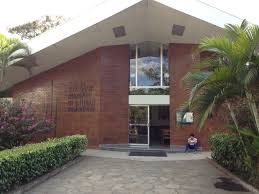
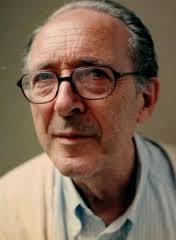
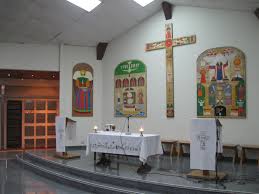
UCA’s Romero ChapelFr. Jon Sobrino
That started to change when the other members of my delegation and I visited UCA’s beautiful, peaceful campus, in contrast to the noisy bustle of the rest of San Salvador, and when we had an hour’s calm, reasoned conversation with one of its professors, Fr. Jon Sobrino, S.J., a noted liberation theologian. I came away impressed with UCA and with Sobrino.
I, therefore, was shocked six months later to hear the news of the November 16, 1989, murder of six of UCA’s Jesuit professors and their housekeeper and daughter. How could such a horrible crime happen to such intelligent, peaceful human beings in that tranquil, academic setting?
Martyred Jesuits, Housekeeper & Daughter
I was even more appalled when I learned about the selfless, courageous lives of the murdered Jesuits who used their minds, education and spirits to help the poor people of that country and to work for bringing about a negotiated end to its horrible civil war.
Their deaths were repetitions of the horrible assassination of Archbishop Oscar Romero on March 24, 1980, who like the Jesuits had used his mind, education and spirit to help the poor people of his country and to condemn violent violations of human rights. The same was true of another Salvadoran Roman Catholic priest, Rutilio Grande, who was murdered in 1977 because of his protests against the regime’s persecution of the poor people, and of the 1980 murders of the four American churchwomen, who worked with the poor in that country.
Thus, Romero, Grande, the four American churchwomen and the murdered Jesuits are forever linked in my mind as profound Christian witnesses and martyrs. Their examples have strengthened my Christian faith to love God with all your heart, mind and soul and your neighbor as yourself.
UCA’s Romero ChapelCapilla de Hospital de la Divina Providencia
All of these experiences have inspired me to learn more about El Salvador, Romero, Grande, the churchwomen and the Jesuits’ Christian witness in the midst of violence and threats to their own lives. On my subsequent five trips to that country, I always visit UCA for prayer in the Romero Chapel where the Jesuits’ bodies are buried and in the beautiful chapel of a cancer hospital where Romero was assassinated.
On my 2000 visit to El Salvador for the 20th anniversary of Oscar Romero’s assassination, my group visited UCA to spend time with its then Rector, Dean Brackley, a Jesuit priest from the U.S. who went to El Salvador to help UCA after the murders of his brother priests. He impressed me as a calm voice of reason and passion in UCA’s ministry of helping the poor and the country.
In 2010 I returned to El Salvador for the 30th anniversary of Romero’s assassination. On my delegation’s visit to UCA, we spent time with its then Rector, José Maria Tojeira, S.J.. He was an amazingly serene and soft-spoken man. He told us he was a new “church bureaucrat” (the Jesuit Provincial for Central America) at UCA in November 1989 and lived nearby, but not on the campus. During the night of November 15th-16th he heard gunfire and thought there must have been a skirmish between the Salvadoran security forces and the guerrillas. The next morning he went to the campus and was one of the first people to see the dead bodies of his six fellow Jesuits and their cook and her daughter. He nonchalantly said to our group, “That morning I thought I was the next one to be killed.” Later that day he went to his office and found faxed messages of support and solidarity from people all over the world. Then in the same casual manner, he said he thought, “Well, maybe I am not the next to be killed.”
As a result, my cloud of Salvadoran witnesses includes Oscar Romero; Rutilio Grande; the American churchwomen; the Jesuit priests; Fr. Brackley; Fr. Tojeira; Bishop Menardo Gomez of the Salvadoran Lutheran Church, who escaped a death squad on the night the Jesuits were murdered; Salvador Ibarra, who in 1989 was a lawyer for the Salvadoran Lutheran human rights office; and my Salvadoran asylum clients. Outside of El Salvador, of course, I am impressed by another Jesuit, Pope Francis.
I have been humbled to learn about the incredible courage and minds of the Jesuits, not just at UCA, but at other Jesuit universities that are generally regarded as the best of Roman Catholic institutions of higher learning. Simultaneously I am puzzled how such a marvelous group of religious men could have emerged from the Jesuits who were the shock-troops of the Counter-Reformation and did so many horrible things during the Spanish Inquisition.
All of this also inspired me to become a pro bono lawyer for Salvadorans and later others (an Afghani, a Burmese man, two Somali men and two Colombian families) who were seeking asylum or other legal status that would enable them to remain in the U.S. and escape persecution in their own countries. I always have regarded this as the most important and spiritually rewarding thing I have ever done. As I did so, I often reflected that I was able to do this in the secure and comfortable legal office of a large Minneapolis law firm. I did not have to risk my life to help others as did my Salvadoran saints.
After I had retired from practicing law in 2001, the Jesuits along with Archbishop Oscar Romero continued to inspire me to learn more about international human rights law as I co-taught a course in that subject at the University of Minnesota Law School from 2002 through 2010. In the process, I was amazed to discover the array of inter-related ways the international community had created to seek to enforce international human rights norms in a world still based essentially on the sovereignty of nation states.
I then was inspired to use my legal research and writing skills to investigate how these various ways had been used to attempt to bring to justice the perpetrators of the assassination of Archbishop Romero, the rapes and murders of the American churchwomen and the murderers of the Jesuit priests and then to share the results of that research with others on this blog. Many posts have been written about Romero, including the various unsuccessful legal proceedings to identify and punish those responsible for that crime. Other posts have discussed the criminal case still pending in Spain over the murders of the Jesuits and their housekeeper and daughter while another post summarized other legal proceedings that unsuccessfully sought to assign criminal responsibility for the murders of the Jesuit priests other than the brief imprisonment in El Salvador of two military officers.
I also have written the following other posts prompted by the 25th anniversary celebration of the lives of the priests and commemoration of their murders:
In the midst of its commemoration of the 25th anniversary of the murders of its martyred Jesuit priests and professors, El Salvador’s University of Central America (Universidad de Centro America), also made news regarding the beatification and canonization of Salvadoran Archbishop Oscar Romero.
In early November UCA’s website had an article by Jon Sobrino, S.J., the Director of its Archbishop Romero Center, entitled, “Beatification of Bishop.” He reported that Salvadoran Archbishop Jose Luis Escobar recently had said that Pope Francis had told him that Romero would be beatified next year (2015).
Subsequently Sobrino corrected this to say that he had not attended the meeting of the clergy where Archbishop Escobar made the announcement, but instead Sobrino had received the information second-hand from someone who had conveyed erroneous information. In particular, Sobrino clarified that Archbishop Escobar had not spoken to Pope Francis, but instead to Archbishop Vincenzo Paglia, the postulator (advocate) of Romero’s cause for beatification and canonization, who had said beatification would “possibly” be in 2015.[1]
After the publication of the initial Sobrino article, Archbishop Escobar said that he hoped beatification of Romero would occur in 2015, which will be the 35th anniversary of his assassination and part of the Triennial, 2014-2017, ending in 2017, the year marking the centennial of his birth. But although beatification “was in its final stages, no date has been set,” said the Archbishop.[2]
On November 14th UCA published on its website an editorial, “Holy to the World,” endorsing the beatification and canonization of Romero. It started, “The news [by UCA] of the possible beatification of Archbishop Romero [in 2015]spread like wildfire, both inside and outside the country. The UCA has received many reactions from many countries of the continent. The vast majority of these reactions expressed joy and hope for good news. Only a very small group of people was opposed.”
The editorial continued “Eventual beatification and subsequent canonization of Romero will be an act of justice to his career, qualities and generous dedication to the Salvadoran people. Definitely, Monsignor Romero was and still is . . . good news for the poor. To recognize this is to recognize the causes he defended, by which he lived and why he was murdered. Beatification and canonization [will recognize his] complaint against structural injustice and his fight for justice for the victims of senseless violence and an exclusionary and undemocratic system that concentrates wealth in a few hands.”
“Doing justice to Archbishop Romero is also doing justice [for those] he championed: the work of [Fr.] Rutilio Grande, the suffering of many victims of state violence who found comfort, encouragement and hope in Romero and the Archbishop’s legal aid office. Doing justice to Archbishop Romero also is doing justice to the victims of the violence he denounced, victims before and after their death, and the poor.”
Beatification and canonization also “implies a moral condemnation of his opponents, who reviled him, persecuted others and rejoiced with his murder.” This anticipated recognition of Romero leaves “in the pit of shame and disrepute the mainstream media, which systematically slandered him, branded him a communist agitator and even suggested the way to silence him.” It also will “bare the guilt of those who constantly threatened him, the masterminds who forged his death.”
“In short, to do justice to Archbishop Romero is to accept that he was right, that he was telling the truth, and makes these points clear to those who until now have remained rooted in lies and injustice.”
Beatification and canonization “will only be a formal recognition of what most people have in their hearts and cries. Romero said that if he were killed, he would be resurrected in the Salvadoran people. But his life and resurrection have transcended borders, religions and ideologies. Archbishop Oscar Romero is holy not only for El Salvador, but for the whole world.”
============================================
[1] A Salvadoran newspaper (Diario CoLatino) had an article about the Archbishop’s correction of the story. A fascinating, detailed examination of Sobrino’s error is provided in an article on the “SuperMartyrio” website that is dedicated to advocating Romero’s beatification and canonization:
My recent investigation and writing of a post about the Roman Catholic Church’s process for the beatification and canonization of Salvadoran Archbishop Oscar Romero prompt these musings about blesseds and saints in that church and their absence in my own church, Minneapolis’ Westminster Presbyterian Church, and its denomination, The Presbyterian Church (U.S.A.).
According to a Catholic secondary source (“Fundamentals of Catholic Dogma”), a saint is “…a member of the Church [who] has been assumed into eternal bliss and may be the object of general veneration. A saint is also a person of remarkable holiness who lived a life of heroic virtue, assisted by the Church, during their pilgrimage on earth. They are as varied and exceptional as only God could create them, and each has his own distinct story.”
The veneration of saints (in Latin, cultus, or the “cult of the saints”) describes a particular popular devotion or abandonment to a particular saint or saints. Although the term “worship” of the saints is sometimes used, it is intended to mean honor or give respect. According to the Catholic Church, Divine Worship is properly reserved only for God and never to the saints. They can be asked to intercede or pray for those still on earth, just as one can ask someone on earth to pray for them.
A saint may be designated as a patron saint of a particular cause or profession, or invoked against specific illnesses or disasters, sometimes by popular custom and sometimes by official statements. Saints are not thought to have power of their own, but only that granted by God.
Apparently under canon law, before beatification, the body of the candidate must be exhumed and authenticated and relics taken for veneration. This has produced disputes, some of which have been resolved by dividing the body. For example, St. Catherine of Sienna is entombed in Rome, but her head is revered in a Sienna basilica. Now the beatification and canonization of Bishop Fulton J. Sheen is being delayed because of a dispute whether his corpse should remain in a crypt in St. Patrick’s Cathedral in New York City or be moved to St. Mary’s Cathedral in Peoria, Illinois, where he was ordained.[2]
Relics of saints are respected in a similar manner to holy images and icons. The practice of past centuries in venerating relics of saints for healing is taken from the early Church. Once a person has been declared a saint, the body of the saint is considered holy. The remains of saints are called holy relics and are usually used in churches. Saints’ personal belongings may also be used as relics. Some of the saints have a symbol that represents their life.
In 993, Pope John XV was the first pope to proclaim a saint, but it was not until the papacy of Pope Innocent III (1198-1216) that the Pope claimed an exclusive monopoly on the canonization of saints. In 1983, Pope John Paul II made sweeping changes in the canonization procedure for Catholics whom are generally regarded as holy with the local bishop first investigating a deceased candidate’s life and writings for heroic virtue (or martyrdom) and orthodoxy of doctrine. Then a panel of theologians at the Vatican evaluates the candidate. After approval by the panel and cardinals of the Congregation for the Causes of Saints, the pope proclaims the candidate “venerable.”
Beatification
The next step, beatification, requires evidence of one miracle (except in the case of martyrs). Since miracles are considered proof that the person is in heaven and can intercede for us, the miracle must take place after the candidate’s death and as a result of a specific petition to the candidate. When the pope proclaims the candidate beatified or “blessed,” the person can be venerated by a particular region or group of people with whom the person holds special importance.
Although I do not know the total number of “blessed” in the Roman Catholic Church, the last three Popes have beatified 2,860 (Pope John Paul II, 1,342; Pope Benedict XVI, 843; and Pope Francis, 675 (including 124 Korean Martyrs on his recent trip to South Korea).)
Canonization
The Roman Catholic Church has over 10,000 named saints (or over 27 for every day of a normal year).
Only after one more miracle will the pope canonize the saint (this includes martyrs as well). The title of saint tells us that the person lived a holy life, is in heaven, and is to be honored by the universal Church. Canonization does not “make” a person a saint; it recognizes what God has already done.
The last three Popes have canonized 1,355 saints: Pope John Paul II, 482; Pope Benedict XVI, 45; and Pope Francis, 828. A source says that Pope Francis’ 828 in the first 18 months of his papacy is more than all the Popes of the last three centuries.
Westminster and the PCUSA
The PCUSA and Westminster do not have a roster of designated blesseds and saints. As a result, Westminster does not have statues or paintings of such individuals in our Sanctuary.Instead, most of Westminster’s Sanctuary’s beautiful stained-glass windows from the 1950s and 60s, made by Willet Studios, primarily depict images of the life of Jesus like the one to the right for His Sermon on the Mount that is on the north side of the main floor of the Sanctuary. Earlier windows feature Victorian and early 20th century stylized organic and geometric designs. Here below, for example, is a photograph of the large Rose Window that was installed at the back of the balcony in 1897 with the construction of our Sanctuary.
Westminster, however, at the back of the Sanctuary’s main floor does have four Gospel Windows (images of Saints Matthew, Mark, Luke and John, the authors of the New Testament’s Gospels). Below is a photograph of these windows.
Saints Matthew & MarkSaints Luke & John
In addition, there are two stained glass windows at the back of the Sanctuary’s balcony with images of prominent Protestants. One is called the “Reformation Window” with images of Protestant reformers Huldrych Zwingli, Martin Luther, John Calvin and John Knox. The other is called the “Missionary Window” with images of four Protestant missionaries: William Carey (India), David Livingstone (Africa), Sheldon Jackson (Alaska) and Marcus Whitman (Northwest U.S.). Photographs of these windows are below. Finally, also in the balcony we have a window for unnamed Martyrs and another window for Jesus’ Disciples and Apostles (without names). (Thanks for the photographs to Dr. Rodney Allen Schwartz, Director of Westminster’s Gallery and Archives.)
According to a comment on the PCUSA website, “In the Presbyterian/Reformed tradition, we have and always will acknowledge and honor saints. Our designation as saints comes from our rich inheritance of Christ’s righteousness.” This commentator then adds the following:
“In St. Paul’s understanding, the title ‘saint’ belongs to all those who have been united with Christ, those who have a share in the rich inheritance as Children of God (baptism). St. Paul routinely calls the members of his churches ‘saints’ because of who they are in Christ and not because of what they have accomplished.”
“Furthermore, based on the teachings of the Second Helvetic Confession, and the early church fathers, Presbyterians do not pray for the mediation of the saints. We pray to God through Christ alone, and only look to the saints, ordinary people who had extra-ordinary faith, as examples and role models.”
“Also, as John Calvin and the early church fathers taught in regard to the mystery of Holy Communion, we believe that when we gather at the Lord’s Table and partake of the sacrament in faith, by the work of the Holy Spirit we become united in Christ and in prayer with those gathered around the eternal throne of God (which the Lord’s Table also represents) in accordance to the vision of St. John in the Book of Revelation.”
The PCUSA website introduces the subject of All Saints Day by saying, “In early Christian tradition, saints’ days began as a way to mark the anniversary of a martyr’s death — his or her “birthday” as a saint. By the middle of the church’s first millennium, there were so many martyrs . . . that it was hard to give them all their due. All Saints’ Day was established as an opportunity to honor all the saints, known and unknown.”
The PCUSA website goes on to say, “All Saints’ Day has a rather different focus in the Reformed tradition. While we may give thanks for the lives of particular luminaries of ages past, the emphasis is on the ongoing sanctification of the whole people of God. Rather than putting saints on pedestals as holy people set apart in glory, we give glory to God for the ordinary, holy lives of the believers in this and every age. [All Saints Day for Presbyterians] . . . is an appropriate time to give thanks to members of the community of faith who have died in the past year. We also pray that we may be counted among the company of the faithful in God’s eternal realm.”
“For all the saints, who from their labors rest, who thee by faith before the world confessed, thy name, O Jesus, be forever blessed. Alleluia, Alleluia!”
“Thou wast their rock, their fortress and their might; thou, Lord, their captain in the well-fought fight; thou, in the darkness drear, their one true light. Alleluia, Alleluia!”
“O blest communion, fellowship divine! We feebly struggle, they in glory shine; yet all are one in thee, for all are thine. Alleluia, Alleluia!”
“And when the strife is fierce, the warfare long, steals on the ear the distant triumph song, and hearts are brave, again, and arms are strong. Alleluia, Alleluia!”
“From earth’s wide bounds, from ocean’s farthest coast, through gates of pearl streams in the countless host, singing to Father, Son and Holy Ghost, Alleluia, Alleluia!”
Interestingly this hymn originally had six other verses that probably were eliminated in our Hymnal to keep the hymn of reasonable length by contemporary standards. But three of those deleted verses specifically recognize the Apostles, the Evangelists and the Martyrs as saints and thereby may suggest that only they are saints.
We also must acknowledge that the names of some Presbyterian churches include the names of saints: the Apostles of Jesus (Peter (or Simon), Andrew, James, John, Philip, Thomas and Matthew), the authors of the synoptic Gospels (Mathew, Mark, Luke and John), the first evangelist (Paul) and other Roman Catholic saints (Elmo (or Erasmus)), Stephen, Barnabus, Giles and Patrick).
Observations
I recognize that all of us as sinners need all the help we can get in striving to live holy lives and that blesseds and saints undoubtedly provide such assistance to many people. Moreover, I believe it must be useful for many people to have blesseds and saints from their own country or ethnic group or era to connect with Jesus, who lived and died 2,000 years ago.
A church’s having blesseds and saints can also be seen as a way for the church to evangelize, i.e., to spread the Good News of the Bible. In secular terms, it is a way to market the faith. Pope Francis’ recent beatification of 124 Korean martyrs can be seen in this light.
Once a church decides that it will have blesseds and saints, it obviously needs a well-established set of rules and procedures for making such important decisions, and Pope John Paul II’s previously mentioned changes in that regard I see as a rational management response.
However, I do not understand why the beatification and canonization of Salvadoran Archbishop Oscar Romero can be seen as controversial or difficult when he had the courage to act, despite repeated death threats, as Jesus taught all of us to act (Love your neighbor as yourself).
As an outsider to the Catholic faith, I see the proliferation of blesseds and saints as perhaps interfering with Christianity’s focus on Jesus Christ and God. I also find it difficult to accept the miracles that are requirements for beatification (except for martyrs) and for canonization. According to the Catholic Church, to be deemed a miracle, it happens after the death of the candidate for beatification or canonization, and “a medical recovery must be instantaneous, not attributable to treatment, [and the medical problem] disappear for good.”
In the Presbyterian version of Christian faith as I have experienced at Minneapolis’ Westminster, on the other hand, we avoid having our focus on Jesus interrupted by statues and references to the blesseds and the saints. Moreover, our sermons frequently use the faith and actions of contemporary people to illustrate important points of Scripture. In this way we help to see how Jesus’ teachings can be important in our lives today.
[2] Otterman, Tug of War Between Dioceses Halts a Bishop’s Beatification, N.Y. Times (Sept. 14, 2014.)
[3] How was an Anglican priest who served as Bishop of Wakefield in northern England and as Bishop of Bedford in the East End of London. He also was a poet and author of the lyrics for other hymns.
[4] Williams, who was Welsh-English, was a composer of symphonies, operas, chamber and choral music and film scores.