2011 Annual Report for dwkcommentaries

This blog started on April 4, 2011, and the blogger made 190 posts for the year plus 26 comments to previous posts.

WordPress reports there were 9,190 views for the year. The busiest day was October 25th with 131 views while December 27th had 113. Most of the viewers were from the U.S.A. with the United Kingdom and Canada not far behind.

Again according to WordPress the following were the most popular posts:

  • International Criminal Court: Four People Recommended for Election as ICC Prosecutor (Oct. 25, 2011)
  • My Grinnell College years (Aug. 27, 2011)
  • Celebrating the Rhodes Scholarships Centennial (June 21, 2011)
  • The Personal Jurisdiction Requirement for U.S. Civil Lawsuits (Aug. 8, 2011)
  • The IBM Antitrust Litigation (July 30, 2011)
  • My Years at the University of Chicago Law School (Dec. 27, 2011)

As indicated in detail on Page: Topical List of Posts and Comments to dwkcommentaries, the posts and comments for 2011 fell into the following categories:

  • Personal
  • Oxford
  • Religion/Christianity
  • Lawyering (practice of law)
  • U.S. Politics
  • Cuba
  • El Salvador
  • Human Rights Treaties
  • International Criminal Justice
  • International Criminal Court
  • Refugee and Asylum Law
  • Alien Tort Statute & Torture Victims Protection Act

The blogger would appreciate receiving substantive comments on his posts, including corrections and disagreements.


Accounting for Horses, Cattle and Catfish

The Faegre & Benson law firm developed a significant practice of representing accounting firms that had been sued for accounting malpractice. For example, I represented four of what were known as The Big Five accounting firms: Arthur Anderson, Coopers & Lybrand (Coopers), Deloitte & Touche and KPMG Peat Marwick. Another partner had primary responsibility for the other Big Five firm–Arthur Young & Co.

One of the most interesting of these accountants liability cases was the Australian KPMG Peat Marwick firm’s battle with Sentry Insurance of Stevens Point, Wisconsin.[1]

The other accounting case I remember most vividly was for Coopers. It had been sued in the federal district court in Minnesota[2] for alleged securities law violations and common law fraud. The plaintiff was an Argentine company that had invested and lost $35 million in a Minnesota company (Interfund Corporation). Interfund’s main business was financing the purchase and sale of Arabian horses, but it also helped to finance a company in Missouri that was breeding cattle and operating a catfish farm. The plaintiff alleged that in making its investments it had relied upon Interfund’s audited financial statements that allegedly were materially overstated.

The plaintiff because of its large investment, however, had one of its own people on the Interfund board of directors and thus was privy to all of its financial information far beyond what was in the audited financial statements. As I recall, this was the primary undisputed issue of material fact that was the basis for Coopers’ successful motion for summary judgment that I brought after the conclusion of pre-trial discovery. There was no appeal.

This case required several trips to New York City to consult with Coopers’ in-house general counsel, to inspect the plaintiff’s documents and to depose its personnel. In my spare time, I attended concerts and Broadway shows.

New York Public Library
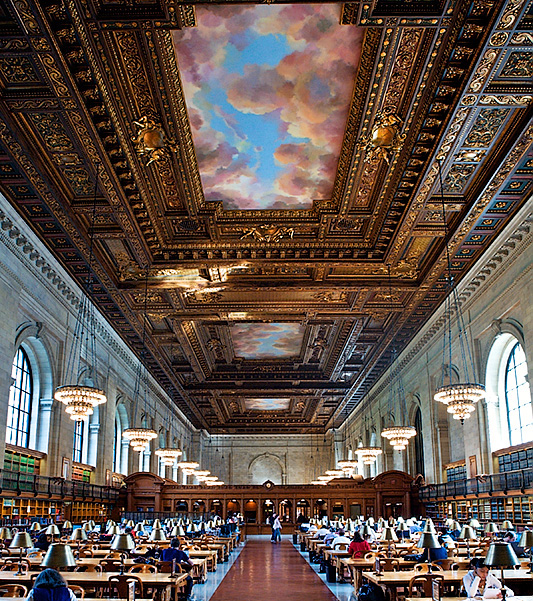
Rose Main Reading Room, New York Public Library

I also spent time on these trips in the famous New York City Public Library at Fifth Avenue and 42nd Street doing research about an ancestor, W.C. Brown, who was President of the New York Central Railroad in the early 20th century. [3]

Grand Central Terminal

Two blocks east of the Library on 42nd Street sits Grand Central Terminal that was built while Brown was the Railroad’s President.


[1]  See Post: Battling Australian and Wisconsin Courts (Aug. 12, 2011).

[2]  See Post: Minnesota’s Federal Court (June 28, 2011).

[3] See Post: Adventures of a History Detective (April 5, 2011).

My Years at the University of Chicago Law School


From the Fall of 1963 through May of 1966 I was a student at the University of Chicago Law School. I spent many hours in its beautiful building that was designed by Eero Saarinen.


University of Chicago Law School
University of Chicago     Law School 

I chose Chicago because it was an excellent law school and because its Mechem Selection Committee awarded me a full-tuition Floyd Russell Mechem Prize Scholarship. The chair of the Committee was Justice Tom C. Clark, Associate Justice of the U.S. Supreme Court. The other Committee members were Associate Justice Roger Traynor of the California Supreme Court; Judge Sterry Waterman of the U.S. Second Circuit Court of Appeals; two past presidents of the American Bar Association; and two political science professors.

This scholarship was started in 1959 as one of the first three-year full-tuition, merit-based scholarships offered by any top-tier law school. It was financed through the School’s general fund and was designed to attract top candidates to Chicago and to free them from student debt in order to pursue their highest career aspirations. Floyd Mechem, by the way, in the early 20th century had been one of the School’s original professors and a leading expert on the law of sales, agency and corporations.[1]

Law school was a major change from my studies at the University of Oxford. There I had two tutorials a week during the academic terms by myself or with only one other student. My tutors gave me a question to address in an essay for the next tutorial along with suggested readings. The rest of the week was spent reading those articles and books and writing an essay and going to whatever lectures I chose. The examinations were at the end of my two years at Oxford.[2]

Law school at Chicago and almost all U.S. law schools, on the other hand, feature large classes with assigned pages in big law books for the next day and lectures and questioning of the students by the professors with exams at the end of the semester. This was a big adjustment for me, and I did not like the forced abandonment of the independence I had at Oxford.  Another major change, especially in the first year, was encountering an entirely new vocabulary and system. I remember how long it took me, especially in the first year, to read anything because I always was consulting the big Black’s Law Dictionary.

Chicago’s first-year students had a legal writing component taught by Bigelow Fellows that provided a break from the large class routine. Learning how to write legal memos and briefs took practice, I discovered. The most exciting part of this course was preparing for, and observing, an oral argument before the Illinois Supreme Court when they visited the law school. The issue in the case, as I recall, concerned a Chicago ordinance regarding pornography, and our assignment was to write a judicial opinion deciding the case after reading the briefs and watching the oral argument. I enjoyed this assignment and replicated it when I taught a course about law to undergraduates at Grinnell College in 1982.[3]

I received excellent grades my first year and was invited to be on the staff of The University of Chicago Law Review my second year. I wrote two comments for the Review that in retrospect were not scintillating. One argued for recognition of a constitutional right to counsel in federal income tax investigations.[4] The other explored the distinction between repair and reconstruction of patented combination; the former was permissible; the latter, was not.[5] I still chuckle about a late 19th century case on this issue that held that replacing toilet paper in a patented toilet paper dispenser did not constitute reconstruction of the dispenser and, therefore, was not patent infringement.[6]

In any event, on the basis of my performance as a staff member on the Review, I was chosen to be one of its Managing Editors for my third year with special responsibility for articles. We had a special issue that year honoring the Law School’s Professor Malcolm Sharp, and I was in charge of soliciting and editing articles about him.

Edmund Wilson

One of the articles was by his friend and noted journalist and literary critic, Edmund Wilson, who spent time with Sharp during the summers in Talcottsville, New York. (I did not do any editing of his submission.) Wilson said,

  • “We saw a good deal of one another then, and were in the habit, at the end of the day, of meeting for conversation and drinks at either their house or mine. We enjoyed a pleasant leisure and peace, a freedom from the immediate pressures with which we elsewhere had to contend, as we sat in my ancient living-room, with its Boston and Salem rockers and its old-fashioned paintings and engravings, or looking from the Sharps’ back lawn, on a green and unmowed meadow, now soaked in the golden light of an orange and silver declining sun. . . . In our conversations on the back lawn of Talcottville, in the little trough of rural civilization that lies between the foothills of the Adirondacks and the wilderness of the Tug Hill plateau, we have covered, in our conversations, many aspects of that disturbed and disturbing world that was invisible from where we sat.”[7]
Wilson’s House
Wilson’s “Stone House” in Talcottville is now on the National Register of Historic Places. It was built in 1789 with limestone from the nearby Sugar River and was made famous in Wilson’s book Upstate. Wilson’s father bought it as a summer place, and it became a symbol for Wilson “of the kind of life he valued,  . . . a life in which an intimate knowledge of the past provided stability in the present and guidance for the future; a life in which human beings had individuality, dignity and worth.”

I was in Professor Sharp’s contracts course my first year, and although often difficult to understand, he was warmly regarded by students as “good and wise and kind.”  Others I fondly remember are Harry Kalven, Jr. for torts; Phil Kurland for constitutional law; David Currie for conflict of laws and federal jurisdiction; Walter Blum for taxation; Bernard Meltzer for evidence; Phil Neal for antitrust law; Francis Allen for criminal law; Jo Desha Lucas for civil procedure; Soia Menschikoff for sales and the Uniform Commercial Code; and Kenneth Dam for international law. The first-year property course was taught by Sheldon Tefft, who because he had been a Rhodes Scholar liked to call on me.

Univ. Chicago Law School Faculty 1966

Because of all the work required for the Review, my fellow staff members and then Editorial Board members and I spent a lot of time together, and they became my best friends. They were and are Bob Berger, Roland Brandel, David Brown, Lew Collens, George Ranney, Walt Robinson, Mike Shakman and David Tatel. All went on to distinguished legal careers.

On November 22, 1963, I was studying in the Law School Library and was shocked when someone told me that President Kennedy had been assassinated.

In June 1966 I received the Juris Doctor (J.D.) degree with Honors and the Order of the Coif for excellence in my studies.

In my last semester in 1966 I was unsuccessful in applying for a White House Fellowship and judicial clerkships with U.S. Supreme Court Chief Justice Earl Warren and Associate Justices Byron White and Potter Stewart.[8] Instead my wife and I moved to New York City where I joined the eminent Wall Street law firm of Cravath, Swaine & Moore.[9]

I am glad that I went to the University of Chicago Law School and became a lawyer.


[1]  Gerald de Jaager, The Impact of a Full-Tuition Scholarship, http://www.law.uchicago.edu/alumni/magazine/fall10.mechem;Bigelow, Floyd Russell Mechem, 15 A.B.A.J. 169 (1929).

[2]  See Post: My Oxford University Years (Aug. 30, 2011); Post: Reading PPE at Oxford (June 6, 2011); Post: PPE Examinations at Oxford (June 10, 2011).

[3]  See Post: A Sabbatical Leave from Lawyering (May 26, 2011).

[4]  Comment, The Constitutional Right to Counsel in Tax Investigations, 32 U. Chi. L. Rev. 134 (1965).

[5]  Comment, Repair and Reconstruction of Patented Combinations, 32 U. Chic. L. Rev. 353 (1965).

[6]  Morgan Envelope Co. v. Albany Perforate d Wrapping Paper Co.,152 U.S. 425 (1894).

[7]  Edmund Wilson, Conversing with Malcolm Sharp, 33 U. Chi. L. Rev. 198 (1966); Edmund Wilson House, http://www.livingplaces.com.

[8]  See Post: Questioning President Lyndon Johnson (April 17, 2011); Post: The Roads Not Taken (April 27, 2011).

[9]  See Post: Lawyering on Wall Street (April 14, 2011).

Merry Christmas!

One of the foundations of my Christian faith is the following prayer:

  • It helps, now and then, to step back
    and take the long view.
    The kingdom is not only beyond our efforts,
    it is beyond our vision.
  • We accomplish in our lifetime only a tiny fraction of
    the magnificent enterprise that is God’s work.
    Nothing we do is complete,
    which is another way of saying
    that the kingdom always lies beyond us.
  • No statement says all that could be said.
    No prayer fully expresses our faith.
    No confession brings perfection.
    No pastoral visit brings wholeness.
    No program accomplishes the church’s mission.
    No set of goals and objectives includes everything.
  • This is what we are about:
    We plant seeds that one day will grow.
    We water seeds already planted, knowing that they hold future promise.
    We lay foundations that will need further development.
    We provide yeast that produces effects beyond our capabilities.
  • We cannot do everything
    and there is a sense of liberation in realizing that.
    This enables us to do something,
    and to do it very well.
    It may be incomplete, but it is a beginning, a step along the way,
    an opportunity for God’s grace to enter and do the rest.
  • We may never see the end results,
    but that is the difference between the master builder and the worker.
    We are workers, not master builders,
    ministers, not messiahs.
    We are prophets of a future not our own. Amen.[1]

The essence of this prayer for me is in the lines: “We cannot do everything, and there is a sense of liberation in realizing that. This enables us to do something, and to do it very well.” This rings true as a matter of Christian theology. It helps me to keep myself in perspective. It is indeed liberating.

I thought that this was a prayer composed by my personal saint, Archbishop Oscar Romero. This, however, is not true.

It was written in November 1979 by Kenneth Edward Untener, the Roman Catholic Bishop of Saginaw, Michigan, for a memorial mass for deceased priests that was celebrated by Cardinal John Francis Dearden, the Archbishop of Detroit, Michigan.[2]  This context helps to understand the prayer’s talking about imperfect prayers, confessions and pastoral visits. The immediate audience for the prayer was the deceased priests and those priests in attendance to honor their comrades. But the real audience is everyone.

Later it purportedly was used by Archbishop Romero.[3] I hope that it was, but regardless of whether it was, it is something, in my opinion, that expresses Romero’s theology. Here, for example, is what he said about everyone’s being a worker who strives to do his or her best and thereby gives God’s grace an opportunity to enter into the world and do the rest:

  • “How beautiful will be the day when all the baptized understand that their work, their job, is a priestly work. That just as I celebrate Mass at this altar, so each carpenter celebrates Mass at his workbench. And each metal worker, each professional, each doctor with the scalpel, the market worker at her stand, are performing a priestly office! “[4]

Merry Christmas!


[1]  See Post: My Christian Faith (April 6, 2011).

[2] Bishop Thomas J. Gumbleton, Homily (March 28, 2004), http://www.nationalcatholicreporter.org/peace/pfg032804.htm.;Bishop Ken Untener, The Practical Prophet : Pastoral Writings at iii (Paulist Press; New York 2007)(Untener called this prayer “Reflection on Ministry”).

[3] We Are Prophets of a Future Not Our Own, American Catholic Council Newsletter (June 6, 2001), http://americancatholiccouncil.org/newsletter-june-6-2001-2. I would appreciate hearing from anyone who can confirm that this prayer was used by Romero. Where? When? Source?

[4] Oscar Romero, The Violence of Love: The Pastoral Wisdom of Archbishop Oscar Romero at 13 (Harper & Row; San Francisco 1988) (compiled & translated by James R. Brockman, S.J.).

The Joy of Blogging

After teaching two class sessions of the international human rights law course in the Fall of 2010, I decided to retire from my position as Adjunct Professor at the University of Minnesota Law School. I had enjoyed the teaching, meeting and inter-acting with law students and professors and being part of the law school community. But I wanted to create time to write and organize the various things I had already written.

Being an organized person, I thought the first task should be preparing an outline or structure for what I would write. I never got very far with that idea because so many of the things that I wanted to write about are interrelated.

A cousin told me she was writing occasional blog postings so I started to wonder about creating a blog as a way to do my writing. This, however, was an unfocused, idle thought. One Sunday, as I was reading the New York Times, I looked through a supplement about the New York Times Knowledge Network and discovered a two-session online course, “How To Start a Blog.”[1] I signed up for this course and bought the book Blogging for Dummies that was recommended by my cousin.[2]

I only read a few pages in the book, but the online course was helpful. The best thing was the instructor’s suggestion to go to “WordPress.com” and start a blog before you did anything else. WordPress is a free hosting site for blogs with many “themes” or formats to use. I did just that and thereby avoided my usual approach of identifying the options (another was blogspot) and researching the pros and cons of each before deciding which path to take. On WordPress I quickly picked a theme (Kubrick) that I thought was appropriate and quickly decided to call the blog “dwkcommentaries.” Many blogs are narrow in focus, but that is not me. My focus is law, politics, economics, history and religion.

My initial posts were personal, describing my political philosophy and Christian faith and summarizing some of the details of my practice of law that I call “lawyering.” I also have written many posts about Cuba, El Salvador, human rights treaties, international criminal justice, the International Criminal Court, refugee and asylum law and two U.S. human rights statutes (the Alien Tort Statute and the Torture Victims Protection Act).

As time passed, there have been further developments relating to some of the prior posts. When I think these developments should be recorded, I write a new post or a comment to the prior post.

Like anything else, I learned as I went along. A friend with a blog of his own on WordPress suggested I add a “tag cloud.” I did not know what that was, but discovered it is a widget you can add, which I did. With this widget, the computer automatically creates a list of the tags you have used the most and uses larger letters for the ones at the top of the list. The tag cloud is now at the top right of my blog. It is one way to find posts on the blog; one just clicks on the tag in the cloud, and the computer displays the posts that have that tag.

The prior paragraph calls for an explanation of categories and tags. Categories are names you assign to groups of posts. I chose Economics, Higher Education, History, Law, Other Countries, Personal, Politics and Religion. Tags are names you assign to individual posts to highlight their main points.

I eventually learned how to add images to the postings. It is more work, of course, but I enjoy using some of my own photographs and finding and adding images from “Google Images.” For a recent post about books regarding Archbishop Oscar Romero, for example, I scanned the book covers from these books in my own library and then transferred the scanned images from my own computer to the blog posting.

After I had made quite a few postings, I worried about how someone would be able to find past posts. There was, to my surprise, no search function for the blog. In looking for a solution to this problem, I  went to the “Appearance” menu on the “Dashboard” for my blog and to the “Widget” sub-page. There I discovered a “Search” widget and added it to my blog.

I also discovered and added widgets for Archives, Blogroll (hyperlinks to websites and blogs related to my blog) and a button to sign up for Email subscriptions to the blog. For individual posts, there are buttons to share the post via Email, FACEBOOK, Twitter, LinkedIn, Reddit and Google and to print the post.

WordPress has a section called “Pages” on the right side of the blog where it puts your “About” description of the blog that you are advised to create when you start the blog. In order to increase access to the postings on the blog, I created the following additional documents for “Pages:”

  • In Finding Posts and Comments, I described the various ways for finding posts (and comments).
  • In Chronological List of Posts and Comments I have a list of the posts (and comments) in chronological order of posting.
  • Topical List of Posts and Comments is an ongoing outline of the posts (and comments). It is the type of outline that I initially envisioned as the first step in doing this kind of writing. I think it is the most useful tool for finding posts.

The last two of these documents on “Pages,” of course, require continual updating.

Many of the posts are personal. Maybe someday I will publish the posts,[3] but there are so many other things I want to write about, and the news keeps furnishing more topics. Another motivation for doing all of this is to leave something about my life for my grandchildren and descendants.

Writing a blog, for me, is very liberating. I love it.

——————————————————

[1] N.Y. Times Knowledge Network, How To Start a Blog, http://www.nytimesknownow.com/index.php/how-to-start-a-blog.

[2] Sarah Gardner & Shane Birley, Blogging for Dummies (3d ed. Wiley Pub.; Hoboken, NJ 2010).

[3] I recently learned that Feedfabrik makes it easy to convert your WordPress blog into a book format with a customized cover that you can then order as a hard copy or a digital PDF edition. http://www.feedfabrik.com.

Pilgrimage to American Churchwomen Sites in El Salvador

We have reviewed the missionary work in El Salvador of the four American churchwomen, their brutal murders on December 2, 1980, the subsequent investigations of that horrible crime, the Salvadoran successful criminal prosecution of five of its National Guardsmen for the murders and the unsuccessful U.S. civil lawsuit for money damages against two Salvadoran Generals for their failure to prevent this crime and conduct a proper investigation after the fact.[i]

In March 2010 I was privileged to visit some of the sites associated with this powerful demonstration of religious faith, devotion and courage, on the one hand, and brutal and heartless conduct of the Salvadoran security forces, on the other hand.

Military Post, Chalatenango
Lago de Suchitlan

Two of the women, Maryknollers Maura Clarke and Ita Ford, served in the northern city of Chalatenango, population of 30,000. It is near Lago de Suchitlan. During the civil war a military fortress was built to guard the city against attacks by the FMLN guerillas.

Chalatenango chapter house

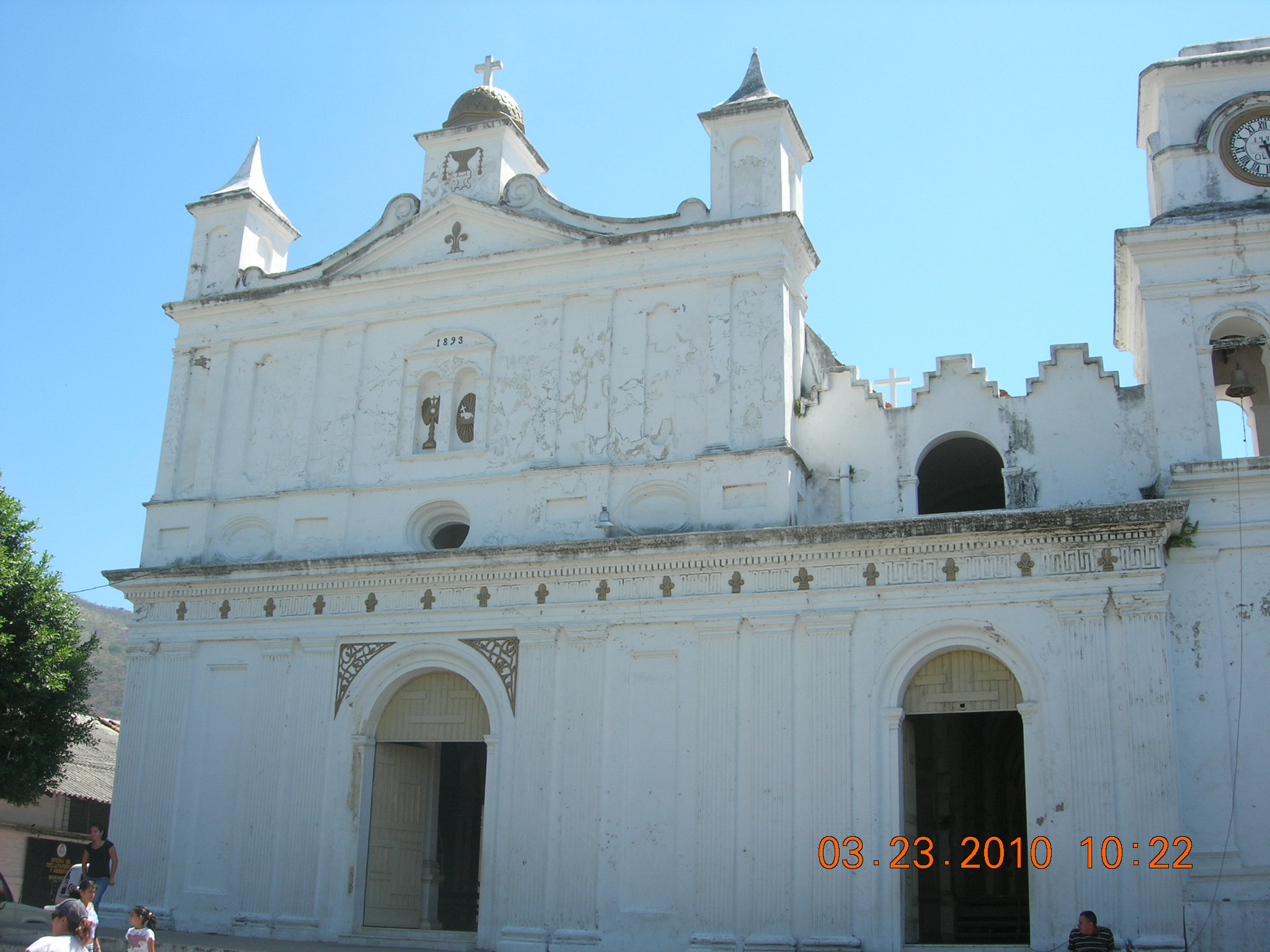
Across the street from the military fortress stands the 18th-century church, which was the center of the Sisters’ activities. They lived in the adjacent chapter house.

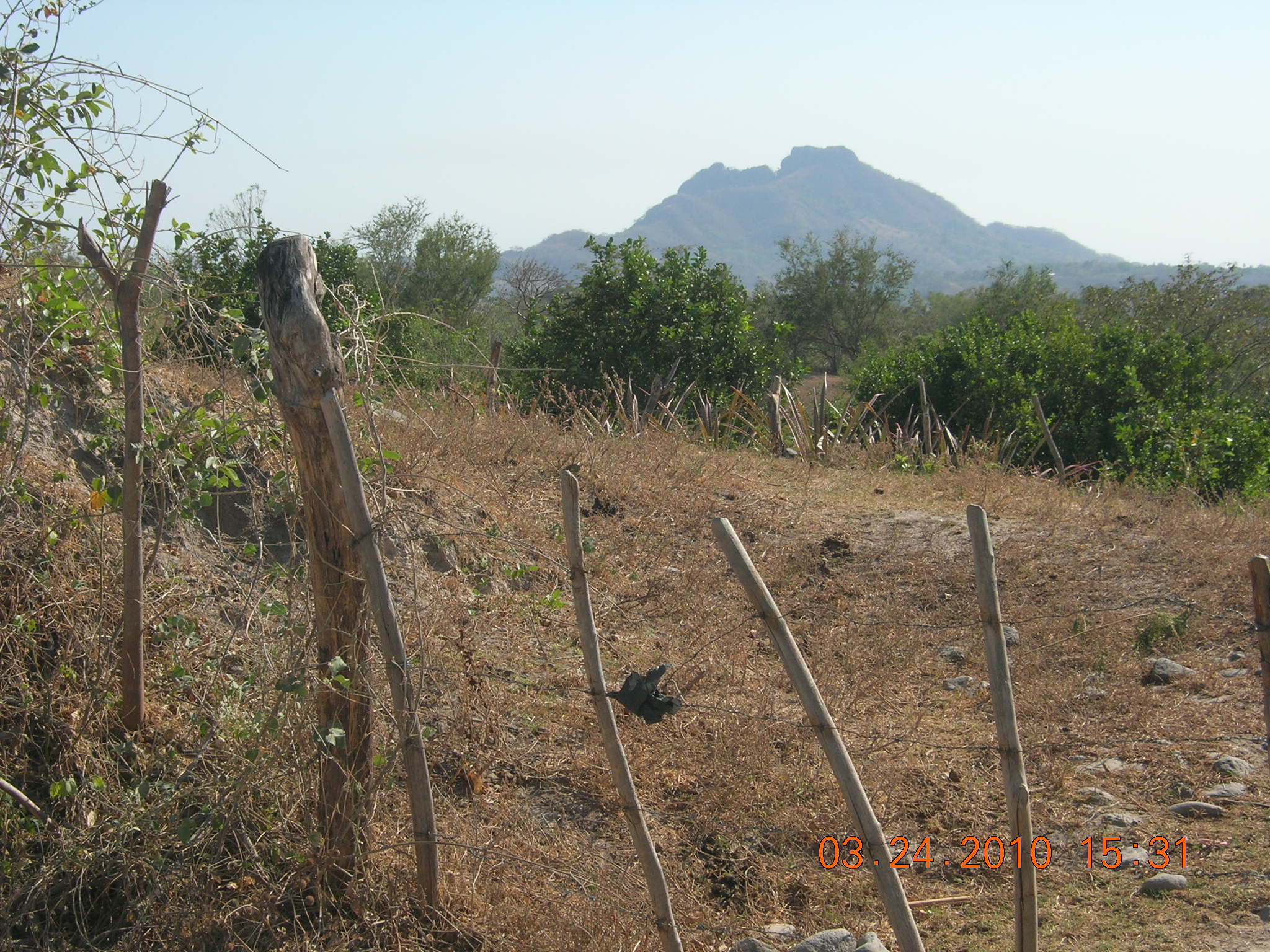
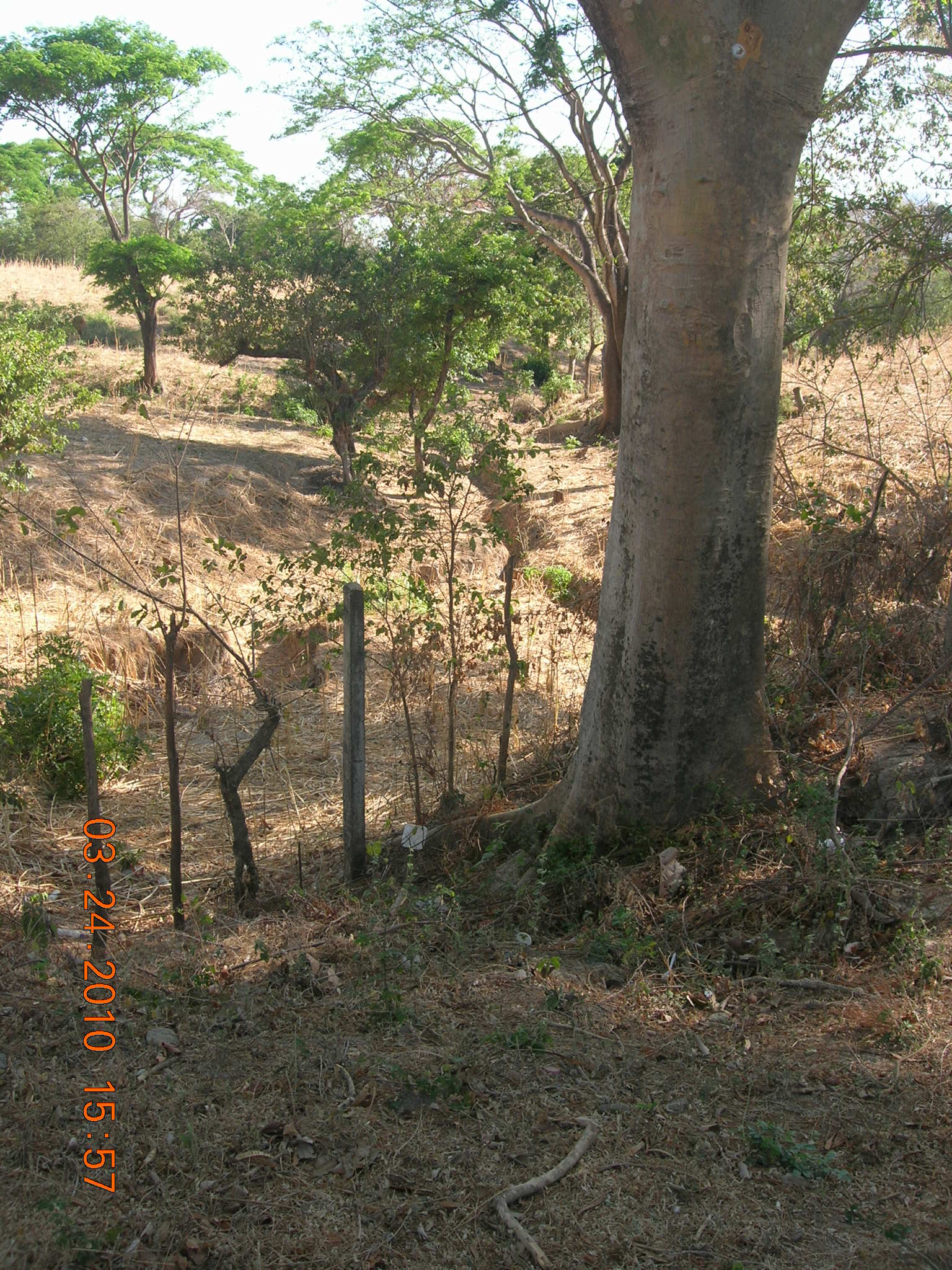
The two of them along with their friends Dorothy Kazel and Jean Donovan were murdered on December 2, 1980, near the town of Santiago Nonualco in the southern part of the country near the airport. The next day their bodies were found on a country road not too far from the town, and upon order from officials they immediately were buried in a shallow, common grave. The site of the grave is not publicly accessible, but it was not too far from the places in these photos.

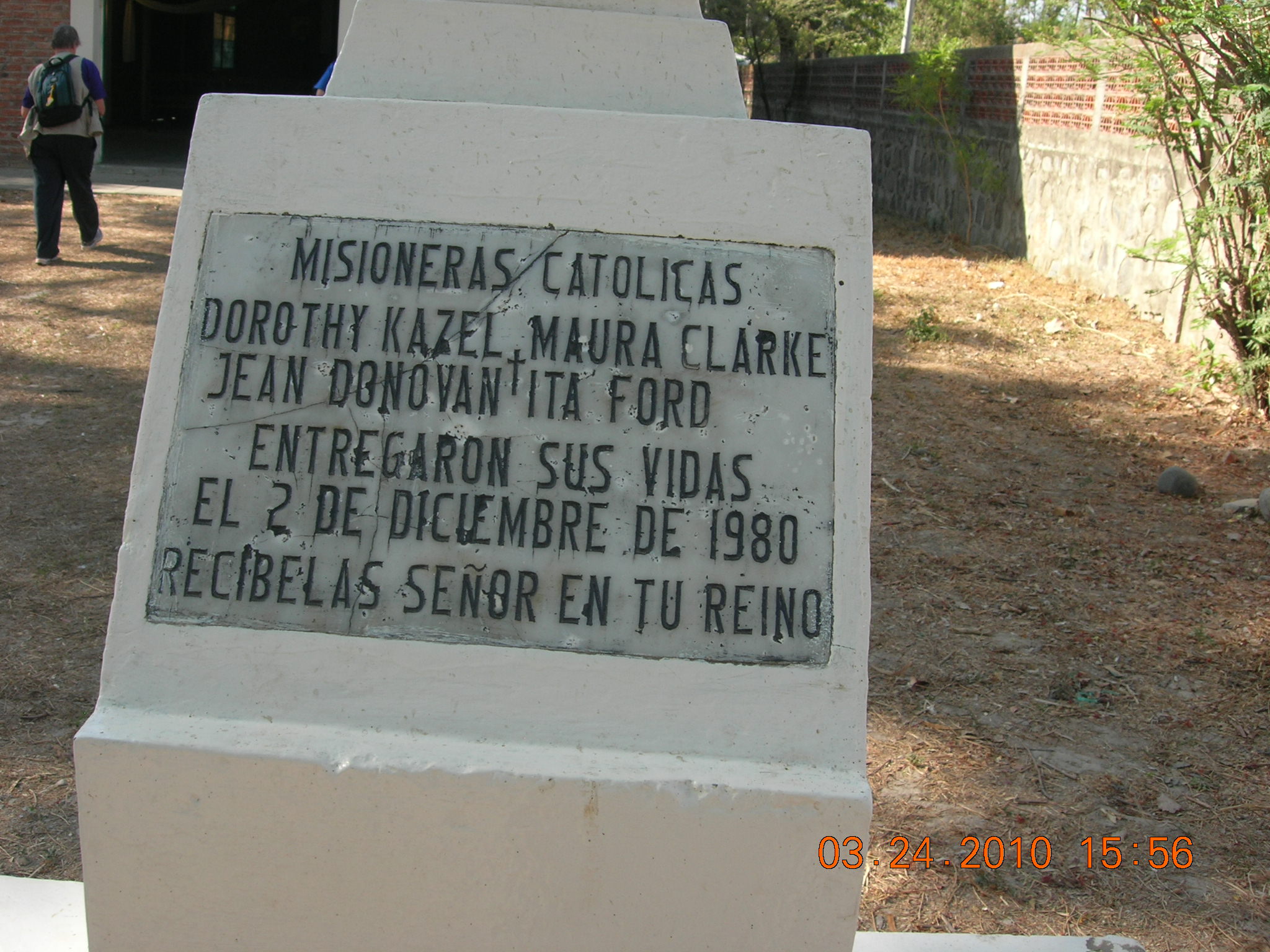
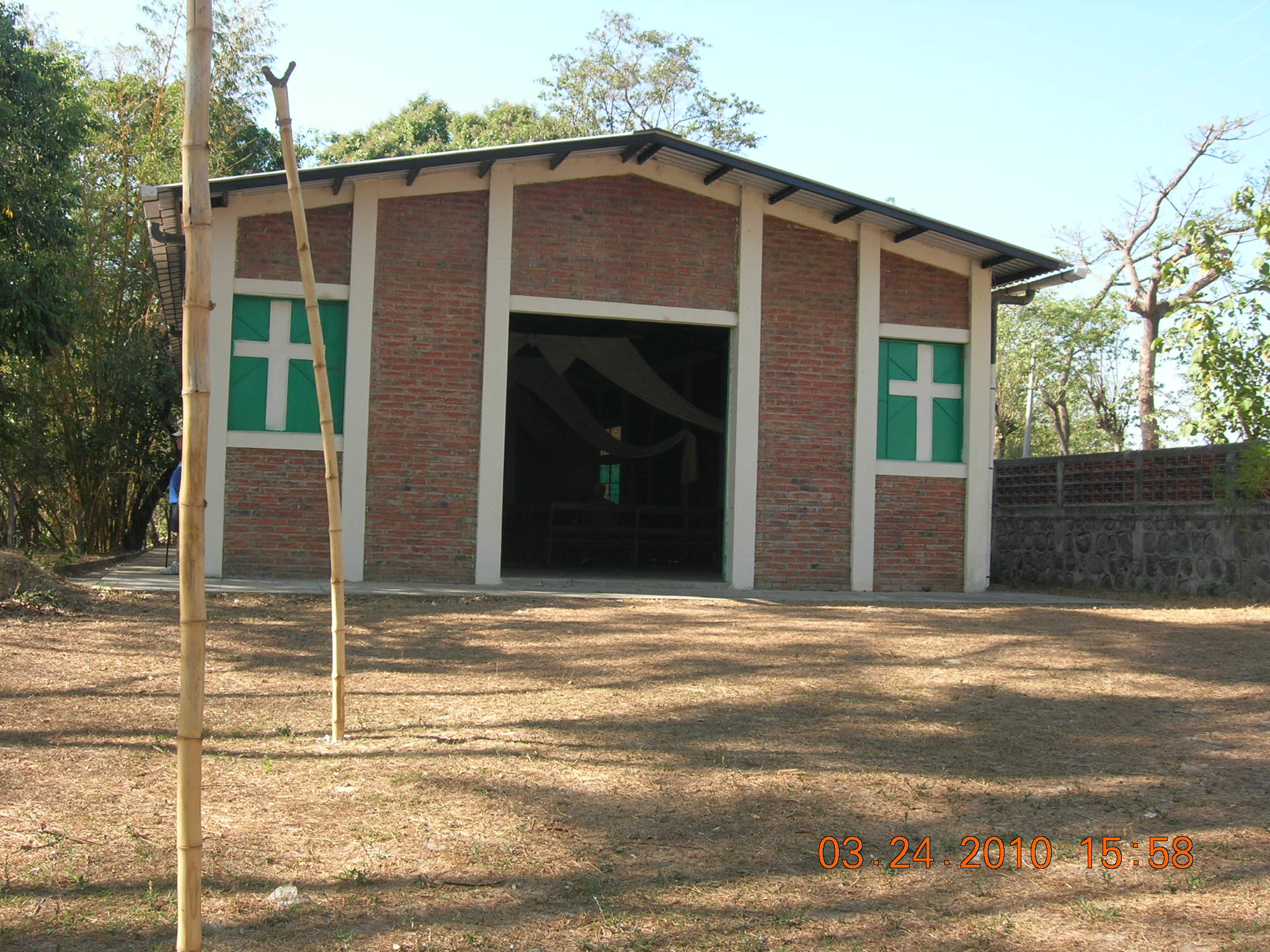
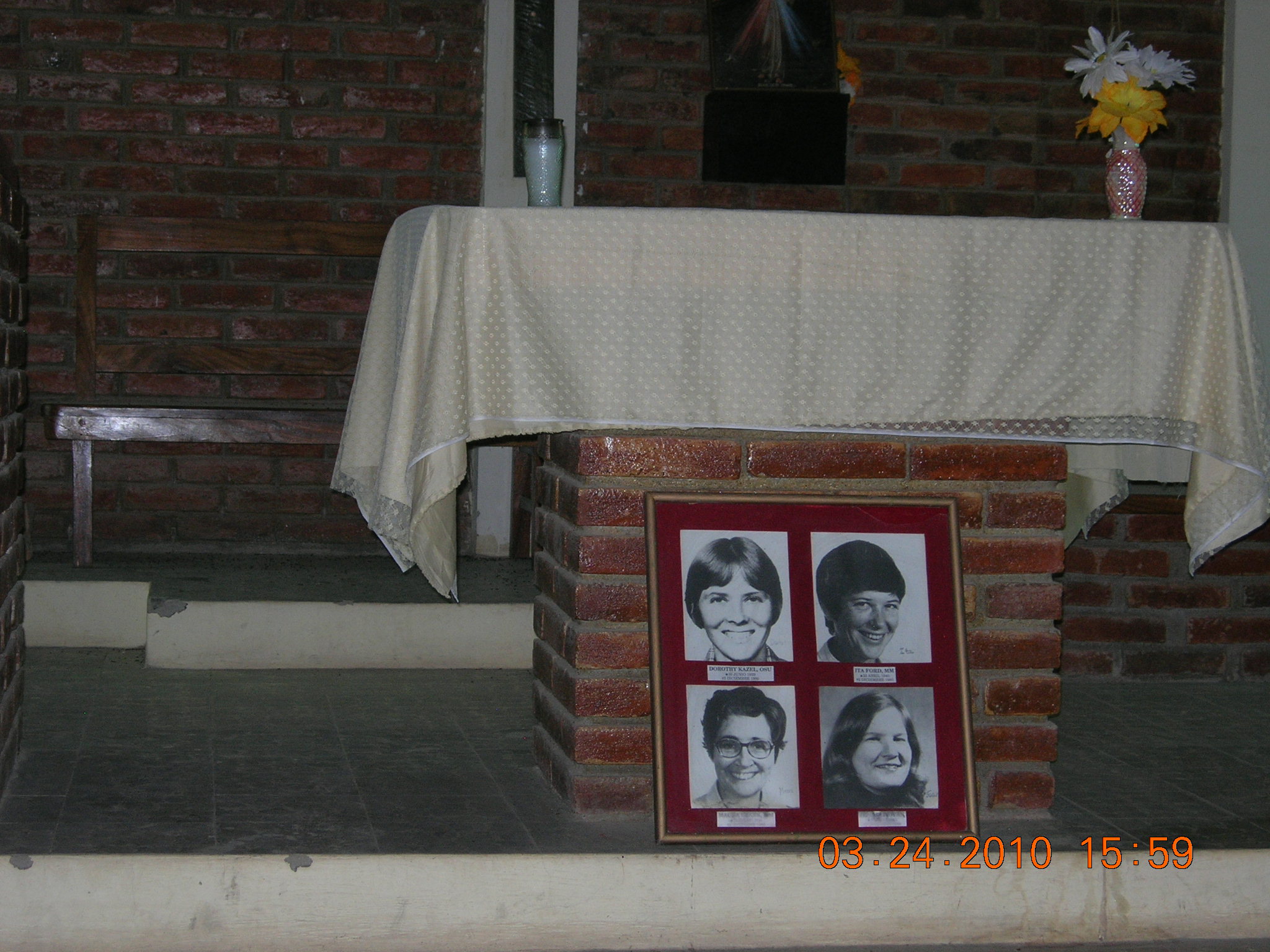
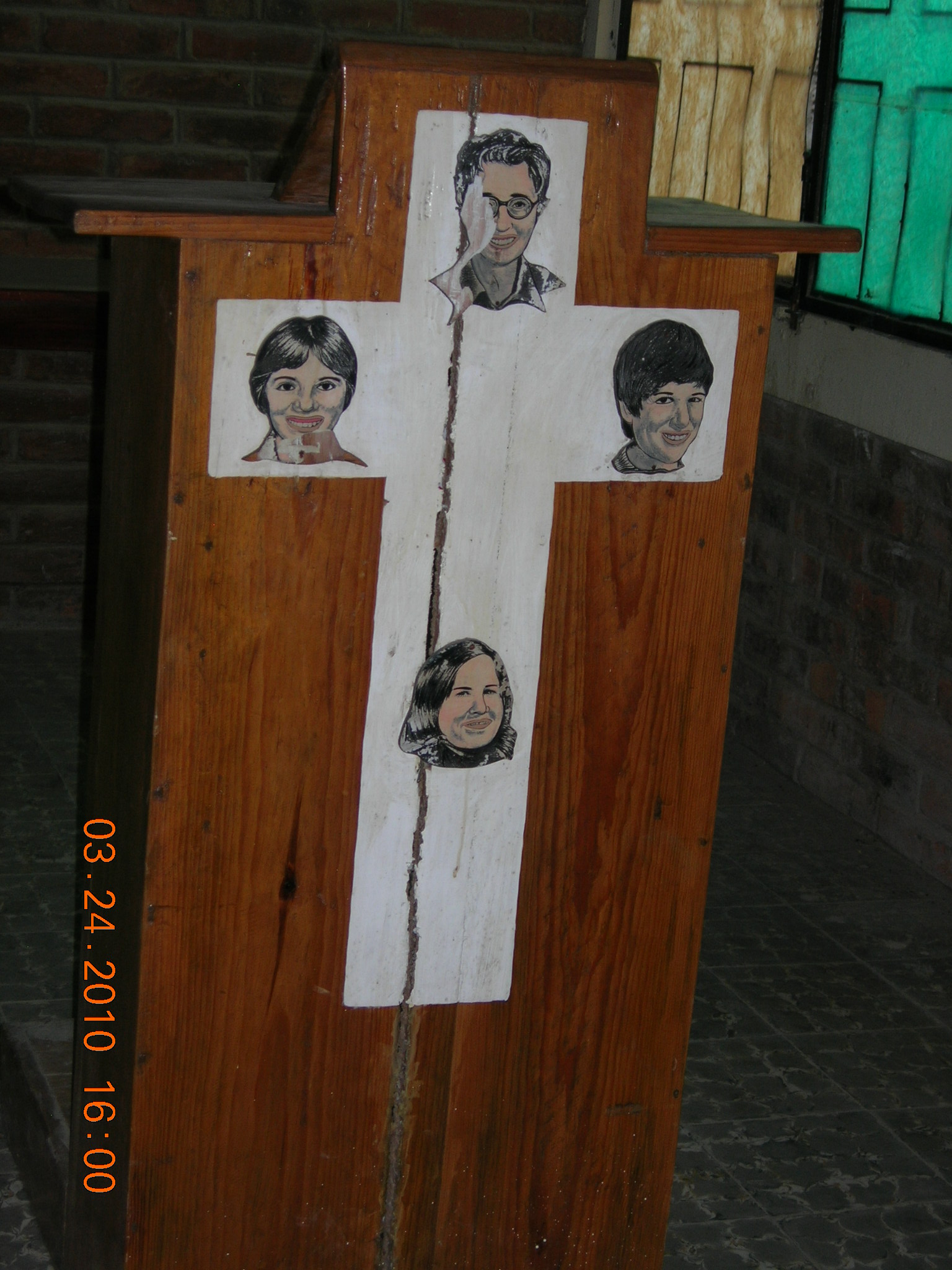
Now near the site of the common grave is a small chapel along with a monument to the women.

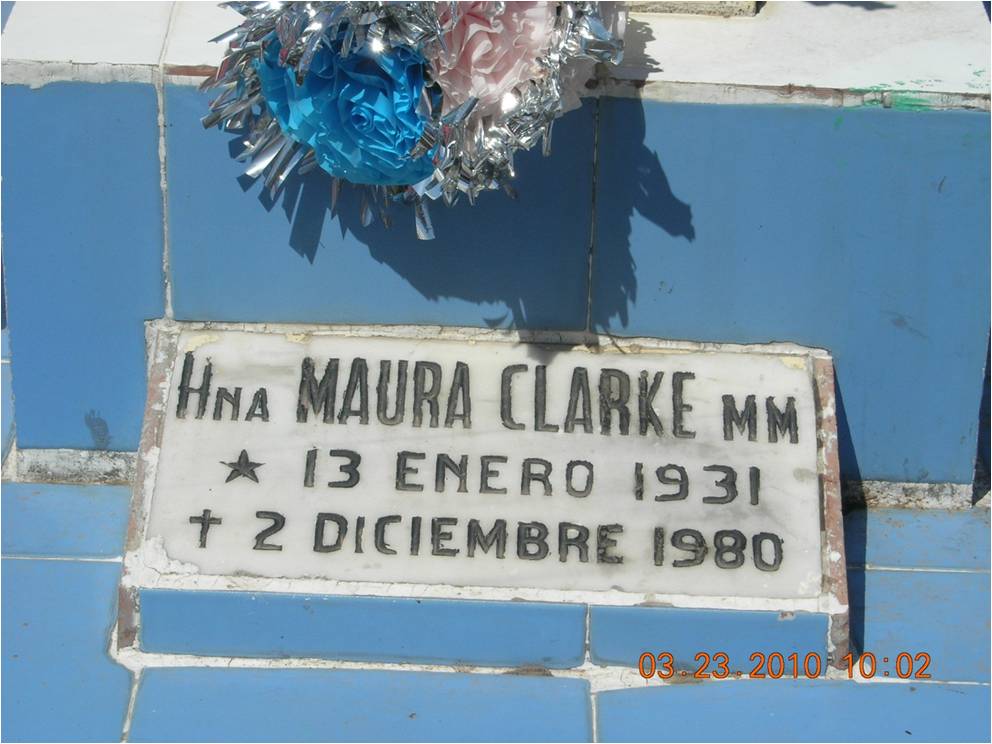
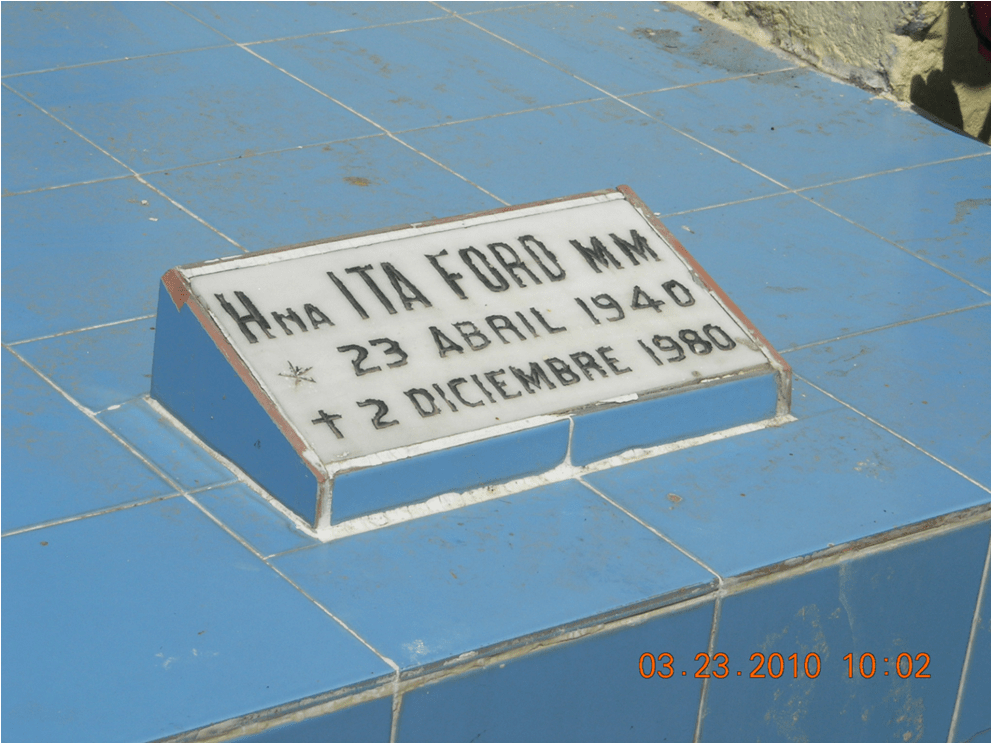
Soon after the murders, Sisters Clarke and Ford were buried where they had served, in accordance with Maryknoll custom and practice. Our group visited the cemetery for a moment of prayer and reflection. Here are photos of the municipal cemetery of Chalatenango and their grave markers.

La Libertad

We did not visit the western coastal city of La Libertad, population around 30,000. This is where Ursuline Sister Dorothy Kazel and Maryknoll lay missionary Jean Donovan served. Here is a photo of the city.

The four women are now part of the religious heritage of El Salvador and the world. Every year on December 2nd (the date of their murders), there are pilgrimages to that country to commemorate and honor their religious faith, devotion, courage and service. Praise God!


[i]  See Post: The Four American Churchwomen of El Salvador (Dec. 12, 2011); Post: The December 1980 Murders of the Four Churchwomen in El Salvador (Dec. 14, 2011); Post: Non-Judicial Investigations of the 1980 Murders of the Four Churchwomen (Dec. 16, 2011); Post: Judicial Investigations and Criminal Prosecutions of the 1980 Murders of the Four Churchwomen in El Salvador (Dec. 18, 2011); Post: The Salvadoran Truth Commission’s Investigation of the Murders of the American Churchwomen (Dec. 19, 2011); Post: TVPA Lawsuit in U.S. Federal Court Over the Murders of the American Churchwomen (Dec. 20, 2011).


Annual Commemorations of Oscar Romero’s Life

Memory is important in all aspects of human life, especially when we consider religious and moral leaders and exemplars. Oscar Romero was such a man, and as we have seen, Oscar Romero is remembered in music, film, art and books.[1]

Perhaps the most important way he is remembered and honored, however, is the series of annual commemorations of his life on March 24th, the day he was assassinated in 1980. They happen in many places around the world.

Romero celebration @ Chapel, March 2000
El Salvador de Mundo

In San Salvador, the commemorations are especially poignant. The central event is a gathering of people from all over the world at the chapel where he was killed and where a special memorial service is held. Then the people march through the city, passing a traffic circle appropriately called “El Salvador de Mundo” (the Savior of the World), before going on to the Cathedral where Romero is buried. There a worship service with music is held in the plaza in front of the Cathedral.

I went to the 20th anniversary commemoration in 2000 with a group from Minneapolis’ Center for Global Education (CGE) of Augsburg College.[2] In 2010 for the 30th anniversary I went with a group organized by a Salvadoran NGO, Centro de Intercambio y Solidaridad (CIS).[3]

Both institutions participated in the previously mentioned central event. They also visited the chapel where Romero was murdered, his apartment across the street and the Cathedral where he is buried. On both occasions we went to Universidad de Centro America (UCA) to see the Romero Chapel and the Monsenor Romero Pastoral Center with its museum of the civil war.

Romero banner, March 2000
Romero banner, March 2010
CIS Romero banner, March 2010
German Romero banner, March 2010
Mass @ El Salvador de Mundo, March 2000

They both also organize other activities, including meetings with local economists and political scientists to learn about the history and current conditions of El Salvador.  Other common activities are concerts and trips outside the capitol to learn more about the country.

In 2000 we met with UCA’s Rector, Dean Brakeley, a U.S. citizen who came to El Salvador in January 1990 to take over the leadership of UCA two months after the murders of the previous Rector, Ignacio Ellacuria, and his five brother Jesuits. Brackley’s “deepening analysis of the plight of the poor would connect the dots between Medellin and the complex inequities built into trade agreements, global capitalism, immigration policy and the war on terror.” All of this analysis always was within the theological understanding that “God is with the poor, making them ambassadors to the rest of us, evangelists who invite us to save ourselves by responding to their plight.” Brackley taught theology at UCA, but he identified a special role for himself in educating U.S. and European visitors to El Salvador about the realities of poverty and oppression in that part of the world and the roles played by the U.S. in helping to maintain that situation. Brackley died of pancreatic cancer in El Salvador on October 16, 2011.[4]

In the 2000 trip we learned about the work of Equipo Maiz, the Salvadoran NGO. We saw a special art exhibit about Romero in Parque Cuscatlan.

Our 20th anniversary group traveled to Oscar Romero’s home town of Ciudad Barrios in the northeastern part of the country. There we saw the house where he was born, the town’s church and the Radio Romero studio. We even had one day of relaxation on a beach on the Pacific Ocean.

In 2010 we again visited the chapel where Romero was murdered, his apartment across the street and the Cathedral where he is buried. We went to the Presidential Theater to see a new documentary film, “Romero by Romero.” I was touched to see the portion of the film showing Romero walking around a poor area and warmly greeting and touching the people he met without a lot of ceremony.

We met in 2010 with the UCA Rector, Father Jose Maria Tojeira, S.J. He was an amazingly light-hearted man. He told us he was new to UCA in November 1989 and lived nearby, but not on the campus. During the night of November 18th he heard gunfire and thought there must have been a skirmish between the Salvadoran security forces and the guerrillas. The next morning he went to the campus, and was one of the first people to see the dead bodies of his six fellow Jesuits and their cook and her daughter. He nonchalantly said, “That morning I thought I was the next one to be killed.” Later that day he went to his office and found faxed messages of support and solidarity from people all over the world. Then in the same nonchalant manner, he said he thought, “Well, maybe I am not the next to be killed.”

Romero mural & bomb shell, Cinquera
Helicopter, Cinquera

In 2010 we visited towns (San Isidro and Victoria) in the Department of Cabanas, where we learned about current controversies over gold mining and murders and death threats of people opposed to the mining. Another village (Cinquera) in the Department of Chalatenango on our itinerary was heavily damaged in the civil war, and a damaged helicopter sits on a pedestal in the town square.[5]

We were fortunate in 2010 to have in our group Dr. Marian Mollin, An Associate Professor of History at Virginia Tech University. She is working on a historical biography of Sister Ita Ford, who was one of the four American church women murdered in El Salvador in December 1980.[6] Professor Mollin shared her insights into Sister Ford and the other sisters on our visits to where the women were murdered and where they are buried; I will discuss these visits in a future post about the four church women.

U.S. Embassy, San Salvador

We also had a meeting 2010 at the new and very large U.S. Embassy with U.S. officials. There we learned the current U.S. perspective on El Salvador. We asked them tough questions on the U.S. position about gold mining in the country and the current violence directed at anti-mining activists.

My 2000 trip with CGE was my second trip with them. I went to El Salvador for the first time in 1989 with CGE. My 2010 trip with CIS was also my second trip with them. My other trip was in 2003 to be an election observer.

I was not aware of Oscar Romero during his life. I give thanks to God for helping me to discover him starting in 1989. He was and is a truly inspiring, brave, wonderful human being, servant of God and Christian.


[1] Post: Remembering Oscar Romero in Music (Oct.14, 2011); Post: Remembering Oscar Romero in Film (Oct. 15, 2011); Post: Remembering Oscar Romero in Art (Oct. 16, 2001); Post, Remembering Oscar Romero in Books (Oct. 17, 2011).

[2] Center for Global Education, http://www.augsburg.edu/global. CGE also usually organizes November trips for the commemoration of the six Jesuits and December trips for honoring the four American church women.

[3]  Centro de Intercambio y Solidaridad, http://www.cis-elsalvador.org. CIS also usually organizes November trips for the commemoration of the six Jesuits and December trips for honoring the four American church women. In addition, CIS has regular election observation missions, Spanish and English language courses and grassroots organizing activities.

[4] Dean Brackley on the 20th Anniversary of the Jesuit Martyrs of El Salvador, http://www.youtube.com/watch?v=lHywPAqj4Eo (Nov. 1, 2009); Mike, Dean Brackley returns to El Salvador, http://centralamericanpolitics.blogspot.com ( Sept. 24, 2011); Jesuit who replaced slain Salvadoran priests dies, Nat’l Catholic Reporter (Oct. 17, 2011).

[5]  There is a new documentary film about the war in Cinquera that I have not yet seen. (Echeverria, A beautiful documentary about the war in El Salvador surprises in Biarritz [France], http://www.diariocolatino.com (Sept. 30, 2011)(Google English translation).)

[6] Virginia Tech Univ., Marian Mollin, Ph.D., http://www.history.vt.edu/Mollin.

Perryite Laments Misuse of His Hometown by Michelle Bachmann

I grew up in Perry, Iowa. I know Perry, Iowa.[1] And Michelle Bachmann is no Perryite.

Last week she chose my hometown to sign a pledge to construct a fence on the entire U.S.-Mexico border and to criticize Texas Governor Rick Perry’s immigration policies or actions. She said she chose to do this in this Iowa town because its population is now 32% Hispanic due to a meat-packing plant in the town and because it just happens to have the same name as her Republican rival.[2]

When I was growing up in the town in the 1950’s there were no Hispanics and very few black people. It was a very plain “white bread” place. But it was not a town of bigots. It has produced many people who now live in the town and many different parts of the U.S. and the rest of the world and who quietly contribute to making the world a better place.

Mrs. Bachmann, quit spreading your views in Perry, Iowa and elsewhere! I am happy your campaign fundraising is falling off. Soon, I hope, you will be forced to exit the national stage.


[1]  Post: Growing Up in Small Town Iowa (Aug. 23, 2011).

[2]  Glover, Michelle Bachmann Pledges Border Fence with Mexico, Blasts Rick Perry Over Immigration, www. huffingtonpost (Oct. 15, 2011)(dateline: Perry, Iowa); Gabriel, For Bachmann, a Bid to Reconnect in Iowa, N.Y. Times (Oct. 17, 2011)(dateline: Perry, Iowa).


Remembering Oscar Romero at Westminster Abbey

Westminster Abbey, London, UK
Romero Statue, Westminster Abbey, London, UK

In 1998 Westminster Abbey in London opened its gallery of Christian Martyrs of the Twentieth Century. Their 10 statues are set in outside niches above the main entrance. The Abbey did so to proclaim that the 20th century was one of Christian martyrdom greater than in any previous period in the history of the church.[1]

In niche number 6 is the statue of Oscar Romero. He stands between the statues of Dr. Martin Luther King, Jr., the great U.S. civil rights leader and preacher, and Dietrich Bonhoeffer, the German Lutheran pastor and theologian who was executed by the Nazi regime just before the end of World War II for his involvement in a plot to assassinate Adolph Hitler.[2]

The biographical essay about Romero in a book about this gallery of martyrs is by Philip Berryman, an U.S. liberation theologian and leading authority on Christianity in Central and South America.

Berryman was in El Salvador in March 1980 and heard Romero’s famous homily ordering the military to stop the repression. Immediately afterwards, Berryman said he expressed his amazement at Romero’s boldness in saying what the Salvadoran military officers must have thought was treasonous. The next day when Berryman heard that Romero had been shot, he rushed to the hospital only to find out that Romero had died. Shortly after the assassination, he reports that Ignacio Ellacuria, the Rector of the Universidad de Centro America (UCA), celebrated a mass and said that with Archbishop Romero, God had visited El Salvador.[3]

Berryman recounts the familiar story about Romero’s being conservative and soft-spoken when he was appointed Archbishop in early 1977 and being converted to social and political justice after the murder of his friend, Father Rutilio Grande. To the same point, he quotes another friend of Romero, Jesuit priest and liberation theologian at UCA, Jon Sobrino, who said that when Romero gazed “at the mortal remains of Rutilio Grande, the scales fell from his eyes. Rutilio had been right! The kind of pastoral activity, the kind of church, the kind of faith he had advocated had been the right kind after all. . . .  [I]f Rutilio had died as Jesus died, if he had shown that greatest of all love, the love required to lay down one’s very life for others–was this not because his life and mission had been like the life and mission of Jesus? . . . Ah then, it had not been Rutilio, but Oscar who had been mistaken! . . .  And Archbishop Romero , , , [made] a decision to change.” In short, Grande’s life and death gave Romero a new direction for his life and the strength to pursue it.[4]

Romero, according to Berryman, prepared his homilies in consultation with a team of priests and lay people to review the situation in the country. Then he would write the homily from his notes, the newspapers of the week and the Biblical texts and commentaries. The homilies themselves usually lasted about 45 minutes, mostly devoted to a systematic and thematic reflection on the Biblical texts for the day, but also with Romero’s observations on the human rights violations of the prior week.[5]

Berryman also comments on the strained relationship between Romero and the U.S. government. Early in 1978, for example, Romero met with Terrance Todman, the U.S. Under-Secretary of State for Inter-American Affairs, who urged Romero to have a less confrontational and more constructive relationship with the Salvadoran government. Romero immediately responded that the U.S. and Rodman did not understand what was happening in El Salvador. “The problem is not between Church and government, it’s between government and people. . . . It’s not the church, much less the archbishop! If the government improved its treatment of the people, we will improve our relations with the government.”[6]

The Anglican Dean of Westminster Abbey came to El Salvador for the 20th anniversary of Romero’s assassination in 2000 and participated in a mass at the El Salvador de Mundo (the Savior of the World) traffic circle lead by the Roman Catholic Archbishop of Los Angeles. I cried during the service when Salvadorans passed the peace to me after all my country had done to support the Salvadoran government during their civil war.


[1] Andrew Chandler, Christian Martyrs of the Twentieth Century (Westminster Abbey; London 1999); Andrew Chandler (ed.), The Terrible Alternative–Christian Martyrdom in the Twentieth Century (Cassell; London 1998).

[2] Christian Martyrs of the Twentieth Century at 3, 8, 10, 13.

[3]  The Terrible Alternative at 159-60. Father Ellacuria, of course, was one of the six Jesuit priests murdered by the Salvadoran military in November 1989. (See Post: International Criminal Justice: The Salvadoran Murders of the Jesuit Priests (June 2, 2011).)

[4]  Id. at 160, 164-65; Jon Sobrino, Archbishop Romero: Memories and Reflections at 9-10 (Orbis; Maryknoll, NY 1990); Post: Oscar Romero, A Saint for All People and All Time (Oct. 5, 2011). Jon Sobrino, whom I met at UCA in April 1989, escaped being murdered with his fellow Jesuits in November 1989 because he was lecturing in Southeast Asia. (Jon Sobrino, Ignacio Ellacuria, et al., Companions of Jesus: The Jesuit Martyrs of El Salvador at 4-9 (Orbis Books; Maryknoll, N.Y. 1990).)

[5]  The Terrible Alternative at 167-68.

[6]  Id. at 170.

Remembering Oscar Romero in Books

As we have seen, Oscar Romero is remembered in music, film and art.[i] Now it is the turn for books.

There are many books about Oscar Romero. Here are comments about those in my personal library, most of which have been cited in my posts about Romero.

The leading biography is by Father James R. Brockman, S.J., The Word Remains: A Life of Oscar Romero (Orbis; Maryknoll, NY 1982). Brockman interviewed friends and associates of the Archbishop and examined Romero’s files and archives. Another biography is Placido Erdozain, Archbishop Romero: Martyr of El Salvador (Orbis; Maryknoll, NY 1981) (John McFadden & Ruth Warner, Translators).

Four books have the words of Romero himself (in English translation).

His diary was begun on March 31, 1978, after he had been Archbishop for just over a year, and the last entry was March 20, 1980, just four days before he was assassinated. For these two years he records many of the events, meetings and conversations of his busy life. His conflicts with the Vatican, his fellow Salvadoran bishops and with the U.S. government are mentioned as are some of the death threats that he received. Although he discusses some of his own thoughts, it is not a diary of the soul or a private record of his spiritual life. (Archbishop Oscar Romero, A Shepherd’s Diary (St. Anthony Messenger Press; Cincinnati, OH 1993)(Irene B. Hodgson, Translator).)

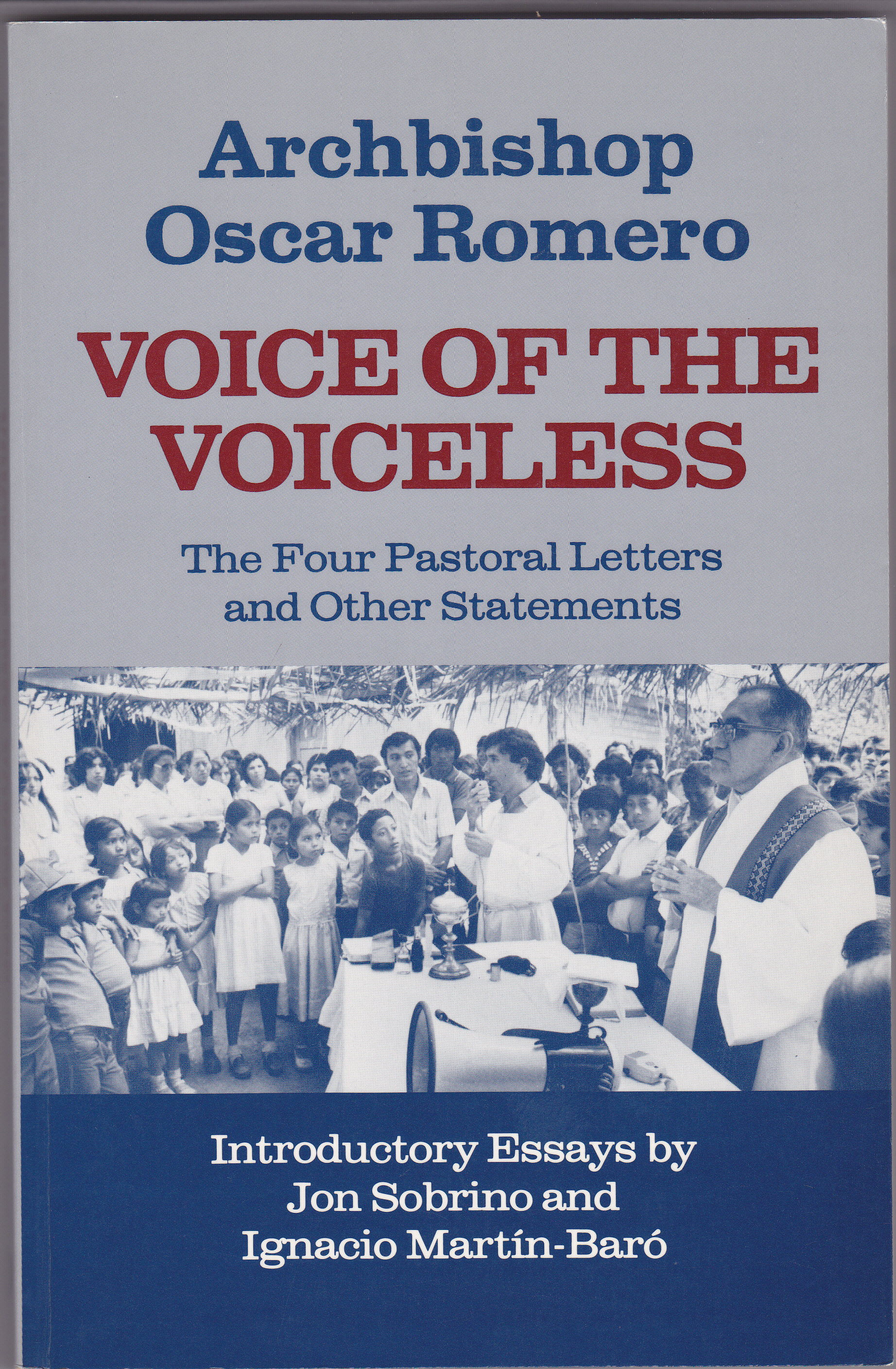
Three books contain extracts from Romero’s homilies, pastoral letters, interviews, statements and articles. They are essential in obtaining clear insight into his Christian and theological beliefs and his statements on human rights. (Oscar Romero, The Church Is All of You: Thoughts of Archbishop Oscar Romero (Winton Press; Minneapolis, MN 1984) (James R. Brockman, S.J., Translator & Compiler); Oscar Romero, The Violence of Love: The Pastoral Wisdom of Archbishop Oscar Romero(Harper & Row; San Francisco, CA 1988) (James R. Brockman, S.J., Translator & Compiler); Oscar Romero, Voice of the Voiceless: The Four Pastoral Letters and Other Statements (Orbis; Maryknoll, NY 1985) (Michael J. Walsh, Translator).)

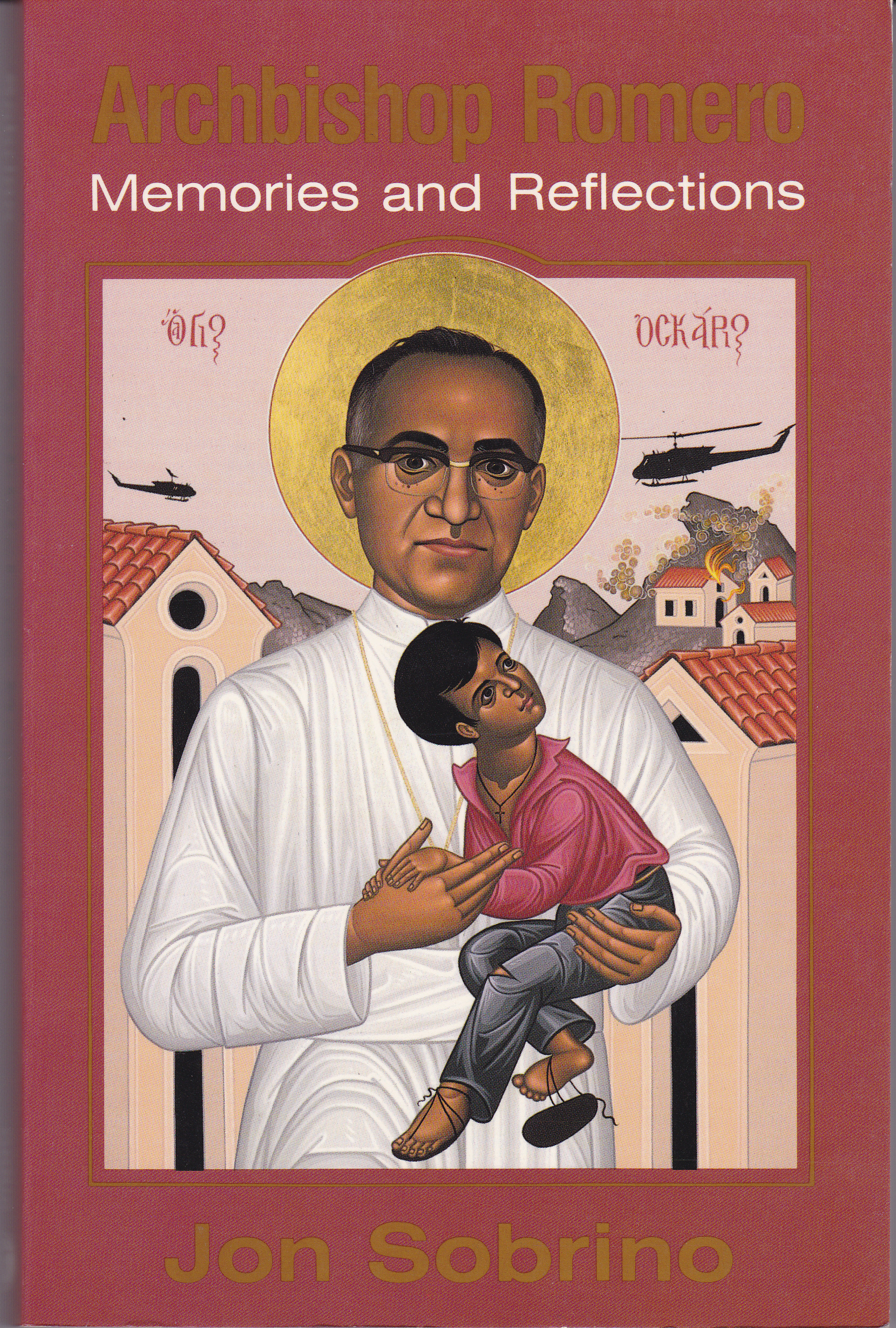
Three other books offer others’ memories and reflections on Romero. (Jon Sobrino, Archbishop Romero: Memories and Reflections (Orbis; Maryknoll, NY 1990)(Robert R. Barr, Translator); Marie Dennis, Renny Golden & Scott Wright, Oscar Romero: Reflections on His Life and Writings (Orbis; Maryknoll, NY 2000); Maria Lopez Vigil, Oscar Romero: Memories in Mosaic (EPICA; Washington, D.C. 2000)(Kathy Ogle, Translator)(fascinating collection of memories of Romero from hundreds of Salvadorans chronologically organized as multiple images of the Archbishop).)

Romero’s inclusion in Westminster Abbey’s gallery of Christian martyrs of the 20th century is set forth in Andrew Chandler, Christian       Martyrs of the Twentieth Century(Westminster Abbey; London 1999); Andrew Chandler (ed.), The Terrible Alternative–Christian Martyrdom in the Twentieth Century (Cassell; London 1998).

Wonderful photographs of Romero as a young boy, seminarian, priest and Archbishop along with the shocking ones of him just after he had been killed and of his funeral are found in Romero (Equipo Maiz, El Salvador 2000).

Music about Romero appears on two CD-ROMs: Romero (Equipo Maiz 2000); Homenaje a Monsenor Romero–30 Aniversario– Marzo 1980-2010 (El Salvador Government 2010).

——————————————————————

[i] Post: Remembering Oscar Romero in Music (Oct.14, 2011); Post: Remembering Oscar Romero in Film (Oct. 15, 2011); Post: Remembering Oscar Romero in Art (Oct. 16, 2001).