Another Perspective on the Parable of the Good Samaritan

Another perspective on the famous Parable of the Good Samaritan was offered by Associate Pastor Brennan Blue in his July 23rd sermon at Minneapolis’ Westminster Presbyterian Church.[1]

Rev. Brennan Blue
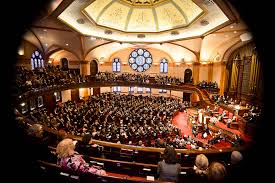
Westminster Presbyterian Church


The Holy Scripture

The Parable itself is expressed in Luke 10: 25-37 (NRSV) as follows:

  • “Just then a lawyer stood up to test Jesus. ‘Teacher,’ he said, ‘what must I do to inherit eternal life?’ [Jesus] said to him, ‘What is written in the law? What do you read there?’ [The lawyer] answered, ‘You shall love the Lord your God with all your heart, and with all your soul, and with all your strength, and with all your mind; and your neighbor as yourself.’ And [Jesus] said to [the lawyer], ‘You have given the right answer; do this, and you will live.’”
  • “But wanting to justify himself, [the lawyer] asked Jesus, ‘And who is my neighbor?’ Jesus replied, ‘A man was going down from Jerusalem to Jericho, and fell into the hands of robbers, who stripped him, beat him, and went away, leaving him half dead. Now by chance a priest was going down that road; and when he saw him, he passed by on the other side. So likewise a Levite, when he came to the place and saw him, passed by on the other side. But a Samaritan while traveling came near him; and when he saw him, he was moved with pity. He went to him and bandaged his wounds, having poured oil and wine on them. Then he put him on his own animal, brought him to an inn, and took care of him. The next day he took out two denarii, gave them to the innkeeper, and said, ‘Take care of him; and when I come back, I will repay you whatever more you spend.’ Which of these three, do you think, was a neighbor to the man who fell into the hands of the robbers?’” [The lawyer] said, ‘The one who showed him mercy.’ Jesus said to him, ‘Go and do likewise.’”

The Sermon

 In “the parable of the Good Samaritan, why it is that even the most well-trained priest or Levite may walk on by a neighbor in need?”

“On the one hand, this parable reminds us that we are called to put our faith and love into action, plain and simple. Yet this parable occurs in a vacuum. There is one person of need, one act of love to counter the one great injustice at hand.” (Emphasis added.)

 “But what happens when there’s another neighbor in need along the way? Do you set aside the first to help the second? What if each step brings another worry or need, bigger and more complex than the one before it?”

“Perhaps you know the feeling. Confronted with a complex constellation of needs and problems surrounding our lives and communities, it’s easy to become overwhelmed. Another election argument, another policy change, another broken relationship. Another act of hate and discrimination, another single parent facing another night on the street with her family, another police shooting in our city. Another setback, another neighbor in need.”

“How can you or I keep up with it all, let alone make a difference? Maybe it’s best to just take a break from the headlines, find a new game on our smartphone and just sort of take our mind off of things.”

Apathy subdues our action. Despair clouds our hope. Distraction does exactly what it describes – it dis-tractions us and robs us of a way forward. These invasive influences make it easier to check out than dig in.” (Emphasis added.)

“I’ve always sort of assumed that the young lawyer in this parable is asking the question ‘who is my neighbor’ from a relatively blank slate. But it’s clear that this young lawyer knows his stuff. Remember, Jesus asks him what is written in the Scriptures regarding eternal life, and that beautifully succinct response of ‘you shall all love God, and love your neighbor as yourself’ comes from him.”

“So what if his follow-up question – who is my neighbor? – is coming less from a place of innocence or ignorance and more from a place of knowing exhaustion? What if this young lawyer has eyes to see the many people around him who represent his neighbor and with a dizzying head is simply trying to figure out where to even begin?” [2]

“I found help and hope for this very question on the second workday of our high school ]mission] trip while building new trails at Young Gulch, a beloved national forest area now closed to the public due to past fire and flooding damage. With hardhats, picks, shovels, ropes and rock bars, we hiked a mile and half up and into our new worksite carrying the hope of a new day. It was there, while shoveling, sawing, lifting and hauling, that we were introduced to the art of trail building and the important work of finding the critical edge.” (Emphasis added.)

“In terms of trail building, the critical edge forms the crucial guiding line from which you begin and orient your work. It is the marker between path and planet, trail and wilderness. Your footing and direction are both determined from there, and though countless shrubs and boulders may lie ahead and around, the critical edge marks where you will carve out your 30” wide path, and that is what makes the work doable. So for our team of 30 students and 6 adults, this critical edge became our path by which to walk and work. And work we did! It was like being blessed with the gift of traction. Our critical edge to guide us, we literally dug in and blazed new trails that others, we hope, may follow and enjoy for years to come.” (Emphases added.)

“This process of finding traction for our work was brought home in a new workshop that we incorporated into our mission trips this year. A workshop called ‘Mission Possible.’

“Essentially, Mission Possible is an exercise that challenges multiple groups to take on a complex and often overwhelming social problem using a very limited set of ‘dealt resources.’ The creative challenge is to find which crucial slice of the problem your team wants to focus on and then leverage your limited resources to make the greatest possible impact.” (Emphases added.)

“Middle schoolers using glass jars to build empathy. High school students using wooden baskets to raise awareness via social media. Neither of these ideas will knock out the layered, complex problems of bullying and climate change, but they do provide a way forward, a critical edge to ward off apathy and dig into action. The goal here is to root out those invasive influences of distraction and despair, and then live out our calling by putting our faith into action. We don’t have to move every boulder, but we do need to discern and then do our part.” (Emphasis added.)

“That, I believe, is what Jesus is getting at in this parable: connecting exposed belief to explicit action. Even if this young lawyer is asking ‘who is my neighbor’  from a place of overwhelming apathy and despair, there is hope is Jesus’ simple response. Know who you are and who your neighbors are, and even if can only reach out to one, do it. Put your faith into action, even if others are walking by. Be that very inspiration. Host a book read; plant a rain garden; start a justice choir; advocate for mental health programs. Find your critical edge and dig in.” (Emphases added.)

“Friends, this is the work we have been doing together as a community throughout the entire Open Doors, Open Futures process. . . . In fact, in seeking to find our own critical edge, Westminster has set aside serious time . . . to ask of God and one another this young lawyer’s question – “who is our neighbor?” In the midst of our work and worship, we’ve [been] wrestling and discerning questions about our gifts, resources, and partnerships, seeking to understand where God is calling us as a community. “

“By engaging these very questions, we are finding action in place of apathy, hope in the midst of despair, and the blessing of traction for our ministry even in our changing downtown context.”

“That’s what the love of God and neighbor demands of us: find your place of calling, your critical edge, and dig in. It’s as simple as that and as hard as that.” (Emphasis added.)

“In the continuum of apathy and action, where do you fall today? What are your gifts? Who is your neighbor? Have you found your critical edge? May God bless us with traction for lives and ministries.” (Emphasis added.)

The Prayer of Confession

Before the reading of the Holy Scripture and the sermon, the congregation joined in the following prayer of confession:

  • “Gracious God, our sins and sorrows are too heavy to carry, too real to hide, and too deep to undo. Forgive what our lips tremble to name and what our hearts can no longer bear. Set us free from a past that we cannot change and open to us a future in which we can be changed. May the light of your love open our eyes to the grace that is already calling us home. By your grace, may we grow ever more in your way of justice, mercy, and peace.”

Conclusion

Another frequent, and appropriate, interpretation of this parable emphasizes that the Levite and the priest who passed by the injured man were of higher status in Israel at the time whereas the Samaritans were not well-regarded. Thus, one’s status in the community is not the mark of a good neighbor. Instead, what counts is what one does to help the injured man. In this instance, the Samaritan is clearly a good neighbor.

However, the overall message of Jesus, for me, is that anyone and everyone is my neighbor. Thus, the question arises as to whether and how any individual can help everyone. The answer to this question is clearly “No,” and the result of such reflection, as the sermon suggests, can be incapacitation of the individual and failure to be kind to a neighbor, failure to provide help to a neighbor.

That leads to the second foundation of my Christian faith. God knows that we fail and yet forgives us. The most powerful statement of God’s forgiveness comes in another story by Jesus, The Parable of the Prodigal Son (Luke 15: 11-31).

But Jesus is not calling each of us to try to do everything that needs doing in the world.

Important in my own struggles with this dilemma is the following homily often attributed to my personal saint, Archbishop Oscar Romero, but actually written in November 1979 by Kenneth Edward Untener, the Roman Catholic Bishop of Saginaw, Michigan, for a memorial mass for deceased priests:[3]

  • “The kingdom is not only beyond our efforts, it is beyond our vision.”
  • “We accomplish in our lifetime only a tiny fraction of the magnificent enterprise that is God’s work. Nothing we do is complete, which is another way of saying that the Kingdom always lies beyond us.”
  • “No statement says all that could be said. No prayer fully expresses our faith. No confession brings perfection. No pastoral visit brings wholeness. No program accomplishes the church’s mission. No set of goals and objectives includes everything.”
  • “That is what we are all about. We plant seeds that one day will grow. We water seeds already planted, knowing that they hold future promise. We lay foundations that will need further development. We provide yeast that produces effects beyond our capabilities.”
  • “We cannot do everything, and there is a sense of liberation in realizing that. This enables us to do something, and to do it very well. It may be incomplete, but it is a beginning, a step along the way, an opportunity for the Lord’s grace to enter and do the rest.”
  • “We may never see the end results, but that is the difference between the master builder and the worker. We are workers, not master builders; ministers, not messiahs. We are prophets of a  future that is not our own.”

Rev. Blue’s questions at the end of his sermon are very helpful. Find your place of calling or critical edge. Then, dig in and do what you can to help your neighbor, knowing and accepting that it may not be perfect or complete.

Another Presbyterian pastor and author, Frederick Buechner, puts it this way. Each of us needs to find his or her vocation which “comes from the Latin vocare, to call, and means the work a man is called to by God. . . . The kind of work God usually calls you to is the kind of work (a) that you need most to do and (b) that the world most needs to have done. . . . The place God calls you to is the place where your deep gladness and the world’s deep hunger meet.”[4]

Vocation, for me, implies a dedication to a certain kind of work or service over a period of time. A one-time effort probably does not count. On the other hand, in my opinion, vocation does not necessarily require a lifetime commitment to doing a certain thing. Indeed, an individual’s circumstances change over time, and what was a vocation for one period may not be appropriate for another period. Thus, an individual may have several vocations over time, some of which might be simultaneous. This at least has been true for me.

Some people may decide that they shall start engaging in a particular vocation. They know from the start that a certain course of action shall be their vocation, perhaps inspired by what they believe to be the word of God. Others discover after the fact that what they have been doing for a period of time has been and is their vocation. I am a member of the latter group.

Deciding on what shall be or is a vocation should be, in my opinion, a matter of reflection, meditation and prayer and in some cases discussion with others to assist in discerning a true vocation.[5]

===============================================

[1] The bulletin for the service and the text of the sermon are available on the church’s website.

[2] Another interpretation of this Parable does not see the lawyer as honestly seeking guidance from Jesus. Instead the lawyer is seen as cleverly asking trick questions to elicit answers from Jesus that could be twisted to incriminate him. Jesus, however, more cleverly declines to answer the questions and instead induces the lawyer to answer his own questions, the second  after Jesus tells a story. (My Christian Faith, dwkcommentaries.com (April 6, 2011).)

[3] Ken Untener, The Practical Prophet : Pastoral Writings at iii (Paulist Press; New York 2007) (Untener called this prayer “Reflection on Ministry”).

[4] See My General Thoughts on Vocation, dwkcommentaries.com (Feb. 6, 2014).

[5] See My Vocations, dwkcommentaries.com (Feb. 23, 2014).


President Eisenhower’s Secret Campaign Against Senator Joe McCarthy

During the first two years of President Eisenhower’s first term (1953-1954), U.S. Senator Joseph McCarthy (Rep., WI), was garnering national attention with his reckless charges of communist infiltration of the U.S. government, including the President’s beloved U.S. Army, which he had brilliantly served during World War II. Yet Ike, as the President was known, did not publicly confront McCarthy.

Now David A. Nichols, a retired history professor at Kansas’ Southwestern College and an authority on the Eisenhower presidency, has provided great details on Ike’s behind-the-scenes campaign against McCarthy in Ike and McCarthy: Dwight Eisenhower’s Secret Campaign Against Joseph McCarthy (Simon & Schuster, New York, 2017).

According to Nichols, Ike drew upon his experience in strategic deception as Supreme Allied Commander of the Allied Expeditionary Force in Europe in World War II to orchestrate the campaign against McCarthy. Keys to this strategy were the President’s avoiding public criticism of McCarthy and deflecting journalists’ questions about the Senator at presidential press conferences and instead having presidential subordinates issue statements and take actions against McCarthy. Those “subordinates” included Sherman Adams, White House Chief of Staff; James Hagerty, White House Press Secretary; Fred Seaton, Assistant Secretary of Defense; Herbert Brownell, Jr., Attorney General; William Rogers, Deputy Attorney General; John Foster Dulles, Secretary of State; and Henry Cabot Lodge, Jr., Ambassador to the United Nations.

An important part of this history was the relationship between Roy Cohn, who was McCarthy’s chief counsel, and a handsome young staffer on McCarthy’s committee, G. David Schine, who after being drafted as a private into the U.S. Army obtained preferential treatment by the Army as a result of pressure from Cohn and McCarthy. Below are photographs of the two men.

Roy Cohn
G. David Schine

When President Eisenhower learned of the special treatment and the reasons therefor, he instigated a secret Army investigation of these matters. The subsequent report of that investigation was publicly released and prompted fiery denunciations of the Army by McCarthy and Cohn, resulting in the now infamous Army-McCarthy hearings of 1954.

The implicit message of this report was Cohn and Schine’s having a homosexual relationship, which at the time was widely condemned. At the subsequent Army-McCarthy hearing, Army counsel, Joseph Welch, alluded to this relationship when he questioned another McCarthy aide, James Juliana, about the origins of a photograph that had been altered. The question: “Did you think it came from a pixie?,” which Nichols says was a sly allusion to the alteration’s having been made at the direction of Cohn, who was believed to be gay. McCarthy interrupted: “Will the counsel for my benefit define—I think he may be an expert on that—what is a pixie?” Welch’s response: “Yes, I should say, Mr. Senator, that a pixie is a close relative of a fairy [a widely used term for a homosexual at the time]. Shall I proceed, sir? Have I enlightened you?” The room erupted in laughter. (Nichols at 239.)[1]

The hearing’s climax occurred on June 9, 1954, when Welch sarcastically asked Cohn about the important committee work that he and Schine purportedly had done on their weekends together and taunted him to “hurry” to “act before sundown” to discover communists anywhere. McCarthy sought to counter this attack on Cohn and McCarthy by interrupting to say that Welch’s law firm had “a young man named Fisher . . . who has been for a number of years a member of an organization which was named, oh years and years ago, as the legal bulwark of the Communist party.” (Nichols at 280.)

Welch, after finally getting McCarthy’s attention, said, “Senator, I never really gauged your cruelty or your recklessness. Fred Fisher is a young man who went to the Harvard Law School and came into my firm and is starting what looks to be a brilliant career with us. Little did I dream that you would be so reckless and cruel as to do an injury to that lad. . . . If it were in my power to forgive you for your reckless cruelty I would do so. I like to think I am a gentle man, but your forgiveness will have to come from someone other than me.” (Nichols at 280-81.)

McCarthy, ignoring this plea, resumed his attack on Fisher. Welch responded, “Let us not assassinate this lad further, Senator. You have done enough. Have you no sense of decency, sir, at long last? Have you no sense of decency?” (Id.)

At the time, many thought that Welch was surprised by this attack on Fisher, but there was no such surprise. Indeed, some thought that Welch’s cross examination of Cohn was taunting McCarthy so that he would attack Fisher and that Welch’s “no sense of decency” speech was rehearsed. (Nichols at 280-82.)[2]

Six months later, on December 2, 1954, the U.S. Senate by a vote of 67 to 22 passed a resolution condemning McCarthy for certain of his actions as a U.S. Senator. Thereafter he had virtually no influence in the Senate or the country at large. He died on May 2, 1957. (Nichols at 292-97.)

Postscript

In 2012, I met author Nichols when he gave a lecture at the Minnesota Historical Society on President Abraham Lincoln’s involvement in issues related to the U.S.-Dakota War of 1862,[3] a subject in which I had an interest and about which have written blog posts.[4] Later when I had written blog posts about Joseph Welch and his representing the Army in the McCarthy hearings,[5] Nichols told me he was writing a book about Eisenhower and McCarthy, and I provided him with materials I had collected. I was surprised and pleased when Nichols included this kind acknowledgement at the end of his just published book:

  • Nichols was “particularly indebted to Duane Krohnke, a retired Minneapolis attorney and authority on Joseph Welch, his fellow alumnus at Grinnell College in Iowa. Duane provided me with documents unavailable elsewhere, especially Fred Fisher’s account of the hiring of Welch as counsel for the Army-McCarthy hearings. Duane also connected me with Ann M. Lousin [Grinnell, 1964] and Nancy Welch [not Grinnell’s 1961 Nancy Welch], Welch’s granddaughter, both of whom provided important information about Welch and McCarthy.” (Nichols at 300.)

===============================================

[1] After Cohn died of AIDS in 1986, public speculation about his sexual orientation intensified. Some say that his relationship with Schine was platonic while others assert it was homosexual. In the HBO film of Tony Kushner’s “Angels in America: A Gay Fantasia on National Themes,” Al Pacino plays Cohn as a closeted, power-hungry hypocrite who is haunted by the ghost of Ethel Rosenberg as he lies dying of AIDS. It should also be noted that in 1973 Cohn was hired by Donald Trump to defend the Trump Management Corporation against charges of racial discrimination and Cohn thereby became a close friend and mentor to Mr.Trump.

[2]  See also U.S. Senator Joseph McCarthy’s Nemesis: Attorney Joseph Welch (June 4, 2012);  of “Good Night, and Good Luck: The Movie’s Offstage Hero, Joseph Welch,” Grinnell Magazine (Summer 2006).

[3] Nichols has written a fascinating book on this subject: Lincoln and the Indians: Civil War Policy and Politics (Minnesota Historical Society Press, 1978, 2000, 2012).

[4] Here are blog posts on this subject to dwkcommentaries.com: The U.S.-Dakota War of 1862 (Nov. 3, 2012); White Settler’s Contemporaneous Reaction to the U.S.-Dakota War of 1862 (Nov. 6, 2012); Abraham Lincoln’s Involvement in the U.S.-Dakota War of 1862 (May 21, 2013); U.S. Military Commission Trials of Dakota Indians After the U.S.-Dakota War of 1862 (June 11, 2013); President Abraham Lincoln’s Involvement in the Military Commission’s Convictions and Sentences of the Dakota Indians (June 24, 2013); The Sesquicentennial Commemoration of the U.S.-Dakota War of 1862 (Nov. 9, 2012); Commemoration of the 150th Anniversary of the Hanging of the “Dakota 38” (Dec. 26, 2012); Minneapolis and St. Paul Declare U.S.-Dakota War of 1862 “Genocide” (Jan. 12, 2013); Remembering the U.S.-Dakota War at Minneapolis’ Westminster Presbyterian Church (Part I) (Nov. 18, 2012); Remembering the U.S.-Dakota War at Minneapolis’ Westminster Presbyterian Church (Part II) (Nov. 25, 2012); Remembering the U.S.-Dakota War at Minneapolis’ Westminster Presbyterian Church (Part III) (Nov. 29, 2012); Personal Reflections on the U.S.-Dakota War of 1862 (Dec. 10, 2012).

[5] I am the author of “Good Night, and Good Luck: The Movie’s Offstage Hero, Joseph Welch,” Grinnell Magazine (Summer 2006); the biography of Welch in Newman (ed.), The Yale Biographical Dictionary of American Law (Yale Univ. Press, 2009); and the following posts on my blog (https://dwkcommentaries.com): Joseph Welch Before the Army-McCarthy Hearings (06/14/12); The U.S. Army’s Hiring of Joseph Welch for the Army-McCarthy Hearings (06/08/12); U.S. Senator Joseph McCarthy’s Nemesis: Attorney Joseph Welch (06/04/12); Attorney Joseph Welch’s Performance at the Army-McCarthy Hearings (06/06/12); President Dwight D. Eisenhower’s Involvement in the Army-McCarthy Hearings (06/10/12); Joseph Welch After the Army-McCarthy Hearings (06/12/12); and Legal Ethics Issues in the “Anatomy of a Murder Movie [in which Welch played the judge]” (06/27/12).  The joys of researching about Welch and other subjects are celebrated in Adventures of a History Detective, dwkcommentaries.com (April 5, 2011).


No Mention of Cuba in U.S. State Department’s Latest Report on Terrorism

On July 19, 2017, the U.S. State Department released its Country Reports on Terrorism 2016. One of its chapters lists these three countries as “state sponsors of terrorism:” Iran, Sudan and Syria. Other chapters discuss the terrorism records of most countries in the world.[1]

This Reports document, however, made no mention of Cuba or statement as to the reasons for this omission.[2] This was in sharp contrast to previous reports for the years 1981-2013, that listed Cuba as a “state sponsor of terrorism” (i.e., the government of a country that has “repeatedly provided support for acts of international terrorism”) and the removal of Cuba from that category for 2014 and 2015.

At the press briefing on the latest Reports, a journalist asked whether Secretary of State Tillerson himself had made the decision not to put Cuba back on the list of state sponsors since at his Senate confirmation hearing he had testified that he “wanted to examine the criteria under which Cuba was removed from the list” in 2015 for the year 2014.[3]

The State Department official responded: “Cuba was removed, and there is no requirement within the report for an individual chapter on every single country around the world. We produce chapters in the Country Reports based upon material, frankly, to include in the report. So it was assessed that there was not sufficient information there to provide a report this year on Cuba, but it was removed from the state sponsor list previously.”

Conclusion

The non-inclusion of Cuba as a “state sponsor of terrorism” in this latest report, in this blogger’s opinion, is the proper conclusion and perhaps is a sign that the Trump Administration’s rhetoric about Cuba is louder and stronger than its bite. Let us hope.

Moreover, the statement that the State Department did not have sufficient information about Cuban counterterrorism efforts to include Cuba in the latest report is disingenuous. From December 2014 through January 19, 2017 (the last full day of the Obama Administration), the U.S. and Cuba held discussions about their respective counterterrorism efforts, and on January 16, 2017 the two countries signed a Memorandum of Understanding on Law Enforcement that provided for cooperation on various matters, including “the fight against terrorism.” These discussions, although not a matter of public information, must have provided the U.S. with significant information about Cuba’s counterterrorism efforts.[4]]

=================================

[1] U.S. State Dep’t, Country Reports on Terrorism 2016 (July 19, 2017); U.S. State Dep’t, Press Release: State Department Releases Country Reports on Terrorism 2016 (July 19, 2017); U.S. State Dep’t, Press Briefing: Acting Coordinator for Counterterrorism Justin Siberell on the Release of Country Reports on Terrorism 2016 (July 19, 2017).

[2] Welsh, State Department drops Cuba entirely from annual detail of terrorist activity, McClatchy (July 19, 2017).

[3] Previous State Department reports about Cuba and terrorism have been discussed in posts to this blog. See posts listed in the “Cuba: State Sponsor of Terrorism?” section of List of Posts to dwkcommentaries—Topical: Cuba.

[4]  See these posts to dwkcommentaries: United States and Cuba Hold Second Law Enforcement Dialogue (May 19, 2016); U.S. and Cuba Discuss Counterterrorism Cooperation (June 10, 2016); President Obama Issues Presidential Policy Directive—United States-Cuba Normalization (Oct. 14, 2016); U.S. and Cuba Continue to Implement Normalization of Relations (Jan. 17, 2017).


U.S. Continues To Suspend Part of Its Embargo of Cuba 

On July 14 U.S. Under Secretary of State for Political Affairs Thomas Shannon notified appropriate Congressional committees that the Trump Administration would suspend Title III of the Helms-Burton Act (a/k/a the Cuban Liberty and Democratic Solidarity (LIBERTAD) Act) for a six-month period beyond August 1. The law requires Congressional notification at least 15 days before a suspension is to begin.[1]

Title III allows former owners of commercial property expropriated by Cuba to sue foreign companies and the Cuban government for using or “trafficking” in those confiscated holdings.

But ever since the enactment of the Helms-Burton Act, every president has routinely suspended Title III at six-month intervals. Such suspensions have been prompted by U.S. fear of alienating important U.S. trading partners such as Canada, Mexico, and EU countries from the filing of a potential tidal wave of lawsuits in U.S. federal courts brought by persons whose Cuban properties had been expropriated against companies from those U.S. trading partners that use Cuban tourism properties, mining operations, or seaports.[2]

This suspension by the Trump Administration is the first action on Cuba since President Trump announced his new direction on U.S.-Cuba relations during a June 16 speech in Miami. It is the latest sign that President Trump is not fully reversing President Barack Obama’s opening of relations with Cuba.[3]

==========================================

[1] U.S. State Dep’t, U.S. Determination of Six-Month Suspension Under Title III of LIBERTAD (July 14, 2017); Whitefield, Trump to suspend lawsuit provision of Helms-Burton in August, Miami Herald (July 17, 2017); Assoc. Press, Trump Administration Again Suspends a Part of Cuba Embargo, N.Y. Times (July 14, 2017).

[2] After the December 17, 2014, announcement by President Obama and Castro that the two countries were embarking on a path of normalization, they have engaged in discussions or negotiations about obtaining Cuban payment of U.S. persons’ claims for expropriation, now believed, with interest, to total at least $ 8 billion. Although Cuba has recognized that it has an international legal obligation to pay such claims and has paid expropriation claims from other countries and although Cuba has an economic and political interest in paying these U.S. claims, Cuba does not have the cash to do so and instead has asserted claims against the U.S. for alleged damage from the U.S. embargo and other acts. See these posts to this blog: Resolution of U.S. and Cuba’s Damage Claims (April 4, 2015); Resolving U.S. and Cuba’s Damage Claims (Dec. 13, 2015); U.S. and Cuba Discuss Their Claims Against Each Other (July 30, 2016).


[3] President Trump Announces Reversal of Some U.S.-Cuba Normalization Policies, dwkcommentaries.com (June 19, 2017).


Cuban Entrepreneurs Issue Policy Recommendations to Trump Administration  

On July 18, a group of eight Cuban entrepreneurs held a press conference in Washington, D.C. to announce that they had written to the U.S. Secretaries of State, Treasury and Commerce saying that they were “encouraged to read in President Trump’s June 16 National Security Memorandum on Strengthening the Policy of the United States Toward Cuba that the President wishes to encourage the growth of the Cuban private sector.” Therefore, these entrepreneurs asked the Trump Administration to consider and adopt recommendations regarding U.S. travel to the island, U.S. remittances to Cubans, U.S. banking services for such Cuban enterprises and continued U.S.-Cuba discussions and negotiations.[1]

U.S. Travel to Cuba

The group first asserted: “U.S. travel to Cuba directly benefits private entrepreneurs. The vast majority of U.S. individual travelers (vs. groups) frequent private restaurants and lodging. Fewer travelers will have a direct negative impact on businesses in the hospitality sector as well an indirect negative impact on both forward and backward linkage enterprises.” Therefore, the group recommended the following:

  • “Restore the ability of individuals to engage in self-directed People-to-People educational travel.”
  • “Issue guidance to clarify that individuals who support the Cuban private sector by using private lodging or restaurants are eligible, by general license, for individual travel under the Support for the Cuban People category by virtue of supporting civil society.”
  • “Clearly define new regulations so as not to deter would-be travelers; produce informational materials for public.”

U.S. Remittances to Cubans

Again the group started with a factual background: “Remittances are essential to Cuba’s private sector, providing the financing to begin, and the working capital to sustain, businesses. Remittances also provide Cuban consumers with the ability to patronize private businesses. A U.S. policy of not restricting remittances is therefore critical to the health of the private sector.” The following were the recommendations:

  • “The Department of Commerce should adopt a favorable disposition to approving those exports to Cuba likely to benefit Cuban private sector individuals and/or companies
  • “Allow maximum remittance flows to increase liquidity for private sector and Cuban families; exempt remittance from the prohibition on payments to ‘prohibited officials’ of the Cuban government.”

Banking

The following was the factual background: “Many Cuban entrepreneurs purchase goods and services in the [U.S.] to help run their businesses. Cubans are legally permitted to open bank accounts in the U.S., but there are restrictions on the allowable transactions, and limited and uncertain account services, impairing businesses in both countries.” Therefore, these were the recommendations:

  • “Expand the allowable transactions for Cubans holding bank accounts in the U.S. to include business-related transactions including the acquisition of goods for business use.”
  • “Do not close, and allow access to, U.S. bank accounts held by Cubans when the Cuban individual is not present in the U.S.”
  • “Make public statements clarifying the intent of the Administration to allow Cubans to open bank accounts in the U.S. (limiting risk for banks).”

Bilateral Dialogue and Cooperation

 “Most Cuban entrepreneurs view improved relations between the U.S. and Cuba as a net positive for their businesses, and many developed their business model on this premise.” Therefore, the following recommendations were made:

  • “Continue bilateral engagement on issues of mutual interest to build respect and confidence.”
  • “Continue outreach to U.S. banks and businesses to clarify regulations so allowable engagement continues and expands.”
  • “Engage directly with the Cuban private sector; [Cuban sector] leaders have written two letters to the Administration (one to the President-elect, another to Ivanka Trump Kushner) with no response.”

Conclusion

This letter and its recommendations are wholeheartedly endorsed by this blogger. Cuba’s private sector is a positive development for the Cubans directly involved in that sector, all other Cubans and the U.S., and President Trump’s June 16 announcement already is having negative effects on that sector and needs to be reversed.[2]

=============================================

[1] Letter, Acosta, et al. to Secretaries Tillerson, Ross and Minuchin (July 18, 2017); Policy Recommendations [to Trump Administration]: Support to Cuba’s Private Sector (July 18, 2017).

[2] Here is another report of those negative effects: Zanona, In Cuba, Trump’s policy shift casts dark shadow, The Hill (July 19, 2017).

President Raúl Castro Discusses Cuba-U.S. Relations

On July 14, Raúl Castro Ruz, Army General, First Secretary of the Communist Party of Cuba Central Committee and President of the Councils of State and Ministers, addressed a session of Cuba’s legislature (the National Assembly of People’s Power).[1]

A previous post discussed his remarks about Cuba’s private sector. He also made the following comments about the history of Cuba-U.S. relations.[2]

Present Castro’s Comments

President Trump’s Policies Regarding Cuba

“This past June 16, the President of the [U.S.], Donald Trump, announced his administration’s policy toward Cuba, nothing novel for sure, since he retook a discourse and elements from the confrontational past, which showed their absolute failure for over 55 years.”

“It is evident that the U.S. President has not been well informed on the history of Cuba and its relations with the [U.S.], or on the patriotism and dignity of the Cuban people.”

Cuba-U.S. Relations, 1789-2014

“History cannot be forgotten, as they have at times suggested we do. For more than 200 years, the ties between Cuba and the [U.S.] have been marked, on the one hand, by the pretensions of the northern neighbor to dominate our country, and on the other, by the determination of Cubans to be free, independent, and sovereign.”

“Throughout the entire 19th century, invoking the doctrines and policies of Manifest Destiny, of Monroe, and the ‘ripe fruit,’ different U.S. administrations tried to take possession of Cuba, and despite the heroic struggle of the mambises,[3] they did so in 1898, with a deceitful intervention at the end of the war which for 30 years Cubans had waged for their independence, and which the U.S. troops entered as allies and then became occupiers. Negotiating with Spain behind Cuba’s back, they militarily occupied the country for four years, demobilizing the Liberation Army, dissolving the Revolutionary Cuban Party – organized, founded, and led by Martí – and imposed an appendix to the Constitution of the nascent republic, the Platt Amendment, which gave them the right to intervene in our internal affairs and establish, among others, the naval base in Guantánamo, which still today usurps part of the national territory, the return of which we will continue to demand.”

“Cuba’s neocolonial condition, which allowed the [U.S.] to exercise total control over the economic and political life of the island, frustrated, but did not annihilate, the Cuban people’s longing for freedom and independence. Exactly 60 years later, January 1, 1959, with the triumph of the Revolution led by Comandante en Jefe Fidel Castro, we became definitively free and independent.”

“From that moment on, the strategic goal of U.S. policy toward Cuba has been to overthrow the Revolution. To do so, over more than five decades, they resorted to dissimilar methods: economic war, breaking diplomatic relations, armed invasion, attempts to assassinate our principal leaders, sabotage, a naval blockade, the creation and support of armed bands, state terrorism, internal subversion, the economic, commercial, financial blockade, and international isolation.”

Cuba-U.S. Relations, 2014-2017

“Ten administrations held office until President Barack Obama, in his statement of December 17, 2014, without renouncing the strategic goal, had the good sense to recognize that isolation had not worked, and that it was time for a new focus toward Cuba.”

“No one could deny that the [U.S.], in its attempts to isolate Cuba, in the end found itself profoundly isolated. The policy of hostility and blockade toward our country had become a serious obstacle to relations with Latin America and the Caribbean, and was rejected almost unanimously by the international community. Within U.S. society, growing majority opposition to this policy had developed, including among a good portion of the Cuban émigré community.”

“In the Sixth Summit of the Americas in Cartagena de Indias, Colombia, in 2012, Ecuador refused to participate if Cuba was not permitted to attend, and all Latin American and Caribbean countries expressed their rejection of the blockade and Cuba’s exclusion from these events. Many countries warned that another meeting would not take place without Cuba. As such, we arrived in April 2015 – three years later – to the Seventh Summit in Panama, invited for the very first time.”

“Over the last two years, and working on the basis of respect and equality, diplomatic relations have been reestablished and progress made toward resolving pending bilateral matters, as well as cooperation on issues of mutual interest and benefit; limited modifications were made to the implementation of some aspects of the blockade. The two countries established the bases from which to work toward building a new type of relationship, demonstrating that civil coexistence is possible despite profound differences.”

“At the end of President Obama’s term in office, the blockade, the Naval Base in Guantánamo, and the regime change policy, remained in place.”

Cuba-U.S. Relations, 2017–

“The announcements made by the current U.S. President, last June 16, represent a step back in bilateral relations. This is the opinion of many people and organizations in the [U.S.] and around the world, who have overwhelmingly expressed their outright rejection of the announced changes. This sentiment was also expressed by our youth and student organizations, Cuban women, workers, campesinos, Committees for the Defense of the Revolution, intellectuals, and religious groups, on behalf of the vast majority of the nation’s citizens.”

“The U.S. government has decided to tighten the blockade by imposing new obstacles on its businesspeople to trade and invest in Cuba, and additional restrictions on its citizens to travel to the country – justifying these measures with out-dated rhetoric regarding the Cuban people’s exercise and enjoyment of human rights and democracy.”

“President Trump’s decision disregards the support of broad sectors of U.S. society, including the majority of Cuban émigrés, for lifting of the blockade and normalization of relations, and only satisfies the interests of an increasingly isolated, minority group of Cuban origin in South Florida, who insist on harming Cuba and its people for having chosen to defend, at any cost, their right to be free, independent, and sovereign.”

“Today, we reiterate the Revolutionary Government’s condemnation of measures to tighten the blockade, and reaffirm that any attempt to destroy the Revolution, whether through coercion and pressure, or the use of subtle methods, will fail.”

“We likewise reject manipulation of the issue of human rights against Cuba, which has many reasons to be proud of its achievements, and does not need to receive lessons from the [U.S.] or anyone else.”

“I wish to repeat, as I did so in the CELAC Summit held in the Dominican Republic in January of this year, that Cuba is willing to continue discussing pending bilateral issues with the [U.S.], on the basis of equality and respect for the sovereignty and independence of our country, and to continue respectful dialogue and cooperation in issues of common interest with the U.S. government.”

“Cuba and the [U.S.] can cooperate and coexist, respecting our differences and promoting everything that benefits both countries and peoples, but it should not be expected that, in order to do so, Cuba will make concessions essential to its sovereignty and independence. [N]or will it negotiate its principles or accept conditions of any kind, just as we have never done throughout the history of the Revolution.”

“Despite what the government of the [U.S.] does, or does not decide to do, we will continue advancing along the path sovereignly chosen by our people.”

Conclusion

Castro’s review of the history of these relations was succinct, fact-based, fair and necessary for the two countries’ moving forward in a positive direction.

Moreover, the two countries, as Castro said, should be “willing to continue discussing pending bilateral issues . . . on the basis of equality and respect for the sovereignty and independence of [each] country, and to continue respectful dialogue and cooperation in issues of common interest.” The two countries should be able to “cooperate and coexist, respecting our differences and promoting everything that benefits both countries and peoples.”

These principles should govern U.S. relations with Cuba and every other country in the world.

===================================

[1] Castro Ruz, We will continue to advance along the path freely chosen by our people, Granma (July 17, 2017).

[2] Various aspects of this history have been discussed in the posts identified in List of Posts to dwkcommentaries–Topical: CUBA.

[3]Mambises” refers to the guerrilla Cuban independence soldiers who fought against Spain in the Ten Years’ War (1868–78) and Cuban War of Independence (1895–98).


President Raúl Castro Affirms Importance of Cuba’s Private Sector       

President Raúl Castro

On July 14, Raúl Castro Ruz, Army General, First Secretary of the Communist Party of Cuba Central Committee and President of the Councils of State and Ministers, addressed a session of Cuba’s legislature (the National Assembly of People’s Power).[1]

He first noted that despite “difficult circumstances, encouraging, modest [economic] results have been achieved. The Gross Domestic Product grew by 1.1% in the first half of the year, which indicates a change in the economy’s direction as compared to last year. Contributing to this result were agriculture, tourism, and other exports of services, construction, sugar production, and the transportation and communications sectors.”

Castro then affirmed the importance of the private sector of the Cuban economy in these extensive remarks.

He reported that the Council of Ministers recently had authorized “the expansion of self-employment and the experiment with non-agricultural cooperatives . . . with the purpose of gradually freeing the state from responsibility for activities that are not strategic, creating jobs, supporting initiative, and contributing to the national economy’s efficiency in the interest of developing our socialism.”

This “past June, these forms of property management were recognized as among those operating within the Cuban economy, in an extraordinary session of Parliament dedicated to analyzing and approving programmatic documents for our Economic and Social Model.”

“We currently have more than half a million self-employed workers and more than 400 non-agricultural cooperatives, which confirms their validity as a source of employment, while contributing to an increase and greater variety of goods and services available, with an acceptable level of quality.”

On the other hand, there have been “violations of the legal regulations in effect, such as the utilization of raw materials and equipment of illicit origin, under-declaration of income to evade tax obligations, and insufficient state control at all levels.” To meet these problems, the Council of Ministers has adopted measures that soon will be announced.

The Council, however, has “not renounced the expansion and development of self-employment, or the continuation of the experiment with non-agricultural cooperatives. We are not going to draw back or stop, nor will we allow the non-state sector to be stigmatized or face prejudice, but it is imperative that laws be respected, progress consolidated, positive aspects – which are more than a few – generalized, and illegalities and other deviations from established policy resolutely confronted.”

The “pace and scope of the changes we need to make to our model must be conditioned by the capacity we have to do things well and rectify any misstep in a timely manner. This will only be possible if adequate prior preparation is ensured – which we haven’t done – training and comprehension of established regulations at every level, follow-up and guidance of the process – aspects marked by a fair dose of superficiality, and an excess of enthusiasm and desire to move more rapidly than we are truly capable of managing.”

“What is a state, especially a socialist state, doing administering a barbershop with one chair, or two or three, and with one administrator for a certain number of small barber shops – not many. I mention this example because it was one of the first steps we took.”

The errors of implementation of these changes are mainly “ours, we leaders who developed this policy. . . . This is the reality. Let’s not try to block the sun with a finger. Mistakes are mistakes. And they are our mistakes, and if we are going to consider hierarchies among us, in the first place, they are mine, because I was part of this decision. This is the reality.”

Conclusion

As has been noted in previous blog posts, the Cuban government and people have recognized that entrepreneurs in the private sector are playing increasingly important roles in the Cuban economy and society and that developing a mixed economy is not an easy project.[2]

This is why it is so important for the U.S. Congress to adopt bills confirming the freedom for Americans to travel to Cuba on individual person-to-person trips that are important customers for businesses owned by Cuban entrepreneurs.[3] 

=================================================

[1] Castro Ruz, We will continue to advance along the path freely chosen by our people, Granma (July 17, 2017) (official English translation of the original Spanish).

[2] See posts listed in the “Cuban Economy” section of List of Posts to dwkcommentaries—Topical: CUBA.

[3] See This Blogger’s Reactions to Trump Reversal of Some U.S.-Cuba Normalization Policies (June 23, 2017); Open Letter to U.S. Congress About U.S. Freedom To Travel to Cuba (July 16, 2017).

Open Letter to U.S. Congress About U.S. Freedom To Travel to Cuba

To: Senator Flake: As an U.S. and Minnesota citizen, I thank you for sponsoring legislation to grant U.S. citizens freedom to travel to Cuba (S.127 Freedom for Americans to Travel to Cuba Act). I also thank and copy my Minnesota Senators, Amy Klobuchar and Al Franken, for joining 52 other senators in co-sponsoring this bill.

To: Representative Mark Sanford: I thank you for sponsoring a similar bill in the House (H.R.351—Freedom to Travel to Cuba Act of 2017). I also thank and copy the three Minnesota representatives (Tom Emmer, Erik Paulsen and Rick Nolan) who have joined 21 other representatives in cosponsoring the bill. By copies of this open letter, I urge the other Minnesota representatives (Timothy Walz, Jason Lewis, Betty McCollum, Keith Ellison and Collin Peterson) to join the ranks of cosponsors.

Now is the time to push these bills forward for votes in the two chambers before the Trump Administration comes forward with proposed regulations to implement the President’s intention to eliminate individual person-to-person travel to the island. (A copy of this open letter is also being sent to President Trump.)

In addition to the arguments already advanced for supporting these bills, I submit that the new Trump policy is internally inconsistent for the following reasons:

  • The ban on individual person-to-person travel, by all accounts, will reduce the overall amount of U.S. travel to the island and thereby have substantial negative effects on Cuba’s emerging private sector, which has improved the living standards of many Cubans and is a force for change in Cuba and for friendlier relations with the U.S. Remember that President Trump favors measures to improve the lives of ordinary Cubans.
  • Forcing Americans who want to have a person-to-person experience in Cuba to do so only with established tour groups will mean “large tour groups [that] are too big for smaller bed-and-breakfast rentals, and their [Cuban] government-appointed guides tend to ply the well-trodden routes that bypass the new galleries, restaurants and night spots opened by enterprising Cubans and others.” This is a direct negative effect on Cubans’ standard of living, which President Trump does not want.
  • According to Andrea Gallina, an Italian entrepreneur who last year opened a high-end boutique hotel, Paseo 206, with his Cuban spouse, “If independent American travel is cut off, you won’t only hurt the bed-and-breakfasts. It’s also the construction crews, the private tour guides, the taxi drivers, the restaurants and the artists selling handicrafts.” Again, the Cubans now engaged in these private enterprises will be substantially disadvantaged.
  • The larger groups will by necessity have to stay in hotels, most of which are state-owned, rather than individually owned b&bs, and travel in tour buses (again, state-owned), rather than individually owned taxis. The large-group U.S. visitors also probably will be provided with government-provided guides rather than private guides used by people traveling by themselves or in small groups. All of these consequences are contrary to the President’s intent to stop or limit U.S. persons from doing business with enterprises owned or controlled by the Cuban military or security services.
  • The ban on individual person-to-person travel will increase the cost for Americans’ traveling to the island and thereby reduce the amount of such travel. As a result, the U.S. will lose the impact on Cubans of ordinary Americans, who often are the best ambassadors for the U.S., its government, people and values.

====================================================For more details, see This Blogger’s Reactions to Trump Reversal of Some U.S.-Cuba Normalization Policies (June 23, 2017).

Revisionist Christians

Westminster Presbyterian Church

The June 25 sermon, “Revisionist Christians,” by Associate Pastor for Congregational Life, Rev. Sarah Brouwer, at Minneapolis Westminster Presbyterian Church discussed the need for Christians constantly to consider revising, reforming, seeking again and again the plans God has for a future for us as individuals and for all people.[1]

Preparing for the Word

In “Preparing for the Word,” the initial part of the service, we all joined in the following Prayer of Confession: “We confess, O God, we live in extremes. We need you only when things go wrong, but forget you in times of joy. When we have enough, it’s because we did it, and when we have nothing at all, we blame you. We value individualism until we require the help of community. Forgive us, we pray. Nurture peace in our frenetic lives. Help us to cultivate gratitude. Remind us to receive your abundance, and share it with others. We pray, O God, to be grounded in your infinite grace and mercy.” (Emphasis added.)

Listening for the Word

The central part of the service, “Listening for the Word,” sets forth the Scripture reading for the day followed by the sermon.

Scripture Reading

 The Old Testament reading was Jeremiah 29:11-14 (NRSV):

  • For surely I know the plans I have for you, says the Lord, plans for your welfare and not for harm, to give you a future with hope. Then when you call upon me and come and pray to me, I will hear you. When you search for me, you will find me; if you seek me with all your heart, I will let you find me, says the Lord, and I will restore your fortunes and gather you from all the nations and all the places where I have driven you, says the Lord, and I will bring you back to the place from which I sent you into exile.” (Emphasis added.)

The New Testament reading was Paul’s letter to the Philippians 4: 1-17 (NRSV):

  • “Therefore, my brothers and sisters, whom I love and long for, my joy and crown, stand firm in the Lord in this way, my beloved.”
  • “I urge Euodia and I urge Syntyche to be of the same mind in the Lord. Yes, and I ask you also, my loyal companion, help these women, for they have struggled beside me in the work of the gospel, together with Clement and the rest of my co-workers, whose names are in the book of life.”
  • Rejoice in the Lord always; again I will say, Rejoice. Let your gentleness be known to everyone. The Lord is near. Do not worry about anything, but in everything by prayer and supplication with thanksgiving let your requests be made known to God. And the peace of God, which surpasses all understanding, will guard your hearts and your minds in Christ Jesus.”
  • “Finally, beloved, whatever is true, whatever is honorable, whatever is just, whatever is pure, whatever is pleasing, whatever is commendable, if there is any excellence and if there is anything worthy of praise, think about these things. Keep on doing the things that you have learned and received and heard and seen in me, and the God of peace will be with you.”
  • “I rejoice in the Lord greatly that now at last you have revived your concern for me; indeed, you were concerned for me, but had no opportunity to show it. Not that I am referring to being in need; for I have learned to be content with whatever I have. I know what it is to have little, and I know what it is to have plenty. In any and all circumstances I have learned the secret of being well-fed and of going hungry, of having plenty and of being in need. I can do all things through him who strengthens me. In any case, it was kind of you to share my distress.”
  • “You Philippians indeed know that in the early days of the gospel, when I left Macedonia, no church shared with me in the matter of giving and receiving, except you alone. For even when I was in Thessalonica, you sent me help for my needs more than once. Not that I seek the gift, but I seek the profit that accumulates to your account.” (Emphases added.)

The Sermon

Rev. Sarah Brouw

Revisionist History, a podcast by New York Times bestselling author, Malcolm Gladwell, is a ‘journey through the overlooked and the misunderstood. Every episode re-examines something from the distant or recent past—an event, a story, a person, an idea—and asks whether we got it right the first time.’”

One of the episodes, Generous Orthodoxy, has “deep theological connections” that builds upon the work of German-American theologian, Hans Frei, who first coined the phrase. “In this episode, Gladwell interviews Chester Menger, “a 96 year old man who has lived his entire life in the Mennonite community and [who] until recently had been a well-known retired clergy. In the last few years, “Menger became famous in the Mennonite world for a challenging letter he wrote to the church after he married his gay son and subsequently had his ordination renounced. As you listen to the story, you become not only enthralled by the stance he took, but also by the love this man continues to have for his church.”

“For Mennonites, community and reconciliation are two essential tenants. The word community, for them, is not just a term they use to describe a religious group; they live it out in grand gestures of support for one another–especially when someone in the community is in need or has been harmed. It’s for this very reason that when Menger’s son came to him and told him he was gay, albeit after a bit of time, he came to wholeheartedly accept the fact–and not just from a personal perspective, but a theological one, too. His church, however, did not.”

“And for Menger, the excommunication of his son from the church flew in the face of everything Mennonites stood for–community and reconciliation. I can only imagine trying to stay in a church that rejects your child, but, according to Menger, leaving also would have flown in the face of what he believed. So, he decided to write a letter–really a statement of faith–to the church he loved. He writes,

  • ‘I am profoundly reluctant to write this letter because I know there are those it will wound deeply. But I have also come to the conviction that I can no longer hide the light the Lord has lit within me, under a bushel. I want to share with you what the Lord has been telling me and my dear life companion…. We invite the church to courageously stake out new territory, much as the early church did. We invite the church to embrace the missional opportunity to extend the church’s blessing of marriage to our homosexual children who desire to live in accountable, covenanted ways. We know that while many of us hear different things from the Scriptures, God’s deepest desire, as made known in Jesus Christ, is “to seek and to save that which was lost.’”

“The letter quotes the Apostle Paul a number of times, and in the interview with Gladwell, Menger notes one verse in particular from Romans 1:16 (NRSV): ‘For I am not ashamed of the gospel; it is the power of God for salvation to everyone.’” (Emphasis added.)

“The story is remarkable, and told so well. I found myself envious of this man’s simultaneous ability to love his son and the church that didn’t love his son, a generous orthodoxy on his part, to be sure. Menger was able to maintain respect and reverence for tradition, while also seeing the need to reform and revise with abundant grace and hope for the future. I wondered if I could be so open and willing. The truth is, Menger made it seem easy, as though holding these two things in the balance was exactly what his faith and church had prepared him his whole life to do. Was he worried, that after spending over 70 years as an ordained minister in the church he loved, he would have his ordination taken from him in one fell swoop? No. He laughed when Gladwell asked him.”

’Rejoice in the Lord, always, again I will say rejoice,’ this is what the Apostle Paul writes in the letter to the Philippians. In it I also discovered a sense of awe for what Paul, the author, was able to do–exactly what it seemed he had been preparing his whole life for. It’s Paul’s charge to the Philippians, and comes at the end, written to them, we think, while Paul is in prison. Much like Chester Menger, Paul maintains strength, purpose, humility, and lack of fear for the future–proclaiming his faith even after being arrested and jailed for it; preaching the abundance of the Gospel even from a place of scarcity.” (Emphasis added.)

“Paul, as you may remember, was formerly Saul of Tarsus, who was traveling one day on the road to Damascus, doing his duty to persecute early Christians when suddenly he saw Jesus in a great light and was struck blind. Three days later Ananias restored his sight and from thereafter his life was dedicated to spreading the good news of the Gospel. Paul knew from his own experience what it meant to be a follower of Jesus; he had been made new. He respected the Jewish traditions from which he had come, but knew the message of Jesus was for everyone, and that certain things had to be left behind, or change, in order to welcome all people. As Paul writes, ‘Let your gentleness be known to everyone. The Lord is near.’ Paul not only knew the Gospel was for everyone, but because he was in the trenches with these early Christians he also knew they had to make the church their own, to adapt if it was going to survive. He tells the Philippians, don’t worry, guard your hearts with Christ, keep on doing what is right. He is not more prescriptive than that.” (Emphasis added.)

The good news of the Gospel is that every day is a chance to be transformed, to make things new again- a chance to adapt. The old life has gone away, Paul says, and a new life has begun. [The] most helpful part of worship, in my opinion, is the prayer of confession and assurance of pardon. It always feels like such a relief each week to bring before God all that keeps us from being fully who we are, as a world, as a community, and as individuals. We approach a God who has already forgiven us, we offer up all the ways we fall short, and then we are assured of that forgiveness, again. We hear it from the pulpit and we say it to one another: . . . all of us are forgiven. Alleluia. Amen. It feels like the worship equivalent of Revisionist History, our own generous orthodoxy.” (Emphases added.)

“Hans Frei originally said, ‘Orthodoxy without generosity leads to blindness; generosity without orthodoxy is shallow and empty.’ God has been so generous with us, why would we limit how the church can revise and rethink and retell its story? Tradition is important, yes, orthodoxy makes meaning for us, it is part of our history and foundation, but it’s not all we are. Paul knew that, our reformer forebears knew it, and now as we stand at the precipice of a new era in our life together at Westminster we must know it, too. We are Revisionist Christians. Generous. Open. Adaptable. Transforming. People who examine what God is doing in the world and try to follow; as Chester Menger would say, ‘to seek and save that which is lost.’” (Emphases added.)

“At Westminster I think we do understand what it means to be Revisionist Christians. This congregation is in constant motion, ‘keeping on,’ as Paul charges the Philippians. And we are guided by Paul’s admonition to them, ‘whatever is true, whatever is honorable, whatever is just… think about these things.’ But there will always be opportunities to revise. And we know that’s true because we believe in a God who is active. As the prophet Jeremiah writes, ‘I know the plans I have for you, says the Lord.’ Yes, God has plans for us, and it is reassuring to hear in that often referred to verse. But do you remember what comes after it? God says, ‘when you call upon me, and pray to me… if you seek me with all your heart.’ Revisionist Christians seek out God’s plans, they seek the lost, they seek to be generous, and open to the future, even as they remember what they are revising from. To be sure, revising doesn’t mean forgetting. It means appreciating, analyzing, lifting out that which was forgotten or left behind, and pulling it into the future in truth. We must revise with hope, as Menger said, not hiding our light under a bushel.” (Emphases added.)

[Last week’s verdict in the trial following the death of Philandro Castile] should make us all wonder how we can “leverage [our] privilege and give voice to injustice. For me it begins, at least, by coming here, and confessing how far I have fallen short. And when I do that I’m reminded I can’t do it alone- none of us can. We need this community to help us remember that being Christian means being Revisionist Christians. We gather here to tell the truth about what has been lost, and say that black lives matter. And then we make plans to dialogue and act, and stand in solidarity… And God promises to be with us in it, and we make promises in return, and week by week we come back, re-promising, revising, reforming, seeking again and again the plans God has for a future for all people… every one… I trust God is working to make all things new. And, what is always true is that, thankfully, God is revising us. We are being made new, each and every one of us.” (Emphases added.)

“I can only hope to have the same kind of faith or joyful determination as Chester Menger or the Apostle Paul- the kind that is willing to change in such profound ways. But, what I do know is that this community has changed me. Westminster has revised me and my call. And that means now I, too, hold in the balance not only a love for us, but a deep love for the world outside. And I have a call to not only to be changed by you, but by whoever is beyond our doors, and whatever they need. We are God’s people, and we exist to be revised; for our own sake, and for the sake of others. My hope and prayer is that it will be your call, too, to let the light that is lit within you shine.” (Emphasis added.)

Affirmation of Faith

 In the “Responding to the Word” final  portion of the service after the sermon, we all joined in the Affirmation of Faith with the following words from the Presbyterian Church (U.S.A.)’s “A Brief Statement of Faith” of 1983:[2]

  • “We trust in God the Holy Spirit, everywhere the giver and renewer of life. The Spirit justifies us by grace through faith, sets us free to accept ourselves and to love God and neighbor, and binds us together with all believers in the one body of Christ, the Church. In a broken and fearful world the Spirit gives us courage to pray without ceasing, to witness among all peoples to Christ as Lord and Savior, to unmask idolatries in Church and culture, to hear the voices of peoples long silenced, and to work with others for justice, freedom, and peace. In gratitude to God, empowered by the Spirit, we strive to serve Christ in our daily tasks and to live holy and joyful lives, even as we watch for God’s new heaven and new earth, praying, ‘Come, Lord Jesus!’ With believers in every time and place, we rejoice that nothing in life or in death can separate us from the love of God in Christ Jesus our Lord.”

Conclusion

This sermon was especially moving to me because it emphasizes that we believe in a God who is active. The good news of the Gospel is that every day is a chance to be transformed, to make things new again–a chance to adapt. We are God’s people, and we exist to be revised; for our own sake, and for the sake of others, what is always true is that, thankfully, God is revising us. We are being made new, each and every one of us.

A more frequent formulation of this idea for Presbyterians and others in the Reformed tradition is “Reformed, and Always Reforming.”

==============================================

[1] The bulletin for the service and the text of the sermon are available on the church’s website.

[2] Presbyterian Church (U.S.A.), Book of Confessions at 307-18.

Welcoming Immigrants at Minneapolis’ Westminster Presbyterian Church

Westminster Presbyterian Church

The Fourth of July was celebrated at Minneapolis’ Westminster Presbyterian Church with a conversational sermon, “Whom Do We Welcome?” by two immigrants, Rev. David Shinn, our Associate Pastor for Pastoral Care from Taiwan, and Evelyn Ngwa, a Deacon from Cameroon.[1]

The Scripture

The Scripture for the day was this comment by Jesus in Matthew 10:40-42 (NRSV):

  • “Whoever welcomes you welcomes me, and whoever welcomes me welcomes the one who sent me. Whoever welcomes a prophet in the name of a prophet will receive a prophet’s reward; and whoever welcomes a righteous person in the name of a righteous person will receive the reward of the righteous; and whoever gives even a cup of cold water to one of these little ones in the name of a disciple—truly I tell you, none of these will lose their reward.”

The Sermon

Rev. David Shinn

The sermon was opened by Rev. Shinn with these words from Deuteronomy 26:5 (NRSV): ‘A wandering Aramean was my ancestor; he went down into Egypt and lived there as an alien, few in number, and there he became a great nation, mighty and populous.’”

[This passage reminds us that] “our storied faith is steeped in this beautiful tapestry of stories. In retelling the stories, it stirs the hearts and minds of the faithful to recall God’s incredible deliverance from bondage to liberation. This is the core of our spiritual DNA, that we are a people who believe that God migrated to the person of Jesus of Nazareth. Who, under the tyrannical oppression of Herod, fled to Egypt and became a refugee. In fact, the story goes even further back. It begins with Adam and Eve, the world’s first immigrants. Our biblical stories are filled with stories of our faithful ancestors being called and sent to lands unknown such as Abraham, the wandering Aramean. Our spiritual stories are told through the lens of immigrants and refugees. Yet we have often forgotten the root of this meaning and practice.”

“In the same way, deep within our country’s DNA, we are a nation of immigrants. On this July 4th weekend as our nation celebrates its 241st birthday, we remember how this land was first founded by the Native Americans who traversed through great distance from Asia to the Americas. Centuries later, a new wave of Europeans immigrants, escaping from religious intolerance, settled and colonized this land. Since then, waves and waves of immigrants and refugees have come seeking for religious liberty, freedom, and the pursuit of happiness.”

“[Rev. Tim Hart-Andersen, Westminster’s Senior Pastor, told] me about two nurses who came [to the U.S.] as immigrants and refugees. One person came at the age of three escaping from the atrocity of the Khmer Rouge. The other came to the U.S. by way of becoming a refugee in Ghana when her own country, Liberia, erupted in civil war.”

“This is who we are. A country made up of immigrants fleeing from tyrants, escaping poverty, and seeking for better life.”

“With 241 years of history of immigration, how are we doing today in welcoming immigrants and refugees?”

“In just a few words in our scripture today, mixed with power and compassion, Jesus challenges us to think deeply about the meaning of welcoming one another. In doing so, we may then discover and receive the reward that comes from the warm hospitality that is at the center of God’s welcome and gift of faith to us. Our focus this morning is on hospitality and on compassionate welcome as a form of Christian discipleship and service on behalf of Christ to all people of God. This hospitality and compassionate welcome are the simple and basic acts of kindness we can all perform in welcoming one another. We like to invite you to look around here in this community and look beyond this community in the way we can practice hospitality and compassionate welcome.”

Deacon Ngwa responded, “Looking at our passage from the gospel of Matthew; Jesus challenges his disciples to go against the status quo and implement God’s alternative plan of “a just and merciful world” by continuing his mission on earth. He continues “Whoever gives even a cup of cold water to one of these little ones in the name of a disciple will not lose their reward”’

“Jesus’s mission on earth was and continues to be about bringing love to the world by proclaiming the Good news, healing the sick, casting out demons, and raising the dead.”

“According to Jesus, [Ngwa continued,] mission is not optional but the very reason why the church and disciples exist. These disciples today are all who have chosen to follow Christ called Christians. Those people are you and me, and everyone is included.”

Rev. Shinn then said the two of them wanted “to share our personal stories of being welcomed as a stranger to this strange land. From the immigrant’s point of view, the United States is fascinatingly strange in so many ways.”

“When I first came to the U.S., my adopted parents wanted to help me learn as much as I could and as fast as I could, about this land. It was no coincidence that I began the formative years of my immigrant journey in the Commonwealth of Virginia. To help me, they asked one of their very good friends who was a high school English teacher, Mrs. Barbara King, to tutor me. For the initial months, every afternoon after school hours, Mrs. King came by for half an hour to sit with me and help me with homework. Her first assignment for me: memorize the names of the 50 states and the capitals.”

“Yet, I learned the most about hospitality and welcome on the Chuckatuck Creek and the tributary rivers of the James River, where the settlement from English arrived to build Jamestown. There, Mrs. King took me fishing at least couple times a week during my first summer in 1983. She packed sandwiches, fruits, and her favorite drink, Dr. Pepper, in the cooler. We hopped on her Johnson outboard motor boat and off we went to look for her crab traps and good fishing spots. At times, her husband, Mr. Jack King, a veteran of the Korean War and a Newport News shipyard builder for over three decades, would join us. To this day, I have a very soft spot for Mr. and Mrs. King’s kindness.”

Deacon Ngwa next shared her story of welcome to the U.S. “I came into the United States through Newark International Airport. At the entrance was a greeter dressed in a red suit, black pants and a tie. He had this big smile on his face and shouted to everyone ‘Welcome! Welcome to the United States of America! Enjoy yourself; feel at home, you are welcome!’”

“I thought he was talking to me directly. It felt as if the greeter was talking to me personally because in a strange land where I know no one else other than those I was traveling with. How could a stranger be so welcoming? The image and message of the greeter stayed in my memory to date. It felt nice to be welcomed by a stranger in a strange land.”

“We don’t have snow in Cameroon. You all know that. I traveled in January, the heart of winter and snow. I knew about winter, and I read about it. I knew about the cold and I prepared for it. Yet I had not experienced winter or cold before then. No amount of warm clothing and no amount of heat could keep me warm, especially at night. I put on sweatpants, sweatshirts, socks, hat, and mittens. There was central heat, and I also had a bedside heater. That didn’t make any difference and I wanted to go back home so badly.”

“To crown it all, I was separated from my family. My husband and I were here while our young children stayed back home for the time being until we stabilized. The cold was one part, but being apart from my family just made things worse. That was not a very good experience. My family means so much to me and I was separated from them.”

Rev. Shinn: picked up on this thought. “A significant part of the immigrant life reality is not just adjustment, learning, sacrifices, but also challenges of separation from one’s family and familiar culture. While we both have many difficult challenges range from blatant in-your-face racism to subtle and demeaning micro-aggression, that’s not the focus of the message here. The focus, however, is how do we put to use Jesus’ teaching of hospitality and compassionate welcome in our daily lives? “

In our Scripture for the day, “Jesus says, ‘and whoever gives even a cup of cold water to one of these little ones in the name of the disciple – truly I tell you, none of these will lose their reward.’”

“Notice Jesus says, ‘give even a cup of cold water to one of these little ones.’ In the arid climate of Nazareth or Capernaum, keeping anything cold would be nearly impossible. Yet, it is only possible if one is intentional and dedicated to either draw water from a very deep well or keep the water deep inside the house to keep it cool. In other words, the prerequisites of practicing hospitality and compassionate welcome are intention and dedication.”

Deacon Ngwa added, “Do not be afraid of people who are different from us, whether they are young, old, female, male, tall or short. Let’s not be afraid of people.”

“Example: Let’s say an 80-year-old woman is sitting by a 13-year-old young man in church. The adult in this case who is a mature Christian can help the young man feel at home by showing interest in what he is doing. ‘Oh what book are you reading, what is it about, what grade are you in? By the way, my name is Evelyn and what is yours? It seems you like to read, who are your parents? ‘ As much as you can keep this conversation going.”

“By doing so, the adult has met the young man where he is and this might be an invitation from this adult to this young man to come to church for one more week. This is showing love to the younger teenager. A teenager can experience acceptance. This is doing church together. “

“Next, spend one to two minutes of your time to know your pew neighbor by talking and shaking hands, by finding out where people are from and what they are doing. Welcome people sitting by you or coming in through the doors of Westminster. Your neighbor might be a guest or first-time comer.”

“Once you connect with them, they will feel at home. They will not feel like a stranger.”

“Mission work is not optional and we are all Disciples of Christ to bring love to the world. Be each other’s greeter with the bright red suit and big smile at the airport yelling ‘WELCOME TO AMERICA.’”

Rev. Shinn, “Thank you, Evelyn for this powerful and important reminder that we begin the practice and hospitality and welcome from right here in this community, regardless of age, gender, sexual orientation, and ethnicity. Our doors are wide open to them and we can share our welcome and our lives with them.”

“Yet we as a nation are struggling. We are struggling with hospitality and compassionate welcome when we engage in amped-up, fear-driven rhetoric toward immigrants, refugees, and people of Muslim faith.”

“For many Asian Americans, the newly installment of the travel ban echoes perilously close to the Chinese Exclusion Act of 1882 when Chinese immigrants were denied entry to maintain racial purity in the US. It also echoes dangerously to President Roosevelt’s executive order 9066 when he ordered Americans of Japanese heritage into internment camps. Once again, the bell of fear, resentment, and anger tolls.”

“However, the bell of hospitality and compassionate welcome must toll louder and brighter. Christians, you are, WE are that bell. Our Westminster vision of Open Door Open Future is that very bell of hospitality and compassionate welcome. We are followers of Christ and we will not fail. We will not fail because in our nation’s DNA, we are a country of immigrants that fled from tyranny for liberty, from oppression for freedom, and from injustice for humanity. In our Christian DNA, Jesus instills in us hospitality and compassionate welcome. Let us not forget our national DNA and our spiritual DNA.. Let us shine that hope in our open and faithful expression of hospitality and compassionate welcome. Whom do we welcome? Everyone! Everyone, we will.”

The Prayer of Confession

The sermon’s theme was foretold in the earlier Prayer of Confession (from Feasting on the Word, Kimberly Bracken Long, ed.): ‘ O God of extraordinary hospitality and welcome, you open your table wide to invite all people to come. Even with this gracious invitation in hand, we deny others of your welcome. We have allowed sin to run our lives, to shape how we act toward others, and to kill our relationship with you. In your great mercy, forgive us. Change our bodies from implements of destruction to instruments of your peace; for the sake of the Lamb of God, Jesus Christ, who lives and reigns with you and the Holy Spirit, one God, now and forever. Amen.’ (Emphasis added.) [2]

The Music

The music for the service also emphasized the sermon’s theme.

One was the famous hymn, “In Christ There Is No East or West,” which opens with that phrase and continues “in him no south or north, but one great fellowship of love throughout the whole wide earth.” (Emphasis added.)

Another was the Offertory Anthem, “Welcome to God’s Love,” with these words: “Families of all shapes and kinds, love the only tie that binds This gathering of open minds, welcome to God’s love. Every person has a place in this holy, sacred space, Earth’s entire human race, come and feel God’s love! No proof required of your worth, a gift to you before your birth From God, who made the heavens and earth. Welcome to God’s love. We’ll love each other and take care of every need encountered there. Within God’s heart there is room to spare. Come and live God’s love.”[3] (Emphasis added.)

=====================================

[1] The bulletin for the service and the text of the sermon are available on the church’s website.

[2] Kimberly Bracken Long is s an ordained minister of the Presbyterian Church (U.S.A.) and a professor of sacramental and liturgical worship in the tradition of the reformed church.

[3] The Anthem’s composer is Mark A. Miller, an Assistant Professor of Church Music at Drew Theological School as well as a Lecturer in the Practice of Sacred Music at Yale University and the Minister of Music of Christ Church in Summit, New Jersey.