Based upon secondary sources, a prior post asserted that the Communist Party of Cuba at its recent Seventh Congress had decided to have small and medium-sized businesses legalized. Now, another secondary source suggests that there are significant qualifications to that Party decision.[1]
First, this new source says “the legalization of the so-called PYMES (Spanish acronym for small and medium enterprises) is part of a . . . Party . . . project to ‘conceptualize’ the ‘theoretical basis … for the economic and social model that we aspire to as part of the process of actualizing’ the island’s system.” This project is “part of another document on a ‘Projected National Economic and Social Development Plan until 2030’ … whose fulfillment will contribute to reaching that model, in the long run.’” (Emphasis added.)
The “strategic sectors singled out for development in the 2030 Plan” include “construction, electricity, telecommunications, internet connectivity, transportation and warehousing for commercial activities, hydraulic installations and networks; tourism and related activities such as marinas, golf and real estate; professional services, especially medical personnel; non-sugar agriculture and the food industry; production of pharmaceuticals and biotechnology; the sugar industry and light industry for the domestic market.”
The Party documents also note that “’in the future society to which we aspire’ the socialist economy and central planning will occupy ‘a primordial place’” and that “the ‘existence of non-state forms (of economic activity) will depend on the goals of socialist development.’” In addition, the government will “recognize private property that fulfills a public function in specific activities and whose owners are people or companies — Cuban as well as foreign.” Moreover, “Cubans will be able to establish ‘small businesses carried on basically by the worker and his family’” as well as “’private companies of medium, small and micro sizes, according to the volume of the activity and the number of workers, (to be) legally recognized as companies.’”
As a result, this secondary source predicts a slow pace in adopting these reforms.
According to a recent article in Granma, the official newspaper of the Communist Party of Cuba, May 29 was the 50th anniversary of an operation of the U.S. Central Intelligence Agency (CIA) to assassinate Fidel Castro, then the President of Cuba. Here is what the article asserts.[1]
Cuesta Valle
On May 29, 1966, Antonio Cuesta Valle, leader of the counterrevolutionary organization Commandos L and a CIA agent, and five “terrorists,” left Marathon, Florida in a 23-foot long speedboat.
That night the speedboat anchored near the Monte Barreto area of the Miramar district of Havana, and several men in a rubber raft went ashore and assembled bazookas. A nearby Cuban anti-aircraft battery spotted the speedboat and fired flares. This caused two of the infiltrators to return to the speedboat while two others fled in an area near the Hotel Commodore.
Hotel Commodoro
The two infiltrators on land were surrounded and killed. Meanwhile two Cuban naval boats sunk the speedboat. As a result four of the enemy were killed. The other two—Cuesta and Zaldivar Cardenas–were captured and arrested and after trial sentenced to 30 years imprisonment. However, in 1978 they were released and returned to Florida.
During legal proceedings in Cuba, the two men revealed new details of CIA activities regarding Cuba; the characteristics of the speedboat’s mother bases in Miami and Puerto Rico; the different routes followed during their operations to smuggle arms and men into Cuba; the composition of infiltration teams; the methods used to hide weapons and explosives; and the modus operandi of the enemy during infiltrations and pirate attacks against Cuban targets.
On May 26, a United Nations committee rejected, 10 to 6, an application for accreditation to attend U.N. meetings from the Committee to Protect Journalists (CPJ), an international, independent group that monitors attacks on journalists around the world and campaigns for the release of those who are jailed.[1]
The 10 negative votes came from Cuba along with Azerbaijan, Burundi, China, Nicaragua, Pakistan, Russia, South Africa, Sudan and Venezuela. The yes votes came from Greece, Guinea, Israel, Mauritania, the United States and Uruguay. The abstentions were by India, Iran and Turkey, the latter two having reputations for persecuting journalists.
At the committee meeting U.S. Ambassador Sarah Mendelson made a lengthy statement advocating accreditation for CPJ, which, she said, is “a reputable non-governmental organization that promotes press freedom worldwide and defends the right of journalists to report the news without fear of reprisal.” Such a group has shown that “a free press remains a critical foundation for prosperous, open, and secure societies, allowing citizens to access information and hold their governments accountable. Indeed, the Universal Declaration of Human Rights reiterates the fundamental principle that every person has the right ‘to seek, receive, and impart information and ideas through any media and regardless of frontiers.’”[2]
Afterwards the U.S. Ambassador to the U.N., Samantha Power, said, “It is increasingly clear that the NGO committee acts more and more like an anti-NGO committee.” She also said that the U.S. would appeal the committee’s decision to the full 54-member U.N. Economic and Social Council.
CPJ stated, “It is sad that the U.N., which has taken up the issue of press freedom through Security Council and General Assembly resolutions and through the adoption of the U.N. Action Plan, has denied accreditation to CPJ, which has deep and useful knowledge that could inform decision making. A small group of countries with poor press freedom records are using bureaucratic delaying tactics to sabotage and undermine any efforts that call their own abusive policies into high relief.”[3]
This April CPJ’s annual report ranked Cuba 10th on its list of the 10 Most Censored Countries. Key for this ranking was Cuba’s having “the most restricted climate for press freedom in the Americas. The print and broadcast media are wholly controlled by the one-party Communist state, which has been in power for more than half a century and, by law, must be ‘in accordance with the goals of the socialist society.'” In addition, CPJ stated, “The government continues to target critical journalists through harassment, surveillance, and short-term detentions.”[4]
On May 24, the Communist Party of Cuba announced that its Seventh Congress this past April had decided that the Party supports legalization of small and medium-sized private businesses, a move that could significantly expand the space allowed for private enterprise.[1]
The Party’s report said categories of small, mid-sized and “micro” private business are being added to its master plan for social and economic development. These categories of business will be recognized as legal entities separate from their owners, implying a degree of protection that hasn’t so far existed for self-employed workers.
The Party justified this decision by saying, “Private property in certain means of production contributes to employment, economic efficiency and well-being, in a context in which socialist property relationships predominate.”
Until now, the government has allowed private enterprise only by self-employed workers in several hundred established categories like restaurant owner or hairdresser. Many of those workers have become de-facto small business owners employing other Cubans. But there are widespread complaints about the difficulties of running a business in a system that does not officially recognize them. Low-level officials often engage in crackdowns on successful businesses for supposed violations of the arcane rules on self-employment.
Cuban business owners and economic experts said they were hopeful the reform would allow private firms to import wholesale supplies and export products to other countries for the first time, removing a major obstacle to private business growth. Most of these de facto businesses currently are forced to buy scarce supplies from state retail stores or on the black market, increasing the scarcity of basic goods and driving up prices for ordinary Cubans. Many entrepreneurs pay networks of “mules” to import goods in checked airline baggage, adding huge costs and delays.
“This is a tremendously important step,” said Alfonso Valentin Larrea Barroso, director-general of Scenius, a cooperatively run economic consulting firm in Havana. “They’re creating, legally speaking, the non-state sector of the economy. They’re making that sector official.”
Similar reactions came from people in the U.S.
“It is about time,” said Emilio Morales, a former senior official in a Cuban government commercial conglomerate who is now president of the Havana Consulting Group in Miami. “They are realizing that the economy is not going to move without this.” Cuban leaders “have seen that all their [international] allies they had are disappearing.”
Richard Feinberg, an economist at the University of California San Diego., said these changes should enable private companies to open bank accounts, do business with state-owned enterprises and engage in international trade. The move should give entrepreneurs “all sorts of rights and capabilities that are critical to running a business.”
These changes will require new legislation by the country’s National Assembly, which is expected to hold one of its biannual meetings by August.
The Party’s report was the first comprehensive public accounting of the Congress, which was closed to the public and international press. It was made publicly available for sale in Cuba in a special tabloid with an announcement that the report will be “democratically debated by the militancy of the Party and the Young Communist League, and representatives of mass organizations and large sectors of society in order to enrich and perfect the report.” The full report has not yet been found on the Internet.[2]
President Obama’s commencement address at Howard University was examined in a prior post. The key points in Obama’s speech for this evaluation are the following:
“Be confident in your heritage. Be confident in your blackness.”
African Americans have a “particular awareness of injustice and unfairness and struggle. That means we cannot sleepwalk through life. We cannot be ignorant of history. . . . We have cousins and uncles and brothers and sisters who we remember were just as smart and just as talented as we were, but somehow got ground down by structures that are unfair and unjust.”
“You have to go through life with more than just passion for change; you need a strategy. . . . [C]hange requires more than righteous anger. It requires a program, and it requires organizing.”
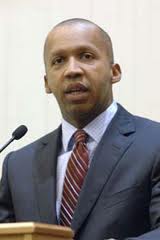
Bryan Stevenson
Now we evaluate a prominent contemporary African-American, Bryan Stevenson through the prism of that speech.
Although not a Howard alumnus, Stevenson, as discussed in another post, is an African-American attorney, author and activist for social justice, especially for today’s African-American men and women and for their ancestors who were enslaved and persecuted. He has successfully argued cases in the U.S. Supreme Court and other courts for prison inmates and written and spoken for changes in our criminal justice system. In addition, he has organized and established the Equal Justice Initiative (CJI), a significant human rights/civil rights law firm in Montgomery, Alabama that is being joined by a museum honoring the victims of slavery and lynchings.[1]
In so doing, Stevenson is demonstrating confidence in his own heritage, his own blackness, as President Obama urged the graduates. Stevenson also shows his awareness of injustice, unfairness and struggle that he combines with a strategy of change through the courts and public opinion. He meets the standards set forth by President Obama.
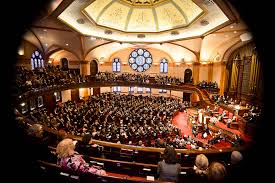
During the first part of the service (“Preparing for the Word”) Associate Pastor, Rev. Brennan Blue, led the congregation in a short, meaningful Prayer of Confession: “Almighty God, you poured your Spirit on gathered disciples, creating bold tongues, open ears, and a new community. We confess we hold back your Spirit among us. Transform our timid lives by the power of your presence, and fill us with a flaming desire to be your faithful people. We pray this in the name of Jesus.” (Emphasis added.)
Reading of the Holy Scripture
The second part of the service (“Listening for the Word”) had the reading of the Scriptural passages for the day. First was Genesis 11: 1-9 (NRSV), which states in part:
“Now the whole earth had one language and the same words.And as they migrated from the east, they came upon a plain in the land of Shinar and settled there. . . . Then they said, “Come, let us build ourselves a city, and a tower with its top in the heavens, and let us make a name for ourselves; otherwise we shall be scattered abroad upon the face of the whole earth.”The Lord came down to see the city and the tower, which mortals had built. And theLordsaid, “Look, they are one people, and they have all one language; and this is only the beginning of what they will do; nothing that they propose to do will now be impossible for them.Come, let us go down, and confuse their language there, so that they will not understand one another’s speech.”So the Lord scattered them abroad from there over the face of all the earth, and they left off building the city.Therefore it was called Babel, because there theLordconfusedthe language of all the earth; and from there theLordscattered them abroad over the face of all the earth.” (Emphases added.)
The New Testament passage was Acts 2: 1-17 (NRSV), which states in part:
“When the day of Pentecost had come, they [the 12 Apostles] were all together in one place. And suddenly from heaven there came a sound like the rush of a violent wind, and it filled the entire house where they were sitting. Divided tongues, as of fire, appeared among them, and a tongue rested on each of them. All of them were filled with the Holy Spirit and began to speak in other languages, as the Spirit gave them ability. . . . [Responding to the crowd’s belief that the disciples were drunk and not understanding one another, Peter said,] “this is what was spoken through the prophet Joel:‘’In the last days it will be, God declares, that I will pour out my Spirit upon all flesh, and your sons and your daughters shall prophesy, and your young men shall see visions, and your old men shall dream dreams.’” (Emphasis added.)
After the reading (in English) of these passages, Psalm 104 was read simultaneously in Italian, Russian, Korean, German, Pidgin, Arabic and Mandarin. Here is the beginning of its text in English (NRSV): “Bless the Lord, O my soul. O Lord my God, you are very great. You are clothed with honor and majesty, wrapped in light as with a garment.”
The Sermon
Rev. Dr. Timothy Hart-Andersen, Senior Pastor at Minneapolis’ Westminster Presbyterian Church, delivered a thought-provoking sermon, “What Happens When Faith Catches Fires?”
“We call it the Tower of Babel, but on a closer read, it turns out to be a story about a city, a city unlike any we know in our time – without discord or diversity. A city without division of culture or ethnicity.” (Emphasis added.)
“’Now the whole earth had one language and the same words,” Genesis tells us.(Genesis 11:1).”
“Babel is a city where all are alike. And God is not happy about it. Genesis 11 describes an ancient version of what author Bill Bishop calls The Big Sort: the effort in America – sometimes unconscious, but often intentional – to cluster ourselves into like-minded units. We see it all around us: communities and neighborhoods where we think alike, look alike, act alike, consume alike, worship alike, vote alike.”
“Come, let us build ourselves a city,” the people of Babel said, “And a tower with its top in the heavens, and let us make a name for ourselves.” At first blush it seems like a good idea: stick with those in your camp politically, religiously, socially, racially. If need be, make rules to enforce all that sorting out. Put up gates if you have to.” (Emphasis added.)
“Now the whole earth had one language and the same words.(Genesis 11:1) That’s history according to those who built and ran Babel, those in control. That’s the perspective of privilege, the version of reality those in power want us to believe.But there never has been only one language, one narrative in any community. That’s what Black Lives Matter is telling us. There never has been only one way to tell the story of who we are, and every time some group wants to do that it leads to discrimination and intolerance at best, and sometimes to violence and death. It’s no wonder God wants to confuse their language and, thereby, bless and affirm and celebrate human diversity. It was God’s way of protecting the minority narrative in that ancient city. ‘Come, let us go down, and confuse their language there, so that they will not understand one another’s speech.’” (Genesis 11:7) (Emphases added.)
“That’s not the Almighty trying to fend off a human attempt to attain Godlike power, as is often supposed. God has nothing to worry about from humankind. No tower will ever reach the divine precincts. The sin of Babel is not the effort to be like God or to try to reach heaven; it’s the human inclination to exclude the other in an attempt to create a community of one kind only.” (Emphasis added.)
“God wants to terminate our tendency to tribalism. God wants to undercut our capacity to create closed communities that admit – or think of themselves as – only one kind and push the rest out, one way or another. God wants to lift up the narrative of those on the margins of that ancient city, confined to the underside of history of biblical history.“ (Emphasis added.)
“Suddenly things begin to change in Babel. People start asserting their own story in their own way and in their own words. The human family spills out across the land speaking different languages and eating different food and making different music and wearing different clothes and worshipping in different ways. And that’s precisely what God intends. God creates us for that kind of community – diverse, mixed, richly varied in hue and culture and opinion. But we humans never quite get over the dream of building Babel.” (Emphasis added.)
“The result is what we have today among the peoples of the earth, in our cities, our neighborhoods, our schools, and, even, our churches. It shows up among those on the right and among those on the left. It’s found wherever people work toward ideological purity, wherever people write off “the other” not like them. Pentecost is God’s attempt to put an end to all that, to put an end to Babel’s hold on the human heart. For fire to burn there has to be heat, and there was heat that day in the flames that danced above their heads. For fire to burn there has to be air, and there was air that day in the rush of a mighty wind. For fire to burn there has to be fuel, and there was something ready to burn that day, in the hearts of those gathered. Faith catches fire on Pentecost.”(Emphases added.)
“Those lit up by the wind and flame that day are the same people they were before the conflagration and chaos. Nothing has changed. Injustice it still injustice. Despair still abounds in the world. Human enmity still has a stranglehold on the people of the earth, and yet there is something burning now in their hearts that gives them hope, something that gives them courage they never thought they would have.”
“When faith catches fire the future opens wide. In contrast, at Babel the future is foreclosed by human pride. The Tower we build is a mountain of individualism and self-importance and fear of those not like us – a tower that wants to have supremacy in our lives, as if we were better than others, as if we did not need one another, as if we were not made stronger by the different voices of the human family. Babel has no future in either its ancient or modern forms. (Emphasis added.)
“This isn’t the detached stuff of abstract religion; it’s the stuff of real human life. We face it every day, at school and at work, on the street and in the news, and certainly, in this season, in our politics. We politely call it “polarization,” but that’s just another name for all of us striving for Babel, where, to God’s distress, ‘The whole earth’ – supposedly – ‘had one language and the same words.’” (Emphases added.)
“The future belongs to Pentecost, not Babel. It belongs to those who discover in their very differences a oneness that had always been there but they had not seen before. The people at Pentecost are still Parthians and Elamites, Cretans and Arabs, Romans and Egyptians, but by the power of the Spirit they have figured out how to build community. They listen and hear one another for the first time.” (Emphasis added.)
“Jesus tells us to love one another, even to love our enemies. When faith catches fire that’s what happens. Barriers are overcome, strangers welcomed, the outcast brought back in. When faith catches fire the insurmountable is suddenly not so overwhelming, the distance from here to justice is shortened, and that which once seemed impossible becomes something that might actually happen. You and I have hearts that need heating up. The wind of Pentecost is already blowing. The flames are dancing all around us. Our faith is starting to catch fire, and when it does, the gates of Babel shall not prevail against it. Thanks be to God.” (Emphasis added.)
Conclusion
I had never studied or thought about the two main scriptural passages except I remember the Tower of Babel as a tale of a place where people talked in different languages (in a babel of confusing tongues) and the Pentecost passage as a hard-to-believe tale of people understanding one another when they spoke in different languages.
I see the Genesis passage as describing people who only spoke one language and who were supremely proud and self-confident. They were building a tower “to make a name for themselves.” In other words, they suffered under the sin of pride. God did not like that situation and, therefore, made them speak different languages to make it more difficult to get along by themselves. It was an affirmative action program of creating diversity. Just think what a boring world it would be today if the earth were occupied by over seven billion identical human clones.
As the Senior Pastor said, “Jesus tells us to love one another, even to love our enemies. When faith catches fire that’s what happens. Barriers are overcome, strangers welcomed, the outcast brought back in. . . . You and I have hearts that need heating up. Our faith is starting to catch fire, and when it does, the gates of Babel shall not prevail against it.”
But we need to confess thatwe hold back God’s Spirit among us and that our timid lives need to be transformed by the power of God’s presence so that we have a flaming desire to be God’s faithful people.
On May 17, in Havana U.S. and Cuba representatives held their Second Law Enforcement Dialogue. The U.S. delegation was led by John S. Creamer, Department of State, Deputy Assistant Secretary for Western Hemisphere Affairs; Bruce Schwartz, Department of Justice, Deputy Assistant Attorney General; and Alan Bersin, Department of Homeland Security, Assistant Secretary for International Affairs and Chief Diplomatic Officer. Cuba’s delegation, by its Ministers of Interior, Justice and Foreign Affairs as well as its Attorney General and Customs General.[1]
The Department of State said that “law enforcement is an area of mutual interest to both the U.S. and Cuba as we advance toward normalized relations. We anticipate that the dialogue will be productive, and an additional opportunity to reinforce the benefits of law enforcement cooperation. During the dialogue, the United States and Cuba will continue to discuss a wide range of areas of cooperation, including counterterrorism, counternarcotics, transnational crime, cybercrime, secure travel and trade, and fugitives.”
The framework for the dialogue was the Memorandum of Understanding between Homeland Security and the Ministry of Interior of Cuba, signed in May 2016. This MOU sets the basis of cooperation in exchanging risk information for travelers, cargo or conveyances in international transit; the continuation of periodic, mutual, and reciprocal assessments regarding air, sea, and port security; and the coordination of transportation security, screening of cargo, travelers and baggage, and the design of secure, efficient inspection facilities at ports and airports, among other things.[2]
The day before the Dialogue (May 16), the Department of Homeland Security Deputy Secretary Alejandro Mayorkas met with the U.S. and Cuban delegations in advance of the dialogue and to conduct bilateral meetings with his counterparts.
On May 16, in Havana the U.S.-Cuba Bilateral Commission held its third meeting to review the status of the countries’ efforts to normalize relations. The U.S. delegation was headed by Ambassador Kristie Kenney, currently serving as Counselor of the Department of State, who was assisted by John S. Creamer, Deputy Assistant Secretary of State, Bureau of Western Hemisphere Affairs, U.S. Department of State; and by U.S. Ambassador Jeffrey DeLaurentis, Chargé d’Affaires, U.S. Embassy, Havana, Cuba. The Cuban delegation’s head was Josefina Vidal Ferreiro, the Director General of the Cuban Ministry of Foreign Affairs’ Department of the United States.[1]
Before the meeting the U.S. State Department said it “will provide an opportunity to review progress on a number of shared priorities since the last Bilateral Commission meeting in November 2015, including progress made during the President’s historic trip to Cuba in March. The United States and Cuba expect to plan continued engagements on environmental protection, agriculture, law enforcement, health, migration, civil aviation, direct mail, maritime and port security, educational and cultural exchanges, telecommunications, trafficking in persons, regulatory issues, human rights, and claims for the remainder of 2016.”
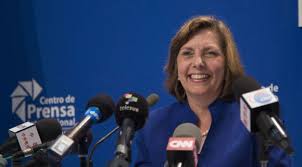
Director General Vidal’s Press Conference
At a press conference after the meeting, Director General Vidal said the meeting had been “productive” and conducted in a “professional climate of mutual respect.” (A photograph of Vidal at the press conference is on the left.) The parties agreed to hold the fourth meeting of the Bilateral Commission in September 2016 in Washington, D.C.
Vidal also said she had told the U.S. delegation that Cuba reiterates its “appreciation for the positive results from President Obama’s visit to Cuba” that had been mentioned by President Raúl Castro during Obama’s visit. Indeed, she said, Cuba believes this visit is “a further step in the process towards improving relations” between the two countries and “can serve as an impetus to further advance this process.”[2]
Vidal acknowledged that there has been an increase in official visits as well as technical meetings on topics of common interest resulting in nine bilateral agreements to expand beneficial cooperation.[3]
According to Vidal, both delegations agreed on steps that will improve relations, including conducting high-level visits and technical exchanges on environmental, hydrography, and implementation and enforcement of the law, including fighting trafficking in drugs and people, and immigration fraud. The two countries also are getting ready to conclude new agreements to cooperate in areas such as health, agriculture, meteorology, seismology, terrestrial protected areas, response to oil-spill pollution, fighting drug trafficking and search and rescue, among others. They also are ready to start a dialogue on intellectual property and continue those relating to climate change and regulations in force in the two countries in the economic and trade area.
However, Vidal said, progress has not been as fast in the economic area because “the blockade [embargo] remains in force” despite the positive measures taken by President Obama to loosen U.S. restrictions. There still are significant U.S. restrictions on U.S. exports to Cuba and imports from Cuba. In addition, U.S. investments in Cuba are not allowed except in telecommunications, and there are no normal banking relations between the two countries. Therefore, Cuba stressed again the priority of the “lifting the economic, commercial and financial blockade [embargo].”
More specifically Vidal said Cuba had told the U.S. representative that in the last six months two American companies and one French company had been fined by the U.S. for maintaining links with Cuba while Cuba has had problems with 13 international banks’ closing accounts, denying money transfers or suspending all operations with Cuba. In addition, six service providers have ceased providing services to Cuban embassies and consulates in third countries (Turkey, Austria, Namibia and Canada).
In addition, the Cuban delegation, said Vidal, had reaffirmed the need for the U.S. to return to Cuba the territory [allegedly] illegally occupied by the U.S. naval base in Guantanamo. It “is the only case of a military base in the world that is based in a territory leased in perpetuity, which is an anomaly from the point of view of international law.[4] There is no similar example in the world and is the only instance of a military base in a foreign country against the will of the government and people of that country.
Vidal also mentioned the following U.S. policies and actions that needed to be changed:
the U.S. preferential migration policies for Cuban citizens, expressed in the existence of the policy of dry feet/wet feet;
the U.S. Cuban Adjustment Act regarding those immigration policies;
the U.S. program of parole for Cuban health professionals;
the special U.S. radio and television broadcasts designed especially for Cuba (Radio and TV Marti); and
U.S. programs designed to bring about changes in the economic, political and social system of Cuba.[5]
These U.S. policies, according to Vidal, underscored “a huge contradiction” for the U.S. On the one hand, President Obama said in his speech in Cuba that the U.S. has neither the intention nor the ability to bring about change in Cuba and that in any case it was up to the people of Cuba to make their own decisions. On the other hand, the U.S. has programs with huge budgets ($20 million dollars every year) aimed at bringing about such change. If indeed there is neither the intention nor the ability to bring about change in Cuba, then there is no reason to have such programs.
Normalization, said Vidal, also needs to have protection of rights to trademarks and patents because there are Cuban companies owning well-known marks, which for reasons of the blockade and other reasons have been taken away from the Cubans.
Before the meeting, another Cuban Foreign Ministry official said that the parties previously had discussed, but not negotiated, with respect to Cuba’s claim for damages with respect to the U.S. embargo and the U.S. claims for compensation for property expropriated by the Cuban government. At the meeting itself, according to a Cuban statement, the Cubans had delivered a list of its most recent alleged damages from the blockade (embargo).
U.S. Embassy Statement
The U.S. Embassy in Havana after this Bilateral Commission meeting issued a shorter, but similar, statement about the “respectful and productive” discussions. “Both governments recognized significant steps made toward greater cooperation in environmental protection, civil aviation, direct mail, maritime and port security, health, agriculture, educational and cultural exchanges, and regulatory issues. The parties also discussed dialogues on human rights and claims, and the [U.S.] looks forward to holding these meetings in the near future.”
Conclusion
Since the actual meeting was conducted in secret, it is difficult to assess what was actually accomplished except through officials’ subsequent public comments.
On May 17, the two countries conducted their second Law Enforcement Dialogue, which will be discussed in a subsequent post.
[2] Vidal’s positive comment about Obama’s visit is in sharp contrast to the negative comments about the visit from Vidal’s superior, Foreign Minister Bruno Rodriguez at the recent Congress of the Communist Party of Cuba. (See Conclusion of Seventh Congress of Communist Party of Cuba, dwkcommentaries.com (April 20, 2016).)
[3] Beforehand an official of Cuba’s Foreign Ministry said that since the December 2014 announcement of détente the parties had signed nine agreements covering the environment, email, navigation safety, agriculture and travel. In addition, the Telecommunications Company of Cuba (ETECSA) had signed agreements with three U.S. companies for cellular roaming in Cuba; a U.S. company (Starwood) had an agreement to manage several Cuban hotels; and the Carnival cruise lines had made a maiden voyage to the island.
[4] The U.S., however, contends that the lease is not in perpetuity, but for so long as the U.S. uses it as a “naval station.” This is one of the potential issues to be resolved in an international arbitration as suggested in a previous post. (Does Cuba Have a Right To Terminate the U.S. Lease of Guantanamo Bay? dwkcommentaries.com (April 26, 2015).)
[5] Prior posts have concurred in the Cuban requests for ending all of these U.S. programs and policies. See Topical List of Posts—Cuba.
Frank Bruni, a New York Times columnist, has high praise for President Obama’s commencement address at Howard University that was covered in a prior post. Bruni sees the speech as “a pointed, powerful civics lesson” for all of us to consider because Obama was “issuing challenges to groups—African-Americans, college students—from whom he has drawn strong support and with whom he has real credibility “ and because he speaks with “accuracy and eloquence . . . [in] diagnosing current ills.”[1]
Bruni also has high marks for similar words this year from Obama in his final State of the Union Address,[2] his speech to the Illinois General Assembly[3] and his remarks at a town hall session in London.[4] Another Obama speech that touched on these subjects came just last Sunday at Rutgers University.[5]
Emphasizing that Obama in the Howard University commencement address was giving a “pointed, powerful civics lesson . . . to all of us—to America,” Bruni says Obama was chiding some young people “for demonizing enemies and silencing opponents. He cautioned them against a sense of grievance too exaggerated and an outrage bereft of perspective.” In Obama’s words, “If you had to choose a time to be, in the words of Lorraine Hansberry, ‘young, gifted and black’ in America, you would choose right now. To deny how far we’ve come would do a disservice to the cause of justice.’”
“Enough,” Obama was saying, “with a kind of identity politics that can shove aside common purpose. Enough with a partisanship so caustic that it bleeds into hatred Enough with such deafening sound and blinding fury in our public debate.”
Here Bruni referenced Obama’s “wise and glorious” February 2016 speech to the Illinois General Assembly. There Obama said, “We’ve got to build a better politics — one that’s less of a spectacle and more of a battle of ideas.” Otherwise, he warned, “Extreme voices fill the void.”
In the Illinois speech Obama also diagnosed current ills with “accuracy and eloquence,” when he noted that “while ugly partisanship has always existed, it’s fed in our digital era by voters’ ability to curate information from only those news sources and social-media feeds that echo and amplify their prejudices. We can choose our own facts,” he lamented. “We don’t have a common basis for what’s true and what’s not.” Advocacy groups often make matters worse, he added, by “keeping their members agitated as much as possible, assured of the righteousness of their cause.”
“We must expand our moral imaginations,” Obama told the predominantly African-American audience at Howard, imploring them to recognize “the middle-aged white guy who you may think has all the advantages, but over the last several decades has seen his world upended by economic and cultural and technological change, and feels powerless to stop it. You got to get in his head, too.” This thought was also mentioned by Obama in late April at a town-hall-style meeting in London, when he said that once “elected officials or people who are in a position to start bringing about change are ready to sit down with you, then you can’t just keep on yelling at them.”
At Howard, Obama insisted that change “requires listening to those with whom you disagree, and being prepared to compromise. If you think that the only way forward is to be as uncompromising as possible, you will feel good about yourself, you will enjoy a certain moral purity, but you’re not going to get what you want,” he continued. “So don’t try to shut folks out. Don’t try to shut them down, no matter how much you might disagree with them.”
These recent speeches, Bruni concludes, bring Obama “full circle, from the audacity to the tenacity of hope.”
On May 15, President Obama delivered the commencement address at Rutgers University in New Brunswick, New Jersey.[1] Below are photographs of the President and the graduates at Rutgers.
The press naturally focused on the following remarks that indirectly criticized Donald Trump, the presumptive Republican presidential nominee:
“When you hear someone longing for the “good old days,” . . . It ain’t so. The ‘good old days’ weren’t that great.”
“The world is more interconnected than ever before, and it’s becoming more connected every day. Building walls won’t change that. . . . [To] help ourselves we’ve got to help others, not pull up the drawbridge and try to keep the world out. . . . Building walls . . . won’t boost our economy, and it won’t enhance our security either.”
“Isolating or disparaging Muslims, suggesting that they should be treated differently when it comes to entering this country . . . is not just a betrayal of our values . . . it would alienate the very communities at home and abroad who are our most important partners in the fight against violent extremism. Suggesting that we can build an endless wall along our borders, and blame our challenges on immigrants — that doesn’t just run counter to our history as the world’s melting pot; it contradicts the evidence that our growth and our innovation and our dynamism has always been spurred by our ability to attract strivers from every corner of the globe. That’s how we became America.”
“Facts, evidence, reason, logic, an understanding of science — these are good things. These are qualities you want in people making policy. Facts, evidence, reason, logic, an understanding of science — these are good things. These are qualities you want in people making policy. . . . In politics and in life, ignorance is not a virtue. It’s not cool to not know what you’re talking about. That’s not keeping it real, or telling it like it is. That’s not challenging political correctness. That’s just not knowing what you’re talking about.”
“America’s progress has never been smooth or steady. Progress doesn’t travel in a straight line. It zigs and zags in fits and starts. Progress in America has been hard and contentious, and sometimes bloody. It remains uneven and at times, for every two steps forward, it feels like we take one step back.”
“But progress is bumpy. It always has been. But because of dreamers and innovators and strivers and activists, progress has been this nation’s hallmark. I’m fond of quoting Dr. Martin Luther King, Jr., who said, ‘The arc of the moral universe is long, but it bends towards justice.’ It bends towards justice. I believe that. But I also believe that the arc of our nation, the arc of the world does not bend towards justice, or freedom, or equality, or prosperity on its own. It depends on us, on the choices we make, particularly at certain inflection points in history; particularly when big changes are happening and everything seems up for grabs.”
“You are graduating at such an inflection point. Since the start of this new millennium, you’ve already witnessed horrific terrorist attacks, and war, and a Great Recession. You’ve seen economic and technological and cultural shifts that are profoundly altering how we work and how we communicate, how we live, how we form families. The pace of change is not subsiding; it is accelerating. And these changes offer not only great opportunity, but also great peril.”
Therefore, the new graduates need to participate in the political process. You need to vote. “And if participation means voting, and it means compromise, and organizing and advocacy, it also means listening to those who don’t agree with you.”
“If you disagree with somebody, bring them in and ask them tough questions. Hold their feet to the fire. Make them defend their positions. If somebody has got a bad or offensive idea, prove it wrong. Engage it. Debate it. Stand up for what you believe in. Don’t be scared to take somebody on. Don’t feel like you got to shut your ears off because you’re too fragile and somebody might offend your sensibilities. Go at them if they’re not making any sense. Use your logic and reason and words. And by doing so, you’ll strengthen your own position, and you’ll hone your arguments. And maybe you’ll learn something and realize you don’t know everything. And you may have a new understanding not only about what your opponents believe but maybe what you believe. Either way, you win. And more importantly, our democracy wins.”
“Gear yourself for the long haul. Whatever path you choose, you’re going to have some setbacks. You will deal occasionally with foolish people. You will be frustrated. You’ll have a boss that’s not great. You won’t always get everything you want — at least not as fast as you want it. So you have to stick with it. You have to be persistent. And success, however small, however incomplete, success is still success. . . . Better is good. It may not be perfect, it may not be great, but it’s good. That’s how progress happens — in societies and in our own lives.”
“So don’t lose hope if sometimes you hit a roadblock. Don’t lose hope in the face of naysayers. And certainly don’t let resistance make you cynical. Cynicism is so easy, and cynics don’t accomplish much. As a friend of mine who happens to be from New Jersey, a guy named Bruce Springsteen, once sang, “they spend their lives waiting for a moment that just don’t come.” Don’t let that be you. Don’t waste your time waiting.”
“Throughout our history, a new generation of Americans has reached up and bent the arc of history in the direction of more freedom, and more opportunity, and more justice.”