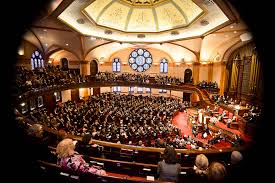
Pentecost Sunday at Minneapolis’ Westminster Presbyterian Church

Westminster Presbyterian Church

A moving worship service on Pentecost Sunday, May 15, was celebrated at Minneapolis’ Westminster Presbyterian Church.[1]

Prayer of Confession

During the first part of the service (“Preparing for the Word”) Associate Pastor, Rev. Brennan Blue, led the congregation in a short, meaningful Prayer of Confession: “Almighty God, you poured your Spirit on gathered disciples, creating bold tongues, open ears, and a new community. We confess we hold back your Spirit among us. Transform our timid lives by the power of your presence, and fill us with a flaming desire to be your faithful people. We pray this in the name of Jesus.” (Emphasis added.)

Reading of the Holy Scripture

The second part of the service (“Listening for the Word”) had the reading of the Scriptural passages for the day. First was Genesis 11: 1-9 (NRSV), which states in part:

  • Now the whole earth had one language and the same words. And as they migrated from the east, they came upon a plain in the land of Shinar and settled there. . . . Then they said, “Come, let us build ourselves a city, and a tower with its top in the heavens, and let us make a name for ourselves; otherwise we shall be scattered abroad upon the face of the whole earth.” The Lord came down to see the city and the tower, which mortals had built.  And the Lord said, “Look, they are one people, and they have all one language; and this is only the beginning of what they will do; nothing that they propose to do will now be impossible for them. Come, let us go down, and confuse their language there, so that they will not understand one another’s speech.”  So the Lord scattered them abroad from there over the face of all the earth, and they left off building the city. Therefore it was called Babel, because there the Lord confused the language of all the earth; and from there the Lord scattered them abroad over the face of all the earth.” (Emphases added.)

The New Testament passage was Acts 2: 1-17 (NRSV), which states in part:

“When the day of Pentecost had come, they [the 12 Apostles] were all together in one place. And suddenly from heaven there came a sound like the rush of a violent wind, and it filled the entire house where they were sitting.  Divided tongues, as of fire, appeared among them, and a tongue rested on each of them. All of them were filled with the Holy Spirit and began to speak in other languages, as the Spirit gave them ability. . . . [Responding to the crowd’s belief that the disciples were drunk and not understanding one another, Peter said,] “this is what was spoken through the prophet Joel: ‘’In the last days it will be, God declares, that I will pour out my Spirit upon all flesh, and your sons and your daughters shall prophesy, and your young men shall see visions, and your old men shall dream dreams.’” (Emphasis added.)

After the reading (in English) of these passages, Psalm 104 was read simultaneously in Italian, Russian, Korean, German, Pidgin, Arabic and Mandarin. Here is the beginning of its text in English (NRSV): “Bless the Lord, O my soul. O Lord my God, you are very great. You are clothed with honor and majesty, wrapped in light as with a garment.”

The Sermon

Rev. Dr. Timothy Hart-Andersen, Senior Pastor at Minneapolis’ Westminster Presbyterian Church, delivered a thought-provoking sermon, “What Happens When Faith Catches Fires?”

“We call it the Tower of Babel, but on a closer read, it turns out to be a story about a city, a city unlike any we know in our time – without discord or diversity. A city without division of culture or ethnicity.” (Emphasis added.)

“’Now the whole earth had one language and the same words,” Genesis tells us.(Genesis 11:1).”

“Babel is a city where all are alike. And God is not happy about it. Genesis 11 describes an ancient version of what author Bill Bishop calls The Big Sort: the effort in America – sometimes unconscious, but often intentional – to cluster ourselves into like-minded units. We see it all around us: communities and neighborhoods where we think alike, look alike, act alike, consume alike, worship alike, vote alike.”

“Come, let us build ourselves a city,” the people of Babel said, “And a tower with its top in the heavens, and let us make a name for ourselves.” At first blush it seems like a good idea: stick with those in your camp politically, religiously, socially, racially. If need be, make rules to enforce all that sorting out. Put up gates if you have to.” (Emphasis added.)

“Now the whole earth had one language and the same words.(Genesis 11:1) That’s history according to those who built and ran Babel, those in control. That’s the perspective of privilege, the version of reality those in power want us to believe. But there never has been only one language, one narrative in any community. That’s what Black Lives Matter is telling us. There never has been only one way to tell the story of who we are, and every time some group wants to do that it leads to discrimination and intolerance at best, and sometimes to violence and death. It’s no wonder God wants to confuse their language and, thereby, bless and affirm and celebrate human diversity. It was God’s way of protecting the minority narrative in that ancient city. ‘Come, let us go down, and confuse their language there, so that they will not understand one another’s speech.’” (Genesis 11:7) (Emphases added.)

“That’s not the Almighty trying to fend off a human attempt to attain Godlike power, as is often supposed. God has nothing to worry about from humankind. No tower will ever reach the divine precincts. The sin of Babel is not the effort to be like God or to try to reach heaven; it’s the human inclination to exclude the other in an attempt to create a community of one kind only.” (Emphasis added.)

“God wants to terminate our tendency to tribalism. God wants to undercut our capacity to create closed communities that admit – or think of themselves as – only one kind and push the rest out, one way or another. God wants to lift up the narrative of those on the margins of that ancient city, confined to the underside of history of biblical history.“ (Emphasis added.)

“Suddenly things begin to change in Babel. People start asserting their own story in their own way and in their own words. The human family spills out across the land speaking different languages and eating different food and making different music and wearing different clothes and worshipping in different ways. And that’s precisely what God intends. God creates us for that kind of community – diverse, mixed, richly varied in hue and culture and opinion. But we humans never quite get over the dream of building Babel.” (Emphasis added.)

The result is what we have today among the peoples of the earth, in our cities, our neighborhoods, our schools, and, even, our churches. It shows up among those on the right and among those on the left. It’s found wherever people work toward ideological purity, wherever people write off “the other” not like them. Pentecost is God’s attempt to put an end to all that, to put an end to Babel’s hold on the human heart. For fire to burn there has to be heat, and there was heat that day in the flames that danced above their heads. For fire to burn there has to be air, and there was air that day in the rush of a mighty wind. For fire to burn there has to be fuel, and there was something ready to burn that day, in the hearts of those gathered. Faith catches fire on Pentecost.”(Emphases added.)

“Those lit up by the wind and flame that day are the same people they were before the conflagration and chaos. Nothing has changed. Injustice it still injustice. Despair still abounds in the world. Human enmity still has a stranglehold on the people of the earth, and yet there is something burning now in their hearts that gives them hope, something that gives them courage they never thought they would have.”

When faith catches fire the future opens wide. In contrast, at Babel the future is foreclosed by human pride. The Tower we build is a mountain of individualism and self-importance and fear of those not like us – a tower that wants to have supremacy in our lives, as if we were better than others, as if we did not need one another, as if we were not made stronger by the different voices of the human family. Babel has no future in either its ancient or modern forms. (Emphasis added.)

“This isn’t the detached stuff of abstract religion; it’s the stuff of real human life. We face it every day, at school and at work, on the street and in the news, and certainly, in this season, in our politics. We politely call it “polarization,” but that’s just another name for all of us striving for Babel, where, to God’s distress, ‘The whole earth’ – supposedly – ‘had one language and the same words.’” (Emphases added.)

The future belongs to Pentecost, not Babel. It belongs to those who discover in their very differences a oneness that had always been there but they had not seen before. The people at Pentecost are still Parthians and Elamites, Cretans and Arabs, Romans and Egyptians, but by the power of the Spirit they have figured out how to build community. They listen and hear one another for the first time.” (Emphasis added.)

Jesus tells us to love one another, even to love our enemies. When faith catches fire that’s what happens. Barriers are overcome, strangers welcomed, the outcast brought back in. When faith catches fire the insurmountable is suddenly not so overwhelming, the distance from here to justice is shortened, and that which once seemed impossible becomes something that might actually happen. You and I have hearts that need heating up. The wind of Pentecost is already blowing. The flames are dancing all around us. Our faith is starting to catch fire, and when it does, the gates of Babel shall not prevail against it. Thanks be to God.” (Emphasis added.)

Conclusion

I had never studied or thought about the two main scriptural passages except I remember the Tower of Babel as a tale of a place where people talked in different languages (in a babel of confusing tongues) and the Pentecost passage as a hard-to-believe tale of people understanding one another when they spoke in different languages.

I see the Genesis passage as describing people who only spoke one language and who were supremely proud and self-confident. They were building a tower “to make a name for themselves.” In other words, they suffered under the sin of pride. God did not like that situation and, therefore, made them speak different languages to make it more difficult to get along by themselves. It was an affirmative action program of creating diversity. Just think what a boring world it would be today if the earth were occupied by over seven billion identical human clones.

As the Senior Pastor said, “Jesus tells us to love one another, even to love our enemies. When faith catches fire that’s what happens. Barriers are overcome, strangers welcomed, the outcast brought back in. . . . You and I have hearts that need heating up. Our faith is starting to catch fire, and when it does, the gates of Babel shall not prevail against it.”

But we need to confess that we hold back God’s Spirit among us and that  our timid lives need to be transformed by the power of God’s presence so that we have a flaming desire to be God’s faithful people.

====================================================

[1] The bulletin for this service is available online as is the text of the sermon.


Call to Worship and Prayer of Confession at Minneapolis’ Westminster Presbyterian Church    


Westminster Sanctury
Westminster Sanctuary

The Call to Worship and the Prayer of Confession at the January 31, 2016, worship service at Minneapolis’ Westminster Presbyterian Church were especially moving

They both are important elements of “Preparing for the Word,” which is the first part of our three-part worship service. The other parts are “Listening for the Word” with the readings from Holy Scripture and Sermon and “Responding to the Word” with the Offertory and Pastoral Prayer (and Communion on the first Sunday of the month). The complete bulletin for the service is available online as is a video of the service.)

———————————————

The Call to Worship (from Psalm 71) stated:

“One: Our hope is in God all of our lives.

All: God is a rock of refuge: a fortress against threat and shame.

One: God has held us since our birth.

All: So we are never in the full grasp of the unjust and cruel.

One: In love, God saves and support us.

All: Trusting in God, we continually offer our praise!

One: Let us worship God.”

—————————————————

The following are the words of the Prayer of Confession (unison):

“God, our Deliverer, we confess that we are too reluctant to speak and to live

according to your truth. We grow comfortable with the way things are, passively

condoning injustice. We see ourselves as “insiders,” excluding those we

consider “outsiders.” We find it easier to pluck up and pull down, to destroy

and overthrow, than to build and to plant. Forgive us, O God, for being timid

disciples. Empty us to fear and shame, and fill us with love that is humble and

patient and kind.

We pray this in the name of the One who humbled himself, Jesus the Christ, Amen.”

——————————————————


Thoughts About “The River Runs Through It”

Bill Linder-Scholer’s illuminating post about the novel “The River Runs Through It” by Norman Maclean raises many fascinating points. Here are some additional reactions to the novel and to Bill’s post from a fellow member of Westminster Presbyterian Church’s Men’s Book Group.

When I first tried to read this novel several years ago and again this last Fall, I was put off by the novel’s first line’s equating religion (Christianity) and fly fishing. In my boyhood and for the last nearly 35 years, I have been seeking to be a Christian, but I am not now, and never have been, a fisherman of any sort, much less a fly fisherman. To equate the two seemed absurd.

Moreover, I was baffled Bill’s reference to fly fishermen’s being the “penultimate” or next-to-last species of anglers. Who was the first or “ultimate” species of anglers, I wondered. Bill told me what should have been obvious to this Presbyterian Christian: the ultimate angler is God through Jesus. After all, in the New Testament, Jesus recruits two fishermen, Simon and Andrew, to be “fishers of men.” (Matthew 4: 18-20; Mark 1:16-18) I also relooked at the first paragraph of the novel, which says that the two brothers’ father, the Scottish Presbyterian minister (John Norman Maclean), reminded them that “Christ’s disciples [were] fishermen” and that the two brothers were left to assume “that all first-class fishermen on the Sea of Galilee were fly fishermen and that John, the favorite [disciple of Jesus], was a dry-fly fisherman.”

Bill’s allusion to the ultimate angler suggests another interpretation of the novel’s extensive (too extensive?) discussion of Paul and Norman’s careful selection of different lures to catch different kinds of fish in different kinds of waters. In short, the lure that works for one kind of fish does not work for another kind. Accordingly, Jesus’ disciples, including us, need to develop different ways of explaining our faith or evangelizing to different kinds of people in different circumstances. “One size does not fit all.”

I also was surprised by the novel’s second paragraph’s telling us that the Scottish minister-father repeatedly stressed to his two sons the importance of the first question of The Westminster Shorter Catechism: “What is the chief end of man?” and its answer “Man’s chief end is to glorify God, and to enjoy him forever.”

Although that document is one of 11 confessions and creeds contained in The Book of Confessions of The Presbyterian Church (U.S.A.), I do not recall any sermon or other discussion of that document in my years of being a Presbyterian. Perhaps its importance to the novel’s Scottish father-minister is due to the fact that it was written in 1646 and 1647 by the Westminster Assembly, a synod of English and Scottish theologians intended to bring the Church of England into greater conformity with the Church of Scotland to produce a means of educating children and those of “weaker capacity” about the Reformed Christian faith.

This emphasis on the answer to the first question of the Shorter Catechism also seems to oversimplify what Jesus endorsed as the greatest commandment: “Love God with all your heart, soul, strength and mind and your neighbor as yourself.” (Luke 10:25-37)

According to the older brother’s narration, his father held what I see as a very un-Presbyterian and un-Reform notion of God’s grace. For the father, the narrator says, “all good things—trout as well as eternal salvation—come by grace and grace comes by art and art does not come easy.” This statement suggests that grace is earned by an individual’s good works, which is the very antithesis of the Protestant Reformation. Instead, God provides many gifts by grace to many people; the gifts are not earned by the individual’s efforts. The individual, on the other hand, must first accept the gift and then develop and improve the gift by dedication and diligence so that it becomes an art. In the novel we see this in Paul’s skill and art of fly-fishing. Another example would be an individual who has a God-given musical gift of playing the violin. He or she could ignore or reject that gift and not do anything with it. If, on the other hand, he or she accepts that gift and hones it through many hours of study and practice, then he or she develops the art of playing skillfully and beautifully. In so doing, the individual glorifies God, in the parlance of the Shorter Catechism and of the novel’s father.

Finally the novel’s theme of the relationships between the two brothers and with their parents is analogous in some ways to those relationships in the Parable of the Prodigal Son (Luke 15: 11-32), an important Biblical passage for me as discussed in a prior post. In the novel and Parable, the younger brother is wayward while the older one is dutiful. Yet the fathers (and the mother in the novel) lavish love and attention on the younger brothers while ignoring the older brothers. In the Parable, the older one shows understandable signs of resentment of this treatment, but in the novel the older brother, who is the narrator, sounds like an objective bystander without any such resentment or jealousy. I find it difficult to accept the novel’s older brother’s lack of any emotion about this difference.

Perhaps Norman’s feelings on this issue leak out in his comments about the family’s Last Supper when their mother “was especially nice to me, since she hadn’t paid much attention to me so far, but soon she was back with fresh rolls, and she buttered Paul’s [but not mine]. ‘Here is your favorite chokecherry jelly,’ she said passing it to him [not me]. . . . Somewhere along the line she had forgotten that it was I who liked chokecherry jelly, a gentle confusion that none of her men minded.”

Thanks, Bill, for sharing your analysis of the novel.


Book Group Tackles Norman Maclean’s “A River Runs Through It”

Bill Linder-Scholer [1]


Norman Maclean
Norman Maclean

For its monthly book read for November 2015, the Men’s Book Group of Westminster Presbyterian Church of Minneapolis chose Norman Maclean’s short novel, “A River Runs Through It.” By the end of our 90-minute discussion about the novel, most of our members were convinced that Maclean’s novella is much more than a story about three men who like to fly fish the rough rivers of western Montana. We cast our questions widely to open up the deeper pools of the story’s meanings by looking to the text, to the facts of Maclean’s life, and to the images of water and the Biblical Word for guidance. We shared thoughts about the author’s direct use of Presbyterian theology to structure his plot and meaning. And in the final analysis, we acknowledged that although the novel ends with a haunting tragedy, it also leaves us with the abiding consolation provided by notions of a loving God and grace-filled moments in each of our lives.


images

“A River Runs Through It” is the story of Maclean’s family of origin, a religious family in which, as the author tells us famously in the novel’s opening line, “there was no clear line between religion and fly fishing.” Maclean is the older son of a Scottish Presbyterian minister. From their father, Norman and his younger brother Paul receive training in theology, fly fishing, and writing, but since fishing is religion in the Maclean world and fly fishermen the penultimate species of anglers, the novel’s key scenes involve fly fishing on rivers between Missoula and Helena, in the summer of 1937. “It is hard work,” Maclean insists, “living in such fast water all the time” (page 63 in the 25th Anniversary Edition by the Univ. of Chicago Press), a comment not only about the tenacious trout these men seek to catch, but also about the younger brother, whose stubborn habits of drinking too much, fighting local customs, and getting in over his head in serious gambling games means he is always swimming against the current. The story line ends with Paul’s brutal death at the hands of angry gambling partners, which leaves Norman and his parents with deep grief and few answers about why.

Key to our discussion of this novel were two obvious points–”A River Runs Through It” is a deeply Presbyterian work as well a carefully contrived story in which the characters and the events are reflective of an overriding message about family relationships, our individual search for success and meaning, and the mystery of God’s grace.

From the opening paragraphs, Maclean uses Presbyterian theology to give meaning and order to the events of the story. His quote from the Westminster Shorter Catechism [2]–that “man’s chief end is to glorify God, and to enjoy Him forever”–provides a way of understanding why the Reverend Maclean taught his sons to appreciate the glory of the Montana setting and to find enjoyment in working the Big Blackfoot River in search of the perfect catch. Such purposeful activity in beautiful surroundings reflects Maclean’s sense of how to appreciate the beauty and majesty of the divine.

Unknown

If “fly fishing stands for life” in this story, as Roger Ebert suggested in his 1992 review of the Robert Redford movie version of the novel, then it is no surprise that Norman and Paul take to the river to fish whenever they can, and in our discussion we noted the ways in which the fishing scenes are bookmarks around which the rest of the story is built–a story with the characteristics of a good trout fishing river (pp. 61-63): first the fast action of the rapids, then the inevitable complications of the deep pools, and finally the calm waters resolving at the end.

The first fishing scene of the story (pages 12-21) tells us a good deal about the brothers and the basis of their relationship, flawed though it is. Norman works diligently if slavishly to replicate his father’s approach to fly fishing (“an art that is performed on a four-count rhythm between ten and two o’clock”) and has admirable if moderate success, whereas his younger brother Paul has all the grace and power of a natural and soon exceeds the mechanical limitations of his father’s discipline to attain a masterful casting technique (“shadow casting,” Maclean calls it, as if to emphasize its origins in a world beyond ours) which his father can only describe as “beautiful.” About his younger brother, Norman says (with potent foreshadowing): “ He was a master of an art. He did not want any big brother advice or money or help, and in the end, I could not help him” (p. 6). “Helping” is a code-word for relating to and loving others, in Maclean’s taxonomy.

The notion of salvation by grace through faith is the other point of Presbyterian theology that helps structure the story as well as hint at its ultimate meanings. “My father,” says Norman, “was very sure about certain matters pertaining to the universe. To him, all good things–trout as well as eternal salvation–come by grace and grace comes by art and art does not come easily” (p. 4). Of course, Maclean has given the standard Presbyterian line a bit of a twist, adding in the role of art, the human effort to glorify God, as part of the essential human response to the promise of grace. So it is that the Reverend Maclean believes his son Paul is simply, divinely “beautiful” in his fishing artistry.

But then our discussion foundered on the obvious dilemma of this story: why is it that Paul–the wayward son eventually overcome by his own shortcomings–is the one who is described by his minister father as “beautiful,” with the implication that Paul more than the others has attained something extraordinary, something akin to divine perfection? (At one point of climax in a fishing scene, Maclean describes Paul as surrounded by a “halo” of water” as he performs his miracle cast [p. 21].) This led our discussion to the paradoxical mystery of divine grace, a grace given without qualifying effort on our part (but which also engenders effort to “glorify”).

For the Maclean brothers, these are troubled waters and when the police call Norman to come to the station house to rescue his drunken brother and girlfriend, Norman is not surprised. Despite his mastery of fly fishing, Paul seems bent on a destructive life course, drinking heavily and slipping dangerously into debt at the famed Lolo poker game. The brothers try to reach out to each other, but neither understands the other well enough to be helpful. The best they can do is to set up another fishing trip. To that end, they agree to take Norman’s no-count brother-in-law fishing, a trip that (literally) reveals the brother-in-law as a true failure but helps bring the Maclean brothers together in support of one another at least temporarily. But how should we understand their relationship?

Our deepest point of discussion of “A River Runs Through It” focused finally on two Biblical themes–the Genesis story of Cain’s question, “Am I my brother’s keeper?” and the New Testament parable of the prodigal son [3].

The notion of the younger Maclean brother Paul as a ‘prodigal son’ provides both motive and meaning. It is clear from the start of the story that the family thinks highly of Paul despite his indiscretions, and desperate to understand and love their younger son, the parents go to great lengths to show their love for Paul, nowhere more clearly than in the humorous dinner scene at the family home the evening before what proves to be Paul’s final fishing trip. The mother fusses over Paul and gratuitously butters his dinner roll for him; father and brother eagerly ask to hear Paul’s latest stories. But when Paul leaves the house early (to go gambling), the party collapses. “Although only one left,” Norman says, “all the voices had gone” (p. 80). The Rev. Maclean tries to express his (mixed) feelings about Paul to Norman, but he can only muster his conclusion that “help is giving part of yourself to somebody who comes to accept it willingly…[and so it is] that we can seldom help anybody” (p. 81). But Paul is gone; this prodigal son can’t quite make it all the way home, it seems.

By the same token, Norman is burdened from the start by his perceived sense of duty to help his younger, troubled brother. But Paul doesn’t want his help, and in fact when Norman gets in trouble with his wife and her family for the fiasco fishing trip with the brother-in-law, Paul overtly offers to “help” Norman by setting up yet another fishing trip, this one to include their father as well, on the Big Blackfoot River, their cherished chapel in the woods. When Paul suggests that they fish together, Norman says “I knew then that he was still taking care of me, because we almost always split up when we fished” (p. 85). Despite the their imperfect relationship and Paul’s growing troubles, the brothers find a moment of unity in this fishing trip, when “all things came together.” Thin place moments of sacred unity abound when the brothers are together, fishing the waters of the Blackfoot. Watching Paul catch his limit of trout on this trip, the father exclaims, “He is beautiful,” but by the very next day Norman has to deliver the news of Paul’s death to their dumbfounded parents.

Running through the book are the rivers, their waters providing thematic momentum. Like the flow of life that captures us all, the characters of this novel live and breathe and have their being on the water. After Paul’s death, Norman remembers him “both as a distant abstraction in artistry and as a closeup in water and laughter” (p. 101). In the end, Norman admits that, some thirty years after the events of the story, he is still “haunted by waters.”

So it is that, in the Maclean scheme of things, we labor mightily to glorify God, each in our own way, and to love one another despite the distance that inevitably separates us one from another. When Reverend Maclean struggles to make sense of Paul’s life and death, Norman reminds himthat “you can love completely without complete understanding” (p. 103).

=====================================================

[1] Bill Linder-Scholer is a member of Westminster Presbyterian Church of Minneapolis and an enthusiastic participant in its Men’s Book Study Group. Prior to his retirement in 2011, Bill was a foundation executive and consultant on strategic corporate philanthropy and public education. His participation in the Westminster men’s book group reflects his stint in teaching at the University of Illinois, Urbana-Champaign, where he completed a Ph.D. in English literature and taught classes in rhetoric and fiction.

[2] The Westminster Shorter Catechism from 1646-1647 is one of 11 creeds and confessions contained in the Book of Confessions of the Presbyterian Church (U.S.A.) (as of 2014). In such creeds and confessions, according to the Church’s Book of Order (Section F-2.01), “the church declares to its members and to the world who and what it is, what it believes, and what it resolves to do; they also “identify the church as a community of people known by its convictions as well as by its actions [and] guide the church in its study and interpretation of the Scriptures.” Such creeds and confessions, however, “are subordinate standards in the church, subject to the authority of Jesus Christ, the Word of God, as the Scriptures bear witness to him.” (Id. Section F-2.02.)

[3] For the “brother’s keeper” theme, see Genesis 4:1-16, where Cain responds to God’s inquiry about the missing (murdered) younger brother, “Am I my brother’s keeper?” Jesus’s teaching via the parable of the prodigal and his brother is recounted in the Gospel of Luke 15: 11-32. For a detailed explication of the use of this parable in Maclean’s novel, see Dooley, Patrick K. “The Prodigal Son Parable and Maclean’s “A River Runs Through it,” RENASCENCE 58.2 (Winter 2005): 165-175.

Muslims’ Christmas Greeting to Their Christian Brothers and Sisters

On Christmas Eve, the StarTribune published a moving open letter from Minnesota Muslims to their Christian brothers and sisters.[1] As a Minnesota Christian, I thank them for this message and for their implicit endorsement of the Thanksgiving Day Interfaith Worship Service at Minneapolis’ Westminster Presbyterian Church and the recent Call to Compassion by Minneapolis’ clergy, including Imams. Here is the text of the letter.

“Out of our shared love for the Messiah, Jesus, Son of Mary, Peace Be Upon Him, we greet you with peace and joy during your celebration of his life.”

“The Bible refers to him as the Messiah and describes the annunciation, his miraculous birth and his numerous miracles.”

“The Qur’an refers to him as the Messiah, Jesus, son of Mary. It teaches about his miraculous birth and how his mother Mary was honored above all the worlds. Muslims are instructed to invoke peace upon him whenever his name is mentioned.”

“The Qur’an narrates the story of the angel who visited Mary, saying ‘O Mary, indeed God has chosen you and purified you and chosen you above the women of all the worlds.’ (Qur’an 3:42).”

“The angel said, ‘O Mary, indeed God gives you good news of a word from Him, whose name will be the Messiah, Jesus, son of Mary. He will be honored in this world and the Hereafter and he will be among those closest to God. He will speak to the people in the cradle and in maturity and he will be of the righteous.’ (Qur’an 3:44-45)”

“She said, ‘My Lord, how will I have a child when no man has touched me?’ The angel said, ‘Such is God; He creates what He wills. When He decrees a matter, He only says to it, ‘Be,’ and it is.’ (Qur’an 3:47)”

“The Qur’an describes how the baby Jesus, immediately upon birth, looked up to his mother and comforted her: ‘Do not be sad; your Lord has provided beneath you a stream. And shake toward you the trunk of the palm tree; it will drop upon you ripe, fresh dates. So eat and drink and be contented.’ (Qur’an 19:24-26)”

“The Qur’an describes many instances in the life of Jesus: how he preached the worship of God and compassion to people, how he healed the leper, how he healed the blind, and even how he brought the dead back to life.”

“Our two religions, Christianity and Islam, which both profess love and reverence for Jesus as a central figure in each of our religions, constitute over half of the population of the world.”

“Mercy and compassion, charity and love are the divine attributes that the Christmas season evokes among Christians. A mother’s devotion, a child’s love, and the promise of God’s mercy and grace in the coming of Jesus to us are sentiments that Muslims can share and appreciate.”

“In the Bible, we are told that Jesus, in response to a question about the most important commandment, is said to have answered: ‘You should love the Lord your God with all your heart, soul and mind. This is the first and great commandment. And the second is similar. You should love your neighbor as yourself. On these two commandments hang all the law and the prophets.’ (Matthew 22:35-40) Jesus added that those whose hearts are filled with such love of God and neighbor live not far from the kingdom of God. (Mark 12:34)”

“Similarly, the Qur’an teaches us that to ‘worship God being sincere to Him in faith, to incline towards the truth, to establish prayer and to give alms to the poor is the essence of the religion.’ (Qur’an 98:5) ‘ … And you should forgive and overlook: Do you not like God to forgive you? And God is The Merciful Forgiving.’ (Qur’an 24:22)”

“The Prophet Mohammad, Peace Be Upon Him, taught: ‘None of you truly believes until he loves for his brother that which he loves for himself.’ (Bukhari & Muslim)”

“In the words of St. Paul, let us put on the armor of light which is the teaching of God that we are to love one another that we might together better confront the dark that lies within some human hearts which are far from God. (Romans 13:12)”

“As Jesus taught so movingly, let our lights so shine together before all people that they may see our good works which glorify our God in Heaven. (Matthew 5:16)”

“Jesus taught us that we should not live by bread alone but by every word of God. (Matthew 4:4)”

“Thus, we applaud the good hearts and loving deeds seeking to please God in His mercy and compassion that are befitting for us not only during this Christmas season but also every day of every year. Let all people, Christians and Muslims, who love Jesus, peace be upon him, come together to practice what he preached. Let peace and goodwill spread among us all.”

“We invite all our Muslim brothers and sisters of goodwill to join us in this open letter at this Christmas season and throughout the year as peace and joy, love of God and neighbor, are to be with us always.”

============================================

[1] A holiday letter from Muslim leaders in Minnesota, StarTrib. (Dec. 24, 2015). The signers of the letter are Imam Asad Zaman, Muslim American Society of Minnesota; Dr. Odeh Muhawesh, Imam Hussain Islamic Center; Shaykha Tamara Gray, Rabata/Daybreak Bookstore; Dr. Tamim Saidi, Masjid Al Kareem; Fedwa Wazwaz, Engage Minnesota; Dr. Shah Khan, Islamic Center of Minnesota; Dr. Onder Uluyol, Islamic Resource Group; Zafar Siddiqui, Al Amal School; Imam Sharif Mohamed, Islamic Civic Society of America — Masjid Dar Al-Hijrah, and Owais Bayunus, Islamic Center of Minnesota.


Interfaith Worship Service at Minneapolis’ Westminster Presbyterian Church

On Thanksgiving Day, November 26, a moving Interfaith Worship Service at Minneapolis’ Westminster Presbyterian Church was organized and conducted by clergy from the Downtown Congregations of Minneapolis.[1]

This service was the perfect incarnation of a message given that same day by Pope Francis at a meeting of religious leaders in Nairobi Kenya. The Pope said there was a profound “need for interreligious understanding, friendship and collaboration in defending the God-given dignity of individuals and peoples, and their right to live in freedom and happiness”. Indeed, said the Pope, “ecumenical and interreligious dialogue is not a luxury . . . [or] something extra or optional, but essential, something which our world, wounded by conflict and division, increasingly needs.”[2]

Calls to Prayer

There were three Calls to Prayer at the Minneapolis service. Cantor Barry Abelson of Temple Israel sang one in Hebrew. The Westminster Choir in English sang “God Be in My Head” by Gwyneth Walker.[3] Muezzin Elijah Muhammad of Masjid An-Nur (Mosque of the Light) sang his Call to Prayer in Arabic.

Voices Around the Table

The participants in the service then gathered around a common table in the front of the Sanctuary for the reading of passages of sacred and other texts from their different faiths. In addition to those mentioned below the participants were Rev. Dr. Timothy Hart-Andersen, Westminster’s Senior Pastor; Rev. Phil Boelter, Vicar of Gethsemane Episcopal Church; and Rev. Judy Zabel, Lead Pastor of Hennepin Avenue United Methodist Church.

Rev. Dr. Carla Bailey, the Senior Minister at Plymouth Congregational Church, read these excerpts from “A Litany of Thanksgiving” by Howard Thurman, an influential African-American theologian, educator and civil rights leader (1899-1981):

  • “Today, I make my Sacrament of Thanksgiving.”
  • “I begin with the simple things of my days:
    Fresh air to breathe,
    Cool water to drink,
    The taste of food,
    The protection of houses and clothes,
    The comforts of home.”
  • “I finger one by one the messages of hope that awaited me at the crossroads:
    The smile of approval from those who held in their hands the reins of my security;
    The tightening of the grip in a single handshake when I feared the step before me in the darkness;
    The whisper in my heart when the temptation was fiercest and the claims of appetite were not to be denied;
    The crucial word said, the simple sentence from an open page when my decision hung in the balance.”
  • “I pass before me the mainsprings of my heritage:
    The fruits of the labors of countless generations who lived before me, without whom my own life would have no meaning;
    The seers who saw visions and dreamed dreams;
    The prophets who sensed a truth greater than the mind could grasp and whose words could only find fulfillment in the years which they would never see;
    The workers whose sweat watered the trees, the leaves of which are for the healing of the nations;”
  • “I linger over the meaning of my own life and the commitment to which I give the loyalty of my heart and mind:
    The little purposes in which I have shared with my loves, my desires, my gifts;
    The restlessness which bottoms all I do with its stark insistence that I have never done my best, I have never dared to reach for the highest;
    The big hope that never quite deserts me, that I and my kind will study war no more, that love and tenderness and all the inner graces of Almighty affection will cover the life of the children of God as the waters cover the sea.”
  • All these and more than mind can think and heart can feel,
    I make as my sacrament of Thanksgiving to Thee,
    O God, in humbleness of mind and simplicity of heart.”

Hamdy Dr. El Sawaf, the Senior Iman of the Islamic Community Center of Minnesota and the Masjid Al-Iman (Mosque of Faith), read the following passages from the Holy Qur’an in Arabic with the following English translations by Maulana Muhammud Ali:

  • “Blessed is He Who made the stars in the heavens and made therein a sun and a moon giving light!” (25:61)
  • “And He it is, Who made the night and the day to follow each other, for him who desires to be mindful or desires to be thankful.” (25:62)
  • “And We have enjoined on man concerning his parents — his mother bears him with faintings upon faintings and his weaning takes two years — saying: Give thanks to Me and to thy parents. To Me is the eventual coming.” (31:14)
  • “So he smiled, wondering at her word, and said: My Lord, grant me that I may be grateful for Thy favour which Thou hast bestowed on me and on my parents, and that I may do good such as Thou art pleased with, and admit me, by Thy mercy, among Thy righteous servants.” (27:19)
  • “And He it is Who made for you the ears and the eyes and the hearts. Little it is that you give thanks!” (23:78)
  • “And certainly We established you in the earth and made therein means of livelihood for you; little it is that you give thanks!” (7:10)
  • “O people, keep your duty to your Lord and dread the day when no father can avail his son in aught, nor the child will avail his father. Surely the promise of Allah is true, so let not this world’s life deceive you, nor let the arch-deceiver deceive you about Allah.” (31:33)
  • “Surely Allah is He with Whom is the knowledge of the Hour, and He sends down the rain, and He knows what is in the wombs. And no one knows what he will earn on the morrow. And no one knows in what land he will die. Surely Allah is Knowing, Aware.” (31:34)
  • “Even as We have sent among you a Messenger from among you, who recites to you Our messages and purifies you and teaches you the Book and the Wisdom and teaches you that which you did not know.” (2:151)
  • “Therefore glorify Me, I will make you eminent, and give thanks to Me and be not ungrateful to Me.” (2:152)

Senior Rabbi Marcia Zimmerman of Temple Israel read Leviticus 19: 9-18 in Hebrew from the Hebrew Bible with the following English translation:

  • “When you reap the harvest of your land, you shall not reap to the very edges of your field, or gather the gleanings of your harvest.You shall not strip your vineyard bare, or gather the fallen grapes of your vineyard; you shall leave them for the poor and the alien: I am the Lord your God.”
  • You shall not steal; you shall not deal falsely; and you shall not lie to one another. And you shall not swear falsely by my name, profaning the name of your God: I am the Lord.You shall not defraud your neighbor; you shall not steal; and you shall not keep for yourself the wages of a laborer until morning.”
  • “You shall not revile the deaf or put a stumbling block before the blind; you shall fear your God: I am the Lord.”
  • “You shall not render an unjust judgment; you shall not be partial to the poor or defer to the great: with justice you shall judge your neighbor.You shall not go around as a slanderer[a] among your people, and you shall not profit by the blood[b] of your neighbor: I am the Lord.”
  • You shall not hate in your heart anyone of your kin; you shall reprove your neighbor, or you will incur guilt yourself.You shall not take vengeance or bear a grudge against any of your people, but you shall love your neighbor as yourself: I am the Lord.”

Rev. Laurie Feillle, Senior Pastor of First Christian Church (Disciples of Christ) read this passage from the Christian Gospel (Matthew 6:25-33) in English:

  • “Therefore I tell you, do not worry about your life, what you will eat or what you will drink, or about your body, what you will wear. Is not life more than food, and the body more than clothing? Look at the birds of the air; they neither sow nor reap nor gather into barns, and yet your heavenly Father feeds them. Are you not of more value than they? And can any of you by worrying add a single hour to your span of life?  And why do you worry about clothing? Consider the lilies of the field, how they grow; they neither toil nor spin, yet I tell you, even Solomon in all his glory was not clothed like one of these. But if God so clothes the grass of the field, which is alive today and tomorrow is thrown into the oven, will he not much more clothe you—you of little faith? Therefore do not worry, saying, ‘What will we eat?’ or ‘What will we drink?’ or ‘What will we wear?’ For it is the Gentiles who strive for all these things; and indeed your heavenly Father knows that you need all these things.  But strive first for the kingdom of God and his righteousness, and all these things will be given to you as well.”

Sermon

The Sermon, “Gratitude for Dreams,” was delivered by Rev. Peter Nycklemoe, Senior Pastor of Central Lutheran Church. Here is a summary of his message.

The above passage from Matthew stresses personal piety, almsgiving, prayers and calls for forgiveness. The text also tells us not to worry. But often being told not to worry just makes the situation worse. Matthew, however, points the way forward: “strive first for the kingdom of God.”

A helpful understanding of the kingdom of God comes from Frederick Buechner, a Presbyterian pastor and author, who said:

  • “If we only had eyes to see and ears to hear and wits to understand, we would know that the Kingdom of God in the sense of holiness, goodness, beauty is as close as breathing and is crying out to born both within ourselves and within the world; we would know that the Kingdom of God is what we all of us hunger for above all other things even when we don’t know its name or realize that it’s what we’re starving to death for. The Kingdom of God is where our best dreams come from and our truest prayers. We glimpse it at those moments when we find ourselves being better than we are and wiser than we know. We catch sight of it when at some moment of crisis a strength seems to come to us that is greater than our own strength. The Kingdom of God is where we belong. It is home, and whether we realize it or not, I think we are all of us homesick for it.” [4]

We all are homesick for hope in this world, and the gathering at this common table of representatives of three great religious traditions is a sign of that hope.

The words of Leviticus that were just read by Rabbi Zimmerman also are important: “When you reap the harvest of your land, you shall not reap to the very edges of your field, or gather the gleanings of your harvest. You shall not strip your vineyard bare, or gather the fallen grapes of your vineyard; you shall leave them for the poor and the alien.”

These words from the Hebrew Bible reminded Rev. Nycklemoe of a celebration organized by one of his congregants in the State of Washington, Olaf Hanson, who owned an apple and potato farm. After harvesting what he needed, Olaf hosted a Gleaning Day for his guests to gather the gleanings of the fruit and vegetables and put them in paper bags for the poor and needy.

We too need to share our longings, our lostness, our need for love and the gifts of one another.

Responding in Gratitude

The solicitation of offerings to support the work of the Downtown Congregations to End Homelessness was provided by The Very Rev. Paul Lebens-Englund, the Dean of St. Mark’s Episcopal Cathedral.

Presidential Thanksgiving Proclamations

President Abraham Lincoln’s 1863 Proclamation Establishing Thanksgiving Day was read by Fr John Bauer, Rector of The Basilica of Saint Mary, Here are its words:

  • “The year that is drawing towards its close, has been filled with the blessings of fruitful fields and healthful skies. To these bounties, which are so constantly enjoyed that we are prone to forget the source from which they come, others have been added, which are of so extraordinary a nature, that they cannot fail to penetrate and soften even the heart which is habitually insensible to the ever watchful providence of Almighty God. In the midst of a civil war of unequalled magnitude and severity, which has sometimes seemed to foreign States to invite and to provoke their aggression, peace has been preserved with all nations, order has been maintained, the laws have been respected and obeyed, and harmony has prevailed everywhere except in the theatre of military conflict; while that theatre has been greatly contracted by the advancing armies and navies of the Union.”
  • “Needful diversions of wealth and of strength from the fields of peaceful industry to the national defence, have not arrested the plough, the shuttle or the ship; the axe has enlarged the borders of our settlements, and the mines, as well of iron and coal as of the precious metals, have yielded even more abundantly than heretofore. Population has steadily increased, notwithstanding the waste that has been made in the camp, the siege and the battle-field; and the country, rejoicing in the consciousness of augmented strength and vigor, is permitted to expect continuance of years with large increase of freedom.”
  • “No human counsel hath devised nor hath any mortal hand worked out these great things. They are the gracious gifts of the Most High God, who, while dealing with us in anger for our sins, hath nevertheless remembered mercy.”
  • “It has seemed to me fit and proper that they should be solemnly, reverently and gratefully acknowledged as with one heart and one voice by the whole American People. I do therefore invite my fellow citizens in every part of the United States, and also those who are at sea and those who are sojourning in foreign lands, to set apart and observe the last Thursday of November next, as a day of Thanksgiving and Praise to our beneficent Father who dwelleth in the Heavens.”
  • “And I recommend to them that while offering up the ascriptions justly due to Him for such singular deliverances and blessings, they do also, with humble penitence for our national perverseness and disobedience, commend to His tender care all those who have become widows, orphans, mourners or sufferers in the lamentable civil strife in which we are unavoidably engaged, and fervently implore the interposition of the Almighty Hand to heal the wounds of the nation and to restore it as soon as may be consistent with the Divine purposes to the full enjoyment of peace, harmony, tranquillity and Union.”

President Barack Obama’s 2015 Presidential Proclamation was read by Minnesota Governor Mark Dayton, a member of Westminster Presbyterian Church:

  • “Rooted in a story of generosity and partnership, Thanksgiving offers an opportunity for us to express our gratitude for the gifts we have and to show our appreciation for all we hold dear.  Today, as we give of ourselves in service to others and spend cherished time with family and friends, we give thanks for the many blessings bestowed upon us.  We also honor the men and women in uniform who fight to safeguard our country and our freedoms so we can share occasions like this with loved ones, and we thank our selfless military families who stand beside and support them each and every day.”
  • “Our modern celebration of Thanksgiving can be traced back to the early 17th century.  Upon arriving in Plymouth, at the culmination of months of testing travel that resulted in death and disease, the Pilgrims continued to face great challenges.  An indigenous people, the Wampanoag, helped them adjust to their new home, teaching them critical survival techniques and important crop cultivation methods.  After securing a bountiful harvest, the settlers and Wampanoag joined in fellowship for a shared dinner to celebrate powerful traditions that are still observed at Thanksgiving today:  lifting one another up, enjoying time with those around us, and appreciating all that we have.”
  • “Carrying us through trial and triumph, this sense of decency and compassion has defined our Nation.  President George Washington proclaimed the first Thanksgiving in our country’s nascence, calling on the citizens of our fledgling democracy to place their faith in “the providence of Almighty God,” and to be thankful for what is bequeathed to us.  In the midst of bitter division at a critical juncture for America, President Abraham Lincoln acknowledged the plight of the most vulnerable, declaring a “day of thanksgiving,” on which all citizens would “commend to [God’s] tender care” those most affected by the violence of the time — widows, orphans, mourners, and sufferers of the Civil War.  A tradition of giving continues to inspire this holiday, and at shelters and food centers, on battlefields and city streets, and through generous donations and silent prayers, the inherent selflessness and common goodness of the American people endures.”
  • “In the same spirit of togetherness and thanksgiving that inspired the Pilgrims and the Wampanoag, we pay tribute to people of every background and belief who contribute in their own unique ways to our country’s story.  Each of us brings our own traditions, cultures, and recipes to this quintessential American holiday — whether around dinner tables, in soup kitchens, or at home cheering on our favorite sports teams — but we are all united in appreciation of the bounty of our Nation.  Let us express our gratitude by welcoming others to our celebrations and recognize those who volunteer today to ensure a dinner is possible for those who might have gone without.  Together, we can secure our founding ideals as the birthright of all future generations of Americans.”

Music

Interspersed throughout the Service were pieces of wonderful music.

The Preludes–“America the Beautiful” (Calvin Hampton for organ), “Variations on Simple Gifts” (Michael Burkhardt) and “The Promise of Living” (Aaron Copland)–were provided by Westminster’s Minister of Music & the Arts/Organist, Melanie Ohnstad, and the Westminster Choir directed by Dr. Jere Lantz.

Jon Romer on a Native American flute played two Ojibwe pieces—“Song of Welcome” and “A Song of Love.”

The choir and assembled people sang the following hymns: “O God, Show Mercy to Us;” “This Is My Song;” “ We Praise You, O God;” “Now Thank We All Our God;” and “O Beautiful for Spacious Skies.”

Conclusion

This was a powerful and meaningful worship service, especially in these days of too frequent expressions of hostility towards Muslims and Syrian refugees. This service was exactly what Pope Francis called for in his previously mentioned remarks in Kenya and on November 30 at the Grand Mosque of Koudoukou in the Central African Republic:[5]

  • “Christians and Muslims are brothers and sisters.  We must therefore consider ourselves and conduct ourselves as such. . . . Those who claim to believe in God must also be men and women of peace.  Christians, Muslims and members of the traditional religions have lived together in peace for many years.  They ought, therefore, to remain united in working for an end to every act which, from whatever side, disfigures the Face of God and whose ultimate aim is to defend particular interests by any and all means, to the detriment of the common good.  Together, we must say no to hatred, no to revenge and no to violence, particularly that violence which is perpetrated in the name of a religion or of God himself.  God is peace, God salam.”

==================================================

[1] The bulletin for the service is available online,  So too is a video of the service.

[2] The Pope held the meeting at the city’s Apostolic Nunciature (diplomatic mission of the Holy See) with leaders of different Christian confessions (Anglican, Evangelical, Methodist, Pentecostal and others) and of other religions (Animist, Muslim). Holy See, Ecumenical and Interreligious Meeting: Address of His Holiness Pope Francis (Nov. 26, 2015); Interreligious meeting in Nairobi: service to the common good. News.Va (Nov. 26, 2015).

[3] A prior post discussed this anthem, its composer and its derivation from the Sarum Primer of 1514.

[4] Other references to Buechner are contained in previous posts: Honorary Degree (Aug. 14, 2011); My General Thoughts on Vocation (Feb. 6, 2014).

[5] Pope Francis visits Grand Mosque of Koudoukou in Bangui, News.Va (Nov. 30, 2015)

The Great Prayer of Thanksgiving

Westminster Presbyterian Church

At Minneapolis’ Westminster Presbyterian Church on All Saints’ Day, November 1, 2015, Executive Associate Pastor Meghan Gage-Finn gave this moving Great Prayer of Thanksgiving before communion was served.  ===============================


The Lord be with you.

And also with you.

Lift up your hearts.

We lift them up to the Lord.

Let us give thanks to the Lord our God.

It is right to give our thanks and praise.

Wondrous God of glory, you shrouded chaos with your imagination. All that is in creation is yours, all that lives in it is your gift. You shaped us in your image, gathering us in your joy.

But we turned our backs on you, seeking the seductive face of our own ways.   You would show us the way, filling us with hope’s promise, through the words of the prophets, but we were deaf to what they had to say. So, deeply moved by our helplessness, you sent Jesus into our presence, the One we waited for that we might be saved.

Gracious are you, Creator of all. Blessed is Jesus Christ, model for our lives. With clean hands and a pure heart He descended from your holy side, coming to wipe away our tears, to remove the disgrace of our sin, to walk with those who seek your face, to stand with us at grief’s doorstep.

As we wait to come to this gracious feast, as we remember the spirit in which Jesus lived, served, died, and was raised, we speak of that mystery of faith,             even as we offer our doubts and our very selves.

Pour out your Spirit upon these gifts of the Table and on your children in this sacred space. With a simple cup filled with hope, with bread broken in love,         you make a feast for all those who put their trust in you.

As we open our hands to receive grace’s brokenness, may we go forth in service to all around us. As we take in the well-aged hope of your Spirit, may we discover our hearts to be as broken as yours, by the injustices of our world.                      

We remember in our prayers those in shock and grief following the Afghan earthquake and Russian plane crash. And we pray this day for those in our community who need to know of your love and comfort.

As we pray for your beloved members of the Body of Christ, send us out to be your hands and feet to a world in need.

And when all things become new, when we are gathered with our sisters and brothers of every age, we will join our voices together, singing before your throne of grace, God in Community, Holy in One, even as we pray together the prayer Jesus taught us, saying,

Our Father, who art in heaven,

Hallowed be Thy name.

Thy kingdom come,

Thy will be done,

On earth as it is in heaven.

Give us this day, our daily bread.

Forgive us our debts,

As we forgive our debtors.

Lead us not into temptation,

But deliver us from evil.

For Thine is the kingdom, and the power, and the glory,

Forever.

Amen


Reflections on Learning and Teaching

As a student of history, economics, political science, law and other humanities courses at six colleges and universities[1] and as an instructor at three such institutions,[2] I have participated in different ways of instructing and learning such bodies of knowledge and skills: college and university lectures, other lectures; seminars, research and writing; tutorials; the Socratic method; and role-playing. Similar methods were used in my practice as a litigating attorney and now as a blogger and ordinary citizen. Underlying all of them, of course, are reading and studying. Here are a septuagenarian’s lessons in life-long learning.

My thinking about this subject and writing this blog post were prompted by a recent article about the lecture as a mode of instructing and learning. That article by Molly Worthen, an Assistant Professor of History at the University of North Carolina, Chapel Hill, was put into a broader context by her quoting John Henry Newman’s “The Idea of a University,” where he said the humanities taught a student “to disentangle a skein of thought, to detect what is sophistical, and to discard what is irrelevant.” Such a student learns “when to speak and when to be silent. He is able to converse, he is able to listen.”[3]

College and University Lectures

“A good lecture class,” Worthen says, teaches “comprehension and reasoning” by keeping “students’ minds in energetic and simultaneous action.” It does so by emphasizing “the art of attention, the crucial first step in … ‘critical thinking.’” She quotes Monessa Cummins, the Chair of the Classics Department at Grinnell College, my alma mater, as saying the lecture places “a premium on the connections between individual facts . . . [and] the building of an argument.”

This is “hard work” for the students, Worthen adds, requiring them “to synthesize, organize and react as they listen.” Indeed, students need to be taught how to listen, and lecture courses are exercises in “mindfulness and attention building.” This skill cannot be assumed, but must be taught. One way of doing so, in Professor Cummins’ classes, is to assign one student in each session to present a critique of her argument at the subsequent small discussion section.

Such a lecture course teaches that “listening is not the same thing as thinking about what you plan to say next–and that critical thinking depends on mastery of facts, not knee-jerk opinions.“

This is enhanced, Worthen argues, by requiring the students to take notes by hand, not by typing them into a computer. The former makes it impossible for them to make verbatim transcripts of the lecture, but instead to synthesize as they listen. That may be true, in my opinion, when the lecturer does not provide the students or audience with an outline of the lecture.

Lecturing, on the other hand, with a PowerPoint outline and providing the students or audience members with the Notes Page version of the outline enables the student to glance at the entire presentation in advance and see how the individual points fit into the entire lecture or presentation and then add his or her notes to individual pages as the lecture proceeds. PowerPoint also facilitates the use of graphs, maps and photographs in the lecture. [4]

Worthen also recognizes the utility of combining a large lecture session with small discussions sections and thereby obtain the reactions and comments of the students.

My memories of my first exposure as a student to lecturing 58 years ago as a freshman at Grinnell College are fuzzy at best, but I do not recall being provided with tips on how to take full advantage of this form of instruction. I now wish I had been told how to listen, to be mindful and to synthesize as I listened. I wish I had had a professor assign one student in each session to present a critique of the lecture’s argument at the next class session. Of course, then all notes of a lecture were handwritten.

As a student of Philosophy, Politics and Economics (PPE) at the University of Oxford, 1961-1963, attendance at university lectures on these subjects, often by world-famous scholars, was optional. I attended some primarily to see and hear such people as philosophers A. J. Ayer and Gilbert Ryle, economist J. R. Hicks and legal philosopher H. L. A. Hart, but regrettably I did not regularly do so. (Instead my attention was focused on tutorials as discussed below.)

As a law student at the University of Chicago, 1963-1966, the Socratic method was the dominant form of instruction, not lectures. The latter instead were formal occasions for all the students and faculty, usually provided by visiting scholars and judges. (The Socratic method also will be discussed below.)

In addition, I was a lecturer when I taught a course on the American Civil Law System at Grinnell while on sabbatical leave from my law firm, when I was a Practitioner in Residence at the University of Iowa College of Law, when I was an Adjunct Professor at the University of Minnesota Law School and when I was on the faculty of various continuing legal education courses while I was a practicing lawyer. That experience required me to review the material to be covered, to conduct any additional research I deemed necessary, to determine the main points to emphasize, to construct an outline for what I wanted to cover in the lecture and, in some cases, to prepare a PowerPoint presentation for use at the lecture.

Other Lectures

All of us obtain information and are educated, or not, in other oral presentations throughout our lives. I think of major political speeches like the State of the Union and Inaugural Addresses; other speeches at public events; and sermons at churches.

When, for example, I listen to speeches or presentations at the Westminster Town Hall Forum, I sometimes take handwritten notes and submit proposed questions for the moderator to ask the speaker. Later I also can go to the Forum’s website to re-listen to the speech. I also have written blog posts about some of these presentations. Another recent source of lectures for me is those offered by the Osher Lifelong Learning Institute (OLLI) of the University of Minnesota.

For sermons at Westminster Presbyterian Church, I sometimes make handwritten notes of some of the points on the church bulletin in my hands while the morning prayer, hymns and choral anthems usually emphasize some of the sermon’s main points. I also have found that I learn more about the sermon’s lesson by reading its text when it is subsequently posted on the church’s website and by reading and reflecting on the Scripture passages for the sermon; additional insight is often providing by writing a blog post about a sermon.

Seminars

My best educational experience at Grinnell College was taking the Political Economy Seminar my senior year with nine other students and with faculty from the economics, history and political science departments. We read important books in the field, not textbooks, and wrote and presented our papers on the former for discussion by all.

The Washington Semester at American University in the Fall of 1959 provided another type of seminar experience as a group of students from all over the U.S. met with politicians, government officials and others to learn about the operations of the U.S. government and political process.

I also organized and led a liberal arts seminar for lawyers at Grinnell in 1984. After reading various materials, we gathered at the College to discuss American legal history, alternative dispute resolution (ADR), jurisprudence and the lives and challenges of being humane judges and lawyers. Our leaders were a federal appellate judge, a national ADR scholar, an American history professor, a jurisprudence professor and a practicing lawyer.

Being in a book group, for me at Westminster Presbyterian Church, is another seminar experience for groups of 12 or smaller. Reading an assigned book and then gathering for a discussion of the book led by one of the group usually leads to a greater understanding of the book and its issues. For example, I recently led my group in discussing David Brooks’ “The Road to Character” after I had written about the book in this blog.[5]

Research and Writing

During my student years I conducted factual and other research about various subjects and in the process learned a lot about those subjects as well as research skills. The task of then reducing that research into a paper on the subject provided more learning about the subject plus the process of writing such papers. Later as a practicing lawyer these skills were further developed with the aid of the legal process for obtaining evidence in lawsuits, including the examination of witnesses, and the writing of briefs and other legal papers under rules for their contents and length.

The student research paper I best recall was at American University. The topic was how political interest groups participate in important cases in the U.S. Supreme Court and more specifically in contempt-of-congress cases in that court. I identified such cases, read the Court’s opinions in the cases, interviewed staffers at the relevant congressional committees (especially the House Un-American Activities Committee) and at the relevant political interest groups (especially the American Civil Liberties Union and the American Association of University Professors) and then spent a lot of time at the Supreme Court’s Library reading the briefs in the case, including those from the ACLU and the AAUP as amici curiae (friends of the court). The paper summarized this research and conclusions.

My enjoyment of research and writing continued as a practicing lawyer, both in my work as a lawyer and as a putative scholar. For example while at Harvard Law School for a short summer course, I spent time in its library doing research about Joseph Welch and Edward Burling, both prominent attorneys who were graduates of that Law School and of Grinnell College, and interviewing attorneys at Welch’s Boston law firm, about his representation of the U.S. Army in the McCarthy hearings of 1954. Later I wrote articles about both of them for the Grinnell Magazine [6] and even later with excerpts from the Welch article in this blog.[7]

A similar process was involved as a law student in researching and writing comments for the law review and as a lawyer in writing briefs.

Grinnell College recently has enhanced its use of research and writing as an educational method by adding a public website, The Grinnell Post, that hosts student essays about current events, public debates, and issues of interest to the Grinnell community. Its mission is to allow students to share their work in a public forum and foster conversations with a diverse readership and solicit their comments and criticism.

Another Grinnell effort to incorporate digital technology in the liberal arts is a website, Ashplan, initially devoted to James Joyce’s Ulysses. It seeks to foster the inheritance of classroom culture; that is, it forges connections among students studying the same material at different times, allowing new students to benefit from, remix, and add to the work of their predecessors.

Tutorials

As discussed in a prior post, the tutorial was the primary mode of undergraduate education at Oxford. During each week of the three terms of the academic year, I would have two tutorials, usually with only one other student and the tutor and sometimes only by myself with the tutor. The assignment was always in the form of a question with the tutor’s suggestions of books and articles one should read.

As a result, most of my time each week at Oxford was spent in the university libraries reading those sources and other relevant materials, figuring out how I would answer the assigned question and writing an essay setting forth that answer and analysis. Then I would see the tutor again and read my essay for critiquing and discussion.

I loved the independence of this system and being “forced” to come to a conclusion on an issue and to construct my own analysis and documentation for my conclusion. This was exactly the skill that was tested in Oxford’s university-wide examinations at the conclusion of my student-years, as also discussed in a prior post.

Grinnell College now has a First-Year Tutorial for all freshmen in groups of about 12 students that are led by “faculty members . . . from all academic departments . . . in more than 35 topics.” For the Fall of 2015 these include “Crisis, Liberation, Justice, and Leadership;“ “Racism: Color, Culture, Class; “ and “The Origins of Capitalism.” Every tutorial emphasizes writing, critical thinking and analysis, and oral presentation and discussion skills. The tutorial professors also serve as the advisers to their tutorial students until they declare a major field of study.

Socratic Method

After the treasured independence of the Oxford undergraduate experience, I initially was shocked in my first weeks in the Fall of 1963 as a student at the University of Chicago Law School. Now I was in large classes with daily assignments of certain pages in our large casebooks. The professors did not lecture. Instead they cross-examined individual students, one-by-one, about what the holding of a particular case was and what the result should be in a hypothetical case. We were being taught, we were told, how to think like a lawyer.

This method clearly taught you how to read a judicial opinion very carefully (and very painfully and slowly during that first semester of law school), to analyze that opinion to determine what its holding was and to think about the arguments that could be raised in similar, but different, hypothetical cases. Then in class you had to learn how to think on your feet and respond to questions from the professor as you would later do as a lawyer when questioned by a judge.

Reading and analyzing constitutions, statutes and regulations are also important for a lawyer, but I do not have clear memories of how that was done in my law student years. Of course, many judicial opinions concern judicial interpretations of such materials, and the overall law-school emphasis on reading and analyzing judicial opinions covered that methodology.

Learning how to do legal research and write legal briefs is another important part of law school. In addition, being a member of a law review staff and editorial board gives experience in writing and editing articles about legal topics.

Role-Playing

Participating in moot courts and playing the role of a lawyer making an argument to a court is another prominent method of legal education. I did not take advantage of this opportunity in law school as I was busy working on the law review doing legal research and writing and editing articles for the journal.

I, however, employed this method when I taught for one semester at Grinnell while on sabbatical leave from my law firm. I acted as a trial court judge hearing arguments by students as lawyers on a motion to compel production of a college tenure committee records in a hypothetical lawsuit brought by a professor against a college for denial of tenure. A different kind of role playing in that course was having the students, in lieu of a final examination, play the role of a justice of the Iowa Supreme Court and write an opinion deciding a case after reading the briefs in the case along with my memoranda summarizing some of the legal issues and after hearing the case argued before the actual Court.

I also used the moot-court method when I was an adjunct professor at the University of Minnesota Law School; I acted as a federal district court judge hearing arguments on a motion to dismiss a complaint under U.S. federal statutes (the Alien Tort Statute and the Torture Victims Protection Act) alleging a corporate defendant’s violations of human rights in other countries. I also acted as a judge of an immigration court to hear arguments on whether the court should grant an application for asylum by someone who allegedly had a well-founded fear of persecution in his or her home country due to political opinion or other protected ground.

I used a different kind of role-playing when I was a Practitioner in Residence at the University of Iowa College of Law. In a first-year civil procedure class, I played the role of a law firm partner while the students played the roles of associate attorneys working for me as we collectively identified issues, potential arguments and additional legal research needed for preparing a civil complaint under the strictures of Rule 11’s requiring such a pleading to be warranted by existing law or a non-frivolous argument for changing the law and by evidentiary support.

In such role-playing exercises, the student learns about procedural and substantive law, identification of legal and evidentiary issues and how to write and analyze briefs and make oral arguments.

In my experience, this is an effective way of learning several areas of law plus the skills of advocacy, and most students appreciate these opportunities to have a taste of what it is like to be a lawyer.

Conclusion

I am fortunate to have experienced different methods of teaching and learning from able practitioners of the different methods. I have learned in each of these settings and cannot say one is better than another. A lot depends on the size of the audience and the stage of your educational career. Seminars and tutorials require a small number of students while lectures are more appropriate, if not required, for a large number of students. I hope that I have been able to convey the same excitement of learning when I have been the instructor.

==============================================

[1] Grinnell College, 1957-1961; American University (Washington Semester), 1959; University of Oxford, 1961-1963; University of Chicago Law School, 1963-1966; Harvard Law School (Summer Program), 1986; and University of Minnesota Law School, 2001.

[2] Grinnell College, 1982, 1984; University of Iowa College of Law, 1986; and University of Minnesota Law School, 2002-2010.

[3] Worthen, Lecture Me. Really, N.Y. Times Sunday Review (Oct. 18, 2015).

[4] Aaron Fichtelberg, an associate professor of criminal justice at the University of Delaware, strongly disagrees on the value of PowerPoint. Indeed, he argues that it “turns good teachers into mediocre ones and mediocre lectures into a sludge of unengaging facts.” According to him, it “forces rigidity on the content of the course and passivity onto the students.” I agree that sometimes such use is boring. But as with all of these modes of teaching, there are the good and the bad. Other opinions?

[5] The Important Moral Virtues in David Brooks’ “The Road to Character” (May 1, 2015); David Brooks’ Moral Exemplar (May 2, 2015); David Brooks Speaks on the Role of Character in Creating an Excellent Life (May 16, 2015).

[6] Good Night, and Good Luck: The Movie’s Offstage Hero, Joseph Welch, Grinnell Magazine, Summer 2006, at 12; Edward Burnham Burling, Grinnell’s Quiet Benefactor, Grinnell Magazine, Summer 2009, at 21.

[7] Joseph Welch Before the Army-McCarthy Hearings (June 14, 2012); The U.S. Army’s Hiring of Attorney Joseph Welch for the Army-McCarthy Hearings (June 8, 2012); Attorney Joseph Welch’s Performance at the Army-McCarthy Hearings (June 6, 2012); U.S. Senator Joseph McCarthy’s Nemesis: Attorney Joseph Welch (June 4, 2012); President Dwight D. Eisenhower’s Involvement in the Army-McCarthy Hearings (June 10, 2012); Joseph Welch After the Army-McCarthy Hearings (June 12, 2012); Legal Ethics Issues in the “Anatomy of a Murder” Movie (June 12, 2012).


New Cuban Ambassador to U.S. Presents Credentials to President Obama

On September 17 Cuba’s new Ambassador to the U.S., Jose Ramon Cabanas Rodriguez, presented his credentials to President Obama.[1]

Obama & Cabanas @ White House


Afterwards, Cabanas said he would be continuing to spread the truth about Cuba, promote new relationships and explain all remaining obstacles to normal relations between the two countries. “In particular we are going to work intensely to realize the decisions of the first meeting of the Bilateral Commission held last week in Havana.”

As discussed in a previous post, that meeting of the Bilateral Commission established an agenda in three tracks, with the first encompassing issues where there is significant agreement and the possibility of short-term progress. These include re-establishing regularly scheduled flights, environmental protection, natural disaster response, health and combatting drug trafficking. A second track includes more difficult topics such as human rights, human trafficking, climate change and epidemics. The third includes complex, longer-term issues like the return of the U.S. base at Guantanamo Bay, U.S. damage claims over properties nationalized in Cuba after the 1959 revolution and Cuba’s damage claims for more than $300 billion in alleged economic damages from the U.S. embargo and for what it says are other acts of aggression.

Last October Cabanas, then the Chief of Mission of the Cuban Interests Section, was in Minneapolis at the invitation of the Minnesota International Center. I had the pleasure of having a delightful Cuban lunch with him, his wife and others at one of the city’s Cuban restaurants, Victor’s 1959 Café, where he wrote his name on the wall. Afterwards, Cabanas, his wife and others came to my church, Westminster Presbyterian Church, to talk about our Cuban partnerships and various issues between our two countries. Our main partnership is with a church in the city of Matanzas, and when most of the Americans in the room indicated they had been in that city, Cabanas said it was the “home town” for both him and his wife.

We at Westminster and Minneapolis wish the Ambassador success in his diplomatic endeavors in our country.

===============================================

[1] Davis, First Cuban Envoy to U.S. Since 1961 Presents Credentials at the White House, N.Y. Times (Sept. 17, 2015); Reuters, Cuba Has First Ambassador to U.S. in Half a Century, N.Y. Times (Sept. 17, 2015); Gomez, Cuba already has US Ambassador, Granma (Sept. 17, 2015).


Update on Congressional Actions Regarding Cuba 

A June 12th post reviewed the status of appropriations bills relating to Cuba in the U.S. House of Representatives. Now we look at what happened last week in Congress on these and other measures.

National Defense Authorization Act FY 2016[1]

On June 18, the Senate passed its version of the spending authorization for the Department of Defense for Fiscal Year 2016.

The White House threatened to veto the bill. The main bone of contention is the bill’s continuation of sequestration of funds and use of so-called budget gimmicks. The White House opposes also opposes the bill because it contains language that it claims would make it hard to shutter the U.S. prison facility in Guantánamo Bay, Cuba. It calls the process for winning congressional approval of closing Guantánamo “unnecessary and overly restrictive.”

The same day, however, Senator John McCain (Rep., AZ) said that Defense Secretary Aston Carter had pledged to come forward to Congress with a plan to close the Guantanamo prison facility. Even if the administration hands over a plan to close the facility, however, it’s unclear if it could get passed through Congress. McCain’s proposal divided Republicans on the Senate Armed Services Committee and he faces opposition from House lawmakers.

Now the Senate and House have to confer and negotiate a bill that can pass both chambers. One of the major challenges are the different provisions regarding the Guantanamo detention facility and detainees:

  • The Senate’s version of the bill provides the President with a path to close the prison in Guantanamo if Congress signs off on the plan.
  • The House version does not include an option for closing the prison, but instead would maintain restrictions on transferring prisoners. The House bill also adds additional certification requirements, bans detainees from being transferred to “combat zones” and blocks any transfers of prisoners to the United States including for medical purposes.

Intelligence Authorization Act, FY 2016 (H.R.2596)[2]

On June 16 the House passed, 247-178, the Intelligence Authorization Act FY 2016 (H.R.2596). It outlines policy for 16 federal intelligence agencies, including the CIA and .the National Reconnaissance Agency. After the vote, John Boehner (Rep., OH), the Speaker of the House, said, “This bill sustains and strengthens our capabilities to combat terrorism, cyberattacks, and the proliferation of weapons of mass destruction, while making every taxpayer dollar count.”

The bill’s sections 321 would ban the transfer of certain Guantanamo detainees to the U.S.; section 322 would ban the construction or modification of U.S. facilities to house certain Guantanamo detainees; and section 323 would ban transfer of Guantanamo detainees to combat zones. Sections 331 and 333 would require certain reports to Congress regarding such detainees.

Rep. Adam Schiff (Dem., CA), the top Democrat on the Intelligence Committee, criticized the bill’s banning the government from transferring such detainees to the U.S. or a recognized “combat zone.” Schiff said, “We are not safer because of Guantanamo’s existence. In fact, it makes us more vulnerable by drawing more recruits to the jihad.” Moreover, the definition of “combat zone,” Schiff added, is “so broad as to include allies and partners such as Jordan.” An amendment from Schiff to eliminate the new restrictions failed 176-246.

Before the vote, the White House said, “While there are areas of agreement with the committee, the administration strongly objects to several provisions of the bill,” and “If this bill were presented to the president, the President’s senior advisors would recommend to the president that he veto it.”

Financial Services and General Government Appropriations Act FY 2016[3]

On June 17 the House Appropriations Committee approved the Financial Services and General Government Appropriations Act FY 2016 on a straight party-line vote, 30 to 20.The Committee’s press release states the bill provides $20.2 billion in funding for “critical national programs to enforce U.S. laws , maintain a fair and efficient judicial system, and help small businesses grow” while reducing or eliminating lower-priority programs and cutting “poor-performing agencies—including an $838 million reduction to the Internal Revenue Service.”

One of the most controversial provisions of the bill was the temporary blocking of the newly implemented net neutrality rules, which was criticized by the White House without a threat of a veto.

As noted in a prior post, according to the Committee’s press release, the bill contains prohibitions on (a) “travel to Cuba for educational exchanges not involving academic study pursuant to a degree program;” (b) “importation of property confiscated by the Cuban Government;” and (c) “financial transactions with the Cuban military or intelligence service.” I, however, am still unable to find these provisions in the bill. I solicit comments identifying these provisions.

In the Committee Rep. Nita Lowey (Dem., NY), the top Democrat of the full committee, offered an amendment that would have removed what she called “20 veto-bait riders” or policy provisions, including these Cuba-related measures. The proposal was blocked on a party-line vote.

Freedom to Travel to Cuba Act of 2015 (S.299)[4]

A prior post discussed the Freedom to Travel to Cuba Act of 2015 that was introduced by Senator Jeff Flake (Rep., AZ). In addition, it now has 44 cosponsors: 36 Democrats, 6 Republicans and 2 Independents.

A recent New York Times editorial endorsed the lifting the ban on travel to Cuba. It said, “The ban — the only travel prohibition American citizens are currently subjected to — never made sense, and it’s particularly misguided in an era of broadening engagement between the United States and Cuba.” Now, “the trajectory is unmistakable. Public opinion polls show that a majority of Cubans on the island and Americans favor engagement. Congress should wait no longer to do its part.”

Cuban Military Transparency Act (S.1489)[5]

On June 3 Senator Marco Rubio (Rep., FL) introduced the Cuban Military Transparency Act (S.1489) with seven cosponsors (Robert Menendez (Dem., NJ), Orrin Hatch (Rep., UT), Tom Cotton (Rep., AR), Ted Cruz (Rep., TX), Cory Gardner (Rep., CO), David Vitter (Rep., LA), Mark Kirk (Rep., IL). It was referred to the Committee on Foreign Relations.

The bill would prohibit a U.S. person from engaging in any financial transaction with or transfer of funds to: the Ministry of the Revolutionary Armed Forces of Cuba or the Ministry of the Interior of Cuba (or any of their subdivisions); a senior member of such Ministries; any agency, instrumentality, or other entity that is more than 25% owned, or that is operated or controlled by, such a Ministry; or any individual or entity for the purpose of avoiding a prohibited financial transaction or transfer of funds that is for the benefit of that individual or entity. Excluded from these bans are the sale to Cuba of agricultural commodities, medicines, and medical devices; remittances to an immediate family member; or assistance in furtherance of democracy-building efforts for Cuba.

The bill would also require (a) the U.S. Attorney General to coordinate with the International Criminal Police Organization (INTERPOL) in order to pursue the location and arrest of U.S. fugitives in Cuba, including current and former members of the Cuban military and (b) the U.S. President to provide reports on the role of the Ministry of the Revolutionary Armed Forces and the Ministry of the Interior in Cuba and the return of property that has been confiscated by the Government of Cuba.

In his press release about the bill, Senator Rubio said, ““It is not in the interest of the United States or the people of Cuba for the U.S. to become a financier of the Castro regime’s brutality. The Cuban Military Transparency Act would prevent U.S. dollars from getting into the hands of the Cuban military and would demand accountability from the Obama Administration regarding fugitives of American justice in Cuba, the return of stolen and uncompensated property and the role of the Ministry of the Revolutionary Armed Forces and the Ministry of the Interior in Cuba.”

The Center for Democracy in the Americas opposes this bill. It admits “that in Cuba, a socialist state with a largely state-owned economy, the military is invested in state-owned businesses, and several of those . . . are dominant players in Cuba’s tourist industry. Given the military’s broad role in Cuba’s economy, any expenditure by U.S. travelers and businesses – including the cost of hotel rooms, telephone calls, airport taxes, the hotel occupancy tax, sales taxes on tourist purchases, resort fees – could be prohibited presumptively unless the traveler or company could persuade [the U.S. Treasury agency] they spent their money in Cuba some other way.” But “how could they prove the negative? Who in Cuba will hand out the forms that say “that hotel room” or “that painting” or “that serving of ropa vieja” didn’t come from an enterprise owned or controlled by Cuba’s military?”

Therefore, according to the Center for Democracy in the Americas, the true purpose of this bill is “to shame, harass, and try to stop every American from visiting Cuba or seeking to do business in Cuba, and to return U.S. policy to its pre-December 17, 2014 goal of starving the Cuban economy and the Cuban people along with it.”

Conclusion

These latest congressional developments reinforce the need for continued vigilance by supporters of U.S.-Cuba reconciliation to pay attention to what is happening in Congress and to continue to express their opinions on these issues to their representatives in that body and to the larger community.

I take pride in the strong support for such reconciliation in the State of Minnesota, so far away from Cuba. A recent article in MINNPOST explored this apparently strange phenomenon. Eric Schwartz, Dean of the Humphrey School of Public Affairs at the University of Minnesota and a non-native Minnesotan, believes there are three main reasons for this fact. First, two of Minnesota’s biggest industries — agriculture and medical devices — have massive potential exports to Cuba. Second, Minnesota’s lack of a large Cuban-American community and its distance from the island mean our lawmakers are not subject to the same pressures as representatives from states like Florida and New Jersey. Third, many of Minnesota’s federal legislators are reasonable people.

I concur in that opinion, but believe Schwartz has missed the fundamental reason for strong Minnesota support for this reconciliation. Many people in this State are interested in what goes on in the world and are actively engaged with the rest of the world through their churches like Minneapolis’ Westminster Presbyterian Church, the Center for Victims of Torture, Advocates for Human Rights, the Minnesota Cuba Committee and various programs at the University of Minnesota and through Minnesotans’ welcoming immigrants and refugees from around the world, especially from Somalia, Viet Nam and Laos, and through major multinational corporations headquartered here like Cargill, which is leading the U.S. Agricultural Coalition for Cuba,3M, Medtronic and General Mills.

I was pleased to read about the change of heart of a prominent Cuban-American Republican who was U.S. Secretary of Commerce in the George W. Bush Administration, Carlos Gutierrez. In an op-ed essay in the New York Times, he said,” it is now time for Republicans and the wider American business community to stop fixating on the past and embrace a new approach to Cuba.” He added, “Some of my fellow Cuban-Americans insist that continuing to squeeze Cuba economically will help the Cuban people because it will lead to democracy. I wonder if the Cubans who have to stand in line for the most basic necessities for hours in the hot Havana sun feel that this approach is helpful to them.”

Gutierrez concluded, “America must look to the future instead — and pursue this opportunity to assist Cubans in building a new economy. There is a lot of work to do, and progress will be slow. However, the business community and my fellow Cuban-Americans and Republicans should not ignore the possibilities ahead. The Cuban people need and deserve our help.”

======================================================

[1] Matishak, White House threatens to veto Senate’s defense spending bill, The Hill (June 18, 2015); Carney, McCain expects Pentagon plan on closing Guantanamo, The Hill (June 18, 2015);Carney, Five challenges for the defense bill (June 21, 2015).

[2] This section of the post is based upon Hattem, House passes intel bill over White House objections, The Hill (June 16, 2015).

[3] This section of the post is based upon the following: House Appropriations Comm., Press Release: Appropriations Committee Approves Fiscal Year 2016 Financial Services Bill (Jun 17, 2015); House Appropriations Comm., Financial Services Appropriations Act FY 2016 (June 9?, 2015); House Appropriations Comm., Report: Financial Services and General Government Appropriations Bill, 2016, No. 114- —( 2015);Trujillo, House panel advances rider to block Internet rules, The Hill (June 7, 2015); Trujillo, Obama administration knocks net neutrality riders in funding bill, The Hill (June 17, 2015)  Shabad, Bill with $838M IRS cut advances in House, The Hill (June 17, 2015).

[4] Library of Congress THOMAS, S.299 Freedom to Travel to Cuba Act of 2015 (Cosponsors)

[5] This portion of the post is based upon the following: Library of Congress THOMAS, Cuban Military Transparency Act; Rubio, Press Release: Senators Introduce Bill To Deny Resources To Castro’s Military and Security Services (June 3, 2015); Center for Democracy in Americas, The Cuban Military Not So Transparent Act (June 19, 2015).