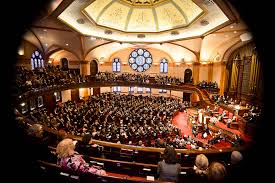
“How Does Jesus Use Power?”

This was the title of the sermon preached on September 30 by Minneapolis’ Westminster Presbyterian Church’s Senior Pastor Tim Hart-Andersen.

The Prayer of Confession

As part of the first part of the worship service—Preparing for the Word—Associate Pastor Alanna Simone Tyler led the congregation in the following unison Prayer of Confession:

  • “Merciful God, by your grace we confess our sin and the sin of this world. Although Christ is among us as our peace, we are a people divided against ourselves as we cling to the values of a broken world. The fears and jealousies that we harbor set neighbor against neighbor and nation against nation. Lord, have mercy on us; heal and forgive us. Set us free to serve you in the world as agents of your reconciling love in Jesus Christ.”

The Scriptures

Psalm 82 (NRSV):

“God has taken his place in the divine council;
in the midst of the gods he holds judgment:
‘How long will you judge unjustly
and show partiality to the wicked?Selah
Give justice to the weak and the orphan;
maintain the right of the lowly and the destitute.
Rescue the weak and the needy;
deliver them from the hand of the wicked.’

They have neither knowledge nor understanding,
they walk around in darkness;
all the foundations of the earth are shaken.

I say, ‘You are gods,
children of the Most High, all of you;
nevertheless, you shall die like mortals,
and fall like any prince.’

Rise up, O God, judge the earth;
for all the nations belong to you!”

John 2: 1-12 (NRSV):

“On the third day there was a wedding in Cana of Galilee, and the mother of Jesus was there. Jesus and his disciples had also been invited to the wedding. When the wine gave out, the mother of Jesus said to him, ‘They have no wine.’ And Jesus said to her, ‘Woman, what concern is that to you and to me? My hour has not yet come.’ His mother said to the servants, ‘Do whatever he tells you.’ Now standing there were six stone water jars for the Jewish rites of purification, each holding twenty or thirty gallons. Jesus said to them, ‘Fill the jars with water.’ And they filled them up to the brim. He said to them, ‘Now draw some out, and take it to the chief steward.’ So they took it. When the steward tasted the water that had become wine, and did not know where it came from (though the servants who had drawn the water knew), the steward called the bridegroom and said to him, ‘Everyone serves the good wine first, and then the inferior wine after the guests have become drunk. But you have kept the good wine until now.’ Jesus did this, the first of his signs, in Cana of Galilee, and revealed his glory; and his disciples believed in him.”

“After this he went down to Capernaum with his mother, his brothers, and his disciples; and they remained there a few days.”

The Sermon

At “the wedding party in Cana, 2,000 years ago, only the servants know what happens in the kitchen. Not even Jesus’ mother knows, although when the good wine starts flowing late into the feast she must suspect her son is behind it.”

“Jesus’ first miracle isn’t his idea. In fact, that’s true of all the miracles of Jesus. Someone presents him with a problem to solve: stop the bleeding, feed the 5,000, bring back sight, heal disease, cure paralysis, exorcise demons. Jesus is a reluctant miracle worker.At the wedding feast in Cana the wine steward is impressed with the vintage, but Mary’s son keeps quiet about it.”

“’At the wedding feast in Cana,’ I said 20 months ago, ‘Jesus launches a movement, a movement of joyful resistance against the baser impulses that run through each of us and through the principalities and powers of every time and place.’”

“That was then, and this is now, and we’re back at the wedding party where the wine runs out, seeing more signs of the resistance movement that is the gospel. . . . And now this same text shifts from a lesson in hospitality to a primer on the use of power.”

“At the wedding feast in Cana, Jesus tries not to exercise power. When his mother learns of the wine crisis, she turns to her son to solve it. He’s a grown man, and in that patriarchal system – as in ours – he’s in a position of power simply by virtue of his gender. His mother knows he’s capable of taking over and managing things, as men do. But he doesn’t rush in. He has no need to be in control.”

“That’s the first lesson from this story about how Jesus uses power: start with humility. Don’t be too eager to solve everything with your power. Be more modest. Jesus is reluctant to step in, take over, and make everything right. He’s not interested in the use of power to make himself or anyone else look good. People using power are always tempted to make it so they come out a winner, on top. Jesus doesn’t use power that way.”

“When he does finally take action, Jesus exercises power anonymously. He doesn’t need everyone to know what he can do, or what he has done. . . . Jesus doesn’t need to take credit.”

Second lesson from this story about how Jesus uses power: do it for the sake of building up the community, for the good of others, especially those who are most vulnerable. Don’t use it to burnish a reputation, or puff up an ego. The gifts Jesus has are considerable, but he knows they aren’t for his own aggrandizement. This is not about him. People using power are always tempted to make it about them. Jesus doesn’t use power that way.”

“When Jesus decides to help with the wine he asks the servants to fill the large stone jars with water. Those jars were reserved for one purpose only: for religious rituals, purification rites – not for holding wedding party wine. His choice of religious vessels to hold the wine shows his willingness to rethink tradition if necessary. We’ve always done it that way doesn’t carry much weight with Jesus. Remember when he allowed his followers to glean in the fields and eat on the Sabbath – even though it was prohibited by tradition – because they were hungry? That was the priority for Jesus, not the rules.”

Third lesson from this story about how Jesus uses power: use it to change the status quo, if it makes the world a better place. So often power is used to defend the way things are, rather than to imagine the way things might be and then make something new happen. That’s precisely what Jesus does with those stone jars; some look at them and see religious rituals and rules and a prescribed use. Jesus looks at them and sees jars of good wine for the party. 4 Structures and systems inevitably work to preserve the power that built them in the first place. People using power are always tempted to maintain tradition for its own sake, to keep things the way they are. Jesus doesn’t use power that way.”

“There’s a lot to unpack in this little gospel story about a party in Cana long ago. At the wedding feast Jesus shows how to use power humbly, to use it on behalf of the community, and to use it in a way that challenges the status quo.”

“But that’s only the start. He does it again and again. His entire ministry overturns the typical use of power in his time – and, therefore, in our time, if we follow him. When he’s in a superior position relative to others Jesus doesn’t see that as a chance to exercise leverage, but, rather, to listen and learn and bring healing.”

“Think of the Samaritan woman at the well, a foreigner, alone with Jesus, a male stranger from another group, who no doubt represents a threat. What happens? They talk about the water they both need – his, that which is to be found in the well, and hers, the living water of hope. They each ask the other for help. It’s mutual. It’s balanced.”

“Think of the Syrophoenician woman, another outsider. She asks Jesus to heal her daughter and he refuses, saying his own people deserve to be fed first. Then he adds, cruelly, that food shouldn’t be wasted by throwing it to the dogs.”

“The woman is furious at this, but her fury empowers her. She finds her voice, much as women today who have kept silent about sexual assault and are now speaking up. It shouldn’t have to wait until the victim gets angry, but the system is stacked against her.. . . “

“The Syrophoenician woman, a foreigner, an immigrant with no authority in that system, persists nevertheless. She challenges Jesus, a man in power presiding over a gathering of other men. . . . You can almost hear the Syrophoenician woman telling Jesus to look her in the eye.”

“She takes him to task and speaks directly and boldly and courageously to him, not letting him get away with a mean-spirited use of power. Jesus listens, and believes her – and he changes his mind and heals her daughter.”

“Think of the men who follow Jesus getting into a debate about who will be first in the coming kingdom – the guys competing with one another. Jesus rebukes them – and then invites little children to come to him, saying only people who become like children will enter the kingdom of heaven. Give up your privilege, he says, let go of your desire for power, and then you will see the light of God.”

“As people of faith we’re called to exercise power in the way of Jesus, in a way that points to the goodness of God, in a way that spreads the light of God, in a way that leads to the justice of God.”

At its best our democracy has the potential to offer light in a grim and gloomy world, and spread the most good for the most people. But we’re not there in so many ways. . . .”

“The noise echoing across our nation in recent years, and in the halls of Congress this week may show, as former Supreme Court Justice Anthony Kennedy said recently, ‘the decline of democracy.’ (https://www.newsweek.com/former-justice-anthony-kennedy-warnsdemocracy-danger-1145017) “

“Or it may be the sound of democracy awakening.”

“It may be the cry of those demanding equity and fairness for people outside the places of wealth and advantage. It may be the demand for an end to mistreatment because of gender or race.”

“ It may be the rustling of the Holy Spirit finally getting our attention. Scripture resounds with the cries of the oppressed.”

“‘How long will you judge unjustly and show partiality to the wicked’ God asks through the voice of the poet in Psalm 82”

How long?

“‘Give justice to the weak and the orphan,’ God says.”

“How long will you judge unjustly?”

“’Maintain the right of the lowly and the destitute,’ God says.”

How long will you show partiality to the wicked?

“’Rescue the weak and the needy,’ God insists “

How long?”

“‘Deliver them from the hand of the wicked.’ (Psalm 82:2-4)”

“The Hebrew poet expresses the heart of our faith and its urgent plea for justice. Jesus, son of Mary, winemaker in Cana, will embody that same call centuries later. Serving humbly. Listening carefully. Building up the community. Challenging the status quo. Sharing power.”

“Today you and I, as people of faith living in this land, are challenged to take up that good work, God’s work in our time. Those whose voices have not been heard and who have been victims of violence and injustice are now insisting that we listen, that those of us who hold privilege and power stop talking and hear their stories, and be changed by them.”

“As a new day dawns, the rising fear we’re witnessing across the country is the response of those – mostly straight white men in power – whose place in America is shifting, is being challenged by courageous women and others demanding to be heard.”

“The true test of the just use of power is who benefits from it. As Jesus makes clear in Cana and throughout his life, those who hold power should not be the ones who gain from its use. There’s no gospel in that, no good news at all.”

“In fact, as Jesus sees it, it’s just the opposite. Those with power are called either to relinquish it or use it to lift up others – especially those who have been excluded and despised, left out and pushed down, battered and abused – and invite them into the very places where they were not previously welcome.”

“Then, and only then, will the world shine with the justice of God. Then, and only then, will the light of goodness fill our lives. Then, and only then, will all God’s people, all God’s people, rejoice.”

“Thanks be to God.”

Reflections

This sermon uncovered at least six unexpected lessons about the use of power from the familiar story about the wedding at Cana. First, start with humility. Second, do it for the sake of building up the community. Third, use power to change the status quo if it makes the world a better place. Fourth, listen and learn from others, especially those who are being oppressed. Fifth, ask others for help. Sixth, be willing to change your mind.

These are lessons or challenges for all of us.


“What Does It Mean To Choose Life?”

This was the title of the September 23rd sermon at Minneapolis’ Westminster Presbyterian Church by Senior Pastor, Rev. Tim Hart-Andersen. Below are photographs of the late 19th century and 21st century entrances to the church.


The Scriptures

Deuteronomy 30: 15-20 (NRSV):

  • “See, I have set before you today life and prosperity, death and adversity. If you obey the commandments of the Lord your God that I am commanding you today, by loving the Lord your God, walking in his ways, and observing his commandments, decrees, and ordinances, then you shall live and become numerous, and the Lord your God will bless you in the land that you are entering to possess. But if your heart turns away and you do not hear, but are led astray to bow down to other gods and serve them, I declare to you today that you shall perish; you shall not live long in the land that you are crossing the Jordan to enter and possess. I call heaven and earth to witness against you today that I have set before you life and death, blessings and curses. Choose life so that you and your descendants may live, loving the Lord your God, obeying him, and holding fast to him; for that means life to you and length of days, so that you may live in the land that the Lord swore to give to your ancestors, to Abraham, to Isaac, and to Jacob.”

John 3: 1-10 (NRSV)

  • “Now there was a Pharisee named Nicodemus, a leader of the Jews. He came to Jesus by night and said to him, “Rabbi, we know that you are a teacher who has come from God; for no one can do these signs that you do apart from the presence of God.” Jesus answered him, “Very truly, I tell you, no one can see the kingdom of God without being born from above.” Nicodemus said to him, “How can anyone be born after having grown old? Can one enter a second time into the mother’s womb and be born?” Jesus answered, “Very truly, I tell you, no one can enter the kingdom of God without being born of water and Spirit. What is born of the flesh is flesh, and what is born of the Spirit is spirit. Do not be astonished that I said to you, ‘You must be born from above.’ The wind blows where it chooses, and you hear the sound of it, but you do not know where it comes from or where it goes. So it is with everyone who is born of the Spirit.” Nicodemus said to him, “How can these things be?” Jesus answered him, “Are you a teacher of Israel, and yet you do not understand these things?”

The Sermon

“If we glide through . . . worship on Sunday morning or evening and never have any qualms or second thoughts or doubts, either we’re not paying attention or we’ve missed the point altogether. Christian faith, when taken seriously, should be difficult. It should be demanding. It should be challenging. This is deep stuff; it matters. . . .”

“We’re all working on something – understanding Jesus or the Holy Spirit or the Trinity, or struggling with personal challenges or systemic injustice. None of us has it all figured out, but we’ve decided to cast our lot with this band of pilgrims called the Christian Church to find our way forward together..  . .”

“Nicodemus, the Pharisee in the story from John’s gospel this morning, is . . . honestly facing his questions about faith. But . . . Nicodemus isn’t willing to air his questions publicly. Instead, he sneaks out to visit Jesus late at night. He doesn’t want to be seen by those who think they have religion all figured out and buttoned down, and for whom Jesus is not relevant. . . .”

“The particular point Nicodemus wants to talk about with Jesus is the teaching that we all must be “born anew,” or “born from above.”

“Just how is that supposed to happen?” the pragmatically-minded Pharisee asks . . .  .“We’ve all been born once; shall we all somehow go back into the womb? . . . “

“Nicodemus brings his questions and asks Jesus to explain faith in a way that makes sense to him, that meets him at his points of doubt. But Jesus looks beyond the immediate questions and tells Nicodemus that faith is not explicable, not empirical, not observable, not something that can be – in our terms – scientifically proven. It’s like trying to control the wind, Jesus says, which blows when and where it will.”

“ Faith is a matter of the Spirit at work in our lives, bringing new life, a second chance, a starting-over, the experience of being born anew, if we embrace it. . . .”

“Faith is a gift given by God that we’re free to receive, or not. It’s the same decision the writer of Deuteronomy describes centuries before this gospel text.”

“’Today,’” God says in Deuteronomy, ‘I have set before you, life and death, blessings and curses.’ This is the deciding point.”

“Choose life.”

“What does it mean to choose life?

“For the writer of Deuteronomy it means deciding, deciding to follow God, to live with others as God would desire, to pursue God’s commandments. Centuries later, that same text is burning in the mind of a lawyer who asks Jesus which of those commandments is the greatest. Jesus responds by saying there really are only two, from which all the others hang: love God and love neighbor. “

Choosing life means choosing to love, deciding to put God and the well-being of others at the very center, practicing generosity and kindness to all, and trusting in a higher purpose, a greater good, an unnamable source of light beyond us.”

“Choosing life is not only an individual decision. It’s the choice of the community of faith to love God, together, and to love neighbor, together.”

“Nicodemus the Pharisee went to Jesus under cover of darkness, trying to find his way home to a God who would love him so fiercely, so completely, so unconditionally, that his life could begin again. Born anew. Turned around and starting over.”

“He trusted that Jesus could lead him on that path. What, or who, do we trust like that?”

“In the 19th century in Denmark Søren Kierkegaard argued with those who insisted on a strictly rational approach to life that rejected the notion of any source beyond observable reality. He used the phrase – now commonly known – leap of faith to name what we take when we choose to trust God. We span the perceived gap between human reason and faith in a God we can never fully know. . . .”

“But you’ve learned something valuable about Christian faith along the way, something each of us would do well to remember: faith is a gift – the wind blowing – our response is what matters. What do we decide? What do we choose? . . .”

“Together we have chosen life.”

Reflections

I too continue to work on understanding Jesus, the Holy Spirit and the Trinity, personal challenges and systemic injustice. I have not figured it all out, but have decided to cast my lot with this band of pilgrims at Westminster to find my and our way forward.

I concur that faith is not explicable, not empirical, not observable, not scientifically provable. instead it is a matter of the Spirit working in our lives, bringing new life, a second chance, a starting over.

This sermon provided another answer to the question, “What Is Jesus for Us Today?” that was posed in the sermon on September 9.

Therefore, everyone is faced with an opportunity to choose life, deciding to follow God, to live with others as God desires, by loving God and neighbor.


The Canonization of Oscar Romero

On October 14, 2018, Pope Francis at the Vatican canonized Archbishop Oscar Romero of El Salvador. The Vatican’s press release briefly stated the following:

  • “Archbishop Oscar Romero was assassinated on March 24, 1980 as he was saying Mass in the chapel of the Divine Providence cancer hospital where he lived.  He was an outspoken voice for the poorest people of his country, so got caught up in a conflict between the military government and guerilla groups that claimed tens of thousands of civilian lives.”
  • “Thirty five years later, he was declared a martyr of the Church, killed out of hatred of the faith, and was beatified on May 23rd[1]

Pope Francis, who wore the bloodstained rope belt that Romero wore when he was assassinated, canonized Romero and Pope Paul VI at a Mass in St. Peter’s Square before about 70,000 faithful, a handful of presidents and 5,000 Salvadoran pilgrims who traveled to Rome to honor a man whom many Latin Americans consider a hero. Back in El Salvador’s capital, tens of thousands more Salvadorans stayed up all night to watch the Mass on giant TV screens outside the cathedral where Romero’s remains are entombed. Below are photographs of the crowd at St. Peter’s, Pope Francis and of  photographs of Romero and Pope Paul VI hung on the exterior of St. Peter’s.


Pope Francis’ Homily

In his homily Pope Francis said that Romero “left the security of the world, even his own safety, in order to give his life according to the Gospel, close to the poor and to his people, with a heart drawn to Jesus and his brothers and sisters.”

The homily was based upon Hebrews: 4: 12-13 (NRSV): “Indeed, the word of God is living and active, sharper than any two-edged sword, piercing until it divides soul from spirit, joints from marrow; it is able to judge the thoughts and intentions of the heart.  And before him no creature is hidden, but all are naked and laid bare to the eyes of the one to whom we must render an account.” The passage from Hebrews “tells us that “the word of God is living and active, sharper than any two-edged sword . . . . It really is: God’s word is not merely a set of truths or an edifying spiritual account; no – it is a living word that touches our lives, that transforms our lives. There, Jesus in person, the living Word of God, speaks to our hearts.”

“The Gospel, in particular, invites us to an encounter with the Lord, after the example of the ‘man’ who ‘ran up to him’ (cf. Mk10:17). We can recognize ourselves in that man, whose name the text does not give, as if to suggest that he could represent each one of us. He asks Jesus how ‘to inherit eternal life’ (v. 17). He is seeking life without end, life in its fullness: who of us would not want this? Yet we notice that he asks for it as an inheritance, as a good to be obtained, to be won by his own efforts. In fact, in order to possess this good, he has observed the commandments from his youth and to achieve this he is prepared to follow others; and so he asks: ‘What must I do to have eternal life?’”

“Jesus’s answer catches him off guard. The Lord looks upon him and loves him (cf. v. 21). Jesus changes the perspective: from commandments observed in order to obtain a reward, to a free and total love. That man was speaking in terms of supply and demand, Jesus proposes to him a story of love. He asks him to pass from the observance of laws to the gift of self, from doing for oneself to being with God. And the Lord suggests to the man a life that cuts to the quick: ‘Sell what you have and give to the poor…and come, follow me’ (v. 21).”

“To you, too, Jesus says: ‘Come, follow me!’ Come: do not stand still, because it is not enough not to do evil in order to be with Jesus. Follow me: do not walk behind Jesus only when you want to, but seek him out every day; do not be content to keep the commandments, to give a little alms and say a few prayers: find in Him the God who always loves you; seek in Jesus the God who is the meaning of your life, the God who gives you the strength to give of yourself.”

Again Jesus says: ‘Sell what you have and give to the poor.’ The Lord does not discuss theories of poverty and wealth, but goes directly to life. He asks you to leave behind what weighs down your heart, to empty yourself of goods in order to make room for him, the only good. We cannot truly follow Jesus when we are laden down with things. Because if our hearts are crowded with goods, there will not be room for the Lord, who will become just one thing among the others. For this reason, wealth is dangerous and – says Jesus – even makes one’s salvation difficult. Not because God is stern, no! The problem is on our part: our having too much, our wanting too much suffocates us, suffocates our hearts and makes us incapable of loving. Therefore, Saint Paul writes that ‘the love of money is the root of all evils’ (1 Tim 6:10). We see this where money is at the centre, there is no room for God nor for man.”

“Jesus is radical. He gives all and he asks all: he gives a love that is total and asks for an undivided heart. Even today he gives himself to us as the living bread; can we give him crumbs in exchange? We cannot respond to him, who made himself our servant even going to the cross for us, only by observing some of the commandments. We cannot give him, who offers us eternal life, some odd moment of time. Jesus is not content with a ‘percentage of love’: we cannot love him twenty or fifty or sixty percent. It is either all or nothing.”

“Dear brothers and sisters, our heart is like a magnet: it lets itself be attracted by love, but it can cling to one master only and it must choose: either it will love God or it will love the world’s treasure (cf. Mt 6:24); either it will live for love or it will live for itself (cf. Mk 8:35). Let us ask ourselves where we are in our story of love with God. Do we content ourselves with a few commandments or do we follow Jesus as lovers, really prepared to leave behind something for him? Jesus asks each of us and all of us as the Church journeying forward: are we a Church that only preaches good commandments or a Church that is a spouse, that launches herself forward in love for her Lord? Do we truly follow him or do we revert to the ways of the world, like that man in the Gospel? In a word, is Jesus enough for us or do we look for many worldly securities? “

“Let us ask for the grace always to leave things behind for love of the Lord: to leave behind wealth, leave behind the yearning for status and power, leave behind structures that are no longer adequate for proclaiming the Gospel, those weights that slow down our mission, the strings that tie us to the world. Without a leap forward in love, our life and our Church become sick from ‘complacency and self-indulgence’ (Evangelii Gaudium, 95): we find joy in some fleeting pleasure, we close ourselves off in useless gossip, we settle into the monotony of a Christian life without momentum, where a little narcissism covers over the sadness of remaining unfulfilled.”

“This is how it was for the man, who – the Gospel tells us – ‘went away sorrowful’ (v. 22). He was tied down to regulations of the law and to his many possessions; he had not given over his heart. Even though he had encountered Jesus and received his loving gaze, the man went away sad. Sadness is the proof of unfulfilled love, the sign of a lukewarm heart.”

“On the other hand, a heart unburdened by possessions, that freely loves the Lord, always spread’ joy, that joy for which there is so much need today. Pope Saint Paul VI wrote: ‘It is indeed in the midst of their distress that our fellow men need to know joy, to hear its song’ (Gaudete in Domino, I). Today Jesus invites us to return to the source of joy, which is the encounter with him, the courageous choice to risk everything to follow him, the satisfaction of leaving something behind in order to embrace his way. The saints have travelled this path.”

Conclusion

In my first trip to El Salvador in April 1989 I started to learn about Oscar Romero and his courageous denunciations of human rights violations by the Salvadoran government and, to a lesser extent, the rebels. For these acts he was assassinated while he was saying mass in a small, modern and beautiful chapel on the grounds of a cancer hospital across the street from his small apartment. As a Protestant Christian I came to regard Romero as my personal saint. Thus, I treasure the Roman Catholic Church’s formally recognizing him as a saint.[2]

====================================

[1] Vatican, Bl. Oscar Romero: A martyr of the option for the poor, Vatican News (Oct. 14, 2018); Vatican, Booklet for the Celebration: Holy Mass and Canonizations (14 Oct. 2018); Vatican, Homily of His Holiness Pope Francis (Oct. 14, 2018); Zra, Óscar Romero, Archbishop Killed While Saying Mass, Will Be Named a Saint on Sunday, N.Y. Times (Oct. 13, 2018); Assoc. Press, Pope’s Canonization of Paul VI, Romero Personal, Political, N.Y. Times (Oct. 13, 2018); Sherwood, Salvadoran priest óscar Romero to be declared saint by Pope Francis, Guardian (Oct. 11. 2018); Winfield & Aleman, Pope makes El Salvador’s Oscar Romero and Pope Paul VI saints, Wash. Post (Oct. 14, 2018); Pavoledo, Archbishop Óscar Romero and Pope Paul VI Are Made Saints, N.Y. Times (Oct. 14, 2018).

[2] Previous posts have discussed my discovery of Romero and various legal proceedings about his assassination. (See the posts listed in the “Oscar Romero” section of List of Posts to dwkcommentaries—Topical: EL SALVADOR. A website totally devoted to honoring Romero and promoting his beatification and canonization is Super Martyrio. There also are frequent posts about Romero in the blog El Salvador Perspectives.

Minnesota Orchestra ‘s “Celebrating Mandela at 100” Concert

As noted in a prior post, the Minnesota Orchestra in the summer of 2018 is producing a multifaceted celebration of the life of Nelson Mandela. It started with a July 20 concert entitled “Celebrating Mandela at 100” at its home, Orchestra Hall in Minneapolis, which will be discussed in this post.[1] Below are photographs of the Hall’s exterior and interior.


The Concert’s First Half

The concert opened with African rhythms pounded on Djembe drums at the front of the stage by a dozen drummers (10 men, a young boy and a young girl) from the Heart and Soul Drum Academy, St. Paul, Minnesota. They accompanied six girls dancing down the aisles followed by 25 Mandela Washington Fellows[2] carrying the South African and other African flags to the stage to join the U.S. and Minnesota flags. The audience then stood for the Orchestra’s playing the two countries’ national anthems.

“Ruri” (Truly) by South African composer Michael Mosoeu Moerane (1902-1980) was performed by the Orchestra and a Mass Choir of 150 singers[3] to celebrate nature as evidence of divine benevolence.

Insingizi, a Zimbabwean male trio, then sang a selection of African songs.

Throughout the concert a large screen over the Orchestra and Mass Choir displayed English translations of the African lyrics to the vocal numbers and video clips of remembrances of Mandela by prominent people, including former U.S. Vice President Walter Mondale and broadcaster Tom Brokaw. A live remembrance was provided by Anant Singh, South Africa’s pre-eminent film producer, who discussed his creation and production of the film, “Mandela: Long Walk to Freedom,” which was based on the autobiography of the same title.

The first half of the concert was closed with the Orchestra’s playing the Finale from Igor Stravinsky’s “The Firebird.”

 The Concert’s Second Half

The Orchestra and Mass Choir again joined forces, this time to perform “Akhala Amaqhude Amabil”  by South African composer James Stephen Mzilikazi Khumalo (b. 1932), who also is a retired professor of African languages and linguistics at a university in Johannesburg. This piece combined two Zulu folk songs featuring the call of the Zulu cock-crow (“Kikilikigi”) that served as the communal morning wake-up calls for people with no time-pieces of any kind. The choir obviously enjoyed singing this amusing piece although the big screen’s English translation of the birds’ call as “cock a doodle doo” was a bit off-putting.

The Orchestra, Mass Choir and audience were blessed with the attendance of Mandela’s eldest daughter, Makaziwe Mandela, who holds a doctorate in anthropology from the University of Massachusetts and now is Chairman of the House of Mandela, a business she started with her daughter, Tukwini, who accompanied her to this concert. Makaziwe described the struggles Mandela and his family made in fighting to end apartheid and added, “Music became a weapon against apartheid” with songs telling her father’s story and educating young people about the struggle. Indeed, music offered him a vision of “a world in harmony, a world governed by empathy and compassion and love” and listening to Handel’s “Messiah” and Tchaikovsky’s “Symphony No. 5” brought tears to his eyes. She also confessed, “I never thought five years after my father has passed away he would be celebrated thousands of miles away in Minnesota.”

The Orchestra and Mass Choir returned to perform “Bawa Thixo Somandla” (Father God Omnipotent) by South African composer, Archibald Arnold Mxolisi Matyila (1938-1985). Composed around 1973, it became a protest song in the 1980’s against the South African government and apartheid.

Next in the program was a video clip by Yo Yo Ma with his words about Mandela and ending with his playing of the Largo movement of  Dvorák’s New World Symphony (Symphony No. 9 in E minor). As Ma was finishing his playing, the Orchestra seamlessly commenced its playing of the movement.

The concert then ended with two more pieces by the Orchestra and Mass Choir.

“More Abundantly” by Sonya Whitmore, an African-American gospel songwriter (arranged by Ricky Dillard, an African-American gospel singer) is now a traditional Gospel song based on the New Testament’s John 10:10: “The thief comes only to steal and kill and destroy. I came that they may have life, and have it abundantly” (NRSV).

The final piece on the concert was “Usilenthela Uxolo (Nelson Mandela).” This is a song derived from a popular hit song by South African jazz legend Stompie Mavi that was adapted for choir by Imilonji KaNtu Choral Society with new text to celebrate Mandela’s release from prison in 1990. Thereafter it has remained popular as an ongoing tribute to Mandela. Its performance at this concert in Minneapolis was a joyous, full-throated rendition by the swaying Mass Choir.

Conclusion

This was a thrilling concert. The African rhythms and lyrics were all new to me as were the lyrics. It made me proud that the Minnesota Orchestra was exploring music that was totally new to them while honoring Mandela, a remarkable, inspiring human being. Now they go to South Africa for five concerts to further explore that country’s music and to meet and practice with its young musicians.

===============================

[1] Minnesota Orchestra, Program;: Sommerfest 2018 at 22-24, 39-41; Ross, Minnesota Orchestra previews South African tour: ‘Music became a weapon against apartheid,’  StarTribune at B1, B6 (July 22, 2018).

[2] The Mandela Washington Fellows are emerging and accomplished Sub-Saharan African leaders who are sponsored by the U.S. State Department and currently studying at the University of Minnesota.

[3] The Mass Choir was composed of members of the Minnesota Chorale, the Better Together Choir from the Minnesota State Baptist Convention Choir and the Bethlehem Baptist Church Choir; the Shiloh Temple International Ministries Choir of Minneapolis; 29:11, a vocal ensemble from Cape Flats in Cape Town, South Africa; and Insingizi, a vocal trio from Zimbabwe.


Martin Luther King, Jr. Sunday at Minneapolis’ Westminster Presbyterian Church

This year’s celebration of Martin Luther King, Jr. Sunday on January 14 was a very special occasion for Minneapolis’ Westminster Presbyterian Church.[1] We welcomed the pastors and members of our local partner congregations, Liberty Community Church and Grace-Trinity Community Church, to hear the sermon by Rev. Dr. J. Herbert Nelson, II , the highest official (Stated Clerk) of the Presbyterian Church (U.S.A.) denomination.[2] The Biblical passages for the day were 1 Samuel 3:1-10 and John 1: 43-51.

After the worship service, we explored the spaces in our new addition whose front exterior is shown in this photograph.

The following is a summary of this historic day by the church’s communications consultant, Kathy Graves, with the first photograph by Westminster member, Tom Northenscold, and the other two by Rev. Brennan Blue.[3]

The Worship Service

“A celebratory, soulful group of musicians from Westminster and its partner [congregations] welcomed people to worship. . . [followed by a reminder from] Tim Hart-Andersen, senior pastor at Westminster. . .: ‘Today is just the beginning. Many of us have worked long and hard to get to this moment, but our vision of a parking lot has grown into a vision for transforming our presence in the city. Our work is ahead of us.’”[4]

Alika Galloway, co-pastor of Liberty, Minnesota’s only primarily African-American PC(USA) congregation, shared the successes of her church’s 21st Century Academy, a rigorous after-school and summer academic program partially funded by [Westminster’s] Open Doors Open Futures. Daniel Vigilante, pastor of Grace-Trinity, described the support his congregation received from Westminster’s campaign. Five years ago, the congregation had expected to close because of dwindling numbers and resources when Westminster and Grace-Trinity formed a unique partnership. Today, Grace-Trinity is thriving and nearly self-supporting.”

“Rev. J. Herbert Nelson II [in the  photograph to the left] spoke [in his sermon] of the need to ‘get real about those being left behind.’ He urged the congregation to listen to what God is calling them to be, especially in the beautiful new spaces created by Open Doors Open Futures. “’Be consumed not with the love of this building but by a love of this community,’ he told worshippers. ‘Use this space wisely. You have much and have already used it for the glory of God. Take it and do a whole lot more. Let the world know you are standing firm.’”

“Worship concluded with [a call-and-response reading of the unique] “Litany for a New Day,” which offered these words [by everyone in the congregation]: ‘We hope this is where new life happens, where friendships are made and children are loved, where hands serve and prophetic voices are nurtured out of silence, where good news is proclaimed in a broken world and radical hospitality is our daily practice, where you, O God, are worshipped and another generation experiences resurrection.’”

The Reception

“Following worship, the congregation cut the ribbons’ on the expansion, which were actually handcrafted banners created by [Rev.] Beth Hart-Andersen from textiles donated by Westminster members and which were carried down the Trinity Staircase of the new space by Westminster youth as shown in the photograph to the right.

“Drummers [then] led a procession of nearly 1,100 people out into the new wing and down the four-story “Trinity Staircase” (and adjacent elevators) into the new 300-stall underground parking garage. Outside temperatures below zero led to a brisk and festive blessing of the garage.’

“As the youth group sang “Amazing Grace,’ they made their way back up to the first floor to inaugurate Westminster Hall with the premiere of composer Tom Trenney’s ‘I Will Make a Way,’ a setting of Isaiah 43:19, commissioned by Westminster for the occasion. Tesfa Wondemagegnehu, Westminster’s director of choral ministries, led the Westminster Choir in a performance that showed off the magnificent acoustics of the space as shown in this photograph.[5]

“’The new hall will allow the church to diversify its worship offerings as well as fulfill long-unmet needs for community meetings and congregational celebrations. ‘Westminster Hall is the heart of the new first floor expansion,’ said Hart-Andersen. ‘It will allow us to worship in a new key. The city is right here,’ he said, gesturing to a full-length wall of glass overlooking Westminster Plaza on Nicollet Mall. ‘We can see the city and it can see us.’”

“The hall comfortably accommodates up to 400 people. State-of-the art lighting and acoustics allow for a wide array of programming. Sunlight passes through a tree-like canopy overhead, speaking to passages in scripture that reference the power and symbolism of nature and life’s cycles.”

James Dayton, the lead architect, thanked the congregation for its steadfast support of the project. ‘My firm does this work every day, but you don’t,’ he said. ‘You had to learn a whole set of skills. And you did. This building makes manifest the faith of this congregation. Thank you for allowing us to be part of this.’”

“’Westminster is a church open to creative new ways to serve and engage the city,’ said Hart-Andersen. ‘This new wing gives us the tools to do that: easy access, multi-use space, enhanced technology, inspired green design, and much more.’” (A subsequent post will discuss how that new space will be used.)

=====================================

[1] The live stream of the service is on the church website, and the bulletin for the service should soon be there as well..

[2]  Rev. Nelson is the son, grandson, and nephew of Presbyterian pastors and the first African- American to lead the denomination, which has a 300-year history in the U.S. As Stated Clerk his duties include interpreting assembly actions, representing the church on various denominational and ecumenical councils, witnessing on behalf of the church to social justice

[3] Graves, Westminster Presbyterian Church opens doors on expansion to historic downtown Minneapolis building, Presbyterian Outlook (Jan. 19, 2018); Powell, Westminster Presbyterian to serve as a cornerstone of justice, Presbyterian Mission (Jan. 17, 2018).

[4] The musicians were Sam Reeves, Jr., pianist and Liberty Church’s  Minister of Music; Brian “Snowman” Powers, a Louisiana-bred saxophonist, composer and music producer; and Chris Koza, a singer-songwriter-guitarist and member of Grace-Trinity Community Church.

[5] The Westminster Choir also was joined by the church’s Global Choir (in which this blogger sings bass), and Youth Choir while the children’s Choristers danced for a performance of “Bonse Aba,” a beautiful traditional Zambian anthem, whose native language words translate in English as, “All that sing have the right to be called the children of God.


A Christian-Muslim Conversation About Forgiveness

At the center of the March 26, 2017, worship service at Minneapolis’ Westminster Presbyterian Church was a conversation about forgiveness between its Senior Pastor, Rev. Dr. Timothy Hart-Andersen, and Makram El-Amin, the imam of the historic Masjid An-Nur (the Mosque of the Light) in north Minneapolis. The service was opened with an Islamic Call to Prayer by Elijah Muhammad, the Muezzin (the man who calls Muslims to prayer) of Masjid An-Nur.[1]

The Reading from Holy Scripture

The Holy Scripture reading for the day was the following, Luke 6:27-38 (NRSV):

  • “But I say to you that listen, Love your enemies, do good to those who hate you,bless those who curse you, pray for those who abuse you. If anyone strikes you on the cheek, offer the other also; and from anyone who takes away your coat do not withhold even your shirt. Give to everyone who begs from you; and if anyone takes away your goods, do not ask for them again. Do to others as you would have them do to you.”
  • “If you love those who love you, what credit is that to you? For even sinners love those who love them.If you do good to those who do good to you, what credit is that to you? For even sinners do the same. If you lend to those from whom you hope to receive, what credit is that to you? Even sinners lend to sinners, to receive as much again. But love your enemies, do good, and lend, expecting nothing in return. Your reward will be great, and you will be children of the Most High; for he is kind to the ungrateful and the wicked. Be merciful, just as your Father is merciful.”
  • “Do not judge, and you will not be judged; do not condemn, and you will not be condemned. Forgive, and you will be forgiven;give, and it will be given to you. A good measure, pressed down, shaken together, running over, will be put into your lap; for the measure you give will be the measure you get back.”

The Conversation

Hart-Andersen: “This morning’s reading of the gospel in both English and Arabic, from the Egyptian Coptic Bible, comes from Luke’s version of the Sermon . . . on the Plain. . . .

It’s a pivotal sermon. Here Jesus puts forgiveness in the broader context of the wide-open love of God. Jesus delivers a string of commandments that represent a serious re-directing of our lives. This is Christianity at its most challenging.”

“’Love your enemies,’ Jesus says, the first hint that he expects us to live in a way that will be difficult. And then he goes on… ‘Do good to those who hate you. Bless those who curse you. Pray for those who abuse you.’ Jesus is proposing an ethic that goes far beyond anything we would consider reasonable in the normal course of life and human relationships. If we thought following Jesus would be easy, we will have to think again.”

“’If anyone strikes you on the cheek,’ Jesus says, ‘Offer the other, also. If someone takes your coat, give them your shirt, as well. Give to everyone who begs from you.’”

“I wonder if those who heard these words of Jesus 2,000 years ago had a response similar to mine. To comply with these commandments, frankly, seems to be humanly impossible.”

But then Jesus reframes his teaching. He shifts his emphasis from those on the receiving end – those who have been hated or abused or cursed or unloved, those who have little power in a relationship – and, instead, turns toward those on the doing end, those with agency and power in the relationship. To them, to us, when we’re in that situation, Jesus offers a summary imperative that underlies all his teaching. It’s deceptively simple: ‘Do to others as you would have them do to you.’”

The Golden Rule. The foundation of Christian living. The core of the teaching of Jesus on how we are to get along as human beings.”

Do to others as you would have them do to you. This teaching is not unique to Christianity. It’s found in other traditions, as well.”

“Makram, . . . Islam teaches something similar to the Golden Rule. Would you comment on the Muslim version of this teaching?”

El-Amin: “Yes, Islam’s Golden Rule is very similar to that which is in Christian and other traditions. . . . Mohammad, the prophet to Islam, said, “You . . . do not have faith, until you love for your brother or sister that which you love for yourself.’”

“So he made this a matter of faith, not just simply a good thing to do. It is not just a nice idea. But for those of us who want to be faithful and trusting to God, we are required to transcend our own desire, our own self-interest even, and to expand that to our neighbor, those with whom we share common space. Mohammad also said, which I have found to be a very transformational teaching, ‘Your religion, in fact, is in your human transactions, or your human interactions.’ It is one thing to profess faith, it is another thing to adorn the robes of faith. But how we interact with each other on a day-to-day basis, how we act in our local human interactions, this really determines and shows the quality of our faith together.”

Hart-Andersen: “Jesus uses the Golden Rule as another way to teach about forgiveness. We offer forgiveness, because each of us would want to be forgiven. It’s a pragmatic approach to forgiveness. We do it because we would want it done to us. The next time you are asked to forgive someone, and you really don’t feel like forgiving them, remember the rule and respond in the way you would want them to respond. We can’t ask someone to do something we’re not willing to do ourselves. ‘Forgive our debts, as we forgive our debtors.’”

“The danger here is that we begin to think of God’s love as merely transactional, between us and God or between us and neighbor…an exchange. But Jesus teaches here that we don’t love others because we expect others to love us in return. That approach to human relationships imagines an unwritten contract between people: we will do this – forgive, share, give, love – if and only if you will do the same for us.”

“Life in the realm of God is not like that. It is not contractual, not a negotiated deal between people or between God and us. The Bible is not the story of contractual love, but of covenantal love. Life in covenant with one another begins with our first extending love to the other, with no expectation of anything in return. God loves us like that, with no conditions. God forgives us like that, as well.”

“It is really the core, defining quality of our understanding of who God is. God is the Generous One. Generosity underlies the ministry and teaching of Jesus, his entire life, and certainly his death for us on the cross. We hear that in his Sermon on the Plain. ‘If you love those who love you,’ Jesus says, ‘What credit is that to you? For even sinners love those who love them.’”

Generosity. No expectations.”

“If you do good to those who do good to you, what credit is that to you? For even sinners do the same. But love your enemies (and) do good…expecting nothing in return.” Generous living in the way of Jesus compels us to forgive, to share, to love one another. Expecting nothing in return.”

“Makram, is there a similar mandate in Islam to live generously toward others, including people of other faith traditions?”

El-Amin: “Yes, my understanding of our religion is that Islam, in and of itself, is about generous living. It is about living abundantly, a life of abundance, versus a life of scarcity. The idea that we are to go beyond our very selves and to convey courtesies and peace upon one another.”

“There are many attributes of God that we call upon throughout our religious tradition. [One is] . . . Ar-rahmaan, the merciful benefactor. The one who gives all of the benefits, everything that we enjoy in life, everything that we sometimes think of as small and insignificant, the breath that you just took. . . . [Another attribute is] Ar-raheem, the merciful redeemer. The one that, after we have enjoyed all of these wonderful gifts from God, and we make a mess of things, we go astray, we err, we sin, it is the Ar-raheem now that we call to redeem us, and who comes to put us back on a firm footing with God. Mohammed, peace be upon him, used to say, ‘Oh God, you love to forgive. So forgive me.’”

“Again, we are called to abundant living. This idea of forgiveness must not get stuck in a grudge. Not to stay small in our own disturbed sensitivities. But to live a life that is truly free.”

Hart-Andersen: “It sounds as if the teaching of Islam on forgiveness and generosity is very similar to Christian teaching on those subjects. We might think Islam and Christianity would be getting along pretty well these days. But . . . in other lands and in our own nation, the reality is that we don’t live as friendly neighbors. We live as people suspicious of one another, assuming things of one another, afraid of one another. . . . ”

“We speak of generosity in our traditions, but what we’re experiencing oftentimes is a distortion of that teaching. Current politics, the campaign last year, and our government’s recent proposals to ban anyone coming from several Muslim-majority nations tend to exacerbate the tension. We’ve seen a rise in America of crimes against people of traditions other than Christianity. The politics of intolerance make the situation worse, and move us from the religions traditions we have described today into a more extreme view of one another. I’m sorry that that happens in our tradition; you in your tradition are often on the receiving end of that, as we have our own extremists. But I want to make clear: that is not the way of Jesus. The way of Jesus is a loving path, a generous path, a forgiving path.”

El-Amin: “I really appreciate this recognition of what we experience in the world by those who operate under the cloak of faith, and, instead, the attempt to discern what is really the essence of faith. I believe that, also, we can see the fate of our country, and many of those who are suffering at the hands of this intolerant rhetoric that we hear day-in and day-out begins to play itself out in hate crimes and discrimination and other forms of oppression and we have experienced this, many times, at our mosque and against others of the Muslim tradition. Even here in Minnesota, . . . there are those who have experienced a degree of anxiety and fear. We have also seen those who have been driven to cause physical harm to others, as well.”

But one thing that I would have to say, in all honesty, is that I’ve also seen the opposite. I’ve also seen good people of faith to come to the support of those who are under siege. To come to the support of those who are in need the most. When we are under fire, when we are not having a good day, when things are not going well, we call upon our friends. We call upon those who care about us. We call upon those with whom we have established relationships for a comforting word, for some peace to be conveyed, and we have that. And we share that. I would hope that we would model this more in this time when leaders must lead.”

Hart-Andersen: “Makram, can you help us understand how a person who has a religious tradition rooted in peace, salaam –meaning “peace,” Islam – moves from that kind of position and understanding of a tradition to an extremist position that might result in violent actions? We don’t understand how that happens in our tradition. Maybe you can help us understand.”

 El-Amin: “I’ve done a lot of work recently on this idea of de-radicalization. One of the things that I’ve found is whether it is a terrorist, under the cloak of Islam, or a right-wing group promoting a certain ideology, one of the things I’ve found that is very surprising to me, is when we took the labels off of each of these particular extremist groups, we found them to be eerily similar. So if we covered the label, and looked at the content of actions, thoughts, behaviors, and what ultimately began to be these acts of aggression towards others, we could not discern any difference.”

“So how does this happen? I think it happens to us who find it hard to forgive. We have some hurt that we’ve experienced in our life that blocks us from abundance. And it begins to taint and jade our thinking and our view of life. And it allows us to justify things that, when seen through clear eyes, we wouldn’t even tolerate. So I believe there is a way that it happens and that in some way they have codified it and produced other minds that are radical and extreme. But I also think that there is a way of combatting this in my view, that we have the power of our traditions to reverse-engineer radicalization. And get us back to a state of peace. Because ultimately, to become radical or extreme, you have to depart from your tradition at some point and some time.”

Hart-Andersen: “In the [Biblical] text today, the Sermon on the Plain, we hear the heart of our tradition. “Be merciful,’ Jesus says, ‘Just as your Father is merciful. Do not judge, and you will not be judged… Forgive, and you will be forgiven; Give, and it will be given to you. A good measure, pressed down, shaken together, running over, will be put into your lap; for the measure you give will be the measure you get back.’”

“Following Jesus is not for the meek or indecisive. To follow Jesus is demanding and difficult work, and it all begins with living generously, by forgiving, by loving, even as we are forgiven, and loved, by God.”

Conclusion

As a Westminster member, I am thankful for our encouragement of respect, love and forgiveness for our Muslim brothers and sisters.

==================================

[1] Makram El-Amin also is a member of the Minneapolis Downtown Clergy group and serves on the advisory board of the Muslim-Christian Dialogue Center at the University of St. Thomas. In 2014 Imam El-Amin was named a Bush Foundation Fellow and received an appointment as Chaplain to the Minneapolis Police Department. In addition, Muezzin Mohammed participated in an interfaith worship service at Westminster, as discussed in a prior post. The bulletin for this worship service and the text of the conversation are available on the Internet.


Jesus, The Refugee

“When last we saw Jesus he had just delivered a withering homiletic critique of his neighbors in the synagogue in Nazareth. He had refuted their assumption that God’s intentions for the human family were reserved solely for them and their nation.”[1]

“The townspeople nearly throw Jesus off the cliffs outside Nazareth for saying that, but somehow he escapes.”

Jesus thereby “became a former person, a person without a home, rejected by his own people and expelled. It had happened to him before, when the Holy Family had fled to Egypt with the infant Jesus to escape the violence of King Herod. Now, when Nazareth runs him out of town, Jesus becomes a refugee again. He never returns to his hometown.”[2]

Then Jesus and the disciples walked the nine miles or so northeast of Nazareth to the village of Cana.

“When Jesus and the disciples arrived in Cana they were invited to a wedding feast [where he performed his first miracle by turning] six jugs of water  into wine.” This is the account of that event from John 2:1-11 (NRSV):

  • ‘On the third day there was a wedding in Cana of Galilee, and the mother of Jesus was there. Jesus and his disciples had also been invited to the wedding. When the wine gave out, the mother of Jesus said to him, ‘ They have no wine.’ And Jesus said to her, ‘ Woman, what concern is that to you and to me? My hour has yet to come.’ His mother said to the servants, ‘Do whatever he tells you.’ Now standing there were six stone water jars for the Jewish rites of purification and holding twenty or thirty gallons. Jesus said to them, ‘Fill the jars with water.’ And they filled them to the brim. He said to them, ‘Now draw some out, and take it to the chief steward.’ So they took it. when the steward tasted the water that had become wine, and did not know where it came from (though the servants who had drawn the water knew), the steward called the bridegroom and said to him,’Everyone serves the fine wine first, and then the inferior wine after the guests have been drunk. But you have kept the good wine until now.’ Jesus did this, the first of his signs, in Cana of Galilee, and revealed his glory, and his disciples believed in him.’

[This wedding scene has great significance because marriage] “is a recurring metaphor in scripture for the relationship between God and the people of God. The prophets used wedding language to describe God’s desires for the human family, especially for those who suffer. Isaiah’s words, directed to a long-ago people in exile, may have been read that day:”

  • ‘You shall no more be termed Forsaken, and your land shall no more be termed Desolate; but you shall be called My Delight Is in Her, and your land Married; for the LORD delights in you, and your land shall be married.’ (Isaiah 62:4)

“‘You shall no more be termed Forsaken, and your land shall no more be termed Desolate.’ The marriage scene in Cana offers a counterpoint to the violence Jesus experiences in Nazareth. It opposes his dehumanization. It reaffirms God’s love for one who has been subjected to hatred. ‘For the Lord delights in you.’ ‘Jesus did this,’ John says, ‘The first of his signs, in Cana of Galilee, and revealed his glory; and his disciples believed in him.’ (John 2:11)”

“The wine [provided by Jesus] signals something. The marriage feast with its abundant drink is a sign that God will not abandon the outcast children of God but will instead delight in them. God will contest those who seek to deny the humanity of others, in this case, Jesus, the former person from Nazareth. God uses the wedding feast to show that the degradation of humankind will be resisted, and that the resistance will be girded in joy.”

“Jesus changes the water into wine to signal God’s hospitality to those rejected by others and to reveal God’s delight in those deeemed to be former people.”

“At the wedding feast in Cana Jesus launches a movement. A movement of joyful resistance  against the baser impulses that run through each of us and through the principalities and powers of every time and place.”

“Yesterday a Jewish congregation in Illinois welcomed a Syrian family that had arrived in the U.S. on Friday, Holocaust Remembrance Day, the very day new rules excluding all refugees were issued. A day later the American Jews welcomed the Syrian Muslim family to their new town near Chicago with hugs and cheers and toys for the children. The members of the synagogue – and more than 100 were involved in supporting the family – then brought them to their new home, where they had prepared a feast, complete with a Syrian-style cake. ‘If this is the last group of refugees to get in,’ the [Illinois] rabbi said, ‘We will show them the best of America.'[3]

“It was the miracle of Cana all over again, and God’s intentions for the human family carried the day.”

“Today, in our time and in this land, the church still finds its calling in that same movement [of joyful resistance against the baser impulses].”

[We do so while recognizing that] “no religion or nation is innocent. . . . It’s what Europeans did to indigenous people and enslaved Africans. It’s happening now to Muslims and christians in Syria, in unprecedented numbers.”

“’Those of us who follow Jesus are no different from the refugees of our time. Once we were former people. Forgotten people. Displaced people. At the heart of our faith is the claim that God stands with those cast out who now dwell in the kingdom of memory, and the mandate that we stand with them, as well.”

[As 1 Peter tells us,] “’Once you were no people, but now you are God’s people,’ [and] goes on to say.

  • ‘Once you had not received mercy, but now you have received mercy. Beloved, I urge you as aliens and exiles to…conduct yourselves honorably…so that…they may see your honorable deeds and glorify God when God comes to judge.’ (I Peter 2:10-12)”

“Judgment is a word to be used sparingly and with great caution, but in the midst of one of the greatest refugee crises in history, we as a nation, and certainly those of us who follow the refugee named Jesus, will be judged by our response. Assuring the safety and security of our country is essential, but when we indiscriminately close our borders to mothers and fathers and children fleeing violence in their homeland and when we refuse entry to people solely on the basis of religion or national origin we are no different from and no better than those across history who have forced others to become former people.”

“’Give me your tired, your poor, Your huddled masses yearning to breathe free,’ Emma Lazarus said in her poem written in celebration of the Statue of Liberty, which she called the Mother of Exiles, ‘The wretched refuse of your teeming shore. Send these, the homeless, tempest-tost to me.'”

“Remember the ship called the St. Louis carrying Jews, forced from our harbors to return to Nazi Germany? Or Japanese-Americans driven from their homes and put in camps? Or the Dakota people expelled from this state and their land? Have we learned nothing from our history?”

“We live in a nation founded by people fleeing persecution. As people of faith we cannot remain silent in the face of policies that run counter to the biblical call to ‘welcome the stranger in our midst’ and that ignore the American commitment to offer refuge.”

Reactions

I found this sermon very moving although I had these nagging concerns. Jesus’ mother Mary already was at the wedding and thus it is fair to assume the residents of Cana had heard something about Jesus’ preaching, but they probably would not have heard about Nazareth’s expulsion of Jesus. If so, then the residents did not welcome Jesus as a refugeee. I assume that Cana was a small village and that most of the residents were at the wedding celebration. Therefore, when Jesus and his 12 disciples show up, there is nowhere else for them to go. These 13 additional guests placed an unexpected burden on the wine and food for the guests, yet the 13 were invited and welcomed. I also assume that in that time and place, as is true today, wedding guests are expected to bring gifts for the bride and groom, and Jesus and the disciples had no gifts in hand. Recognizing this faux pas and the burden they were placing on the bride and groom, Jesus provided extra wine as a gift and as a thank you for being included.

Are these concerns misplaced? I solicit comments from those who have greater knowledge about the Cana story.

======================================
[1] This blog post is an edited version of Rev. Timothy Hart-Andersen’s January 29 sermon at Minneapolis’ Westminster Presbyterian Church, including his reference to his prior sermon that was discussed in an earlier post.  (the 1/29/17 sermon, Westminstermpls.org/2017/02/02/why-chan; the 1/29/17 bulltin, wp-content/uploads/2017/01; the bog about the 1/22/17 sermon, dwkcommentaries.com/2017/01/30/Jesus-inaugural-address.

[2] The phrase “former people” comes from historian Douglas Smith, who used the term to refer to the Russian aristocracy banished and persecuted after the Russian Revolution of 1917. (Douglas Smith, Former People: The Final Days of the Russian Aristocracy (Farrar, Strauss & Giroux, 2013).) Smith, by the way, before college, was involved in youth activities at Westminster Church.

[3] Kantor, Warm Welcome for Syrians in a Country About to Ban Them, N.Y. Times (Jan. 28, 2017).

Jesus’ Inaugural Address       

Westminster Presbyterian Church

Jesus’ Inaugural Address was re-delivered at Minneapolis’ Westminster Presbyterian Church on January 22, 2016, by its Senior Pastor, Rev. Timothy Hart-Andersen.[1]

The Biblical Text for the Day

Jesus’ original address was set forth in Luke 4:14-30 (NRSV),which sets the scene as the beginning of Jesus’ Galilean ministry. When Jesus went to his hometown synagogue on the Sabbath day, someone asked him to read from the scroll of the prophet Isaiah [61: 1-2]. He did just that with these words from the scroll:

  • “The Spirit of the Lord is upon me, because he has anointed me to bring good news to the poor. He has sent me to proclaim release to the captives and recovery of sight to the blind, to let the oppressed go free, to proclaim the year of the Lord’s favor.”

After sitting down, Jesus told the members of the congregation, “Today this scripture has been fulfilled in your hearing.”

Prompted then by comments and questions from members of the congregation, Jesus added, “There were many widows in Israel in the time of Elijah, when the heaven was shut up three years and six months, and there was a severe famine over all the land; yet Elijah was sent to none of them except to a widow at Zarephath in Sidon. There were also many lepers in Israel in the time of the prophet Elisha, and none of them was cleansed except Naaman the Syrian.”

“When [the members of the congregation] heard this, all in the synagogue were filled with rage. They got up, drove him out of the town, and led him to the brow of the hill on which their town was built, so that they might hurl him off the cliff. But he passed through the midst of them and went on his way.”

The Old Testament passage was Nehemiah 8:1-3, 5-6, 8-10, which described how the priest read the book of the law of Moses to the people and which is referenced in the sermon.

The Sermon

The sermon reminded us that according to Luke, “Jesus has been out on the hustings, working his way through the towns and villages of Galilee. Having been baptized in the Jordan by John and tested by temptation in the wilderness for forty days, Jesus has been on a preaching tour. He’s been campaigning his way across the rugged hill country, teaching, healing, and listening. Meeting and greeting.”

“Now he comes home, to the hill town of Nazareth. Many there have heard about Jesus’ Galilean tour, about his preaching and healing in Capernaum and other villages. They’ve been expecting something similar when he got back home; perhaps they even felt they now deserved his attention.”

“It’s a dramatic moment for Jesus: part-coming out, part-opening act. Joseph’s son, the carpenter, enters the synagogue for Shabbat worship as he’s done hundreds of times. He’s there with friends and neighbors who’ve known him all his life. He’s now about 30 years old – no longer the little boy, no more the teenager, but a mature man.”

“People find their usual places in the synagogue that evening as the service begins. After the opening words, probably a sung psalm or two, Jesus walks to the front of the gathered crowd and unrolls a scroll, apparently prepared by him beforehand.”

“It’s is an age-old scene for Jewish worshippers. We just heard a passage from the book of Nehemiah from 600 years before the time of Jesus, describing the ritual that day in the synagogue in Nazareth: ‘So they read from the book,’ the text says, ‘From the law of God, with interpretation. They gave the sense, so that the people understood the reading.’ (Nehemiah 8:8) That was the heart of the Jewish worship experience: a reading of the ancient word of God, and a sermon interpreting it. And that’s what takes place in Nazareth. Jesus reads scripture and then he ‘gives the sense, so that the people understand the reading.’ That day the carpenter becomes a preacher.”

“Jesus reads the previously quoted words of Isaiah, concluding with the words ‘To proclaim the year of the Lord’s favor,’ which sometimes is translated as ‘proclaim the acceptable year of the Lord.’ These words refer ‘to the day when God’s reign would break forth in concrete ways: the poor would be lifted up, the oppressed set free, forgiveness extended, debts relieved, slaves released. The acceptable year of the Lord. It points to the long-awaited year of Jubilee, when all relationships would be made right and God’s intentions for the human family would take root. It’s nothing short of a realigning of human relations, a reconfiguration of human community based on God’s expectations – and that’s where Jesus starts: as the theme for his inauguration speech. Jesus chooses the acceptable year of the Lord.”

“That text from the old prophet becomes the focus of his first sermon, and it will frame his entire ministry, from beginning to end. That’s the signal he’s giving by choosing this passage. Call it the plumb line for his life, or the bottom line of the gospel, or a theological line of justice in the sand, here Jesus declares his core values. His life will be defined and measured by those values.”

“Having finished the reading, Jesus carefully rolls up the scroll and gives it back to the attendant. He then sits down to preach, as was the custom, and when he sits, Luke tells us, all eyes are riveted on him. ‘Today,’ he says, ‘this scripture has been fulfilled in your hearing.’ (Luke 4:21) The time for which you faithful people of God have waited for generations, he says, that day has finally come.”

“There’s a murmur of approval across the congregation. There’s delight among them. The people in the synagogue are pleased with what they hear from Jesus at the start of the sermon. Their homegrown preacher-prophet healer seems to be saying God is about to bless the Hebrew nation in a major way, and Nazareth, perhaps, in particular. So they’re happy as he starts out.”

“Remember this is a people living under Roman occupation, a people dominated by outside forces for as long as anyone can recall, a humiliated people. Jesus reads Isaiah’s Jubilee text and announces that God’s promises are now being fulfilled. The congregation in Nazareth takes that as an affirmation of their hope for themselves. Their nation, they imagine, will finally be made great again, by God’s own hand.”

“But then Jesus really begins to preach, and the sermon takes a turn they don’t like. To describe how he understands the acceptable year of the Lord, Jesus cites two stories from Hebrew tradition, the tradition the people gathered there know well.”

“First, he reaches back to the time of Elijah, when there was famine in the land. It had not rained for three years and six months. Nothing was growing, No harvest at all. People were starving, including the prophet Elijah. So the prophet cries out to God and is saved from death not by an Israelite, Jesus reminds them, but by a foreign woman, a non-Jew, and a widow, at that. There were many widows in Israel, Jesus says, if God had needed to work through a widow, but God chose instead to work through the most vulnerable person imaginable, a widow not even from the Hebrew tribe, to save the man of God.”

“As if to say: what do we learn from that story?

“Then Jesus reminds them of the story of the prophet Elisha. In his time, Jesus says, there were many people suffering from leprosy, but God chose a foreigner called Naaman, a Syrian with leprosy, not an Israelite, but instead a foreigner to be healed by the power of God through the ministry of Elisha. Jesus is making the point here that the acceptable year of the Lord is coming not only to the Hebrew people but to all God’s children. Things will be turned upside down when the Jubilee begins. Women will have power. Foreigners will be blessed. Gentiles will be included in the promise of God. All those excluded now from the circle, he is saying, those despised because of who they are or what they believe or where they come from, those deemed by cultural and political norms to be outside God’s reach, are now welcomed in.”

“That is the acceptable year of the Lord.”

“The people of Nazareth are now not happy at all. They’re not cheered by this message from Jesus. They had assumed all along that God’s love was primarily for them, that they had an exceptional place in the heart of the Almighty. But now they hear that God’s love will reach to the poor everywhere who will be lifted up, to the oppressed everywhere who will be set free, to the hungry and thirsty everywhere who will be satisfied.”

“God’s favor is not reserved exclusively for one tribe or own nation or one religion.”

“Jesus is telling his friends and neighbors they are not the sole recipients of God’s grace. And they do not like that word. In fact, it’s too much for them to bear, and in their rage they turn on him. They drive him out of the synagogue, out to the edge of town to throw him off a cliff, but it’s not yet his time. Jesus breaks free from the crowd and leaves Nazareth as fast as he can.”

“The prophet is not welcome in his own town. Jesus is one of them, but our nation first is not the plumb line this carpenter will use.”

“At the heart of Jesus’ concern are the wounded and lonely, the lost and rejected; those living in poverty, barred from and broken by systems of power and privilege. A plumb line for the poor will set the course for his life, and the life of the church. The bottom line of God’s inclusive love becomes the measure of his ministry, and of our faithfulness. A line in the sand, a justice line in the sand for those whom God loves this whole world over, determines his agenda.”

“And it determines ours as well, as Christians in these troubled times.”

“It is not acceptable that racial disparities still pervade our national life. Every person is made in God’s image.”

“It is not acceptable that some are paid less for the same work, or that many are not paid a livable wage while others make millions. God’s children are all of equal value.”

“It is not acceptable that many in our land are ensnared in generational poverty. God lifts up the poor.”

“It is not acceptable that American prisons are overflowing. God sets the prisoners free.”

“It is not acceptable that good health care is out of reach for many. God heals the sick.”

“It is not acceptable to ignore the impact humanity has on the earth and its climate. God calls us to be stewards of creation.”

“It is not acceptable to demean those of other faith traditions. God goes by a thousand different names.”

“In his sermon in the synagogue that day Jesus declares it is now the acceptable year of the Lord. In so doing, he defines the ministry of the church, our ministry, yours and mine, and the ministry of this congregation.”

“It is time for the unacceptable to end. We can be complacent no longer. We have been called, urgently summoned, to love God and to love neighbor.”

“It is not simply the inauguration speech of Jesus that day in Nazareth; it is ours, as well.”

“Now the work begins.”

“ Thanks be to God.”

Westminster’s Congregational Reaction

Everyone in the congregation that day, knowing that this rendition of Jesus’ inaugural address came only two days after the inaugural address of President Donald Trump, rose in a standing ovation to the sermon and the challenge to begin our work to end the unacceptable in our land.

=====================================

[1] The bulletin the text of the sermon and a video for this service are available online.


A Garrison Keillor Sermon on Hospitality

Garrison Keillor
Garrison Keillor

Now that Garrison Keillor is no longer hosting the weekly “A Prairie Home Companion” on American Public Media, he is a frequent contributor to the Washington Post of his essays or sermons that combine humor with a serious subtext.

The serious message in his latest essay is hospitality or loving your neighbor.  He says at the end, “We survive by virtue of people extending themselves, welcoming the young, showing sympathy for the suffering, taking pleasure in each other’s good fortune. We are here for a brief time. We would like our stay to mean something. Do the right thing. Travel light. Be sweet.”[1]  (Emphasis added.)

Along the way, he laments “the high-pitched oratory on behalf of the embittered rich and people with ingrown toenails and what not. Apparently we are on the verge of losing our Second Amendment rights and will need to defend ourselves with tent stakes and bug spray.”

His Uncle Gene told him, ““There are things more important than being right.” Thus, Gene as a “born-again” had no problems with obtaining his opium-based medicine for hemorrhoids from a Roman Catholic druggist.

Garrison also celebrates “the common decency, the common crucial values which are about marriage, parenthood, friendship, work, faith and attitude” of small towns, in Minnesota, of course. A Syrian refuge in such a town should go to church suppers and buy a raffle ticket and “sit down with a plate of beans and baked chicken, potato salad, a roll, a slab of pie, and learn the art of small talk.”

Keillor’s message was anticipated by Jesus when He said, ‘You shall love the Lord your God with all your heart, and with all your soul, and with all your mind.’ This is the greatest and first commandment. And a second is like it: ‘You shall love your neighbor as yourself.’ On these two commandments hang all the law and the prophets.” (Matthew 22: 36-40) (Emphasis added.)

Thank you, Garrison. Keep it up. “Make the most of your brief time on Earth!”

==============================================

[1] Keillor, Make the most of your brief time on Earth, Wash. Post (Aug. 17, 2016).


Peripatetic People and Religious Faith

Westminster Presbyterian Church

On June 5, worshippers at Minneapolis’ Westminster Presbyterian Church heard a fascinating sermon on Bacalaureate Sunday to celebrate those members who had just been graduated from high school, college or graduate school. Rev. Timothy Hart-Andersen’s sermon–“Can Faith Guide Our Future?”–did just that and more. It spoke to all of us, no matter whether or when we had graduated from any of these institutions.[1]

1 Samuel 7: 3-16

The Scriptural text for the day was from the Hebrew Bible or Old Testament, 1 Samuel 7:3-16, which states (New Revised Standard Version):

  • “Then Samuel said to all the house of Israel, ‘If you are returning to the Lord with all your heart, then put away the foreign gods and the Astartes from among you. Direct your heart to the Lord, and serve him only, and he will deliver you out of the hand of the Philistines. So Israel put away the Baals and the Astartes, and they served the Lord ‘” (Emphasis added.)
  • “Then Samuel said, ‘Gather all Israel at Mizpah, and I will pray to the Lord for you.’ So they gathered at Mizpah, and drew water and poured it out before the Lord. They fasted that day, and said, ‘We have sinned against the Lord.’ And Samuel judged the people of Israel at Mizpah.”
  • “When the Philistines heard that the people of Israel had gathered at Mizpah, the lords of the Philistines went up against Israel. And when the people of Israel heard of it they were afraid of the Philistines.The people of Israel said to Samuel, ‘Do not cease to cry out to the Lord our God for us, and pray that he may save us from the hand of the Philistines.’ So Samuel took a sucking lamb and offered it as a whole burnt offering to the Lord; Samuel cried out to the Lord for Israel, and the Lord answered him. As Samuel was offering up the burnt offering, the Philistines drew near to attack Israel; but the Lord thundered with a mighty voice that day against the Philistines and threw them into confusion; and they were routed before Israel. And the men of Israel went out of Mizpah and pursued the Philistines, and struck them down as far as beyond Beth-car.”
  • Then Samuel took a stone and set it up between Mizpah and Jeshanah, and named it Ebenezer; for he said, ‘Thus far the Lord has helped us.’ So the Philistines were subdued and did not again enter the territory of Israel; the hand of the Lord was against the Philistines all the days of Samuel. The towns that the Philistines had taken from Israel were restored to Israel, from Ekron to Gath; and Israel recovered their territory from the hand of the Philistines. There was peace also between Israel and the Amorites.” (Emphasis added.)
  • “Samuel judged Israel all the days of his life.He went on a circuit year by year to Bethel, Gilgal, and Mizpah; and he judged Israel in all these places.”

The Sermon

The sermon opened with these words: “One of the most common ways Scripture speaks about the people of God is to talk about them as being on the move…The Exodus is a journey out of Egypt to a Land of Promise…The Exile to Babylon is a forced relocation from Jerusalem…Paul’s missionary journeys across the eastern Mediterranean keep the Apostle always traveling.”

“Even the life of Jesus is peripatetic as he roams the hills of Galilee. To be his follower is to be on the move, a pilgrim on the way.”

“Jews and Christians are not the only ones who have at the center of their religious narrative the idea of pilgrimage…Hindus go to the Ganges River. Muslims go on hajj to Mecca. People of faith in every tradition are on the move.”

Rev. Hart-Andersen then discussed the “recurring themes” of the past four annual pilgrimages he and his wife, Rev. Beth Hart-Andersen, have taken in Europe, each of which has been a “spiritually and physically and emotionally rich experience that invites reflection and brings balance.”

‘Some of the paths [on these pilgrimages] have been marked clearly; some were not marked at all and we spent a lot of time discerning the right direction to follow.”

This thought, Rev. Hart-Andersen said, undoubtedly was the case for the new graduates. Indeed, it also was the case for Tim’s “own pilgrimage after graduating from college. I had no particular direction. I meandered, seriously. In the space of about five years. I was a graduate student, a teacher (twice in two different states), a construction worker, a security guard, a custodian, and a civil servant. I graduated from college in 1974; I was ordained a minister in 1985, more than a decade later. Meander is a good word to describe the route I took, but along the way my faith kept quietly telling me (and, I hope assuring my parents!) that God would work through my life, and the way forward would be clear.”

“How do we find our way [on our own pilgrimages]?”

“It’s a matter of paying attention.” This was illustrated on his and Beth’s hike “on a lonely stretch of Welsh coastline [when] the path disappeared into overgrown ferns. They were so thick we couldn’t see where to go and we were on top of a steep cliff. But then we saw a sheep up ahead. It knew the path, and we followed. Sometimes help comes from the least expected places.”

“How do we know what direction to take as we move through life?”

This was often true, exhilarating, terrifying and chaotic for those just finishing school or college or graduate school. In such situations, “It helps to know we’re not the first to take the path. Many have walked it before us, getting there in different ways and heading toward different destinations. It’s good to watch for signs of them having passed by, to learn from them.”

As an illustration he cited a hike in “the wet, cloud-covered hills of the Lake District in England. No marked path and no other walkers to follow. Even the sheep were hard to see through the fog. A compass helped in a general way – we were heading east – but the footing was treacherous and we needed something more specific. We came to depend on rock cairns, stacks of rocks that would emerge from the mist and offer direction. We were never quite sure if a cairn marked our path, but we usually went that direction anyway, because it had been someone’s path.”

“There are many ways to get where we’re going. The rocks themselves in those cairns weren’t offering direction; it was the prior pilgrims who had marked the way. We found ourselves depending on people we would never meet, people who might have come that way decades or even centuries before, people like us, looking for direction. We assumed they had seen other rocks cairns left by earlier walkers. Often we would stop and add a stone in gratitude for what we had received.”

“That’s what Samuel and the people of Israel do when God brings them through a particularly rough patch in their journey. They’re facing huge odds against the Philistines preparing to attack them. The Israelites are outnumbered. Divided and confused. Losing focus on the one God and following other gods. Near panic. In disarray.”

“Like some of us on our journey as we try to figure out what to do with our lives, no matter our age.”

“Samuel tells them, over and over again: ‘Direct your heart to the Lord.’ By that he means, trust God to lead you through. Trust God not to abandon you. There are larger things at work than you can see. You are not alone. Trust that the way forward will be made clear.”

Direct your heart to the Lord. That’s good advice for anyone setting out on a journey, especially one where the direction isn’t clear. Don’t turn inward, counting only on yourself. Keep your eyes on God’s love and justice and pursue it with all you’ve got, trusting that God will be at work in it.”

“When God does help them through their predicament with the Philistines, Samuel marks their gratitude by raising a large rock. They call it an Ebenezer, from two Hebrew words eben haezer meaning “stone of help.” Every time they pass that stone of help it reminds them people had been that way before, and God had brought them through a time of trial.”

“’Here I raise my Ebenezer,’ we will sing in the final hymn this morning. ‘Hither by thy help I’m come. And I hope, by Thy good pleasure, safely to arrive at home.’ (Come Thou Fount of Every Blessing, vs. 2)”[2]

“A few weeks ago I spoke to a young woman who grew up in this church and graduated from college several years ago. After wandering a bit she has now found her passion and is pursuing it. She lives in another state. I mentioned I hoped she would still consider Westminster her community. ‘Are you kidding?’ she said. ‘This place is home for me. It keeps me grounded. I’ll always be part of Westminster.’”

“She went on to describe mission trips and global travel and youth group and choir and Cabaret – all things that make up the Westminster journey for our young people. It occurred to me that this congregation had become for her a kind of ecclesiastical Ebenezer, a living reminder that God is with her, that God will not abandon her, that she can trust God to see her through.”

“Westminster and its partner communities of faith can be Ebenezers for the entire city, reminders that God is present, that justice will triumph in the end, that love is more powerful than hatred or violence.”

“The signs wishing our Muslim neighbors a Blessed Ramadan are little cardboard Ebenezers, defying the human tendency to vilify those not like us, pointing in a direction of mutual respect and humility, reminding us of the full humanity of all our neighbors.”[3]

“If we are to be a community reflecting God’s intentions that will be the way forward: each one of us and all of us together, living Ebenezers, signs of God’s love.”

Can faith guide our future? The answer is yes, if we are ready to let it, if we direct our hearts to God, if we trust that God is at work in our lives, even when it’s not obvious.”

“We who follow Jesus are a people on the move. Our faith will help us find our way – if we can see the signs all around that God is present on the journey with us. Thanks be to God.”

Conclusion

As indicated in a prior post, I have wondered about the seemingly strange Biblical reference to the Ebenezer erected a long time ago by the Jewish people and concluded that Samuel publicly dedicated this stone “as a monument to God’s help, God’s faithfulness, God’s eternal covenant. And as the people got on with their lives, the stone stood there, visible to all who passed that way, a reminder of judgment and repentance, mercy and restoration.” Thus, I said, “‘Here I raise my Ebenezer; hither by thy help I’m come’ is a metaphorical way of saying that I recognize that God has helped me reach this point in my life and that it is important for me to create an outward expression of this recognition and gratitude.”

The June 5 sermon added to my understanding by stressing everyone’s need for help from those who have gone before and the importance of outward signs of those previous pilgrims and of the interconnectedness of the generations of believers.

The sermon’s emphasis on journeys also says to me that no one is defined by where they are from or where they are currently living. We all are children of God no matter where we live. And we need to live like God’s children wherever we happen to be.

===================================================

[1] The bulletin for the service is online as is the text of the sermon.

[2] A prior post discusses the hymn, “Come, Thou Fount of Every Blessing.”

[3] Westminster is participating in a project of the Minnesota Council of Churches to post signs at churches and homes announcing “To Our Muslim Neighbors: Blessed Ramadan.” These signs, said Rev. Peg Chemberlin, the Council’s executive director, are reminders that “Minnesota is respectful of religious differences.” Asad Zaman, executive director of the Muslim American Society of Minnesota, said, “If I see a sign, it tells me that the person believes this country belongs to everyone, that no one should be excluded. There is a vast reservoir of good will among people. The Blessed Ramadan signs allow that to be expressed.” (Minn. Council of Churches, To Our Muslim Neighbors: Blessed Ramadan; Hopfensperger, Minnesota council offers ways to support Muslim neighbors in Ramadan, StarTribune (June 8, 2016).)