President Trump Announces Reversal of Some Cuba Normalization Policies

On June 16 in the Little Havana district of Miami, Florida, President Donald Trump announced a reversal of some aspects of the Cuba normalization policies that had been instituted by his predecessor, President Barack Obama. With a flourish at the end of his speech, Trump signed the National Security Presidential Memorandum on Strengthening the Policy of the United States Toward Cuba to document the new policy. Back in Washington, D.C. the White House issued a Fact Sheet and a Background Briefing and the U.S. Department of the Treasury issued Frequently Asked Questions and Answers About the New Policy.

An examination of these documents, however, reveals that there is more smoke than fire to the changes. Most of the preexisting normalization policies and actions are not affected, and the changes that were made by executive action can be overturned by federal legislation.

Subsequent posts will review U.S. and Cuban reactions to these changes before providing this blogger’s reactions and recommendations.

National Security Presidential Memorandum[1]

The Memorandum’s purpose in grandiose language is “to promote a stable, prosperous, and free country for the Cuban people. . . . [to] channel funds toward the Cuban people and away from a regime that has failed to meet the most basic requirements of a free and just society [and to condemn abuses by the Cuban regime]. . . . [The] Administration will continue to evaluate its policies so as to improve human rights, encourage the rule of law, foster free markets and free enterprise, and promote democracy in Cuba.” (Section 1)

The Memorandum in section 2 then states the Administration’s policy shall be to:

  • “(a) End economic practices that disproportionately benefit the Cuban government or its military, intelligence, or security agencies or personnel at the expense of the Cuban people.
  • (b) Ensure adherence to the statutory ban on tourism to Cuba.
  • (c) Support the economic embargo of Cuba described in [federal statutes] . . . (d) Amplify efforts to support the Cuban people through the expansion of internet services, free press, free enterprise, free association, and lawful travel.
  • (e) Not reinstate the ‘Wet Foot, Dry Foot’ policy, which encouraged untold thousands of Cuban nationals to risk their lives to travel unlawfully to the [U.S.].
  • (f) Ensure that engagement between the [U.S.] and Cuba advances the interests of the [U.S.] and the Cuban people. . . . [including] advancing Cuban human rights; encouraging the growth of a Cuban private sector independent of government control; enforcing final orders of removal against Cuban         nationals in the [U.S.]; protecting the national security and public health and safety of the [U.S.], including through proper engagement on criminal cases and working to ensure the return of fugitives from American justice living in Cuba     or being harbored by the Cuban government; supporting [U.S.] agriculture and protecting plant and animal health; advancing the understanding of the [U.S.] regarding scientific and environmental challenges; and facilitating safe civil  aviation.”

The Memorandum in section 3 concludes with detailed directions for implementation.

White House Fact Sheet[2]

The White House Fact Sheet on this policy change stated the following as its objectives: (1) “Enhance compliance with United States law—in particular the provisions that govern the embargo of Cuba and the ban on tourism; (2) Hold the Cuban regime accountable for oppression and human rights abuses ignored under the Obama policy; (3) Further the national security and foreign policy interests of the United States and those of the Cuban people; and (4) Lay the groundwork for empowering the Cuban people to develop greater economic and political liberty.”

The Fact Sheet then stated the following “Summary of Key Policy Changes:”

  • “The new policy channels economic activities away from the Cuban military monopoly, Grupo de Administración Empresarial (GAESA), including most travel-related transactions, while allowing American individuals and entities to develop economic ties to the private, small business sector in Cuba. The new policy makes clear that the primary obstacle to the Cuban people’s prosperity and economic freedom is the Cuban military’s practice of controlling virtually every profitable sector of the economy. President Trump’s policy changes will encourage American commerce with free Cuban businesses and pressure the Cuban government to allow the Cuban people to expand the private sector.”
  • “The policy enhances travel restrictions to better enforce the statutory ban on United States tourism to Cuba.  Among other changes, travel for non-academic educational purposes will be limited to group travel.  The self-directed, individual travel permitted by the Obama administration will be prohibited.  Cuban-Americans will be able to continue to visit their family in Cuba and send them remittances.”
  • “The policy reaffirms the United States statutory embargo of Cuba and opposes calls in the United Nations and other international forums for its termination. The policy also mandates regular reporting on Cuba’s progress—if any—toward greater political and economic freedom.”
  • “The policy clarifies that any further improvements in the United States-Cuba relationship will depend entirely on the Cuban government’s willingness to improve the lives of the Cuban people, including through promoting the rule of law, respecting human rights, and taking concrete steps to foster political and economic freedoms.”

Significantly this Fact Sheet did not contain actual new regulations to implement the policy changes. Instead, “the Treasury and Commerce Departments [were directed] to begin the process of issuing new regulations within 30 days.  The policy changes will not take effect until those Departments have finalized their new regulations, a process that may take several months.  The Treasury Department has issued Q&As that provide additional detail on the impact of the policy changes on American travelers and businesses.”

White House Background Briefing[3]

The prior day the White House conducted a background briefing on this policy change for journalists.

In addition to presaging the chances noted above, it stated that the new policy was the result of “a full review of U.S. policy toward Cuba [led by the] National Security Council . . . [under the leadership of] General McMaster, [that] engaged in a thorough interagency review process, including more than a dozen working-level meetings, multiple deputies meetings, and principal meetings.  This interagency process included . . . the Treasury Department, the State Department, Commerce Department, the Department of Agriculture, the Department of Homeland Security, and the Department of Transportation. . . .”

“Additionally, during this process, the President met with members of Congress who are experts on Cuba policy and have been leaders in formulating Cuba policy, from a legislative perspective, for years.  These members also worked with us hand-in-glove in providing technical guidance and policy suggestions as we continued to formulate the policy and went through multiple drafts.”

“The President and other principals also met with members on both sides of the aisle in this process, and even, additionally, were sharing thoughts with those who have, I think, been advocates — in particular, agricultural trade with Cuba.”

U.S. Treasury Department FAQs[4]

The June 16th FAQs emphasize that the Department’s changes will become effective only upon its issuance of amendments to its Cuban Assets Control Regulation, which are expected in a couple of months.

The upcoming amendments will end individual people-to-people travel. But still permissible will be group people to-people travel: “educational travel not involving academic study pursuant to a degree program that takes place under the auspices of an organization that is subject to U.S. jurisdiction that sponsors such exchanges to promote people-to-people contact. Travelers utilizing this travel authorization must maintain a full-time schedule of educational exchange activities that are intended to enhance contact with the Cuban people, support civil society in Cuba, or promote the Cuban people’s independence from Cuban authorities, and that will result in meaningful interaction between the traveler and individuals in Cuba. An employee, consultant, or agent of the group must accompany each group to ensure that each traveler maintains a full-time schedule of educational exchange activities.”

“The announced policy changes will not change the authorizations for sending remittances to Cuba.”

Vice President Pence and President Trump’s Speeches Announcing the Change[5]

Trump’s speech was a full-blown condemnation of many Cuban policies and practices and U.S. past and current efforts to change those policies and practices that went far beyond the limited changes previously mentioned. He was introduced by Vice President Pence, who reiterated some of the same rhetorical devices regarding Cuba.

===========================================

[1] White House, National Security Presidential Memorandum on Strengthening the Policy of the United States Toward Cuba (June 16, 2017).

[2] White House, Fact Sheet on Cuba Policy (June 16, 2017).

[3] White House, Background Briefing on the President’s Cuba Policy (June 15, 2017).

[4] U.S. Treasury Dep’t, Frequently Asked Questions on President Trump’s Cuba Announcement (June 16m 2017); U.S. Treasury Dep’t, Frequently Asked Questions Related to Cuba (Jan. 6, 2017).

[5] White House, Remarks by the Vice President on the Policy of the United States Toward Cuba (June 16, 2017); White House, Remarks by President Trump on the Policy of the United States Towards Cuba (June 16, 2017); DeYoung & Wagner, Trump announces revisions to parts of Obama’s Cuba policy, Wash. Post (June 16, 2017); Davis, Trump Reverses Pieces of Obama-Era Engagement with Cuba, N.Y. Times (June 16, 2017); Schwartz, Trump Announces Rollback of Obama’s Cuba Policy, W.S.J. (June 16, 2017).


More Delay in U.S. Extradition of Former Salvadoran Military Officer to Spain     

One of the suspects who is sought by a Spanish court to face criminal charges in the 1989 murders of six Jesuit priests in El Salvador is Inocente Orlando Montano Morales. As he had been living in the U.S., he is now the subject of proceedings in U.S. federal court for extradition to Spain.

A post last month reported the delay in those U.S. proceedings because of his poor health. That has not changed in the last six weeks.

With respect to his health, he was not transferred to the Federal Medical Center at Butner, North Carolina but instead to the Piedmont Regional Jail, which reportedly had adequate facilities for his care. After Montano challenged that care and after the filing of statement of a Nurse-Practitioner and the Head Nurse at the Regional Jail, the court in May affirmed its prior denial of Montano’s motion for conditional release.[1]

In early June, however, Montano’s health worsened, and the Government was in the process of having him transferred to the Columbia Regional Care Center in Columbia, South Carolina, which will be able to provide “a higher level of medical and nursing care.”[2]

In the meantime, both parties filed briefs on the merits.

Montano’s attorney argued that Spain’s attempted exercise of extraterritorial jurisdiction over Montano would be arbitrary, fundamentally unfair and unreasonable. First, the underlying Spanish criminal statute requires an act by a “terrorist,” but “it is unlikely that a cabinet member of a government recognized by the [U.S.] and Spain [as El Salvador’s was] would ‘reasonably anticipate being . . . charged with being a terrorist.” Second, extradition of Montano would violate due process because he has had “absolutely no contacts with Spain” and because the five murdered priests in this case left Spain in the 1950’s and at least three of them had acquired Salvadoran nationality and thereby lost their Spanish nationality. Third, Spain’s assertion of extraterritorial jurisdiction over Montano violates international law.[3]

The U.S. Government responded. The U.S. asserted the Magistrate Judge properly had found that extradition would be lawful because under the U.S.-Spain extradition treaty the U.S. could charge someone under a U.S. statute for a similar crime in compliance with due process requirements.[4]

Now we wait to see if Montano’s health stabilizes and if the court will issue a decision on the merits.

=================================

[1] Notice of Petitioner’s Treatment at Piedmont Regional Jail, Morales v. Elks, No. 5:16-HC-2066-BO (E.D.N.C. May 23, 2017); Order, Morales v. Elks, No. 5:16-HC-2066-BO (E.D.N.C. May 25, 2017); Response to Petitioner’s Notice of Treatment at Piedmont Regional Jail, Morales v. Elks, No. 5:16-HC-2066-BO (E.D.N.C. May 25, 2017); Statement by Donna McLean, Morales v. Elks, No. 5:16-HC-2066-BO (E.D.N.C.); Notice of Filing of Ann Smith, R.N.,] Statement in Response to Court’s Order, Morales v. Elks, No. 5:16-HC-2066-BO (E.D.N.C. May 26, 2017 May 26, 2017); Order, Morales v. Elks, No. 5:16-HC-2066-BO (E.D.N.C. May 26, 2017).

[2] Notice of Petitioner’s Condition and Treatment at Piedmont Regional Jail, Morales v. Elks, No. 5:16-HC-2066-BO (E.D.N.C. June 14, 2017); Notice Regarding Petitioner’s Current Medical Condition, Morales v. Elks, No. 5:16-HC-2066-BO (E.D.N.C. June 14, 2017),

[3] Response to Court’s March 27, 2017 Order and Response to Government’s Amended Memorandum in Support of Motion To Dismiss,, Morales v. Elks, No. 5:16-HC-2066-BO (E.D.N.C. May 9, 2017).

[4] Reply in Support of Amended Motion To Dismiss Application for Writ of Habeas Corpus, Morales v. Elks, No. 5:16-HC-2066-BO (E.D.N.C. May 19, 2017).

Senator and Congressman Urge Increased U.S. Agricultural Exports to Cuba

Arkansas’ U.S. Senator John Boozman and Congressman Rick Crawford make a forceful argument in the Wall Street Journal for increased U.S. agricultural exports to Cuba.[1] Here is what they stated.

“U.S. agriculture is struggling. Net farm income has fallen by half since 2013, and commodity prices across the board are below the cost of production. This is especially detrimental given the number of jobs agriculture provides our economy. Direct on-farm employment accounted for 2.6 million American jobs in 2015, and another 18.4 million jobs were supported by agriculture, according to the U.S. Department of Agriculture.”

“The U.S. should consider expanding the agricultural market in its backyard: Cuba. Less than 100 miles south of Florida, Cuba imports nearly 80% of its food annually, from countries like Vietnam and New Zealand, including about 400,000 tons of rice. But being closer to Cuba geographically, the U.S. has the comparative advantage here and could provide cheaper, better-quality goods in hours instead of weeks.”

“But the Trump administration may be taking a step in the opposite direction. For the past several months, the White House has been reviewing its trade policy with Cuba, and a major announcement is expected Friday. Early reports foretell a rollback of Obama-era policies that relaxed U.S. restrictions on the island nation. While the move may appease Cold War-era hawks and the minority of Cuban-Americans who still support the embargo, the American business community, agriculture in particular, needs access to Cuba’s market.”

“There is a better way forward that satisfies both parties without repealing the embargo or changing its structure: allow agricultural goods to be sold on credit through private financing. Currently the U.S. trades agricultural goods with Cuba, but there are restrictions that limit trade to cash-only transactions. Considering that nearly all international trade relies on credit, this policy puts American farmers on the sidelines while competitors like Brazil and China enjoy Cuba’s $2.4 billion market.”

“Two bills under consideration right now, the Cuba Agricultural Exports Act in the House and the Agricultural Export Expansion Act in the Senate, would remove the credit restriction and allow private financing of agricultural exports.[2] President Trump’s secretary of agriculture, Sonny Perdue, expressed his support for trade on credit with Cuba during his Senate confirmation hearing in March. Producers from Arkansas, Kansas, Louisiana, Minnesota, Texas and other states would be the first to benefit directly from this change.”

“If there ever was a time for this bill to move, it is now. Agriculture is a crucial part of rural states’ economies. The most important thing that can be done now for American agriculture is to open new markets for U.S. products.”

“Following Fidel Castro’s death in November, President-elect Trump said, ‘Our administration will do all it can to ensure the Cuban people can finally begin their journey toward prosperity and liberty.’ He also has promised time and again to bring back American jobs and ‘make America great again.’”

“Allowing agricultural trade on credit would be a good compromise: Those who support the Cuba embargo should be able to get on board. The Trump administration would accomplish a bilateral trade deal that supplies the Cuban people with high-quality food. And all of this can be done while supporting rural American jobs—an undeniable victory for the Trump White House.”

=====================================

[1] Boozman & Crawford, Open Cuba’s Market to U.S. Farmers, W.S.J. (June 13, 2017).

[2] Congressman Crawford is the author of H.R.525—Cuba Agricultural Exports Act. Senator Boozman is a cosponsor of Senator Heidi Heitkamp’s bill: S.275—Agricultural Export Expansion act of 2017; Press Release: Boozman, Heitkamp Reintroduce Bipartisan Bill to Expand Ag Exports to Cuba, Support American Farmers & Jobs (Feb. 2, 2017).


U.S. Secretary of State Tillerson Criticizes Aspects of U.S.-Cuba Normalization          

U.S. Secretary of State Rex Tillerson on June 13 criticized at least some aspects of U.S. normalization of relations with Cuba. He did so during a Senate Foreign Relations Committee hearing over the State Department’s proposed budget for Fiscal Year 2018 (October 1, 2017—September 30, 2018) that is 30% less than the current budget, including a total elimination of funding for so-called democracy promotion programs through the U.S. Agency for International Development (USAID). [1]

The Committee Chair, Bob Corker (Rep., TN), said that he knew President Trump would announce certain changes to Cuba policy this Friday in Miami and asked Mr. Tillerson to explain these upcoming changes. The Secretary responded as follows:

  • “The general approach is to allow as much of this continued commercial and engagement activity to go on as possible because we do see the sunny side…we see the benefits of that to the Cuban people. But on the other hand, we think we have achieved very little in terms of changing the behavior in the regime in Cuba, its treatment of people, and it has little incentive today to change that. In fact, our concern is they may be one of the biggest beneficiaries of all of this, which just again promotes the continuance of that regime. As we’re developing these business relationships and as we’re enjoying the benefits of the economic and development side, are we inadvertently or directly providing financial support to the regime? Our view is we are.”

Senator Corker said he understood that American businesses are eager to operate in Cuba, but cited Cuba’s continuing shortcomings in free expression and other civil liberties. The Senator added, “I do hope we end up with a policy that, over time, will cause the Cuban people themselves to be able to reach their aspirations. It’s a country that has incredible potential.”

Tillerson also said the Obama policy of engagement had “financially benefited the island’s government in violation of U.S. law” and that Cuba “must begin to address human rights challenges” if it wants the U.S. to continue such normalization. Tillerson acknowledged that normalization has led to an increase in U.S. visitors and U.S. business ties. However, Tillerson added: “We think we have achieved very little in terms of changing the behavior of the regime in Cuba …. and it has little incentive today to change that.”

Tillerson agreed that moves toward more normal relations with the United States have helped some Cubans lift themselves out of poverty and provided opportunities for U.S. companies. But, he observed, there is a “dark side” to relations with Cuba, noting that the government in Havana continues to jail political opponents and harass dissidents. “We are supportive of the continued economic development, as long as it is done in full compliance with our existing statutes to not provide financial support to the regime,” Tillerson said. “That’s the focus of our current policy review.”

The State Department’s proposed budget’s elimination of so called “democracy promotion” programs for Cuba and other countries through the U.S. Agency for International Development (USAID) drew the attention of Senator Robert Menendez (Dem., NJ), a Cuban-American and fierce critic of U.S.-Cuba normalization. He said, ““I am appalled that you have completely zeroed out Democracy Assistance for countries including Cuba, Venezuela, and Nicaragua. As brave citizens continue to risk their lives advocating for the basic freedoms we enjoy here, this budget sends a message that the United States is no longer on their side, and abandoning the pursuit of justice. It effectively withdraws American leadership around the world, pushing the door open for Russia and China to increase their scope of influence.”

As a result, Menendez asked Tillerson, “Does this administration believe that support of democracy and human rights is a reflection of American leadership and values?” After Tillerson said “Yes,” Menendez asked, “How can you say that then when the budget completely zeros out assistance for democracy assistance?” Tillerson then tried to avoid the question by saying that other parts of the budget could be used for the task.”

More generally at the hearing Committee members, both Democrats and Republicans, expressed great skepticism over the proposed budget’s 30% reduction. Senator Corker said he and his staff had quit trying to analyze the details of the proposed budget because such an effort was “a total waste of time” as the proposed budget “is not going to be the budget that we’re going to deal with. It’s just not.” Another member, Senator Lindsay Graham (Rep., SC) became almost “derisive” as he contrasted global needs with the proposed budget that, he said, was putting the lives of U.S. diplomats at risk.

===========================================

[1] Rumors of Upcoming Trump Administration Rollback of U.S. Normalization of Relations with Cuba, dwkcommenetaries.com (May 25, 2017): Reuters, Tillerson Signals Tough Trump Administration Stance on Cuba, N.Y. Times (June 13, 2017); Harris, Will Cuts Hurt Diplomacy? Tillerson Tries to Ease Senate’s Worries, N.Y. Times (June13, 2017); Schwartz, Trump Plans Rollback of Obama Cuba Policy, W.S.J. (June13, 2017); Press Release: Corker Credits Secretary Tillerson for Unprecedented Outreach (June 13, 2017); Press Release: Menendez Pushes Tillerson on Cuts to State Department Human Rights (June 13, 2017); U.S. State Dep’t, FY 2018 Budget Testimony (June 13, 2017).


U.S. Senators Urge Prioritization of Obtaining Compensation for Cuba’s Expropriation of Property Owned by U.S. Nationals

On June 1 U.S. Senators Marco Rubio (Rep., FL) and Bill Nelson (Dem., FL) urged Secretary of State Rex Tillerson and Secretary of the Treasury Steven Mnuchin to prioritize seeking compensation for Americans whose property was expropriated by the Cuban government at the start of the Cuban Revolution in 1959.[1]

The Senators correctly point out that the “U.S. Foreign Claims Settlement Commission (FCSC) has certified more than 5,900 claims against the Cuban Government for stolen [expropriated] property. These claims—now valued at approximately $8 billion—remain unresolved.”[2]

Therefore, the Senators requested the two Secretaries to “work with Congress to develop a plan and timeline for resolution of these claims, as well as consider instructing the FCSC to conduct a third Cuban Claims Program to allow for potential new claimants.”

On an unrelated matter, the Senators expressed “concern with a January 2016 decision to allow Cubaexport—a company owned by the Cuban Government—to renew its illegitimate claim on the trademark for Havana Club rum. Cubaexport registered the trademark for Havana Club in the United States only after the Cuban Government stole the trademark from the original owners. The decision was a troubling development, given longstanding U.S. policy and support for the rightful owners of stolen property, and we urge you to reconsider.”

==============================

[1] Press Release: Rubio, Nelson Urge Administration to Seek Compensation for American Property Stolen by Cuban Government (June 5, 2017).

[2] This blog’s posts about these expropriation and other damage claims are listed in the “U.S. and Cuba Damage Claims” section of List of Posts to dwkcommentaries—Topical: CUBA.

Trump Administration Reportedly Planning Reversal of Some Aspects of U.S. Normalization of Cuba Relations   

Next Friday, June 16, in Miami, President Trump reportedly will announce certain changes in U.S. policies regarding Cuba. These changes will be the result of an overall review of such policies that has been conducted from the first days of this administration. Not surprisingly the review process has revealed conflicts between leaders of various federal departments favoring continuation of normalization, on the one hand, and political opponents of normalization from Florida, on the other hand. Supposedly the political cover for the rumored over turning at least some of the normalization is the U.S. desire to combat human rights problems on the island.[1]

While President Trump reportedly still has overall support from most Republicans in the Senate and House, on June 8, seven Republican Congressmen sent the president a letter urging continuation of normalization with Cuba. They were Representative Tom Emmer (MN), who is the Chair of the House Cuba Working Group, along with Jack Bergman (MI), James Comer (KY), Rick Crawford (AR), Darin LaHood (IL), Roger Marshall (KS), and Ted Poe (TX). The letter made the following points:

  • “Given Cuba’s proximity, it is a natural partner for strategic cooperation on issues of immediate concern. Since the thaw in U.S.-Cuba relations, the [U.S.] and Cuba have signed nine formal bilateral agreements that have improved efforts to combat human trafficking, illicit drug trade, fraud identification, and cybercrime. A rollback of Cuba policy would threaten these efforts and in turn, the safety of the American people.”
  • “More concerning, if we fail to engage politically and economically, our foreign competitors and potential adversaries will rush to fill the vacuum in our own backyard. For instance, Russia is already strengthening its ties with Cuba, supporting infrastructure investment and resuming oil shipments for the first time this century. China is also expanding its footprint in Cuba as well. China is now Cuba’s largest trading partner and heavily invested in providing telecommunications services, among other investments, on the island.”
  • “Reversing course would incentivize Cuba to once again become dependent on countries like Russia and China. Allowing this to happen could have disastrous results for the security of the [U.S.]. Alternatively, we can counter the growing threat of foreign influence in our region by engaging with our island neighbor. We can empower the Cuban people by providing high quality American goods and supporting Cuba’s growing private sector through increased American travel.”
  • “We urge you to prioritize U.S. national security and not return to a policy of isolation that will only serve to embolden adversarial foreign power in the region.”

This letter was personally delivered to the White House on June 8 by Representative Emmer and three of the other signers of the letter. Afterwards Emmer told Reuters, “My hope is that when the administration is done with their review, they don’t let one or two voices overwhelm what is in the interest of the United States.”

For advocates of normalization, like this blog, this policy review reportedly has bad news and good news regarding U.S. diplomatic relations with Cuba, U.S. business with Cuban state or military enterprises, Americans travel to Cuba and U.S. “democracy promotion” programs on the island.

U.S. Diplomatic Relations with Cuba

Good news: severing U.S. diplomatic relations with Cuba seems very unlikely.

Business with Cuban State or Military Enterprises

Bad News. Reuters says the Administration is considering “tightening restrictions on U.S. firms doing business with Cuban state or military enterprises. Such a restriction could have far-reaching consequences for existing deals, such as the one last year by Starwood Hotels and Resorts last year to manage hotels in Cuba — one of which is owned by the military conglomerate Gaviota — and effectively freeze future ones, since the military in Cuba has a hand in virtually every element of the economy.”

Such restrictions would cost U.S. manufacturing and chemical companies through January 2021 (the end of the term for the Trump presidency) an estimated $929 million, adversely affecting 1,359 jobs. In addition, imposing new restrictions on U.S. agricultural and medical exports to Cuba, for the same time period, are estimated to cost the U.S. an additional $3.6 billion and 3,087 jobs.

On the other hand, there also is internal resistance in the Administration to making it more difficult for U.S. businesses and agricultural interests to do business with Cuba. Similar resistance exists in Congress as evident with various pending bills to end the U.S. embargo of the island, in whole or in part, as discussed in an earlier post.

Americans Travel to Cuba[2]

Bad News. There are rumors that the Administration may cut back on the ability of Americans to travel to the island. Again, however, there are pending bills in Congress that would prevent this.

Presumably, however, the Trump Administration would be hesitant to adopt measures that would be harmful to U.S. travel companies. U.S. cruise operators and airlines, for example, are estimated to lose around $712 million in annual revenues under enhanced travel restrictions with resulting risks to U.S. employment in these businesses. Especially at risk are jobs in south Florida involved in the cruise business. Through January 2021 (the period for the current term of the U.S. presidency), these costs are estimated at $3.5 billion, adversely affecting 10, 154 jobs.

These adverse effects were echoed at an early June aviation industry conference by Alexandre de Juniac, the Director General of the International Air Transport Association: “Restricting the network of aviation and access to Cuba would be bad news for aviation. Generally we welcome the extension of access to any country by plane.”

In addition, making it more difficult for Americans to travel to Cuba would adversely affect the relative prosperity of the island’s emerging private enterprise sector, which acts as a counterweight to the state-owned enterprises and as a force for liberalization of various aspects of Cuban society and government. According to Engage Cuba, a U.S. coalition of businesses and others supporting normalization, Cuba’s private business sector currently accounts for 1/3 of Cuba’s workforce, has greatly expanded Cubans’ earning potential, has gained a larger share of the island’s food service industry, is providing almost 1/3 of all rooms available for rent in Cuba, and through tech entrepreneurs is helping to modernize the economy.[3]

Just recently some of the Cuban entrepreneurs have formed the Association of Businessmen to help, advice, train and represent the members of the private sector. The group applied in February for government recognition. The official deadline for a government response has passed without approval or rejection, thereby leaving the group in the peculiar status known in Cuba as “alegal” or a-legal, operating unmolested but vulnerable to a crackdown at any time.

U.S. “Democracy Promotion” Programs in Cuba

Good News. As noted in a prior post, the Administration’s proposed Fiscal 2018 State Department budget eliminates funding for the so-called covert “democracy promotion” programs in Cuba conducted by the U.S. Agency for International Development (USAID).

However, it also has been reported that the president is weighing an increase in funding for USAID programs that promote democracy in Cuba, initiatives that the Castro government has long condemned as covert efforts to overthrow it.

Cuban Human Rights[4]

A White House spokesman, Michael Short, recently observed, “As the President has said, the current Cuba policy is a bad deal. It does not do enough to support human rights in Cuba. We anticipate an announcement in the coming weeks.”

This issue also was highlighted in a recent article by U.S. Ambassador to the U.N., Nikki Haley, which severely criticized the U.N. for electing human rights violators, like Cuba, to membership on the Human Rights Council. Cuba’s government, she said, “strictly controls the media and severely restricts the Cuban people’s access to the Internet. Political prisoners by the thousands sit in Cuban jails.” Therefore, she was proposing that “membership on the Council must be determined through competitive voting to keep the worst human rights abusers from obtaining seats.”

However, at a Council meeting in Geneva on June 6, Ambassador Haley did not mention Cuba in a short statement to emphasize the U.S. “strong conviction to the protection and promotion of human rights” and the importance of the Council’s “resolutions [that] can give hope to people who are fighting for justice, democracy, and human rights, and they can pave the way for accountability.”

Later that same day in Geneva at what she described as a Council “side-event,” she spoke about “Human Rights and Democracy in Venezuela.” As the title of her remarks suggest, she focused on that country’s current abuses of human rights and democracy and complained about Venezuela’s being a [Council] member in good standing . . . [and using] that membership to block any meaningful discussion of its human rights violations. The . . . Council has no excuse. It cannot consider itself the world’s leading human rights organization and continue to ignore the violations and abuses that are occurring in Venezuela.” Although Cuba is a strong ally of Venezuela and frequently dismisses the latter’s critics, Ambassador Haley made not mention of Cuba in these remarks.

Cuba, however, returned to her remarks later the same day, June 6, at Geneva’s

Graduate Institute, where her focus was the Council’s failure “to act properly – when it fails to act at all – it undermines its own credibility and the cause of human rights. It leaves the most vulnerable to suffer and die. It fuels the cynical belief that countries cannot put aside self-interest and cooperate on behalf of human dignity. It re-enforces our growing suspicion that the Human Rights Council is not a good investment of our time, money, and national prestige.”[5]

One example of the Council’s failure, she said, was Cuba, where “the government continues to arrest and detain critics and human rights advocates. The government strictly controls the media and severely restricts the Cuban people’s access to the Internet. Political prisoners by the thousands continue to sit in Cuban jails. Yet Cuba has never been condemned by the . . . Council. It, too, is a member country.”

In addition, according to Haley, Cuba uses its membership in the Council as proof that it is a supporter of human rights, instead of a violator. The Cuban deputy foreign minister called Cuba’s 2016 re-election to the Human Rights Council, “irrefutable evidence of Cuba’s historic prestige in the promotion and protection of all human rights for Cubans.

Whatever the merits of the U.S. allegations about Cuban human rights, reversing any aspect of the current status of normalization, in this blogger’s opinion, will not cause Cuba to change its own policies and practices. Instead, any reversal may well harden Cuban resistance to change and provide opportunities for other countries, like Russia and China, to enhance their relations with Cuba. Finally such reversals are hypocritical in light of the recent U.S. embrace of Saudi Arabia with a poor human rights record.

Conclusion

A New York Times editorial summed up this controversy by criticizing the rumored return to the “hard-line sanctions-based approach [that] was in place for more than 50 years after the 1959 revolution and never produced what anti-Castro activists hoped would be the result, the ouster of Cuba’s Communist government in favor of democracy. Isolating Cuba has become increasingly indefensible.”[6]

In contrast, said the editorial, “Mr. Obama’s opening to Havana has enabled the freer flow of people, goods and information between the two countries, even as significant differences remain over human rights. It has produced bilateral agreements on health care cooperation, joint planning to mitigate oil spills, coordination on counternarcotics efforts and intelligence-sharing. In April, Google’s servers went live in Cuba and thus it became the first foreign internet company to host content in one of the most unplugged nations on earth. Mr. Obama’s approach also encouraged Latin American countries to be more receptive to the United States as a partner in regional problem-solving.”

All U.S. supporters of normalization need to express their opinions to the White House, the U.S. State Department and members of Congress.

=============================

[1] Rumors of Upcoming Trump Administration Rollback of U.S. Normalization of Relations with Cuba, dwkcommentaries.com (May 25, 2017); Reuters, Trump Administration Nearing Completion of Cuba Policy Review: Sources, N.Y. Times (May 30, 2017); Davis, Trump Considers Rolling Back Obama’s Opening With Cuba, N.Y. Times (May 31, 2017); Mazzei, Gomez, Kumar & Ordońez, How Cuba policy, and its inevitable drama, ensnared Trump’s White House, Miami Herald (June 1, 2017); Trump Reversing Cuba Policy Would Cost $6.6 Billion, Over 12k Jobs, Engage Cuba (June 1, 2017); Reuters, Trump Expected to Unveil New Cuba Policy as Early as Next Friday: Sources, N.Y. Times (June 9, 2017); Mazzei, Trump to reveal Cuba policy in Miami Next Friday, Miami Herald (June 9, 2017); Reuters, Some Republican Lawmakers Urge Trump Not to Reverse Cuba Opening, N.Y. Times (June 9, 2017); Letter, Representative Tom Emmer and six other Republican Congressmen to President Trump (June 8, 2017);Werner, Many in GOP unshaken by Comey’s testimony against Trump, StarTribune (June 10, 2017).

[2] Reuters, U.S. Travel Sector to Suffer if Trump Reverses Cuba Detente: Report, N.Y. Times (June 1, 2017); Glusac, How a Shift in U.S. Policy could Affect Travel to Cuba, N.Y. Times (June 1, 2017); Assoc. Press, Cuban Entrepreneurs Start first Private Business Group, N.Y. Times (June 1, 2017); Reuters, U.S.-Cuba Policy Looms at Aviation Industry Conference, N.Y. Times (June 7, 2017).

[3] 5 Facts About Cuba’s Private Sector, EngageCUBA (Feb. 24, 2017).

[4] Assoc. Press, Trump Faces Tough Task Unwinding Obama Cuba Policy, N.Y. Times (June 2, 2017); Haley, The U.N. Human Rights Council whitewashes brutality, Wash. Post (June 2, 2017); Haley, Remarks at a Human Rights Council Side Event: “Human Rights and Democracy in Venezuela (June 6, 2017); Haley, Remarks at the U.N. Human Rights Council (June 6, 2017); Cumming-Bruce, U.S. Stops short of Leaving U.N. Human Rights Council, N.Y. Times (June 6, 2017).

[5] Haley, Remarks at the Graduate Institute of Geneva on “A Place for Conscience: the Future of the United States in the Human Rights Council,” (June 6, 2017).

[6] Editorial, Undoing All the Good Work on Cuba, N.Y. Times (June 5, 2017).

U.S. State Department’s Report on Morocco’s Human Rights in 2016

On March 3, 2017, the U.S. Department of State released its annual report on human rights in every country in the world. The Preface by Secretary of State Rex Tillerson stated, “Promoting human rights and democratic governance is a core element of U.S. foreign policy. These values form an essential foundation of stable, secure, and functioning societies. Standing up for human rights and democracy is not just a moral imperative but is in the best interests of the United States in making the world more stable and secure.”[1]

Here is the Executive Summary of its report about Morocco’s human rights other than freedom of religion that was covered in a separate report and that was the subject of a prior post.[2]

“Morocco is a constitutional monarchy under which ultimate authority rests with King Mohammed VI, who presides over the Council of Ministers. The king may dismiss ministers, dissolve parliament and call for new elections, or rule by decree.”

“The king shares executive authority with the head of government (prime minister), whom he must appoint from the political party with the most seats in parliament, and approves members of the government nominated by the prime minister.”

“International and domestic observers judged the October 7 parliamentary elections credible and relatively free from irregularities. The Islamist-leaning ruling party, Party of Justice and Development (PJD), again won a plurality of seats in the elections. As mandated by the constitution, immediately following the October 7 elections, the king chose the PJD to lead the governing coalition and nominated PJD Secretary General Abdelilah Benkirane to serve again as head of government.”

“During the year the government continued to implement its “advanced regionalization” plan, allowing local bodies elected in 2015 to exercise increased budgetary and decision-making powers.”

“Civilian authorities at times did not maintain effective control over security forces.”

“The most significant continuing human rights problems were corruption, discrimination against women, and disregard for the rule of law by security forces.”

“[O]ther human rights problems . . . included Security forces occasionally committing human rights abuses, including reports of mistreatment in detention. While prison and detention center conditions improved during the year, in some instances, they still did not meet international standards. Pretrial detention conditions were especially a problem due to overcrowding, and detention periods were often prolonged.”

“The judiciary lacked full independence, and sometimes denied defendants the right to a fair public trial. Domestic and international nongovernmental organizations (NGOs) asserted there were political prisoners, although the government asserted that these individuals were charged with criminal offenses.”

“The government abridged civil liberties by infringing on freedom of speech and press, including by harassing and arresting print and internet journalists for reporting or commenting on issues sensitive to the government. The government also limited freedom of assembly and association and restricted the right to practice one’s religion.”

“The power of the elected government was limited on certain national policy issues. The government placed restrictions on domestic and international human rights organizations, depending on its evaluation of the political orientation of the organization and the sensitivity of the issues. Trafficking in persons and child labor continued to occur, particularly in the informal sector.”

“There were few examples of investigations or prosecutions of abuse or corruption by officials, whether in the security services or elsewhere in the government, which contributed to the widespread perception of impunity.”

=========================================

[1] U.S. State Dep’t, 2016 Country Reports on Human Rights Practices: Secretary’s Preface (Mar. 3, 2017).

[2] U.S. State Dep’t, 2016 Country Reports on Human Rights Practices: Morocco (Mar. 3, 2017).

God’s Restlessness at Minneapolis’ Westminster Presbyterian Church                                                   

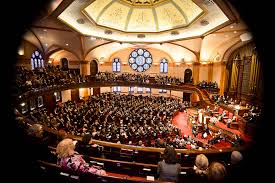
“God’s Restlessness” was the title of the moving May 28 sermon at Minneapolis’ Westminster Presbyterian Church by Rev. Sarah Brouwer, Associate Pastor for Congregational Life. It was preceded by a meaningful Prayer of Confession by Rev. Brennan Blue, Associate Pastor for Families, Youth and Children, and by the reading of passages of Holy Scripture.[1] Below are photographs of Westminster’s Sanctuary and Revs. Brouwer and Blue:

The Prayer of Confession

Here is the Prayer of Confession (emphases added):

“All: God of grace, we gather in worship to come home to you. Like sheep without a shepherd, you bring us back to the fold; you search for us until we are found.

One: O God, do you ever tire of looking for us?

All: God of compassion, your rest comes when all your people are as one, when justice and peace reign among us.

One: O God, we confess we grow weary of a world in need; will you still call on us to serve?

All: God of mercy, you do not fatigue; you are not exhausted by the needs of the world. Remind us that you have called each one of us to work alongside you. We are not alone.

One: O God, will you help us to trust in you?

All: God of forgiveness, we pray that you would search for us, find us, call on us, and help us to trust in your unending love.

One: O God, who will show us the way?

All: God of new life, in Jesus Christ you show us grace, compassion, mercy, forgiveness, and love. We pray to be Christ’s people, gathered and sent into your world to serve.”

Readings from Holy Scripture

The readings were Psalm 89: 20-37 (NRSV) and  Mark 6: 30-34, 53-56 (NRSV), Here is the text of the latter:

  • “The apostles gathered around Jesus, and told him all that they had done and taught. He said to them, ‘Come away to a deserted place all by yourselves and rest a while.’ For many were coming and going, and they had no leisure even to eat. And they went away in the boat to a deserted place by themselves. Now many saw them going and recognized them, and they hurried there on foot from all the towns and arrived ahead of them. As he went ashore, he saw a great crowd; and he had compassion for them, because they were like sheep without a shepherd; and he began to teach them many things.”
  • “When they had crossed over, they came to land at Gennesaret and moored the boat. When they got out of the boat, people at once recognized him, and rushed about that whole region and began to bring the sick on mats to wherever they heard he was. And wherever he went, into villages or cities or farms, they laid the sick in the marketplaces, and begged him that they might touch even the fringe of his cloak; and all who touched it were healed.”

Sermon

“I expect the disciples in our story today were learning about their own limits, as well as the challenges that came along with the joys of following Jesus. As we meet them here in Mark’s Gospel, we see they are coming back together after having been dispersed to go do ministry throughout Galilee. If we peak a bit further back through Mark, we can tell the disciples and Jesus really have been going non-stop, traveling by foot, relying on the hospitality of strangers, healing and teaching, teaching and healing. They’ve also faced what appears to be their first bout of rejection- in Jesus’ hometown, no less. And while rejection is common in almost any line of work, it doesn’t do much for morale.”

“They’re also just hungry. And, if they’re anything like me they’re probably ‘hangry’- it’s when you’re so hungry you get a little angry? So while they do approach Jesus eager to report on and debrief about all they had done, like any good pastor, Jesus recognizes they need a break.”

“Mark’s Gospel says Jesus tells the disciples to come away to a deserted place and rest awhile, and so they all get in the boat and begin to cross a small portion of the Sea of Galilee. I’m confident this journey signals a shift in the story- the literal crossing lets us know of a figurative change. But, the crossing over isn’t our only hint that something is about to happen- the second clue we are given is Jesus’ suggestion to go somewhere deserted. Deserted, desert, it indicates the disciples are entering a period of their ministry that might feel a bit like the wilderness- a time that can be difficult, but during which much can be learned. In Mark’s Gospel, in particular, Jesus reveals things to the disciples bit by bit, peeling back layers. It’s as if they are learning right alongside the folks who gather on the shore to hear Jesus teach. Those who appear to be the insiders- a/k/a the disciples- turn into the outsiders. The ones who should know the full story, really know only a piece of what Jesus is up to.”

“As they start to come ashore the disciples realize they’ve been found out- whoever saw them leaving in the boat recognized Jesus, and a large group hurried around the edge of the water to greet them when they landed.”

“I can only imagine the disciples’ chagrin, as they approached the so-called deserted place, and saw the crowd forming. Any one of us knows this feeling. You’re trying to get out of town for vacation and someone from work, or school, or church, catches you with a last minute request and you just can’t get away fast enough. I can almost hear the collective groan among the disciples as they saw the mob of needy people- so much for some down time and a hearty meal of freshly caught fish.”

“But, here comes the rub. We know Jesus got out of the boat at this point; we don’t know if the disciples did. The text says, ‘As Jesus went ashore, he saw a great crowd; and he had compassion for them, because they were like sheep without a shepherd.’”

“This may seem like a small point. Who cares if the disciples go with him or not? Preacher John Buchanan [2] says this, ‘Jesus looks at the crowd and has compassion. The agenda is set aside instantaneously. The disciples see an unwanted, unwelcome interruption. Jesus sees lost sheep needing a shepherd. Compassion trumps the disciples’ . . . exhaustion Jesus sees need and drops everything to attend to it. But, the disciples, I assume, hang back. The desire of the folks who have rushed to meet them is not met by the same level of urgency.’”

“Jesus, again, seems to welcome this interruption. Anyone in ministry must, at some point, come to understand that interruptions are one of the gifts of the work, not the burden. But, the disciples haven’t quite gotten it. In verses we didn’t read today, we learn the disciples want Jesus to send the crowds away to find their own food. They figure there must be a time and place for ministry to happen, and this is not it- not when they are tired and hungry. Clearly, the disciples, the insiders we presume would know, are still figuring out what Jesus is capable of. Jesus is not indefatigable, he does take time away to rest and pray, to eat and celebrate with friends. There is, however, a restlessness to him that makes him different. A level of compassion he possesses the disciples do not. It’s probably even a nod to justice. No one gets to rest, until all get to rest.”

“But, if you sense the same tension [here that] I do, . . . you know this doesn’t make the disciples happy. They are still discovering where their ministry ends and God’s continues. There are some things only Jesus can do, and that is a difficult lesson to learn. And, for those of us who like to be in control, and I suspect there are a few of us in the room, one of the hardest parts of following Jesus is actually just following. There’s that saying, ‘Remember you are not God, and thank God you don’t have to be.’ But, for some of us it’s not that comforting.”

“Letting Jesus be our shepherd is actually not as idyllic as all the lyrics and paintings of this image make it look like. And navigating these boundaries is not something that happens once, but again and again- for the disciples, and for us. . . . ”

“When Jesus got out of the boat alone that day, he was able to show the crowd compassion and love the disciples could not. Oddly enough, the word for compassion in the Greek is related to the word for guts. It sounds a little gross, but what it means is not. God’s compassion is up close and personal, it gets inside us, down to the deepest, neediest, sometimes ugliest parts of us. Theologian Douglas John Hall [[3]] says that ‘compassion is unlike pity, which you can manage from afar.’ I’m guessing the disciples weren’t without pity, but they were tired, and couldn’t muster the energy to saddle up to a needy crowd. And frankly, the crowd didn’t need what they had to offer. That may sound harsh, but other times in scripture when God steps in as the shepherd figure, rather than say, a king, it’s because human beings have failed one another. We can’t do what God can do. We aren’t restless for people as God is restless for people. . . . ”

“The reason those people gathered on the beach that day in ancient Israel was not because they recognized Jesus’ face, or could quote his teachings. They had come to know him as one who heals. The disciples, of course, were still trying to figure out how to do it, and that’s okay- we all are. We can’t do it all, and we can’t do an exhaustive job, either. Only God can handle that kind of compassion.”

“But, we are followers. We are the ones who have been healed at some point along the way, otherwise we wouldn’t be sitting in these pews. And whether we like it or not people see that in us–they recognize it. And recognition creates responsibility, and as spiritual leaders–and now I’m really just including all of you because you’re all capable of it–as spiritual leaders we are called to learn from what happened on this day so long ago. The world needed a shepherd then, and it still does. It’s our job, at the very least, to point him out.”

“After Jesus had performed two miracles, and finally went away for a while to pray, he got back in the boat with the disciples and headed over to Gennesaret. I’m guessing it was a quiet ride, as the disciples sorted out what had happened. I imagine they might have been overwhelmed, wondering if they had made the right choice to follow Jesus. Was it always going to be this exhausting? Of course, we can only guess, but here’s what could also be true. As they docked the boat and saw the crowds once again, gathering, waiting just to brush against the fringe of Jesus’ cloak, I wonder if their hearts swelled with beauty at the sight?  With pride that they were insiders, and gratitude for being invited to learn alongside this compassionate man?  What if that was the moment it all began to make sense for them? The story says, all who touched Jesus that day were healed, and maybe the disciples were, too.”

“These few verses in Mark’s Gospel, which seem rather inconsequential on first read, really encompass the reality of the Christian life. The push and pull of going with Jesus, but not getting out of the boat, of seeing his power among people, but being too tired to or unsure of how to follow. This story reminds us that even though we might consider ourselves insiders, just like the disciples, there is always room for us to be surprised by the depth of God’s love for others, and wonderfully, for us, as well. We too are healed by simply this: we have a God who cares, a God of compassion, a God who is restless until we know it is true. Thanks be to God. Amen.”

Conclusion

The Prayer of Confession was especially meaningful to me for I now sense that God was searching for me until I was found in 1981. The prayer reminded me of the weariness I often feel about the world in need. The last line of the prayer also struck a chord in my heart: “God of new life, in Jesus Christ you show us grace, compassion, mercy, forgiveness, and love.”

The sermon put me and other members of the church in the shoes of the tired and hungry disciples, anxious to rest and eat, and not eager to engage in further ministry. The sermon also made us realize that the disciples continued to learn about Jesus and his message throughout their time together. I also was reminded that no one individual can do all that needs to be done in the world, that what each individual does to meet the needs of the world does not have to be perfect or complete, but that each individual needs to do something to help others.

==========================================

[1] The Bulletin for the service and the text of the sermon are available on the church’s website. Other blog posts about Westminster with links established by computer in reverse chronological order of posting is on the website along with a more logical listing of same (without links).

[2] Rev. Buchanan is the retired pastor of Fourth Presbyterian Church on Michigan Avenue in Chicago, the second largest congregation in the Presbyterian Church (U.S.A.) (my denomination), a former leader (Moderator) of that denomination and the editor and publisher of The Christian Century. Information about him is found in Facebook and Wikipedia.

[3] Douglas John Hall is emeritus professor of theology at McGill University in Montreal, Canada and the author of many acclaimed and popular works about Christianity.