ALBA Emergency Meeting’s Action Regarding President Obama’s Executive Order Imposing Sanctions on Seven Venezuelans

As discussed in a prior post, Venezuela has been organizing Latin American opposition to President Obama’s March 9th executive order imposing sanctions on seven Venezuelans. The latest venue for such opposition was the March 17th ALBA emergency meeting in Caracas, Venezuela.

This post will discuss that ALBA resolution and Cuban President Rául Castro’s passionate speech at the meeting against the U.S. and the executive order. We will conclude with some observations.

ALBA’s Resolution Regarding the U.S. Executive Order [1]

After speeches and discussion, ALBA adopted a resolution that:

  • Demanded “the U.S. government and its president, [to] repeal Executive Order adopted on March 9, 2015, against the Bolivarian Republic of Venezuela, which constitutes a threat to their sovereignty and interference in the internal affairs of this sister nation.”
  • Expressed “their strong support for the process of dialogue for the restoration of relations between Cuba and the [U.S.], urging President Obama to adopt with determination the measures within their executive powers to amend the implementation of the economic, commercial and financial [embargo or blockade], and to stop the illegal occupation of the territory occupied by the Guantanamo Naval Base.”
  • Urged “Panama, as host of the VII Summit of the Americas to ensure through a transparent process the widest, legitimate and representative participation in the Forum of Civil Society, popular movements and country NGOs that advocate for nuclear disarmament, environmentalists, against neoliberalism, the Occupy Wall Street and Occupy region, university and secondary students, farmers, unions, indigenous communities, organizations that oppose the contamination of shale, advocates for the rights of immigrants, denouncing torture, extrajudicial killings, police brutality, racist practices, claiming for women equal pay for equal work, which require compensation for damage to the transnational companies.”

President Rául Castro’s Speech [2]

President Rául Castro

“ALBA brings us together today to reaffirm our firmest support for the Bolivarian people and government in the face of the latest interventionist measures and threats from the U.S. government against Venezuela.” (In the photograph to the left Cuban Foreign Minister Bruno Rodriguez Parrilla is seated behind President Castro at the ALBA meeting.)

“The facts demonstrate that history cannot be ignored. The relations between the United States and Latin America and the Caribbean have been marked by the “Monroe Doctrine” and the objective of exercising domination and hegemony over our nations.”

“Simon Bolívar had anticipated that the [U.S.] ‘seems destined by Providence to plague America with misery in the name of Liberty,’ and [Jose] Martí fell in combat before concluding the letter in which he explained the “duty of preventing the [U.S.] from spreading throughout the Antilles as Cuba gains its independence, and from overpowering with that additional strength our lands of America.’”

“Later came the military interventions, the coup d’états, the maneuvers to overthrow nationalist or progressive governments, the backing of bloody military dictatorships, the undercover operations, the support for terrorism and subversion, as well as the appropriation and plundering of our resources to perpetuate dependence and underdevelopment.”

Cuba’s “triumphant audacity to carry out a socialist revolution just 90 miles from the [U.S.] has meant immense sacrifices, suffering, loss of life and material deprivation for the Cuban people, subject to . . . every kind of hostility, including the support and organization of armed bands in the mountains from . . . [late]1959, the Bay of Pigs Invasion in 1961 and the formalization of the blockade in 1962, all with the stated intention of defeating the Revolution and changing the political, economic and social order we freely chose and subsequently confirmed in a constitutional referendum.”

“The result has been a resounding failure [for the U.S.], the harming of our people and the complete isolation of the [U.S.] . . . , as recently recognized by President Barack Obama on announcing a new policy [on December 17, 2014] and resolving to open another chapter. However, his government spokespeople insist on clarifying that the objectives persist and only the methods change.”

“The triumph of the Bolivarian Revolution was an extraordinary milestone in the history of Venezuela and the whole region, which had begun to awaken from the long neoliberal slumber. An era of change commenced in the continent and other nations decided to embark on the path towards full independence and integration and again take up the flags of our national heroes.”

“ALBA, UNASUR [and] CELAC were created, which united, in their diversity, previous groupings and initiatives of genuine Latin Americanist and Caribbean calling, founded on principles of solidarity, cooperation, social justice and defense of sovereignty.”

“PetroCaribe was an extraordinary, generous and humanistic contribution of President Hugo Chávez Frías. Now [the U.S.] wants to destroy PetroCaribe, to threaten its member states, to submit them to the oil multinationals and separate them from Venezuela. They do not realize that our peoples have decided, irrevocably, to continue our unstoppable advance and fight for a multipolar and just world, where those who were historically excluded have a voice, hope and dignity.”

“U.S. imperialism has attempted, without success, practically all possible formulas to destabilize and subvert the Bolivarian Chavista revolution, to recover its control of the largest oil reserves on the planet, and to deliver a blow to the integrationist, emancipation process underway in Our America.”

“The arbitrary, aggressive, unjustified executive order issued by the [U.S.] President regarding the Bolivarian Republic of Venezuela’s government, describing it as a threat to its national security, shows that the [U.S.] is able to sacrifice the peace and the direction of hemispheric and regional relations, for reasons of domination and domestic politics.”

“The idea is untenable that a country like Venezuela — which has shown so much solidarity, never invaded or harmed any other, and contributes in a significant and altruistic manner to the energy security and economic stability of a considerable number of nations of the continent — could represent a threat to the security of the greatest super-power in history.”

“We support the honorable, valiant, constructive position taken by President Nicolás Maduro, who, despite the seriousness of this threat, has extended his hand to the [U.S.] President to initiate a dialogue based on international law and mutual respect, which could lead to the unconditional revocation of President Obama’s executive order and the normalization of relations. ALBA and CELAC should join in this proposal.”

“Today Venezuela is not alone, nor is our region the one it was 20 years ago. We will not tolerate the violation of sovereignty or allow peace in the region to be broken with impunity.”

“Threats to the peace and stability of Venezuela represent threats to regional stability and peace, as well.”

“The peace, which Venezuela today demands and which we all need, [is] a “peace with justice, with equality; the peace on our feet, not on our knees; peace with dignity and development,” as Maduro said. It is the peace to which we committed ourselves in the Proclamation of Latin America and the Caribbean as a Zone of Peace, adopted by the II CELAC Summit in Havana.”

Cuba’s “position under these circumstances remains unchanged. I reiterate the firm solidarity of the Cuban Revolution with the Bolivarian Revolution, with constitutional President Nicolás Maduro and with the civic-military union which he heads. I reiterate our absolute loyalty to the memory of Comandante Hugo Chávez Frías, the Cuban Revolution’s best friend.”

“We reaffirm once again, “The Cuban collaborators present in [our] sister country [Venezuela], will continue to fulfill their duties under any circumstances whatsoever, to the benefit of the fraternal, noble, generous people of Venezuela.”

“The [U.S.] must understand once and for all that it is impossible to seduce or buy Cuba, or intimidate Venezuela. Our unity is indestructible.”

“Nor will we concede one iota in the defense of sovereignty and independence, or tolerate any type of interference or conditions on our internal affairs.”

“Nor will we cease to defend just causes in Our America and the world, nor will we ever abandon our brothers in the struggle. We have come to close ranks with Venezuela and ALBA, and reaffirm that principles are not negotiable.”

“To defend these convictions, we will attend the 7th Summit of the Americas. We will present our positions with firmness, clarity and respect. We will reject with determination any attempt to isolate or threaten Venezuela, and demand a definitive end to the blockade of Cuba. Cuban civil society will be the voice of those without a voice, and we will expose the mercenaries who will appear there [posing] as Cuba’s civil society.”

“We must call upon all peoples and governments of Our America to mobilize and remain alert in the defense of Venezuela. Solidarity is the foundation of unity and regional integration.”

Conclusion

As mentioned in a prior post, I have not been a close observer of events in Venezuela and U.S. relations with that country and thus have no grounds for siding with Venezuela’s version of those events and relations or with the U.S. version. Therefore, I will try to set out these different versions in future posts [3] and invite respectful comments agreeing or disagreeing with these conflicting versions and hopefully containing citations to sources.

As an advocate for U.S.-Cuba reconciliation, I am troubled by the prospect that what I have called the “squabble” over President Obama’s March 9th executive order will adversely affect or derail that reconciliation, a concern heightened by the previously mentioned speech by President Castro.

========================================================

[1] Declaration of the Special Summit of Heads of State and Government of the Bolivarian Alliance for the Peoples of Our America-Trade Treaty (ALBA-TCP), Granma (Mar. 17, 2015); Hernández, Cuba and Alba in solidarity with Venezuela, Granma (Mar. 18, 2015).

[2] Rául Castro, We must call upon all the peoples and governments of Our America to mobilize and be alert in defense of Venezuela, Granma (Mar. 18, 2015). The day before this speech the President’s brother, Fidel Castro, in a long letter to Venezuelan President Maduro condemned “the outrageous policy of the United States government toward Venezuela and Alba.” Fidel concluded by saying, “Whatever U.S. imperialism may do, it will never be able to count on them [the Bolivarian National Armed Forces] to do what they did for so many years. Today Venezuela can count on the best-equipped soldiers and officers in Latin America. When you [Maduro] met with officers recently, it was evident that they were ready to give their last drop of blood for the homeland.” (Fidel sends message to President Nicolás Maduro, Granma (Mar. 17, 2015).)

[3] Venezuela’s version of events was set forth in this post and in “Venezuela’s Open Letter to People of the United States.”  Both sides’ versions were discussed in “U.S. and Cuba Squabble Over U.S. Sanctions Against Certain Venezuelans” (Mar. 16, 2015),


Venezuela’s Open Letter to the People of the United States

On March 17 the Government of Venezuela placed a full-page advertisement in the New York Times under the headline: “Letter to the People of the United States: “Venezuela Is Not a Threat” from its Ministry of Foreign Affairs. [1]

Because of the ad’s importance in the ongoing issues involving the United States, Venezuela and Cuba and because ads are not included in the online New York Times, this post sets forth the complete contents of the ad without comment.

Letter to the People of the United States: “Venezuela Is Not a Threat

Freedom and Independence. More than two centuries ago, our fathers founded a Republic on the basis that all persons are free and equal under the law. Our nation made the greatest sacrifices to guarantee South American people their right to choose their rulers and to enforce their own laws today. The historical legacy of our father, Simón Bolívar, is always remembered. Bolívar was a great man who gave his life so we would inherit a nation of justice and equality.”

We believe in Peace, National Sovereignty and International Law. We are a peaceful people. In two centuries of independence, we have never attacked another nation. Our people live in a region of peace, free of weapons of mass destruction, and in freedom to practice all religions. We uphold respect for international law and the sovereignty of all people of the world.”

“We are an Open Society. We are a working people, we care for our families, and we have freedom of religion. Immigrants from around the world , live among us, whose diversity is respected. We have freedom of the press and we are enthusiastic users of social media.”

We are friends of the American people: The histories of our people have been connected since the beginning of our struggles for freedom. Francisco de Miranda, a Venezuelan hero, fought with the American people during their independence fight. We share the idea that freedom and independence are fundamental elements for the development of our nations.”

“The relations between our peoples have always been peaceful and respectful. Historically, we have shared business relations in strategic areas. Venezuela has always been a responsible and trustful energy provider for the American people. Since 2005, Venezuela has provided ‘heating oil’ through subsidies for low-income communities in the United States, thanks to our company, CITGO. This contribution has helped tens of thousands of American citizens survive in harsh conditions, giving them relief, and necessary support in times of need, evidencing how solidarity can create powerful alliances across borders.”

Incredibly, the U.S. government has declared our country a threat to its national security and foreign policy. In a disproportionate action, the government of Obama has issued a ‘National Emergency’ declaring Venezuela as a threat to its national security (Executive Order, 09-15-2015). This unilateral and aggressive measure taken by the United States Government against our country is not only unfounded and in violation of basic principles of sovereignty and self-determination under international law, but also has been unanimously rejected by all 33 nations of the Community of Latin American and Caribbean States (CELAC) and the twelve member states of the Union of South American Nations (UNASUR). In a statement made on March 14, 2015, UNASUR reiterated its firm rejection of these coercive measures that do not contribute to the peace, stability and democracy in our region and called on President Obama to revoke his Executive Order against Venezuela.”

We reject unilateralism and intervention. President Obama, without any authority to interfere in our internal affairs, unilaterally issues a set of sanctions against Venezuelan officials with potentially far-reaching implications, interfering in our constitutional order and our justice system.”

We advocate for a multipolar world. We believe that our world must be based on the rules of international law, without interference in the internal affairs of other countries. We are convinced that the relationship of respect between all nations is the only path for strengthening peace and coexistence, as well as for assuring a more just world.”

We honor our freedoms and uphold our rights. Never before in the history of our nations, has a president of the United States attempted to govern Venezuelans by decree. It is a tyrannical and imperial order and it pushes us back into the darkest days of the relationship between the United States and Latin America and the Caribbean.

“In the name of our long-term friendship we alert our American brothers and sisters, lovers of justice and freedom, of the illegal aggression committed by your government on your behalf. We will not allow our friendship with the people of the United States to be affected by this senseless and groundless decision by President Obama.”

We demand: 1. The U.S. Government immediately cease hostile actions against Venezuelan people and democracy. 2. President Obama abolish the Executive Order that declares Venezuela a threat to U.S. national security, as it has been requested by the Union of South American Nations (UNASUR). 3. The U.S. government retract its libelous and defamatory statements and actions against the honorable Venezuelan officials who have just obeyed our laws and our constitution.”

Our sovereignty is sacred. The principles of the founding fathers of the United States of America are followed today with the same dignity by the people of Simón Bolívar. In the name of our mutual love for national independence we want the government of President Obama to think about and rectify this dangerous precedent.”

“We are convinced that the defense of our freedom is a right we shall never give up because the future of humanity lies also in our country. As Simón Bolívar said: ‘The freedom of the New World is the hope of the universe’.”

“’Venezuela is not a threat, but a hope,’ ‘Independence or nothing’– Simón Bolívar

============================================

[1] Advertisement, Letter to the People of the United States: Venezuela Is Not a Threat, N.Y. Times at A7 (Mar. 17, 2015); Assoc. Press, Venezuela Runs Ad In New York Times Accusing US of Hostility, N.Y. Times (Mar. 17, 2015); Venezuela NYT publishes open letter denying that threat to US, el Nuevo Herald (Mar. 17, 2015).


U.S. and Cuba Hold Unproductive Extension of Second Round of Talks

On March 16, the U.S. and Cuba met in Havana for further discussions, mostly on re-establishing diplomatic relations and re-opening embassies. The focus was to be on so-called “nuts-and-bolts issues of limits on the number of diplomats and their travel in the host country. [1]

Although the U.S. expected the talks might continue for several days, they lasted only one day. The next day (March 17), the Cuban government released a statement: “At the end of the meeting, which took place in a professional climate, the two delegations agreed to maintain communication in the future as part of this process.” The U.S. had a similar statement: “The discussion was positive and constructive and was held in an atmosphere of mutual respect.”

Neither side said whether they had resolved any of the obstacles to reopening embassies.

There was concern before this week’s session that the recent U.S.-Cuba disagreement over U.S. sanctions against certain Venezuelans, as discussed in a prior post, might adversely affect the talks, but there was no overt indication, one way or the other, whether that was a factor in the apparently unproductive one-day session. Julia Sweig, an expert on U.S. relations with Cuba and Venezuela, said there was no sign that the increasingly strained U.S. relationship with Venezuela was affecting the warming of relations with Cuba.

On the other hand, there are other indications that the Venezuela situation may have been at least one of the reasons for the short and apparently unproductive U.S.-Cuba negotiations this week.

Yesterday Cuban President Raúl Castro was in Venezuela for an emergency meeting of the ALBA group that was called to discuss and react to President Obama’s executive order imposing sanctions against seven Venezuelans. In a speech at the meeting, Castro used some his strongest anti-American language in months, thrashing Mr. Obama over the sanctions and any suggestion that détente would lead to political change on the island. For example, Castro said, ““The United States should understand once and for all that it is impossible to seduce or buy Cuba nor intimidate Venezuela. Our unity is indestructible.”

In any event, the Venezuelan campaign against the sanctions threatens to put the damper on a celebration of U.S.-Cuba rapprochement at the Summit of the Americas in Panama on April 10-11.

================================

[1] The sources for this post are the following: Office of Spokesperson, Assistant Secretary Roberta Jacobson Travels to Havana, U.S. Dep’t State (Mar. 13, 2015); Schwartz, Cuba, U.S. to Resume Talks to Restore Diplomatic Ties, W.S.J. (Mar. 13, 2015); DeYoung, U.S., Cuba set for third round of talks aimed at agreement to open embassies, Wash. Post (Mar. 13, 2015); Statement by the Director of Bilateral Issues US Department Ministry of Foreign Affairs, Granma (Mar. 13, 2015); Reuters, Cuba, U.S. Renew Talks on Restoring Diplomatic ties, N.Y. Times (Mar. 16, 2015); Reuters, Latest U.S.-Cuba Talks on Diplomatic Ties Ends After One Day, N.Y. Times (Mar. 17, 2015); Assoc. Press, Cuba, US Say Third Round of Diplomatic Negotiations Ends, N.Y. Times (Mar. 17, 2015); Serra, Meeting between officials of Cuba and the United States, Granma (Mar. 17, 2015); Archibold, U.S.-Cuba Talks on Restoring Diplomatic Ties End Abruptly, N.Y. Times (Mar. 17, 2015).


U.S. and Cuba Squabble Over U.S. Sanctions Against Certain Venezuelans

The U.S. and Cuba (and indeed most of the rest of Latin America) are in a squabble over recent sanctions imposed against certain Venezuelans by an executive order issued by President Obama. After reviewing immediate events leading up to the imposition of sanctions, this post will discuss the executive order and the reactions thereto from Venezuela, Cuba and the rest of Latin America.

Events Leading Up to the Imposition of Sanctions [1]

In February 2014 there were opposition protests calling for Venezuelan President Nicolas Maduro’s resignation that sparked violence killing 43 people. In February of 2015 protesters and security forces clashed sporadically around that anniversary, while a shrinking economy and chronic product shortages have sent Maduro’s popularity tumbling.

In early February 2015, Antonio Ledezma, who is an opposition leader and the Mayor of Caracas, and two other opposition leaders signed a published open letter to President Maduro calling for a “national agreement for a transition.”

On February 10, the government announced a new three-tier currency scheme that amounted to a de facto devaluation of almost 70 percent, spurring outrage among opposition critics. This was a response to tumbling oil prices that have left the country struggling to meet its budget needs amid bulging foreign debt payments.

On February 19, the Venezuelan government announced that Ledezma had been arrested in order to halt an alleged U.S.-backed coup plot. The next day the government said that Ledezma had been indicted on charges of conspiracy against the Venezuelan government and plotting an American-backed coup. His attorney will be asking a judge to dismiss conspiracy charges against him, calling accusations that he participated in a plot to overthrow Venezuela’s socialist government “totally unfounded.”

Also on the 19th Maduro called for the Venezuelan people to defend national peace and be prepared “to deal with any scenario that may occur in Venezuela as a result of U.S. imperial aggression against our country.” That same day the Venezuelan Supreme Tribunal of Justice issued a statement reminding the U.S. that it had no jurisdiction to apply its laws outside its territory against the sovereignty and institutions of democracy in Venezuela. [2]

On February 20th the White House’s Press Secretary, Josh Earnest, responded to these charges. He said: “The United States is not promoting unrest in Venezuela, nor are we attempting to undermine Venezuela’s economy or its government.  In fact, the United States remains Venezuela’s largest trading partner.  The Venezuelan government should stop trying to distract attention from the country’s economic and political problems, and focus on finding real solutions through democratic dialogue among the people of Venezuela.  The Venezuelan government should respect the human rights of its citizens and stop trying to intimidate its political opponents.”

According to the Press Secretary, the U.S. continues “to call on the Venezuelan government to release political prisoners, including dozens of students; opposition leader; and Mayors Daniel Ceballos and Antonio Ledezma.” The U.S. “Treasury Department and the State Department are obviously closely monitoring this situation and are considering tools that may be available that could better steer the Venezuelan government in the direction that they believe they should be headed.  That obviously means that we’re continuing to engage other countries in the region in talking about operating in coordinated fashion as we deal with the situation there.”

The same day a Department of State spokesperson stated: The Venezuelan accusations “are false and baseless. And our view continues to be that political transitions must be democratic, constitutional, peaceful, and legal. We do not support a political transition in Venezuela by non-constitutional means. We’re not promoting unrest in Venezuela, nor are we attempting to undermine Venezuela’s economy or its government. And this is a continued effort . . . of the Venezuelan Government to try to distract attention from the country’s economic and political problems and focus and try to distract and make these false accusations.”

In addition, the State Department official stated the U.S. had reports that the Venezuelan intelligence service had detained the Caracas metropolitan mayor and searched his office [and] . . . that military intelligence officials plan to move opposition leader Leopoldo Lopez from his prison cell and transfer him to an unknown location. We are deeply concerned by what appears to be the Venezuelan Government’s efforts to escalate intimidation of its political opponents by rounding up these prominent leaders of the opposition. Venezuela’s problems cannot be solved by criminalizing dissent.”

President Obama’s Executive Order [3]

 On March 9th President Obama issued an executive order that blocked any U.S. assets of seven named Venezuelans and others who might be named by the U.S. Department of the Treasury, that barred these individuals from entering the U.S. and that prohibited U.S. persons from doing business with them.

These individuals were determined by the U.S. to be “responsible for the erosion of human rights guarantees, persecution of political opponents, curtailment of press freedoms, use of violence and human rights violations and abuses in response to antigovernment protests, and arbitrary arrest and detention of antigovernment protesters, as well as significant corruption.”

The executive order was not directed at the people or economy of Venezuela.

The disputes over this executive order, however, are not over these provisions, but instead to its preamble, which states:

  • [T]he situation in Venezuela, including the Government of Venezuela’s erosion of human rights guarantees, persecution of political opponents, curtailment of press freedoms, use of violence and human rights violations and abuses in response to antigovernment protests, and arbitrary arrest and detention of antigovernment protestors, as well as the exacerbating presence of significant public corruption, constitutes an unusual and extraordinary threat to the national security and foreign policy of the United States, and [the President] hereby declare a national emergency to deal with that threat.” (Emphasis added.)

 Venezuela’s Response to the Executive Order [4]

On March 10 President Maduro requested the Venezuelan legislature to enact an Anti-Imperialist Enabling Law granting him power to enact laws by his decree for the rest of this year in order to “defend the peace, sovereignty and full development of Venezuela in the face of threats from the United States empire.” Maduro said “no one in the world could believe the assertion [that Venezuela posed a national security threat to the U.S.] since the Venezuelan people are known as ‘peaceful, democratic, humanist and have a foreign policy directed toward understanding and peace . . . leaders in the struggle for integration and unity.’”

On March 14, upon Maduro’s order, Venezuela conducted a military exercise to counter an alleged U.S. threat by deploying Venezuelan soldiers and partisans across the country to march, man shoulder-fired missiles and defend an oil refinery from a simulated attack. Venezuela’s navy also performed exercises in the Caribbean Sea.

On Sunday (March 15) Venezuela’s legislature granted the requested presidential decree powers, which Maduro says are necessary to defend the country from the U.S. and which his opponents say are to justify repression and distract Venezuelans from economic problems, including acute shortages. Indeed, the country is suffering the highest inflation in the Americas, long lines for food and medicine, and shortages of many basic products.

President Maduro immediately responded to the legislature’s action. He insisted that Venezuela was ready to talk, “one on one, face to face, with respect, without arrogance or hubris” with the U.S. The first item on the agenda for such a meeting, he said, would be the immediate rescission of President Obama’s executive order.

 Cuba’s Response to the Executive Order [5]

Since Venezuela is a major ally of Cuba and the supplier of oil to Cuba, it is not surprising that the Cuban press recently has been full of Cuba’s support of Venezuela, both before and after the issuance of the executive order. Here are some of those expressions of support:

  • On March 5, Granma, Cuba’s official newspaper, issued a laudatory article about Venezuela’s former President, Hugo Chávez. It said he was “remembered . . . for his charisma, his arousing speech, his sincerity, his constant anguish to deliver for his people. Those who knew him say he often felt as though he were plowing the sea with that desire, so characteristic of him, to remain loyal to the people.” Now, “two years after his departure, . . . Chávez will be awakened together with Bolívar, to continue guiding Venezuela and Latin America.”
  • On March 6, Cuban First Vice President of the Councils of State and Ministers (and the presumptive successor to Raúl Castro as President of Cuba), Miguel Díaz-Canel Bermúdez, was in Caracas to participate in the commemoration of the second anniversary of death of Chávez, and Díaz-Canel declared that Cuba always will be a true friend of the Bolivarian Revolution.
  • On March 9, immediately after the issuance of the executive order, the Cuban government reiterated “its unconditional support and that of our people for the Bolivarian Revolution, the legitimate government of President Nicolás Maduro Moros and the heroic sister nation of Venezuela.” The Cuban government stated, “Nobody has the right to intervene in the internal affairs of a sovereign State or to declare it, without grounds, a threat to its national security.” Venezuela does not have the resources or officials to threaten the United States, and the executive order “reaffirms . . . the interventionist nature of U.S. foreign policy.”
  • On March 10, Fidel Castro in a letter to President Maduro said, “I congratulate you on your brilliant and courageous speech against the brutal plans of the U.S. government. Your words go down in history as proof that humanity can and must know the truth.”
  • On March 13 Cuban Foreign Minister Bruno Rodriguez Parrilla said that any attack on Venezuela was also an attack on Cuba and that the U.S. “has provoked serious damage to the environment in the hemisphere on the eve of the Summit of the Americas.” He added, “I hope that the U.S. government understands that it can’t handle Cuba with a carrot and Venezuela with a garrote.”
  • On March 15 thousands of Cubans attended a concert in support of Venezuela at the University of Havana. One of the Cuban Five and a Hero of the Republic of Cuba, René González, addressed the crowd, saying, “We all had in mind the warning of Che that imperialism cannot be trusted,” and that warning was confirmed by the March 9th executive order.

Other Latin American Countries’ Reactions [6]

On March 14, at Venezuela’s request, the 12-nation Union of South American Nations (UNASUR) reaffirmed “their commitment to the full observance of international law, the Peaceful Settlement of Disputes and the principle of nonintervention” and reiterated their “call for governments to refrain from applying unilateral coercive measures that violate international law.” It, therefore, called on the U.S. “to evaluate and implement alternatives for dialogue with the government of Venezuela, under the principles of respect for sovereignty and self-determination of peoples.’ As a result, it requested “the repeal of that Executive Order.”

On March 17 the Bolivarian Alliance for the Peoples of Our Americas (ALBA), at the request of Venezuela, will meet in Caracas to declare solidarity with Venezuela in its disputes with the U.S.

Conclusion

Although I am not a close follower of events in Venezuela, I do know that the recent huge declines in world oil prices have devastated its economy, that it is suffering horrendous inflation forcing it to devalue its currency, that there are shortages of all sorts of consumer products and that its government has imprisoned dissidents, including the Mayor of Caracas.

I also believe that the U.S. government must have had good cause to impose sanctions on the seven individuals named in the executive order.

Therefore, the protests of Venezuela, Cuba and the other Latin American nations, in my opinion, are not justified. The U.S. hopes for a cordial Summit of the Americas next month in Panama to celebrate a U.S.-Cuba reconciliation, however, appear to have been scuttled.

=================================================

[1] Pons & Ellsworth, Update 3-Venezuela announces new currency system, large devaluation seen, Bloomberg (Feb. 10, 2015); Reuters, Venezuela Arrests Opposition Mayor Accused of Coup Plot, N.Y. Times (Feb. 19, 2015);  White House, Press Briefing by Press Secretary, Josh Earnest, 2/20/15 (Feb. 20, 2015); U.S. Dep’t State, Daily Press Briefing (Feb. 20, 2015); Assoc. Press, Lawyer: Jailed Caracas Mayor to Fight Conspiracy Charges, N. Y. Times (Feb. 21, 2015); Gupta, Venezuela Mayor Is Accused of U.S.-Backed Coup Plot, N.Y. Times (Feb. 21, 2015),

[2] Cuba’s official newspaper, Granma, parrotted the Venezuelan government’s version of events. (E.g.Venezuela faces a stroke of continued fate, Granma (Feb. 20, 2015); Statement of the Ministry of Foreign Affairs of the Republic of Cuba, Granma (Feb. 20, 2015).)

[3] White House, Executive Order—Blocking Property and Suspending Entry of Certain Persons Contributing to the Situation in Venezuela (Mar. 9, 2015); White House, Fact Sheet: Venezuela Executive Order (Mar. 9, 2015); White House, Letter [to Speaker of U.S. House of Representatives]—Declaration of a National Emergency with respect to Venezuela (Mar. 9, 2015); White House, Statement by the Press Secretary on Venezuela (Mar. 9, 2015);DeYoung & Miroff, White House steps up sanctions against Venezuelans, Wash. Post (Mar. 9, 2015). The executive order was issued under (a) the International Emergency Economic Powers Act and (b) the Venezuela Defense of Human Rights and Civil Society Act of 2014. In section 2 of that latter statute, Congress found, among other things, that the Central Bank of Venezuela and the National Statistical Institute of Venezuela had determined that the annual inflation rate in Venezuela in 2013 was 56.30, the highest level of inflation in the Western Hemisphere and the third highest level in the world; that Venezuela’s currency controls have become the most problematic factor for doing business in the country; and that HumanRights Watch has reported the government intimidates,censors and prosecutes its critics.

[4] Editorial, In Venezuela, Punishing Scapegoats, N.Y. Times (Mar. 5, 2015); Toro & Kronicks, Venezuela’s Currency Circus, N.Y. Times (Mar. 6, 2015); Miroff & DeYoung, New U.S. sanctions lost in Venezuelan translation, Wash. Post (Mar. 11, 2015); Reuters, Mind Your Manners, Venezuela Tells U.S. Official, Jacobson, N.Y. times (Mar. 11, 2015); Neuman, Obama Hands Venezuelan Leader a Cause to Stir Support, N. Y. Times (Mar. 11, 2015); Editorial, A Failing Relationship with Venezuela, N. Y. Times (Mar. 12, 2015); Assoc. Press, Venezuela Conducts Military Exercises, Claims US Threat, N.Y. Times (Mar. 14, 2015); Reuters, Venezuela Stages Military Exercises to Counter U.S. ‘Threat,’ N.Y. Times (Mar. 15, 2015); Buitrago & Cawthorne, Elected officials grant Venezuela leader broad powers, Wash. Post (Mar. 15, 2015).

[5] Statement from the Revolutionary Government of the Republic of Cuba, Granma (Mar. 10, 2015); Letter from Fidel to Maduro, Granma (Mar. 10, 2015); Pasiero, Venezuela is sacred and to be respected, Granma (Mar. 10, 2015); Pasiero, Cuba reiterates its unconditional support of Venezuela, Granma (Mar. 6, 2015); Chávez, forever present, Granma (Mar. 5, 2015); Pasiero, Mature relationships requires respect for the United States, Granma (Mar. 16, 2015); Venezuela Are All, Granma (Mar. 16, 2015); Prada & Rodriguez, Voices for solidarity with Venezuela, Granma (Mar. 16, 2015).

[6] UNASUR, Press Union of South American Nations Executive Decree of The Government of the Unites States of Venezuela (Mar. 14, 2015); Assoc. Press, South American Bloc Demands US Revoke Venezuela Order, N.Y. Times (Mar. 14, 2015). UNASUR members are Argentina, Brazil, Bolivia, Chile, Colombia, Ecuador, Guyana, Paraguay, Peru, Suriname, Uruguay and Venezuela. ALBA members are Antigua and Barbuda, Bolivia, Cuba, Dominica, Ecuador, Grenada, Nicaragua, Saint Kitts and Nevis, Saint Lucia, Saint Vincent and Grenadines and Venezuela.


U.N. Human Rights Council Is Warned About Human Rights Violations

The U.N. Human Rights Council, which is responsible for strengthening the promotion and protection of human rights around the globe, addressing situations of human rights violations and making recommendations on the subject, [1] is in the midst of its 28th regular session at its headquarters in Geneva Switzerland with the session ending on March 27th. [2]

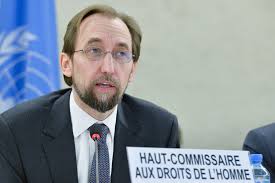
Zeid Ra-al Al Hussein
Zeid Ra-ad Al Hussein

At the opening of the session on March 2 the U.N. High Commissioner for Human Rights, Zeid Ra’ad Al Hussein, [3] set forth his concerns on human rights. Three days later, on March 5th, he commented on his annual report on human rights. This post will examine both of these speeches.

From March 2 through 5, the Council conducted what it called its High Level Segment, in which national leaders addressed the Council on the overall subject of human rights. Two of those national leaders were U.S. Secretary of State john Kerry and Cuban Foreign Minister, Bruno Rodriguez Parrilla. Their remarks will be covered in subsequent posts while another post will analyze those remarks and the speeches of the High Commissioner.

High Commissioner’s Speech, March 2nd [4]

The “cruelty and moral bankruptcy of violent extremists . . . continue daily, and we condemn their merciless conduct daily.”

“And yet, if we are not careful, if we are not completely principled and cunning in our collective attempt to defang them, we will, unwittingly and inexcusably, be advancing their interests. How we define the opening chapters of this already agitated century depends heavily on us not becoming like them.  For us, international humanitarian law and international human rights law cannot be trifled with or circumvented, but must be fully observed.”

“It has been 70 years since the great Charter of the [U.N.] was drawn up, and since then States have also written and agreed to a range of strong international treaties, to establish in binding law the legal principles of human rights. They are a distillation of all human experience, all the warnings and screams of our combined human history.” By “ratifying the U.N. Charter, [states] have made a clear commitment [in the words of its Preamble] to ‘reaffirm faith in fundamental human rights; in the dignity and worth of the human person; in the equal rights of men and women, and of nations large and small; and to establish conditions under which justice and respect for the obligations arising from treaties, and other sources of international law, can be maintained; and to promote social progress, and better standards of life in larger freedom.’”

“And yet, with alarming regularity, human rights are disregarded, and violated, sometimes to a shocking degree.”

“States claim exceptional circumstances. They pick and choose between rights. One Government will thoroughly support women’s human rights and those of the LGBT communities, but will balk at any suggestion that those rights be extended to migrants of irregular status. [U.S.?] Another State may observe scrupulously the right to education, but will brutally stamp out opposing political views. [Cuba?] A third State comprehensively violates the political, civil, economic, social and cultural rights of its people, while vigorously defending the ideals of human rights before its peers.”

“In recent months I have been disturbed deeply by the contempt and disregard displayed by several States towards the women and men appointed by [the Council] as [its] independent experts – and also by the reprisals and smear campaigns that are all too frequently exercised against representatives of civil society, including those who engage with the Council and its bodies.  I appeal to all of you, once again, to focus on the substance of the complaint, rather than lash out at the critic – whether that person is mandated by States, is a member of my Office, or is a human rights defender.”

“The overwhelming majority of victims of human rights abuses around the world share two characteristics: Deprivation, and discrimination – whether it is based on race or ethnicity, gender, beliefs, sexual orientation, caste or class. From hunger to massacres, sexual violence and slavery, human rights violations are rooted in these hidden, and sometimes not so hidden, factors.”

“They are not spontaneously generated. Most violations of human rights result from policy choices, which limit freedom and participation, and create obstacles to the fair sharing of resources and opportunities.”

“The most powerful instrument in the arsenal we have against poverty and conflict is the weapon of massive instruction. Respect for the human rights of all, justice, education, equality – these are the strongly interlocking elements that will build fair, confident and resilient societies; true development; and a permanent peace.”

“Everybody knows when police use torture, and when tweets are brutally suppressed.  Everybody knows when discrimination means poverty, while corrupt elites gorge on public goods, supported by a corrupt judiciary.  Everybody knows when women are treated like property, and children go hungry, and unschooled, in squalid neighborhoods.”

“Some of the evidence may be hidden. But the reality, in far too many countries, of massacres and sexual violence; crushing poverty; the exclusive bestowal of health-care and other vital resources to the wealthy and well-connected; the torture of powerless detainees [U.S.?]; the denial of human dignity – these things are known. . . . [T]hey are what truly make up a State’s reputation; together with the real steps – if any – taken by the State to prevent abuses and address social inequalities, and whether it honors the dignity of its people.”

“The only real measure of a Government’s worth is . . . the extent to which it is sensitive to the needs – and protects the rights – of its nationals and other people who fall under its jurisdiction, or over whom it has physical control.”

“Some policy-makers persuade themselves that their circumstances are exceptional, creating a wholly new reality unforeseen by the law. This logic is abundant around the world today:  ‘I arrest arbitrarily and torture because a new type of war justifies it. I spy on my citizens because the fight against terrorism requires it. I don’t want new immigrants, or I discriminate against minorities, because our communal identity is being threatened now as never before. I kill without any form of due process, because if I do not, others will kill me.’ “

“I must remind you of the enduring and universal validity of the international human rights treaties that your States wrote and ratified. In reality, neither terrorism, nor globalization, nor migration are qualitatively new threats that can justify overturning the legal foundations of life on Earth.  They are not new.”

“At a time of intensifying global anxiety, I believe the people of the world are crying out for profound and inspiring leadership equal to the challenges we face.  We must therefore renew, by the strongest action, our dedication to the reality of inalienable and universal human rights, to end discrimination, deprivation, and the seemingly inexhaustible litany of conflicts and crises that generate such terrible, and needless, suffering.”

“What will become of us, of our world, if we ignore our treaties and principles? Can we be so stupid as to repeat scenes from the twentieth century, punctured as it was by such awful inhumanity?  You must not make it so.  This is principally your burden, and ours.  Together, if we succeed in turning the corner, in improving our global condition, we can then say the screams of history and of the millions upon millions of victims, have been heard, finally.  Let us make it so.”

High Commissioner’s Speech, March 5th [5]

The High Commissioner was “appalled by the massive suffering ISIL provokes [in Syria, Iraq and Libya]: from the murders, torture, rape and sale of children . . . ; to mass beheadings; burning people alive in cages; seemingly genocidal attacks on ethnic and religious groups; the obliteration of due process; torture; deprivation of income and every kind of service and resource; recruitment of children; the destruction of elements of the cultural heritage of humanity; and, not least, particularly vicious and comprehensive attacks on the rights of women and girls.” [Similar horrible actshe said, were perpetrated in Nigeria by Boko Haram and in Yemen and Somalia by other groups.]

“My Office strongly supports efforts by States around the world to prevent and combat terrorism, and to ensure that the perpetrators of terrorism, as well as their financiers and suppliers of arms, are brought to justice.”

“Terrorist attacks [,however,] cannot destroy the values on which our societies are grounded – but laws and policies can. Measures that build what has been termed the ‘national security state’ – such as arbitrary or prolonged detention; torture and ill-treatment; massive surveillance that contravenes the right to privacy; unfair trials; discriminatory policing; and the abusive use of legislation to curb legitimate rights to peaceful protest and to freedom of expression – are human rights violations. They generate legitimate resentment, harm social cohesion, and undermine the essential values of the international community.”

“There is real danger that in their reaction to extremist violence, opinion-leaders and decision-makers will lose their grasp of the deeper principles that underpin the system for global security which States built 70 years ago to ward off the horror of war. The fight against terror is a struggle to uphold the values of democracy and human rights – not undermine them. . . [C]ounter-terrorist operations that are non-specific, disproportionate, brutal and inadequately supervised violate the very norms that we seek to defend. They also risk handing the terrorists a propaganda tool – thus making our societies neither free nor safe. The use of torture, neglect of due process and collective punishment do not make the world any safer.”

“To be truly effective, any response to extremist violence must be targeted, proportionate, and legal. Military campaigns, financial sanctions and attempts to staunch the inflow of weapons – such as the United Nations Arms Trade Treaty – may be part of the solution.”

“But other actions are needed to stem the root causes that feed into these conflicts. We must acknowledge that large numbers of people do not join such extremist movements en masse because they have been suddenly and inexplicably hypnotized. Extremism – however repugnant – is nurtured by ideology, and by alienation fed by years of tyranny, corruption, repression, discrimination, deprivation and neglect of the legitimate rights of communities.”

He especially was “disturbed by a continuing trend of harsh restrictions on public freedoms by States across all regions. I refer to military crackdowns on demonstrations; harsh sentencing of human rights defenders, journalists and dissidents in politically motivated trials; brutal punishments for simple tweets; censorship; oppressive and illegitimate regulations of civil society movements; the use of new technologies to stifle human rights in the virtual space; and new security laws that are unjustly broad, endangering civil liberties and human rights.”

“And yet the great pillar of every resilient and participative society is freedom of expression. Freedom to formulate the ideas of equality led to the overthrow of colonialism, and has powered every movement against discrimination and injustice. To immunize against dictatorship or totalitarianism, to undo discrimination, to drive justice and accountability, we need freedom of expression – full and free and far-reaching. There is no good governance without free speech.”

The High Commissioner’s speech included specific criticisms of many countries. About the U.S., he said: “In the United States, the Senate report on torture in the context of counter-terrorism operations is courageous and commendable, but profoundly disturbing. For a country that believes so strongly in human rights to have swiftly abandoned their fundamentals at a time of crisis is as astonishing as it is deplorable. And yet few other countries have had the courage to likewise publicly investigate and publicly admit to rights abuses resulting from counter-terror operations – and many should.”

“Under international law, the [Senate] report’s recommendations must be followed through with real accountability. There is no prescription for torture, and torture cannot be amnestied. It should also lead to examination of the institutional and political causes that led the US to violate the absolute prohibition on torture, and measures to ensure this can never recur.”

“As the Senate report clearly demonstrates, the neglect of due process, use of torture and collective punishments that were permitted by US officials in the post-9/11 context did not make the world – or the US – any safer. On the contrary, they increased the threat of terrorism, by feeding into the grievances on which it thrives. The orange jumpsuits of Guantanamo are a recruitment tool for ISIL and other groups. As former President George W. Bush has conceded, Guantanamo became, I quote, ‘a propaganda tool for our enemies.’”

The High Commissioner also expressed regret at the renewed use of the death penalty in a number of countries – Jordan, Pakistan, and Indonesia – and “the continuing extensive use” of the death penalty in China, Iraq, Iran and the U.S.

In conclusion, he said, “It is the people who sustain government, create prosperity, heal and educate others and pay for governmental and other services with their labour. It is their struggles that have created and sustain States. Governments exist to serve the people – not the other way round.”

“Governments that protect human rights, combat discrimination and deprivation, and which are accountable to their people are more prosperous and more secure than those which stifle rights, hamper opportunities, and repress freedoms. When people’s rights are respected – when they are accorded dignity, have opportunities to express their skills and are given a fair share of resources – they form resilient societies. When they are wronged, their rights betrayed, there is a constant threat of turmoil. Respect for the human rights of the people is not destabilizing; but driving legitimate opposition underground is.”

 Conclusion

Speeches about human rights in international fora often are replete with platitudes. These speeches by the High Commissioner are not. While he condemns the horrible actions of ISIL and Boko Haram, these groups are not represented at the Council. Instead the countries that are represented are often the victims of their evil deeds. Therefore, the High Commissioner spent most of his time chastising the latter countries for failing to live up to the human rights commitments they have made as they are combatting terrorism. Moreover, these speeches address some countries by name and point our their failings.

In a later post we will look again at these speeches in the context of the issues of human rights in the process of U.S.-Cuba reconciliation.

==========================================================

[1] The Human Rights Council has 47 member states elected by the U.N. General Assembly. Currently both the U.S. and Cuba are such members.

[2] Materials about the Council’s 28th session are available on its website.

[3] The High Commissioner for Human Rights is the principal human rights official of the U.N. and the head of the Office of the High Commissioner for Human Rights, which “spearheads the [U.N.’s] human rights efforts . . . by strengthening international human rights mechanisms; enhancing equality and countering discrimination; combating impunity and strengthening accountability and the rule of law; integrating human rights in development and in the economic sphere; widening the democratic space; and early warning and protection of human rights in situations of conflict, violence and insecurity.”

Prince Zeid Ra’ad Al Hussein of Jordan was unanimously elected the High Commissioner by the U.N. General Assembly in June 2014. His many years of diplomatic service include being Jordan’s Ambassador to the U.S., his country’s Permanent Representative to the U.N. and his serving as an officer of the International Criminal Court. He holds a Bachelor of Arts degree from The Johns Hopkins University and a Doctorate in Philosophy from Cambridge University.

[4] Al Hussein, Opening Speech to the High Level Segment of the Human Rights Council, U.N. (Mar. 2, 2015); UN Human rights Council, Human Rights council opens twenty-eighth session (Mar. 2, 2015); Schlein, UN Council: Rights Being Violated to ‘Shocking Degree,’ VOA (Mar. 2, 2015).

[5] Al Hussein, Opening Statement, Item 2, High Commissioner’s Annual Report, U.N. (Mar. 5, 2015); Member States must enforce human rights amid rising tide of extremism—UN rights chief , UN News (Mar. 5, 2015); Human rights principles in struggle against extremism—Zaid, U.N. (Mar. 5, 2015).


Salvadoran Archbishop Oscar Romero To Be Beatified on May 23, 2015

This Wednesday (March 11th) the Roman Catholic Church announced that the beatification of Salvadoran Archbishop Oscar Romero will take place this May 23rd. The ceremony will be in Plaza Divino Salvador del Mundo, in the country’s capitol of San Salvador. Cardinal Angelo Amato, prefect of the Church’s Congregation for Saints’ Causes, will celebrate the Mass. [1]

Archbishop Oscar Romero
Archbishop                        Oscar Romero
Plaza El Salvador del Mundo (with Romero statue)
Plaza Divino Salvador del Mundo (with Romero statue)

The announcement was made by Italian Bishop Vincenzo Paglia, the Roman Catholic Church’s chief promoter of the Archbishop’s sainthood cause, at a news conference Wednesday (March 11) in the Hall of Honor of El Salvador’s Presidential Palace. Present were the country’s President, Salvador Sanchez Ceren; Chancellor Hugo Martinez; the Archbishop of the City of San Salvador, Monsignor José Luis Escobar Alas; and Apostolic Nuncio, Leon Kalenga.

AnnBeatification

After looking at a portrait of Romero in the Hall of Honor, Monsignor Paglia said that this beatification is an extraordinary gift for the whole church in the world and especially for all El Salvador, because “Romero from heaven has become a good shepherd and today “Blessed.” This is a “time of joy and celebration. How not to recognize that the martyrdom of Archbishop Romero has given strength to many Salvadoran families who lost relatives and friends during the war.” Paglia stressed that the symbolism of the death of Monsignor Romero “has made him an eloquent witness of love for the poor that knows no limits. I think we have a protector in heaven, a protector for everyone, but especially the poor and humble in this country that has given the world and the Church a big child in love as Archbishop Oscar Arnulfo Romero.” (Photo has President Ceren (2d from left) and Bishop Paglia (2d from right).)

In response Present Ceren said, “Through his faith and work for the neediest people, Romero can inspire a new world of hope and optimism. This beatification also becomes a miracle to El Salvador, because it allows us, from his thoughts, to unite the country and face the new challenges we have. No doubt if Monsignor were still alive, he would help us join hands to bring peace to our family.” The President also said the country is committed to further developing and disseminating the thought of the Salvadoran martyr. “Monsignor Romero is a child who exalts this country. His work and doctrine has reached far corners of the world and has turned his life into a hope for humanity.”

The next day, Archbishop Paglia celebrated a mass of thanksgiving at Romero’s tomb in the Crypt of the Metropolitan Cathedral. In his homily Paglia urged everyone to continue Romero’s example of seeking justice. “Monsignor Romero continues preaching to us, he tells us that we need to hear the word of God, which means: love without limits. Romero is a beautiful stone that is built in heaven, which is why from now on we must speak with Romero, as a father and pastor,”

“Today Romero speaks louder than before. Romero does not need to be beatified, but the world needs to see witnesses like Monsignor Romero, because it is his example that we must imitate.This is the deeper significance of the beatification.”

Paglia also said Father Rutilio Grande was another character the world needs, because he was also on the side of the poor and denounced the injustices social that once were in the country. [2]

Many believe the March 11th date of the announcement is significant as Grande was murdered on March 12, 1977, and as Paglia in February announced that the Vatican also had opened a sainthood process for Grande. “It is impossible to know Romero without knowing Rutilio Grande,” Paglia said then.

Carlos X, the author of the SuperMartyrio blog devoted to the canonization of Romero, opined that the date of May 23 (Pentecost Eve), is significant “as a reflection on Romero’s death, as a retrospective on his ministry as a bishop, and as a meditation on the great charge that Romero sought to fulfill” for the following reasons:

  • “First, Romero died during Lent and was buried on Palm Sunday.  It seems sadly and sweetly fitting that he should return after Easter, resurrected not only in his people but in his Church, in which he will be raised to the honor of its altars.”
  • “Second, this Pentecost will be the 40th anniversary of Romero’s first pastoral letter, “The Holy Spirit in the Church,” issued in May 1975 while he was Bishop of Santiago de Maria.  Many will want to read that pastoral letter; they will find that it serves as an apt road map for the bishop that was Oscar Romero, and that he was faithful to its most fervent objectives.”
  • “Finally, Pentecost is the inspiration for the Second Vatican Council, and the Latin American bishops’ synods at Medellín (1968) and Puebla (1979), which guided Romero’s ministry.  It is impossible to read Romero’s episcopate but through the prism of these modern ‘Cenacles.’”

As a Protestant Christian of Presbyterian persuasion, I was baffled by the Roman Catholic Church’s concept of beatification. Research disclosed that beatification is a necessary condition for someone subsequently to be recognized as a saint, “a member of the Church [who] has been assumed into eternal bliss and may be the object of general veneration. A saint is also a person of remarkable holiness who lived a life of heroic virtue, assisted by the Church, during their pilgrimage on earth.”

Upon beatification, an individual can be called “blessed” and venerated by a particular region or group of people with whom the person holds special importance. Beatification usually requires evidence of one miracle (except in the case of martyrs). Since miracles are considered proof that the person is in heaven and can intercede for us, the miracle must take place after the candidate’s death and as a result of a specific petition to the candidate. Because Pope Francis confirmed the Church’s finding that Romero was a martyr, there was no need for proof of a miracle for his beatification, but evidence of a miracle will be necessary for the Church to canonize Romero as a saint.

======================================================

[1] Falasca, Oscar Romero will be blessed May 23, Avvenire.it (Mar. 11, 2015); Romero will be beatified in May, SuperMartyrio (Mar. 11, 2015); McElwee, Slain Salvadoran Archbishop Oscar Romero to be beatified May 23, Nat’l Catholic Reporter (Mar. 11, 2015); “The son of a small country in Central America is now placed among the blessed:” Vincenzo Paglia, DiarioCoLatino (Mar. 12, 2015); Vincenzo Paglia: Pope Francis calls us to imitate Romero, DiarioCoLatino (Mar. 12, 2015). There are many posts to this blog about Romero, including Pope Francis’ urging a quick beatification for Romero, Francis’ confirming martyrdom for Romero and additional details about that confirmation.

[2] In 2000 I attended a memorial mass in El Salvador for Rutilio Grande, as reported in a prior post.


Charanga Tropical Concerts in the Twin Cities, March 13-15

Charanga Tropical is a nine-piece salsa ensemble that performs classic and modern salsa music.  Performing with the unique Cuban “charanga” instrumentation that includes violins and flute, the group presents a sound that is harmonically rich and infectiously rhythmic, inspiring visions of mojitos and Caribbean sunsets.

Charanga Tropical
                           Charanga Tropical

The group has been invited to perform at the 2015 International Festival of Danzón in Havana, Cuba, June 24th to 28th, 2015. The group is the first North American ensemble ever invited to participate in the festival, which commemorate and celebrate the rich musical style of danzón, the national dance of Cuba.

postcard-sizeTo fund the Cuban trip and Live CD recording, the group has announced a 60-day Kickstarter campaign with fundraising shows at Bedlam Lowertown, 213 E. 4th Street, St. Paul (March 13th), Cedar Cultural Center, 416 Cedar Avenue South, Minneapolis (March 14th) and Westminster Presbyterian Church, 1200 Marquette Avenue, Minneapolis (March 15th)

The March 13-15 shows will feature special guests Nachito Herrera, Viviana Pintado, singers from Chicago, musicians from local bands Malamanya, Salsa Del Soul, Salsabrosa, pro dancers from Social Dance Studio, Latin DJs, and More!

The concert on Sunday, March 15th at 2:00 p.m at Westminster Presbyterian Church, 1200 Nicollet Mall, Minneapolis is free!


U.S. Board of Immigration Appeals Decides Former Salvadoran General Should Be Deported

Vides Casanova
Vides Casanova

On March 10, 2015, the U.S. Board of Immigration Appeals (BIA) decided that former Salvadoran General Vides Casanova should be deported from the U.S. [1]

This was the conclusion of the BIA in dismissing Casanova’s appeal from an immigration judge, after trial, deciding that he had had a direct role in the abuse and killings of civilians because of his “command responsibility” as the top military officer of that country. “This is not a case in which isolated or random human rights abuses took place at the hands of rogue subordinates,” the BIA said. General Vides “affirmatively and knowingly shielded subordinates from the consequences of their acts and promoted a culture of tolerance for human rights abuses.”

Specifically in the case of the December 1980 rapes and murders of the four American churchwomen, the Board found that General Vides “knew that National Guardsmen confessed to involvement in the murders, failed to competently investigate the Guardsmen under his command, obstructed the United States’ efforts to investigate, and delayed bringing the perpetrators to justice.” [2]

The BIA decision also reviewed the torture of two Salvadorans, Juan Romagoza Arce and Daniel Alvarado:

  • During 22 days in 1980, Mr. Romagoza was “beaten, shocked with electrical probes all over his body, sexually assaulted with a stick, and hung from the ceiling for several days” and also shot in the arm, his wounds left to fill with worms. Mr. Romagoza reported that General Vides saw him twice during his captivity.
  • Alvarado was tortured for seven days until he falsely confessed to killing a U.S. military adviser, but after an F.B.I. investigation, U.S. officials repeatedly advised General Vides, according to the Board’s decision, that his forces were holding and torturing the wrong man. [3]

As the BIA said, “Congress clearly intended that commanders should be held accountable if their subordinates commit torture and extrajudicial killings.”

General Vides has a right to appeal the BIA’s decision to a U.S. court of appeals so we wait to see if that will happen and the results of any such appeal.

=================================================

[1] Matter of Carlos Eugenio Vides Casanova, 26 I&N Dec. 494 (BIA 2015); Preston, General in El Salvador Torture and Killings Can Be Deported, Immigration Court Rules, N.Y. Times (Mar. 11, 2015). Prior posts reviewed the American churchwomen’s work in El Salvador; their 1980 murders; my pilgrimage to the sites of their work and murders; the Salvadoran non-judicial investigations of the crime; the Salvadoran judicial investigation and prosecution of this crime; the Salvadoran Truth Commission’s investigation of the crime; the unsuccessful U.S. civil lawsuit against the generals over the crime under the Torture Victims Protection Act; a 2014 New York Times retro-report of the crime; and the Immigration Judge’s finding, after trial, that Vides should be deported.

[3] A previous post discussed the civil liability of Salvadoran Generals Vides and Garcia for torture of these individuals under the U.S. Torture Victims Protection Act.

U.S. Agricultural Coalition for Cuba Sends Delegation to the Island

On March 1-4, the United States Agricultural Coalition for Cuba sent a delegation of 90-plus agricultural leaders to Cuba to meet with Cuban officials and farmers. [1]

Devry Boughner Vorwerk

In announcing the visit, the Coalition’s Chair, Devry Boughner Vorwerk of Minnesota-headquartered Cargill Incorporated, said it would be a “learning journey” to expand knowledge of Cuban agriculture. It will include meetings with Cuban business and government leaders, as well as interaction with Cuban farmers and agricultural cooperatives. The idea is to expand understanding of the Cuban agricultural economy. During the trip she said, “”The message we hope will get back to Washington is that we are a unifying voice that would like to see Congress act in 2015 and end the embargo.”

She also expressed a desire for a bilateral agricultural trading relationship with the U.S. importing such things as Cuban snuff, rum, cigars, coffee, sugar, seafood (lobster and shrimp) and encouraged a Cuban delegation of officials and farmers to visit the U.S. to explore those opportunities. Indeed, some believe that Cuba’s warm winter climate could enable Cuba to export tomatoes and other vegetables all across the eastern U.S. during the cold-weather months, along with its traditional crops.

On Monday the U.S. delegation met with Cuba’s Foreign Minister, Bruno Rodriguez; Agriculture Minister, Julian González; Azcuba Business Group; the National Association of Small Farmers; and directors of other companies and agricultural cooperatives.

The next day the Americans visited farms and agricultural businesses in four provinces near Havana, including the El Trigal wholesale market, on the outskirts of the capital; the 30 de Noviembre Sugar Mill (Artemisa); the Heroes de Yaguajay Fruit and Vegetable Cooperative (Alquizar), and the tobacco cooperatives of Consolacion del Sur and Los Palacios (Pinar del Rio).

Significant U.S.-Cuba trade growth appears likely to come fastest in agriculture, the sector of the Cuban economy that has the deepest ties to the U.S. and that has been undergoing market-oriented reforms longer than any other on the island. After years of declining sales, the U.S. and mostly Republican states sold nearly $300 million of food to the island last year, primarily frozen chicken and soybean products, under a long-standing humanitarian exception to the U.S. embargo.

Such U.S. exports, however, have been hampered by U.S. sanctions limiting sales to a cash-only and barring U.S. banks from financing the sales. American trade officials and farmers are dreaming of dominating a food import market that could grow to $3 billion in coming years if Cuba’s economy improves.

The delegation included two former U.S. Secretaries of Agriculture (Democrat Mike Espy and Republican John Block); the marketing and development director for the Virginia Department of Agriculture; Missouri’s agriculture director and the spouse of its Governor, Jay Nixon, who was unable to go. Another member was Thomas Marten, an Illinois soybean farmer and the Zanesville Township GOP Committeeman. He observed, “As a Republican, I believe in trade for the betterment of all people. Prohibiting it is something that hurts us all.”

Afterwards, a Cuban researcher at the Center for Hemispheric Studies, University of Havana, Luis René Fernández, said that open trade with the U.S. is a matter of justice. Care, however, must be taken that the changes are not chaotic or overwhelmed by the U.S. interests.

=======================================

[1] A previous post described the January 8, 2015, launch of the Coalition. This post about their visit to the island is based upon the following sources: Thomas, Ag Coalition to lead trade trip to Cuba in March, Farm Futures (Feb. 20, 2015); Reuters, U.S. Agricultural Delegation Visits Cuba, Protests Embargo, N.Y. Times (Mar. 2, 2015); Cuba Hosts Delegation of 96 US Farm Sector Businesspeople, Havana Times (Mar. 2, 2015); Sosa, US farmers promote lifting the blockade on Cuba, Granma (Mar. 3, 2015); Miroff, Why Midwestern farmers want to break the Cuban embargo, Wash. Post (Mar. 3, 2015); U.S. agribusinessmen visiting Cuba call for end to embargo, FoxNewsLatino (Mar. 3, 2015); US Agriculture Organization Looks for Business Opportunities in Cuba, Escambray (Mar. 3, 2015); Weissenstein, Cuba looks north to US farmers for help with food crisis, Assoc. Press (Mar. 4, 2015); Sosa & Gomez, The fertile field for trade between US and Cuba, Granma (Mar. 5, 2015).