Bobby Kennedy’s Obsession with Combatting Communist Cuba  

A new biography of Bobby Kennedy documents his obsession with Communist Cuba while he served as U.S. Attorney General in the administration of his brother, President John F. Kennedy (1961-1963).[1]

Background

Bobby’s obsession was fueled by the anti-communism of his father, Joseph Patrick Kennedy, a successful Boston businessman, Ambassador to Great Britain for President Franklin D. Roosevelt and later financial contributor to the campaign war chests of U.S. Senator Joe McCarthy., the noted anti-communist. This in turn led to Bobby’s working for seven and a half months in 1953 as an aide to McCarthy and to a personal connection between the two men that lasted until McCarthy’s funeral in 1957. According to the biographer, “the early Bobby Kennedy embraced the overheated anticommunism of the 1950s and openly disdained liberals.” (Ch. 1.) [2]

The Bay of Pigs Invasion

Although Bobby “had played little part in planning or executing the [unsuccessful] Bay of Pigs raid” in April 1961, immediately thereafter he sought to do “whatever was needed to protect his brother’s [political] flank.” The President put him second-in-charge of the Cuba Study Group to determine what had gone wrong, and over six weeks Bobby and the three others on the committee focused on flawed tactics and slack bureaucracy, not the goals and ethics, of the invasion. Afterwards the President redoubled his engagement in the Cold War while not fully trusting his generals and spies. (Pp. 240-46.)

“Operation Mongoose”

As a result of that review, Bobby concluded that “that son of a bitch [Fidel] has to go” and became the de facto man in charge of the CIA’s “Operation Mongoose” to conduct a clandestine war against Fidel and Cuba. This Operation had 600 CIA agents and nearly 5,000 contract workers and a Miami station with its own polygraph teams, gas station and warehouse stocked with machine guns, caskets and other things plus a secret flotilla of yachts, fishing craft, speedboats and other vessels. It conducted paramilitary missions on the island, including the demolition of a Cuban railroad bridge. This Operation was based, says the biographer, on the flawed premises that the “Cuban problem [was] the top priority of the [U.S.] Government—all else is secondary—no time, money, effort or manpower is to be spared,” that “the Cuban population would rally to the anti-Castro cause” and that the U.S. secret army of Cuban exiles could “vanquish anybody.” (Pp. 247-52.)

The Operation planned and tried to execute plans to kill Fidel. Afterwards Richard Helms, then the CIA’s director of clandestine operations, observed that Bobby had stated, “Castro’s removal from office and a change in government in Cuba were then the primary foreign policy objectives” of the administration. (Id.)

The Cuban Missile Crisis

Fidel and the Soviet Union were aware of this supposed secret U.S. operation and convinced “Khrushchev he was doing the right thing by installing [Soviet] missiles” in Cuba in the summer of 1962. (P. 251.)

During the start of the Cuban missile crisis of October 1962, Bobby doubted whether an air strike on the missiles on the island would be enough and pondered whether it should be followed by an all-out invasion. He also suggested staging an incident at the U.S. base at Guantanamo Bay by sinking a U.S. ship akin to the sinking of the Maine that was the excuse for the U.S. entry into the Cuban war of independence in the late 19th century. (Pp. 263-66.)

After the President had decided on a blockade of the island, Bobby rallied support for that effort, but 10 days later he wondered whether it would be better to knock out the missiles with a U.S. air attack. (Pp. 264-66.)

Later the President and Bobby decided to accept Khrushchev’s demand for the U.S. to remove its missiles in Turkey in exchange for the Soviets’ removal of its missiles in Cuba while the U.S. part of this deal was kept secret. (Pp. 267-69.)

Aftermath

After the crisis was over, the U.S. eventually discovered that the threat from Cuba was greater than perceived at the time. The Soviets had more missiles with greater capability to take out short-range targets like Guantanamo Bay plus long-range ones like New York City. The Soviets also had 43,000 troops on the island, not the 10,000 the U.S. had thought. The Soviets also had on the island lightweight rocket launchers to repel any attacks with nuclear weapons. And the Soviet submarines in the region had nuclear-tipped torpedoes with authorizations to be used if war broke out. Moreover, Fidel at the time had encouraged Khrushchev to launch a preemptive nuclear strike on the U.S. in the event of an U.S. invasion of the island. (Pp. 272-73.)[3]

In any event, in April 1963 Bobby commissioned three studies: (1) possible U.S. responses to the death of Fidel or the shooting down of a U-2 spy plane; (2) a program to overthrow Fidel in 18 months; and (3) ways to “cause as much trouble as we can for Communist Cuba.” (Pp. 275-76.)[4]

Bobby subsequently wrote a memoir of the crisis that was intended for publication in 1968 as part of his campaign for the presidential nomination, but that did not happen because of his assassination that year. Instead it was posthumously published in 1969.[5] The biographer, Larry Tye, concludes that this memoir was untruthful in many details and was intended, for political purposes, as “a fundamentally self-serving account that casts him as the champion dove . . . rather than the unrelenting hawk he actually was through much of [the crisis].” The “biggest deceit’ of the book, again according to Nye, was “the failure to admit that the Soviet buildup [in Cuba] was a predictable response to [the] American aggression [of the previously mentioned Bay of Pigs invasion and Operation Mongoose].” (P. 239.)

Nevertheless, the biographer concludes that during the missile crisis Bobby “drew on his skills as an interrogator and listener to recognize the best ideas” offered by others and “ensured that the president heard the full spectrum of views” of those officials. In addition, Bobby was effective as an intermediary with the Soviet Ambassador. (P. 270.) Finally, the crisis helped to mature Bobby. He slowly saw “that a leader could be tough without being bellicose, [found] . . . his [own] voice on foreign affairs . . . and [stepped] out of his brother’s long shadow.” (P. 282.)

Conclusion

In the summer of 1960, through an internship from Grinnell College, I was an assistant to the Chair of the Democratic Party of Iowa and, therefore, was thrilled with John F. Kennedy’s election as president.[6]

Cuba, however, at that time was not high on my list of priorities and I was not knowledgeable about U.S.-Cuba issues. Thus, in April 1961 I have no memory of the Bay of Pigs debacle in the last semester of my senior year at Grinnell.

In October 1962 my ignorance of U.S.-Cuba issues continued during the start of my second year at Oxford University as the Cuban missile crisis unfolded. But I do recall listening to radio reports of these events and wondering whether they would lead to my being drafted and forced to return to the U.S. for military service. That, however, never happened.[7]

My interest in Cuba only began in 2001 when I was on the Cuba Task Force at Minneapolis’ Westminster Presbyterian Church to explore whether and how our church could be involved with Cuba. The result was our establishment in 2002 of partnerships with a Presbyterian-Reformed Church of Cuba in the city of Matanzas on the north coast of the island and with its national denomination. Thereafter I went on three mission trips to Cuba and started to learn about the history of U.S.-Cuba relations, to follow the current news on that subject and to become an advocate for normalization and reconciliation of our two peoples.[8]

========================================

[1] Larry Tye, Bobby Kennedy: The Making of a Liberal Icon, Ch. 6 (Random House, New York, 2016).

[2] There are seven blog posts about Joseph Welch, the attorney for the U.S. Army in the McCarthy-Army hearings of 1954, that are listed in Posts to dwkcommentarires—Topical: UNITED STATES (HISTORY).

[3] The Cuban missile crisis has been the subject of the following posts to dwkcommetaries.com: Fidel Castro and Nikita Khrushchev’s Messages During the Cuban Missile Crisis of 1962 (Sept. 5, 2016); Conflicting Opinions Regarding the Relative Strength of U.S. and Soviet Missiles, 1960-1962 (Nov. 2, 2016); Fidel Castro’s Disingenuous Criticism of President Obama Over Nuclear Weapons (Aug. 15, 2016).

[4] After Bobby’s 1964 resignation as Attorney General, there apparently also was a 1966 CIA operation to assassinate Fidel. (See Covert CIA 1966 Operation To Assassinate Fidel Castro?, dwkcommentaries.com (May 30, 2016).)

[5] Robert Kennedy, Thirteen Days: A Memoir of the Cuban Missile Crisis (W.F. Norton & Co., New York, 1969).

[6] See these posts to dwkcommentaries.com: My Grinnell College Years (Aug. Aug. 27, 2011); Encounters with Candidates JFK and LBJ (Apr. 16, 2011).

[7] Another post to dwkcommentaries.com: My Oxford University Years (Aug. 30, 2011).

[8] My many posts about Cuba are collected in List of Posts to dwkcommentaries—Topical: CUBA.


Jesus’ Question: Who Do You Say That I Am?

‘Who Do You Say That I Am?” was the title of the August 20 sermon at Minneapolis’ Westminster Presbyterian Church by Associate Pastor Brennan Blue.[1]

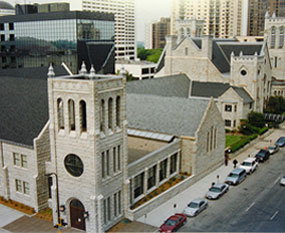
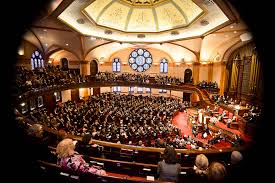
Westminster Presbyterian Church
Rev. Brennan Blue


Here are extracts of that sermon along with the main Scripture reading of the day and two of the prayers.

Preparing for the Word

Prayer of Confession: “Merciful God, you call us home with compassion and grace, but we fail to listen. You love and name us as your own, but we fail to respond in kind. We turn our backs on our neighbors’ needs, consumed with our own concerns. We look the other way while violence, prejudice, and greed run rampant in our communities. God of grace, help us to admit our sins and shortcomings, so that as you come to us in mercy, we may repent and find a new way of being. At home in your compassion and care, may we find that we ourselves are new beings.”

Listening for the Word

Reading of the Holy Scripture: Mark 8: 27-33 (NRSV):[2]

  • “Jesus went on with his disciples to the villages of Caesarea Philippi; and on the way, he asked his disciples, ‘Who do people say that I am?’ And they answered him, ‘John the Baptist;’ and others, ‘Elijah;’ and still others, ‘one of the prophets.’  [Jesus then] asked them, ‘But who do you say that I am?’ Peter answered him, ‘You are the Messiah.’ And [Jesus] . . . sternly ordered them not to tell anyone about him.”
  • Then [Jesus] . . . began to teach them that the Son of Man must undergo great suffering, and be rejected by the elders, the chief priests, and the scribes, and be killed, and after three days rise again. He said all this quite openly. And Peter took him aside and began to rebuke him. But turning and looking at his disciples, [Jesus] rebuked Peter and said, ‘Get behind me, Satan! For you are setting your mind not on divine things but on human things.’”

Sermon (Excerpts):

“Biblical scholars cite this passage [from Mark] as a literary and theological hinge; the single most important passage in the whole of the gospel, for it reveals the truth of Jesus’ identity that only he has known all along: Jesus is the Messiah, and nothing will ever be the same.[3][

“Countless sermons, books, dissertations, and devotions have been written about just what this means that Jesus is the Messiah. Today, I ask us to step back and wonder at what may be one of Jesus’ greatest strengths. He knows who he is. He understands and even embraces his identity, both human and divine.”

“Jesus knows his gifts and graces, his desire to teach and pray and heal. He shares these freely from places of deep love and mercy. But he also knows the hard things that come with his identity. He knows that he will suffer, and must suffer freely in service of others. He probably knows that his will be a lonely road.”

“One that, ultimately, he will have to walk alone. This too Jesus embraces from a place of deep love and mercy.”

“I doubt that Jesus could so faithfully walk the road before him without knowing fully and faithfully who he is. But by the grace of God, Jesus does and Jesus will.”

“And if we are to follow Jesus, then it’s important that we not only know this Messiah, but that we follow in his steps and know ourselves, as well.”

“That’s what it’s going to take. Honest soul-searching and self-work. The courage to name our fears, failings and prejudices, even as we name our gifts and graces. It means speaking out while also searching in; leading from our identity, even if we’re working to change that identity. This is as true of our advocacy, as it is of our worship, our service, our care.”

“In short, it takes being and bringing all of ourselves to the table, trusting that God can handle us – all of us – as we are. That’s why we gather each week to confess our sins, hear God’s Word, and pray for the hurts of our lives and world.”

“So may we live and work for the day when the promises of divine grace, love and welcome may be not only written upon our hearts, but spoken from our lips, witnessed in our lives and policies, and demonstrated by the strength and our care and conviction.”

[May we be able to answer Jesus’ question: “‘But who do you say that I am?” An answer that is truthful for each of us. An answer that is persuasive for others.]

“May we may know and love ourselves for who we are.”

“May we may know and love our neighbors for who they are.”

“As we together seek to know and follow Christ.”

Responding to the Word

The Pastoral Prayer was provided by Rev. Dr. Margaret McCray, the Executive Director of the Westminster Counseling Center, with these words:

“How it must grieve you, our loving Parent, that as we grow into our adulthood from the wide open spaces of our childhood dreams and aspirations we can lose our way, neglecting and even denigrating the unique beauty within ourselves and within every person we meet: the different but equally useful and remarkable talents you endow us with; the different ways we express our sexuality;  our different colors of skin and varied cultural traditions and life experiences; the different and deeply spiritual ways we worship you.”

“Forgive us, Loving God, for making our lives tiny and restricted, contenting ourselves with small, selfish ideas and actions. Forgive us for cutting ourselves off from engaging with our sisters and brothers from all over this exquisite home you gave us to live in, a home we are rapidly destroying by our thoughtless abuse of its once abundant resources.  Heal us, mend us, embolden us, Gracious God.”

“We pray for those who live in fear and anger, for those who know the horror and grief of terrorist attacks, for those who live in poverty and hunger, for those in the midst of war, displacement and hatred, for those affected by drought, mudslides and the effects of climate change.   The world cries out for us to be vessels of the love you created in us at our birth, the love you poured out in Jesus the Christ, who showed us how to live that love.”

“Give us energy and commitment to act on behalf others. Embolden us to live lives of generosity and compassion, to show kindness and act justly towards all people.  Give us courage to speak out against injustice, to honor the rich, fertile multitude of the different bodies, talents, skills, traditions and imaginations you have given us.  Heal our wounded hearts, help us to nurture the unique possibilities of our own bodies and minds. May we go to sleep each night and wake each morning knowing that whatever the day may bring we will meet it with gratitude and love in our body, mind and soul, for it is from this deep well that we draw the love and justice we show others.  This is what saves us.  This is what gives us hope.  This is what inspires us.  This is how you created us to be.  Amen.”

Conclusion

Jesus’ first question to his disciples–Who do people say that I am? — might be seen as His seeking information about whether His message was getting through to the people. When the disciples provided multiple, conflicting answers, Jesus clearly was dissatisfied and thus asked his  follow-up question: “But who do you say that I am?” Presumably the disciples were much more familiar with what Jesus had said and done and would have better answers. Indeed, only one answer was necessary when Peter said, “You are the Messiah.”

That follow-up question also was addressed to everyone in Jesus’ time and to everyone since then. There obviously have been and continue to be many different answers to this question. Some will say, “I do not know.” Others, “He was a man who lived many years ago who claimed to be the Son of God.” And so on.

For those of us who claim to be Christians, the question is a challenge to have an answer that is direct and authentic. For me, Jesus was a favored Son of God, who by his words and actions courageously demonstrated the kind of life that God wants every human being to live. As Jesus affirmed, “Love God with all your heart, mind and soul and your neighbor as yourself.” Jesus, therefore, commands our love and worship, as we strive to follow Him and live the life that He demonstrated.

Striving to follow Him involves reflection, prayer and conversation with others as we struggle to discern our gifts and talents and how to use them to advance God’s kingdom on earth and thereby discover and advance our own vocation. [4] As Rev. Blue said in his sermon, following Jesus requires “honest soul-searching and self-work. The courage to name our fears, failings and prejudices, even as we name our gifts and graces.” In so doing, we “live and work for the day when the promises of divine grace, love and welcome may not only be written upon our hearts, but spoken from our lips, witnessed in our lives and policies, and demonstrated by the strength and our care and conviction.”

======================================

[1] The bulletin of the service and the text of the sermon are available on the church’s website.

[2] The other scriptures were Jeremiah 31: 31-34 and Galatians 3:23-29.

[3]  Jeffery S. Siker, “Exegetical Perspective” in Feasting on the Gospels: Mark, eds. Cynthia A. Jarvis and E. Elizabeth Johnson (Louisville: Westminster John Knox Press, 2014), p. 237, 239.

[4] Other posts have reflected on the concept of vocation and my own sense of vocation: My General Thoughts on Vocation (Feb. 6, 2014);  (Feb. 15, 2014); Another Powerful Worship Service About Vocation (Feb. 15, 2014); Other Scriptural Passages About Vocation (Feb. 17, 2014); What Happens When Jesus Calls? (Feb. 19, 2014); My Vocations (Feb. 23, 2014).


U.S. State Department’s Positive Assessment of Cuban Religious Freedom  

On August 15, 2017, the U.S. State Department released its annual report on religious freedom in nearly 200 countries and territories in the world. This report is a requirement pursuant to the International Religious Freedom Act of 1998, as amended; legislation that upholds religious freedom as a core American value under the Constitution’s First Amendment, as well as a universal human right. This law calls for the government to, quote, “[Stand] for liberty and [stand] with the persecuted, to use and implement appropriate tools in the United States foreign policy apparatus, including diplomatic, political, commercial, charitable, educational, and cultural channels, to promote respect for religious freedom by all governments and peoples.”[1]

The release was accompanied by remarks from Secretary of State Rex Tillerson, who said, “conditions in many parts of the world are far from ideal. Religious persecution and intolerance remains far too prevalent. Almost 80 percent of the global population live with restrictions on or hostilities to limit their freedom of religion. Where religious freedom is not protected, we know that instability, human rights abuses, and violent extremism have a greater opportunity to take root.” He specifically mentioned serious concerns about religious freedom in ISIS, Iran, Saudi Arabia, Turkey, Bahrain, China, Pakistan and Sudan. Subsequently Ambassador Michael Kozak, the Bureau of Democracy, Human Rights and Labor, conducted a telephone conference briefing with journalists.[2]

Our focus here is examining the report’s substantially positive assessment of religious freedom in Cuba in 2016.[3] A more negative evaluation of Cuba was provided earlier this year by the U.S. Commission on International Religious Freedom, an unusual, quasi-governmental group; its report about Cuba  also will be discussed before providing my own observations.

State Department’s Assessment of Cuba[4]

Religious Demography

“The U.S. government estimates the total population at 11.2 million (July 2016 estimate). There is no independent, authoritative source on the overall size or composition of religious groups. The Roman Catholic Church estimates 60 to 70 percent of the population identify as Catholic. Membership in Protestant churches is estimated at 5 percent of the population. Pentecostals and Baptists are likely the largest Protestant denominations. The Assemblies of God reports approximately 110,000 members and the Four Baptist Conventions estimate their combined membership at more than 100,000 members. Jehovah’s Witnesses estimate their members at 96,000; Methodists at 36,000; Seventh-day Adventists at 35,000; Anglicans, 22,500; Presbyterians, 15,500; Episcopalians, 6,000; Quakers, 300; and The Church of Jesus Christ of Latter-day Saints (Mormons), 100. The Jewish community estimates it has 1,500 members, of whom 1,200 reside in Havana. According to the Islamic League, there are 2,000 to 3,000 Muslims residing in the country, of whom an estimated 1,500 are Cubans. Other religious groups include Greek Orthodox, Russian Orthodox, Buddhists, and Bahais.”

“Many individuals, particularly in the African Cuban community, practice religions with roots in West Africa and the Congo River Basin, known collectively as Santeria. These religious practices are commonly intermingled with Catholicism, and some require Catholic baptism for full initiation, making it difficult to estimate accurately their total membership.”

Executive Summary

The constitution provides for freedom of religion and prohibits discrimination based on religion. The government and the Cuban Communist Party monitored religious groups through the Office of Religious Affairs (ORA) in the Ministry of Justice (MOJ) and continued to control most aspects of religious life. Observers noted that the government harassed some religious leaders and their followers, with reports of threats, detentions, and violence. Evangelical and other Protestant religious leaders reported the government threatened to expropriate some religious properties under zoning laws passed in 2015 but took no action during the year. Christian Solidarity Worldwide (CSW) reported in a January publication that there was an increase in government threats to close churches from 2014 to 2015. The majority was related to government threats to close churches belonging to Assemblies of God congregations, but the Assemblies of God and the government were able to reach an agreement which enabled the churches to stay open. Religious groups reported a continued increase in the ability of their members to conduct charitable and educational projects, such as operating before and after school and community service programs, assisting with care of the elderly, and maintaining small libraries of religious materials. Multiple high-level leaders from Catholic, Protestant, and minority religious groups agreed the religious freedom environment had improved compared to past years.” (Emphases added.)[5]

There were no reports of significant societal actions affecting religious freedom.” (Emphasis added.)

“U.S. embassy officials met with officials from the ORA to discuss the registration process for religious organizations and inquire about the rights of nonregistered groups to practice their religion. Embassy officials also met with the head of the Council of Cuban Churches (CCC), an officially recognized organization that has close ties to the government and comprises most Protestant groups, to discuss their operations and programs. The [U.S.] Ambassador at Large for International Religious Freedom and the [U.S.] Special Representative for Religion and Global Affairs met with leaders of Catholic, Protestant, and minority religious groups to discuss the religious freedom environment in the country. The embassy remained in close contact with religious groups, including facilitating exchanges between visiting religious delegations and religious groups in the country. In public statements, the U.S. government called upon the government to respect the fundamental freedoms of its citizens, including the freedom of religion.”

U.S. Commission’s Evaluation of Cuba[6]

On April 26, 2017, the Commission released its 2017 report on religious freedom in 36 countries and one region, in contrast to the nearly 200 countries covered by the State Department. The Commission’s nine unpaid, part-time commissioners are appointed by various federal government officials supported by an ex-officio non-voting member (U.S. Ambassador David Saperstein), an executive director, four directors, an executive writer, five policy analysts, one researcher and four administrative staff, all based in Washington, D.C. It apparently has an annual budget of only $ 3.5 million.[7]

The 36 countries (and one region) evaluated by the Commission fall into the following three groups:

  • The 16 countries that the Commission believes constitute “countries of particular concern” (CPC) or “any country whose government engages in or tolerates particularly egregious religious freedom violations that are systematic, ongoing, and egregious” and that the Commission recommends that the State Department so designate. (Pp. 3-4)
  • The 12 countries that the Commission believes constitute “Tier 2 nations in which the violations engaged in or tolerated by the government are serious and characterized by at least one of the elements of the ‘systematic, ongoing, and egregious’ CPC standard;” Cuba is one of these 12 countries (Pp. 3-4)
  • The 8 other countries and one region that the Commission has monitored, but are not deemed to be CPC or Tier 2. (Pp. 3-4)

For Cuba, the Commission’s “Key Findings” were the following: “During the reporting period, religious freedom conditions in Cuba continued to deteriorate due to the government’s short-term detentions of religious leaders, demolition of churches, and threats to confiscate churches. In addition, the Cuban government harasses religious leaders and laity, interferes in religious groups’ internal affairs, and prevents—at times violently—human rights and pro-democracy activists from participating in religious activities. The Cuban government actively limits, controls, and monitors religious practice through a restrictive system of laws and policies, surveillance, and harassment. Based on these concerns, USCIRF again places Cuba on its Tier 2 in 2017, as it has since 2004.” (P. 134)

Almost all of the specifics that purportedly underlie these Key Findings relate to churches affiliated with the Apostolic Movement;[8] Assemblies of God churches, which the State Department reports had settled its problems with the Cuban government; the Western Baptist Convention; and the detentions of Ladies in White protestors (pp. 136-38). Apparently, the Commission’s discussion of Cuba is based in whole or in part on reports by Christian Solidarity Worldwide, which has headquartered in the United Kingdom with offices in Washington, D.C. and Brussels, Belgium and which only obtained U.N. accredited consultative status after eight years by the U.N. Economic and Social Council in April 2017 by a vote of 28-9 with 12 abstentions.

Purportedly based on these Key Findings, the Commission made certain recommendations to the federal government (p. 134).

Conclusion

I believe that the State Department’s assessment on Cuba is more reliable than that from the U.S. Commission, as a mere comparison of their respective reports and as the mere listing of the various religious groups active on the island in the Department’s report should demonstrate.

Moreover, the Department has experienced diplomats in Cuba who met during the year with various Cuban government and religious officials supplemented by visits to Cuba by Washington, D.C. Department officials with responsibility for assessing religious freedom around the world. In contrast, the Commission is a very small organization with limited resources in Washington, D.C. without personnel in Cuba or visits to Cuba and that apparently has focused on a small number of Cuban churches, some of which apparently are affiliated with a little-known church in California and with apparent reliance on a little-known U.K. group that only recently received U.N. accredited consultative status by a divided vote.

The Department’s assessment also is supported by my personal experience.

Over the last 15 years as a member of Minneapolis’ Westminster Presbyterian Church I have been actively involved in our partnerships with a small Presbyterian-Reformed Church in the city of Matanzas on the north coast of Cuba and with the national Synod of that church. I have been on three church mission trips to Cuba to visit our partner and other Presbyterian-Reformed churches and its campimento (camp) on the island, the ecumenical seminary in Matanzas (Seminario Evangelico de Teologia), Havana’s office of the Council of Cuban Churches and Havana’s Ebenezer Baptist Church and its affiliated Martin Luther King, Jr. Center and Pastor Rev. Raúl Suárez, who has served in Cuba’s legislature (National Assembly of People’s Power).

I also have welcomed and discussed Cuban religious life with Cuban members and pastors on their visits to Minneapolis, including Rev. Dra. Ofelia Miriam Ortega Suárez, the Directora of Havana’s Instituto Cristiano de Estudios Sobre Gênero and a member of Cuba’s legislature (National Assembly of People’s Power). In addition, I have heard from other Westminster members and pastors about their trips to Cuba. This includes some Westminster members who have been involved in installing clean water systems in Cuban Presbyterian-Reformed churches through the Living Waters for the World Ministry of the Synod of Living Waters of the Presbyterian Church (U.S.A.), our denomination, and a Westminster member is now the Moderator of the Cuba Network Coordinating Team for that organization.[9]  Finally I read widely about Cuba, especially its relations with the U.S. and its religious life.

These connections have been very important to me personally and to others at Westminster as we stand in solidarity with our Cuban brothers and sisters. I also was impressed and moved by Pope Francis’ encouragement of U.S.-Cuba normalization and reconciliation in 2013-2014 and his pastoral visits to Cuba and the U.S. in 2015.[10]

I, therefore, believe that at least in the 21st century there has been an ever-increasing role for, and freedom of, religion in Cuba as this poor country struggles to improve the spiritual and economic welfare of its people. I also believe that Westminster and other U.S. churches’ partnering with Cuban churches and people along with Pope Francis’ witness have been God’s servants aiding, and continuing to aid, these encouraging changes.

====================================

[1] U.S. State Dep’t, Preface: International Religious Freedom Report for 2016 (Aug. 15, 2017); U.S. State Dep’t, Overview and Acknowledgement: International Religious Freedom Report for 2016 (Aug. 15, 2017).

[2] U.S. State Dep’t, Secretary Tillerson: Remarks on the 2016 International Religious Freedom Report (Aug. 15, 2017); Special Briefing: Ambassador Michael Kozak, Bureau of Democracy, Human Rights, and Labor (Aug. 15, 2017).

[3] Other posts have discussed the State Department’s and the U.S. Commission on International Religious Freedom’s previous assessments of Cuban religious freedom along with comments by others and the international law regarding freedom of religion; they are listed in the “Cuban Freedom of Religion” section of List of Posts to dwkcommentaries—Topical: Cuba.

[4] U.S. State Dep’t, International Religious Freedom Report for 2016: Cuba (Aug. 15, 2017).

[5] This positive development was emphasized in the body of the Cuba report, which stated, “Religious groups reported their leaders continued to travel abroad to participate in two-way exchanges between local faith-based communities and those in other countries. The majority of religious groups continued to report improvement in their ability to attract new members without government interference, and a reduction in interference from the government in conducting their services.”

[6] U.S. Comm’n Int’l Religious Freedom, 2017 Annual Report (April 26, 2017); Press Release: USCIRF Releases 2017 Annual Report (April 26, 2017).

[7] Grieboski, The Case for Pulling the Plug on the US Commission on  International Religious Freedom, Huffpost (Dec. 18, 2011); Press Release: Rubio Celebrates Signing Of U.S. Commission On International Religious Freedom Reauthorization Act Into Law (Oct. 15, 2015).

[8] The Apostolic Movement apparently is headquartered in San Diego, California as “a Fivefold Ministry organization headed by an Apostolic team of Fivefold Ministers . . .[with] a mandate from God the Father through the Lord Jesus Christ, to go and prepare the Body of Christ for the final move of God . . . [by finding] the Hidden Warriors whom He has hidden away, waiting for the time of their manifestation [based upon the belief that] God has reserved for Himself apostles, both men and women, who are not currently visible or part of the Status Quo Church System.”

[9] A brief discussion of these Westminster connections with Cuba occurs in this blog post: Praise God for Leading U.S. and Cuba to Reconciliation (Dec. 22, 2014).

[10] See the blog posts listed in the “Pope Francis Visits to Cuba & U.S., 2015” in List of Posts to dwkcommentaries—Topical: CUBA.

Subversive Revolutionaries 

This was the title of the July 30th sermon at Minneapolis’ Westminster Presbyterian Church by Associate Pastor, Rev. Sarah Brouwer.[1]

Westminster Presbyterian Church
Rev. Sarah Brouwer


Listening for the Word

The central part of the service—Listening for the Word—featured the reading of the Scriptures and the preaching of the sermon.

Scripture Reading

 The main Scripture for the day was Ephesians 6: 10-20 (Common English Bible):[2]

  • “Finally, be strengthened by the Lord and his powerful strength. Put on God’s armor so that you can make a stand against the tricks of the devil. We aren’t fighting against human enemies but against rulers, authorities, forces of cosmic darkness, and spiritual powers of evil in the heavens. Therefore, pick up the full armor of God so that you can stand your ground on the evil day and after you have done everything possible to still stand. So, stand with the belt of truth around your waist, justice as your breastplate, and put shoes on your feet so that you are ready to spread the good news of peace. Above all, carry the shield of faith so that you can extinguish the flaming arrows of the evil one. Take the helmet of salvation and the sword of the Spirit, which is God’s word.
  • Offer prayers and petitions in the Spirit all the time. Stay alert by hanging in there and praying for all believers. As for me, pray that when I open my mouth, I’ll get a message that confidently makes this secret plan of the gospel known. I’m an ambassador in chains for the sake of the gospel. Pray so that the Lord will give me the confidence to say what I have to say.” (Emphases added.)

The Sermon

“I am as far removed from Roman-controlled late first century Asia minor as I am from the war-torn places of our world– and even the violent parts of our city. But, I do read about war and violence in the news, and it disturbs me. And, the worry most on my mind nowadays is that there seems to be more and more license to threaten individual lives and bodies, especially those who fall outside norms, and land in the margins. So, to equate the Christian life with putting on armor not only falls outside of my comfort zone, it seems counterintuitive, even dangerous.”

“But, I also have to wonder if… maybe that’s the point. “

“The strategy of Jesus is not centered in taking the right stand on issues, but rather in standing in the right place—with the outcast and those relegated to the margins.”

“In the letter to the Ephesians there is no explicit mention of violence outside of the notion of putting on armor, but, the author does talk about standing firm, even as we struggle with cosmic forces of evil. And evil is really the root of violence- not quite the same thing, but certainly related. What’s important, though, is that the writer of this letter actually takes images that are familiar to these early Christians- people who would have seen powerful, intimidatingly dressed, sometimes violent Roman soldiers, walking the streets every day — and then subverts them, takes them out of context and changes the metaphor. The image of armor ends up undermining itself, revealing its emptiness.”

“[The]author of Ephesians seeks to build community by coming alongside it, knowing it, and reframing what appears to be true. . .. For the Christians in Ephesus, it meant they had to shake off the illusions of the powers of the world and put on the armor of God. They had to learn that the body of Christ is a ‘heavenly’ reality, full of righteousness and truth, and it is in no way determined by violent ways or the abusive habits of those who claim power.”

“Although I can certainly appreciate what the author of Ephesians is doing here, it still makes me uncomfortable. Things have not gone well when Christians have put on armor. This text has been misread many times and used in defense of violence, even though I am abundantly sure that was not the intent. As a friend of mine writes, ‘spiritual growth usually feels more like laying down defenses, shedding layers, allowing more of my unprotected self to see the light of day.’ Even putting on the armor of God, which is a subversive, totally different way of garnering strength, just doesn’t sit well.”

“But . . . Ephesians doesn’t mess around with the idea that there is evil. Conflict is implied, but not necessarily conflict with others.”

“Evil is real, but we like to talk about it as though it is part of these systems of injustice, so we can easily remove ourselves from the equation. A friend of mine says it this way, ‘We tend to make evil bureaucratic, so we can engage in problem solving and policy-making. And while those ways of dealing with injustice are productive in some ways, they fail to adequately grapple with the reality of evil, and the way that it works within and among us, spreading like a virus (Wiles).”

“Jesus knew that evil didn’t just exist among the Roman authorities. If he did, he would have spent all his time with them. Instead, he taught the disciples, he healed the sick, he gave to the poor, he spent time with sinners. Jesus knew that violence, even the violence that killed him, was just a symptom of inner conflict.”

“And who among us can’t understand this? Even if we don’t have urges toward violence, we all have deep-seated pain, discomfort, grief, loss, loneliness, anxiety, shame and self-doubt that we are battling internally on a daily basis. And maybe we don’t put on physical armor to cover it up, but we certainly manage to bury evil that eats away at us, covering it up with illusions of personal success and power, or whatever other things we do that don’t really protect us from the world or our own hurt. You might have noticed, but Ephesians never mentions battling enemies, because there are none. Our so-called enemies are always just as imprisoned as we are.”

“[According to] Rev. Matt Fitzgerald . . . in the Christian Century . . . , ‘The breastplate of ministerial self-righteousness will not protect me. I have learned over the years that a helmet made of bourbon and a sword forged from cynicism are also insufficient, as are prosperity, religious zeal, fitness and even family. None of these are strong enough to hold back ‘the cosmic powers of this present darkness’ (Eph. 6:12). None can thwart the forces of chaos and disorder that upend even the most righteous of lives. Yet we are tempted to try to master the tragedy of existence by ‘living well.’ Perhaps this is why the writer of Ephesians makes a distinction between ‘the whole armor of God’ and our efforts to become godly. The shield is God’s, not ours.’”[3]

“When I think of someone who has explored the cosmic forces of evil within and sought to overcome them, the person who comes to mind is Jean Vanier. [He] is the founder of the well-known L’arche Movement, which consists of 135 communities around the world where people of 5 varying physical and mental abilities live together as equals. Vanier once wrote, ‘We human beings have a great facility for living illusions, for protecting our self-image with power, for justifying it all by thinking we are the favored ones of God… But I am struck by how sharing our weakness and difficulties is more nourishing to others than sharing our qualities and successes.’”[4]

“If we put on armor, let it be subversive armor. Let us wrap truth around our waist like a belt, and let it be the kind of truth that Jean Vanier talks about. We might wonder uncomfortably, ‘And what good will truth do in the end?’ You might consider asking someone who has revealed the truth about their sexuality, told the truth about who they truly are, deep down, exposed their true identity to a shaming and dangerous world, but whose life was saved as a result. You could ask someone who has admitted they were powerless to addiction, who finally said, ‘I need help. This is unmanageable.’ That kind of truth is strong, it has a story, and it not only has the power to nourish others and change lives, ‘it is strong enough to bring forth life from the grave (Wiles).’”

“The writer of Ephesians says, ‘stand therefore, and fasten the belt of truth around your waist, and put on the breastplate of righteousness. As shoes for your feet put on whatever will make you ready to proclaim the gospel of peace. With all of these, take the shield of faith, with which you will be able to quench all the flaming arrows of the evil one. Take the helmet of salvation, and the sword of the Spirit, which is the word of God.’”

“The Gospel is the world of opposites, where engaging real evil and conflict actually means putting your defenses down. It seems very vulnerable, to march into combat armed only in the Spirit; even precarious and costly, to hold faith as your shield. It feels like you might lose everything on that path to battle. As my friend Sarah writes, ‘Frankly, it all resembles foolishness. It’s as foolish as God Almighty showing up as a baby. Babies literally can’t do anything. They’re just really needy, and they call forth love and compassion. That’s all. But this is the shape of our God. This is our confession about power. This is the nature of our strength—a belt of truth, a breastplate of righteousness, shoes of peace, a shield of faith, a helmet of salvation, and a sword of the Spirit. This is the only armor there is. And it’s no kind of armor at all.’ Except, if we remember the promise. That if we put on this subversive armor, God’s armor, evil and violence will not win in the end, and self-destruction and self-righteousness do not have to be our last resort. If we are willing to put on this strange promise, to wear it, to stand firm in it, and to be advocates for it, it will save us, and others.”

“So, while I still don’t like the idea of armor, I believe in it. I have to. And I pray you will join me, as we ‘dare to lay down all our other weapons, and put on, piece by piece, only this, the armor of God.’”

Preparing for the Word

The first part of the service—Preparing for the Word—helped to prepare the congregation to listen for the Word. Keys for this part were the congregational singing the Processional Hymn, “God of Grace and God of Glory,” and saying the unison Prayer of Confession.

Processional Hymn: “God of Grace and God of Glory”[5]

God of grace and God of glory,
on thy people pour thy power
;
crown thine ancient church’s story;
bring its bud to glorious flower.
Grant us wisdom, grant us courage,
for the facing of this hour,
for the facing of this hour
.

Lo! the hosts of evil round us
scorn thy Christ, assail his ways!
From the fears that long have bound us
free our hearts to faith and praise.
Grant us wisdom, grant us courage,
for the living of these days,
for the living of these days.

Cure thy children’s warring madness;
bend our pride to thy control;
shame our wanton, selfish gladness,
rich in things and poor in soul.
Grant us wisdom, grant us courage,
lest we miss thy kingdom’s goal,
lest we miss thy kingdom’s goa
l.

Save us from weak resignation
to the evils we deplore.

Let the gift of thy salvation
be our glory evermore.
Grant us wisdom, grant us courage,
serving thee whom we adore,
serving thee whom we adore.

Prayer of Confession

 Before the reading of the Scripture and the sermon the congregation in unison said the following Prayer of Confession:

  • “Spirit of God, we confess that we put on airs more often than we put on the armor of God. We are guilty of girding ourselves with lies instead of the truth. We try to protect ourselves with arrogance and self-reliance instead of righteousness, faith, and your gift of salvation. Our footsteps do not follow your path of peace. We are quick to use your Word to attack one another, instead of striking out against the sin of the world. Forgive us, Holy God. Gift us with wisdom and strength to change our ways, so that we may live as your faithful people.”

Conclusion

The passage from Ephesians was not familiar to me and like Rev. Brouwer I had difficulty in seeing how it related to my life.

I was aided in this effort by some of the words of the Processional Hymn (in slightly different order): “God of grace and God of glory. Lo! the hosts of evil round us scorn thy Christ, assail his ways! Save us from weak resignation to the evils we deplore. On thy people pour thy power. Grant us wisdom, grant us courage, for the facing of this hour.”

The pouring of God’s power on us can be seen as embracing us in God’s armor: a belt of truth, a breastplate of righteousness, shoes of peace, a shield of faith, a helmet of salvation, and a sword of the Spirit.

The hymn’s plea to “save us from weak resignation to the evils we deplore” recognizes the difficulty we all experience in seeing so many injustices in the world and feeling incapable of doing anything to combat them and, therefore, falling into “weak resignation to the evils we deplore.”

As Rev. Brouwer said in her sermon, ‘We tend to make evil bureaucratic, so we can engage in problem solving and policy-making. And while those ways of dealing with injustice are productive in some ways, they fail to adequately grapple with the reality of evil, and the way that it works within and among us, spreading like a virus (Wiles).”

We, therefore, need God’s wisdom and courage for the facing of this hour. For me, this means discerning our gifts, identifying ways to use these gifts to help others and then digging in doing it while recognizing that nothing we do is complete or perfect and that we are prophets of a future not our own.[6]

=========================================

[1] The bulletin for the service and the text of the sermon are on the church’s website.

[2] The Old Testament reading for the day was Joshua 24: 1-2a, 14-18.

[3] Fitzgerald, The armor of God: Ephesians 6: 10-20, Christian Century (Aug. 11, 2009).

[4] The noted theologian Henri Nouwen spent the last 10 years of his life at a L’arche center in Canada.

[5] The hymn’s lyrics were written by Rev. Harry Emerson Fosdick (1876-1969) for the 1930 opening of New York City’s interdenominational Riverside Church, which was conceived by John D. Rockefeller and which Fosdick served as senior pastor (1930-1946). Earlier he had been a Baptist pastor in Montclair, New Jersey (1903-1917), a chaplain in World War I (1917), and pastor, in New York City, at First Presbyterian Church in Manhattan‘s West Village (1918-1924) followed by Park Avenue Baptist Church (1924-1930). Fosdick became a central figure in the “Fundamentalist–Modernist Controversy” within American Protestantism in the 1920s and 1930s and was one of the most prominent liberal prominent ministers of the early 20th century. This led to an investigation of his views by the Presbyterian Church in the USA where he was defended by John Foster Dulles, an elder at First Presbyterian and later Secretary of State.

[6] Another Perspective on the Parable of the Good Samaritan, dwkcommentaries.com (July 27, 2017).

Revisionist Christians

Westminster Presbyterian Church

The June 25 sermon, “Revisionist Christians,” by Associate Pastor for Congregational Life, Rev. Sarah Brouwer, at Minneapolis Westminster Presbyterian Church discussed the need for Christians constantly to consider revising, reforming, seeking again and again the plans God has for a future for us as individuals and for all people.[1]

Preparing for the Word

In “Preparing for the Word,” the initial part of the service, we all joined in the following Prayer of Confession: “We confess, O God, we live in extremes. We need you only when things go wrong, but forget you in times of joy. When we have enough, it’s because we did it, and when we have nothing at all, we blame you. We value individualism until we require the help of community. Forgive us, we pray. Nurture peace in our frenetic lives. Help us to cultivate gratitude. Remind us to receive your abundance, and share it with others. We pray, O God, to be grounded in your infinite grace and mercy.” (Emphasis added.)

Listening for the Word

The central part of the service, “Listening for the Word,” sets forth the Scripture reading for the day followed by the sermon.

Scripture Reading

 The Old Testament reading was Jeremiah 29:11-14 (NRSV):

  • For surely I know the plans I have for you, says the Lord, plans for your welfare and not for harm, to give you a future with hope. Then when you call upon me and come and pray to me, I will hear you. When you search for me, you will find me; if you seek me with all your heart, I will let you find me, says the Lord, and I will restore your fortunes and gather you from all the nations and all the places where I have driven you, says the Lord, and I will bring you back to the place from which I sent you into exile.” (Emphasis added.)

The New Testament reading was Paul’s letter to the Philippians 4: 1-17 (NRSV):

  • “Therefore, my brothers and sisters, whom I love and long for, my joy and crown, stand firm in the Lord in this way, my beloved.”
  • “I urge Euodia and I urge Syntyche to be of the same mind in the Lord. Yes, and I ask you also, my loyal companion, help these women, for they have struggled beside me in the work of the gospel, together with Clement and the rest of my co-workers, whose names are in the book of life.”
  • Rejoice in the Lord always; again I will say, Rejoice. Let your gentleness be known to everyone. The Lord is near. Do not worry about anything, but in everything by prayer and supplication with thanksgiving let your requests be made known to God. And the peace of God, which surpasses all understanding, will guard your hearts and your minds in Christ Jesus.”
  • “Finally, beloved, whatever is true, whatever is honorable, whatever is just, whatever is pure, whatever is pleasing, whatever is commendable, if there is any excellence and if there is anything worthy of praise, think about these things. Keep on doing the things that you have learned and received and heard and seen in me, and the God of peace will be with you.”
  • “I rejoice in the Lord greatly that now at last you have revived your concern for me; indeed, you were concerned for me, but had no opportunity to show it. Not that I am referring to being in need; for I have learned to be content with whatever I have. I know what it is to have little, and I know what it is to have plenty. In any and all circumstances I have learned the secret of being well-fed and of going hungry, of having plenty and of being in need. I can do all things through him who strengthens me. In any case, it was kind of you to share my distress.”
  • “You Philippians indeed know that in the early days of the gospel, when I left Macedonia, no church shared with me in the matter of giving and receiving, except you alone. For even when I was in Thessalonica, you sent me help for my needs more than once. Not that I seek the gift, but I seek the profit that accumulates to your account.” (Emphases added.)

The Sermon

Rev. Sarah Brouw

Revisionist History, a podcast by New York Times bestselling author, Malcolm Gladwell, is a ‘journey through the overlooked and the misunderstood. Every episode re-examines something from the distant or recent past—an event, a story, a person, an idea—and asks whether we got it right the first time.’”

One of the episodes, Generous Orthodoxy, has “deep theological connections” that builds upon the work of German-American theologian, Hans Frei, who first coined the phrase. “In this episode, Gladwell interviews Chester Menger, “a 96 year old man who has lived his entire life in the Mennonite community and [who] until recently had been a well-known retired clergy. In the last few years, “Menger became famous in the Mennonite world for a challenging letter he wrote to the church after he married his gay son and subsequently had his ordination renounced. As you listen to the story, you become not only enthralled by the stance he took, but also by the love this man continues to have for his church.”

“For Mennonites, community and reconciliation are two essential tenants. The word community, for them, is not just a term they use to describe a religious group; they live it out in grand gestures of support for one another–especially when someone in the community is in need or has been harmed. It’s for this very reason that when Menger’s son came to him and told him he was gay, albeit after a bit of time, he came to wholeheartedly accept the fact–and not just from a personal perspective, but a theological one, too. His church, however, did not.”

“And for Menger, the excommunication of his son from the church flew in the face of everything Mennonites stood for–community and reconciliation. I can only imagine trying to stay in a church that rejects your child, but, according to Menger, leaving also would have flown in the face of what he believed. So, he decided to write a letter–really a statement of faith–to the church he loved. He writes,

  • ‘I am profoundly reluctant to write this letter because I know there are those it will wound deeply. But I have also come to the conviction that I can no longer hide the light the Lord has lit within me, under a bushel. I want to share with you what the Lord has been telling me and my dear life companion…. We invite the church to courageously stake out new territory, much as the early church did. We invite the church to embrace the missional opportunity to extend the church’s blessing of marriage to our homosexual children who desire to live in accountable, covenanted ways. We know that while many of us hear different things from the Scriptures, God’s deepest desire, as made known in Jesus Christ, is “to seek and to save that which was lost.’”

“The letter quotes the Apostle Paul a number of times, and in the interview with Gladwell, Menger notes one verse in particular from Romans 1:16 (NRSV): ‘For I am not ashamed of the gospel; it is the power of God for salvation to everyone.’” (Emphasis added.)

“The story is remarkable, and told so well. I found myself envious of this man’s simultaneous ability to love his son and the church that didn’t love his son, a generous orthodoxy on his part, to be sure. Menger was able to maintain respect and reverence for tradition, while also seeing the need to reform and revise with abundant grace and hope for the future. I wondered if I could be so open and willing. The truth is, Menger made it seem easy, as though holding these two things in the balance was exactly what his faith and church had prepared him his whole life to do. Was he worried, that after spending over 70 years as an ordained minister in the church he loved, he would have his ordination taken from him in one fell swoop? No. He laughed when Gladwell asked him.”

’Rejoice in the Lord, always, again I will say rejoice,’ this is what the Apostle Paul writes in the letter to the Philippians. In it I also discovered a sense of awe for what Paul, the author, was able to do–exactly what it seemed he had been preparing his whole life for. It’s Paul’s charge to the Philippians, and comes at the end, written to them, we think, while Paul is in prison. Much like Chester Menger, Paul maintains strength, purpose, humility, and lack of fear for the future–proclaiming his faith even after being arrested and jailed for it; preaching the abundance of the Gospel even from a place of scarcity.” (Emphasis added.)

“Paul, as you may remember, was formerly Saul of Tarsus, who was traveling one day on the road to Damascus, doing his duty to persecute early Christians when suddenly he saw Jesus in a great light and was struck blind. Three days later Ananias restored his sight and from thereafter his life was dedicated to spreading the good news of the Gospel. Paul knew from his own experience what it meant to be a follower of Jesus; he had been made new. He respected the Jewish traditions from which he had come, but knew the message of Jesus was for everyone, and that certain things had to be left behind, or change, in order to welcome all people. As Paul writes, ‘Let your gentleness be known to everyone. The Lord is near.’ Paul not only knew the Gospel was for everyone, but because he was in the trenches with these early Christians he also knew they had to make the church their own, to adapt if it was going to survive. He tells the Philippians, don’t worry, guard your hearts with Christ, keep on doing what is right. He is not more prescriptive than that.” (Emphasis added.)

The good news of the Gospel is that every day is a chance to be transformed, to make things new again- a chance to adapt. The old life has gone away, Paul says, and a new life has begun. [The] most helpful part of worship, in my opinion, is the prayer of confession and assurance of pardon. It always feels like such a relief each week to bring before God all that keeps us from being fully who we are, as a world, as a community, and as individuals. We approach a God who has already forgiven us, we offer up all the ways we fall short, and then we are assured of that forgiveness, again. We hear it from the pulpit and we say it to one another: . . . all of us are forgiven. Alleluia. Amen. It feels like the worship equivalent of Revisionist History, our own generous orthodoxy.” (Emphases added.)

“Hans Frei originally said, ‘Orthodoxy without generosity leads to blindness; generosity without orthodoxy is shallow and empty.’ God has been so generous with us, why would we limit how the church can revise and rethink and retell its story? Tradition is important, yes, orthodoxy makes meaning for us, it is part of our history and foundation, but it’s not all we are. Paul knew that, our reformer forebears knew it, and now as we stand at the precipice of a new era in our life together at Westminster we must know it, too. We are Revisionist Christians. Generous. Open. Adaptable. Transforming. People who examine what God is doing in the world and try to follow; as Chester Menger would say, ‘to seek and save that which is lost.’” (Emphases added.)

“At Westminster I think we do understand what it means to be Revisionist Christians. This congregation is in constant motion, ‘keeping on,’ as Paul charges the Philippians. And we are guided by Paul’s admonition to them, ‘whatever is true, whatever is honorable, whatever is just… think about these things.’ But there will always be opportunities to revise. And we know that’s true because we believe in a God who is active. As the prophet Jeremiah writes, ‘I know the plans I have for you, says the Lord.’ Yes, God has plans for us, and it is reassuring to hear in that often referred to verse. But do you remember what comes after it? God says, ‘when you call upon me, and pray to me… if you seek me with all your heart.’ Revisionist Christians seek out God’s plans, they seek the lost, they seek to be generous, and open to the future, even as they remember what they are revising from. To be sure, revising doesn’t mean forgetting. It means appreciating, analyzing, lifting out that which was forgotten or left behind, and pulling it into the future in truth. We must revise with hope, as Menger said, not hiding our light under a bushel.” (Emphases added.)

[Last week’s verdict in the trial following the death of Philandro Castile] should make us all wonder how we can “leverage [our] privilege and give voice to injustice. For me it begins, at least, by coming here, and confessing how far I have fallen short. And when I do that I’m reminded I can’t do it alone- none of us can. We need this community to help us remember that being Christian means being Revisionist Christians. We gather here to tell the truth about what has been lost, and say that black lives matter. And then we make plans to dialogue and act, and stand in solidarity… And God promises to be with us in it, and we make promises in return, and week by week we come back, re-promising, revising, reforming, seeking again and again the plans God has for a future for all people… every one… I trust God is working to make all things new. And, what is always true is that, thankfully, God is revising us. We are being made new, each and every one of us.” (Emphases added.)

“I can only hope to have the same kind of faith or joyful determination as Chester Menger or the Apostle Paul- the kind that is willing to change in such profound ways. But, what I do know is that this community has changed me. Westminster has revised me and my call. And that means now I, too, hold in the balance not only a love for us, but a deep love for the world outside. And I have a call to not only to be changed by you, but by whoever is beyond our doors, and whatever they need. We are God’s people, and we exist to be revised; for our own sake, and for the sake of others. My hope and prayer is that it will be your call, too, to let the light that is lit within you shine.” (Emphasis added.)

Affirmation of Faith

 In the “Responding to the Word” final  portion of the service after the sermon, we all joined in the Affirmation of Faith with the following words from the Presbyterian Church (U.S.A.)’s “A Brief Statement of Faith” of 1983:[2]

  • “We trust in God the Holy Spirit, everywhere the giver and renewer of life. The Spirit justifies us by grace through faith, sets us free to accept ourselves and to love God and neighbor, and binds us together with all believers in the one body of Christ, the Church. In a broken and fearful world the Spirit gives us courage to pray without ceasing, to witness among all peoples to Christ as Lord and Savior, to unmask idolatries in Church and culture, to hear the voices of peoples long silenced, and to work with others for justice, freedom, and peace. In gratitude to God, empowered by the Spirit, we strive to serve Christ in our daily tasks and to live holy and joyful lives, even as we watch for God’s new heaven and new earth, praying, ‘Come, Lord Jesus!’ With believers in every time and place, we rejoice that nothing in life or in death can separate us from the love of God in Christ Jesus our Lord.”

Conclusion

This sermon was especially moving to me because it emphasizes that we believe in a God who is active. The good news of the Gospel is that every day is a chance to be transformed, to make things new again–a chance to adapt. We are God’s people, and we exist to be revised; for our own sake, and for the sake of others, what is always true is that, thankfully, God is revising us. We are being made new, each and every one of us.

A more frequent formulation of this idea for Presbyterians and others in the Reformed tradition is “Reformed, and Always Reforming.”

==============================================

[1] The bulletin for the service and the text of the sermon are available on the church’s website.

[2] Presbyterian Church (U.S.A.), Book of Confessions at 307-18.

Welcoming Immigrants at Minneapolis’ Westminster Presbyterian Church

Westminster Presbyterian Church

The Fourth of July was celebrated at Minneapolis’ Westminster Presbyterian Church with a conversational sermon, “Whom Do We Welcome?” by two immigrants, Rev. David Shinn, our Associate Pastor for Pastoral Care from Taiwan, and Evelyn Ngwa, a Deacon from Cameroon.[1]

The Scripture

The Scripture for the day was this comment by Jesus in Matthew 10:40-42 (NRSV):

  • “Whoever welcomes you welcomes me, and whoever welcomes me welcomes the one who sent me. Whoever welcomes a prophet in the name of a prophet will receive a prophet’s reward; and whoever welcomes a righteous person in the name of a righteous person will receive the reward of the righteous; and whoever gives even a cup of cold water to one of these little ones in the name of a disciple—truly I tell you, none of these will lose their reward.”

The Sermon

Rev. David Shinn

The sermon was opened by Rev. Shinn with these words from Deuteronomy 26:5 (NRSV): ‘A wandering Aramean was my ancestor; he went down into Egypt and lived there as an alien, few in number, and there he became a great nation, mighty and populous.’”

[This passage reminds us that] “our storied faith is steeped in this beautiful tapestry of stories. In retelling the stories, it stirs the hearts and minds of the faithful to recall God’s incredible deliverance from bondage to liberation. This is the core of our spiritual DNA, that we are a people who believe that God migrated to the person of Jesus of Nazareth. Who, under the tyrannical oppression of Herod, fled to Egypt and became a refugee. In fact, the story goes even further back. It begins with Adam and Eve, the world’s first immigrants. Our biblical stories are filled with stories of our faithful ancestors being called and sent to lands unknown such as Abraham, the wandering Aramean. Our spiritual stories are told through the lens of immigrants and refugees. Yet we have often forgotten the root of this meaning and practice.”

“In the same way, deep within our country’s DNA, we are a nation of immigrants. On this July 4th weekend as our nation celebrates its 241st birthday, we remember how this land was first founded by the Native Americans who traversed through great distance from Asia to the Americas. Centuries later, a new wave of Europeans immigrants, escaping from religious intolerance, settled and colonized this land. Since then, waves and waves of immigrants and refugees have come seeking for religious liberty, freedom, and the pursuit of happiness.”

“[Rev. Tim Hart-Andersen, Westminster’s Senior Pastor, told] me about two nurses who came [to the U.S.] as immigrants and refugees. One person came at the age of three escaping from the atrocity of the Khmer Rouge. The other came to the U.S. by way of becoming a refugee in Ghana when her own country, Liberia, erupted in civil war.”

“This is who we are. A country made up of immigrants fleeing from tyrants, escaping poverty, and seeking for better life.”

“With 241 years of history of immigration, how are we doing today in welcoming immigrants and refugees?”

“In just a few words in our scripture today, mixed with power and compassion, Jesus challenges us to think deeply about the meaning of welcoming one another. In doing so, we may then discover and receive the reward that comes from the warm hospitality that is at the center of God’s welcome and gift of faith to us. Our focus this morning is on hospitality and on compassionate welcome as a form of Christian discipleship and service on behalf of Christ to all people of God. This hospitality and compassionate welcome are the simple and basic acts of kindness we can all perform in welcoming one another. We like to invite you to look around here in this community and look beyond this community in the way we can practice hospitality and compassionate welcome.”

Deacon Ngwa responded, “Looking at our passage from the gospel of Matthew; Jesus challenges his disciples to go against the status quo and implement God’s alternative plan of “a just and merciful world” by continuing his mission on earth. He continues “Whoever gives even a cup of cold water to one of these little ones in the name of a disciple will not lose their reward”’

“Jesus’s mission on earth was and continues to be about bringing love to the world by proclaiming the Good news, healing the sick, casting out demons, and raising the dead.”

“According to Jesus, [Ngwa continued,] mission is not optional but the very reason why the church and disciples exist. These disciples today are all who have chosen to follow Christ called Christians. Those people are you and me, and everyone is included.”

Rev. Shinn then said the two of them wanted “to share our personal stories of being welcomed as a stranger to this strange land. From the immigrant’s point of view, the United States is fascinatingly strange in so many ways.”

“When I first came to the U.S., my adopted parents wanted to help me learn as much as I could and as fast as I could, about this land. It was no coincidence that I began the formative years of my immigrant journey in the Commonwealth of Virginia. To help me, they asked one of their very good friends who was a high school English teacher, Mrs. Barbara King, to tutor me. For the initial months, every afternoon after school hours, Mrs. King came by for half an hour to sit with me and help me with homework. Her first assignment for me: memorize the names of the 50 states and the capitals.”

“Yet, I learned the most about hospitality and welcome on the Chuckatuck Creek and the tributary rivers of the James River, where the settlement from English arrived to build Jamestown. There, Mrs. King took me fishing at least couple times a week during my first summer in 1983. She packed sandwiches, fruits, and her favorite drink, Dr. Pepper, in the cooler. We hopped on her Johnson outboard motor boat and off we went to look for her crab traps and good fishing spots. At times, her husband, Mr. Jack King, a veteran of the Korean War and a Newport News shipyard builder for over three decades, would join us. To this day, I have a very soft spot for Mr. and Mrs. King’s kindness.”

Deacon Ngwa next shared her story of welcome to the U.S. “I came into the United States through Newark International Airport. At the entrance was a greeter dressed in a red suit, black pants and a tie. He had this big smile on his face and shouted to everyone ‘Welcome! Welcome to the United States of America! Enjoy yourself; feel at home, you are welcome!’”

“I thought he was talking to me directly. It felt as if the greeter was talking to me personally because in a strange land where I know no one else other than those I was traveling with. How could a stranger be so welcoming? The image and message of the greeter stayed in my memory to date. It felt nice to be welcomed by a stranger in a strange land.”

“We don’t have snow in Cameroon. You all know that. I traveled in January, the heart of winter and snow. I knew about winter, and I read about it. I knew about the cold and I prepared for it. Yet I had not experienced winter or cold before then. No amount of warm clothing and no amount of heat could keep me warm, especially at night. I put on sweatpants, sweatshirts, socks, hat, and mittens. There was central heat, and I also had a bedside heater. That didn’t make any difference and I wanted to go back home so badly.”

“To crown it all, I was separated from my family. My husband and I were here while our young children stayed back home for the time being until we stabilized. The cold was one part, but being apart from my family just made things worse. That was not a very good experience. My family means so much to me and I was separated from them.”

Rev. Shinn: picked up on this thought. “A significant part of the immigrant life reality is not just adjustment, learning, sacrifices, but also challenges of separation from one’s family and familiar culture. While we both have many difficult challenges range from blatant in-your-face racism to subtle and demeaning micro-aggression, that’s not the focus of the message here. The focus, however, is how do we put to use Jesus’ teaching of hospitality and compassionate welcome in our daily lives? “

In our Scripture for the day, “Jesus says, ‘and whoever gives even a cup of cold water to one of these little ones in the name of the disciple – truly I tell you, none of these will lose their reward.’”

“Notice Jesus says, ‘give even a cup of cold water to one of these little ones.’ In the arid climate of Nazareth or Capernaum, keeping anything cold would be nearly impossible. Yet, it is only possible if one is intentional and dedicated to either draw water from a very deep well or keep the water deep inside the house to keep it cool. In other words, the prerequisites of practicing hospitality and compassionate welcome are intention and dedication.”

Deacon Ngwa added, “Do not be afraid of people who are different from us, whether they are young, old, female, male, tall or short. Let’s not be afraid of people.”

“Example: Let’s say an 80-year-old woman is sitting by a 13-year-old young man in church. The adult in this case who is a mature Christian can help the young man feel at home by showing interest in what he is doing. ‘Oh what book are you reading, what is it about, what grade are you in? By the way, my name is Evelyn and what is yours? It seems you like to read, who are your parents? ‘ As much as you can keep this conversation going.”

“By doing so, the adult has met the young man where he is and this might be an invitation from this adult to this young man to come to church for one more week. This is showing love to the younger teenager. A teenager can experience acceptance. This is doing church together. “

“Next, spend one to two minutes of your time to know your pew neighbor by talking and shaking hands, by finding out where people are from and what they are doing. Welcome people sitting by you or coming in through the doors of Westminster. Your neighbor might be a guest or first-time comer.”

“Once you connect with them, they will feel at home. They will not feel like a stranger.”

“Mission work is not optional and we are all Disciples of Christ to bring love to the world. Be each other’s greeter with the bright red suit and big smile at the airport yelling ‘WELCOME TO AMERICA.’”

Rev. Shinn, “Thank you, Evelyn for this powerful and important reminder that we begin the practice and hospitality and welcome from right here in this community, regardless of age, gender, sexual orientation, and ethnicity. Our doors are wide open to them and we can share our welcome and our lives with them.”

“Yet we as a nation are struggling. We are struggling with hospitality and compassionate welcome when we engage in amped-up, fear-driven rhetoric toward immigrants, refugees, and people of Muslim faith.”

“For many Asian Americans, the newly installment of the travel ban echoes perilously close to the Chinese Exclusion Act of 1882 when Chinese immigrants were denied entry to maintain racial purity in the US. It also echoes dangerously to President Roosevelt’s executive order 9066 when he ordered Americans of Japanese heritage into internment camps. Once again, the bell of fear, resentment, and anger tolls.”

“However, the bell of hospitality and compassionate welcome must toll louder and brighter. Christians, you are, WE are that bell. Our Westminster vision of Open Door Open Future is that very bell of hospitality and compassionate welcome. We are followers of Christ and we will not fail. We will not fail because in our nation’s DNA, we are a country of immigrants that fled from tyranny for liberty, from oppression for freedom, and from injustice for humanity. In our Christian DNA, Jesus instills in us hospitality and compassionate welcome. Let us not forget our national DNA and our spiritual DNA.. Let us shine that hope in our open and faithful expression of hospitality and compassionate welcome. Whom do we welcome? Everyone! Everyone, we will.”

The Prayer of Confession

The sermon’s theme was foretold in the earlier Prayer of Confession (from Feasting on the Word, Kimberly Bracken Long, ed.): ‘ O God of extraordinary hospitality and welcome, you open your table wide to invite all people to come. Even with this gracious invitation in hand, we deny others of your welcome. We have allowed sin to run our lives, to shape how we act toward others, and to kill our relationship with you. In your great mercy, forgive us. Change our bodies from implements of destruction to instruments of your peace; for the sake of the Lamb of God, Jesus Christ, who lives and reigns with you and the Holy Spirit, one God, now and forever. Amen.’ (Emphasis added.) [2]

The Music

The music for the service also emphasized the sermon’s theme.

One was the famous hymn, “In Christ There Is No East or West,” which opens with that phrase and continues “in him no south or north, but one great fellowship of love throughout the whole wide earth.” (Emphasis added.)

Another was the Offertory Anthem, “Welcome to God’s Love,” with these words: “Families of all shapes and kinds, love the only tie that binds This gathering of open minds, welcome to God’s love. Every person has a place in this holy, sacred space, Earth’s entire human race, come and feel God’s love! No proof required of your worth, a gift to you before your birth From God, who made the heavens and earth. Welcome to God’s love. We’ll love each other and take care of every need encountered there. Within God’s heart there is room to spare. Come and live God’s love.”[3] (Emphasis added.)

=====================================

[1] The bulletin for the service and the text of the sermon are available on the church’s website.

[2] Kimberly Bracken Long is s an ordained minister of the Presbyterian Church (U.S.A.) and a professor of sacramental and liturgical worship in the tradition of the reformed church.

[3] The Anthem’s composer is Mark A. Miller, an Assistant Professor of Church Music at Drew Theological School as well as a Lecturer in the Practice of Sacred Music at Yale University and the Minister of Music of Christ Church in Summit, New Jersey.


God’s Restlessness at Minneapolis’ Westminster Presbyterian Church                                                   

“God’s Restlessness” was the title of the moving May 28 sermon at Minneapolis’ Westminster Presbyterian Church by Rev. Sarah Brouwer, Associate Pastor for Congregational Life. It was preceded by a meaningful Prayer of Confession by Rev. Brennan Blue, Associate Pastor for Families, Youth and Children, and by the reading of passages of Holy Scripture.[1] Below are photographs of Westminster’s Sanctuary and Revs. Brouwer and Blue:

The Prayer of Confession

Here is the Prayer of Confession (emphases added):

“All: God of grace, we gather in worship to come home to you. Like sheep without a shepherd, you bring us back to the fold; you search for us until we are found.

One: O God, do you ever tire of looking for us?

All: God of compassion, your rest comes when all your people are as one, when justice and peace reign among us.

One: O God, we confess we grow weary of a world in need; will you still call on us to serve?

All: God of mercy, you do not fatigue; you are not exhausted by the needs of the world. Remind us that you have called each one of us to work alongside you. We are not alone.

One: O God, will you help us to trust in you?

All: God of forgiveness, we pray that you would search for us, find us, call on us, and help us to trust in your unending love.

One: O God, who will show us the way?

All: God of new life, in Jesus Christ you show us grace, compassion, mercy, forgiveness, and love. We pray to be Christ’s people, gathered and sent into your world to serve.”

Readings from Holy Scripture

The readings were Psalm 89: 20-37 (NRSV) and  Mark 6: 30-34, 53-56 (NRSV), Here is the text of the latter:

  • “The apostles gathered around Jesus, and told him all that they had done and taught. He said to them, ‘Come away to a deserted place all by yourselves and rest a while.’ For many were coming and going, and they had no leisure even to eat. And they went away in the boat to a deserted place by themselves. Now many saw them going and recognized them, and they hurried there on foot from all the towns and arrived ahead of them. As he went ashore, he saw a great crowd; and he had compassion for them, because they were like sheep without a shepherd; and he began to teach them many things.”
  • “When they had crossed over, they came to land at Gennesaret and moored the boat. When they got out of the boat, people at once recognized him, and rushed about that whole region and began to bring the sick on mats to wherever they heard he was. And wherever he went, into villages or cities or farms, they laid the sick in the marketplaces, and begged him that they might touch even the fringe of his cloak; and all who touched it were healed.”

Sermon

“I expect the disciples in our story today were learning about their own limits, as well as the challenges that came along with the joys of following Jesus. As we meet them here in Mark’s Gospel, we see they are coming back together after having been dispersed to go do ministry throughout Galilee. If we peak a bit further back through Mark, we can tell the disciples and Jesus really have been going non-stop, traveling by foot, relying on the hospitality of strangers, healing and teaching, teaching and healing. They’ve also faced what appears to be their first bout of rejection- in Jesus’ hometown, no less. And while rejection is common in almost any line of work, it doesn’t do much for morale.”

“They’re also just hungry. And, if they’re anything like me they’re probably ‘hangry’- it’s when you’re so hungry you get a little angry? So while they do approach Jesus eager to report on and debrief about all they had done, like any good pastor, Jesus recognizes they need a break.”

“Mark’s Gospel says Jesus tells the disciples to come away to a deserted place and rest awhile, and so they all get in the boat and begin to cross a small portion of the Sea of Galilee. I’m confident this journey signals a shift in the story- the literal crossing lets us know of a figurative change. But, the crossing over isn’t our only hint that something is about to happen- the second clue we are given is Jesus’ suggestion to go somewhere deserted. Deserted, desert, it indicates the disciples are entering a period of their ministry that might feel a bit like the wilderness- a time that can be difficult, but during which much can be learned. In Mark’s Gospel, in particular, Jesus reveals things to the disciples bit by bit, peeling back layers. It’s as if they are learning right alongside the folks who gather on the shore to hear Jesus teach. Those who appear to be the insiders- a/k/a the disciples- turn into the outsiders. The ones who should know the full story, really know only a piece of what Jesus is up to.”

“As they start to come ashore the disciples realize they’ve been found out- whoever saw them leaving in the boat recognized Jesus, and a large group hurried around the edge of the water to greet them when they landed.”

“I can only imagine the disciples’ chagrin, as they approached the so-called deserted place, and saw the crowd forming. Any one of us knows this feeling. You’re trying to get out of town for vacation and someone from work, or school, or church, catches you with a last minute request and you just can’t get away fast enough. I can almost hear the collective groan among the disciples as they saw the mob of needy people- so much for some down time and a hearty meal of freshly caught fish.”

“But, here comes the rub. We know Jesus got out of the boat at this point; we don’t know if the disciples did. The text says, ‘As Jesus went ashore, he saw a great crowd; and he had compassion for them, because they were like sheep without a shepherd.’”

“This may seem like a small point. Who cares if the disciples go with him or not? Preacher John Buchanan [2] says this, ‘Jesus looks at the crowd and has compassion. The agenda is set aside instantaneously. The disciples see an unwanted, unwelcome interruption. Jesus sees lost sheep needing a shepherd. Compassion trumps the disciples’ . . . exhaustion Jesus sees need and drops everything to attend to it. But, the disciples, I assume, hang back. The desire of the folks who have rushed to meet them is not met by the same level of urgency.’”

“Jesus, again, seems to welcome this interruption. Anyone in ministry must, at some point, come to understand that interruptions are one of the gifts of the work, not the burden. But, the disciples haven’t quite gotten it. In verses we didn’t read today, we learn the disciples want Jesus to send the crowds away to find their own food. They figure there must be a time and place for ministry to happen, and this is not it- not when they are tired and hungry. Clearly, the disciples, the insiders we presume would know, are still figuring out what Jesus is capable of. Jesus is not indefatigable, he does take time away to rest and pray, to eat and celebrate with friends. There is, however, a restlessness to him that makes him different. A level of compassion he possesses the disciples do not. It’s probably even a nod to justice. No one gets to rest, until all get to rest.”

“But, if you sense the same tension [here that] I do, . . . you know this doesn’t make the disciples happy. They are still discovering where their ministry ends and God’s continues. There are some things only Jesus can do, and that is a difficult lesson to learn. And, for those of us who like to be in control, and I suspect there are a few of us in the room, one of the hardest parts of following Jesus is actually just following. There’s that saying, ‘Remember you are not God, and thank God you don’t have to be.’ But, for some of us it’s not that comforting.”

“Letting Jesus be our shepherd is actually not as idyllic as all the lyrics and paintings of this image make it look like. And navigating these boundaries is not something that happens once, but again and again- for the disciples, and for us. . . . ”

“When Jesus got out of the boat alone that day, he was able to show the crowd compassion and love the disciples could not. Oddly enough, the word for compassion in the Greek is related to the word for guts. It sounds a little gross, but what it means is not. God’s compassion is up close and personal, it gets inside us, down to the deepest, neediest, sometimes ugliest parts of us. Theologian Douglas John Hall [[3]] says that ‘compassion is unlike pity, which you can manage from afar.’ I’m guessing the disciples weren’t without pity, but they were tired, and couldn’t muster the energy to saddle up to a needy crowd. And frankly, the crowd didn’t need what they had to offer. That may sound harsh, but other times in scripture when God steps in as the shepherd figure, rather than say, a king, it’s because human beings have failed one another. We can’t do what God can do. We aren’t restless for people as God is restless for people. . . . ”

“The reason those people gathered on the beach that day in ancient Israel was not because they recognized Jesus’ face, or could quote his teachings. They had come to know him as one who heals. The disciples, of course, were still trying to figure out how to do it, and that’s okay- we all are. We can’t do it all, and we can’t do an exhaustive job, either. Only God can handle that kind of compassion.”

“But, we are followers. We are the ones who have been healed at some point along the way, otherwise we wouldn’t be sitting in these pews. And whether we like it or not people see that in us–they recognize it. And recognition creates responsibility, and as spiritual leaders–and now I’m really just including all of you because you’re all capable of it–as spiritual leaders we are called to learn from what happened on this day so long ago. The world needed a shepherd then, and it still does. It’s our job, at the very least, to point him out.”

“After Jesus had performed two miracles, and finally went away for a while to pray, he got back in the boat with the disciples and headed over to Gennesaret. I’m guessing it was a quiet ride, as the disciples sorted out what had happened. I imagine they might have been overwhelmed, wondering if they had made the right choice to follow Jesus. Was it always going to be this exhausting? Of course, we can only guess, but here’s what could also be true. As they docked the boat and saw the crowds once again, gathering, waiting just to brush against the fringe of Jesus’ cloak, I wonder if their hearts swelled with beauty at the sight?  With pride that they were insiders, and gratitude for being invited to learn alongside this compassionate man?  What if that was the moment it all began to make sense for them? The story says, all who touched Jesus that day were healed, and maybe the disciples were, too.”

“These few verses in Mark’s Gospel, which seem rather inconsequential on first read, really encompass the reality of the Christian life. The push and pull of going with Jesus, but not getting out of the boat, of seeing his power among people, but being too tired to or unsure of how to follow. This story reminds us that even though we might consider ourselves insiders, just like the disciples, there is always room for us to be surprised by the depth of God’s love for others, and wonderfully, for us, as well. We too are healed by simply this: we have a God who cares, a God of compassion, a God who is restless until we know it is true. Thanks be to God. Amen.”

Conclusion

The Prayer of Confession was especially meaningful to me for I now sense that God was searching for me until I was found in 1981. The prayer reminded me of the weariness I often feel about the world in need. The last line of the prayer also struck a chord in my heart: “God of new life, in Jesus Christ you show us grace, compassion, mercy, forgiveness, and love.”

The sermon put me and other members of the church in the shoes of the tired and hungry disciples, anxious to rest and eat, and not eager to engage in further ministry. The sermon also made us realize that the disciples continued to learn about Jesus and his message throughout their time together. I also was reminded that no one individual can do all that needs to be done in the world, that what each individual does to meet the needs of the world does not have to be perfect or complete, but that each individual needs to do something to help others.

==========================================

[1] The Bulletin for the service and the text of the sermon are available on the church’s website. Other blog posts about Westminster with links established by computer in reverse chronological order of posting is on the website along with a more logical listing of same (without links).

[2] Rev. Buchanan is the retired pastor of Fourth Presbyterian Church on Michigan Avenue in Chicago, the second largest congregation in the Presbyterian Church (U.S.A.) (my denomination), a former leader (Moderator) of that denomination and the editor and publisher of The Christian Century. Information about him is found in Facebook and Wikipedia.

[3] Douglas John Hall is emeritus professor of theology at McGill University in Montreal, Canada and the author of many acclaimed and popular works about Christianity.

A Christian-Muslim Conversation About Forgiveness

At the center of the March 26, 2017, worship service at Minneapolis’ Westminster Presbyterian Church was a conversation about forgiveness between its Senior Pastor, Rev. Dr. Timothy Hart-Andersen, and Makram El-Amin, the imam of the historic Masjid An-Nur (the Mosque of the Light) in north Minneapolis. The service was opened with an Islamic Call to Prayer by Elijah Muhammad, the Muezzin (the man who calls Muslims to prayer) of Masjid An-Nur.[1]

The Reading from Holy Scripture

The Holy Scripture reading for the day was the following, Luke 6:27-38 (NRSV):

  • “But I say to you that listen, Love your enemies, do good to those who hate you,bless those who curse you, pray for those who abuse you. If anyone strikes you on the cheek, offer the other also; and from anyone who takes away your coat do not withhold even your shirt. Give to everyone who begs from you; and if anyone takes away your goods, do not ask for them again. Do to others as you would have them do to you.”
  • “If you love those who love you, what credit is that to you? For even sinners love those who love them.If you do good to those who do good to you, what credit is that to you? For even sinners do the same. If you lend to those from whom you hope to receive, what credit is that to you? Even sinners lend to sinners, to receive as much again. But love your enemies, do good, and lend, expecting nothing in return. Your reward will be great, and you will be children of the Most High; for he is kind to the ungrateful and the wicked. Be merciful, just as your Father is merciful.”
  • “Do not judge, and you will not be judged; do not condemn, and you will not be condemned. Forgive, and you will be forgiven;give, and it will be given to you. A good measure, pressed down, shaken together, running over, will be put into your lap; for the measure you give will be the measure you get back.”

The Conversation

Hart-Andersen: “This morning’s reading of the gospel in both English and Arabic, from the Egyptian Coptic Bible, comes from Luke’s version of the Sermon . . . on the Plain. . . .

It’s a pivotal sermon. Here Jesus puts forgiveness in the broader context of the wide-open love of God. Jesus delivers a string of commandments that represent a serious re-directing of our lives. This is Christianity at its most challenging.”

“’Love your enemies,’ Jesus says, the first hint that he expects us to live in a way that will be difficult. And then he goes on… ‘Do good to those who hate you. Bless those who curse you. Pray for those who abuse you.’ Jesus is proposing an ethic that goes far beyond anything we would consider reasonable in the normal course of life and human relationships. If we thought following Jesus would be easy, we will have to think again.”

“’If anyone strikes you on the cheek,’ Jesus says, ‘Offer the other, also. If someone takes your coat, give them your shirt, as well. Give to everyone who begs from you.’”

“I wonder if those who heard these words of Jesus 2,000 years ago had a response similar to mine. To comply with these commandments, frankly, seems to be humanly impossible.”

But then Jesus reframes his teaching. He shifts his emphasis from those on the receiving end – those who have been hated or abused or cursed or unloved, those who have little power in a relationship – and, instead, turns toward those on the doing end, those with agency and power in the relationship. To them, to us, when we’re in that situation, Jesus offers a summary imperative that underlies all his teaching. It’s deceptively simple: ‘Do to others as you would have them do to you.’”

The Golden Rule. The foundation of Christian living. The core of the teaching of Jesus on how we are to get along as human beings.”

Do to others as you would have them do to you. This teaching is not unique to Christianity. It’s found in other traditions, as well.”

“Makram, . . . Islam teaches something similar to the Golden Rule. Would you comment on the Muslim version of this teaching?”

El-Amin: “Yes, Islam’s Golden Rule is very similar to that which is in Christian and other traditions. . . . Mohammad, the prophet to Islam, said, “You . . . do not have faith, until you love for your brother or sister that which you love for yourself.’”

“So he made this a matter of faith, not just simply a good thing to do. It is not just a nice idea. But for those of us who want to be faithful and trusting to God, we are required to transcend our own desire, our own self-interest even, and to expand that to our neighbor, those with whom we share common space. Mohammad also said, which I have found to be a very transformational teaching, ‘Your religion, in fact, is in your human transactions, or your human interactions.’ It is one thing to profess faith, it is another thing to adorn the robes of faith. But how we interact with each other on a day-to-day basis, how we act in our local human interactions, this really determines and shows the quality of our faith together.”

Hart-Andersen: “Jesus uses the Golden Rule as another way to teach about forgiveness. We offer forgiveness, because each of us would want to be forgiven. It’s a pragmatic approach to forgiveness. We do it because we would want it done to us. The next time you are asked to forgive someone, and you really don’t feel like forgiving them, remember the rule and respond in the way you would want them to respond. We can’t ask someone to do something we’re not willing to do ourselves. ‘Forgive our debts, as we forgive our debtors.’”

“The danger here is that we begin to think of God’s love as merely transactional, between us and God or between us and neighbor…an exchange. But Jesus teaches here that we don’t love others because we expect others to love us in return. That approach to human relationships imagines an unwritten contract between people: we will do this – forgive, share, give, love – if and only if you will do the same for us.”

“Life in the realm of God is not like that. It is not contractual, not a negotiated deal between people or between God and us. The Bible is not the story of contractual love, but of covenantal love. Life in covenant with one another begins with our first extending love to the other, with no expectation of anything in return. God loves us like that, with no conditions. God forgives us like that, as well.”

“It is really the core, defining quality of our understanding of who God is. God is the Generous One. Generosity underlies the ministry and teaching of Jesus, his entire life, and certainly his death for us on the cross. We hear that in his Sermon on the Plain. ‘If you love those who love you,’ Jesus says, ‘What credit is that to you? For even sinners love those who love them.’”

Generosity. No expectations.”

“If you do good to those who do good to you, what credit is that to you? For even sinners do the same. But love your enemies (and) do good…expecting nothing in return.” Generous living in the way of Jesus compels us to forgive, to share, to love one another. Expecting nothing in return.”

“Makram, is there a similar mandate in Islam to live generously toward others, including people of other faith traditions?”

El-Amin: “Yes, my understanding of our religion is that Islam, in and of itself, is about generous living. It is about living abundantly, a life of abundance, versus a life of scarcity. The idea that we are to go beyond our very selves and to convey courtesies and peace upon one another.”

“There are many attributes of God that we call upon throughout our religious tradition. [One is] . . . Ar-rahmaan, the merciful benefactor. The one who gives all of the benefits, everything that we enjoy in life, everything that we sometimes think of as small and insignificant, the breath that you just took. . . . [Another attribute is] Ar-raheem, the merciful redeemer. The one that, after we have enjoyed all of these wonderful gifts from God, and we make a mess of things, we go astray, we err, we sin, it is the Ar-raheem now that we call to redeem us, and who comes to put us back on a firm footing with God. Mohammed, peace be upon him, used to say, ‘Oh God, you love to forgive. So forgive me.’”

“Again, we are called to abundant living. This idea of forgiveness must not get stuck in a grudge. Not to stay small in our own disturbed sensitivities. But to live a life that is truly free.”

Hart-Andersen: “It sounds as if the teaching of Islam on forgiveness and generosity is very similar to Christian teaching on those subjects. We might think Islam and Christianity would be getting along pretty well these days. But . . . in other lands and in our own nation, the reality is that we don’t live as friendly neighbors. We live as people suspicious of one another, assuming things of one another, afraid of one another. . . . ”

“We speak of generosity in our traditions, but what we’re experiencing oftentimes is a distortion of that teaching. Current politics, the campaign last year, and our government’s recent proposals to ban anyone coming from several Muslim-majority nations tend to exacerbate the tension. We’ve seen a rise in America of crimes against people of traditions other than Christianity. The politics of intolerance make the situation worse, and move us from the religions traditions we have described today into a more extreme view of one another. I’m sorry that that happens in our tradition; you in your tradition are often on the receiving end of that, as we have our own extremists. But I want to make clear: that is not the way of Jesus. The way of Jesus is a loving path, a generous path, a forgiving path.”

El-Amin: “I really appreciate this recognition of what we experience in the world by those who operate under the cloak of faith, and, instead, the attempt to discern what is really the essence of faith. I believe that, also, we can see the fate of our country, and many of those who are suffering at the hands of this intolerant rhetoric that we hear day-in and day-out begins to play itself out in hate crimes and discrimination and other forms of oppression and we have experienced this, many times, at our mosque and against others of the Muslim tradition. Even here in Minnesota, . . . there are those who have experienced a degree of anxiety and fear. We have also seen those who have been driven to cause physical harm to others, as well.”

But one thing that I would have to say, in all honesty, is that I’ve also seen the opposite. I’ve also seen good people of faith to come to the support of those who are under siege. To come to the support of those who are in need the most. When we are under fire, when we are not having a good day, when things are not going well, we call upon our friends. We call upon those who care about us. We call upon those with whom we have established relationships for a comforting word, for some peace to be conveyed, and we have that. And we share that. I would hope that we would model this more in this time when leaders must lead.”

Hart-Andersen: “Makram, can you help us understand how a person who has a religious tradition rooted in peace, salaam –meaning “peace,” Islam – moves from that kind of position and understanding of a tradition to an extremist position that might result in violent actions? We don’t understand how that happens in our tradition. Maybe you can help us understand.”

 El-Amin: “I’ve done a lot of work recently on this idea of de-radicalization. One of the things that I’ve found is whether it is a terrorist, under the cloak of Islam, or a right-wing group promoting a certain ideology, one of the things I’ve found that is very surprising to me, is when we took the labels off of each of these particular extremist groups, we found them to be eerily similar. So if we covered the label, and looked at the content of actions, thoughts, behaviors, and what ultimately began to be these acts of aggression towards others, we could not discern any difference.”

“So how does this happen? I think it happens to us who find it hard to forgive. We have some hurt that we’ve experienced in our life that blocks us from abundance. And it begins to taint and jade our thinking and our view of life. And it allows us to justify things that, when seen through clear eyes, we wouldn’t even tolerate. So I believe there is a way that it happens and that in some way they have codified it and produced other minds that are radical and extreme. But I also think that there is a way of combatting this in my view, that we have the power of our traditions to reverse-engineer radicalization. And get us back to a state of peace. Because ultimately, to become radical or extreme, you have to depart from your tradition at some point and some time.”

Hart-Andersen: “In the [Biblical] text today, the Sermon on the Plain, we hear the heart of our tradition. “Be merciful,’ Jesus says, ‘Just as your Father is merciful. Do not judge, and you will not be judged… Forgive, and you will be forgiven; Give, and it will be given to you. A good measure, pressed down, shaken together, running over, will be put into your lap; for the measure you give will be the measure you get back.’”

“Following Jesus is not for the meek or indecisive. To follow Jesus is demanding and difficult work, and it all begins with living generously, by forgiving, by loving, even as we are forgiven, and loved, by God.”

Conclusion

As a Westminster member, I am thankful for our encouragement of respect, love and forgiveness for our Muslim brothers and sisters.

==================================

[1] Makram El-Amin also is a member of the Minneapolis Downtown Clergy group and serves on the advisory board of the Muslim-Christian Dialogue Center at the University of St. Thomas. In 2014 Imam El-Amin was named a Bush Foundation Fellow and received an appointment as Chaplain to the Minneapolis Police Department. In addition, Muezzin Mohammed participated in an interfaith worship service at Westminster, as discussed in a prior post. The bulletin for this worship service and the text of the conversation are available on the Internet.


Jesus, The Refugee

“When last we saw Jesus he had just delivered a withering homiletic critique of his neighbors in the synagogue in Nazareth. He had refuted their assumption that God’s intentions for the human family were reserved solely for them and their nation.”[1]

“The townspeople nearly throw Jesus off the cliffs outside Nazareth for saying that, but somehow he escapes.”

Jesus thereby “became a former person, a person without a home, rejected by his own people and expelled. It had happened to him before, when the Holy Family had fled to Egypt with the infant Jesus to escape the violence of King Herod. Now, when Nazareth runs him out of town, Jesus becomes a refugee again. He never returns to his hometown.”[2]

Then Jesus and the disciples walked the nine miles or so northeast of Nazareth to the village of Cana.

“When Jesus and the disciples arrived in Cana they were invited to a wedding feast [where he performed his first miracle by turning] six jugs of water  into wine.” This is the account of that event from John 2:1-11 (NRSV):

  • ‘On the third day there was a wedding in Cana of Galilee, and the mother of Jesus was there. Jesus and his disciples had also been invited to the wedding. When the wine gave out, the mother of Jesus said to him, ‘ They have no wine.’ And Jesus said to her, ‘ Woman, what concern is that to you and to me? My hour has yet to come.’ His mother said to the servants, ‘Do whatever he tells you.’ Now standing there were six stone water jars for the Jewish rites of purification and holding twenty or thirty gallons. Jesus said to them, ‘Fill the jars with water.’ And they filled them to the brim. He said to them, ‘Now draw some out, and take it to the chief steward.’ So they took it. when the steward tasted the water that had become wine, and did not know where it came from (though the servants who had drawn the water knew), the steward called the bridegroom and said to him,’Everyone serves the fine wine first, and then the inferior wine after the guests have been drunk. But you have kept the good wine until now.’ Jesus did this, the first of his signs, in Cana of Galilee, and revealed his glory, and his disciples believed in him.’

[This wedding scene has great significance because marriage] “is a recurring metaphor in scripture for the relationship between God and the people of God. The prophets used wedding language to describe God’s desires for the human family, especially for those who suffer. Isaiah’s words, directed to a long-ago people in exile, may have been read that day:”

  • ‘You shall no more be termed Forsaken, and your land shall no more be termed Desolate; but you shall be called My Delight Is in Her, and your land Married; for the LORD delights in you, and your land shall be married.’ (Isaiah 62:4)

“‘You shall no more be termed Forsaken, and your land shall no more be termed Desolate.’ The marriage scene in Cana offers a counterpoint to the violence Jesus experiences in Nazareth. It opposes his dehumanization. It reaffirms God’s love for one who has been subjected to hatred. ‘For the Lord delights in you.’ ‘Jesus did this,’ John says, ‘The first of his signs, in Cana of Galilee, and revealed his glory; and his disciples believed in him.’ (John 2:11)”

“The wine [provided by Jesus] signals something. The marriage feast with its abundant drink is a sign that God will not abandon the outcast children of God but will instead delight in them. God will contest those who seek to deny the humanity of others, in this case, Jesus, the former person from Nazareth. God uses the wedding feast to show that the degradation of humankind will be resisted, and that the resistance will be girded in joy.”

“Jesus changes the water into wine to signal God’s hospitality to those rejected by others and to reveal God’s delight in those deeemed to be former people.”

“At the wedding feast in Cana Jesus launches a movement. A movement of joyful resistance  against the baser impulses that run through each of us and through the principalities and powers of every time and place.”

“Yesterday a Jewish congregation in Illinois welcomed a Syrian family that had arrived in the U.S. on Friday, Holocaust Remembrance Day, the very day new rules excluding all refugees were issued. A day later the American Jews welcomed the Syrian Muslim family to their new town near Chicago with hugs and cheers and toys for the children. The members of the synagogue – and more than 100 were involved in supporting the family – then brought them to their new home, where they had prepared a feast, complete with a Syrian-style cake. ‘If this is the last group of refugees to get in,’ the [Illinois] rabbi said, ‘We will show them the best of America.'[3]

“It was the miracle of Cana all over again, and God’s intentions for the human family carried the day.”

“Today, in our time and in this land, the church still finds its calling in that same movement [of joyful resistance against the baser impulses].”

[We do so while recognizing that] “no religion or nation is innocent. . . . It’s what Europeans did to indigenous people and enslaved Africans. It’s happening now to Muslims and christians in Syria, in unprecedented numbers.”

“’Those of us who follow Jesus are no different from the refugees of our time. Once we were former people. Forgotten people. Displaced people. At the heart of our faith is the claim that God stands with those cast out who now dwell in the kingdom of memory, and the mandate that we stand with them, as well.”

[As 1 Peter tells us,] “’Once you were no people, but now you are God’s people,’ [and] goes on to say.

  • ‘Once you had not received mercy, but now you have received mercy. Beloved, I urge you as aliens and exiles to…conduct yourselves honorably…so that…they may see your honorable deeds and glorify God when God comes to judge.’ (I Peter 2:10-12)”

“Judgment is a word to be used sparingly and with great caution, but in the midst of one of the greatest refugee crises in history, we as a nation, and certainly those of us who follow the refugee named Jesus, will be judged by our response. Assuring the safety and security of our country is essential, but when we indiscriminately close our borders to mothers and fathers and children fleeing violence in their homeland and when we refuse entry to people solely on the basis of religion or national origin we are no different from and no better than those across history who have forced others to become former people.”

“’Give me your tired, your poor, Your huddled masses yearning to breathe free,’ Emma Lazarus said in her poem written in celebration of the Statue of Liberty, which she called the Mother of Exiles, ‘The wretched refuse of your teeming shore. Send these, the homeless, tempest-tost to me.'”

“Remember the ship called the St. Louis carrying Jews, forced from our harbors to return to Nazi Germany? Or Japanese-Americans driven from their homes and put in camps? Or the Dakota people expelled from this state and their land? Have we learned nothing from our history?”

“We live in a nation founded by people fleeing persecution. As people of faith we cannot remain silent in the face of policies that run counter to the biblical call to ‘welcome the stranger in our midst’ and that ignore the American commitment to offer refuge.”

Reactions

I found this sermon very moving although I had these nagging concerns. Jesus’ mother Mary already was at the wedding and thus it is fair to assume the residents of Cana had heard something about Jesus’ preaching, but they probably would not have heard about Nazareth’s expulsion of Jesus. If so, then the residents did not welcome Jesus as a refugeee. I assume that Cana was a small village and that most of the residents were at the wedding celebration. Therefore, when Jesus and his 12 disciples show up, there is nowhere else for them to go. These 13 additional guests placed an unexpected burden on the wine and food for the guests, yet the 13 were invited and welcomed. I also assume that in that time and place, as is true today, wedding guests are expected to bring gifts for the bride and groom, and Jesus and the disciples had no gifts in hand. Recognizing this faux pas and the burden they were placing on the bride and groom, Jesus provided extra wine as a gift and as a thank you for being included.

Are these concerns misplaced? I solicit comments from those who have greater knowledge about the Cana story.

======================================
[1] This blog post is an edited version of Rev. Timothy Hart-Andersen’s January 29 sermon at Minneapolis’ Westminster Presbyterian Church, including his reference to his prior sermon that was discussed in an earlier post.  (the 1/29/17 sermon, Westminstermpls.org/2017/02/02/why-chan; the 1/29/17 bulltin, wp-content/uploads/2017/01; the bog about the 1/22/17 sermon, dwkcommentaries.com/2017/01/30/Jesus-inaugural-address.

[2] The phrase “former people” comes from historian Douglas Smith, who used the term to refer to the Russian aristocracy banished and persecuted after the Russian Revolution of 1917. (Douglas Smith, Former People: The Final Days of the Russian Aristocracy (Farrar, Strauss & Giroux, 2013).) Smith, by the way, before college, was involved in youth activities at Westminster Church.

[3] Kantor, Warm Welcome for Syrians in a Country About to Ban Them, N.Y. Times (Jan. 28, 2017).

James Weldon Johnson Poem Sung at Minneapolis’ Westminster Presbyterian Church

On Martin L. King, Jr. Sunday (January 15) the congregation sang the hymn, “Lift Every Voice and Sing,” at Minneapolis’ Westminster Presbyterian Church. [1] Here are five comments about this hymn.

James Weldon Johnson

First, the lyrics for this hymn were written by James Weldon Johnson (1871-1938), an African-American author, educator, lawyer, diplomat, songwriter, and civil rights activist, including serving as the executive secretary (1920-1930) of the National Association for the Advancement of Colored People (NAACP). He also was an active poet, novelist and anthologist of black culture’s poems and spirituals in the Harlem Renaissance.[2]

Second, these lyrics were written by Johnson as a poem for a celebration of Abraham Lincoln‘s birthday on February 12, 1900, at the segregated Stanton School in Jacksonville, Florida, where Johnson was its principal. The honored guest at the School that day was Booker T. Washington (1856-1915), a famous African- American educator, author, orator, and advisor to U.S. presidents.

John Rosamond Johnson

In 1905, the poem was set to music by Johnson’s brother, John Rosamond Johnson (1873–1954), an African-American composer and singer, later prominent in the Harlem Renaissance. The song became widely popular and known as the “Negro National Anthem,” a title that the NAACP adopted and promoted.[3]

Third, here are the actual lyrics:[4]

“1 Lift every voice and sing till earth and heaven ring,

ring with the harmonies of liberty;

let our rejoicing rise high as the listening skies,

let it resound loud as the rolling sea.

Sing a song full of the faith that the dark past has taught us,

sing a song full of the hope that the present has brought us;

facing the rising sun of our new day begun,

let us march on till victory is won.

2 Stony the road we trod, bitter the chastening rod,

felt in the days when hope unborn had died;

yet with a steady beat, have not our weary feet

come to the place for which our people sighed?

We have come over a way that with tears has been watered;

we have come, treading our path through the blood of the slaughtered,

out from the gloomy past, till now we stand at last

where the white gleam of our bright star is cast.

3 God of our weary years, God of our silent tears,

thou who hast brought us thus far on the way;

thou who hast, by thy might, led us into the light,

keep us forever in the path, we pray.

Lest our feet stray from the places, our God, where we met thee,

lest, our hearts drunk with the wine of the world, we forget thee;

shadowed beneath thy hand, may we forever stand,

true to our God, true to our native land.”

Fourth, the hymn’s words and music of the first verse are joyous and hopeful: “Lift every voice and sing till earth and heaven ring, ring with the harmonies of liberty.” The third verse returns to this joyous and hopeful theme.

At the same time, however, there is an undercurrent of pain drawn from the African-American experience. “The dark past” appears without elaboration in the first verse while the third verse talks about “God of our weary years, God of our silent tears.” The second verse provides some of those painful details: “Stony the road we trod, bitter the chastening rod, felt in the days when hope unborn had died. . . over a way that with tears has been watered; we have come, treading our path through the blood of the slaughtered . . . from the gloomy past.”

Fifth, I give thanks for the inclusion of this hymn in the worship service on Martin L. King, Jr. Sunday at Westminster. I also give thanks for the witness of James Weldon and John Rosamond Johnson and my taking the time to re-read the lyrics, to do the research reflected in this post and to reflect on the meaning of those lyrics.

=====================================

[1] The bulletin for the service and a video recording of the service are online.

[2] James Weldon Johnson, Wikipedia.

[3] Lift Every Voice and Sing, Wikipedia; Stanton College Preparatory School, Wikipedia; Booker T. Washington, Wikipedia; J. Rosamond Johnson, Wikipedia.

[4] Lyrics, “Lift Every Voice and Sing,” Hymnary.org.