“The Benediction of Life Together” at Westminster Presbyterian Church 

On September 10, 2023, Rev. Tim Hart-Andersen. Senior Pastor at Minneapolis Westminster Presbyterian Church, delivered the sermon, “The Benediction of Life Together,” which was the first of his last seven sermons before his retirement at the end of October.

Scripture

Psalm 1: 1-3:

“Blessed is the one
who does not walk in step with the wicked
or stand in the way that sinners take
or sit in the company of mockers,
but whose delight is in the law of the Lord,
and who meditates on his law day and night.
That person is like a tree planted by streams of water,
which yields its fruit in season
and whose leaf does not wither—
whatever they do prospers.”

John 10: 7-10, 14-16:

“Therefore Jesus said again, ‘Very truly I tell you, I am the gate for the sheep. All who have come before me are thieves and robbers, but the sheep have not listened to them. I am the gate; whoever enters through me will be saved. They will come in and go out, and find pasture. The thief comes only to steal and kill and destroy; I have come that they may have life, and have it to the full.’”

“’I am the good shepherd; I know my sheep and my sheep know me–just as the Father knows me and I know the Father—and I lay down my life for the sheep. I have other sheep that are not of this sheep pen. I must bring them also. They too will listen to my voice, and there shall be one flock and one shepherd. The reason my Father loves me is that I lay down my life—only to take it up again. No one takes it from me, but I lay it down of my own accord. I have authority to lay it down and authority to take it up again. This command I received from my Father.’”

Sermon[1]

“As most of you know, I will retire from my role as senior pastor of Westminster at the end of next month. When I told pastor-friends that this fall I’ll preach only seven more sermons from this pulpit, they asked if that was my version of the seven last words from the cross. This will be considerably less dramatic!”

“The prospect of concluding 40 years of ministry does raise the question of what to say, or what you might want to hear, as I prepare to leave. Early in my ministry here someone gave me a copy of Dr. Arnold Lowe’s final sermon, delivered on the Sunday following Easter, in April 1965, following 24 years of service at Westminster. The sermon was titled The Sum and Substance of It All. “

“Since that has been covered already, I’m going in a different direction. I’m conceiving of my last two months at Westminster as a kind of extended benediction, a long Minnesota benediction, for both the congregation and for me, as we part ways this fall and remember the many blessings we have shared over the years. That’s what a benediction is: a bene dictio – a good word. A benediction is a blessing offered and received, an invocation of the holy, a sacred conclusion to time together.”

“What better way to be reminded of the joy of our life together at Westminster than the start of the new church year, with children and music and festivity! We celebrate the blessing we have in our shared faith as followers of Jesus. God’s love is all around us, and we see it when we open our eyes and hearts. In the words of the old gospel song, “What a fellowship! What a joy divine!”

“We commence this year in the life of Westminster rejoicing in the goodness of God. We know not all is well with the world. We know of the fear and injustice, the animosity and anger that engulf our nation. We know of natural disasters, the fires and hurricanes and earthquakes, and pray for those impacted by them, especially the people of Morocco. We know of humanity’s complicity in climate-related calamities. We know, in the words of the Apostle, that ‘the whole creation is groaning in travail, awaiting the promised redemption.’”

“But all that difficult reality doesn’t overwhelm us because hope finds a home in the hearts of those who trust in the goodness and justice of God. There’s a tradition in African American worship that I have long admired. When the preacher says, ‘God is good,’ the congregation replies, ‘All the time.’ Then the preacher says, ‘All the time,’ and the congregation replies, ‘God is good.’”

“Given the events of the last few weeks in Jacksonville and Montgomery and other American cities – and given the long trajectory of racial injustice in this land, those words continue to sound in sanctuaries where people refuse to give up hope. We cannot change the past, but we can transform the future. ‘God is good’ – ‘all the time.’ ‘All the time’ – ‘God is good.’”

“The words offer an acclamation of praise, an affirmation of the power of life together in the church, a benediction of gratitude for the goodness of the God we worship and serve. Like the Hebrew poet’s trees planted by streams of water, if we draw on the goodness of God we are nourished, and we flourish – no matter the circumstances.”

“When the world bears down on us and squeezes us hard, in the systems we encounter or in our own personal situations, we can still claim the goodness of God. When the diagnosis is tough to hear and the future seems devastating, or when grief grips us, we can still claim the goodness of God. When loneliness and despair and mental illness grow to crisis levels, especially among young people, we can still claim the goodness of God. When the social order is coming unglued and vitriol is unchecked, we can still say, ‘God is good,’ ‘All the time.’ ‘All the time,’ ‘God is good.’”

“Christians are not Pollyannas who only look at things through rose-colored glasses. We’re not relentless optimists who see only the good in all situations. On the contrary, the followers of Jesus are realists. All of us are realists. We know how challenging it is to be a teenager in America today. We understand how new laws can create hardship for some. We see the crisis of drug overdoses and gun violence, including by suicide. We bemoan the cruelty and mendacity in politics and culture in our land in recent years. We don’t look away from the tough stuff that confronts us every day – sometimes personally, at other times in our communities or nation.”

“But we trust in something beyond all of that, beyond the powers of this world. The God we worship is sovereign over all things seen and unseen. Our resilience arises from trusting that Jesus came that all – that all – may have life and have it abundantly. That’s the blessing of life together in Christian community. No matter what we face, we have confidence that the light will not succumb to the shadows; that the dawn will follow the whatever our night be.

‘The early morning,’ Dietrich Bonhoeffer said, ‘Belongs to the Church of the risen Christ. At the break of light, it remembers the morning on which death…lay…in defeat and new life and salvation were given to humankind.” (Life Together)

“‘God is good.’ ‘All the time.’ ‘All the time.’ ‘God is good.’”

We also know that our time is not the end of time. We who follow Jesus reject the temptation to surrender to the fatalism and conspiracies that creep in if we are not vigilant. Yes, these are difficult days, but it is hubris to think of ourselves as facing the worst humanity has ever seen.

That’s not to say nothing needs addressing. Take a look around. We don’t lack for challenges. As the church we’re called to meet those challenges head on, to speak up and act up, if we must, and stand up for what is right and just. We do not let go of our pursuit of a better way and a better day simply because it will be hard to get there.”

“We follow one who came that all may have life and have it in abundance. That gives us hope that refuses to let go. We’ve seen communities in other times and places find courage to work for change – even when the world seems to have defeated them – rather than lose heart.

In 1934 in Germany, in the face of the rise of Nazi ideology and its influence on the church, a small group of Protestants assembled in the city of Barmen and wrote a credal statement of resistance. It’s called the Barmen Declaration. It rejects the many falsehoods that were swirling through Germany and its churches at the time, and instead insisted on the truth of Jesus Christ.

Fifty years later Christians in South Africa gathered in the town of Belhar and wrote a similar creed that rejected false claims being made by some in the church of that time that provided theological rationale to prop up apartheid. ‘Any teaching,’ the Belhar Confession says,

‘Which attempts to legitimate…forced (racial) separation by appeal to the gospel…must be considered ideology and false doctrine.’”

“Both in 1930s Germany and 1980s South Africa, in the midst of those crucibles of suffering and hatred, Christians reaffirmed the power of the gospel. They resisted the prevailing ethos in the culture and politics of their time – and even in the religion of the day, as expressed by some. They refused to let the blessing of life together be undone. The church today in our land should be doing the same.”

“Our denomination, the Presbyterian Church (USA), adopted both the Barmen Declaration and Belhar Confession into our church’s constitution.”   (https://www.pcusa.org/site_media/media/uploads/oga/pdf/boc2016.pdf)

“Let us be clear: “Our faith is about life, not death. I came that all may have life, Jesus said, and have it in abundance.  Our faith embraces hope, not fear. Let not your hearts be troubled, Jesus said, neither let them be afraid.  Our faith tells the truth, not lies. You shall know the truth, Jesus said, and the truth will set you free.  Our faith shows mercy, not judgement. God did not send the son into the world to condemn the world, the Apostle Paul said, but that the world might be saved through him.”

“The benediction of life together. The joy of being the church. What a fellowship. What a joy divine! We are like trees, planted by streams of living water, nourished by the love of God, invited to seek and reflect the goodness of God’s presence and God’s justice in all we do.

An enduring image of this congregation’s faithfulness and resilience can be found outside in Paul Granlund’s sculpture on Westminster’s Upper Plaza. It’s called The Birth of Freedom. It’s on the front of today’s bulletin and we’ll see it up close after the service for the all-church photo.

The figures leaping up out of broken chains reach toward the heavens, rejoicing in the fullness of life granted them as those who bear the image of God, as we all do. They’re leaping out of all that had bound them – as we hope to do, out of everything that binds us – into the freedom of serving God.”

“’The joy of God,’ the theologian Irenaeus is reported to have said in the second century, ‘Is a human being fully alive.’”

“Like those figures in the sculpture, a human being fully alive is given freedom – not to indulge in selfish pursuits, but to love God and to love others. An old prayer borrows from words attributed to St. Augustine:

‘Lord God, light of the minds that know you, life of the souls that love you, and strength of the hearts that serve you: Help us, so to know you that we may truly love you, and so to love you that we may fully serve you, whose service is perfect freedom.”

“‘I came that all may have life, ‘Jesus said, ‘and have it in abundance.'”

“God is good. All the time. All the time. God is good. ”

“Thanks be to God.”

“Amen.’”

Affirmation of Faith

The congregation together said the following words from the Belhar Confession of South Africa, adopted by the PCUSA (2016):

‘We believe

  • that God wishes to teach the church to do what is good and to seek the right;
  • that the church must therefore stand by people in any form of suffering and need, which implies, among other things,
  • that the church must witness against and strive against any form of injustice, so that justice may roll down like waters, and righteousness like an ever-flowing stream;
  • that the church as the possession of God must stand where the Lord stands, namely against injustice and with the wronged;
  • that in following Christ the church must witness against all the powerful and privileged who selfishly seek their own interests and thus control and harm others.
  • Therefore, we reject any ideology which would legitimate forms of injustice and any doctrine which is unwilling to resist such an ideology in the name of the gospel.’

Music

The congregation sang the following hymns: ‘All Creatures of Our God and King,’  ‘O God Beyond All Praising,’ ‘What a Fellowship, What a Joy Devine,’ and ‘God of Grace and God of Glory.’ And the Choir sang ‘Yonder Come Day,’ with the following words:

‘Oh day, yonder come day. Day done broke inna my soul, yonder come day. Good mornin’ day, yonder come day. A brand new day, yonder come day. Oh come on child, hush, hush, somebody’s callin’ my name. Oh my Lord, oh my Lord, what shall I do? Oh day, yonder come day. I was on my knees, yonder come day. When I heard him say, yonder come day. Oh come on child, Steal away, steal away, steal away to Jesus. Steal away, steal away, I ain’t got long to stay here. Swing low, sweet chariot, comin’ for to carry me home. Oh day, yonder come day…’

Commissioning of Church School Students and Teachers

As this was “Coming together Sunday” to mark the beginning of the church school year, there was Commissioning of Church School Students and Teachers,” gathered together in front of the church.

Conclusion

This was a very significant and moving service and sermon in the life of Westminster.

==========================

[1] Sermon, The Benediction of Life Together, Westminster Presbyterian Church (Sept. 10, 2023); Bulletin of Service, Westminster Presbyterian Church (Sept. 10, 2023).
 

Subversive Revolutionaries 

This was the title of the July 30th sermon at Minneapolis’ Westminster Presbyterian Church by Associate Pastor, Rev. Sarah Brouwer.[1]

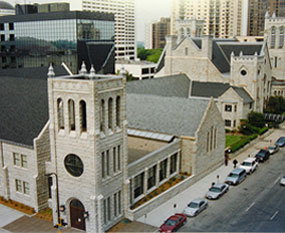
Westminster Presbyterian Church
Rev. Sarah Brouwer


Listening for the Word

The central part of the service—Listening for the Word—featured the reading of the Scriptures and the preaching of the sermon.

Scripture Reading

 The main Scripture for the day was Ephesians 6: 10-20 (Common English Bible):[2]

  • “Finally, be strengthened by the Lord and his powerful strength. Put on God’s armor so that you can make a stand against the tricks of the devil. We aren’t fighting against human enemies but against rulers, authorities, forces of cosmic darkness, and spiritual powers of evil in the heavens. Therefore, pick up the full armor of God so that you can stand your ground on the evil day and after you have done everything possible to still stand. So, stand with the belt of truth around your waist, justice as your breastplate, and put shoes on your feet so that you are ready to spread the good news of peace. Above all, carry the shield of faith so that you can extinguish the flaming arrows of the evil one. Take the helmet of salvation and the sword of the Spirit, which is God’s word.
  • Offer prayers and petitions in the Spirit all the time. Stay alert by hanging in there and praying for all believers. As for me, pray that when I open my mouth, I’ll get a message that confidently makes this secret plan of the gospel known. I’m an ambassador in chains for the sake of the gospel. Pray so that the Lord will give me the confidence to say what I have to say.” (Emphases added.)

The Sermon

“I am as far removed from Roman-controlled late first century Asia minor as I am from the war-torn places of our world– and even the violent parts of our city. But, I do read about war and violence in the news, and it disturbs me. And, the worry most on my mind nowadays is that there seems to be more and more license to threaten individual lives and bodies, especially those who fall outside norms, and land in the margins. So, to equate the Christian life with putting on armor not only falls outside of my comfort zone, it seems counterintuitive, even dangerous.”

“But, I also have to wonder if… maybe that’s the point. “

“The strategy of Jesus is not centered in taking the right stand on issues, but rather in standing in the right place—with the outcast and those relegated to the margins.”

“In the letter to the Ephesians there is no explicit mention of violence outside of the notion of putting on armor, but, the author does talk about standing firm, even as we struggle with cosmic forces of evil. And evil is really the root of violence- not quite the same thing, but certainly related. What’s important, though, is that the writer of this letter actually takes images that are familiar to these early Christians- people who would have seen powerful, intimidatingly dressed, sometimes violent Roman soldiers, walking the streets every day — and then subverts them, takes them out of context and changes the metaphor. The image of armor ends up undermining itself, revealing its emptiness.”

“[The]author of Ephesians seeks to build community by coming alongside it, knowing it, and reframing what appears to be true. . .. For the Christians in Ephesus, it meant they had to shake off the illusions of the powers of the world and put on the armor of God. They had to learn that the body of Christ is a ‘heavenly’ reality, full of righteousness and truth, and it is in no way determined by violent ways or the abusive habits of those who claim power.”

“Although I can certainly appreciate what the author of Ephesians is doing here, it still makes me uncomfortable. Things have not gone well when Christians have put on armor. This text has been misread many times and used in defense of violence, even though I am abundantly sure that was not the intent. As a friend of mine writes, ‘spiritual growth usually feels more like laying down defenses, shedding layers, allowing more of my unprotected self to see the light of day.’ Even putting on the armor of God, which is a subversive, totally different way of garnering strength, just doesn’t sit well.”

“But . . . Ephesians doesn’t mess around with the idea that there is evil. Conflict is implied, but not necessarily conflict with others.”

“Evil is real, but we like to talk about it as though it is part of these systems of injustice, so we can easily remove ourselves from the equation. A friend of mine says it this way, ‘We tend to make evil bureaucratic, so we can engage in problem solving and policy-making. And while those ways of dealing with injustice are productive in some ways, they fail to adequately grapple with the reality of evil, and the way that it works within and among us, spreading like a virus (Wiles).”

“Jesus knew that evil didn’t just exist among the Roman authorities. If he did, he would have spent all his time with them. Instead, he taught the disciples, he healed the sick, he gave to the poor, he spent time with sinners. Jesus knew that violence, even the violence that killed him, was just a symptom of inner conflict.”

“And who among us can’t understand this? Even if we don’t have urges toward violence, we all have deep-seated pain, discomfort, grief, loss, loneliness, anxiety, shame and self-doubt that we are battling internally on a daily basis. And maybe we don’t put on physical armor to cover it up, but we certainly manage to bury evil that eats away at us, covering it up with illusions of personal success and power, or whatever other things we do that don’t really protect us from the world or our own hurt. You might have noticed, but Ephesians never mentions battling enemies, because there are none. Our so-called enemies are always just as imprisoned as we are.”

“[According to] Rev. Matt Fitzgerald . . . in the Christian Century . . . , ‘The breastplate of ministerial self-righteousness will not protect me. I have learned over the years that a helmet made of bourbon and a sword forged from cynicism are also insufficient, as are prosperity, religious zeal, fitness and even family. None of these are strong enough to hold back ‘the cosmic powers of this present darkness’ (Eph. 6:12). None can thwart the forces of chaos and disorder that upend even the most righteous of lives. Yet we are tempted to try to master the tragedy of existence by ‘living well.’ Perhaps this is why the writer of Ephesians makes a distinction between ‘the whole armor of God’ and our efforts to become godly. The shield is God’s, not ours.’”[3]

“When I think of someone who has explored the cosmic forces of evil within and sought to overcome them, the person who comes to mind is Jean Vanier. [He] is the founder of the well-known L’arche Movement, which consists of 135 communities around the world where people of 5 varying physical and mental abilities live together as equals. Vanier once wrote, ‘We human beings have a great facility for living illusions, for protecting our self-image with power, for justifying it all by thinking we are the favored ones of God… But I am struck by how sharing our weakness and difficulties is more nourishing to others than sharing our qualities and successes.’”[4]

“If we put on armor, let it be subversive armor. Let us wrap truth around our waist like a belt, and let it be the kind of truth that Jean Vanier talks about. We might wonder uncomfortably, ‘And what good will truth do in the end?’ You might consider asking someone who has revealed the truth about their sexuality, told the truth about who they truly are, deep down, exposed their true identity to a shaming and dangerous world, but whose life was saved as a result. You could ask someone who has admitted they were powerless to addiction, who finally said, ‘I need help. This is unmanageable.’ That kind of truth is strong, it has a story, and it not only has the power to nourish others and change lives, ‘it is strong enough to bring forth life from the grave (Wiles).’”

“The writer of Ephesians says, ‘stand therefore, and fasten the belt of truth around your waist, and put on the breastplate of righteousness. As shoes for your feet put on whatever will make you ready to proclaim the gospel of peace. With all of these, take the shield of faith, with which you will be able to quench all the flaming arrows of the evil one. Take the helmet of salvation, and the sword of the Spirit, which is the word of God.’”

“The Gospel is the world of opposites, where engaging real evil and conflict actually means putting your defenses down. It seems very vulnerable, to march into combat armed only in the Spirit; even precarious and costly, to hold faith as your shield. It feels like you might lose everything on that path to battle. As my friend Sarah writes, ‘Frankly, it all resembles foolishness. It’s as foolish as God Almighty showing up as a baby. Babies literally can’t do anything. They’re just really needy, and they call forth love and compassion. That’s all. But this is the shape of our God. This is our confession about power. This is the nature of our strength—a belt of truth, a breastplate of righteousness, shoes of peace, a shield of faith, a helmet of salvation, and a sword of the Spirit. This is the only armor there is. And it’s no kind of armor at all.’ Except, if we remember the promise. That if we put on this subversive armor, God’s armor, evil and violence will not win in the end, and self-destruction and self-righteousness do not have to be our last resort. If we are willing to put on this strange promise, to wear it, to stand firm in it, and to be advocates for it, it will save us, and others.”

“So, while I still don’t like the idea of armor, I believe in it. I have to. And I pray you will join me, as we ‘dare to lay down all our other weapons, and put on, piece by piece, only this, the armor of God.’”

Preparing for the Word

The first part of the service—Preparing for the Word—helped to prepare the congregation to listen for the Word. Keys for this part were the congregational singing the Processional Hymn, “God of Grace and God of Glory,” and saying the unison Prayer of Confession.

Processional Hymn: “God of Grace and God of Glory”[5]

God of grace and God of glory,
on thy people pour thy power
;
crown thine ancient church’s story;
bring its bud to glorious flower.
Grant us wisdom, grant us courage,
for the facing of this hour,
for the facing of this hour
.

Lo! the hosts of evil round us
scorn thy Christ, assail his ways!
From the fears that long have bound us
free our hearts to faith and praise.
Grant us wisdom, grant us courage,
for the living of these days,
for the living of these days.

Cure thy children’s warring madness;
bend our pride to thy control;
shame our wanton, selfish gladness,
rich in things and poor in soul.
Grant us wisdom, grant us courage,
lest we miss thy kingdom’s goal,
lest we miss thy kingdom’s goa
l.

Save us from weak resignation
to the evils we deplore.

Let the gift of thy salvation
be our glory evermore.
Grant us wisdom, grant us courage,
serving thee whom we adore,
serving thee whom we adore.

Prayer of Confession

 Before the reading of the Scripture and the sermon the congregation in unison said the following Prayer of Confession:

  • “Spirit of God, we confess that we put on airs more often than we put on the armor of God. We are guilty of girding ourselves with lies instead of the truth. We try to protect ourselves with arrogance and self-reliance instead of righteousness, faith, and your gift of salvation. Our footsteps do not follow your path of peace. We are quick to use your Word to attack one another, instead of striking out against the sin of the world. Forgive us, Holy God. Gift us with wisdom and strength to change our ways, so that we may live as your faithful people.”

Conclusion

The passage from Ephesians was not familiar to me and like Rev. Brouwer I had difficulty in seeing how it related to my life.

I was aided in this effort by some of the words of the Processional Hymn (in slightly different order): “God of grace and God of glory. Lo! the hosts of evil round us scorn thy Christ, assail his ways! Save us from weak resignation to the evils we deplore. On thy people pour thy power. Grant us wisdom, grant us courage, for the facing of this hour.”

The pouring of God’s power on us can be seen as embracing us in God’s armor: a belt of truth, a breastplate of righteousness, shoes of peace, a shield of faith, a helmet of salvation, and a sword of the Spirit.

The hymn’s plea to “save us from weak resignation to the evils we deplore” recognizes the difficulty we all experience in seeing so many injustices in the world and feeling incapable of doing anything to combat them and, therefore, falling into “weak resignation to the evils we deplore.”

As Rev. Brouwer said in her sermon, ‘We tend to make evil bureaucratic, so we can engage in problem solving and policy-making. And while those ways of dealing with injustice are productive in some ways, they fail to adequately grapple with the reality of evil, and the way that it works within and among us, spreading like a virus (Wiles).”

We, therefore, need God’s wisdom and courage for the facing of this hour. For me, this means discerning our gifts, identifying ways to use these gifts to help others and then digging in doing it while recognizing that nothing we do is complete or perfect and that we are prophets of a future not our own.[6]

=========================================

[1] The bulletin for the service and the text of the sermon are on the church’s website.

[2] The Old Testament reading for the day was Joshua 24: 1-2a, 14-18.

[3] Fitzgerald, The armor of God: Ephesians 6: 10-20, Christian Century (Aug. 11, 2009).

[4] The noted theologian Henri Nouwen spent the last 10 years of his life at a L’arche center in Canada.

[5] The hymn’s lyrics were written by Rev. Harry Emerson Fosdick (1876-1969) for the 1930 opening of New York City’s interdenominational Riverside Church, which was conceived by John D. Rockefeller and which Fosdick served as senior pastor (1930-1946). Earlier he had been a Baptist pastor in Montclair, New Jersey (1903-1917), a chaplain in World War I (1917), and pastor, in New York City, at First Presbyterian Church in Manhattan‘s West Village (1918-1924) followed by Park Avenue Baptist Church (1924-1930). Fosdick became a central figure in the “Fundamentalist–Modernist Controversy” within American Protestantism in the 1920s and 1930s and was one of the most prominent liberal prominent ministers of the early 20th century. This led to an investigation of his views by the Presbyterian Church in the USA where he was defended by John Foster Dulles, an elder at First Presbyterian and later Secretary of State.

[6] Another Perspective on the Parable of the Good Samaritan, dwkcommentaries.com (July 27, 2017).