U.S. Supreme Court Hears Case That May Decide If Corporations Are Liable Under the Alien Tort Statute

On February 28th the U.S. Supreme Court heard arguments in Kiobel v. Royal Dutch Petroleum (Sup. Ct. No. 10-1491). The transcript of that hearing is available online.

This case involved claims by a putative class of Nigerians against a corporation (Royal Dutch Petroleum Co. (Shell)) for allegedly assisting in certain human rights violations in Nigeria in 1993-95. Prior posts reviewed the procedural background of this case and the Second Circuit decision rejecting such liability.

The claims in this case were asserted under the U.S. Alien Tort Statute (ATS) that provides that U.S. federal district courts have “jurisdiction of any civil action by an alien for a tort only, committed in violation of the law of nations or a treaty of the United States.” (Earlier posts have reviewed the history of the ATS for the periods 1789-1979, 1980, 1980-2004, the U.S. Supreme Court decision in 2004 and 2004-present.)

 Merits Issue: Are Corporations Liable Under the ATS?

A review of the transcript of the hearing reveals that the entire hour was devoted to only one of the two issues previously identified by the Court as being raised by this case:

  • Whether corporations are immune from tort liability for violations of the law of nations such as torture, extrajudicial executions or genocide, as the court of appeals decisions provides, or if corporations may be sued in the same manner as any other private party defendant under the ATS for such egregious violations, as the [U.S.] Eleventh Circuit [Court of Appeals] has explicitly held.

All of the Justices (except Justice Thomas) actively participated in this argument with comments and questions that make it difficult to make any prediction of the ultimate decision in the case, except that it probably will be a decision by a divided Court. Here are samples of some of the comments and questions.

Justice Samuel Alito asked,  “What business does a case like [this alleging human rights violations in Nigeria] have in the courts of the United States? There’s no connection to the United States whatsoever.”

Justice Ruth Bader Ginsburg tried to focus the discussion on the precise issue raised by the case, whether it is only individual defendants [who are liable under ATS] or are corporate defendants also liable?”

Justice Stephen Breyer apparently had difficulty with the Second Circuit’s categorical rule in this case that corporations could never be liable under the ATS. He said he could think of instances where that should not be the case. One he cited was “Pirates Incorporated.”

Justice Elena Kagan also expressed skepticism about an assertion by the attorney for the defendant-respondent that international human rights treaties excluded corporations from liability. Justice Kagan said she thought “the international sources are simply silent as to this question [of corporate liability].” She also observed that such treaties were silent on this issue “mostly because all of these are written to prohibit certain acts,” rather than focusing on who commits such acts.

Justice Anthony Kennedy, who often is seen as the swing vote when the Court is divided, asked the first question almost before the attorney for the plaintiffs-petitioners could open his mouth. Justice Kennedy said, “For me, the case turns in large part on this,” (quoting from the defendant-respondent’s brief), ‘International law does not recognize corporate responsibility for the alleged offenses here.’ Justice Kennedy immediately followed with this quotation from an amicus brief by Chevron Corporation, which is a defendant in another ATS case, “No other nation in the world permits its courts to exercise universal civil jurisdiction over alleged extraterritorial human rights abuses to which the nation has no connection.”

Justice Anthony Kennedy also noted that international criminal law made a distinction between individuals and corporations with only the former being subject to criminal sanctions. Yet later he mentioned the legal principle of respondeat superior (that a corporation or other principal is legally responsible for the wrongs of its employee or agent under certain conditions) and said that it was a very simple proposition of U.S. law and perhaps implicitly suggested it was applicable in this case.

Subject Matter Jurisdiction Issue

The second issue raised by this case was not discussed at the February 28th hearing. It was the following: Whether the issue of corporate civil tort liability under the Alien Tort Statute (“ATS”), 28 U.S.C. § 1350, is a merits question, as it has been treated by all courts prior to the decision below, or an issue of subject matter jurisdiction, as the court of appeals held for the first time.

The Second Circuit in an opinion by Judge Cabranes held, without much discussion, that the ATS incorporates any limitation arising from customary international law on whom may properly be sued as a defendant under the statute and that this was a requirement for subject-matter jurisdiction of the federal courts that was not met in this case.

In my opinion, the Second Circuit was clearly wrong on this conclusion on subject-matter jurisdiction. The ATS states that federal courts have “jurisdiction of any civil action by an alien for a tort only, committed in violation of the law of nations or a treaty of the United States.” Thus, to establish subject-matter jurisdiction, (i) the plaintiff must be an “alien” (a non-citizen of the U.S.); (ii) the lawsuit must be for a tort; and (iii) the tort must allegedly be set forth in “the law of nations” (customary international law) or a treaty of the U.S. All of these requirements are met in this case. It then becomes an issue on the merits as to whether the alleged conduct in fact violates the “law of nations” or a treaty of the U.S.

Moreover, the ATS does not specify as to whom the defendant must be, unlike the Torture Victims Protection Act (TVPA) which states the defendant has to be an “individual.” If the ATS did specify in some fashion what kind of defendant was permissible, then that would make the nature of the defendant an issue for subject-matter jurisdiction. (Whether the word “individual” in the TVPA includes corporations was the issue presented in the other case heard by the Supreme Court on February 28th.)

The procedural posture of this case makes my opinion, if it is correct, an important one for The Supreme Court’s disposition of this case. Federal courts are courts of limited jurisdiction requiring such courts always to determine if they have such jurisdiction and prohibiting the litigating parties from conferring such jurisdiction on the courts by not themselves raising problems over such jurisdiction. This basic principle enabled Judge Cabranes in the Second Circuit to raise, discuss and decide the issue of corporate liability under the ATS in this case even though that issue had not been briefed or argued by the parties themselves.

The failure of the defendant Shell to raise the merits issue of corporate liability at the trial court and at the Second Circuit should mean that it is deemed to have waived the issue.

Under this analysis the Supreme Court should reverse the Second Circuit on procedural grounds and not reach the substantive issue of corporate liability.

Conclusion

A Supreme Court decision in this case is expected by the end of June. I reiterate that this is a case of statutory interpretation and the Court’s development of federal common law, and at any time the Congress with a presidential signature could amend the statute to make corporate liability express or to exclude such liability explicitly.

Under the infamous Citizens United decision the Court treats corporations as individual human beings for purposes of the Free Speech clause of the First Amendment to the U.S. Constitution and the right to make unlimited political contributions. If the Court were to decide that corporations, unlike individual human beings, are not liable under the ATS, this would and should present the Court with at least a public relations problem.

U.S. Supreme Court Hints That It Will Decide That Corporations Are Not Liable Under the Torture Victims Protection Act

On February 28th the U.S. Supreme Court heard arguments in Mohamad v. Palestinian Authority (Sup. Ct. No. 11-88) on the issue of whether corporations are liable under the Torture Victims Protection Act (TVPA). The transcript of that hearing is available online.

Before that hearing, a prior post discussed this case and expressed my opinion that the Court would decide that corporations were not so liable. In summary, the TVPA provides a civil cause of action for money damages by an “individual” who is a victim of torture or by his or her representative for extrajudicial killing against the “individual” who committed the wrong, and the ordinary meaning of the word “individual” as used in federal statutes encompasses only natural persons and not corporations or other organizations.

Although one needs to be cautious in evaluating oral arguments before the Supreme Court, the argument on February 28th in this case did not provide any reason to change my opinion on the likely outcome. Indeed, my review of the transcript of the argument confirms my previously expressed view of this case. To illustrate, I make the following four points.

First, Chief Justice John G. Roberts Jr. summarized what he thought was the plaintiffs position: “You are saying, ‘Well, we want a term that is going to include individual persons and organizations but not state organizations. And the only term that fits perfectly is ‘individual.’ ”

“Exactly,” the plaintiffs lawyer responded. “That’s our argument.”

Chief Justice Roberts was incredulous. “Really?” he asked, to laughter in the courtroom, which the Chief Justice joined.

Second, Justice Samuel Alito had a humorous exchange with the U.S. Justice Department lawyer who argued that corporations could not be liable under the TVPA, but earlier that same morning in another case (Kiobel) argued that corporations could be liable under the Alien Tort Statute. Justice Alito observed that the government’s position meant an alien could recover while a U.S. citizen could not. “Too bad, then, that Mr. Rahim [the plaintiff in Mohamad] became a U.S. citizen,” Justice Alito said. “I guess that was a mistake [on his part].”

Third, even Justice Steven Breyer, who is seen as more sympathetic to plaintiffs’ arguments, told the plaintiffs lawyer, “I think I have to say that you are on a weak wicket.”

Four, three other liberal Justices (Justices Ginsburg, Sotomayor and Kagan) also asked questions indicating skepticism of the plaintiffs’ arguments.

A Supreme Court decision in this case is expected by the end of June. I also reiterate that this is a case of statutory interpretation, and at any time the Congress with a presidential signature could amend the statute to make corporate liability express or to exclude such liability explicitly.


U.S.Supreme Court To Consider Another Case Regarding Corporate Liability for Assisting Torture or Extrajudicial Killing

U.S. Supreme Court Building

On February 28th, the U.S. Supreme Court will hear oral arguments on the following issue in a case from the U.S. Court of Appeals for the District of Columbia, Mohamad v. Palestinian Authority (Sup. Ct. No. 11-88):

  • Whether the Torture Victim Protection Act [TVPA], 28 U.S.C. § 1350 note § 2(a), permits actions against defendants which are not natural persons.

The TVPA provides a civil cause of action for money damages by an “individual” who is a victim of torture or by his or her representative for extrajudicial killing against the “individual” who committed the wrong.

The D.C. Circuit’s panel of three judges unanimously affirmed the dismissal of a TVPA complaint against the Palestinian Authority. That court stated, “Because the Congress did not define the term ‘individual’ in the TVPA, we give the word its ordinary meaning, . . . which typically encompasses only natural persons and not corporations or other organizations . . . . Notably, the Dictionary Act, which provides guidance in ‘determining the meaning of any Act of Congress,’ strongly implies the word individual does not comprise organizations because it defines ‘person’ to include ‘corporations, companies, associations, firms, partnerships, societies, … as well as individuals.’ ‘ (Emphasis in original.)

The D.C. Circuit concluded, “The Congress used the word ‘individual’ [in the TVPA] to denote only natural persons. The liability provision of the statute uses the word ‘individual’ five times in the same sentences—four times to refer to the victim of torture or extrajudicial killing, which could be only a natural person, and once to the perpetrator of the torture or killing.  The [plaintiffs-appellants] . . .  advance no cogent reason, and we see none, to think the term ‘individual’ has a different meaning when referring to the victim as opposed to the perpetrator.”

On October 17, 2011, the Supreme court granted the plaintiffs-petitioners’ petition for a writ of certiorari to review this decision.

Copies of the Supreme Court briefs of the parties and most of the eight amici curiae supporting the petitioners and the three amici supporting the defendants (including the U.S. Government) are available online. One of the three amici supporting the defendants was by the U.S. Government urging affirmance of the D.C. Circuit on essentially the same grounds enunciated by that court.

As previously stated, I find the D.C. Circuit opinion persuasive and believe the Supreme Court will affirm that court and hold that corporations are not liable under the TVPA.

This is a companion case to Kiobel v. Royal Dutch Petroleum Co. (Shell) that was discussed in posts on February 25th and 26th and that also will be argued on February 28th. The Supreme Court’s resolution of both of these cases is expected by the end of the current term at the end of June 2012.

This summary illustrates the importance of this issue for the parties, for the enforcement of international human rights and for governments and businesses around the world. Nevertheless, remember that this is a case of statutory interpretation, and at any time the Congress with a presidential signature could amend the statute to make corporate liability express or to exclude such liability specifically.

Former Salvadoran Military Officer Is Determined to Have Assisted in Torture and Murder

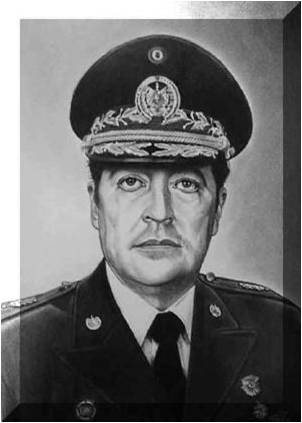
Vides Casanova

This week a U.S. immigration judge in Orlando, Florida after trial found that former Salvadoran General and Minister of Defense Carlos Eugenio Vides Casanova had assisted in acts of torture and murder committed by soldiers under his command. Now he is subject to further proceedings potentially leading to his deportation from the U.S. where he has lived for many years as a legal resident.

One of the cases which Vides Casanova was determined to have assisted was the December 1980 rape, torture and murder of four American churchwomen by five Salvadoran National Guardsmen. At the time Vides Casanova was the Commander of the Guard. (We already have examined the mission work of the churchwomen, the early investigations of this horrendous crime, the Salvadoran criminal prosecution of the Guardsmen and the Salvadoran Truth Commission’s investigation of the crime.)

The immigration judge also concluded that Vides Casanova had assisted in the torture of two Salvadorans, Juan Romagoza and Daniel Alvarado, who testified against him in hearings last spring in the immigration court in Orlando.

In 2005 Vides Casanova and his fellow former Salvadoran General and Minister of Defense Jose Guillermo Garcia were held liable in U.S. federal court for $54.6 million under the U.S. Alien Tort Statute (ATS) and Torture Victims Protection Act (TVPA). This civil case was brought by Romagoza and Alvarado and another Salvadoran refugee for their torture by Salvadoran military personnel during the period 1979 to 1983.

Earlier Vides Casanova and Garcia had defeated similar civil claims in U.S. federal court over the torture, rapes and murders of the four American churchwomen.

Earlier posts have reviewed the enactment of the TVPA and the history of the Alien Tort Statute for the periods 1789-1979, 1980, 1980-2004, the U.S. Supreme Court decision in 2004 and 2004-present.

The current deportation case was brought by the Human Rights Violators & War Crimes Center, which is a unit of the U.S. Immigration and Customs Enforcement created in 2003 to focus on preventing rights violators from entering this country and deporting those already here.

The Persistence of the Inquisition

The Inquisition was a phenomenon limited to fifteenth and sixteenth century Spain. Correct? Not so says Cullen Murphy in his new book, God’s Jury: The Inquisition and the Making of the Modern World and in the Atlantic Magazine’s excerpt of the book, Torturer’s Apprentice. So too does Adam Gopnik in a recent New Yorker essay about this and related books, Inquiring Minds: The Spanish Inquisition revisited.

As Gopnik puts it,  the Inquisition is “an institution as deeply rooted in modernity as the scientific tradition that it opposed. Its fanaticism, its implicit totalitarianism . . ., its sheer bureaucratic brutality  . . . make it central to who we are and what we do. Its thumbprint is everywhere. . . .” What happens at the U.S. base in Guantanamo Bay, Cuba is only one of the recent examples. Another example is the close parallels of the Spanish Inquisition’s interrogation manuals and the current U.S. manuals about “enhanced interrogation.”

Gopnik also criticizes scholars who allegedly delve into the minutia of the Spanish Inquisition and in the process lose the forest for the trees: Benzion Netanyahu (the father of the Israeli Prime Minister), Henry Kamen and Eamon Duffy.

According to Gopnik, history needs to be done with “historical imagination,” which is the “ability to see small and think big.” Without such imagination, the historian “risks a failure of basic human empathy.”  For studying and writing about the Spanish Inquisition, this means, he says, that the historian must imagine “the horror of being burned alive.”

The persistence of the practices of the Inquisition unfortunately continues to be demonstrated by the news of the day. Minneapolis’ Center for Victims of Torture has treated over 23,000 victims over the last 24 years. A similar program at New York City’s Bellevue/N.Y.U. Program for Survivors of Torture recently reported that in its “20 years of examining torture victims, we have seen few as traumatized as the several Abu Ghraib, Guantanamo and black site (secret prison) detainees whom we evaluated.” And the European Court of Human Rights recently decided that under the European Convention for the Protection of Human Rights and Fundamental Freedoms, the U.K. could not deport a radical Muslim cleric to Jordan because there was a “real risk that evidence obtained by torture will be used against him.”

We also have seen in the following prior posts the persistence of torture and the efforts to stop such conduct:

  • the negotiation and adoption of a multilateral treaty against torture (the International Convention Against Torture and Other Cruel, Inhuman or Degrading Treatment or Punishment);
  • the U.S. first and second reports to the Committee Against Torture;
  • the U.S. adoption of the Torture Victims Protection Act (TVPA);
  • the U.S. federal court lawsuit under the TVPA over the torture, rape and murders of the four American churchwomen in El Salvador;
  • the criminal cases in Spain under the principle of universal jurisdiction against U.S. officials for alleged torture of detainees in Guantanamo Bay, Cuba and for  authoring legal memoranda allegedly justifying torture;
  • the granting of asylum to a Salvadoran for having been tortured in his home country and who came to Minnesota to be treated at the Center for Treatment of Victims of Torture; and
  • the jurisdiction over torture as part of crimes against humanity (Art. 7(1)(f)) and war crimes (Art. 8(2)(a)(ii), 8(2)(c)(i)) for the International Criminal Court and other international criminal tribunals.

As a result, eternal vigilance against torture is necessary. In the U.S., for example, various religious groups have banded together in a National Religious Campaign Against Torture. Its statement of conscience says, “Torture violates the basic dignity of the human person that all religions, in their highest ideals, hold dear. It degrades everyone involved — policy-makers, perpetrators and victims. It contradicts our nation’s most cherished ideals. Any policies that permit torture and inhumane treatment are shocking and morally intolerable.”

—————————–

Former President of Mexico Is Sued in U.S. Federal Court for Alleged Human Rights Violations

Ernesto Zedillo

On September 16, 2011, ten anonymous Mexican nationals sued Ernesto Zedillo, the former President of Mexico, in U.S. federal court in New Haven, Connecticut.[1]

The complaint asserts claims for money damages in excess of $10 million under the Alien Tort Statute (ATS) and the Torture Victims Protection Act (TVPA).[2] The ATS allows claims by “an alien for a tort only, committed in violation of the law of nations or a treaty of the United States.”[3] The TVPA allows claims by an “individual’s legal representative” who has been subject to “extra judicial killing” against an “individual [acting] under actual or apparent authority, or color of law, of any foreign nation” who commits the extra-judicial killing.[4]

Acteal Massacre bodies
Acteal Massacre Caskets

The case centers on a Mexican militia’s December 22, 1997, attack on civilians in the village of Acteal in Chiapas, Mexico.  At the time some of the villagers were troubled by the fighting in their area involving an indigenous insurgent group, the Zapatistas, and had formed a pacifist group known as “Las Abejas” or “The Bees.” On December 21st they started a retreat in and around their local church to pray and fast in the name of peace. On the second day of the retreat an anti-Zapatista militia armed with assault rifles surrounded the church and opened fire, killing 45 and wounding 17.[5]

Zedillo, shortly after his election as President in 1994, allegedly decided to break a ceasefire with the Zapatistas and instituted a plan know as “Plan de Campana Chiapas ’94,” which involved arming and training local militia groups. In addition, the Mexican military and Zedillo allegedly were involved or at least aware of the Acteal attack. Afterwards, Zedillo and his administration allegedly were actively engaged in trying to cover up the Mexican government’s involvement in the massacre. This cover-up included charging and convicting innocent people of the crime, as was confirmed in 2009 by the Mexican Supreme Court when it overturned 20 of the 37 convictions on the grounds that the prosecution had fabricated testimonies and tampered with evidence. [6]

Zedillo has not yet responded to the complaint, but immediately after the suit was commenced he said the accusations were “infamous and irresponsible” and “totally groundless and obviously false.” He had similar dismissive comments in 2005 about a complaint about the Acteal massacre that had been filed against Mexico in the Inter-American Commission on Human Rights.[7] In 2010, by the way, the Commission decided that the complaint was admissible, i.e., subject to further proceedings, on most of Mexico’s alleged violations of the American Convention on Human Rights with respect to this incident.[8]

The Connecticut lawsuit was filed over six years after the expiration of the 10-year statute of limitations for suits under the ATS and the TVPA. However, under certain circumstances this limitations period can be suspended or tolled. Thus, we can anticipate that Zedillo will raise this affirmative defense. Indeed, the plaintiffs’ complaint anticipates this defense by alleging that the statute of limitations should be suspended or tolled because of the alleged cover-up of governmental involvement in the massacre that was not revealed until the Mexican Supreme Court’s August 12, 2009, reversal of 20 convictions for the reasons previously stated and because of the government’s intimidation of members of the Chiapas indigenous community.[9]

Another affirmative defense that can be anticipated is the plaintiffs’ alleged failure to exhaust “adequate and available remedies in the place in which the conduct giving rise to the claim occurred [here, Mexico].” Again the complaint anticipates this defense with allegations of absence of adequate legal remedies in Mexico and of their exhaustion of the available remedies.[10]

By January 6, 2012, Zedillo is to file his motion to dismiss for lack of subject matter jurisdiction that will include a request for the court to ask the U.S. government for its opinion as to whether Zedillo has immunity as a former head of a sovereign state.[11]

Since 2002 Zedillo has been the Director of the Yale Center for the Study of Globalization and is believed to live in the New Haven, Connecticut area.[12]


[1] Henderson & Stephenson, Zedillo accused of massacre cover-up, Yale Daily News (Sept. 21, 2011); Navarro, Zedillo faces massacre claims in U.S., Guardian (Dec.27, 2011); Civil Docket Sheets, Doe v. Zedillo, Case No. 3-11-cv-01433-AWT (D. Conn. as of Dec. 28, 2011); 1997 Acteal Massacre, http://acteal97.com. It is surprising that there has been no mention of this case in the New York Times or Washington Post.

[2]  Id.

[3]  See Post: The Alien Tort Statute, 1789-1980 (Oct. 21, 2011); Post: U.S. Circuit Court’s 1980 Decision Validates Use of Alien Tort Statute To Hold Foreign Human Rights Violators Accountable (Oct. 23, 2011); Poat: The Alien Tort Statute, 1980-2004 (Oct. 25, 2011); Post: Alien Tort Statute Interpreted by U.S. Supreme Court in 2004 (Nov. 9, 2011); Post: The Alien Tort Statute, 2004-Present  (Nov. 14, 2011).

[4]  Post: The Torture Victims Protection Act (Dec. 10, 2011).

[5] See n.1 supra. The “Las Abejas” or “The Bees” have said that the plaintiffs are not members of their group and that their group is not interested in obtaining money for the massacre. (Stephenson, Plaintiffs in Zedillo case questioned, Yale Daily News (Oct. 5, 2011); Stephenson, Zedillo lawsuit lacks clear backers, Yale Daily News (Oct. 19, 2011).)

[6]  See n.1 supra.

[7]  Id.; Post, Zedillo says allegations are untrue, Yale Daily News (Feb. 14, 2005).

[8]  Manuel Santiz Culebra, et al. (Acteal Massacre), Rep. No. 146/10 (IACHR Nov. 1, 2010).

[9]  Complaint ¶¶ 120-133. See 28 U.S.C. § 1350, note §2(c ). See Post: Litigation Against Conspirators in the Assassination of Oscar Romero (Oct. 10, 2011); Post: Former Salvadoran Generals Held Liable for $54.6 Million for Failure To Stop Torture (Nov. 11, 2011); Post: Former Salvadoran Vice-Minister of Defense Held Liable for $6 Million for Torture and Extrajudicial Killing (Nov. 13, 2011); Post: The Torture Victims Protection Act (Dec. 10, 2011).

[10] Complaint ¶¶ 234-238.. See 28 U.S.C. § 1350, note §2(b). See posts in n.9 supra.

[11]  Scheduling Order, Doe v. Zedillo (Dec. 6, 2011). Within 30 days after the court dockets the U.S. government’s substantive response to such a request, the plaintiffs shall file their response to the dismissal motion. Within another 30 days after the plaintiffs’ response, Zedillo shall file his reply brief. (Id.) After all of these papers have been submitted, presumably the court will schedule a hearing on the dismissal motion and sometime thereafter issue the court’s decision on that motion.

[12] Ernesto Zedillo Biography, http://www.ycsg.yale.edu/center/zedillo.html;Lee, Zedillo takes globalization center post, Yale Daily News (April 5, 2002).

TVPA Lawsuit in U.S. Federal Court Over the Murders of the American Churchwomen

One of the horrendous crimes during El Salvador’s civil war was the December 1980 brutal murders of four American churchwomen. We have examined the facts of those crimes along with the investigations and criminal prosecutions in El Salvador for those crimes plus the report on same by the Truth Commission for El Salvador.[1]

General Vides Casanova
General Jose Guillermo Garcia

In 1999 U.S. relatives of the four churchwomen brought a civil lawsuit for money damages under the Torture Victims Protection Act (TVPA)[2] for the women’s torture and murders. The defendants were former Salvadoran Generals Vides Casanova and Jose Guillermo Garcia. The case was in a federal court in Florida, where the defendants then lived.[3]

The case was tried before a jury in October-November 2000. The defendants denied any knowledge of the murders beforehand. They admitted, however, that torture and violence were rampant in El Salvador and that the country’s armed forces were involved in many of these actions. In response, they testified, they had issued orders forbidding illegal interrogation and extrajudicial executions and had done all they could do to prevent such crimes. However, they further testified, they did not have the resources to stop a long practice of such actions by the armed forces.[4]

General Garcia testified that he had ordered an investigation of the killing of the churchwomen and had done nothing to interfere with the investigation. General Garcia also testified about the U.S. government’s giving him the Legion of Merit award in the 1980’s for his being a “sterling example of a military leader in a representative government”as well as the U.S. government’s granting him political asylum in 1991.

Other trial witnesses were former U.S. Ambassador Robert White to El Salvador and a former investigator for the Inter-American Commission on Human Rights. The trial exhibits included the report of the El Salvador Truth Commission, other investigative reports and declassified U.S. diplomatic cables

In November 2000 the jury returned a verdict for the defendants. Afterwards the jurors indicated that they thought they did not have enough evidence that the generals were able to exercise authority over their subordinates. Some jurors also said the defendants had done what they could to curb abuses, given the tumult of the times and a lack of resources.

The plaintiffs appealed to the U.S. Eleventh Circuit Court of Appeals, which affirmed the trial court. The sole issue on this appeal was the legal sufficiency of the trial court’s instruction to the lay jury on the question of command responsibility. Because there was no objection at trial to this instruction, the appellate court reviewed the instruction only for plain error and found no such plain error,

The appellate court held that legislative history made clear that Congress intended to adopt the doctrine of command responsibility from international law and that the essential elements of liability under that doctrine were (i) the existence of a superior-subordinate relationship between the commander and the perpetrator; (ii) the commander knew or should have known that the subordinate was committing or planning to commit war crimes; and (iii) the commander failed to prevent the crimes or failed to punish the subordinate for same.

The plaintiffs’ request for review by the U.S. Supreme Court was denied. Thus, this case is over.[5]


[1]  See Post: The Four American Churchwomen of El Salvador (Dec. 12, 2011); Post: The December 1980 Murders of the Four Churchwomen in El Salvador (Dec. 14, 2011); Post: Non-Judicial Investigations of the 1980 Murders of the Four Churchwomen (Dec. 16, 2011); Post: Judicial Investigations and Criminal Prosecutions of the 1980 Murders of the Four Churchwomen in El Salvador (Dec. 18, 2011); Post: The Salvadoran Truth Commission’s Investigation of the Murders of the American Churchwomen (Dec. 19, 2011).

[2]  See Post: The Torture Victims Protection Act (Dec. 10, 2011).

[3]  Ford v. Garcia, 289 F.3d 1283, 1285 (11th Cir. 2002), cert. denied, 537 U.S. 1147 (2003).

[4]  Gonzalez, Salvadoran Admits Abuses In Trial Tied to Nuns’ Deaths, N.Y. Times (Oct. 19, 2000); Gonzalez, Salvadoran General Admits He Knew of Abuses, N.Y. Times (Oct. 20, 2000); Gonzalez, 2 Salvadoran Generals Cleared by U.S. Jury in Nuns’ Deaths, N.Y. Times (Nov. 4, 2000); Eviatar, Following the Blood, American Lawyer, Jan. 2001, at 83.

[5] The problem with the jury instruction on command responsibility was avoided in a later and similar case against Generals Garcia and Vides Casanova in which they were held liable for $54.6 million. (See Post: Former Salvadoran Generals Held Liable by U.S. Courts for $54.6 Million for Failure To Stop Torture (Nov. 11, 2011).)

The Torture Victims Protection Act

In March 1992, the U.S. adopted the Torture Victims Protection Act (TVPA) that provides a civil action for money damages by an “individual” who has been subjected to “torture” against an “individual, who, under actual or apparent authority, or color of law, of any foreign nation” committed the torture. (Emphasis added.) The Act also provides a similar civil action for money damages by an “individual’s legal representative” for “extrajudicial killing” against an “individual, who, under actual or apparent authority, or color of law, of any foreign nation” committed the extrajudicial killing. (Emphasis added.)[1]

The TVPA provides definitions for this purpose of “torture” and “extrajudicial killing.”[2]

The House of Representatives committee report on the TVPA states that it provides a federal cause of action and that torture and summary execution are now banned by customary international law. With respect to torture, the report cited the Filartiga case that allowed a suit against a torturer under the Alien Tort Statute (ATS) and that had met with general approval.[3] But still torture occurs, the report continued. “Judicial protection against flagrant human rights violations are often least effective in those countries where such abuses are most prevalent.“ The TVPA establishes an “unambiguous and modern basis for cause of action that has been maintained under the . . . [ATS]. [The ATS] has other important uses and should not be replaced.” For torture there should be “a clear and specific remedy, not limited to aliens.” Torture and summary executions are not only abuses covered by ATS. “That statute should remain intact to permit suits based on other norms that already exist or may ripen in the future into rules of customary international law.” [4]

Another reason for the TVPA, the House committee report notes, was the U.S. obligation under the Convention Against Torture and Other Cruel, Inhuman or Degrading Treatment or Punishment to provide measures to hold torturers legally accountable.[5]

The TVPA was signed by President George H. W. Bush on March 12, 1992, and in a signing statement, he said that the U.S. has a strong commitment to advancing respect for and protection of human rights throughout the world. He, however, was concerned that U.S. courts might become embroiled in difficult and sensitive disputes in other countries and possibly ill-founded or politically-motivated suits. Such potential abuse of this statute undoubtedly would give rise to serious friction in international relations and would also be a waste of our limited and already overburdened judicial resources.” The President hoped that U.S. courts will be able to avoid these dangers by sound construction of the statute and the wise application of relevant legal procedures and principles. The President said that he understands that the TVPA “does not permit suits for alleged human rights violations in the context of United States military operations or law enforcement actions.” The Act, the President added, talks of “actual or apparent authority, or color of law, of any foreign nation.”  (Emphasis added.)[6]

The TVPA provides two potential affirmative defenses.

One is the plaintiff’s failure to exhaust “adequate and available remedies” where the conduct occurred. For this defense the courts have concluded that the defendant bears the burden of proof and persuasion with the plaintiff potentially rebutting any such proof by showing that the local remedies were ineffective, unavailable, unduly prolonged, inadequate or obviously futile.[7]

The other affirmative defense expressed in the TVPA is a 10-year statute of limitations. This limitation, however, can be suspended by the courts under an equitable doctrine.[8]

Under that statute, U.S. federal courts have held that actions ranging from prolonged arbitrary arrest to extrajudicial killings constitute “torture.”  For example, gratuitous, punitive or coercive electric shocking of a pretrial detainee is “torture” as is electric shocking of soles of feet, hanging a person upside down during interrogation and anally assaulting a person with a coke bottle.[9]

Cases under the TVPA in the lower federal courts have held that (a) the requirement for a defendant’s acting under “actual or apparent authority, or color of law” should be interpreted using the existing body of law under federal civil rights litigation (42 U.S.C. § 1983); (b) the TVPA could be applied to people acting under the authority of de facto states; (c) the TVPA could be applied retroactively; and (d) U.S. officials are not subject to TVPA claims because of the statute’s requirement that a defendant act under color of foreign law.[10] There is a split of authority on whether the TVPA replaces the ATS for claims for torture or extrajudicial killing.[11]

Another issue confronted by the lower courts and now before the U.S. Supreme Court is whether a corporation can be sued under the TVPA as an “individual, who, under actual or apparent authority, or color of law, of any foreign nation” committed torture or extrajudicial killing.[12]

Although as a human rights advocate I hope that the Court will decide that a corporation is an “individual” within the meaning of the statute, I think that is an unlikely result. The word “individual” in ordinary and legal language usually means a human being whereas the word “person” usually means a human being or a legal entity like a corporation. Moreover, the statute uses the word “individual” twice in the same section to refer to the victim of the torture (obviously a human being) and to the defendant who committed the torture; it would be unreasonable, in my opinion, to have different meanings of the same word in such close proximity unless the statute expressly so provided. Moreover, the House Committee Report on the TVPA said, “Only ‘individuals,’ not foreign states, can be sued under the bill.”[13]


[1] Pub. L. 102-256, §2, 106 Stat. 73, §2 (a) (102nd Cong., 2d Sess., Mar. 12, 1992) (28 U.S.C. § 1350 footnote).

[2] 28 U.S.C. § 1350 footnote, §3.

[3]  Post: U.S. Circuit Court’s 1980 Decision Validates Use of Alien Tort Statute To Hold Foreign Human Rights Violators Accountable (Oct. 23, 2011).

[4] U.S. House Rep. No. 102-367 (4 U.S. Code Cong. & Admin. News 84 (1992)).

[5] Id.; Post: The Multilateral Treaty Against Torture (Nov. 29, 2011).

[6] Statement by President George H. W. Bush on Signing H.R. 2092 (March 12, 1992), 4 U.S. Code Cong. & Admin. News 91 (1992).

[7] 28 U.S.C. § 1350 footnote, §2 (b). In Lizarbe v. Rondon, 642 F. Supp.2d 473 (D. Md. 2009), a civil remedy in Peru was inadequate because it was contingent on conclusion of criminal charges that can take years and because civil damages are ineffective. In Doe v. Saravia, 348 F. Supp.2d 1112 (E.D. Cal. 2004), remedies in El Salvador were inadequate, thus negating the exhaustion requirement. (See also Post: Litigation Against Conspirators in the Assassination of Oscar Romero (Oct. 11, 2011).) In Mamani v. Sanchez, 636 F. Supp. 2d 1326 (S.D. Fla. 2009), on the other hand, TVPA claims were dismissed without prejudice for the plaintiff’s failure to exhaust adequate and available remedies in Bolivia.

[8] 28 U.S.C. § 1350 footnote, §2(c). See also Doe v. Saravia, supra (TVPA statute of limitations was suspendedbecause plaintiff could not have obtained justice in El Salvador) Post: Litigation Against Conspirators in the Assassination of Oscar Romero (Oct. 11, 2011); accord Arce v. Garcia, 434 F.3d 1254, 1263-65 (11th Cir. 2005); Post: Former Salvadoran Generals Held Liable by U.S. Courts for $54.6 Million for Failure To Stop Torture (Nov. 11, 2011); Chavez v. Carranza, 559 F.3d 486, 491-94(6th Cir. 2009); Post: Former Salvadoran Vice-minister of Defense Held Liable by U.S. Courts for $6 Milliion for Torture and Extrajudicial Killing (Nov. 13, 2011)

[9] Chowdhury v. WorldTel Bangladesh Holding Ltd., 588 F. Supp.2d 375 (E.D.N.Y. 2008); Nikbin v. Islamic Republic of Iran, 517 F. Supp.2d 416 (D.D.C. 2007).

[10]  David Weissbrodt, Fionnuala Ní Aoláin, Joan Fitzpatrick, and Frank Newman, International Human Rights: Law, Policy and Process, at 984-90 (4th ed. 2009)[“Weissbrodt”]; Krohnke, Supplement to Chapter 14 (ATS Litigation) of Weissbrodt, Ni Aolain, Fitzpatrick & Newman, International Human Rights: Law, Policy and Process (4th ed.) (Oct. 26, 2010); Arar v. Ashcroft, 585 F.3d 559 (2d Cir. 2009), cert. denied, 130 S. Ct. 3409 (2010).

[11] Aldana v. Del Monte Fresh Produce, N.A., 416 F.3d 1242 (11th Cir. 2005), cert. denied, 127 S. Ct. 596 (2006)(no replacement of ATS); Enahoro v. Abubakar, 408 F.3d 877 (7th Cir. 2005), cert. denied, 546 U.S. 1175 (2006)(ATS is replaced).

[12] Weissbrodt  at 986-87; Post: U.S. Supreme Court To Hear Cases Challenging Whether Corporations Can Be Held Liable for Aiding and Abetting Foreign Human Rights Violations (Oct. 17, 2011).

[13] See n.4 supra.

Former Salvadoran Vice-Minister of Defense Held Liable by U.S. Courts for $6 Million for Torture and Extrajudicial Killing

On November 27, 1980, Manuel Franco and five other leaders of the Frente Democratico Revolucionario (FDR), a group opposed to the Salvadoran government, were abducted in San Salvador and then tortured and executed.  The Truth Commission for El Salvador found that these crimes had been committed by one or more of the country’s public security forces and that the Salvadoran Treasury Police aided and abetted the violations.[1]

Nicolas Carranza

In 2003, the San Francisco-based Center for Justice and Accountability filed a case on behalf of relatives of these six deceased political leaders in a federal court in the State of Tennessee under the U.S. Alien Tort Statute (ATS) and the Torture Victims Protection Act (TVPA). The defendant was former Colonel Nicolas Carranza, a naturalized U.S. citizen living in Tennessee, who was Vice-Minister of Defense of El Salvador from late 1979 to early 1981. In that position, he had exercised command and control over the three units of the Security Forces — the National Guard, National Police and Treasury Police.[2]

In late 2005, a civil jury after a three-week trial found Mr. Carranza liable to four of the five Salvadoran plaintiffs for $6 million in compensatory and punitive damages for crimes against humanity, extrajudicial killing and torture. A federal appeals court in early 2009 upheld that verdict.[3] Three aspects of this case are especially noteworthy.

First, the trial court determined that the U.S. 10-year statute of limitation was equitably tolled so that the case was not barred even though it was bought at least 20 years after the events in question.[4] The appellate court affirmed this holding.[5]

Second, the trial court determined that the Truth Commission Report was admissible into evidence under the public records exception to the hearsay rule that generally excludes out-of-court statements offered to prove the truth of the matter asserted in the statement. This was the conclusion after determining that the Commission was a “public office or agency,” that the Report set forth “factual findings” as a result of an “investigation made pursuant to authority granted by law,” that it met the standards of “trustworthiness” and that there was no evidence of bias in the Commission’s methodology or conclusions. The court then concluded that the Report’s discussion of the abduction, torture and execution of Franco and the other five FDR leaders was not contradicted by any other evidence and, therefore, granted partial summary judgment to Franco’s widow on the her claim for extrajudicial killing.[6] The appellate court affirmed this ruling.[7]

Third, the trial court twice rejected the defendant’s argument that the Salvadoran General Amnesty Law barred the U.S. lawsuit after the court concluded that said law did not purport to bar claims outside El Salvador.[8] Again the appellate court affirmed this ruling.[9]

On October 5, 2009, the U.S. Supreme Court declined to review the case.[10] The unsuccessful arguments that were advanced for such review, however, are interesting.

Mr. Carranza told the Supreme Court that the lower court’s refusal to bar the suit constituted “an unwarranted intrusion into the sovereign affairs” of El Salvador and undermined “the very vehicle of [its] transformation from a war torn charnel house to a robust democracy.” Moreover, after pointing out that the Truth Commission Report also provided findings on crimes perpetrated by the FMLN, including the assassination of four unarmed U.S. Marines, Carranza argued that the Supreme Court should consider “the implications of adjudicating monetary claims on behalf of members of groups committed to killing American soldiers.”[11]

Carranza’s petition to the U.S. Supreme Court was supported by the Government of El Salvador (then under the control of the ARENA political party). It argued that the ruling of the lower courts “impugns El Salvador’s sovereignty, contradicts international authority, and undermines El Salvador’s democracy.” Ignoring  its own January 1992  Law of National Reconciliation that had banned amnesty for those found responsible by the Truth Commission until at least six months after its Report was released, the Government falsely asserted that the amnesty law “was a principal, if not the pivotal, requirement of the [Peace Accords].”[12]

In addition, the Government of El Salvador told the U.S. Supreme Court that the plaintiffs had failed to exhaust their remedies in the Salvadoran courts as its Supreme Court had held in 2000 that the country’s courts had discretion to waive the immunity of the amnesty law in particular cases involving “fundamental human rights.”[13] This was a new argument, however, that should not be permitted in the appellate process. In the Sixth Circuit Court of Appeals, the Government of El Salvador, again as amicus curiae, did not mention the possible discretionary waiver of the amnesty law by Salvadoran courts and instead asserted that the amnesty law “specifically precludes the [plaintiffs’] claims . . . by granting absolute civil and criminal immunity to . . . Carranza.”[14]

In opposition to the request for Supreme Court review, the plaintiffs said that Carranza now was arguing inconsistently for his immunity in the U.S. case and for his non-immunity in the hypothetical Salvadoran case if the Salvadoran courts were to exercise their discretion to waive the immunity law. Moreover, according to the plaintiffs, Carranza in the trial court had conceded that plaintiffs had exhausted their Salvadoran remedies because the amnesty law would bar such a lawsuit in that country, and then Carranza failed to prove that he was entitled to immunity in the U.S. case.[15]


[1]  Commission for the Truth for El Salvador, Report: From Madness to Hope: The 12-year war in El Salvador at 58-6266 (March 15, 1993), http://www.derechos.org/nizkor/salvador/informes/truth.html.

[2]  CJA, El Salvador: Col. Nicolas Carranza, http://www.cja.org/cases/carranza.shtml.

[3]  Chavez v. Carranza, 559 F.3d 486 (6th Cir. 2009), pet. for cert. filed, 77 U.S.L.W. 3670 (U.S. Sup. Ct. May 28, 2009) (No. 08-1467); CJA, El Salvador: Col. Nicolas Carranza, http://www.cja.org/cases/carranza.shtml.

[4]  Chavez v. Carranza, 407 F. Supp. 2d 925, 927-30 (W.D. Tenn. 2004); Chavez v. Carranza, 2005 WL 2659186,  at 2-3 (W.D. Tenn. 2005).

[5]  Chavez v. Carranza, 559 F.3d at 491-94.

[6]  Chavez v. Carranza, 413 F. Supp. 2d 891, 903-04 (W.D. Tenn. 2005); Fed. R. Evid. 801 (c), 803 (8).

[7]  Chavez v. Carranza, 559 F.3d at 496.

[8]  Chavez v. Carranza, 2005 WL 2659186, at 3-5 (W.D. Tenn. 2005); Chavez v. Carranza, 2006 WL 2434934, at 5 (W.D. Tenn. 2006). See also Post: International Criminal Justice: El Salvador’s General Amnesty Law and Its Impact on the Jesuits Case (June 11, 2011); Post: El Salvador’s General Amnesty Law in U.S. Federal Courts (June 14, 2011); Post: The Current Controversy Over El Salvador’s General Amnesty Law and Supreme Court (June 16, 2011).

[9]  559 F.3d at 494-96. The plaintiffs’ argument against the amnesty law was supported in the Sixth Circuit by a group of law professors. (Law Professors Amici Brief.)

[10] Carranza v. Chavez, 2009 WL 1513107 (U.S. Sup. Ct. Oct. 5, 2009).

[11]  Petition for Writ of Certiorari, Carranza v. Chavez, 2009 WL 1511732 (U.S. Sup. Ct. No. 08-1467 May 28, 2009).

[12]  Brief of Amicus Curiae Republic of El Salvador in Support of Petitioner [Carranza], Carranza v. Chavez, 2009 WL 1511733, at 2 (U.S. Sup. Ct. No. 08-1467 May 28, 2009).

[13]  Id.

[14]  Brief of Amicus Curiae The Republic of El Salvador in Support of Appellant [Carranza] at 1, 3, Chavez v. Carranza (6h Cir. Apr. 22, 2008) (emphasis added).

[15]  Brief for Respondents Chavez, et al., at 1-2, 5, 7, 9-10, Carranza V. Chavez  (U.S. Sup. Ct. No. 08-1467 June 29, 2009). In reply, Carranza essentially repeated his previous arguments. Reply Brief of Petitioner, Carranza v. Chavez, (U.S. Sup. Ct. No. 08-1467 July 15, 2009).


Former Salvadoran Generals Held Liable by U.S. Courts for $54.6 Million for Failure To Stop Torture

We have seen the development of the U.S. federal courts use of the Alien Tort Statute (ATS) starting with the 1980 decision of the U.S. Court of Appeals for the Second Circuit and the 2004 decision of the U.S. Supreme Court.[1]


General Garcia
General Casanova

In 2005 former Salvadoran Generals Jose Guillermo Garcia and Carlos Eugenio Vides Casanova were unsuccessful in their defense against Alien Tort Statute (ATS) and Torture Victims Protection Act (TVPA) claims by three Salvadoran refugees who allegedly were tortured by Salvadoran military personnel at various times from 1979 to 1983.[2]

The defendants in pre-trial proceedings moved for dismissal of the case that was brought in 1999 on the basis of the 10-year U.S. statute of limitations. This motion was denied with the trial court leaving the issue of equitable tolling or suspension of the statute of limitations to be resolved by a lay jury. In 2002, after a four-week trial and 20 hours of deliberation, the jury returned a verdict for the plaintiffs, concluding that the statute of limitations was tolled or suspended until the end of the Salvadoran civil war in 1992. The amount of the verdict was $54.6 million.[3]

The defendants appealed with the sole issue on appeal being the tolling or setting aside the statute of limitations.

Affirming the lower court, the federal appeals court stated, “The record swells with evidence regarding the brutality and oppression that the Salvadoran military visited upon the people of El Salvador. The evidence includes reports on abductions, torture, and murder by the military. The evidence reveals a judiciary too meek to stand against the regime.” Moreover, the appellate court endorsed the trial court’s finding that the plaintiffs “legitimately feared reprisals from the Salvadoran military, despite the fact that the defendants resided in the United States. The military regime, in which both Garcia and Casanova had held positions of great influence, remained in power. State-sponsored acts of violence and oppression continued to ravage El Salvador. The very regime against whom the plaintiffs leveled their accusations remained intent on maintaining its power at any cost and acted with impunity to do so.” Thus, held the appellate court, the trial court did not abuse its discretion by tolling the statute of limitations until the end of the civil war in 1992.[4]

The defendants did not request the U.S. Supreme Court to review the appellate court’s decision. As a result, the case is over except for the plaintiffs’ efforts to collect the $54.6 million judgment. So far they have collected $300,000.

Parenthetically, both of the former Generals in this case have been charged with violations of U.S. immigration laws.

In early 2009, Garcia was indicted by the U.S. government for illegally entering the U.S. with a Salvadoran passport he had obtained by fraudulently telling Salvadoran officials that he had lost his prior passport when in fact it had been seized by U.S. authorities and for falsely telling the latter officials his attorney had told him that the passport had been lost. In September 2009, the indictment was dismissed upon corroborated evidence that his attorney had given him advice about his ability to obtain a substitute Salvadoran passport.[5]

Casanova was charged with assisting or otherwise participating in torture in El Salvador as grounds for removal or deportation from the U.S. The removal hearing in Orlando, Florida took place in April and May 2011, and a decision is expected in early 2012.[6]

This case is also instructive on how to prove under the ATS or TVPA that superior officials had knowledge of human rights abuses by their subordinates.  One of the plaintiffs’ witnesses was a researcher at Amnesty International (AI) during the period in question.  He testified to its practice of Urgent Actions to solicit letters from AI members to government officials about human rights abuses in their countries, its Urgent Actions about El Salvador, and a response to one of the letters from one of the defendants thanking the letter-writer for his interest.[7] This experience suggests that organizations like AI should keep good records of its requests for letters to be sent to government officials and should develop a practice of keeping copies of such letters or urging the authors of the letters to keep copies.


[1] See Post: U.S. Circuit Court’s 1980 Decision Validates Use of Alien Tort Statute To Hold Foreign Human Rights Violators Accountable (Oct. 23, 2001); Post: The Alien Tort Statute, 1980-2004 (Oct. 25, 2011); Post: The Alien Tort Statute Interpreted by the U.S. Supreme Court in 2004 (Nov. 9, 2011).

[2]  Arce v. Garcia, 434 F.3d 1254, 1255-57 (11th Cir. 2005). The plaintiffs also asserted claims under the U.S. Torture Victims Protection Act (TVPA), 28 U.S.C. § 1350 footnote. The case was brought on behalf of the plaintiffs by the Center for Justice and Accountability, a San Francisco NGO that is “dedicated to deterring torture and other severe human rights abuses around the world and advancing the rights of survivors to seek truth, justice and redress.” (CJA, About Us, http://www.cja.org/article.php?list=type&type=86; CJA, Arce v. Garcia and Casanova, http://www.cja.org/article.php?list=type&type=82.

[3]  434 F.3d at 1255. The trial evidence included the Report of the Truth Commission for El Salvador.

[4]  Id. at 1263-65. The court of appeals earlier had reversed the jury verdict on the ground that there were no equitable circumstances warranting the tolling of the statute of limitations. (Arce v. Garcia, 400 F.3d 1340 (11th Cir. 2005).) The court, however, on its own motion, vacated this prior ruling and affirmed the judgment against the defendants. (434 F.3d at 1255.)

[5]  Indictment, U.S. v. Garcia, No. 09-20045 CR-Seitz (S.D. Fla. Jan. 22, 2009); U.S. Attorney’s Office, S.D. Fla., Press Release: Former Salvadoran Defense Minister Charged with Immigration Violations (Jan. 23, 2009), http://www.usdoj.gov/usao/fls/PressReleases/090223.html; Order for Dismissal, U.S.A. v. Garcia, No. 09-20045-CR  (Sept. 30, 2009).

[6] Preston, Salvadoran in Florida Faces Deportation for Torture, N.Y. Times (April 17, 2011); CJA,CJA Reporting from Vides Casanova Removal Hearing (April 18, 2011); Trial of Vides Casanova, Former El Salvador Defense Minister Accused of Condoning Killing of American Churchwomen, Gets Underway, Fox News Latino (April 19, 2011); Blum, Update: First Round of Testimony–The Removal Case against General Vides-Casanova, Former Minister of Defense of El Salvador, http://www.cja.org (May 2, 2011); Center for Democracy in the Americas, El Salvador Update–April 2011 (May 4, 2011); email, Blum of CJA to author (Sept. 14, 2011).

[7] Michael McClintock, A Glimmer of Justice for El Salvador, amnesty now, Fall 2002, at 12.