U.S. Senate Foreign Relations Committee Holds Hearing About Cuba

On May 20th the U.S. Senate Foreign Relations Committee held a hearing, “U.S.-Cuban Relations—The Way Forward.”[1]

 Chairman Corker’s Opening Statement
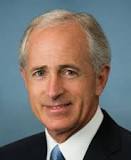
Senator Bob Corker
Senator Bob Corker

The Committee Chair, Bob Corker (Rep., TN) opened by stating that the hearing would focus “on the strategy behind the President’s significant shift in U.S. policy towards Cuba.” Even though this shift “has been welcomed in Latin America and the Caribbean . . . significant differences of opinion exist in the [U.S.] over the extent to which this change in policy will advance U.S. interests and improve circumstances for the Cuban people.”

Therefore, according to Corker, the strategic issue was “how our nation can best engage strategically with the region and beyond to help Cuba rejoin the mainstream of the Americas and offer its citizens the same rights and freedoms enjoyed by citizens of other countries in the region.”

Ranking Member Cardin’s Opening Statement
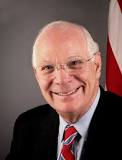
Senator Ben Cardin
Senator Ben Cardin

The Ranking Member of the Committee, Senator Ben Cardin (Dem., MD), stated, “The President’s action [on December 17th] brought with it a new opportunity to forge a bilateral relationship that will strengthen our efforts to advance and defend U.S. national interests, and will allow our government and our citizens to expand support for the Cuban people. Today’s hearing provides an important opportunity to review the advances achieved under the Administration’s new Cuba policy and to understand the strategy for moving forward.  Without a doubt, this is a complicated process and it will take time to achieve the progress we want to see.”

“[W]e all stand together in our aspirations to see the Cuban people have the opportunity to build a society where human rights and fundamental freedoms are respected, where democratic values and political pluralism are tolerated, and where individuals can work unobstructed to improve their living conditions. We also share concerns about critical issues, such as the Cuban government’s ongoing abuse of human rights and the presence of American fugitives in Cuba, especially those wanted for the murder of U.S. law enforcement officers.”

“But, the central question is: how can we best advance these aspirations while also addressing these concerns? It goes without saying that our previous policy did not achieve the progress that we wanted to see, and so a new approach is needed.”

“President Obama has laid out a new path based on the belief that principled engagement will bring more results. I think that this is the right path for the following reasons:

“First, for far too long, the Cuban government has used U.S. policy as an excuse to justify its shortcomings and the hardships the Cuban people face.  The Cuban government also has exploited U.S. policy for diplomatic gains, focusing international debate about what the U.S. should do, rather than about what Cuba needs to do to better provide for its citizens.”

“Second, despite differences we may have with a government, our foreign policy should always endeavor to support that country’s people to the greatest degree possible.  Our disagreements with the Cuban government are well known and many.  But, over time, we have allowed those disagreements to get in the way of developing a strategy that utilizes all of our resources to empower the people of Cuba.”

“I have no doubt that the dynamism of American society will make a positive contribution to empowering the Cuban people and provide them with the information they need to build the future of their country.”

“Third, the Administration’s new Cuba policy will provide the U.S., and especially our diplomats, with new tools to engage directly with the Cuban government to have principled and frank discussions about the issues we disagree about and how we might work together better on issues of common interest.”

Testimony of Assistant Secretary of State Jacobson

Assistant Secretary Roberta Jacobson

Roberta Jacobson, Assistant Secretary of State for Western Hemisphere Affairs, testified, “[W]e have begun to see the Administration’s new approach to Cuba providing space for other nations in the hemisphere and around the world to focus on promoting respect for human rights and fundamental freedoms in Cuba and elsewhere in the region. This was illustrated at the Summit of the Americas in Panama last April. Engagement by the President and the Secretary at the Summit re-invigorated our momentum on a variety of issues.”

“Our new approach has drawn greater attention to the potential for greater political and economic freedom for the Cuban people and the gap between Cuba and other countries in the Hemisphere. More Americans are travelling to Cuba, getting past the rhetoric, meeting Cubans, and building shared understanding between our people. We have seen practical cooperation in our official dialogues with Cuba on issues in our national interest like maritime and aviation safety, telecommunications, and environmental cooperation.

“Our future discussions on law enforcement cooperation, coupled with the ongoing migration talks, will expand the avenues available to seek the return of American fugitives from justice as well as the return of Cubans residing illegally in the United States. The same is true for future talks on human rights and settling American claims for expropriated properties. Most importantly, the President’s new approach makes clear that the United States can no longer be blamed as an obstacle to progress on things like access to information and connecting Cubans to the world.”

Nevertheless, “significant differences remain between our two governments. We continue to raise our concerns regarding democracy, human rights, and freedom of expression. And we will seek to engage with all Cubans to gain their perspectives on the best way forward for the country.”

“Our policy towards Cuba is based on a clear-eyed strategy that empowers the Cuban people to determine their own future by creating new economic opportunities and increasing their contact with the outside world. That is why we made it easier for Cuban-Americans to travel and send remittances to their families in Cuba, and opened new pathways for academic, religious, and people-to-people exchanges. These changes create powerful new connections between our two countries and help the nascent private sector in Cuba, which is already an agent of positive change on the island. The steps we have implemented build on this foundation by increasing authorized travel, authorized commerce, and the flow of information to, from, and within Cuba.”

“Our new approach emphasizes targeted forms of commerce that offer economic opportunity to independent Cuban entrepreneurs or, like expanded communications, benefit all Cubans. Comprehensive changes in our economic relationship will require Congressional action to lift the embargo. The President has urged Congress to begin that effort. In the meantime, we are using available policy tools to promote a prosperous, democratic, and stable Cuba.”

“In a short period of time, we have already started to see U.S. enterprises seizing the new opportunities. The regulatory changes we announced are intended to increase the financial and material resources available to the Cuban people and the emerging Cuban private sector. They also enable U.S. companies to offer expanded telecommunications and internet services in ways that could help Cuban civil society members advance their aspirations and collectively become more prosperous.”

“Regarding the Administration’s decision to rescind Cuba’s designation as a state sponsor of terrorism, as President Obama said, ‘throughout this process, our emphasis has been on the facts.’ . . . We will continue to have differences with the Cuban government, but our concerns over a wide range of Cuba’s policies and actions do not relate to any of the criteria relevant to that designation.”

“While progress has been made in our efforts to reestablish diplomatic relations, there is more to do to ensure a future U.S. Embassy will be able to function more like other diplomatic missions elsewhere in the world and foreign diplomatic missions in Cuba. Even today, under challenging circumstances, our diplomats do their very best to represent the interests and values of the United States, just as we do in hundreds of places around the world. Our engagement with the broadest range of Cubans will expand once we establish diplomatic relations with Cuba.”

Testimony of State Department Counselor Shannon

Counselor Thomas A. Shannon, Jr.

State Department Counselor Thomas A. Shannon, Jr. testified, “My purpose today is to address the regional context in which . . . [the U.S. Cuba] policy is unfolding, and to lay out some of the strategic dimensions of our diplomacy.”

“The decision to engage with Cuba and seek normalization of our bilateral relationship attempts to create a new terrain on which to pursue a future that meets our interests and corresponds to our values. Our commitment to democracy and human rights, and our desire and hope that the Cuban people will know the benefits of liberty and become the sovereigns of their own destiny, is no less for our action.”

“The President has been clear about the commitment in our Cuba policy to our enduring and fundamental principles of self-government and individual liberty. However, he has also been clear about our inability to effect significant change in Cuba acting alone across so many decades. Instead, he determined that our efforts would be more effective if we could position Cuba squarely within an inter-American system that recognizes democracy as a right that belongs to all the peoples of our Hemisphere, believes that democracy is essential to the political, economic, and social development of our peoples, and has the juridical instruments, treaties, and agreements to give shape, form, and weight to these commitments. It was our determination that this kind of environment would be the most propitious to support the only legitimate agent of peaceful and enduring political change in Cuba: the Cuban people.”

“The Americas, and specifically Latin America, has anticipated many of the events that are shaping our world. It is a region that has moved largely from authoritarian to democratic government, from closed to open economies, from exclusive to inclusive societies, from autarkical development to regional integration, and from isolation to globalization.”

“Latin America is the first developing region of the world to commit itself explicitly to democratic governance through the Inter-American Democratic Charter, the first to build a democratic model of development, and the first to establish regional structures to promote and protect human rights.”

“While creating a broad base of shared political values, Latin America has also constructed shared economic understandings and a commitment by many of the most successful countries in the Hemisphere to market economies and free trade. In the process, it has built sub-regional integration and political dialogue through organizations like the Common Market of the South, the Andean Community, the Union of South American Nations, and the Central American Integration System, all the while preserving larger hemispheric institutions, such as the Organization of American States and the Summit of the Americas process, that connect Latin America to the Caribbean and North America.”

“As Latin America advances into the 21st century, it is undergoing a second generation of change. Politically, it has consolidated democratic government and is strengthening democratic states and societies. This has opened up political institutions to new voices and actors, deepening the representativeness of many Latin American governments and challenging traditional elites and interests. In some countries, weak democratic institutions have not been able to contain the social energy unlocked by democratization, leading to populism and political polarization as groups struggle for control of the state. As troubling as this phenomenon can be, it does not define the democratization of the region but instead presents a challenge for the region to show how it can address such incidents through the organizations and institutional mechanisms it has created.”

“Economically, Latin America is building innovative integration mechanisms such as the Pacific Alliance, and reaching into Asia and North America to find new and important economic partners. We have FTAs with 12 countries in the Hemisphere, and the continued globalization of Latin America is driven not only by the regions abundant commodities, especially food and energy, but also by growing middle classes that have created attractive markets for manufactured goods and services.”

“The profound changes unleashed in Latin America show clearly that democracy and markets can deliver economic development and address longstanding social inequities such as poverty, inequality, and social exclusion. In effect, Latin America has used democracy and markets to launch peaceful social revolutions that are transforming many countries in important and long-lasting ways. Our ability to promote profound and dramatic change in Latin America is an example of what the United States can accomplish through diplomacy and engagement.”

“If we accomplished such a profound transformation in our Hemisphere through engagement, why not try the same approach with Cuba? And better yet, why not try it in partnership with countries and institutions that are now prepared to work with us because of the President’s new policy?”

“Cuba today finds itself part of a dynamic, vibrant region where transformative change has been the watchword for several decades. And it finds itself in a region where the momentum of that change will continue to reshape political, economic, and social landscapes. In such an environment, the Cuban people will find many models and partners from which to learn and choose. We should be one of those models and partners.”

Questioning Assistant Secretary Jacobson and Counselor Shannon

Of the 11 Committee members in attendance, six made comments and asked questions supportive of U.S.-Cuba reconciliation: Ben Cardin (Dem., MD), Barbara Boxer (Dem., CA), Tom Udall (Dem., NM), Tim Kaine (Dem., VA), Edward Markey (Dem., MA) and Jeff Flake (Rep., AZ).

With Chairman Corker being judiciously noncommittal in his comments, the other four in attendance were hostile to the reconciliation: Bob Menendez (Dem., NJ), Marco Rubio (Rep., FL), Ron Johnson (Rep., WI) and David Perdue (Rep., GA).

In response to Senator Corker’s opening question about whether to date the U.S. had obtained any changes in Cuba policies, Jacobson implicitly said none by emphasizing that the U.S. actions to increase the ability of U.S. nationals to travel to Cuba and to send remittances to Cubans were assisting the latters’ ability to form businesses and over time to be agents for change. The same was true, she said, of new U.S. policies to encourage U.S. businesses to export telecommunications equipment to the island. Shannon added that the new U.S. policies helped the U.S. with other countries in Latin America, especially within the Organization of the American States (OAS) and the Summit of the Americas.

Jacobson also mentioned the OAS and the United Nations as well as continued U.S. annual reports about human rights as means the U.S. would use to assess whether Cuba makes improvements in human rights. She also reiterated her point about U.S. travel and investment in Cuba as instruments for aiding such improvements, all in response to a question from Senator Rubio.

Rubio also pressed Jacobson to concede that the U.S. and Cuba had different notions of human rights. She did so with respect to free speech, peaceful assembly and elections, but she did not point out the U.S.-Cuba agreement on many theoretical issues of human rights as discussed in a prior post.

Another major Rubio argument was increased American travel to Cuba merely benefited the Cuban government and military, which owned, in whole or in part, hotels and car rental companies. The amount of such travel to Cuban bed and breakfasts in private homes was insignificant and, in any event, such private establishments had to pay big fees to the government for such businesses. Moreover, Rubio continued, many of these hotels and other properties had been owned by Americans and others and stolen by the Cuban government. Therefore, Rubio said, the U.S. should not be promoting such increased travel.

Senator Boxer responded to this argument by pointing out that the U.S. permits travel to Viet Nam, China and Russia where hotels and other businesses are owned by the state. She also pointed out that direct interactions between U.S. and Cuban citizens should encourage the latter to want more rights. In addition, Boxer said, the rapprochement was improving cooperation regarding Cuba for the U.S. from Europe and others in this Hemisphere. An example was Panama’s reaction to Cuban efforts to suppress free speech at the recent Summit of the Americas in that country.

However, I was surprised that no one responded to Rubio’s argument about hotels that had been stolen by the Cuban government. Indeed, there are substantial damage claims against the Cuban government for its uncompensated expropriation of property, and this is one of the claims the U.S. now is asserting against Cuba, and a prior post argued for submitting these and other damage claims by both countries to an international arbitration.

Senator Johnson focused on provisions of the Libertad Act (a/k/a the Helms-Burton Act) imposing preconditions on U.S. relaxing sanctions against Cuba, presumably as a predicate for an argument that President Obama’s easing of certain sanctions was unauthorized and, therefore, illegal. Jacobson pointed out, however, that other laws had exceptions to sanctions and provided authority to the President to do what he has done. Moreover, she said, the Administration had asked Congress to enact legislation repealing the U.S. embargo of the island, including the Libertad Act.

Senator Menendez, a Cuban-American and a vigorous opponent of the reconciliation, barely concealed his anger over the change in U.S. policies. Since December 17th, he argued, there has been no improvement in Cuban human rights, and in fact there has been a deterioration on this subject.

Senator Perdue reiterated Menendez’ argument about human rights and asserted that Cuba was still a state supporter of terrorism. It allegedly was helping Islamist terrorists, had shipped arms to North Korea that were intercepted in Panama and had another ship with explosives that on February 28, 2015, was intercepted by Colombia. Counselor Shannon pointed out that this Colombian government action was an example of the increased cooperation the U.S. now is obtaining from others in Latin America as a result of the new U.S. policies about Cuba.

Senator Kaine stated that there are roughly 600 bilateral relations in the Western Hemisphere and that the only one without normal diplomatic relations is U.S.-Cuba. In addition, there are no inter-state wars in the Hemisphere and the only civil war is in Colombia, which is the subject of peace negotiations now being held in, and aided by, Cuba. Counselor Shannon concurred, saying this was a remarkable achievement for the Hemisphere going along with its economic and democratic improvements.

 Conclusion

This hearing, in my opinion, did not really provide any new information about the issues or the positions of the participants, which probably why it was not covered in U.S. news media.[2]

The hearing and the lack of news coverage underscored the importance of U.S. citizens who support the reconciliation efforts to convey their opinions to their Senators and Representatives and of the formation and actions of groups like the U.S. Agricultural Coalition for Cuba and Engage Cuba Coalition.

====================================================

[1] This post is based upon a video of the hearing and on the embedded citations to the opening statements of Senators Corker and Cardin, the testimony of Assistant Secretary Jacobson and Counselor Shannon and to some of the comments by Senators Rubio, Menendez and Perdue.

[2] This brief article is the only one found in a Google search: Gomez, Senators question wisdom of Obama’s Cuba policy, USA Today (May 20, 2015),

U.S. State Department’s Report on International Religious Freedom in 2013

USDeptStateseal

On July 28, 2014, the U.S. State Department released its annual report on religious freedom around the world.[1]

 Secretary of State Kerry’s Comments

Announcing the release of the report, U.S. Secretary of State John Kerry said although the U.S. was “obviously far from perfect,” it was important for the U.S. to treasure freedom of religion as “a universal value. . . . The freedom to profess and practice one’s faith is the birthright of every human being . . . [and] are properly recognized under international law. The promotion of international religious freedom is a priority for President Obama and it is a priority for me as Secretary of State.” In short, “religious freedom remains an integral part of our global diplomatic engagement.”

Executive Summary of the Report

The world had the largest displacement of religious communities in recent memory. In almost every corner of the globe, millions of Christians, Muslims, Hindus, and others representing a range of faiths were forced from their homes on account of their religious beliefs. Out of fear or by force, entire neighborhoods are emptying of residents. Communities are disappearing from their traditional and historic homes and dispersing across the geographic map.” In conflict zones (Syria, Central African Republic and Burma), this mass displacement has become a pernicious norm.

All around the world, individuals were subjected to discrimination, violence and abuse, perpetrated and sanctioned violence for simply exercising their faith, identifying with a certain religion, or choosing not to believe in a higher deity at all. Countries where this was a significant problem were Pakistan, Egypt, Saudi Arabia, Iran, Bangladesh, Sri Lanka and Eritrea. Throughout Europe, the historical stain of anti-Semitism continued to be a fact of life.

Governments repressed religious freedom. Governments from all regions subjected members of religious groups to repressive policies, discriminatory laws, disenfranchisement, and discriminatory application of laws. These governmental actions not only infringed on freedom of religion themselves, but they also often created a permissive environment for broader human rights abuses. Restrictive policies included laws criminalizing religious activities and expression, prohibitions on conversion or proselytizing, blasphemy laws, and stringent registration requirements or discriminatory application of registration requirements for religious organizations. This was especially true in North Korea, Saudi Arabia, Iran, Sudan, China, Cuba, Tajikistan, Turkmenistan, Uzbekistan, Pakistan, Burma, Russia and Bahrain.

Governments engaged in discrimination, impunity and displacement of religious minorities. When governments choose not to combat discrimination on the basis of religion and intolerance, it breeds an environment in which intolerant and violent groups are emboldened, even to the point of physically attacking individuals on the basis of their religious beliefs. Governments in these countries failed to protect vulnerable communities and many religious minority communities were disproportionately affected, resulting in a large number of refugees and internally displaced persons. This was especially true in Syria, Sri Lanka, Egypt, Iraq, Bangladesh, Indonesia, India and Nigeria. Rising anti-Semitism and anti-Muslim sentiment in the following countries of Europe demonstrated that intolerance is not limited to countries in active conflict:Belgium, France, Germany, Hungary, Italy, Latvia, Sweden and United Kingdom.

Religious minority communities were disproportionately affected by violence, discrimination and harassment. In many regions of the world, religious intolerance was linked to civil and economic strife and resulted in mass migration of members of religious minority communities throughout the year. In some of these areas, the outward migration of certain communities has the potential to permanently change the demographics of entire regions.

“Countries of Particular Concern”

Pursuant to the International Religious Freedom Act of 1998, the Secretary of State designated the following countries as “Countries of Particular Concern” (CPC): Burma, China, Eritrea, Iran, North Korea, Saudi Arabia, Sudan, Turkmenistan, and Uzbekistan. Such countries “engage in or tolerate particularly severe violations of religious freedom” or “systematic, ongoing, and egregious violations of religious freedom, including torture, cruel, inhuman, or degrading treatment or punishment, prolonged detention without charges, abduction or clandestine detention of persons, or other flagrant denial of the right to life, liberty, or the security of persons based on religion.”

Turkmenistan, which is new to this State Department list, is the only one of eight countries recommended for such designation by the latest report from the U.S. Commission on International Religious Freedom. The others so recommended by the Commission are Egypt, Iraq, Nigeria, Pakistan, Syria, Tajikistan and Vietnam.

Ambassador-at-large for International Religious Freedom

Simultaneously with this report’s release, the Obama administration announced the nomination of Rabbi David Saperstein as the next ambassador-at-large for international religious freedom. Rabbi Saperstein, a reform rabbi and lawyer known for his work in Washington to advance religious freedom, would be the first non-Christian to lead the State Department’s Office of International Religious Freedom, if confirmed by the Senate.

======================================================

[1] This post is based upon the International Religious Freedom Report for 2013 (July 28, 2014); Secretary Kerry, Remarks at Rollout of the 2013 Report on International Religious Freedom (July 28, 2014); Assistant Secretary Malinowski, Remarks on the Release of the 2013 Report on International Religious Freedom (July 28, 2014); Department of State, Fact Sheet: 2013 Report on International Religious Freedom (July 28, 2014). Earlier posts covered the international law regarding religious freedom and the State Department’s reports on the subject for 2011 and 2012.

The U.S. Commission on International Religious Freedom’s Annual Report 2014   

Comm'n Intl Religious Free                                                

On April 30, 2014, the quasi-independent U.S. Commission on International Religious Freedom released its Annual Report 2014, pursuant to the International Religious Freedom Act of 1988 (“the Act”).[1]

Introduction

The Commission relies upon this definition of the freedom in the Universal Declaration of Human Rights: “Everyone has the right to freedom of thought, conscience and religion; this right includes freedom to change his religion or belief, and freedom, either alone or in community with others and in public or private, to manifest his religion or belief in teaching, practice, worship and observance.” Similar provisions are found in several multilateral human rights treaties.[2] (P. 9.)

The Report stressed the importance of this freedom. It says this right “protects the freedom of religious communities, as groups, to engage in worship and other collective activities. It also protects every individual’s right to hold, or not to hold, any religion or belief, as well as the freedom to manifest such a religion or belief, subject only to the narrow limitations specified under international law.” (P. 9.)

This right is important, says the Commission, “because it enables people to follow what their conscience dictates. . . . People are entitled to religious freedom by virtue of their humanity.” Therefore, there can be no “coercion or compulsion in these matters.” (P. 2.)

Moreover, whenever this freedom is abused, “societal well-being would suffer” as well as democracy and other human rights and economic productivity. So too “peace and security may become more elusive.” In short, according to the commission, “the defense of religious freedom is both a humanitarian imperative and a practical necessity.” (P. 3.)

General Recommendations

The Commission recommended that the U.S. do the following with respect to this freedom:

  • develop and implement a religious freedom strategy;
  • demonstrate the importance of religious freedom , including the designation of “countries of particular concern ” identified by the Commission;
  • reinvigorate and create new tools under the Act;
  • expand training, programming and public diplomacy about the subject;
  • expand multilateral efforts on the subject; and
  • protect asylum-seekers from being returned to countries where they face persecution for religious reasons. (Pp. 7-8.)

“Countries of Particular Concern” (Tier 1 Countries)

Under its authorizing statute, the Commission is required to designate as “countries of particular concern” (CPC) (or “Tier 1 Countries”) those that have engaged in or tolerated “particularly severe” violations of religious freedom. (P. 5.)

The latest report recommends that the Secretary of State re-designate the following eight countries as Tier 1 countries: Burma, China, Eritrea, Iran, North Korea, Saudi Arabia, Sudan and Uzbekistan. In addition, the Report recommends that the following additional eight countries also be so designated by the State Department: Egypt, Iraq, Nigeria, Pakistan, Syria, Tajikistan, Turkmenistan and Vietnam. (P. 5.)

Tier 2 Countries

The Commission also designates some countries as “Tier 2 Countries,” i.e., countries on the threshold of Tier 1 status, i.e., when their “violations . . . are particularly severe” and when at least one, but not all three, of the criteria for that status (“systematic, ongoing and egregious”) is met. (P. 5.)

The latest Report designated the following nine countries as Tier 2: Afghanistan, Azerbaijan, Cuba, India, Indonesia, Kazakhstan, Laos, Russia and Turkey.[3] (P. 5.)

Other Countries

The latest Report also discussed seven other countries (Bahrain, Bangladesh, Belarus, Central African Republic, Ethiopia, Kyrgyzstan and Sri Lanka) and one region (Western Europe) that it monitored during the year. (P. 5.)

Conclusion

Because of my personal interest in Cuba, including its religious freedom, a subsequent post will critique the Report regarding that country.

=========================================

[1] The Act § § 202, 205. The Report contains an account of the development of the Act and the 15-year history of its implementation. (Pp. 11-23.) A prior post examined the fascinating structure and composition of the Commission, and another post its report issued in 2013.

[2] See Post: International Law Regarding Freedom of Religion (Jan. 1, 2012).

[3] Previously the Commission called this group the “Watch List of countries where the serious violations of religious freedom engaged in or tolerated by the governments do not meet the CPC threshold, but require close monitoring.” According to the Commission, the “Watch List provides advance warning of negative trends that could develop into severe violations of religious freedom, thereby providing policymakers with the opportunity to engage early and increasing the likelihood of preventing or diminishing the violations.”


Latest U.S. Reports on International Religious Freedom

Annually the U.S. Department of State, pursuant to statutory authorization, releases a report on the status of religious freedom in every country in the world.[1] In addition, the quasi-independent U.S. Commission on International Religious Freedom releases annual reports on the same subject for selected countries.[2]

It should be noted at the outset that these two agencies are not seeking to impose on the rest of the world the U.S. constitutional prohibition of the “establishment of religion” or of “abridging the free exercise [of religion].” [3] Instead the agencies reports rely upon this definition of the freedom in the Universal Declaration of Human Rights: “Everyone has the right to freedom of thought, conscience and religion; this right includes freedom to change his religion or belief, and freedom, either alone or in community with others and in public or private, to manifest his religion or belief in teaching, practice, worship and observance.” Similar provisions are found in several multilateral human rights treaties.[4]

The post will review the latest State Department report on this subject for all 194 other countries in the world and the Commission’s latest report on 29 countries plus one large region (Western Europe).[5]

Latest State Department Report

USDeptStateseal

After emphasizing the importance of religious freedom, the State Department’s May 20, 2013, report “tells stories of courage and conviction, but also recounts violence, restriction, and abuse. While many nations uphold, respect, and protect religious freedom, regrettably, in many other nations, governments do not protect this basic right; subject members of religious minorities to violence; actively restrict citizens’ religious freedom through oppressive laws and regulations; stand by while members of societal groups attack their fellow citizens out of religious hatred, and fail to hold those responsible for such violence accountable for their actions.”

The report continues.”The immediate challenge is to protect members of religious minorities. The ongoing challenge is to address the root causes that lead to limits on religious freedom. These causes include impunity for violations of religious freedom and an absence of the rule of law, or uneven enforcement of existing laws; introduction of laws restricting religious freedom; societal intolerance, including anti-Semitism and lack of respect for religious diversity; and perceptions that national security and stability are best maintained by placing restrictions on and abusing religious freedom.”

Highlighted for concern by the report were “[l]aws and policies that impede the freedom of individuals to choose a faith, practice a faith, change their religion, tell others about their religious beliefs and practices, or reject religion altogether remain pervasive. Numerous governments imposed such undue and inappropriate restrictions on religious groups and abused their members, in some cases as part of formal government law and practice.” Another concern was the “use of blasphemy and apostasy laws.” They “continued to be a significant problem, as was the continued proliferation of such laws around the world. Such laws often violate freedoms of religion and expression and often are applied in a discriminatory manner.”

The report documented “a continued global increase in anti-Semitism. Holocaust denial and glorification remained troubling themes, and opposition to Israeli policy at times was used to promote or justify blatant anti-Semitism. When political leaders condoned anti-Semitism, it set the tone for its persistence and growth in countries around the world. Of great concern were expressions of anti-Semitism by government officials, by religious leaders, and by the media.”

According to the report, “Governments that repress freedom of religion and freedom of expression typically create a climate of intolerance and impunity that emboldens those who foment hatred and violence within society. Government policy that denies citizens the freedom to discuss, debate, practice, and pass on their faith as they see fit also undercuts society’s ability to counter and combat the biased and warped interpretations of religion that violent extremists propagate. Societal intolerance increased in many regions during 2012.”

Finally the report said, “Governments exacerbated religious tensions within society through discriminatory laws and rhetoric, fomenting violence, fostering a climate of impunity, and failing to ensure the rule of law. In several instances of communal attacks on members of religious minorities and their property, police reportedly arrested the victims of such attacks, and NGOs alleged that there were instances in which police protected the attackers rather than the victims. As a result, government officials were not the only ones to commit abuses with impunity. Impunity for actions committed by individuals and groups within society was often a corollary of government impunity.”

The report also acknowledged the Department’s statutory obligation to designate “Countries of Particular Concern (CPCs), i.e., those countries that are considered to commit “particularly severe violations of religious freedom,” and whose records call for the U.S. government to take certain actions under the terms of the Act. The term ‘‘particularly severe violations of religious freedom’’ means systematic, ongoing, egregious violations of religious freedom, including violations such as: (a) torture or cruel, inhuman, or degrading treatment or punishment; (b) prolonged detention without charges; (c) causing the disappearance of persons by the abduction or clandestine detention of those persons; or (d) other flagrant denial of the right to life, liberty, or the security of persons.”

Accordingly the report re-designated the following eight countries as CPCs: Burma, China, Eritrea, Iran, North Korea, Saudi Arabia, Sudan and Uzbekistan.[6]

Latest Commission Report

USCommRelFree


Under the authorizing statute, the Commission is required to designate as “countries of particular concern” (CPC) (or “Tier 1 Countries”) those that have engaged in or tolerated “particularly severe” violations of religious freedom.

In its latest report, issued on April 30, 2013, the following 15 countries were so designated: Burma, China, Eritrea, Iran, North Korea, Saudi Arabia, Sudan and Ubekistan (all of which had been designated as “Countries of Particular Concern” (CPC) by the State Department the prior year) plus Egypt, Iraq, Nigeria, Pakistan, Tajikistan, Turkmenistan and Vietnam.

The Commission also designates some countries as “Tier 2 Countries,” i.e., countries on the threshold of Tier 1 status, i.e., when their “violations . . . are particularly severe” and when at least one, but not all three, of the criteria for that status (“systematic, ongoing and egregious”) is met.

The latest report designated the following eight countries as Tier 2: Afghanistan, Azerbaijan, Cuba, India, Indonesia, Kazakhstan, Laos and Russia.[7]

The latest report also discussed six other countries (Bahrain, Bangladesh, Belarus, Ethiopia, Turkey and Venezuela and one region (Western Europe) that it monitored during the year. At first glance the monitoring of Western Europe seems anomalous, but here are the topics of concern to the Commission:

  • Restrictions on religious dress (full-face veils) in France and Belgium.
  • Failure in Sweden, Luxembourg, Switzerland, Poland, Norway and Iceland to exempt religious slaughter of animals from laws requiring prior stunning of the animals.
  • Suggestions in Germany and Norway that religious circumcisions of male children were illegal.
  • Restrictions on construction of Islamic minarets in Switzerland, and the lack of an official mosque in Athens, Greece.
  • “Incitement to hatred” and other laws in almost all European states that can be used to restrict expression of religious beliefs.
  • Reluctance in many European states to provide accommodation of religious objections to generally applicable laws.
  • Measures in France, Austria, Belgium and Germany against religious groups perjoratively characterized as “cults” or “sects.”
  • Societal intolerance, discrimination and violence based on religion or belief such as towards Muslim women with full-face veils, Jewish people and Jehovah’s Witnesses.

It should also be noted that the Commission sometimes takes an adversarial position vis-à-vis the U.S. State Department. For example, on April 30, 2013, when the Commission released its latest report, its simultaneous press release recommended that the Department designate as “Countries of Particular Concern” the seven additional countries the Commission had placed in Tier 1 as noted above.

When the Department failed to do so in its May 20th report, the next day the Commission issued a press release criticizing the Department for failure to make additional CPC designations since August 2011 and to do so for the same seven additional countries.

Conclusion

Because of my personal interest in Cuba, including its religious freedom, a subsequent post will compare and contrast the two reports regarding that country.

Such a comparison, in my opinion, will show that the State Department’s reports are more balanced and fair at least with respect to Cuba.


[2]  Id. § § 202, 205. The fascinating structure and composition of the Commission will be the subject of a future post.

[3]  U.S. Const., First Amend.

[5] A prior post examined the prior State Department report.

[6] The State Department report noted that it considers the recommendations of the Commission on CPCs, but that the Secretary of State makes the final decision on that issue. The Department’s report thereby implicitly rejected the Commission’s recommendation for an additional seven countries to be so designated.

[7] Previously the Commission called this group the “Watch List of countries where the serious violations of religious freedom engaged in or tolerated by the governments do not meet the CPC threshold, but require close monitoring.” According to the Commission, the “Watch List provides advance warning of negative trends that could develop into severe violations of religious freedom, thereby providing policymakers with the opportunity to engage early and increasing the likelihood of preventing or diminishing the violations.”


The Latest U.S. Report on International Religious Freedom

On July 30, 2012, the U.S. Department of State released its 2011 Report on International Religious Freedom.

The operating definition for this purpose is found in Article 18 of the Universal Declaration of Human Rights that was approved by the United Nations General Assembly in 1948. It states, “Everyone has the right to freedom of thought, conscience and religion; this right includes freedom to change his religion or belief, and freedom, either alone or in community with others and in public or private, to manifest his religion or belief in teaching, practice, worship and observance.” Similar provisions are found in several multilateral human rights treaties.

Introducing the report, U.S. Secretary of State Hilary Clinton placed the subject in a broader context. She said, “religious freedom is both an essential element of human dignity and of secure, thriving societies. It’s been statistically linked with economic development and democracy stability.” Without such freedom, she continued, there can be “a climate of fear and suspicion that weakens social cohesion and alienates citizens from their leaders” and thereby “make it more difficult to solve national problems.” Indeed, she asserted that “the absence of religious freedom . . . is correlated with religious conflict and violent extremism.” As a result, the Obama Administration has made such freedom a diplomatic priority.

This report highlights what it sees as key trends in the year 2011: (a) the impact of political and demographic transitions on religious minorities; (b) the effects of conflict on religious freedom; (c) expanded use and abuse of blasphemy laws; and (d)  the rising tide of anti-Semitism;

This annual report reviewing the worldwide status of religious freedom is mandated by the International Religious Freedom Act of 1988, which also requires the report to designate countries as “Countries of Particular Concern” when they have “engaged in or tolerated particularly severe violations of religious freedom,” i.e., ” systematic, ongoing, egregious violations of religious freedom, including violations such as torture, degrading treatment or punishment, prolonged detention without charges, abduction or clandestine detention, or other flagrant denial of the right to life, liberty, or the security of persons.”

In this latest report covering 2011, the following eight countries were so designated: Burma, China, Eritrea, Iran, North Korea, Saudi Arabia, Sudan and Uzbekistan.

With respect to China, the report said in 2011 there was a “marked deterioration . . . in the government’s respect for and protection of religious freedom.” It cited specific restrictions In the Tibetan Autonomous Region and other Tibetan areas. The report noted that only “groups belonging to one of the five state-sanctioned ‘patriotic religious associations'(Buddhist, Taoist, Muslim, Roman Catholic, and Protestant) . . . [could] register with the government and legally hold worship services.” Moreover, “Proselytizing in public or unregistered places of worship is not permitted” and some “religious and spiritual groups are outlawed.” Finally according to the report “Chinese Communist Party (CCP) members are required to be atheists and are generally discouraged from participating in religious activities.”

Not too surprisingly China immediately rejected the report’s comments. China said the report was “full of prejudice, arrogance and ignorance” and was “a political tool used by the U.S. Government to exert pressure on other countries, mostly deemed its rivals.”

The importance of religious freedom for the U.S. is evidenced by the U.S. Constitution’s First Amendment stating “Congress shall make no law respecting an establishment of religion, or prohibiting the free exercise thereof” and by the U.S. Supreme Court’s broad interpretation of those provisions. This importance also has been demonstrated by the following more recent events:

  • The 1988 enactment of the previously mentioned International Religious Freedom Act, which In addition to requiring the annual reports on the subject, created in the Department of State the Office of International Religious Freedom headed by an Ambassador at Large for International Religious Freedom.
  • That same Act also created the quasi-independent U.S. Commission on International Religious Freedom that is required to issue separate annual reports on such freedom. In addition, it is charged to “consider and recommend options for policies of the [U.S.] Government with respect to each foreign country the government of which has engaged in or tolerated violations of religious freedom, including particularly severe violations of religious freedom, including diplomatic inquiries, diplomatic protest, official public protest demarche of protest, condemnation within multilateral fora, delay or cancellation of cultural or scientific exchanges, delay or cancellation of working, official, or state visits, reduction of certain assistance funds, termination of certain assistance funds, imposition of targeted trade sanctions, imposition of broad trade sanctions, and withdrawal of the chief of mission.”
  • On October 18, 2011, the Department of State established the Working Group on Religion and Foreign Policy that includes representatives of religious groups and other members of civil society. Its mission is to engage in “a continuing dialogue with religious leaders and other members of civil society that informs U.S. foreign policy and fosters common partnerships with the NGO community, including faith-based groups, in support of conflict mitigation and development as well as efforts to promote human rights, including religious freedom.”

I have developed a special interest in Cuban religious freedom, and a subsequent post will review this report’s section on Cuba.

]

The Ridiculous U.S. Designation of Cuba as a “State Sponsor of Terrorism”

The U.S. State Department, pursuant to legislative authority, annually identifies countries that have “repeatedly provided support for acts of international terrorism” and designates them as “state sponsors of terrorism.”[1] The U.S. currently designates the following four countries as “state sponsors of terrorism:” Cuba, Iran, Sudan and Syria.[2] Note that Libya and North Korea, which were previously on the list, are no longer present; these are two stories for others to pursue.

The following is the complete text of the State Department’s rationale for its most recent designation of Cuba:[3]

  • “The Cuban government and official media publicly condemned acts of terrorism by al-Qa’ida and affiliates, while at the same time remaining critical of the U.S. approach to combating international terrorism. Although Cuba no longer supports armed struggle in Latin America and other parts of the world, the Government of Cuba continued to provide physical safe haven and ideological support to members of three terrorist organizations that are designated as Foreign Terrorist Organizations by the United States.”
  • “The Government of Cuba has long assisted members of the Revolutionary Armed Forces of Colombia (FARC), the National Liberation Army of Colombia (ELN), and Spain’s Basque Homeland and Freedom Organization (ETA), some having arrived in Cuba in connection with peace negotiations with the governments of Colombia and Spain. There was no evidence of direct financial support for terrorist organizations by Cuba in 2009, though it continued to provide safe haven to members of the FARC, ELN, and ETA, providing them with living, logistical, and medical support.”
  • “Cuba cooperated with the United States on a limited number of law enforcement matters. However, the Cuban government continued to permit U.S. fugitives to live legally in Cuba. These U.S. fugitives include convicted murderers as well as numerous hijackers. Cuba permitted one such fugitive, hijacker Luis Armando Peña Soltren, to voluntarily depart Cuba; Peña Soltren was arrested upon his arrival in the United States in October.”
  • “Cuba’s Immigration Department refurbished the passenger inspection area at Jose Marti International Airport and provided new software and biometric readers to its Border Guards.”[4]

One of the factual predicates for the designation of Cuba as a “state sponsor of terrorism” is true: FARC, ELN and ETA have been designated “Foreign Terrorist Organizations” by the State Department, and such designations presumably are well founded. But what has Cuba done with respect to these three organizations? It has provided “physical safe haven and ideological support to [an unspecified number of their] members.” How many members? What were the particulars of the safe haven?  We are not told other than “living, logistical, and medical support.” And some of these members, the State Department concedes, were in Cuba to participate in peace negotiations with the governments of Columbia and Spain. Moreover, by the State Department’s own admission, there “was no evidence of direct financial support [by Cuba] for [these three] . . . organizations in 2009.”

Further qualifications to this basis for the designation were made in the State Department’s prior annual antiterrorism report, which said that “on July 6, 2008, former Cuban President Fidel Castro called on the FARC to release the hostages they were holding [in Colombia] without preconditions.”  Fidel  “also had condemned the FARC’s mistreatment of captives and of their abduction of civilian politicians [in Colombia] who had no role in the armed conflict.”[5]

The other factual predicate for the most recent designation, I submit, is outright insufficient. Cuba, the State Department says, has continued to permit an unspecified number of U.S. fugitives (“convicted murderers and numerous hijackers”) to live legally in Cuba. Even if true, it is difficult to see how this is support of terrorism. Moreover, we are not told how many such fugitives there are and the circumstances of their cases. The State Department does not even call them “terrorists.” Again, the State Department’s prior annual antiterrorism report on Cuba provides details further undermining this charge.  It stated, “The Cuban government continued to permit some U.S. fugitives—including members of U.S. militant groups such as the Boricua Popular, or Macheteros, and the Black Liberation Army to live legally in Cuba. In keeping with its public declaration, the [Cuban] government has not provided safe haven to any new U.S. fugitives wanted for terrorism since 2006.”[6]

The balance of the State Department’s most recent “rationale” is, in fact, complimentary of Cuba. “”The Cuban government and official media publicly condemned acts of terrorism by al-Qa’ida and affiliates.” “Cuba no longer supports armed struggle in Latin America and        other parts of the world.” “Cuba cooperated with the United States on a limited number of law enforcement matters.” “Cuba’s Immigration Department refurbished the passenger inspection area at Jose Marti International Airport and provided new software and biometric readers to its Border Guards.” Another complimentary comment was made in the prior annual report:  there is “no evidence of terrorist-related money laundering or terrorist financing activities in Cuba.”[7]

The designation of Cuba as a “state sponsor of terrorism” has been reviewed by the Congressional Research Service, which said in 2006: Cuba was first designated a state sponsor of terrorism in 1982. Although it has ratified all 12      counterterrorism conventions, it has remained opposed  to the U.S. global war on terrorism. The CIA judged in August 2003 that ‘We have no credible evidence, however, that the Cuban     government has engaged in or directly supported international terrorist operations in the past decade, although our information is insufficient to say beyond a doubt that no collaboration has occurred.'”[8]

Some prior U.S. antiterrorism reports talked about Cuba’s alleged weapons of mass destruction program, but note that there is not any mention of such an alleged program in the most recent report. This canard was also rebutted by the Congressional Research Service: “The Administration’s assertions concerning Cuba’s WMD programs, which some observers dispute, focus on limited biological weapons research and development. Construction at the Juragua nuclear facility (two incomplete Russian nuclear power reactors) was indefinitely postponed in 1997.”[9]

The State Department’s best case for calling Cuba a “state sponsor of terrorism,” upon analysis, is ridiculous. The designation should be rescinded, and the U.S. and Cuba should get down to the real business of engaging in face-to-face, serious negotiations to resolve their many long-accumulated differences.


[1]  Countries determined by the Secretary of State to have repeatedly provided support for acts of international terrorism are designated pursuant to three laws: section 6(j) of the Export Administration Act, section 40 of the Arms Export Control Act, and section 620A of the Foreign Assistance Act. (U.S. State Dep’t, Country Reports on Terrorism 2009 (Aug. 5, 2010), http://www.state.gov/s/ct/rls/crt/2009/index.htm.) Such designation results in the following sanctions by the U.S.: (1) a ban on arms-related exports and sales; (2) controls over exports of dual-use items, requiring 30-day Congressional notification for goods or services that could significantly enhance the terrorist-list country’s military capability or ability to support terrorism; (3) prohibitions on economic assistance; and (4) imposition of miscellaneous financial and other restrictions.

[2]  Id.

[3]  Cuba is the oldest member of the list; it has been on this list since January 1, 1982. Id.

[4]  Id.

[5]  U.S. Dep’t of State, Country Reports on Terrorism 2008, ch. 3 (April 30, 2009), http://www.state.gov/s/ct/rls/crt/2008/122436.htm.

6]  Id.

[7]  Id.

[8] CRS, Globalizing Cooperative Threat Reduction: A Survey of Options (Oct. 5, 2006), http://fpc.state.gov/documents/organization/74901.pdf. See also CRS, Cuba and the State Sponsors of Terrorism List (May 13, 2005), http://www.fas.org/sgp/crs/terror/RL32251.pdf.

[9]  Id.