U.S. First Congress: Debates Slavery, 1790

Anyone who has studied any American history knows that slavery existed at the adoption of the U.S. Constitution in 1788 and that the Constitution’s original Article I, Section 2 apportioned representatives in the House of Representatives “according to their respective Numbers, which shall be determined by adding to the number of free Persons, including those bound to Service for a Term of Years, and excluding Indians no taxed, three fifths of all other Persons [i.e., slaves].” (Emphasis added.)[1]

In addition, the First Congress in 1789 implicitly recognizing slavery when it enacted statues for an U.S. census and U.S. naturalization citizenship requirements. [2]

As the First Congress prepared to commence operations, emancipation advocates were seeking regulation of the slave trade or abolition of slavery while defenders of the “peculiar institution” contemplated secession if that happened. The latter’s House representation, of course, was bolstered by having their population increased by 60% (3/5th) of the number of their slaves.[3]

The emancipation advocates were led by Quakers who starting in early February 1790 “way-laid” and “assailed” Senators and Congressmen with pamphlets and diagrams of overcrowded slaves ships while urging support of anti-slavery petitions. One such petition asked Congress “with a sense of religious duty” to end “the gross national iniquity of trafficking in the persons of fellow men” and “the inhuman tyranny and blood guiltiness inseparable from it.” Another petition that was signed by Benjamin Franklin called for use of “all justifiable measures to loosen the bonds of Slavery & promote a general enjoyment of the blessings of Freedom.”

Southern reaction to these petitions was “explosive.” They accused the Quakers of “intemperate and unwarrantable meddling,” of “an intolerant spirit of persecution” against the slave states, of disloyalty and cowardice during the Revolutionary War (because on religious principles they did not bear arms) and the promotion of “Insurrections & bloodshed & persecution.” A Georgia Congressman said religion “from Genesis to Revelations” had approved of slavery.

The three petitions were referred to a House select committee, which later reported that Congress had no power to emancipate slaves or interfere with the slave trade before 1808. On the other hand, the committee said, Congress had the power to put a tax on imported slaves and thereby motivate slave-owners and slave states to improve their treatment of slaves.

Thereafter the pro-slavery forces went on the attack. Their leader quoted Scripture, suggested that nothing could be done about it, that the new country needed exports to Africa and that slaves were incapable of mastering freedom. Some of the nation’s leaders personally opposed slavery—George Washington, Alexander Hamilton and James Madison-even though they were slave owners, but remained quiet in Congress because they feared loss of Southern support for other measures or a breakup of the new country.

The result? The House concluded that all power to end slavery and tax imported slaves rested with the states. In short, it was an endorsement of the status quo and the protection of slavery.

Fergus Bordewich, the author of a leading book on the First Congress, concludes that the “most consequential failure of the First Congress was its evasion of the corrosive problem of slavery. . . . Even members who loathed slavery feared that the new government could not risk an open debate on the subject without splintering . . . . [Thus,] for the next seven decades this evasion encouraged southerners to bully any northern politicians who challenged slavery by threatening secession and war, as the number of enslaved Americans swelled from 323,000 in 1790 to almost 4 million in 1861, and the moral problem of slavery became ever more deeply enmeshed with the politics of states’ rights.”[4]

=====================================

[1] The above provision of the original Constitution was deleted by Section 2 of the Fourteenth Amendment thereto, which was adopted after the Civil War in 1868 and which states: “Representatives shall be apportioned among the several States according to their respective numbers, counting the whole number of persons in each State, excluding Indians not taxed.”

[2] U.S. First Congress: Establishment of Racial Categories for the U.S. Census and U.S. Citizenship Naturalization, 1790, dwkcommentaries.com (Feb. 20, 2017).

[3] Bordewich, the First Congress at 3,6, 75-77, 104, 112, 124-25, 149, 151-52, 172, 178, 183, 195-96, 198-220, 223-24, 230, 244-45, 249, 276, 279-80 (Simon & Schuster, New York, 2016). http://www.simonandschuster.com/books/The-First-Congress/Fergus-M-Bordewich/9781451691931

[4] Id. at 304.

U.S. First Congress: Establishment of Racial Categories for the U.S. Census and Citizenship Naturalization, 1790

Important tasks for the First Congress of the U.S. were establishing the requirements for the first census of the country and for becoming a citizen by naturalization. [1]

Anyone who has studied any American history knows that slavery existed at the adoption of the U.S. Constitution in 1788 and that the Constitution’s original Article I, Section 2 apportioned representatives in the House of Representatives “according to their respective Numbers, which shall be determined by adding to the number of free Persons, including those bound to Service for a Term of Years, and excluding Indians not taxed, three fifths of all other Persons [i.e., slaves].” (Emphasis added.)[2]

Therefore, it should not be surprising that the very First Congress of the U.S. enacted a statute for the first U.S. census and a statute establishing requirements for becoming a naturalized U.S. citizen, both of which distinguished between “white” individuals and “slaves.” Nevertheless, it was still startling for me to discover these two statutes and the subsequent history of these aspects of U.S. law.

The First U.S. Census

On March 1, 1790, the First Congress enacted a statute that established the following categories for the first enumeration or census: “Free white males of sixteen years and upwards, including heads of families; Free white males under sixteen years; Free white females, including heads of families; All other free persons; and Slaves.” (Emphasis added.) It also called for identifying an individual’s occupation.[3]

These provisions were not controversial. There, however, was controversy, according to Fegus Bordewich, over whether the first census “was too ambitious, too detailed, and subdivided the population into [occupational] ‘classes too minute’” and was too invasive of privacy. (P. 196)

The First Naturalization Statute

On January 8, 1790, President George Washington delivered the first State of the Union address, in which he said, “Various considerations also render it expedient that the terms on which foreigners may be admitted to the rights of citizens should be speedily ascertained by a uniform rule of naturalization.”(P. 180) [4]

Thereafter the members of the First Congress debated whether an oath of allegiance should suffice, whether there should be a residence requirement, whether there should be a national or a state-by-state requirement and whether foreign seamen could easily become citizens. The answer to these fears apparently was provided by Virginia’s Representative John Page, a large slave owner: “’It is nothing to us whether Jews, or Roman Catholics, settle amongst us; whether subjects of kings or citizens of free states wish to reside in the [U.S.], they will find it their interest to be good citizens; and neither their religious or political opinions can injure us, if we have good laws, well executed.’” (Pp. 196-97)

On March 26, 1790, the First Congress enacted a statute that limited naturalization to an “alien, being a “free white person.”(Emphasis added.) Although the statute did not define that term, it clearly excluded Native Americans, indentured servants, slaves, free blacks and Asians from this method of obtaining U.S. citizenship. Other requirements were being a “resident” for one year of a state, possessing “good character,” and having taken “an oath or affirmation . . . to support the constitution of the [U.S.].” [5]

As discussed in another post, the “white” racial category (with subsequent additions of other racial categories) for naturalization remained in U.S. statutes until 1952 when Congress enacted the McCarran-Walter Act, 60 Stat. 163, 239 (1952), which states in section 311, “The right of a person to become a naturalized citizen of the United States shall not be denied or abridged because of race or sex or because such person is married.” [6]

======================================

[1] See generally The U.S. First Congress: Overview, 1789-1791, dwkcommentaries.com (Feb. 15, 2017); Fergus Bordewich, The First Congress: How James Madison, George Washington, and a Group of Extraordinary Men Invented the Government (Simon & Schuster, New York, 2016)[the above text of this post cites to to specific pages of this book].

[2]  The above provision of the original Constitution was deleted by Section 2 of the Fourteenth Amendment thereto, which was adopted after the Civil War in 1868 and which states: “Representatives shall be apportioned among the several States according to their respective numbers, counting the whole number of persons in each State, excluding Indians not taxed.”

[3] An Act providing for the enumeration of the Inhabitants of the United States, 1 Stat. 101 (1790), U.S. Constitution.  The “white” category has been used in every decennial census through 2010 while “slave” was used through 1840.

[4] President Washington, State of the Union Address,  (Jan. 8, 1790), presidency.ucsb.edu/was/?pid=29431 , http:www.

[5] An Act to establish an uniform Rule of Naturalization,” 1 Stat. 103 (1790),

[6] Long History of Racism in U.S. Laws Regarding United States Citizenship, dwkcommentaries.com (June 24, 2016).

U.S. First Congress: Overview, 1789-1791

The First Congress of the United States of America and thus the official commencement of the U.S. federal government under the U.S. Constitution began on March 4, 1789, and ended on March 4, 1791.[1]

This Congress’ First Session (March 4, 1789—September 29, 1989) and Second Session (January 4, 1790—August 12, 1790) took place at Federal Hall in New York City. The Third Session (December 6, 1790—March 3, 1791), at Congress Hall in Philadelphia. Below are drawings of those buildings:

Federal Hall
Federal Hall
Congress Hall
Congress Hall


At the start of the First Congress there were 22 senators and 59 representatives. After ratifications of the U.S. Constitution by North Carolina on November 21, 1789, and by Rhode Island on May 29, 1790, there were 26 senators and 64 representatives.

There were no standing committees of this Congress. Instead the Senate and House of Representatives acted as committees of the whole to consider individual bills. Thus, there are no committee reports regarding bills like those that exist today. Moreover, there are no transcripts of debates such as exist today in the Congressional Record. The record of the 94 separate pieces of legislation produced by the First Congress, however, is available in 204 pages of 1 U.S. Statutes.

In addition, the 1st Federal Congress Project at The George Washington University in Washington, D.C. serves as a research/education center for the First Congress and has collected, researched, edited and published the Documentary History of the First Federal Congress, l789-l791 (DHFFC). Fergus Bordewich,the author of The First Congress, acknowledged his indebtedness to this Project, which has “brought together virtually every known piece of writing composed by or about the members of the First Congress . . . as well as the best official records of their debates.” [2]

As Mr. Bordewich puts it in The First Congress, “Beginning less than two years after the conclusion of the Constitutional Convention and before all thirteen states had ratified that document, the First Congress was charged with creating a new government almost from scratch. No one, neither in Congress nor outside it, knew if it would or could succeed. How it did so is an epic story of political combat, vivid personalities, clashing idealisms, and extraordinary determination. It breathed life into the Constitution, established precedents that still guide the nation’s government, and set the stage for political battles that continue to be fought our across the political landscape of the twenty-first century.” (P. 1)

Subsequent posts will examine the First Congress’ adoption of the first congressional proposed amendments to the U.S. Constitution; the statute creating the federal courts (the Judiciary Act of 1789); the statutes creating the requirements for the first census (An Act providing for the enumeration of the Inhabitants of the United States, 1 Stat. 101 (1790)) and an individual’s becoming a U.S. citizen (the Naturalization Act of 1790); and debates regarding slavery.

=======================================

[1] Bordewich, The First Congress: How James Madison, George Washington, and a Group of Extraordinary Men Invented the Government (Simon & Schuster; New York, 2016); 1st United States Congress, Wikipedia; Federal Hall, Wikipedia; Toogood, U.S. Congress (1790-1800), Encyclopedia of Greater Philadelphia; 1 U.S. Stat. 23-225 (1845)  (the statutes of the First Congress).

[2] I have not done any original research regarding the First Congress other than examining the constitutional amendments it proposed and some of the statutes it enacted. Instead for the purpose of this and subsequent posts I have relied on Mr. Bordewich’s book, but I confess that it would be fascinating to examine the records at the 1st Federal Congress Project.


Early U.S. Desire To Own or Control Cuba Driven by U.S. Slaveholders

A new book documents that before the Civil War, “Southern politicians and pro-slavery ambitions shaped the foreign policy of the United States in order to protect slavery at home and advance its interests abroad.” The book is “This Vast Southern Empire: Slaveholders at the Helm of American Foreign Policy” by Matthew Karp, Assistant Professor of History at Princeton University.[1]

According to the book’s review in the Wall Street Journal, in this era, “Cuba was a particular obsession for pro-slavery policy makers. The island’s wealth was fabulous—in the 1850s, it produced fully a quarter of the world’s sugar—and slavery was firmly established there. American diplomats tried for years to purchase the island outright and forestall any attempt at emancipation by Cuba’s Spanish rulers. ‘We regard an attempt . . . to blast with the plague of emancipation that garden of the West, as a crime against civilization,’ wrote the Charleston Mercury, a frequent mouthpiece for pro-slavery opinion.”

Indeed, says Karp, few southern leaders “believed that the United States could digest a meal so unpalatable as a free black Cuba.”

================================

[1] Harvard Univ. Press, This Vast Southern Empire: Slaveholders at the Helm of American Foreign Policy (Sept. 2016); Bordewich, Dixie’s Foreign Policy, W.S.J. (Dec. 12, 2016).

Honoring Victims of Racial Lynchings and Injustice 

On August 16 the Equal Justice Initiative (EJI) of Montgomery Alabama announced plans for two projects honoring victims of U.S. racial lynchings and injustice.[1]

One is the Memorial for Peace and Justice to honor the over 4,000 black victims of lynchings that will sit on six acres, the highest spot in Montgomery, the first capital of the Confederacy. The memorial will be a large, four-sided gallery of 801 six-foot columns hanging in the air as if from trees like a lynching. Each column will represent a U.S. county where a lynching took place and be etched with the name(s) of the person(s) lynched. Here is a rendering of the memorial and a map showing the locations of the lynchings.

national-lynching-memorial-2

map-of-73-years-of-lynching-1423543271115-master495

An adjacent field will have duplicates of those columns, which will be offered as a challenge to be moved to the home counties of the lynchings; those that remain will be silent rebukes to the places that refuse to acknowledge their history of lynching.

The other project is a museum, “From Enslavement to Mass Incarceration,” which is scheduled to open completely next April in EJI’s 11,000-square-foot headquarters in Montgomery. Tracing the country’s racial history from slavery to the era of mass incarceration, it will contain high-tech exhibits, artifacts, recordings, and films, as well as a comprehensive database and information on lynching and racial segregation. Its virtual reality stations will enable people to understand what it was like to be in the cargo hold of a slave trafficking ship, to endure angry taunts during a lunch counter sit-in and to sit in a contemporary overcrowded prison. Below are photographs of one part of the museum and of jars of dirt from sites of lynchings.


from-enslavement-to-mass-incarceration


jars of dirt

As reported by Montgomery’s newspaper, the founder and Executive Director of EJI, Bryan Stevenson, said, “Our nation’s history of racial injustice casts a shadow across the American landscape. This shadow cannot be lifted until we shine the light of truth on the destructive violence that shaped our nation, traumatized people of color, and compromised our commitment to the rule of law and to equal justice.”

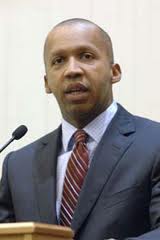
StevesnsonStevenson is a widely acclaimed public interest lawyer. (To the right is a photograph of Stevenson and the cover of his highly acclaimed book, Just Mercy.) His work fighting poverty and challenging racial discrimination in the criminal justice system has won him numerous awards including the ABA Wisdom Award for Public Service, the MacArthur Foundation Fellowship Award Prize, the Olaf Palme International Prize, the ACLU National Medal Of Liberty, the National Public Interest Lawyer of the Year Award, the Gruber Prize for International Justice and the Ford Foundation Visionaries Award. He is a graduate of the Harvard Law School and the Harvard School of Government, has been awarded 16 honorary doctorate degrees, and is a Professor of Law at New York University School of Law.[2]

========================================

[1] EJI, EJI Announces Plans To Build Museum and National Lynching Memorial (Aug. 16, 2016); Robertson, Memorial in Alabama Will Honor Victims of Lynchings, N.Y. Times (Aug. 15, 2016); Troyan, National memorial to lynching victims to be built in Montgomery, Montgomery Advertiser (Aug. 16, 2016); Edgemon, Nation’s first memorial to lynching victims set for Montgomery, al.com (Aug. 16, 2016); Toobin, Justice Delayed, New Yorker (Aug. 22, 2016).

[2] There is a lot about Stevenson in the previously cited New Yorker article by Jeffrey Toobin and in two previous blog posts: Bryan Stevenson’s Amazing Advocacy for Justice, dwkcommentaries.com (Jan. 19, 2016); Evaluating Bryan Stevenson Through the Prism of President Obama’s Howard University Speech, dwkcommentaries.com (May 4, 2016).

Caveats to Celebration of the American Declaration of Independence

United_States_Declaration_of_IndependenceJuly 4, 1776, is a treasured date in American history with the Continental Congress’ adoption of the Declaration of Independence. It stirringly says, “We hold these truths to be self-evident, that all men are created equal; that they are endowed by their Creator with certain unalienable rights; that among these, are life, liberty, and the pursuit of happiness.”

The creation and adoption of this document deserves the annual celebration it receives in the United States of America and around the world.

There, however, should be caveats to that celebration.

First, as others have pointed out, the Declaration did not condemn slavery which is not surprising since there were many slaves in the colonies.

Moreover, as Robert G. Parkinson, Assistant Professor of History at Binghamton University, argues, the failure to condemn slavery was no accident.[1]

First, the draft of the Declaration by Thomas Jefferson, a slave owner himself, contained an attack on King George III for imposing slavery on the colonists, but those words were deleted in the final document by the Continental Congress.

Second, the Declaration’s lengthy bill of particulars against the King that justified the colonists’ declaration of independence ended with these words:

  • “He has excited domestic insurrections amongst us, and has endeavored to bring on the inhabitants of our frontiers, the merciless Indian savages, whose known rule of warfare is an undistinguished destruction of all ages, sexes, and conditions.” (Emphasis added.)

According to Parkinson, “in the context of the 18th century, ‘domestic insurrections’ refers to rebellious slaves.” This provision in the bill of particulars was inserted, says Parkinson, “because in the 15 months between the Battles of Lexington and Concord and independence, reports about the role African-Americans and Indians would play in the coming conflict was the most widely discussed news. And British officials all over North America did seek the aid of slaves and Indians to quell the rebellion.”[2]

Important in this “inciting” of “domestic insurrections” was the November 14, 1775, proclamation by the Royal Governor of the Colony of Virginia offering freedom to slaves who would leave their masters and join the British side. Although only an estimated 800 slaves immediately joined the British in Virginia as a result of this Proclamation, eventually as many as 30,000 slaves throughout the colonies did so and worked as soldiers, laborers, pilots, cooks, and musicians for the British.[3]

After the end of the American Revolutionary War in 1783, the British evacuated all of their personnel from Manhattan plus 3,000 former black slaves or Black Loyalists who were listed in “The Book of Negroes.”[4]

Parkinson’s fascinating article has created another project for me: reading his book, “The Common Cause: Creating Race and Nation in the American Revolution” (2016); re-reading Pauline Maier’s book, “American Scripture: Making the Declaration of Independence” (1997); and writing blog posts to summarize the results of this and other additional research.

===================================================

[1] Parkinson, Did a Fear of Slave Revolts Drive American Independence?, N.Y. Times (July 4, 2016).

[2] The Fate of Black British Loyalists in the American Revolutionary War, dwkcommentaries.com (Feb. 19, 2013).

[3] Ibid.

[4] The American Revolutionary War’s End in New York City, 1783, dwkcommentaries.com (Oct. 14, 2012); The Fate of Black British Loyalists in the American Revolutionary War, dwkcommentaries.com (Feb. 19, 2013). The historical “Book of Negroes” became an inspiration for a novel with the same name (in Canada (but “Someone Knows My Name” in the U.S.) by Canadian author, Lawrence Hill. (The Black British Loyalists Through the Eyes of Novelist Lawrence Hill, dwkcommentaries.com Feb. 21, 2013): Further Reflections on “The Book of Negroes” Novel, dwkcommentaries.com (Feb. 23, 2013).)

Exploring Sub-Saharan African History

 I am currently taking a brief course, “Sub-Saharan African History to Colonialism,” to learn about such history “from many angles: anthropological, historical, geographic, cultural, and religious. From human origins through the populating of the continent, the great civilizations, the slave trades, to the beginning of European domination.” Offered by the University of Minnesota’s Osher Lifelong Learning Institute (OLLI), the course’s instructor is Tom O’Toole, Emeritus Professor of Sociology and Anthropology of Minnesota’s St. Cloud State University.

Why does this Euro-American septuagenarian take this course? Foremost, I know virtually nothing about this history and want to know more. I also realize that I have various direct and indirect connections with Africa.

The most immediate precipitating cause is reading the discussion of the names of African and African-American intellectuals and historical figures that were discovered at Howard University by African-American author Ta-Nehisi Coates and recounted in his book “Between the World and Me” and my realizing that I did not know virtually any of these people. This book also has prompted me to research and investigate my own notions of race, including my recent posts about statements from the American Anthropological Association about race’s non-scientific basis and historical and cultural background. Further posts about notions of race are forthcoming.

I learned more about one of these figures of African history this spring when my 10th-grade grandson wrote a History Day paper on Mansa Musa, who was a 14th century Emperor or King of Mali. Moreover, one of my sons knows more about this history from his having studied African history and Swahili at the University of Minnesota and from spending a semester in Kenya with a program of the National Outdoor Leadership School and then a week on his own living with a Maasai tribesman in that country.

Coates also legitimately castigates the U.S. history of slavery and its lasting impacts on our country. This has underscored my interest in the importation of slaves from Africa to the Western Hemisphere. This was part of Lawrence Hill’s fascinating novel “The Book of Negroes” (“Someone Knows My Name”), about which I have written. Moreover, I have visited Matanzas, Cuba and Salvador, Brazil, which were major ports of importation of African slaves to work on sugar plantations in those countries.

I have a number of friends from West Africa (Cameroon, Nigeria and Ghana) and visited Cameroon on a mission trip from Minneapolis’ Westminster Presbyterian Church. There I learned about the country’s having been a German colony (Kamerun) in the 19th century and then having French and British administration under League of Nations mandates after Germany was stripped of its African colonies by the 1919 Treaty of Versailles ending World War I. Forty-plus years later Cameroon became an independent country with the joinder of the Francophone and Anglophone territories. Yet life today in the country is still affected by the language and cultural differences from the French and British governance and less so by the previous 30-plus years of German rule.

I also have visited Namibia, Botswana and South Africa focused primarily on observing their magnificent wildlife and nature, but also the prison on Robben Island, where Nelson Mandela and other African National Congress leaders were imprisoned during the years of apartheid. In addition, I had the opportunity to see and hear Mandela speak at a 2003 celebration of the centennial of the Rhodes Scholarships held at Westminster Hall in London and to see him escorted through the Hall’s audience, only 10 feet from me and my wife, by Bill Clinton and Tony Blair.

The visit to South Africa also included stopping at Cecil Rhodes’ Cottage and Museum at Mulzenberg overlooking False Bay and the Indian Ocean at the southwest corner of the country. (My interest in Cecil Rhodes, the Founder of the Scholarships, and his 19th century involvement in South Africa and Rhodesia (now known as Zimbabwe) stems from being a Rhodes Scholar who was “up” at Oxford, 1961-1963, and from my gratitude for being a beneficiary of his largess.)

While co-teaching international human rights law at the University of Minnesota Law School, I learned about the International Criminal Court, whose initial cases all came from Africa, thereby prompting some resistance from African leaders who thought this was anti-African discrimination. (I have written many blog posts about the ICC.) Previously I had been a pro bono lawyer for two Somali men’s successful applications for asylum in the U.S.

Other indirect connections are provided by three Grinnell College classmates. One became a professor of African history. Another served in Africa with the Peace Corps in Ethiopia, where he met his English wife serving in a similar British program and where they both frequently return to participate in a project of preparing and distributing audio textbooks for blind students. The third classmate, also in the Peace Corps, served in Mali, where he was involved in smallpox eradication. In addition, one of my Grinnell roommates from Chicago now lives in South Africa.

All of these direct and indirect connections with Africa provided additional motivation to learn more about its history. In a subsequent post I will attempt to summarize the key points of this brief exploration of African history.


Evaluating Bryan Stevenson Through the Prism of President Obama’s Howard University Speech

President Obama’s commencement address at Howard University was examined in a prior post. The key points in Obama’s speech for this evaluation are the following:

  • “Be confident in your heritage.  Be confident in your blackness.”
  • African Americans have a “particular awareness of injustice and unfairness and struggle.  That means we cannot sleepwalk through life.  We cannot be ignorant of history. . . . We have cousins and uncles and brothers and sisters who we remember were just as smart and just as talented as we were, but somehow got ground down by structures that are unfair and unjust.”
  • “You have to go through life with more than just passion for change; you need a strategy. . . . [C]hange requires more than righteous anger.  It requires a program, and it requires organizing.”
Bryan Stevenson
Bryan Stevenson

Now we evaluate a prominent contemporary African-American, Bryan Stevenson through the prism of that speech.

Although not a Howard alumnus, Stevenson, as discussed in another post, is an African-American attorney, author and activist for social justice, especially for today’s African-American men and women and for their ancestors who were enslaved and persecuted. He has successfully argued cases in the U.S. Supreme Court and other courts for prison inmates and written and spoken for changes in our criminal justice system. In addition, he has organized and established the Equal Justice Initiative (CJI), a significant human rights/civil rights law firm in Montgomery, Alabama that is being joined by  a museum honoring the victims of slavery and lynchings.[1]

In so doing, Stevenson is demonstrating confidence in his own heritage, his own blackness, as President Obama urged the graduates. Stevenson also shows his awareness of injustice, unfairness and struggle that he combines with a strategy of change through the courts and public opinion. He meets the standards set forth by President Obama.

Give thanks to God for this good man!


President Obama’s Civics Lesson at Town Hall Meeting in London

On April 23, 2016, President Barack Obama addressed a town-hall meeting of 500 young Leaders of the United Kingdom at London’s Lindley Hall. [1] Below are photographs of Obama and of some of the young leaders at the meeting.

Obana UK more

London crowd


Here is Obama’s civics lesson that is directly relevant to U.S. citizens

Post-World War II World

The U.S. and Great Britain “ultimately made up [over the American Revolutionary War] and ended up spilling blood on the battlefield together [in World War II], side-by-side, against fascism and against tyranny, for freedom and for democracy.  And from the ashes of war, we led the charge to create the institutions and initiatives that sustain a prosperous peace — NATO; Bretton Woods, the Marshall Plan, the EU.  The joint efforts and sacrifices of previous generations of Americans and Brits are a big part of why we’ve known decades of relative peace and prosperity in Europe, and that, in turn, has helped to spread peace and prosperity around the world.“

“And think about how extraordinary that is.  For more than 1,000 years, this continent was darkened by war and violence.  It was taken for granted.  It was assumed that that was the fate of man.  Now, that’s not to say that your generation has had it easy.  Both here and in the United States, your generation has grown up at a time of breathtaking change.”

“You’ve come of age through 9/11 and 7/7 [the date of the 2005 terror attacks on a London bus and Underground trains].  You’ve had friends go off to war.  You’ve seen families endure recession.  The challenges of our time — economic inequality and climate change, terrorism and migration all these things are real.  And in an age of instant information, where TV and Twitter can feed us a steady stream of bad news, I know that it can sometimes seem like the order that we’ve created is fragile, maybe even crumbling, maybe the center cannot hold. And we see new calls for isolationism or xenophobia.  We see those who would call for rolling back the rights of people; people hunkering down in their own point of view and unwilling to engage in a democratic debate.  And those impulses I think we can understand.  They are reactions to changing times and uncertainty. “

“I implore you to reject those calls to pull back.  I’m here to ask you to reject the notion that we’re gripped by forces that we can’t control.  And I want you to take a longer and more optimistic view of history and the part that you can play in it. I ask you to embrace the view of one of my predecessors, President John F. Kennedy, who once said:  “Our problems are man-made.  Therefore, they can be solved by man.  And man can be as big as he wants.”

The “world, for all of its travails, for all of its challenges, has never been healthier, better educated, wealthier, more tolerant, less violent, more attentive to the rights of all people than it is today. “

“That doesn’t mean we don’t have big problems.  That’s not a cause for complacency, but it is a cause for optimism.  You are standing in a moment where your capacity to shape this world is unmatched.  What an incredible privilege that is.”

Reject “pessimism and cynicism; know that progress is possible, that our problems can be solved.  Progress requires the harder path of breaking down barriers, and building bridges, and standing up for the values of tolerance and diversity that our nations have worked and sacrificed to secure and defend.  Progress is not inevitable, and it requires struggle and perseverance and discipline and faith.”

“Fighting for change that you may not live to see, but that your children will live to see.  That’s what this is all about. . . . Whether in the Cold War or world war, movements for economic or social justice, efforts to combat climate change — our best impulses have always been to leave a better world for the next generation.”

Historical Perspective

Abolitionists “in the 1700s . . . were fighting against slavery, and for a hundred years built a movement that eventually led to a civil war, and the amendments to our Constitution that ended slavery and called for equal protection under the law.  It then took another hundred years for those rights that had been enshrined in the Constitution to actually be affirmed through the Civil Rights Act of 1964 and the Voting Rights Act of 1965.  And then it’s taken another 50 years to try to make sure that those rights are realized.  And they’re still not fully realized. There’s still discrimination in aspects of American life, even with a black President.”

This history means “that if any of you begin to work on an issue that you care deeply about, don’t be disappointed if a year out, things haven’t been completely solved.  Don’t give up and succumb to cynicism if, after five years, poverty has not been eradicated, and prejudice is still out there somewhere, and we haven’t resolved all of the steps we need to take to reverse climate change. “

“Dr. [Martin Luther] King [,Jr.] said, ‘The arc of the moral universe is long, but it bends towards justice.’  And it doesn’t bend on its own.  It bends because we pull it in that direction.  But it requires a series of generations working and building off of what the previous one has done. “  (Emphasis added.)

Passion To Highlight Societal Problems

“As a general rule, I think that what, for example, Black Lives Matter is doing now to bring attention to the problem of a criminal justice system that sometimes is not treating people fairly based on race, or reacting to shootings of individuals by police officers, has been really effective in bringing attention to problems.”

 Need To Have a Strategy for Change and Compromise

But “once you’ve highlighted an issue and brought it to people’s attention and shined a spotlight, and elected officials or people who are in a position to start bringing about change are ready to sit down with you, then you can’t just keep on yelling at them.  And you can’t refuse to meet because that might compromise the purity of your position.”

“The value of social movements and activism is to get you at the table, get you in the room, and then to start trying to figure out how is this problem going to be solved.  You, then, have a responsibility to prepare an agenda that is achievable, that can institutionalize the changes you seek, and to engage the other side, and occasionally to take half a loaf that will advance the gains that you seek, understanding that there’s going to be more work to do, but this is what is achievable at this moment.

And too often what I see is wonderful activism that highlights a problem, but then people feel so passionately and are so invested in the purity of their position that they never take that next step and say, okay, well, now I got to sit down and try to actually get something done..”

Everyone has “to be principled, you have to have a North Star, a moral compass. There should be a [good] reason for you getting involved in social issues. . . . But you have to recognize that, particularly in pluralistic societies and democratic governments like we have in the United States and the UK, there are people who disagree with us.  They have different perspectives.  They come from different points of view.  And they’re not bad people just because they disagree with us.  They may, in fact, assert that they’ve got similar principles to ours, but they just disagree with us on the means to vindicate those principles.”

Compromise “does not mean surrendering what you believe, it just means that you are recognizing the truth, the fact that these other people who disagree with you or this other political party, or this other nation — that they have dignity too, that they have worth as well, and you have to hear them and see them.”

================================

[1] White House, Remarks by President Obama in Town Hall with Young Leaders of the UK (April 23, 2016); Gani, Barack Obama tells young people that progress is possible, Guardian (April 23, 2016); Hayden, Obama’s ‘Town Hall’ Meeting with British Youth Covered Gender Rights, Islamophobia, and Leadership, Vice News (April 23, 2016).

President Obama’s Eloquent Speech to the Cuban People

On March 22, U,s, President Barack Obama addressed the past and future of U.S.-Cuba relations in a lengthy and eloquent speech at Havana’s Alicia Alonso Grand Theater. The in-person audience of 1,000 included Cuban President Raúl Castro and other officials and U.S. officials and business people. By live television, the audience also included the Cuban people. {1]  Below are photographs of the exterior of the Theater and of President Castro and other Cuban officials in a balcony at the Theater for the speech.

Theater exterior

Castro + @ speech


Here we will examine the speech itself, and a subsequent post will look at the reactions to the speech in Cuba and the U.S.

Summary of the Speech

Obama recognized that the two countries shared many things, including being colonized by Europeans and helped by slaves from Africa as well as patriotism and pride, love of family and hope for our children.

The last 50 years, however, have caused many disruptions in our countries’ connections. We are like two brothers who have been estranged for years even as we share the same blood.

The December 17, 2014, joint announcement of our two governments seeking restoration of normal relations was prompted by the U.S. recognition that its policies, including the embargo, were not working and needed to change and that the U.S. needed to help the Cuban people. Obama was in Cuba to end the last remnant of the Cold War and to declare that Cuba need not fear the U.S.

Even though the U.S. was not seeking to force change on Cuba, Obama stated that there were important universal rights that were as important for Cubans as they were for U.S. citizens: equality before the law; right to education, food and housing; freedom from arbitrary arrests; rights to practice their religious faith, assemble, organize, protest peacefully, criticize the government and elect their government leaders. Here is a photograph of President Obama giving the speech.

Obama speech

Text of the Speech

Here then is the actual text of his speech with an opening quotation from a poem by Cuba’s revered national poet, Jose Marti, that offered friendship and peace to both his friend and his enemy, “’Cultivo una rosa blanca’ [I plant a white rose]. Today, as the President of the United States of America, I offer the Cuban people el saludo de paz [the greeting of peace].”

“Havana is only 90 miles from Florida, but to get here we had to travel a great distance — over barriers of history and ideology; barriers of pain and separation.  The blue waters beneath Air Force One once carried American battleships to this island — to liberate, but also to exert control over Cuba.  Those waters also carried generations of Cuban revolutionaries to the United States, where they built support for their cause.  And that short distance has been crossed by hundreds of thousands of Cuban exiles — on planes and makeshift rafts — who came to America in pursuit of freedom and opportunity, sometimes leaving behind everything they owned and every person that they loved.”

“Like so many people in both of our countries, my lifetime has spanned a time of isolation between us.  The Cuban Revolution took place the same year that my father came to the United States from Kenya.  The Bay of Pigs took place the year that I was born. The next year, the entire world held its breath, watching our two countries, as humanity came as close as we ever have to the horror of nuclear war.  As the decades rolled by, our governments settled into a seemingly endless confrontation, fighting battles through proxies.  In a world that remade itself time and again, one constant was the conflict between the United States and Cuba.”

“I have come here to bury the last remnant of the Cold War in the Americas. I have come here to extend the hand of friendship to the Cuban people.”

“I want to be clear:  The differences between our governments over these many years are real and they are important.  I’m sure President Castro would say the same thing — I know, because I’ve heard him address those differences at length.  But before I discuss those issues, we also need to recognize how much we share.  Because in many ways, the United States and Cuba are like two brothers who’ve been estranged for many years, even as we share the same blood.”

“We both live in a new world, colonized by Europeans.  Cuba, like the United States, was built in part by slaves brought here from Africa.  Like the United States, the Cuban people can trace their heritage to both slaves and slave-owners.  We’ve welcomed both immigrants who came a great distance to start new lives in the Americas.”

“Over the years, our cultures have blended together. Dr. Carlos Finlay’s work in Cuba paved the way for generations of doctors, including Walter Reed, who drew on Dr. Finlay’s work to help combat Yellow Fever.  Just as Marti wrote some of his most famous words in New York, Ernest Hemingway made a home in Cuba, and found inspiration in the waters of these shores.  We share a national past-time — La Pelota [baseball]– and later today our players will compete on the same Havana field that Jackie Robinson played on before he made his Major League debut. And it’s said that our greatest boxer, Muhammad Ali, once paid tribute to a Cuban that he could never fight — saying that he would only be able to reach a draw with the great Cuban, Teofilo Stevenson.”

“So even as our governments became adversaries, our people continued to share these common passions, particularly as so many Cubans came to America.  In Miami or Havana, you can find places to dance the Cha-Cha-Cha or the Salsa, and eat ropa vieja [shredded pork or beef].  People in both of our countries have sung along with Celia Cruz or Gloria Estefan, and now listen to reggaeton or Pitbull. Millions of our people share a common religion — a faith that I paid tribute to at the Shrine of our Lady of Charity in Miami, a peace that Cubans find in La Cachita.”

“For all of our differences, the Cuban and American people share common values in their own lives.  A sense of patriotism and a sense of pride — a lot of pride.  A profound love of family.  A passion for our children, a commitment to their education.  And that’s why I believe our grandchildren will look back on this period of isolation as an aberration, as just one chapter in a longer story of family and of friendship.”

“But we cannot, and should not, ignore the very real differences that we have — about how we organize our governments, our economies, and our societies.  Cuba has a one-party system; the United States is a multi-party democracy.  Cuba has a socialist economic model; the United States is an open market.  Cuba has emphasized the role and rights of the state; the United States is founded upon the rights of the individual.”

“Despite these differences, on December 17th 2014, President Castro and I announced that the United States and Cuba would begin a process to normalize relations between our countries. Since then, we have established diplomatic relations and opened embassies.  We’ve begun initiatives to cooperate on health and agriculture, education and law enforcement.  We’ve reached agreements to restore direct flights and mail service.  We’ve expanded commercial ties, and increased the capacity of Americans to travel and do business in Cuba.”

“And these changes have been welcomed, even though there are still opponents to these policies.  But still, many people on both sides of this debate have asked:  Why now?  Why now?”

“There is one simple answer:  What the United States was doing was not working.  We have to have the courage to acknowledge that truth.  A policy of isolation designed for the Cold War made little sense in the 21st century.  The embargo was only hurting the Cuban people instead of helping them.  And I’ve always believed in what Martin Luther King, Jr. called ‘the fierce urgency of now’ — we should not fear change, we should embrace it.”

“That leads me to a bigger and more important reason for these changes:  Creo en el pueblo Cubano.  I believe in the Cuban people. This is not just a policy of normalizing relations with the Cuban government.  The United States of America is normalizing relations with the Cuban people.”

“And today, I want to share with you my vision of what our future can be.  I want the Cuban people — especially the young people — to understand why I believe that you should look to the future with hope; not the false promise which insists that things are better than they really are, or the blind optimism that says all your problems can go away tomorrow.  Hope that is rooted in the future that you can choose and that you can shape, and that you can build for your country.”

“I’m hopeful because I believe that the Cuban people are as innovative as any people in the world.”

“In a global economy, powered by ideas and information, a country’s greatest asset is its people.  In the United States, we have a clear monument to what the Cuban people can build: it’s called Miami.  Here in Havana, we see that same talent in cuentapropistas [self-employed workers], cooperatives and old cars that still run.  El Cubano inventa del aire. [Cubans invented the air.]”

“Cuba has an extraordinary resource — a system of education which values every boy and every girl. And in recent years, the Cuban government has begun to open up to the world, and to open up more space for that talent to thrive.  In just a few years, we’ve seen how cuentapropistas  can succeed while sustaining a distinctly Cuban spirit.  Being self-employed is not about becoming more like America, it’s about being yourself.”

“Look at Sandra Lidice Aldama, who chose to start a small business.  Cubans, she said, can ‘innovate and adapt without losing our identity…our secret is in not copying or imitating but simply being ourselves.’”

“Look at Papito Valladeres, a barber, whose success allowed him to improve conditions in his neighborhood.  ‘I realize I’m not going to solve all of the world’s problems,’ he said.  ‘But if I can solve problems in the little piece of the world where I live, it can ripple across Havana.’”

“That’s where hope begins — with the ability to earn your own living, and to build something you can be proud of.  That’s why our policies focus on supporting Cubans, instead of hurting them.  That’s why we got rid of limits on remittances — so ordinary Cubans have more resources.  That’s why we’re encouraging travel — which will build bridges between our people, and bring more revenue to those Cuban small businesses. That’s why we’ve opened up space for commerce and exchanges — so that Americans and Cubans can work together to find cures for diseases, and create jobs, and open the door to more opportunity for the Cuban people.”

“As President of the United States, I’ve called on our Congress to lift the embargo. It is an outdated burden on the Cuban people.  It’s a burden on the Americans who want to work and do business or invest here in Cuba.  It’s time to lift the embargo.  But even if we lifted the embargo tomorrow, Cubans would not realize their potential without continued change here in Cuba. It should be easier to open a business here in Cuba.  A worker should be able to get a job directly with companies who invest here in Cuba.  Two currencies shouldn’t separate the type of salaries that Cubans can earn.  The Internet should be available across the island, so that Cubans can connect to the wider world and to one of the greatest engines of growth in human history.”

“There’s no limitation from the United States on the ability of Cuba to take these steps.  It’s up to you.  And I can tell you as a friend that sustainable prosperity in the 21st century depends upon education, health care, and environmental protection.  But it also depends on the free and open exchange of ideas.  If you can’t access information online, if you cannot be exposed to different points of view, you will not reach your full potential.  And over time, the youth will lose hope.”

“I know these issues are sensitive, especially coming from an American President.  Before 1959, some Americans saw Cuba as something to exploit, ignored poverty, enabled corruption. And since 1959, we’ve been shadow-boxers in this battle of geopolitics and personalities. I know the history, but I refuse to be trapped by it.”

“I’ve made it clear that the United States has neither the capacity, nor the intention to impose change on Cuba.  What changes come will depend upon the Cuban people.  We will not impose our political or economic system on you.  We recognize that every country, every people, must chart its own course and shape its own model.  But having removed the shadow of history from our relationship, I must speak honestly about the things that I believe — the things that we, as Americans, believe.  As Marti said, ‘Liberty is the right of every man to be honest, to think and to speak without hypocrisy.’”

“So let me tell you what I believe.  I can’t force you to agree, but you should know what I think.  I believe that every person should be equal under the law. Every child deserves the dignity that comes with education, and health care and food on the table and a roof over their heads. I believe citizens should be free to speak their mind without fear, to organize, and to criticize their government, and to protest peacefully, and that the rule of law should not include arbitrary detentions of people who exercise those rights. I believe that every person should have the freedom to practice their faith peacefully and publicly. And, yes, I believe voters should be able to choose their governments in free and democratic elections.”

“Not everybody agrees with me on this.  Not everybody agrees with the American people on this.  But I believe those human rights are universal. I believe they are the rights of the American people, the Cuban people, and people around the world.”

“Now, there’s no secret that our governments disagree on many of these issues.  I’ve had frank conversations with President Castro.  For many years, he has pointed out the flaws in the American system — economic inequality; the death penalty; racial discrimination; wars abroad.  That’s just a sample.  He has a much longer list. But here’s what the Cuban people need to understand:  I welcome this open debate and dialogue. It’s good.  It’s healthy.  I’m not afraid of it.”

“We do have too much money in American politics.  But, in America, it’s still possible for somebody like me — a child who was raised by a single mom, a child of mixed race who did not have a lot of money — to pursue and achieve the highest office in the land.  That’s what’s possible in America.”

“We do have challenges with racial bias — in our communities, in our criminal justice system, in our society — the legacy of slavery and segregation.  But the fact that we have open debates within America’s own democracy is what allows us to get better.  In 1959, the year that my father moved to America, it was illegal for him to marry my mother, who was white, in many American states.  When I first started school, we were still struggling to desegregate schools across the American South.  But people organized; they protested; they debated these issues; they challenged government officials.  And because of those protests, and because of those debates, and because of popular mobilization, I’m able to stand here today as an African-American and as President of the United States.  That was because of the freedoms that were afforded in the United States that we were able to bring about change.”

“I’m not saying this is easy. There’s still enormous problems in our society.  But democracy is the way that we solve them.  That’s how we got health care for more of our people.  That’s how we made enormous gains in women’s rights and gay rights.  That’s how we address the inequality that concentrates so much wealth at the top of our society.  Because workers can organize and ordinary people have a voice, American democracy has given our people the opportunity to pursue their dreams and enjoy a high standard of living.”

“Now, there are still some tough fights.  It isn’t always pretty, the process of democracy.   It’s often frustrating.  You can see that in the election going on back home.  But just stop and consider this fact about the American campaign that’s taking place right now.  You had two Cuban Americans in the Republican Party, running against the legacy of a black man who is President, while arguing that they’re the best person to beat the Democratic nominee who will either be a woman or a Democratic Socialist. Who would have believed that back in 1959?  That’s a measure of our progress as a democracy.”

“So here’s my message to the Cuban government and the Cuban people:  The ideals that are the starting point for every revolution — America’s revolution, Cuba’s revolution, the liberation movements around the world — those ideals find their truest expression, I believe, in democracy.  Not because American democracy is perfect, but precisely because we’re not.  And we — like every country — need the space that democracy gives us to change.  It gives individuals the capacity to be catalysts to think in new ways, and to reimagine how our society should be, and to make them better.”

“There’s already an evolution taking place inside of Cuba, a generational change.  Many suggested that I come here and ask the people of Cuba to tear something down — but I’m appealing to the young people of Cuba who will lift something up, build something new.  El futuro  de Cuba tiene que estar en las manos del pueblo Cubano. [The future of Cuba must be in the hands of the Cuban people.]”

English “And to President Castro — who I appreciate being here today — I want you to know, I believe my visit here demonstrates you do not need to fear a threat from the United States.  And given your commitment to Cuba’s sovereignty and self-determination, I am also confident that you need not fear the different voices of the Cuban people — and their capacity to speak, and assemble, and vote for their leaders.  In fact, I’m hopeful for the future because I trust that the Cuban people will make the right decisions.”

“And as you do, I’m also confident that Cuba can continue to play an important role in the hemisphere and around the globe — and my hope is, is that you can do so as a partner with the United States.”

“We’ve played very different roles in the world.  But no one should deny the service that thousands of Cuban doctors have delivered for the poor and suffering. Last year, American health care workers — and the U.S. military — worked side-by-side with Cubans to save lives and stamp out Ebola in West Africa.  I believe that we should continue that kind of cooperation in other countries.”

“We’ve been on the different side of so many conflicts in the Americas.  But today, Americans and Cubans are sitting together at the negotiating table, and we are helping the Colombian people resolve a civil war that’s dragged on for decades. That kind of cooperation is good for everybody.  It gives everyone in this hemisphere hope.”

“We took different journeys to our support for the people of South Africa in ending apartheid.  But President Castro and I could both be there in Johannesburg to pay tribute to the legacy of the great Nelson Mandela. And in examining his life and his words, I’m sure we both realize we have more work to do to promote equality in our own countries — to reduce discrimination based on race in our own countries.  And in Cuba, we want our engagement to help lift up the Cubans who are of African descent, who’ve proven that there’s nothing they cannot achieve when given the chance.”

“We’ve been a part of different blocs of nations in the hemisphere, and we will continue to have profound differences about how to promote peace, security, opportunity, and human rights.  But as we normalize our relations, I believe it can help foster a greater sense of unity in the Americas — todos somos Americanos [we are all Americans].”

“From the beginning of my time in office, I’ve urged the people of the Americas to leave behind the ideological battles of the past.  We are in a new era.  I know that many of the issues that I’ve talked about lack the drama of the past.  And I know that part of Cuba’s identity is its pride in being a small island nation that could stand up for its rights, and shake the world. But I also know that Cuba will always stand out because of the talent, hard work, and pride of the Cuban people.  That’s your strength. Cuba doesn’t have to be defined by being against the United States, any more than the United States should be defined by being against Cuba.  I’m hopeful for the future because of the reconciliation that’s taking place among the Cuban people.”

“I know that for some Cubans on the island, there may be a sense that those who left somehow supported the old order in Cuba.  I’m sure there’s a narrative that lingers here which suggests that Cuban exiles ignored the problems of pre-Revolutionary Cuba, and rejected the struggle to build a new future.  But I can tell you today that so many Cuban exiles carry a memory of painful — and sometimes violent — separation.  They love Cuba.  A part of them still considers this their true home. That’s why their passion is so strong.  That’s why their heartache is so great.  And for the Cuban-American community that I’ve come to know and respect, this is not just about politics. This is about family — the memory of a home that was lost; the desire to rebuild a broken bond; the hope for a better future the hope for return and reconciliation.”

“For all of the politics, people are people, and Cubans are Cubans.  And I’ve come here — I’ve traveled this distance — on a bridge that was built by Cubans on both sides of the Florida Straits.  I first got to know the talent and passion of the Cuban people in America.  And I know how they have suffered more than the pain of exile — they also know what it’s like to be an outsider, and to struggle, and to work harder to make sure their children can reach higher in America.”

“So the reconciliation of the Cuban people — the children and grandchildren of revolution, and the children and grandchildren of exile — that is fundamental to Cuba’s future.”

“You see it in Gloria Gonzalez, who traveled here in 2013 for the first time after 61 years of separation, and was met by her sister, Llorca.  ‘You recognized me, but I didn’t recognize you,’ Gloria said after she embraced her sibling.  Imagine that, after 61 years.”

“You see it in Melinda Lopez, who came to her family’s old home.  And as she was walking the streets, an elderly woman recognized her as her mother’s daughter, and began to cry.  She took her into her home and showed her a pile of photos that included Melinda’s baby picture, which her mother had sent 50 years ago.  Melinda later said, ‘So many of us are now getting so much back.’”

“You see it in Cristian Miguel Soler, a young man who became the first of his family to travel here after 50 years.  And meeting relatives for the first time, he said, ‘I realized that family is family no matter the distance between us.’”

“Sometimes the most important changes start in small places. The tides of history can leave people in conflict and exile and poverty.  It takes time for those circumstances to change.  But the recognition of a common humanity, the reconciliation of people bound by blood and a belief in one another — that’s where progress begins.  Understanding, and listening, and forgiveness. And if the Cuban people face the future together, it will be more likely that the young people of today will be able to live with dignity and achieve their dreams right here in Cuba.”

“The history of the United States and Cuba encompass revolution and conflict; struggle and sacrifice; retribution and, now, reconciliation.  It is time, now, for us to leave the past behind.  It is time for us to look forward to the future together — un future de esperanza [a future of hope].  And it won’t be easy, and there will be setbacks.  It will take time.  But my time here in Cuba renews my hope and my confidence in what the Cuban people will do.  We can make this journey as friends, and as neighbors, and as family — together.  Si se puede.  Muchas gracias. [Yes we can. Many thanks.]”

========================================================

[1] White House, Remarks by President Obama to the People of Cuba (March 22, 2016); Agence France-Press, President’s Full Speech in Cuba, N.Y. times (Mar. 22, 2016) (complete video of speech); Davis, Obama in Havana Speech, Says Cuba Has Nothing To Fear from U.S., N.Y. Times (Mar. 22, 2016); Reuters, Obama Challenges Communist-Led Cuba With Call for Democracy, N.Y. Times (Mar. 22, 2016); Assoc. Press, In Cuba, Obama Calls for Burying ‘Last Remnant of Cold War,’ N.Y. Times (Mar. 22, 2016); Eliperin & DeYoung, Obama addresses the Cuban nation: “It is time now for us to leave the past behind,’ Wash. Post (Mar. 22, 2016).