U.S. Congressional Meetings in Havana

A prior post reported about the planned meetings in Havana of a delegation of congressional Democrats led by Senator Patrick Leahy. Now we have news of what happened on their three-day trip.

Leahy in cuba

Here is a photo of the delegation in Havana (left to right): Representative Chris Van Hollen, Senator Sheldon Whitehouse, Senator Debbie Stabenow, Representative Peter Welch and Senator Patrick Leahy. (Senator Richard Durbin is the other member of the delegation.)

On Saturday, January 17th, they “met with officials from Cuba’s Culture Ministry in order to discuss possible Cuban participation in the Smithsonian Institution’s Folklife Festival, a summer celebration of traditional art and culture on Washington’s National Mall.

On Sunday, January 18th, they met with more than a dozen dissidents including critics of the 18-month-old secret negotiations that led to last month’s announcement. All but two of them expressed support for the opening.

One of these two, Antonio Rodiles, said it “was a friendly meeting, they heard the different positions, but the senators are very much in favor of Obama’s measures and want to hear that we agree.” Rodiles, however, criticized the Obama administration for failing to win enough guarantees of reform from the Cuban government. “I said the process [of negotiating the U.S.-Cuba accords] took place without transparency or taking the full range of opinions into account.”

Another dissident, Elizardo Sanchez, head of the Cuban Human Rights and National Reconciliation Commission, a Cuban non-governmental organization tracking political detentions, said that the Cubans at the meeting “had delivered a list of 24 long-term prisoners whom they wanted to see released in addition to the 53 on the Obama administration’s list.”

US-Cuba mtg

On Monday, January 19th, the U.S. delegation met “for several hours with Foreign Minister Bruno Rodriguez Parrilla, who told the legislators that Cuba welcomed President Obama’s loosening of the U.S. trade embargo, which would permit more travel to Cuba and economic links including exports of telecommunications equipment and wholesale goods for use by the country’s small private sector.” According to Leahy, Rodriguez is “open to every issue from trade to communications. He talked about the travel back and forth, medical issues. Name an issue, he’s involved.” (To the right is a photo of this meeting.)

Also participating in this meeting were Josefina Vidal Ferreiro, the Director General of the North American Division of Cuba’s Foreign Ministry, and Cuba’ chief diplomat at the Cuban Interests Section in Washington, José Ramón Cabañas, the latter of whom visited Minneapolis’ Westminster Presbyterian Church last October.

The U.S. legislators also had hoped to meet with Cuban President Raúl Castro, but that did not happen apparently because the Americans had met with Cuban dissidents on Sunday.


This Week’s U.S.-Cuba Meetings in Havana

The U.S. and Cuba are holding two sets of meetings in Havana this week. One involves U.S. Senators and Representatives. The other is a conference of diplomats of the two counties.

Meetings of U.S. Legislators

U.S. Senator Patrick Leahy (Dem., VT) [1] has organized a trip to Havana, January 17-19, with Democratic colleagues from the Senate–Richard Durbin (IL) [2], Debbie Stabenow (MI) [3] and Sheldon Whitehouse (RI) [4]—and the House of Representatives, Chris Van Hollen (MD) [5] and Peter Welch (VT). [6]

This trip is designed to seek clarity from Cubans on what they envision normalization to look like, to develop a sense of what Cuba and the U.S. are prepared to do to make a constructive relationship possible, to impress upon Cuban leaders the importance of concrete results and positive momentum and to convey a sense of Americans’ expectations and congressional perceptions.

They intend to meet with Cuban government officials, Roman Catholic Cardinal Jaime Ortega Alamino, representatives of Cuba’s civil society, personnel at the U.S. Interests Section and ambassadors to Cuba from Mexico, Spain, Norway and Colombia.

Diplomatic Meeting

 Diplomats of the two countries will hold talks in Havana’s Convention Palace on January 21 and 22, 2015.

  1. Migration Issues

Under the countries’ Migration Accords of 1995, they have migration talks every six months, and this will be the focus of the first day’s session. They will assess progress under this Accord and other agreements and actions taken by both parties to tackle illegal migration and trafficking in migrants. The head of the U.S. delegation will be Alex Lee, Deputy Assistant Secretary of State for South America and Cuba. The Cuban delegation will be led by the Director General of the North American Division of Cuba’s Foreign Ministry, Josefina Vidal Ferreiro.

Alex Smith
Alex Smith
Josefina Vidal
Josefina Vidal
Roberta Jacobson
Roberta Jacobson


  1. Restoration of Diplomatic Relations

The January 22 session will be devoted to the process of restoration of diplomatic relations between the two countries, including opening of embassies. The head of the U.S. delegation will be Roberta Jacobson, the Assistant Secretary of State for Western Hemisphere Affairs, while Josefina Vidal Ferreiro again will be in charge of the Cuban delegation.

Jacobson has said that this “process of restoring diplomatic relations is relatively straightforward from a legal perspective, but the parties have to agree on the process for such restoration. This can be done via an exchange of letters or of notes; it does not require a formal treaty or agreement. The U.S. also will need to terminate its 53-year agreement with the Swiss Government as our protecting power [in Cuba], and the same for the Cubans [in the U.S.]; that will be done as soon as possible, whereupon the U.S. would post a new sign “Embassy of the United States of America” on the building currently housing its mission.[7] A list of all of the U.S. diplomatic officers would be declared directly to the Cuban Government.

U.S. Interests Section

What the current U.S. Interests Section does, and what the Embassy will do, Jacobson said, “is critically important for Americans and Cubans alike. It includes providing uncensored internet access for many people who visit those internet terminals and processing requests for visas for thousands of Cubans every year (nonimmigrant visas for many thousands and immigrant visas for 20,000 Cubans a year). U.S. diplomats also check on whether people who are returned to Cuba under our migration accords are harassed by the Cuban government.

Having led the migration talks in 2011, when Jacobson was the principal deputy assistant secretary, she said human rights are always part of the migration-talks agenda and will be again. One issue is whether Cuba is harassing people who apply for refugee status at our Interests Section. Another issue is how people are treated when they return to Cuba after they’ve attempted to leave. We often will talk about freedom to leave Cuba; that is different since Cuba now permits most of its citizens to leave without exit visas.

Conclusion

I expect and pray that these meetings will advance the further reconciliation of the two countries. We await the reported results of the meetings.

==================================================================

[1] On December 17, 2014 Senator Leahy was on the U.S. plane that went to Cuba to bring Alan Gross home. Afterwards, the Senator said, “By taking further steps to change a policy that is a relic of the Cold War, that has achieved none of its goals, and that has isolated the United States, President [Obama] has wisely charted a new course that serves our national interests in this hemisphere and the world.  Our policies, frozen in time, have disserved the nation and have failed utterly and abysmally in achieving their original goals.” On January 8, 2015, Senator Leahy and seven other senators offered a Senate resolution commending Pope Francis for his leadership in helping to secure the release of Alan Gross and for working with the governments of the [U.S.] and Cuba to achieve a more positive relationship.

[2] On December 17, 2014, Senator Durbin also was on the U.S. plant that went to Cuba to bring Alan Gross home. His subsequent statement expressed support for President Obama’s moves towards reconciliation with Cuba. Senator Durbin was a co-sponsor of the previously mentioned Senate resolution commending Pope Francis.

[3] On December 17th Senator Stabenow announced her support of President Obama’s changes of policies regarding Cuba.

[4] On December 17th Senator Whitehouse issued a statement applauding the changes in U.S. policies regarding Cuba.

[5] On December 17th Congressman Van Hollen also was on the U.S. plane bringing Alan Gross home and gave thanks for his release and for the “vision of a new day in the relationship between the [U.S.] and Cuba.”

[6] Representative Welch on December 17th applauded President Obama’s “bold leadership” and the “new era of openness and cooperation” with Cuba.

[7] The U.S. building, which was completed in 1953, was designed in the Modernist-Brutalist style by the architectural firm of Harrison & Abramovitz, which also designed the United Nations headquarters building in New York City. The former is a long, six-story concrete and glass building located directly on the Malecon overlooking the Bay of Havana. The building was not used by U.S. personnel between 1961 and 1977. U.S. diplomats returned to Havana in 1977, and the building was transformed into the United States Interests Section in Havana. Renovations were subsequently completed on the complex in 1997.


New York Times Urges Normalization of U.S.- Cuba Relations

In an October 12th editorial the New York Times says, “For the first time in more than 50 years, shifting politics in the United States and changing policies in Cuba make it politically feasible to re-establish formal diplomatic relations and dismantle the senseless embargo.” Indeed, in the Times’ opinion, these changes in U.S. policy should be accompanied by ending the U.S. designation of Cuba as a “State Sponsor of Terrorism.”[1]

 Editorial’s Commentary on Cuba’s Current Conditions

The Times points out that Cuba has “taken significant steps to liberalize and diversify the island’s tightly controlled economy.” This includes “allowing citizens to take private-sector jobs and own property.” encouraging foreign investment, constructing a major deep-sea port in Mariel with Brazilian capital and negotiating a cooperation agreement with the European Union. Although the pace of reform may seem slow and inconsistent, these are significant changes.

On the other hand, the Times asserts that the Cuban “government still harasses and detains dissidents . . . [and has not explained] the suspicious circumstances surrounding the death of political activist Oswaldo Payá.” This is outweighed, however, by the Cuban government’s in recent years having “released political prisoners” and showing “slightly more tolerance for criticism of the [government’s leadership” while loosening travel restrictions “enabling prominent dissidents to travel abroad.”[1a]

Editorial’s Recommendations for U.S. Policy

End Designation of Cuba as a “State Sponsor of Terrorism.” The Times recommends that the U.S. “should remove Cuba from State Department’s list of nations that sponsor terrorist organizations . . . .   Cuba was put on the list in 1982 for backing terrorist groups in Latin America, which it no longer does. . . . [and Cuba now] is playing a constructive role in the conflict in Colombia by hosting peace talks between the government and guerrilla leaders.” [2]

End the Embargo. Just 16 days before the U.N. General Assembly is expected again to overwhelmingly approve Cuba’s resolution to condemn the embargo, the Times says the U.S should end its embargo of Cuba as it has become “clear to many American policy makers that the embargo was an utter failure.” In addition, now a slight majority of Cuban-Americans in Florida oppose the embargo.

“Fully ending the embargo will require Congress’s approval,” which may be difficult to obtain in this time of a dysfunctional Congress, but the Administration could “lift caps on remittances, allow Americans to finance private Cuban businesses and expand opportunities for travel to the island.”

Ending the embargo, according to the Times, “could also help American companies that are interested in developing the island’s telecommunications network but remain wary of the legal and political risks. Failing to engage with Cuba now will likely cede this market to competitors. The presidents of China and Russia traveled to Cuba in separate visits in July, and both leaders pledged to expand ties.”

In addition, ending the embargo would eliminate Cuba’s using the embargo as an excuse for the Cuban government’s shortcomings.[3]

Restoration of Diplomatic Relations. Says the Times, “Restoring diplomatic ties, which the White House can do without congressional approval, would allow the United States to expand and deepen cooperation in areas where the two nations already manage to work collaboratively — like managing migration flows, maritime patrolling and oil rig safety.[4] It would better position Washington to press the Cubans on democratic reforms, and could stem a new wave of migration to the United States driven by hopelessness.”

Closer ties could also bring a breakthrough on the case of an American development contractor, Alan Gross, who has been unjustly imprisoned by Cuba for nearly five years.[5] More broadly, it would create opportunities to empower ordinary Cubans, gradually eroding the government’s ability to control their lives.

In the opinion of the Times, Restoring relations would improve U.S. “relationships with governments in Latin America, and resolve an irritant that has stymied initiatives in the hemisphere.” The most current example of that irritant is “Latin American governments . . . [insisting] that Cuba, the Caribbean’s most populous island and one of the most educated societies in the hemisphere, be invited” to next year’s Summit of the Americas in Panama over U.S. opposition.

Moreover, “The [Cuban] government has said it would welcome renewed diplomatic relations with the United States and would not set preconditions” while a significant majority of Cuban-Americans favor restoring diplomatic ties, mirroring the views of other Americans.

Reactions to the Editorial 

I concur in all of the Times’ recommendations, but believe it understates the economic reasons for these changes in U.S. policy. Here is a fuller exposition of those economic reasons.

This month Dr. José Ramón Cabañas Rodriguez, the Chief of Mission, Cuban Interests Section, said that the U.S. was running the risk of becoming economically irrelevant to Cuba. Many foreign countries, especially China, and foreign companies are developing good commercial relationships with Cuba and its new private businesses with ordinary commercial terms, unlike the U.S. sales of food and agricultural products under an exemption to the U.S. Helms-Burton Law that requires Cuba to pay in advance and in cash for such products. This U.S. practice is not a good way to encourage future business. Moreover, the new Mariel port and its adjacent business park is attracting interest from companies all over the world, and if all the space in that park is committed to these foreign companies, there will be nothing left for U.S. companies.

The geographical setting of the new Mariel port is strategic in terms of trade, industry and services in Latin America and the Caribbean. On the northern cost of Cuba only 45 km west of Havana, it is located along the route of the main maritime transport flows in the western hemisphere. As the largest industrial port in the Caribbean, it will be equipped with state-of-the-art technology to handle cargo from the larger container ships that will begin to arrive when the expansion of the Panama Canal is completed in December 2015. Those larger ships can carry up to 12,500 containers, triple the capacity of the current ships, and the port’s warehouse capacity is 822,000 containers. Here are some photos of the development of this port.

Mariel PortMariel3

The Mariel project includes highways connecting the port with the rest of the country, a railway network, and communication infrastructure. In the adjacent special zone, currently under construction, there will be productive, trade, agricultural, port, logistical, training, recreational, tourist, real estate, and technological development and innovation activities in installations that include merchandise distribution centers and industrial parks.

The special zone is divided into eight sectors, to be developed in stages. The first involves telecommunications and a modern technology park where pharmaceutical and biotechnology firms will operate. Other sectors include renewable energies, agriculture and food, chemical, construction materials, logistics and rental equipment. For the last four sectors Cuba is currently studying the approval of 23 projects from Europe, Asia and the Americas.

The May 2014 visit to Cuba by a delegation from the U.S. Chamber of Commerce evidences U.S. businesses’ cognizance of these economic and commercial realities. The delegation’s head and the Chamber’s president, Thomas Donohue,  said in a speech in Havana, “For years, the US Chamber of Commerce has demanded that our government eliminate the commercial embargo on Cuba. It’s time for a new approach.” At the conclusion of the trip he said the delegation and Cuban officials had “talked about steps forward that might be taken by both countries” to improve U.S.-‪Cuba relations and that their meetings with President Raul Castro had been “positive.” In addition, the Chamber in congressional testimony has called for an end to the embargo and has supported proposed legislation to end the ban on U.S. citizens traveling to the island and easing restrictions on U.S. exports of farm and medical products.

Another sign of U.S. companies’ interest in Cuba is the visit to the island this past June by Google executives. They said they discussed increasing Cubans access to the Internet and Cuba’s need for improving its Internet technology.

These U.S. economic concerns were highlighted in February 2014 by U.S. Senator Patrick Leahy, who earlier had led a visit with four other Senators to Cuba. Leahy said, “Trade with Latin America is the fastest growing part of our international commerce.  Rather than isolate Cuba with outdated policies, we have isolated ourselves.  Our Latin, European and Canadian friends engage with Cuba all that time.  Meanwhile, U.S. companies are prohibited from any economic activity on the island.” Therefore, the Senator said, “It is time – past time – to modernize our policies and the frozen-in-time embargo on Americans’ travel and trade with Cuba that have accomplished nothing but to give the Cuban regime a scapegoat for the failures of the Cuban economy.  Change will come to Cuba, but our policies have delayed and impeded change.  It is time to elevate the voice of a crucial stakeholder:  the American people. Thanks to this [recent public opinion] poll, they are silent no longer. It is time to recognize that U.S. policy toward Cuba has been unsuccessful in achieving any of its objectives.”

Given the limited space for an individual editorial, the New York Times editorial does not discuss any of the other many issues that need to be addressed by the two countries in order to establish truly normal relations. Nor does it discuss how this normalization process can happen or be facilitated.

In contrast, this blog repeatedly has suggested both counties need a neutral third-party with the resources and commitment to act as mediator and has called for such a third-party to step forward to offer such services, rather than waiting for the U.S. or Cuba to make such a proposal unilaterally or for the two countries to agree to such a mediation. [6]

=========================================================

[1] Interestingly the online version of the editorial is titled “End the U.S. Embargo on Cuba” with a linked Spanish translation while the print version is titled “The Moment to Restore Ties to Cuba.”

[1a] This month Dr. José Ramón Cabañas Rodriguez, the Chief of Mission, Cuban Interests Section, emphasized that Cuba now has term limits on every governmental office, including president: two terms of five years each for a total limit of 10 years, and Raul Castro has announced that this applies to him and thus ends his term as president in 2018. Dr. Cabañas also emphasized that many younger people are taking over many governmental positions and that there has been a decentralization of power to municipalities.

[2] This blog has provided detailed criticism of the ridiculous, absurd, stupid and cowardly rationales provided by the U.S. for such designations in 2010, 2011, 2012 (with supplement), 2013 and 2014.

[3] This blog has provided criticisms of the embargo.

[4] This month Dr. José Ramón Cabañas Rodriguez also said that the U.S. and Cuba in recent years have had bilateral discussions regarding migration, drug trafficking, search and rescue in the Florida straits, stopping oil spills in the Caribbean, airline security measures, scientific exchanges and restoration of direct telephone and mail services. In addition, the U.S. has invited or permitted an invitation to Cuba to attend a Clean Oil Conference in San Antonio, Texas in December 2014.

[5] Although it certainly is debatable whether Mr. Gross was unjustly convicted in Cuban courts for violating Cuban law, I agree that it is in the U.S. national interest to have him released and returned to the U.S. Cuba, however, has argued that the three of the “Cuban Five” still in U.S. prisons should also be released and allowed to return to their homes. At a minimum, I believe that negotiations between the two countries could and should lead to at least a one-for-one exchange with the U.S. President commuting the sentence of one of the three Cubans to time served.

[6] This blog has called for normalization of Cuba-U.S. relations and has criticized the U.S. for insisting on preconditions for holding any talks with Cuba to improve relations. Another blog post was a public letter to President Obama recommending reconciliation with Cuba. In addition, this year a group of 50 prominent Americans issued a public letter to the President urging him to take executive action to expand U.S. involvement with Cuba. Another blog post criticized recent opposition to pursuing such reconciliation.

Another USAID Effort To Promote Regime Change in Cuba: U.S. Government’s Reactions

As discussed in a prior post, on August 4th, the Associated Press (AP) reported that the United States Agency for International Development (USAID) had funded and implemented a program in 2010-2012 to attract young Cubans for purported civic programs on the island with the real purpose of recruiting them to anti-government activism.

Now we will look at the U.S. government’s responses to the article. Another post will discuss the reactions of others.

  1. USAID

Unknown

On August 4th, USAID issued a statement that admitted the existence of the program. It said that with congressional funding, the agency had conducted this program under the umbrella of “democracy programming in Cuba to empower Cubans to access more information and strengthen civil society.” This “is important to [USAID’s] mission to support universal values, end extreme poverty and promote resilient, democratic societies,” especially in countries like Cuba that do not enjoy the “right to speak freely, assemble and associate without fear, and freely elect political leaders.” Thus, said USAID, the AP article was correct in its assertion that the purpose of the program was “to empower citizens to ‘tackle a community or social problem, win a ‘small victory’ and ultimately realize that they could be the masters of their own destiny.’”

Yet USAID denied that the program was secret, covert or undercover. In countries like Cuba that are closed and hostile to the U.S., the USAID programs are conducted with ”discretion.”

In fact, the USAID statement continued, information about USAID’s Cuba programs, is available publicly at foreignassistance.gov. That website, however, does not provide any information about this specific program or any other such program in Cuba.

Instead, it says the State Department and USAID provides assistance to Cuba that “will support civil society initiatives that promote democracy, human rights and fundamental freedoms, particularly freedom of expression. Programs will provide humanitarian assistance to victims of political repression and their families; strengthen independent Cuban civil society; and promote the flow of uncensored information to, from, and within the island.” The website also provides the following aggregated information (in millions of dollars) about such programs for Cuba:


FY Appropriated      [1] Obligated [2] Spent [3]
2009 [$15.0] $13.5 $12.2
2010 $20.0 $ 8.9 $11.0
2011 $20.0 $ 9.6 $ 7.7
2012 $20.0 $ 8.3 $ 8.2
2013 $19.3 $ 9.0 $ 7.3
2014 $15.0 $ 1.8
2015 $20.0

The website also provides “disaggregated” data that shows an expenditure in 2013 of $171,700 to Creative Associates International for “Professional, administrative and support services.” There was no disclosure of the program mentioned above or of the Cuban social media program conducted for USAID by Creative Associates International that was discussed in prior posts.[4]

On August 7th USAID updated its own webpage titled “Cuba-Our Work.” It states, “USAID focuses on increasing the ability of Cubans to participate in civic affairs and improve human rights conditions on the island. By reaching out to the dissident community and beyond and engaging citizens to enhance local leadership skills, strengthen organizational capacity, facilitate outreach strategies, and support greater access to information and communication, the USAID program contributes to the development of independent civil society groups that can ultimately make significant contributions at the local and national levels.”

According to the “Cuba-Our Work” webpage, these programs focus on (a) humanitarian support to political prisoners and their families; (b) facilitating the free flow of information; and (c) Human rights and democracy promotion. The last of these three involves “USAID [support of] independent civic, social, and development activities by providing technical and material assistance to organize, train, and energize small groups of people within their communities. These efforts provide an opportunity for citizens to work together in a manner independent from the state. USAID also provides trainings on documenting human rights abuses according to international standards and raises awareness of such abuses within Cuba and around the world.”

That same webpage lists seven “current program partners:” Foundation for Human Rights in Cuba, Grupo de Apoyo a la Democracia, International Relief and Development, International Republican Institute, National Democratic Institute, New America Foundation and Pan-American Development Foundation. Note that Creative Associates International is not mentioned.

  1. State Department

USDeptStatesealOn August 4th a U.S. State Department spokesperson also defended the program that was the subject of the AP report. She said, “Congress . . . funds democracy program in Cuba to empower Cubans to access more information and strengthen civil society. This [HIV] workshop . . . enabled support for Cuban civil society while providing a secondary benefit of addressing the desires Cubans express for information and training about HIV prevention.” There also were “community cleanups, cultural activities, tree plantings.” Programs in countries like Cuba are operated in a discreet manner to help ensure the safety of those involved . . . . This was not a covert program. There are programs that are done discreetly in order to protect the safety of the people involved.”

  1. Senator Robert Menendez
Senator Robert Menendez

Menendez (Democrat—NJ, a Cuban-American and Chair of the Senate Foreign Relations Committee) said, “I stand in full support of [USAID] and its efforts to empower Cuban civil society.  Initiatives that facilitate community education and organizing are an important step towards addressing the social, political and economic challenges facing Cubans today, and who are denied access to an independent media and basic civic interaction.  Moreover, I reaffirm that these programs are consistent with more than a half-century of effort by the [U.S.] Government to promote democracy, human rights and universal values around the world.”

Menendez also commended “the young activists from across Latin America who traveled to Cuba to engage their peers in broad discussions about shaping their future and the future of the country.  It is my sincere hope that Latin American governments will follow the examples set by these courageous activists and will stand in support of the Cuban people – both young and old.”

  1. Senator Patrick Leahy.
Senator Patrick Leahy

Leahy (Democrat-VT and chair of the Senate appropriations subcommittee that oversees USAID) said, “It is one thing to support nascent Cuban civil society organizations, if USAID’s role is disclosed in advance to participants and beneficiaries. It is quite another to concoct an HIV/AIDS workshop to promote a political agenda. If that is what happened here it is worse than irresponsible. It may have been good business for USAID’s contractor, but it tarnishes USAID’s long track record as a leader in global health.”

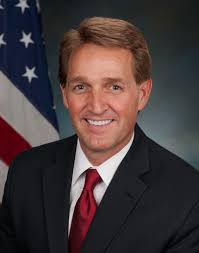
  1. Senator Jeff Flake

Unknown-2Flake (Republican-Arizona) said, “”These programs are in desperate need of adult supervision. If you are using an AIDS workshop as a front for something else, that’s … just wrong.”

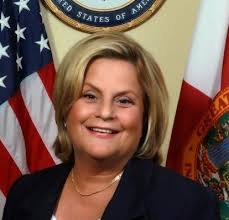
  1. Congresswoman Ileana Ros-Lehtinen.
Rep. Ileana Ros-Lehtinen


Ros-Lehtinen (Republican-FL and a Cuban-American) said, “USAID . . . [use of] measures to promote democracy in Cuba is no secret. We must continue to pressure the Castro regime and support the Cuban people, who are oppressed on a daily basis. I wish the press would dedicate more of their time to reporting the rampant human rights abuses in Cuba perpetrated by the Castro regime instead of manipulating the coverage of programs promoting freedom of expression and justice on the island.”

7. Congressman Mario Diaz-Balart.

Rep. Mario Diaz-Balart

Diaz-Balart (Republican-FL and a Cuban-American) said, “Efforts by the State Department and USAID to bring information to the Cuban people, and to find creative ways for the Cuban people to communicate with each other and with the outside world, are precisely the types of activities that the United States must vigorously pursue in closed societies. . . .Pro-democracy activities must be undertaken with discretion because the most innocuous acts are ‘crimes’ in totalitarian states. It is outrageous that the AP abandoned all pretense of objectivity and published an overtly biased hit piece against a program that enjoys broad bipartisan support.”

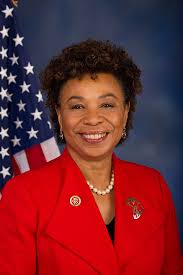
  1. Congresswoman Barbara Lee
Rep. Barbara Lee
Rep. Barbara Lee

Lee (Democrat-CA) said, “I am appalled by recent reports that the U.S. government orchestrated and funded clandestine democracy promotion efforts under the guise of public health and civic programs . . . . As co-chair of the Congressional HIV/AIDS Caucus, I am particularly concerned by the revelation that HIV-prevention programs were used as a cover. This blatant deception undermines U.S. credibility abroad and endangers U.S. government supported public health programs which have saved millions of lives in recent years around the world.

Lee also commented, “These most recent reports are particularly disturbing in light of USAID’s [Cuban social media program] fiasco first reported a few months ago. Such misguided and counterproductive programs have no place at USAID and stand to put more U.S. citizen lives at risk. Instead of this covert approach to democracy promotion; it’s long past time for American and Cuban officials to make a serious commitment to enter into open

=================================================

[1]  The foreignassistance.gov website reports that these are Appropriations for all agencies, including USAID. An USAID website says that $55.0 million was appropriated for all agencies’ Cuba programs for FY 2009-2011 and that USAID was responsible for $31.0 of those funds.

[2] The foreignassistance.gov website reports that USAID received all of the Obligated funds for these years.

[3] The foreignassistance.gov website reports that USAID spent all of the Spent funds for these years.

[4] Post, U.S. Secret Cuba Social Media Program Raises Questions about the Validity of Criticisms of Cuba by the U.S. Commission on International Religious Freedom (April 4, 2014); Post, U.S. Senate Hearing Discusses USAID’s Social Media Program for Cuba (April 9, 2014); Re-post of the Latin American Working Group, What Is Wrong with the White House’s Plan for Democracy in Cuba (April 9, 2014).

U.S. Senate Hearing Discusses USAID’s Social Media Program for Cuba

On April 8th a subcommittee of the U.S. Senate Appropriations Committee held a hearing on the upcoming funding of the U.S. Agency for International Development (USAID). One of the subjects of the hearing was the agency’s social media program for Cuba.[1]

Dr. Rahiv Shah, the USAID Administrator, testified that the program was “an attempt to promote open communications between citizens on the island nation, not a covert attempt to overthrow the government.” He also said the program “was similar to others that the agency has financed in Africa to help citizens monitor elections.”

Senator Patrick Leahy, the subcommittee chair, did not buy that explanation. He said the program was ill conceived and endangered the lives of agency workers. “It taints U.S.A.I.D. workers as spies.” He also called it a “cockamamie” idea doomed to discovery and failure and complained that the agency did not adequately describe to Congress the program it was secretly operating. His voice rising in anger at moments, Sen. Patrick Leahy, D-Vt., said, “This one from the get-go had no possibility of working.”

Senator Leahy also was clearly upset when Dr. Shah did not answer the Senator’s repeated question, “Whose idea was this [program]?” Finally Dr. Shah said he did not know who initially proposed the program before he was the agency administrator.

Another subject of Senator Leahy’s visible annoyance was Dr. Shah’s insistence that the program was legal and not covert. The Senator blamed it for further endangering the life of Alan Gross, a USAID contractor who has been imprisoned in Cuba since 2009.

Earlier this year the Senator called for fundamental changes in U.S. policies regarding Cuba. He said the U.S. needs “to modernize our policies and the frozen-in-time embargo on Americans’ travel and trade with Cuba that have accomplished nothing but to give the Cuban regime a scapegoat for the failures of the Cuban economy.  Change will come to Cuba, but our policies have delayed and impeded change.” Leahy concluded, “Let us have the common sense, and the courage, to finally put an end to the Cold War in our own hemisphere.”

——————————

[1] This post is based on articles in the New York Times, the Washington Post and the Huffington Post. An earlier post and a comment thereto discussed the recent Associated Press’ report about the program and the reactions to it.