The Reopening of U.S. and Cuba Embassies

On the morning of July 20, 2015, Cuba officially opened its Embassy in Washington, D.C., and the United States did likewise in Havana although the ceremonial opening of the latter will be on August 14 when Secretary of State John Kerry goes to Havana to preside over that event.[1]

This post will focus on the ceremonial opening of the Cuban Embassy; subsequent posts will discuss the afternoon’s joint press conference at the U.S. Department of State by U.S. Secretary of State John Kerry and Cuba’s Foreign Minister Bruno Rodriguez as well as reactions to the reopening of the embassies.

Opening of Cuba’s Embassy

Cuban Embassy
Cuban Embassy (Photo by Andrew Hamik)

Cuba’s opening was celebrated in the morning by the raising of its flag in front of its former Interests Section building. It was the same flag that was removed 54 years ago when the two countries severed diplomatic relations.

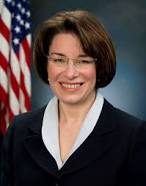
The event was attended by more than 500 people, including U.S. Assistant Secretary of State Roberta Jacobson, who led the U.S. delegation in negotiations with Cuba after the December 17, 2014, announcement of rapprochement; Tom Malinowski, Assistant Secretary for Democracy, Human Rights and Labor of the State Department, who has participated in those negotiations; Jeffrey DeLaurentis, current charge d’affaires of the U.S. Embassy in Havana; Ben Rhodes, U.S. Deputy National Security Advisor who led 18 months of behind-the-scenes secret negotiations with Cuban officials with the aim of restoring diplomatic ties; Wayne Smith, a Cuban expert who was forced to leave the U.S. Embassy in Havana in 1961 when the two countries broke diplomatic ties; U.S. Senators Patrick Leahy (Dem, VT), Amy Klobuchar (Dem., MN) and Jeff Flake (Rep., AZ) along with U.S. Representatives Barbara Lee (Dem., CA), Donna Edwards (Dem., MD), Kathy Castor (Dem., FL), Karen Bass (Dem., CA) and Raul Grijalva (Dem., AZ).[2]

Afterwards Senator Klobuchar, the author of a bill to end the U.S. embargo (Freedom to Export to Cuba Act), said in a press release, “The opening of the Cuban embassy in Washington, DC, marks an important step in modernizing our relationship with Cuba after more than 50 years of isolation. This evolution in our relationship with 11 million people 90 miles off of our shore was long overdue, and it is now time to not only open our own fully equipped and staffed embassy in Havana, but to lift the trade embargo once and for all. Passing my bipartisan bill to lift the embargo would benefit the people of both of our countries by boosting U.S. exports and allowing Cubans greater access to American goods.”[3]

Foreign Minister Rodriguez’s Speech

The attendees then went inside the Embassy, where they heard a speech by Cuba’s Foreign Minister, Bruno Rodriguez. Here are excerpts from those remarks.

The Cuban flag now flying in front of the Embassy “embodies the generous blood that was shed, the sacrifices made and the struggle waged for more than one hundred years by our people for their national independence and full self-determination, facing the most serious challenges and risks. Today we pay homage to all those who died in its defense and renew the commitment of the present generations, fully confident on the newer ones, to serve it with honor.”

“We evoke the memory of José Martí, who was fully devoted to the struggle for the freedom of Cuba and managed to get a profound knowledge about the United States: In his “North American Scenes” he made a vivid description of the great nation to the North and extolled its virtues. He also bequeathed to us a warning against its excessive craving for domination [over Cuba] which was confirmed by a long history of disagreements.”

“We’ve been able to make it through this date thanks to the firm and wise leadership of Fidel Castro Ruz, the historic leader of the Cuban Revolution, whose ideas we will always revere with utmost loyalty. We now recall his presence in this city, in April of 1959, with the purpose of promoting fair bilateral relations, as well as the sincere tribute he paid to Lincoln and Washington. The purposes that brought him to this country on such an early time [of the Cuban Revolution] are the same that have pursued throughout these decades and coincide exactly with the ones that we pursue today.”

“This ceremony has been possible thanks to the free and unshakable will, unity, sacrifice, selflessness, heroic resistance and work of our people and also the strength of the Cuban Nation and its culture.”

“I bring greetings from President Raúl Castro, as an expression of the good will and sound determination to move forward, through a dialogue based on mutual respect and sovereign equality, to a civilized coexistence, even despite the differences that exist between both governments, which makes it possible to solve bilateral problems and promote cooperation and the development of mutually beneficial relations, just as both peoples desire and deserve.”

“We know that this [rapprochement] would contribute to peace, development, equity and stability in the continent; the implementation of the purposes and principles enshrined in the U.N. Charter and in the Proclamation of Latin America and the Caribbean as a Zone of Peace, which was signed at the Second Summit of the Community of Latin American and Caribbean States held in Havana.”

“Today, the re-establishment of diplomatic relations and the re-opening of embassies complete the first stage of the bilateral dialogue and pave the way to the complex and certainly long process towards the normalization of bilateral relations.”

“The challenge is huge because there have never been normal relations between the United States of America and Cuba, in spite of the one and a half century of intensive and enriching links that have existed between both peoples.”

“The Platt Amendment, imposed [on Cuba by the U.S.] in 1902 under a military occupation, thwarted the liberation efforts that had counted on the participation or the sympathy of quite a few American citizens and led to the usurpation of a piece of Cuban territory in Guantánamo. Its nefarious consequences left an indelible mark in our common history.”

“In 1959, the [U.S.] refused to accept the existence of a fully independent small and neighboring island and much less, a few years later, a socialist Revolution that was forced to defend itself and has embodied, ever since then, our people’s will.”

“I have referred to history to reaffirm that today an opportunity has opened up to begin working in order to establish new bilateral relations, quite different from whatever existed in the past. The Cuban government is fully committed to that.”

“Only the lifting of the economic, commercial and financial blockade which has caused so much harm and suffering to our people; the return of the occupied territory in Guantánamo; and the respect for Cuba’s sovereignty will lend some meaning to the historic event that we are witnessing today.”

“Every step forward will receive the recognition and the favorable acceptance of our people and government, and most certainly the encouragement and approval of Latin America and the Caribbean and the entire world.

“We reaffirm Cuba’s willingness to move towards the normalization of relations with the [U.S.] in a constructive spirit, but without any prejudice whatsoever to our independence or any interference in the affairs that fall under the exclusive sovereignty of Cubans.”

[For the U.S.] to insist in the attainment of obsolete and unjust goals, only hoping for a mere change in the methods to achieve them will not legitimize them or favor the national interest of the [U.S.] or its citizens. However, should that be the case, we will be ready to face the challenge.”

“We will engage in this process, as was written by President Raúl Castro in his letter of July 1st to President Obama, “encouraged by the reciprocal intention of developing respectful and cooperative relations between our peoples and governments. From this Embassy, we will continue to work tirelessly to promote cultural, economic, scientific, academic and sports relations as well as friendly ties between our peoples.”

“We would like to convey the Cuban government’s respect and recognition to the President of the [U.S.] for urging the U.S. Congress to lift the blockade as well as for the change of policy that he has announced [last December], but in particular for the disposition he has showed to make use of his executive powers for that purpose.”

“We are particularly reminded of President Carter’s decision to open the respective Interests Sections back in September of 1977.” We also “express our gratitude to the members of Congress, scholars, religious leaders, activists, solidarity groups, business people and so many U.S. citizens who worked so hard for so many years so that this day would come.”

“To the majority of Cubans residing in the [U.S.] who have advocated and called for a different kind of relation of this country with our Nation, we would like to express our recognition. Deeply moved, they have told us that they would multiply their efforts and will remain faithful to the legacy of the patriotic emigration that supported the ideals of independence.”

“We would like to express our gratitude to our Latin American and Caribbean brothers and sisters who have resolutely supported our country and called for a new chapter in the relations between the [U.S.] and Cuba, as was done, with extraordinary perseverance, by a lot of friends from all over the world.”

“From this country José Martí organized the Cuban Revolutionary Party to conquer freedom, all the justice and the full dignity of human beings. His ideas, which were heroically vindicated in his centennial year, continue to be the main inspiration that moves us along the path that our people have sovereignly chosen.”

Opening of U.S. Embassy

 With the ceremonial opening of the U.S. Embassy in Havana not happening until August 14, the changes there were subtler. There was no raising of the U.S. flag. There was no changing of the sign on the building. The U.S. diplomats who previously worked in the Interests Section now worked in the Embassy. A future post will review the ceremonial opening of the Embassy, now scheduled for August 14.

===============================================

[1] This post is based upon the following: Ahmed & Davis, U.S. and Cuba Reopen Long-Closed Embassies, N.Y. Times (July 20, 2015); Schwartz, Embassies Reopen, as U.S., Cuba Restore Ties, W.S.J. (July 20, 2015); Ayuso, ‘Mojito diplomacy’ as Cuba reboots US relations in reopened embassy, El Pais (July 21, 2015); Gómez, Cuban flag waves in U.S. capital, Granma (July 20, 2015); Gómez, The flag day, Granma (July 21, 2015).

[2] The famous Cuban-American jazz pianist and a resident of Minnesota, Nachito Herrera, was invited to attend the opening of the Cuban Embassy, but unfortunately had to decline because of previously scheduled performances at the Dakota Jazz Club in Minneapolis with his new group The Universals, featuring saxophonist Mike Phillips, who has worked with Prince and Stevie Wonder; Cuban drummer Raul Pineda; Senegal bassist Cheikh Ndoye; and violinist Karen Briggs. (Bream, On special day for Cuba, Nachito Herrera gets emotional at the Dakota, StarTribune (July 21, 2015).) As previously noted in this blog, Nachito has frequently performed at Minneapolis’ Westminster Presbyterian Church.

[3] A similar press release was issued by Senator Leahy.

Additional Information About U.S. Reactions to the U.S.-Cuba Restoration of Diplomatic Relations

Granma, the official newspaper of the Communist Party of Cuba, published an article regarding U.S. reactions to the restoration of diplomatic relations between the U.S. and Cuba.[1]

It reported positive reactions from Democratic Senators Patrick Leahy, Chris Murphy, and Ben Cardin and from Republican Senator Jeff Flake and Republican Representative Bradley Byrne.

Others expressing support were Hillary Clinton, former Secretary of State and current candidate for president in 2016, and Wayne Smith, a former head of the U.S. Interests Section in Cuba.

Opposition, Granma reported, came from Republican Senators Marco Rubio and Ted Cruz; Republican Representatives John Boehner and Ileana Ros-Lehtinen; and Republican presidential candidate, Jeb Bush.

The article also included a reference to a public opinion survey taken May 27-June 17, 2015, by the Chicago Council on Global Affairs that showed that “Americans favor lifting the trade embargo on Cuba and believe the proposed changes in U.S.-Cuba relations will have mutual benefits.” More specifically, the survey demonstrated the following:

  • “Two in three Americans (67 percent) support the United States ending the trade embargo with Cuba.”
  • “Support for ending the embargo is bipartisan, with majorities of Democrats (79 percent), Republicans (59 percent) and Independents (63 percent) all in favor of lifting the ban on U.S. trade with Cuba.”
  • “A majority of Americans are very or somewhat confident that the proposed changes in U.S.-Cuba relations will have benefits for both countries. Majorities of Americans say the changes will help the Cuban economy (70 percent), help U.S. businesses (62 percent), improve living standards in Cuba (60 percent), improve the image of the United States in the world (57 percent), improve human rights in Cuba (54 percent) and improve political freedoms in Cuba (53 percent).”
  • “Majorities of all partisan groups are very or somewhat confident that the proposed changes in U.S.-Cuba relations will help the Cuban economy (78 percent of Democrats, 65 percent of Republicans, 70 percent of Independents).”
  • “Otherwise, Democrats and Independents are more confident than Republicans in the benefits. Majorities of both Democrats and Independents are confident that the changes will help U.S. businesses (75 percent of Democrats, 61 percent of Independents) and improve Cuban standards of living (71 percent of Democrats, 59 percent of Independents), while Republicans are divided (50 percent each). Democrats are also more confident than Republicans that the proposed changes in U.S.-Cuba relations will improve the image of the United States in the world (74 percent of Democrats, 45 percent of Republicans, 52 percent of Independents), improve human rights in Cuba (68 percent of Democrats, 38 percent of Republicans, 55 percent of Independents) and improve political freedoms in Cuba (65 percent of Democrats, 39 percent of Republicans, 53 percent of Independents).”

==================================================
[1] Positive reaction to reestablishment of diplomatic relations dominates within the U.S., Granma (July 2, 2015); Chicago Council on Global Affairs, As U.S., Cuba Make Embassy Announcements, Chicago Council Survey Shows Americans Support Ending Cuba Trade Embargo (July 1, 2015).


U.S. Announces Agreement To Restore Diplomatic Relations with Cuba

On July 1, 2015, the U.S. and Cuba announced an agreement to restore diplomatic relations. This post will discuss the U.S. announcement and reactions.[1] A subsequent post will do the same for the Cuban announcement and reactions.

U.S. Announcement

President Obama & Vice President Biden

In the White House’s Rose Garden, President Obama announced the plans to reopen the embassies. Here is what he said:

  • “More than 54 years ago, at the height of the Cold War, the United States closed its embassy in Havana.  Today, I can announce that the United States has agreed to formally re-establish diplomatic relations with the Republic of Cuba, and re-open embassies in our respective countries.  This is a historic step forward in our efforts to normalize relations with the Cuban government and people, and begin a new chapter with our neighbors in the Americas.”
  • “When the United States shuttered our embassy in 1961, I don’t think anyone expected that it would be more than half a century before it re-opened.  After all, our nations are separated by only 90 miles, and there are deep bonds of family and friendship between our people.  But there have been very real, profound differences between our governments, and sometimes we allow ourselves to be trapped by a certain way of doing things.”
  • “For the United States, that meant clinging to a policy that was not working.  Instead of supporting democracy and opportunity for the Cuban people, our efforts to isolate Cuba despite good intentions increasingly had the opposite effect -– cementing the status quo and isolating the United States from our neighbors in this hemisphere.  The progress that we mark today is yet another demonstration that we don’t have to be imprisoned by the past. When something isn’t working, we can -– and will –- change.”
  • “Last December, I announced that the United States and Cuba had decided to take steps to normalize our relationship.  As part of that effort, President Raul Castro and I directed our teams to negotiate the re-establishment of embassies.  Since then, our State Department has worked hard with their Cuban counterparts to achieve that goal.  And later this summer, Secretary Kerry will travel to Havana formally to proudly raise the American flag over our embassy once more.”
  • “This is not merely symbolic.  With this change, we will be able to substantially increase our contacts with the Cuban people.  We’ll have more personnel at our embassy.  And our diplomats will have the ability to engage more broadly across the island.  That will include the Cuban government, civil society, and ordinary Cubans who are reaching for a better life.”
  • “On issues of common interest –- like counterterrorism, disaster response, and development -– we will find new ways to cooperate with Cuba.  And I’ve been clear that we will also continue to have some very serious differences.  That will include America’s enduring support for universal values, like freedom of speech and assembly, and the ability to access information.  And we will not hesitate to speak out when we see actions that contradict those values.”
  • “However, I strongly believe that the best way for America to support our values is through engagement.  That’s why we’ve already taken steps to allow for greater travel, people-to-people and commercial ties between the United States and Cuba.  And we will continue to do so going forward.”
  • “Since December, we’ve already seen enormous enthusiasm for this new approach. Leaders across the Americas have expressed support for our change in policy; you heard that expressed by President Dilma Rousseff of Brazil yesterday.  Public opinion surveys in both our countries show broad support for this engagement. . . .
  • “Here in the United States, we’ve seen that same enthusiasm.  There are Americans who want to travel to Cuba and American businesses [that] want to invest in Cuba.  American colleges and universities . . . want to partner with Cuba.  Above all, Americans who want to get to know their neighbors to the south. And through that engagement, we can also help the Cuban people improve their own lives.”
  • “Americans and Cubans alike are ready to move forward.  I believe it’s time for Congress to do the same.  I’ve called on Congress to take steps to lift the embargo that prevents Americans from travelling or doing business in Cuba.  We’ve already seen members from both parties begin that work.  After all, why should Washington stand in the way of our own people?”
  • “Yes, there are those who want to turn back the clock and double down on a policy of isolation.  But it’s long past time for us to realize that this approach doesn’t work.  It hasn’t worked for 50 years.  It shuts America out of Cuba’s future, and it only makes life worse for the Cuban people.”
  • So I’d ask Congress to listen to the Cuban people.  Listen to the American people.  Listen to the words of a proud Cuban-American, Carlos Gutierrez, who recently came out against the policy of the past, saying, ‘I wonder if the Cubans who have to stand in line for the most basic necessities for hours in the hot Havana sun feel that this approach is helpful to them.’”
  • “Of course, nobody expects Cuba to be transformed overnight. But I believe that American engagement — through our embassy, our businesses, and most of all, through our people — is the best way to advance our interests and support for democracy and human rights.  Time and again, America has demonstrated that part of our leadership in the world is our capacity to change.  It’s what inspires the world to reach for something better.”
  • “A year ago, it might have seemed impossible that the United States would once again be raising our flag, the stars and stripes, over an embassy in Havana.  This is what change looks like.”
  • “In January of 1961, the year I was born, when President Eisenhower announced the termination of our relations with Cuba, he said:  It is my hope and my conviction that it is ‘in the not-too-distant future it will be possible for the historic friendship between us once again to find its reflection in normal relations of every sort.’  Well, it took a while, but I believe that time has come.  And a better future lies ahead.”
Secretary John Kerry

The same day Secretary of State John Kerry from Vienna, Austria also discussed the plans, including his intent to travel to Havana for the opening of the embassy later this month. His statement included the following:

  • “Later this summer, as the President announced, I will travel to Cuba to personally take part in the formal reopening of our United States Embassy in Havana. This will mark the resumption of embassy operations after a period of 54 years. It will also be the first visit by a Secretary of State to Cuba since 1945. The reopening of our embassy . . . is an important step on the road to restoring fully normal relations between the United States and Cuba. Coming a quarter of a century after the end of the Cold War, it recognizes the reality of the changed circumstances, and it will serve to meet a number of practical needs.”
  • “The United States and Cuba continue to have sharp differences over democracy, human rights, and related issues, but we also have identified areas for cooperation that include law enforcement, safe transportation, emergency response, environmental protection, telecommunications, and migration. The resumption of full embassy activities will help us engage the Cuban Government more often and at a higher level, and it will also allow our diplomats to interact more frequently, and frankly more broadly and effectively, with the Cuban people. In addition, we will better be able to assist Americans who travel to the island nation in order to visit family members or for other purposes.”

In addition, the State Department conducted a special briefing by a senior official on this historic development. This individual said, “We’re confident that our embassy in Havana will be able to operate similar to other embassies operating in restrictive environments. We will be able to meet and exchange opinions with a variety of voices and views both within the government and outside. We’ll be able to engage a broad range of Cuban civil society and citizens.” The conditions for “access to diplomatic facilities, travel of diplomats, and the level of staffing . . . are acceptable for carrying out the core diplomatic functions necessary for implementing the President’s new policy direction on Cuba.” There were not any agreed “constrains or restrictions” on the exact types of programs or facilities that each of our embassies conducts.

According to the State Department spokesperson, there will be future discussions or negotiations with Cuba over human rights, telecommunications, health issues, fugitives, law enforcement, U.S. claims for property expropriation, Cuban claims for damages under the embargo and U.S. broadcasts to the island. Until there is a nomination and confirmation of an ambassador, Jeffrey DeLaurentis will be the charge d’affaires and will lead the embassy.

Jeffrey DeLaurentis & Marcelinio Medina

Also earlier the same day Cuba’s Foreign Ministry confirmed that the head of the US Interests Section in Cuba, Jeffrey DeLaurentis, had delivered to the Acting Foreign Minister, Marcelino Medina, a letter from President Obama to Army General Raul Castro confirming “the restoration of diplomatic relations and the opening of embassies in the respective countries” on or after July 20. Here is the text of that letter:

  • “I am pleased to confirm, after high-level talks between our two governments, and in accordance with international law and practice, that the United States of America and the Republic of Cuba decided to restore diplomatic relations and permanent diplomatic missions in our respective countries 20 July 2015. This is an important step forward in the normalization process, which started last December, with regard to relations between our two countries and peoples.”
  • “In making this decision, the United States are encouraged by the mutual intention to enter into friendly and cooperative relations between our two peoples and governments, consistent with the purposes and principles enshrined in the Charter of the United Nations, in particular those relating to equality sovereign states, the settlement of international disputes by peaceful means, respect for the territorial integrity and political independence of States, respect for the equal rights and self-determination of peoples, non-interference in internal affairs States as well as promoting and encouraging respect for human rights and fundamental freedoms for all.”
  • “The United States and Cuba are parties to the Vienna Convention on Diplomatic Relations, signed in Vienna on April 18, 1961, and the Vienna Convention on Consular Relations, signed in Vienna on April 24, 1963. I am pleased to confirm the understanding the United States that the above conventions apply to diplomatic and consular relations between our two countries.”

Although the U.S. can easily change the plaque on its building in Havana to one proclaiming that it is the Embassy of the United States of America, the State Department has said it needs $6.6 million to retrofit the building to make it suitable as an embassy. This may require a supplemental appropriation by Congress.

The U.S. will need an Ambassador to Cuba, and such an appointment needs to be confirmed by the U.S. Senate. In the meantime, as just noted, the U.S. has a capable career diplomat running the interests section, Jeffrey DeLaurentis, who will be in charge.

Reactions to the Announcement

The announcement of re-establishment of diplomatic relations drew widespread praise. Senator Jeff Flake (Rep., AZ) stated, “It’s long past time for U.S. policy toward Cuba to be associated with something other than five decades of failure. It is difficult to overstate the importance of resuming diplomatic relations ‎with Cuba, in furthering our own national interests, benefiting our relations in the region, and encouraging a positive future for the Cuban people. I am confident that this move will lead to increased travel and contact between U.S. citizens and everyday Cubans, to the benefit of both.” Senator Amy Klobuchar (Dem., MN), a co-sponsor of a bill to expand U.S. travel to Cuba and the author of a bill to lift the trade embargo, said, “This is the first step that must happen in order to lift the embargo.” Democratic Senators Patrick Leahy (VT) and Benjamin Cardin (MD) issued similar positive statements.

Engage Cuba, a bipartisan public policy organization dedicated to coalescing and mobilizing American businesses, non-profit groups and concerned citizens for the purpose of supporting the ongoing U.S.‐Cuba normalization process and enacting legislation to reform U.S. travel and trade restrictions with Cuba, issued a statement of support. It said, “We applaud this important step in bringing the U.S. and Cuba closer together, and urge Congress to hasten the day when American travelers and companies have the freedom to engage with one of our nearest neighbors. Opening embassies in Washington and Havana is an important step toward the day when Americans can make their own decisions on where they travel, and our businesses can compete with the rest of the world. We are making history by making it clear that America’s engagement isn’t a concession, it is a show of strength and the best way to promote our values and create opportunities for both Americans and the Cuban people.”

Moreover, said Engage Cuba, “A vast majority of the American people – and 97% of the Cuban people – support re-establishing diplomatic relations. Today is a great day for the American and Cuban people who seek a brighter future for their two countries. After 54 years of a failed Cold war policy, better days finally lie ahead.”

A similar supportive statement came from the Center for Democracy in the Americas (CDA), which is “devoted to changing U.S. policy toward the countries of the Americas by basing our relations on mutual respect, fostering dialogue with those governments and movements with which U.S. policy is at odds, and recognizing positive trends in democracy and governance” and which is a member of Engage Cuba. CDA stated, “”This is a moment we have been working toward for many years. The restoration of diplomatic relations between our countries is a major achievement that will help to heal decades of mistrust and will open opportunities for the U.S. and Cuba to collaborate on issues of mutual interest like immigration, environmental conservation, and regional trade. We applaud the tireless work of Cuban and U.S. diplomats, policymakers, academics, and activists who have helped make this possible. We are ready to work with all our allies to defend these positive steps initiated by President Obama and to move forward with removing the embargo once and for all.”

The day before this announcement, President Obama held a joint press conference at the White House with the visiting President of Brazil, Dilma Rousseff.[2] In his opening remarks, Obama said, “As President, I’ve pursued a new era of engagement with Latin America where our countries work together as equal partners, based on mutual interest and mutual respect.  As we saw at the recent Summit of the Americas, the United States is more deeply engaged in the region than we’ve been in decades, and I believe the relationship between the United States and Latin America is as good as it’s ever been.  We’re focused on the future — what we can accomplish together.”

After he had reviewed the many ways that Brazil and the U.S. cooperate, Obama commented, “And finally, we’re working together to uphold democracy and human rights across Latin America.  I very much appreciate President Rousseff and Brazil’s strong support for our new opening toward Cuba.  I updated Dilma on our progress, including our work to open embassies in Havana and Washington.  And I believe that Brazil’s leadership in the region, as well as its own journey to democracy and a market economy can make it an important partner as we work to create more opportunities and prosperity for the Cuban people.”

In her response President Rousseff remarked about “the importance for Latin America of the recent decision made by President Obama and by President Raul Castro, even with the partnership with Pope Francis to the effect of opening up relations with — or resuming relations with Cuba, a very decisive milestone and point in time in U.S. relations with Latin America.  It is really about putting an end to the lingering vestiges of the Cold War.  And it ultimately elevates the level of the relations between the U.S. and the entire region. May I acknowledge the importance of that gesture to all of Latin America and also to world peace at large.  It is an important example of relations to be followed.”

These thoughts were echoed in the subsequent Joint Communique by the two presidents: “President Rousseff praised President Obama’s policy changes towards Cuba, and the Leaders agreed that the latest Summit of the Americas (held in Panama, on April 10 and 11, 2015) demonstrated the region’s capacity to overcome the differences of the past through dialogue, thereby paving the way for the region as a whole to find solutions to the common challenges facing the countries of the Americas.”

As anticipated, however, Senator Marco Rubio (Rep., FL), a Cuban-American, immediately issued a press release condemning the agreement.[3] It said:

  • “Throughout this entire negotiation, as the Castro regime has stepped up its repression of the Cuban people, the Obama Administration has continued to look the other way and offer concession after concession. The administration’s reported plan to restore diplomatic relations is one such prized concession to the Castro regime. It remains unclear what, if anything, has been achieved since the President’s December 17th announcement in terms of securing the return of U.S. fugitives being harbored in Cuba, settling outstanding legal claims to U.S. citizens for properties confiscated by the regime, and in obtaining the unequivocal right of our diplomats to travel freely throughout Cuba and meet with any dissidents, and most importantly, securing greater political freedoms for the Cuban people. I intend to oppose the confirmation of an Ambassador to Cuba until these issues are addressed. It is time for our unilateral concessions to this odious regime to end.”

Conclusion

I am glad that my recent concern about the delay in announcing resumption of diplomatic relations has been alleviated. This is an important development in the            reconciliation of our country with Cuba. Now all advocates for reconciliation need to notify their senators and representatives to oppose any of the measures put forward by Senator Rubio and others to try to block this important move.

======================================================

[1] This portion of the post is based upon the following: White House, Statement by the President on the Re-Establishment of Diplomatic Relations with Cuba (July 1, 2015); Letter from Barack Obama [to] Raúl Castro, Granma (July 1, 2015); Letters between Obama and Castro to restore diplomatic relations, el Pais (July 1, 2015); Kerry, Statement on Cuba (July 1, 2015); State Dep’t, Special Briefing on Re-Establishment of Diplomatic Relations with Cuba (July 1, 2015); Baker & Davis, U.S. and Cuba Reach an Agreement to Reopen Embassies, Officials Say, N.Y. Times (June 30, 2015); Schwartz, Córdoba & Lee, U.S., Cuba Reach Agreement to Establish Full Diplomatic Relations, W.S.J. (June 30, 2015); Center for Democracy in Americas, Press Release: CDA Applauds Announcement That U.S. And Cuba Will Reopen Embassies (June 30, 2015); Minister for Foreign Affairs will receive †he Head of †he Section of Interests of the United States, Granma (July 1, 2015); Ayuso, Cuba and the United States announced the reopening of embassies on Wednesday, El Pais (July 1, 2015); Flake, Re-Establishment of Diplomatic Relations with Cuba (June 30, 2015); Engage Cuba, Press Release: Statement from Engage Cuba on Announcement that U.S., and Cuban Embassies Will Re-open (July 1, 2015); Rubio, Rubio Comments On Obama Re-Establishing Diplomatic Relations With Cuba (July 1, 2015)

[2] This portion of the post is based upon the following: White House, Remarks by President Obama and President Rousseff of Brazil in Joint Press Conference (June 30, 2015); White House, Joint Communique by President Barack Obama and President Dilma Rousseff (June 30, 2015); Harris, Leader of Brazil Visits Amid Home Turbulence, N.Y. Times (June 30, 2015).

[3] Senator Rubio in a letter to Secretary Kerry in June “vowed to oppose the confirmation of any ambassador until issues like human rights, fugitive terrorists and billions of dollars of outstanding claims were resolved.” The Senator said it is “important that pro-democracy activities not be sacrificed in the name of ‘diplomacy’ just so that we can change the name of a building from ‘Interest Section’ to ‘Embassy,’ ” Similar negative press releases came from other Cuban-Americas in the Congress: Senator Robert Menendez (Dem., NJ) and Republican Representatives from Florida, Ileana Ros-Lehtinen and Mario Diaz-Balart.


Why Did Senator Patrick Leahy and Two Other Senators Make A Trip to Cuba Last Week?

On June 25 three U.S. Senators arrived in Cuba: Senators Patrick Leahy (Dem., VT) and Ben Cardin (Dem., MD), who have been there before, and Senator Dean Heller (Rep., NV). There has been no recent development that seems to have prompted this trip, which prompts the question: why this trip at this time?[1]

The U.S. Interests Section in Havana said they were there to focus “on continued progress towards normalization of relations between the United States and Cuba.”

Upon arrival in Havana, Senator Leahy said, “I’m glad to see things are changing between our countries, and the more they change, the faster they change, the better for both countries.”

They met with (i) Miguel Diaz-Canel, Cuba’s First Vice President and heir-apparent to Raul Castro, (ii) Josefina Vidal Ferreiro, Director General of the U.S. Ministry of Foreign Affairs, and (iii) other Foreign Ministry officials. They discussed relations between Cuba and the United States and the debate currently taking place in the U.S. Congress on the elimination of restrictions on travel and trade with Cuba and the lifting of the U.S. embargo (blockade).They also met with religious leaders, ambassadors and others in Havana and the eastern city of Santiago.

Senators Heller, Leahy & Cardin
Senators Heller, Leahy & Cardin in Havana

At a press conference in Havana on June 27, Senator Leahy asserted, “The embargo has been an error of American policy.” He also said, “I’ve been here three times since the announcements of December 17, and “I see a new, very positive change in Cuba.”


Leahy added, “Obviously we still have differences, but I look forward to the United States being able to have a real embassy here. We hope that [the opening of embassies] can be very soon. Some in Congress oppose the opening, but I like to think that they are minority. We must open a full embassy. ​​We have a magnificent ambassador here and the staff and appropriate facilities. I like to think that the U.S. is a great country, and our embassies should reflect that.”

Senator Cardin said the delegation made clear to Cuban officials that the path to normalization must include dealing with thorny issues where the U.S. and Cuba have serious disagreements, such as human rights. “For normal relations to move down a productive path, it’s critically important for Cuba to recognize that it is out of step today with international human rights issues.”

The only Republican in the group, Senator Heller on his first visit to Cuba, said, “When the president is right, I support Obama, and he is right in the case of Cuba. Heller acknowledged that there is still much resistance to change in Congress. One way to overcome this resistance, he said, was for Americans to travel to Cuba to talk to people and see the reality with their own eyes. “That will change minds and hearts as has happened to me.” Heller, by the way, is a member of the Senate Committee on Finance; its Banking, Housing, and Urban Affairs Committee; its Committee on Veterans’ Affairs; its Commerce, Science, and Transportation Committee; and the Senate Special Committee on Aging.

A number of Cuba initiatives are pending in the Senate, including a bill to remove the travel ban on Americans and a more ambitions bill to rescind the decades-old U.S. economic embargo, but these proposals are opposed by the Republican leadership in control of the Senate and the House of Representatives. The three senators in Havana thought there were better prospects for progress on Cuba legislation in their chamber. Senator Heller observed, “I think the Senate can move the House, but the Senate’s going to have to act first.”

The reasons for this Republican resistance to reconciliation were captured by Héctor E. Schamis, Adjunct Associate Professor at Washington, D.C.’s Georgetown University, who said:

  • The Republican Party, “the former pragmatic party of big business, is increasingly a party of ideology and short-term electioneering.Their incentives are to protect their districts–socially homogeneous, culturally and ideologically dogmatic and uniform– attributes that rise to the surface in such varied topics as immigration, gay marriage … or the Cuban transition. Its social base is the pure and simple anti-communism, which is also old. It is a reading of the world backward, not forward. Ignore the demographic change in the Cuban-American community, where the younger they are, the more they support the strategy of Obama. The Republican Party does not know that for these young people, Castro and Napoleon belong to the same place: the history books.”

Conclusion

At the start of this post, I said there has been no recent development that seems to have prompted this trip. That is true and reveals, in my opinion, the reason for this trip at this time. By now many in the U.S. at least were expecting that the two countries would have announced that they were re-establishing diplomatic relations and thus converting their interests sections into embassies. Keys for that anticipated announcement in June were the May 29, 2015, U.S. rescission of its designation of Cuba as a “state sponsor of terrorism;” the Cuban Interests Section establishing a banking relationship with a bank in Florida; and a reported agreement regarding conditions for U.S. diplomats’ travel in Cuba.

Thus, in my opinion, the reason for this trip at this time was for Senator Leahy to attempt to determine whether there was some unknown reason from the Cubans for the lack of such an announcement and to press them to conclude the agreement for re-establishing diplomatic relations. Leahy also in the private discussions with the Cuban Foreign Ministry officials may have talked about political reasons from the U.S. perspective to have an announced re-establishment of diplomatic relations as soon as possible. After all, in his public comments in Havana, Leahy stressed the desire for a prompt opening of embassies and the need for the U.S. to open a full embassy.

Let us hope that in the next few days or weeks there will be an announcement of the resumption of diplomatic relations.

=========================

[1] This post is based upon the following: Assoc. Press, Leahy Heads US Senate Delegation to Cuba Ahead of Embassies, N.Y. Times (June 26, 2015); Diaz-Canel received US Senators, Granma (June 26, 2015); Miguel Diaz-Canel meets with US Senator Patrick Leahy, Marti (June 26, 2015); Senator Leahy in Havana: The blockade has been an error of US policy, CubaDebate (June 27, 2015); Gomez, Normalization is the right way, say US senators in Havana, Granma (June 27, 2015); Assoc. Press, US Sen. Leahy Sees ‘Positive Change,’ Work to Do in Cuba, N.Y. Times (June 27, 2015); Reuters, U.S. Senators Visit Cuba, Hope Congress Will Ease Restrictions, N.Y. Times (June 27, 2015); Schamis, Obama’s Cuba and its discontents, El Pais (June 28, 2015).


Two Major U.S. Groups Urge Congress To Promote U.S. Trade and Travel with Cuba

This month two major U.S. groups have reiterated pleas to Congress to promote U.S. trade and travel with Cuba. They are the United States Agricultural Coalition for Cuba and Engage Cuba. Here is a report on those efforts.

U.S. Agricultural Coalition for Cuba

On June 8, 2015, the Agricultural Coalition, an association of more than 90 U.S. agricultural companies and state and national organizations committed to normalizing exports of food and agricultural products to Cuba, sent a letter to the U.S. Senate Foreign Relations.[1]

The letter reiterated the Coalition’s opposition “to any effort to restrict trade and travel with the nation of Cuba—including possible amendments to appropriations bills or the State Department reauthorization bill.” Any such restriction “would be detrimental to the U.S. agricultural industry and the future of U.S.-Cuba relations.”[2]

Indeed, the letter continued, Coalition members “share a commitment to liberalizing trade between the United States and Cuba.  We support Congressional action to expand opportunities for U.S. agriculture by normalizing commercial relations with Cuba and, ultimately, ending the Cuban embargo.”

Because of existing restrictions in U.S. law about trade with Cuba, the letter further stated, the U.S. agriculture “industry is losing out on valuable opportunities to market U.S. food and agriculture products in Cuba. U.S. farmers, ranchers, and food businesses should not be losing out to other countries like Brazil, Canada, Argentina, Vietnam, and countries in the European Union.  Cuba is a logical export market for the U.S. industry.”

Engage Cuba

On June 16, 2105, Engage Cuba formally commenced its operations in Washington, D.C. as a coalition of major corporations, business associations and non-profit groups. Its members include the National Foreign Trade Council, the National Association of Manufacturers, the Consumer Electronics Association, the Council of the Americas, the American Society of Travel Agents, Third Way, #CubaNow, the Cuba Study Group and the Center for Democracy in the Americas. It also works directly with many leading businesses, including Procter & Gamble, Cargill, Caterpillar, Choice Hotels and The Havana Group,[3]

This coalition on June 16 started an ad campaign called “Guess What?” that is being broadcast on Fox News, MSNBC and CNBC. It calls for ending travel and trade bans on Cuba.[4]

The Engage Cuba press releases stated the various provisions that seek to halt reconciliation with Cuba that House Republicans had inserted into pending appropriations bills. He said they were “like the last gasps of a defeated army that’s in retreat. They are just trying to delay the inevitable. The Senate will not support those versions of the bill[s] and the White House already has said they would [veto them]. So they [have a] zero chance of becoming law.”

This theme about pending legislation was expanded in a June 16 article by Williams and two other Engage Cuba leaders (Steven Law and Luke Albee).[5] They said, “While there are plenty of big fights still to be had, bipartisan progress is clearly emerging on an unlikely issue: Cuba policy.” As “examples of seeking compromise and working across party lines,” they cited the bill to end the ban on U.S. travel (S.299) offered by Republican Senator Jeff Flake (AZ) and Democratic Senator Patrick Leahy (VT) and the recent bill to end the embargo (S.1543) offered by Republican Senator Jerry Moran (KS) and Independent Senator Angus King (ME).

Engage Cuba, they said, “reflects that same bipartisan spirit. The founder of the group (James Williams) is a public policy adviser to philanthropists with strong ties to the Obama Administration. Its top two advisers come from opposite sides of the political barricades: Steven Law runs American Crossroads and Luke Albee is a well-known Democrat who served more than two decades in Congress as Chief of Staff to Sens. Leahy and Warner (Dem.,VA).”

This article concluded with an urgent call for that bipartisan spirit and effort to combat “provisions . . . [to House of Representatives’] funding bills to try to roll Cuba policy back to a Cold War posture, even as embassies are in the process of being announced. The bills immediately drew veto threats, and it’s clear they have little chance of getting through the Senate with those measures. However, progress isn’t going to be made by fighting rear-guard actions; we need to move our policy toward Cuba in a new, positive direction.”

On January 15, Senator Jeff Flake (Rep., AZ) hosted a party at a Washington, D.C. bar to celebrate the launching of Engage Cuba. People from that coalition were joined by other senators; Roberta S. Jacobson, the Assistant Secretary of State for Western Hemisphere Affairs and the U.S.’ chief negotiator in the Cuba talks; and José Ramón Cabañas Rodriguez, Cuba’s ambassador-in-waiting as chief of mission at the Cuban Interests Section in Washington.

Flake,  Rodriguez, collin and Roberts
Rodriguez, Flake, Collins and Roberts

Senator Flake had just returned from another trip to Cuba, this time with Senators Susan Collins (Rep., ME) and Pat Roberts (Rep., KS). Here is a photo ot the three of them with Cuba’s Foreign Minister, Bruno Rodriguez Parrilla. Afterwards, on June 15 Flake said, “To see where we are today is really heartening. The feeling I had the last couple of visits to Cuba is that the reforms . . . that have been made are irreversible. It’s full steam ahead.”[6]

Conclusion

All supporters of U.S.-Cuba reconciliation should thank both of these organizations for their efforts to do the same while also urging their Senators and Representatives to oppose the House Republican rear-guard efforts.

===================================================

[1] This Agricultural Coalition letter was the subject of an article in Cuba’s state-owned newspaper, Granma: U.S. agricultural coalition opposes trade and travel restrictions against Cuba. Granma (June 15, 2015) Prior posts discussed the Coalition’s January 2015 launching and its March 2015 trip to Cuba.

[2]  Pending policy bills against reconciliation and the anti-reconciliation inserts in appropriations bills have been discussed in posts on May 26 and 28 and June 2, 10, 12 and 16.

[3] Torres, Major U.S. companies support new group that will lobby to lift sanctions against Cuba, Miami Herald (June 16, 2015). A prior post discussed the organization of Engage Cuba. Engage Cuba already helped helping negotiate an agreement between the Florida-based Stonegate Bank and the Cuban Interests Section in Washington to resume bank transactions for the Cuban diplomatic mission, an essential requirement for the reestablishment of diplomatic relations and the conversion of the Section to the Cuban Embassy. The group’s website has a useful page of Facts about public opinion on reconciliation in the U.S. and in Cuba, the potential Cuban market for U.S. products and services, statements of prominent individuals supporting reconciliation and lists of reconciliation-supportive businesses, agricultural organizations, faith-based and religious organizations, human rights, development and policy organizations, and labor, environmental and travel organizations. Another useful feature of the website is a form for individuals to send an email to their members of Congress.

[4] The TV ad itself is available online, and the ad is a subject of a press release from the group.

[5] Williams, Law & Albee, On Cuba, a bipartisan path emerges, The Hill (June 16, 2015).

[6] Calmes, New Group Enjoys Thaw in U.S.-Cuba Relations with a Party, N.Y. Times (June 17, 2015)

Another U.S. Coalition for U.S.-Cuba Reconciliation

Engage Cuba, another U.S. coalition supporting U.S.-Cuba reconciliation, is to be officially launched on June 15th.[1]

This new nonprofit advocacy group will lobby Congress to repeal the ban against doing business in or traveling to the island nation. Its goal is to create an “umbrella organization”, bringing together people from different sectors, which have different approaches and perspectives, but agree upon this reconciliation. One of its financial backers is the National Foreign Trade Council, which represents major corporations and lobbies for expansion of U.S. international trade and which has its own broader coalition (USA*Engage) against U.S. unilateral trade sanctions, including those against Cuba.

The president of Engage Cuba, James Williams, has said, “There is a broad consensus emerging from business, agriculture, policy experts, and civil society generally that Congress must end antiquated trade and travel restrictions on Americans that stand in the way of more meaningful engagement with the Cuban people.” Moreover, he has said, the Republican Party now controlling both houses of Congress has no reason to oppose this change, not even out of principle: “Republicans believe in the power of the free market and in speaking out in support of America’s values anywhere and everywhere.”

An example of such Republican support was a January 2015 joint letter to President Obama from seven prominent Republican Senators (Jeff Flake (AZ), Rand Paul (KY), Jerry Moran (KS), Pat Roberts (KS), Mike Enzi (WY), John Boozman (AR) and Susan Collins (ME). They said, “With the significance of your recent announcements related to Cuba, we look forward to Congress turning its attention toward modernizing U.S.-Cuba policy to the benefit of U.S. citizens and the Cuban people alike. Congress must play an integral role in reforming our policy toward Cuba.”

Engage Cuba’s participants include several prominent Republicans. A top advisor is Steven Law, former Deputy Secretary of Labor in the George W. Bush Administration and current president of the American Crossroads super PAC, which backs Republican candidates and causes. Kristen Chadwick, former Special Assistant to President George W. Bush for Legislative Affairs, will manage much of the lobbying in the House of Representatives. Billy Piper, a former top aide to Sen. Mitch McConnell, will manage the Senate lobbying.

The group also has the involvement of Democratic supporters. Luke Albee worked as an aide to Senator Patrick Leahy (Dem., VT), a strong supporter of the policy change towards Cuba. Luis Miranda, the former White House director of Hispanic media and an aide to President Obama, helped conceive of the group.

An earlier coalition with a similar purpose is the United States Agricultural Coalition for Cuba that was launched in January of this year and that in early March organized a large delegation’s visit to Cuba.

====================================================

[1] This post is based upon the following: Tau, Top GOP, Democratic Consultants to Push Congress to End Cuba Embargo, W.S.J. (April 16, 2015); Ortiz, Engage Cuba Advocates Normal U.S.-Cuba Relations, OnCuba (April 27, 2015); Gomez, A coalition against the blockade in the corner of the white house, Granma (May 20, 2015) (Google translation). The group’s website does not yet have any substantive content.


Senate Hearing on Expanding U.S. Agricultural Trade with Cuba

On April 21st the U.S. Senate Committee on Agriculture, Nutrition and Forestry held a hearing, “Opportunities and Challenges for Agriculture Trade with Cuba.”[1]

 Chairman’s Opening Statement

Senator Pat Roberts
Senator Pat Roberts

The Committee Chair, U.S. Senator Pat Roberts (Rep., KS), opened the hearing by stating, “At the beginning of this Congress, I was hopeful that trade would be one area where we could work across the aisle to find agreement. I am still hopeful that is the case. . . . International trade of American agriculture products is critical…critical to the nation’s economy and critical to our Kansas farmers and ranchers. I have long fought to eliminate barriers to trade, and I believe that we should continue to work towards new market access opportunities for our agriculture products.”

“The United States and Cuba have a long history full of contention and instability. There is no shortage of opinion from members of Congress about the relationship between our two countries, both present and future. Some are concerned about human rights, others about socioeconomic ideology. But those concerns are not what this committee will focus on this morning. Today we are here to discuss the role of agriculture – opportunities and challenges – in Cuba.”

“This is not an issue that we are going to be able to fix overnight. It will take efforts in addition to bills in Congress to truly normalize trade with Cuba. The decisions that are made regarding increased trade with Cuba must be made carefully.”

“Four months ago the President announced a major shift in U.S. policy towards Cuba. It is my hope that in the future, the President will work with Congress to determine the best path forward. Foreign policy does not happen in a vacuum. We have to take a realistic approach and work out a step-by-step plan towards lifting the embargo. This is a goal that should include Congress.”

“Today we will hear from an impressive panel of experts, from the regulators responsible for writing our policies toward Cuba, to the producers who seek to grow the market for their products. I understand that, like myself, many of our witnesses here have traveled to Cuba to see first-hand what challenges and opportunities exist.”

“Agriculture has long been used as a tool – not a weapon – for peace and stability. It is my hope that Cuba will embrace the practices of free trade, enterprise and commerce, so that both countries will gain from increased relations.”

“Earlier this year, the U.S. Agriculture Coalition for Cuba was launched. They have shared a statement and additional information in support of our work today, [which was] entered into the record.”

Ranking Member’s Opening Statement

Senator Debbie Stabenow

Senator Debbie Stabenow (Dem., MI), the Ranking Committee Member, said, “Improving trade with Cuba represents not only a great opportunity for America’s farmers, ranchers, and manufacturers, but a meaningful way to help rebuild trust between our nations.  After more than 50 years of stalemate, it’s time for a new policy on Cuba.”

“When I visited Cuba earlier this year – just days after President eased some trade restrictions – I saw firsthand the eagerness of Cubans who want to develop a more effective relationship with the [U.S.] But we can only get there if we begin to take meaningful steps to soften many of the barriers that exist between us.”

“And America’s farmers and ranchers are uniquely positioned to lead the way. Consider this – in 2014, the U.S. exported just over $290 million in agricultural goods to Cuba. That’s a good start, but for a country only 90 miles off our coast, we can do much more. Cuba’s own import agency estimates that it will receive approximately $2.2 billion (in U.S. dollars) worth of food and agricultural products this year alone.”

“That type of economic potential deserves a chance to succeed – and is one reason why many of the largest producer groups, trade associations, and companies from within agriculture have come together to push for increased engagement.”

“Many on this Committee have pushed for increased engagement and have taken the opportunity to visit Cuba in recent months. I’d like to recognize Senators Leahy and Klobuchar, as well as Senator Boozman and Heitkamp, for their bipartisan leadership on this issue.”

“The commitment to democratic ideas and human rights we share as Americans are best realized through engagement. Our bedrock principles accompany every product farmers and ranchers send to Cuba.”

“Last week’s action by the President [in rescinding the designation of Cuba as a “state sponsor of terrorism”] is a step forward toward in normalizing our relationship and will test the commitment of the Cuban government to this process.”

“But even while we are making significant progress in rebuilding our relationship with Cuba – the policies governing trade between our countries are not yet designed to allow a steady flow of goods and services. We must find a path forward that allows U.S. financial institutions to safely and securely work with Cuban purchasers, including the extension of lines of credit. And we should work to authorize a greater range of goods, services, and supplies for export to Cuba. These measures not only make good business sense – they also will help build Cuba’s agricultural capacity and make the island a better trading partner in the long run.”

The Witnesses at the Hearing

 The witnesses at the hearing were the following: (1) The Honorable Michael T. Scuse, Under Secretary, Farm and Foreign Agriculture Services, U.S. Department of Agriculture; (2) Mr. Matthew Borman, Deputy Assistant Secretary, Bureau of Industry and Security, U.S. Department of Commerce; (3) Mr. John Smith, Acting Director, Office of Foreign Assets Control, U.S. Department of the Treasury; (4) Mr. Michael V. Beall, President & CEO, National Cooperative Business Association; (5) Mr. Terry Harris, Senior Vice President, Marketing and Risk Management, Riceland Foods; (6) Mr. Ralph Kaehler, Farmer and Owner, K-LER Cattle Company, St. Charles , MN; (7) Mr. Doug Keesling, Fifth Generation Owner, Keesling Farms, Kansas Wheat, Chase , KS; and (8) Dr. C. Parr Rosson III, Professor & Department Head, Department of Agriculture Economics, Texas A&M University.

 Witness Ralph Kaehler

Senator Amy Klobuchar

Minnesota’s Senator Amy Klobuchar, who is a member of the Committee and the author of the Freedom to Export to Cuba Act (S.491) ending the U.S. embargo of Cuba, introduced Ralph Kaehler, whose family has been operating a livestock, row crop, and canning vegetable farm in Minnesota for nearly 130 years.

The Senator prefaced her introduction with this statement: “For too long, export and travel restrictions have prevented American farmers and ranchers from seeking opportunities in Cuba. That is why I have introduced bipartisan legislation to lift the trade embargo on Cuba, and this hearing allowed us to focus on how we can ensure that our farmers and ranchers benefit from normalized relations between our two countries.”

Mr. Kaehler testified that his farm was “an exhibitor in the First U.S./Cuba Food and Agriculture Exposition [in Havana] in 2002.” It “was the only one with live animals— affectionately known as the ‘Cuban Ark’ . . . to exhibit the diversity of U.S. livestock producers, and to introduce Cuba to the typical USA farm family.”

“Since then, the Kaehler Family has led over 10 trade delegations to Cuba. These missions have included producers from seven different states and a bipartisan mix of state lawmakers and officials. To date, some of the most successful exports to Cuba we have facilitated include shipments of livestock, dried distillers grains, powdered milk, animal milk replacer, and texturized calf feed.”

“Given the opportunity, U.S. farmers do well in Cuba. We have a significant advantage of shorter shipping over Europe, South America, Asia, and other major exporters. In addition, Cuba can take advantage of U.S. rail container service and sizing options, which also brings significant benefits to smaller privately owned businesses like ours. On top of all this, the U.S. produces a wide variety of affordable and safe food products that Cubans want to eat.”

“Unfortunately, some of the policies currently in place diminish the natural advantages American agriculture enjoys over its competitors. For instance, requirements for using third country banks for financing adds a lot of paperwork, time, and personalities to every transaction. Coupled with a restrictive cash‐in advance shipping policy . . . there is a very small margin for error before a shipper faces demurrage fees. As a family operation trying to build our business through exports, this self‐inflicted inefficiency can be tough to manage.”

Mr. Kaehler then made three specific recommendations to Congress. “First, . . . improve the trade financing rules for Cuba. . . . Second, . . . small firms like ours . . . need marketing support and assistance [from USDA] to help support our companies and figure out exactly what’s going on in markets abroad. . . . [Third,] I hope that Congress will expand the universe of people involved in U.S.‐Cuba trade by allowing a greater variety of goods and services to be traded.”

=========================================================

[1] A quick examination of the official websites of the Committee’s 20 members reveals that seven have made statements favoring at least some aspects of U.S.-Cuba reconciliation (Boozman (Rep., AK), Brown (Dem., OH), Heitkamp (Dem., ND), Hoeven (Rep., ND), Klobuchar (Dem., MN), Leahy (Dem., VT) and Stabenow (Dem., MI)). Only two have negative statements about that reconciliation (Grassley (Rep., IA) and Perdue (Rep., GA)). The other eleven members‘ websites do not reveal any position on Cuba (Bennet (Dem., CO), Casey (Dem., PA), Cochran (Rep., MS), Donnelly (Dem., IN), Ernst (Rep., IA), Gillibrand (Dem., NY), McConnell (Rep., KY), Roberts (Rep., KS), Sasse (Rep., NE), Thune (Rep., SD) and Tillis (Rep., NC)). A more thorough examination of the records of the last 11 would probably uncover other indications of their positions on reconciliation with Cuba.


New Details About U.S. Secret Normalization Negotiations with Cuba

A prior post referred to the secret U.S.-Cuba negotiations that resulted in the December 17, 2014, announcements by presidents Obama and Castro that the two countries were embarking on a process of re-establishing diplomatic relations and resolving many issues that have accumulated over the last 50 years. Another post described the involvement of Pope Francis in these negotiations.

Now Reuters reports the following new details about these subjects.

Originally the breakthrough was thought to be the result of such secret negotiations over the prior 18 months (or since June 2013). Now, says Reuters, the process really began in December 2012 when President Obama after reelection with 48% of the Cuban-American vote instructed aides to make Cuba a priority and “see how far we could push the envelope,” according to Ben Rhodes, a Deputy National Security Advisor who played a central role in shaping Cuba policy.

The next month, January 2013, Ricardo Zuniga, Obama’s top Latin American adviser, went to Miami and met with a representative of the anti-Castro Cuban American National Foundation and with young Cuban-Americans, the latter of whom helped confirm the waning influence of older Cuban exiles who have traditionally supported the half-century-old embargo.

By April 2013, the White House was ready to proceed with the Cubans by quietly proposing back-channel talks after getting notice that Havana would be receptive. Obama initially froze out the State Department on these developments in part due to concern that its “vested interests” would still be bent on perpetuating a confrontational approach. Even Secretary of State John Kerry was informed of the talks only after it appeared they might be fruitful.

In any event, the secret negotiations started in June 2013 in Ottawa, Canada. The Cubans opened with harangues about the embargo and other perceived wrongs. Rhodes, age 37, responded, “Look I wasn’t even born when this policy was put in place … We want to hear and talk about the future.”

The Cubans in these initial sessions also insisted on an exchange of the remaining three of “The Cuban Five” in U.S. prison for U.S. citizen, Alan Gross, in Cuban prison. Obama refused such a deal because Washington denied Gross was a spy and because Obama did not want a three-for-one trade. As a result by the end of 2013, the negotiations had stalled.

At a January 2014 negotiating session in Toronto, however, the U.S. proposed – to the Cubans’ surprise – Cuba’s releasing Rolando Sarraff, a spy for the U.S. who had been imprisoned in Cuba since 1995, and thereby enabling the U.S. to claim it was a true “spy swap” and giving it political cover. But the Cubans dis not immediately agree to release Sarraff, a cryptographer who Washington says helped it disrupt Cuban spy rings in the U.S.

While the Sarraff proposal was still on the table, but not yet accepted by Cuba, President Obama held a White House meeting in February 2014 with certain lawmakers, including Democratic Senators Patrick Leahy and Dick Durbin. Obama stressed his opposition to a straight Gross-Cuban Three trade, and Durbin “raised the possibility of using the Vatican and the Pope as intermediaries.”

Thereafter Senator Leahy persuaded two unnamed Roman Catholic cardinals to ask Pope Francis to raise Cuba and the prisoners when he was scheduled to hold a private audience with Obama in March.

At that private audience, as reported in a prior post, Francis and Obama did discuss the U.S.-Cuba situation, and the Pope in June sent letters to Obama and Castro urging reconciliation and the prisoner exchange. Francis’ involvement also provided Obama with political coverage against future criticism by Cuban-American Senators Robert Menendez (Dem., NJ) and Marco Rubio (Rep., FL) and others.

In October 2014 (before the U.S. mid-term elections) the deal was finalized in Rome, where the U.S. and Cuban teams met separately with Vatican officials, then all three teams together.

In early December Rhodes and Zuniga met the Cubans again to nail down logistics for the December 17 announcements of prisoner releases, easing of U.S. sanctions, normalization of U.S.-Cuba relations and Cuba’s freeing of 53 political prisoners.


Strobel, Spetalnick & Adams, How Obama Outmaneuvered Hardliners and cut a Cuba Deal, Reuters (Mar. 23, 2015),


Reuters, , N.Y. Times (Mar. 23, 2015), How Obama Outmaneuvered Hardliners and Cut a Cuba Deal

http://www.nytimes.com/reuters/2015/03/23/us/politics/23reuters-cuba-usa-insight.html

Cuba’s Reactions to U.S.-Cuba Reconciliation

Determining the overall reactions of Cubans to the December 17th announcement of their country’s embarking on a path of reconciliation with the U.S. is difficult for anyone, much less a non-Cuban living in Minnesota. Nevertheless, I will attempt to do so based upon generally available information filtered through my having been to Cuba on three church mission trips over the past 12 years, my listening to others from my church who have been on other such trips, my talking with Cubans on the island and in the U.S. and following carefully the news on this subject during these years. My analysis also endeavors to put myself in the shoes of Cubans in this historical moment.

This analysis focuses first on the actions of the leaders of the Cuban government and  then on the reactions of the Cuban people.

The Cuban Government

First, the Cuban government over 18 months conducted secret negotiations with the U.S. government to achieve the breakthrough on December 17th when President Raûl Castro announced this important development to the Cuban people.

At that time Castro said, “We need to learn to live together in a civilized way, with our differences,” He also exulted in the release of the three Cuban agents from U.S. prison, saying it was  a cause of “enormous joy for their families and all of our people.” He praised President Obama with these words””This decision by President Obama deserves respect and recognition by our people.”

Subsequently President Raûl Castro has made other statements reiterating his government’s commitment to the process of reconciliation while also emphasizing some of the difficulties in achieving complete normalization.

  • In his December 20th speech to Cuba’s National Assembly, President Castro said, “The Cuban people are grateful [for Mr. Obama’s decision] to remove the obstacles to our relations.” He also stated, “”In the same way that we have never demanded that the United States change its political system, we will demand respect for ours.”
  • At the January 28th CELAC conference in Costa Rica, President Castro stated, “The reestablishment of diplomatic relations is the beginning of a process of . . . normalization of  bilateral relations, but this will not be possible as long as the [U.S. embargo or] blockade exists, or as long as the territory illegally occupied by the Guantanamo Naval Base is not returned, or radio and television broadcasts which violate international norms continue, or just compensation is not provided our people for the human and economic damage that they have suffered.” In essence, he said, “Cuba and the United States must learn the art of civilized co-existence, based on respect for the differences which exist between both governments and cooperation on issues of common interest. . . . [In doing so Cuba will not ] renounce its ideals of independence and social justice, or abandon a single one of our principles, nor cede a millimeter in the defense of our national sovereignty.” Raul Castro continued, “If these problems are not resolved, this diplomatic rapprochement between Cuba and the United States makes no sense.”

Raúl’s brother, Fidel Castro, belatedly voiced his guarded approval. On January 27th, Fidel said,“I do not trust the politics of the United States, nor have I exchanged a word with them, but this is not, in any way, a rejection of a peaceful solution to conflicts. Any peaceful or negotiated solution to the problems between the United States and the peoples or any people of Latin America that doesn’t imply force or the use of force should be treated in accordance with international norms and principles. We will always defend cooperation and friendship with all the people of the world, including with our political adversaries.” His brother, Fidel said, had “taken the relevant steps in line with the prerogatives and authorities awarded to him by the National Assembly and the Cuban Communist Party.”

Moreover, the Cuban government has fulfilled its obligations under the accord with the U.S. to release from its jails and prisons Alan Gross, a U.S. spy and 53 Cuban dissidents.

In addition, Cuba hosted a visit of a delegation of U.S. Senators and Representatives led by Senator Leahy and the January 21-22 diplomatic conference in Havana to discuss additional steps of normalization. Although no significant agreements were reached on specific issues, both governments spoke of the spirit of respect and cooperation that was present in those sessions. The diplomatic conference was discussed in posts before and after the sessions.

The day before this conference, a senior official from Cuba’s foreign ministry told reporters that it was “unfair” to keep Cuba on the U.S. list of state sponsors of terrorism and that Cuba “cannot conceive of re-establishing diplomatic relations” while Cuba remains on that list.”

After the conference, Cuba’s top diplomat for U.S. affairs, Josefina Vidal, said, “One can’t think that in order to improve and normalize relations with the U.S., Cuba has to give up the principles it believes in. Changes in Cuba aren’t negotiable.” She also objected to allowing U.S. diplomats on the island to have liberty to go anywhere until they conducted themselves with total respect for Cuban laws. The last point was in response to the U.S. insistence that its diplomats in Havana have the unrestricted ability to travel within the country and to meet with whomever it wants, including Cuban dissidents. Vidal re-emphasized this position in an extensive February 2nd interview in Granma, Cuba’s only newspaper. 

The Cuban People [2]

As there are no national public opinion polls in Cuba, assessing such opinion relies on a melange of sources.

Immediately after the December 17th announcement of the detente, Granma reported that the Cuban people were “overjoyed to the two great events of the day, year and century: the return to the country of three Cuban heroes who were previously incarcerated in U.S. prisons, and the announcement of the reestablishment of diplomatic relations between Cuba and the U.S.”

The day after the announcement a Western journalist reported that “many Cubans expressed hope . . .  that it will mean greater access to jobs and the creature comforts taken for granted elsewhere, and lift a struggling socialist economy where staples like meat, cooking oil and toilet paper are often hard to come by. That yearning, however, was tempered with anxiety. Some fear a cultural onslaught, or that crime and drugs, both rare in Cuba, will become common along with visitors from the United States. There is also concern that the country will become just another Caribbean destination.”

Another western journalist, William Neuman, this last Christmas made a 17-hour car trip around the island and observed that in his “conversations with Cubans about the lifting of parts of the American embargo and the re-establishment of diplomatic relations, what they talked about most was that they hoped it would breathe life into the economy and eventually lead to a better standard of living.”

In early January an Associated Press journalist interviewed 10 of the 53 Cuban dissidents who were released from jail or prison by the Cuban government as part of the December 17th announcement, and eight of them “expressed confidence the decrease in tensions with the U.S. will improve life in Cuba and make their activism easier. Only one had a negative view of the deal.”

More recently, on January 23rd in Havana U.S. Assistant Secretary of State Roberta Jacobson hosted a meeting in Havana of certain Cuban dissidents, as discussed in a prior post. Some of those in attendance were opposed to the detente while others supported it. (The Cuban government was very unhappy over this meeting.)

On February 3rd a subcommittee of the U.S. Senate Foreign Relations Committee held a hearing about the detente. Four of the witnesses were the following Cuban dissidents. 

  • Berta Soler, President of Cuban Ladies in White, testified about the continued arrests and harassment of dissidents by the Cuban government.
  • Mrs. Miriam Levia, a human rights advocate and independent journalist, testified, “While many dissidents and opponents support the new approach of the American Administration in the relations with the Cuban government, others do not. Nevertheless, the objective is the same: defense of human rights, democratic values, and friendship and assistance to the Cuban people. Likewise in the opposition and dissidence, we all seek the wellbeing and progress of the Cuban people and our country.” She added, “Reestablishing relations will grant a better environment for the American diplomats in Cuba, their contacts with the Cuban population and the civil society, and their ability to access a direct channel to the national officials, among other issues. Normalizing the 56 years long estrangement will take a long time. But there is now a unique opportunity to assist the Cuban people and it must not be wasted. . . .The American policy towards the Cuban government has disserved it for 56 years, so it must be changed. The embargo must be lifted for the benefit of our peoples and nations.”
  • Manuel Cuesta Morúa, representing the Progressive Arc and Coordinator of New Country, testified, “Do not believe that the change in U.S. policy will bring us freedom, which would be the best outcome. The freedom of Cuba is exclusively a matter for Cubans. But believe me, that new policy will give us better options for us to obtain it by ourselves.”
  • Rosa Maria Paya, a member of Christian Liberation Movement and Daughter of Slain Dissident Oswaldo Paya Sardińas, testified,  ““Your government must move forward and extend a hand to the people and government of Cuba, but with the request that the hands of Cuban citizens not be tied. Otherwise, the opening will only be for the Cuban government, and will be another episode of an international spectacle full of hypocrisy. A spectacle that reinforces oppression, and plunges the Cuban people deeper into the lie and total defenselessness, seriously damaging the desire of Cubans for the inevitable changes to be achieved peacefully. The pursuit of friendship between the United States of America and Cuba is inseparable from the pursuit of liberty. We want to be free and be friends.” God bless and protect our peoples.”

This January David Adams of Reuters reported that “most Cubans firmly oppose U.S. policies and the long economic embargo . . .  but admire U.S. culture. Many have relatives living in the United States, Cuban teenagers listen more to rap and hip hop than to home-grown son and salsa, and baseball is the country’s most popular sport.”  Adams cites three examples:

  • Miguel Barnet, a poet and anthropologist and a member of Cuba’s powerful Council of State,  “fondly recalls his teenage years in the 1950s, attending one of Havana’s elite private schools, singing in the Episcopal church choir and performing in American musicals.‘I love North American culture, I was shaped by it.’”
  • The official historian of Havana, Eusebio Leal, added, “We never burned an American flag in Cuba. We Cubans don’t have our hands soaked in American blood. There is no anti-American hatred here.”
  • Camilo Martinez, the operator of a small Havana bed and breakfast, said, “Everyone wants to see what the future will bring. They can taste the consumer benefits in the future. No one can stop this. Everyone wants to work with people in the United States, we all have friends and relatives there …. Everyone can see the future: McDonald’s, Home Depot, Walmart.”

A first-time visitor to Cuba reported in January  that If you ask [Cubans] about politics, the response often starts with a deep breath or shrug. Cubans are mostly interested in economic improvement, one invariably hears, and an intangible ‘normal’ in their lives.”

Another measure of the Cuban people’s desperate economic conditions and their reactions to the detente was a post-December 17th surge in the number of U.S. Coast Guard interdictions of Cubans attempting to reach the U.S. illegally in rafts. They apparently were motivated in part by fear that the detente would mean an end to the U.S. “wet foot/dry foot” immigration policy allowing Cubans who reached U.S. soil to remain in the country.

Conclusion

The Cuban government clearly has concluded that an accord with the U.S. was in Cuba’s national interest. It potentially reduces, if not eliminates, a feared hostile U.S. intervention. It should lead to increased U.S. investment in Cuba and increased U.S. tourism, all benefiting the Cuban economy and the economic lives of many of its citizens. Such positive impacts will be enhanced by the anticipated abolition of the U.S. embargo or blockade of the island. These considerations for Cuba presumably were enhanced by the increasing economic troubles, if not possible  implosion, of Venezuela, which has been a major Cuban benefactor.

On the other hand, the Cuban government has recognized, as has the U.S., that there are many difficult problems that have accumulated over the last 50-plus years that must be addressed, but will not be easy to resolve.

I concur in the observations of the previously mentioned journalists that most Cubans have warm feelings toward the American people and culture and are hopeful that the accord will result in improvements in their daily lives.

=========================================

[1] Reuters, Cuba’s Castro Hails New Era of Living Together with U.S., N.Y. Times (Dec. 18, 2014); Cave, Raúl Castro Thanks U.S., but Reaffirms Communist Rule in Cuba, N.Y. Times (Dec. 20, 2014);  Reuters, Cuba Says U.S.Must Respect Its Communist System, N.Y. Times (Dec. 20, 2014); Assoc. Press, Cuba Digs in Heels on Concessions as Part of Better US Ties, N.Y. Times (Jan. 25, 2015); Burnett, Fidel Castro Shares Views on Warming of Relations, N.Y. Times (Jan. 27, 2015); President Raúl Castro speaks to third CELAC Summit in Costa Rica, Granma (Jan. 29, 2015); Assoc. Press, Raul Castro: US Must Return Guantanamo for Normal Relations, N.Y. Times (Jan. 28, 2015); Reuters, Raul Castro Warns U.S. Against Meddling in Cuba’s Affairs, N.Y. Times (Jan. 28, 2015), Escobar, The blockade has not ended, Granma (Feb. 2, 2015) (extensive interview of Josefina Vidal); Reuters, Cuba Sounds Warning Ahead of Next Round of U.S. Talks, N.Y. Times (Feb. 3, 2015); Reuters, Exclusive–U.S. Pressing Cuba to Restore Diplomatic Ties before April: Officials, N.Y.Times (Feb. 6, 2015).

[2] Assoc. Press, Hope and Some Fear in Cuba Amid Thaw with US, N.Y. Times (Dec. 18, 2014); Hernandez, Cuba overjoyed, Granma (Dec. 18, 2014); Assoc. Press, Coast Guard Reports Surge in Cubans Trying to Reach Florida, N.Y. Times (Jan. 5, 2015); Neuman, Cuban Road Trip: Reporter’s Notebook, N. Y. Times (Jan. 7, 2015); Assoc. Press, Freed Cuban Dissidents Praise Detente, Pledge Push for Change, N.Y. Times (Jan. 13, 2015); Adams, Cubans Look Fondly to U.S. as Talks to Resume Relations Start, N.Y. Times (Jan.21, 2015); Assoc. Press, For First-Time Visitor, Havana Is Charming-And Complicated, N.Y. Times (Jan. 24, 2015); DeYoung, As normalization talks begin, Cubans begin anticipating challenges to come, Wash. Post (Jan. 24, 2015); Miroff, Fear of immigration policy change triggers new wave of Cuban migrants, Wash. Post (Jan. 27, 2015); U.S. Senate Foreign Relations Committee, Subcommittee on Western Hemisphere, Hearing: Understanding the Impact of U.S. Policy changes on Human Rights and Democracy in Cuba (Feb. 3, 2015).

Bills To End U.S. Embargo of Cuba Introduced in House of Representatives

Two bills to end the U.S. embargo of Cuba have been filed in the House of Representatives, but so far nothing in the Senate. [1] This post will examine the status of those two bills and the positions on the embargo of Minnesota’s U.S. Senators and Representatives

 The Current Bills To End the Embargo

 On January 15th three Minnesota Congressmen—Keith Ellison, Collin Peterson and Rick Nolan, all Democrats—announced that they are co-sponsoring a bill to end the U.S. embargo of Cuba (H.R. 403) that was introduced on January 16th by Representative Charles Rangel (Dem., NY).[1] Titled “To lift the trade embargo on Cuba, and for other purposes,” neither its text nor its summary is currently available on the Library of Congress’ website for pending legislation. [2]

This bill along with another bill to the same effect (H.R. 274 by Congressman Bobby Rush (Dem., IL)) have been assigned for consideration to the following seven House committees, whose membership is listed in the hyperlinked websites:

  • Agriculture, whose members include Collin Peterson (the Ranking-Member), a co-author of the Rangel bill; Tom Emmer (Rep., MN); and Rodney Davis (Rep., IL), who earlier this month spoke in favor of ending the embargo at the launch of the U.S. Agricultural Coalition for Cuba.
  • Energy and Commerce, whose members include Bobby Rush (Dem., IL), the author of one of the bills to end the embargo, and Peter Welch (Dem., VT), who just visited Cuba with the group led by Senator Patrick Leahy (Dem., VT).
  • Financial Services, whose members include Representative Keith Ellison, a co-author of the Rangel bill to end the embargo (Dem., MN);
  • Foreign Affairs, whose members include Tom Emmer (Rep., MN) and Ileana Ros-Leltinen (Rep., FL), a vocal Cuban-American opponent of reconciliation;
  • Judiciary;
  • Oversight and Government Reform, one of whose members is the previously mentioned Peter Welch (Dem., VT); and
  • Ways and Means, whose members include Erik Paulson (Rep., MN) and the previously mentioned Peter Welch.

Those interested In repealing the embargo should examine the lists of the committees’ members and deciding whether and how to contact them to urge support for the Rangel bill (H.R. 403).

Minnesota Representatives and Senators’ Positions on the Embargo

One of the co-sponsors of H.R. 403, Congressman Keith Ellison, is on the Financial Services Committee, which has jurisdiction over some of the issues raised by H.R. 403. As co-chair of the House Progressive Caucus, on December 17th (the day of the announcement of normalization between the two countries) Ellison released a statement congratulating President Obama for the normalization of our relations with Cuba. It stated, “Congress must lift the trade embargo and normalize travel between our two nations, which are only 90 miles apart.” He repeated those sentiments on January 11th at Minneapolis’ Westminster Presbyterian Church’s celebratory concert with Cuban-American jazz pianist, Nachito Herrera.

Also on December 17th Representative Rick Nolan, another co-sponsor of H.R. 403, issued a statement lauding “President Obama’s decision to re-establish diplomatic relations with Cuba” and to obtain the release of Alan Gross from a Cuban prison. This was “a monumental step forward for both nations, allowing us to resume exports and trade, create more good paying jobs in the United States and move forward in our relationships with the entire Western Hemisphere.” This was “especially good news for farmers in Minnesota and around the nation, as well as for our manufacturing and high technology industries that will soon enjoy access to new markets in a nation that hungers for U.S. products and services.”

More recently the other Minnesota co-sponsor of the bill, Representative Collin Peterson, said the current restrictions against U.S. trade with Cuba “don’t do anything but give business to our competitors.” However, he added, “The question is what are the Republicans [in the House and Senate] going to allow to happen. They could well bottle these bills up.” Peterson, as mentioned, is the Ranking-Member on the Agriculture Committee, which has jurisdiction over some of the issues raised by H.R. 403.

Another Minnesota Democratic Representative, Betty McCollum, also is supportive of ending the embargo. On December 17th, she congratulated President Obama “for his efforts to normalize diplomatic relations with Cuba and to begin easing the trade restrictions between our countries. . . .[and] for his efforts to secure the release of USAID worker Alan Gross from prison in Cuba.” She added, “I will continue to work to end the trade embargo between our two countries as I have done since I came to Congress in 2001.  Ending the embargo and normalizing trade relations is good for Minnesota businesses and good for the people of Cuba.”

The other Minnesota Democratic Congressman, Tim Walz, has nothing about Cuba on his website, but in a December 18th interview by a Mankato, Minnesota television station he said he was cautiously optimistic about the White House’s changing policy toward Cuba. He said expanding trade is a good idea, but the U.S. needs to be cautious. “I think there needs to be accountability for what this regime has done,” he said, “and I’m glad this is Congress’ role to be involved, of looking at how this evolves, but I do think it’s an important step. As I’ve said, the status quo has been that way since before I was born, and it’s time to re–look at how we do business.”

Minnesota’s three Republican Congressmen—Erik Paulsen, John Kline and Tom Emmer—do not have any statements about Cuba on their websites

Congressman Erik Paulsen is a member of the Ways and Means Committee, which has jurisdiction over some of the issues raised by H.R. 403. In addition, on October 8, 2009, as a guest blogger on a Heritage Foundation website Paulsen made comments that could reflect his attitude on ending the embargo. He said, “There is another approach to stimulating the economy – a proven method to increase prosperity, grow our economy and create jobs: expansion of free trade. . . . We must make international markets more available to our exporters to help them grow. . . . In my own district, there are countless businesses, small and large, that benefit from free trade. . . . Unfortunately, there are consumers and markets across the globe that still cannot be accessed by American sellers because of high tariffs, quotas and other barriers to international trade. It’s time to knock down those barriers. . . . I have long advocated for increased trade and strong global relationships between the U.S. and nations abroad. I’ve visited India, China and several nations in Africa and the Middle East. In every country, free trade is essential for their own growth and prosperity, as well as the growth and vitality of the United States.”

I have not found anything by or about Congressman John Kline indicating his views on U.S. relations with Cuba, in general, or on ending the embargo, in particular. I especially solicit comments by anyone with more knowledge about his positions on these issues.

Minnesota’s newest Congressman and now in his very first Session, Tom Emmer, as mentioned is on the House Foreign Affairs and Agriculture Committees, each of which has jurisdiction over issues raised by H.R. 403. Moreover, his new website‘s page on “Foreign Affairs” states, “Regions such as Latin America, Africa and Asia present us with emerging opportunities to increase trade and diplomatic relations.” Maybe this is a hopeful sign for his favoring ending the embargo. Emmer also is on the Agriculture Committee, which has jurisdiction over some of the issues raised by H.R. 403.

Minnesota’s Senators

One of Minnesota’s Senators, Amy Klobuchar, favors ending the embargo and is willing to offer a bill to do just that, but wants to wait until after the Senate confirms the President’s future nomination of an ambassador to Cuba. She said, “Sometimes the best defense is a good offense. And part of that is legislation to remove the embargo. Some of this can be done by tying it to changes we want [Cuba] to make on human rights and other things. The timing is the question. We want this to be bipartisan.” In addition, as mentioned in a prior post, she was a speaker in favor of ending the embargo at the January 8th launch of the United States Agricultural Coalition for Cuba.

A prior post about Cuba’s perspective on this week’s diplomatic meetings in Havana suggests that there will not be a formal re-establishment of diplomatic relations, including appointments of ambassadors, until after the U.S. repeals its embargo of the island. Therefore, Senator Klobuchar may have to abandon her strategy of postponing Senate consideration of the embargo until after the Senate confirms the nomination of an ambassador to Cuba.

Our other Senator, Democrat Al Franken, does not have anything about Cuba on his website, but he has supported legislation calling for the normalizing of relationships with Cuba and is a co-sponsor of the Freedom to Travel to Cuba Act.

Conclusion

Robert Muse, a Washington, D.C. international trade lawyer with substantial experience in U.S. laws relating to Cuba, recently told Minnesota’s StarTribune that “a majority of members of Congress do not support the embargo, but will not do so publicly until Cuban-American legislators come out against the embargo.” Nevertheless, he opined, “There is zero possibility of the embargo being lifted [in 2015].”[3]

This, however, is only one opinion albeit from someone with extensive experience of dealing with Congress on Cuba issues. It merely accentuates the need for citizens to increase their advocacy of ending the embargo.

================================================================

[1] To determine whether any other bills to end the embargo have been introduced in this Session of Congress, just go to the THOMAS legislative service provided by the Library of Congress [http://thomas.loc.gov/home/thomas.php] and enter “Cuba” in the search box; that will retrieve all introduced bills that mention “Cuba.”

[2] H.R. 403 has 14 other co-sponsors from California, New York, Colorado, District of Columbia, Georgia, Illinois, Michigan, Mississippi, Missouri, Pennsylvania, Tennessee and Texas.

[3] Before the announcement of normalization, Muse wrote an article about the various actions the president could take regarding Cuba without prior congressional authorization.