Latest U.S. Reports on International Religious Freedom

Annually the U.S. Department of State, pursuant to statutory authorization, releases a report on the status of religious freedom in every country in the world.[1] In addition, the quasi-independent U.S. Commission on International Religious Freedom releases annual reports on the same subject for selected countries.[2]

It should be noted at the outset that these two agencies are not seeking to impose on the rest of the world the U.S. constitutional prohibition of the “establishment of religion” or of “abridging the free exercise [of religion].” [3] Instead the agencies reports rely upon this definition of the freedom in the Universal Declaration of Human Rights: “Everyone has the right to freedom of thought, conscience and religion; this right includes freedom to change his religion or belief, and freedom, either alone or in community with others and in public or private, to manifest his religion or belief in teaching, practice, worship and observance.” Similar provisions are found in several multilateral human rights treaties.[4]

The post will review the latest State Department report on this subject for all 194 other countries in the world and the Commission’s latest report on 29 countries plus one large region (Western Europe).[5]

Latest State Department Report

USDeptStateseal

After emphasizing the importance of religious freedom, the State Department’s May 20, 2013, report “tells stories of courage and conviction, but also recounts violence, restriction, and abuse. While many nations uphold, respect, and protect religious freedom, regrettably, in many other nations, governments do not protect this basic right; subject members of religious minorities to violence; actively restrict citizens’ religious freedom through oppressive laws and regulations; stand by while members of societal groups attack their fellow citizens out of religious hatred, and fail to hold those responsible for such violence accountable for their actions.”

The report continues.”The immediate challenge is to protect members of religious minorities. The ongoing challenge is to address the root causes that lead to limits on religious freedom. These causes include impunity for violations of religious freedom and an absence of the rule of law, or uneven enforcement of existing laws; introduction of laws restricting religious freedom; societal intolerance, including anti-Semitism and lack of respect for religious diversity; and perceptions that national security and stability are best maintained by placing restrictions on and abusing religious freedom.”

Highlighted for concern by the report were “[l]aws and policies that impede the freedom of individuals to choose a faith, practice a faith, change their religion, tell others about their religious beliefs and practices, or reject religion altogether remain pervasive. Numerous governments imposed such undue and inappropriate restrictions on religious groups and abused their members, in some cases as part of formal government law and practice.” Another concern was the “use of blasphemy and apostasy laws.” They “continued to be a significant problem, as was the continued proliferation of such laws around the world. Such laws often violate freedoms of religion and expression and often are applied in a discriminatory manner.”

The report documented “a continued global increase in anti-Semitism. Holocaust denial and glorification remained troubling themes, and opposition to Israeli policy at times was used to promote or justify blatant anti-Semitism. When political leaders condoned anti-Semitism, it set the tone for its persistence and growth in countries around the world. Of great concern were expressions of anti-Semitism by government officials, by religious leaders, and by the media.”

According to the report, “Governments that repress freedom of religion and freedom of expression typically create a climate of intolerance and impunity that emboldens those who foment hatred and violence within society. Government policy that denies citizens the freedom to discuss, debate, practice, and pass on their faith as they see fit also undercuts society’s ability to counter and combat the biased and warped interpretations of religion that violent extremists propagate. Societal intolerance increased in many regions during 2012.”

Finally the report said, “Governments exacerbated religious tensions within society through discriminatory laws and rhetoric, fomenting violence, fostering a climate of impunity, and failing to ensure the rule of law. In several instances of communal attacks on members of religious minorities and their property, police reportedly arrested the victims of such attacks, and NGOs alleged that there were instances in which police protected the attackers rather than the victims. As a result, government officials were not the only ones to commit abuses with impunity. Impunity for actions committed by individuals and groups within society was often a corollary of government impunity.”

The report also acknowledged the Department’s statutory obligation to designate “Countries of Particular Concern (CPCs), i.e., those countries that are considered to commit “particularly severe violations of religious freedom,” and whose records call for the U.S. government to take certain actions under the terms of the Act. The term ‘‘particularly severe violations of religious freedom’’ means systematic, ongoing, egregious violations of religious freedom, including violations such as: (a) torture or cruel, inhuman, or degrading treatment or punishment; (b) prolonged detention without charges; (c) causing the disappearance of persons by the abduction or clandestine detention of those persons; or (d) other flagrant denial of the right to life, liberty, or the security of persons.”

Accordingly the report re-designated the following eight countries as CPCs: Burma, China, Eritrea, Iran, North Korea, Saudi Arabia, Sudan and Uzbekistan.[6]

Latest Commission Report

USCommRelFree


Under the authorizing statute, the Commission is required to designate as “countries of particular concern” (CPC) (or “Tier 1 Countries”) those that have engaged in or tolerated “particularly severe” violations of religious freedom.

In its latest report, issued on April 30, 2013, the following 15 countries were so designated: Burma, China, Eritrea, Iran, North Korea, Saudi Arabia, Sudan and Ubekistan (all of which had been designated as “Countries of Particular Concern” (CPC) by the State Department the prior year) plus Egypt, Iraq, Nigeria, Pakistan, Tajikistan, Turkmenistan and Vietnam.

The Commission also designates some countries as “Tier 2 Countries,” i.e., countries on the threshold of Tier 1 status, i.e., when their “violations . . . are particularly severe” and when at least one, but not all three, of the criteria for that status (“systematic, ongoing and egregious”) is met.

The latest report designated the following eight countries as Tier 2: Afghanistan, Azerbaijan, Cuba, India, Indonesia, Kazakhstan, Laos and Russia.[7]

The latest report also discussed six other countries (Bahrain, Bangladesh, Belarus, Ethiopia, Turkey and Venezuela and one region (Western Europe) that it monitored during the year. At first glance the monitoring of Western Europe seems anomalous, but here are the topics of concern to the Commission:

  • Restrictions on religious dress (full-face veils) in France and Belgium.
  • Failure in Sweden, Luxembourg, Switzerland, Poland, Norway and Iceland to exempt religious slaughter of animals from laws requiring prior stunning of the animals.
  • Suggestions in Germany and Norway that religious circumcisions of male children were illegal.
  • Restrictions on construction of Islamic minarets in Switzerland, and the lack of an official mosque in Athens, Greece.
  • “Incitement to hatred” and other laws in almost all European states that can be used to restrict expression of religious beliefs.
  • Reluctance in many European states to provide accommodation of religious objections to generally applicable laws.
  • Measures in France, Austria, Belgium and Germany against religious groups perjoratively characterized as “cults” or “sects.”
  • Societal intolerance, discrimination and violence based on religion or belief such as towards Muslim women with full-face veils, Jewish people and Jehovah’s Witnesses.

It should also be noted that the Commission sometimes takes an adversarial position vis-à-vis the U.S. State Department. For example, on April 30, 2013, when the Commission released its latest report, its simultaneous press release recommended that the Department designate as “Countries of Particular Concern” the seven additional countries the Commission had placed in Tier 1 as noted above.

When the Department failed to do so in its May 20th report, the next day the Commission issued a press release criticizing the Department for failure to make additional CPC designations since August 2011 and to do so for the same seven additional countries.

Conclusion

Because of my personal interest in Cuba, including its religious freedom, a subsequent post will compare and contrast the two reports regarding that country.

Such a comparison, in my opinion, will show that the State Department’s reports are more balanced and fair at least with respect to Cuba.


[2]  Id. § § 202, 205. The fascinating structure and composition of the Commission will be the subject of a future post.

[3]  U.S. Const., First Amend.

[5] A prior post examined the prior State Department report.

[6] The State Department report noted that it considers the recommendations of the Commission on CPCs, but that the Secretary of State makes the final decision on that issue. The Department’s report thereby implicitly rejected the Commission’s recommendation for an additional seven countries to be so designated.

[7] Previously the Commission called this group the “Watch List of countries where the serious violations of religious freedom engaged in or tolerated by the governments do not meet the CPC threshold, but require close monitoring.” According to the Commission, the “Watch List provides advance warning of negative trends that could develop into severe violations of religious freedom, thereby providing policymakers with the opportunity to engage early and increasing the likelihood of preventing or diminishing the violations.”


U.S. Supreme Court Severely Limits Application of the Alien Tort Statute

On April 17, 2013, the U.S. Supreme Court issued a decision in Kiobel v. Royal Dutch Petroleum Co. that severely limited the application of the Alien Tort Statute (ATS),[1] which provides that the U.S. district courts “shall have original jurisdiction of any civil action by an alien for a tort only, committed in violation of the law of nations or a treaty of the [U.S.].”[2]

The Court unanimously decided that the ATS did not cover a lawsuit by Nigerian plaintiffs for money damages against corporations incorporated in the Netherlands, the U.K. and Nigeria for their alleged aiding and abetting the Nigerian military and police’s beating, raping, killing and arresting of Nigerians and destroying and looting their property, all in Nigeria.[3]

The Court, however, differed, 5 to 4, on the rationale for this conclusion.

The Majority’s Rationale

The opinion for the Court by Chief Justice John Roberts, expressing the majority’s rationale, held that the Court’s presumption against extraterritorial application of federal statutes applies to claims under the ATS and that nothing in the ATS rebutted that presumption. Therefore, said the Chief Justice, this “case seeking relief for violations of the law of nations occurring outside the [U.S.] . . . is barred.”[4]

This presumption, according to Roberts, was recognized in these precedents from the Court in 1957, 1991, 2007 and 2010, which were referenced by him as follows:

  • The 1957 case, Benz v. Compania Naviera Hidalgo, S.A., 353 U.S. 138, 147 (1957), was merely quoted in the 1991 case to say, “For us to run interference in . . . a delicate field of international relations there must be present the affirmative intention of the Congress clearly expressed. It alone has the facilities necessary to make fairly such an important policy decision where the possibilities of international discord are so evident and retaliative action so certain.”
  • The 1991 case, EEOC v. Arabian American Oil Co., 499 U.S. 244, 248 (1991), said this presumption “serves to protect against unintended clashes between our laws and those of other nations which could result in international discord.” After the above quotation from the Benz case, the Court in the 1991 case continued, ” The presumption against extraterritorial application helps ensure that the Judiciary does not erroneously adopt an interpretation of U.S. law that carries foreign policy consequences not clearly intended by the political branches.”
  • The 2007 case, Microsoft Corp. v. AT&T Corp., 550 U.S. 437, 454 (2007), said the “presumption [assumes] that [U.S.] . . . law governs domestically but does not rule the world.”
  • The 2010 case, Morrison v. National Australian Bank Ltd., 561 U.S. ___, ___ (2010), said this canon of statutory construction provides that “[w]hen a statute gives no clear indication of an extraterritorial application, it has none.” This case, noted the Chief Justice, said “the question of extraterritorial application was a ‘merits question,’ not a question of jurisdiction.”

In discussing whether and how this presumption applied to the ATS, the Chief Justice first disposed of the Morrison case’s limitation of the presumption to the merits whereas the ATS was only jurisdictional as established by the Supreme Court in Sosa v. Alverez-Machain, 542 U.S.692, 713 (2004). Said Roberts, “the principles underlying the canon of interpretation similarly constrain courts considering causes of action that may be brought under the ATS.”

Roberts then found nothing in the ATS itself that suggested a congressional intent that it have extraterritorial application. It refers to “violations of the law of nations,” but such violations can occur in the U.S. It says it covers “any” civil action, but the Court in decisions in 1949 and 2005 had established that generic terms like “any” or “every” do not rebut the presumption. It covers actions for “torts,” but that word does not evidence such an intent.

Nor, according to Roberts, did the historical context of the 1789 adoption of the ATS overcome the presumption. At the time, as Sosa noted, two of the three recognized violations of the law of nations at the time–violation of safe conducts and infringement of the rights of ambassadors–had no extraterritorial application.

The other recognized violation in 1789–piracy–was not as easy for the Chief Justice to get around. He said, “Piracy typically occurs on the high seas, beyond the territorial jurisdiction of the [U.S.] . . . or any other country.” Although the Court “has generally treated the high seas the same as foreign soil for purposes of the presumption,” Roberts refused to regard that as evidence of congressional intent for extraterritorial application. Said Roberts, “Applying U.S. law to pirates . . . does not typically impose the sovereign will of the [U.S.] . . .  onto conduct occurring within the territorial jurisdiction of another sovereign, and therefore carries less direct foreign policy consequences. Pirates were fair game wherever found, by any nation, because they generally did not operate within any jurisdiction.”

Finally, according to Roberts, “there is no indication that the ATS was passed to make the [U.S.] . . . a uniquely hospitable forum for the enforcement of international norms . . . It is implausible to suppose that the First Congress wanted their fledgling Republic–struggling to receive international recognition–to be the first [custos morum or guardian of manners or morals of the  whole world]. Indeed, the parties offer no evidence that any nation, meek or mighty, presumed to do such a thing.”

Applying these principles to the Kiobel case itself, Roberts said “all the relevant conduct took place outside the . . .  [U.S.]. And even where the claims touch and concern the territory of the . . . [U.S.], they must do so with sufficient force to displace the presumption against extraterritorial application.” A “mere corporate presence” in the U.S. such as an office of a corporate affiliate of the corporate defendants in this case had would not suffice.

The Minority’s Rationale

The minority’s rationale was set forth in the concurring opinion of Justice Breyer, which was joined by Justices Ginsburg, Sotomayor and Kagan.

Breyer first rejected use of the presumption against extraterritoriality because the ATS’ use of “alien,” “treaties” and “the law of nations” clearly demonstrate that Congress had foreign matters in mind.

Moreover, piracy was clearly contemplated as covered by the statute in 1789 and takes place abroad. The Chief Justice’s treatment of piracy, however, Breyer implied, is erroneous. Says Breyer, “the robbery and murder that make up piracy do not normally take place on the water; they take place on a ship. And a ship is like land, in that it falls within the jurisdiction of the nation whose flag it flies.” Thus, ‘applying U.S. law to pirates’ does typically involve applying our law to acts taking place within the jurisdiction of another sovereign.”

On the other hand, Breyer agreed with Roberts that pirates “were fair game wherever found, by any nation,” but not, as Roberts said, because they did not operate within any jurisdiction, but because pirates were “common enemies of all mankind and all nations have an equal interest in their apprehension and punishment.”  Today, according to Breyer, torturers and perpetrators of genocide are today’s pirates.

Breyer then said that international jurisdictional principles justified the conclusion that ATS jurisdiction exists where “(1) the alleged tort occurs on American soil, [or] (2) the defendant is an American national, or (3) the defendant’s conduct substantially and adversely affects an important American national interest.” One such national interest, according to Breyer,  is “preventing the [U.S.] from become a safe harbor (free of civil as well as criminal liability) for a torturer or other common enemy of mankind.”

With respect to Kiobel itself, Breyer noted that the corporate defendants were foreign corporations who were present in the U.S. only through a small office of a corporate affiliate, that the plaintiffs are not U.S. nationals, that the conduct at issue took place abroad and that the alleged illegal corporate conduct was not direct, but accessory. It, therefore, “would be farfetched to believe . . . that this legal action helps to vindicate a distinct American interest.”

Conclusion

The majority’s rationale essentially obliterates the 34 years of ATS jurisprudence carefully developed by the lower federal courts. It should lead to the immediate dismissal of many pending ATS cases.[5]

I disagree with the result in this case and with the majority’s rationale because I believe that the ATS has been an important way of expanding the reach of international human rights norms and because the Congress in these 34 years has not chosen to amend the ATS to negate this jurisprudential development. Indeed, when Congress in 1991 adopted the Torture Victims Protection Act, it recognized and approved this ATS jurisprudence.

Moreover, the Supreme Court’s creation and elaboration of the presumption against extraterritorial application, I believe, is a development of the last 60 years and was not clearly known to the Congress when it initially adopted the ATS in 1789. It, therefore, seems unfair and inappropriate to employ this interpretative presumption to construe the ATS. In more recent years, on the other hand, the Congress should be aware of this presumption in drafting statutes.

I also continue to be baffled by everyone’s failure to include in the analysis of the congressional intent behind the ATS the fact that Congress in 1948 re-enacted the ATS as part of the Judicial Code (title 28 of the U.S. Code). That year–1948– was a very important year in the development of the law of nations regarding human rights.  The U.N. Charter–a treaty ratified by the U.S.–was three years old, and one of its purposes was “promoting and encouraging respect for human rights” (Article 1(3)) while its Economic and Social Council was directed to set up a commission “for the promotion of human rights” (Article 68). Such a commission was established, and in 1948 its Universal Declaration of Human Rights and its Convention on the Prevention and Punishment of the Crime of Genocide were approved by the U.N. General Assembly. Such an appreciation should broaden the types of “torts in violation of the law of nations” beyond the three discussed by the Chief Justice.

Justice Breyer’s legitimate concern for the U.S. interest in not being a safe haven for the common enemies of mankind, as discussed in a prior post, has been recognized by the Congress in several statutes–the Intelligence Reform and Terrorism Prevention act of 2004 and the Magnitsky Act of 2012–and by the legal proceedings to remove or deport such common enemies of mankind from the U.S. by the Human Rights Violators and War Crimes Center of the U.S. Immigration and Customs Enforcement agency and by the criminal prosecution of other such individuals for immigration fraud and perjury.

Finally, we must remember that this is a case of statutory interpretation, and Congress could always amend the ATS or adopt a new statute to overrule this decision. In a future post, I will set forth a draft outline of such a new statute even though I am not hopeful that this dysfunctional U.S. Congress will be prepared to take such action in the near future.


[1] The New York Times and the Washington Post obviously covered this decision. The Times editorial board criticized the decision while the Wall Street Journal reached the opposite conclusion.

[2] Many prior posts have discussed the ATS. Some of these focused on the Kiobel case itself.

[3] The Court did not address another issue presented by this case–whether corporations could be held liable under the ATS.

[4] The Chief Justice’s opinion was joined by Justices Scalia, Kennedy, Thomas and Alito. Justice Kennedy also authored a short concurring opinion, which stated, “Other cases may arise with allegations of serious violations of international law principles protecting persons, cases covered neither by the [Torture Victims Protection Act] . . . nor by the reasoning and holding of today’s case; and in these disputes the proper implementation of the presumption against extraterritorial application may require some further elaboration and explanation.” Another concurring opinion was submitted by Justice Alito joined by Justice Thomas; it said, “a putative ATS cause of action will fall within the scope of the presumption against extraterritoriality–and will therefore be barred–unless the domestic conduct is sufficient to violate an international law norm that satisfies Sosa‘s requirements of definiteness and acceptance among civilized nations.”

[5] For example, the Supreme Court’s decision should lead to the dismissal of the ATS claims against Ernesto Zedillo, the former President of Mexico, but the claims against him under the Torture Victims Protection Act should survive for the court’s ruling on the immunity issue.


Re-argument of Important Human Rights Case in U.S. Supreme Court

On October 1, 2012, the U.S. Supreme Court heard re-arguments in an important human rights case, Kiobel v. Royal Dutch Petroleum Co. (Sup. Ct. No. 10-1491).[1]

This case involves claims by a putative class of Nigerians against Netherlands/United Kingdom corporations (Royal Dutch Petroleum Co. and Shell Transport and Trading Company PLC (Shell)) for allegedly assisting in certain human rights violations in Nigeria in 1993-1995.

The claims in this case were asserted under the Alien Tort Statute (ATS) that provides that U.S. federal district courts have “jurisdiction of any civil action by an alien for a tort only, committed in violation of the law of nations or a treaty of the United States.”[2]

The order for rehearing asked the parties to address the following issue:

  • Whether and under what circumstances the [ATS] . . .  allows courts to recognize a cause of        action for violations of the law of nations occurring within the territory of a sovereign other than the United States.”

This issue was addressed in the Petitioners’ Supplemental Opening Brief; the Supplemental Brief for Respondents; the Supplemental Reply Brief for Petitioners; 31 amici curiae briefs supporting the petitioners; 14 amici curiae briefs supporting respondents; and 7 amici curiae briefs supporting neither party.  One of those not supporting either party was the U.S. Government.[3]

During the hour-long hearing the Court heard from lawyers representing the plaintiffs-petitioners, the defendants-respondents and the U.S. Government. They all were actively questioned by eight of the Justices with only Justice Thomas not participating. Those eight Justices all seemed to be searching for a way to limit the reach of the ATS, especially when such cases adversely affected U.S. foreign policy.[4]

I will not attempt to predict how the Court will resolve the case. Instead I will set forth how I think the Court should do so.

First, Corporations are not immune from lawsuits under the ATS.

Second, As the Court held in Sosa v. Alverez-Machain in 2004, the ATS is a jurisdictional statute.[5] The Court’s presumption against extraterritorial application of U.S. statutes (unless Congress specifically states otherwise), applies to statutes that impose substantive U.S. regulatory measures, not to jurisdictional statutes.[6] Therefore, there is no issue of extraterritoriality with respect to the ATS.

Third, there are various existing legal doctrines and jurisprudence that federal courts have used and should use, in appropriate cases, to dismiss ATS cases at the outset upon a motion by the defendant asserting such affirmative defenses. They include the following:

  • The court lacks personal jurisdiction over the defendant because it does not have sufficient contacts with the forum to make litigation consistent with U.S. notions of fair play and substantial justice as guaranteed by the Fifth and Fourteenth Amendments’ due process clauses.[7]
  • The case is not brought within 10 years after the acts in question under the statute of limitations borrowed from the Torture Victims Protection Act unless under established principles of equity the statute of limitations should be tolled or stayed.[8]
  • The plaintiff has failed to exhaust remedies in the country where the acts occurred unless those remedies are unavailable or futile.[9]
  • A foreign court is the more appropriate and convenient forum than an U.S. courts under the established principles of forum non conveniens.[10]
  • An individual defendant is entitled to official immunity according to the U.S. Department of State.[11]
  • A non-individual defendant is entitled to immunity under the Foreign Sovereign Immunities Act.[12]
  • The “act of state” doctrine protects the conduct in question.[13]
  • The case presents a “political question” that is inappropriate for judicial resolution.[14]
  • The case should be rejected because of concerns about its impact on U.S. foreign relations or because of “international comity.”[15]
  • The case presents an issue of U.S. state secrets that prevent adjudication of the case.[16]

Fourth, the affirmative defenses just mentioned were not raised by the defendants-respondents in                     their appeal to the U.S. Court of Appeals for the Second Circuit and, therefore, are not before            the Supreme Court for decision.

Fifth, the Second Circuit is reversed, and the case is remanded to the District Court for further        proceedings in accordance with this opinion.

Within the next four months the Court should issue its opinion(s) in this case.


[1]  Prior posts reviewed the procedural background of this case, the Second Circuit decision rejecting such liability, the initial Supreme Court argument in this case regarding whether corporations could be held liable under the ATS, and the Supreme Court’s order for rehearing in this case.

[2] Earlier posts have reviewed the history of the ATS for the periods 1789-1979, 1980 (Filartigacase), 1980-2004, 2004 (Sosa case) and 2004-present.

[3] All of the briefs in Kiobel are available on the website of the Center for Justice and Accountability, a human rights organization, along with its summary of 18 of the 52 amici curiae briefs.

[4] The transcript of that hearing is available online. Reports about the hearing are available in the New York Times, the Washington Post, the Wall Street Journal and the widely followed U.S. Supreme Court blog. In an editorial the New York Times supported sustaining the ATS in this case; the Wall Street Journal did not.

[5]  Sosa v. Alvarez-Machain, 542 U.S.692, 713 (2004).

[6] Morrison v. Australia Nat’l Bank, 130 S. Ct. 2869, 2877 (2010).

[7]  In one of the most recent Supreme Court cases on personal jurisdiction in another context, the Court unanimously determined, in an opinion by Justice Ginsburg, that the South Carolina courts did not have personal jurisdiction over  three corporations that were organized and operating in France, Luxembourg and Turkey, but were not registered to do business in South Carolina, had no place of business, employees or bank accounts in the state, did not design, manufacture or advertise its products in the state and did not solicit business in the state or sell or ship products to customers in the state. (Goodyear Dunlop Tires Operations, S.A. v. Brown, No. 10-76 (Sup. Ct. June 27, 2011). This defense has ended ATS cases for some foreign corporate defendants. (E.g., Doe v. Unocal Corp., 248 F.3d 915, 930-31 (9th Cir. 2001) (French corporation).) However, Shell and the other defendants in the Kiobel case did not raise this defense and thereby waived it under Fed. R. Civ. Pro. 12 (h)(1); another defendant (a Nigerian subsidiary) was dismissed from this case on this ground.

[8] E.g., Iwanowa v. Ford Motor Co., 67 F. Supp. 2d 424, 462 (D.N.J. 1999); Doe v. Saravia, 348 F. Supp. 2d 1112, 1146-48 (E.D.. Cal. 2005)(10-year period tolled or stayed because plaintiff could not have obtained justice due to legitimate fear of being killed for making a claim).

[9] This defense was suggested by the Supreme Court in Sosa, 542 U.S. at 733 n.21, and the lower courts are split as to whether it is appropriate in ATS cases. (E.g., Lizarbe v. Rondon, 642 F. Supp. 2d 473 (D. Md. 2009)(civil remedy in Peru inadequate because it is contingent on conclusion of criminal charges that can take years and because civil damages are ineffective).)

[10] Here are two examples of dismissal of ATS cases on the forum non conveniens ground. (Aldana v. Del Monte Fresh Produce N.A., 578 F.3d 1283 (11th Cir. 2009), cert.denied, 549 U.S. 1032 (2010) (litigation in Guatemala, but with the proviso that the motion would be reconsidered if plaintiffs had to return to Guatemala where they feared for their safety); Turedi v. Coca-Cola Co., 343 Fed. Appx. 623 (2d Cir. 2009) (litigation in Turkey).) But such a dismissal was rejected in Licea v. Curacao Drydock Co., 537 F. Supp. 2d 1270, 1274 (S.D. Fla. 2008) (Cuban plaintiffs would be in danger if forced to litigate in Curaco where they had been subjected to slavery-like conditions). In Kiobel,  Shell did not assert the forum non conveniens defense and, therefore, waived it. Shell did do so in a parallel case, but the court rejected the defense. (Wiwa v. Royal Dutch Pet. Co., 226 F.3d 88, 108 (2d Cir. 2000), cert. denied, 532 U.S. 941 (2001).)

[11]  For example, the issue of official immunity for former government officials of Somalia and Mexico has been examined in prior posts.

[12] A prior post looked at some of the basic provisions of the Foreign Sovereign Immunities Act while another post discussed the Supreme Court case that decided that his statute did not protect former foreign government officials.

[13] This defense was suggested by the Supreme Court in Sosa, 542 U.S. at 733 n.21, and it has been used in ATS cases. E.g., Doe v. Israel, 400 F. Supp. 2d 86, 114 (D.D.C. 2005) (acts of Israeli government).

[14] This defense was suggested by the Supreme Court in Sosa, 542 U.S. at 733 n.21, and it has been used in ATS cases. E.g., Corrie v. Caterpiller, 503 f. 3d 974 (9th Cir. 2007) (dismissal of ATS claim for selling bulldozers to Israeli Defense Force);  Schneider v. Kissinger, 412 F.3d 190 (D.C. Cir. 2005), cert. denied, 547 U.S. 1069 (2006) (dismissal on political question ground of ATS case against former U.S. National Security Advisor over killing of Chilean general in 1970 coup d’etat).

[15] E.g., Ungaro-Benages v. Dresdner Bank AG, 379 F. 3d 1227, 1237-39 (11th Cir. 2004).

[16] Foreigners sued an U.S. corporation under the ATS and TVPA for allegedly aiding and abetting the CIA’s extraordinary rendition of five foreign nationals to other countries for torture and interrogation when the corporation provided flight training and logistical and support services to the aircraft and crew. Before the defendant answered the complaint, the U.S. Government intervened and moved to dismiss the complaint under the state secrets doctrine. The district court granted the motion, which the Ninth Circuit, en banc, ultimately affirmed, 6 to 5. The court held that the state secret privilege established by United States v. Reynolds, 348 U.S. 1 (1953), required dismissal because “there is no feasible way to litigate [the defendant’s] alleged liability without creating un unjustifiable risk of divulging state secrets.” (Mohamed v. Jeppesen Dataplan, Inc., 614 F.3d 1070 (9th Cir. 2010) (en banc).)

International Criminal Court’s New Judges Take Office

New ICC Judges

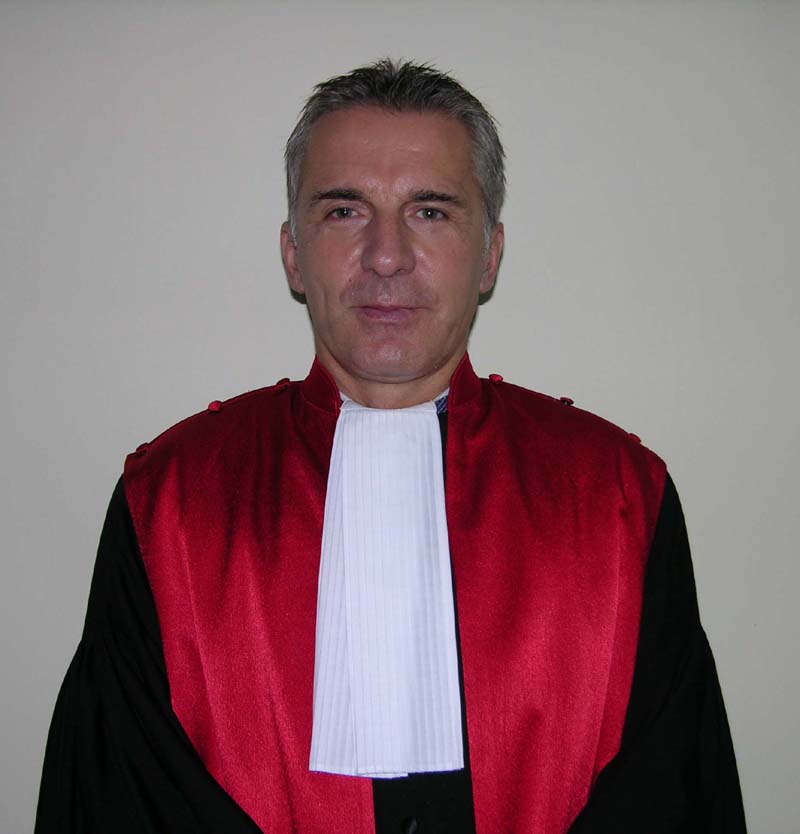
On March 9th, five new judges of the International Criminal Court (ICC) were sworn in at a ceremony held at the seat of the Court in The Hague. The are Judges Howard Morrison (United Kingdom), Anthony T. Carmona (Trinidad and Tobago), Olga Herrera Carbuccia (Dominican Republic), Robert Fremr (Czech Republic)  and Chile Eboe-Osuji (Nigeria).

The other judge who was elected at the December 2011 meeting of the Court’s Assembly of States Parties, Judge Miriam Defensor-Santiago (Republic of the Philippines), was unavailable due to personal circumstances and will be sworn in later.

The ICC has a bench of 18 judges who are nationals of States Parties to the Court’s Rome Statute. Judges are chosen from among persons of high moral character, impartiality and integrity who possess the qualifications required in their respective countries for appointment to the highest judicial offices. The election of the judges takes into account the need for the representation of the principle legal systems of the world, a fair representation of men and women, and equitable geographical distribution.

U.S. Supreme Court Hears Case That May Decide If Corporations Are Liable Under the Alien Tort Statute

On February 28th the U.S. Supreme Court heard arguments in Kiobel v. Royal Dutch Petroleum (Sup. Ct. No. 10-1491). The transcript of that hearing is available online.

This case involved claims by a putative class of Nigerians against a corporation (Royal Dutch Petroleum Co. (Shell)) for allegedly assisting in certain human rights violations in Nigeria in 1993-95. Prior posts reviewed the procedural background of this case and the Second Circuit decision rejecting such liability.

The claims in this case were asserted under the U.S. Alien Tort Statute (ATS) that provides that U.S. federal district courts have “jurisdiction of any civil action by an alien for a tort only, committed in violation of the law of nations or a treaty of the United States.” (Earlier posts have reviewed the history of the ATS for the periods 1789-1979, 1980, 1980-2004, the U.S. Supreme Court decision in 2004 and 2004-present.)

 Merits Issue: Are Corporations Liable Under the ATS?

A review of the transcript of the hearing reveals that the entire hour was devoted to only one of the two issues previously identified by the Court as being raised by this case:

  • Whether corporations are immune from tort liability for violations of the law of nations such as torture, extrajudicial executions or genocide, as the court of appeals decisions provides, or if corporations may be sued in the same manner as any other private party defendant under the ATS for such egregious violations, as the [U.S.] Eleventh Circuit [Court of Appeals] has explicitly held.

All of the Justices (except Justice Thomas) actively participated in this argument with comments and questions that make it difficult to make any prediction of the ultimate decision in the case, except that it probably will be a decision by a divided Court. Here are samples of some of the comments and questions.

Justice Samuel Alito asked,  “What business does a case like [this alleging human rights violations in Nigeria] have in the courts of the United States? There’s no connection to the United States whatsoever.”

Justice Ruth Bader Ginsburg tried to focus the discussion on the precise issue raised by the case, whether it is only individual defendants [who are liable under ATS] or are corporate defendants also liable?”

Justice Stephen Breyer apparently had difficulty with the Second Circuit’s categorical rule in this case that corporations could never be liable under the ATS. He said he could think of instances where that should not be the case. One he cited was “Pirates Incorporated.”

Justice Elena Kagan also expressed skepticism about an assertion by the attorney for the defendant-respondent that international human rights treaties excluded corporations from liability. Justice Kagan said she thought “the international sources are simply silent as to this question [of corporate liability].” She also observed that such treaties were silent on this issue “mostly because all of these are written to prohibit certain acts,” rather than focusing on who commits such acts.

Justice Anthony Kennedy, who often is seen as the swing vote when the Court is divided, asked the first question almost before the attorney for the plaintiffs-petitioners could open his mouth. Justice Kennedy said, “For me, the case turns in large part on this,” (quoting from the defendant-respondent’s brief), ‘International law does not recognize corporate responsibility for the alleged offenses here.’ Justice Kennedy immediately followed with this quotation from an amicus brief by Chevron Corporation, which is a defendant in another ATS case, “No other nation in the world permits its courts to exercise universal civil jurisdiction over alleged extraterritorial human rights abuses to which the nation has no connection.”

Justice Anthony Kennedy also noted that international criminal law made a distinction between individuals and corporations with only the former being subject to criminal sanctions. Yet later he mentioned the legal principle of respondeat superior (that a corporation or other principal is legally responsible for the wrongs of its employee or agent under certain conditions) and said that it was a very simple proposition of U.S. law and perhaps implicitly suggested it was applicable in this case.

Subject Matter Jurisdiction Issue

The second issue raised by this case was not discussed at the February 28th hearing. It was the following: Whether the issue of corporate civil tort liability under the Alien Tort Statute (“ATS”), 28 U.S.C. § 1350, is a merits question, as it has been treated by all courts prior to the decision below, or an issue of subject matter jurisdiction, as the court of appeals held for the first time.

The Second Circuit in an opinion by Judge Cabranes held, without much discussion, that the ATS incorporates any limitation arising from customary international law on whom may properly be sued as a defendant under the statute and that this was a requirement for subject-matter jurisdiction of the federal courts that was not met in this case.

In my opinion, the Second Circuit was clearly wrong on this conclusion on subject-matter jurisdiction. The ATS states that federal courts have “jurisdiction of any civil action by an alien for a tort only, committed in violation of the law of nations or a treaty of the United States.” Thus, to establish subject-matter jurisdiction, (i) the plaintiff must be an “alien” (a non-citizen of the U.S.); (ii) the lawsuit must be for a tort; and (iii) the tort must allegedly be set forth in “the law of nations” (customary international law) or a treaty of the U.S. All of these requirements are met in this case. It then becomes an issue on the merits as to whether the alleged conduct in fact violates the “law of nations” or a treaty of the U.S.

Moreover, the ATS does not specify as to whom the defendant must be, unlike the Torture Victims Protection Act (TVPA) which states the defendant has to be an “individual.” If the ATS did specify in some fashion what kind of defendant was permissible, then that would make the nature of the defendant an issue for subject-matter jurisdiction. (Whether the word “individual” in the TVPA includes corporations was the issue presented in the other case heard by the Supreme Court on February 28th.)

The procedural posture of this case makes my opinion, if it is correct, an important one for The Supreme Court’s disposition of this case. Federal courts are courts of limited jurisdiction requiring such courts always to determine if they have such jurisdiction and prohibiting the litigating parties from conferring such jurisdiction on the courts by not themselves raising problems over such jurisdiction. This basic principle enabled Judge Cabranes in the Second Circuit to raise, discuss and decide the issue of corporate liability under the ATS in this case even though that issue had not been briefed or argued by the parties themselves.

The failure of the defendant Shell to raise the merits issue of corporate liability at the trial court and at the Second Circuit should mean that it is deemed to have waived the issue.

Under this analysis the Supreme Court should reverse the Second Circuit on procedural grounds and not reach the substantive issue of corporate liability.

Conclusion

A Supreme Court decision in this case is expected by the end of June. I reiterate that this is a case of statutory interpretation and the Court’s development of federal common law, and at any time the Congress with a presidential signature could amend the statute to make corporate liability express or to exclude such liability explicitly.

Under the infamous Citizens United decision the Court treats corporations as individual human beings for purposes of the Free Speech clause of the First Amendment to the U.S. Constitution and the right to make unlimited political contributions. If the Court were to decide that corporations, unlike individual human beings, are not liable under the ATS, this would and should present the Court with at least a public relations problem.

Procedural Background for U.S. Supreme Court Argument in Kiobel Case on Corporate Liability for Foreign Human Rights Violations

U.S. Supreme Court Justices

On February 28th, the U.S. Supreme Court will hear oral arguments on the following two issues in a case from the U.S. Court of Appeals for the Second Circuit, Kiobel v. Royal Dutch Petroleum (Sup. Ct. No. 10-1491):

  1. Whether the issue of corporate civil tort liability under the Alien Tort Statute (“ATS”), 28 U.S.C. § 1350, is a merits question, as it has been treated by all courts prior to the decision below, or an issue of subject matter jurisdiction, as the court of appeals held for the first time.
  2. Whether corporations are immune from tort liability for violations of the law of nations such as torture, extrajudicial executions or genocide, as the court of appeals decisions provides, or if corporations may be sued in the same manner as any other private party defendant under the ATS for such egregious violations, as the [U.S.] Eleventh Circuit [Court of Appeals] has explicitly held.

The Supreme Court’s resolution of these issues is expected by the end of the current term at the end of June 2012.

The ATS provides that U.S. federal district courts have “jurisdiction of any civil action by an alien for a tort only, committed in violation of the law of nations or a treaty of the United States.” (Earlier posts have reviewed the history of the ATS for the periods 1789-1979, 1980, 1980-2004, the U.S. Supreme Court decision in 2004 and 2004-present.)

This post will provide the procedural background for the Kiobel case. Subsequent posts will examine the substantive issues in the Second Circuit and before the Supreme Court.

The facts giving rise to the lawsuit took place in Nigeria in 1993-1995, when the Movement for the Survival of the Ogoni People and other Ogoni groups demanded an end to oil development in their region and were met with a violent military crackdown. Shell allegedly aided and abetted the crackdown.

Thereafter representatives of the Ogoni people, including Dr. Barinem Kiobel, commenced a putative class action against Shell under the ATS for allegedly aiding and abetting various human rights violations by the Nigerian government.

The case was brought in the federal court in New York City (the U.S. District Court for the Southern District of New York). After various pretrial motions and other proceedings, that court in September 2006 denied Shell’s motion to dismiss the claims with respect to alleged aiding and abetting crimes against humanity, torture and arbitrary arrest and detention. (Other claims were dismissed.)

The case then went up on appeal to the Second Circuit in New York City. Nearly four years later, September 2010, a three-judge panel of that court reversed the district court’s denial of the dismissal motion on the ground (2 to 1) that corporations could not be held liable under the ATS. (621 F.3d 111 (2d Cir. 2010).)

In February 2011, the Second Circuit’s original three-judge panel denied, 2 to 1, the plaintiffs’ petition for rehearing, and the entire Second Circuit denied, 6 to 4, the petition for rehearing en banc.

In October 2011, the Supreme Court granted the plaintiffs’ petition for a writ of certiorari to review the Second Circuit’s decision. The following briefing then took place:

  • In December 2011 the plaintiffs-petitioners submitted their brief supported by 19 amici curiae (friends of the court) briefs, including the U.S. Government, the U.N. High Commissioner for Human Rights, Joseph Stieglitz (Nobel Prize economist), law professors, human rights centers and plaintiffs in similar cases.
  • In January 2012 Shell filed its respondent’s brief supported by 16 amici curiae briefs, including the Federal Republic of Germany, the United Kingdom and the Netherlands, the U.S. Chamber of Commerce and other business organizations, other law professors, the Cato Institute and defendants in similar cases.
  • In early February the plaintiffs-petitioners submitted their reply brief.
Most of these briefs are available online.

This procedural background by itself illustrates the importance of this issue for the parties, for the enforcement of international human rights and for governments and businesses around the world. Nevertheless, remember that this is a case of statutory interpretation coupled with federal common law under the 2004 Sosa case, and at any time the Congress with a presidential signature could amend the statute to make corporate liability express or to exclude such liability specifically.

International Criminal Court: Six New Judges Elected

At its current meeting in New York City, the ICC’s governing body, the Assembly of States Parties, was charged with electing six new judges for the Court.[1] On December 16th, the Assembly completed this task, and the new judges will take office on March 11, 2012.[2]

All six possess the basic Rome Statute qualifications for these important positions: high moral character; impartiality; integrity; the qualifications required by their States for appointment to their highest judicial offices; and excellent knowledge of the Court’s two “working languages” (English and French) and fluency in at least one of these languages.

In addition, they have established competency in either (a) “criminal law and procedure, and the necessary relevant experience, whether as judge, prosecutor, advocate or in similar capacity, in criminal proceedings” or (b) “relevant areas of international law such as international humanitarian law and the law of human rights, and extensive experience in a professional legal capacity which is of relevance to the judicial work of the Court.”

All were on the list of qualified candidates for the judgeships that was produced by the Independent Panel on ICC Judicial Elections that evaluated the 19 candidates advanced by States Parties. The six new judges range in age from 49 to 66 and are reported to be in good health and thus presumptively able to serve the full nine-year term of office.

As shown below, the new judges bring a wealth of experience in domestic and international criminal law, prior judicial and advocate experience in criminal trials plus academic writing in the fields of criminal law, humanitarian law (or the law of war) and human rights. They also have distinguished educational records.

Judge Carmona

Anthony Thomas Aquinas CARMONA from Trinidad and Tobago. At 58 years of age, he has degrees from the University of the West Indies and the Sir Hugh Wooding Law School. He has considerable experience, training and demonstrated competence in criminal law and criminal procedure both at the national and international levels for over 25 years.

  • He currently  is a judge of the Supreme Court of Trinidad and Tobago.
  • He has served as Appeals Counsel (Office of the Prosecutor) at the International Criminal Tribunal for the former Yugoslavia (ICTY), and the International Criminal Tribunal for Rwanda (ICTR).
Judge Carmona also served at the highest level of the criminal prosecution service of Trinidad and Tobago rising to the position of Acting Director of Public Prosecutions. At this level, he prosecuted major and complex criminal cases which sometimes involved appeals to the Judicial Committee of the Privy Council in London.
He was a representative of Trinidad and Tobago at the Preparatory Committee on the establishment of the ICC.As a judge of the Supreme Court of Trinidad and Tobago and a former prosecutor, Judge Carmona presided over or prosecuted cases involving violence against women and children.
Senator Defensor-Santiago
Miriam DEFENSOR-SANTIAGO of the Philippines. At age 66, she holds degrees from the University of the Philippines and the University of Michigan (LLM and LLD) and has authored books and articles on Philippine and international law. She will be the first Asian from a developing country on the Court. She has had a distinguished career in the Philippines:
  • Defensor-Santiago currently is a Senator, having been elected in 2010 for a third term; she also served as Senator from 1995 to 2001 and 2004 to 2010. She was the Chairperson of the Senate’s Committee on Foreign Relations, 2004-2010.
  • She also stood for election as President in 1992 and received the second highest number of votes.
  • She was Professional Lecturer on constitutional and international law, College of Law, University of Philippines, 1976-1988.
  • She was a legal officer of the United Nations High Commissioner for Refugees, 1979-1980.
  • She served as Presiding Judge of a Regional Trial Court, 1983-1987.
  • She was head of the Commission on Immigration and Deportation, 1988-1989.
  • She was appointed Secretary (Minister) of Agrarian Reform in 1989.

She is well known in her home country for making colorful statements. For example, when she was asked if she had received death threats at the Commission on Immigration and Deportation, she said, “I eat death threats for breakfast. Death is only a state of thermodynamic equilibrium.”[3]

Eboe-Osuji

Chile EBOE-OSUJI of Nigeria. At age 49, he holds degrees from the University of Calabar (Nigeria), McGill University in Canada (LLB and LLM) and the University of Amsterdam in the Netherlands (PhD in international criminal law). Mr. Eboe-Osuji  has  competence in substantive and procedural criminal law based on 25 years of experience and familiarity with professional  advocacy in courtrooms:

  • He has worked in senior legal advisory capacities to the U.N. High Commissioner of Human Rights and has rendered legal advisory services to the Government of Nigeria and foreign governments, on questions of international law.
  • He has practiced criminal law in the courts of Nigeria and Canada.
  • He has litigated cases before the ICTR as senior prosecution trial counsel, the Special Court for Sierra Leone as senior prosecution appeals counsel and the European Court of Human Rights. Prior to these engagements, he was prosecution counsel in several cases at the ICTR.
  • He also has extensive experience, in a senior legal advisory capacity behind the scenes, assisting ICTR trial and appellate judges in the drafting of many judgments and decisions.
  • His specific areas of competence include international criminal law (especially genocide, crimes against humanity, and war crimes); international humanitarian law; international human rights law; public international law; Nigerian and Canadian criminal law, and criminal law in the common law world.  He also has expertise relating to the crime of aggression, by virtue of his research and legal advisory assistance to the Delegation of Nigeria to the ICC Assembly of States Parties Special Working Group on the Crime of Aggression.
Judge Fremr
Robert FREMR of the Czech Republic. He is 54 years old and holds degrees from Charles University Law School in Prague. He has nearly 25 years of experience in criminal law and procedure as a judge in all four tiers of the Czech judicial system plus judicial experience at the ICTR. In these positions, he has gained considerable expertise in managing complicated and time-intensive cases as well as in working with women and child victims of violent crime who require special treatment in court. Here are the specifics:
  • Judge ad litem, ICTR, 2010-2011
  • Judge of the Supreme Court of the Czech Republic, 2009-10.
  • Judge ad litem, ICTR, 2006-2008
  • Judge of the Supreme Court of the Czech Republic, 2004-2005
  • Judge of the High Court in Prague (Penal Section), 1989-2003
  • Judge of the Court of Appeal in Prague (Penal Section), 1986-1989
  • Judge of the District Court Prague 4, 1983-1986
  • Judicial practitioner, Municipal Court, Prague, 1981-1983

Judge Fremr also has lectured on criminal law at the Faculty of Law of Charles University in Prague and taught human rights courses to judges and trainee judges at the Judicial Academy of the Ministry of Justice of the Czech Republic.

Judge Fremr has attended many important international conferences (e.g. the ninth session of the Assembly of State Parties to the Rome Statute, official meetings within the Council of Europe,  Organization for Economic Co-operation and Development.

Herrera Carbuccia

Olga Venecia HERRERA CARBUCCIA of the Dominican Republic (DR). She holds degrees from the Universidad Autonoma de Santo Domingo in the DR and is 55 years old. She has practical experience in the field of criminal law, human rights protection, children’s rights, and combating money laundering and financing terrorism.  She has extensive legal teaching experience in her home country. Herrera Carbuccia has extensive judicial experience in her home country:

  • Judge President of the Criminal Chamber of a Court of Appeals , 2003-present
  • Presiding Judge of the First Criminal Chamber of a Court of Appeals, 2001-2003
  • First Deputy Judge President of the  Criminal Chamber of a  Court of Appeals, 1997-2003
  • Substitute Second Judge President of the Criminal Chamber of a Court of Appeals, 1991-1997
  • Judge President of the Eighth Penal Chamber of a Court of First Instance, 1986-1991
  • Assistant Attorney to the National District Prosecutor, 1984-1986
  • Fiscal of two DR Peace Courts, 1981-1984
Judge Howard Morrison
Howard MORRISON of the United Kingdom. He holds a degree from London University and is 62 years old.  Here are some of the highlights of his legal career:
  • Judge of ICTY, 2009-present
  • Judge of the Special Tribunal for Lebanon, 2009
  • Senior Judge of the Sovereign Base Areas of Cyprus, 2008.
  • Circuit Judge, criminal and civil, 2004
  • Defense counsel , ICTY and ICTR, 1998-2004
  • Recorder in crime, civil and family jurisdictions, 1998
  • Assistant Recorder in crime, civil and family jurisdictions, 1993
  • Ad hoc Attorney-General for Anguilla, 1988-1989
  • Resident Magistrate and  Chief Magistrate of Fiji and concurrently Senior Magistrate of Tuvalu, 1986-1988
  • Practicing barrister in U.K., primarily criminal law and equally divided between prosecution and defense, 1977-1985 and 1989-2004.

We the peoples of the world should give thanks to these six qualified people for their willingness to undertake the important and challenging work of a Judge of the ICC.


[1]  See Post: International Criminal Court: Basics of Its Upcoming Judicial Election (June 23, 2011); Post: International Criminal Court: Specified and Recommended Qualifications for ICC Judges (June 24, 2011); Post: International Criminal Court: New States Parties, Judges and Prosecutor (Nov. 22, 2011).

[2]  ICC, Final Results:  Election of the Judges of the ICC (contains biographical material about the new judges), http://www2.icc-cpi.int/Menus/ASP/Elections/Judges/2011/Results/Final+Results.htm; AMICC, First Week of Assembly of States Parties Concludes with the Completion of the Election of Six ICC Judges, http://amicc.blogspot.conm (Dec. 16, 2011).

[3] Tordesillas, We will miss Sen. Miriam, http://www.gmanetwork.com (Dec. 15, 2011).


U.S. Supreme Court To Hear Cases Challenging Whether Corporations Can Be Held Liable for Aiding and Abetting Foreign Human Rights Violations

On October 17th the U.S. Supreme decided to hear two cases challenging whether corporations can be held liable for aiding and abetting foreign human rights abuses.[1] As a result, the Supreme Court should hear oral arguments and render decisions in the cases before the end of this term of the Court in late June 2012.

1. The Royal Dutch Petroleum Company or Shell Case

In the first of these cases, the Royal Dutch Petroleum Co. or Shell case, a group of Nigerians sued several Shell subsidiaries for money damages. They alleged that the companies had enlisted the aid of the Nigerian government to suppress local opposition to oil exploration and that government forces had killed and abused certain Nigerians and destroyed their property.[2] The complaint was brought under a U.S. federal statute known as the Alien Tort Statute, which simply provides that the U.S. district courts have “original jurisdiction of any civil action by an alien [non-U.S. citizen] for a tort only, committed in violation of the law of nations or a treaty of the United States.”[3]

In the Shell case, the U.S. Court of Appeals for the Second Circuit in New York City, in a lengthy opinion by Judge Cabranes, held, 2 to 1, that (a) that international law was the relevant law for determining whether corporations (or other legal entities) could be held liable under ATS for alleged violations of the law of nations; and (b) that customary international law and hence ATS did not recognize or allow corporate direct or accessory civil liability for human rights violations. [4]

The Second Circuit in Kiobel also said it was not prevented from so holding by its own precedents. Although at least five prior such precedents had not rejected ATS cases against corporations on that ground, according to Kiobel, they merely had assumed the viability of such suits for various reasons.

One of the judges in the three-judge panel in Kiobel, Judge Leval, submitted an even lengthier concurring opinion. He agreed that the complaint in its entirety had to be dismissed because it did not allege that the corporate defendants had purposefully aided and abetted the Nigerian government’s alleged violations of human rights. But Judge Leval concluded that international law left to domestic law the issue of whether corporations were civilly liable for aiding and abetting violations of international law and that U.S. law allowed for such liability.

2. Mohammad v. Jabril Rajoub

The second of these two cases raises a similar issue under another U.S. federal statute, the Torture Victims Protection Act (TVPA). That statute imposes civil liability for money damages on an “individual who, under actual or apparent authority, or color of law, of any foreign nation–(1) subjects an individual to torture . . . or (2) subjects an individual to extrajudicial killing . . . .” (Emphasis added.)[5]

Thus, the issue in the second case is whether a corporation or other legal entity is an “individual” within the meaning of the TVPA. In the Rajoub case, the U.S. Court of Appeals for the District of Columbia Circuit held that such entities were not “individuals” within the meaning of the TVPA and, therefore, could not be sued under that statute.[6]


[1] Reuters, U.S. Court to Hear Shell Nigeria Human Rights Case, N.Y. Times (Oct. 17, 2011); Kendall, High Court to Hear Shell-Nigeria Rights Case, W.S.J. (Oct. 17, 2011). See Post: Alien Tort Statute: Important Cases Heading to U.S. Supreme Court, (July 9, 2011).

[2] Id., Kiobel v. Royal Dutch Pet. Co., 621 F.3d 111 (2d Cir. 2010), pet. for reh’g denied, 642 F.3d 268 (2d Cir. 2011), pet. for reh’g en banc denied, 642 F.3d 379 (2d Cir. 2011), cert. granted (U.S. Sup. Ct. No. 10-1491 Oct. 7, 2011).

[3] 28 U.S.C. § 1350.

[4]  Kiobel v. Royal Dutch Pet. Co., 621 F.3d 111 (2d Cir. 2010). Another recent federal appellate court came to the opposite conclusion, holding, 2 to 1, that corporations could be liable under the ATS. (Doe v. Exxon Mobil Corp., 2011 WL 2652384 (D.C. Cir. 2011).) I am surprised that Exxon Mobil has not filed a request for the Supreme Court to review the case.

[5] 28 U.S.C. § 1350 footnote.

[6]  Mohammad v. Rajoub, 634 F.3d 604 (D.C. Cir. 2011), cert. granted (U.S. Sup. Ct. No. 11-88 Oct. 17, 2011). There is a split of authority in the lower federal courts on the issue of whether corporations may be held liable under the TVPA.

Alien Tort Statute: Important Cases Heading to U.S. Supreme Court

On July 8, 2011, the U.S. Court of Appeals for the District of Columbia Circuit decided an important case under the Alien Tort Statute (ATS) that is headed for the U.S. Supreme Court.

In Doe v. Exxon Mobil Corp., the D.C. Circuit held, 2 to 1, that corporations may be held liable for aiding and abetting human rights violations under the ATS. The plaintiffs were Indonesian villagers who accused Exxon Mobil of aiding and abetting murder, torture and rape by Indonesian soldiers acting under the corporation’s direction to protect its natural-gas operations in that country.[1]

Late last year the U.S. Court of Appeals for the Second Circuit in New York City reached the opposite conclusion, 2 to 1, in Kiobel v. Royal Dutch Petroleum Co., another ATS case, this one by Nigerians against Royal Dutch Petroleum Co. for alleged complicity in crimes against humanity.[2]

In Kiobel, the plaintiffs already have asked the U.S. Supreme Court for review of that case,[3] and it is likely that Exxon Mobil will do as well in the other case. Since an important factor in the Supreme Court’s decision to grant such review (granting the writ of certiorari) is a split in decisions by the courts of appeal on important issues of federal law,[4] the Court, in my opinion, is highly likely to grant such review in both cases and to consider them on the merits next Term (October 2011-September 2012).

The ATS provides that the U.S. district courts have “original jurisdiction of any civil action by an alien [non-U.S. citizen] for a tort only, committed in violation of the law of nations or a treaty of the United States.”[5]

In future posts, I will review (a) the adoption of the ATS in 1789 and its use through 1979; (b) the interpretation of the ATS by the Supreme Court in 2004; (c) the use of the ATS by the lower federal courts since 1980; (d) the issue of aiding and abetting in ATS cases; and (e) the issue of corporate liability in ATS cases.


[1] Doe v. Exxon Mobil Corp., No. 09-7125 (D.C. Cir. July 8, 2011), http://www.cadc.uscourts.gov/internet/opinions.nsf; Reuters, Exxon to Face Lawsuit Over Rights Violations in Indonesia, N.Y. Times (July 8, 2011); Kendall, Exxon Hit by Reversal in Human-Rights Case, W.S.J. (July 9, 2011).

[2]  Kiobel v. Royal Dutch Pet. Co., 621 F.3d 111 (2d Cir. 2010), pet. for reh’g denied, 642 F.3d 268 (2d Cir. 2011), pet. for reh’g en banc denied, 642 F.3d 379 (2d Cir. 2011), pet. for cert. filed (No. 10-1491 June 6, 2011).

[3]  Id.

[4]  U.S. Sup. Ct. Rule 10 (a): “A petition for a writ of certiorari will be granted only for compelling  reasons.  The  following,  although  neither controlling  nor fully measuring  the Court’s discretion,  indicate  the  character of the  reasons  the  Court  considers: (a) a United States court of appeals has entered a decision  in  conflict  with  the  decision  of  another  United States  court  of  appeals  on  the  same  important matter. . . .”

[5] 28 U.S.C. § 1350.

International Criminal Court: Basics of Its Upcoming Judicial Election

The International Criminal Court (ICC) has 18 judges, each of whom serves only one term of nine years. In December of 2011 six new judges will be elected by the Court’s governing body, the Assembly of States Parties.[1]

Aside from specified and recommended personal qualifications for these judgeships,[2] there are requirements that judges come from the current 115 States Parties, that no State may have more than one judgeship and that there be equitable geographical and gender representation on the Court. There is also a requirement that the Court have representation of the “principal legal systems of the world.”[3]

Of the six judges who will be replaced in the upcoming elections, three are female and three are male. Two are from Latin America (Brazil and Costa Rica), two from Africa (Mali and Uganda) and two from Western Europe and Other (France and the U.K.)[4]

Given the Rome Statute’s requirement for considerations of geographical and gender equity  and for certain proportions for Lists A and B judges, the upcoming elections will seek to elect up to 2 females and at least 4 males who come from the A List (at least 4) and the B List (no more than 2) from the following geographical areas:

  • Africa: 2 from 28 African States Parties (31 -3 (Botswana, Ghana and Kenya, which already are represented on the Court));
  • Latin America: 2 from 24 Latin American and Caribbean States Parties (26  – 2 (Argentina and Bolivia, which already are represented on the Court)); and
  • Western Europe & Other States Parties: 2 from 22 Western European/Other States Parties (25 – 3 (Belgium, Finland, and Germany, which already are represented on the Court)).[5]

Nominees for these six positions must come from the 115 States Parties (with no more than one nomination from each such State) during the period June 13 through September 2, 2011. Each nomination must have a statement specifying how the individual meets the personal requirements of the Rome Statute.[6]

As of June 22, 2011, there were the following four nominations:[7]

  • Judge John Bankole Thompson of Sierra Leone. He has been a Judge of the High Court of Sierra Leone and of the Trial Chamber of the Special Court for Sierra Leone. He also has been a law professor in his country and in the U.S. (University of Akron School of Law, Kent State University and Eastern Kentucky University. He holds LLB, M.A. and Ph. D. degrees in law from Cambridge University.
  • Bruno Cathala of France. He has been the ICC’s Registrar and its Director of Common Services; Deputy Registrar of the ICTY; president of two regional French courts and one of its juvenile courts. He also has been Deputy Director of a French government department for judicial protection of juveniles. He hold degrees from France’s Institutes of Higher National Defense Studies and of Higher Internal Security Studies and a post-graduate pre-PhD diploma in Private Law from the School of Law, University of Paris.
  • Chile Eboe-Osujl of Nigeria. He has been an advocate in criminal cases in the courts of Nigeria and Canada and a prosecutor at the ICTR and the Special Court for Sierra Leone. He has served as an advisor to the U.N. High Commissioner for Human Rights and to the Nigerian delegation to the ICC’s Review Conference on the crime of aggression. He has taught international criminal law at the University of Ottawa. He has special experience and expertise regarding violence against women and children.
  • Gberdao Gustave Kam of Burkina Faso. He has been an ad litem judge for the ICTR and a judge in several courts in his country. He also has served in his country’s Ministry of Justice.

The more fascinating issue of the specified and recommended personal qualifications for these positions will be discussed in a future post.


[1] See Post: The International Criminal Court: Introduction (April 28, 2011); Rome Statute, Art. 36 (1), (9); ICC, Election of six judges–December 2011, http://www2.icc-cpi.int/Menus/ASP/Elections/Judges/2011/2011.htm.

[2] A future post will discuss the Rome Statute’s specified qualifications for judgeships as well as recommended qualifications proposed by civil society.

[3] Rome Statute, Art. 36 (7), (8)(a).

[4] International Coalition for the International Criminal Court, Information about the Nomination and Election of Six New Judges and the Prosecutor, New York, December 2011, http://www.coalitionfortheicc.org/documents/.

[5] Id.

[6]  Rome Statute, Art. 36 (4)

[7]  ICC, Election of six judges–December 2011, http://www2.icc-cpi.int/Menus/ASP/Elections/Judges/2011/2011.htm.