TVPA Lawsuit in U.S. Federal Court Over the Murders of the American Churchwomen

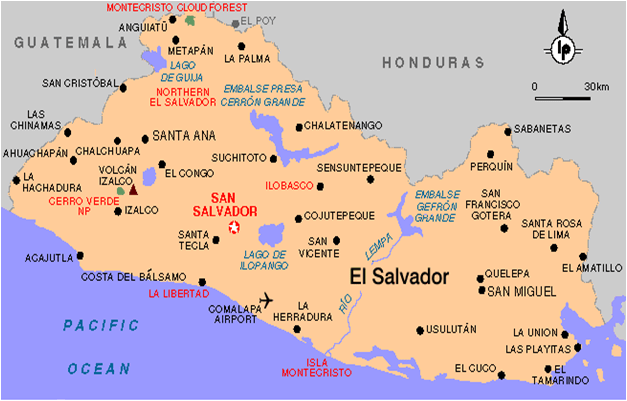
One of the horrendous crimes during El Salvador’s civil war was the December 1980 brutal murders of four American churchwomen. We have examined the facts of those crimes along with the investigations and criminal prosecutions in El Salvador for those crimes plus the report on same by the Truth Commission for El Salvador.[1]
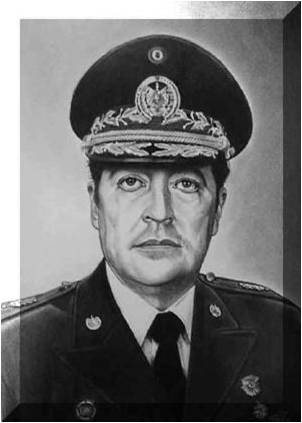
General Vides Casanova
General Jose Guillermo Garcia

In 1999 U.S. relatives of the four churchwomen brought a civil lawsuit for money damages under the Torture Victims Protection Act (TVPA)[2] for the women’s torture and murders. The defendants were former Salvadoran Generals Vides Casanova and Jose Guillermo Garcia. The case was in a federal court in Florida, where the defendants then lived.[3]

The case was tried before a jury in October-November 2000. The defendants denied any knowledge of the murders beforehand. They admitted, however, that torture and violence were rampant in El Salvador and that the country’s armed forces were involved in many of these actions. In response, they testified, they had issued orders forbidding illegal interrogation and extrajudicial executions and had done all they could do to prevent such crimes. However, they further testified, they did not have the resources to stop a long practice of such actions by the armed forces.[4]

General Garcia testified that he had ordered an investigation of the killing of the churchwomen and had done nothing to interfere with the investigation. General Garcia also testified about the U.S. government’s giving him the Legion of Merit award in the 1980’s for his being a “sterling example of a military leader in a representative government”as well as the U.S. government’s granting him political asylum in 1991.

Other trial witnesses were former U.S. Ambassador Robert White to El Salvador and a former investigator for the Inter-American Commission on Human Rights. The trial exhibits included the report of the El Salvador Truth Commission, other investigative reports and declassified U.S. diplomatic cables

In November 2000 the jury returned a verdict for the defendants. Afterwards the jurors indicated that they thought they did not have enough evidence that the generals were able to exercise authority over their subordinates. Some jurors also said the defendants had done what they could to curb abuses, given the tumult of the times and a lack of resources.

The plaintiffs appealed to the U.S. Eleventh Circuit Court of Appeals, which affirmed the trial court. The sole issue on this appeal was the legal sufficiency of the trial court’s instruction to the lay jury on the question of command responsibility. Because there was no objection at trial to this instruction, the appellate court reviewed the instruction only for plain error and found no such plain error,

The appellate court held that legislative history made clear that Congress intended to adopt the doctrine of command responsibility from international law and that the essential elements of liability under that doctrine were (i) the existence of a superior-subordinate relationship between the commander and the perpetrator; (ii) the commander knew or should have known that the subordinate was committing or planning to commit war crimes; and (iii) the commander failed to prevent the crimes or failed to punish the subordinate for same.

The plaintiffs’ request for review by the U.S. Supreme Court was denied. Thus, this case is over.[5]


[1]  See Post: The Four American Churchwomen of El Salvador (Dec. 12, 2011); Post: The December 1980 Murders of the Four Churchwomen in El Salvador (Dec. 14, 2011); Post: Non-Judicial Investigations of the 1980 Murders of the Four Churchwomen (Dec. 16, 2011); Post: Judicial Investigations and Criminal Prosecutions of the 1980 Murders of the Four Churchwomen in El Salvador (Dec. 18, 2011); Post: The Salvadoran Truth Commission’s Investigation of the Murders of the American Churchwomen (Dec. 19, 2011).

[2]  See Post: The Torture Victims Protection Act (Dec. 10, 2011).

[3]  Ford v. Garcia, 289 F.3d 1283, 1285 (11th Cir. 2002), cert. denied, 537 U.S. 1147 (2003).

[4]  Gonzalez, Salvadoran Admits Abuses In Trial Tied to Nuns’ Deaths, N.Y. Times (Oct. 19, 2000); Gonzalez, Salvadoran General Admits He Knew of Abuses, N.Y. Times (Oct. 20, 2000); Gonzalez, 2 Salvadoran Generals Cleared by U.S. Jury in Nuns’ Deaths, N.Y. Times (Nov. 4, 2000); Eviatar, Following the Blood, American Lawyer, Jan. 2001, at 83.

[5] The problem with the jury instruction on command responsibility was avoided in a later and similar case against Generals Garcia and Vides Casanova in which they were held liable for $54.6 million. (See Post: Former Salvadoran Generals Held Liable by U.S. Courts for $54.6 Million for Failure To Stop Torture (Nov. 11, 2011).)

The Salvadoran Truth Commission’s Investigation of the Murders of the Four American Churchwomen

We already have discussed the mission work in El Salvador of the four American churchwomen, their December 1980 brutal murders, the subsequent non-judicial and judicial investigations and successful Salvadoran criminal prosecutions for these crimes.[1]

The Truth Commission for El Salvador also investigated these crimes and its March 1993 report found:

  • the December 2, 1980, arrests and murders of the churchwomen had been planned prior to the arrival of two of them that evening from Nicaragua;
  •  the National Guard deputy sergeant in charge that night of the killing was carrying out the orders of a superior officer;
  • the Director-General of the National Guard at the time, Carlos Eugenio Vides Casanova, and other high security forces officers knew that members of the National Guard had committed the murders pursuant to orders of a superior officer and were in charge of covering up those facts;
  • Vides Casanova and another officer impeded the gathering of evidence and thereby adversely affected the judicial investigation of the crimes;
  • the two Salvadoran military investigations of this crime (Monterrosa and Zepeda) were not serious and instead sought to conceal the involvement of higher officials;
  • the Minister of Defense at the time, General Jose Guillermo Garcia, made no serious effort to conduct a thorough investigation of responsibility for the murders; and
  • the State of El Salvador failed in its responsibility to conduct a thorough and fair investigation of the crime and to find and punish the culprits.[2]

[1] See Post: The Four American Churchwomen of El Salvador (Dec. 12, 20111); Post: The December 1980 Murders of the Four Churchwomen in El Salvador (Dec. 14, 2011); Post: Non-Judicial Investigations of the 1980 Murders of the Four Churchwomen (Dec. 16, 2011); Post: Judicial Investigations and Criminal Prosecutions of the 1980 Murders of the Four Churchwomen in El Salvador (Dec. 18, 2011).

[2] Commission for the Truth for El Salvador, Report: From Madness to Hope: The 12-year war in El Salvador  at 62-66 (March 15, 1993), http://www.derechos.org/nizkor/salvador/informes/truth.html. See Post: International Criminal Justice: The Jesuits Case in the Truth Commission for El Salvador (June 9, 2011) (summary of the Commission’s mandate and procedures).

Salvadoran Judicial Investigation and Prosecution of National Guardsmen for the Murders of the Four American Churchwomen

We have examined the Salvadoran mission work of the four American churchwomen, their brutal December 1980 murders and the non-judicial investigations of this horrendous crime.[1] Now we look at the Salvadoran judicial investigation and prosecutions of five of their National Guardsmen for this crime.

Judicial Investigation

The judicial investigation started in late April 1981, when six members of the Salvadoran National Guard were arrested as suspects. The investigation ended in May 1984 when five of these men went on trial for aggravated homicide.[2]

During this three-year period there were several interesting developments.

In October 1981 a Salvadoran National Guardsman who had been captured by the guerillas said on their radio station (Radio Venceremos) that the women had been killed by other Guardsmen. This individual had not been involved in the killings himself, but said that a major had told him and other soldiers that Guardsmen had killed the women because two of them (Clarke and Ford) were believed to be carrying messages for the Salvadoran guerillas from the leftist Sandinistas on the women’s flight from Nicaragua.[3]

In November 1981 it had appeared that the investigation would not lead to any criminal charges, but in February 1982 the court determined that there was sufficient evidence to charge four of the men with aggravated homicide and one with murder while releasing the sixth for insufficient evidence. At that time (February 1982), the men were discharged from the military, and the court said that one of the five had confessed to his involvement in the killings and that this had been corroborated by other evidence.[4]

In November 1982, the trial court ordered the five men to stand trial on these charges at the earliest possible date. An appellate court, however, reversed this decision on the ground that the record was incomplete and returned the case to the trial court for further investigation. In October 1983, the trial court again ordered the five to stand trial.[5]

Criminal Trial

The five Guardsmen went to trial in May 1984 before a five-person jury. The trial took 19 hours. Seven hours were spent reading written testimony focusing on the women’s work in the country, the confession, ballistic tests and fingerprint evidence . Another seven hours was devoted to arguments by the attorneys. The defense emphasized that the men were obeying orders and criticized the U.S. involvement in the investigation.[6]

After one hour of deliberation, the jury found all of the men guilty of aggravated homicide. Thereafter the judge sentenced each of them to 30 years in prison.[7]

This was the first time in Salvadoran history that a judge had held a member of the armed forces guilty of homicide or murder.[8]

Post-Conviction Developments

In January 1988, a Salvadoran court rejected the application by three of the five convicts for release under the country’s General Amnesty Law.[9]The court held that the Law applied to political crimes, not to the aggravated homicide for which they had been convicted and which was a common crime.[10]

Seven months later (July 1998), however, two of the Guardsmen were released from prison apparently because of a new law to ease prison overcrowding. (The other three did not qualify for release because of prior convictions on a weapons charge and participation in a prison disturbance.) [11]

At about the same time in 1998, this case again captured public attention with two developments. First,  the convicted Guardsmen said that they had acted on orders of higher officials. Second, previously secret U.S. government files were released that did not support its prior assertions that the Guardsmen had acted on their own. The resulting public requests for a Salvadoran criminal investigation of that subject were rejected when El Salvador’s President and Attorney General said the country’s 10-year statute of limitations for murder charges meant that it was legally impossible to reopen the case to charge those who ordered the murders.[12]


[1] See Post: The Four American Churchwomen of El Salvador (Dec. 12, 2001); Post: The December 1980 Murders of the Four American Churchwomen in El Salvador (Dec. 14, 2011); Post: Non-Judicial Investigations of the Murders of the American Churchwomen of El Salvador (Dec. 16, 2011).

[2]  UPI, 6 Salvadoran Soldiers Are Arrested in Slaying of U.S. Church Workers, N.Y. Times (May 10, 1981); AP, Salvador To Try 5 in the Deaths of U.S. Women, N.Y. Times (Nov. 16, 1982); n.6 infra. Presumably it was during this period (April 1981 to May 1984) that a Salvadoran attorney who had been appointed to represent one of the Guardsmen, was pressured by the U.S. Embassy to announce that he had not found any involvement of higher officials, and when the attorney refused to do so, he received death threats that forced him and his family to flee El Salvador. (See Post: My Pilgrimage to El Salvador, April 1989 (May 25, 2011).)

[3]  UPI, U.S. Nuns’ Deaths Laid to Salvador, N.Y. Times (Oct. 15, 1981).

[4]  Bonner, Salvador’s Inquiry into Nuns’ Slaying Stalled, N.Y. Times (Nov. 13, 1981); Bonner, 6 Salvadoran Soldiers Face Court in Slaying of American Nuns, N.Y. Times (Feb. 11, 1982); Hoge, Judge in Salvador Frees One of Six in Nuns’ Death, N.Y. Times (Feb. 14, 1982).  More details about the confession entered the public domain. (UPI, Salvadoran Indicted in Death of U.S. Nuns, N.Y. Times (Nov. 26, 1982); AP, Salvadoran Says He killed U.S. Women, N.Y. Times (Oct. 27, 1983).)

[5]  Hoge, Judge in Salvador Frees One of Six in Nuns’ Death, N.Y. Times (Feb. 14, 1982); AP, Salvador To Try 5 in the Deaths of U.S. Women, N.Y. Times (Nov. 16, 1982); AP, Salvadorans Again Face Tiral in Killing of 4 Churchwomen, N,Y. Times (Oct. 29, 1983).

[6] Chavez, Salvador Trial in Killing of 4 Is Due Next Week, N.Y. Times (May 17, 1984); Chavez, Guardsmen’s Trial Opens in Salvador; Judge Calls Case in Slaying of 4 Churchwomen Strong Enough for Conviction, N.Y. Times (May 24, 1984); Chavez, 5 Salvadorans Are Found Guilty in Slaying of U.S. Churchwomen, N.Y. Times (May 25, 1984); Commission for the Truth for El Salvador, Report: From Madness to Hope: The 12-year war in El Salvador  at 65 (March 15, 1993), http://www.derechos.org/nizkor/salvador/informes/truth.html.

[7]  Id.

[8] Id.

[9]  See Post: International Criminal Justice: El Salvador’s General Amnesty Law and Its Impact on the Jesuits Case (June 11, 2011).

[10] Assoc. Press, Salvador Judge Refuses Amnesty To Killers of 4 U.S. Churchwomen, N.Y. Times (Jan. 9, 1988).

[11] Lawyers Comm. Hum. Rts., Media Alert: Human Rights First Calls for Formal Process in El Salvador Following Statement on Possible Release of Five Convicted Guardsmen, May 18, 1998; Lawyers Comm. Hum. Rts., Media Alert:Human Rights First Denounces Possible Parole for Guards, July 1, 1998; No Parole in Nuns’ Murder, N. Y. Times (July 9, 1998); 2 Killers of Nuns Freed From Salvadoran Prison, N.Y. Times (July 22, 1998); Release Ordered of El Salvador nun murderers, BBC News (July 22, 1998).

[12]  Id.; Rohter, 4 Salvadorans Say They Killed U.S. Nuns on Orders of Military, N.Y.  Times (Apr. 3, 1998); Lawyers Comm. Hum. Rts., Media Alert: Human Rights First Obtains Embassy Evidence on U.S. Nuns Murder in El Salvador (June 24,1998);  Rohter, Files Focus on Salvador Colonel in U.S. Women’s Deaths, N.Y. Times (June 25, 1998).

Non-Judicial Investigations of the 1980 Murders of the Four Churchwomen in El Salvador

On December 2, 1980, four American churchwomen were beaten, raped and murdered in the countryside 15 miles from the country’s international airport.[1]

This was a huge problem for the governments of the U.S. and El Salvador because four religious missionaries who were U.S. citizens had been brutally raped and murdered and because there was a huge public outcry in the U.S. for investigation and prosecution of those responsible. Continuation of  U.S. military aid to El Salvador was also at risk. Immediately after the discovery of the murders, President Carter suspended $25 million of aid (with restoration 10 days later), and in 1983 Congress voted to withhold $19 million in aid pending a verdict in the criminal case discussed below.[2]

There were five non-judicial investigations of the crime.

The first investigation was initiated on December 6, 1980 (four days after the murders), by President Jimmy Carter, when he appointed William G. Bowdler, a State Department official, and William D. Rogers, a former Department official, to go to El Salvador and investigate the case. They went and said they had found no direct evidence of the crime or of involvement of Salvadoran authorities, but that there had been a cover-up of the murders.[3]

The Junta then governing El Salvador started the second investigation by putting Colonel Roberto Monterrosa in charge of an official commission of investigation. Later he admitted that his commission had excluded the possibility that Salvadoran security forces had been involved in the crime because that would have created serious difficulties with those forces. He hid from the U.S. Embassy evidence implicating a deputy sergeant of the Salvadoran National Guard. In short, Monterrosa did not conduct a thorough, honest investigation.[4]

Simultaneously with the Monterrosa commission, the Director-General of the National Guard, Carlos Eugenio Vides Casanova, started a third investigation. He put Major Lizandro Zepeda in charge. Zapeda reported there was no evidence that National Guard personnel had committed these crimes while he simultaneously ordered the actual Guard perpetrators to replace their rifles to avoid detection and to remain loyal to the National Guard by suppressing the facts. There is also evidence that Zapeda kept his superior, Vides Casanova, informed of the details of the investigation.[5]

The fourth investigation was conducted by former U.S. federal judge Harold R. Tyler, Jr. at the appointment of the U.S. Secretary of State. He concluded that the purpose of the Monterrosa and Zapeda investigations had been to establish written precedents clearing the Salvadoran security forces of blame for the crimes. Tyler also concluded that senior officers had not been directly involved in the crimes themselves although it was quite possible that General Vides Casanova, who had been the commander of the National Guard at the time and was then the Salvadoran Minister of Defense, was aware of the cover-up. Indeed, the deputy sergeant immediately had confessed his involvement to his superiors, who kept this secret and took other steps to make detection more difficult. [6]

In December 1981 Colonel Vides Casanova appointed Major Jose Adolfo Medrano to conduct a fifth investigation.[7]

As the first four of these investigations were proceeding, the Salvadoran government announced that it had sent to the FBI for analysis new evidence, including fingerprints of Salvadoran police and military personnel who had been stationed in the area of the national airport on December 2. Subsequently there were reports in late April 1981 that the FBI had concluded that certain evidence pointed to six Salvadoran National Guardsmen as the killers.[8]

Several  weeks after this report about the FBI conclusions, six Salvadoran Guardsmen were arrested to start a Salvadoran judicial investigation and eventual prosecution of this crime. The next post in this series will look at this judicial investigation and prosecution.


[1]  See Post: The Four American Churchwomen of El Salvador (Dec. 12, 2011); Post: The December 1980 Murders of the Four Churchwomen in El Salvador (Dec. 14, 2011).

[2] Commission for the Truth for El Salvador, Report: From Madness to Hope: The 12-year war in El Salvador at 65 (March 15, 1993), http://www.derechos.org/nizkor/salvador/informes/truth.html [Commission Report]; Chavez, 5 Salvadorans Are Found Guilty in Slaying of U.S. Churchwomen, N.Y. Times (May 25, 1984).

[3] Onis, U.S. Officials Fly to El Salvador to Investigate Murders, N.Y. Times (Dec. 7, 1980); Commission Report at 63. Bowdler was Assistant Secretary of State for Inter-American Affairs and a former U.S. Ambassador to El Salvador (1968-71). In the Ford Administration Rogers served as Assistant Secretary of State for Inter-American Affairs and Under Secretary of State for Economic Affairs.

[4]  Commission Report at 63-64.

[5]  Id.

[6]  Id. at 63-65; Bonner, Cover-Up Charged in Death of Nuns, N.Y. Times (Feb. 16, 1984).

[7]  Commission Report at 64.

[8]  Schumacher, Salvadoran Discloses New Evidence in the Murder of Four U.S. Missionaries, N.Y. Times (Mar. 14, 1981); Assoc. Press, Link of Salvadoran Soldiers to Killing of 4 Reported, N.Y. Times (April 27, 1981).

The December 1980 Murders of the Four American Churchwomen in El Salvador

In 1980 four U.S. women were engaged in Christian mission work in El Salvador: Maura Clarke, Ita Ford, Dorothy Kazel and Jean Donovan.[1]

U.S. Ambassador Robert White

On November 20, 1980, Kazel and Donovan happened to meet U.S. Ambassador Robert White and his wife at a Roman Catholic religious service in San Salvador, and the Whites invited them to come to the Embassy on December 1st for dinner and to stay the night. Over dinner that night they discussed their differing views on U.S. policy regarding El Salvador. Kazel and Donovan told the Whites that the next night they would be picking up their friends, Maryknollers Clarke and Ford, at the airport.[2]

The next morning (December 2, 1980), Kazel and Donovan had breakfast upstairs at the Embassy with Mrs. White while the Ambassador had one of his frequent breakfasts elsewhere at the Embassy with the Salvadoran Minister of Defense, General Jose Guillermo Garcia.[3]

Later that same day, Kazel and Donovan went to the airport in their white van as planned. Clarke and Ford were returning to the country on a flight from Nicaragua, which then was under the control of the leftist Sandanistas and where they had attended a regional assembly of their order. Around 7:00 p.m. the four women got in the white van to drive to the capital city of San Salvador.[4]

Soon after leaving the airport, their van was stopped by several men in plain clothes. The men took over the van and drove the women to an isolated area about 15 miles east of the airport near the town of Santiago Nonualco in the Department of La Paz.[5]

That night peasants in the area saw the white van drive to an isolated spot. Then they heard machine-gun fire and single shots followed by five men leaving in the van. (Later that night the van was found on fire at the side of the airport road.)[6]

The next morning (December 3rd) the peasants went to the road where they had seen the van and heard the shots. There they found four female bodies. Local authorities told the peasants to bury the women in a common grave in a nearby field. The peasants did as they were instructed, but they also told their priest about what had happened, and the priest relayed the news to his local bishop.[7]

That same morning (December 3rd), a diplomat at the U.S. Embassy called a local police official to report three nuns and a lay worker were missing, and the official asked whether the nuns were in habits and was told they were not. Later that same day General Jose Guillermo Garcia asked Ambassador White the same question. (In the Salvadoran military lexicon, “good” nuns wore habits; “bad” nuns did not.) The four women did not wear habits, and they worked with the poor, also marking them as troublemakers to Salvadoran officials. Later that same day the office of San Salvador’s acting Archbishop, Rivera y Damas, told Ambassador White that the women’s bodies had been found in an unmarked grave.[8]

On December 4th, Ambassador White drove to where the four bodies had been found, and at his insistence the bodies were exhumed from the shallow common grave, identified and taken to San Salvador. There a group of forensic doctors refused to perform autopsies on the ground that they did not have surgical gloves.[9]

In accordance with Maryknoll custom, the bodies of Clarke and Ford were taken for burial to the city of Chalatenango, where they had served. Fourteen priests celebrated their requiem mass at the city’s main church as soldiers with automatic rifles patrolled outside.[10]

These murders immediately became big news leading to various investigations and prosecutions as well as tension between the U.S. and El Salvador over this crime and continuation of U.S. military aid. Later the crime was investigated by the Truth Commission for El Salvador and was the subject of a civil lawsuit in a U.S. federal court under the Torture Victims Protection Act by relatives of the women. These topics will be explored in subsequent posts.


[1] See Post: The Four American Churchwomen of El Salvador (Dec. 12, 2011).

[2] Steinfels, Death & Lies in El Salvador–The Ambassador’s Tale, Commonweal (Oct. 26, 2001).

[3] Id.

[4]  See nn. 1, 2 supra; Commission for the Truth for El Salvador, Report: From Madness to Hope: The 12-year war in El Salvador  at 62-63 (March 15, 1993), http://www.derechos.org/nizkor/salvador/informes/truth.html.

[5] Id.

[6] Id.

[7] Id.

[8]  Id.; Sancton & Willwerth, El Salvador: Aftermath of Four Brutal Murders, Time Mag. (Dec. 22, 1980).

[9] Id.

[10]  Id.; 2 Murdered American Nuns Buried in Salvadoran Town, N.Y. Times (Dec. 7, 1980). The bodies of Kazel and Donovan were returned to the U.S. for burial.

The Four American Churchwomen of El Salvador


In 1980 there were at least two U.S. Roman Catholic missionary centers in El Salvador. One in Chalatenango. The other in La Libertad. 


Chalatenango, the largest city in the northern Department of the same name, was a stronghold of the FMLN guerrillas at the time and scene of many battles. There the Maryknoll Sisters lived in the Parish House of the 18th-century colonial church. They worked with the Emergency Refugee Committee to provide food, shelter, transportation and burials for the poor and people trying to escape the early days of the civil war. Two of the Sisters who were so involved were Maura Clarke and Ita Ford.[1]

The other missionary center was the Church of the Immaculate Conception in the western coastal port of La Libertad in the Department of the same name. There the Ursulines of the Roman Union trained catechists, conducted sacramental preparation programs and oversaw the distribution of Catholic Relief Services aid and food supplies. They also helped civil war refugees with food, shelter and medical supplies and transportation to medical facilities. Sister Dorothy Kazel and Jean Donovan worked there. [2]

Maura Clarke

Clarke, age 49 from New York City, had worked for the Order for 20 years in Nicaragua before coming to El Salvador. She said, “My fear of death is being challenged constantly as children, lovely young girls, old people are being shot and some cut up with machetes and bodies thrown by the road and people prohibited from burying them. A loving Father must have a new life of unimaginable joy and peace prepared for these precious unknown, uncelebrated martyrs.”

Ita Ford

Ita Ford, age 40 and also from New York City, had joined the Maryknoll Order in 1971 and had served in Bolivia and Chile before arriving In El Salvador on March 24, 1980, the day of Archbishop Romero’s assassination. In a worship service on December 1, 1980, she read a passage from one of Romero’s homilies, “Christ invites us not to fear persecution because . . . the one who is committed to the poor must run the same fate as the poor, and in El Salvador we know what the fate of the poor signifies: to disappear, be tortured, to be held captive–and to be found dead.”


Dorothy Kazel


Sister Dorothy Kazel was in charge of the Ursuline mission. She was 42 years old from Ohio and had been a member of the Order for 20 years. The last six of those years she had worked in El Salvador and frequently went by motorbike and jeep to visit country parishes.

Jean Donovan


Sister Dorothy was assisted by Jean Donovan, a Maryknoll lay missionary, also from Ohio, age 27. Donovan had been doing this work for three years and had told a friend in the U.S., “The danger is extreme . . . . [I wanted to leave], except for the children, the poor, the bruised victims of this insanity. Who would care for them? Whose heart could be so staunch as to favor the reasonable thing in a sea of their tears and loneliness? Not mine, dear friend, not mine.”


[1] Wikipedia, Maryknoll Sisters of St. Dominic, en.wikipedia.org; Maryknoll Sisters of St. Dominic, http://www.maryknollsisters.org;Wikipedia, Maura Clarke, en.wikipedia.org; Wikipedia, Ita Ford, en.wikipedia.org.

[2] Wikipedia, Ursulines, en.wikipedia.org; Wikipedia, Dorothy Kazel, en.wikipedia.org; Wikipedia, Jean Donovan, en.wikipedia.org; Dear, The Life and Example of Jean Donovan (Dec. 2, 2005), CommonDream.org; Ursuline Sisters of Cleveland, Sister Dorothy Kazel, modern-day martyr, http://www.ursulinesisters.org.


Spain Requests Extradition of Suspects in Jesuits Case

The National Court of Spain is processing a criminal case against 20 former Salvador military officers for the November 1989 murders of six Jesuit priests and their cook and her daughter.[1]

On December 2nd the Spanish Government approved the request of Spanish Judge Eloy Velasco to issue requests for extradition of 15 of the men charged in this case.[2]

The government of El Salvador will receive 13 of the requests. Whether or not to grant the request will be a matter for the country’s Supreme Court. A Salvadoran defense attorney says that there will be no extradition because El Salvador already tried a criminal case involving this crime.[3]

The government of the U.S. will receive the other two requests. One will be for extradition of Inocente Orlando Montano, who  is living in Massachusetts, has denied the Spanish charges. In the federal court in Boston he is now facing criminal charges of perjury and making false statements on U.S. immigration forms. The other will be for Hector Ulises Cuenca Ocampo, who is believed to be living in California.[4]

Five other former Salvadoran military officers are facing criminal charges in the Spanish case. One is reported to be cooperating with the Spanish court; another is said to be willing to do so; two have not been located; and the last is deceased (General Rene Emilio Ponce).[5]


[1] Post: International Criminal Justice: Spanish Court’s Case Regarding the Salvadoran Murders of the Jesuit Priests (June 15, 2011); Post: International Criminal Justice: Spanish Court Issues Criminal Arrest Warrants for Salvadoran Murders of Jesuit Priests (May 31, 2011); Post: International Criminal Justice: Developments in Spanish Court’s Case Regarding the Salvadoran Murders of the Jesuit Priests (Aug. 26, 2011).

[2]  Assoc. Press, Spain Asks U.S. and El Salvador to Extradite Murder Suspects, N.Y. Times (Dec. 3, 2011).

[3] Guzman, Court awaiting extradition request, lapagina.com.sv (Dec. 2, 2011(Google English translation);Guzman, The extradition of former soldiers to Spain will never give, according to defense, lapagina.com.sv (Dec. 2, 2011(Google English translation).

[4] EUA also asked to send, laprensagrifica.com (Dec. 3, 2011)( Google English translation); Immigration fraud, a former soldier Montano faces 5 years in prison, lapagina.com.sv (Nov. 30, 2011)( Google English translation); Salvadoran ex-officer faces Mass. Perjury charge, http://www.boston.com (Nov. 29, 2011); Criminal Complaint, U.S. v. Montano, Case No. 11m-5193-I6D (D. Mass. Aug. 22, 2011).

[5] Lemus, Spain calls on El Salvador extradition of military slaughter processed by Jesuit, http://www.elfaro.net/es (Dec. 2, 2011)( Google English translation);The judge asked the government to claim 13 soldiers for the killing of Jesuit, http://www.elmundo.es (Nov. 8, 2011) (Google English translation).


Developments in El Salvador Cases before the Inter-American Commission on Human Rights

The Inter-American Commission on Human Rights (IACHR) in 1999 determined that El Salvador had violated the American Convention on Human Rights with respect to the 1989 murders of six Jesuit priests along with their housekeeper and her daughter. As a result, the Commission recommended that El Salvador undertake a complete and impartial investigation to identify, try and punish the perpetrators of that crime, make reparations for the violations and repeal its General Amnesty Law.[1]

In 2000 the IACHR determined that El Salvador had violated the American Convention on Human Rights with respect to the 1980 assassination of Archbishop Oscar Romero and made similar recommendations with respect to this crime.[2]

As we have seen, El Salvador has not implemented these recommendations other than making  important symbolic public confessions of state responsibility and pleas for forgiveness along with praise for the victims of these crimes.[3]

In October 2011, the IACHR held a working session on the status of El Salvador’s implementation of the Commission’s recommendations in these cases. Two non-governmental human rights organizations (Human Rights Institute at the University of Central America and the Center for Justice and International Law) expressed frustration over the failure of the state to implement these recommendations. They also complained about the failure of El Salvador to cooperate with the Jesuits case in the courts of Spain by failing to enforce the INTERPOL Red Notice for the arrests of some of the defendants in that case.[4]

Unfortunately there is not much that the IACHR can do to change these circumstances. Nor can President Funes do much more because his political party (the FMLN) does not control the country’s legislature or office of the prosecutor.

[1] Post: International Criminal Justice: The Jesuits Case Before the Inter-American Commission on Human Rights (June 13, 2011).

[2] Post: Oscar Romero’s Assassination Case in the Inter-American Commission on Human Rights (Oct. 13, 2011).

[3] See nn. 1, 2 supra.

[4] Center for Justice & Int’l Law, El Salvador is still in breach of the IACHR recommendations in the case of Monsignor Romero and the slaughter at the UCA (Oct. 27, 2011); Impunity continues for the crimes of the 1980s, Tim’s El Salvador Blog (Nov. 5, 2011); Post: International Criminal Justice: El Salvador’s General Amnesty Law and Its Impact on the Jesuits Case (June 11, 2011); Post: The Current Controversy Over El Salvador’s General Amnesty Law and Supreme Court (June 16, 2011); Post: International Criminal Justice: Spanish Court Issues Criminal Arrest Warrants for Salvadoran Murders of Jesuit Priests (May 31, 2011); Post: International Criminal Justice: Developments in Spanish Court’s Case Regarding the Salvadoran Murders of the Jesuit Priests (Aug. 26, 2011).

The Alien Tort Statute, 2004-Present

Since the U.S. Supreme Court’s Sosa decision regarding the Alien Tort Statute (ATS) in 2004,[1] the lower federal courts have continued to cope with all kinds of cases under the ATS.[2]

These lower court cases generally have held the following international human rights norms to qualify for ATS lawsuits under the Sosa criteria: torture and extrajudicial killings; cruel, inhuman and degrading treatment; prolonged arbitrary detention; war crimes; terrorism; nonconsensual medical experimentation on humans; human trafficking; forced labor; child labor; and conspiracy to commit genocide or aggressive war.[3]

Examples of such post-Sosa cases include three cases arising in El Salvador: (a) the case against Alvaro Saravia for his involvement in the murder of Oscar Romero; (b) the case against former Generals Garcia and Casanova for failure to stop torture; and (c) the case against former Minister of Defense Nicolas Carranza for torture and extrajudicial killing.[4]

On the other hand, most lower federal courts have rejected the following norms as actionable under the ATS: right to life, liberty and security of the person; peaceful assembly and association; right to advice of availability of consular notification; use of pesticides and defoliation chemicals; and brigandage (plundering and banditry by bands of robbers).[5]

Another major issue in the ATS cases since Sosa is whether corporations may be held liable under ATS for aiding and abetting foreign human rights violations. This is an issue now before the U.S. Supreme Court[6] and will be examined in a subsequent post.


[1] See Post: The U.S. Alien Tort Statute Interpreted by the U.S. Supreme Court in 2004 (Oct. 28, 2011).

[2] See David Weissbrodt, Fionnuala Ní Aoláin, Joan Fitzpatrick, and Frank Newman, International Human Rights: Law, Policy and Process, ch. 14 (4th ed. 2009)[“Weissbrodt”]; Krohnke, Supplement to Chapter 14 (ATS Litigation) ofWeissbrodt,Ni Aolain, Fitzpatrick & Newman,International Human Rights: Law, Policy, and Process (4th edition) (Oct. 26, 2010), http://www1.umn.edu/humanrts/intlhr/ch14_supp.html. I have not carefully researched these issues during the last year so the above summary may not be completely accurate.

[3]  Id.

[4] See Post: Litigation Against Conspirators in the Assassination of Oscar Romero (Oct. 11, 2011); Post: Former Salvadoran Generals Held Liable by U.S. Courts for $54.6 Million for Failure To Stop Torture (Nov. 11, 2011); Post: Former Salvadoran Vice-Minister of Defense Held Liable by U.S. Courts for $6 Million for Torture and Extrajudicial Killing (Nov. 13, 2011).

[5] See n.2 supra.

[6] See Post: Alien Tort Statute: Important Cases Heading to U.S. Supreme Court (July 9, 2011); Post: U.S. Supreme Court To Hear Cases Challenging Whether Corporations Can Be Held Liable for Aiding and Abetting Foreign Human Rights Violations (Oct. 17, 2011).

Former Salvadoran Vice-Minister of Defense Held Liable by U.S. Courts for $6 Million for Torture and Extrajudicial Killing

On November 27, 1980, Manuel Franco and five other leaders of the Frente Democratico Revolucionario (FDR), a group opposed to the Salvadoran government, were abducted in San Salvador and then tortured and executed.  The Truth Commission for El Salvador found that these crimes had been committed by one or more of the country’s public security forces and that the Salvadoran Treasury Police aided and abetted the violations.[1]

Nicolas Carranza

In 2003, the San Francisco-based Center for Justice and Accountability filed a case on behalf of relatives of these six deceased political leaders in a federal court in the State of Tennessee under the U.S. Alien Tort Statute (ATS) and the Torture Victims Protection Act (TVPA). The defendant was former Colonel Nicolas Carranza, a naturalized U.S. citizen living in Tennessee, who was Vice-Minister of Defense of El Salvador from late 1979 to early 1981. In that position, he had exercised command and control over the three units of the Security Forces — the National Guard, National Police and Treasury Police.[2]

In late 2005, a civil jury after a three-week trial found Mr. Carranza liable to four of the five Salvadoran plaintiffs for $6 million in compensatory and punitive damages for crimes against humanity, extrajudicial killing and torture. A federal appeals court in early 2009 upheld that verdict.[3] Three aspects of this case are especially noteworthy.

First, the trial court determined that the U.S. 10-year statute of limitation was equitably tolled so that the case was not barred even though it was bought at least 20 years after the events in question.[4] The appellate court affirmed this holding.[5]

Second, the trial court determined that the Truth Commission Report was admissible into evidence under the public records exception to the hearsay rule that generally excludes out-of-court statements offered to prove the truth of the matter asserted in the statement. This was the conclusion after determining that the Commission was a “public office or agency,” that the Report set forth “factual findings” as a result of an “investigation made pursuant to authority granted by law,” that it met the standards of “trustworthiness” and that there was no evidence of bias in the Commission’s methodology or conclusions. The court then concluded that the Report’s discussion of the abduction, torture and execution of Franco and the other five FDR leaders was not contradicted by any other evidence and, therefore, granted partial summary judgment to Franco’s widow on the her claim for extrajudicial killing.[6] The appellate court affirmed this ruling.[7]

Third, the trial court twice rejected the defendant’s argument that the Salvadoran General Amnesty Law barred the U.S. lawsuit after the court concluded that said law did not purport to bar claims outside El Salvador.[8] Again the appellate court affirmed this ruling.[9]

On October 5, 2009, the U.S. Supreme Court declined to review the case.[10] The unsuccessful arguments that were advanced for such review, however, are interesting.

Mr. Carranza told the Supreme Court that the lower court’s refusal to bar the suit constituted “an unwarranted intrusion into the sovereign affairs” of El Salvador and undermined “the very vehicle of [its] transformation from a war torn charnel house to a robust democracy.” Moreover, after pointing out that the Truth Commission Report also provided findings on crimes perpetrated by the FMLN, including the assassination of four unarmed U.S. Marines, Carranza argued that the Supreme Court should consider “the implications of adjudicating monetary claims on behalf of members of groups committed to killing American soldiers.”[11]

Carranza’s petition to the U.S. Supreme Court was supported by the Government of El Salvador (then under the control of the ARENA political party). It argued that the ruling of the lower courts “impugns El Salvador’s sovereignty, contradicts international authority, and undermines El Salvador’s democracy.” Ignoring  its own January 1992  Law of National Reconciliation that had banned amnesty for those found responsible by the Truth Commission until at least six months after its Report was released, the Government falsely asserted that the amnesty law “was a principal, if not the pivotal, requirement of the [Peace Accords].”[12]

In addition, the Government of El Salvador told the U.S. Supreme Court that the plaintiffs had failed to exhaust their remedies in the Salvadoran courts as its Supreme Court had held in 2000 that the country’s courts had discretion to waive the immunity of the amnesty law in particular cases involving “fundamental human rights.”[13] This was a new argument, however, that should not be permitted in the appellate process. In the Sixth Circuit Court of Appeals, the Government of El Salvador, again as amicus curiae, did not mention the possible discretionary waiver of the amnesty law by Salvadoran courts and instead asserted that the amnesty law “specifically precludes the [plaintiffs’] claims . . . by granting absolute civil and criminal immunity to . . . Carranza.”[14]

In opposition to the request for Supreme Court review, the plaintiffs said that Carranza now was arguing inconsistently for his immunity in the U.S. case and for his non-immunity in the hypothetical Salvadoran case if the Salvadoran courts were to exercise their discretion to waive the immunity law. Moreover, according to the plaintiffs, Carranza in the trial court had conceded that plaintiffs had exhausted their Salvadoran remedies because the amnesty law would bar such a lawsuit in that country, and then Carranza failed to prove that he was entitled to immunity in the U.S. case.[15]


[1]  Commission for the Truth for El Salvador, Report: From Madness to Hope: The 12-year war in El Salvador at 58-6266 (March 15, 1993), http://www.derechos.org/nizkor/salvador/informes/truth.html.

[2]  CJA, El Salvador: Col. Nicolas Carranza, http://www.cja.org/cases/carranza.shtml.

[3]  Chavez v. Carranza, 559 F.3d 486 (6th Cir. 2009), pet. for cert. filed, 77 U.S.L.W. 3670 (U.S. Sup. Ct. May 28, 2009) (No. 08-1467); CJA, El Salvador: Col. Nicolas Carranza, http://www.cja.org/cases/carranza.shtml.

[4]  Chavez v. Carranza, 407 F. Supp. 2d 925, 927-30 (W.D. Tenn. 2004); Chavez v. Carranza, 2005 WL 2659186,  at 2-3 (W.D. Tenn. 2005).

[5]  Chavez v. Carranza, 559 F.3d at 491-94.

[6]  Chavez v. Carranza, 413 F. Supp. 2d 891, 903-04 (W.D. Tenn. 2005); Fed. R. Evid. 801 (c), 803 (8).

[7]  Chavez v. Carranza, 559 F.3d at 496.

[8]  Chavez v. Carranza, 2005 WL 2659186, at 3-5 (W.D. Tenn. 2005); Chavez v. Carranza, 2006 WL 2434934, at 5 (W.D. Tenn. 2006). See also Post: International Criminal Justice: El Salvador’s General Amnesty Law and Its Impact on the Jesuits Case (June 11, 2011); Post: El Salvador’s General Amnesty Law in U.S. Federal Courts (June 14, 2011); Post: The Current Controversy Over El Salvador’s General Amnesty Law and Supreme Court (June 16, 2011).

[9]  559 F.3d at 494-96. The plaintiffs’ argument against the amnesty law was supported in the Sixth Circuit by a group of law professors. (Law Professors Amici Brief.)

[10] Carranza v. Chavez, 2009 WL 1513107 (U.S. Sup. Ct. Oct. 5, 2009).

[11]  Petition for Writ of Certiorari, Carranza v. Chavez, 2009 WL 1511732 (U.S. Sup. Ct. No. 08-1467 May 28, 2009).

[12]  Brief of Amicus Curiae Republic of El Salvador in Support of Petitioner [Carranza], Carranza v. Chavez, 2009 WL 1511733, at 2 (U.S. Sup. Ct. No. 08-1467 May 28, 2009).

[13]  Id.

[14]  Brief of Amicus Curiae The Republic of El Salvador in Support of Appellant [Carranza] at 1, 3, Chavez v. Carranza (6h Cir. Apr. 22, 2008) (emphasis added).

[15]  Brief for Respondents Chavez, et al., at 1-2, 5, 7, 9-10, Carranza V. Chavez  (U.S. Sup. Ct. No. 08-1467 June 29, 2009). In reply, Carranza essentially repeated his previous arguments. Reply Brief of Petitioner, Carranza v. Chavez, (U.S. Sup. Ct. No. 08-1467 July 15, 2009).