The busiest day so far was December 13, 2012, with 361 views. For 2012 as a whole the viewers came from 170 countries with most from the U.S.A. followed by the United Kingdom and Canada. This blog has 304 followers (Facebook, 235; direct, 59; and commentators, 10).
The following were the most popular posts in 2012:
On December 11, 1981, the Salvadoran military detained and systematically executed virtually all of the 200 men, women and children in the small village of El Mozote in the northern part of the country. Others in nearby villages also were executed in the military’s “scorched earth” offensive.[1]
Now we look at this case before the Inter-American Court of Human Rights (the Court).
Invoking the Court’s Jurisdiction
As previously reported, the Commission on November 3, 2010, decided that the State of El Salvador had violated the American Convention on Human Rights in various respects regarding the Massacre and recommended various actions be taken by the State to redress the crimes. The State was given two months from December 8, 2010, to do so.
As of March 8, 2001, however, the State had not responded to the Commission regarding its implementation of the recommendations. Therefore, on that date, the Commission submitted the case to the Court for enforcement of those recommendations.
At the Court’s April 23, 2012, hearing in the matter, an attorney for the State said it would comply with whatever the Court decided.
The Court’s Judgment
Inter-American Court of Human Rights
On October 25, 2012, the Court rendered its judgment concluding that El Salvador had violated the American Convention on Human Rights with respect to the Massacre, and on December 10, 2012 (International Human Rights Day and the day before the 31st anniversary of the Massacre), the Court publicly released the judgment.[2]
Preliminarily the Court commended El Salvador for accepting all of the factual assertions of the petitioner and victims’ representative and for Salvadoran President Mauricio Funes’ January 16, 2012, apology for the Massacre and commitment to provide remedies for victims and their relatives.[3]
The Court essentially endorsed or affirmed the Commission’s conclusions that the Salvadoran State had violated the following provisions of the American Convention of Human Rights regarding the Massacre:
(a) the rights to life, humane treatment and personal liberty of the victims who were executed extrajudically;
(b) the special rights of children who were executed extrajudically;
(c ) the rights to humane treatment and privacy of the women who were raped;
(d) the right to property of the murdered victims and the survivors whose homes were destroyed and whose means of livelihood were stolen or eliminated;
(e) the right to humane treatment of the survivors and relatives of the murdered victims;
(f) the right of freedom of movements and residence of those who were forcibly displaced; and
(g) the rights to a fair trial and judicial protection of the survivors and relatives of the murdered victims.
The court devoted considerable attention to the Salvadoran Law of General Amnesty after noting that unlike its earlier cases invalidating amnesty laws, this Law refers to acts committed in the context of an internal armed conflict and, therefore, implicates the competing considerations of Article 6(5) of Protocol II to the Geneva Convention Relating to the Protection of Victims of Non-International Armed Conflicts. That article provides:
”At the end of hostilities, the authorities in power shall endeavour to grant the broadest possible amnesty to persons who have participated in the armed conflict, or those deprived of their liberty for reasons related to the armed conflict, whether they are interned or detained.”
According to the Court, this provision of the Additional Protocol is not absolute as there is an obligation under international law for a state to investigate and prosecute war crimes and crimes against humanity. Therefore, the Court concluded, the General Amnesty Law is contrary to the letter and spirit of the Peace Accords ending the Salvadoran civil war, to international law and to the American Convention on Human Rights. Accordingly that Law is without legal effect in this case and may not continue to obstruct the investigation of the facts and the identification, prosecution and punishment of those responsible for these crimes.[4]
The Court, therefore, ordered the State of El Salvador to:
(i) continue with the full commissioning of the “Register of Victims and Relatives of Victims of Grave Human Rights Violations during the Slaughter of El Mozote “and take the necessary measures to ensure its permanence in time and budget allocation to operate effectively;
(ii) initiate, promote, reopen, direct, and continuing conclude, as appropriate, with the utmost diligence, investigations of all the facts of the violations declared in this judgment, in order to identify, prosecute and, if necessary, punish those responsible;
(iii) ensure that the General Amnesty Law . . . [is] not an obstacle to the investigation of the facts of this case or the identification, prosecution and punishment of those responsible for them and other serious human rights violations similar that occurred during the armed conflict in El Salvador;
(iv) investigate . . . the conduct of the officials who obstructed the investigation and allowed [offenders] to remain in impunity and, after due process, apply . . . administrative sanctions, disciplinary or criminal sanctions to those found responsible;
(v) carry out a survey of the available information on possible burial or burial sites . . . which should be protected for preservation, . . .[in order to] initiate a systematic and rigorous, with adequate human and financial resources,. . . exhumation, identification and, if necessary, return of the remains of those executed to their families;
(vi) implement a development program for [the affected] communities] communities . . . .;
(vii) ensuring appropriate conditions so that the displaced victims can return to their home communities . . .permanent[ly], if they choose, and implement a housing program in the areas affected by the massacres of this case;
(viii) implement a comprehensive care and treatment of physical, mental and psychosocial [injuries];
(ix) publish the judgment;
(x) [produce and] perform an audiovisual documentary about the serious crimes committed in the massacre of El Mozote and surrounding areas;
(xi) implement a permanent program or compulsory course on human rights, including gender and childhood [rights], . . . [for] all ranks of the Armed Forces of the Republic of El Salvador; and
(xii) pay the compensation by way of compensation for material and moral damages, and reimbursement of costs and expenses.
The Court concluded with a statement that it would monitor full compliance with the judgment and terminate the case only after there has been such compliance.
Reaction to the Court’s Judgment
Immediately after the public release of the judgment, the Salvadoran government issued a public statement that it respects the judgment and assumes responsibility for complying therewith. The government specifically recognized that the victims and their families are entitled to moral and economic reparations which would be met within the government’s resources and powers. As the Court’s judgment acknowledged, the Salvadoran government since at least December 2011 had started the process of moral and economic reparations for these crimes.
Another problem of Salvadoran law that was not present in the Salvadoran criminal case about El Mozote and, therefore, was not addressed by the Inter-American Court in this case is a relatively short statute of limitations (10 years) for such crimes that were committed in 1981. Although, in my opinion, such limitations are subject to the same legal analysis and conclusion of invalidity as the Court’s treatment of the General Amnesty Law, difficulties in complying with the Court’s order will probably be presented by these short statutes of limitation with respect to any attempted criminal prosecutions.
Indeed, Salvadoran courts already have used the 10-year statute of limitations to bar criminal cases regarding the 1980 rapes and murders of the four American churchwomen and the 1989 murders of the six Jesuit priests and their housekeeper and her daughter.
Moreover, one of the reasons for statutes of limitation for civil and criminal cases around the world is to protect the right to fair trial for both parties, but especially defendants. The longer that time passes between the events in dispute and the investigation and trial, the greater the risk of loss of evidence through death or incapacity of parties and witnesses and loss or destruction of documents and other physical evidence plus general loss of memory of the events. Here, 31 years already have passed since the Massacre.
Perhaps a Salvadoran criminal court could adopt in such circumstances the U.S. legal doctrine of “laches.” In U.S. law, it is an equitable defense in civil cases, not criminal cases, when the defendant alleges that as a result of delay in the plaintiff’s asserting the claim, circumstances have so changed that make it unjust for the plaintiff’s claim to be granted. One example of such changed circumstances is relevant testimony or other evidence is no longer available to defend against the claim. Laches is similar to a statute of limitations defense, but laches may be invoked before the statute of limitations has expired.
We will have to see how this and other issues develop initially in El Salvador and then in the Inter-American Court.
[1] A prior post set forth a brief summary of the facts of the Massacre, the investigation of same by the Truth Commission for El Salvador and the subsequent adoption of the Salvadoran General Amnesty Law and the dismissal of a criminal case on the basis of that Law. Another post reviewed the El Mozote case in the Inter-American Commission on Human Rights.
[2] Available online are the judgment itself, an official summary of the judgment and the Court’s press release about the judgment.
[3] An earlier post discussed the Salvadoran government’s December 2011 public apology for the Massacre and its January 2012 commitment to commence moral and economic reparations.
[4] The President of the Court, Judge Diego Garcia Sayan (Peru), submitted a concurring opinion with a more extensive analysis of the issue of the validity of the General Law of Amnesty. He emphasized the difficult choices facing a country that seeks to end an internal armed conflict. Another concurring opinion was submitted by Judge Eduardo Vio Grossi (Chile), who urged the Court in another case to focus on whether a fetus should be considered a “person” or “human being” under the American Convention on Human Rights.
On December 11, 1981, the Salvadoran military detained and systematically executed virtually all of the 200 men, women and children in the small village of El Mozote in the northern part of the country.[1]
El Mozote Memorial
On the 30th anniversary of the Massacre (December 10, 2011), the Salvadoran Foreign Minister, Hugo Martinez, went to El Mozote and asked for forgiveness for the “blindness of state violence” and to honor “the memory of hundreds of innocent people who were murdered” in that Massacre.[2]
A month later, on January 16, 2012 (the 20th anniversary of the signing of the Salvadoran Peace Accords ending the country’s civil war), Salvadoran President Mauricio Funes went to El Mozote and announced various efforts to redress the crimes relating to the Massacre.[3]
President Funes @ El Mozote
Funes publicly acknowledged that Salvadoran soldiers of the Atlactal Battalion had committed the massacre and apologized on behalf of the State for this atrocity. He asked for forgiveness for what he called “the biggest massacre of civilians in the contemporary history of Latin America.”
Funes said there could be no true peace until there is justice to provide compensation to victims and penalties for perpetrators. He also announced the following in response to the massacre:
He asked the Attorney General to review existing legislation and propose amendments or new laws to allow criminal sanctions to be imposed on those who participated in the worst human rights violations. Funes also noted that the Salvadoran Supreme Court already had decided that the General Amnesty Law did not protect those guilty of war crimes and could not be used to self-amnesty those who were in charge of the military during the period 1989-1994 (government officials from the Arena political party).
Funes instructed the Armed Forces to stop honoring former officers who were linked to this massacre, including Domingo Monterrosa Barrios, who was the commander of the Brigade involved.
He requested political parties and others to stop honoring people who could be linked to such violations, which was interpreted as a message to the ARENA political party to stop honoring its founder, Roberto D’Aubuisson, and to the FMLN party to do likewise with Shafik Handal.
The government will conduct an investigation to identify all victims of the massacre.
The government will create a National Reparations Program for Victims of massacres and other human rights violations.
The government will declare El Mozote a cultural center.
The government will establish a community health clinic for El Mozote.
The government will assist agricultural production in the area, construct paved roads and improve potable water service, build a lodging house for elderly people without families and provide computers to the local school.
I do not know whether and to what extent these promised actions were actually implemented. I invite comments with information on this issue.
Interestingly the apology by Foreign Minister Martinez and the announcement by President Funes came while a case regarding the Massacre was pending in the Inter-American Court of Human Rights. Its judgment on the merits was issued on October 25, 2012 and made public on December 10, 201s. It will be discussed in a subsequent post.
[1] A prior post set forth a brief summary of the facts of the Massacre, the investigation of same by the Truth Commission for El Salvador and the subsequent adoption of the Salvadoran General Amnesty Law and the dismissal of a criminal case on the basis of that Law. Another post concerned the proceedings about El Mozote in the Inter-American Commission on Human Rights. An excellent collection of posts about El Mozote is on “Tim’s El Salvador Blog.”
On December 11, 1981, the Salvadoran military detained and systematically executed virtually all of the 200 men, women and children in the small village of El Mozote in the northern part of the country.[1]
Now we look at a case regarding this Massacre before the Inter-American Commission on Human Rights (IACHR or Commission).[2]
The Petition to the Commission
In October 1990 (nearly nine years after the Massacre) the Oficina de Tutela Legal of the San Salvador Archbishop’s Office filed a petition with the IACHR alleging various human rights violations by the State of El Salvador in connection with the massacres in El Mazote and five other nearby villages.
The Salvadoran government did not seriously challenge the allegations as to what happened in the villages. Instead, it asserted that (a) the case was not admissible to the IACHR because the petitioners had not exhausted their remedies in the country; (b) there was a criminal investigation precipitated by a complaint that was not made until 1990; (c ) the investigation proceeded properly despite great external difficulties caused by the war; (d) the case properly was dismissed in accordance with the General Amnesty Law; and (e) and the petitioners had failed to appeal that dismissal.
IACHR’s Determination of Admissibility of the Petition
In March 2006 (16 years after the filing of the petition and 25 years after the Massacre), the IACHR determined that the petition was admissible, i.e., eligible for further proceedings. The parties (petitioners and the government) were proper parties under the American Convention on Human Rights. The petition alleged violations of the Convention occurring within the territory of a party to the Convention after it had become such a party.
Most importantly for admissibility, the exception to the requirement for exhaustion of domestic remedies was satisfied: the systematic violations of human rights in the country made it impossible to file a complaint prior to 1990, appeals of dismissals based on the General Amnesty Law were not necessary, and the state had the responsibility to initiate criminal proceedings based on the Supreme Court’s recognition or creation in 2000 of possible exceptions to that Law and had not exercised that option. In reaching these conclusions, the IACHR relied, in part, on the report of the Truth Commission for El Salvador.
IACHR’s Determination of State Violations
On November 3, 2010 (20 years after the filing of the Petition and 29 years after the Massacre), the Commission issued its 79-page merits decision that the “massacres at El Mozote and neighboring locales constituted an unconscionable breach of the most fundamental principles of the American Convention [on Human Rights]. The shocking number of men, women, children and older people who dies at the hands of the Atlacatl Battalion must remain etched in the memory of Salvadoran society so that events such as [these] . . . will never be repeated. The State of El Salvador has an urgent duty to pay its historic debt to the memory of the victims, their surviving relatives, and the people of the country . . . .” (¶ 339)
More specifically, the IACHR concluded (¶ 340) that the State of El Salvador had violated:
(a) the rights to life, humane treatment and personal liberty of the victims who were executed extrajudically;
(b) the special rights of children who were executed extrajudically;
(c ) the rights to humane treatment and privacy of the women who were raped;
(d) the right to property of the murdered victims and the survivors whose homes were destroyed and whose means of livelihood were stolen or eliminated;
(e) the right to humane treatment of the survivors and relatives of the murdered victims;
(f) the right of freedom of movements and residence of those who were forcibly displaced; and
(g) the rights to a fair trial and judicial protection of the survivors and relatives of the murdered victims.
The Commission directly addressed the Salvadoran General Amnesty Law. That Law “and its application [for dismissal of the El Mozote criminal case] . . . are incompatible with the international obligations of the State of El Salvador under the American Convention [on Human Rights] . . . . [The] amnesty law can have no legal effect and cannot continue to be an obstacle to the investigation of the massacres in El Mozote and neighboring locales, nor to the identification and punishment of those responsible.” (¶ 330). This conclusion was supported by citations to numerous decisions to that effect by the Commission itself and the Inter-American Court of Human Rights and to resolutions by the U.N. General Assembly (¶¶ 314-329).
As a result, the Commission recommended that within two months the State of El Salvador : (¶¶ 341-342):
“Make adequate reparations for [these] violations of human rights . . . , both in their material and their moral aspect, including the establishment and dissemination of the historic truth of the events, suitable commemoration of the victims who died, and implementation of an appropriate program of psychosocial care for the surviving relatives.”
“Establish a mechanism to ensure that the victims killed in the massacres at El Mozote and neighboring vicinities are identified as fully as possible and take the necessary steps to pursue the exhumation, identification and return of the remains of those victims in accordance with the desires of their families. This mechanism must also facilitate the complete identification of the relatives of the murdered victims, so that they can be eligible for the reparations . . . .”
“Render ineffective the General Amnesty Law . . . as it prevents the investigation, trial and sanction of those responsible for human rights violations and the rights of victims to truth, justice, and reparation. Also, any other de jure or de facto obstacles, such as judicial or investigative practices, must be eliminated.”
” {T]he State should proceed immediately to investigate in an impartial, effective manner and within a reasonable time with the purpose to establishing the facts in a completely, identify the intellectual and material authors and impose the sanctions that correspond. In the immediate fulfillment of this obligation, the Salvadoran authorities cannot invoke the validity of the General Amnesty Law . . . .”
“Annul the General Amnesty Law . . . and ensure that no similar legal mechanisms are activated to obstruct the clarification and punishment of crimes against humanity such as those that occurred in this case.”
“Take the measures necessary to prevent similar events in the future, in observance of the duty to respect and guarantee human rights recognized in the American Convention [of Human Rights].In particular, implement permanent programs on human rights and international humanitarian law in the armed forces training schools.”
[1] A prior post set forth a brief summary of the facts of the Massacre, the investigation of same by the Truth Commission for El Salvador and the subsequent adoption of the Salvadoran General Amnesty Law and the dismissal of a criminal case on the basis of that Law.
[2] Background about the IACHR is set forth in a prior post.
On December 11, 1981, the Salvadoran military (Atlacatl Battalion) detained and systematically executed virtually all of the men, women and children in the small village of El Mozote in the northern part of El Salvador. The men first were tortured and then executed. Then the women were killed. Finally the children were killed. Over 200 of the victims subsequently were identified plus many others who were not so identified. This happened as part of the military’s “Operacion Rescate” that sought to eliminate the guerrilla presence in the area and that also committed massacres in other villages at the same time.[1]
In late January 1982 information about the massacres started to become publicly available, and protests began. The Salvadoran government, however, “categorically denied” that a massacre had taken place and did not immediately initiate any judicial investigations of the events.
Over eight years later (1990) criminal proceedings were commenced in El Salvador, and in November1992 court-ordered exhumations started.
These horrible crimes have reverberated ever since then.
The Truth Commission for El Salvador in March 1993 delivered its report on the El Mozote Massacre, which will be described below along with the immediate Salvadoran adoption of the General Amnesty Law and its being the basis for dismissal of the country’s criminal case about the Massacre.
Additional posts will discuss the following subsequent developments regarding the Massacre:
In March 2006 the Inter-American Commission on Human Rights (IACHR) made a preliminary decision in a case about the massacre, and four years later (November 2010), it made its decision on the merits.
On January 16, 2012, the President of El Salvador, Mauricio Funes, made an important public statement about his Administration’s decisions regarding redresses for the Massacre.
On October 25, 2012, the Inter-American Court of Human Rights, which had accepted the IACHR’s appeal from its own decision in order to enforce its recommendations, rendered its judgment in the El Mozote case and released that judgment to the public on December 10, 2012 (International Human Rights Day).
Truth Commission for El Salvador
The Truth Commission for El Salvador[2] in its April 2003 report found “full proof” that Atlacatl Battalion soldiers “deliberately and systematically killed . . . more than 200 men, women and children, constituting the entire civilian population” of the village of El Mozote. There was “sufficient evidence” that these troops committed other massacres at the same time in nearby other villages. Names of the officers in charge were given. The Commission’s findings on what happened at El Mozote were aided by its retention of an international forensic team that conducted exhumations at the village and by its interviewing eyewitnesses. These efforts constituted a major advance in establishing the truth of the most egregious crimes.
In addition, the Truth Commission found that the Armed Forces High Command had “repeatedly denied” that a massacre had occurred and that Minister of Defense General Jose Guillermo Garcia (“full evidence) and Chief of the Armed Forces Joint Staff General Rafael Florez Lima (“sufficient evidence”) had initiated no investigation of the matter. Finally, the Commission found that the President of the Supreme Court “had interfered unduly and prejudicially, for biased political reasons, in the ongoing judicial proceedings on the case.”
El Salvador’s Adoption of the General Amnesty Law
Only five days after the delivery of the Truth Commission Report, El Salvador’s National Assembly adopted the General Amnesty Law for the Consolidation of the Peace (Decree 486).[3] It granted in Article 1:
“a full, absolute and unconditional amnesty to all those who participated in any way in the commission, prior to January 1, 1992 [the end of the civil war], of political crimes or common crimes linked to political crimes or common crimes in which the number of persons involved is no less than twenty. “
This law’s Article 6 stipulated that the amnesty shall apply “to the persons referred to in article 6 of the National Reconciliation Law . . . of January 23, 1992 [i.e., to those who would be named or implicated in the anticipated Truth Commission Report].” In addition, Article 2 of the Law broadened the definition of “political crime” to include “crimes against the public peace,” “crimes against the activities of the courts,” and crimes “committed on the occasion of or as a consequence of the armed conflict, without regard to political condition, militancy, affiliation or ideology.” Article 4 stated that all pending cases should be dismissed and all individuals being held should be released while anyone charged in the future could obtain dismissal of the charges. In addition, Article 4 provided that the amnesty extinguished all civil liability.
Dismissal of El Salvador’s El Mozote Criminal Case
As noted above, a Salvadoran criminal case about the massacre was commenced in 1990, and in late 1992 court-ordered exhumations started. However, the court suspended the exhumations in February 1993 and declined to hire international forensic specialists to assist in this effort, at the urging of the President of the country’s Supreme Court.
In September 1994 the court dismissed the criminal case on the basis of the General Amnesty Law, and there were no appeals of that dismissal. (In 2000 Oficina de Tutela Legal obtained a court order for resumption of the exhumations as it was not covered by that Law.) [4]
Thus, no one was ever convicted for this crime in El Salvador.
[1] This post supersedes a prior post about the El Mozote Massacre. This preliminary factual statement is based upon the Truth Commission report and Mark Danner’s The Massacre at el Mozote. There also is a detailed account of the Massacre in the November 3, 2010, decision of the IACHR (¶¶ 55-75) that will be discussed in a subsequent post.
[2] The mandate and procedures of the Truth Commission were discussed in a prior post.
[3] A prior post reviewed the circumstances surrounding the adoption of the General Amnesty Law and the Salvadoran courts’ rejection of challenges to the constitutionality of the Law. Another post reviewed U.S. courts’ refusal to use the Law to dismiss civil cases against Salvadorans while another post talked about a 2011 Salvadoran controversy regarding its Supreme Court that may have been related, in part, to another possible challenge to the validity of the Law.
[4] IACHR, Admissibility of El Mozote Massacre, Rep. No. 24/06, ¶¶ 17, 19 (Case No. 10.720 Mar. 2, 2006).
On May 24, 2012, the U.S. Department of State released its annual report on human rights conditions in every other country in the world. Secretary of State Clinton said that the reports “make clear to governments around the world: We are watching and we are holding you accountable. And they make clear to citizens and activists everywhere: You are not alone. We are standing with you.” Assistant Secretary of State Michael Posner added, “In too many countries, egregious human rights violations continue, including torture, arbitrary detention, denial of due process of law, disappearance, and extrajudicial killings.”
The annual U.S. reports cover internationally recognized individual, civil, political, and worker rights, as set forth in the Universal Declaration of Human Rights and various international treaties. The U.S. Department of State submits reports on all countries receiving assistance and all United Nations member states to the U.S. Congress in accordance with the Foreign Assistance Act of 1961 and the Trade Act of 1974.
The Department of State prepares these reports using information from U.S. embassies and consulates abroad, foreign government officials, nongovernmental and international organizations and published reports. U.S. diplomatic missions abroad prepared the initial drafts of the individual country reports, using information they gathered throughout the year from a variety of sources, including government officials, jurists, the armed forces, journalists, human rights monitors, academics, and labor activists.
Once the initial drafts of the individual country reports are completed, the Department’s Bureau of Democracy, Human Rights and Labor, in cooperation with other Department offices, work to corroborate, analyze, and edit the reports, drawing on their own sources of information. These sources included reports provided by U.S. and other human rights groups, foreign government officials, representatives from the U.N. and other international and regional organizations and institutions, experts from academia and the media. Bureau officers also consult experts on worker rights, refugee issues, military and police topics, women’s issues, and legal matters, among many others. The guiding principle was to ensure that all information was reported objectively, thoroughly, and fairly.
As Secretary of State Clinton stated on the release of the latest report, “Congress mandated these country reports more than three decades ago to help guide lawmakers’ decisions on foreign military and economic aid, but they have evolved into something more. Today, governments, intergovernmental organizations, scholars, journalists, activists, and others around the world rely on these reports as an essential update on human rights conditions around the world – where we have seen progress, where progress has come too slowly or at great cost, and all too often, where it has been rolled back.”
In my work as a pro bono lawyer for asylum seekers in the U.S., for example, these reports were important corroborative evidence to support the claim of someone who alleges that he or she has a well founded fear of persecution on account of race, religion, ethnic group, political opinion or membership in a particular social group if returned to his or her home country. In addition, my experience with some of the country reports, especially El Salvador, has shown that over time they have become increasingly more objective.
With respect to China, the new report said that human rights had deteriorated. It cites “repression and coercion” of rights advocates, tight restrictions on political dissidents, curbs on journalists and on Internet access, and “severe cultural and religious repression” of ethnic Uighurs and Tibetans.
The next day (May 25th) China said that the U.S. report was inaccurate and irresponsible. As the Foreign Ministry spokesperson said, the report was “baseless, biased and completely wrong.” In fact, the spokesman said China has made world-recognized gains in improving human rights since broad social and economic reforms were launched 30 years ago. China’s economy has grown rapidly over the last three decades, and the government marks poverty reduction as one of its greatest human rights achievements. Moreover, the person said, “The Chinese people themselves are the most qualified to judge China’s human rights condition . . . . Countries can hold talks about human rights on equal footing to increase mutual understanding and help each other improve, but should never use the relevant issue as a tool for interfering in the internal affairs of other countries.”
China simultaneously retaliated with its report on human rights in the U.S. It criticized the arrest of Occupy Wall Street protesters and other alleged U.S. violations of civil and political rights.
The Chinese report on human rights in the U.S. reflects other countries’ frequent criticism of the U.S.’ annual reports for failure to evaluate and criticize the U.S. itself. But the U.S.’ recent submission of its own human rights record to Universal Periodic Review by the U.N. Human Rights Council, as discussed in a prior post, is another means for the U.S. to do just that with on-the-record comments and criticism by other governments.
On December 10 and 11, 1981, the Salvadoran military (Atlacatl Battalion) detained and systematically executed virtually all of the men, women and children in the small northern village of El Mozote. The men first were tortured and then executed. Then the women were killed. Finally the children were killed. Over 200 of the victims subsequently were identified plus many others who were not so identified. This happened as part of the military’s “Operacion Rescate” that sought to eliminate the guerrilla presence in the area and that also committed massacres in other villages at the same time.[1]
In late January 1982 information about the massacres started to become publicly available, and protests began. The Salvadoran government, however, “categorically denied” that a massacre had taken place and did not conduct any judicial investigations of the events.
Over eight years later (1990) criminal proceedings were commenced in El Salvador, and in November 1992 court-ordered exhumations started. By September 1993, however, there were no identifications of the alleged perpetrators of the massacre, and the trial court, therefore, dismissed the case. Thereafter there was no appeal of that dismissal. Thus, no one was ever convicted for this crime.
These horrible crimes have reverberated ever since then. The Truth Commission for El Salvador in 1993 delivered its report on the massacre. In 2006 the Inter-American Commission on Human rights (IACHR) made a preliminary decision in a case about the massacre, and in 2011 it referred the case to the Inter-American Court of Human Rights (the Court). And this year, 2012, the Salvador President made an important statement about the crime.
Truth Commission
The Truth Commission for El Salvador in its April 2003 report found “full proof” that Atlacatl Battalion soldiers “deliberately and systematically killed . . . more than 200 men, women and children, constituting the entire civilian population” of the village. There was “sufficient evidence” that these troops committed other massacres at the same time in nearby other villages. Names of the officers in charge were given. The Commission’s findings on what happened at El Mozote were aided by its retention of an international forensic team that conducted exhumations at the village and by its interviewing eyewitnesses. These efforts constituted a major advance in establishing the truth of the most egregious crimes.
In addition, the Truth Commission found that the Armed Forces High Command “repeatedly denied” that a massacre had occurred and that Minister of Defense General Jose Guillermo Garcia (“full evidence) and Chief of the Armed Forces Joint Staff General Rafael Florez Lima (“sufficient evidence”) had initiated no investigation of the matter. Finally, the Commission found that the President of the Supreme Court “had interfered unduly and prejudicially, for biased political reasons, in the ongoing judicial proceedings on the case.”
Inter-American Commission on Human Rights
In October 1990 the Oficina de Tutela Legal of the San Salvador Archbishop’s Office filed a petition with the IACHR alleging various human rights violations by the State of El Salvador in connection with the massacres in El Mozote and five other nearby villages.[2]
The government did not seriously challenge the allegations as to what happened in the villages. Instead, it asserted that (a) the case was not admissible to the IACHR because the petitioners had not exhausted their remedies in the country; (b) there was a criminal investigation precipitated by a complaint that was not made until 1990; (c ) the investigation proceeded properly despite great external difficulties caused by the war; (d) the case properly was dismissed in accordance with the General Amnesty Law; and (e) and the petitioners had failed to appeal that dismissal.
In March 2006 (16 years after the filing of the petition), the IACHR issued a report determining that the petition was admissible, i.e., eligible for further proceedings. The parties (petitioners and the government) were proper parties under the American Convention on Human Rights. The petition alleged violations of the Convention occurring within the territory of a party to the Convention after it had become such a party. Most importantly for admissibility, the exception to the requirement for exhaustion of domestic remedies was satisfied: the systematic violations of human rights in the country made it impossible to file a complaint prior to 1990, appeals of dismissals based on the General Amnesty Law were not necessary, and the state had the responsibility to initiate criminal proceedings based on the Supreme Court’s recognition or creation in 2000 of possible exceptions to that Law and had not exercised that option. In reaching these conclusions, the IACHR relied, in part, on the Truth Commission Report.
Apparently sometime before March 2011, the IACHR issued its decision on the merits apparently concluding that El Salvador had violated various provisions of the American Convention on Human rights, but this decision is not available on its website.
Inter-American Court of Human Rights
On March 11, 2011, the Commission referred this case to the Court. The Commission’s press release about this referral stated:
“Due to the application of the General Amnesty Law for Consolidation of the Peace, as well as repeated omissions on the part of the Salvadoran State, these grave acts [at El Mozote and other surrounding villages] remain in impunity. To this day, the massacres have not been clarified judicially, nor have appropriate sanctions been imposed, despite the fact that a significant number of the persons responsible have been identified through various sources. Some exhumations were performed in subsequent years, but these did not lead to a reopening of the investigations, despite repeated requests made to the relevant authorities. The case was sent to the Inter-American Court . . . because the Commission deemed that the State had not complied with the recommendations contained in the report on the merits.”
Presumably the Court will be holding a hearing in this case and thereafter rendering a decision on the merits.
Salvadoran President Mauricio Funes’ Statement About El Mozote
El Mozote MemorialPresident Funes @ El Mozote
January 16, 2012, was the 20th anniversary of the signing of the Salvadoran Peace Accords. On that date President Funes went to El Mozote where he made an important speech about the massacre, He publicly acknowledged that Atlactal Battalion soldiers committed the massacre and apologized on behalf of the State for this atrocity. He asked for forgiveness for what he called “the biggest massacre of civilians in the contemporary history of Latin America.” (A video of the speech in the original Spanish is on the web.)
Funes said there could be no true peace until there is justice to provide compensation to victims and penalties for perpetrators. He also announced the following in response to the massacre:
He asked the Attorney General to review existing legislation and propose amendments or new laws to allow criminal sanctions to be imposed on those who participated in the worst human rights violations. Funes also noted that the Salvadoran Supreme Court already had decided that the General Amnesty Law did not protect those guilty of war crimes and could not be used to self-amnesty those who were in charge of the military during the period 1989-1994 (government officials from the Arena political party).
Funes instructed the Armed Forces to stop honoring former officers who were linked to this massacre, including Domingo Monterrosa Barrios, who was the commander of the Brigade involved.
Funes also requested political parties and others to stop honoring people who could be linked to such violations, which was interpreted as a message to the ARENA political party to stop honoring its founder, Roberto D’Aubuisson, and to the FMLN party to do likewise with Shafik Handal.
The government will conduct an investigation to identify all victims of the massacre.
The government will create a National Reparations Program for Victims of massacres and other human rights violations.
The government will declare El Mozote a cultural center.
The government will establish a community health clinic for El Mozote.
The government will assist agricultural production in the area, construct paved roads and improve potable water service, build a lodging house for elderly people without families and provide computers to the local school.
This presidential statement at El Mozote went far beyond the previous apology Funes had made for the assassination of Archbishop Romero and the one for the murders of the Jesuit priests and their housekeeper and her daughter.
This week a U.S. immigration judge in Orlando, Florida after trial found that former Salvadoran General and Minister of Defense Carlos Eugenio Vides Casanova had assisted in acts of torture and murder committed by soldiers under his command. Now he is subject to further proceedings potentially leading to his deportation from the U.S. where he has lived for many years as a legal resident.
One of the cases which Vides Casanova was determined to have assisted was the December 1980 rape, torture and murder of four American churchwomen by five Salvadoran National Guardsmen. At the time Vides Casanova was the Commander of the Guard. (We already have examined the mission work of the churchwomen, the early investigations of this horrendous crime, the Salvadoran criminal prosecution of the Guardsmen and the Salvadoran Truth Commission’s investigation of the crime.)
The immigration judge also concluded that Vides Casanova had assisted in the torture of two Salvadorans, Juan Romagoza and Daniel Alvarado, who testified against him in hearings last spring in the immigration court in Orlando.
In 2005 Vides Casanova and his fellow former Salvadoran General and Minister of Defense Jose Guillermo Garcia were held liable in U.S. federal court for $54.6 million under the U.S. Alien Tort Statute (ATS) and Torture Victims Protection Act (TVPA). This civil case was brought by Romagoza and Alvarado and another Salvadoran refugee for their torture by Salvadoran military personnel during the period 1979 to 1983.
Earlier Vides Casanova and Garcia had defeated similar civil claims in U.S. federal court over the torture, rapes and murders of the four American churchwomen.
Earlier posts have reviewed the enactment of the TVPA and the history of the Alien Tort Statute for the periods 1789-1979, 1980, 1980-2004, the U.S. Supreme Court decision in 2004 and 2004-present.
The current deportation case was brought by the Human Rights Violators & War Crimes Center, which is a unit of the U.S. Immigration and Customs Enforcement created in 2003 to focus on preventing rights violators from entering this country and deporting those already here.
As discussed in a prior post, under customary international law and certain treaties, a nation state has universal jurisdiction over certain crimes of international concern regardless of where the crimes were committed or the nationality of the victims or perpetrators. These crimes of international concern are (a) piracy; (b) slavery; (c) war crimes; (d) crimes against peace; (e) crimes against humanity; (f) genocide; and (g) torture.
Spain has implemented this principle in its own domestic law and has invoked it in significant cases, including the attempt to prosecute Augusto Pinochet, the former President of Chile, for alleged human rights violations in his home country and Spain’s pending prosecution of former Salvadoran military officers for the November 1989 murder in El Salvador of six Jesuit priests and their housekeeper and her daughter (the Jesuits case).
We also have seen that torture is illegal under international law and that the U.S. is a party to the multilateral treaty against torture. As a result, the U.S. has submitted reports about its compliance with the treaty to a U.N. committee.
All of these elements come together in three pending criminal cases in Spain against certain U.S. officials for their alleged involvement in torture allegedly committed by U.S. citizens who were employees of the U.S. military or government:
One relates to the alleged use of torture at the U.S. detention facility at Guantanamo Bay, Cuba. It is directed at “members of the American air forces or military intelligence and all those who executed and/or designed a systemic torture plan and inhuman and degrading treatment against prisoners in their custody.”
Another case is against six members of the George W. Bush Administration who were involved in drafting legal memoranda that allegedly facilitated the torture of detainees at Guantanamo Bay and other U.S. detention facilities around the world (the so-called “Bush Six” case) .
The third case concerns the killing of a Spanish journalist-cameraman in Baghdad, Iraq on April 8, 2003, by a U.S. tank’s firing on a hotel where the man was staying.
Each of these three cases will be the subjects of subsequent posts.
On January 19, 2012, another front in these battles was opened with the filing of a complaint with the United Nations Human Rights Council’s Special Rapporteur on the Independence of Judges and Lawyers. On the basis of U.S. diplomatic cables released by WikiLeaks, the Center for Constitutional Rights of New York City and Berlin’s European Center for Constitutional and Human Rights alleged that U.S. and Spanish senior governmental officials improperly have attempted to interfere with the judicial process in these three cases. This important development also will be discussed in a subsequent post.[1]
——————————————————————
[1] The issue of judicial independence under international law is currently being litigated in a case against Ecuador.
We have reviewed the missionary work in El Salvador of the four American churchwomen, their brutal murders on December 2, 1980, the subsequent investigations of that horrible crime, the Salvadoran successful criminal prosecution of five of its National Guardsmen for the murders and the unsuccessful U.S. civil lawsuit for money damages against two Salvadoran Generals for their failure to prevent this crime and conduct a proper investigation after the fact.[i]
In March 2010 I was privileged to visit some of the sites associated with this powerful demonstration of religious faith, devotion and courage, on the one hand, and brutal and heartless conduct of the Salvadoran security forces, on the other hand.
Military Post, ChalatenangoLago de Suchitlan
Two of the women, Maryknollers Maura Clarke and Ita Ford, served in the northern city of Chalatenango, population of 30,000. It is near Lago de Suchitlan. During the civil war a military fortress was built to guard the city against attacks by the FMLN guerillas.
Chalatenango chapter houseChalatenango chapter house
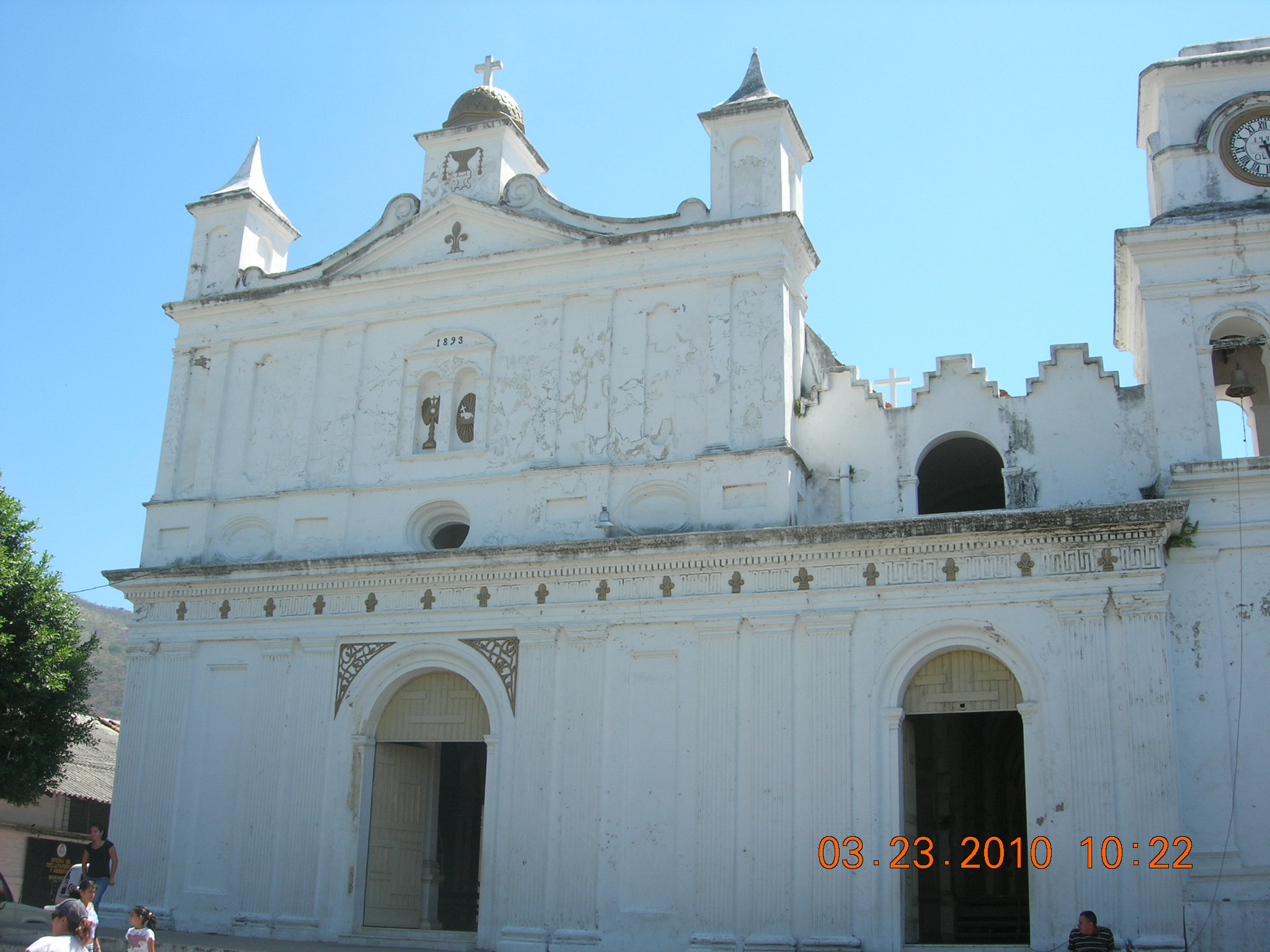
Across the street from the military fortress stands the 18th-century church, which was the center of the Sisters’ activities. They lived in the adjacent chapter house.
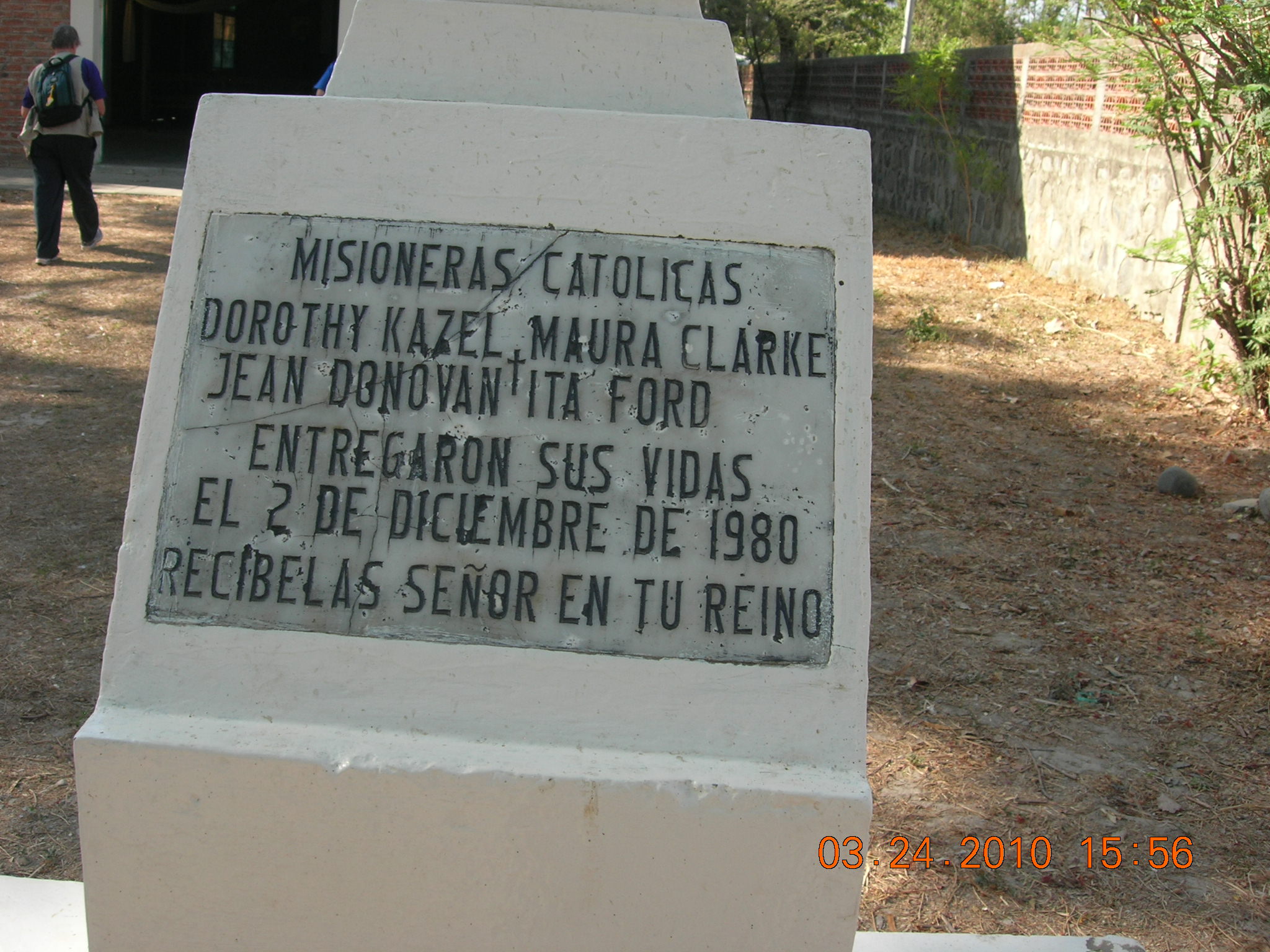
The two of them along with their friends Dorothy Kazel and Jean Donovan were murdered on December 2, 1980, near the town of Santiago Nonualco in the southern part of the country near the airport. The next day their bodies were found on a country road not too far from the town, and upon order from officials they immediately were buried in a shallow, common grave. The site of the grave is not publicly accessible, but it was not too far from the places in these photos.
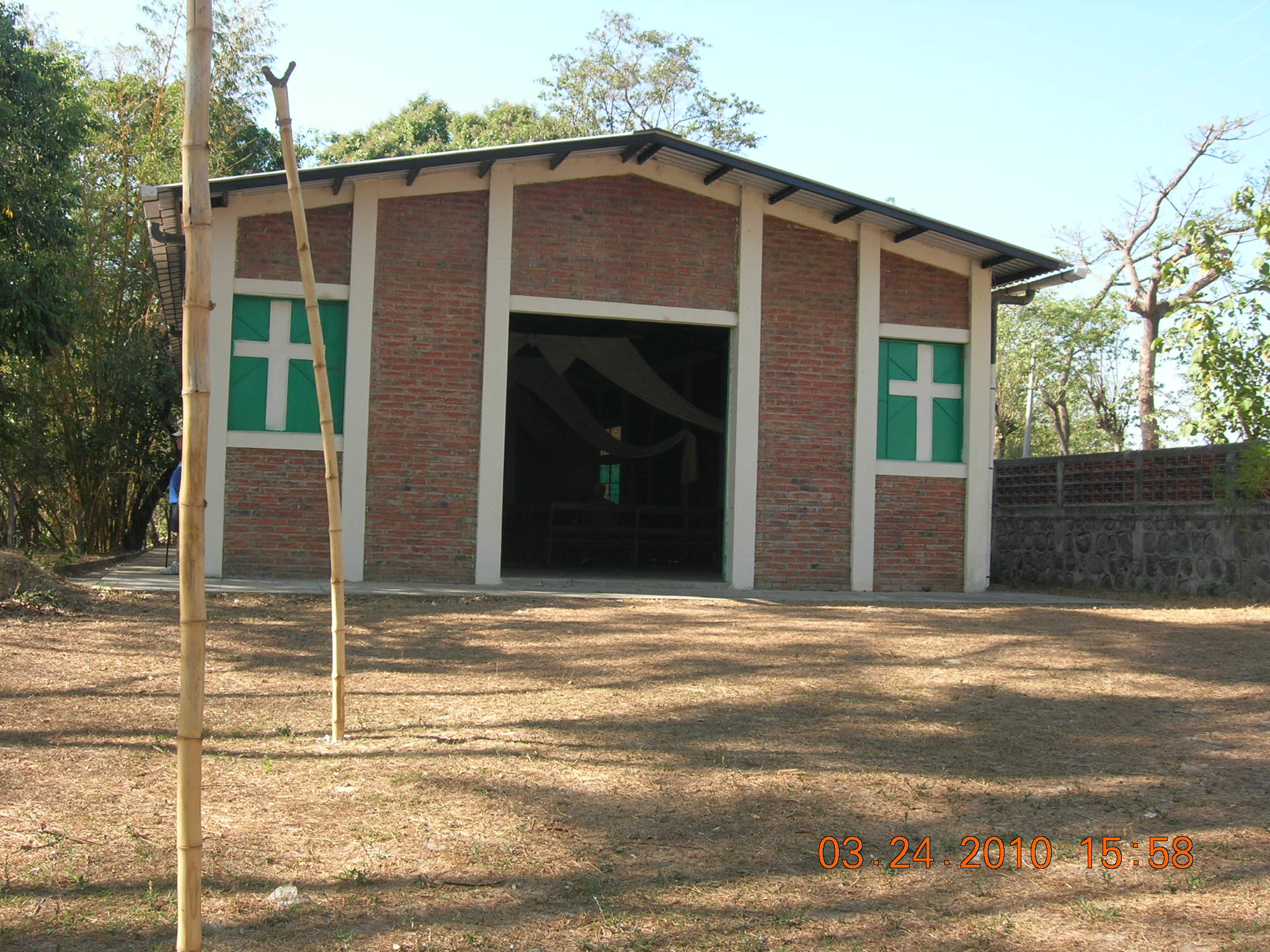
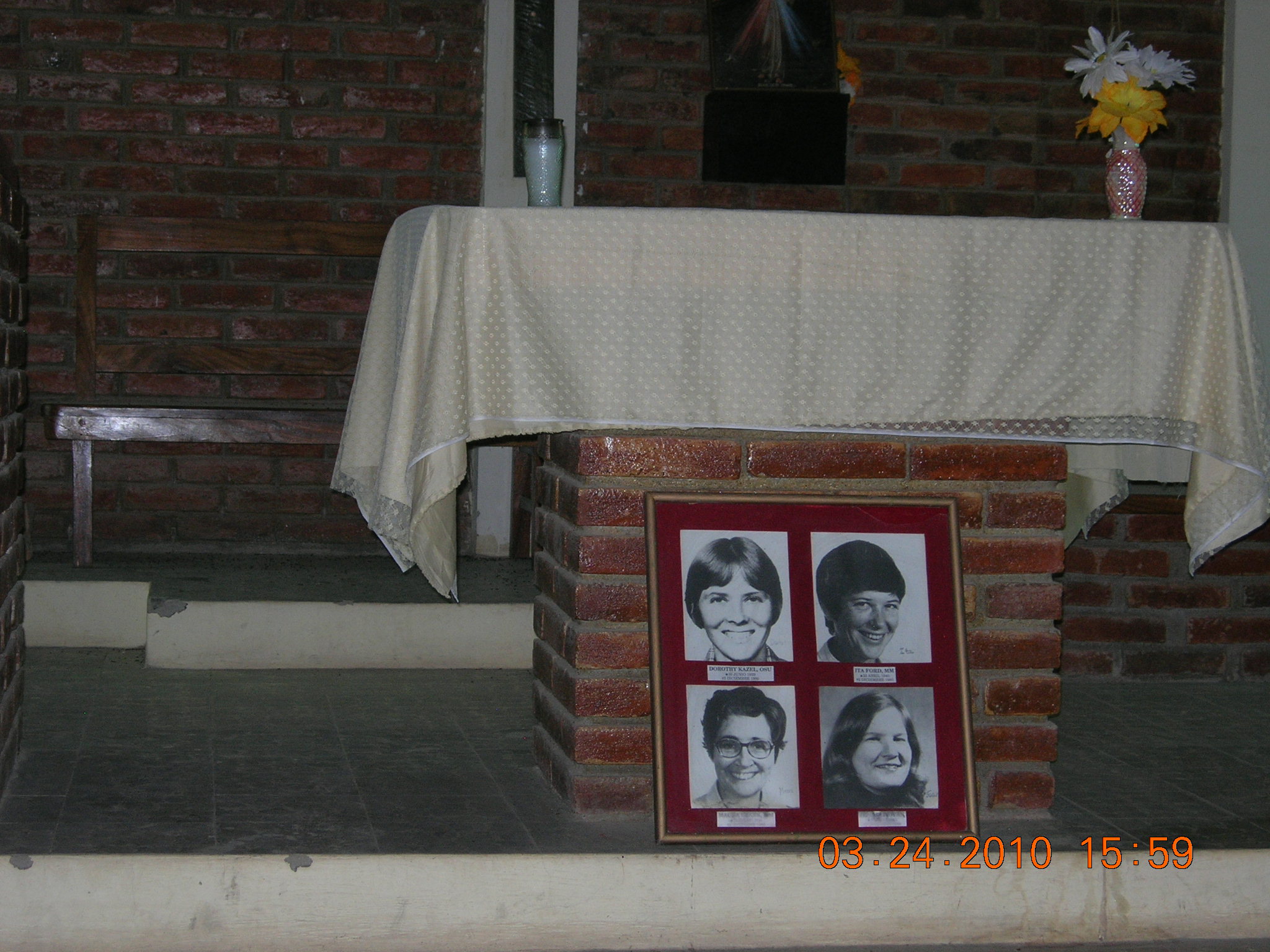
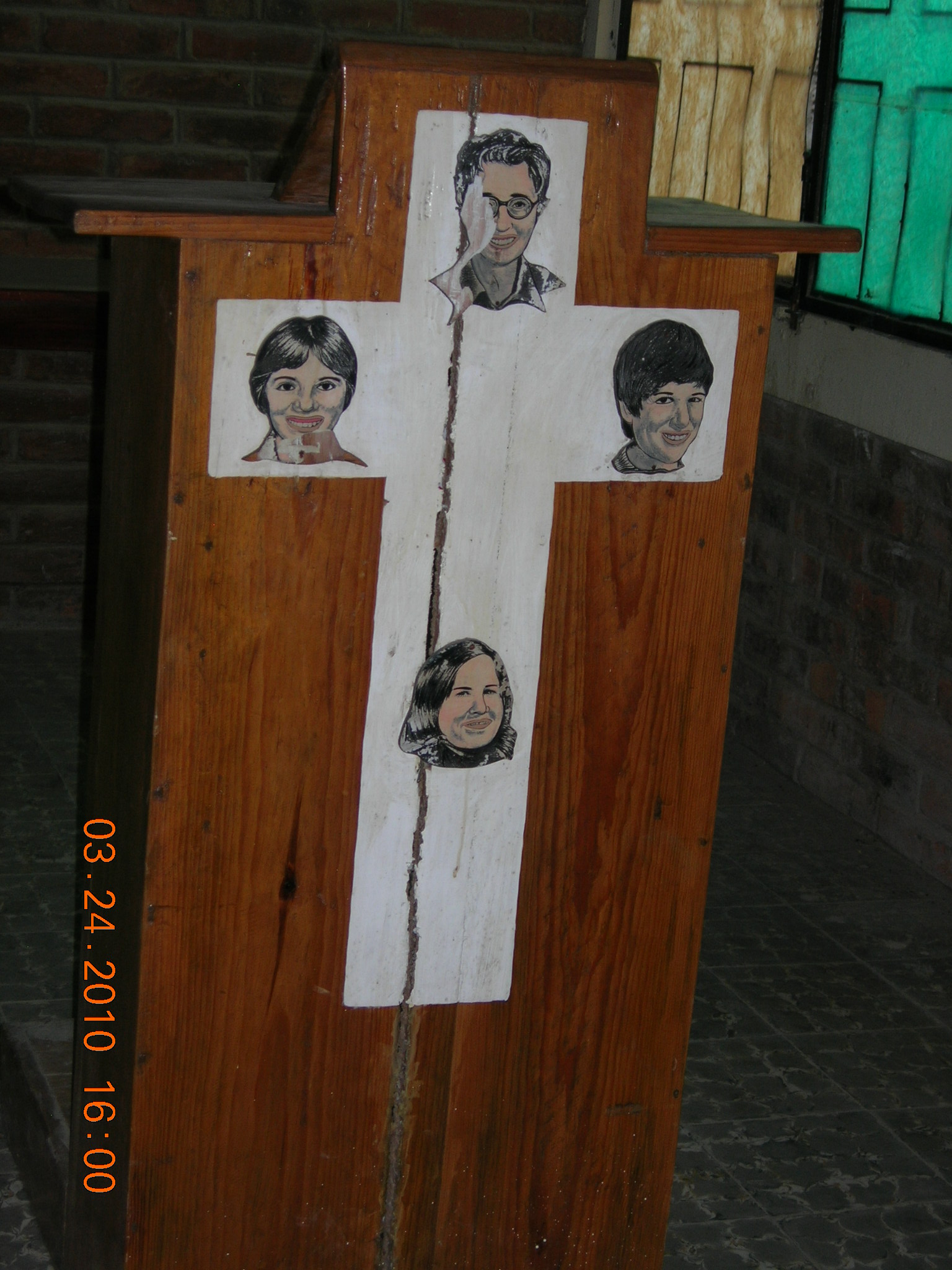
Now near the site of the common grave is a small chapel along with a monument to the women.
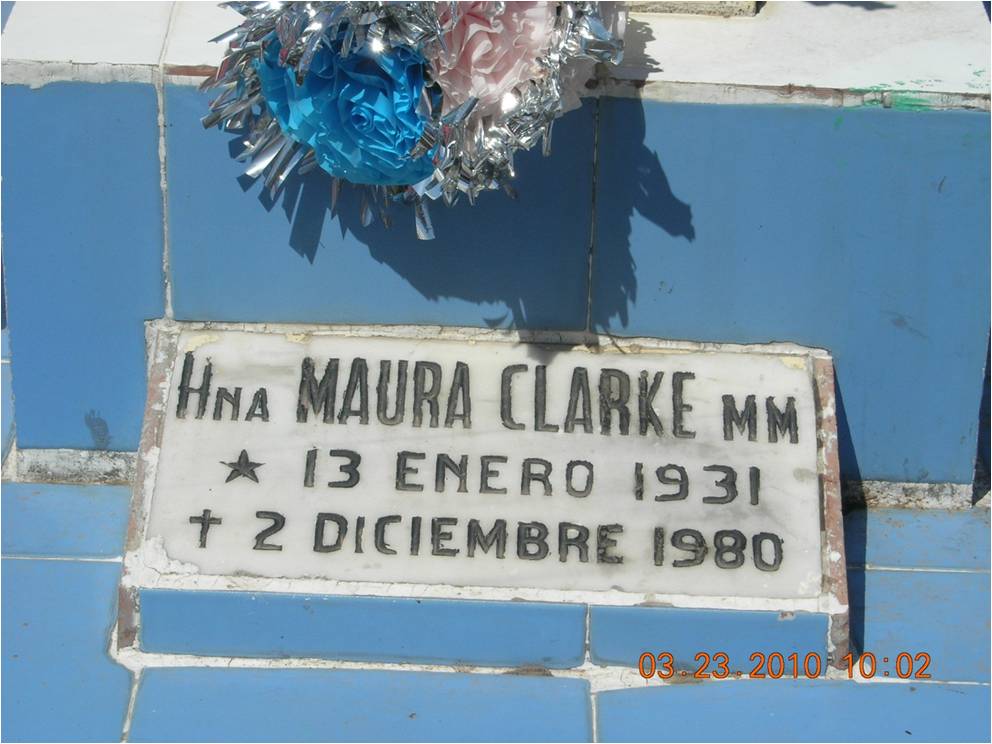
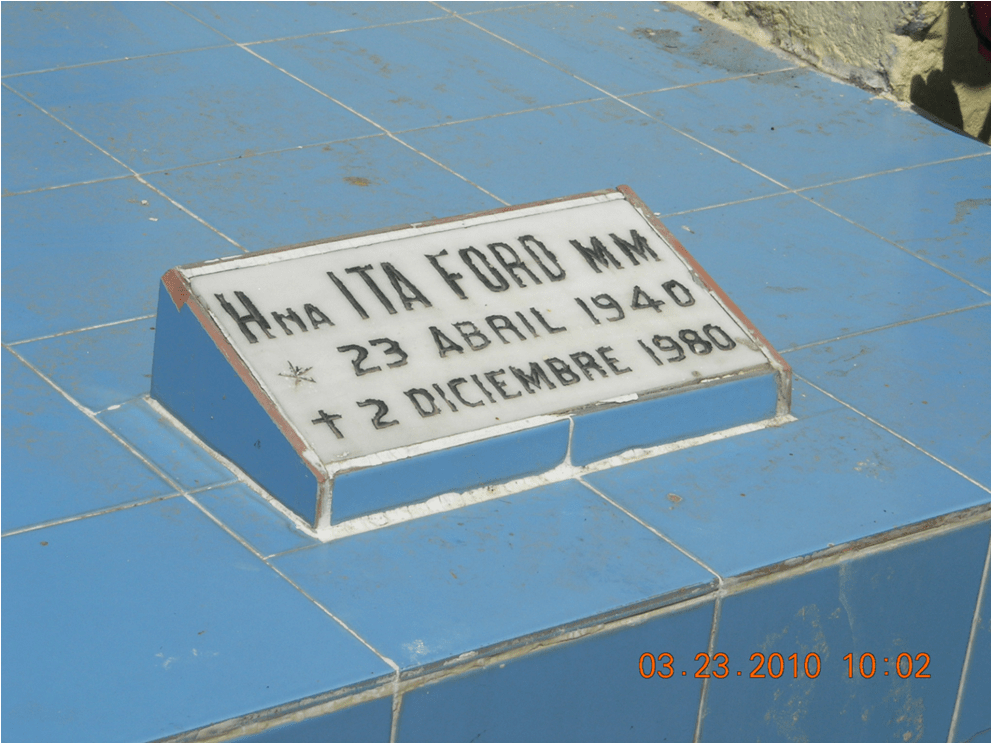
Soon after the murders, Sisters Clarke and Ford were buried where they had served, in accordance with Maryknoll custom and practice. Our group visited the cemetery for a moment of prayer and reflection. Here are photos of the municipal cemetery of Chalatenango and their grave markers.
La Libertad
We did not visit the western coastal city of La Libertad, population around 30,000. This is where Ursuline Sister Dorothy Kazel and Maryknoll lay missionary Jean Donovan served. Here is a photo of the city.
The four women are now part of the religious heritage of El Salvador and the world. Every year on December 2nd (the date of their murders), there are pilgrimages to that country to commemorate and honor their religious faith, devotion, courage and service. Praise God!
[i]See Post: The Four American Churchwomen of El Salvador (Dec. 12, 2011); Post: The December 1980 Murders of the Four Churchwomen in El Salvador (Dec. 14, 2011); Post: Non-Judicial Investigations of the 1980 Murders of the Four Churchwomen (Dec. 16, 2011); Post: Judicial Investigations and Criminal Prosecutions of the 1980 Murders of the Four Churchwomen in El Salvador (Dec. 18, 2011); Post: The Salvadoran Truth Commission’s Investigation of the Murders of the American Churchwomen (Dec. 19, 2011); Post: TVPA Lawsuit in U.S. Federal Court Over the Murders of the American Churchwomen (Dec. 20, 2011).