The Six Principles of Stupidity  

That is the title of a fascinating column by David Brooks.[1]Here is what he said.

Preamble

“This was the week in which the Chinese made incredible gains in artificial intelligence and the Americans made incredible gains in human stupidity. I’m sorry, but I look at the Trump administration’s behavior over the last week and the only word that accurately describes it is: stupid.”

“I am not saying the members of the Trump administration are not intelligent. We all know high-I.Q. people who behave in a way that’s as dumb as rocks. I don’t believe that there are stupid people, just stupid behaviors. As the Italian historian Carlo Cipolla once put it, “The probability that a certain person be stupid is independent of any other characteristic of that person.”

“And I am certainly not saying Donald Trump’s supporters are less intelligent than others. I’ve learned over the years that many upscale Democrats detest intellectual diversity. When they have power over a system — whether it’s academia, the mainstream media, the nonprofits or the Civil Service — they tend to impose a stifling orthodoxy that makes everybody within it duller, more conformist and insular. If Republicans want to upend that, I say: Go for it.”

“I define stupidity as behaving in a way that ignores the question: What would happen next? If somebody comes up to you and says, “I think I’m going to take a hike in a lightning storm with a copper antenna on my head,” stupidity replies, “That sounds like a really great idea!” Stupidity is the tendency to take actions that hurt you and the people around you.”

“The administration produced volleys of stupidity this week. It renewed threats to impose ruinous tariffs on Canada and Mexico that would drive up inflation in America. It attempted a broad and general purge of the federal work force, apparently without asking how that purge would affect government operations. But I’d like to focus on one other episode: the attempt to freeze federal spending on assistance programs, and Trump’s subsequent decision to reverse course and undo the freeze.”

“When announcing the freeze, the administration stated its clear goal — to defund things like the diversity, equity and inclusion programs that Trump disapproves of. A prudent administration would have picked the programs it opposed and focused on cutting those, through a well-established process known as rescission authority. But the Trump administration decided to impose a vague, half-baked freeze on what it claimed amounted to more than $3 trillion in federal spending. Suddenly, patients in cancer trials at the National Institutes of Health didn’t know if they could continue their treatments, Head Start administrators didn’t know if they could draw federal funds, cities and states across America didn’t know if they would have money for police forces, schools, nutrition programs, highway repair and other basic services.”

“This Trump policy was like trying to cure acne with decapitation. Nobody seems to have asked the question: If we freeze all grant spending, what will happen next? Once the ramifications of that stupidity became obvious, Trump reversed course. And this is my big prediction for this administration: It will churn out a steady stream of stupid policies, and when the consequences of those policies begin to hit Trump’s approval rating, he will flip-flop, diminish or abandon those policies. He loves popularity more than any idea.”

The Six Principles

“But it is still true that we’re going to have to learn a lot about stupidity over the next four years. I’ve distilled what I’ve learned so far into six main principles:”

“Principle 1: Ideology produces disagreement, but stupidity produces befuddlement. This week, people in institutions across America spent a couple of days trying to figure out what the hell was going on. This is what happens when a government freezes roughly $3 trillion in spending with a two-page memo that reads like it was written by an intern. When stupidity is in control, the literature professor Patrick Moreau argues, words become unscrewed “from their relation to reality.”

“Principle 2: Stupidity often inheres in organizations, not individuals. When you create an organization in which one man has all the power and everybody else has to flatter his preconceptions, then stupidity will surely result. As the German theologian Dietrich Bonhoeffer put it: “This is virtually a sociological-psychological law. The power of the one needs the stupidity of the other.”

 “Principle 3: People who behave stupidly are more dangerous than people who behave maliciously. Evil people at least have some accurate sense of their own self-interest, which might restrain them. Stupidity dares greatly! Stupidity already has all the answers!”

“Principle 4: People who behave stupidly are unaware of the stupidity of their actions. You may have heard of the Dunning-Kruger effect, which is that incompetent people don’t have the skills to recognize their own incompetence. Let’s introduce the Hegseth-Gabbard corollary: The Trump administration is attempting to remove civil servants who may or may not be progressive but who have tremendous knowledge in their field of expertise and hire MAGA loyalists who often lack domain knowledge or expertise. The results may not be what the MAGA folks hoped for.”

Principle 5: Stupidity is nearly impossible to oppose. Bonhoeffer notes, “Against stupidity we are defenseless.” Because stupid actions do not make sense, they invariably come as a surprise. Reasonable arguments fall on deaf ears. Counter-evidence is brushed aside. Facts are deemed irrelevant. Bonhoeffer continues, “In all this the stupid person, in contrast to the malicious one, is utterly self-satisfied and, being easily irritated, becomes dangerous by going on the attack.”

“Principle 6: The opposite of stupidity is not intelligence, it’s rationality. The psychologist Keith Stanovich defines rationality as the capacity to make decisions that help people achieve their objectives. People in the grip of the populist mind-set tend to be contemptuous of experience, prudence and expertise, helpful components of rationality. It turns out that this can make some populists willing to believe anything — conspiracy theories, folk tales and internet legends; that vaccines are harmful to children. They don’t live within a structured body of thought but within a rave party chaos of prejudices.”

  Conclusion

 Brooks concludes, “As time has gone by, I’ve developed more and more sympathy for the goals the populists are trying to achieve. America’s leadership class has spent the last few generations excluding, ignoring, rejecting and insulting a large swath of this country. It’s terrible to be assaulted in this way. It’s worse when you finally seize power and start assaulting yourself — and everyone around you. In fact, it’s stupid.”

This blogger endorses the need for rationality in U.S. politics and life today: “the capacity to make decisions that help people achieve their objectives.” This involves “experience, prudence and expertise.”

===========================

[1] Brooks. The Six Principles of Stupidity, N.Y. Times (Jan. 30, 2025).

“The Benediction of Life Together” at Westminster Presbyterian Church 

On September 10, 2023, Rev. Tim Hart-Andersen. Senior Pastor at Minneapolis Westminster Presbyterian Church, delivered the sermon, “The Benediction of Life Together,” which was the first of his last seven sermons before his retirement at the end of October.

Scripture

Psalm 1: 1-3:

“Blessed is the one
who does not walk in step with the wicked
or stand in the way that sinners take
or sit in the company of mockers,
but whose delight is in the law of the Lord,
and who meditates on his law day and night.
That person is like a tree planted by streams of water,
which yields its fruit in season
and whose leaf does not wither—
whatever they do prospers.”

John 10: 7-10, 14-16:

“Therefore Jesus said again, ‘Very truly I tell you, I am the gate for the sheep. All who have come before me are thieves and robbers, but the sheep have not listened to them. I am the gate; whoever enters through me will be saved. They will come in and go out, and find pasture. The thief comes only to steal and kill and destroy; I have come that they may have life, and have it to the full.’”

“’I am the good shepherd; I know my sheep and my sheep know me–just as the Father knows me and I know the Father—and I lay down my life for the sheep. I have other sheep that are not of this sheep pen. I must bring them also. They too will listen to my voice, and there shall be one flock and one shepherd. The reason my Father loves me is that I lay down my life—only to take it up again. No one takes it from me, but I lay it down of my own accord. I have authority to lay it down and authority to take it up again. This command I received from my Father.’”

Sermon[1]

“As most of you know, I will retire from my role as senior pastor of Westminster at the end of next month. When I told pastor-friends that this fall I’ll preach only seven more sermons from this pulpit, they asked if that was my version of the seven last words from the cross. This will be considerably less dramatic!”

“The prospect of concluding 40 years of ministry does raise the question of what to say, or what you might want to hear, as I prepare to leave. Early in my ministry here someone gave me a copy of Dr. Arnold Lowe’s final sermon, delivered on the Sunday following Easter, in April 1965, following 24 years of service at Westminster. The sermon was titled The Sum and Substance of It All. “

“Since that has been covered already, I’m going in a different direction. I’m conceiving of my last two months at Westminster as a kind of extended benediction, a long Minnesota benediction, for both the congregation and for me, as we part ways this fall and remember the many blessings we have shared over the years. That’s what a benediction is: a bene dictio – a good word. A benediction is a blessing offered and received, an invocation of the holy, a sacred conclusion to time together.”

“What better way to be reminded of the joy of our life together at Westminster than the start of the new church year, with children and music and festivity! We celebrate the blessing we have in our shared faith as followers of Jesus. God’s love is all around us, and we see it when we open our eyes and hearts. In the words of the old gospel song, “What a fellowship! What a joy divine!”

“We commence this year in the life of Westminster rejoicing in the goodness of God. We know not all is well with the world. We know of the fear and injustice, the animosity and anger that engulf our nation. We know of natural disasters, the fires and hurricanes and earthquakes, and pray for those impacted by them, especially the people of Morocco. We know of humanity’s complicity in climate-related calamities. We know, in the words of the Apostle, that ‘the whole creation is groaning in travail, awaiting the promised redemption.’”

“But all that difficult reality doesn’t overwhelm us because hope finds a home in the hearts of those who trust in the goodness and justice of God. There’s a tradition in African American worship that I have long admired. When the preacher says, ‘God is good,’ the congregation replies, ‘All the time.’ Then the preacher says, ‘All the time,’ and the congregation replies, ‘God is good.’”

“Given the events of the last few weeks in Jacksonville and Montgomery and other American cities – and given the long trajectory of racial injustice in this land, those words continue to sound in sanctuaries where people refuse to give up hope. We cannot change the past, but we can transform the future. ‘God is good’ – ‘all the time.’ ‘All the time’ – ‘God is good.’”

“The words offer an acclamation of praise, an affirmation of the power of life together in the church, a benediction of gratitude for the goodness of the God we worship and serve. Like the Hebrew poet’s trees planted by streams of water, if we draw on the goodness of God we are nourished, and we flourish – no matter the circumstances.”

“When the world bears down on us and squeezes us hard, in the systems we encounter or in our own personal situations, we can still claim the goodness of God. When the diagnosis is tough to hear and the future seems devastating, or when grief grips us, we can still claim the goodness of God. When loneliness and despair and mental illness grow to crisis levels, especially among young people, we can still claim the goodness of God. When the social order is coming unglued and vitriol is unchecked, we can still say, ‘God is good,’ ‘All the time.’ ‘All the time,’ ‘God is good.’”

“Christians are not Pollyannas who only look at things through rose-colored glasses. We’re not relentless optimists who see only the good in all situations. On the contrary, the followers of Jesus are realists. All of us are realists. We know how challenging it is to be a teenager in America today. We understand how new laws can create hardship for some. We see the crisis of drug overdoses and gun violence, including by suicide. We bemoan the cruelty and mendacity in politics and culture in our land in recent years. We don’t look away from the tough stuff that confronts us every day – sometimes personally, at other times in our communities or nation.”

“But we trust in something beyond all of that, beyond the powers of this world. The God we worship is sovereign over all things seen and unseen. Our resilience arises from trusting that Jesus came that all – that all – may have life and have it abundantly. That’s the blessing of life together in Christian community. No matter what we face, we have confidence that the light will not succumb to the shadows; that the dawn will follow the whatever our night be.

‘The early morning,’ Dietrich Bonhoeffer said, ‘Belongs to the Church of the risen Christ. At the break of light, it remembers the morning on which death…lay…in defeat and new life and salvation were given to humankind.” (Life Together)

“‘God is good.’ ‘All the time.’ ‘All the time.’ ‘God is good.’”

We also know that our time is not the end of time. We who follow Jesus reject the temptation to surrender to the fatalism and conspiracies that creep in if we are not vigilant. Yes, these are difficult days, but it is hubris to think of ourselves as facing the worst humanity has ever seen.

That’s not to say nothing needs addressing. Take a look around. We don’t lack for challenges. As the church we’re called to meet those challenges head on, to speak up and act up, if we must, and stand up for what is right and just. We do not let go of our pursuit of a better way and a better day simply because it will be hard to get there.”

“We follow one who came that all may have life and have it in abundance. That gives us hope that refuses to let go. We’ve seen communities in other times and places find courage to work for change – even when the world seems to have defeated them – rather than lose heart.

In 1934 in Germany, in the face of the rise of Nazi ideology and its influence on the church, a small group of Protestants assembled in the city of Barmen and wrote a credal statement of resistance. It’s called the Barmen Declaration. It rejects the many falsehoods that were swirling through Germany and its churches at the time, and instead insisted on the truth of Jesus Christ.

Fifty years later Christians in South Africa gathered in the town of Belhar and wrote a similar creed that rejected false claims being made by some in the church of that time that provided theological rationale to prop up apartheid. ‘Any teaching,’ the Belhar Confession says,

‘Which attempts to legitimate…forced (racial) separation by appeal to the gospel…must be considered ideology and false doctrine.’”

“Both in 1930s Germany and 1980s South Africa, in the midst of those crucibles of suffering and hatred, Christians reaffirmed the power of the gospel. They resisted the prevailing ethos in the culture and politics of their time – and even in the religion of the day, as expressed by some. They refused to let the blessing of life together be undone. The church today in our land should be doing the same.”

“Our denomination, the Presbyterian Church (USA), adopted both the Barmen Declaration and Belhar Confession into our church’s constitution.”   (https://www.pcusa.org/site_media/media/uploads/oga/pdf/boc2016.pdf)

“Let us be clear: “Our faith is about life, not death. I came that all may have life, Jesus said, and have it in abundance.  Our faith embraces hope, not fear. Let not your hearts be troubled, Jesus said, neither let them be afraid.  Our faith tells the truth, not lies. You shall know the truth, Jesus said, and the truth will set you free.  Our faith shows mercy, not judgement. God did not send the son into the world to condemn the world, the Apostle Paul said, but that the world might be saved through him.”

“The benediction of life together. The joy of being the church. What a fellowship. What a joy divine! We are like trees, planted by streams of living water, nourished by the love of God, invited to seek and reflect the goodness of God’s presence and God’s justice in all we do.

An enduring image of this congregation’s faithfulness and resilience can be found outside in Paul Granlund’s sculpture on Westminster’s Upper Plaza. It’s called The Birth of Freedom. It’s on the front of today’s bulletin and we’ll see it up close after the service for the all-church photo.

The figures leaping up out of broken chains reach toward the heavens, rejoicing in the fullness of life granted them as those who bear the image of God, as we all do. They’re leaping out of all that had bound them – as we hope to do, out of everything that binds us – into the freedom of serving God.”

“’The joy of God,’ the theologian Irenaeus is reported to have said in the second century, ‘Is a human being fully alive.’”

“Like those figures in the sculpture, a human being fully alive is given freedom – not to indulge in selfish pursuits, but to love God and to love others. An old prayer borrows from words attributed to St. Augustine:

‘Lord God, light of the minds that know you, life of the souls that love you, and strength of the hearts that serve you: Help us, so to know you that we may truly love you, and so to love you that we may fully serve you, whose service is perfect freedom.”

“‘I came that all may have life, ‘Jesus said, ‘and have it in abundance.'”

“God is good. All the time. All the time. God is good. ”

“Thanks be to God.”

“Amen.’”

Affirmation of Faith

The congregation together said the following words from the Belhar Confession of South Africa, adopted by the PCUSA (2016):

‘We believe

  • that God wishes to teach the church to do what is good and to seek the right;
  • that the church must therefore stand by people in any form of suffering and need, which implies, among other things,
  • that the church must witness against and strive against any form of injustice, so that justice may roll down like waters, and righteousness like an ever-flowing stream;
  • that the church as the possession of God must stand where the Lord stands, namely against injustice and with the wronged;
  • that in following Christ the church must witness against all the powerful and privileged who selfishly seek their own interests and thus control and harm others.
  • Therefore, we reject any ideology which would legitimate forms of injustice and any doctrine which is unwilling to resist such an ideology in the name of the gospel.’

Music

The congregation sang the following hymns: ‘All Creatures of Our God and King,’  ‘O God Beyond All Praising,’ ‘What a Fellowship, What a Joy Devine,’ and ‘God of Grace and God of Glory.’ And the Choir sang ‘Yonder Come Day,’ with the following words:

‘Oh day, yonder come day. Day done broke inna my soul, yonder come day. Good mornin’ day, yonder come day. A brand new day, yonder come day. Oh come on child, hush, hush, somebody’s callin’ my name. Oh my Lord, oh my Lord, what shall I do? Oh day, yonder come day. I was on my knees, yonder come day. When I heard him say, yonder come day. Oh come on child, Steal away, steal away, steal away to Jesus. Steal away, steal away, I ain’t got long to stay here. Swing low, sweet chariot, comin’ for to carry me home. Oh day, yonder come day…’

Commissioning of Church School Students and Teachers

As this was “Coming together Sunday” to mark the beginning of the church school year, there was Commissioning of Church School Students and Teachers,” gathered together in front of the church.

Conclusion

This was a very significant and moving service and sermon in the life of Westminster.

==========================

[1] Sermon, The Benediction of Life Together, Westminster Presbyterian Church (Sept. 10, 2023); Bulletin of Service, Westminster Presbyterian Church (Sept. 10, 2023).


“What Is a Reformed View of Politics?”

This is the title of the sermon by Rev. Tim Hart-Andersen, Senior Pastor of Minneapolis’ Westminster Presbyterian Church, on Reformation Sunday, October 28.[1] Below are photographs of Rev. Hart-Andersen and the Westminster Sanctuary.


As noted in other posts, every Westminster worship service is divided into the following three sections: Preparing for the Word, Listening for the Word and Responding to the Word. Here are some of the elements of the first two sections of this service.

Preparing for the Word

The service was opened by the stirring Prelude: “Marche en Rondeu” by Marc-Antoine Charpentier and “Trumpet Tune in D Major” by David N. Johnson that were played by Douglas Carlsen (trumpet, Minnesota Orchestra), Jeffrey Gram, timpani; and Melanie Ohnstad, organ.

Rev. David Shinn, Associate Pastor, then led the congregation in the following unison Prayer of Confession:

  • “Eternal God, we confess we keep you at a distance to pursue our own way. We forget your mercy is waiting for us as we close our hearts to you. Whisper the offer of your grace once more to us, and wash away all the things we have done and left undone. Make a new way for us to live in humility, showing love to others and to you. May we be forgiven as we confess our shortcomings, and renewed by your faithfulness, courageous in our pursuit of justice and peace; through Jesus Christ your Son.”

Listening for the Word

The Scripture Readings

Genesis 17: 1-8 (NRSV):

  • “When Abram was ninety-nine years old, the Lord appeared to Abram, and said to him, ‘I am God Almighty;  walk before me, and be blameless. And I will make my covenant between me and you, and will make you exceedingly numerous.’ Then Abram fell on his face; and God said to him, ‘As for me, this is my covenant with you: You shall be the ancestor of a multitude of nations. No longer shall your name be Abram, but your name shall be Abraham; for I have made you the ancestor of a multitude of nations. I will make you exceedingly fruitful; and I will make nations of you, and kings shall come from you. I will establish my covenant between me and you, and your offspring after you throughout their generations, for an everlasting covenant, to be God to you and to your offspring after you. And I will give to you, and to your offspring after you, the land where you are now an alien, all the land of Canaan, for a perpetual holding; and I will be their God.’”

Matthew 1: 1-6a, 17 (NRSV):

  • “An account of the genealogy of Jesus the Messiah,the son of David, the son of Abraham.
  • Abraham was the father of Isaac, and Isaac the father of Jacob, and Jacob the father of Judah and his brothers, and Judah the father of Perez and Zerah by Tamar, and Perez the father of Hezron, and Hezron the father of Aram, and Aram the father of Aminadab, and Aminadab the father of Nahshon, and Nahshon the father of Salmon, and Salmon the father of Boaz by Rahab, and Boaz the father of Obed by Ruth, and Obed the father of Jesse, and Jesse the father of King David.
  • And David was the father of Solomon by the wife of Uriah,
  • So all the generations from Abraham to David are fourteen generations; and from David to the deportation to Babylon, fourteen generations; and from the deportation to Babylon to the Messiah, fourteen generations.”

The Sermon[2]

“Scripture is concerned with history, and we should be, as well.  If we are not, as George Santayana famously observed, we ‘are condemned to repeat it.”

“That warning came to mind yesterday as we heard about the terrible shooting at the Tree of Life Synagogue in Pittsburgh. Anti-Semitism has spiked in America; the number of hateful incidents directed at Jews rose last year by 57%. Something is going wrong in our midst.”

“Political discourse hasn’t helped. When Neo-Nazis march and rally and are not clearly and resoundingly denounced by our leaders, that sends signals to those with hate in their hearts. If we forget the long history of bigotry and violence against Jews, we will repeat it.”

“If we forget the long history of injustice and violence against indigenous people in this land, we will repeat it.”

“If we forget the long history of the enslavement of African people in America and violence directed against them and their descendants, we will repeat it. If we forget the long history of mistreatment and violence against women and immigrants and people of differing sexual orientation and identity we will repeat it. “

“Our faith is rooted in history. Scripture goes out of its way to show the connections from one generation to another, to weave the threads of memory and experience, of joy and lament, through the long years of the human story. Scripture wants us not to forget.”

“When the Bible includes lists of the generations, as we heard in Matthew’s gospel, that precede us, it does so to remind us that we do not exist in a vacuum. We are tethered to a people and to values and to narratives of meaning. We are not alone. We are not the first to struggle with what it means to confront the baser impulses of the human heart, or to live in fractured community, or to seek out a God who can sometimes seem distant.”

“The gospel of Matthew opens with a recitation of the generations that stretch from Abraham through David. Fourteen generations. Then another fourteen up to the time of Babylonian exile. Then fourteen more to the birth of the Messiah.”

“Matthew doesn’t mention women in the genealogy, except when it’s necessary to bridge a gap from one generation to another. A man who cannot produce an heir with the correct lineage has to rely on an outsider woman. Then Matthew includes them, otherwise the entire biblical story would come to an abrupt end. It’s the patriarchy’s grudging way of acknowledging that women matter in the story.”

“What would it look like to extend the telling of the generations, from Jesus on…Paul, Lydia, Origen, Perpetua and Felicity, Monica, the desert mothers and fathers, St. Columba…up to the time of the Great Schism of Eastern and Western Christianity in 1054.”

“Then Hildegard of Bingen, Peter Waldo, Julian of Norwich, Jan Hus, Joan of Arc, Teresa of Avila…and on to the time of the Protestant Reformation. Then Luther, Zwingli, Calvin, our Presbyterian ancestor, Beza, Knox. Four of them are enshrined in our windows, once again suggesting there were no women involved. There were. We should have four other windows with Marie Dentiere, Marguerite de Navarre, Argula von Grumbach, and Olympia Morata – ancestors from that era and leaders in the faith.”

“The generations continue with Bartolomé de las Casas, John Winthrop, John Wesley, Chief Joseph, Phillis Wheatley, Sojourner Truth, Sitting Bull, Dorothy Day, Martin Luther King, Jr., Gene Robinson. Who would you put into that lineage?”

“We’re all linked by the flow of history, passing along the wisdom of the ages, the stories of pain and suffering, the moments of redemption. We’re not making up our faith as we go along. We’ve received it and are carrying it forward, to the generations that follow. We are stewards in our time of the hope at the heart of our faith.”

“It’s Reformation Sunday, when we celebrate the stream of Christian history in which we stand as Protestants. We open with John Calvin’s hymn and will close with Martin Luther’s. It’s also nine days before an election that has highlighted and heightened tensions among us. We’re anxious in America, and afraid. The divisive rancor is endless and exhausting. Our politics are tearing us apart.

“ In the midst of the chaos in which we find ourselves, our faith, our Protestant, reformed faith, can help us navigate the politics of these times in which we live.”

“”Do Politics Belong in Church?’  the cover of a recent issue of a Christian journal asks. Dietrich Bonhoeffer, the German pastor who conspired against Hitler, has a response. ‘As much as the Christian would like to remain distant from political struggle,’ Bonhoeffer says, ‘Nonetheless, even here the commandment of love urges the Christian to stand up for their neighbor.’ (Sojourners, p. 19, Feb 2018)”

“If we want religion that doesn’t engage in politics – not partisan politics, but the kind of politics that involves ‘standing up for our neighbors’ on the receiving end of hatred and poverty, prejudice and violence – if that’s what we want to avoid, then we had better find another savior.”

“What’s a reformed, or Presbyterian, view of politics? The response to that question begins with the notion of covenant, which we learned from the Jews. Covenant refers to the bond between God and humanity. God promises never to abandon humankind; that bond becomes the model for all human relationships, including between two people, or in a family, or in the community, or in the relationship between rulers and people, between government and citizens. Politics, in the Presbyterian understanding, is based on God’s call to life in covenantal community.” (Emphasis added.)

“Covenant goes back through our biblical ancestry to Abram. When God establishes a covenant between them, Abram becomes Abraham. He’s given a new name; that’s what happens when someone comes into covenant with God. That’s what was happening in the Tree of Life Synagogue yesterday. When the shooting started they were in the midst of the naming ritual for a new baby, marking the start of that child’s covenantal life with God.”

“For Abraham the new name as he comes into covenant with God is also a sign that he will be the father of a long line of descendants – the very line that stretches through the Hebrew people to the Messiah, and then on through the early church, and to Roman Catholicism, and to the Reformation and into our time.”

“Covenant theology of the Presbyterians played a key role in the development of democracy in America. H. Richard Niebuhr writes that for Presbyterians,

  • ‘The world has this fundamental moral structure of a covenant society and that what is possible and required in the political realm is the affirmation and reaffirmation of humanity’s responsibility as a promise-maker, promise-keeper, a covenanter in universal community.’ (Quoted in “The Concept of Covenant in 16th and 17th Century Continental and British Reformed Theology” in Major Themes in the Reformed Tradition, Donald K. McKim, ed. [Eerdmans, Grand Rapids: 1992], p. 95)

Three dimensions of covenant have particular relevance for American democracy today.” (Emphasis added.)

“First, covenant life is inclusive. ‘There is no longer Jew or Greek,’ the Apostle Paul writes,

  • ‘There is no longer slave or free, there is no longer male and female; for all of you are one in Christ Jesus. And if you belong to Christ, then you are Abraham’s offspring, heirs according to the covenant.’(Galatians 3:28-29)” (Emphasis added.)

“America was established with that covenant principle of inclusivity enshrined in the Declaration of Independence, when it states ‘that all men’ – all human beings we would say today – ‘are created equal (and) endowed by their Creator with certain unalienable Rights.’ All are included because all have the same rights and are equal before the law.”

“Democracy depends on inclusivity. That principle is under assault today. Some appear to be created more equal than others. The growing gap between those with power and resources and those without such privilege runs counter to the biblical admonition to care for the widow, the orphan, and the stranger. Racism destroys the promise of community. Differing treatment by law enforcement and the criminal justice system betrays the assurance of equal rights. The true measure of the success of a society is not how well those at the top are doing, but how well the most vulnerable are faring.”

“Covenantal politics is inclusive.” (Emphasis added.)

Second, covenant life affirms the full humanity of every person. In the biblical account of creation the earthling is made in the image of God. That assertion means that every human being is of the same value and has something to contribute. That fundamental claim undergirds democracy – that all have equal access to participation in the political process and equal access to ‘life, liberty, and the pursuit of happiness.”’ (Emphasis added.)

“When Sojourner Truth in 1851 stood up for her full humanity [and said[:

  • ‘And ain’t I a woman? Look at me! Look at my arm! I have ploughed and planted, and gathered into barns, and no man could head me! And ain’t I a woman? I could work as much and eat as much as a man – when I could get it – and bear the lash as well! And ain’t I a woman? I have borne thirteen children, and seen most all sold off to slavery, and when I cried out with my mother’s grief, none but Jesus heard me! And ain’t I a woman?’ Delivered 1851; Women’s Convention, Akron, Ohio) “

“Democracy depends on seeing the worth of every person. That principle is under assault today. The rise of hate crimes against Jews and Muslims eats away at their full humanity. Immigrants and refugees are treated as unworthy and their full humanity is implicitly questioned. More than three million people who have served their sentences cannot vote because of a felony on their record and their full humanity is not restored to them. This week the government proposed new rules that would deny the full humanity, even the existence, of more than one million people who identify as transgender.”

Covenantal politics affirms the full humanity of every person.” (Emphasis added.)

“Finally, covenant life requires truth-telling. In John’s gospel Jesus says, ‘You shall know the truth and the truth shall set you free.’” (Emphasis added.)

“The Declaration of Independence speaks of ‘truths’ that are ‘self-evident.’ Democracy requires a shared understanding of the truth. Without it there is no trust and the democratic system cannot function without trust.”

“In 1788, Presbyterians in New York and Philadelphia, fresh from helping write the U.S. Constitution, sat down and wrote a set of Principles of Church Order. Among them was this phrase: ‘Truth is in order to goodness,’ meaning truth-telling leads to good behavior.“

“They went on to say, ‘No opinion can either be more pernicious or more absurd than that which brings truth and falsehood upon a level…We are persuaded that there is an inseparable connection between faith and practice, truth and duty.’ (F-3.0104 in PCUSA Book of Order)”

“Democracy depends on telling the truth, especially by those in power. That principle is under assault today. Conspiracy theories displace reality, facts become whatever is convenient in the moment, and lies masquerade as truth. When the truth goes missing, people suffer, and trust soon dissipates – and to live in covenant with one another trust is needed.”

Covenantal politics requires truth-telling,” (Emphasis added.)

“We are at a pivotal moment in our nation. Our democracy is fraying. Fear abounds. Violence simmers all around us and occasionally breaks through the surface. Trust has been depleted. Rhetoric works against the values and principles on which our democracy depends.”

“But we are a people rooted in history. We remember other times when the nation was threatened from within. And we overcame. ‘With malice toward none, with charity for all,’ ‘President Lincoln said in his Second Inaugural Address even as the Civil War continued to rage,

  • ‘Let us strive on to finish the work we are in, to bind up the nation’s wounds…and…do all which may achieve…a just and lasting peace among ourselves.’”

“Those words express a politics of biblical covenant, where we are bound together and committed to the welfare of one another. If the nation could find its way back from the brink in that perilous and violent time, surely we can work our way out of the current predicament in which we find ourselves.”

“Democracy is a covenantal form of politics, and for it to be healthy requires participation. We need to do our part; we are responsible for one another. Voting is not merely a right; it’s the duty and responsibility of citizens in a democratic nation. Peaceful political engagement expresses and embodies and brings to life the promise of democracy.”

“Let us not forget that we are people of faith, rooted in history, in covenant with God and with one another, carrying on the hope of generations before us, even as we stand ready to hand that hope on to those who follow us.”

“In the end, we can trust that God’s grace and mercy, God’s justice, and God’s love will prevail, and we shall overcome.”

“Thanks be to God.”

Reflections

I usually ignore the biblical references to generations and descendents. They seem so boring and useless. This sermon, however, let me see that the previous generations of figures in the Bible plus my own ancestors remind me that I am not alone. As the sermon says, such references “remind us that we do not exist in a vacuum. We are “tethered to a people and to values and to narratives of memory.”

We are “stewards in our time of the hope at the heart of our faith.” This is another passage of the sermon that made an impact on me. I had not thought of being a steward for the short time of my life of a belief that was passed on to me so that the belief may be carried forward in time after I am gone.

I also never had thought of being a member of a covenantal community in the U.S. involving everyone who is here right now. Yet I certainly have believed that life in the U.S. is or should be inclusive recognizing the full humanity of everyone.

This also means that democracy “ is a covenantal form of politics” requiring my participation.

Finally I am reminded that retrieving and studying the Scriptures and the sermon and then writing about them provide deeper and more enriching insights. I urge others to do the same.

==================================

[1]  The bulletin for the service is online.

[2] Sermon, What Is a Reformed View of Politics? (Oct. 28, 2018).


[3] The opening hymn that sometimes is attributed to John Calvin was “”Greet Thee, Who My sure Redeemer Art.” https://hymnary.org/hymn/GG2013/624


The closing hym, “Sing Praise to God Who reigns Above” is not attributed to Luther. https://hymnary.org/hymn/GG2013/645


“Who Is Jesus for Us Today?”  

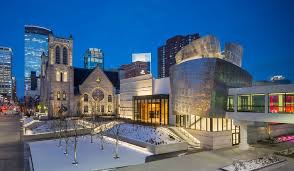
This was the title of the sermon on September 9, 2018, by Rev. Timothy Hart-Andersen, Senior Pastor, Minneapolis’ Westminster Presbyterian Church. (A photograph of the church with its new addition is below.)

Biblical Texts for the Day

 Psalm 8 (NRSV):

“O Lord, our Sovereign,
how majestic is your name in all the earth!

You have set your glory above the heavens.
Out of the mouths of babes and infants
you have founded a bulwark because of your foes,
to silence the enemy and the avenger.

When I look at your heavens, the work of your fingers,
the moon and the stars that you have established;
what are human beings that you are mindful of them,
mortals that you care for them?

Yet you have made them a little lower than God,
and crowned them with glory and honor.
You have given them dominion over the works of your hands;
you have put all things under their feet,
all sheep and oxen,
and also the beasts of the field,
the birds of the air, and the fish of the sea,
whatever passes along the paths of the seas.”

“O Lord, our Sovereign,
how majestic is your name in all the earth!”

 John 1: 45-51 (NRSV):

“Philip found Nathanael and said to him, ‘We have found him about whom Moses in the law and also the prophets wrote, Jesus son of Joseph from Nazareth.’ Nathanael said to him, ‘Can anything good come out of Nazareth?’ Philip said to him, ‘Come and see.’ When Jesus saw Nathanael coming toward him, he said of him, ‘Here is truly an Israelite in whom there is no deceit!’ Nathanael asked him, ‘Where did you get to know me?’ Jesus answered, ‘I saw you under the fig tree before Philip called you.’ Nathanael replied, ‘Rabbi, you are the Son of God! You are the King of Israel!’ Jesus answered, ‘Do you believe because I told you that I saw you under the fig tree? You will see greater things than these.’ And he said to him, ‘Very truly, I tell you, you will see heaven opened and the angels of God ascending and descending upon the Son of Man.’”

 The Sermon[1]

 “The work of the Church is fundamentally a teaching task: asking questions, seeking answers, exploring possibilities – and then translating all of that into life between Sundays. . . .”

“Christianity is never settled for any of us, no matter our age or the extent of our involvement in church. The world is always changing. If our faith is not similarly dynamic, not living, not rising to the challenges we see all around us, not attuned to the context in which we live, it will slowly wither away. . . .”

“Actually there’s something appealing to the notion that what happens in churches can be hazardous to the status quo. Powerful worship is subversive; it wants to upend the dominant ethos. A church ought to be considered a place the world enters at its own risk. After all, we follow a Savior perceived to be such a serious threat that he was crucified.”

“But the Church is not only what happens inside these walls for a few hours each week. . . . Church mostly happens the rest of the week, out there. We – you and I – are the Church when we leave here and go out into the world. . . . “

“The faith we practice has always felt compelled to move out into the streets and ask, ‘What is God up to in this place and in this time?’ because we want to join that work. Call it public theology, or our witness in the world, or the pursuit of biblical justice – our faith has never wanted to sequester Jesus in the sanctuary, as if he might – we might – be sullied by the messy reality of what’s going on in the world around us.”

“We Come Together not to be sheltered in this sacred space, but, rather, to hear the call of God to go forth and be the Church. To do that, however, means we need to understand whom we follow out into those streets. . . .”

“The decision to follow Jesus, Professor Gail O’Day says, ‘Is inseparable from the decision one makes about Jesus’ identity.’ [New Interpreter’s Bible, vol. IX (Nashville: Abingdon Press, 1995) p. 534] . . . .”

“Who we think he is will determine the kind of Christians we become.”

“In the 1930s in Germany, the young pastor Dietrich Bonhoeffer found himself growing skeptical about the Jesus being preached in the churches of that land. As political rhetoric became more overtly racist and the culture increasingly supportive of extreme Aryan nationalism, most German Christian churches rolled over and acquiesced to all of that. They gave their Jesus over to the rising ideology of the times. It was expedient for them, convenient for them, to go along with the predominant and popular spirit of the land.”

“Bonhoeffer and his colleagues – Karl Barth, Martin Niemoller, and others – resisted, and some of them eventually paid for it with their lives. They wrote an affirmation of faith rejecting the distorted theology used to underpin racism and nationalism. They started an alternative church, called the Confessing Church, as opposed to the German Christian Church, which supported the ideology of the times.. They founded an underground seminary, as over against the schools of the German Christian Church, which taught theology that supported the direction the nation was moving. They preached and worked against the tide.”

“And behind all that work, according to Bonhoeffer, was a single, driving question: Who is Jesus Christ for us today? . . . .”

“Who is Jesus Christ for us today? That question will inform our worship at Westminster this fall, even as it informs our life as we move from this place out into the world . . . “

 “Eighty years ago in Germany was not the only time when Christians have resisted the prevailing winds. Forty years ago in South Africa, the Dutch Reformed Mission Church wrote and adopted what became known as the Confession of Belhar. The Dutch Reformed Mission Church was the segregated denomination created for “mixed race” persons in the 19th century by the white Dutch Reformed Church, the denomination that eventually – by the mid-20th century – would develop a theological justification for apartheid, a theological basis for apartheid.”

 “The Confession of Belhar is a theological denunciation of the racist political system of South Africa of that time. It rejects the notion that God would accept the dividing of the human family on the basis of race or color. The Confession answers Bonhoeffer’s question, ‘Who is Jesus Christ for us today,’ by portraying Jesus as the one standing with those on the receiving end of the cruelties of history, those excluded from places of privilege and power by virtue of who they are or where they live or what language they speak or whom they love or the circumstances of their lives.” (Emphasis added.)

“Who Jesus is for us determines what it means for us to pursue his way – to be Christian in our time.”

.“Like the Germans of the Confessing Church, and like many in our land today, the ‘mixed race’ South Africans stood their ground . . .against those who would corrupt Christianity to make it supportive of the politics of exclusion and racial superiority. They declared that one could not be a follower of Jesus and, at the same time, a supporter of apartheid. Think of that in our time: it is not possible to a follower of Jesus and supporter of racism at the same time.” (Emphasis added.)

“Our denomination adopted the Confession of Belhar two years ago. . . .  We chose to adopt it to speak to our own historic and current racism in America, a system that has been in place for so many centuries.”

“Westminster has embarked on a pilgrimage to join the great effort in our nation finally, finally now wanting to come to terms with the original sin of this land, the enslavement – the buying and selling of human beings, the thinking of people as less than human – the enslavement of Africans to build up our nation. The legacy of that terrible time yet endures today. That journey for us, as followers of Jesus, starts with the question: Who is Jesus Christ for us today?” (Emphasis added.)

“Following Jesus is costly. The South Africans found that out. The Confessing Church in Germany discovered that. We will learn that, as well. The challenge to love in the way of Jesus should not be undertaken lightly. It will change each one of us and, hopefully, the world in which we live.”

“That’s why it matters what we do here in worship week after week. That’s why it matters that our children and youth are engaged in nurturing their faith. That’s why it matters who we are as a congregation in this city.”

The Confession of Belhar[2]

After the  sermon, the congregation read in unison the following extracts from the Confession of Belhar:

  • “We believe: that God has entrusted the church with the message of reconciliation in and through Jesus Christ; that the church is called to be the salt of the earth and the light of the world; that the church is called blessed because it is a peacemaker; that the church is witness both by word and by deed to the new heaven and the new earth in which righteousness dwells;
  • That the credibility of this message is seriously affected and its beneficial work obstructed when it is proclaimed in a land which professes to be Christian, but in which the enforced separation of people on a racial basis promotes and perpetuates alienation hatred and enmity;
  • Therefore, we reject any doctrine which, in such a situation, sanctions in the name of the gospel or the will of God the forced separation of people on the grounds of race and color and thereby in advance obstructs and weakens the ministry and experience of reconciliation in Christ.” (Emphasis added.)

Conclusion

This sermon provided at least a partial answer to the question, ‘Who is Jesus for us today?’ It d did so by referencing the creation of the Confessing Church in Germany and the Confession of Belhar in stating, “Jesus stood “with those on the receiving end of the cruelties of history, those excluded from places of privilege and power by virtue of who they are or where they live or what language they speak or whom they love or the circumstances of their lives.” [3](Emphasis added.) ==================================

[1] Sermon: Who Is Jesus for Us Today? (Sept. 9, 2018).

[2]  See The Confession of Belhar Is Adopted by the Presbyterian Church (U.S.A.), dwkcommentaries.com (July 21, 2016).

[3] The sermon went on to say that further answers to this question will be provided in future sermons and other discussions at Westminster.


The U.S.-Dakota War Remembered by Minneapolis’ Westminster Presbyterian Church (Part III)

Westminster Presbyterian Church

Minneapolis’ Westminster Presbyterian Church‘s October 7, 2012, worship service remembered the U.S.-Dakota War of 1862. This post reviews the last of the three parts of that service–Responding to the Word.[1]

We first sang a Hymn that was new to me, “You know the Way” in the Dakota language. The words originally in German by martyr Dietrich Bonhoeffer were translated into the English language in the bulletin: “God, gather and turn my thoughts to you. With you there is light. You do not forget me. With you there is help and patience. I do not understand your ways, but you know the way for me.”

Jon Romer

For the Offertory a traditional Ojibwe song, “Gegiwabimin mino waa” or “I will see you again another day” was played on the Native American flute by Jon Romer. Emphasizing there is no word or phrase for a final goodbye in their language, the song is sung by the Ojibwe women as the men leave the village to hunt with the expectation that the men will return and everyone will sit down to feast together. For us it says that when we leave this world, there is no final goodbye. We will one day all sit and feast together once again.

Rev. Dr. Stephen Robertson

For the Lord’s Table on World Communion Sunday,[2] the Great Prayer of Thanksgiving was offered by Westminster Associate Pastor, Rev. Dr. Stephen Robertson. It included these words:

  • “We give you thanks, O God, For you have made us in your image, female and male, black, brown, red and white, gay and straight. You set us in the world to love and serve you and to live in peace and justice with your whole creation. Although we have failed to live according to your way, you continue to call us back to you.”
  • “In Jesus, you showed us love for all, and you led the way to a new community in which the last would be first, justice would be realized, and peace would abound. Jesus proclaimed the good news of the reign of God. Yet we rebelled against his message.”
  • “But death cannot defeat life, nor can many waters quench love. You raised Christ from death, conquering the powers of this world, not through might, but through grace.”
  • “We pray that Christ’s Spirit will be in us as we feast at this, his table. Sacred and living Spirit, descend upon us. Fill us with your presence.”
  • “Move also upon these gifts of bread and cup, that they may become the bread of life and the cup of salvation. United forever through your Spirit and this table, may our feet walk the path of justice, May our hearts tear down the walls of division, and may our tongues cry out, ‘Peace on earth.’”

Rev. Robertson then led the congregation in the unison recitation of the Lord’s Prayer:[3]

  • “Our Father, who art in Heaven, hallowed be Your name. Thy Kingdom come. They will be done. On earth as it is in Heaven. Give us this day, our daily bread. And forgive us our debts, as we forgive our debtors. Lead us not into temptation, and deliver us from evil. For Thine is the Kingdom and the Power and the Glory forever. Amen.”

As the church elders distributed the bread and grape juice of communion, the Choir’s Mary Monson, mezzo soprano, and J. D. Shaffer, tenor, sang “Morning Song,” which combines the melody of “Amazing Grace” with a Native American melody. It was sung in ancient Teehahnahmah and Cherokee languages, which was translated into English as follows: “I am of the great Spirit. It is so. God’s son paid for us. Then to heaven he went after paying for us. But he said, when he rose: ‘I’ll come again’ he said when he spoke. All the earth will end when he comes. All will see him all over the earth. All the good people living he will come after. Heaven always in peace they will live.” The piece was arranged by James E. Green, who has Cherokee heritage.

The Closing Hymn was “Many and Great, O God Are Thy Things” (No. 271 in the Presbyterian Hymnal). As Rev. Timothy Hart-Andersen had mentioned in his sermon, this hymn was written in the 1840’s by the Dakota congregation in Lac Qui Parle, Minnesota and was sung by the 38 Dakota men – Presbyterians, many of them –as they mounted the gallows in Mankato on December 26, 1862. The last verse is the following:

  • “Grant unto us communion with Thee,
    Thou star abiding One;
    Come unto us and dwell with us;
    With Thee are found the gifts of life,
    Bless us with life that has no end,
    Eternal life with Thee.”

The Postlude was the Choir’s repetition of “Heleluyan,” which was the Processional Hymn at the start of the service.

—————————————————————

[1] Other posts set forth the first two parts of the service: Preparing for the Word and Listening for the Word as well as the theological underpinnings for the order of worship. The following materials about this service are on the web: the bulletin, a video and the texts of the sermons. Another post provided a summary of the War.

[2] World Communion Sunday is celebrated on the first Sunday in October throughout the U.S. It is a project of the National Council of the Churches of Christ in the USA, which has been the leading force for ecumenical cooperation among Christians in this country. The NCC’s member faith groups — from a wide spectrum of Protestant, Anglican, Orthodox, Evangelical, historic African American and Living Peace churches — include 45 million persons in more than 100,000 local congregations in communities across the nation.

[3] By the way, the front of the October 7th worship bulletin set forth the Lord’s Prayer in the Dakota language as translated in the 1830’s by Presbyterian brothers Gideon and Samuel Pond, who established the first Christian congregation in the Minnesota Territory on the shores of Lake Calhoun In today’s Minneapolis.

Remembering Oscar Romero at Westminster Abbey

Westminster Abbey, London, UK
Romero Statue, Westminster Abbey, London, UK

In 1998 Westminster Abbey in London opened its gallery of Christian Martyrs of the Twentieth Century. Their 10 statues are set in outside niches above the main entrance. The Abbey did so to proclaim that the 20th century was one of Christian martyrdom greater than in any previous period in the history of the church.[1]

In niche number 6 is the statue of Oscar Romero. He stands between the statues of Dr. Martin Luther King, Jr., the great U.S. civil rights leader and preacher, and Dietrich Bonhoeffer, the German Lutheran pastor and theologian who was executed by the Nazi regime just before the end of World War II for his involvement in a plot to assassinate Adolph Hitler.[2]

The biographical essay about Romero in a book about this gallery of martyrs is by Philip Berryman, an U.S. liberation theologian and leading authority on Christianity in Central and South America.

Berryman was in El Salvador in March 1980 and heard Romero’s famous homily ordering the military to stop the repression. Immediately afterwards, Berryman said he expressed his amazement at Romero’s boldness in saying what the Salvadoran military officers must have thought was treasonous. The next day when Berryman heard that Romero had been shot, he rushed to the hospital only to find out that Romero had died. Shortly after the assassination, he reports that Ignacio Ellacuria, the Rector of the Universidad de Centro America (UCA), celebrated a mass and said that with Archbishop Romero, God had visited El Salvador.[3]

Berryman recounts the familiar story about Romero’s being conservative and soft-spoken when he was appointed Archbishop in early 1977 and being converted to social and political justice after the murder of his friend, Father Rutilio Grande. To the same point, he quotes another friend of Romero, Jesuit priest and liberation theologian at UCA, Jon Sobrino, who said that when Romero gazed “at the mortal remains of Rutilio Grande, the scales fell from his eyes. Rutilio had been right! The kind of pastoral activity, the kind of church, the kind of faith he had advocated had been the right kind after all. . . .  [I]f Rutilio had died as Jesus died, if he had shown that greatest of all love, the love required to lay down one’s very life for others–was this not because his life and mission had been like the life and mission of Jesus? . . . Ah then, it had not been Rutilio, but Oscar who had been mistaken! . . .  And Archbishop Romero , , , [made] a decision to change.” In short, Grande’s life and death gave Romero a new direction for his life and the strength to pursue it.[4]

Romero, according to Berryman, prepared his homilies in consultation with a team of priests and lay people to review the situation in the country. Then he would write the homily from his notes, the newspapers of the week and the Biblical texts and commentaries. The homilies themselves usually lasted about 45 minutes, mostly devoted to a systematic and thematic reflection on the Biblical texts for the day, but also with Romero’s observations on the human rights violations of the prior week.[5]

Berryman also comments on the strained relationship between Romero and the U.S. government. Early in 1978, for example, Romero met with Terrance Todman, the U.S. Under-Secretary of State for Inter-American Affairs, who urged Romero to have a less confrontational and more constructive relationship with the Salvadoran government. Romero immediately responded that the U.S. and Rodman did not understand what was happening in El Salvador. “The problem is not between Church and government, it’s between government and people. . . . It’s not the church, much less the archbishop! If the government improved its treatment of the people, we will improve our relations with the government.”[6]

The Anglican Dean of Westminster Abbey came to El Salvador for the 20th anniversary of Romero’s assassination in 2000 and participated in a mass at the El Salvador de Mundo (the Savior of the World) traffic circle lead by the Roman Catholic Archbishop of Los Angeles. I cried during the service when Salvadorans passed the peace to me after all my country had done to support the Salvadoran government during their civil war.


[1] Andrew Chandler, Christian Martyrs of the Twentieth Century (Westminster Abbey; London 1999); Andrew Chandler (ed.), The Terrible Alternative–Christian Martyrdom in the Twentieth Century (Cassell; London 1998).

[2] Christian Martyrs of the Twentieth Century at 3, 8, 10, 13.

[3]  The Terrible Alternative at 159-60. Father Ellacuria, of course, was one of the six Jesuit priests murdered by the Salvadoran military in November 1989. (See Post: International Criminal Justice: The Salvadoran Murders of the Jesuit Priests (June 2, 2011).)

[4]  Id. at 160, 164-65; Jon Sobrino, Archbishop Romero: Memories and Reflections at 9-10 (Orbis; Maryknoll, NY 1990); Post: Oscar Romero, A Saint for All People and All Time (Oct. 5, 2011). Jon Sobrino, whom I met at UCA in April 1989, escaped being murdered with his fellow Jesuits in November 1989 because he was lecturing in Southeast Asia. (Jon Sobrino, Ignacio Ellacuria, et al., Companions of Jesus: The Jesuit Martyrs of El Salvador at 4-9 (Orbis Books; Maryknoll, N.Y. 1990).)

[5]  The Terrible Alternative at 167-68.

[6]  Id. at 170.