The Cuban Revolution and Religion

Minneapolis’ Westminster Presbyterian Church since 2002 has had a partnership with a Presbyterian-Reformed church in Matanzas, Cuba,  a city of approximately 150,000 on the north shore of the island about  56 miles east of Havana.[1]

The existence of this partnership and my going on three Westminster mission trips to Cuba–November 2002, January 2004 and October/November 2007–have sparked an interest in learning more about Cuba and the history and politics of U.S.-Cuban relations. I already have shared some of the conclusions I have reached as a result of this personal involvement with Cuba and Cubans.[2] Now I would like to share some reflections on religious life in Cuba after the Cuban Revolution of 1959.

First, I give thanks to God and Jesus for the miracle of the survival of the Christian churches in Cuba. Over the 52 years of the Cuban Revolution, these churches indeed have been engaged in a struggle for survival.

Many of their fellow Christians, including pastors, starting in 1959, fled the island to escape the negative aspects of the Cuban Revolution. The Cuban government expelled many foreign-born Roman Catholic priests who were seen as supporters of the pre-Revolution Batista regime and as opponents of the Revolution. The Cuban government since 1959 has controlled and severely restricted any construction of church property, which I see as a policy to control use of limited resources. The Cuban government in 1965-67 sent many Christians and others regarded as undesirable to forced labor camps in the Sierra Mastre Mountains at the eastern end of the island.

The Cuban government in 1961 closed and prohibited Christian schools and confiscated their property. This included the well-known Presbyterian Escuela la Progressiva in the city of Cardenas, now known as the home-town of Elian Gonzalez.

In the early 1960’s the Communist Party of Cuba banned Christians and other religious citizens from party membership, which was a requirement for many jobs controlled by the state. On my second visit to Cuba, I met a man who said he had been in seminary with the pastor of our partner church, but had left the church and only had returned after he had retired as a history teacher. (That ban lasted until 1991 or after the collapse of the Soviet Union.)

The Cuban government in 1976 amended the country’s constitution to make scientific materialism or atheism the official or established philosophy or religion. (That provision was deleted after the collapse of the Soviet Union, in 1992.)

The Cuban government still permits very limited church access to radio and TV. The Cuban government still controls and limits the publishing of religious materials. In fact, I believe, the only authorized such publisher on the island is our partner church. They print church bulletins and newsletters and other religious materials for most of the Protestant churches on the island.

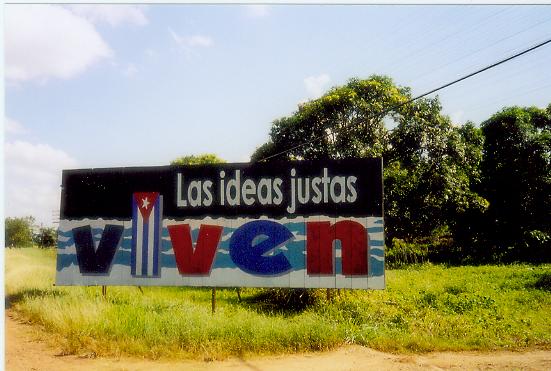
The Cuban government plasters the island with billboards proclaiming the virtues of the Revolution and the sayings of Fidel, Che Guevara and Jose Marti, the 19th century Cuban poet and patriot. In contrast, the Cuban churches apparently are not permitted to have any billboards with competing messages of the good life.

Just compare our partner church with the next-door provincial headquarters of the Communist Party of Cuba. The church has virtually no identifying sign or message. The Party (CCP) has a bright red sign in its parking lot, and its building used to have a billboard with a Fidel quotation on top.

The Revolutionary socialist or communist philosophy and polices since 1959 have resulted in a leveling down of the society economically. Thus, there has been no prosperous middle class such as we have in the U.S., to provide financial and other support to the Cuban churches.

It, therefore, was not surprising for me to hear an active member of our partner Cuban church say that earlier she was not brave enough to be a Christian.

Martin Luther King, Jr. Center, Havana

In 2007 we visited Havana’s Martin Luther King, Jr. Center which is affiliated with the adjacent Baptist Church. The church’s pastor, Raul Suarez, said that in 1984 he learned that Jesse Jackson, a candidate for the Democratic nomination for President that year, was coming to Cuba. Jackson said that Fidel Castro had invited him to discuss the status of 22 U.S. citizens then being held by the Cuban government. Jackson said that he also wanted an invitation from a Cuban church so that he could participate in a religious service in Cuba. Jackson asked Suarez, then Executive Secretary of the Cuban Council of Churches and Director of International Relations of the Cuban Baptist Church, if that would be possible. Jackson also gave Suarez a letter to provide to Castro on this issue. Castro responded that it would not be a problem even though atheism was the established “religion” in the Cuban constitution at the time.

Jackson made his trip to Cuba in June 1984 and gave a speech to 4,000 students at the University of Havana with Castro in attendance. Afterwards the two of them and their aides walked a few blocks to the nearby Methodist Church where Jackson would be preaching. As they neared the church, Suarez heard a Castro aide say to Fidel, “Take off your hat, you are close to a church.” Fidel took off his hat. Suarez was surprised by this comment and Fidel’s response. Suarez told Fidel that the people in the Plaza de Revolution (supporters of the Revolution) and the people in the church were one and welcomed Fidel to the church. Fidel said, do not ask me to preach.

There were 700 to 800 people in the church that day, including 35 church leaders and the Roman Catholic Archbishop (now Cardinal). When Castro entered the church, the choir extemporaneously cried, “Fidel, Fidel, Fidel.” Castro did make a short speech from the pulpit with a cross behind him. (Another Cuban pastor who was present told me that Castro obviously felt uncomfortable with the Bible on the lectern and awkwardly put his hands behind his back.) Castro praised Dr. King and Jackson and said there was a need for more exchanges between the churches and the government.

Later that same day Suarez was invited to a dinner with Fidel and Jackson. This was the first time he had ever shaken Fidel’s hand, and Fidel asked him to come to the airport the next day to say goodbye to Jackson.

Soon thereafter Suarez asked for a meeting of religious leaders with Fidel and submitted to Fidel a document of concern about the official policy of atheism’s limiting the space for religion. This resulted in a four-hour meeting between Fidel and about 14 Protestant leaders and the College of the Roman Catholic Bishops. Fidel expressed surprise at the Protestant ecumenicism, saying that when he was a boy in Jesuit schools, Roman Catholics disparaged Protestants. At the end of the meeting Castro made a covenant with these leaders: the churches will made an effort to understand “us” while Fidel and the Cuban Communist Party will make an effort to understand the churches. This agreement, said Fidel, should be easier for the churches than for the party.

After the collapse of the Soviet Union there have been signs of a more tolerant Cuban policy toward the churches, some of which have already been mentioned: elimination of scientific materialism as the established “religion” in Cuba and of the Communist Party’s ban on religious people becoming members of the Party.

Pope John Paul II & Fidel
Mass in Plaza de Revolucion

In addition, Pope John Paul II visited Cuba in 1998 and celebrated mass before a huge crowd in Plaza de Revolucion (the site of many Revolutionary celebrations and long speeches by Fidel). The next year Cuban Protestants had a similar gathering in that Plaza.

Recently Pope Benedict XVI announced his planned visit to Cuba in 2012, and the Cuban government said that it would release many political prisoner

Fidel & Patriarch @ Greek Orthodox Cathedral
Greek Orthodox Cathedral,Havana
Patriarch & Fidel mosaic @ Greek Orthodox Cathedral, Havana

In 2004, during my second visit to Cuba, Patriarch Bartholomew of the Greek Orthodox Church was in Havana for the dedication of the new Greek Orthodox Cathedral that was paid for by the Cuban government.

These developments, in my opinion, were real politik moves by the Cuban government to gain international allies to help combat el Gringos de Norte.

In short, Revolutionary Cuba has made life very difficult for churches and religious people, especially from 1959 through 1989. On the other hand, there were no assassinations or disappearances of priests or other religious people who were opposed to the regime like what happened in El Salvador.

Pursuant to statutory authorization the U.S. government and a quasi-independent U.S. commission have been releasing annual reports on religious freedom in the world that have been very critical of such freedom in Cuba. These reports will be discussed in a subsequent post.

This then is the historical context in which Westminster initiated its partnership with the church in Matanzas in 2002, a relationship that has grown and become more meaningful for the people of both churches. A future post will discuss our Cuban partnership.


[1] See Post: Minneapolis’ Westminster Presbyterian Church (April 6, 2011).

[2]  In the “Tag Cloud” at the top right of my blog, click on “Cuba” to look at the posts about Cuba.

Former President of Mexico Is Sued in U.S. Federal Court for Alleged Human Rights Violations

Ernesto Zedillo

On September 16, 2011, ten anonymous Mexican nationals sued Ernesto Zedillo, the former President of Mexico, in U.S. federal court in New Haven, Connecticut.[1]

The complaint asserts claims for money damages in excess of $10 million under the Alien Tort Statute (ATS) and the Torture Victims Protection Act (TVPA).[2] The ATS allows claims by “an alien for a tort only, committed in violation of the law of nations or a treaty of the United States.”[3] The TVPA allows claims by an “individual’s legal representative” who has been subject to “extra judicial killing” against an “individual [acting] under actual or apparent authority, or color of law, of any foreign nation” who commits the extra-judicial killing.[4]

Acteal Massacre bodies
Acteal Massacre Caskets

The case centers on a Mexican militia’s December 22, 1997, attack on civilians in the village of Acteal in Chiapas, Mexico.  At the time some of the villagers were troubled by the fighting in their area involving an indigenous insurgent group, the Zapatistas, and had formed a pacifist group known as “Las Abejas” or “The Bees.” On December 21st they started a retreat in and around their local church to pray and fast in the name of peace. On the second day of the retreat an anti-Zapatista militia armed with assault rifles surrounded the church and opened fire, killing 45 and wounding 17.[5]

Zedillo, shortly after his election as President in 1994, allegedly decided to break a ceasefire with the Zapatistas and instituted a plan know as “Plan de Campana Chiapas ’94,” which involved arming and training local militia groups. In addition, the Mexican military and Zedillo allegedly were involved or at least aware of the Acteal attack. Afterwards, Zedillo and his administration allegedly were actively engaged in trying to cover up the Mexican government’s involvement in the massacre. This cover-up included charging and convicting innocent people of the crime, as was confirmed in 2009 by the Mexican Supreme Court when it overturned 20 of the 37 convictions on the grounds that the prosecution had fabricated testimonies and tampered with evidence. [6]

Zedillo has not yet responded to the complaint, but immediately after the suit was commenced he said the accusations were “infamous and irresponsible” and “totally groundless and obviously false.” He had similar dismissive comments in 2005 about a complaint about the Acteal massacre that had been filed against Mexico in the Inter-American Commission on Human Rights.[7] In 2010, by the way, the Commission decided that the complaint was admissible, i.e., subject to further proceedings, on most of Mexico’s alleged violations of the American Convention on Human Rights with respect to this incident.[8]

The Connecticut lawsuit was filed over six years after the expiration of the 10-year statute of limitations for suits under the ATS and the TVPA. However, under certain circumstances this limitations period can be suspended or tolled. Thus, we can anticipate that Zedillo will raise this affirmative defense. Indeed, the plaintiffs’ complaint anticipates this defense by alleging that the statute of limitations should be suspended or tolled because of the alleged cover-up of governmental involvement in the massacre that was not revealed until the Mexican Supreme Court’s August 12, 2009, reversal of 20 convictions for the reasons previously stated and because of the government’s intimidation of members of the Chiapas indigenous community.[9]

Another affirmative defense that can be anticipated is the plaintiffs’ alleged failure to exhaust “adequate and available remedies in the place in which the conduct giving rise to the claim occurred [here, Mexico].” Again the complaint anticipates this defense with allegations of absence of adequate legal remedies in Mexico and of their exhaustion of the available remedies.[10]

By January 6, 2012, Zedillo is to file his motion to dismiss for lack of subject matter jurisdiction that will include a request for the court to ask the U.S. government for its opinion as to whether Zedillo has immunity as a former head of a sovereign state.[11]

Since 2002 Zedillo has been the Director of the Yale Center for the Study of Globalization and is believed to live in the New Haven, Connecticut area.[12]


[1] Henderson & Stephenson, Zedillo accused of massacre cover-up, Yale Daily News (Sept. 21, 2011); Navarro, Zedillo faces massacre claims in U.S., Guardian (Dec.27, 2011); Civil Docket Sheets, Doe v. Zedillo, Case No. 3-11-cv-01433-AWT (D. Conn. as of Dec. 28, 2011); 1997 Acteal Massacre, http://acteal97.com. It is surprising that there has been no mention of this case in the New York Times or Washington Post.

[2]  Id.

[3]  See Post: The Alien Tort Statute, 1789-1980 (Oct. 21, 2011); Post: U.S. Circuit Court’s 1980 Decision Validates Use of Alien Tort Statute To Hold Foreign Human Rights Violators Accountable (Oct. 23, 2011); Poat: The Alien Tort Statute, 1980-2004 (Oct. 25, 2011); Post: Alien Tort Statute Interpreted by U.S. Supreme Court in 2004 (Nov. 9, 2011); Post: The Alien Tort Statute, 2004-Present  (Nov. 14, 2011).

[4]  Post: The Torture Victims Protection Act (Dec. 10, 2011).

[5] See n.1 supra. The “Las Abejas” or “The Bees” have said that the plaintiffs are not members of their group and that their group is not interested in obtaining money for the massacre. (Stephenson, Plaintiffs in Zedillo case questioned, Yale Daily News (Oct. 5, 2011); Stephenson, Zedillo lawsuit lacks clear backers, Yale Daily News (Oct. 19, 2011).)

[6]  See n.1 supra.

[7]  Id.; Post, Zedillo says allegations are untrue, Yale Daily News (Feb. 14, 2005).

[8]  Manuel Santiz Culebra, et al. (Acteal Massacre), Rep. No. 146/10 (IACHR Nov. 1, 2010).

[9]  Complaint ¶¶ 120-133. See 28 U.S.C. § 1350, note §2(c ). See Post: Litigation Against Conspirators in the Assassination of Oscar Romero (Oct. 10, 2011); Post: Former Salvadoran Generals Held Liable for $54.6 Million for Failure To Stop Torture (Nov. 11, 2011); Post: Former Salvadoran Vice-Minister of Defense Held Liable for $6 Million for Torture and Extrajudicial Killing (Nov. 13, 2011); Post: The Torture Victims Protection Act (Dec. 10, 2011).

[10] Complaint ¶¶ 234-238.. See 28 U.S.C. § 1350, note §2(b). See posts in n.9 supra.

[11]  Scheduling Order, Doe v. Zedillo (Dec. 6, 2011). Within 30 days after the court dockets the U.S. government’s substantive response to such a request, the plaintiffs shall file their response to the dismissal motion. Within another 30 days after the plaintiffs’ response, Zedillo shall file his reply brief. (Id.) After all of these papers have been submitted, presumably the court will schedule a hearing on the dismissal motion and sometime thereafter issue the court’s decision on that motion.

[12] Ernesto Zedillo Biography, http://www.ycsg.yale.edu/center/zedillo.html;Lee, Zedillo takes globalization center post, Yale Daily News (April 5, 2002).

Accounting for Horses, Cattle and Catfish

The Faegre & Benson law firm developed a significant practice of representing accounting firms that had been sued for accounting malpractice. For example, I represented four of what were known as The Big Five accounting firms: Arthur Anderson, Coopers & Lybrand (Coopers), Deloitte & Touche and KPMG Peat Marwick. Another partner had primary responsibility for the other Big Five firm–Arthur Young & Co.

One of the most interesting of these accountants liability cases was the Australian KPMG Peat Marwick firm’s battle with Sentry Insurance of Stevens Point, Wisconsin.[1]

The other accounting case I remember most vividly was for Coopers. It had been sued in the federal district court in Minnesota[2] for alleged securities law violations and common law fraud. The plaintiff was an Argentine company that had invested and lost $35 million in a Minnesota company (Interfund Corporation). Interfund’s main business was financing the purchase and sale of Arabian horses, but it also helped to finance a company in Missouri that was breeding cattle and operating a catfish farm. The plaintiff alleged that in making its investments it had relied upon Interfund’s audited financial statements that allegedly were materially overstated.

The plaintiff because of its large investment, however, had one of its own people on the Interfund board of directors and thus was privy to all of its financial information far beyond what was in the audited financial statements. As I recall, this was the primary undisputed issue of material fact that was the basis for Coopers’ successful motion for summary judgment that I brought after the conclusion of pre-trial discovery. There was no appeal.

This case required several trips to New York City to consult with Coopers’ in-house general counsel, to inspect the plaintiff’s documents and to depose its personnel. In my spare time, I attended concerts and Broadway shows.

New York Public Library
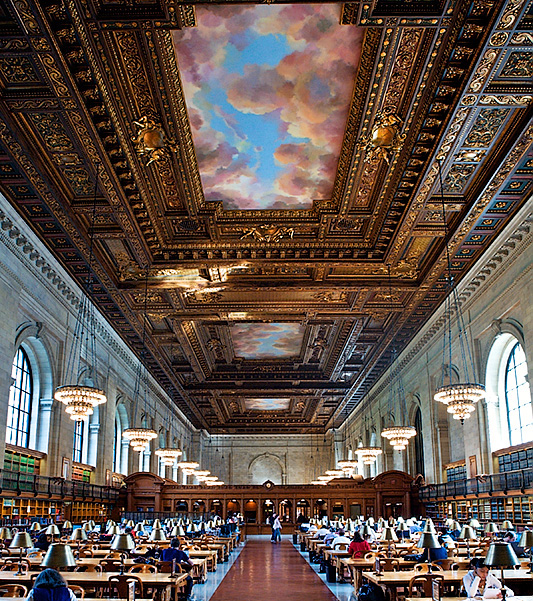
Rose Main Reading Room, New York Public Library

I also spent time on these trips in the famous New York City Public Library at Fifth Avenue and 42nd Street doing research about an ancestor, W.C. Brown, who was President of the New York Central Railroad in the early 20th century. [3]

Grand Central Terminal

Two blocks east of the Library on 42nd Street sits Grand Central Terminal that was built while Brown was the Railroad’s President.


[1]  See Post: Battling Australian and Wisconsin Courts (Aug. 12, 2011).

[2]  See Post: Minnesota’s Federal Court (June 28, 2011).

[3] See Post: Adventures of a History Detective (April 5, 2011).

My Years at the University of Chicago Law School


From the Fall of 1963 through May of 1966 I was a student at the University of Chicago Law School. I spent many hours in its beautiful building that was designed by Eero Saarinen.


University of Chicago Law School
University of Chicago     Law School 

I chose Chicago because it was an excellent law school and because its Mechem Selection Committee awarded me a full-tuition Floyd Russell Mechem Prize Scholarship. The chair of the Committee was Justice Tom C. Clark, Associate Justice of the U.S. Supreme Court. The other Committee members were Associate Justice Roger Traynor of the California Supreme Court; Judge Sterry Waterman of the U.S. Second Circuit Court of Appeals; two past presidents of the American Bar Association; and two political science professors.

This scholarship was started in 1959 as one of the first three-year full-tuition, merit-based scholarships offered by any top-tier law school. It was financed through the School’s general fund and was designed to attract top candidates to Chicago and to free them from student debt in order to pursue their highest career aspirations. Floyd Mechem, by the way, in the early 20th century had been one of the School’s original professors and a leading expert on the law of sales, agency and corporations.[1]

Law school was a major change from my studies at the University of Oxford. There I had two tutorials a week during the academic terms by myself or with only one other student. My tutors gave me a question to address in an essay for the next tutorial along with suggested readings. The rest of the week was spent reading those articles and books and writing an essay and going to whatever lectures I chose. The examinations were at the end of my two years at Oxford.[2]

Law school at Chicago and almost all U.S. law schools, on the other hand, feature large classes with assigned pages in big law books for the next day and lectures and questioning of the students by the professors with exams at the end of the semester. This was a big adjustment for me, and I did not like the forced abandonment of the independence I had at Oxford.  Another major change, especially in the first year, was encountering an entirely new vocabulary and system. I remember how long it took me, especially in the first year, to read anything because I always was consulting the big Black’s Law Dictionary.

Chicago’s first-year students had a legal writing component taught by Bigelow Fellows that provided a break from the large class routine. Learning how to write legal memos and briefs took practice, I discovered. The most exciting part of this course was preparing for, and observing, an oral argument before the Illinois Supreme Court when they visited the law school. The issue in the case, as I recall, concerned a Chicago ordinance regarding pornography, and our assignment was to write a judicial opinion deciding the case after reading the briefs and watching the oral argument. I enjoyed this assignment and replicated it when I taught a course about law to undergraduates at Grinnell College in 1982.[3]

I received excellent grades my first year and was invited to be on the staff of The University of Chicago Law Review my second year. I wrote two comments for the Review that in retrospect were not scintillating. One argued for recognition of a constitutional right to counsel in federal income tax investigations.[4] The other explored the distinction between repair and reconstruction of patented combination; the former was permissible; the latter, was not.[5] I still chuckle about a late 19th century case on this issue that held that replacing toilet paper in a patented toilet paper dispenser did not constitute reconstruction of the dispenser and, therefore, was not patent infringement.[6]

In any event, on the basis of my performance as a staff member on the Review, I was chosen to be one of its Managing Editors for my third year with special responsibility for articles. We had a special issue that year honoring the Law School’s Professor Malcolm Sharp, and I was in charge of soliciting and editing articles about him.

Edmund Wilson

One of the articles was by his friend and noted journalist and literary critic, Edmund Wilson, who spent time with Sharp during the summers in Talcottsville, New York. (I did not do any editing of his submission.) Wilson said,

  • “We saw a good deal of one another then, and were in the habit, at the end of the day, of meeting for conversation and drinks at either their house or mine. We enjoyed a pleasant leisure and peace, a freedom from the immediate pressures with which we elsewhere had to contend, as we sat in my ancient living-room, with its Boston and Salem rockers and its old-fashioned paintings and engravings, or looking from the Sharps’ back lawn, on a green and unmowed meadow, now soaked in the golden light of an orange and silver declining sun. . . . In our conversations on the back lawn of Talcottville, in the little trough of rural civilization that lies between the foothills of the Adirondacks and the wilderness of the Tug Hill plateau, we have covered, in our conversations, many aspects of that disturbed and disturbing world that was invisible from where we sat.”[7]
Wilson’s House
Wilson’s “Stone House” in Talcottville is now on the National Register of Historic Places. It was built in 1789 with limestone from the nearby Sugar River and was made famous in Wilson’s book Upstate. Wilson’s father bought it as a summer place, and it became a symbol for Wilson “of the kind of life he valued,  . . . a life in which an intimate knowledge of the past provided stability in the present and guidance for the future; a life in which human beings had individuality, dignity and worth.”

I was in Professor Sharp’s contracts course my first year, and although often difficult to understand, he was warmly regarded by students as “good and wise and kind.”  Others I fondly remember are Harry Kalven, Jr. for torts; Phil Kurland for constitutional law; David Currie for conflict of laws and federal jurisdiction; Walter Blum for taxation; Bernard Meltzer for evidence; Phil Neal for antitrust law; Francis Allen for criminal law; Jo Desha Lucas for civil procedure; Soia Menschikoff for sales and the Uniform Commercial Code; and Kenneth Dam for international law. The first-year property course was taught by Sheldon Tefft, who because he had been a Rhodes Scholar liked to call on me.

Univ. Chicago Law School Faculty 1966

Because of all the work required for the Review, my fellow staff members and then Editorial Board members and I spent a lot of time together, and they became my best friends. They were and are Bob Berger, Roland Brandel, David Brown, Lew Collens, George Ranney, Walt Robinson, Mike Shakman and David Tatel. All went on to distinguished legal careers.

On November 22, 1963, I was studying in the Law School Library and was shocked when someone told me that President Kennedy had been assassinated.

In June 1966 I received the Juris Doctor (J.D.) degree with Honors and the Order of the Coif for excellence in my studies.

In my last semester in 1966 I was unsuccessful in applying for a White House Fellowship and judicial clerkships with U.S. Supreme Court Chief Justice Earl Warren and Associate Justices Byron White and Potter Stewart.[8] Instead my wife and I moved to New York City where I joined the eminent Wall Street law firm of Cravath, Swaine & Moore.[9]

I am glad that I went to the University of Chicago Law School and became a lawyer.


[1]  Gerald de Jaager, The Impact of a Full-Tuition Scholarship, http://www.law.uchicago.edu/alumni/magazine/fall10.mechem;Bigelow, Floyd Russell Mechem, 15 A.B.A.J. 169 (1929).

[2]  See Post: My Oxford University Years (Aug. 30, 2011); Post: Reading PPE at Oxford (June 6, 2011); Post: PPE Examinations at Oxford (June 10, 2011).

[3]  See Post: A Sabbatical Leave from Lawyering (May 26, 2011).

[4]  Comment, The Constitutional Right to Counsel in Tax Investigations, 32 U. Chi. L. Rev. 134 (1965).

[5]  Comment, Repair and Reconstruction of Patented Combinations, 32 U. Chic. L. Rev. 353 (1965).

[6]  Morgan Envelope Co. v. Albany Perforate d Wrapping Paper Co.,152 U.S. 425 (1894).

[7]  Edmund Wilson, Conversing with Malcolm Sharp, 33 U. Chi. L. Rev. 198 (1966); Edmund Wilson House, http://www.livingplaces.com.

[8]  See Post: Questioning President Lyndon Johnson (April 17, 2011); Post: The Roads Not Taken (April 27, 2011).

[9]  See Post: Lawyering on Wall Street (April 14, 2011).

Merry Christmas!

One of the foundations of my Christian faith is the following prayer:

  • It helps, now and then, to step back
    and take the long view.
    The kingdom is not only beyond our efforts,
    it is beyond our vision.
  • We accomplish in our lifetime only a tiny fraction of
    the magnificent enterprise that is God’s work.
    Nothing we do is complete,
    which is another way of saying
    that the kingdom always lies beyond us.
  • No statement says all that could be said.
    No prayer fully expresses our faith.
    No confession brings perfection.
    No pastoral visit brings wholeness.
    No program accomplishes the church’s mission.
    No set of goals and objectives includes everything.
  • This is what we are about:
    We plant seeds that one day will grow.
    We water seeds already planted, knowing that they hold future promise.
    We lay foundations that will need further development.
    We provide yeast that produces effects beyond our capabilities.
  • We cannot do everything
    and there is a sense of liberation in realizing that.
    This enables us to do something,
    and to do it very well.
    It may be incomplete, but it is a beginning, a step along the way,
    an opportunity for God’s grace to enter and do the rest.
  • We may never see the end results,
    but that is the difference between the master builder and the worker.
    We are workers, not master builders,
    ministers, not messiahs.
    We are prophets of a future not our own. Amen.[1]

The essence of this prayer for me is in the lines: “We cannot do everything, and there is a sense of liberation in realizing that. This enables us to do something, and to do it very well.” This rings true as a matter of Christian theology. It helps me to keep myself in perspective. It is indeed liberating.

I thought that this was a prayer composed by my personal saint, Archbishop Oscar Romero. This, however, is not true.

It was written in November 1979 by Kenneth Edward Untener, the Roman Catholic Bishop of Saginaw, Michigan, for a memorial mass for deceased priests that was celebrated by Cardinal John Francis Dearden, the Archbishop of Detroit, Michigan.[2]  This context helps to understand the prayer’s talking about imperfect prayers, confessions and pastoral visits. The immediate audience for the prayer was the deceased priests and those priests in attendance to honor their comrades. But the real audience is everyone.

Later it purportedly was used by Archbishop Romero.[3] I hope that it was, but regardless of whether it was, it is something, in my opinion, that expresses Romero’s theology. Here, for example, is what he said about everyone’s being a worker who strives to do his or her best and thereby gives God’s grace an opportunity to enter into the world and do the rest:

  • “How beautiful will be the day when all the baptized understand that their work, their job, is a priestly work. That just as I celebrate Mass at this altar, so each carpenter celebrates Mass at his workbench. And each metal worker, each professional, each doctor with the scalpel, the market worker at her stand, are performing a priestly office! “[4]

Merry Christmas!


[1]  See Post: My Christian Faith (April 6, 2011).

[2] Bishop Thomas J. Gumbleton, Homily (March 28, 2004), http://www.nationalcatholicreporter.org/peace/pfg032804.htm.;Bishop Ken Untener, The Practical Prophet : Pastoral Writings at iii (Paulist Press; New York 2007)(Untener called this prayer “Reflection on Ministry”).

[3] We Are Prophets of a Future Not Our Own, American Catholic Council Newsletter (June 6, 2001), http://americancatholiccouncil.org/newsletter-june-6-2001-2. I would appreciate hearing from anyone who can confirm that this prayer was used by Romero. Where? When? Source?

[4] Oscar Romero, The Violence of Love: The Pastoral Wisdom of Archbishop Oscar Romero at 13 (Harper & Row; San Francisco 1988) (compiled & translated by James R. Brockman, S.J.).

The Joy of Blogging

After teaching two class sessions of the international human rights law course in the Fall of 2010, I decided to retire from my position as Adjunct Professor at the University of Minnesota Law School. I had enjoyed the teaching, meeting and inter-acting with law students and professors and being part of the law school community. But I wanted to create time to write and organize the various things I had already written.

Being an organized person, I thought the first task should be preparing an outline or structure for what I would write. I never got very far with that idea because so many of the things that I wanted to write about are interrelated.

A cousin told me she was writing occasional blog postings so I started to wonder about creating a blog as a way to do my writing. This, however, was an unfocused, idle thought. One Sunday, as I was reading the New York Times, I looked through a supplement about the New York Times Knowledge Network and discovered a two-session online course, “How To Start a Blog.”[1] I signed up for this course and bought the book Blogging for Dummies that was recommended by my cousin.[2]

I only read a few pages in the book, but the online course was helpful. The best thing was the instructor’s suggestion to go to “WordPress.com” and start a blog before you did anything else. WordPress is a free hosting site for blogs with many “themes” or formats to use. I did just that and thereby avoided my usual approach of identifying the options (another was blogspot) and researching the pros and cons of each before deciding which path to take. On WordPress I quickly picked a theme (Kubrick) that I thought was appropriate and quickly decided to call the blog “dwkcommentaries.” Many blogs are narrow in focus, but that is not me. My focus is law, politics, economics, history and religion.

My initial posts were personal, describing my political philosophy and Christian faith and summarizing some of the details of my practice of law that I call “lawyering.” I also have written many posts about Cuba, El Salvador, human rights treaties, international criminal justice, the International Criminal Court, refugee and asylum law and two U.S. human rights statutes (the Alien Tort Statute and the Torture Victims Protection Act).

As time passed, there have been further developments relating to some of the prior posts. When I think these developments should be recorded, I write a new post or a comment to the prior post.

Like anything else, I learned as I went along. A friend with a blog of his own on WordPress suggested I add a “tag cloud.” I did not know what that was, but discovered it is a widget you can add, which I did. With this widget, the computer automatically creates a list of the tags you have used the most and uses larger letters for the ones at the top of the list. The tag cloud is now at the top right of my blog. It is one way to find posts on the blog; one just clicks on the tag in the cloud, and the computer displays the posts that have that tag.

The prior paragraph calls for an explanation of categories and tags. Categories are names you assign to groups of posts. I chose Economics, Higher Education, History, Law, Other Countries, Personal, Politics and Religion. Tags are names you assign to individual posts to highlight their main points.

I eventually learned how to add images to the postings. It is more work, of course, but I enjoy using some of my own photographs and finding and adding images from “Google Images.” For a recent post about books regarding Archbishop Oscar Romero, for example, I scanned the book covers from these books in my own library and then transferred the scanned images from my own computer to the blog posting.

After I had made quite a few postings, I worried about how someone would be able to find past posts. There was, to my surprise, no search function for the blog. In looking for a solution to this problem, I  went to the “Appearance” menu on the “Dashboard” for my blog and to the “Widget” sub-page. There I discovered a “Search” widget and added it to my blog.

I also discovered and added widgets for Archives, Blogroll (hyperlinks to websites and blogs related to my blog) and a button to sign up for Email subscriptions to the blog. For individual posts, there are buttons to share the post via Email, FACEBOOK, Twitter, LinkedIn, Reddit and Google and to print the post.

WordPress has a section called “Pages” on the right side of the blog where it puts your “About” description of the blog that you are advised to create when you start the blog. In order to increase access to the postings on the blog, I created the following additional documents for “Pages:”

  • In Finding Posts and Comments, I described the various ways for finding posts (and comments).
  • In Chronological List of Posts and Comments I have a list of the posts (and comments) in chronological order of posting.
  • Topical List of Posts and Comments is an ongoing outline of the posts (and comments). It is the type of outline that I initially envisioned as the first step in doing this kind of writing. I think it is the most useful tool for finding posts.

The last two of these documents on “Pages,” of course, require continual updating.

Many of the posts are personal. Maybe someday I will publish the posts,[3] but there are so many other things I want to write about, and the news keeps furnishing more topics. Another motivation for doing all of this is to leave something about my life for my grandchildren and descendants.

Writing a blog, for me, is very liberating. I love it.

——————————————————

[1] N.Y. Times Knowledge Network, How To Start a Blog, http://www.nytimesknownow.com/index.php/how-to-start-a-blog.

[2] Sarah Gardner & Shane Birley, Blogging for Dummies (3d ed. Wiley Pub.; Hoboken, NJ 2010).

[3] I recently learned that Feedfabrik makes it easy to convert your WordPress blog into a book format with a customized cover that you can then order as a hard copy or a digital PDF edition. http://www.feedfabrik.com.

Pilgrimage to American Churchwomen Sites in El Salvador

We have reviewed the missionary work in El Salvador of the four American churchwomen, their brutal murders on December 2, 1980, the subsequent investigations of that horrible crime, the Salvadoran successful criminal prosecution of five of its National Guardsmen for the murders and the unsuccessful U.S. civil lawsuit for money damages against two Salvadoran Generals for their failure to prevent this crime and conduct a proper investigation after the fact.[i]

In March 2010 I was privileged to visit some of the sites associated with this powerful demonstration of religious faith, devotion and courage, on the one hand, and brutal and heartless conduct of the Salvadoran security forces, on the other hand.

Military Post, Chalatenango
Lago de Suchitlan

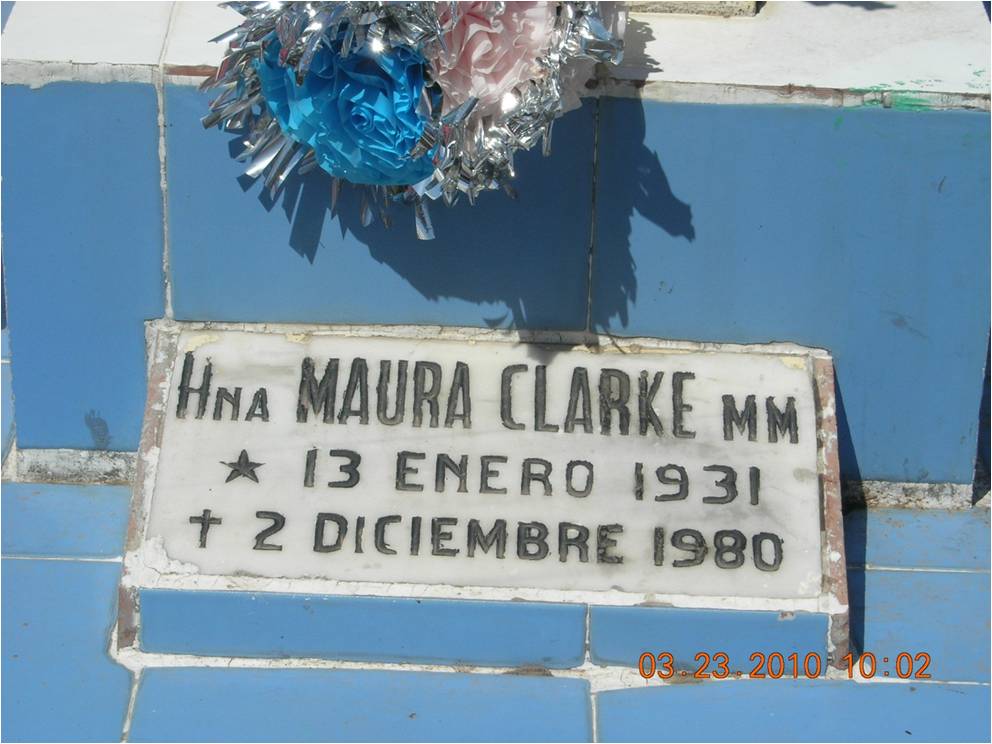
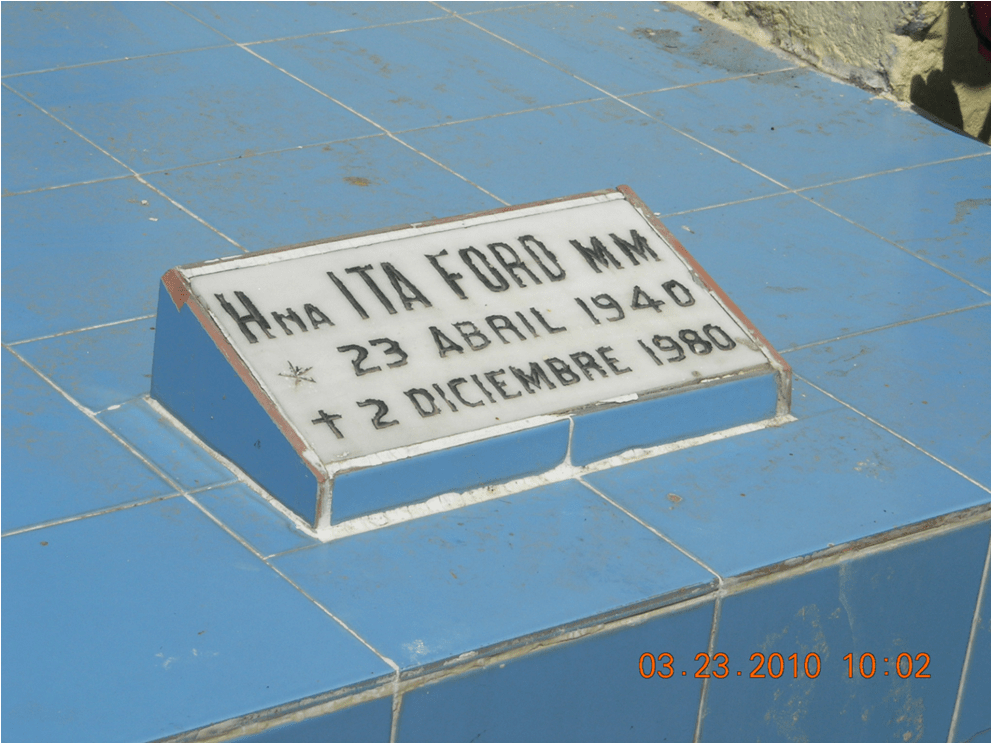
Two of the women, Maryknollers Maura Clarke and Ita Ford, served in the northern city of Chalatenango, population of 30,000. It is near Lago de Suchitlan. During the civil war a military fortress was built to guard the city against attacks by the FMLN guerillas.

Chalatenango chapter house

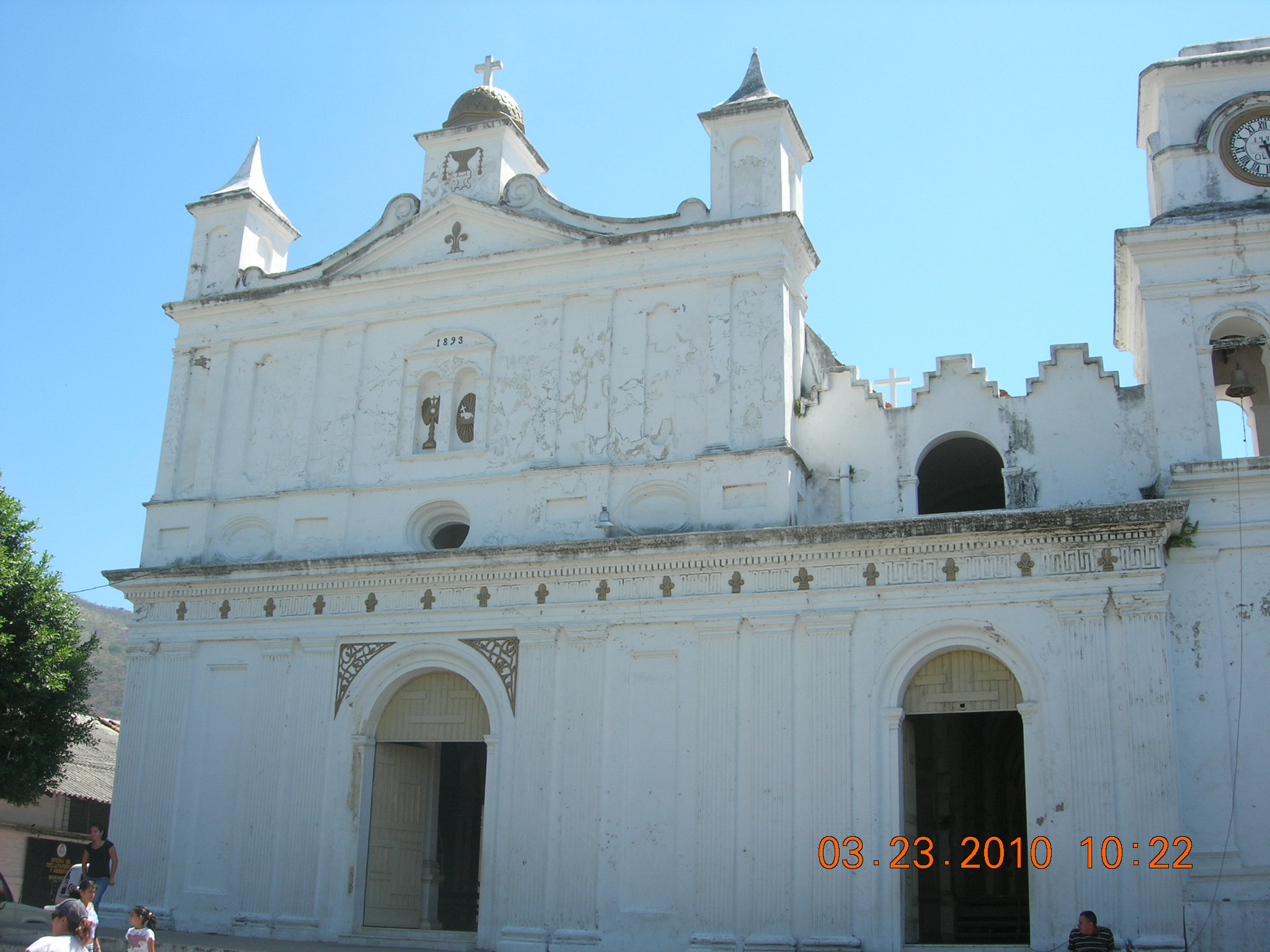
Across the street from the military fortress stands the 18th-century church, which was the center of the Sisters’ activities. They lived in the adjacent chapter house.

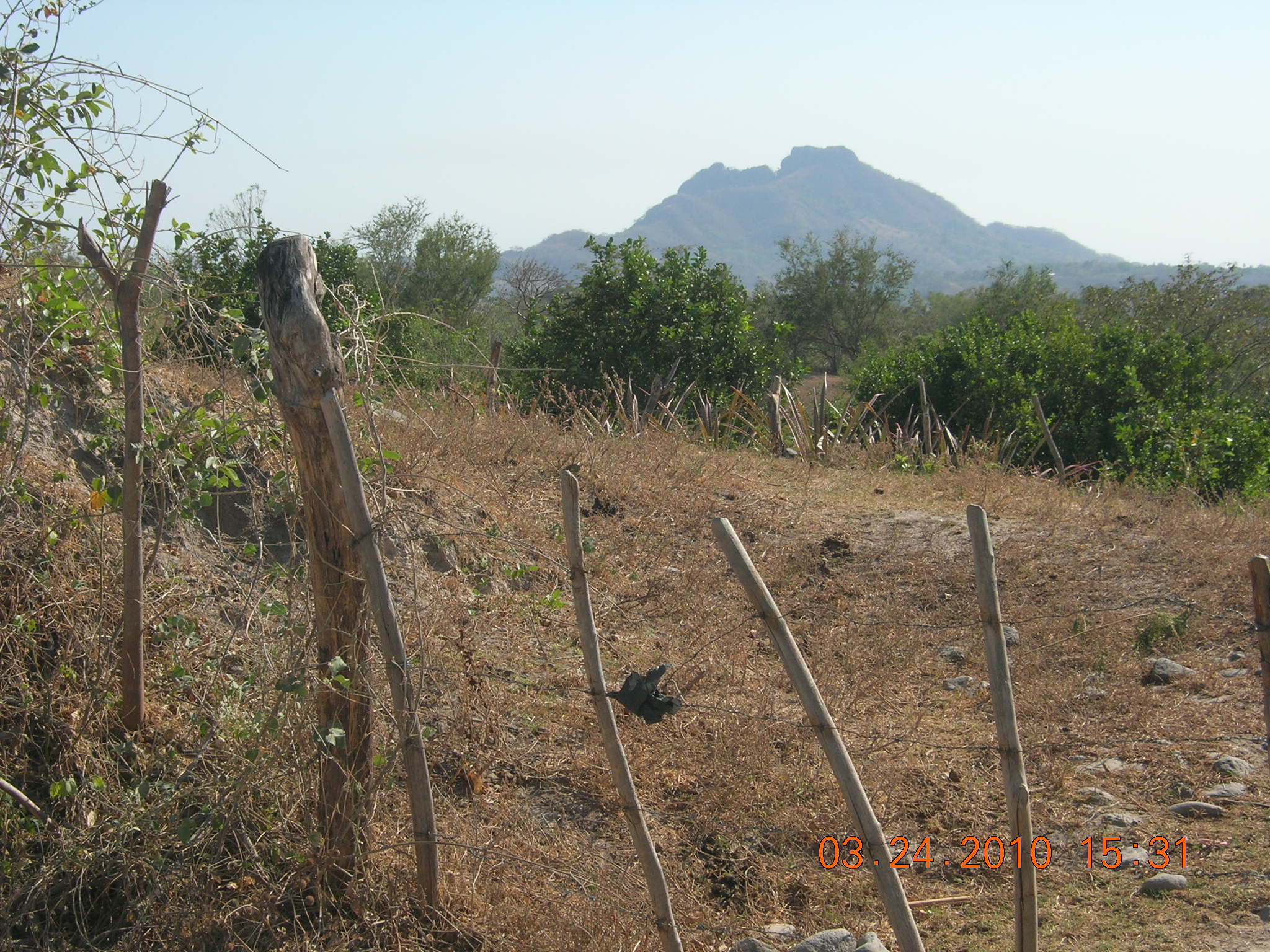
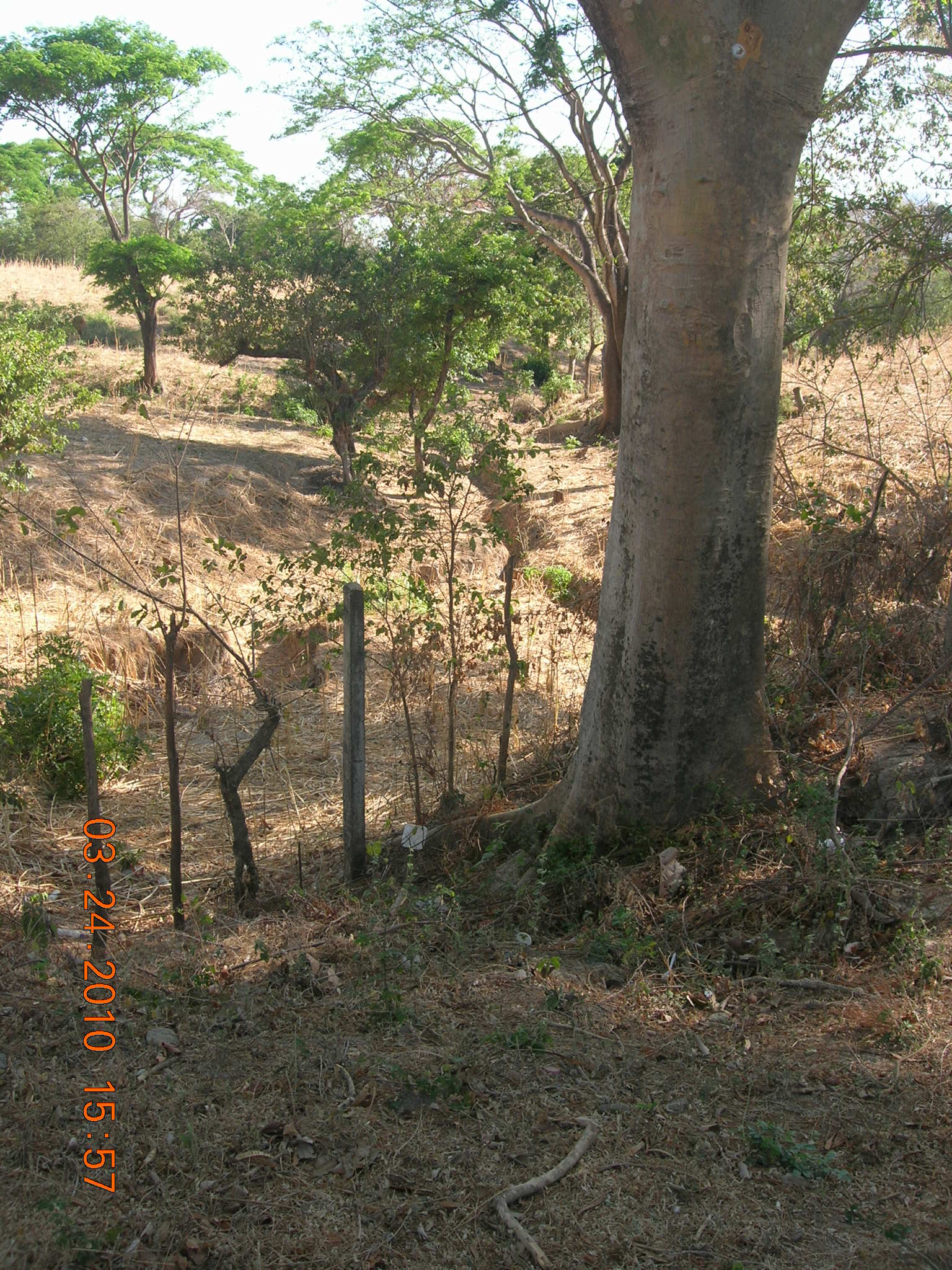
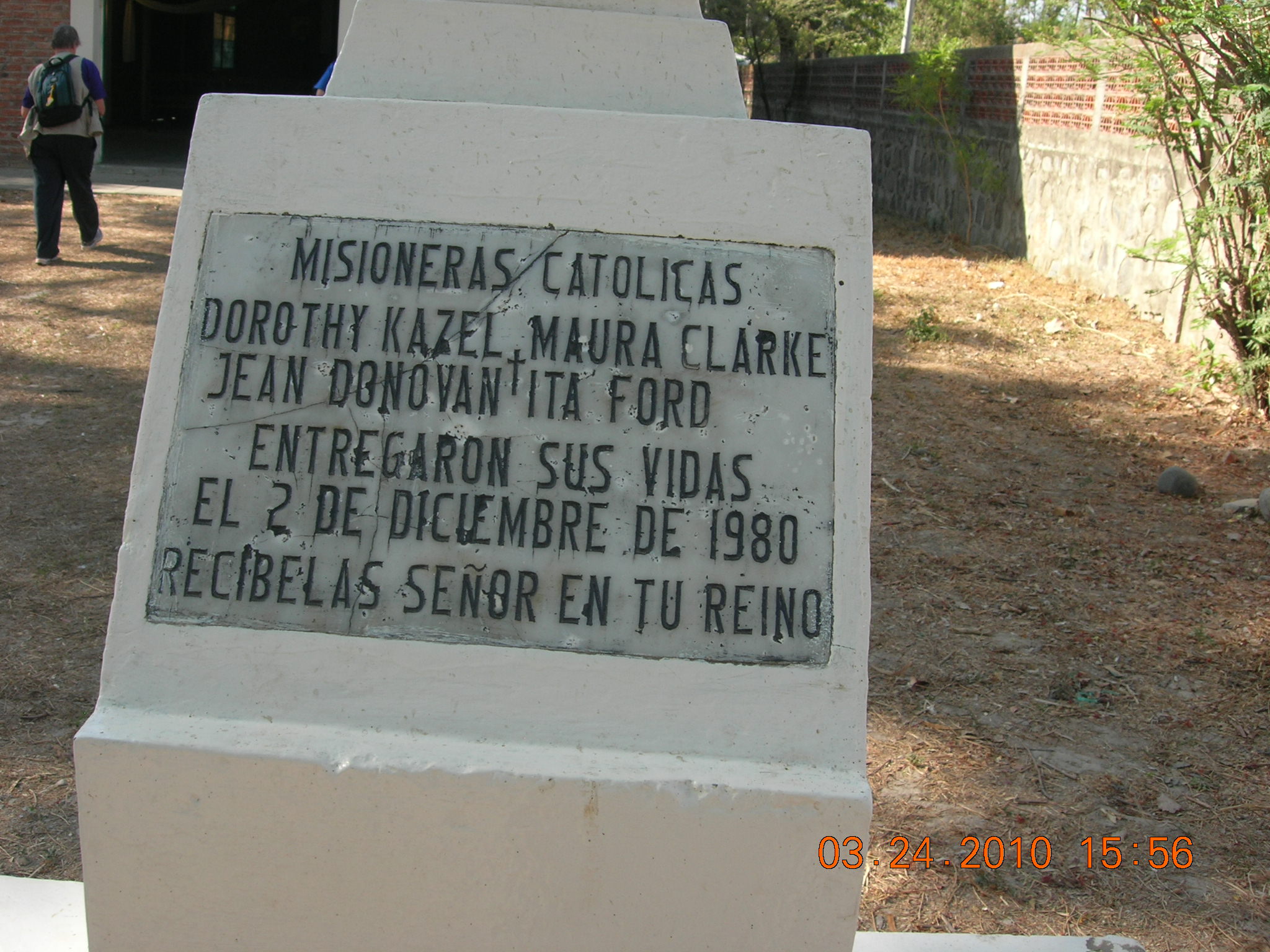
The two of them along with their friends Dorothy Kazel and Jean Donovan were murdered on December 2, 1980, near the town of Santiago Nonualco in the southern part of the country near the airport. The next day their bodies were found on a country road not too far from the town, and upon order from officials they immediately were buried in a shallow, common grave. The site of the grave is not publicly accessible, but it was not too far from the places in these photos.

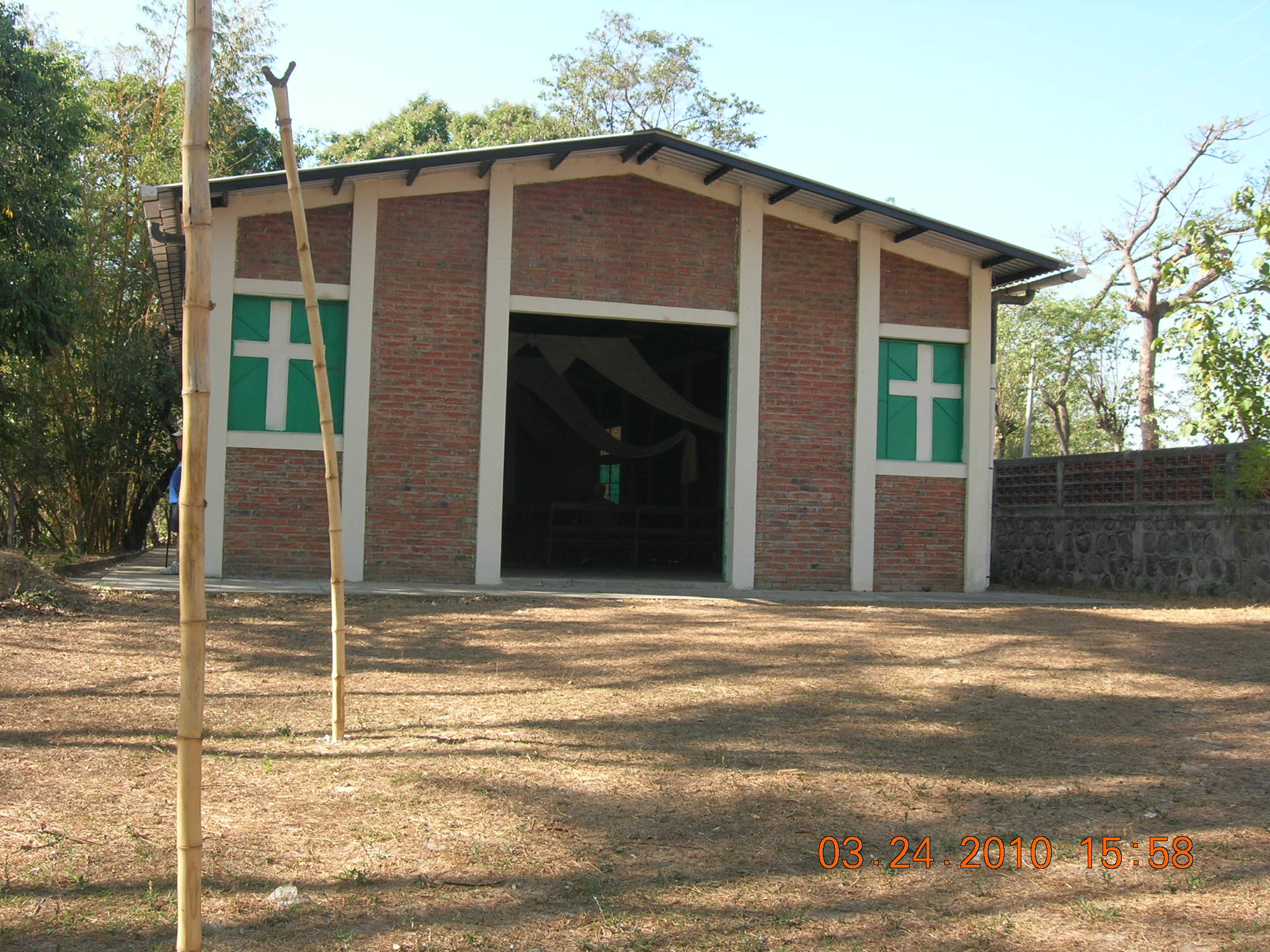
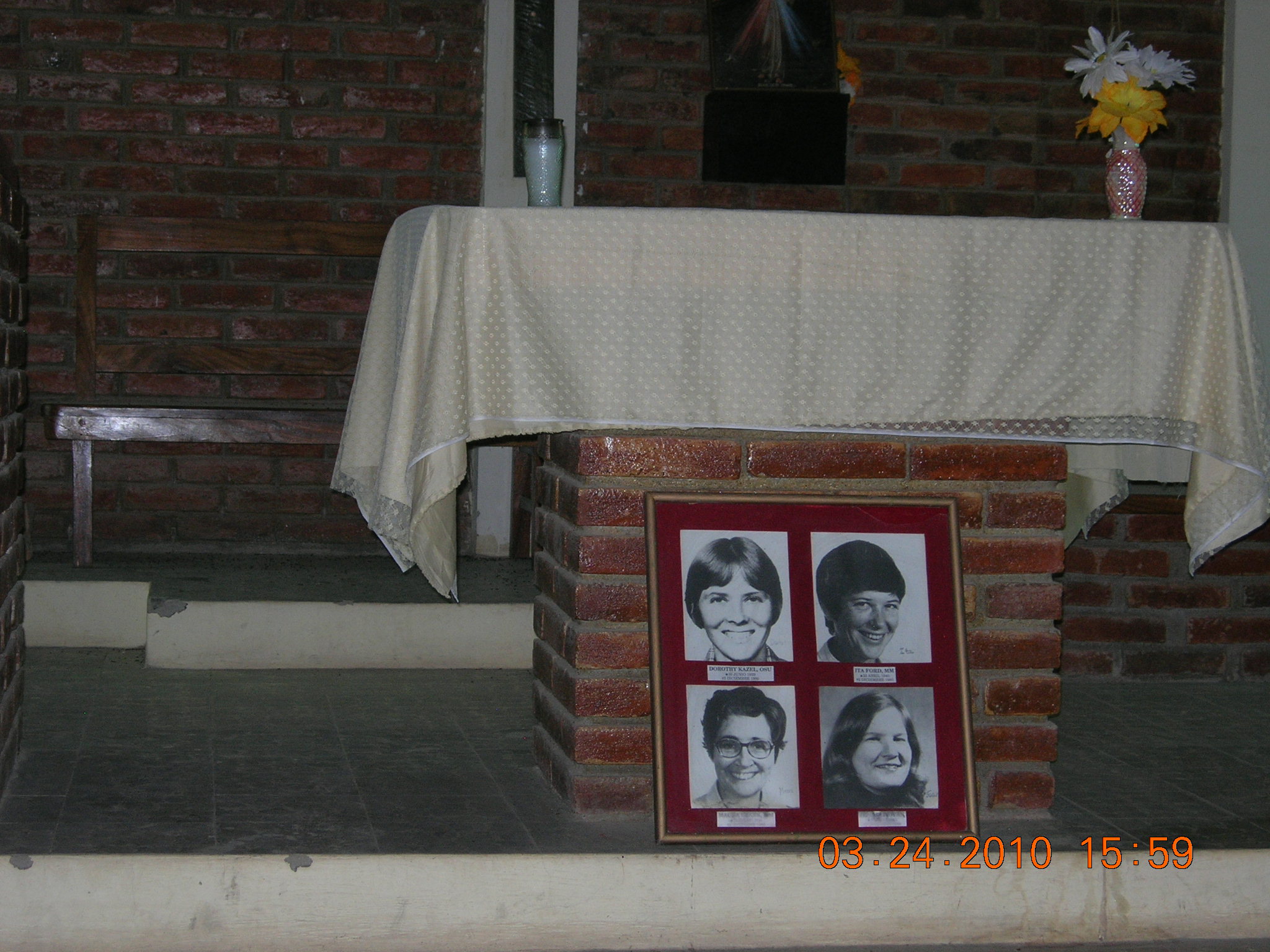
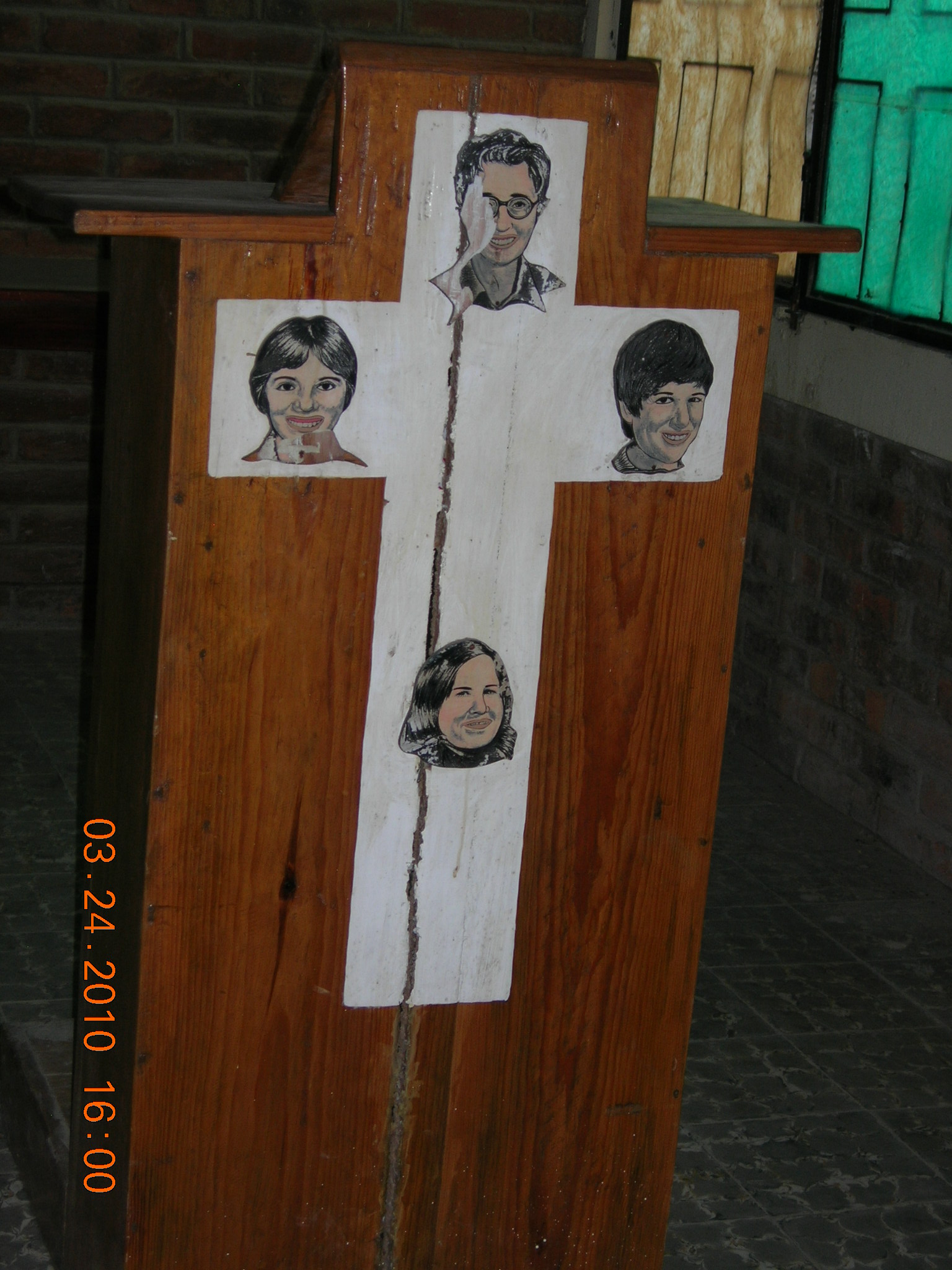
Now near the site of the common grave is a small chapel along with a monument to the women.

Soon after the murders, Sisters Clarke and Ford were buried where they had served, in accordance with Maryknoll custom and practice. Our group visited the cemetery for a moment of prayer and reflection. Here are photos of the municipal cemetery of Chalatenango and their grave markers.

La Libertad

We did not visit the western coastal city of La Libertad, population around 30,000. This is where Ursuline Sister Dorothy Kazel and Maryknoll lay missionary Jean Donovan served. Here is a photo of the city.

The four women are now part of the religious heritage of El Salvador and the world. Every year on December 2nd (the date of their murders), there are pilgrimages to that country to commemorate and honor their religious faith, devotion, courage and service. Praise God!


[i]  See Post: The Four American Churchwomen of El Salvador (Dec. 12, 2011); Post: The December 1980 Murders of the Four Churchwomen in El Salvador (Dec. 14, 2011); Post: Non-Judicial Investigations of the 1980 Murders of the Four Churchwomen (Dec. 16, 2011); Post: Judicial Investigations and Criminal Prosecutions of the 1980 Murders of the Four Churchwomen in El Salvador (Dec. 18, 2011); Post: The Salvadoran Truth Commission’s Investigation of the Murders of the American Churchwomen (Dec. 19, 2011); Post: TVPA Lawsuit in U.S. Federal Court Over the Murders of the American Churchwomen (Dec. 20, 2011).


TVPA Lawsuit in U.S. Federal Court Over the Murders of the American Churchwomen

One of the horrendous crimes during El Salvador’s civil war was the December 1980 brutal murders of four American churchwomen. We have examined the facts of those crimes along with the investigations and criminal prosecutions in El Salvador for those crimes plus the report on same by the Truth Commission for El Salvador.[1]

General Vides Casanova
General Jose Guillermo Garcia

In 1999 U.S. relatives of the four churchwomen brought a civil lawsuit for money damages under the Torture Victims Protection Act (TVPA)[2] for the women’s torture and murders. The defendants were former Salvadoran Generals Vides Casanova and Jose Guillermo Garcia. The case was in a federal court in Florida, where the defendants then lived.[3]

The case was tried before a jury in October-November 2000. The defendants denied any knowledge of the murders beforehand. They admitted, however, that torture and violence were rampant in El Salvador and that the country’s armed forces were involved in many of these actions. In response, they testified, they had issued orders forbidding illegal interrogation and extrajudicial executions and had done all they could do to prevent such crimes. However, they further testified, they did not have the resources to stop a long practice of such actions by the armed forces.[4]

General Garcia testified that he had ordered an investigation of the killing of the churchwomen and had done nothing to interfere with the investigation. General Garcia also testified about the U.S. government’s giving him the Legion of Merit award in the 1980’s for his being a “sterling example of a military leader in a representative government”as well as the U.S. government’s granting him political asylum in 1991.

Other trial witnesses were former U.S. Ambassador Robert White to El Salvador and a former investigator for the Inter-American Commission on Human Rights. The trial exhibits included the report of the El Salvador Truth Commission, other investigative reports and declassified U.S. diplomatic cables

In November 2000 the jury returned a verdict for the defendants. Afterwards the jurors indicated that they thought they did not have enough evidence that the generals were able to exercise authority over their subordinates. Some jurors also said the defendants had done what they could to curb abuses, given the tumult of the times and a lack of resources.

The plaintiffs appealed to the U.S. Eleventh Circuit Court of Appeals, which affirmed the trial court. The sole issue on this appeal was the legal sufficiency of the trial court’s instruction to the lay jury on the question of command responsibility. Because there was no objection at trial to this instruction, the appellate court reviewed the instruction only for plain error and found no such plain error,

The appellate court held that legislative history made clear that Congress intended to adopt the doctrine of command responsibility from international law and that the essential elements of liability under that doctrine were (i) the existence of a superior-subordinate relationship between the commander and the perpetrator; (ii) the commander knew or should have known that the subordinate was committing or planning to commit war crimes; and (iii) the commander failed to prevent the crimes or failed to punish the subordinate for same.

The plaintiffs’ request for review by the U.S. Supreme Court was denied. Thus, this case is over.[5]


[1]  See Post: The Four American Churchwomen of El Salvador (Dec. 12, 2011); Post: The December 1980 Murders of the Four Churchwomen in El Salvador (Dec. 14, 2011); Post: Non-Judicial Investigations of the 1980 Murders of the Four Churchwomen (Dec. 16, 2011); Post: Judicial Investigations and Criminal Prosecutions of the 1980 Murders of the Four Churchwomen in El Salvador (Dec. 18, 2011); Post: The Salvadoran Truth Commission’s Investigation of the Murders of the American Churchwomen (Dec. 19, 2011).

[2]  See Post: The Torture Victims Protection Act (Dec. 10, 2011).

[3]  Ford v. Garcia, 289 F.3d 1283, 1285 (11th Cir. 2002), cert. denied, 537 U.S. 1147 (2003).

[4]  Gonzalez, Salvadoran Admits Abuses In Trial Tied to Nuns’ Deaths, N.Y. Times (Oct. 19, 2000); Gonzalez, Salvadoran General Admits He Knew of Abuses, N.Y. Times (Oct. 20, 2000); Gonzalez, 2 Salvadoran Generals Cleared by U.S. Jury in Nuns’ Deaths, N.Y. Times (Nov. 4, 2000); Eviatar, Following the Blood, American Lawyer, Jan. 2001, at 83.

[5] The problem with the jury instruction on command responsibility was avoided in a later and similar case against Generals Garcia and Vides Casanova in which they were held liable for $54.6 million. (See Post: Former Salvadoran Generals Held Liable by U.S. Courts for $54.6 Million for Failure To Stop Torture (Nov. 11, 2011).)

The Salvadoran Truth Commission’s Investigation of the Murders of the Four American Churchwomen

We already have discussed the mission work in El Salvador of the four American churchwomen, their December 1980 brutal murders, the subsequent non-judicial and judicial investigations and successful Salvadoran criminal prosecutions for these crimes.[1]

The Truth Commission for El Salvador also investigated these crimes and its March 1993 report found:

  • the December 2, 1980, arrests and murders of the churchwomen had been planned prior to the arrival of two of them that evening from Nicaragua;
  •  the National Guard deputy sergeant in charge that night of the killing was carrying out the orders of a superior officer;
  • the Director-General of the National Guard at the time, Carlos Eugenio Vides Casanova, and other high security forces officers knew that members of the National Guard had committed the murders pursuant to orders of a superior officer and were in charge of covering up those facts;
  • Vides Casanova and another officer impeded the gathering of evidence and thereby adversely affected the judicial investigation of the crimes;
  • the two Salvadoran military investigations of this crime (Monterrosa and Zepeda) were not serious and instead sought to conceal the involvement of higher officials;
  • the Minister of Defense at the time, General Jose Guillermo Garcia, made no serious effort to conduct a thorough investigation of responsibility for the murders; and
  • the State of El Salvador failed in its responsibility to conduct a thorough and fair investigation of the crime and to find and punish the culprits.[2]

[1] See Post: The Four American Churchwomen of El Salvador (Dec. 12, 20111); Post: The December 1980 Murders of the Four Churchwomen in El Salvador (Dec. 14, 2011); Post: Non-Judicial Investigations of the 1980 Murders of the Four Churchwomen (Dec. 16, 2011); Post: Judicial Investigations and Criminal Prosecutions of the 1980 Murders of the Four Churchwomen in El Salvador (Dec. 18, 2011).

[2] Commission for the Truth for El Salvador, Report: From Madness to Hope: The 12-year war in El Salvador  at 62-66 (March 15, 1993), http://www.derechos.org/nizkor/salvador/informes/truth.html. See Post: International Criminal Justice: The Jesuits Case in the Truth Commission for El Salvador (June 9, 2011) (summary of the Commission’s mandate and procedures).

Salvadoran Judicial Investigation and Prosecution of National Guardsmen for the Murders of the Four American Churchwomen

We have examined the Salvadoran mission work of the four American churchwomen, their brutal December 1980 murders and the non-judicial investigations of this horrendous crime.[1] Now we look at the Salvadoran judicial investigation and prosecutions of five of their National Guardsmen for this crime.

Judicial Investigation

The judicial investigation started in late April 1981, when six members of the Salvadoran National Guard were arrested as suspects. The investigation ended in May 1984 when five of these men went on trial for aggravated homicide.[2]

During this three-year period there were several interesting developments.

In October 1981 a Salvadoran National Guardsman who had been captured by the guerillas said on their radio station (Radio Venceremos) that the women had been killed by other Guardsmen. This individual had not been involved in the killings himself, but said that a major had told him and other soldiers that Guardsmen had killed the women because two of them (Clarke and Ford) were believed to be carrying messages for the Salvadoran guerillas from the leftist Sandinistas on the women’s flight from Nicaragua.[3]

In November 1981 it had appeared that the investigation would not lead to any criminal charges, but in February 1982 the court determined that there was sufficient evidence to charge four of the men with aggravated homicide and one with murder while releasing the sixth for insufficient evidence. At that time (February 1982), the men were discharged from the military, and the court said that one of the five had confessed to his involvement in the killings and that this had been corroborated by other evidence.[4]

In November 1982, the trial court ordered the five men to stand trial on these charges at the earliest possible date. An appellate court, however, reversed this decision on the ground that the record was incomplete and returned the case to the trial court for further investigation. In October 1983, the trial court again ordered the five to stand trial.[5]

Criminal Trial

The five Guardsmen went to trial in May 1984 before a five-person jury. The trial took 19 hours. Seven hours were spent reading written testimony focusing on the women’s work in the country, the confession, ballistic tests and fingerprint evidence . Another seven hours was devoted to arguments by the attorneys. The defense emphasized that the men were obeying orders and criticized the U.S. involvement in the investigation.[6]

After one hour of deliberation, the jury found all of the men guilty of aggravated homicide. Thereafter the judge sentenced each of them to 30 years in prison.[7]

This was the first time in Salvadoran history that a judge had held a member of the armed forces guilty of homicide or murder.[8]

Post-Conviction Developments

In January 1988, a Salvadoran court rejected the application by three of the five convicts for release under the country’s General Amnesty Law.[9]The court held that the Law applied to political crimes, not to the aggravated homicide for which they had been convicted and which was a common crime.[10]

Seven months later (July 1998), however, two of the Guardsmen were released from prison apparently because of a new law to ease prison overcrowding. (The other three did not qualify for release because of prior convictions on a weapons charge and participation in a prison disturbance.) [11]

At about the same time in 1998, this case again captured public attention with two developments. First,  the convicted Guardsmen said that they had acted on orders of higher officials. Second, previously secret U.S. government files were released that did not support its prior assertions that the Guardsmen had acted on their own. The resulting public requests for a Salvadoran criminal investigation of that subject were rejected when El Salvador’s President and Attorney General said the country’s 10-year statute of limitations for murder charges meant that it was legally impossible to reopen the case to charge those who ordered the murders.[12]


[1] See Post: The Four American Churchwomen of El Salvador (Dec. 12, 2001); Post: The December 1980 Murders of the Four American Churchwomen in El Salvador (Dec. 14, 2011); Post: Non-Judicial Investigations of the Murders of the American Churchwomen of El Salvador (Dec. 16, 2011).

[2]  UPI, 6 Salvadoran Soldiers Are Arrested in Slaying of U.S. Church Workers, N.Y. Times (May 10, 1981); AP, Salvador To Try 5 in the Deaths of U.S. Women, N.Y. Times (Nov. 16, 1982); n.6 infra. Presumably it was during this period (April 1981 to May 1984) that a Salvadoran attorney who had been appointed to represent one of the Guardsmen, was pressured by the U.S. Embassy to announce that he had not found any involvement of higher officials, and when the attorney refused to do so, he received death threats that forced him and his family to flee El Salvador. (See Post: My Pilgrimage to El Salvador, April 1989 (May 25, 2011).)

[3]  UPI, U.S. Nuns’ Deaths Laid to Salvador, N.Y. Times (Oct. 15, 1981).

[4]  Bonner, Salvador’s Inquiry into Nuns’ Slaying Stalled, N.Y. Times (Nov. 13, 1981); Bonner, 6 Salvadoran Soldiers Face Court in Slaying of American Nuns, N.Y. Times (Feb. 11, 1982); Hoge, Judge in Salvador Frees One of Six in Nuns’ Death, N.Y. Times (Feb. 14, 1982).  More details about the confession entered the public domain. (UPI, Salvadoran Indicted in Death of U.S. Nuns, N.Y. Times (Nov. 26, 1982); AP, Salvadoran Says He killed U.S. Women, N.Y. Times (Oct. 27, 1983).)

[5]  Hoge, Judge in Salvador Frees One of Six in Nuns’ Death, N.Y. Times (Feb. 14, 1982); AP, Salvador To Try 5 in the Deaths of U.S. Women, N.Y. Times (Nov. 16, 1982); AP, Salvadorans Again Face Tiral in Killing of 4 Churchwomen, N,Y. Times (Oct. 29, 1983).

[6] Chavez, Salvador Trial in Killing of 4 Is Due Next Week, N.Y. Times (May 17, 1984); Chavez, Guardsmen’s Trial Opens in Salvador; Judge Calls Case in Slaying of 4 Churchwomen Strong Enough for Conviction, N.Y. Times (May 24, 1984); Chavez, 5 Salvadorans Are Found Guilty in Slaying of U.S. Churchwomen, N.Y. Times (May 25, 1984); Commission for the Truth for El Salvador, Report: From Madness to Hope: The 12-year war in El Salvador  at 65 (March 15, 1993), http://www.derechos.org/nizkor/salvador/informes/truth.html.

[7]  Id.

[8] Id.

[9]  See Post: International Criminal Justice: El Salvador’s General Amnesty Law and Its Impact on the Jesuits Case (June 11, 2011).

[10] Assoc. Press, Salvador Judge Refuses Amnesty To Killers of 4 U.S. Churchwomen, N.Y. Times (Jan. 9, 1988).

[11] Lawyers Comm. Hum. Rts., Media Alert: Human Rights First Calls for Formal Process in El Salvador Following Statement on Possible Release of Five Convicted Guardsmen, May 18, 1998; Lawyers Comm. Hum. Rts., Media Alert:Human Rights First Denounces Possible Parole for Guards, July 1, 1998; No Parole in Nuns’ Murder, N. Y. Times (July 9, 1998); 2 Killers of Nuns Freed From Salvadoran Prison, N.Y. Times (July 22, 1998); Release Ordered of El Salvador nun murderers, BBC News (July 22, 1998).

[12]  Id.; Rohter, 4 Salvadorans Say They Killed U.S. Nuns on Orders of Military, N.Y.  Times (Apr. 3, 1998); Lawyers Comm. Hum. Rts., Media Alert: Human Rights First Obtains Embassy Evidence on U.S. Nuns Murder in El Salvador (June 24,1998);  Rohter, Files Focus on Salvador Colonel in U.S. Women’s Deaths, N.Y. Times (June 25, 1998).