Senate Hearing on Expanding U.S. Agricultural Trade with Cuba

On April 21st the U.S. Senate Committee on Agriculture, Nutrition and Forestry held a hearing, “Opportunities and Challenges for Agriculture Trade with Cuba.”[1]

 Chairman’s Opening Statement

Senator Pat Roberts
Senator Pat Roberts

The Committee Chair, U.S. Senator Pat Roberts (Rep., KS), opened the hearing by stating, “At the beginning of this Congress, I was hopeful that trade would be one area where we could work across the aisle to find agreement. I am still hopeful that is the case. . . . International trade of American agriculture products is critical…critical to the nation’s economy and critical to our Kansas farmers and ranchers. I have long fought to eliminate barriers to trade, and I believe that we should continue to work towards new market access opportunities for our agriculture products.”

“The United States and Cuba have a long history full of contention and instability. There is no shortage of opinion from members of Congress about the relationship between our two countries, both present and future. Some are concerned about human rights, others about socioeconomic ideology. But those concerns are not what this committee will focus on this morning. Today we are here to discuss the role of agriculture – opportunities and challenges – in Cuba.”

“This is not an issue that we are going to be able to fix overnight. It will take efforts in addition to bills in Congress to truly normalize trade with Cuba. The decisions that are made regarding increased trade with Cuba must be made carefully.”

“Four months ago the President announced a major shift in U.S. policy towards Cuba. It is my hope that in the future, the President will work with Congress to determine the best path forward. Foreign policy does not happen in a vacuum. We have to take a realistic approach and work out a step-by-step plan towards lifting the embargo. This is a goal that should include Congress.”

“Today we will hear from an impressive panel of experts, from the regulators responsible for writing our policies toward Cuba, to the producers who seek to grow the market for their products. I understand that, like myself, many of our witnesses here have traveled to Cuba to see first-hand what challenges and opportunities exist.”

“Agriculture has long been used as a tool – not a weapon – for peace and stability. It is my hope that Cuba will embrace the practices of free trade, enterprise and commerce, so that both countries will gain from increased relations.”

“Earlier this year, the U.S. Agriculture Coalition for Cuba was launched. They have shared a statement and additional information in support of our work today, [which was] entered into the record.”

Ranking Member’s Opening Statement

Senator Debbie Stabenow

Senator Debbie Stabenow (Dem., MI), the Ranking Committee Member, said, “Improving trade with Cuba represents not only a great opportunity for America’s farmers, ranchers, and manufacturers, but a meaningful way to help rebuild trust between our nations.  After more than 50 years of stalemate, it’s time for a new policy on Cuba.”

“When I visited Cuba earlier this year – just days after President eased some trade restrictions – I saw firsthand the eagerness of Cubans who want to develop a more effective relationship with the [U.S.] But we can only get there if we begin to take meaningful steps to soften many of the barriers that exist between us.”

“And America’s farmers and ranchers are uniquely positioned to lead the way. Consider this – in 2014, the U.S. exported just over $290 million in agricultural goods to Cuba. That’s a good start, but for a country only 90 miles off our coast, we can do much more. Cuba’s own import agency estimates that it will receive approximately $2.2 billion (in U.S. dollars) worth of food and agricultural products this year alone.”

“That type of economic potential deserves a chance to succeed – and is one reason why many of the largest producer groups, trade associations, and companies from within agriculture have come together to push for increased engagement.”

“Many on this Committee have pushed for increased engagement and have taken the opportunity to visit Cuba in recent months. I’d like to recognize Senators Leahy and Klobuchar, as well as Senator Boozman and Heitkamp, for their bipartisan leadership on this issue.”

“The commitment to democratic ideas and human rights we share as Americans are best realized through engagement. Our bedrock principles accompany every product farmers and ranchers send to Cuba.”

“Last week’s action by the President [in rescinding the designation of Cuba as a “state sponsor of terrorism”] is a step forward toward in normalizing our relationship and will test the commitment of the Cuban government to this process.”

“But even while we are making significant progress in rebuilding our relationship with Cuba – the policies governing trade between our countries are not yet designed to allow a steady flow of goods and services. We must find a path forward that allows U.S. financial institutions to safely and securely work with Cuban purchasers, including the extension of lines of credit. And we should work to authorize a greater range of goods, services, and supplies for export to Cuba. These measures not only make good business sense – they also will help build Cuba’s agricultural capacity and make the island a better trading partner in the long run.”

The Witnesses at the Hearing

 The witnesses at the hearing were the following: (1) The Honorable Michael T. Scuse, Under Secretary, Farm and Foreign Agriculture Services, U.S. Department of Agriculture; (2) Mr. Matthew Borman, Deputy Assistant Secretary, Bureau of Industry and Security, U.S. Department of Commerce; (3) Mr. John Smith, Acting Director, Office of Foreign Assets Control, U.S. Department of the Treasury; (4) Mr. Michael V. Beall, President & CEO, National Cooperative Business Association; (5) Mr. Terry Harris, Senior Vice President, Marketing and Risk Management, Riceland Foods; (6) Mr. Ralph Kaehler, Farmer and Owner, K-LER Cattle Company, St. Charles , MN; (7) Mr. Doug Keesling, Fifth Generation Owner, Keesling Farms, Kansas Wheat, Chase , KS; and (8) Dr. C. Parr Rosson III, Professor & Department Head, Department of Agriculture Economics, Texas A&M University.

 Witness Ralph Kaehler
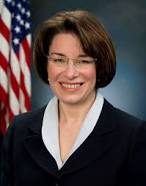
Senator Amy Klobuchar

Minnesota’s Senator Amy Klobuchar, who is a member of the Committee and the author of the Freedom to Export to Cuba Act (S.491) ending the U.S. embargo of Cuba, introduced Ralph Kaehler, whose family has been operating a livestock, row crop, and canning vegetable farm in Minnesota for nearly 130 years.

The Senator prefaced her introduction with this statement: “For too long, export and travel restrictions have prevented American farmers and ranchers from seeking opportunities in Cuba. That is why I have introduced bipartisan legislation to lift the trade embargo on Cuba, and this hearing allowed us to focus on how we can ensure that our farmers and ranchers benefit from normalized relations between our two countries.”

Mr. Kaehler testified that his farm was “an exhibitor in the First U.S./Cuba Food and Agriculture Exposition [in Havana] in 2002.” It “was the only one with live animals— affectionately known as the ‘Cuban Ark’ . . . to exhibit the diversity of U.S. livestock producers, and to introduce Cuba to the typical USA farm family.”

“Since then, the Kaehler Family has led over 10 trade delegations to Cuba. These missions have included producers from seven different states and a bipartisan mix of state lawmakers and officials. To date, some of the most successful exports to Cuba we have facilitated include shipments of livestock, dried distillers grains, powdered milk, animal milk replacer, and texturized calf feed.”

“Given the opportunity, U.S. farmers do well in Cuba. We have a significant advantage of shorter shipping over Europe, South America, Asia, and other major exporters. In addition, Cuba can take advantage of U.S. rail container service and sizing options, which also brings significant benefits to smaller privately owned businesses like ours. On top of all this, the U.S. produces a wide variety of affordable and safe food products that Cubans want to eat.”

“Unfortunately, some of the policies currently in place diminish the natural advantages American agriculture enjoys over its competitors. For instance, requirements for using third country banks for financing adds a lot of paperwork, time, and personalities to every transaction. Coupled with a restrictive cash‐in advance shipping policy . . . there is a very small margin for error before a shipper faces demurrage fees. As a family operation trying to build our business through exports, this self‐inflicted inefficiency can be tough to manage.”

Mr. Kaehler then made three specific recommendations to Congress. “First, . . . improve the trade financing rules for Cuba. . . . Second, . . . small firms like ours . . . need marketing support and assistance [from USDA] to help support our companies and figure out exactly what’s going on in markets abroad. . . . [Third,] I hope that Congress will expand the universe of people involved in U.S.‐Cuba trade by allowing a greater variety of goods and services to be traded.”

=========================================================

[1] A quick examination of the official websites of the Committee’s 20 members reveals that seven have made statements favoring at least some aspects of U.S.-Cuba reconciliation (Boozman (Rep., AK), Brown (Dem., OH), Heitkamp (Dem., ND), Hoeven (Rep., ND), Klobuchar (Dem., MN), Leahy (Dem., VT) and Stabenow (Dem., MI)). Only two have negative statements about that reconciliation (Grassley (Rep., IA) and Perdue (Rep., GA)). The other eleven members‘ websites do not reveal any position on Cuba (Bennet (Dem., CO), Casey (Dem., PA), Cochran (Rep., MS), Donnelly (Dem., IN), Ernst (Rep., IA), Gillibrand (Dem., NY), McConnell (Rep., KY), Roberts (Rep., KS), Sasse (Rep., NE), Thune (Rep., SD) and Tillis (Rep., NC)). A more thorough examination of the records of the last 11 would probably uncover other indications of their positions on reconciliation with Cuba.
 

U.S. and Cuba Squabble Over U.S. Sanctions Against Certain Venezuelans

The U.S. and Cuba (and indeed most of the rest of Latin America) are in a squabble over recent sanctions imposed against certain Venezuelans by an executive order issued by President Obama. After reviewing immediate events leading up to the imposition of sanctions, this post will discuss the executive order and the reactions thereto from Venezuela, Cuba and the rest of Latin America.

Events Leading Up to the Imposition of Sanctions [1]

In February 2014 there were opposition protests calling for Venezuelan President Nicolas Maduro’s resignation that sparked violence killing 43 people. In February of 2015 protesters and security forces clashed sporadically around that anniversary, while a shrinking economy and chronic product shortages have sent Maduro’s popularity tumbling.

In early February 2015, Antonio Ledezma, who is an opposition leader and the Mayor of Caracas, and two other opposition leaders signed a published open letter to President Maduro calling for a “national agreement for a transition.”

On February 10, the government announced a new three-tier currency scheme that amounted to a de facto devaluation of almost 70 percent, spurring outrage among opposition critics. This was a response to tumbling oil prices that have left the country struggling to meet its budget needs amid bulging foreign debt payments.

On February 19, the Venezuelan government announced that Ledezma had been arrested in order to halt an alleged U.S.-backed coup plot. The next day the government said that Ledezma had been indicted on charges of conspiracy against the Venezuelan government and plotting an American-backed coup. His attorney will be asking a judge to dismiss conspiracy charges against him, calling accusations that he participated in a plot to overthrow Venezuela’s socialist government “totally unfounded.”

Also on the 19th Maduro called for the Venezuelan people to defend national peace and be prepared “to deal with any scenario that may occur in Venezuela as a result of U.S. imperial aggression against our country.” That same day the Venezuelan Supreme Tribunal of Justice issued a statement reminding the U.S. that it had no jurisdiction to apply its laws outside its territory against the sovereignty and institutions of democracy in Venezuela. [2]

On February 20th the White House’s Press Secretary, Josh Earnest, responded to these charges. He said: “The United States is not promoting unrest in Venezuela, nor are we attempting to undermine Venezuela’s economy or its government.  In fact, the United States remains Venezuela’s largest trading partner.  The Venezuelan government should stop trying to distract attention from the country’s economic and political problems, and focus on finding real solutions through democratic dialogue among the people of Venezuela.  The Venezuelan government should respect the human rights of its citizens and stop trying to intimidate its political opponents.”

According to the Press Secretary, the U.S. continues “to call on the Venezuelan government to release political prisoners, including dozens of students; opposition leader; and Mayors Daniel Ceballos and Antonio Ledezma.” The U.S. “Treasury Department and the State Department are obviously closely monitoring this situation and are considering tools that may be available that could better steer the Venezuelan government in the direction that they believe they should be headed.  That obviously means that we’re continuing to engage other countries in the region in talking about operating in coordinated fashion as we deal with the situation there.”

The same day a Department of State spokesperson stated: The Venezuelan accusations “are false and baseless. And our view continues to be that political transitions must be democratic, constitutional, peaceful, and legal. We do not support a political transition in Venezuela by non-constitutional means. We’re not promoting unrest in Venezuela, nor are we attempting to undermine Venezuela’s economy or its government. And this is a continued effort . . . of the Venezuelan Government to try to distract attention from the country’s economic and political problems and focus and try to distract and make these false accusations.”

In addition, the State Department official stated the U.S. had reports that the Venezuelan intelligence service had detained the Caracas metropolitan mayor and searched his office [and] . . . that military intelligence officials plan to move opposition leader Leopoldo Lopez from his prison cell and transfer him to an unknown location. We are deeply concerned by what appears to be the Venezuelan Government’s efforts to escalate intimidation of its political opponents by rounding up these prominent leaders of the opposition. Venezuela’s problems cannot be solved by criminalizing dissent.”

President Obama’s Executive Order [3]

 On March 9th President Obama issued an executive order that blocked any U.S. assets of seven named Venezuelans and others who might be named by the U.S. Department of the Treasury, that barred these individuals from entering the U.S. and that prohibited U.S. persons from doing business with them.

These individuals were determined by the U.S. to be “responsible for the erosion of human rights guarantees, persecution of political opponents, curtailment of press freedoms, use of violence and human rights violations and abuses in response to antigovernment protests, and arbitrary arrest and detention of antigovernment protesters, as well as significant corruption.”

The executive order was not directed at the people or economy of Venezuela.

The disputes over this executive order, however, are not over these provisions, but instead to its preamble, which states:

  • [T]he situation in Venezuela, including the Government of Venezuela’s erosion of human rights guarantees, persecution of political opponents, curtailment of press freedoms, use of violence and human rights violations and abuses in response to antigovernment protests, and arbitrary arrest and detention of antigovernment protestors, as well as the exacerbating presence of significant public corruption, constitutes an unusual and extraordinary threat to the national security and foreign policy of the United States, and [the President] hereby declare a national emergency to deal with that threat.” (Emphasis added.)

 Venezuela’s Response to the Executive Order [4]

On March 10 President Maduro requested the Venezuelan legislature to enact an Anti-Imperialist Enabling Law granting him power to enact laws by his decree for the rest of this year in order to “defend the peace, sovereignty and full development of Venezuela in the face of threats from the United States empire.” Maduro said “no one in the world could believe the assertion [that Venezuela posed a national security threat to the U.S.] since the Venezuelan people are known as ‘peaceful, democratic, humanist and have a foreign policy directed toward understanding and peace . . . leaders in the struggle for integration and unity.’”

On March 14, upon Maduro’s order, Venezuela conducted a military exercise to counter an alleged U.S. threat by deploying Venezuelan soldiers and partisans across the country to march, man shoulder-fired missiles and defend an oil refinery from a simulated attack. Venezuela’s navy also performed exercises in the Caribbean Sea.

On Sunday (March 15) Venezuela’s legislature granted the requested presidential decree powers, which Maduro says are necessary to defend the country from the U.S. and which his opponents say are to justify repression and distract Venezuelans from economic problems, including acute shortages. Indeed, the country is suffering the highest inflation in the Americas, long lines for food and medicine, and shortages of many basic products.

President Maduro immediately responded to the legislature’s action. He insisted that Venezuela was ready to talk, “one on one, face to face, with respect, without arrogance or hubris” with the U.S. The first item on the agenda for such a meeting, he said, would be the immediate rescission of President Obama’s executive order.

 Cuba’s Response to the Executive Order [5]

Since Venezuela is a major ally of Cuba and the supplier of oil to Cuba, it is not surprising that the Cuban press recently has been full of Cuba’s support of Venezuela, both before and after the issuance of the executive order. Here are some of those expressions of support:

  • On March 5, Granma, Cuba’s official newspaper, issued a laudatory article about Venezuela’s former President, Hugo Chávez. It said he was “remembered . . . for his charisma, his arousing speech, his sincerity, his constant anguish to deliver for his people. Those who knew him say he often felt as though he were plowing the sea with that desire, so characteristic of him, to remain loyal to the people.” Now, “two years after his departure, . . . Chávez will be awakened together with Bolívar, to continue guiding Venezuela and Latin America.”
  • On March 6, Cuban First Vice President of the Councils of State and Ministers (and the presumptive successor to Raúl Castro as President of Cuba), Miguel Díaz-Canel Bermúdez, was in Caracas to participate in the commemoration of the second anniversary of death of Chávez, and Díaz-Canel declared that Cuba always will be a true friend of the Bolivarian Revolution.
  • On March 9, immediately after the issuance of the executive order, the Cuban government reiterated “its unconditional support and that of our people for the Bolivarian Revolution, the legitimate government of President Nicolás Maduro Moros and the heroic sister nation of Venezuela.” The Cuban government stated, “Nobody has the right to intervene in the internal affairs of a sovereign State or to declare it, without grounds, a threat to its national security.” Venezuela does not have the resources or officials to threaten the United States, and the executive order “reaffirms . . . the interventionist nature of U.S. foreign policy.”
  • On March 10, Fidel Castro in a letter to President Maduro said, “I congratulate you on your brilliant and courageous speech against the brutal plans of the U.S. government. Your words go down in history as proof that humanity can and must know the truth.”
  • On March 13 Cuban Foreign Minister Bruno Rodriguez Parrilla said that any attack on Venezuela was also an attack on Cuba and that the U.S. “has provoked serious damage to the environment in the hemisphere on the eve of the Summit of the Americas.” He added, “I hope that the U.S. government understands that it can’t handle Cuba with a carrot and Venezuela with a garrote.”
  • On March 15 thousands of Cubans attended a concert in support of Venezuela at the University of Havana. One of the Cuban Five and a Hero of the Republic of Cuba, René González, addressed the crowd, saying, “We all had in mind the warning of Che that imperialism cannot be trusted,” and that warning was confirmed by the March 9th executive order.

Other Latin American Countries’ Reactions [6]

On March 14, at Venezuela’s request, the 12-nation Union of South American Nations (UNASUR) reaffirmed “their commitment to the full observance of international law, the Peaceful Settlement of Disputes and the principle of nonintervention” and reiterated their “call for governments to refrain from applying unilateral coercive measures that violate international law.” It, therefore, called on the U.S. “to evaluate and implement alternatives for dialogue with the government of Venezuela, under the principles of respect for sovereignty and self-determination of peoples.’ As a result, it requested “the repeal of that Executive Order.”

On March 17 the Bolivarian Alliance for the Peoples of Our Americas (ALBA), at the request of Venezuela, will meet in Caracas to declare solidarity with Venezuela in its disputes with the U.S.

Conclusion

Although I am not a close follower of events in Venezuela, I do know that the recent huge declines in world oil prices have devastated its economy, that it is suffering horrendous inflation forcing it to devalue its currency, that there are shortages of all sorts of consumer products and that its government has imprisoned dissidents, including the Mayor of Caracas.

I also believe that the U.S. government must have had good cause to impose sanctions on the seven individuals named in the executive order.

Therefore, the protests of Venezuela, Cuba and the other Latin American nations, in my opinion, are not justified. The U.S. hopes for a cordial Summit of the Americas next month in Panama to celebrate a U.S.-Cuba reconciliation, however, appear to have been scuttled.

=================================================

[1] Pons & Ellsworth, Update 3-Venezuela announces new currency system, large devaluation seen, Bloomberg (Feb. 10, 2015); Reuters, Venezuela Arrests Opposition Mayor Accused of Coup Plot, N.Y. Times (Feb. 19, 2015);  White House, Press Briefing by Press Secretary, Josh Earnest, 2/20/15 (Feb. 20, 2015); U.S. Dep’t State, Daily Press Briefing (Feb. 20, 2015); Assoc. Press, Lawyer: Jailed Caracas Mayor to Fight Conspiracy Charges, N. Y. Times (Feb. 21, 2015); Gupta, Venezuela Mayor Is Accused of U.S.-Backed Coup Plot, N.Y. Times (Feb. 21, 2015),

[2] Cuba’s official newspaper, Granma, parrotted the Venezuelan government’s version of events. (E.g.Venezuela faces a stroke of continued fate, Granma (Feb. 20, 2015); Statement of the Ministry of Foreign Affairs of the Republic of Cuba, Granma (Feb. 20, 2015).)

[3] White House, Executive Order—Blocking Property and Suspending Entry of Certain Persons Contributing to the Situation in Venezuela (Mar. 9, 2015); White House, Fact Sheet: Venezuela Executive Order (Mar. 9, 2015); White House, Letter [to Speaker of U.S. House of Representatives]—Declaration of a National Emergency with respect to Venezuela (Mar. 9, 2015); White House, Statement by the Press Secretary on Venezuela (Mar. 9, 2015);DeYoung & Miroff, White House steps up sanctions against Venezuelans, Wash. Post (Mar. 9, 2015). The executive order was issued under (a) the International Emergency Economic Powers Act and (b) the Venezuela Defense of Human Rights and Civil Society Act of 2014. In section 2 of that latter statute, Congress found, among other things, that the Central Bank of Venezuela and the National Statistical Institute of Venezuela had determined that the annual inflation rate in Venezuela in 2013 was 56.30, the highest level of inflation in the Western Hemisphere and the third highest level in the world; that Venezuela’s currency controls have become the most problematic factor for doing business in the country; and that HumanRights Watch has reported the government intimidates,censors and prosecutes its critics.

[4] Editorial, In Venezuela, Punishing Scapegoats, N.Y. Times (Mar. 5, 2015); Toro & Kronicks, Venezuela’s Currency Circus, N.Y. Times (Mar. 6, 2015); Miroff & DeYoung, New U.S. sanctions lost in Venezuelan translation, Wash. Post (Mar. 11, 2015); Reuters, Mind Your Manners, Venezuela Tells U.S. Official, Jacobson, N.Y. times (Mar. 11, 2015); Neuman, Obama Hands Venezuelan Leader a Cause to Stir Support, N. Y. Times (Mar. 11, 2015); Editorial, A Failing Relationship with Venezuela, N. Y. Times (Mar. 12, 2015); Assoc. Press, Venezuela Conducts Military Exercises, Claims US Threat, N.Y. Times (Mar. 14, 2015); Reuters, Venezuela Stages Military Exercises to Counter U.S. ‘Threat,’ N.Y. Times (Mar. 15, 2015); Buitrago & Cawthorne, Elected officials grant Venezuela leader broad powers, Wash. Post (Mar. 15, 2015).

[5] Statement from the Revolutionary Government of the Republic of Cuba, Granma (Mar. 10, 2015); Letter from Fidel to Maduro, Granma (Mar. 10, 2015); Pasiero, Venezuela is sacred and to be respected, Granma (Mar. 10, 2015); Pasiero, Cuba reiterates its unconditional support of Venezuela, Granma (Mar. 6, 2015); Chávez, forever present, Granma (Mar. 5, 2015); Pasiero, Mature relationships requires respect for the United States, Granma (Mar. 16, 2015); Venezuela Are All, Granma (Mar. 16, 2015); Prada & Rodriguez, Voices for solidarity with Venezuela, Granma (Mar. 16, 2015).

[6] UNASUR, Press Union of South American Nations Executive Decree of The Government of the Unites States of Venezuela (Mar. 14, 2015); Assoc. Press, South American Bloc Demands US Revoke Venezuela Order, N.Y. Times (Mar. 14, 2015). UNASUR members are Argentina, Brazil, Bolivia, Chile, Colombia, Ecuador, Guyana, Paraguay, Peru, Suriname, Uruguay and Venezuela. ALBA members are Antigua and Barbuda, Bolivia, Cuba, Dominica, Ecuador, Grenada, Nicaragua, Saint Kitts and Nevis, Saint Lucia, Saint Vincent and Grenadines and Venezuela.


U.S. Easing Restrictions on Travel and Exports to Cuba

Effective January 16th the U.S. is easing restrictions on Americans’ travel and exports to Cuba.[1]

Under the new regulations, Americans will now be allowed to travel to Cuba for any of the following specific reasons without first obtaining a special license from the U.S. government:

  • family visits;
  • official business of the U.S. government, foreign governments, and certain intergovernmental organizations;
  • journalistic activity;
  • professional research and professional meetings;
  • educational activities;
  • religious activities;
  • public performances, clinics, workshops, athletic and other competitions, and exhibitions;
  • support for the Cuban people;
  • humanitarian projects;
  • activities of private foundations or research or educational institutes; exportation, importation, or transmission of information or information materials; and
  • certain authorized export transactions.

Airlines and travel agents will be allowed to provide service to Cuba without a specific license.

Travelers will be permitted to use credit cards and spend money while in the country and bring back up to $400 in souvenirs, including up to $100 in alcohol or tobacco. In addition, Americans will be allowed to send more money to Cubans, up to $2,000 every three months instead of the $500 currently permitted.

The new regulations will also make it easier for U.S. telecommunications providers and financial institutions to do business with Cuba.

Treasury Secretary Jacob J. Lew, whose department oversees sanctions policy, said in a statement, “These changes will have a direct impact in further engaging and empowering the Cuban people, promoting positive change for Cuba’s citizens. The amended regulations also will facilitate authorized business for U.S. exporters and enhance communications and commerce between Cuba and the United States.  To the extent legally possible, the President has made clear that we want U.S. policy to ease the burdens on the Cuban citizens we seek to help.”

“Cuba has real potential for economic growth and by increasing travel, commerce, communications, and private business development between the United States and Cuba, the United States can help the Cuban people determine their own future.”

Commerce Secretary Penny Pritzker issued a similar statement with respect to changed regulations from her department. She said, “our regulations will change export policy and authorize the flow of certain goods and services to Cuba without a license, to spur private sector activity and encourage entrepreneurship in Cuba. These are smart changes in America’s outdated policy that will help the Cuban people realize an improved standard of living, greater economic independence, and increased prosperity.”

====================================================

[1] This post is based on U.S. Dep’t of Treasury, FACT SHEET: Treasury and Commerce Announce Regulatory Amendments to the Cuba Sanctions (Jan. 15, 2015); U.S. Dep’t of Treasury, Statement of Secretary Lew on Amendments to the Cuban Asset Control Regulations (Jan. 15, 2015); U.S. Dep’t of Commerce, Statement from U.S. Commerce Secretary Pritzker on New Commerce Department Regulations Changing U.S. Export Policy on Cuba (Jan. 15, 2015); Baker, U.S. Easing Decades-Old Restrictions on Travel to Cuba, N.Y. Times (Jan. 15, 2015).


Presbyterian Church (U.S.A.) Takes Actions Regarding Cuba

Unknown


The just-concluded General Assembly of the Presbyterian Church (U.S.A.) approved two resolutions regarding Cuba.

 End Designation of Cuba as a “State Sponsor of Terrorism”

 By a vote of 481 to 63, the General Assembly adopted resolution 11-03: “Petition the President of the United States and the U.S. Department of State to remove Cuba from the list of state sponsors of terrorism as soon as possible.” [1] The stated rationale for the resolution included the following:

  • “[T]here is no evidence that Cuba has provided [logistical and financial or political support to groups that carry out terrorist attacks on civilians] in recent decades or is currently providing it.”
  • “To the contrary, Cuba has made international commitments to combat terrorism, has ratified all twelve international counterterrorism conventions, and has offered to sign a bilateral agreement with the United States on counterterrorism.”
  • “In an immediate response to the September 11, 2001, attacks on New York City and Washington, D.C., by Islamist militants belonging to Al Qaeda, Cuba expressed solidarity with the U.S, condemning the attacks and offering Cuban airports for the emergency diversion of airplanes from U.S. airports.”
  • “Cuba is a sponsor of the peace talks between the Revolutionary Armed Forces of Colombia—People’s Army (Fuerzas Armadas Revolucionarias de Colombia—Ejército del Pueblo or FARC) guerrillas and the Columbian government and is playing a constructive mediating in these talks in an effort to bring an end to one of the regions’ longest-standing conflicts and has been lauded by the Columbian government for its assistance.”
  • “Cuba collaborates with the U.S. in counter-drug traffic efforts, interdicting narcotic shipments in the Caribbean and has been publicly thanked by the United States government for this cooperation.”
  • “Under these circumstances, keeping Cuba on the list of state sponsors of terrorism weakens the credibility of the entire list. . . . Removing Cuba from the list would send a positive signal to all Latin American governments and would enhance the image of the U.S. in this hemisphere and around the world.”

End Restrictions on U.S. Citizens Traveling to Cuba

By a hand vote the General Assembly approved resolution 11-05: “Petition the President of the United States, the U.S. Department of State, and the U.S. Treasury Department’s Office of Foreign Assets Control to remove all of the restrictions on travel by U.S. citizens to Cuba, which it is legally possible for them to do, and to openly and vigorously advocate to Congress the repeal of all laws restricting the constitutional right of U.S. citizens to travel to Cuba.” The resolution also stated: “Petition the majority and minority leaders of the U.S. Senate and the U.S. House of Representatives to work to repeal all of the laws restricting travel to that nation.”

The rationale for this resolution included the following: “[M]illions of U. S. citizens are unable to visit Cuba because of restrictions still in place that limit travel to that nation. Speaking to the Organization of American States in 2013, U. S. Secretary of State, John Kerry, stated that ‘our people are actually our best ambassadors.’ . . . Increased travel by U. S. citizens will help support thousands of . . . [new] Cuban entrepreneurs and will enable them to purchase food and clothing and provide for their other basic needs.”

 Consultation of U.S. and Cuban Presbyterian Churches

 The General Assembly also considered Resolution 11-06 calling for developing a process for consultation between the U.S. and Cuban Presbyterian churches. By a hand vote, it was referred back to the appropriate church committee to find the necessary funding for such a process in light of the U.S. church’s “commitment to deepening our relationship [with Cuba] by careful analysis of the ongoing complex situation in Cuba.”

Conclusion

The biennial General Assembly is the national governing body of the Presbyterian church (U.S.A.) that brings together commissioners and advisory delegates from all 172 presbyteries in the U.S., as well as other delegates and observers from around the world.

=======================================

[1] This blog repeatedly has called for ending the designation of Cuba as a “State Sponsor of Terrorism.” Here is the latest such post.