As discussed in a prior post, on August 4th, the Associated Press (AP) reported that the United States Agency for International Development (USAID) had funded and implemented a program in 2010-2012 to attract young Cubans for purported civic programs on the island with the real purpose of recruiting them to anti-government activism.
Now we will look at the U.S. government’s responses to the article. Another post will discuss the reactions of others.
- USAID

On August 4th, USAID issued a statement that admitted the existence of the program. It said that with congressional funding, the agency had conducted this program under the umbrella of “democracy programming in Cuba to empower Cubans to access more information and strengthen civil society.” This “is important to [USAID’s] mission to support universal values, end extreme poverty and promote resilient, democratic societies,” especially in countries like Cuba that do not enjoy the “right to speak freely, assemble and associate without fear, and freely elect political leaders.” Thus, said USAID, the AP article was correct in its assertion that the purpose of the program was “to empower citizens to ‘tackle a community or social problem, win a ‘small victory’ and ultimately realize that they could be the masters of their own destiny.’”
Yet USAID denied that the program was secret, covert or undercover. In countries like Cuba that are closed and hostile to the U.S., the USAID programs are conducted with ”discretion.”
In fact, the USAID statement continued, information about USAID’s Cuba programs, is available publicly at foreignassistance.gov. That website, however, does not provide any information about this specific program or any other such program in Cuba.
Instead, it says the State Department and USAID provides assistance to Cuba that “will support civil society initiatives that promote democracy, human rights and fundamental freedoms, particularly freedom of expression. Programs will provide humanitarian assistance to victims of political repression and their families; strengthen independent Cuban civil society; and promote the flow of uncensored information to, from, and within the island.” The website also provides the following aggregated information (in millions of dollars) about such programs for Cuba:
| FY | Appropriated [1] | Obligated [2] | Spent [3] |
| 2009 | [$15.0] | $13.5 | $12.2 |
| 2010 | $20.0 | $ 8.9 | $11.0 |
| 2011 | $20.0 | $ 9.6 | $ 7.7 |
| 2012 | $20.0 | $ 8.3 | $ 8.2 |
| 2013 | $19.3 | $ 9.0 | $ 7.3 |
| 2014 | $15.0 | $ 1.8 | |
| 2015 | $20.0 |
The website also provides “disaggregated” data that shows an expenditure in 2013 of $171,700 to Creative Associates International for “Professional, administrative and support services.” There was no disclosure of the program mentioned above or of the Cuban social media program conducted for USAID by Creative Associates International that was discussed in prior posts.[4]
On August 7th USAID updated its own webpage titled “Cuba-Our Work.” It states, “USAID focuses on increasing the ability of Cubans to participate in civic affairs and improve human rights conditions on the island. By reaching out to the dissident community and beyond and engaging citizens to enhance local leadership skills, strengthen organizational capacity, facilitate outreach strategies, and support greater access to information and communication, the USAID program contributes to the development of independent civil society groups that can ultimately make significant contributions at the local and national levels.”
According to the “Cuba-Our Work” webpage, these programs focus on (a) humanitarian support to political prisoners and their families; (b) facilitating the free flow of information; and (c) Human rights and democracy promotion. The last of these three involves “USAID [support of] independent civic, social, and development activities by providing technical and material assistance to organize, train, and energize small groups of people within their communities. These efforts provide an opportunity for citizens to work together in a manner independent from the state. USAID also provides trainings on documenting human rights abuses according to international standards and raises awareness of such abuses within Cuba and around the world.”
That same webpage lists seven “current program partners:” Foundation for Human Rights in Cuba, Grupo de Apoyo a la Democracia, International Relief and Development, International Republican Institute, National Democratic Institute, New America Foundation and Pan-American Development Foundation. Note that Creative Associates International is not mentioned.
- State Department
 On August 4th a U.S. State Department spokesperson also defended the program that was the subject of the AP report. She said, “Congress . . . funds democracy program in Cuba to empower Cubans to access more information and strengthen civil society. This [HIV] workshop . . . enabled support for Cuban civil society while providing a secondary benefit of addressing the desires Cubans express for information and training about HIV prevention.” There also were “community cleanups, cultural activities, tree plantings.” Programs in countries like Cuba “are operated in a discreet manner to help ensure the safety of those involved . . . . This was not a covert program. There are programs that are done discreetly in order to protect the safety of the people involved.”
- Senator Robert Menendez

Menendez (Democrat—NJ, a Cuban-American and Chair of the Senate Foreign Relations Committee) said, “I stand in full support of [USAID] and its efforts to empower Cuban civil society. Initiatives that facilitate community education and organizing are an important step towards addressing the social, political and economic challenges facing Cubans today, and who are denied access to an independent media and basic civic interaction. Moreover, I reaffirm that these programs are consistent with more than a half-century of effort by the [U.S.] Government to promote democracy, human rights and universal values around the world.”
Menendez also commended “the young activists from across Latin America who traveled to Cuba to engage their peers in broad discussions about shaping their future and the future of the country. It is my sincere hope that Latin American governments will follow the examples set by these courageous activists and will stand in support of the Cuban people – both young and old.”
- Senator Patrick Leahy.

Leahy (Democrat-VT and chair of the Senate appropriations subcommittee that oversees USAID) said, “It is one thing to support nascent Cuban civil society organizations, if USAID’s role is disclosed in advance to participants and beneficiaries. It is quite another to concoct an HIV/AIDS workshop to promote a political agenda. If that is what happened here it is worse than irresponsible. It may have been good business for USAID’s contractor, but it tarnishes USAID’s long track record as a leader in global health.”
- Senator Jeff Flake
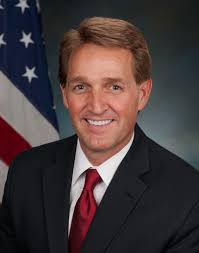 Flake (Republican-Arizona) said, “”These programs are in desperate need of adult supervision. If you are using an AIDS workshop as a front for something else, that’s … just wrong.”
- Congresswoman Ileana Ros-Lehtinen.
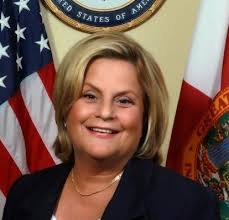
Ros-Lehtinen (Republican-FL and a Cuban-American) said, “USAID . . . [use of] measures to promote democracy in Cuba is no secret. We must continue to pressure the Castro regime and support the Cuban people, who are oppressed on a daily basis. I wish the press would dedicate more of their time to reporting the rampant human rights abuses in Cuba perpetrated by the Castro regime instead of manipulating the coverage of programs promoting freedom of expression and justice on the island.”
7. Congressman Mario Diaz-Balart.

Diaz-Balart (Republican-FL and a Cuban-American) said, “Efforts by the State Department and USAID to bring information to the Cuban people, and to find creative ways for the Cuban people to communicate with each other and with the outside world, are precisely the types of activities that the United States must vigorously pursue in closed societies. . . .Pro-democracy activities must be undertaken with discretion because the most innocuous acts are ‘crimes’ in totalitarian states. It is outrageous that the AP abandoned all pretense of objectivity and published an overtly biased hit piece against a program that enjoys broad bipartisan support.”
- Congresswoman Barbara Lee
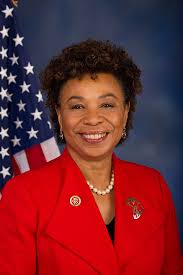
Lee (Democrat-CA) said, “I am appalled by recent reports that the U.S. government orchestrated and funded clandestine democracy promotion efforts under the guise of public health and civic programs . . . . As co-chair of the Congressional HIV/AIDS Caucus, I am particularly concerned by the revelation that HIV-prevention programs were used as a cover. This blatant deception undermines U.S. credibility abroad and endangers U.S. government supported public health programs which have saved millions of lives in recent years around the world.
Lee also commented, “These most recent reports are particularly disturbing in light of USAID’s [Cuban social media program] fiasco first reported a few months ago. Such misguided and counterproductive programs have no place at USAID and stand to put more U.S. citizen lives at risk. Instead of this covert approach to democracy promotion; it’s long past time for American and Cuban officials to make a serious commitment to enter into open
=================================================
[1] The foreignassistance.gov website reports that these are Appropriations for all agencies, including USAID. An USAID website says that $55.0 million was appropriated for all agencies’ Cuba programs for FY 2009-2011 and that USAID was responsible for $31.0 of those funds.
[2] The foreignassistance.gov website reports that USAID received all of the Obligated funds for these years.
[3] The foreignassistance.gov website reports that USAID spent all of the Spent funds for these years.
[4] Post, U.S. Secret Cuba Social Media Program Raises Questions about the Validity of Criticisms of Cuba by the U.S. Commission on International Religious Freedom (April 4, 2014); Post, U.S. Senate Hearing Discusses USAID’s Social Media Program for Cuba (April 9, 2014); Re-post of the Latin American Working Group, What Is Wrong with the White House’s Plan for Democracy in Cuba (April 9, 2014).
