Bipartisan Bill To End Embargo of Cuba Introduced in House of Representatives           

Rep. Tom Emmer
Rep. Tom Emmer

On July 28 Representatives Tom Emmer (Rep., MN) and Kathy Castor (Dem., FL) introduced the Cuba Trade Act of 2015 (H.R.3238) to end the U.S. embargo of Cuba. The bill is cosponsored by Republican Representatives Ralph Abraham (LA), Justin Amash (MI), Charles Boustany, Jr. (LA), Reid Ribble (WI) and Mark Sanford (SC).[1]

According to Emmer, “Today marks a new and exciting chapter for the U.S. – Cuba relationship. The American people overwhelmingly support lifting the Cuba embargo. Along with the Cuban people, Americans are ready for a fresh start and new opportunities for increasing trade, advancing the cause of human rights and ushering in direly needed reforms. This legislation will improve our position within the region, giving the U.S. a seat at the table and increased leverage as we support political transformations beginning to occur in Cuba. The time has come for a change in our policy towards Cuba, and I am ready to work with my colleagues in Congress on policies that are beneficial to both the American and Cuban people.”

Rep. Kathy Castor
Rep. Kathy Castor

Co-author Castor had a similar message. She said, “The United States and Cuba have taken historic actions this year to set our countries on a more productive path forward for citizens of both nations and turn the page on the outdated 50 year policy of isolation. This [bill is an] important step forward will advance human rights and lift the fortunes of families and entrepreneurs on both sides of the Florida straits. Lifting the embargo and reestablishing historic trade ties with Cuba will be a boost to our port and local small businesses in Tampa Bay.” Her press release added that her district is “home to a large Cuban-American population with historic ties that date back to the 1800s.”[2]

This bill is a companion to the Senate’s bill by the same name (S.1543) that was introduced by Kansas’ Republican Senator Jerry Moran and Maine’s Independent Senator Angus King,,[3] and both bills would fully lift the trade embargo with Cuba by granting the U.S. private sector the freedom to trade with Cuba, while protecting taxpayer interest from any risk associated with such trade.

To protect U.S. taxpayers, the bills have three features. First, they would allow all private persons, entities or organizations to spend private funds for Cuba trade promotion and market development without the use of any taxpayer dollars. Second, commodity check-off programs, which are producer funded, would be allowed to be used. Third, private credit from private institutions could be extended to Cuba, without risk to U.S. taxpayers.

The House already had three bills to end the embargo, all offered by Democratic Representatives: (i) H.R. 403: Free Trade with Cuba Act (Rep. Charles Rangel (NY) with 29 Democratic cosponsors as of July 27); (ii) H.R.274: United States-Cuba Normalization Act of 2015 (Rep. Bobby Rush (IL) with no cosponsors as of July 27); and (iii) H.R.735: Cuba Reconciliation Act (Rep. Jose Serrano (NY) with 12 Democratic cosponsors as of July 27).[4]

All of these previous House bills were assigned to the following seven House committees: Agriculture; Energy and Commerce; Financial Services; Foreign Affairs; Judiciary; Oversight and Government Reform; and Ways and Means. Presumably the bill just introduced by Representatives Emmer and Castor will be similarly assigned. As of July 27, none of these committees had taken any action on the earlier bills.

Given control of the House is in the hands of the Republican Party, maybe the just-introduced bill by Republican Tom Emmer will have a more receptive consideration by these committees.

Representative Emmer in the first six months of his first term in the House serves on the Agriculture and Foreign Affairs committees and already has voiced interest in normalization of U.S.-Cuba relations as indicated by the following:

  1. His website‘s page on “Foreign Affairs”states, “Regions such as Latin America, Africa and Asia present us with emerging opportunities to increase trade and diplomatic relations.”
  2. Early this year Emmer made his first trip to Cuba with a congressional delegation and said the trip had convinced him that the Cuban people are ready to do business with America. “Before the trip, you can be academic about [the issue],” he said. “Once you see the people, it’s not about leadership as much as it’s about people. They’re hungry for the next step, hungry for access to the marketplace.”[5]
  3. In early February Emmer let it be known that if certain conditions were met, he could support lifting the embargo even though he thinks President Obama could have been more open about his initial talks with Cuban officials. “By all accounts the Cuban people are worse off today than when [the embargo] started. So clearly that’s not working,” he said. “And I’m supportive of engaging in diplomacy, starting to re-engage in diplomatic relations with Cuba, to begin that process to hopefully someday getting to normalize that relationship. But it’s two separate things. One, it’s diplomacy, and down the road is normalization.”[6]
  4. In late May Emmer made his second trip to the island, again with another congressional delegation, this one led by Representative Mark Sanford (Rep., SC). Afterwards Emmer said, “The experience for me, is to learn it, to understand it, and see how it fits with Minnesota’s economy.” He also learned “the Cuban people, they love Americans.” [7]
  5. After the July 1 announcement that the two countries would reopen embassies on July 20, Emmer stated he sees “a real opportunity for a positive, open trading partnership between these two countries. The potential benefits for Minnesota exporters are immense, and what is good for Minnesota is good for our country.”[8]

Upon introducing his bill to end the embargo, Emmer stated that he decided to do so after his second trip to Cuba. “I understand there’s a lot of pain on both sides of this issue that goes back many decades, something that a kid from Minnesota is not going to necessarily be able to understand. But I believe this is in the best interests of the Cuban people. This isn’t about the Cuban government — it’s about people on the street looking for more opportunity and to improve their quality of life.”[9]

Conclusion

Now the Minnesota congressional delegation is almost unanimous in supporting U.S.-Cuba normalization and ending the U.S. embargo of the island.

Our two Democratic U.S. Senators (Amy Klobuchar and Al Franken), our five Democratic Representatives (Keith Ellison, Rick Nolan, Betty McCollum, Collin Peterson and Tim Walz) and now our Republican Representative Emmer are on record as authors or cosponsors of bills to end the embargo.

In addition, our Republican Representative Erik Paulsen has made statements that at least do not indicate opposition to these measures. He said in early February, “We should be looking at opportunities to open up trade between the United States and Cuba so we can export more American goods and services. However, the President should have engaged Congress before making concessions to the Cuban government.” And after the announcement of the reopening of embassies, he observed, “A new [U.S.] embassy needs to focus on boosting open markets so the Cuban people can access more American goods and services.” Paulsen’s district, by the way, includes the headquarters of Cargill, the leader of the U.S. Coalition for Cuba, which is a strong advocate for ending the embargo and for normalization.[10]

The lone exception to this Minnesota consensus appears to be our other Congressman, Republican John Kline. In early February he stated he was “not confident the Administration will follow through on its promises to hold the Castro dictatorship regime accountable, and I’m concerned about revisiting relations with Cuba until all Cubans enjoy a free democracy.” After the announcement of the reopening of embassies, his spokesman said, “While congressman Kline supports new opportunities for American businesses and has a strong record of supporting trade and efforts to grow jobs in America, he wants all Cubans to enjoy a free democracy but is not confident this administration will follow through on its promises to hold the Castro dictatorship regime accountable,” [11]

As a Minnesota advocate for U.S.-Cuba reconciliation, I am proud that our congressional delegation is so supportive of ending the embargo and for normalization. I entreat Representatives Paulsen and Kline to join their colleagues in this endeavor.

=========================================================

[1] Press Release, Emmer, Castor Introduce Legislation to Lift Cuba Embargo (July 28, 2015)   Emmer’s website contains endorsements from the Minnesota Farm Bureau, National foreign Trade Council, National Farmers Union, Minnesota Farmers Union, U.S. Agricultural Coalition for Cuba, National Turkey Federation, Greater Tampa Area Chamber of Commerce, Council of the Americas, Arkansas Rice Growers Association, Engage Cuba, Cuba Now, Washington Office of Latin America and CoBank.(See also Sherry, Rep. Tom Emmer leads Republican effort to lift Cuba embargo, StarTribune (July 28, 2015)(Democratic Representative Betty McCollum today indicatated her support for Emmer’s bill).)

[2] Castor, Press Release: U.S. Reps. Castor and Republican colleagues file bill today to end Cuba embargo (July 28, 2015)

[3] As reported in a prior post, the Moran-King bill (S.1543) was introduced on June 10 with Senator John Boozman (Rep., AK) as cosponsor and was referred to the Senate Committee on Banking, Housing, and Urban Affairs. That committee also has the earlier bill to end the embargo– S.491: Freedom to Export to Cuba Act of 2015—introduced by Senator Amy Klobuchar (Dem., MN). As of July 27 that bill had 21 bipartisan cosponsors, but that committee had taken no action on either bill.

[4] These bills were discussed in a prior post, which was updated in another post.

[5] Brodey, Why is Minnesota’s congressional delegation so focused on Cuba? MINNPOST (June 22, 2015).

[6] Henry, Emmer on Cuba embargo: ’Clearly that’s not working,’ MINNPOST (Feb. 6, 2015).

[7] Demczyk, Emmer Details Cuba Visit, KNSI Radio (June 1, 2015), This trip was discussed in a prior post.

[8] Spencer, Embassy reopening could help efforts to end Cuban trade embargo, StarTribune (July 1, 2015).

[9] Gomez, Emmer files bill to end U.S. embargo of Cuba, SC Times (July 28, 2015).

[10] Spencer (n. 8).

[11] Henry (n. 6); Spencer (n. 8).

The Reopening of U.S. and Cuba Embassies

On the morning of July 20, 2015, Cuba officially opened its Embassy in Washington, D.C., and the United States did likewise in Havana although the ceremonial opening of the latter will be on August 14 when Secretary of State John Kerry goes to Havana to preside over that event.[1]

This post will focus on the ceremonial opening of the Cuban Embassy; subsequent posts will discuss the afternoon’s joint press conference at the U.S. Department of State by U.S. Secretary of State John Kerry and Cuba’s Foreign Minister Bruno Rodriguez as well as reactions to the reopening of the embassies.

Opening of Cuba’s Embassy

Cuban Embassy
Cuban Embassy (Photo by Andrew Hamik)

Cuba’s opening was celebrated in the morning by the raising of its flag in front of its former Interests Section building. It was the same flag that was removed 54 years ago when the two countries severed diplomatic relations.

The event was attended by more than 500 people, including U.S. Assistant Secretary of State Roberta Jacobson, who led the U.S. delegation in negotiations with Cuba after the December 17, 2014, announcement of rapprochement; Tom Malinowski, Assistant Secretary for Democracy, Human Rights and Labor of the State Department, who has participated in those negotiations; Jeffrey DeLaurentis, current charge d’affaires of the U.S. Embassy in Havana; Ben Rhodes, U.S. Deputy National Security Advisor who led 18 months of behind-the-scenes secret negotiations with Cuban officials with the aim of restoring diplomatic ties; Wayne Smith, a Cuban expert who was forced to leave the U.S. Embassy in Havana in 1961 when the two countries broke diplomatic ties; U.S. Senators Patrick Leahy (Dem, VT), Amy Klobuchar (Dem., MN) and Jeff Flake (Rep., AZ) along with U.S. Representatives Barbara Lee (Dem., CA), Donna Edwards (Dem., MD), Kathy Castor (Dem., FL), Karen Bass (Dem., CA) and Raul Grijalva (Dem., AZ).[2]

Afterwards Senator Klobuchar, the author of a bill to end the U.S. embargo (Freedom to Export to Cuba Act), said in a press release, “The opening of the Cuban embassy in Washington, DC, marks an important step in modernizing our relationship with Cuba after more than 50 years of isolation. This evolution in our relationship with 11 million people 90 miles off of our shore was long overdue, and it is now time to not only open our own fully equipped and staffed embassy in Havana, but to lift the trade embargo once and for all. Passing my bipartisan bill to lift the embargo would benefit the people of both of our countries by boosting U.S. exports and allowing Cubans greater access to American goods.”[3]

Foreign Minister Rodriguez’s Speech

The attendees then went inside the Embassy, where they heard a speech by Cuba’s Foreign Minister, Bruno Rodriguez. Here are excerpts from those remarks.

The Cuban flag now flying in front of the Embassy “embodies the generous blood that was shed, the sacrifices made and the struggle waged for more than one hundred years by our people for their national independence and full self-determination, facing the most serious challenges and risks. Today we pay homage to all those who died in its defense and renew the commitment of the present generations, fully confident on the newer ones, to serve it with honor.”

“We evoke the memory of José Martí, who was fully devoted to the struggle for the freedom of Cuba and managed to get a profound knowledge about the United States: In his “North American Scenes” he made a vivid description of the great nation to the North and extolled its virtues. He also bequeathed to us a warning against its excessive craving for domination [over Cuba] which was confirmed by a long history of disagreements.”

“We’ve been able to make it through this date thanks to the firm and wise leadership of Fidel Castro Ruz, the historic leader of the Cuban Revolution, whose ideas we will always revere with utmost loyalty. We now recall his presence in this city, in April of 1959, with the purpose of promoting fair bilateral relations, as well as the sincere tribute he paid to Lincoln and Washington. The purposes that brought him to this country on such an early time [of the Cuban Revolution] are the same that have pursued throughout these decades and coincide exactly with the ones that we pursue today.”

“This ceremony has been possible thanks to the free and unshakable will, unity, sacrifice, selflessness, heroic resistance and work of our people and also the strength of the Cuban Nation and its culture.”

“I bring greetings from President Raúl Castro, as an expression of the good will and sound determination to move forward, through a dialogue based on mutual respect and sovereign equality, to a civilized coexistence, even despite the differences that exist between both governments, which makes it possible to solve bilateral problems and promote cooperation and the development of mutually beneficial relations, just as both peoples desire and deserve.”

“We know that this [rapprochement] would contribute to peace, development, equity and stability in the continent; the implementation of the purposes and principles enshrined in the U.N. Charter and in the Proclamation of Latin America and the Caribbean as a Zone of Peace, which was signed at the Second Summit of the Community of Latin American and Caribbean States held in Havana.”

“Today, the re-establishment of diplomatic relations and the re-opening of embassies complete the first stage of the bilateral dialogue and pave the way to the complex and certainly long process towards the normalization of bilateral relations.”

“The challenge is huge because there have never been normal relations between the United States of America and Cuba, in spite of the one and a half century of intensive and enriching links that have existed between both peoples.”

“The Platt Amendment, imposed [on Cuba by the U.S.] in 1902 under a military occupation, thwarted the liberation efforts that had counted on the participation or the sympathy of quite a few American citizens and led to the usurpation of a piece of Cuban territory in Guantánamo. Its nefarious consequences left an indelible mark in our common history.”

“In 1959, the [U.S.] refused to accept the existence of a fully independent small and neighboring island and much less, a few years later, a socialist Revolution that was forced to defend itself and has embodied, ever since then, our people’s will.”

“I have referred to history to reaffirm that today an opportunity has opened up to begin working in order to establish new bilateral relations, quite different from whatever existed in the past. The Cuban government is fully committed to that.”

“Only the lifting of the economic, commercial and financial blockade which has caused so much harm and suffering to our people; the return of the occupied territory in Guantánamo; and the respect for Cuba’s sovereignty will lend some meaning to the historic event that we are witnessing today.”

“Every step forward will receive the recognition and the favorable acceptance of our people and government, and most certainly the encouragement and approval of Latin America and the Caribbean and the entire world.

“We reaffirm Cuba’s willingness to move towards the normalization of relations with the [U.S.] in a constructive spirit, but without any prejudice whatsoever to our independence or any interference in the affairs that fall under the exclusive sovereignty of Cubans.”

[For the U.S.] to insist in the attainment of obsolete and unjust goals, only hoping for a mere change in the methods to achieve them will not legitimize them or favor the national interest of the [U.S.] or its citizens. However, should that be the case, we will be ready to face the challenge.”

“We will engage in this process, as was written by President Raúl Castro in his letter of July 1st to President Obama, “encouraged by the reciprocal intention of developing respectful and cooperative relations between our peoples and governments. From this Embassy, we will continue to work tirelessly to promote cultural, economic, scientific, academic and sports relations as well as friendly ties between our peoples.”

“We would like to convey the Cuban government’s respect and recognition to the President of the [U.S.] for urging the U.S. Congress to lift the blockade as well as for the change of policy that he has announced [last December], but in particular for the disposition he has showed to make use of his executive powers for that purpose.”

“We are particularly reminded of President Carter’s decision to open the respective Interests Sections back in September of 1977.” We also “express our gratitude to the members of Congress, scholars, religious leaders, activists, solidarity groups, business people and so many U.S. citizens who worked so hard for so many years so that this day would come.”

“To the majority of Cubans residing in the [U.S.] who have advocated and called for a different kind of relation of this country with our Nation, we would like to express our recognition. Deeply moved, they have told us that they would multiply their efforts and will remain faithful to the legacy of the patriotic emigration that supported the ideals of independence.”

“We would like to express our gratitude to our Latin American and Caribbean brothers and sisters who have resolutely supported our country and called for a new chapter in the relations between the [U.S.] and Cuba, as was done, with extraordinary perseverance, by a lot of friends from all over the world.”

“From this country José Martí organized the Cuban Revolutionary Party to conquer freedom, all the justice and the full dignity of human beings. His ideas, which were heroically vindicated in his centennial year, continue to be the main inspiration that moves us along the path that our people have sovereignly chosen.”

Opening of U.S. Embassy

 With the ceremonial opening of the U.S. Embassy in Havana not happening until August 14, the changes there were subtler. There was no raising of the U.S. flag. There was no changing of the sign on the building. The U.S. diplomats who previously worked in the Interests Section now worked in the Embassy. A future post will review the ceremonial opening of the Embassy, now scheduled for August 14.

===============================================

[1] This post is based upon the following: Ahmed & Davis, U.S. and Cuba Reopen Long-Closed Embassies, N.Y. Times (July 20, 2015); Schwartz, Embassies Reopen, as U.S., Cuba Restore Ties, W.S.J. (July 20, 2015); Ayuso, ‘Mojito diplomacy’ as Cuba reboots US relations in reopened embassy, El Pais (July 21, 2015); Gómez, Cuban flag waves in U.S. capital, Granma (July 20, 2015); Gómez, The flag day, Granma (July 21, 2015).

[2] The famous Cuban-American jazz pianist and a resident of Minnesota, Nachito Herrera, was invited to attend the opening of the Cuban Embassy, but unfortunately had to decline because of previously scheduled performances at the Dakota Jazz Club in Minneapolis with his new group The Universals, featuring saxophonist Mike Phillips, who has worked with Prince and Stevie Wonder; Cuban drummer Raul Pineda; Senegal bassist Cheikh Ndoye; and violinist Karen Briggs. (Bream, On special day for Cuba, Nachito Herrera gets emotional at the Dakota, StarTribune (July 21, 2015).) As previously noted in this blog, Nachito has frequently performed at Minneapolis’ Westminster Presbyterian Church.

[3] A similar press release was issued by Senator Leahy.

Cuba Announces Agreement To Restore Diplomatic Relations with the United States

On July 1, 2015, the U.S. and Cuba announced an agreement to restore diplomatic relations. This post will discuss Cuba’s announcement and reactions.[1] A prior post did the same for the U.S. announcement and reactions.

The Cuban government’s announcement of the resumption of diplomatic relations stated the following:

  • “The President of the Councils of State and Ministers of the Republic of Cuba, Army General Raúl Castro Ruz, and the President of the United States of America, Barack Obama, exchanged letters through which they confirmed the decision to reestablish diplomatic relations between the two countries and open permanent diplomatic missions in their respective capitals, from July 20, 2015.”
  • “By formalizing this step, Cuba and the United States ratified the intention to develop respectful and cooperative relations between both peoples and governments, based on the purposes and principles enshrined in the Charter of the United Nations and International Law, in particular the Vienna Conventions on Diplomatic and Consular Relations.”
  • “The Government of Cuba has decided to reestablish diplomatic relations with the United States in full exercise of its sovereignty, invariably committed to the ideals of independence and social justice, and in solidarity with the just causes of the world, and reaffirming each of the principles for which our people have shed their blood and ran all risks, led by the historic leader of the Revolution Fidel Castro Ruz.”
  • “With the reestablishment of diplomatic relations and the opening of embassies, the first phase concludes of what will be a long and complex process towards the normalization of bilateral ties, as part of which a set of issues will have to be resolved arising from past policies, still in force, which affect the Cuban people and nation.”
  • “There can be no normal relations between Cuba and the United States as long as the economic, commercial and financial blockade that continues to be rigorously applied, causing damages and scarcities for the Cuban people, is maintained. It is the main obstacle to the development of our economy, constitutes a violation of International Law and affects the interests of all countries, including those of the United States.”
  • “To achieve normalization it will also be indispensable that the territory illegally occupied by the Guantanamo Naval Base is returned, that radio and television transmissions to Cuba that are in violation of international norms and harmful to our sovereignty cease, that programs aimed at promoting subversion and internal destabilization are eliminated, and that the Cuban people are compensated for the human and economic damages caused by the policies of the United States.”
  • “In recalling the outstanding issues to be resolved between the two countries, the Cuban Government recognizes the decisions adopted thus far by President Obama, to exclude Cuba from the list of state sponsors of international terrorism, to urge the U.S. Congress to lift the blockade and to begin to take steps to modify the application of aspects of this policy in exercise of his executive powers.”
  • “As part of the process towards the normalization of relations, in turn, the foundations of ties that have not existed between our countries in all their history will need to be constructed, in particular, since the military intervention of the United States 117 years ago, in the independence war that Cuba fought for nearly three decades against Spanish colonialism.”
  • “These relations must be founded on absolute respect for our independence and sovereignty; the inalienable right of every State to choose its political, economic, social and cultural system, without interference in any form; and sovereign equality and reciprocity, which constitute inalienable principles of International Law.”
  • “The Government of Cuba reiterates its willingness to maintain a respectful dialogue with the Government of the United States and develop relations of civilized coexistence, based on respect for the differences between the two governments and cooperation on issues of mutual benefit.”
  • “Cuba will continue immersed in the process of updating its economic and social model, to build a prosperous and sustainable socialism, advance the development of the country and consolidate the achievements of the Revolution.”
Ramón Cabañas & Anthony Blinken

That same day (July 1) Ramón Cabañas Rodríguez, the Head of the Cuban Interests Section in Washington, delivered to Interim Secretary of State Anthony Blinken at the U.S. State Department a letter from Raúl Castro to President Obama, confirming that “the Republic of Cuba has decided to reestablish diplomatic relations with the United States of America and open permanent diplomatic missions in our respective countries, on July 20, 2015.” That letter went on to say the following:

  • “Cuba makes this decision, motivated by the mutual intention to develop relations of respect and cooperation between both peoples and governments.”
  • “Cuba likewise draws inspiration from the principles and objectives established in the United Nations Charter and international law, namely, sovereign equality; the settlement of disputes by peaceful means; abstention from acts or threat of aggression or the use of force against the territorial integrity or political independence of any States, non-intervention in matters within the domestic jurisdiction of any State, the promotion of friendly relations among nations based on respect for the principles of equal rights and that of the people’s right to self-determination, and cooperation in solving international problems and in promoting and encouraging respect for human rights and fundamental freedoms for all.”
  • “The above stated principles are in accordance with the spirit and norms established in the Vienna Convention on Diplomatic Relations of April 18, 1961 and the Vienna Convention on Consular Relations of April 24, 1963, to which both the Republic of Cuba and the United States of America are parties, and will govern diplomatic and consular relations between the Republic of Cuba and the United States of America.”

Cuba also confirmed that on July 1 Jeffrey DeLaurentis, the Head of the U.S. Interests Section in Havana, had delivered to the Cuban Foreign Ministry a July 1 letter from President Obama to President Castro that was quoted in the prior post about the U.S. announcement of restoration of diplomatic relations.

Cuban Reaction

According to a U.S. reporter for the New York Times, Cubans in the streets of Havana welcomed the news about the resumption of diplomatic relations.

Roberto, a parking attendant who minds cars near the U.S. Interests Section on the Malecon, said, ““This will benefit the country. Maybe, I don’t know, it will eventually benefit me.”

Regina Coyula, a blogger who for several years worked for Cuban state security, commented, “People realize that the Americans aren’t going to solve their problems, and nor is the government” of Cuba. The reaction to the December 17th announcement of rapprochement was “like a firework display. Everyone watched them. Everyone thought they were beautiful. And then they went back to their lives.”

Coyula added that with American money being spent in private restaurants and homes and on car services, those Cubans who are doing well will do even better. “The difference between those Cubas is only going to grow.”

“We’ve been waiting all our lives for this, and it’s very welcome,” said Carmen Álvarez, 76, who was walking with friends near the Interests Section. “We’re waiting with our arms and our minds wide open.”

Yosvany Coca Montes de Oca, 38, who began listing his one-bedroom apartment in Havana with Airbnb, the online house-sharing service, in April, said, “Things are going really well.” He used to get four or five Americans staying at his house every month. For the past two months, he has had more than 15 and has been showered with reservations. But Mr. Coca acknowledged that he was part of a privileged economic circle that was feeling the immediate benefit of new American interest in Cuba. Many Cubans, he said, felt little change. “For ordinary people, it doesn’t have a direct impact. People are mainly concerned with getting by day to day.”

More generally, the U.S. reporter concluded,“The euphoria that prompted Cubans to toot their horns and wave flags [on December 17th] . . . has given way to a tempered hope that an influx of Americans, and the eventual end of the trade embargo, will help pry open the economy and the political system.”

Similar positive comments from people on the street in Havana were captured by Granma, the official newspaper of Cuba’s Communist Party.

Other Reactions

Cuba’s Granma newspaper reported positive reactions to the restoration of diplomatic relations from China, Brazil, the European Union and the United Nations.

Conclusion

The Cuban announcement reiterated some of the issues that Cuba has raised before and after the December 17th announcement of rapprochement and that have been addressed in prior posts to this blog.

Foremost for Cuba is ending the U.S. embargo or blockade of Cuba. President Obama agrees that this should happen and again yesterday called on Congress to adopt legislation doing just that. Senators Amy Klobuchar, Jerry Moran and Angus King have introduced bills to that end, and in the House Charles Rangel, Bobby Rush and Jose Serano have authored similar bills. Now the relevant congressional committees need to hold hearings and report the bills to the floors of the respective chambers for voting them up or down.[2]

Related to ending the embargo or blockage is Cuba’s repeated allegation that it is illegal under international law and has damaged Cuba, allegedly $1.1 trillion as of last October. It is exceedingly unlikely that the U.S. will agree with these assertions and pay Cuba that sum of money. Therefore, this blogger has suggested that this Cuban claim, along with others by Cuba and the U.S., be submitted for resolution to the Permanent Court of Arbitration at the Hague in the Netherlands.[3]

The other significant issue for Cuba is ending the alleged U.S. illegal occupation of Guantanamo Bay and returning that territory to Cuba. Again it is exceedingly unlikely that the U.S. will agree with that allegation and demand. Remember that the Cuban government in 1906 leased that territory to the U.S. for use as a “coaling station” or “naval station” and that there are many problems with Cuba’s assertion that it has the right to terminate the lease. Therefore, this blogger has suggested that this Cuban claim and others relating to Guantanamo, including unpaid rent for the last 50-plus years, also be submitted for resolution to the Permanent Court of Arbitration.[4]

Cuba’s complaint about U.S. radio and television transmissions to Cuba (Radio and TV Marti), in this blogger’s opinion, is secondary. Again I see no U.S. acceptance of this complaint, and thus it too should be submitted to the Permanent Court of Arbitration.[5]

The other secondary Cuban complaint concerns the U.S. “programs aimed at promoting subversion and internal destabilization.” This refers to the covert, secret or “discreet” programs of the U.S. Agency for International Development (USAID), such as its social media program, the HIV workshop program and the hip-hop artist campaign. These programs, in this blogger’s opinion, are a stupid waste of U.S. taxpayers’ funds and should be terminated by the U.S. Any U.S. programs to promote democracy in Cuba should be joint ventures with the Cuban government.[6]

Now the more difficult work comes for the two countries’ diplomats to meet, discuss and negotiate to attempt to resolve or at least narrow these and many other issues. We wish them courage, persistence and humility in their work.

===============================================

[1] Statement by the Revolutionary Government, Granma (July 1, 2015); Letter from Cuban President Raúl Castro to Barack Obama (July 1, 2015); Interim Minister of Foreign Relations receives letter from U.S. President to Army General Raúl Castro Ruz, Granma (July 1, 2015); Cuba and the U.S. confirm reestablishment of diplomatic relations, Granma (July 1, 2015); Burnett, Cubans Greet Latest Step in U.S. Thaw With Hope Tempered by Reality,N.Y. Times (July 1, 2015).

[2] Prior posts have discussed bills to end the embargo in the U.S. House of Representatives and similar bills by Senators Klobuchar and Moran and King.

[3] A prior post concerned the October 2014 U.N. General Assembly’s overwhelming approval of a resolution condemning the embargo and Cuba’s allegation of $1.1 trillion of damages. Arbitration of Cuba’s alleged damages claim was suggested in another post.

[4] A post examined the 1906 lease of Guantanamo Bay; another, whether Cuba had a right to terminate the lease and another. arbitration of unresolved issues about the lease.

[5] One post looked at the status of Radio and TV Marti.

[6] Prior posts have covered USAID’s social media program; the U.S. Senate’s comments on that program; USAID’s HIV workshop program and reactions thereto by the U.S. government and by others; the New York Times’ criticism of the programs; criticism of the programs by the Latin American Working Group; and this bloggers’ open letter to President Obama complaining about the programs.

U.S. Announces Agreement To Restore Diplomatic Relations with Cuba

On July 1, 2015, the U.S. and Cuba announced an agreement to restore diplomatic relations. This post will discuss the U.S. announcement and reactions.[1] A subsequent post will do the same for the Cuban announcement and reactions.

U.S. Announcement

President Obama & Vice President Biden

In the White House’s Rose Garden, President Obama announced the plans to reopen the embassies. Here is what he said:

  • “More than 54 years ago, at the height of the Cold War, the United States closed its embassy in Havana.  Today, I can announce that the United States has agreed to formally re-establish diplomatic relations with the Republic of Cuba, and re-open embassies in our respective countries.  This is a historic step forward in our efforts to normalize relations with the Cuban government and people, and begin a new chapter with our neighbors in the Americas.”
  • “When the United States shuttered our embassy in 1961, I don’t think anyone expected that it would be more than half a century before it re-opened.  After all, our nations are separated by only 90 miles, and there are deep bonds of family and friendship between our people.  But there have been very real, profound differences between our governments, and sometimes we allow ourselves to be trapped by a certain way of doing things.”
  • “For the United States, that meant clinging to a policy that was not working.  Instead of supporting democracy and opportunity for the Cuban people, our efforts to isolate Cuba despite good intentions increasingly had the opposite effect -– cementing the status quo and isolating the United States from our neighbors in this hemisphere.  The progress that we mark today is yet another demonstration that we don’t have to be imprisoned by the past. When something isn’t working, we can -– and will –- change.”
  • “Last December, I announced that the United States and Cuba had decided to take steps to normalize our relationship.  As part of that effort, President Raul Castro and I directed our teams to negotiate the re-establishment of embassies.  Since then, our State Department has worked hard with their Cuban counterparts to achieve that goal.  And later this summer, Secretary Kerry will travel to Havana formally to proudly raise the American flag over our embassy once more.”
  • “This is not merely symbolic.  With this change, we will be able to substantially increase our contacts with the Cuban people.  We’ll have more personnel at our embassy.  And our diplomats will have the ability to engage more broadly across the island.  That will include the Cuban government, civil society, and ordinary Cubans who are reaching for a better life.”
  • “On issues of common interest –- like counterterrorism, disaster response, and development -– we will find new ways to cooperate with Cuba.  And I’ve been clear that we will also continue to have some very serious differences.  That will include America’s enduring support for universal values, like freedom of speech and assembly, and the ability to access information.  And we will not hesitate to speak out when we see actions that contradict those values.”
  • “However, I strongly believe that the best way for America to support our values is through engagement.  That’s why we’ve already taken steps to allow for greater travel, people-to-people and commercial ties between the United States and Cuba.  And we will continue to do so going forward.”
  • “Since December, we’ve already seen enormous enthusiasm for this new approach. Leaders across the Americas have expressed support for our change in policy; you heard that expressed by President Dilma Rousseff of Brazil yesterday.  Public opinion surveys in both our countries show broad support for this engagement. . . .
  • “Here in the United States, we’ve seen that same enthusiasm.  There are Americans who want to travel to Cuba and American businesses [that] want to invest in Cuba.  American colleges and universities . . . want to partner with Cuba.  Above all, Americans who want to get to know their neighbors to the south. And through that engagement, we can also help the Cuban people improve their own lives.”
  • “Americans and Cubans alike are ready to move forward.  I believe it’s time for Congress to do the same.  I’ve called on Congress to take steps to lift the embargo that prevents Americans from travelling or doing business in Cuba.  We’ve already seen members from both parties begin that work.  After all, why should Washington stand in the way of our own people?”
  • “Yes, there are those who want to turn back the clock and double down on a policy of isolation.  But it’s long past time for us to realize that this approach doesn’t work.  It hasn’t worked for 50 years.  It shuts America out of Cuba’s future, and it only makes life worse for the Cuban people.”
  • So I’d ask Congress to listen to the Cuban people.  Listen to the American people.  Listen to the words of a proud Cuban-American, Carlos Gutierrez, who recently came out against the policy of the past, saying, ‘I wonder if the Cubans who have to stand in line for the most basic necessities for hours in the hot Havana sun feel that this approach is helpful to them.’”
  • “Of course, nobody expects Cuba to be transformed overnight. But I believe that American engagement — through our embassy, our businesses, and most of all, through our people — is the best way to advance our interests and support for democracy and human rights.  Time and again, America has demonstrated that part of our leadership in the world is our capacity to change.  It’s what inspires the world to reach for something better.”
  • “A year ago, it might have seemed impossible that the United States would once again be raising our flag, the stars and stripes, over an embassy in Havana.  This is what change looks like.”
  • “In January of 1961, the year I was born, when President Eisenhower announced the termination of our relations with Cuba, he said:  It is my hope and my conviction that it is ‘in the not-too-distant future it will be possible for the historic friendship between us once again to find its reflection in normal relations of every sort.’  Well, it took a while, but I believe that time has come.  And a better future lies ahead.”
Secretary John Kerry

The same day Secretary of State John Kerry from Vienna, Austria also discussed the plans, including his intent to travel to Havana for the opening of the embassy later this month. His statement included the following:

  • “Later this summer, as the President announced, I will travel to Cuba to personally take part in the formal reopening of our United States Embassy in Havana. This will mark the resumption of embassy operations after a period of 54 years. It will also be the first visit by a Secretary of State to Cuba since 1945. The reopening of our embassy . . . is an important step on the road to restoring fully normal relations between the United States and Cuba. Coming a quarter of a century after the end of the Cold War, it recognizes the reality of the changed circumstances, and it will serve to meet a number of practical needs.”
  • “The United States and Cuba continue to have sharp differences over democracy, human rights, and related issues, but we also have identified areas for cooperation that include law enforcement, safe transportation, emergency response, environmental protection, telecommunications, and migration. The resumption of full embassy activities will help us engage the Cuban Government more often and at a higher level, and it will also allow our diplomats to interact more frequently, and frankly more broadly and effectively, with the Cuban people. In addition, we will better be able to assist Americans who travel to the island nation in order to visit family members or for other purposes.”

In addition, the State Department conducted a special briefing by a senior official on this historic development. This individual said, “We’re confident that our embassy in Havana will be able to operate similar to other embassies operating in restrictive environments. We will be able to meet and exchange opinions with a variety of voices and views both within the government and outside. We’ll be able to engage a broad range of Cuban civil society and citizens.” The conditions for “access to diplomatic facilities, travel of diplomats, and the level of staffing . . . are acceptable for carrying out the core diplomatic functions necessary for implementing the President’s new policy direction on Cuba.” There were not any agreed “constrains or restrictions” on the exact types of programs or facilities that each of our embassies conducts.

According to the State Department spokesperson, there will be future discussions or negotiations with Cuba over human rights, telecommunications, health issues, fugitives, law enforcement, U.S. claims for property expropriation, Cuban claims for damages under the embargo and U.S. broadcasts to the island. Until there is a nomination and confirmation of an ambassador, Jeffrey DeLaurentis will be the charge d’affaires and will lead the embassy.

Jeffrey DeLaurentis & Marcelinio Medina

Also earlier the same day Cuba’s Foreign Ministry confirmed that the head of the US Interests Section in Cuba, Jeffrey DeLaurentis, had delivered to the Acting Foreign Minister, Marcelino Medina, a letter from President Obama to Army General Raul Castro confirming “the restoration of diplomatic relations and the opening of embassies in the respective countries” on or after July 20. Here is the text of that letter:

  • “I am pleased to confirm, after high-level talks between our two governments, and in accordance with international law and practice, that the United States of America and the Republic of Cuba decided to restore diplomatic relations and permanent diplomatic missions in our respective countries 20 July 2015. This is an important step forward in the normalization process, which started last December, with regard to relations between our two countries and peoples.”
  • “In making this decision, the United States are encouraged by the mutual intention to enter into friendly and cooperative relations between our two peoples and governments, consistent with the purposes and principles enshrined in the Charter of the United Nations, in particular those relating to equality sovereign states, the settlement of international disputes by peaceful means, respect for the territorial integrity and political independence of States, respect for the equal rights and self-determination of peoples, non-interference in internal affairs States as well as promoting and encouraging respect for human rights and fundamental freedoms for all.”
  • “The United States and Cuba are parties to the Vienna Convention on Diplomatic Relations, signed in Vienna on April 18, 1961, and the Vienna Convention on Consular Relations, signed in Vienna on April 24, 1963. I am pleased to confirm the understanding the United States that the above conventions apply to diplomatic and consular relations between our two countries.”

Although the U.S. can easily change the plaque on its building in Havana to one proclaiming that it is the Embassy of the United States of America, the State Department has said it needs $6.6 million to retrofit the building to make it suitable as an embassy. This may require a supplemental appropriation by Congress.

The U.S. will need an Ambassador to Cuba, and such an appointment needs to be confirmed by the U.S. Senate. In the meantime, as just noted, the U.S. has a capable career diplomat running the interests section, Jeffrey DeLaurentis, who will be in charge.

Reactions to the Announcement

The announcement of re-establishment of diplomatic relations drew widespread praise. Senator Jeff Flake (Rep., AZ) stated, “It’s long past time for U.S. policy toward Cuba to be associated with something other than five decades of failure. It is difficult to overstate the importance of resuming diplomatic relations ‎with Cuba, in furthering our own national interests, benefiting our relations in the region, and encouraging a positive future for the Cuban people. I am confident that this move will lead to increased travel and contact between U.S. citizens and everyday Cubans, to the benefit of both.” Senator Amy Klobuchar (Dem., MN), a co-sponsor of a bill to expand U.S. travel to Cuba and the author of a bill to lift the trade embargo, said, “This is the first step that must happen in order to lift the embargo.” Democratic Senators Patrick Leahy (VT) and Benjamin Cardin (MD) issued similar positive statements.

Engage Cuba, a bipartisan public policy organization dedicated to coalescing and mobilizing American businesses, non-profit groups and concerned citizens for the purpose of supporting the ongoing U.S.‐Cuba normalization process and enacting legislation to reform U.S. travel and trade restrictions with Cuba, issued a statement of support. It said, “We applaud this important step in bringing the U.S. and Cuba closer together, and urge Congress to hasten the day when American travelers and companies have the freedom to engage with one of our nearest neighbors. Opening embassies in Washington and Havana is an important step toward the day when Americans can make their own decisions on where they travel, and our businesses can compete with the rest of the world. We are making history by making it clear that America’s engagement isn’t a concession, it is a show of strength and the best way to promote our values and create opportunities for both Americans and the Cuban people.”

Moreover, said Engage Cuba, “A vast majority of the American people – and 97% of the Cuban people – support re-establishing diplomatic relations. Today is a great day for the American and Cuban people who seek a brighter future for their two countries. After 54 years of a failed Cold war policy, better days finally lie ahead.”

A similar supportive statement came from the Center for Democracy in the Americas (CDA), which is “devoted to changing U.S. policy toward the countries of the Americas by basing our relations on mutual respect, fostering dialogue with those governments and movements with which U.S. policy is at odds, and recognizing positive trends in democracy and governance” and which is a member of Engage Cuba. CDA stated, “”This is a moment we have been working toward for many years. The restoration of diplomatic relations between our countries is a major achievement that will help to heal decades of mistrust and will open opportunities for the U.S. and Cuba to collaborate on issues of mutual interest like immigration, environmental conservation, and regional trade. We applaud the tireless work of Cuban and U.S. diplomats, policymakers, academics, and activists who have helped make this possible. We are ready to work with all our allies to defend these positive steps initiated by President Obama and to move forward with removing the embargo once and for all.”

The day before this announcement, President Obama held a joint press conference at the White House with the visiting President of Brazil, Dilma Rousseff.[2] In his opening remarks, Obama said, “As President, I’ve pursued a new era of engagement with Latin America where our countries work together as equal partners, based on mutual interest and mutual respect.  As we saw at the recent Summit of the Americas, the United States is more deeply engaged in the region than we’ve been in decades, and I believe the relationship between the United States and Latin America is as good as it’s ever been.  We’re focused on the future — what we can accomplish together.”

After he had reviewed the many ways that Brazil and the U.S. cooperate, Obama commented, “And finally, we’re working together to uphold democracy and human rights across Latin America.  I very much appreciate President Rousseff and Brazil’s strong support for our new opening toward Cuba.  I updated Dilma on our progress, including our work to open embassies in Havana and Washington.  And I believe that Brazil’s leadership in the region, as well as its own journey to democracy and a market economy can make it an important partner as we work to create more opportunities and prosperity for the Cuban people.”

In her response President Rousseff remarked about “the importance for Latin America of the recent decision made by President Obama and by President Raul Castro, even with the partnership with Pope Francis to the effect of opening up relations with — or resuming relations with Cuba, a very decisive milestone and point in time in U.S. relations with Latin America.  It is really about putting an end to the lingering vestiges of the Cold War.  And it ultimately elevates the level of the relations between the U.S. and the entire region. May I acknowledge the importance of that gesture to all of Latin America and also to world peace at large.  It is an important example of relations to be followed.”

These thoughts were echoed in the subsequent Joint Communique by the two presidents: “President Rousseff praised President Obama’s policy changes towards Cuba, and the Leaders agreed that the latest Summit of the Americas (held in Panama, on April 10 and 11, 2015) demonstrated the region’s capacity to overcome the differences of the past through dialogue, thereby paving the way for the region as a whole to find solutions to the common challenges facing the countries of the Americas.”

As anticipated, however, Senator Marco Rubio (Rep., FL), a Cuban-American, immediately issued a press release condemning the agreement.[3] It said:

  • “Throughout this entire negotiation, as the Castro regime has stepped up its repression of the Cuban people, the Obama Administration has continued to look the other way and offer concession after concession. The administration’s reported plan to restore diplomatic relations is one such prized concession to the Castro regime. It remains unclear what, if anything, has been achieved since the President’s December 17th announcement in terms of securing the return of U.S. fugitives being harbored in Cuba, settling outstanding legal claims to U.S. citizens for properties confiscated by the regime, and in obtaining the unequivocal right of our diplomats to travel freely throughout Cuba and meet with any dissidents, and most importantly, securing greater political freedoms for the Cuban people. I intend to oppose the confirmation of an Ambassador to Cuba until these issues are addressed. It is time for our unilateral concessions to this odious regime to end.”

Conclusion

I am glad that my recent concern about the delay in announcing resumption of diplomatic relations has been alleviated. This is an important development in the            reconciliation of our country with Cuba. Now all advocates for reconciliation need to notify their senators and representatives to oppose any of the measures put forward by Senator Rubio and others to try to block this important move.

======================================================

[1] This portion of the post is based upon the following: White House, Statement by the President on the Re-Establishment of Diplomatic Relations with Cuba (July 1, 2015); Letter from Barack Obama [to] Raúl Castro, Granma (July 1, 2015); Letters between Obama and Castro to restore diplomatic relations, el Pais (July 1, 2015); Kerry, Statement on Cuba (July 1, 2015); State Dep’t, Special Briefing on Re-Establishment of Diplomatic Relations with Cuba (July 1, 2015); Baker & Davis, U.S. and Cuba Reach an Agreement to Reopen Embassies, Officials Say, N.Y. Times (June 30, 2015); Schwartz, Córdoba & Lee, U.S., Cuba Reach Agreement to Establish Full Diplomatic Relations, W.S.J. (June 30, 2015); Center for Democracy in Americas, Press Release: CDA Applauds Announcement That U.S. And Cuba Will Reopen Embassies (June 30, 2015); Minister for Foreign Affairs will receive †he Head of †he Section of Interests of the United States, Granma (July 1, 2015); Ayuso, Cuba and the United States announced the reopening of embassies on Wednesday, El Pais (July 1, 2015); Flake, Re-Establishment of Diplomatic Relations with Cuba (June 30, 2015); Engage Cuba, Press Release: Statement from Engage Cuba on Announcement that U.S., and Cuban Embassies Will Re-open (July 1, 2015); Rubio, Rubio Comments On Obama Re-Establishing Diplomatic Relations With Cuba (July 1, 2015)

[2] This portion of the post is based upon the following: White House, Remarks by President Obama and President Rousseff of Brazil in Joint Press Conference (June 30, 2015); White House, Joint Communique by President Barack Obama and President Dilma Rousseff (June 30, 2015); Harris, Leader of Brazil Visits Amid Home Turbulence, N.Y. Times (June 30, 2015).

[3] Senator Rubio in a letter to Secretary Kerry in June “vowed to oppose the confirmation of any ambassador until issues like human rights, fugitive terrorists and billions of dollars of outstanding claims were resolved.” The Senator said it is “important that pro-democracy activities not be sacrificed in the name of ‘diplomacy’ just so that we can change the name of a building from ‘Interest Section’ to ‘Embassy,’ ” Similar negative press releases came from other Cuban-Americas in the Congress: Senator Robert Menendez (Dem., NJ) and Republican Representatives from Florida, Ileana Ros-Lehtinen and Mario Diaz-Balart.


New Senate Bill To End U.S. Embargo of Cuba

Senator Jerry Moran
Senator Jerry Moran
Senator Angus King
Senator Angus King

On June 10, 2015, Senator Jerry Moran (Rep., KS) introduced S.1543 Cuba Trade Act of 2015 to end the U.S. embargo of Cuba. With Senator Angus King (Ind., ME) as the cosponsor, the bill was referred to the Senate Committee on Banking, Housing, and Urban Affairs, which has not taken any action on S.491, the bill to end the embargo that was introduced in February by Senator Amy Klobuchar (Dem., MN) that was discussed in a prior post.

More specifically, S.1543 repeals restrictions on trade with Cuba under the Foreign Assistance Act of 1961, the Cuban Democracy Act of 1992, the Cuban Liberty and Democratic Solidarity (LIBERTAD) Act of 1996; and the Trade Sanctions Reform and Export Enhancement Act of 2000.

In addition, S.1543 has provisions whereby the federal government may not obligate or expend any funds to promote trade with or develop markets in Cuba, except for certain commodity promotion programs. These were important provisions. Moran’s office called them “taxpayer protection provisions” that observers see as ways to win over reluctant Republicans support for ending the embargo.

Senator Moran’s press release [1] said the bill “would grant the private sector the freedom to export U.S. goods and services to Cuba while protecting U.S. taxpayers from any risk or exposure associated with such trade.” Cuba, Senator Moran stated, was “a natural market for our nation’s farmers and ranchers. By lifting the embargo and opening up the market for U.S. agricultural commodities, we will not only boost the U.S. economy but also help bring about reforms in the repressive Cuban government. I am hopeful that increasing the standard of living among Cuban citizens will enable them to make greater demands on their own government to increase individual and political rights.”[2]

Senator King added, “For far too long, the Cuban people and American businesses have suffered at the hands of an antiquated trade embargo. . . . The Cuba Trade Act would finally end our outdated embargo policy and establish a new economic relationship with Cuba that will support increased trade for American businesses and help the Cuban economy and its people to flourish.”

Moran’s press release also observed, “Nearly 150 U.S. organizations have voiced their strong support for commonsense reforms related to U.S.-Cuba relations including the U.S. Chamber of Commerce, the American Farm Bureau Federation, the National Foreign Trade Council, the U.S. Agriculture Coalition for Cuba, the National Association of Wheat Growers and the National Farmers Union.”

I hope that having a Republican author of a bill to end the embargo and this bill’s taxpayer protection provisions will enhance the chances of this Republican-controlled Senate endorsing the ending of the embargo. And then enhance the chances of the Republican-controlled House of Representatives doing the same.

============================================================

[1] Senator King issued a similar press release.

[2] In early January Senator Moran spoke in favor of ending the embargo at the early January 2015 launching of the United States Agricultural Coalition for Cuba that favors ending the embargo.

Update on Proposed U.S. Legislation Supporting U.S.-Cuba Reconciliation

There are 13 pending measures in this Session of Congress that are supportive of U.S.-Cuba reconciliation, but as of May 25th no substantive action has been taken on any of these measures. Details on these measures can be found on the Library of Congress THOMAS service.

 Ending the Embargo.

There is one Senate bill to end the U.S. embargo of Cuba: S.491 “Freedom to Export to Cuba Act of 2015” authored by Senator Amy Klobuchar (Dem., MN) with 10 cosponsors, it was assigned to the Senate Committee on Banking, Housing and Urban Affairs. A prior post discussed this bill and erroneously stated that it also was referred to the Senate Committee on Foreign Relations.

The House has three similar bills: H.R.274 “United States-Cuba Normalization Act of 2015” authored by Rep. Bobby Rush (Dem., IL) with no cosponsors; H.R.403 “Free Trade with Cuba Act” authored by Rep. Charles Rangel (Dem., NY) with 28 cosponsors; and H.R.735 “Cuba Reconciliation Act” authored by Rep. Jose Serrano (Dem., NY) with 12 cosponsors. All of them were referred to the following seven House committees: Foreign Affairs; Ways and Means; Energy and Commerce; Judiciary; Financial Services; Oversight and Government Reform; and Agriculture. A prior post discussed the first two of these bills.

 Expanding Certain U.S. Trade with Cuba.

Perhaps in recognition of the current political difficulty of passing legislation for a complete end to the U.S. embargo of Cuba, there are pending bills to expand certain U.S. trade with Cuba: exports of U.S. agricultural, medical products, consumer communication devices and telecommunications services and imports of the services of Cuban baseball players.

S.1049 “Agricultural Export Expansion Act of 2015” is authored by Senator Heidi Heitkamp (Dem., ND) with 9 cosponsors. It was referred to the Senate Committee on Banking, Housing and Urban Affairs. Unrelated to this bill was an April 21st hearing on expanding U.S. agricultural trade with Cuba before the Senate Committee on Agriculture, Nutrition and Forestry.

The House has a similar and broader bill: H.R.635 “Promoting American Agricultural and Medical Exports to Cuba Act of 2015” authored by Rep. Charles Rangel (Dem., NY) with 27 cosponsors. It was referred to the following five House committees: Foreign Affairs; Ways and Means; Judiciary; Agriculture; and Financial Services; and the Judiciary Committee in turn referred it to its Subcommittee on Immigration and Border Security.

S.1389 “A bill to authorize exportation of consumer communication devices to Cuba and the provision of telecommunications services to Cuba, and for other purposes” authored by Senator Jeff Flake (Rep., AZ) with 5 cosponsors. It was referred to the Senate Foreign Relations Committee.

H.R.736 “Baseball Diplomacy Act” authored by Rep. Jose Serrano (Dem., NY) with 14 cosponsors. It would facilitate the hiring of Cuban professional baseball players by U.S. teams. It was assigned to the House committees on Foreign Affairs and on the Judiciary, and the latter in turn referred it to the Subcommittee on Immigration and Border Security.

 Expanding U.S. Travel to Cuba.

The Senate has S.299 “Freedom to Travel to Cuba Act of 2015” authored by Senator Jeff Flake (Rep., AZ) with 36 cosponsors. It was referred to the Senate Foreign Relations Committee.

The House has two similar bills: H.R.634 “Export Freedom to Cuba Act of 2015” authored by Rep. Charles Rangel (Dem., NY) with 27 cosponsors; and H.R.664 “Freedom to Travel to Cuba Act of 2015” authored by Rep. Mark Sanford (Rep., SC) with 29 cosponsors. Both of them were referred to the House Committee on Foreign Affairs, which in turn referred them to its Subcommittee on the Western Hemisphere.

 Abolition of Radio MARTI and Television MARTI.

 The House has a bill on this topic: H.R.570 “Stop Wasting Taxpayer Money on Cuba Broadcasting Act” authored by Rep. Betty McCollum (Dem., MN) with 4 cosponsors. It was referred to the House Committee on Foreign Affairs.

Commending Pope Francis for Assisting U.S.-Cuba Reconciliation

Senator Richard Durbin (Dem., IL) with 11 cosponsors introduced S.Res.26 “A resolution commending Pope Francis for his leadership in helping to secure the release of Alan Gross and for working with the Governments of the United States and Cuba to achieve a more positive relationship.” It was referred to the Senate Committee on Foreign Relations.

Conclusion

U.S. Citizens who support President Obama’s courageous decision to seek reconciliation with Cuba should contact their Senators and Representatives in Congress to urge them to support the above measures, especially those to end the embargo and expand travel.

A subsequent post will examine pending measures in this Session of Congress that oppose or interfere with such reconciliation.


David Brooks Speaks on “The Role of Character in Creating an Excellent Life”

Westminster Presbyterian Church
David Brooks @ Westminster

This was the title of David Brooks’ May 14th presentation at Minneapolis’ Westminster Presbyterian Church’s Town Hall Forum. An appreciative audience of over 3,000 filled the Sanctuary and other rooms at the church to hear the talk and demonstrated why he called Westminster his “favorite venue.”[1]

Both the talk and his recent book, “The Road to Character,”[2] emphasize “modesty and humility” and assert that “human beings are blessed with many talents but are also burdened by sinfulness, ignorance and weakness” and that “character emerges from the internal struggles against one’s own limitations.” This at least is what the Syllabus for his “Humility” course at Yale University states. Or as he said in his talk, we are “splendidly endowed, but deeply broken.”

Brooks recalled with gratitude three personal uplifting moments. One was observing his then three young children playing on a beautiful day. Another was watching women in Maryland teaching English to immigrants. The last was sitting at a luncheon next to the Dali Lama and experiencing his inner joy and laughter. These moments produced David’s overwhelming sense of gratitude to have experienced these moments of higher joy, an enlargement of his own heart and an acknowledgement that these had happened to him by the grace of God.

Because issues of morals and character in western culture have been discussed by Christian theologians, his book uses their vocabulary. We need to recover and perhaps modernize that vocabulary, said Brooks, especially to recover the meaning and importance of the concept of sin.

He also mentioned that many contemporary U.S. politicians feel compelled to promote and advertise themselves and as a result start to believe their own propaganda. Exceptions of politicians of modesty and honesty are former Vice President Walter Mondale, a Westminster member who was in the audience; Minnesota’s former U.S. Senator David Durenberger; and current U.S. Senator Amy Klobuchar.

His book provides biographical sketches of how 10 different people in different ways created disciplines that built character. He mentioned the following six of them in his talk.

Ida Stover by age 11 had lost both of her parents and then was an overworked indentured servant in another household, but at age 15 she left to be on her own, to get a job and an education. Later she married David Eisenhower, became Ida Eisenhower and raised five sons, one being Dwight D. Eisenhower. After Ike threw a temper tantrum at age 10, Ida paraphrased Proverbs 16:32 to him: “He that conquereth his own soul is greater that he who taketh a city.”[3] In other words, the central drama of your life is fighting against your own sinfulness and weaknesses. Many years later Ike said this was one of the most valuable moments of his life that helped him to recognize his temper as a weakness and to develop techniques to prevent it from interfering with his leading others.

Frances Perkins was a genteel graduate of Mount Holyoke College who found her vocation of improving worker safety by happening to be a witness to the Triangle Shirt Factory Fire in Manhattan, in which many workers lost their lives. She responded to what the world was demanding of her.

Augustine for many years resisted his mother’s efforts to become a Christian, but after he had done so, the two of them shared a beautiful moment in a garden just before she died when “all the clamors of the world slipped into silence” and were “hushed.”

Dorothy Day, a social activist, near the end of her life started to write her “life remembered,” but could not do so. Instead she “thought of our Lord [Jesus], and His visit to us all those centuries ago, and I said to myself that my great luck was to have had Him on my mind for so long in my life!” Day’s “The Long Loneliness” shows her intense self-criticism, her discovery of her vocation and her humility. It is one of Brooks’ favorite books and also of the students in his Yale course on humility.[4]

George Eliot (born Mary Anne Evans) obtained character through her love for George Lewes, and such love, according to Brooks, humbles a person, making you realize you are not in control of your own life; allows you to express tenderness and vulnerability; de-centers your self; and fuses two individuals together.

Brooks advised the high school students in the audience to make the following commitments by the time they were at least in their mid-30’s: adopting an existing faith or philosophy of life; choosing a vocation; getting married; and choosing a community in which to live. Although he did not say so, these commitments may change during your life.

With respect to the marriage commitment, Brooks quoted this beautiful excerpt from a beautiful wedding toast that was offered by his friend and noted American author, Leon Weiseltiere, to an unnamed couple:

  • “Brides and grooms are people who have discovered, by means of love, the local nature of happiness. Love is a revolution in scale, a revision of magnitudes; it is private and it is particular; its object is the specificity of this man and that woman, the distinctness of this spirit and that flesh. Love prefers deep to wide, and here to there; the grasp to the reach. It will not be accelerated, or made efficient: love’s pace is its pace, one of the fundamental temporalities of mortal existence, and it will not be rushed or retarded by even the most glittering pressures of service or success. Love is, or should be, indifferent to history, immune to it — a soft and sturdy haven from it: when the day is done, and the lights are out, and there is only this other heart, this other mind, this other face, to assist one in repelling one’s demons or in greeting one’s angels, it does not matter who the president is. When one consents to marry, one consents to be truly known, which is an ominous prospect; and so one bets on love to correct for the ordinariness of the impression, and to call forth the forgiveness that is invariably required by an accurate perception of oneself. Marriages are exposures. We may be heroes to our spouses, but we may not be idols.”

The unnamed couple who were thus toasted were (a) Samantha Power, the U.S. Ambassador to the United Nations, the author of the award-winning book, A Problem from Hell: America and the Age of Genocide, and a former Harvard Law School Professor and (b) Cass Sunstein, a Harvard Law School Professor, an acclaimed author and a former aide to President Obama.

======================================================

[1] The audio recording of the speech is available online and later the video of same will be added. . Brooks’ prior appearances at the Forum, also to overflow audiences, are also available online: “The Historic Election of Barack Obama” (Nov. 13, 2008) and “The Social Animal: Hidden Sources of Love, Character, and Achievement” (Mar. 31, 2011).

[2] The recent book was discussed in the following prior posts: The Important Moral Virtues in David Brooks’ “The Road to Character “ (May 1, 2015) and David Brooks’ Moral Exemplar (May 2, 2015). Brooks has created a website about the new book to foster readers’ comments about character.

[3] The Authorized King James Version of Proverbs 16:32 states: “He that is slow to anger is better than the mighty; and he that ruleth his spirit than he that taketh a city.”

[4] The Dorothy Day book is on the 2013 edition of the Syllabus for Brooks’ “Humility” seminar at Yale. The other books on the syllabus as well as the topics covered in the seminar make one wish to be a student again. In light of Brooks’ recent book’s not including biographical sketches of any Jewish people and his comments on that omission to a Jewish critic, it is noteworthy that the Syllabus describes one seminar session as being devoted to Moses, the “most humble man on earth;” the “Jewish formula of character building through obedience to the law;” the “way the rabbinic tradition has interpreted the struggle between internal goodness and the evil urge;” and the Book of Exodus as the reading. The Yale seminar has prompted comments by a student who was in the seminar, criticism of the Syllabus and Brooks’ defense of the seminar.


Minnesota Orchestra Goes to Cuba This Week!

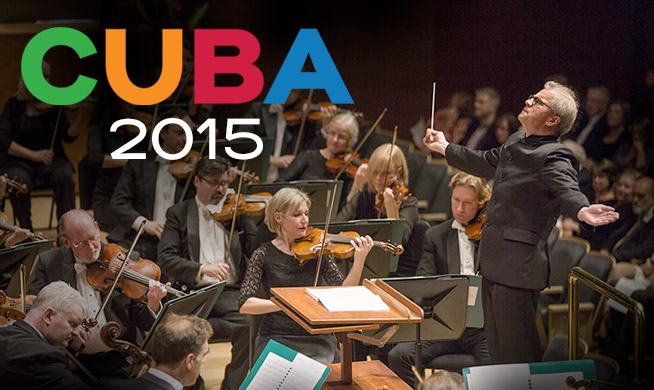
MN OrchestraAs discussed in a prior post, this February the Minnesota Orchestra announced that it would be playing two concerts in Havana, Cuba on May 15 and 16. At the invitation of the Cuban Ministry of Culture, Music Director Osmo Vänskä and the Orchestra will play Beethoven’s Choral Fantasy with the Cuban National Choir and Cuban pianist Frank Fernandez as well as Beethoven’s Symphony No. 3, Eroica. In addition, on the 15th they will play Beethoven’s “Egmont Overture,” and on the 16th Leonard Bernstein’s “Symphonic Dances” from West Side Story and Prokofiev’s “Romeo and Juliet.”

According to a recent article in Minnesota’s StarTribune newspaper, [1] this past January the Orchestra’s president, Kevin Smith, thought it would be great if the Orchestra could be the first U.S. ensemble to go to Cuba after the December 17th announcement of rapprochement between the U.S. and the island nation. Smith immediately called Minnesota’s U.S. Senator Amy Klobuchar and asked for help in pursing this idea. She, of course, said yes with this comment: “This trip is an example of the type of relationship we want to continue building between our people. Cubans are looking forward to more opportunities to interact with Americans.” [2]

Smith then asked the Orchestra’s musicians if they would give up a scheduled week of vacation in May in order to go to Cuba. They too said yes with enthusiasm. An Orchestra violinist, Aaron Janse, who was in a small advance group that went to Cuba in April, said, “We absolutely feel that we represent the state, the United States. We have a responsibility to be a bridge between the two countries. For us, as a community, to get this all together speaks volumes to where the Minnesota Orchestra is.”

Both concerts will be broadcast live by Minnesota Public Radio’s classical music stations (99.5 FM in the Twin Cities) on May 15 and 16 at 7:30 p.m. (CDT). Tune in.

The Orchestra also will visit a musical school and arts university and hold a joint rehearsal with a Cuban youth orchestra. The Minnesota Orchestra members will give small “Minnesota Orchestra” pins to people they meet. Presumably they will be wearing “Minnesota Twins” baseball caps as they travel around Havana. As former Minnesota Twins Cuban-American baseball player, Tony Oliva, has said, Cubans know about the Twins and their cap.

Accompanying the Orchestra on a chartered direct flight from the Twin Cities to Havana will be a group of board members and community supporters as “cultural ambassadors.” They will be led by board member, Marilyn Carlson Nelson, and her husband, Glen Nelson, who are paying for the trip. As a co-owner and former chairman of Carlson Companies, a global hotel company, Carlson Nelson is interested in business opportunities in Cuba for her company.

On a historical note, the Orchestra (then called the Minneapolis Symphony) in 1929 and 1930 performed in Havana, and one of its pieces on the first trip was Beethoven’s “Third Symphony,” which will be played again this weekend by the Orchestra. MPR News has a 1929 photograph of some of the Symphony members getting ready to board a ship in Havana after their first trip.

======================================================

[1] In addition to the StarTribune article, check out information about the trip on the Orchestra’s website and in a MPR News article.

[2] As discussed in prior posts, Senator Klobuchar is a strong advocate for U.S.-Cuba reconciliation. She is the author of the pending Senate bill to end the U.S. embargo of Cuba. She was a member of a U.S. Senate delegation that visited Cuba this February. She endorsed the formation of the U.S. Agricultural Coalition for Cuba that is being lead by Minnesota’s Cargill Incorporated.

Senate Hearing on Expanding U.S. Agricultural Trade with Cuba

On April 21st the U.S. Senate Committee on Agriculture, Nutrition and Forestry held a hearing, “Opportunities and Challenges for Agriculture Trade with Cuba.”[1]

 Chairman’s Opening Statement

Senator Pat Roberts
Senator Pat Roberts

The Committee Chair, U.S. Senator Pat Roberts (Rep., KS), opened the hearing by stating, “At the beginning of this Congress, I was hopeful that trade would be one area where we could work across the aisle to find agreement. I am still hopeful that is the case. . . . International trade of American agriculture products is critical…critical to the nation’s economy and critical to our Kansas farmers and ranchers. I have long fought to eliminate barriers to trade, and I believe that we should continue to work towards new market access opportunities for our agriculture products.”

“The United States and Cuba have a long history full of contention and instability. There is no shortage of opinion from members of Congress about the relationship between our two countries, both present and future. Some are concerned about human rights, others about socioeconomic ideology. But those concerns are not what this committee will focus on this morning. Today we are here to discuss the role of agriculture – opportunities and challenges – in Cuba.”

“This is not an issue that we are going to be able to fix overnight. It will take efforts in addition to bills in Congress to truly normalize trade with Cuba. The decisions that are made regarding increased trade with Cuba must be made carefully.”

“Four months ago the President announced a major shift in U.S. policy towards Cuba. It is my hope that in the future, the President will work with Congress to determine the best path forward. Foreign policy does not happen in a vacuum. We have to take a realistic approach and work out a step-by-step plan towards lifting the embargo. This is a goal that should include Congress.”

“Today we will hear from an impressive panel of experts, from the regulators responsible for writing our policies toward Cuba, to the producers who seek to grow the market for their products. I understand that, like myself, many of our witnesses here have traveled to Cuba to see first-hand what challenges and opportunities exist.”

“Agriculture has long been used as a tool – not a weapon – for peace and stability. It is my hope that Cuba will embrace the practices of free trade, enterprise and commerce, so that both countries will gain from increased relations.”

“Earlier this year, the U.S. Agriculture Coalition for Cuba was launched. They have shared a statement and additional information in support of our work today, [which was] entered into the record.”

Ranking Member’s Opening Statement

Senator Debbie Stabenow

Senator Debbie Stabenow (Dem., MI), the Ranking Committee Member, said, “Improving trade with Cuba represents not only a great opportunity for America’s farmers, ranchers, and manufacturers, but a meaningful way to help rebuild trust between our nations.  After more than 50 years of stalemate, it’s time for a new policy on Cuba.”

“When I visited Cuba earlier this year – just days after President eased some trade restrictions – I saw firsthand the eagerness of Cubans who want to develop a more effective relationship with the [U.S.] But we can only get there if we begin to take meaningful steps to soften many of the barriers that exist between us.”

“And America’s farmers and ranchers are uniquely positioned to lead the way. Consider this – in 2014, the U.S. exported just over $290 million in agricultural goods to Cuba. That’s a good start, but for a country only 90 miles off our coast, we can do much more. Cuba’s own import agency estimates that it will receive approximately $2.2 billion (in U.S. dollars) worth of food and agricultural products this year alone.”

“That type of economic potential deserves a chance to succeed – and is one reason why many of the largest producer groups, trade associations, and companies from within agriculture have come together to push for increased engagement.”

“Many on this Committee have pushed for increased engagement and have taken the opportunity to visit Cuba in recent months. I’d like to recognize Senators Leahy and Klobuchar, as well as Senator Boozman and Heitkamp, for their bipartisan leadership on this issue.”

“The commitment to democratic ideas and human rights we share as Americans are best realized through engagement. Our bedrock principles accompany every product farmers and ranchers send to Cuba.”

“Last week’s action by the President [in rescinding the designation of Cuba as a “state sponsor of terrorism”] is a step forward toward in normalizing our relationship and will test the commitment of the Cuban government to this process.”

“But even while we are making significant progress in rebuilding our relationship with Cuba – the policies governing trade between our countries are not yet designed to allow a steady flow of goods and services. We must find a path forward that allows U.S. financial institutions to safely and securely work with Cuban purchasers, including the extension of lines of credit. And we should work to authorize a greater range of goods, services, and supplies for export to Cuba. These measures not only make good business sense – they also will help build Cuba’s agricultural capacity and make the island a better trading partner in the long run.”

The Witnesses at the Hearing

 The witnesses at the hearing were the following: (1) The Honorable Michael T. Scuse, Under Secretary, Farm and Foreign Agriculture Services, U.S. Department of Agriculture; (2) Mr. Matthew Borman, Deputy Assistant Secretary, Bureau of Industry and Security, U.S. Department of Commerce; (3) Mr. John Smith, Acting Director, Office of Foreign Assets Control, U.S. Department of the Treasury; (4) Mr. Michael V. Beall, President & CEO, National Cooperative Business Association; (5) Mr. Terry Harris, Senior Vice President, Marketing and Risk Management, Riceland Foods; (6) Mr. Ralph Kaehler, Farmer and Owner, K-LER Cattle Company, St. Charles , MN; (7) Mr. Doug Keesling, Fifth Generation Owner, Keesling Farms, Kansas Wheat, Chase , KS; and (8) Dr. C. Parr Rosson III, Professor & Department Head, Department of Agriculture Economics, Texas A&M University.

 Witness Ralph Kaehler

Senator Amy Klobuchar

Minnesota’s Senator Amy Klobuchar, who is a member of the Committee and the author of the Freedom to Export to Cuba Act (S.491) ending the U.S. embargo of Cuba, introduced Ralph Kaehler, whose family has been operating a livestock, row crop, and canning vegetable farm in Minnesota for nearly 130 years.

The Senator prefaced her introduction with this statement: “For too long, export and travel restrictions have prevented American farmers and ranchers from seeking opportunities in Cuba. That is why I have introduced bipartisan legislation to lift the trade embargo on Cuba, and this hearing allowed us to focus on how we can ensure that our farmers and ranchers benefit from normalized relations between our two countries.”

Mr. Kaehler testified that his farm was “an exhibitor in the First U.S./Cuba Food and Agriculture Exposition [in Havana] in 2002.” It “was the only one with live animals— affectionately known as the ‘Cuban Ark’ . . . to exhibit the diversity of U.S. livestock producers, and to introduce Cuba to the typical USA farm family.”

“Since then, the Kaehler Family has led over 10 trade delegations to Cuba. These missions have included producers from seven different states and a bipartisan mix of state lawmakers and officials. To date, some of the most successful exports to Cuba we have facilitated include shipments of livestock, dried distillers grains, powdered milk, animal milk replacer, and texturized calf feed.”

“Given the opportunity, U.S. farmers do well in Cuba. We have a significant advantage of shorter shipping over Europe, South America, Asia, and other major exporters. In addition, Cuba can take advantage of U.S. rail container service and sizing options, which also brings significant benefits to smaller privately owned businesses like ours. On top of all this, the U.S. produces a wide variety of affordable and safe food products that Cubans want to eat.”

“Unfortunately, some of the policies currently in place diminish the natural advantages American agriculture enjoys over its competitors. For instance, requirements for using third country banks for financing adds a lot of paperwork, time, and personalities to every transaction. Coupled with a restrictive cash‐in advance shipping policy . . . there is a very small margin for error before a shipper faces demurrage fees. As a family operation trying to build our business through exports, this self‐inflicted inefficiency can be tough to manage.”

Mr. Kaehler then made three specific recommendations to Congress. “First, . . . improve the trade financing rules for Cuba. . . . Second, . . . small firms like ours . . . need marketing support and assistance [from USDA] to help support our companies and figure out exactly what’s going on in markets abroad. . . . [Third,] I hope that Congress will expand the universe of people involved in U.S.‐Cuba trade by allowing a greater variety of goods and services to be traded.”

=========================================================

[1] A quick examination of the official websites of the Committee’s 20 members reveals that seven have made statements favoring at least some aspects of U.S.-Cuba reconciliation (Boozman (Rep., AK), Brown (Dem., OH), Heitkamp (Dem., ND), Hoeven (Rep., ND), Klobuchar (Dem., MN), Leahy (Dem., VT) and Stabenow (Dem., MI)). Only two have negative statements about that reconciliation (Grassley (Rep., IA) and Perdue (Rep., GA)). The other eleven members‘ websites do not reveal any position on Cuba (Bennet (Dem., CO), Casey (Dem., PA), Cochran (Rep., MS), Donnelly (Dem., IN), Ernst (Rep., IA), Gillibrand (Dem., NY), McConnell (Rep., KY), Roberts (Rep., KS), Sasse (Rep., NE), Thune (Rep., SD) and Tillis (Rep., NC)). A more thorough examination of the records of the last 11 would probably uncover other indications of their positions on reconciliation with Cuba.


More U.S. Senators Visit Cuba

Over the U.S. Presidents’ Day holiday (February 14-17), Democratic U.S. Senators Amy Klobuchar (MN), Claire McCaskill (MO) and Mark Warner (VA) visited Cuba. They met with government and religious leaders and people on the street. [1]

Bruno Rodriíguez Parrilla
Josefina Vidal
Josefina Vidal

Cuba’s only newspaper, Granma, in its English-language edition, had a prominent article about the senators’ meeting with Bruno Rodríguez Parrilla, Cuba’s Minister of Foreign Affairs, [2] and Josefina Vidal, General Director of Cuba’s U.S. Division in the Ministry of Foreign Affairs and the official in charge of Cuba’s current negotiations with the U.S. Granma stated that the meeting “addressed relevant topics, such as the process of reestablishing diplomatic relations between both nations and the lifting of the economic blockade [embargo].”  Cuba’s official statement about the meeting emphasized that Senator Klobuchar had “presented a legislative bill to Congress which aims to eliminate blockade restrictions.”

Senators McCaskill, Klobuchar and Warner (Granma photo)

The English-language edition of Granma had a longer article featuring this color photograph of the three senators at their concluding press conference in Havana and a video of the conference. It reported that the senators had “expressed optimism in regards to the reestablishment of diplomatic relations between the two countries, and progress toward normalization.” One of the Cuban journalists asked if the senators thought they had visited a terrorist state, and the answer was “no.”

After identifying Senator Klobuchar as the author of a bill to end the embargo, the Cuban newspaper reported the she expressed “confidence that the visit would help to broaden the prevailing view of Cuba in Washington, which should strengthen the bipartisan effort to eliminate blockade restrictions on trade and maritime transport, among others.” She also noted “that changes will not be immediate, but emphasized the need to hold a discussion involving both major U.S. parties.”

According to Granma, Senator McCaskill said there are “no problems which could not be addressed, and expressed optimism in regards to the [current U.S.-Cuba] talks.” She also reported that “the delegation had visited the Port of Mariel and the adjacent Special Development Zone, emphasizing the possibilities opening up for U.S. imports to Cuba.” (A prior post discussed this deep-sea port development to accommodate larger container ships going through an enlarged Panama Cana while a 11/07/14 comment to that post mentioned difficulties Cuba was experiencing in attracting foreign investment in the project.)

Senator Warner, according to Granma, mentioned the need to eliminate U.S. restrictions that made it more difficult for Cubans to buy goods under exemptions from the embargo.

As the three senators prepared to leave Cuba, they learned that the second round of talks for the two countries would take place in Washington, D.C. on February 27th., and according to U.S. press coverage of the press conference, they so announced to the journalists. Senator Warner said, “We look with hope and expectations to the meetings next week in Washington between the Cuban government and the American State Department to make progress.” [3]

McCaskill added, according to the U.S. journalists, “Frankly I’m optimistic because the negotiators are two women and we know how to get things done.” Perhaps more importantly, she said, largely Republican agricultural interests in the Midwest supported lifting the embargo as “they really want to sell rice [and other agricultural products] down here. So it is the business community and agricultural community who I think might have the most influence on helping us make this effort more bipartisan.”

McCaskill said right-wing opposition to other bills has been overcome when House Speaker John Boehner had allowed the entire House to vote on them, contrary to the so called Hastert Rule or Practice that would not allow a bill to come to floor of the House for a vote unless it had the support of a majority of the Republican caucus. McCaskill hoped, “This could be one of those times, especially if the Chamber of Commerce and the commodities groups and the Farm Bureaus of the world really start putting political pressure on their own party.”

Afterwards Klobuchar told a Minnesota journalist that the Cuban people often mention the date “December 17th,” the day Presidents Obama and Castro announced their countries’ agreement to pursue reconciliation, and she saw people selling artwork using the newspaper’s front page of Obama’s decree. “We met with every-day people who had started businesses who are excited. There is a real interest in buying American products.” Indeed, with U.S. trade restrictions removed, she said, Minnesota could be selling more pork, poultry, corn and soybeans, farm machinery and perhaps renewable energy technology to Cuba that could easily double its current $20 million in annual agricultural exports to the island.

These conversations led Senator Klobuchar to conclude that Cubans have a couple of top priorities: normalizing currency and getting better access to high-speed Internet and cell phones. “Once they get Internet and once they get communications,” she asserted, “ I believe there will be improvements to everything else.”

News of Senator Klobuchar’s bill to end the embargo with her photograph had appeared on the front page of Granma, causing many Cuban people to recognize her as she walked down the street. She felt like a celebrity.

=================================================

[1] This post is based upon Press Release, Klobuchar in Cuba to Discuss Economic Opportunities for Minnesota (Feb. 17, 2015); Sherry, Sen. Klobuchar spends weekend in Cuba hearing out locals, StarTribune (Feb. 17, 2015);  Assoc. Press, Amy Klobuchar, in Cuba, sees opportunity for Minnesota, Pion. Press (Feb. 18, 2015); Ikowitz, Why Sen. Klobuchar felt like a celebrity on Cuba trip, Wash. Post (Feb. 17, 2015); Assoc. Press, Senator: Next round of US-Cuba Talks Next Week, N.Y. Times (Feb. 17, 2015);  Reuters, U.S., Cuba to Meet February 27; Senators See Path for End of Embargo, N.Y. Times (Feb. 17, 2015); Cuban minister receives U.S. senators, Granma (Feb. 17, 2015); Gomez, US senators expect better relations with Cuba, Granma (Feb. 17, 2015).

[2] Last October Foreign Minister Bruno Rodríguez Parrilla presented Cuba’s resolution condemning the U.S. embargo to the U.N. General Assembly, which approved it 188 to 2.  

[3] In a separate, very short article, Granma’s Spanish-language original reported the second round of talks would take place in Washington on February 27th. (Second round of cuba-US talks, Granma (Feb. 17, 2015)(English by Google Translate).)