Peripatetic People and Religious Faith

Westminster Presbyterian Church

On June 5, worshippers at Minneapolis’ Westminster Presbyterian Church heard a fascinating sermon on Bacalaureate Sunday to celebrate those members who had just been graduated from high school, college or graduate school. Rev. Timothy Hart-Andersen’s sermon–“Can Faith Guide Our Future?”–did just that and more. It spoke to all of us, no matter whether or when we had graduated from any of these institutions.[1]

1 Samuel 7: 3-16

The Scriptural text for the day was from the Hebrew Bible or Old Testament, 1 Samuel 7:3-16, which states (New Revised Standard Version):

  • “Then Samuel said to all the house of Israel, ‘If you are returning to the Lord with all your heart, then put away the foreign gods and the Astartes from among you. Direct your heart to the Lord, and serve him only, and he will deliver you out of the hand of the Philistines. So Israel put away the Baals and the Astartes, and they served the Lord ‘” (Emphasis added.)
  • “Then Samuel said, ‘Gather all Israel at Mizpah, and I will pray to the Lord for you.’ So they gathered at Mizpah, and drew water and poured it out before the Lord. They fasted that day, and said, ‘We have sinned against the Lord.’ And Samuel judged the people of Israel at Mizpah.”
  • “When the Philistines heard that the people of Israel had gathered at Mizpah, the lords of the Philistines went up against Israel. And when the people of Israel heard of it they were afraid of the Philistines.The people of Israel said to Samuel, ‘Do not cease to cry out to the Lord our God for us, and pray that he may save us from the hand of the Philistines.’ So Samuel took a sucking lamb and offered it as a whole burnt offering to the Lord; Samuel cried out to the Lord for Israel, and the Lord answered him. As Samuel was offering up the burnt offering, the Philistines drew near to attack Israel; but the Lord thundered with a mighty voice that day against the Philistines and threw them into confusion; and they were routed before Israel. And the men of Israel went out of Mizpah and pursued the Philistines, and struck them down as far as beyond Beth-car.”
  • Then Samuel took a stone and set it up between Mizpah and Jeshanah, and named it Ebenezer; for he said, ‘Thus far the Lord has helped us.’ So the Philistines were subdued and did not again enter the territory of Israel; the hand of the Lord was against the Philistines all the days of Samuel. The towns that the Philistines had taken from Israel were restored to Israel, from Ekron to Gath; and Israel recovered their territory from the hand of the Philistines. There was peace also between Israel and the Amorites.” (Emphasis added.)
  • “Samuel judged Israel all the days of his life.He went on a circuit year by year to Bethel, Gilgal, and Mizpah; and he judged Israel in all these places.”

The Sermon

The sermon opened with these words: “One of the most common ways Scripture speaks about the people of God is to talk about them as being on the move…The Exodus is a journey out of Egypt to a Land of Promise…The Exile to Babylon is a forced relocation from Jerusalem…Paul’s missionary journeys across the eastern Mediterranean keep the Apostle always traveling.”

“Even the life of Jesus is peripatetic as he roams the hills of Galilee. To be his follower is to be on the move, a pilgrim on the way.”

“Jews and Christians are not the only ones who have at the center of their religious narrative the idea of pilgrimage…Hindus go to the Ganges River. Muslims go on hajj to Mecca. People of faith in every tradition are on the move.”

Rev. Hart-Andersen then discussed the “recurring themes” of the past four annual pilgrimages he and his wife, Rev. Beth Hart-Andersen, have taken in Europe, each of which has been a “spiritually and physically and emotionally rich experience that invites reflection and brings balance.”

‘Some of the paths [on these pilgrimages] have been marked clearly; some were not marked at all and we spent a lot of time discerning the right direction to follow.”

This thought, Rev. Hart-Andersen said, undoubtedly was the case for the new graduates. Indeed, it also was the case for Tim’s “own pilgrimage after graduating from college. I had no particular direction. I meandered, seriously. In the space of about five years. I was a graduate student, a teacher (twice in two different states), a construction worker, a security guard, a custodian, and a civil servant. I graduated from college in 1974; I was ordained a minister in 1985, more than a decade later. Meander is a good word to describe the route I took, but along the way my faith kept quietly telling me (and, I hope assuring my parents!) that God would work through my life, and the way forward would be clear.”

“How do we find our way [on our own pilgrimages]?”

“It’s a matter of paying attention.” This was illustrated on his and Beth’s hike “on a lonely stretch of Welsh coastline [when] the path disappeared into overgrown ferns. They were so thick we couldn’t see where to go and we were on top of a steep cliff. But then we saw a sheep up ahead. It knew the path, and we followed. Sometimes help comes from the least expected places.”

“How do we know what direction to take as we move through life?”

This was often true, exhilarating, terrifying and chaotic for those just finishing school or college or graduate school. In such situations, “It helps to know we’re not the first to take the path. Many have walked it before us, getting there in different ways and heading toward different destinations. It’s good to watch for signs of them having passed by, to learn from them.”

As an illustration he cited a hike in “the wet, cloud-covered hills of the Lake District in England. No marked path and no other walkers to follow. Even the sheep were hard to see through the fog. A compass helped in a general way – we were heading east – but the footing was treacherous and we needed something more specific. We came to depend on rock cairns, stacks of rocks that would emerge from the mist and offer direction. We were never quite sure if a cairn marked our path, but we usually went that direction anyway, because it had been someone’s path.”

“There are many ways to get where we’re going. The rocks themselves in those cairns weren’t offering direction; it was the prior pilgrims who had marked the way. We found ourselves depending on people we would never meet, people who might have come that way decades or even centuries before, people like us, looking for direction. We assumed they had seen other rocks cairns left by earlier walkers. Often we would stop and add a stone in gratitude for what we had received.”

“That’s what Samuel and the people of Israel do when God brings them through a particularly rough patch in their journey. They’re facing huge odds against the Philistines preparing to attack them. The Israelites are outnumbered. Divided and confused. Losing focus on the one God and following other gods. Near panic. In disarray.”

“Like some of us on our journey as we try to figure out what to do with our lives, no matter our age.”

“Samuel tells them, over and over again: ‘Direct your heart to the Lord.’ By that he means, trust God to lead you through. Trust God not to abandon you. There are larger things at work than you can see. You are not alone. Trust that the way forward will be made clear.”

Direct your heart to the Lord. That’s good advice for anyone setting out on a journey, especially one where the direction isn’t clear. Don’t turn inward, counting only on yourself. Keep your eyes on God’s love and justice and pursue it with all you’ve got, trusting that God will be at work in it.”

“When God does help them through their predicament with the Philistines, Samuel marks their gratitude by raising a large rock. They call it an Ebenezer, from two Hebrew words eben haezer meaning “stone of help.” Every time they pass that stone of help it reminds them people had been that way before, and God had brought them through a time of trial.”

“’Here I raise my Ebenezer,’ we will sing in the final hymn this morning. ‘Hither by thy help I’m come. And I hope, by Thy good pleasure, safely to arrive at home.’ (Come Thou Fount of Every Blessing, vs. 2)”[2]

“A few weeks ago I spoke to a young woman who grew up in this church and graduated from college several years ago. After wandering a bit she has now found her passion and is pursuing it. She lives in another state. I mentioned I hoped she would still consider Westminster her community. ‘Are you kidding?’ she said. ‘This place is home for me. It keeps me grounded. I’ll always be part of Westminster.’”

“She went on to describe mission trips and global travel and youth group and choir and Cabaret – all things that make up the Westminster journey for our young people. It occurred to me that this congregation had become for her a kind of ecclesiastical Ebenezer, a living reminder that God is with her, that God will not abandon her, that she can trust God to see her through.”

“Westminster and its partner communities of faith can be Ebenezers for the entire city, reminders that God is present, that justice will triumph in the end, that love is more powerful than hatred or violence.”

“The signs wishing our Muslim neighbors a Blessed Ramadan are little cardboard Ebenezers, defying the human tendency to vilify those not like us, pointing in a direction of mutual respect and humility, reminding us of the full humanity of all our neighbors.”[3]

“If we are to be a community reflecting God’s intentions that will be the way forward: each one of us and all of us together, living Ebenezers, signs of God’s love.”

Can faith guide our future? The answer is yes, if we are ready to let it, if we direct our hearts to God, if we trust that God is at work in our lives, even when it’s not obvious.”

“We who follow Jesus are a people on the move. Our faith will help us find our way – if we can see the signs all around that God is present on the journey with us. Thanks be to God.”

Conclusion

As indicated in a prior post, I have wondered about the seemingly strange Biblical reference to the Ebenezer erected a long time ago by the Jewish people and concluded that Samuel publicly dedicated this stone “as a monument to God’s help, God’s faithfulness, God’s eternal covenant. And as the people got on with their lives, the stone stood there, visible to all who passed that way, a reminder of judgment and repentance, mercy and restoration.” Thus, I said, “‘Here I raise my Ebenezer; hither by thy help I’m come’ is a metaphorical way of saying that I recognize that God has helped me reach this point in my life and that it is important for me to create an outward expression of this recognition and gratitude.”

The June 5 sermon added to my understanding by stressing everyone’s need for help from those who have gone before and the importance of outward signs of those previous pilgrims and of the interconnectedness of the generations of believers.

The sermon’s emphasis on journeys also says to me that no one is defined by where they are from or where they are currently living. We all are children of God no matter where we live. And we need to live like God’s children wherever we happen to be.

===================================================

[1] The bulletin for the service is online as is the text of the sermon.

[2] A prior post discusses the hymn, “Come, Thou Fount of Every Blessing.”

[3] Westminster is participating in a project of the Minnesota Council of Churches to post signs at churches and homes announcing “To Our Muslim Neighbors: Blessed Ramadan.” These signs, said Rev. Peg Chemberlin, the Council’s executive director, are reminders that “Minnesota is respectful of religious differences.” Asad Zaman, executive director of the Muslim American Society of Minnesota, said, “If I see a sign, it tells me that the person believes this country belongs to everyone, that no one should be excluded. There is a vast reservoir of good will among people. The Blessed Ramadan signs allow that to be expressed.” (Minn. Council of Churches, To Our Muslim Neighbors: Blessed Ramadan; Hopfensperger, Minnesota council offers ways to support Muslim neighbors in Ramadan, StarTribune (June 8, 2016).)

Interfaith Worship Service at Minneapolis’ Westminster Presbyterian Church

On Thanksgiving Day, November 26, a moving Interfaith Worship Service at Minneapolis’ Westminster Presbyterian Church was organized and conducted by clergy from the Downtown Congregations of Minneapolis.[1]

This service was the perfect incarnation of a message given that same day by Pope Francis at a meeting of religious leaders in Nairobi Kenya. The Pope said there was a profound “need for interreligious understanding, friendship and collaboration in defending the God-given dignity of individuals and peoples, and their right to live in freedom and happiness”. Indeed, said the Pope, “ecumenical and interreligious dialogue is not a luxury . . . [or] something extra or optional, but essential, something which our world, wounded by conflict and division, increasingly needs.”[2]

Calls to Prayer

There were three Calls to Prayer at the Minneapolis service. Cantor Barry Abelson of Temple Israel sang one in Hebrew. The Westminster Choir in English sang “God Be in My Head” by Gwyneth Walker.[3] Muezzin Elijah Muhammad of Masjid An-Nur (Mosque of the Light) sang his Call to Prayer in Arabic.

Voices Around the Table

The participants in the service then gathered around a common table in the front of the Sanctuary for the reading of passages of sacred and other texts from their different faiths. In addition to those mentioned below the participants were Rev. Dr. Timothy Hart-Andersen, Westminster’s Senior Pastor; Rev. Phil Boelter, Vicar of Gethsemane Episcopal Church; and Rev. Judy Zabel, Lead Pastor of Hennepin Avenue United Methodist Church.

Rev. Dr. Carla Bailey, the Senior Minister at Plymouth Congregational Church, read these excerpts from “A Litany of Thanksgiving” by Howard Thurman, an influential African-American theologian, educator and civil rights leader (1899-1981):

  • “Today, I make my Sacrament of Thanksgiving.”
  • “I begin with the simple things of my days:
    Fresh air to breathe,
    Cool water to drink,
    The taste of food,
    The protection of houses and clothes,
    The comforts of home.”
  • “I finger one by one the messages of hope that awaited me at the crossroads:
    The smile of approval from those who held in their hands the reins of my security;
    The tightening of the grip in a single handshake when I feared the step before me in the darkness;
    The whisper in my heart when the temptation was fiercest and the claims of appetite were not to be denied;
    The crucial word said, the simple sentence from an open page when my decision hung in the balance.”
  • “I pass before me the mainsprings of my heritage:
    The fruits of the labors of countless generations who lived before me, without whom my own life would have no meaning;
    The seers who saw visions and dreamed dreams;
    The prophets who sensed a truth greater than the mind could grasp and whose words could only find fulfillment in the years which they would never see;
    The workers whose sweat watered the trees, the leaves of which are for the healing of the nations;”
  • “I linger over the meaning of my own life and the commitment to which I give the loyalty of my heart and mind:
    The little purposes in which I have shared with my loves, my desires, my gifts;
    The restlessness which bottoms all I do with its stark insistence that I have never done my best, I have never dared to reach for the highest;
    The big hope that never quite deserts me, that I and my kind will study war no more, that love and tenderness and all the inner graces of Almighty affection will cover the life of the children of God as the waters cover the sea.”
  • All these and more than mind can think and heart can feel,
    I make as my sacrament of Thanksgiving to Thee,
    O God, in humbleness of mind and simplicity of heart.”

Hamdy Dr. El Sawaf, the Senior Iman of the Islamic Community Center of Minnesota and the Masjid Al-Iman (Mosque of Faith), read the following passages from the Holy Qur’an in Arabic with the following English translations by Maulana Muhammud Ali:

  • “Blessed is He Who made the stars in the heavens and made therein a sun and a moon giving light!” (25:61)
  • “And He it is, Who made the night and the day to follow each other, for him who desires to be mindful or desires to be thankful.” (25:62)
  • “And We have enjoined on man concerning his parents — his mother bears him with faintings upon faintings and his weaning takes two years — saying: Give thanks to Me and to thy parents. To Me is the eventual coming.” (31:14)
  • “So he smiled, wondering at her word, and said: My Lord, grant me that I may be grateful for Thy favour which Thou hast bestowed on me and on my parents, and that I may do good such as Thou art pleased with, and admit me, by Thy mercy, among Thy righteous servants.” (27:19)
  • “And He it is Who made for you the ears and the eyes and the hearts. Little it is that you give thanks!” (23:78)
  • “And certainly We established you in the earth and made therein means of livelihood for you; little it is that you give thanks!” (7:10)
  • “O people, keep your duty to your Lord and dread the day when no father can avail his son in aught, nor the child will avail his father. Surely the promise of Allah is true, so let not this world’s life deceive you, nor let the arch-deceiver deceive you about Allah.” (31:33)
  • “Surely Allah is He with Whom is the knowledge of the Hour, and He sends down the rain, and He knows what is in the wombs. And no one knows what he will earn on the morrow. And no one knows in what land he will die. Surely Allah is Knowing, Aware.” (31:34)
  • “Even as We have sent among you a Messenger from among you, who recites to you Our messages and purifies you and teaches you the Book and the Wisdom and teaches you that which you did not know.” (2:151)
  • “Therefore glorify Me, I will make you eminent, and give thanks to Me and be not ungrateful to Me.” (2:152)

Senior Rabbi Marcia Zimmerman of Temple Israel read Leviticus 19: 9-18 in Hebrew from the Hebrew Bible with the following English translation:

  • “When you reap the harvest of your land, you shall not reap to the very edges of your field, or gather the gleanings of your harvest.You shall not strip your vineyard bare, or gather the fallen grapes of your vineyard; you shall leave them for the poor and the alien: I am the Lord your God.”
  • You shall not steal; you shall not deal falsely; and you shall not lie to one another. And you shall not swear falsely by my name, profaning the name of your God: I am the Lord.You shall not defraud your neighbor; you shall not steal; and you shall not keep for yourself the wages of a laborer until morning.”
  • “You shall not revile the deaf or put a stumbling block before the blind; you shall fear your God: I am the Lord.”
  • “You shall not render an unjust judgment; you shall not be partial to the poor or defer to the great: with justice you shall judge your neighbor.You shall not go around as a slanderer[a] among your people, and you shall not profit by the blood[b] of your neighbor: I am the Lord.”
  • You shall not hate in your heart anyone of your kin; you shall reprove your neighbor, or you will incur guilt yourself.You shall not take vengeance or bear a grudge against any of your people, but you shall love your neighbor as yourself: I am the Lord.”

Rev. Laurie Feillle, Senior Pastor of First Christian Church (Disciples of Christ) read this passage from the Christian Gospel (Matthew 6:25-33) in English:

  • “Therefore I tell you, do not worry about your life, what you will eat or what you will drink, or about your body, what you will wear. Is not life more than food, and the body more than clothing? Look at the birds of the air; they neither sow nor reap nor gather into barns, and yet your heavenly Father feeds them. Are you not of more value than they? And can any of you by worrying add a single hour to your span of life?  And why do you worry about clothing? Consider the lilies of the field, how they grow; they neither toil nor spin, yet I tell you, even Solomon in all his glory was not clothed like one of these. But if God so clothes the grass of the field, which is alive today and tomorrow is thrown into the oven, will he not much more clothe you—you of little faith? Therefore do not worry, saying, ‘What will we eat?’ or ‘What will we drink?’ or ‘What will we wear?’ For it is the Gentiles who strive for all these things; and indeed your heavenly Father knows that you need all these things.  But strive first for the kingdom of God and his righteousness, and all these things will be given to you as well.”

Sermon

The Sermon, “Gratitude for Dreams,” was delivered by Rev. Peter Nycklemoe, Senior Pastor of Central Lutheran Church. Here is a summary of his message.

The above passage from Matthew stresses personal piety, almsgiving, prayers and calls for forgiveness. The text also tells us not to worry. But often being told not to worry just makes the situation worse. Matthew, however, points the way forward: “strive first for the kingdom of God.”

A helpful understanding of the kingdom of God comes from Frederick Buechner, a Presbyterian pastor and author, who said:

  • “If we only had eyes to see and ears to hear and wits to understand, we would know that the Kingdom of God in the sense of holiness, goodness, beauty is as close as breathing and is crying out to born both within ourselves and within the world; we would know that the Kingdom of God is what we all of us hunger for above all other things even when we don’t know its name or realize that it’s what we’re starving to death for. The Kingdom of God is where our best dreams come from and our truest prayers. We glimpse it at those moments when we find ourselves being better than we are and wiser than we know. We catch sight of it when at some moment of crisis a strength seems to come to us that is greater than our own strength. The Kingdom of God is where we belong. It is home, and whether we realize it or not, I think we are all of us homesick for it.” [4]

We all are homesick for hope in this world, and the gathering at this common table of representatives of three great religious traditions is a sign of that hope.

The words of Leviticus that were just read by Rabbi Zimmerman also are important: “When you reap the harvest of your land, you shall not reap to the very edges of your field, or gather the gleanings of your harvest. You shall not strip your vineyard bare, or gather the fallen grapes of your vineyard; you shall leave them for the poor and the alien.”

These words from the Hebrew Bible reminded Rev. Nycklemoe of a celebration organized by one of his congregants in the State of Washington, Olaf Hanson, who owned an apple and potato farm. After harvesting what he needed, Olaf hosted a Gleaning Day for his guests to gather the gleanings of the fruit and vegetables and put them in paper bags for the poor and needy.

We too need to share our longings, our lostness, our need for love and the gifts of one another.

Responding in Gratitude

The solicitation of offerings to support the work of the Downtown Congregations to End Homelessness was provided by The Very Rev. Paul Lebens-Englund, the Dean of St. Mark’s Episcopal Cathedral.

Presidential Thanksgiving Proclamations

President Abraham Lincoln’s 1863 Proclamation Establishing Thanksgiving Day was read by Fr John Bauer, Rector of The Basilica of Saint Mary, Here are its words:

  • “The year that is drawing towards its close, has been filled with the blessings of fruitful fields and healthful skies. To these bounties, which are so constantly enjoyed that we are prone to forget the source from which they come, others have been added, which are of so extraordinary a nature, that they cannot fail to penetrate and soften even the heart which is habitually insensible to the ever watchful providence of Almighty God. In the midst of a civil war of unequalled magnitude and severity, which has sometimes seemed to foreign States to invite and to provoke their aggression, peace has been preserved with all nations, order has been maintained, the laws have been respected and obeyed, and harmony has prevailed everywhere except in the theatre of military conflict; while that theatre has been greatly contracted by the advancing armies and navies of the Union.”
  • “Needful diversions of wealth and of strength from the fields of peaceful industry to the national defence, have not arrested the plough, the shuttle or the ship; the axe has enlarged the borders of our settlements, and the mines, as well of iron and coal as of the precious metals, have yielded even more abundantly than heretofore. Population has steadily increased, notwithstanding the waste that has been made in the camp, the siege and the battle-field; and the country, rejoicing in the consciousness of augmented strength and vigor, is permitted to expect continuance of years with large increase of freedom.”
  • “No human counsel hath devised nor hath any mortal hand worked out these great things. They are the gracious gifts of the Most High God, who, while dealing with us in anger for our sins, hath nevertheless remembered mercy.”
  • “It has seemed to me fit and proper that they should be solemnly, reverently and gratefully acknowledged as with one heart and one voice by the whole American People. I do therefore invite my fellow citizens in every part of the United States, and also those who are at sea and those who are sojourning in foreign lands, to set apart and observe the last Thursday of November next, as a day of Thanksgiving and Praise to our beneficent Father who dwelleth in the Heavens.”
  • “And I recommend to them that while offering up the ascriptions justly due to Him for such singular deliverances and blessings, they do also, with humble penitence for our national perverseness and disobedience, commend to His tender care all those who have become widows, orphans, mourners or sufferers in the lamentable civil strife in which we are unavoidably engaged, and fervently implore the interposition of the Almighty Hand to heal the wounds of the nation and to restore it as soon as may be consistent with the Divine purposes to the full enjoyment of peace, harmony, tranquillity and Union.”

President Barack Obama’s 2015 Presidential Proclamation was read by Minnesota Governor Mark Dayton, a member of Westminster Presbyterian Church:

  • “Rooted in a story of generosity and partnership, Thanksgiving offers an opportunity for us to express our gratitude for the gifts we have and to show our appreciation for all we hold dear.  Today, as we give of ourselves in service to others and spend cherished time with family and friends, we give thanks for the many blessings bestowed upon us.  We also honor the men and women in uniform who fight to safeguard our country and our freedoms so we can share occasions like this with loved ones, and we thank our selfless military families who stand beside and support them each and every day.”
  • “Our modern celebration of Thanksgiving can be traced back to the early 17th century.  Upon arriving in Plymouth, at the culmination of months of testing travel that resulted in death and disease, the Pilgrims continued to face great challenges.  An indigenous people, the Wampanoag, helped them adjust to their new home, teaching them critical survival techniques and important crop cultivation methods.  After securing a bountiful harvest, the settlers and Wampanoag joined in fellowship for a shared dinner to celebrate powerful traditions that are still observed at Thanksgiving today:  lifting one another up, enjoying time with those around us, and appreciating all that we have.”
  • “Carrying us through trial and triumph, this sense of decency and compassion has defined our Nation.  President George Washington proclaimed the first Thanksgiving in our country’s nascence, calling on the citizens of our fledgling democracy to place their faith in “the providence of Almighty God,” and to be thankful for what is bequeathed to us.  In the midst of bitter division at a critical juncture for America, President Abraham Lincoln acknowledged the plight of the most vulnerable, declaring a “day of thanksgiving,” on which all citizens would “commend to [God’s] tender care” those most affected by the violence of the time — widows, orphans, mourners, and sufferers of the Civil War.  A tradition of giving continues to inspire this holiday, and at shelters and food centers, on battlefields and city streets, and through generous donations and silent prayers, the inherent selflessness and common goodness of the American people endures.”
  • “In the same spirit of togetherness and thanksgiving that inspired the Pilgrims and the Wampanoag, we pay tribute to people of every background and belief who contribute in their own unique ways to our country’s story.  Each of us brings our own traditions, cultures, and recipes to this quintessential American holiday — whether around dinner tables, in soup kitchens, or at home cheering on our favorite sports teams — but we are all united in appreciation of the bounty of our Nation.  Let us express our gratitude by welcoming others to our celebrations and recognize those who volunteer today to ensure a dinner is possible for those who might have gone without.  Together, we can secure our founding ideals as the birthright of all future generations of Americans.”

Music

Interspersed throughout the Service were pieces of wonderful music.

The Preludes–“America the Beautiful” (Calvin Hampton for organ), “Variations on Simple Gifts” (Michael Burkhardt) and “The Promise of Living” (Aaron Copland)–were provided by Westminster’s Minister of Music & the Arts/Organist, Melanie Ohnstad, and the Westminster Choir directed by Dr. Jere Lantz.

Jon Romer on a Native American flute played two Ojibwe pieces—“Song of Welcome” and “A Song of Love.”

The choir and assembled people sang the following hymns: “O God, Show Mercy to Us;” “This Is My Song;” “ We Praise You, O God;” “Now Thank We All Our God;” and “O Beautiful for Spacious Skies.”

Conclusion

This was a powerful and meaningful worship service, especially in these days of too frequent expressions of hostility towards Muslims and Syrian refugees. This service was exactly what Pope Francis called for in his previously mentioned remarks in Kenya and on November 30 at the Grand Mosque of Koudoukou in the Central African Republic:[5]

  • “Christians and Muslims are brothers and sisters.  We must therefore consider ourselves and conduct ourselves as such. . . . Those who claim to believe in God must also be men and women of peace.  Christians, Muslims and members of the traditional religions have lived together in peace for many years.  They ought, therefore, to remain united in working for an end to every act which, from whatever side, disfigures the Face of God and whose ultimate aim is to defend particular interests by any and all means, to the detriment of the common good.  Together, we must say no to hatred, no to revenge and no to violence, particularly that violence which is perpetrated in the name of a religion or of God himself.  God is peace, God salam.”

==================================================

[1] The bulletin for the service is available online,  So too is a video of the service.

[2] The Pope held the meeting at the city’s Apostolic Nunciature (diplomatic mission of the Holy See) with leaders of different Christian confessions (Anglican, Evangelical, Methodist, Pentecostal and others) and of other religions (Animist, Muslim). Holy See, Ecumenical and Interreligious Meeting: Address of His Holiness Pope Francis (Nov. 26, 2015); Interreligious meeting in Nairobi: service to the common good. News.Va (Nov. 26, 2015).

[3] A prior post discussed this anthem, its composer and its derivation from the Sarum Primer of 1514.

[4] Other references to Buechner are contained in previous posts: Honorary Degree (Aug. 14, 2011); My General Thoughts on Vocation (Feb. 6, 2014).

[5] Pope Francis visits Grand Mosque of Koudoukou in Bangui, News.Va (Nov. 30, 2015)

Cuba’ Prepares for Pope Francis Visit with Conflicting Actions Regarding Prisoners

Pope Francis
Pope Francis

The Cuban government has made plans to celebrate Pope Francis’ visit to Cuba, September 19-22.[1] The government also has taken conflicting actions regarding prisoners. On September 11 the Cuban government announced that it would release 3,522 prisoners.[2] Two days later, on September 13, it detained about 50 predominantly Roman Catholic citizens whom the government regards as dissidents.[3]

Cuba’s Plans To Celebrate the Pope’s Visit

In anticipation of the visit, Granma, the Communist Party’s official newspaper, published a lengthy and extraordinary article about the role of religion in Cuba. It started with the recognition that the visit will be “in the year of the 80th anniversary of the establishment of diplomatic relations between Cuba and the Holy See, and the 100th anniversary of the request by the veterans of the Cuban War of Independence for Our Lady of Charity to be declared Patron Saint of Cuba,”

“As Cubans we are conscious, whether religious or not, of the fact that the Pope will be welcomed by a combative, noble and united people, accustomed to rising above difficulties and walking tall, despite having been subjected to a brutal economic, commercial and financial blockade for over five decades, and having confronted the limitations resulting from this without neglecting to defend our culture, identity and roots, while safeguarding the education of our children.”

The Pope “will find a country that learns every day how to move forward with a progressive and constantly updated social project; a society that is built on the basis of the struggle for a better world; and whose history includes [sympathetic priests] . . . the synthesis of Cuban ethics, and for whom love of their homeland and of God were two consubstantial passions.”

The Pope also “will find a nation of cultural and religious multiplicity, the product of a process of transculturation, . . . essential to an understanding of the history of the nation and of Latin America. A mix of beliefs and manifestations marks the country’s religious makeup, described by the researcher as complex, heterogeneous and contradictory, due to its origins, ideas and representations and ways of organizing and expressing itself through rituals, etc.”

This diversity has “ the Catholic, Evangelical, Protestant and Orthodox churches coexist[ing with] Judaism, spiritualism, Afro-Cuban religions, Islam and Buddhism.” This diversity is protected by Article 8 of the Cuban Constitution, which states:

  • “The State recognizes, respects, and guarantees religious freedom. In the Republic of Cuba, religious institutions are separate from the State. The different creeds and religions enjoy equal consideration.”

Article 55 of the Constitution also states: “The State, which recognizes, respects and guarantees freedom of conscience and religion, simultaneously recognizes, respects, and guarantees the freedom of every citizen to change religious creeds, or not to have any; and to profess the religious worship of their choice, with respect for the law. The law regulates the State’s relations with religious institutions.”

These principles have also been reflected in the thoughts and actions of . . . Comandante en Jefe Fidel Castro Ruz. [He] met with Chilean priests in 1971 and expressed the need to “unite Christians and revolutionaries” in the struggle for freedom. Later, when visiting Jamaica in 1977, this time addressing a predominantly Protestant audience, he returned to the theme of the “strategic alliance” that should exist between religion and socialism.”

“Years later, as evidence of the maturity of the Cuban revolutionary process and in line with the wishes of both parties, meetings between the Comandante and evangelical and protestant leaders in Cuba began to take place – a tradition maintained today by the highest authorities of the government – until, in 1991, at the Fourth [Communist] Party Congress, the wish of those believers eager to join the ranks of the organization was crystallized, an intention reiterated in January 2012 at the First National Conference of the [Communist] Party.”

“There are currently three Protestant pastors, a Presbyterian, a Baptist and an Episcopalian in the Cuban parliament, elected by popular vote; and in the same way members of the Catholic Church and other denominations and religious manifestations form part of the organs of state power and political and mass organizations.”

“The activities undertaken by religious institutions in cooperating with the state in the management of hospitals and nursing homes are examples of their connection with the most pressing problems of society, particularly related to the family and the aging population. These issues have featured on the agenda of recent meetings held between representatives of the institutions and fraternal associations, and the country’s leadership.”

“The visits of Popes John Paul II in 1998 and Benedict XVI in 2012, reflected the similarities between the Cuban social project and Christian sentiments, in the effort to eliminate poverty and exclusion, in praising the role of the family, in defense of peace and against war, and in the preservation of the human species. In addition, they demonstrated the deeply humanistic culture of an entire people.”

Benedict XVI said in his farewell address in Cuba: “I hold deep in my heart all the Cuban people, each and every one. You have surrounded me with prayer and affection, offered me cordial hospitality and shared with me your profound and rightful aspirations.”

John Paul II expressed, “I am grateful to you for your cordial hospitality, an authentic expression of the Cuban soul, and above all for being able to share with you intense moments of prayer and reflection.”

“Other religious figures, including leaders of the Latin American Council of Churches, the Latin American Episcopal Council and the Caribbean Conference of Churches, general secretaries and presidents of the National Council of Churches of Christ in the USA, cardinals and other prelates of the Holy See, pastors, priests, rabbis, Yoruba leaders, Muslims, Buddhists and scholars, have also visited our country.”

“In 2011, the Cuban Interfaith Platform, which includes representatives of all religious manifestations, was created. Undoubtedly, of special significance was its struggle for the return of the Cuban Five imprisoned in the United States, and in establishing a bridge between them and their families. The Council of Churches of Cuba was also a leading protagonist in the return home of Elián González and in confronting the blockade, another of the battles of our people for justice.

“Pope Francis will encounter these and other realities . . . [in Cuba. We] will welcome him on behalf of all Cuba. Among the gathered there may be those who don’t share the same religious beliefs, even those who are there motivated simply by that feeling of warmth and hospitality so inherent to Cubans.

But we are sure that [the Pope] will leave this land taking with him the imprint of intense days shared with a united and respectful people, true to its ancestors and patriotic sentiment; a nation with a deep commitment to justice and freedom.”

The Release of Prisoners

On September 11 the government announced that it would release 3,522 prisoners, including women, inmates younger than 20 with no prior offenses, those older than 60, prisoners with illnesses, some foreigners whose countries have agreed to repatriate them and others whose terms are coming to an end. Excluded from the release will be those charged with serious crimes like murder or child sexual abuse or crimes against national security.

“It’s a gift to Pope Francis— a grand gesture,” said Elizardo Sánchez, president of the Cuban Commission for Human Rights and National Reconciliation, a group that tracks rights in Cuba.

Sebastián A. Arcos, a former political prisoner in Cuba and now the associate director of the Cuban Research Institute at Florida International University in Miami, said the mass release on the cusp of the Pope’s visit was a cynical and opportunistic effort to demonstrate a more tolerant government. “It’s makeup,” he said.

Mr. Arcos added that Cuba was able to make such a mass release largely because so many people were jailed for doing things that would not be illegal in any other country. “The reality is that Cuban prisons are overpopulated, and they have been for many years, because we are talking about a police state, a repressive police state, where almost anything is a crime,” he said. “Before these economic reforms were implemented, selling peanuts on the corner in Havana was a crime.”\

The Detention of Dissidents

 On Sunday, September 13, Cuban police detained about 50 people when a predominantly Roman Catholic dissident group led a march in Havana. In their weekly rally following mass at Havana’s Santa Rita Catholic Church, about 40 of the women, accompanied by about a dozen male supporters, marched outside their authorized route and down a side street where they were set upon by some 200 government supporters and police. Female police pushed, pulled and carried the women onto buses as some sat down in an attempt to resist. The men were handcuffed and shoved into police cars and vans.

Such detentions have become common following regular Sunday marches by the Ladies in White, a group that has criticized the Roman Catholic Church and Cuban Cardinal Jaime Ortega for failing to advocate on its behalf with the Cuban government.

Ladies in White leader Berta Soler told Reuters the women planned to attend masses that Pope Francis will lead in Havana and Holguin while in Cuba. “I would discuss with the pope the need to stop police violence against those who exercise their freedom to demonstrate in public,” Soler said.

Cuba’s government considers the dissidents to be provocateurs who are financed by anti-communist groups in the U.S. as part of an effort to destabilize the government in Havana.

Among those detained for about an hour on Sunday was Jose Daniel Ferrer, head of the Patriotic Union of Cuba, the country’s largest dissident organization. “The Church should be concerned about this or any time human rights are involved,” Ferrer said. “It is their duty.”

Conclusion

Francis’ visit to Cuba and then to the U.S. and what he has to say to the people and leaders of the two countries will be interesting and most challenging in light of his having played a significant role in helping the two countries to reach their historic decision last December to pursue normalization of relations. These future remarks undoubtedly were previewed in his recent critique of capitalism in an encyclical about environmental degradation and climate change. This theme also was prominent in remarks in his recent trips to Ecuador, Bolivia and Paraguay. He called the “unfettered pursuit of money” the “dung of the devil” and urged the poor and disenfranchised to rise up against “new colonialism,” including corporations, loan agencies, free trade treaties, austerity measures, and “the monopolizing of the communications media.”

On the other hand, as Nick Miroff in a Washington Post article pointed out, In a 1998 book about Pope John Paul II’s trip to Cuba, Francis, then still a high official of the church in Argentina, said that “socialism was an ‘anthropological misreading’ of human nature that fails to address man’s spiritual needs, mistakenly believing that the state is the solution to all of society’s problems. He also said, “Cuba and other nations need to transform some of their institutions and especially their policies, substituting corrupt, dictatorial and authoritarian governments for democratic and participatory ones. The free participation of citizens in public life, the guarantee of civil and human rights, are an imperative condition for the full human development of all people.”

============================================

[1] Guerrero, Cuba ready to welcome Pope Francis, Granma (Sept. 10, 2015)

[2] Ahmed & Robles, Cuba to Release 3,522 Prisoners Before Pope Francis’ Visit, N.Y. Times (Sept. 11, 2015); Miroff, Cuba pardons more than 3,500 prisoners ahead of Pope Francis visit, Wash. Post (Sept. 11, 2015); Council of State agrees to pardon 3,522 prisoners, Granma (Sept. 11, 2015).

[3] Reuters, Cuba Detains Dissidents Ahead of Pope Francis Visit, N.Y. Times (Sept. 13, 2015).

Other Voices on Cuban Religious Freedom

A previous post reviewed the recent U.S. State Department report on Cuban religious freedom while another post critiqued the views on that subject from the U.S. Commission on International Religious Freedom.

The following are comments prompted by three recent articles in Granma, Cuba’s newspaper, about religion in Cuba that are consistent with my experiences on the island and my conclusion that Cuba enjoys significant religious freedom and does not deserve to be criticized on this subject by the U.S.

The first article collects observations on that subject from Cuban religious leaders; the second reviews the recent meeting in Cuba of the Latin American Council of Churches; and the third reports on a visit to Cuba by the President of the World Communion of Reformed Churches.

Religious Freedom in Cuba

The first article from May 9th asserts that “many specialists have noted the increase of religious expression in Cuban public life. The adoption into the Constitution of the secular nature of the state in 1992 facilitated religious freedoms, and two Popes and other eminent foreign religious leaders have since visited the country.” The article supported this assertion with interviews of several Cuban religious leaders.

David Prinstein
David Prinstein

No  Anti-Semitism. At the Beth Shalom Temple in Havana’s El Vedado district, which I have visited, David Prinstein, vice president of the Jewish Community, confirmed that Cuba’s Jews were never persecuted. He said, “In the early days of the Revolution there was a distancing between different religions and the state; if you occupied a leadership position [in the state] you could not be religious, but there was no persecution.” His parents, he explained, were not “practicing Jews but my grandparents, who came to Cuba from Poland, fleeing the Nazis, always went to the synagogue.”

Currently, the Cuban Jewish Community has approximately 1,500 members. There are five synagogues in Cuba, three in Havana, one in Santiago de Cuba and another in Camagüey.”Although it is a small community in terms of numbers, it is strong in terms of what it does and the number of projects and programs in existence,” Prinstein confirms.

One challenge for Cuban Jews is adhering to dietary practices, given that they cannot eat pork, shellfish, scale-less fish, or web-footed poultry. They are assisted in respecting these regulations with allowances made for the only private butcher’s store in the country. “It was established in 1906, and was respected after the triumph of the Revolution,” notes Prinstein.

He also described relations between his community and the Cuban government as excellent. “Even before the [new] Cuban Migration and Travel Law . . ., we were always able to travel to international events to which we had been invited in Latin America, Israel and the [U.S.].”

Armando Rosindo
Armando Rosindo

A New church in Cuba. The Moravian Church began to function in Cuba at the end of the 1990’s. “We started out as a small group meeting together in a house, until we joined the Cuban Council of Churches in 2003 as fraternal associates,” said Armando Rusindo, one of its leaders, and in January 2013 it was registered with the government as an independent entity.

Now Rusindo believes there is “an awakening of faith among Cubans; something that can be noted by the number of people going to church.” Nevertheless, the churches need  “to constantly demonstrate what religion can contribute to a nation, by our example, conduct, dedication, and service, derived from our beliefs.”

Pedro Lazo
Pedro Lazo

Cuban Islamic League. There have always been Muslims in Cuba, but for 500 years of history, there was no Muslim religious institution on the island, states Pedro Lazo, president of the Cuban Islamic League, which was officially established in 2007, although there were group meetings prior to that year. “We have been practicing since the 1990’s and we have never had a problem,” he affirmed.

The Islamic League enjoys good relations with all other religions. “Our statutes establish that these relations must be excellent, like those we must have with our neighbors, based on respect, fraternity and cooperation in all contexts.” Moreover, “Government authorities are in favor of people’s total and complete religious freedoms, as confirmed both in the Constitution and in its actions.”

The Martin Luther King Memorial Center. The Center, which I have visited, is a Christian-inspired ecumenical institution that was established in Havana in 1987.

Kirenia Criado Perez

Kirenia Criado Pérez, the director of the Center’s Reflection and Socio-Theological Training Program, believes that it “has helped break down a polarity that still exists in the minds of some people, that Cuban society is one thing and the Church another.” In her opinion, the Center’s social influence does not just come from Biblical, theological and pastoral training, but also from educational projects guided by the ideas of the Brazilian educator, Paulo Freire.

The Center also works in the area of solidarity, linked to Latin American movements, and is responsible for the Caminos publishing house. Moreover, it has been involved in building homes near the Center and elsewhere, especially after the destruction of Hurricane Sandy in October 2012.

Criado believes that, along with other institutions, the Memorial Center has helped people understand that “the Church is another social actor and as such, is responsible for the transformation of reality.” This is especially important as Cuba is going through many changes. “Everyone is thinking about how to change the country, but not everyone wants to move in the same direction. The same thing is happening in the case of the churches. That’s why it is important to understand one another, converse and get rid of old preconceptions.”

Latin American Council of Churches

LACouncilPosterB

In early May Cuba hosted the General Assembly of the Latin American Council of Churches, which was founded in 1982 and which comprises 188 Protestant churches and denominations in every country of the region. Its objectives are promoting the unity of God’s people as part of the concept of mission and service to the world; stimulating member churches to unify diakonia (the call to serve the poor) and evangelization; strengthening capacity in advocacy and public, social and political participation of the churches and the Council; promoting reflection and theological dialogue; and training leadership on social issues of development and pastoral work.

The Assembly was attended by 300 religious representatives from 20 Latin American and Caribbean countries.

Bishop Julio Murray
Bishop Julio Murray

Bishop Julio Murray of Panama, who was the outgoing president of the organization, said, “Even with so many difficulties due to the U.S. blockade, the churches came together in solidarity in such a strong way and said, “No, we are going to Cuba and we are going to do everything necessary to accompany our sister churches on the island,” in this concrete gesture of solidarity and ecumenicalism. According to Bishop Murray, “the task of the Church [in Latin America] is to continue strengthening as a sign of hope, particularly in the face of situations which resemble a tremendous economic bonanza, but where so many inequalities, inequities and exclusions can be seen.” Therefore, he said, we must “seek the justice that will lead to peace.”

Other participants in the meeting described its taking place in Cuba as a concrete gesture of ecumenicalism, the maxim which guided debates on the current regional situation and challenges for the future, particularly during a historic moment in Latin America.

The new president, Argentine-Ecuadoran Felipe Adolf, stated that being in Cuba was “a very concrete gesture that we wanted to make, in keeping with the maxim of the . . .  Assembly: ‘Affirming an ecumenicalism of concrete action.'”

Federico Pagura, Emeritus Bishop of the Argentine Methodist Church, described the choice of Cuba for this meeting as very relevant, adding that the Assembly was a response to actions of the U.S. to prevent its happening, and blocking Cuba’s free relations with the continent and the rest of the world.

The representative of the Anglican Church of Peru, Jaime Sianez, said that by coming to Cuba he hoped to transmit “a message of hope, compassion and loyalty to our Cuban brothers and sisters.”

The Assembly concluded with the adoption of the Havana Consensus that acknowledged that Latin America and the Caribbean had many people (33%) living in poverty and(12.5%) in extreme poverty, a high maternal mortality rate, violence against women, including human trafficking, discrimination against indigenous and African-descendant people and a high number of young people.

Therefore, the Havana Consensus declared that the churches would ” continue working to promote and defend human rights and particularly sexual and reproductive rights, from a theological, pastoral and social [perspective], in the churches, ecumenical organizations and [civil society],” provide pastoral accompaniment to “communities [that] . . .  suffer and are hurt by violence, intolerance and lack of justice,” encourage “the leading role of young people as leaders in our faith communities,” and “promote human rights and the eradication of all forms of discrimination, particularly against women, the elderly, the environment, indigenous peoples and Afro-descendants, immigrants, lesbian, gay, transgender, bisexual and intersex . . . and people with disabilities.”

Another concluding document of the Assembly was the Pastoral Letter of Havana voiced similar concerns. It also deplored the U.S. “blockade” against Cuba, the U.S. designation of Cuba as a “State Sponsor of Terrorism” and the U.S. detention and torture of prisoners at Guantanamo Bay. In addition, the Letter supported the self-determination of the people of Porto Rico and expressed solidarity with the cause of the families of the “Cuban Five” still in U.S. prisons.

World Communion of Reformed Churches

Rev. Jerry Pillay
Rev. Jerry Pillay

In February Jerry Pillay, the President of the World Communion of Reformed Churches, spent five days visiting the Cuban Presbyterian and Reformed Church.

He was impressed with that Church’s “numerous programmes [sp.] and projects to support and develop [their] communities.” In particular he praised the project “to supply purified water from taps on church premises” and the Matanzas seminary. (Many of these water projects have been installed by my fellow members of Minneapolis’ Westminster Presbyterian Church.) “This water, Pillay said, “is made freely available to the community at large and literally hundreds of people come regularly to fetch water. Although the church is not allowed publicly to ‘evangelize,’ it is projects such as these that enable the church to impact the community with its Christian witness and message.”

Pillay observed that although “the [Cuban] government does not propagate religion, it certainly recognizes that it need the church and other religious bodies to develop the country. Thus they have come up with a number of laws and policies to improve this working relationship and to encourage the financial sustainability of religious bodies so that they are not forever reliant on foreign assistance.”

Pillay met with family members of the “Cuban Five” who are still incarcerated in U.S. prisons. The families “have not been able to visit them . . . because of being denied visas and [other permits]. . . . The pain, suffering and anguish of the families . . . have become a pastoral matter for the church in Cuba.” Therefore, Pillay said at the end of his trip he would “attempt to unite voices and place [this issue, the release of the four Cubans still in prison and ending the U.S. embargo of Cuba] on the agenda of the World Council of Churches, the World Lutheran Federation and other ecumenical organizations.”

The World Communion consists of “Reformed, Congregational, Presbyterian, Waldensian, United and Uniting churches” with 80 million members in 108 countries. They are “joined together in Christ, to promote the renewal and the unity of the church and to participate in God’s transformation of the world.” The World Communion “coordinates joint church initiatives for economic, ecological and gender justice based on the member churches’ common theology and beliefs . . . [and fosters] unity among our member churches and promote economic, social and environmental justice.”

The organization was formed in 2010 through the merger of the World Alliance of Reformed Churches and the Reformed Ecumenical Council. The World Communion and its predecessors have created the following important confessions and statements of faith:

Pillay, the current President of the World Communion, is due to be its General Secretary next year. He is an ordained pastor in the Uniting Presbyterian Church in Southern Africa and serves as its General Secretary. He also is on the boards of the South African Council of Churches and the National Religious Leaders Forum in South Africa. He holds degrees from the University of Durban-Westville and the University of Cape Town in South Africa.

Conclusion

The criticisms of U.S. policies by the Latin American Council of Churches and by the leader of the World Communion, in my opinion, should not be seen as the expressions of anti-U.S. organizations, but rather as expressions of wide-spread opposition in Latin America and the rest of the world to these U.S. policies. As a U.S. citizen I  share these opinions.


“O Holy One and Nameless”

Westminster Presbyterian Church

“O Holy One and Nameless” was the beautiful and moving Processional Hymn at the September 16, 2012, worship service at Minneapolis’ Westminster Presbyterian Church.

Rev. Dr. James Gertmenian

The lyrics were written by Rev. Dr. James Gertmenian, Senior Minister of Minneapolis’ Plymouth Congregational Church, and are set to the “Munich” hymn tune by Felix Mendelssohn.[1]  Rev. Gertmenian said in writing this hymn he “wanted to use images and themes which, while rooted in the Christian tradition, spoke of a more universalistic vision. All religions are not the same, and we need not adopt a goal of amalgamating the great families of faith, but humanity’s future depends on our ability to see that the taproots of religion are sunk in common soil and draw from the same nutrients of spirit and truth.” Here are the hymn’s lyrics:


O holy  One and Nameless Who wears a thousand names,

Throughout the ages changing, yet steadfastly the same;  

We gather here to worship in hopefulness and praise,  

Recalling all your mercies that magnify our days.

==============================

In awe we humbly witness that your are greater still

Than any human language could compass or fulfill.

We praise your for the myst’ry in which your truth is sealed.  

We praise you for the story that is your truth revealed.

===============================

That story’s long unfolding from temple, mosque, and church,

Grows ever wide and deeper and sanctifies the search

That leads to your dwelling within the common place,

Where all the world is holy and radiates your grace.

================================

And yet this wider story is told a thousand ways,  

With each a matchless vision with each a certain praise

So ev’ry human family and ev’ry human soul  

May know you in their language and, knowing, made whole.

================================

For wisdom free from doctrine, for faith transcending creed,  

For simple, true compassion, for love enshrined in deed:  

We offer up our bodies, our hearts, our hands, our minds    

To find our truest worship in serving humankind.

================================

This hymn was especially appropriate at this time in light of the recent Muslim rage about the trailer for an outrageous movie about the Prophet Mohamed that apparently was created by individuals who said they were Christians.

I believe that all religions and all religious institutions, leaders and followers are human and, therefore, imperfect or flawed. They all have their positive qualities, and they all have their negative or sinful qualities. We have been seeing too much recently of the latter for Islam and Christianity. This hymn reminds us of their positive and common qualities.

Rev. Gertmenian also delivered the sermon that day, “”What Do Our Hearts Treasure?,” that will be covered in a subsequent post. The entire service, including the Processional Hymn and the sermon are available in streaming video on the web.

————————————————–

[1] This hymn was written on commission for the 300th anniversary in June 2011 of Green’s Farms Congregational  Church of Westport, Connecticut.  The most well-known lyrics for the “Munich” tune are “O Word of God Incarnate.”

Mali Refers the Current Situation in Its Country to the International Criminal Court

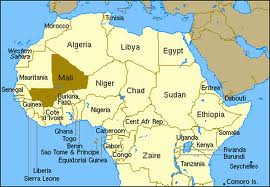
 Since January of this year Mali in western Africa has been roiled by violent unrest. Last year’s downfall of Colonel Murammar Quaddafi in neighboring Libya has sent a large quantity of Libyan weapons into  Mali, bolstering a longstanding rebel movement by the nomadic Tuareg in the country’s vast northern desert and delivering many defeats to Malian forces.

In March of this year the Tuareg rebels made some of their most significant gains yet, seizing much of northern Mali, including the historic city of Timbuktu. The rebels’ Islamist faction, Ansar Dine (defenders of the faith), preaches a strict form of Islam that advocates a total ban on alcohol, the flogging of adulterers and the imposition of Shariah or Islamic law, on a part of Mali that has traditionally practiced religious tolerance. This Summer Ansar Dine embarked on a campaign of destroying Islamic shrines that are seen by them as Timbuktu’s eminence as a center of broad-minded Islamic teaching for centuries.

Timbuktu mosque
Grand Mosque,                Djenne, Mali

In April, the rebels declared the independence of the new state of Azawad. This has caused fear that Islamic militants and separatists could turn the remote and poor reaches of northern Mali into a haven for the regional affiliate of Al Qaeda.

Now thousands of Malians are fleeing this turmoil to the west to Mauritania. Already a refugee camp of 92,000 is growing near the border.

On July 18th the Government of Mali led by the Minister of Justice hand delivered a letter in The Hague to the Prosecutor of the International Criminal Court. The letter states that the Government of Mali, as a State Party to the ICC, refers “the situation in Mali since January 2012” to the Prosecutor’s Office and requests an investigation to determine whether one or more persons should be charged for crimes within the Court’s jurisdiction (genocide, crimes against humanity and war crimes).


The Mali letter alleged “grave and large-scale violations of human rights and of international humanitarian law, committed notably in the north of the country.” It further stated there were “summary executions of soldiers, rape of women and young girls, massacres of civilians and the use of child soldiers and pillage” as well as destruction of hospitals, courts and schools and attacks on churches, tombs and mosques.

The Government of Mali submited that the Malian courts are unable to prosecute or try the perpetrators. The Malian delegation also provided documentation in support of the referral.

The Prosecutor’s Office has been following the situation in Mali very closely since violence erupted there this January. On April 24th, as instances of killings, abductions, rapes and conscription of children were reported by several sources, the Prosecutor reminded all actors of ICC jurisdiction over Rome Statute crimes committed on the territory of Mali or by Malian nationals. On July 1st, the Prosecutor stressed that the deliberate destruction of the shrines of Muslim saints in the city of Timbuktu may constitute a war crime under Article 8 of the Rome Statute.

The Prosecutor, upon receipt of the letter from the Government, announced that the Office

Immediately would proceed with a preliminary examination of the situation in order to assess whether the Rome Statute criteria stipulated under Article 53.1 for opening an investigation are fulfilled.

Refugee and Asylum Law: The Pre-Modern Era

The history of refugee and asylum law, in my opinion, may be divided into two major periods: (a) the pre-modern era before the adoption of the Universal Declaration of Human Rights in 1948 and (b) the modern era starting with that 1948 adoption.[1] There are four major points from this earlier period that have impressed me.

First, there have been instances when individual states granted protection or asylum to people of another state, but the granting of such protection was always within the discretion or grace of the potential protecting state. Whether or not this was done was influenced by a multitude of circumstances. Correspondingly the individual fleeing his or her own country had no legal right to claim protection from another state. An interesting example of this type of asylum happened in 615 CE, when Mohammad requested his cousin and other followers to leave Mecca and seek refuge in Abyssinia or Ethiopia to escape persecution by Mecca’s leading tribe. This is known as the First Hijra (Migration) of Muslims. At the time, the King of Abyssinia was a Christian and known for his justice and respect for human beings. Responding to a letter from Mohammad, the King said he understood that Mohammad respected Jesus and, therefore, granted asylum to the Muslims.[2]

Second, as we have just seen, religious belief sometimes has motivated a government to grant asylum in this earlier period. In addition, religious bodies and individuals often call upon their members and fellow believers to be hospitable to outsiders such as those fleeing persecution. In Judaism and Christianity, for example, there are numerous Biblical texts to this effect. In the Hebrew Bible, the people are told, “Do no mistreat an alien or oppress him for you were aliens in Egypt.” (Exodus 222:21.) Similarly, “You are to have the same law for the alien and for the native born.” (Leviticus 24:22.) In the New Testament, Jesus when asked what the greatest commandment was, said, “Love the Lord your God with all you heart and with all your soul and with all your mind. This is the first and greatest commandment. And the second is like it: Love your neighbor as yourself.” (Matthew 22:37-39.)[3] Similarly Arabic traditions and customs have served as a solid foundation for protecting human beings and preserving their dignity. These include “istijara” (plea for protection), “ijara” (granting protection) and “iwaa” (sheltering). The Islamic Shari’a further consolidated the humanitarian principles of brotherhood, equality and tolerance among human beings. Relieving suffering and assisting, sheltering, and granting safety to the needy, even enemies, are an integral part of Islamic Shari’a. In fact,  Islamic Shari’a addressed the issue of asylum explicitly and in detail, and guaranteed safety, dignity and care for the “musta’men” (asylum-seeker). Moreover, the return, or refoulement, of the “musta’men” was prohibited by virtue of Shari’a.[4]

Third, after World War I, the Covenant of the League of Nations did not have any explicit provision regarding refugees. The closest it came was its Article 25, which states, “The Members of the League agree to encourage and promote the establishment and co-operation of duly authorised [sic] voluntary national Red Cross organisations [sic] having as purposes the improvement of health, the prevention of disease and the mitigation of suffering throughout the world.”[5] There also were various treaties regarding refugees in the 1920s and 1930s, but they did not grant legal rights to asylum.[6]       Fourth, German persecution of the Jews in the 1930s showed the weaknesses of this discretionary approach to asylum. In 1933 the Nazis took over control of the German government and fired Jews from the civil service and sponsored boycotts of Jewish-owned businesses.  Germany also started an official encouragement of German Jewish emigration, and in September 1935 Germany’s Nuremberg Laws cancelled German citizenship for Jews. By the end of 1937 450,000 German Jews had left the country.[7] In March of 1938 German annexed Austria (das Anschluss) and thereby brought the 200,000 Austrian Jews under German laws, including the Nuremberg Laws.

President Franklin D. Roosevelt
Evian Conference

Several days later U.S. President Franklin D. Roosevelt decided to call an international conference to facilitate the emigration of Jews from Germany and Austria and to establish an international organization to work towards an overall solution to this problem. That July the conference was held in Evian, France. Thirty-two countries attended and expressed sympathy for the refugees. With one exception, however, no country agreed to take additional Jewish refugees. The exception was the Dominican Republic, and it did so because its dictator, Trujillo, wanted more white people in his country. The Conference also created the Intergovernmental Committee on Refugees to “approach the governments of the countries of refuge with a view to developing opportunities for permanent settlement.” It also was to seek German cooperation in establishing “conditions of orderly emigration.” This Committee, however, never received the necessary authority or support from its members and, therefore, failed to accomplish anything. After the conference, Hitler said, “It is a shameful spectacle to see how the whole democratic world is oozing sympathy for the poor tormented Jewish people, but remains hard hearted and obdurate when it comes to helping them . . . .” Moreover, the failure of the Conference to do anything about the German Jews was seen as an encouragement for Germany’s increasing persecution of the Jews, including Kristallnachtin October 1938 and the Holocaust itself through the end of World War II in 1945.


[1]  I have not studied what I can the pre-modern era in great depth and especially invite comments and critiques of this analysis.
[3] Religious beliefs motivated most, if not all, of those people and congregations that were involved in the Sanctuary Movement in the 1980’s to provide safe space to Salvadorans and Guatemalans fleeing their civil wars. See Post: The Sanctuary Movement Case (May 22, 2011).
[4] Prof. Ahmed Abou-El-Wafa, The Right to Asylum between Islamic Shari’ah and International Refugee Law: A Comparative Study (Riyadh – 2009 (1430 H.), http://www.unhcr.org/cgi-bin/texis/vtx/home/opendocPDFViewer.html?docid=4a9645646&query=sharia.
[5]  Covenant of the League of Nations, http://avalon.law.yale.edu/20th_century/leagcov.asp#art25; Holborn, The Legal Status of Political Refugees, 32 Am. J. Int’l L. 680 (1938); Holborn, The League of Nations and the Refugee Problem, 203 Annals Am. Acad. Of Pol. & Soc. Sci. 124 (1939).
[6]  A list of these treaties is set forth in Article 1(A)(1) of the Convention Relating to the Status of Refugees, http://www2.ohchr.org/english/law/refugees.htm.
[7] E.g., U.S. Holocaust Museum, The Evian Conference, http://www.ushmm.org/outreach/en/article.php?ModuleId=10007698 ; U.S. Holocaust Museum, Emigration and the Evian Conference, http://www.ushmm.org/wlc/en/article.php?ModuleId=10005520 ; Annette Shaw, The Evian Conference–Hitler’s Green Light for Genocide, http://www.cdn-friends-icej.ca/antiholo/evian/evian.html; Wikipedia, Evian Conference, http://en.wikipedia.org/wiki/%C3%89vian_Conference.