We just reviewed the current status of the investigative situations and cases of the International Criminal Court (ICC). [1] Now we look at two other major issues facing the ICC–Syria and Palestine, last year’s meeting of the Court’s Assembly of States Parties and the Chief Prosecutor’s statement about this month’s being genocide awareness month.
Syria. As we know from many news sources, popular demonstrations against Syrian President Bashar al-Assad commenced in March 2011 and immediately grew throughout the country. In April 2011, the Syrian Army was deployed to quell the uprising, and soldiers were ordered to open fire on demonstrators. After months of military sieges, the protests evolved into an armed rebellion. By January 2013 the U.N. estimated the war’s death toll had exceeded 60,000, and a month later this figure was updated to 70,000. Another 6,000 reportedly were killed in March 2013.
To respond to this horrible suffering, many have called for the ICC to become involved. One who has repeatedly done so is the U.N. High Commissioner for Human Rights, Navi Pillay. Here are some examples:
During a debate on Syria by the U.N. Human Rights Council in February 2012, she said she believed that the situation of Syria should be referred to the ICC by the U.N. Security Council.
On June 7, 2012, she said, “We continue to witness a serious deterioration of the human rights situation in Syria, which demands our full attention and engagement.” There is evidence of “a pattern of widespread or systematic attacks against civilian populations, and may amount to crimes against humanity and other international crimes. There are indications that the situation in Syria – at least in certain areas – amounts to an internal armed conflict. This would have legal implications, triggering the possibility of commission of war crimes, in addition to crimes against humanity. It makes the call I made to the Security Council to consider referring the case of Syria to the International Criminal Court even more urgent.”
At a February 13, 2013, Security Council meeting, she said, “The lack of consensus on Syria and the resulting inaction has been disastrous and civilians on all sides have paid the price. We will be judged against the tragedy that has unfolded before our eyes.” She said that referring Syria to the ICC could have a very significant preventive effect because it “would send a clear message to both the government and the opposition that there will be consequences for their actions”.
In January 2013, 58 countries signed a joint statement calling for such a referral. In response at least five Security Council members voiced support for same– France, Britain, Australia, Luxembourg and South Korea. The next month, February 2013, U.N. human rights investigator Carla del Ponte said the “time has come” for the Security Council to refer war crimes in Syria to the ICC for prosecution. Similar calls for referral have come from Amnesty International and Human Rights Watch.
The Syrian government obviously opposes such a referral. In January 2013 it said it “regrets the persistence of these countries [that signed the joint statement favoring referral] in following the wrong approach and refusing to recognize the duty of the Syrian state to protect its people from terrorism imposed from abroad.” The statement also accused some of the countries signing the statement of “deceit and double standards” in blaming Syria while financing, training and hosting “terrorists.”
Because Syria is not a state party to the ICC’s Rome Statute, the only way for the Syrian situation to get before the ICC is by a referral from the U.N. Security Council. But so far that has been impossible because Russia and China as permanent members of the Council would veto such a referral as they already have vetoed resolutions to impose sanctions on Syria.[2] For example, this past January the Russian Foreign Ministry said the joint request by over 50 countries for such a referral was “ill-timed and counterproductive to resolving the main task at this moment: an immediate end to the bloodshed in Syria.”
Palestine. In November 2012 the U.N. General Assembly, 138 to 9 with 41 abstentions, voted to grant non-member observer state status to the Palestinian Authority. Those voting “No” included Israel, U.S. and Canada. The abstainers included the U.K. and Germany.
Israel and the U.S. are concerned that the Palestinian Authority (PA) may use its new U.N. status to try a press for an ICC investigation of Israeli practices in the occupied territories. The PA could: (1) attempt to become a State Party at the ICC by ratifying the Rome Statute and then referring alleged crimes to the ICC; or (2) remain a non-State Party but make a declaration accepting the Court’s jurisdiction over a particular set of crimes.
In either option the PA would have to refer an entire situation or train of events to the ICC that would permit the ICC Prosecutor to investigate or prosecute any crime within that situation allegedly committed by anyone, including alleged crimes by Palestinians against Israelis. The State Party option would require the PA to ratify the Rome Statute and then present a document certifying the ratification to the U.N. Secretary-General, who is responsible for administering the Rome Statute. He would have to decide whether the PA was a state competent to ratify. Should he so decide, the Prosecutor and the rest of the ICC would be obliged to proceed as with any other State Party.
In the non-State Party option of a declaration of acceptance of jurisdiction followed by a referral, the ICC Prosecutor would have to make the first decision on whether the PA was a state competent to make the referral. This decision could be challenged in the Pre-Trial Chamber by the PA, or by another state involved in the situation giving rise to the referral, such as Israel.
The PA has in fact already tried this option by submitting a report of alleged crimes and declaration of acceptance of jurisdiction to the ICC Prosecutor in 2009. In April 2012, however, the Prosecutor released a statement that at he was not empowered to decide on the PA’s statehood status. Instead, the Prosecutor said, a U.N. body such as the Security Council or the General Assembly, or the ICC’s Assembly of States Parties, would have to make this determination. After the General Assembly’s recent action, the press has reported that the current Prosecutor is giving the earlier PA declaration further consideration.
Assembly of States Parties. Last November the Assembly of States Parties (ASP) held its 11th session and adopted a budget and made certain elections.
The ASP approved an amendment to the Court’s Rules of Procedure (new Rule 132 bis) that will permit a single judge to perform the functions of a Trial Chamber for the purposes of trial preparation. The amendment was agreed by consensus and is expected to expedite ICC trial preparation.
The ASP also had a general discussion of complementarity, i.e., the principle and practice of the ICC’s deferring to criminal prosecutions in national court systems. Helen Clark, the former prime minister of New Zealand and current administrator of the U.N. Development Program, spoke about the role international development agencies, such as UNDP and others, can contribute to domestic capacity for dealing with ICC crimes. She also urged governments to take responsibility to deliver justice.
U.S. Ambassador-at-Large for Criminal Justice, Stephen J. Rapp, congratulated the ASP for this crucial discussion on both the policy and practice of complementarity. He stressed the importance to governments – States Parties and non-States Parties alike – to strengthen domestic judicial capacity in a manner that is both concerted and coordinated. He also said the U.S. supports ICC prosecutions and building national justice systems by funding support of complementarity; using the tools of diplomacy to support complementarity; providing technical and legal assistance to national systems; and improving fugitive tracking efforts.
There also was discussion about an initiative to adopt a treaty on crimes against humanity that has been prepared by the Whitney R. Harris World Law Institute at the Washington University in St. Louis School of Law.
Genocide Awareness Statement by Prosecutor. In light of this April’s being genocide awareness month, the Court’s Chief Prosecutor called on “all States, whether parties to the Rome Statute or not, to cooperate with the ICC in seeking/pursuing accountability for genocide.” In particular, this meant enforcing the ICC’s warrant for the arrest of Sudanese President Omar al Bashir, who is charged with “genocide by killing, causing serious bodily injury or mental harm and by deliberating inflicting conditions of life calculated to bring about the physical destruction of the Fur, Masalit and Zaghawa ethnic groups in Darfur.”
This post will review the current status of the eight situations (all from Africa) currently under investigation by the Office of the Prosecutor (TOP) of the International Criminal Court (ICC) and the 30 individuals that have been charged by the ICC with crimes in those situations.[1]
In July 2004, pursuant to a referral by the government of Uganda, TOP opened an investigation into the situation of the Lord’s Resistance Army (LRA)in Northern Uganda. That has resulted in charges of crimes against humanity and war crimes against five individuals, four of whom remain at large: Joseph Kony, Vincent Otti, Okot Odhiambo and Dominic Ongwen. The other (Raska Lukwiya) is deceased.
The hunt for Kony and other LRA leaders continues. Uganda has some 2,500 soldiers deployed around the border areas of Central African Republic (CAR) the Democratic Republic of Congo and South Sudan, where Kony and his fighters are thought to spend most of their time. The Ugandan troops are joined by 500 Congolese fighters, 500 South Sudanese and 350 CAR troops, all operating under the auspices of the African Union (AU). They have been assisted by 100 U.S. special forces. These efforts will continue despite the recent coup in the CAR.
On March 18, 2013, TOP issued a statement that LRA members will not be killed or tortured if they surrender to the ICC. All their human rights will be protected and the cases against them will be in accordance with accepted international human rights standards. They will face a fair, impartial and public justice that respects all their rights, including the right to be represented by a lawyer of their choice, and to present evidence in their defense. If convicted they will not be sentenced to death. Therefore, they should hand themselves over and face a fair justice process at the ICC or remain fugitives in full knowledge that military forces from many countries are looking for them, and they may be cornered, captured, and possibly killed or wounded in the process.
In June 2004, pursuant to a referral by the government of the Democratic Republic of the Congo (DRC), TOP opened an investigation into the situation in the country since June 1, 2002. That has resulted in six cases against six individuals.
Thomas Lubanga Dyilo on March 1, 2012, was convicted of war crimes and on July 10, 2012, sentenced to 14 years imprisonment.
On July 8, 2012, the ICC issued its first decision on reparations. It decided that the potential beneficiaries are the direct and indirect victims who suffered harm following the crimes of enlisting, conscripting and using children under the age of 15 in Ituri in the DRC (9/1/02–8/13/03), including family members of direct victims and individuals who intervened to help the victims or to prevent the commission of these crimes. The decision also established the following principles for reparations:
no discrimination as regards age, ethnicity or gender;
reconciling the victims of child recruitment and their families and communities in Ituri;
preserving their dignity and privacy;
taking into account the age of the victims and the sexual violence that they may have suffered; and
the need to rehabilitate the former child soldiers within their communities.
Germain Katangawent on trial (with Mathieu Ngudjolo Chui) on November 24, 2009, on charges of crimes against humanity and war crimes within the meaning of Article 25(3)(a) of the Statute (committing the crimes jointly through another person). On February 7, 2012, evidence in the case was closed and closing arguments were heard in May 2012 by the Trial Chamber.
On November 21, 2012, the Chamber, 2 to 1, issued an order severing Mr. Chui from this case and deciding that the mode of liability of Mr. Katanga might be changed under Regulation 55(2)[2] to Article 25(3)(d) of the Statute (contributing in any other way to the commission of the crimes by a group of persons acting with a common purpose).
This proposed change (after the trial) was appealed by Mr. Katanga, and on March 27, 2013, the Appeals Chamber, 2-1, affirmed the Trial Chamber. It held that the decision was in accordance with Regulation 55(2) and did not violate the defendant’s right to a fair trial. However, it said, the Trial Chamber will have to be vigilant in its further deliberations to ensure that this right will not be infringed by further trial proceedings.
Mathieu Ngudjolo Chui , as just indicated, was tried with Mr. Katanga from November 24, 2009 through May 23, 2012 on charges of crimes against humanity and war crimes within the meaning of Article 25(3)(a) of the Statute (committing the crimes jointly through another person), but on November 21, 2012, Mr. Chui’s charges were severed.
On December 18, 2012, the Trial Chamber issued its unanimous verdict acquitting Mr. Chui of all charges because it had not been proven beyond reasonable doubt that he was the commander of the Lendu combatants from Bedu-Ezekere during the attack against the Bogoro village on 24 February 2003. On December 21, 2012, Mr. Chui was released from detention pursuant to an order by the Appeals Chamber.
The Office of the Prosecutor has appealed that verdict.
Bosco Ntaganda has been charged with three counts of crimes against humanity and seven counts of war crimes.
On March 22, 2013, he voluntarily surrendered himself to the U.S. Embassy in Rwanda and asked to be turned over to the ICC. His decision prompted speculation as to why he did so. One theory says he was threatened by member of his own rebel group and wanted to save his own life. In any event, soon thereafter he made his initial appearance before the Court and said he was not guilty. The date for his confirmation of charges hearing was set for September 23, 2013.
Callixte Mbarushimana was charged with five counts of crimes against humanity and eight counts of war crimes, but on December 16, 2011, the Pre-Trial Chamber refused to confirm the charges, and on December 23, 2011, he was released from the Court’s custody.
Sylvestre Mudacumura on July 13, 2012, was the subject of the Pre-Trial Chamber’s arrest warrant for allegedly committing nine counts of war crimes in the DRC, including attacking civilians, murder, mutilation, cruel treatment, rape, torture, destruction of property, pillaging and outrages against personal dignity. He is at large.
On May 22, 2007, pursuant to a referral by the government of the Central African Republic (CAR), TOP opened an investigation into alleged crimes, in 2002 and 2003, in that country. In which civilians were killed and raped; and homes and stores were looted in the context of an armed conflict between the government and rebel forces.
Jean-Pierre Bemba Gombo is the only case. He is charged as a military commander, with two counts of crimes against humanity: (murder and rape) and three counts of war crimes (murder, rape and pillaging). His trial started on November 25, 2010, and is not finished.
On June 6, 2005, pursuant to a referral by the U.N. Security Council, TOP opened an investigation into the situation in Darfur, Sudan since July 1, 2002.
That has resulted in six cases involving seven individuals, the following four of whom are still at large: (i) Ahmad Muhammad Harun (20 counts of crimes against humanity and 22 counts of war crimes); (ii) Ali Muhammad Ali Abd-Al-Rahman (22 counts of crimes against humanity and 28 counts of war crimes); (iii) Omar Hassan Ahmad Al Bashir, the President of Sudan (5 counts of crimes against humanity, 2 counts of war crimes and 3 counts of genocide); and (iv) Abdel Raheem Muhammad Hussein (7 counts of crimes against humanity and 6 counts of war crimes).
Bahar Idriss Abu Garda was charged with war crimes, but in 2010, the Pre-Trial Chamber refused to confirm the charges, and rejected the Prosecutor’s application to appeal.
Abdallah Banda Abakaer Nourain and Saleh Mohammed Jerbo Jamus are charged with co-commission of three war crimes. Their trial is scheduled to start on May 5, 2014.
In the latest (December 2012) semi-annual report to the U.N. Security Council on this situation and cases,[3] the Chief Prosecutor said that her office would consider whether further investigations and additional arrest warrants were needed to address recent violations, including reports of thwarting humanitarian aid deliveries, attacks on African Union-United Nations Hybrid Operation in Darfur (UNAMID) peacekeepers and bombardments and attacks on civilian populations.
The Chief Prosecutor also told the Council, “The question that remains to be answered is how many more civilians must be killed, injured and displaced for this Council to be spurred into doing its part. There are no words to properly express the frustration of Darfur’s victims, which we share, about the lack of any meaningful progress towards arresting those indicted by the Courts.”
In response, Sudan’s representative told the Security Council that the Prosecutor’s report was flawed, saying it contained unsubstantiated allegations, and contradicted UNAMID reports. The report’s allegations of gender violence, for instance, did not provide sources, and it mistook tribal clashes for fighting between militias. Also, reported attacks on peacekeepers had in fact been committed by bandits now being pursued by Sudanese authorities. He said the Court had become a tool for “blackmail” and for violating the sovereignty of small States and was being exploited by certain political interests.
Among the other statements at the Council meeting, a U.S. diplomat said mounting violence was a grave concern, including targeted civilian attacks and denying UNAMID access to affected areas. Since UNAMID’s initial deployment in 2007, 43 peacekeepers had been killed, in attacks that could be prosecuted as war crimes. The Council should condemn any and all attacks on mission personnel. Reversing the cycle of violence required accountability for the perpetrators, he said, expressing dismay that the Sudanese Government was not cooperating with the Court, despite its obligation to do so fully. Continued impunity for crimes committed in Darfur fomented instability and sent a dangerous message that there were no consequences to attacking civilians. Welcoming the willingness of States to consider creative approaches and new tools to assist the Court, he also embraced further discussions on resolutions concerning Council referrals to the Court. [4]
On March 31, 2010, the Pre-Trial Chamber, 2-1, authorized TOP to proceed with an investigation that it had proposed into the situation in Kenya between June 1, 2005 and November 26, 2009.
Uhuru Muigai Kenyatta is charged as an indirect co-perpetrator of crimes against humanity (murder, deportation or forcible transfer, rape, persecution and other inhumane acts. The charges stem from his alleged role in funding and organizing ethnic violence leading to the death of an estimated 1,200 people after the 2007 presidential election. His trial is scheduled to start on July 9, 2013.
In the meantime, on March 3, 2013, Kenyatta, who employed anti-ICC propaganda in his presidential election campaign, was narrowly elected President of Kenya, and on March 30th the country’s Supreme Court unanimously rejected a challenge to the election from his main electoral opponent. Kenyatta’s election creates an “awkward” situation, as the New York Times said, for the U.S. and other countries who need good diplomatic relations with Kenya.
William Samoei Ruto was charged with being an indirect co-perpetrator of crimes against humanity. His trial is scheduled to begin on May 28, 2013.
Joshua Arap Sang was charged with having contributed to crimes against humanity. His trial is scheduled to begin on May 28, 2013.
Henry Kiprono Kosgey was charged as an indirect co-perpetrator of crimes against humanity, but the Pre-Trial Chamber declined to confirm the charges.
Mohammed Hussein Ali was charged with crimes against humanity, but in 2012, the Pre-Trial Chamber refused to confirm the charges.
Francis Kirimi Muthaura was charged as an indirect co-perpetrator of crimes against humanity, and the re-Trial Chamber in January 2012 confirmed some of the charges. In March 2013, however, TOP filed notice to withdraw the charges because several people who may have provided important evidence regarding his actions, have died, while others are too afraid to testify for the Prosecution; the Government of Kenya failed to provide TOP with important evidence; and the key witness against him had recanted a crucial part of his evidence and had admitted he had accepted bribes.
On February 26, 2011, the U.N. Security Council referred the situation in Libya since February 15, 2011 to the Court. That has resulted in TOP’s charges against three individuals, one of whom died (Muammar Gaddafi) resulting in the dismissal of his case.
The other two (Saif Al-Islam Gaddafi and Abdullah Al-Senussi) are in the custody of the Libyan Provisional Authority and have not been turned over to the Court despite negotiations to that effect.
In October 2012, Libya asked the ICC to abandon its claims against the two men because it said Libya can give them fair trials in Tripoli. In early 2013, Libyan officials told the ICC that the two men would be put on trial in Libya in May this year and would not face summary trial and execution.
In the latest (November 2012) semi-annual report to the U.N. Security Council on this situation and cases,[5] the Chief Prosecutor said both Saif Al-Islam Qadhafi and Abdullah Al-Senussi had been arrested and detained in Libya, and that the Libyan authorities had challenged the admissibility of the ICC’s case against Mr. Qadhafi and possibly of the case against Mr. Al-Senussi. She said the ICC’s Pre-Trail Chamber would decide the merits of the challenge as to whether the case should be heard at the Court or in Libya, and should the challenge ultimately succeed, TOP would monitor those proceedings and cooperate with Libya, to the extent of the mandate.Emphasizing the pressing need for complementary and mutually supportive approaches to address accountability, she encouraged international support and assistance to enhance Libya’s capacity to deal with past crimes and to promote the rule of law.
A Libyan representative at the Council meeting said his Government had set out its plans for stability, reconciliation and comprehensive justice for crimes that had been committed in his country and that its investigation was already at an advanced stage in some of those cases although the Qadhafi trial had been postponed in order to allow for the most thorough possible investigation. Libya, he continued, has been cooperating with the ICC and was now awaiting the decision on the admissibility challenge in the Qadhafi case and a forthcoming similar challenge in the Al-Senussi case. He reiterated his country’s pledge to carry out all procedures in compliance with international law.
A U.S. diplomat at the Security Council urged the Libyan Government to continue its cooperation with the Court. It was an important moment for both Libya and the Court as they worked together, under their respective roles, in ensuring peace and accountability. It was critical for Libya to ensure the safety of ICC personnel on visits to the country. She added that the U.S. had endeavored to cooperate with the ICC in its efforts regarding Libya, consistent with U.S. law and policy. Impunity for all serious crimes in Libya, including gender crimes, must be avoided, and victims should be assisted. The U.S. would continue to work with the international community to assist Libyan efforts to reform its justice sector and advance human rights in the country.
On October 3, 2001, the Court’s Pre-Trial Chamber granted TOP request to commence an investigation into the situation in the Ivory Coast since November 28, 2010, and in February 2012 the Chamber expanded the investigation to cover the period September 19. 2002 through November 28, 2010.
Laurent Gbagbo, the former president of the country, has been charged with four counts of crimes against humanity. He was surrendered to the Court in November 2011, and his confirmation of charges hearing was held in February 2013.
Simone Gbagbo, the wife of Laurent Gbagbo, has been charged as an indirect co-perpetrator with four counts of crimes against humanity. She has not been turned over to the Court.
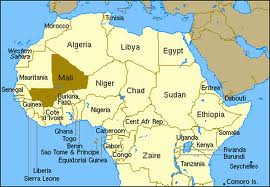
On July 13, 2012, the government of Mali referred the situation in that country since January 2012 to the ICC, which has assigned it to the Pre-Trial Chamber.
In January 2012 a rebellion began in Northern Mali, led by the National Movement for the Liberation of Azawad (MNLA). In March 2012, military officer Amadou Sanogo seized power in the country in a coup d’etat, citing the president’s failure to eliminate the rebellion. The MNLA quickly took control of the north, declaring independence as Azawad. However, Islamist groups that had helped the MNLA defeat the government, turned on the rebel group and took control of the North with the goal of implementing Sharia Law in Mali.
On January 11, 2013, the French Armed Forces intervened at the request of Sanogo’s government. On January 30th, the coordinated advance of the French and Malian troops claimed to have retaken the last remaining Islamist stronghold.
In the midst of these military engagements, on January 16, 2013, TOP announced that it formally had opened an investigation into the Situation in Mali since January of 2012. After thorough analysis it said it had found that evidence, admissibility, gravity of potential cases, and interest of justice all support the requirements to open a formal investigation into war crimes allegedly committed in Mali. Crimes alleged to have happened include murder; mutilation, cruel treatment and torture; intentionally directing attacks against protected objects; the passing of sentences and the carrying out of executions without previous judgment pronounced by a regularly constituted court; pillaging; and rape. The ICC will move to investigate these alleged crimes and bring charges against individuals “who bear the greatest criminal responsibility for the most serious crimes committed.
In late January 2013, TOP warned Malian authorities to put an immediate stop to the alleged abuses and, on the basis of the principle of complementarity, to investigate and prosecute those responsible for the alleged crimes. TOP reminded all parties to the on-going conflict in Mali that it has jurisdiction over all serious crimes committed within the territory of Mali, from January 2012 onwards. All those alleged to be responsible for serious crimes in Mali must be held accountable.
Conclusion
The following summarizes the status of those charged with crimes by the Court as it nears its 11th anniversary on July 1, 2013:
Status
Number
Deceased
2
At large or not in Court custody
12
Pre-Trial: charges not confirmed
6
Pre-Trial: pending
1
Trials scheduled to start by 12/31/14
5
At trial
1
Tried and convicted
1
Tried and status in question
1
Tried and acquitted
1
TOTAL
30
[1] There have been many prior posts about the ICC.
[2]Regulation 55, which is titled “Authority of the Chamber to modify the legal characterization of facts,” says in part (2),”If, at any time during the trial, it appears to the Chamber that the legalcharacterisation of facts may be subject to change, the Chamber shall give noticeto the participants of such a possibility and having heard the evidence, shall, atan appropriate stage of the proceedings, give the participants the opportunity tomake oral or written submissions. The Chamber may suspend the hearing toensure that the participants have adequate time and facilities for effectivepreparation or, if necessary, it may order a hearing to consider all mattersrelevant to the proposed change.” Part (3) goes on to say, “For the purposes of sub-regulation 2, the Chamber shall, in particular,ensure that the accused shall:(a) Have adequate time and facilities for the effective preparation of his or herdefence [sic] in accordance with article 67, paragraph 1 (b); and (b) If necessary, be given the opportunity to examine again, or have examined again, a previous witness, to call a new witness or to present other evidence admissible under the Statute in accordance with article 67, paragraph 1 (e).”
[3] A prior post discussed the June 2012 ICC report to the Security Council on the Darfur/Sudan referral.
[4] The U.S. statement regarding Sudan/Darfur is available online.
[5] A prior post discussed the May 2012 ICC report to the Security Council on the Libyan referral.
On September 2nd Desmond Tutu, a Nobel Peace Prize Laureate and the retired South African Anglican Archbishop, said, “The immorality of the United States and Great Britain’s decision to invade Iraq in 2003, premised on the lie that Iraq possessed weapons of mass destruction, has destabilized [sic] and polarised [sic] the world to a greater extent than any other conflict in history.” Therefore, Tutu continued, “In a consistent world, those responsible for this suffering and loss of life [George W. Bush and Tony Blair] should be treading the same path as some of their African and Asian peers who have been made to answer for their actions [at the International Criminal Court] in the Hague.”
These remarks in London’s Observer newspaper followed Tutu’s withdrawal last week as a speaker at a conference in South Africa because Tony Blair was also to be a conference speaker.
Tony Blair
Tony Blair immediately responded to Tutu’s comments. Blair said, Tutu had repeated “the old canard that we lied about the intelligence [on Iraq] is completely wrong as every single independent analysis of the evidence has shown.” In addition, according to Blair, “to say [as Tutu had] that the fact that Saddam massacred hundreds of thousands of his citizens is irrelevant to the morality of removing him is bizarre.” Finally Blair claimed that “despite the problems, Iraq today has an economy three times or more in size with child mortality rate cut by a third of what it was.”
However morally appropriate Tutu was on his criticism of the decision to start the Iraq war, his call for ICC prosecution of Bush and Blair is not legally well founded.
That was the legal conclusion on February 9, 2006, by the ICC’s Office of the Prosecutor in response to many communications expressing concern regarding the launching of military operations and the resulting human loss. This conclusion was documented in a detailed memorandum by the ICC Prosecutor that set forth the following reasons:
The ICC did not have jurisdiction over any actions by Iraqi or U.S. citizens because Iraq and the U.S. were not States Parties to the Court’s Rome Statute.
Although the Court had jurisdiction over the crime of “aggression” under the Statute’s Article 5, that crime had not yet been defined and thus could not be a basis for any charges.[1]
Although there was information indicating war crimes of intentional killing and inhuman treatment had been committed, the information did not suggest that they were “part of a plan or policy or as part of a large-scale commission of such crimes” as required by Article 8 of the Statute.
There was no information that the Coalition forces had an “intent to destroy, in whole or in part, a national, ethnical, racial or religious group as such”, as required in the Statute’s definition of the crime of genocide (Article 6).
There was no information of “a widespread or systematic attack directed against any civilian population” as required in the Statute’s definition of crimes against humanity (Article 7).
Therefore, the Office of the Prosecutor stated the statutory requirements for initiating a formal investigation of the situation in Iraq had not been satisfied.[2]
[1] As discussed in a prior post, a definition of the crime of aggression was agreed to at the Court’s June 2010 Kampala Review Conference, but its actual use by the Court will not happen until after January 1, 2017 and only if there is a two-thirds vote of approval of the amendment by the Court’s Assembly of States Parties and ratification of the amendment by at least 30 States Parties.
[2] There are many posts about the ICC on this blog. To find them, just click on “International Criminal Court” in the tag cloud to the right of this post.
Since January of this year Mali in western Africa has been roiled by violent unrest. Last year’s downfall of Colonel Murammar Quaddafi in neighboring Libya has sent a large quantity of Libyan weapons into Mali, bolstering a longstanding rebel movement by the nomadic Tuareg in the country’s vast northern desert and delivering many defeats to Malian forces.
In March of this year the Tuareg rebels made some of their most significant gains yet, seizing much of northern Mali, including the historic city of Timbuktu. The rebels’ Islamist faction, Ansar Dine (defenders of the faith), preaches a strict form of Islam that advocates a total ban on alcohol, the flogging of adulterers and the imposition of Shariah or Islamic law, on a part of Mali that has traditionally practiced religious tolerance. This Summer Ansar Dine embarked on a campaign of destroying Islamic shrines that are seen by them as Timbuktu’s eminence as a center of broad-minded Islamic teaching for centuries.
Timbuktu mosqueGrand Mosque, Djenne, Mali
In April, the rebels declared the independence of the new state of Azawad. This has caused fear that Islamic militants and separatists could turn the remote and poor reaches of northern Mali into a haven for the regional affiliate of Al Qaeda.
Now thousands of Malians are fleeing this turmoil to the west to Mauritania. Already a refugee camp of 92,000 is growing near the border.
On July 18th the Government of Mali led by the Minister of Justice hand delivered a letter in The Hague to the Prosecutor of the International Criminal Court. The letter states that the Government of Mali, as a State Party to the ICC, refers “the situation in Mali since January 2012” to the Prosecutor’s Office and requests an investigation to determine whether one or more persons should be charged for crimes within the Court’s jurisdiction (genocide, crimes against humanity and war crimes).
The Mali letter alleged “grave and large-scale violations of human rights and of international humanitarian law, committed notably in the north of the country.” It further stated there were “summary executions of soldiers, rape of women and young girls, massacres of civilians and the use of child soldiers and pillage” as well as destruction of hospitals, courts and schools and attacks on churches, tombs and mosques.
The Government of Mali submited that the Malian courts are unable to prosecute or try the perpetrators. The Malian delegation also provided documentation in support of the referral.
The Prosecutor’s Office has been following the situation in Mali very closely since violence erupted there this January. On April 24th, as instances of killings, abductions, rapes and conscription of children were reported by several sources, the Prosecutor reminded all actors of ICC jurisdiction over Rome Statute crimes committed on the territory of Mali or by Malian nationals. On July 1st, the Prosecutor stressed that the deliberate destruction of the shrines of Muslim saints in the city of Timbuktu may constitute a war crime under Article 8 of the Rome Statute.
The Prosecutor, upon receipt of the letter from the Government, announced that the Office
Immediately would proceed with a preliminary examination of the situation in order to assess whether the Rome Statute criteria stipulated under Article 53.1 for opening an investigation are fulfilled.
A July 8th New York Timesheadline proclaims, “Arab Uprisings Point Up Flaw in Global Court.” It erroneously suggests that the people operating the International Criminal Court are stupid or cowardly or that the diplomats who in 1998 drafted the ICC’s governing treaty, the ICC’s Rome Statute, were similarly stupid or cowardly.
The article starts with the facts that the ICC has not initiated an investigation of human rights abuses in Yemen and Syria. That is lamentable, but it is not due to a flaw in the operations of the ICC or the Rome Statute.
It is due instead to the limitations on the Court’s jurisdiction that were intentionally established in the drafting of the Rome Statute because of opposition of states like the U.S. that did not want the Court commencing investigations or criminal prosecutions against their citizens if the state did not ratify that Statute.
That Statute’s Article 12 provides, in part, that the Court has jurisdiction if certain crimes (genocide, crimes against humanity or war crimes) are committed on the territory of a state that is a party to the Rome Statute or by nationals of such a state. Neither Yemen nor Syria is such a party, as is true for all other states in the Mideast except Jordan. Thus, the Court does not have jurisdiction of such an investigation or prosecution under Article 12.
The Rome Statute’s Article 13(b) also provides jurisdiction for the Court if the U.N. Security Council, acting under Chapter VII of the U.N. Charter (Action with Respect to Threats to the Peace, Breaches of the Peace, and Acts of Aggression), refers a situation of suspected crimes of that nature to the ICC even if the state where the conduct occurred or whose nationals are involved had not ratified the Rome Statute. In fact, as the New York Times article points out, the Security Council has twice done so: Sudan (Darfur) and Libya.
However, as most people know, the U.N. Charter that was drafted in 1945 at the end of World War II grants in Article 27(3) a veto on any action by the Council to each of its five permanent members: the U.S., the United Kingdom, France, the Union of Soviet Socialist Republics [now Russia] and the Republic of China. The failure of the ICC to undertake any investigation of the Yemen situation is due to a threatened veto by the U.S. of such a referral.
With respect to Syria, the U.S. in June 2011 reportedly was seeking Russian and Chinese support for a Council referral of the situation to the Court, but that was obviously unsuccessful because no such proposal was actually advanced in the Council. In November 2011 four U.S. Senators (Dick Durbin, Benjamin Cardin, Robert Menendez and Barbara Boxer) sent a letter to the U.S. Ambassador to the U.N. (Susan Rice) asking for such a Security Council referral. They said, “The people of Syria deserve to know that the people of the United States understand their plight, stand behind them, and will work to bring justice to the country.” Security Council referral of Syria to the ICC also has been endorsed by the New York Times.
The next month (December 2011) the U.N. High Commissioner for Human Rights urged the Security Council to make such a referral. But nothing happened, again because of threatened vetoes by Russia and China.
If there is any “flaw” in this structure with respect to Yemen and Syria it is the veto right of the five permanent members of the Security Council. Although many, if not most, of the U.N. members that are not permanent Council members dislike the superior status and veto rights of the permanent Council members and voice various suggestions for reform of the Security Council, expert observers of the U.N. do not think that is at all likely in the near future.
In the meantime, 121 of the 192 U.N. members are now parties to the Rome Statute, and the Court’s governing body (its Assembly of States Parties) is working towards its goal of universal ratification of the Rome Statute. If and when that happened, the Court could initiate investigations and prosecutions with respect to all such parties without Security Council action.
Over the last 60-plus years the peoples of the world through their nation-state governments have been struggling to climb out of the pits of depravity of World War II by creating or codifying international norms or human rights and by constructing mechanisms to protect individuals that are beyond the control of their own national governments while such governments still have sovereignty over most aspects of their lives. The creation and operation of the International Criminal Court and other so-called ad hoc international criminal tribunals are important pieces of this effort. This is an inherently difficult process, and many compromises are necessary in order to make any progress. But the story is not finished. Further development, I am confident, will occur.
There have been significant recent developments at the International Criminal Court (ICC) with respect to Libya, the Democratic Republic of the Congo, Kenya, Sudan/Darfur, the Office of the Prosecutor, the campaign to add more States Parties to the Court’s Rome Statute and commentary on one of the Statute’s provisions.
Libya
ICC Report to Security Council. On May 16th the ICC Chief Prosecutor, Luis Moreno-Ocampo, made his semi-annual and last report on the situation in Libya to the U.N. Security Council. This was discussed in a prior post.
Postponement of Surrender of Saif Al-Islam Gaddafi. On June 1st the ICC’s Pre-Trial Chamber decided that Libya may postpones its execution of the Court’s request for the surrender of Saif Al-Islam Gaddafi , pending the Court’s final determination of Libya’s challenge to the admissibility of the case.
Libyan Detention of ICC Personnel. On June 6th four ICC staff members arrived in Libya to meet with Mr. Gaddafi to discuss his legal representation before the ICC. They were Melinda Taylor, an attorney who works in the ICC’s office of public defense and who was appointed to act as one of two interim lawyers for Mr. Qaddafi; an interpreter, Helene Assaf, from Lebanon; and Alexander Khodakov, a former Russian diplomat, and Esteban Losilla, a Spanish lawyer, who were sent to find out whether Mr. Qaddafi wanted counsel of his own choosing. Their visit had been agreed to by Libya.
The next day (June 7th), however, the four people were detained by Libyan authorities. The ICC protested their detention and demanded their immediate release.
However, as of June14th they were still being detained. They are accused of bringing a camera disguised as a pen and suspicious documents–letters for Gaddafi from allegedly dangerous people who are supporters of the old regime and a page with drawings that looked like codes. They also had three blank pages that were signed by Mr. Gaddafi. The Libyan authorities say they will not be released until Ms. Taylor answers questions about her dealings with Mr. Gaddafi.
In addition, as of June 14th the Libyan attorney general had said he had decided that Ms. Taylor and Ms. Assaf could be held for up to 45 days awaiting the results of his inquiry into possible “threats to national security.” The other two could leave Libya, but had chosen to stay to support their colleagues. The National Transitional Council has said that it was powerless to release the four individuals or influence the investigation
On June 15th the ICC issued a press release announcing that on the 12th (with the cooperation of Libyan officials) representatives of the ICC had met with the four individuals, who said they were in good health and had been well treated. The press release also made conciliatory comments that the ICC welcomed the Libyan assistance, that the ICC was “very keen to address any regrettable misunderstandings on either side about the delegation’s mandate and activities during its mission in Libya” and that the ICC hoped “the release of the four detained persons will take place with no delay, in the spirit of the cooperation that has existed between the Court and the Libyan authorities.”
Democratic Republic of the Congo
Thomas Lubanga. On June 13th the ICC’s Trial Chamber held its hearing on the sentencing of Mr. Lubanga, who had been found guilty of war crimes regarding child soldiers. The Prosecutor asked for a sentence of 30 years imprisonment because of the seriousness of the crimes and the presence of these aggravating factors: (1) Lubanga as the top leader bears the greatest responsibility for the actions of the UPC militia; (2) his recruitment of children included particularly cruel treatment; (3) girls were recruited as sex slaves and were daily victims of rape by commanders and soldiers; and (4) children needed to be protected against violence and injuries and for their right to education.
Germain Katanga and Mathieu Ngudjolo Chui. The trial of these two gentlemen recently concluded, and the Trial Chamber’s judgment will be issued in the next several months. An interesting analysis of one of the issues raised in this case has been provided by Jennifer Easterday, a Ph.D. Researcher for the Jus Post Bellum project at the Grotius Centre for International Legal Studies at the University of Leiden in the Netherlands. That issue is whether the Trial Chamber may re-classify a conflict from international to non-international armed conflict or visa versa.
CallixteMbarushimana. On May 30th, the ICC’s Appeals Chamber unanimously dismissedthe Prosecution’s appeal of the Pre-Trial Chamber’s refusal to confirm charges against Callixte Mbarushimana. The Appeals Chamber found that the Pre-Trial Chamber may evaluate ambiguities, inconsistencies, contradictions or credibility doubts in the evidence in determining whether to confirm charges under article 61 of the Rome Statute. The Appeals Chamber emphasized that “the confirmation of charges hearing exists to ensure that cases and charges go to trial only when justified by sufficient evidence” and that article 61(7) of the Rome Statute requires the Pre-Trial Chamber to evaluate whether the evidence is sufficient to establish substantial grounds to believe the person committed each of the crimes charged.
The Appeals Chamber also rejected the Prosecutor’s contention that under article 25(3)(d) of the Rome Statute, the contribution of an accused individual must be “significant”, because the alleged error did not materially affect the decision of the Pre-Trial Chamber. One of the three appellate judges, however, stated that the Pre-Trial Chamber erred in finding that the contribution to the crimes must be significant under article 25(3)(d) of the Rome Statute.
An NGO has observed that the decisions in the Callixte case are indicative of a more significant problem regarding gender-based crimes. It asserts that “more than half of all charges for gender-based crimes which reach the confirmation stage are not being successfully confirmed[;] no other category of charges before the ICC faces this level of dismissal and contention.”
Sylvestre Mudacumura. On May 31st the ICC’s Pre-Trial Chamber unanimously dismissed, in limine (without examining the merits), the Prosecutor’s application for a warrant of arrest against Mr Sylvestre Mudacumura, considering that this application “fell short of the proper level of specificity” in describing the alleged crimes “for which the person’s arrest is sought”. The Chamber said the Prosecutor’s application did not provide “proper counts or any other kind of accompanying description of the specific facts underlying the crimes” and failed to “set out the specific references to the alleged crimes” as requested by the Rome Statute.
On June 13th the ICC Prosecutor submitted an amended application for an arrest warrant against Mr. Mucadumura, for five counts of crimes against humanity (murder, inhumane acts, rape, torture and persecution) and nine counts of war crimes (attack against a civilian population, murder, mutilation, cruel treatment, rape, torture, destruction of property, pillaging and outrage upon personal dignity). The Prosecution said it considers Mr. Mudacumura the Supreme Commander of the FDLR-FOCA, one of the most active militias in the Kivu Provinces of the DRC, and is allegedly responsible for a campaign of violence targeting civilians in these provinces.
Kenya
On May 24th, the ICC’s Appeals Chamber unanimously rejected challenges to the ICC’s jurisdiction in the two Kenyan cases. It said that the interpretation and existence of an ‘organizational policy’ for certain crimes against humanity under the Rome Statute relate to the substantive merits of these cases, not whether the Court has subject-matter jurisdiction. Therefore, the Chamber found that the ICC has subject-matter jurisdiction over the alleged crimes.
Sudan/Darfur
On June the ICC Prosecutor reported on the situation in Sudan/Darfur to the U.N. Security Council. This was discussed in a prior post.
New Chief Prosecutor
ICC Prosecutor Basouda
On June 15th, Fatou Bousouda, the ICC’s new Chief Prosecutor, officially took office. In her acceptance of this position, she said she was “humbled” by her appointment, and promised to continue pursuing all cases that fall under the court’s jurisdiction. Other major points in her speech were the following:
“The one thing which every one of you can rest assured of is that I will be the Prosecutor of all the 121 States Parties, acting in full independence and impartiality. Justice, real justice, is not a pick‐and‐choose system. To be effective, to be just and to be a real deterrent, the Office of the Prosecutor’s activities and decisions will continue to be based solely on the law and the evidence.”
“Thanks to the tireless efforts and the commitment of Luis Moreno‐Ocampo, [her predecessor, there is now] . . . a well‐respected and sound functioning Office [of the Prosecutor], with almost 300 staff from 80 countries, 7 situations under investigation, 14 cases before the Chambers, 7 preliminary examinations and one verdict.”
“As I speak, massive crimes continue to be committed in Darfur (Sudan); Joseph Kony and the Lord’s Resistance Army’s acts of violence continue unabated in central Africa. . . . In total, 11 arrest warrants remain outstanding. Nothing short of arresting all those against whom warrants have been issued will ensure that justice is done for millions of victims of . . . [their] crimes. . . .”
The Chief Prosecutor of the International Criminal Tribunal for the Former Yugoslavia and a former ICC Deputy Prosecutor, Serge Brammertz, has emphasized the urgent need for the new ICC Chief Prosecutor to have the support of states in arresting the Court’s fugitives. He stressed the need for universal acceptance of the ICC as one way to combat the concern about its current exclusive concentration on African situations. Another of his suggestions for the new ICC Chief Prosecutor was doing more to strengthen national court systems that are capable of handling the crimes that are within the ICC’s jurisdiction under the principle of complementarity.
Because the ICC cannot respond to atrocities the world over, Brammertz says, the U.N. should use the work of international fact-finding and investigatory commissions as bases “for choosing the right follow-up action, whether technical help to the affected country, setting up hybrid national/international structures, or referring the situation to the ICC.” There also needs to be standard procedures for collecting and storing evidence or conducting interviews as well as a permanent operational infrastructure for such commissions.
A columnist for London’s Guardian newspaper suggested the following priorities for the new Prosecutor:
Rebuild ICC relations with Africa. All of the Court’s active investigations and prosecutions come from Africa, and many Africans believe the Court is anti-African. Bensouda, herself an African, should consult more frequently with the African Union and work to restore confidence in the Court.
Prosecute cases in other regions. She should continue pending preliminary _– into Columbia, Afghanistan, Georgia, Honduras and North Korea and seek permission to start an investigation of Syria. She also should work to increase the number of Arab nations that are States Parties.
Restore transparency to the internal and external practices of the ICC. She should create clear and public processes for launching investigations and issuing arrest warrants, particularly in cases where she acts proprio motu – exercising her discretion to launch investigations of her own initiative.
Improve witness protection and investigatory techniques.
Improve investigatory techniques. The ICC needs to avoid over-reliance on NGOs that are not trained in interrogation and evidence gathering.
ICC States Parties
The ICC is engaged in a campaign for universal adoption of its Rome Statute to persuade the remaining 72 U.N. Members that are not States Parties to join the 121 that already have done so. This campaign, it has been suggested, could be strengthened by using the U.N. Human Rights Council’s Universal Periodic Review process to press those 72 members on the subject.
As previously noted, the U.S. in the Obama Administration is now a member of the U.N. Human Rights Council, and its participation is credited with helping to increase international scrutiny of human rights abusers.
Other
Under Article 53 of the Rome Statute, the ICC’s Prosecutor may, in certain circumstances, decline to press charges “in the interests of justice,” and the Office of the Prosecutor (OTP) has issued a policy paper on this provision.
Linda M. Keller, Associate Professor at Thomas Jefferson School of Law in San Diego, recently has explored an ongoing debate over whether the OTP should adopt ex ante guidelines for prosecutorial discretion in order to increase transparency and legitimacy, especially with respect to the “interests of justice” provision. She compared this provision of the Rome Statute with a similar provision in New York and concluded that (1) “requiring a written rationale regarding exercise of discretion does not necessarily yield thorough or convincing explanations, undermining arguments that the legitimacy of the ICC will be enhanced by public explanations of prosecutorial discretion; ” (2) “such explanations may backfire when the balancing of nebulous factors leads to apparently inconsistent or arbitrary reasoning and results, which may undercut the credibility of the decision-maker;” and (3) “the lack of a guiding theory to drive the interpretation of ambiguous criteria can lead to more confusion than clarity when there is no agreement on the theoretical justifications for prosecution.”
Dr. Kamari Maxine Clarke, Associate Professor of Anthropology at Yale University and a Research Associate at its Law School, also has written about the “interests of justice” provision in May 18 and 19 posts.
On June 5th the ICC’s Prosecutor, Luis Moreno-Ocampo, gave his semi-annual report to the U.N. Security Council.
He said the Court had “fulfilled its judicial mandate.The evidence collected uncovered the functioning of the State apparatus used to commit genocide, crimes against humanity and war crimes. Those who bear the greatest responsibility have been indicted [Sudanese President al-Bashir, its defense minister, former interior minister and a leader of the Janjaweed militia]. The current challenge is their arrest.”
The Prosecutor added, “President Al Bashir is taking advantage of his position of power to continue with his strategy and to ensure his own impunity and the impunity of those who follow his instructions.” That strategy, the Prosecutor stated, includes:
“threats to the international community to commit new crimes in other areas of the Sudan;
denial of his own crimes, denial of the rapes in the villages and in the camps; attributing the killings to banditry, sporadic clashes between rebel groups, or reducing its relevance through statistic comparisons; and attributing conditions in the camps to other factors like drought, lack of proper seeds or inability to access farming land;
forcing the international community into a never-ending negotiation in order to gain access to those displaced;
a permanent promise of a peace negotiation. The international community chases promises of peace agreements that are systematically ignored while President Bashir’s forces commits more attack and creates the conditions for new promises of peace agreements;
announcements of justice initiatives followed only by new announcements, not by action. After more than seven years of instituting judicial mechanisms, the . . . [government] has conducted no proceedings relevant to the crimes committed in Darfur; and
the open defiance of the Security Council’s authority including public announcement that its resolutions will not be implemented.”
The Prosecutor, therefore, suggested that the Council request all 193 U.N. member states or regional organizations to take action to enforce the arrest warrants.
The Council’s record of the meeting indicates that the Prosecutor’s report was supported by the representatives of the U.S., the U.K., France, Germany Portugal, Colombia, Guatemala and Togo. More qualified support with emphasis on assisting negotiation of peace accords to end the fighting in Sudan/Darfur was expressed by Morocco, South Africa, Pakistan, Azerbaijan, Russia, India and China.
The session ended with a heated exchange between Moreno-Ocampo and the Sudanese Ambassador after earlier he had rejected the Prosecutor’s assertions as “fallacious.”
The Prosecutor said that he was advising the Council and putting the Ambassador on notice that his denial of crimes in Darfur “could be considered part of those crimes” and that the Prosecutor’s office had “an obligation to investigate anyone responsible for the commission of crimes.” Therefore, his office would investigate whether this denial “could be considered a contribution to a group of perpetrators acting with a common purpose” and would take appropriate action if the evidence supports such a contention.
The Sudanese Ambassador responded in Arabic (and translated into English) that this statement was “a violation of all political and diplomatic norms. It is a threat that should be rejected . . . and a statement of a terrorist who is trying to silence the voice of justice and [a statement] of a politician who does not recognize the political and diplomatic rules and norms that give us the right to defend ourselves and make our voices heard by the Council.” The Ambassador added that the Prosecutor “has tackled all of these issues–in a totally illegal, immoral and illogical manner, to the extent of intimidation and terrorization.”
Earlier posts have discussed various aspects of the ICC’s investigation of the Sudan/Darfur situation, including the Security Council’s referral of the Sudan/Darfur situation to the ICC in March 2005 during the George W. Bush Administration and the Prosecutor’s report to the Council in June 2011 with a comment to the latter about the December 2011 report to the Council.
On May 16, 2012, the ICC’s Chief Prosecutor, Luis Moreno-Ocampo, briefed the U.N. Security Council on the status of the ICC’s investigation and prosecution of crimes committed in Libya since February 15, 2011. He did so because the Council on February 26, 2011, had referred this situation to the ICC for investigation and prosecution.
Mr. Moreno-Ocampo reported that his office has been cooperating with states, INTERPOL, NGO’s and others, including the separate U.N. Commission of Inquiry on Libya and the Libyan National Transitional Council (NTC).
The Prosecutor emphasized that the “intensity of the cooperation [between the ICC and the NTC] . . . is only increasing” and that the NTC had asked the ICC to postpone its investigation and prosecution of two individuals to enable Libya to prosecute them for the same crimes. The Prosecutor said that his office was well aware of the “primacy of national proceedings” under the Rome Statute and on June 2nd would submit his comments on the request to the Court.
The report also discussed the Prosecutor’s continuing investigation of gender crimes (rape of opponents), the alleged arbitrary arrests and enforced disappearances of presumed Gaddafi loyalist and the alleged killings, looting, property destruction and forced disappearances of suspected Gaddafi loyalists in the town of Tawergha.
In addition, the Prosecutor stated that his office had investigated alleged crimes by NATO forces, but that it had “no information to conclude that the NATO air strikes which may have resulted in civilian deaths and injury or damaged civilian objects were the result of the intentionally directing of attacks against the civilian population as such or against civilian objects.” Nor did the Prosecutor have any “information to suggest that [NATO] . . . authorized the launching of strikes in the knowledge that such attacks would cause incidental loss of life or injury to civilians or damage to civilian objects which would be clearly excessive in relation to the concrete and directed overall military advantage anticipated.”
These conclusions regarding NATO were specifically welcomed by some of the NATO members on the Security Council (U.K., France and Germany). Russia and China, on the other hand, expressed concern that no charges had been brought against NATO leaders for some of their air strikes.
The Togo representative on the Council mentioned the need for greater cooperation between the ICC and African states and hoped that the recent visit to the African Union headquarters by the President of the ICC’s Assembly of States Parties “will enable a strengthening of ties so that the shared goal of combating the impunity of the perpetrators of heinous crime can be met.”
The most recent prior post on the ICC and Libya was on November 16, 2011 with nine comments thereto.
On May 8, 2012, the High Court of South Africa, pursuant to a recent statute, ordered the commencement of an investigation of alleged torture of Zimbabwean political opponents by Zimbabwe authorities in that neighboring country. We will examine that statute’s implementation of the international legal principle of universal jurisdiction, the legal case and the court decision.
The South African Statute
In 2000 the Republic of South Africa ratified the Rome Statute of the International Court and thereby became a State Party to the Statute.
Two years later South Africa enacted the Implementation of the Rome Statute of the International Criminal Court, Art. 27 (“the SA ICC Act“). Its preamble stated:
“The Republic of South Africa is committed to bringing persons who commit such atrocities [the crimes of genocide, crimes against humanity, war crimes and the crime of aggression] to justice, either in a Court of Law in the Republic in terms of its domestic laws where possible, pursuant to its international obligations to do so when the Republic became party to the Rome Statute of the International Criminal Court [the Statute”], or in the event of the National Prosecuting Authority of the Republic declining or being unable to do so, in line with the principle of complementarity as contemplated in the [S]tatute, in the International Criminal Court, created by and functioning in terms of the said [S]tatute; and, carrying out its other obligations in terms of the said [S]tatute.”
Section 4 (1) of the SA ICC Act provides that “any person who commits [such] a crime, is guilty of an offence and is liable on conviction to a fine or imprisonment, including imprisonment for life, or such imprisonment without the option of a fine, or both a fine and such imprisonment.”
Section 4 (3) of the statute goes on to state, “In order to secure the jurisdiction of a South African court for purposes of this Chapter, any person who commits a crime contemplated in subsection (1) outside the territory of the Republic, is deemed to have committed that crime in the territory of the Republic if . . . (c)that person, after commission of the crime, is present in the territory of the Republic . . . .”
The Case
Pursuant to the SA ICC Act, two South African non-governmental human rights organizations petitioned the High Court to review the decision by the Republic’s prosecutors not to initiate an investigation into the alleged arrest, detention and torture in March 2007 of Zimbabwean nationals by Zimbabwean police as part of a widespread and systematic attack on officials and supporters of an opposition political party.
The two petitioners asserted that they filed their request for an investigation “on behalf of and in interest of the victims of torture in Zimbabwe who cannot act in their own name . . . and in the public interest . . . [and] in their own interest pursuant to their respective aimsand objectives as concerned civil society organizations [sic].”
One of the petitioners was the South African Litigation Center, an “initiative of the International Bar Association and the Open Society Initiative for Southern Africa . . . [that] aims to provide support, both technical and financial, to human rights and public interest initiatives undertaken by domestic lawyers within the Southern African region.”
The other petitioner was the Zimbabwe Exiles Forum, whose “object is to assist victims of human rights abuses occurring in Zimbabwe to obtain access to justice and redress that are ordinarily denied them in Zimbabwe. It also provides assistance necessary for the dignity and wellbeing of all exiles from Zimbabwe, in particular victims of torture, political violence and other human rights abuses.”
The Court’s Decision
The High Court in a 98-page judgment set aside the decision of the prosecutors not to investigate these alleged crimes as being “unlawful, inconsistent with the [South African] Constitution and therefore invalid.” The Court, therefore, ordered the prosecutors to initiate such an investigation.
Important for the Court was the fact that the alleged Zimbabwean perpetrators “from time to time visit South Africa and that, if and when they do so, South Africa was under a duty at International Law and under the ICC Act to apprehend and prosecute them if possible.”
In reaching its conclusion, the Court rejected the respondents’ arguments that the petitioners did not have standing to request such an investigation. According to the Court, the petitioners’ “rights to have the decision made lawfully and in accordance with constitutional and statutory obligations has been infringed, the victims of the torture who had been denied the opportunity to see justice done, and the general South African public who deserve to be served by a public administration that abides by its national and international obligations. The public clearly has an interest in a challenge to the manner in which public officials discharge their duties under the relevant legislation.”
Conclusion
A commentator said this ruling “could cement South Africa’s commitment to protecting human rights and broaden the application of universal jurisdiction.” Unfortunately, in his view, the South African government is preparing an appeal of the decision to South Africa’s Supreme Court of Appeal.
Not surprisingly the Zimbabwe government has criticized and ridiculed the decision.
A prior post surveyed the international legal concept of universal jurisdiction. Other posts examined Spain’s use of universal jurisdiction over cases involving Salvadoran and U.S. nationals.
On April 23, 2012, President Obama formally established the U.S. Atrocities Prevention Board (APB), a standing, inter-agency body responsible for coordinating policy on preventing mass atrocities and responding to genocide, war crimes and crimes against humanity.
The President announced that the APB will help the U.S. government identify and address atrocity threats, and it will oversee institutional changes that will make the U.S. more nimble and effective on these issues. The intelligence community will collect and analyze information that allows the U.S. to improve its anticipation, understanding, and counters to atrocity threats. U.S. diplomats will encourage more robust multilateral efforts to prevent and respond to atrocities. The U.S. military and civilian workforce will be better equipped to prevent and respond to atrocities.
The APB also will promote new kinds of targeted sanctions; denial of entry to the U.S. of perpetrators of serious violations of human rights or humanitarian law or other atrocities; “surging” of specialized expertise in civilian protection on a rapid response basis in crisis situations; and blocking the flow of money to abusive regimes. In addition, the APB will monitor agencies’ compilation of after-action “lessons-learned” reports to record key innovations, areas of success, and issues requiring future work in the area of atrocity prevention and response. The USAID will award grants for innovative technologies that strengthen the U.S. government’s capacity for early warning, prevention, and response with respect to mass atrocities.
This presidential statement further announced efforts to hold accountable perpetrators of mass atrocities and genocide by strengthening the U.S. ability to prosecute perpetrators of atrocities found in the U.S. and to use immigration laws and immigration-fraud penalties to hold accountable perpetrators of mass atrocities.
In addition, the U.S. will support national, hybrid, and international mechanisms (including, among other things, commissions of inquiry, fact-finding missions, and tribunals) that seek to hold accountable perpetrators of atrocities when doing so advances U.S. interests and values, consistent with the requirements of U.S. law. This will include witness protection measures and technical assistance in connection with foreign and international prosecutions. The Administration will seek additional statutory authority to make reward payments for information that leads to the arrest of foreign nationals indicted for war crimes, crimes against humanity, or genocide by international, hybrid, or mixed criminal tribunals.
As the ad hoc international criminal tribunals and hybrid courts are nearing the end of their lives and as the permanent International Criminal Court (ICC) has jurisdiction over the crime of genocide, crimes against humanity and war crimes, the APB has let it be known that it will be continuing the Obama Administration’s policy of positive engagement with the ICC by assisting the ICC in accordance with this presidential statement.
Samantha Power
The Chair of the APB is Samantha Power, the U.S. National Security Council Senior Director for Multilateral Affairs and Human Rights and the Pulitzer Prize-winning author of A Problem from Hell, a study of the U.S. foreign-policy response to genocide. Other APB members are senior officials from the Departments of State, Defense, Justice, and Homeland Security, and government entities such as the U.S. Agency for International Development, the U.S. Mission to the United Nations, the Office of the Director of National Intelligence, the Central Intelligence Agency, and the Office of the Vice President. U.S. Ambassador-at-Large for Global Criminal Justice Stephen Rapp will also work closely with the APB.
The APB met for the first time on April 23rs at the White House. This was followed by panel presentations by experts and government officials, as well as interactions with civil society. Earlier in the day at the U.S. Holocaust Museum, President Obama said that the work of the APB, the first of its kind, is “not an afterthought,” and that preventing atrocity crimes “is not a sideline in our foreign policy.”
The APB owes its genesis to an August 2011 Presidential Study Directive declaring that “[p]reventing mass atrocities and genocide is a core national security interest and a core moral responsibility” of the U.S. Therefore, the Directive called for the establishment of the APB “to coordinate a whole of government approach to preventing mass atrocities and genocide.” The objectives of such a board were to “ensure: (1) that our national security apparatus recognizes and is responsive to early indicators of potential atrocities; (2) that departments and agencies develop and implement comprehensive atrocity prevention and response strategies in a manner that allows ‘red flags’ and dissent to be raised to decision makers; (3) that we increase the capacity and develop doctrine for our foreign service, armed services, development professionals, and other actors to engage in the full spectrum of smart prevention activities; and (4) that we are optimally positioned to work with our allies in order to ensure that the burdens of atrocity prevention and response are appropriately shared.”