Homily Against Trump Immigration Policies by Roman Catholic Cardinal Robert McElroy 

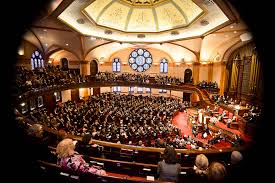
At the September 28, Mass at Washington, D.C.’s Cathedral of St. Matthew the Apostle, Robert Cardinal McElroy delivered a blistering homily against some of President Trump’s immigration policies. The occasion was the 111th World Day of Migrants and Refugees.[1]

The Homily’s Text[2]

“For the past one hundred ten years, Mass has been celebrated throughout our country to honor and support immigrants and refugees who have come to our nation as part of that stream of men and women from every land who have built up the United States into a great nation. But this year is different from the one hundred ten years that have preceded it. For this year we are confronting – both as a nation and as a Church – an unprecedented assault upon millions of immigrant men and women and families in our midst.”

“For the undocumented community of our Archdiocese, your daily witness of faith and family, hard work and sacrifice, compassion and love is a profound reflection of the deepest virtues of our faith and the most noble aspirations of our nation. The theme of today’s procession is hope amidst adversity, and in these days of deep suffering you give us an example of transforming hope and a resiliency that is founded upon the Gospel of Jesus Christ, whose cross symbolizes at its core suffering amidst injustice, and the recognition that in our moments of deepest hardship, our God stands with us.”

“We are witnessing a comprehensive governmental assault designed to produce fear and terror among millions of men and women who have through their presence in our nation been nurturing precisely the religious, cultural, communitarian and familial bonds that are most frayed and most valuable at this moment in our country’s history. This assault seeks to make life unbearable for undocumented immigrants. It is willing to tear families apart, separating grieving mothers from their children, and fathers from the sons and daughters who are the center of their lives. It embraces as collateral damage the horrific emotional suffering that is being thrust on children who were born here, but now face the terrible choice of losing their parents or leaving the only country that they have ever known.”

“Catholic social teaching states that every nation has the right to effectively control its own borders and provide security. Thus, efforts to secure our borders and deport those undocumented immigrants convicted of serious crimes constitute legitimate national goals. At times, our government asserts that these goals constitute the essence and scope of its immigration enforcement efforts, and if that were true Catholic teaching would raise no objection.”

“But the reality we are facing here in the Archdiocese of Washington and across our country is far different. For our government is engaged in — by its own admission and by the tumultuous enforcement actions it has launched – a comprehensive campaign to uproot millions of families and hard-working men and women who have come to our country seeking a better life that includes contributing to building up the best elements of our culture and society. This campaign relies on fear and terror at its core, for the government knows that it cannot succeed in its efforts except by bringing new dimensions of fear and terror to our nation’s history and life. Its goal is simple and unitary: to rob undocumented immigrants of any real peace in their lives so that in misery they will ‘self-deport’.”

“What is the moral foundation for the government in undertaking such a comprehensive campaign of fear, in uprooting ten million people from their homes and expelling them from our country? The government says the answer is simple and determinative: they broke a law when they entered or chose to stay in the United States.”

But today’s Gospel proposes a far different measure for determining whether ten million men and women and children and families who have lived alongside us for decades should face terror and expulsion: are they our neighbors?”

“The Parable of the Good Samaritan is the greatest parable that Jesus gave to the formation of our moral lives and our understanding of bonds of community and sacrifice and embrace in this world. The most striking element of the Parable is not that the Samaritan took notice of the man who had been robbed, or that he was willing to sacrifice on his behalf or that he placed his own life at risk by stopping in a very dangerous location to see if help was needed. No, the most striking element of the Parable is that the Samaritan was willing to reject the norms of society which said that because of his birth and status he had no obligation to the victim, who was a Jew. The piercing insight and glory of the Samaritan was that he rejected the narrowness and myopia of the law to understand that the victim he was passing by was truly his neighbor and that both God and the moral law obligated him to treat him as neighbor.

“In the very same way, for us as believers and citizens, our obligation regarding undocumented women and men is to ask ourselves: Are they truly our neighbor? Is the mother who sacrifices in every dimension of her life to nurture children who will live rightly, productively and caringly our neighbor? Is the man being deported despite the fact that he has three sons who serve in the marines because of the values he taught them our neighbor? Is the woman who works to provide home care for our sick and elderly parents our neighbor? Is the young adult who came here as a child and loves this nation as the only country he has ever known our neighbor? Is the undocumented woman who contributes tirelessly to our parish, caring for the church, leading the daily rosary our neighbor?”

“In the Gospel today Jesus demands that the central perspective we must bring to understanding the moral legitimacy of the campaign of fear and deportation being waged in our country today springs from the bonds of community that have come to tie us together as neighbors, not the question of whether sometime in their past individuals broke a law by entering or remaining in the United States.”

“It is this perspective that must form our stance and action as people of faith. As a Church we must console and peacefully stand in solidarity with the undocumented men and women whose lives are being upended by the government’s campaign of fear and terror. Courage and sacrifice must be the hallmark of our actions at this moment of historic and deliberate suffering being visited upon people living truly good lives that are a credit to our nation. As citizens, we must not be silent as this profound injustice is carried out in our name. The priest and the Levite in today’s Gospel are a stark reminder that in the face of suffering, we so often choose to pass on by – sometimes out of indifference, sometimes out of fear, sometimes out of a general reluctance to become involved.”

“But Jesus rejected this indifference, this fear, this reluctance. His telling last words in the Gospel allow only one option. Which of these in your opinion was neighbor to the robber’s victim? In understanding and facing the oppression of undocumented men and women in our midst, we can only have one response: I was, Lord, because I saw in them your face.”

Reactions

This homily presents the Christian approach to responding to many problems facing many foreigners living in the U.S. today and to making changes in U.S. law and procedures relating to those problems. It implicitly suggests extreme caution in taking any of the changes in U.S. asylum law proposed by U.S. Deputy Secretary of State Christopher Landau.[3]

======================

[1]  Golden, D.C. archbishop calls U.S. immigration crackdown a ‘governmental assault,’ Wash. Post (9/28/25).

[2]

Mass for the 111th World Day of Migrants and Refugees Homily Given by Robert Cardinal McElroy

[3

U.N. Meeting About Revising the Global Refugee and Asylum System
The Tragic Extinguishment of the Eloquence of Robert F. Kennedy

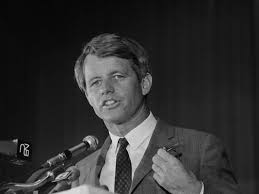
Robert F. Kennedy

Most Americans remember or know about Robert F. Kennedy or “RFK” (1925-1968): brother to U.S. President John F. Kennedy, U.S. Attorney General in his brother’s administration, U.S. Senator from New York, candidate for the Democratic presidential nomination in 1968, and assassinated by Sirhan Bishara Sirhan  on June 6, 1968, at a Los Angeles hotel campaign event.

Less generally remembered or known was RFK’s eloquence, undoubtedly aided by his speechwriters: Adam Walinsky Richard Goodwin and Allard Lowenstein.[1]

One prominent example of Kennedy’s eloquence occurred on April 4, 1968, immediately after the assassination of Rev. Martin Luther King, Jr.  Speaking to a campaign crowd in Indianapolis, Indiana, Kennedy shocked everyone by announcing the news of the assassination and then went on to refer to his own grief at the 1963 assassination of his brother, President John F. Kennedy. Robert added, “My favorite poet was Aeschylus. He once wrote: ‘Even in our sleep, pain which cannot forget falls drop by drop upon the heart, until in our own despair, against our will, comes wisdom through the awful grace of God.’”[2]

Kennedy that night went on to say, “What we need in the United States is not division; what we need in the United States is not hatred; what we need in the United States is not violence or lawlessness; but love and wisdom, and compassion toward one another, and a feeling of justice toward those who still suffer within our country, whether they be white or they be black. . . . Let us dedicate ourselves to what the Greeks wrote so many years ago: ‘to tame the savageness of man and make gentle the life of this world.’”

The next day in Cleveland, Ohio, Kennedy spoke against the “mindless menace of violence in America which again stains our land and every one of our lives.” He added, “Yet we know what we must do. It is to achieve justice among our fellow citizens. . . . We must admit the vanity of our false distinctions among men and learn to find our own advancement in the search for advancement of others. . . . We must admit in ourselves that our own children’s future cannot be built on the misfortunes of others. We must recognize that this short life can neither be ennobled or enriched by hatred or revenge.”[3]

Two other examples of his eloquence were inscribed on Kennedy’s memorial  in Virginia’s Arlington National Cemetery:

  • “It is from numberless diverse acts of courage and belief that human history is shaped each time a man stands up for an ideal or acts to improve the lot of others or strikes out against injustice he sends forth a tiny ripple of hope, and crossing each other from a million different centers of energy and daring those ripples build a current that can sweep down the mightiest wall of oppression and resistance.” (University of Cape Town, South Africa, June 6, 1966)
  • “Some men see things as they are and ask ‘Why?’ I dream things that never were and ask, ‘Why not?'” (1968)

Yet others were included in the previously mentioned June 6, 1966, speech at the University of Cape Town. They all seem, to this observer, to be indirect references to Jesus’ injunction “to love God with all your heart, mind and soul and your neighbor as yourself” and to the Christian notion of vocation.[4] They are the following:

  • First is the danger of futility; the belief there is nothing one man or one woman can do against the enormous array of the world’s ills — against misery and ignorance, injustice and violence. Yet many of the world’s great movements, of thought and action, have flowed from the work of a single man. A young monk began the Protestant reformation, a young general extended an empire from Macedonia to the borders of the earth, and a young woman reclaimed the territory of France. It was a young Italian explorer who discovered the New World, and 32-year-old Thomas Jefferson who proclaimed that all men are created equal. “Give me a place to stand,” said Archimedes, “and I will move the world.” These men moved the world, and so can we all.” (Emphasis added.)
  • Let no one be discouraged by the belief there is nothing one person can do against the enormous array of the world’s ills, misery, ignorance, and violence. Few will have the greatness to bend history, but each of us can work to change a small portion of events. And in the total of all those acts will be written the history of a generation.” (Emphasis added.)
  • Every time we turn our heads the other way when we see the law flouted, when we tolerate what we know to be wrong, when we close our eyes and ears to the corrupt because we are too busy or too frightened, when we fail to speak up and speak out, we strike a blow against freedom and decency and justice.” (Emphasis added.)
  • “Few men are willing to brave the disapproval of their peers, the censure of their colleagues, the wrath of their society. Moral courage is a rarer commodity than bravery in battle or great intelligence. Yet it is the one essential, vital quality for those who seek to change a world that yields most painfully to change.” (Emphasis added.)

Conclusion

I weep again at our loss of this inspiring, eloquent and passionate man. How I wish he were still here and our president so that we did not have to listen to the constant falsehoods and drivel from the man who now ineptly occupies that office.

==============================================

[1] Larry Tye, Bobby Kennedy: The Making of a Liberal Icon at 373 (Random House; New York, 2016).

[2] Edwin O. Guthman & C. Richard Allen (eds.), RFK: Collected Speeches at 355-58 (Viking; New York, 1993). See Aeschylus on Suffering and Wisdom, dwkcommentaries.com (Feb. 10, 2014).

[3] Guthman & Allen at 358-62.

[4] Tye at 410-12; Guthman & Allen at 231-46. See Another Perspective on the Parable of the Good Samaritan, dwkcommentaries.com (July 27, 2017).

Another Perspective on the Parable of the Good Samaritan

Another perspective on the famous Parable of the Good Samaritan was offered by Associate Pastor Brennan Blue in his July 23rd sermon at Minneapolis’ Westminster Presbyterian Church.[1]

Rev. Brennan Blue
Westminster Presbyterian Church


The Holy Scripture

The Parable itself is expressed in Luke 10: 25-37 (NRSV) as follows:

  • “Just then a lawyer stood up to test Jesus. ‘Teacher,’ he said, ‘what must I do to inherit eternal life?’ [Jesus] said to him, ‘What is written in the law? What do you read there?’ [The lawyer] answered, ‘You shall love the Lord your God with all your heart, and with all your soul, and with all your strength, and with all your mind; and your neighbor as yourself.’ And [Jesus] said to [the lawyer], ‘You have given the right answer; do this, and you will live.’”
  • “But wanting to justify himself, [the lawyer] asked Jesus, ‘And who is my neighbor?’ Jesus replied, ‘A man was going down from Jerusalem to Jericho, and fell into the hands of robbers, who stripped him, beat him, and went away, leaving him half dead. Now by chance a priest was going down that road; and when he saw him, he passed by on the other side. So likewise a Levite, when he came to the place and saw him, passed by on the other side. But a Samaritan while traveling came near him; and when he saw him, he was moved with pity. He went to him and bandaged his wounds, having poured oil and wine on them. Then he put him on his own animal, brought him to an inn, and took care of him. The next day he took out two denarii, gave them to the innkeeper, and said, ‘Take care of him; and when I come back, I will repay you whatever more you spend.’ Which of these three, do you think, was a neighbor to the man who fell into the hands of the robbers?’” [The lawyer] said, ‘The one who showed him mercy.’ Jesus said to him, ‘Go and do likewise.’”

The Sermon

 In “the parable of the Good Samaritan, why it is that even the most well-trained priest or Levite may walk on by a neighbor in need?”

“On the one hand, this parable reminds us that we are called to put our faith and love into action, plain and simple. Yet this parable occurs in a vacuum. There is one person of need, one act of love to counter the one great injustice at hand.” (Emphasis added.)

 “But what happens when there’s another neighbor in need along the way? Do you set aside the first to help the second? What if each step brings another worry or need, bigger and more complex than the one before it?”

“Perhaps you know the feeling. Confronted with a complex constellation of needs and problems surrounding our lives and communities, it’s easy to become overwhelmed. Another election argument, another policy change, another broken relationship. Another act of hate and discrimination, another single parent facing another night on the street with her family, another police shooting in our city. Another setback, another neighbor in need.”

“How can you or I keep up with it all, let alone make a difference? Maybe it’s best to just take a break from the headlines, find a new game on our smartphone and just sort of take our mind off of things.”

Apathy subdues our action. Despair clouds our hope. Distraction does exactly what it describes – it dis-tractions us and robs us of a way forward. These invasive influences make it easier to check out than dig in.” (Emphasis added.)

“I’ve always sort of assumed that the young lawyer in this parable is asking the question ‘who is my neighbor’ from a relatively blank slate. But it’s clear that this young lawyer knows his stuff. Remember, Jesus asks him what is written in the Scriptures regarding eternal life, and that beautifully succinct response of ‘you shall all love God, and love your neighbor as yourself’ comes from him.”

“So what if his follow-up question – who is my neighbor? – is coming less from a place of innocence or ignorance and more from a place of knowing exhaustion? What if this young lawyer has eyes to see the many people around him who represent his neighbor and with a dizzying head is simply trying to figure out where to even begin?” [2]

“I found help and hope for this very question on the second workday of our high school ]mission] trip while building new trails at Young Gulch, a beloved national forest area now closed to the public due to past fire and flooding damage. With hardhats, picks, shovels, ropes and rock bars, we hiked a mile and half up and into our new worksite carrying the hope of a new day. It was there, while shoveling, sawing, lifting and hauling, that we were introduced to the art of trail building and the important work of finding the critical edge.” (Emphasis added.)

“In terms of trail building, the critical edge forms the crucial guiding line from which you begin and orient your work. It is the marker between path and planet, trail and wilderness. Your footing and direction are both determined from there, and though countless shrubs and boulders may lie ahead and around, the critical edge marks where you will carve out your 30” wide path, and that is what makes the work doable. So for our team of 30 students and 6 adults, this critical edge became our path by which to walk and work. And work we did! It was like being blessed with the gift of traction. Our critical edge to guide us, we literally dug in and blazed new trails that others, we hope, may follow and enjoy for years to come.” (Emphases added.)

“This process of finding traction for our work was brought home in a new workshop that we incorporated into our mission trips this year. A workshop called ‘Mission Possible.’

“Essentially, Mission Possible is an exercise that challenges multiple groups to take on a complex and often overwhelming social problem using a very limited set of ‘dealt resources.’ The creative challenge is to find which crucial slice of the problem your team wants to focus on and then leverage your limited resources to make the greatest possible impact.” (Emphases added.)

“Middle schoolers using glass jars to build empathy. High school students using wooden baskets to raise awareness via social media. Neither of these ideas will knock out the layered, complex problems of bullying and climate change, but they do provide a way forward, a critical edge to ward off apathy and dig into action. The goal here is to root out those invasive influences of distraction and despair, and then live out our calling by putting our faith into action. We don’t have to move every boulder, but we do need to discern and then do our part.” (Emphasis added.)

“That, I believe, is what Jesus is getting at in this parable: connecting exposed belief to explicit action. Even if this young lawyer is asking ‘who is my neighbor’  from a place of overwhelming apathy and despair, there is hope is Jesus’ simple response. Know who you are and who your neighbors are, and even if can only reach out to one, do it. Put your faith into action, even if others are walking by. Be that very inspiration. Host a book read; plant a rain garden; start a justice choir; advocate for mental health programs. Find your critical edge and dig in.” (Emphases added.)

“Friends, this is the work we have been doing together as a community throughout the entire Open Doors, Open Futures process. . . . In fact, in seeking to find our own critical edge, Westminster has set aside serious time . . . to ask of God and one another this young lawyer’s question – “who is our neighbor?” In the midst of our work and worship, we’ve [been] wrestling and discerning questions about our gifts, resources, and partnerships, seeking to understand where God is calling us as a community. “

“By engaging these very questions, we are finding action in place of apathy, hope in the midst of despair, and the blessing of traction for our ministry even in our changing downtown context.”

“That’s what the love of God and neighbor demands of us: find your place of calling, your critical edge, and dig in. It’s as simple as that and as hard as that.” (Emphasis added.)

“In the continuum of apathy and action, where do you fall today? What are your gifts? Who is your neighbor? Have you found your critical edge? May God bless us with traction for lives and ministries.” (Emphasis added.)

The Prayer of Confession

Before the reading of the Holy Scripture and the sermon, the congregation joined in the following prayer of confession:

  • “Gracious God, our sins and sorrows are too heavy to carry, too real to hide, and too deep to undo. Forgive what our lips tremble to name and what our hearts can no longer bear. Set us free from a past that we cannot change and open to us a future in which we can be changed. May the light of your love open our eyes to the grace that is already calling us home. By your grace, may we grow ever more in your way of justice, mercy, and peace.”

Conclusion

Another frequent, and appropriate, interpretation of this parable emphasizes that the Levite and the priest who passed by the injured man were of higher status in Israel at the time whereas the Samaritans were not well-regarded. Thus, one’s status in the community is not the mark of a good neighbor. Instead, what counts is what one does to help the injured man. In this instance, the Samaritan is clearly a good neighbor.

However, the overall message of Jesus, for me, is that anyone and everyone is my neighbor. Thus, the question arises as to whether and how any individual can help everyone. The answer to this question is clearly “No,” and the result of such reflection, as the sermon suggests, can be incapacitation of the individual and failure to be kind to a neighbor, failure to provide help to a neighbor.

That leads to the second foundation of my Christian faith. God knows that we fail and yet forgives us. The most powerful statement of God’s forgiveness comes in another story by Jesus, The Parable of the Prodigal Son (Luke 15: 11-31).

But Jesus is not calling each of us to try to do everything that needs doing in the world.

Important in my own struggles with this dilemma is the following homily often attributed to my personal saint, Archbishop Oscar Romero, but actually written in November 1979 by Kenneth Edward Untener, the Roman Catholic Bishop of Saginaw, Michigan, for a memorial mass for deceased priests:[3]

  • “The kingdom is not only beyond our efforts, it is beyond our vision.”
  • “We accomplish in our lifetime only a tiny fraction of the magnificent enterprise that is God’s work. Nothing we do is complete, which is another way of saying that the Kingdom always lies beyond us.”
  • “No statement says all that could be said. No prayer fully expresses our faith. No confession brings perfection. No pastoral visit brings wholeness. No program accomplishes the church’s mission. No set of goals and objectives includes everything.”
  • “That is what we are all about. We plant seeds that one day will grow. We water seeds already planted, knowing that they hold future promise. We lay foundations that will need further development. We provide yeast that produces effects beyond our capabilities.”
  • “We cannot do everything, and there is a sense of liberation in realizing that. This enables us to do something, and to do it very well. It may be incomplete, but it is a beginning, a step along the way, an opportunity for the Lord’s grace to enter and do the rest.”
  • “We may never see the end results, but that is the difference between the master builder and the worker. We are workers, not master builders; ministers, not messiahs. We are prophets of a  future that is not our own.”

Rev. Blue’s questions at the end of his sermon are very helpful. Find your place of calling or critical edge. Then, dig in and do what you can to help your neighbor, knowing and accepting that it may not be perfect or complete.

Another Presbyterian pastor and author, Frederick Buechner, puts it this way. Each of us needs to find his or her vocation which “comes from the Latin vocare, to call, and means the work a man is called to by God. . . . The kind of work God usually calls you to is the kind of work (a) that you need most to do and (b) that the world most needs to have done. . . . The place God calls you to is the place where your deep gladness and the world’s deep hunger meet.”[4]

Vocation, for me, implies a dedication to a certain kind of work or service over a period of time. A one-time effort probably does not count. On the other hand, in my opinion, vocation does not necessarily require a lifetime commitment to doing a certain thing. Indeed, an individual’s circumstances change over time, and what was a vocation for one period may not be appropriate for another period. Thus, an individual may have several vocations over time, some of which might be simultaneous. This at least has been true for me.

Some people may decide that they shall start engaging in a particular vocation. They know from the start that a certain course of action shall be their vocation, perhaps inspired by what they believe to be the word of God. Others discover after the fact that what they have been doing for a period of time has been and is their vocation. I am a member of the latter group.

Deciding on what shall be or is a vocation should be, in my opinion, a matter of reflection, meditation and prayer and in some cases discussion with others to assist in discerning a true vocation.[5]

===============================================

[1] The bulletin for the service and the text of the sermon are available on the church’s website.

[2] Another interpretation of this Parable does not see the lawyer as honestly seeking guidance from Jesus. Instead the lawyer is seen as cleverly asking trick questions to elicit answers from Jesus that could be twisted to incriminate him. Jesus, however, more cleverly declines to answer the questions and instead induces the lawyer to answer his own questions, the second  after Jesus tells a story. (My Christian Faith, dwkcommentaries.com (April 6, 2011).)

[3] Ken Untener, The Practical Prophet : Pastoral Writings at iii (Paulist Press; New York 2007) (Untener called this prayer “Reflection on Ministry”).

[4] See My General Thoughts on Vocation, dwkcommentaries.com (Feb. 6, 2014).

[5] See My Vocations, dwkcommentaries.com (Feb. 23, 2014).