The Multilateral Treaty Against Torture

On December 10, 1984, the U.N. General Assembly unanimously adopted by resolution the text of a multilateral treaty against torture. Technically it is called the Convention Against Torture and Other Cruel, Inhuman or Degrading Treatment or Punishment (CAT). Under its Article 27(1), the treaty would go into force or effect 30 days after the 20th instrument of ratification or accession had been deposited with the U.N. Secretary-General. In fact, it went into force on June 26, 1987.[1]

CAT’s Article 1(1) defines “torture” as “any act by which severe pain or suffering, whether physical or mental, is intentionally inflicted on a person for such purposes as obtaining from him or a third person information or a confession, punishing him for an act he or a third person has committed or is suspected of having committed, or intimidating or coercing him or a third person, or for any reason based on discrimination of any kind, when such pain or suffering is inflicted by or at the instigation of or with the consent or acquiescence of a public official or other person acting in an official capacity. It does not include pain or suffering arising only from, inherent in or incidental to lawful sanctions.”[2]

Under CAT, each State Party is obligated to (a) take steps to prevent acts of torture within its jurisdiction; (b) not to expel, return (“refouler“) or extradite a person to another state where there are substantial grounds to believe he would be in danger of being tortured; (c) to make acts of torture (and attempts and participation in torture) criminal offenses under its domestic laws; (d) to establish jurisdiction over offenses of torture that are committed on its own territory or on a ship or aircraft registered in that State, or by a national of that State, or when the victim is a national of that State, or when committed outside the State by a foreigner who is present in the State; (e) to investigate and prosecute individuals for alleged torture; (f) to train law enforcement and military personnel and others about the ban on torture; (g) to review and revise interrogation practices to prevent torture; (h) to provide legal remedies for victims of torture;  and (i) to exclude statements invoked by torture from evidence in any proceedings (except for cases for alleged torture).[3]

CAT in Article 2 bans two potential defenses to charges of torture. First, “No exceptional circumstances whatsoever, whether a state of war or a threat of war, internal political instability or any other public emergency, may be invoked as a justification of torture.” (Emphasis added.) Second, an “order from a superior officer or a pubic authority may not be invoked as a justification of torture.” (Emphasis added.)

Under CAT’s Article 16(1), each State Party is obligated ” to prevent in any territory under its jurisdiction other acts of cruel, inhuman or degrading treatment or punishment which do not amount to torture as defined in article I, when such acts are committed by or at the instigation of or with the consent or acquiescence of a public official or other person acting in an official capacity.”

CAT in Articles 17 through 24 establishes a Committee Against Torture (CAT) of 10 independent experts who are elected by the parties to the treaty to monitor its implementation. All States parties are obliged to submit periodical reports to the Committee on how the treaty is being implemented in their countries. The Committee examines each report and addresses its concerns and recommendations to the State party in the form of “concluding observations.”[4]

The Committee may, under certain circumstances, consider individual complaints or communications claiming that their rights under the Convention have been violated, undertake inquiries and consider complaints by states. The Committee also publishes its interpretations of the treaty as “general comments” on thematic issues.[5]

Today 148 of the 193 members of the U.N. (76.7%) are parties to the CAT; a non-U.N. member (the Holy See) is also a party to CAT. One of those parties is the U.S. upon its ratification of CAT on October 21, 1994, which will be the subject of a future post.[6] Here is the geographical breakdown of the states that are and are not parties to this treaty:

Yes No Total
Africa 44   3   47
Asia 26 25   51
Europe 44   2   46
Latin America/Caribbean 22 11   33
Middle East 11   4   15
North America   2   0     2
TOTAL[7] 149 45 194

The development of the text of CAT began in December 1975 with the U.N. General Assembly’s adoption of two resolutions: one was the Declaration for the Protection of All Persons from Being Subjected to Torture and Other Cruel, Inhuman or Degrading Treatment or Punishment; the other asked the U.N. Commission on Human Rights to study the question of torture and how to enforce the Declaration on the subject. Two years later (December 1977) the General Assembly specifically requested the Commission to prepare a draft treaty on the subject.[8]

In February 1978 the Commission started its work on drafting the treaty. The Commission finished its work in March 1984 when it submitted its draft of the treaty to the U.N. Economic and Social Council for ultimate submission to the U.N. General Assembly.  The key issues addressed by the Commission in this process were revising the Declaration’s definition of “torture” and  deciding how a state could exercise jurisdiction over torture outside its territory committed by non-nationals and how to have international supervision of compliance with the treaty.[9]

Two months later (May 1984) that Council turned over the draft to the General Assembly through the latter’s Social, Humanitarian and Cultural Affairs Committee (commonly referred to as the Third Committee), which with some amendments approved the draft for the General Assembly in early December 1984. As noted above, the General Assembly on December 10, 1984, unanimously approved the Convention.[10]

The seven to nine years it took the U.N. to develop and approve this treaty might seem like an unnecessarily long time. However, to obtain international input and consensus through several U.N. bodies on an important subject like creating legal obligations regarding torture is a complicated process. For example, diplomats involved in the actual drafting and negotiating the language of a draft treaty are interacting with other countries’ representatives in multiple languages on multitudes of issues. In addition, each country’s diplomats need to report developments to their superiors in the capitols of the world and to obtain new instructions. Thus, it should not be surprising to take seven to nine years to accomplish these tasks.


[1] CAT, http://www2.ohchr.org/english/law/cat.htm; David Weissbrodt, Fionnuala Ní Aoláin, Joan Fitzpatrick, and Frank Newman, International Human Rights: Law, Policy and Process, at 140-41 (4th ed. 2009).

[2] Id.

[3] CAT, Arts. 2(1), 3(1), 4(1), 5(1), 7(1), 10(1), 11(1), 12, 13, 14, 15.

[4] U.N. High Commissioner for Human Rights, Committee Against Torture, http://www2.ohchr.org/english/bodies/cat/index.htm.

[5]  Id.

[7]  There are 193 members of the U.N., and one non-member of the U.N. (the Holy See) is a Party to the Torture Convention. Thus, the total number of states in the table is 194.

[8]  Audiovisual Library of International Law, Convention Against Torture and Other Cruel, Inhuman or Degrading Treatment or Punishment, http://untreaty.un.org/cod/avl/ha/catcidtp/catcidtp.html; J. Herman Burgens, The United Nations Convention Against Torture: A Handbook on the Convention Against Torture and Other Cruel, Inhuman or Degrading Treatment or Punishment (Dordrecht; Boston, 1988); Manfred Nowak & Elizabeth McArthur, The United Nations Convention Against Torture: A Commentary at 3-7 (Oxford Univ. Press; Oxford, 2008). The history of the development of a treaty on torture goes back even further, to at least 1948’s Universal Declaration of Human Rights, if not earlier. (Id.)

[9] Id.

[10]  Id.
Important Foreign Sovereign Immunity Case

On November 7th, the U.S. Court of Appeals for the Second Circuit in New York City decided an important case on whether or not the Islamic State of Afghanistan was entitled to sovereign immunity in a lawsuit for money damages by the estate of a woman who was killed in the terrorist attacks on the World Trade Center on September 11, 2011. The court concluded that Afghanistan was not entitled to such immunity without discovery and determination by the trial court.[1]

The question of sovereign immunity of foreign states in U.S. courts is governed by the Foreign Sovereign Immunities Act of 1976 as amended. The general rule is that “a foreign state shall be immune from the jurisdiction of the courts of the United States and of the States.”[2] There, however, are statutory exceptions to such immunity.[3]

The issue in this case was whether the noncommercial tort exception applied at the initial stages of the lawsuit, and the court said that it did, but that the trial court on remand would have to decide after limited discovery whether all of the conditions for the exception were established by the evidence.

This exception applies to cases that (i) are noncommercial, (ii) seek “money damages,” (iii) for “personal injury or death, or damages to or loss of property,” (iv) that occurred in the U.S. and (v) and that were “caused by the tortious act” (vi) of a defendant “foreign state or [its] employee . . . acting within the scope of his . . . employment” unless (vii) the claims were based on a discretionary act. According to the Second Circuit, there was no question that the complaint alleged that these requirements for this exception were present.[4]

The court then rejected Afghanistan’s argument that the noncommercial tort exception was further limited by the terrorism exception to sovereign immunity and that such an interpretation called for dismissal of the case because Afghanistan had not been designated by the U.S. as a state sponsor of terrorism as required by that exception.[5]

As the court acknowledged, this last ruling on the terrorism exception overruled a prior decision of the Second Circuit.[6] Ordinarily this would be forbidden because a three-judge panel of the Second Circuit (or any other circuit court of appeals) is “bound by the decisions of prior panels” [of the same multi-judge court] until such time as they are overruled by an en banc panel [all the judges] of our Court or by the Supreme Court.”[7] The three-judge panel panel in the Bin Laden case, however, circulated its opinion to the members of the other panel in the 9-11 case and all 12 active Second Circuit judges and received no objection to the Bin Laden opinion; this procedure, said the Bin Laden panel, was a so called “mini-en banc” procedure.[8]


[1] Opinion, Doe v. Bin Laden, No. 09-4958-cv (2d Cir. Nov. 7, 2011); Lichtblau, Prospects Improve for Sept. 11 Suits Against Nations, N.Y. Times (Nov. 18, 2011).

[2] 28 U.S.C. §1604.

[3] 28 U.S.C. §§1604-1607.

[4] 28 U.S.C. §1605(a)(5); Opinion at 4-5. There is another exclusion from this exception for certain types of claims that were not present in this case. (Opinion at  5.) See generally David Weissbrodt, Fionnuala Ní Aoláin, Joan Fitzpatrick, and Frank Newman, International Human Rights: Law, Policy and Process, at 1001-14 (4th ed. 2009).

[5] 28 U.S.C. §1605(a)(7); Opinion at 5-12.

[6] In re Terrorist Attacks on September 11, 2011, 538 F.3d 71, 89 (2d Cir. 2008)(affirmance of dismissal on ground of sovereign immunity of tort case for money damages against Saudi Arabia for alleged financial and logistical support of the 9/11 attacks).

[7] Shipping Corp. of India v. Jaldhi Overseas Pte, 585 F.3d 58, 67 & n.9 (2d Cir. 2009).

[8] Opinion at 12 n.10, Doe v. Bin Laden, surpa; cf. Fed. R. App. Pro. 35(a)(1)(majority of  active circuit judges may order en banc consideration of a case “to secure or maintain uniformity of the court’s decisions”).

Developments in El Salvador Cases before the Inter-American Commission on Human Rights

The Inter-American Commission on Human Rights (IACHR) in 1999 determined that El Salvador had violated the American Convention on Human Rights with respect to the 1989 murders of six Jesuit priests along with their housekeeper and her daughter. As a result, the Commission recommended that El Salvador undertake a complete and impartial investigation to identify, try and punish the perpetrators of that crime, make reparations for the violations and repeal its General Amnesty Law.[1]

In 2000 the IACHR determined that El Salvador had violated the American Convention on Human Rights with respect to the 1980 assassination of Archbishop Oscar Romero and made similar recommendations with respect to this crime.[2]

As we have seen, El Salvador has not implemented these recommendations other than making  important symbolic public confessions of state responsibility and pleas for forgiveness along with praise for the victims of these crimes.[3]

In October 2011, the IACHR held a working session on the status of El Salvador’s implementation of the Commission’s recommendations in these cases. Two non-governmental human rights organizations (Human Rights Institute at the University of Central America and the Center for Justice and International Law) expressed frustration over the failure of the state to implement these recommendations. They also complained about the failure of El Salvador to cooperate with the Jesuits case in the courts of Spain by failing to enforce the INTERPOL Red Notice for the arrests of some of the defendants in that case.[4]

Unfortunately there is not much that the IACHR can do to change these circumstances. Nor can President Funes do much more because his political party (the FMLN) does not control the country’s legislature or office of the prosecutor.

[1] Post: International Criminal Justice: The Jesuits Case Before the Inter-American Commission on Human Rights (June 13, 2011).

[2] Post: Oscar Romero’s Assassination Case in the Inter-American Commission on Human Rights (Oct. 13, 2011).

[3] See nn. 1, 2 supra.

[4] Center for Justice & Int’l Law, El Salvador is still in breach of the IACHR recommendations in the case of Monsignor Romero and the slaughter at the UCA (Oct. 27, 2011); Impunity continues for the crimes of the 1980s, Tim’s El Salvador Blog (Nov. 5, 2011); Post: International Criminal Justice: El Salvador’s General Amnesty Law and Its Impact on the Jesuits Case (June 11, 2011); Post: The Current Controversy Over El Salvador’s General Amnesty Law and Supreme Court (June 16, 2011); Post: International Criminal Justice: Spanish Court Issues Criminal Arrest Warrants for Salvadoran Murders of Jesuit Priests (May 31, 2011); Post: International Criminal Justice: Developments in Spanish Court’s Case Regarding the Salvadoran Murders of the Jesuit Priests (Aug. 26, 2011).

International Criminal Court: New States Parties, Judges and Prosecutor

By the end of this year the International Criminal Court (ICC) will have at least five new States Parties to its Rome Statute, six new judges and a new Prosecutor.

New States Parties. So far this year two additional African states (Tunisia and Cape Verde), two additional Asian states (Maldives and Philippines) and one Latin American/Caribbean state (Grenada) have joined the ICC.[1] The following shows the current geographical makeup of the States Parties to the ICC’s Rome Statute:

 ICC States Parties?

  Yes No Total
Africa[2]    33 14   47
Asia[3]    17 35   52
Europe[4]    40   4   44
Latin America/Caribbean[5]    26   7   33
Middle East[6]      2 13   15
North America[7]      1   1     2
TOTAL[8] 119 74 193

 New Judges. This December at a meeting at the U.N. the States Parties will elect six new judges of the Court. The statutory criteria for these positions are the following:[9]

  • High moral character;
  • Impartiality;
  • Integrity;
  • Possessing the qualifications required by their States for appointment to their highest judicial offices;
  • Excellent knowledge of the Court’s two “working languages” (English and French) and fluency in at least one of these languages;
  • Established competency in either (a) “criminal law and procedure, and the necessary relevant experience, whether as judge, prosecutor, advocate or in similar capacity, in criminal proceedings” (the List A candidates) or (b) “relevant areas of international law such as international humanitarian law and the law of human rights, and extensive experience in a professional legal capacity which is of relevance to the judicial work of the Court” (the List B candidates);[10] and
  • At least some of the judges need to have “legal expertise on specific issues, including, but not limited to, violence against women or children.”

Nineteen individuals have been nominated for these positions; 16 were the List A candidates while 3 were List B. All of them were evaluated by the Independent Panel on ICC Judicial Elections which found that three of the 16 List A candidates were unqualified for lack of criminal law experience while one of the three List B candidates was unqualified for lack of experience in humanitarian law or human rights.[11] The following 15 were found to be qualified:

List A


1. BANKOLE THOMPSON, Rosolu John (Sierra Leone)
2. BOOLELL, Vinod (Mauritius)
3. BRIA, Modeste-Martineau (Central African Republic)
4. CARMONA, Anthony Thomas Acquinas (Trinidad and Tobago)
5. CATHALA, Bruno (France)
6. CIFUENTES MUÑOZ, Eduardo (Colombia)
7. EBOE-OSUJI, Chile (Nigeria)
8. FREMR, Robert (Czech Republic)
9. HERRERA CARBUCCIA, Olga Venecia (Dominican Republic)
10. KAM, Gberdao Gustave (Burkina Faso)
11. MINDUA, Antoine Kesia-Mbe (Democratic Republic of the Congo)
12. MORRISON, Howard (United Kingdom)
13. NOUHOU, Hamani Mounkaila (Niger)

List B


1. CZAPLIŃSKI, Wladyslaw (Poland)
2. DEFENSOR-SANTIAGO, Miriam (Philippines)

Observers have criticized these candidates as lacking substantial international reputations of excellence.[12]

The Independent Panel also made suggestions for improving the Court’s judicial selection process. Nominating governments should provide a description of their nomination process and should be promptly notified of any missing information in the nomination papers. The Assembly of States Parties (ASP) should advise nominating governments whether nominees may continue professional activities that might create conflicts of interest if they are elected. The ASP also should consider (i) what to do if there are two judges from the same country as a result of some current judges continuing in office past the term to complete court business; (ii) whether there should be a practice of not nominating candidates who would exceed a certain age or who were not in good health if they were to serve their full nine-year term; (iii) establishing a code of conduct for candidates; and (iv) establishing an advisory committee on judicial nominations.[13]

New Prosecutor. This December at a meeting at the U.N. the States Parties will elect by consensus a new Prosecutor of the Court, and consensus is expected to be reached by November 28th. Four individuals have been recommended for this position by the Search Committee, and the New York Times reports that the favorite is Mrs. Fatou Bensouda, the current Deputy Prosecutor for the Court. She clearly has the most extensive and most recent experience in the Office of the Prosecutor, a very valuable credential.[14] She also is an African, and there is a lot of pressure from the African States Parties to select an African for this position since all of the initial investigations and prosecutions come from Africa. The fact that she is a woman is also seen by many as important.[15]


[1] ICC, States Parties to the Rome Statute, www2.icc-cpi.int/Menus/ASP/states+parties.

[2] The principal African states that are notICC members are Algeria, Angola, Eritrea, Ethiopia, Libya, Rwanda, Somalia, Sudan and Zimbabwe. (Compare id. with U.N., List of Member States of United Nations,http://www.un.org/en/members/index.shtml.

[3] The principal Asian states that are not ICC members are China, Democratic Republic of Korea, India, Indonesia, Iran, Malaysia, Myanmar, Pakistan, Thailand and Viet Nam. Id.

[4] The principal European states that are not ICC members are Belarus, the Russian Federation and Ukraine. Id.

[5]  The principal Latin American and Caribbean states that are not ICC members are Cuba, El Salvador, Guatemala and Nicaragua.  Id.

[6]  The only Middle Eastern states that are ICC members are Cyprus and Jordan.  Id.

[7]  Canada is the only North American state that is an ICC member. The U.S.A. is the only North American state that is not an ICC member.  Id.

[8]  There are 192 members of the U.N., and a non-member of the U.N. (Cook Islands) is an ICC State Party. Thus, the total number of states in the table is 193. Id.

[9] Rome Statute, Arts. 36(3), 38(8)(b), 50(2); Post: International Criminal Court: Basics of Its Upcoming Judicial Election (June 23, 2011); Post: International Criminal Court: Required and Recommended Qualifications for ICC Judges (June 24, 2011).

[10] List A judges are supposed to be at least nine in number; the List B judges, at least five. (Rome Statute, Art. 36(5).) All six of the retiring judges came from the A List. Of the six to be elected this December at least two must come from the A List while no one has to be from the B List. (See Post: The International Criminal Court: Basics of Its Upcoming Judicial Elections (June 23, 2011).)

[11] ICC, Election of six judges–December 2011 (Oct. 14, 2011), www2.icccpi.int/Menus/ASP/Elections /Judges/ 2011/2011.htm; Independent Panel on ICC Judicial Elections, Report on International Criminal Court Judicial Nominations 2011 (Oct. 26, 2011), http://www.iccindependentpanel.org/sites/default/ files/ Independent%20Panel%20on%20ICC%20Judicial%20Elections%20-%20Report%2026%20October%202011.pdf [Independent Panel Report]; Van Schaack, Independent Panel on ICC Judicial Elections, IntLawGrrls (Nov. 1, 2011);

[12] Binham, The Hague struggles to find judges, Fin. Times (Sept. 14, 2011); Amann, How to deepen shallow ICC judges pool, IntLawGrrls (Sept. 19, 2011).

[13] Independent Panel Report.

[14] Post: International Criminal Court: Its Upcoming Prosecutor Election (June 25, 2011); Post: International Criminal Court: Four People Recommended for Election as ICC Prosecutor (Oct. 25, 2011). Mrs. Bensouda recently made a presentation about lessons learned in the ICC’s first trial. (Bensouda, Update on Trials and the Closing of the First Case (Oct. 5, 2011), www2.icc-cpi.int/nr/exeres/2386f5cb-b2a5-45dc-b66f-17e762f77b1f.htm; Post: International Criminal Court: Recent Developments in Other ICC Investigations and Cases (Nov. 17, 2011).) Mrs. Bensouda is now in Libya with the Prosecutor to discuss with Libyan officials the sensitive subject of where the two remaining ICC Libyan suspects will be tried. (Comment: ICC Prosecutor and Deputy Prosecutor in Libya To Discuss Future Trials (Nov. 22, 2011).)

[15] Simons, The Hague: Four Prosecutor Finalists, N.Y. Times (Oct. 26, 2011); Amann, ICC consensus this week?, IntLawGrrls (Nov. 20, 2011).

International Criminal Court: Recent Developments in Proposed ICC Investigations

In addition to the seven investigations being conducted by the International Criminal Court (ICC), its Office of the Prosecutor (OTP) conducts preliminary examinations of other situations to determine if an official investigation should be conducted. Four such possible preliminary examinations deserve comment.

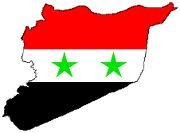
Syria. This June there were reports that Syrian opposition and human rights groups had asked the OTP to seek authorization for an investigation into alleged crimes by the Syrian government and that discussions about a possible U.N. Security Council referral of the Syrian situation to the ICC were occurring.[1] Since then the Syrian regime has continued to attack and kill protesters with at least 3,500 protesters killed since the uprising began in March.[2] So far the OTP has not commented on Syria.

Recently four U.S. Senators (Dick Durbin, Benjamin Cardin, Robert Menendez and Barbara Boxer) sent a letter to the U.S. Ambassador to the U.N. (Susan Rice) asking for such a Security Council referral. They said, “The people of Syria deserve to know that the people of the United States understand their plight, stand behind them, and will work to bring justice to the country.” The Security Council, the Senators added, should be deeply troubled by the “credible threats to . . . [the] safety” of the U.S. Ambassador to Syria that forced him to leave the country. Security Council referral of Syria to the ICC also has been endorsed by the New York Times.[3]

Palestine. In January 2009, the Palestinian National Authority lodged a declaration with the ICC under Article 12(3) of the Rome Statute which allows States not party to the Statute to accept the Court’s jurisdiction. Later (October 2009) representatives of the Authority and the Arab League visited the Court to support the Authority’s ability to delegate its jurisdiction to the ICC.[4]

The OTP will examine issues related to its jurisdiction: first whether the declaration accepting the exercise of jurisdiction by the Court meets statutory requirements; and second whether crimes within the Court’s jurisdiction have been committed. The Office will also consider whether there are national proceedings in relation to alleged crimes. The OTP has not made any determination on the issue, and recently the Prosecutor said that the issue of Palestinian statehood would have to be resolved elsewhere before the OTP issued any kind of statement on this request.[5]

The recent, and so far unsuccessful, efforts of the Authority to obtain U.N. membership for Palestine have heightened interest in the Authority’s seeking an ICC investigation of Israel’s military actions in the Gaza. Being a member of the U.N. would strengthen the Authority’s argument for ICC jurisdiction over alleged crimes committed by Israel in Gaza.[6]

Liberia. Before Liberia’s recent re-election of Ellen Johnson Sirleaf Tubman as its president, the OTP released a public statement that it was monitoring the pre-election activities of all of the candidates and political parties and that “resorting to violence will not be tolerated.”[7]

Roman Catholic Church Officials. In September a U.S. human rights NGO (the Center for Constitutional Rights) and the Survivors Network of Those Abused by Priests filed a complaint with the OTP seeking an investigation of high-level Vatican officials for alleged cover-up of rapes and sexual violence committed by individual priests as a crime against humanity.[8]

This application poses serious questions as to whether the ICC has jurisdiction over such claims, and I anticipate it will take a long time for the OTP to make any public statement about this request. I will be surprised if the OTP decides to seek approval for such an investigation from the Pre-Trial Chamber of the Court.


[1] Post: International Criminal Court: Possible U.N. Security Council Referral of Syrian Human Rights Abuses to ICC (June 6, 2011).

[2] Bakhi & Gladstone, Syria Faces New Threats as Opposition Seeks Allies, N.Y. Times (Nov. 15, 2011).

[3] US senators: Charge Assad before ICC, Google News (Oct. 25, 2011); Editorial, The Killing in Syria Goes On, N.Y. Times (Nov. 16, 2001).

[4]  ICC, Palestine, www2.icc-cpi.int/Menus/ICC/Structure+of+the+Court/Office+of+the+Prosecutor; Dunphy, An Interview with Luis Moreno-Ocampo (Oct. 1, 2011), http://amicc.blogspot.com.

[5]  Id.; Dunphy, An Interview with Luis Moreno-Ocampo (Oct. 1, 2011), http://amicc.blogspot.com.

[6] Reuters, Committee Is Deadlocked Over Palestinian Membership Bid, N.Y. Times (Nov. 11, 2011); Maccarone, The Palestinian Authority’s Application for United Nations Membership and Its Implications for the International Criminal Court (Sept. 27, 2011), http://www.amicc.org/docs/Palestine_and_the_ICC.pdf.

[7]  ICC prosecutor “monitoring” Liberia elections, expatica. com (Oct. 14, 2011).

[8]  Center for Constitutional Rights, In the Case Against Vatican Officials for Rape and Sexual Violence, We’ve come to the End of the Beginning (Sept. 27, 2011).

International Criminal Court: Recent Developments in Other ICC Investigations and Cases

Recent developments in the ICC’s Libyan investigation and cases have been examined.[1] There also have been interesting developments in four of the other situations under investigation by the ICC: the Democratic Republic of Congo (DRC or Congo), Uganda, Darfur (Sudan), and the Ivory Coast.

Mrs. Fatou Bensouda

Congo. The evidence and arguments in the ICC’s first case to go to trial are over, and the decision of the Trial Chamber is expected early in 2012.[2] The ICC’s Deputy Prosecutor, Mrs. Fatou Bensouda, recently reflected on the lessons of this case for the Office of the Prosecutor (OTP).[3]

  • Foremost was implementation of  the prosecution’s conceded obligation to disclose to the defense (a) incriminating evidence to be used by the prosecution; (b) evidence that is potentially exonerating or may affect the credibility of the prosecution’s evidence; and (c) evidence that is material to the preparation of the defense. Complications arose in this case because of the prosecution’s countervailing duty of confidentiality towards certain witnesses, and the Appeals Chamber decided that the Court had to respect such confidentiality agreements. Thereafter protective procedures were developed to provide such information to the defense despite such agreements.
  • Contrary to the practice of the ad hoc international criminal tribunals and U.S. courts, the ICC has held that the parties and counsel cannot meet with their witnesses in advance to discuss their anticipated testimony. Thus, what is referred to internationally as “witness proofing” is prohibited.
  • Some witnesses, especially former child soldiers, had been admitted into the Court’s witness protection program, and the Trial Chamber allowed them to testify with voice and face distortion and pseudonyms to protect their identity from the public while providing that information to the defense.[4]
  • Some other witnesses provided testimony via video link from the DRC without any technical problems.
  • The prosecution uses confidential intermediaries in the field, in the DRC in this case, to facilitate contact with potential witnesses and other sources of information. In this case, the defense alleged that some intermediaries were suggesting false testimony be given, and problems arose over the Trial Chamber’s order for disclosure of the identity of the intermediaries before protection had been provided to them.

The DRC’s presidential and parliamentary elections will be on November 28th, and reports of pre-election violence prompted the ICC’s OTP to issue a public statement that it was closely monitoring the situation and would investigate and prosecute any crimes within the Court’s jurisdiction that were committed.[5]

Joseph Kony
President Al Bashir

Uganda. The ICC has issued arrest warrants for Joseph Kony and three other top members of the Lord’s Resistance Army (LRA), but they all are at large.[6] In October President Obama ordered the deployment of 100 U.S. armed military advisors to central Africa to assist local forces in combating the LRA. The President did so pursuant to the Lord’s Resistance Army Disarmament and Northern Uganda Recovery Act. If the U.S. forces assisted in the arrest of any of these top LRA leaders, they would be turned over to the ICC.[7]

Sudan (Darfur). The ICC has issued an arrest warrant for Sudanese President Omar Hassan Ahmed Al Bashir, who is the current head of state and who is still at large.[8] Recently Bashir was in Malawi and was not arrested even though Malawi as an ICC State Party had an obligation to do so. As a result, the ICC Pre-Trial Chamber requested Malawi to submit observations on its failure to arrest Bashir.[9]

Ivory Coast. In early October the ICC’s Pre-Trial Chamber authorized the Prosecutor to conduct an investigation of the situation in the Ivory Coast.[10] Later that same month the Prosecutor visited the country to meet with government officials, members of the Opposition, victims and the country’s Truth, Dialogue and Reconciliation Commission.[11]


[1] Post: International Criminal Court: Recent Developments in the ICC’s Libyan Investigation and Cases (Nov. 16, 2011).

[2] Post: International Criminal Court: ICC’s First Trial To End This Week (Aug. 24, 2011).

[3] Bensouda, Update on Trials and the Closing of the First Case (Oct. 5, 2011), www2.icc-cpi.int/nr/exeres/2386f5cb-b2a5-45dc-b66f-17e762f77b1f.htm.

[4] Post: International Criminal Court: Protection of Witnesses (Aug. 19, 2001).

[5] ICC, ICC Prosecutor: we are closely monitoring the situation in the Democratic Republic of the Congo (Nov. 11, 2011).

[6] Post: International Criminal Court’s Investigations and Prosecutions (April 28, 2011); ICC, Situations and Cases, www2.icc-cpi.int/Menus/ICC/Situations+and+Cases.

[7] Shanker & Gladstone, Armed U.S. Advisers to Help Fight African Renegade Group, N.Y. Times (Oct. 14, 2011); Wikisource, Lord’s Resistance Army Disarmament and Northern Uganda Recovery Act of 2009, http://en.wikisource.org/wiki; U.S. White House, Statement by the President on the Signing of the Lord’s ResistanceArmy Disarmament and Northern Uganda Recovery Act of 2009 (May 24, 2010), http://www.whitehouse.gov/the-press-office/statement-president-signing-Lords-resistance-army-disarmament-and-northern-uganda-r.

[8]  Post: International Criminal Court’s Investigations and Prosecutions (April 28, 2011); Post: International Criminal Court: ICC Prosecutor Updates the U.N. Security Council on Sudan (Darfur) (June 17, 2011); International Criminal Justice: Libya, Sudan, Rwanda and Serbia Developments (July 4, 2011).

[9] ICC Press Release, Pre-Trial Chamber I requests observations from Malawi on the enforcement of warrants of arrest against Omar Al Bashir (Oct. 19, 2011).

[10] Post: International Criminal Court: Prosecutor Seeks To Open Investigation of Ivory Coast (May 23, 2011); Post: International Criminal Court: Investigation of Ivory Coast Situation Is Authorized (Oct. 3, 2011).

[11] ICC, Statement by ICC Prosecutor Luis Moreno-Ocampo on official visit to Cote d’Ivoire, October 15-16 (Oct. 14, 2011).

International Criminal Court: Recent Developments in the ICC’s Libyan Investigation and Cases


International Criminal Court Building

Pursuant to referral by the U.N. Security Council, the ICC’s Office of the Prosecutor (OTP) has been investigating the situation in Libya since February 15, 2011, for possible crimes within the Court’s jurisdiction and has obtained arrest warrants for three Libyans for crimes against humanity: Muammar Mohammed Abu Minyar Qaddafi, Saif Al-Islam Qaddafi and Abdullah Al-Senussi.[1]

This August a revolt pushed Muammar Qaddafi from power, and on October 20th he was killed as rebels finally wrested control of his hometown of Surt. The country was formally declared liberated three days later, setting in motion the process of creating a new constitution and an elected government.

The death of Muammar Qaddafi has set in motion the formal procedures to withdraw his arrest warrant and terminate that case. But the other two suspects are still at large, and the OTP is continuing to pursue efforts to secure their arrests and to gather evidence on these alleged crimes. Indirect communications with the suspects have been conducted to seek their surrender to the Court.[2]

The OTP also is searching for the personal assets of the suspects for the potential benefit of the victims through reparations that could be awarded by the Court. The OTP had sent requests to Libya, ICC States Parties and the five U.N. Security Council members who are not States Parties (including the U.S.) to identify, trace, seize and freeze such assets.[3]

In addition, the OTP is investigating other possible Libyan crimes within the ICC’s jurisdiction, including the following:

  • Alleged rape and other sexual violence by Qaddafi forces.
  • The National Transitional Council’s security forces’ alleged mass arrests, detention and abuse of black Africans who are suspected of being pro-Qaddafi mercenaries.
  • The National Transitional Council’s alleged mistreatment and torture of captured Qaddafi soldiers, suspected loyalists and alleged mercenaries.
  • Alleged disproportionate use of force by all parties.
  • Alleged indiscriminate attacks on civilians by NATO forces.[4]
U.N. Security Council
When the Prosecutor made his second report on Libya to the U.N. Security Council earlier this month, the U.S. Ambassador to the U.N., Susan Rice, complimented the Prosecutor “for his informative briefing and for his important contributions to laying the foundation for seeking the justice that Libyans so deserve.”  The Council’s referral of the Libyan situation to the Court, she also said, “represented an historic milestone in the fight against impunity.”[5]


[1] Post: International Criminal Court and the Obama Administration (May 13, 2011); Post: International Criminal Court: Libya Investigation Status (May 8, 2011); Post: International Criminal Court: Three Libyan Arrest Warrants Sought (May 16, 2011); Post: International Criminal Court: Issuance of Libyan Arrest Warrants and Other Developments (June 27, 2011); Post: International Criminal Justice: Libya, Sudan, Rwanda and Serbia Developments (July 4, 2011); Post: International Criminal Court: Potential Arrests of Three Libyan Suspects (Aug. 22, 2011); Post: International Criminal Court: ICC Prosecutor Seeking INTERPOL Red Notices for Gaddafi (Sept. 9, 2011).

[2] ICC, Second Report of the Prosecutor of the International Criminal Court to the UN Security Council Pursuant to UNSCR 1970 (2011) (Nov. 2, 2011); ICC Prosecutor, Statement to the United Nations Security Council on the situation in Libya, pursuant to UNSCR 1970 (2011) (Nov. 2, 2011).

[3]  Id.

[4] Id.; Post: International Criminal Court: Investigation of Gang-Rape in Libya (May 17, 2011).

[5] U.S. Mission to the U.N., Remarks by Ambassador Susan E. Rice, U.S. Permanent Representative to the United Nations, at a Security Council Meeting on Libya and the International Criminal Court (Nov. 2, 2011); U.N. Security Council Press Release, International Criminal Court Prosecutor Briefs Security Council on ‘Libya Case’ (Nov. 2, 2011).


The Alien Tort Statute, 2004-Present

Since the U.S. Supreme Court’s Sosa decision regarding the Alien Tort Statute (ATS) in 2004,[1] the lower federal courts have continued to cope with all kinds of cases under the ATS.[2]

These lower court cases generally have held the following international human rights norms to qualify for ATS lawsuits under the Sosa criteria: torture and extrajudicial killings; cruel, inhuman and degrading treatment; prolonged arbitrary detention; war crimes; terrorism; nonconsensual medical experimentation on humans; human trafficking; forced labor; child labor; and conspiracy to commit genocide or aggressive war.[3]

Examples of such post-Sosa cases include three cases arising in El Salvador: (a) the case against Alvaro Saravia for his involvement in the murder of Oscar Romero; (b) the case against former Generals Garcia and Casanova for failure to stop torture; and (c) the case against former Minister of Defense Nicolas Carranza for torture and extrajudicial killing.[4]

On the other hand, most lower federal courts have rejected the following norms as actionable under the ATS: right to life, liberty and security of the person; peaceful assembly and association; right to advice of availability of consular notification; use of pesticides and defoliation chemicals; and brigandage (plundering and banditry by bands of robbers).[5]

Another major issue in the ATS cases since Sosa is whether corporations may be held liable under ATS for aiding and abetting foreign human rights violations. This is an issue now before the U.S. Supreme Court[6] and will be examined in a subsequent post.


[1] See Post: The U.S. Alien Tort Statute Interpreted by the U.S. Supreme Court in 2004 (Oct. 28, 2011).

[2] See David Weissbrodt, Fionnuala Ní Aoláin, Joan Fitzpatrick, and Frank Newman, International Human Rights: Law, Policy and Process, ch. 14 (4th ed. 2009)[“Weissbrodt”]; Krohnke, Supplement to Chapter 14 (ATS Litigation) ofWeissbrodt,Ni Aolain, Fitzpatrick & Newman,International Human Rights: Law, Policy, and Process (4th edition) (Oct. 26, 2010), http://www1.umn.edu/humanrts/intlhr/ch14_supp.html. I have not carefully researched these issues during the last year so the above summary may not be completely accurate.

[3]  Id.

[4] See Post: Litigation Against Conspirators in the Assassination of Oscar Romero (Oct. 11, 2011); Post: Former Salvadoran Generals Held Liable by U.S. Courts for $54.6 Million for Failure To Stop Torture (Nov. 11, 2011); Post: Former Salvadoran Vice-Minister of Defense Held Liable by U.S. Courts for $6 Million for Torture and Extrajudicial Killing (Nov. 13, 2011).

[5] See n.2 supra.

[6] See Post: Alien Tort Statute: Important Cases Heading to U.S. Supreme Court (July 9, 2011); Post: U.S. Supreme Court To Hear Cases Challenging Whether Corporations Can Be Held Liable for Aiding and Abetting Foreign Human Rights Violations (Oct. 17, 2011).

Former Salvadoran Vice-Minister of Defense Held Liable by U.S. Courts for $6 Million for Torture and Extrajudicial Killing

On November 27, 1980, Manuel Franco and five other leaders of the Frente Democratico Revolucionario (FDR), a group opposed to the Salvadoran government, were abducted in San Salvador and then tortured and executed.  The Truth Commission for El Salvador found that these crimes had been committed by one or more of the country’s public security forces and that the Salvadoran Treasury Police aided and abetted the violations.[1]

Nicolas Carranza

In 2003, the San Francisco-based Center for Justice and Accountability filed a case on behalf of relatives of these six deceased political leaders in a federal court in the State of Tennessee under the U.S. Alien Tort Statute (ATS) and the Torture Victims Protection Act (TVPA). The defendant was former Colonel Nicolas Carranza, a naturalized U.S. citizen living in Tennessee, who was Vice-Minister of Defense of El Salvador from late 1979 to early 1981. In that position, he had exercised command and control over the three units of the Security Forces — the National Guard, National Police and Treasury Police.[2]

In late 2005, a civil jury after a three-week trial found Mr. Carranza liable to four of the five Salvadoran plaintiffs for $6 million in compensatory and punitive damages for crimes against humanity, extrajudicial killing and torture. A federal appeals court in early 2009 upheld that verdict.[3] Three aspects of this case are especially noteworthy.

First, the trial court determined that the U.S. 10-year statute of limitation was equitably tolled so that the case was not barred even though it was bought at least 20 years after the events in question.[4] The appellate court affirmed this holding.[5]

Second, the trial court determined that the Truth Commission Report was admissible into evidence under the public records exception to the hearsay rule that generally excludes out-of-court statements offered to prove the truth of the matter asserted in the statement. This was the conclusion after determining that the Commission was a “public office or agency,” that the Report set forth “factual findings” as a result of an “investigation made pursuant to authority granted by law,” that it met the standards of “trustworthiness” and that there was no evidence of bias in the Commission’s methodology or conclusions. The court then concluded that the Report’s discussion of the abduction, torture and execution of Franco and the other five FDR leaders was not contradicted by any other evidence and, therefore, granted partial summary judgment to Franco’s widow on the her claim for extrajudicial killing.[6] The appellate court affirmed this ruling.[7]

Third, the trial court twice rejected the defendant’s argument that the Salvadoran General Amnesty Law barred the U.S. lawsuit after the court concluded that said law did not purport to bar claims outside El Salvador.[8] Again the appellate court affirmed this ruling.[9]

On October 5, 2009, the U.S. Supreme Court declined to review the case.[10] The unsuccessful arguments that were advanced for such review, however, are interesting.

Mr. Carranza told the Supreme Court that the lower court’s refusal to bar the suit constituted “an unwarranted intrusion into the sovereign affairs” of El Salvador and undermined “the very vehicle of [its] transformation from a war torn charnel house to a robust democracy.” Moreover, after pointing out that the Truth Commission Report also provided findings on crimes perpetrated by the FMLN, including the assassination of four unarmed U.S. Marines, Carranza argued that the Supreme Court should consider “the implications of adjudicating monetary claims on behalf of members of groups committed to killing American soldiers.”[11]

Carranza’s petition to the U.S. Supreme Court was supported by the Government of El Salvador (then under the control of the ARENA political party). It argued that the ruling of the lower courts “impugns El Salvador’s sovereignty, contradicts international authority, and undermines El Salvador’s democracy.” Ignoring  its own January 1992  Law of National Reconciliation that had banned amnesty for those found responsible by the Truth Commission until at least six months after its Report was released, the Government falsely asserted that the amnesty law “was a principal, if not the pivotal, requirement of the [Peace Accords].”[12]

In addition, the Government of El Salvador told the U.S. Supreme Court that the plaintiffs had failed to exhaust their remedies in the Salvadoran courts as its Supreme Court had held in 2000 that the country’s courts had discretion to waive the immunity of the amnesty law in particular cases involving “fundamental human rights.”[13] This was a new argument, however, that should not be permitted in the appellate process. In the Sixth Circuit Court of Appeals, the Government of El Salvador, again as amicus curiae, did not mention the possible discretionary waiver of the amnesty law by Salvadoran courts and instead asserted that the amnesty law “specifically precludes the [plaintiffs’] claims . . . by granting absolute civil and criminal immunity to . . . Carranza.”[14]

In opposition to the request for Supreme Court review, the plaintiffs said that Carranza now was arguing inconsistently for his immunity in the U.S. case and for his non-immunity in the hypothetical Salvadoran case if the Salvadoran courts were to exercise their discretion to waive the immunity law. Moreover, according to the plaintiffs, Carranza in the trial court had conceded that plaintiffs had exhausted their Salvadoran remedies because the amnesty law would bar such a lawsuit in that country, and then Carranza failed to prove that he was entitled to immunity in the U.S. case.[15]


[1]  Commission for the Truth for El Salvador, Report: From Madness to Hope: The 12-year war in El Salvador at 58-6266 (March 15, 1993), http://www.derechos.org/nizkor/salvador/informes/truth.html.

[2]  CJA, El Salvador: Col. Nicolas Carranza, http://www.cja.org/cases/carranza.shtml.

[3]  Chavez v. Carranza, 559 F.3d 486 (6th Cir. 2009), pet. for cert. filed, 77 U.S.L.W. 3670 (U.S. Sup. Ct. May 28, 2009) (No. 08-1467); CJA, El Salvador: Col. Nicolas Carranza, http://www.cja.org/cases/carranza.shtml.

[4]  Chavez v. Carranza, 407 F. Supp. 2d 925, 927-30 (W.D. Tenn. 2004); Chavez v. Carranza, 2005 WL 2659186,  at 2-3 (W.D. Tenn. 2005).

[5]  Chavez v. Carranza, 559 F.3d at 491-94.

[6]  Chavez v. Carranza, 413 F. Supp. 2d 891, 903-04 (W.D. Tenn. 2005); Fed. R. Evid. 801 (c), 803 (8).

[7]  Chavez v. Carranza, 559 F.3d at 496.

[8]  Chavez v. Carranza, 2005 WL 2659186, at 3-5 (W.D. Tenn. 2005); Chavez v. Carranza, 2006 WL 2434934, at 5 (W.D. Tenn. 2006). See also Post: International Criminal Justice: El Salvador’s General Amnesty Law and Its Impact on the Jesuits Case (June 11, 2011); Post: El Salvador’s General Amnesty Law in U.S. Federal Courts (June 14, 2011); Post: The Current Controversy Over El Salvador’s General Amnesty Law and Supreme Court (June 16, 2011).

[9]  559 F.3d at 494-96. The plaintiffs’ argument against the amnesty law was supported in the Sixth Circuit by a group of law professors. (Law Professors Amici Brief.)

[10] Carranza v. Chavez, 2009 WL 1513107 (U.S. Sup. Ct. Oct. 5, 2009).

[11]  Petition for Writ of Certiorari, Carranza v. Chavez, 2009 WL 1511732 (U.S. Sup. Ct. No. 08-1467 May 28, 2009).

[12]  Brief of Amicus Curiae Republic of El Salvador in Support of Petitioner [Carranza], Carranza v. Chavez, 2009 WL 1511733, at 2 (U.S. Sup. Ct. No. 08-1467 May 28, 2009).

[13]  Id.

[14]  Brief of Amicus Curiae The Republic of El Salvador in Support of Appellant [Carranza] at 1, 3, Chavez v. Carranza (6h Cir. Apr. 22, 2008) (emphasis added).

[15]  Brief for Respondents Chavez, et al., at 1-2, 5, 7, 9-10, Carranza V. Chavez  (U.S. Sup. Ct. No. 08-1467 June 29, 2009). In reply, Carranza essentially repeated his previous arguments. Reply Brief of Petitioner, Carranza v. Chavez, (U.S. Sup. Ct. No. 08-1467 July 15, 2009).


Former Salvadoran Generals Held Liable by U.S. Courts for $54.6 Million for Failure To Stop Torture

We have seen the development of the U.S. federal courts use of the Alien Tort Statute (ATS) starting with the 1980 decision of the U.S. Court of Appeals for the Second Circuit and the 2004 decision of the U.S. Supreme Court.[1]


General Garcia
General Casanova

In 2005 former Salvadoran Generals Jose Guillermo Garcia and Carlos Eugenio Vides Casanova were unsuccessful in their defense against Alien Tort Statute (ATS) and Torture Victims Protection Act (TVPA) claims by three Salvadoran refugees who allegedly were tortured by Salvadoran military personnel at various times from 1979 to 1983.[2]

The defendants in pre-trial proceedings moved for dismissal of the case that was brought in 1999 on the basis of the 10-year U.S. statute of limitations. This motion was denied with the trial court leaving the issue of equitable tolling or suspension of the statute of limitations to be resolved by a lay jury. In 2002, after a four-week trial and 20 hours of deliberation, the jury returned a verdict for the plaintiffs, concluding that the statute of limitations was tolled or suspended until the end of the Salvadoran civil war in 1992. The amount of the verdict was $54.6 million.[3]

The defendants appealed with the sole issue on appeal being the tolling or setting aside the statute of limitations.

Affirming the lower court, the federal appeals court stated, “The record swells with evidence regarding the brutality and oppression that the Salvadoran military visited upon the people of El Salvador. The evidence includes reports on abductions, torture, and murder by the military. The evidence reveals a judiciary too meek to stand against the regime.” Moreover, the appellate court endorsed the trial court’s finding that the plaintiffs “legitimately feared reprisals from the Salvadoran military, despite the fact that the defendants resided in the United States. The military regime, in which both Garcia and Casanova had held positions of great influence, remained in power. State-sponsored acts of violence and oppression continued to ravage El Salvador. The very regime against whom the plaintiffs leveled their accusations remained intent on maintaining its power at any cost and acted with impunity to do so.” Thus, held the appellate court, the trial court did not abuse its discretion by tolling the statute of limitations until the end of the civil war in 1992.[4]

The defendants did not request the U.S. Supreme Court to review the appellate court’s decision. As a result, the case is over except for the plaintiffs’ efforts to collect the $54.6 million judgment. So far they have collected $300,000.

Parenthetically, both of the former Generals in this case have been charged with violations of U.S. immigration laws.

In early 2009, Garcia was indicted by the U.S. government for illegally entering the U.S. with a Salvadoran passport he had obtained by fraudulently telling Salvadoran officials that he had lost his prior passport when in fact it had been seized by U.S. authorities and for falsely telling the latter officials his attorney had told him that the passport had been lost. In September 2009, the indictment was dismissed upon corroborated evidence that his attorney had given him advice about his ability to obtain a substitute Salvadoran passport.[5]

Casanova was charged with assisting or otherwise participating in torture in El Salvador as grounds for removal or deportation from the U.S. The removal hearing in Orlando, Florida took place in April and May 2011, and a decision is expected in early 2012.[6]

This case is also instructive on how to prove under the ATS or TVPA that superior officials had knowledge of human rights abuses by their subordinates.  One of the plaintiffs’ witnesses was a researcher at Amnesty International (AI) during the period in question.  He testified to its practice of Urgent Actions to solicit letters from AI members to government officials about human rights abuses in their countries, its Urgent Actions about El Salvador, and a response to one of the letters from one of the defendants thanking the letter-writer for his interest.[7] This experience suggests that organizations like AI should keep good records of its requests for letters to be sent to government officials and should develop a practice of keeping copies of such letters or urging the authors of the letters to keep copies.


[1] See Post: U.S. Circuit Court’s 1980 Decision Validates Use of Alien Tort Statute To Hold Foreign Human Rights Violators Accountable (Oct. 23, 2001); Post: The Alien Tort Statute, 1980-2004 (Oct. 25, 2011); Post: The Alien Tort Statute Interpreted by the U.S. Supreme Court in 2004 (Nov. 9, 2011).

[2]  Arce v. Garcia, 434 F.3d 1254, 1255-57 (11th Cir. 2005). The plaintiffs also asserted claims under the U.S. Torture Victims Protection Act (TVPA), 28 U.S.C. § 1350 footnote. The case was brought on behalf of the plaintiffs by the Center for Justice and Accountability, a San Francisco NGO that is “dedicated to deterring torture and other severe human rights abuses around the world and advancing the rights of survivors to seek truth, justice and redress.” (CJA, About Us, http://www.cja.org/article.php?list=type&type=86; CJA, Arce v. Garcia and Casanova, http://www.cja.org/article.php?list=type&type=82.

[3]  434 F.3d at 1255. The trial evidence included the Report of the Truth Commission for El Salvador.

[4]  Id. at 1263-65. The court of appeals earlier had reversed the jury verdict on the ground that there were no equitable circumstances warranting the tolling of the statute of limitations. (Arce v. Garcia, 400 F.3d 1340 (11th Cir. 2005).) The court, however, on its own motion, vacated this prior ruling and affirmed the judgment against the defendants. (434 F.3d at 1255.)

[5]  Indictment, U.S. v. Garcia, No. 09-20045 CR-Seitz (S.D. Fla. Jan. 22, 2009); U.S. Attorney’s Office, S.D. Fla., Press Release: Former Salvadoran Defense Minister Charged with Immigration Violations (Jan. 23, 2009), http://www.usdoj.gov/usao/fls/PressReleases/090223.html; Order for Dismissal, U.S.A. v. Garcia, No. 09-20045-CR  (Sept. 30, 2009).

[6] Preston, Salvadoran in Florida Faces Deportation for Torture, N.Y. Times (April 17, 2011); CJA,CJA Reporting from Vides Casanova Removal Hearing (April 18, 2011); Trial of Vides Casanova, Former El Salvador Defense Minister Accused of Condoning Killing of American Churchwomen, Gets Underway, Fox News Latino (April 19, 2011); Blum, Update: First Round of Testimony–The Removal Case against General Vides-Casanova, Former Minister of Defense of El Salvador, http://www.cja.org (May 2, 2011); Center for Democracy in the Americas, El Salvador Update–April 2011 (May 4, 2011); email, Blum of CJA to author (Sept. 14, 2011).

[7] Michael McClintock, A Glimmer of Justice for El Salvador, amnesty now, Fall 2002, at 12.