Recent Cuban statements about its human rights often state or suggest that Cuba’s concept of international human rights is different and broader than the U.S.’s. According to Cuba, its includes economic, social and cultural rights while the U.S.‘s does not.
That is an incorrect assertion or belief.
Modern History of International Human Rights [1]
An examination of the modern history of this subject shows that the United States was the leading architect of what we now know as international human rights, including economic, social and cultural rights.
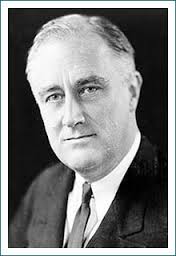
During World War II, U.S. President Franklin D. Roosevelt (FDR) on several occasions spoke about the world’s need for such rights. In his State of the Union Address (or the “Four Freedoms” Speech) to the Congress on January 6, 1941 (before U.S. entry in that war), he said one of these four freedoms was “freedom from want, which . . . means economic understandings which will secure to every nation a healthy peace time life for its inhabitants–everywhere in the world.”
Three years later, in his January 11, 1944, State of the Union Address, Roosevelt expanded this thought with these words:
- “We have come to a clear realization of the fact that true individual freedom cannot exist without economic security and independence. ‘Necessitous men are not free men.’ People who are hungry and out of a job are the stuff of which dictators are made.”
- “In our day these economic truths have become accepted as self-evident. We have accepted, so to speak, a second Bill of Rights under which a new basis of security and prosperity can be established for all—regardless of station, race or creed.” Among these rights are [he following:
- “The right to a useful and remunerative job in the industries or shops or farms or mines of the Nation;”
- “The right to earn enough to provide adequate food and clothing and recreation;”
- “The right of every farmer to raise and sell his products at a return which will give him and his family a decent living;”
- “The right of every businessman, large and small, to trade in an atmosphere of freedom from unfair competition and domination by monopolies at home or abroad;”
- “The right of every family to a decent home;”
- “The right to adequate medical care and the opportunity to achieve and enjoy good health;”
- The right to adequate protection from the economic fears of old age, sickness, accident, and unemployment;”
- “The right to a good education.”
- “All of these rights spell security. . . . [W]e must be prepared to move forward, in the implementation of these rights, to new goals of human happiness and well-being.”
- “America’s rightful place in the world depends in large part upon how fully these and similar rights have been carried into practice for our citizens. For unless there is security here at home there cannot be lasting peace in the world.”

After the end of World War II in 1945, the U.S. was one of the principal leaders in the drafting [2] and the unanimous adoption of the United Nations Charter on June 26, 1945, at the conclusion of the United Nations Conference on International Organization in San Francisco, California. Both the U.S. and Cuba attended this Conference and voted to adopt the Charter. Two days later (June 28th) the U.S. Senate, 89-2, gave its advice and consent to U.S. ratification of that treaty. Its Article 55 provides:
- The U.N. “shall promote: higher standards of living, full employment, and conditions of economic and social progress and development; solutions of international economic, social, health, and related problems; and international cultural and educational cooperation; and universal respect for, and observance of, human rights and fundamental freedoms for all without distinction as to race, sex, language, or religion.” In addition Article 56 provides that all members pledge “to take joint and separate action . . . for the achievement of the purposes set forth in Article 55.”
The United Nations itself came into existence on October 24, 1945; its original members included the U.S. and Cuba.

One of the first tasks of the U.N. under its Charter was the preparation of what became the Universal Declaration of Human Rights that was adopted by the U.N. General Assembly on December 10, 1948. (The vote was 48 to 0 with 8 abstentions; both the U.S. and Cuba voted for adoption.) The chair of the committee that drafted this document was Eleanor Roosevelt, the widow of FDR. [3]
The Declaration provides in Article 22:
- “Everyone, as a member of society, has the right to social security and is entitled to realization, through national effort and international co-operation and in accordance with the organization and resources of each State, of the economic, social and cultural rights indispensable for his dignity and the free development of his personality.”
The Declaration also proclaims that everyone has the rights to work and join trade unions (Art. 23), rest and leisure (Art. 24), an adequate standard of living (Art. 25), education (Art. 26) and participate freely in cultural life (Art. 27).
The Declaration, however, is inspirational and aspirational. It is not a treaty that creates rights for individuals and obligations of states. As a result, the U.N. Commission on Human Rights then had the task of preparing a treaty to cover the rights covered by the Declaration.
The Commission’s committee that was assigned this task initially intended to create just one such treaty, but soon decided to prepare two treaties: the International Covenant on Civil and Political Rights (ICCPR), and the International Covenant on Economic, Social and Cultural Rights (ICESCR), both of which were unanimously adopted by the U.N. General Assembly in December 1966. [4] Together with the Universal Declaration of Human Rights, they are known collectively as the International Bill of Human Rights.
As the first treaty’s title—Civil and Political Rights–suggests, it covers civil and political rights and is reminiscent of the U.S. Bill of Rights.
The second treaty—Economic Social and Cultural Rights–again as its title suggests, has provisions relating to economic, social and cultural rights, but its Article 2(1) states that each party “undertakes to take steps, individually and through international assistance and co-operation, especially economic and technical, to the maximum of its available resources, with a view to achieving progressively the full realization of the rights recognized in the present Covenant by all appropriate means, including particularly the adoption of legislative measures. (Emphasis added.)
In summary, the U.S. was a major advocate for, and participant in, creating international economic, social and cultural rights. Cuba, on the other hand, mostly before its Revolution, was not so intimately involved although it voted for adoption of the U.N. Charter, the Universal Declaration and the above two treaties.
U.S. Responses to the International Bill of Rights
The U.S. has signed and ratified the ICCPR. Although it signed the ICESCR in 1977, the U.S. has not ratified this treaty.
Instead, the U.S. through legislative measures has addressed, imperfectly to be sure, the issues addressed by the latter treaty. For example, the U.S. has Social Security, Medicare, Medicaid and the Affordable Care Act. The U.S. has unemployment compensation and workers’ compensation for job-related injuries. It has various forms of public housing.
The U.S. through various foreign aid programs has assisted many other countries in these areas as well.
Cuba Responses to the International Bill of Rights
In 2008 Cuba signed both of these treaties, but has not ratified either of them. In its most recent Universal Periodic Review by the U.N. Human Rights Council, various countries recommended that Cuba join these treaties, but Cuba did not accept these recommendations; instead it merely noted them with the comment that the Cuban “process of ratifying an international instrument is very rigorous.” [5]
Like the U.S., Cuba has chosen to address the rights covered by the ICESCR by legislative measures and policy choices. By all reports, it has been providing free education and health care to its citizens, and Cuba has generously provided such services without cost to other countries. For these efforts, Cuba is to be commended.
Cuba also has asserted that human rights are universal and indivisible and no one has more value than another. That is a debatable proposition for another occasion.
Conclusion
Cuba, like anyone defending his own conduct, “accentuates the positive” in its human rights record—its education and health care at home and abroad. It also “eliminates the negative”—its record on freedom of assembly and speech. Foreign Minister Rodriguez in his recent speech at the U.N. Human Rights Council, for example, said nothing on the latter.
The U.S., like anyone criticizing or attacking another’s conduct, does exactly the reverse. It accentuates the negatives of Cuba’s record while eliminating the positive. With respect to the U.S. record, the U.S. in various ways and fora and in different levels of government investigates and debates our failings and possible solutions.
This rather abstract discussion of concepts of human rights implicitly raises the question of what do the two countries hope to achieve in their bilateral discussions of this subject. Both have admitted that they do not have perfect human rights records. At least the U.S., I believe, would concede that most of the Cuban criticisms of the U.S. record are valid. On the other hand, I am skeptical about Cuba’s willingness to make a similar concession about U.S. criticisms of the island’s human rights.
As a result, I think the real issue in these talks should be whether there is anything that one of the countries can do to help the other country improve its record on particular issues.
For example, the U.S. has allocated funds to improve Cuban human rights and democracy. In recent years those funds have been used (I would say “misused”) by the U.S. Agency for International Development (USAID) to conduct covert or “discreet” programs in Cuba; any and all such programs should be forever abolished. [6] Instead, those funds could be used for joint U.S.-Cuba programs to promote civil society’s involvement on the island.
Cuba, on the other hand, could offer to collaborate with the U.S. to improve health care in emergencies or in under-served parts of the U.S. Minnesota and other parts of the U.S., for instance, are projecting physician shortages as current practitioners retire and as their populations grow older. Cuban physicians could practice in these states.
=============================================
[1] See David Weissbrodt, Fionnuala Ni Aolain, Joan Fitzpatrick, Frank Newman, International Human Rights: Law, Policy, and Process at 11-14, 97-105 (4th ed. LexisNexis 2009).
[2] One of the drafters of the Charter was Bernard Meltzer, one of my professors at the University of Chicago Law School.
[3] A fascinating account of Eleanor Roosevelt’s involvement in the preparation of the Universal Declaration is Mary Ann Glendon, A World Made New, Eleanor Roosevelt and the Universal Declaration of Human Rights (Random House 2001).
[4] The ICCPR was adopted 104 to 0 with 18 member states not voting. The ICESCR was adopted 102 to 0 with 3 abstentions and 17 members not voting. Both the U.S. and Cuba are believed to have voted for both of these treaties. 2 Rights Charters Approved by U.N., N.Y. Times (Dec. 16, 1966),
[5] U.N. Human Rights Council, Report of the Working Group on the Universal Periodic Review—Cuba (paras. 170.2, 170.4) (July 8, 2013); U.N. Human Rights Council, Report of the Working Group on the Universal Periodic Review—Cuba: Annex/Addendum: Views on conclusions and/or recommendations, voluntary commitments and replies presented by the State under review [Cuba] (Sept. 2013).
[6] Prior posts have discussed USAID’s social media program and its HIV workshops program and the New York Times editorial against such programs.