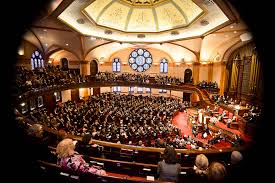
Last night MSNBC broadcast the two-hour “First in the South Democratic Presidential Forum” from Rock Hill, South Carolina.[1]
Rachel Maddow, the avowed liberal MSNBC commentator, hosted the separate interviews of the three candidates for the Democratic presidential nomination in 2016: Martin O’Malley, Bernie Sanders and Hillary Clinton.
Clinton, Sanders, O’Malley & Maddow
I think any objective viewer would have to conclude that this was a more successful format for focusing on the substantive issues than any of the debates for the Republican presidential candidates. The success also owes a lot to Rachel’s intelligence, preparation and skill at questioning.
As a liberal Democrat, I thought all three candidates demonstrated they were qualified to be president.
One of the major irritants to normalization of U.S.-Cuba relations has been the U.S. conducting so-called “democracy promotion” programs on the island. In reality they have been misguided programs aimed at regime change in Cuba. Prominent examples have been the “discreet” or “covert” programs sponsored by the U.S. Agency for International Development (USAID) to provide communications equipment to Jewish congregations and to promote social media systems in Cuba.[1]
Reforms of such programs have been proposed by Fulton Armstrong, a Research Fellow at American University’s Center for Latin American and Latino Studies.[2] Here are his suggestions:
Collaborate with Cuba on the programs. ”U.S. runs programs to support democracy and good governance in many countries, [including] allies like Mexico and Colombia, under the authority of other laws and with a more collegial tone. “
“Restore and expand what worked in the past. The distribution of books and clippings; support for exchange visits; promotion of academic and cultural events; and other nonpolitical activities that include people with government affiliation should resume. They are inexpensive and, by welcoming people to better understand us rather than trying to drive political change, they are more likely to succeed. [The] U.S. Embassy in Havana could sponsor vehicles offering non-political, non-coercive access to online information.”
“Decontaminate democracy programs. The organizations that have already spent the $200 million dollars trying unsuccessfully to drive regime change should be bypassed to [have] . . . [legitimate] U.S. civil society organizations forging ties with Cuban counterparts. . . . For example, American librarians can ask their Cuban counterparts for lists of needed books and, with a U.S. grant, buy them so that Cuban youths get the information they need. Doctors eager to provide pro bono medical care should have access to funds to purchase and ship medications and equipment based on appraisals developed with on-the-ground contacts. U.S. and Cuban universities could use money to sponsor two-way exchanges of students whom they choose . . . . ”
“Acknowledge that Cuba is changing. [Abandon U.S. bans on collaboration with entities connected with the Cuban government affiliated with the Cuban government.]”
According to media reports, on October 24 the Roman Catholic Church’s Synod on the Family concluded with the adoption of a document that reinforced church doctrine but appeared to give Pope Francis enough support to advance his vision of a more merciful church. It appeared to open church doors for Catholics who divorced and remarried without receiving an annulment of their first marriages and for those living together without being married, but it continued to oppose same-sex marriage even as the document said gay people should be treated with respect.[1]
This document is now submitted to the Pope for implementation. In his speech that same day to the Synod and in homily at mass the next day he made clear that he was still focused on making the church more merciful and that others in the Church needed to be reminded of this task.
Pope Francis’ Speech at the Synod’s Conclusion [2]
Pope Francis @ Synod on Family
On the one hand, the Pope observed the doctrine of the Church by noting the Synod was “urging everyone to appreciate the importance of the institution of the family and of marriage between a man and a woman, based on unity and indissolubility, and valuing it as the fundamental basis of society and human life.”
On the other hand, said Francis, the Synod “was also about laying [aside] closed hearts. . . which frequently hide even behind the Church’s teachings or good intentions, in order to sit in the chair of Moses and judge, sometimes with superiority and superficiality, difficult cases and wounded families.” The Synod too “was about making clear that the Church is a Church of the poor in spirit and of sinners seeking forgiveness, not simply of the righteous and the holy, but rather of those who are righteous and holy precisely when they feel themselves poor sinners.”
“The Synod experience also made us better realize that the true defenders of doctrine are not those who uphold its letter, but its spirit; not ideas but people; not formulae but the gratuitousness of God’s love and forgiveness.” Therefore, the “Church’s first duty is not to hand down condemnations or anathemas, but to proclaim God’s mercy, to call to conversion, and to lead all men and women to salvation in the Lord.”
The next day, Sunday, October 25, Pope Francis delivered a homily at mass at St. Peter’s Basilica for the 270 bishops. His scriptural text was Mark 10:46-52:
“[Jesus and the disciples] came to Jericho. As Jesus and his disciples and a large crowd were leaving Jericho, Bartimaeus son of Timaeus, a blind beggar, was sitting by the roadside. When he heard that it was Jesus of Nazareth, he began to shout out and say, ‘Jesus, Son of David, have mercy on me!’Many sternly ordered him to be quiet, but he cried out even more loudly, ‘Son of David, have mercy on me!’ Jesus stood still and said, ‘Call him here.’ And they called the blind man, saying to him, ‘Take heart; get up, he is calling you.’ So throwing off his cloak, he sprang up and came to Jesus. Then Jesus said to him, ‘What do you want me to do for you?’ The blind man said to him, ‘My teacher, let me see again.’ Jesus said to him, ‘Go; your faith has made you well.’ Immediately he regained his sight and followed him on the way.”
Francis said, “Today’s Gospel [shows that] Bartimaeus is freed thanks to Jesus’ compassion. Jesus has just left Jericho. Even though he has only begun his most important journey, which will take him to Jerusalem, he still stops to respond to Bartimaeus’ cry. Jesus is moved by his request and becomes involved in his situation. He is not content to offer him alms, but rather wants to personally encounter him.”
“He does not give him any instruction or response, but asks him: ‘What do you want me to do for you?’ It might seem a senseless question: what could a blind man wish for if not his sight? Yet, with this question made face-to-face, direct but respectful, Jesus shows that he wants to hear our needs. He wants to talk with each of us about our lives, our real situations, so that nothing is kept from him. After Bartimaeus’ healing, the Lord tells him: ‘Your faith has made you well”.’ It is beautiful to see how Christ admires Bartimaeus’ faith, how he has confidence in him. He believes in us, more than we believe in ourselves.”
“There is an interesting detail. Jesus asks his disciples to go and call Bartimaeus. They address the blind man with two expressions, which only Jesus uses in the rest of the Gospel.”
“First they say to him: ‘Take heart!’ which literally means ‘have faith, strong courage!.’ Indeed, only an encounter with Jesus gives a person the strength to face the most difficult situations.”
“The second expression is ‘Rise!’ as Jesus said to so many of the sick, whom he took by the hand and healed. His disciples do nothing other than repeat Jesus’ encouraging and liberating words, leading him directly to Jesus, without lecturing him.”
“Jesus’ disciples are called to this, even today, especially today: to bring people into contact with the compassionate Mercy that saves. When humanity’s cry, like Bartimaeus,’ becomes stronger still, there is no other response than to make Jesus’ words our own and, above all, imitate his heart. Moments of suffering and conflict are for God occasions of mercy. Today is a time of mercy!”
“There are, however, some temptations for those who follow Jesus. Today’s Gospel shows at least two of them.”
“None of the disciples stopped, as Jesus did. They continued to walk, going on as if nothing were happening. If Bartimaeus was blind, they were deaf: his problem was not their problem. This can be a danger for us: in the face of constant problems, it is better to move on, instead of letting ourselves be bothered. In this way, just like the disciples, we are with Jesus but we do not think like him. We are in his group, but our hearts are not open. We lose wonder, gratitude and enthusiasm, and risk becoming habitually unmoved by grace. We are able to speak about him and work for him, but we live far from his heart, which is reaching out to those who are wounded.”
“This is the temptation: a ‘spirituality of illusion:’ we can walk through the deserts of humanity without seeing what is really there; instead, we see what we want to see. We are capable of developing views of the world, but we do not accept what the Lord places before our eyes. A faith that does not know how to root itself in the life of people remains arid and, rather than oases, creates other deserts.”
“There is a second temptation, that of falling into a ‘scheduled faith.’ We are able to walk with the People of God, but we already have our schedule for the journey, where everything is listed: we know where to go and how long it will take; everyone must respect our rhythm and every problem is a bother. We run the risk of becoming the ‘many’ of the Gospel who lose patience and rebuke Bartimaeus. Just a short time before, [the disciples] scolded the children (Mk. 10:13), and now the blind beggar: whoever bothers us or is not of our stature is excluded. Jesus, on the other hand, wants to include, above all those kept on the fringes who are crying out to him. They, like Bartimaeus, have faith, because awareness of the need for salvation is the best way of encountering Jesus.”
“In the end, Bartimaeus follows Jesus on his path (Mk. 10:52). He did not only regain his sight, but he joined the community of those who walk with Jesus.”
Conclusion
Once again Francis makes Biblically-referenced powerful comments to the Church’s leaders and to all of the rest of us. “Take heart!”
Wondrous God of glory, you shrouded chaos with your imagination. All that is in creation is yours, all that lives in it is your gift. You shaped us in your image, gathering us in your joy.
But we turned our backs on you, seeking the seductive face of our own ways. You would show us the way, filling us with hope’s promise, through the words of the prophets, but we were deaf to what they had to say. So, deeply moved by our helplessness, you sent Jesus into our presence, the One we waited for that we might be saved.
Gracious are you, Creator of all. Blessed is Jesus Christ, model for our lives. With clean hands and a pure heart He descended from your holy side, coming to wipe away our tears, to remove the disgrace of our sin, to walk with those who seek your face, to stand with us at grief’s doorstep.
As we wait to come to this gracious feast, as we remember the spirit in which Jesus lived, served, died, and was raised, we speak of that mystery of faith, even as we offer our doubts and our very selves.
Pour out your Spirit upon these gifts of the Table and on your children in this sacred space. With a simple cup filled with hope, with bread broken in love, you make a feast for all those who put their trust in you.
As we open our hands to receive grace’s brokenness, may we go forth in service to all around us. As we take in the well-aged hope of your Spirit, may we discover our hearts to be as broken as yours, by the injustices of our world.
We remember in our prayers those in shock and grief following the Afghan earthquake and Russian plane crash. And we pray this day for those in our community who need to know of your love and comfort.
As we pray for your beloved members of the Body of Christ, send us out to be your hands and feet to a world in need.
And when all things become new, when we are gathered with our sisters and brothers of every age, we will join our voices together, singing before your throne of grace, God in Community, Holy in One, even as we pray together the prayer Jesus taught us, saying,
Our Father, who art in heaven,
Hallowed be Thy name.
Thy kingdom come,
Thy will be done,
On earth as it is in heaven.
Give us this day, our daily bread.
Forgive us our debts,
As we forgive our debtors.
Lead us not into temptation,
But deliver us from evil.
For Thine is the kingdom, and the power, and the glory,